

A multimodal generative AI copilot for human pathology
Open accessThe DOI matches its Crossref record; 80 of the 80 references it cites were found in a registry or an index.
Abstract
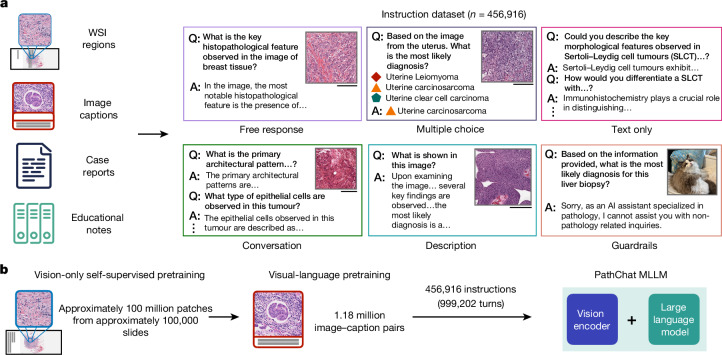
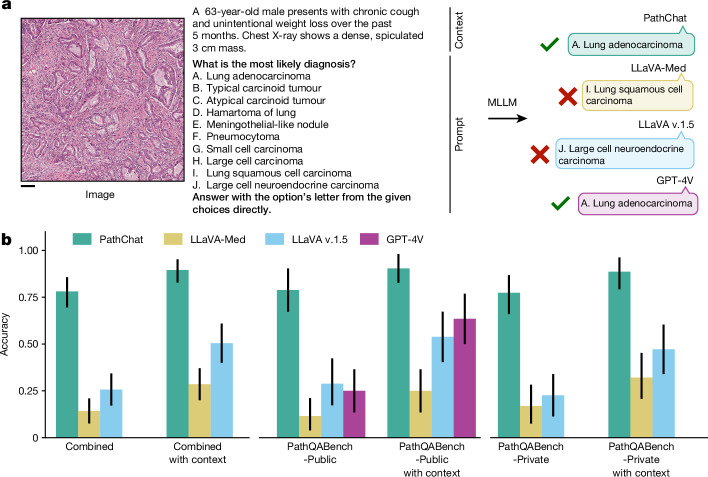
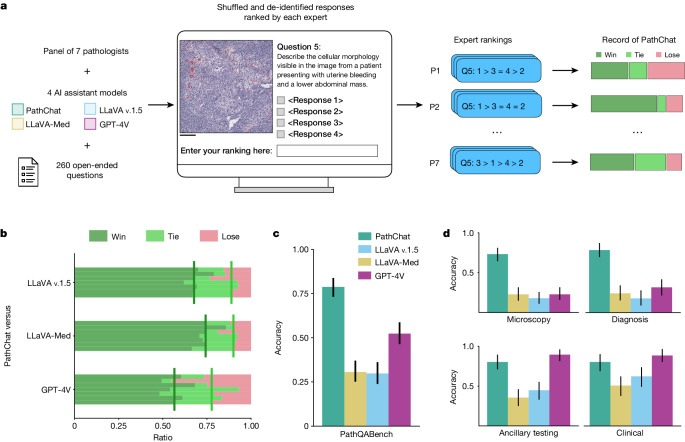
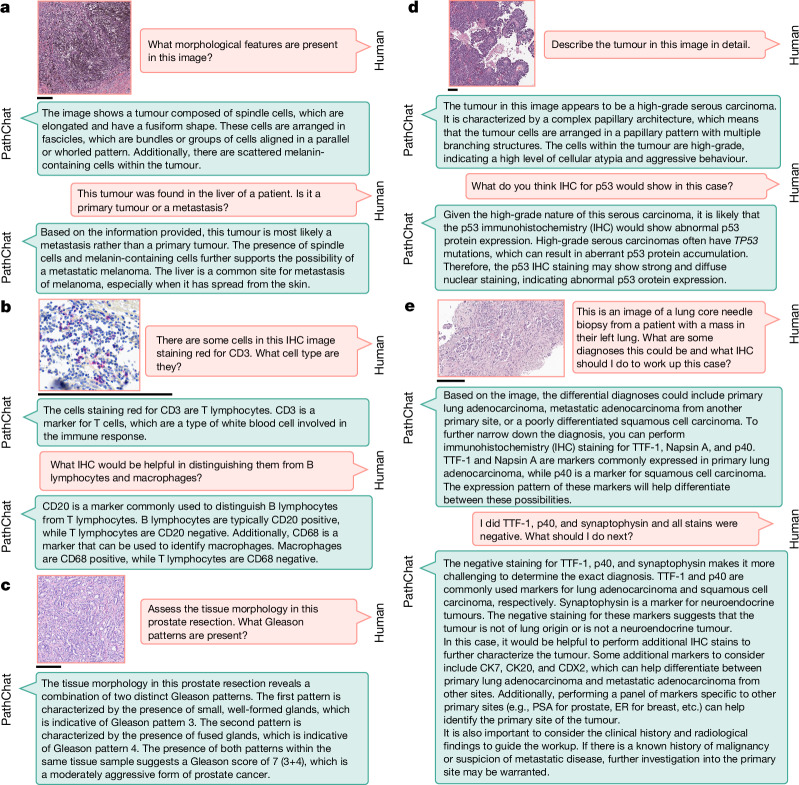
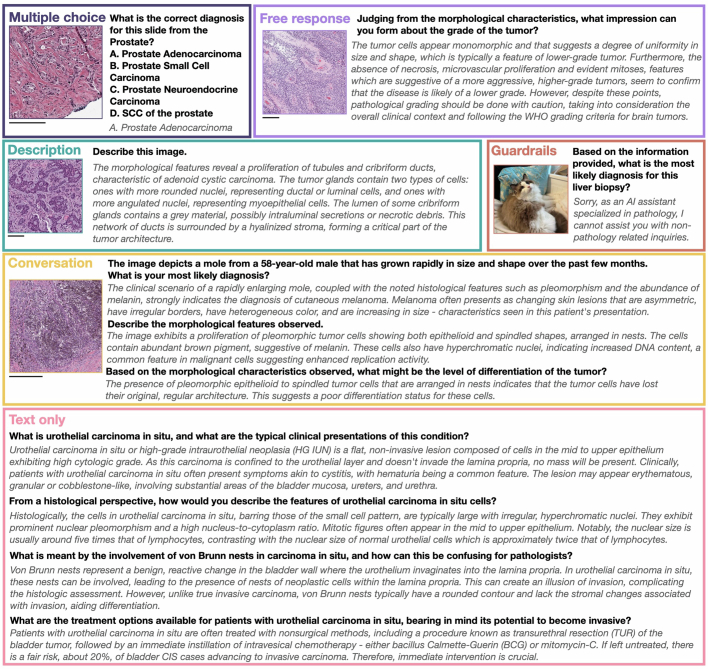
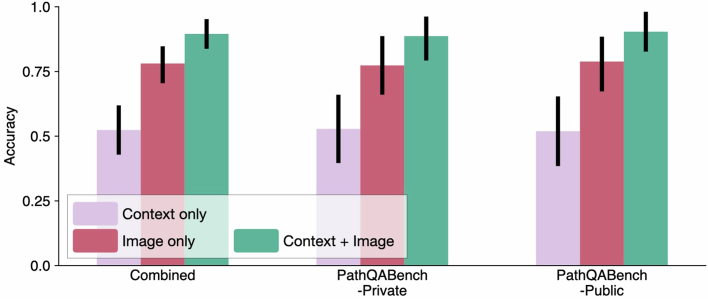
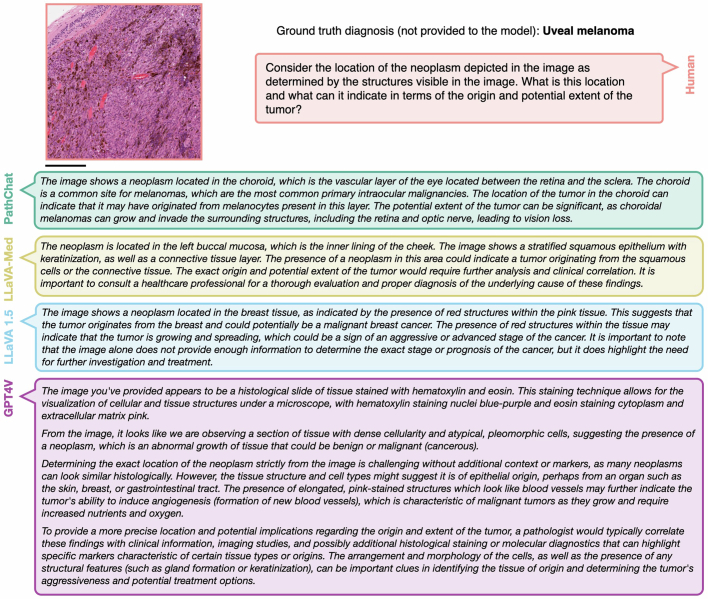
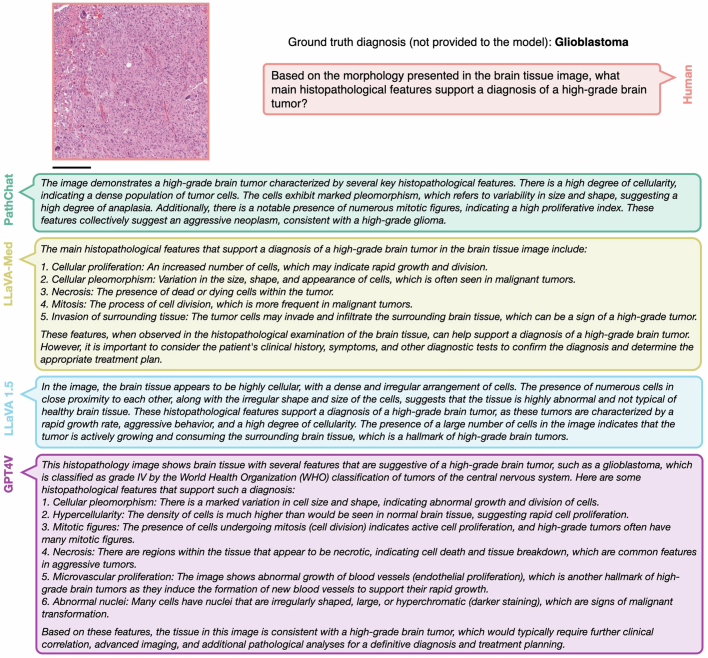
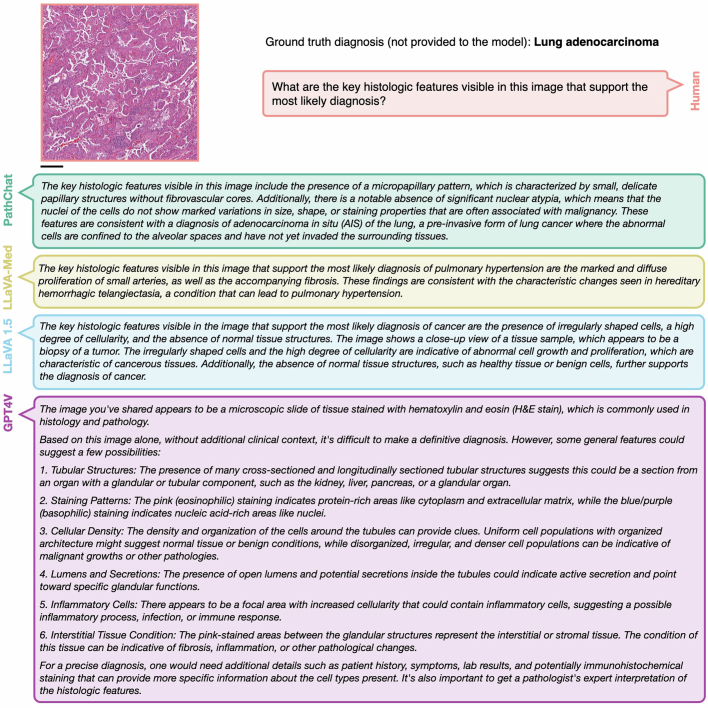
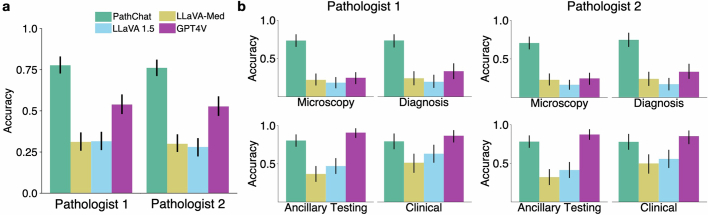
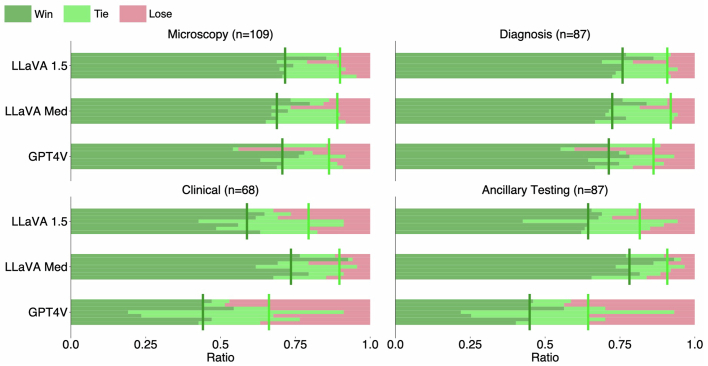
Computational pathology 1,2 has witnessed considerable progress in the development of both task-specific predictive models and task-agnostic self-supervised vision encoders 3,4 . However, despite the explosive growth of generative artificial intelligence (AI), there have been few studies on building general-purpose multimodal AI assistants and copilots 5 tailored to pathology. Here we present PathChat, a vision-language generalist AI assistant for human pathology. We built PathChat by adapting a foundational vision encoder for pathology, combining it with a pretrained large language model and fine-tuning the whole system on over 456,000 diverse visual-language instructions consisting of 999,202 question and answer turns. We compare PathChat with several multimodal vision-language AI assistants and GPT-4V, which powers the commercially available multimodal general-purpose AI assistant ChatGPT-4 (ref. 6 ). PathChat achieved state-of-the-art performance on multiple-choice diagnostic questions from cases with diverse tissue origins and disease models. Furthermore, using open-ended questions and human expert evaluation, we found that overall PathChat produced more accurate and pathologist-preferable responses to diverse queries related to pathology. As an interactive vision-language AI copilot that can flexibly handle both visual and natural language inputs, PathChat may potentially find impactful applications in pathology education, research and human-in-the-loop clinical decision-making.
Overview
The claims and statistics of this paper haven’t been checked yet.
Free: it reads the open-access text and checks the first 5 claims that cite a source we can check. Create a free account to check every claim.
Integrity signals
Registry
Cites
Statistics
Figures
Verification
Claims the paper makes
The claims and statistics of this paper haven’t been checked yet.
Free: it reads the open-access text and checks the first 5 claims that cite a source we can check. Create a free account to check every claim.
Claims other papers make about this one
Each is checked against this paper’s own text: does it say what the citing paper says it does?
The source backs part of the claim, not all of it — or backs it for a different population, condition or comparison.
In the citing paper
“The synthetic region-level captions can easily be generated with the generative AI model to provide a wealth of text guidance88,127.”
From A multimodal whole-slide foundation model for pathology (2025) · cites this paper as [88]
Experimental — accuracy not yet measured
Self-check
Percentages, sums and reported differences re-computed from the paper’s own numbers.
The self-check needs the paper’s full text.
Citations
Cites
Microsoft COCO: Common Objects in Context
Lin, T.-Y., Maire, M., Belongie, S., Hays, J., Perona, P., Ramanan, D., Dollár, P., & Zitnick, C. L. (2014) · Lecture Notes in Computer Science · doi:10.1007/978-3-319-10602-1_48 · Cited by 45,460
Language Models are Few-Shot Learners
Brown, T. B., Mann, B., Ryder, N., Subbiah, M., Kaplan, J., Dhariwal, P., Neelakantan, A., Shyam, P., Sastry, G., Askell, A., et al. (2020) · arXiv · doi:10.48550/arxiv.2005.14165 · Cited by 23,372
Learning Transferable Visual Models From Natural Language Supervision
Radford, A., Kim, J. W., Hallacy, C., Ramesh, A., Goh, G., Agarwal, S., Sastry, G., Askell, A., Mishkin, P., Clark, J., et al. (2021) · arXiv · doi:10.48550/arxiv.2103.00020 · Cited by 15,293
QuPath: Open source software for digital pathology image analysis
Bankhead, P., Loughrey, M. B., Fernández, J. A., Dombrowski, Y., McArt, D. G., Dunne, P. D., McQuaid, S., Gray, R. T., Murray, L. J., Coleman, H. G., et al. (2017) · Scientific Reports · doi:10.1038/s41598-017-17204-5 · Cited by 8,908
Training language models to follow instructions with human feedback
Ouyang, L., Wu, J., Jiang, X., Almeida, D., Wainwright, C. L., Mishkin, P., Zhang, C., Agarwal, S., Slama, K., Ray, A., et al. (2022) · arXiv · doi:10.48550/arxiv.2203.02155 · Cited by 4,208
Large Language Models Encode Clinical Knowledge
Singhal, K., Azizi, S., Tu, T., Mahdavi, S. S., Wei, J., Chung, H. W., Scales, N., Tanwani, A., Cole-Lewis, H., Pfohl, S., et al. (2022) · arXiv · doi:10.48550/arxiv.2212.13138 · Cited by 4,083
Large language models encode clinical knowledge
Singhal, K., Azizi, S., Tu, T., Mahdavi, S. S., Wei, J., Chung, H. W., Scales, N., Tanwani, A., Cole-Lewis, H., Pfohl, S., et al. (2023) · Nature · doi:10.1038/s41586-023-06291-2 · Cited by 4,083
Ehteshami Bejnordi, B., Veta, M., Johannes van Diest, P., van Ginneken, B., Karssemeijer, N., Litjens, G., van der Laak, J. A. W. M., and the CAMELYON16 Consortium, Hermsen, M., Manson, Q. F., et al. (2017) · JAMA · doi:10.1001/jama.2017.14585 · Cited by 3,293
Retrieval-Augmented Generation for Knowledge-Intensive NLP Tasks
Lewis, P., Perez, E., Piktus, A., Petroni, F., Karpukhin, V., Goyal, N., Küttler, H., Lewis, M., Yih, W.-T., Rocktäschel, T., et al. (2020) · arXiv · doi:10.48550/arxiv.2005.11401 · Cited by 3,101
Coudray, N., Ocampo, P. S., Sakellaropoulos, T., Narula, N., Snuderl, M., Fenyö, D., Moreira, A. L., Razavian, N., & Tsirigos, A. (2018) · Nature Medicine · doi:10.1038/s41591-018-0177-5 · Cited by 2,930
Research works printed but not linked: 1
- Tsuneki, M. & Kanavati, F. Inference of captions from histopathological patches. In Proc. International Conference on Medical Imaging with Deep Learning (Konukoglu, E. et al.) 1235–1250 (PMLR, 2022).
Cited by
Items 501–563 of 563
The Intersection Between Neuropathology and Artificial Intelligence: A Review
Frassetto, F. P. (2026) · Sage Open Pathology · doi:10.1177/30502098261472442
Tsuruyama, T. (2026) · arXiv (Cornell University) · doi:10.48550/arxiv.2608.10846
PanoraOnc: A pan-cancer clinico-genomic AI model for transferable outcome predictionsPreprint
Schuerch, M., Geisberg, J., Flower, C. T., Bektaş, A. B., McDonald, T. O., Mishra, S., Graser, C. J., Altreuter, J., Ananda, G., Boland, G. M., et al. (2026) · medRxiv · doi:10.64898/2026.08.17.26354679
Wang, W., Zhao, P., & Zhang, Y. (2026) · Pathology - Research and Practice · doi:10.21203/rs.3.rs-10300980/v1
An interoperable research agent network for scientific discoveryPreprint
Cheong, T. L., Ji, X., Wang, Y., Zhou, Y., Li, B., Zhang, C., Huang, J., Wu, I., Li, A., & Cheung, E. (2026) · bioRxiv (Cold Spring Harbor Laboratory) · doi:10.64898/2026.08.13.744542
“The importance of biomedical imaging has thus driven the rapid development of agentic systems designed to address various computational pathology tasks, although they remain largely isolated 9,20,21 .”
Artificial intelligence in oncology: linking biological discovery to clinical utility
Kuchana, S. K., Alahari, N. V., Kode, R., Jalapu, K. R., & Alahari, S. K. (2026) · Molecular Cancer · doi:10.1186/s12943-026-02771-x
“PathChat added a conversational multimodal interface, and newer vision–language and whole-slide models extended pre-training toward cross-modal retrieval, diagnosis, and precision-oncology tasks [56, 82, 161].”
Vision Language Models Fail to Reliably Detect Acute Myeloid Leukemia in Bone Marrow SmearsPreprint
Schulze, F., Loeffler, C. M. L., Radoynova, M., Winter, S., Röllig, C., Sockel, K., Kroschinsky, F., Bornhäuser, M., Middeke, J. M., Kather, J. N., et al. (2026) · medRxiv · doi:10.64898/2026.08.19.26359329
Al-Toub, M. (2026) · Current Issues in Molecular Biology · doi:10.3390/cimb48090859
LUCAID: Agentic Multimodal AI for Lung Cancer Precision PathologyPreprint
Eich, M., Standvoss, K., Milbich, T., Möllers, A., Hägele, M., Anders, P., Tharun, L., Kontradiuk, H., Kons, S., Aldoj, N., et al. (2026) · arXiv (Cornell University) · doi:10.48550/arxiv.2608.23803
Fathima, J. H. S., Narendran, M. R., Quadri, M. S. A., Vinothkumar, T. S., Kamala, K., & Karobari, M. I. (2026) · Analytical Cellular Pathology · doi:10.1155/ancp/9281281
“Recent work is shifting toward multimodal and generative approaches that merge histologic images with genomic and clinical information to build more integrated disease models [19, 20].”
Dalani, T., Jerry, W. K. H., Wu, J., Fang, X., Feng, T., Xie, F., Huang, M., Liang, Y., To, K. F., Kang, W., et al. (2026) · Cancers · doi:10.3390/cancers18172802
“PathChat is another model from Lu et al. that serves as an AI copilot to pathologists, providing visual and natural-language interaction for pathology image interpretation and question answering [75].”
Self-citationArtificial Intelligence in Neuromuscular Diseases: Opportunities for a Data-Scarce Field
Ma, S., Luo, S., & Zhong, H. (2026) · Neurology and Therapy · doi:10.1007/s40120-026-01017-8
“The rapid growth of biomedical foundation models (BiomedCLIP with 15 million image-text pairs [15]; PathChat with over 100 million histology patches [16]) means that researchers in the field of NMDs can increasingly benefit from models that have already learned general visual features, even when…”
Generative large language models in medicine: a scoping review of recent methodological advances
LI, F., Li, J., Cao, W., Li, H., Li, Y., Sun, Z., Chen, D., Duan, T., Li, P., Tizhoosh, H., et al. (2026) · npj Health Systems · doi:10.1038/s44401-026-00137-5 · Cited by 1
TigerAI: An AI-powered genetic evidence platform to support clinical developmentPreprint
Zhang, Z., Zhang, W., Yang, X., Li, Y., Lin, J., Wu, C., & Zhao, B. (2026) · bioRxiv (Cold Spring Harbor Laboratory) · doi:10.64898/2026.08.29.748046
“Beyond text-based knowledge, multimodal data resources and foundation models that jointly integrate genetic variation 8,9 , molecular phenotypes 23 , imaging 24 , and biological networks 25 may better link genetic association signals to underlying mechanisms.”
Shao, J., Liu, X., Zhang, Z., Liao, S., Wu, J., Yang, H., Zhao, Z., Wang, L., Liang, S.-F., Wang, X., et al. (2026) · Cell Reports Medicine · doi:10.1016/j.xcrm.2026.102926
Large language models utilizing digital pathology workflows: Impact on pathology practice
Huang, Z., Yao, J., & Bao, T. (2026) · Elsevier eBooks · doi:10.1016/b978-0-443-40383-5.00005-4
The role of pathology foundation models in cancer diagnosis, biomarker discovery, and prognosis
Embaye, K. S., Tubelleza, R., Pavilion, G. L., Kilgallon, A., & Kulasinghe, A. (2026) · Trends Open · doi:10.1016/j.treopn.2026.08.006
Generative artificial intelligence technologies in pathology
Ullah, E. (2026) · Elsevier eBooks · doi:10.1016/b978-0-443-40383-5.00013-3
Applications of artificial intelligence in surgical pathology
Li, Z., Liu, Y., MacDonald, W., Sun, S., Chen, W., Patel, A. U., Parwani, A. V., & Satturwar, S. (2026) · Elsevier eBooks · doi:10.1016/b978-0-443-40383-5.00008-x
Self-citationGlassy, E., & Groth, J. (2026) · Elsevier eBooks · doi:10.1016/b978-0-443-40383-5.00003-0
Multimodal AI in precision medicine: linking omics, imaging and clinical decisions
Wei, R., & Zheng, Q. (2026) · American journal of clinical and experimental immunology. · doi:10.62347/urci9453
DenseUNet for Breast Cancer Segmentation in Histopathological Images
Rasi, H., Ebrahimnezhad, H., & Sedaaghi, M. H. (2026) · Journal of Medical Signals & Sensors · doi:10.4103/jmss.jmss_83_25
“[10,11] Yet, existing models often remain narrowly focused on isolated tasks such as segmentation, lacking the holistic capacity to simultaneously identify spatial locations and morphological features of breast cancer tissues.”
Deep learning predicts gene rearrangements from histopathology in large B-cell lymphoma
Sun, X., Cai, L., Li, M., Chen, J., Xue, X., Nong, L., Su, H., Wang, W., Wang, S., Jiang, S., et al. (2026) · npj Digital Medicine · doi:10.1038/s41746-026-03238-5
Agentic AI workflows in anatomic pathology: Opportunities and challenges
Ngo, A., Tian, R., Mohammad, A., Weon, J. L., Arvisais‐Anhalt, S., Minor, J., & Youens, K. (2026) · Journal of Pathology Informatics · doi:10.1016/j.jpi.2026.100718
“41,78 An agentic system could integrate such models as tools, creating very powerful and comprehensive end-to-end pathology work fl ows.”
Wang, X., Zhang, C., Ma, Y., Liu, Z., & Liang, G. (2026) · Frontiers in Oncology · doi:10.3389/fonc.2026.1926967
“For instance, PathChat, powered by multimodal large language models (MLLMs), can process visual and textual inputs simultaneously (77).”
AI in Veterinary Diagnostics: Automated Histopathology for Disease Detection and Classification
Wins, J. A., Saranraj, P., Lokeshwari, B., Al‐Tawaha, A. R., Karnwal, A., & Sivasakthivelan, P. (2026) · Advances in computational intelligence and robotics book series · doi:10.4018/979-8-2600-1358-8.ch007
Role of foundation models in data-driven tissue diagnostics
Bilal, M., Aadam, Raza, M., Alsuhaibani, A., Altherwy, Y. N., Alabduljabbar, A., Almarshad, F. A., Golding, P., & Rajpoot, N. (2026) · Molecular Aspects of Medicine · doi:10.1016/j.mam.2026.101504
Chen, J., Cai, L., Wang, Z., Huang, Y., Jiang, S., Huang, S., Wang, H., & Zhang, Y. (2026) · Lecture notes in computer science · doi:10.1007/978-3-032-37422-6_28
A universal visual foundation model for computational cytopathology
Zheng, X., Zheng, K., Wang, J., Zhang, X., Li, K., Zhao, Z., Li, C., Chen, H., Wang, R., Lai, J., et al. (2026) · Nature Cancer · doi:10.1038/s43018-026-01240-0
Self-citationValijonov, J., Soar, P., Houx, J. L., & Tozzi, G. (2026) · bioRxiv (Cold Spring Harbor Laboratory) · doi:10.64898/2026.09.17.752482
“A heavier successor to the present lightweight grounding is also envisaged, in the form of PathChat-style [20] instruction fine-tuning of the VLM, using LoRA [40], on figures scraped from the bone-literature corpus.”
LLM-Steered Clinical Knowledge Discovery for CVD Outcome Modeling
Yuxuan, L., Xu, X., Wang, G., & Yan, P. (2026) · Lecture notes in computer science · doi:10.1007/978-3-032-38172-9_38
Jung, K. J., Rout, S. S., Qiu, J., Cho, S., McDonough, E., Ghose, S., Chadwick, C. M., West, R. B., Brooks, J. D., Ginty, F., et al. (2026) · Lecture notes in computer science · doi:10.1007/978-3-032-38172-9_18
Clinical applications of artificial intelligence in genitourinary pathology
Li, A., & Parwani, A. V. (2026) · Molecular Aspects of Medicine · doi:10.1016/j.mam.2026.101518
Self-citationLami, K., Agarwal, S., Asaturova, A. V., Balcı, S., Harahap, A. S., Kang, H., Kim, J., Komuta, M., Laohawetwanit, T., Menon, S. G., et al. (2026) · medRxiv · doi:10.64898/2026.09.18.26363369
Wang, G., Bi, H., Zhang, Y., Wang, W., Zhu, Y., Wang, C., & Yang, X. (2026) · Diagnostics · doi:10.3390/diagnostics16193100
Tian, X., Im, S. K., Li, K., & Ke, W. (2026) · Array · doi:10.1016/j.array.2026.101276
Tham, J. A., Xie, F., Chen, B., Yu, P., Wu, J., Feng, T., Tse, G. M. K., To, K. F., & Kang, W. (2026) · Intelligent Systems with Applications · doi:10.1016/j.iswa.2026.200736
Self-citationSumman, M. G., Altaf, A., Gohar, A., Arsalan, M., Saeed, M. A., Umais, M., Hamza, M., & Ahmad, M. H. (2026) · Clinical Case Reports · doi:10.1002/ccr3.73523
Yu, S., Gu, X., Gao, Y., Zhao, F., & Zhang, J. (2026) · Integrated Diagnostics · doi:10.1016/j.intdia.2026.100006
Wang, Y., & Odabachian, L. (2026) · Journal of Pathology Informatics · doi:10.1016/j.jpi.2026.100749
VINTER: a generative vision–language model for annotating and interrogating spatial tissuesPreprint
JinYu, W., Xu, W., Zhuang, Y., Zhang, Y., Loza, M., Yang, Y., & Nakai, K. (2026) · bioRxiv (Cold Spring Harbor Laboratory) · doi:10.64898/2026.10.01.752251
Ser, J. D., Moreno-Sánchez, P. A., Gómez, E., & Llorca, D. F. (2026) · Information Fusion · doi:10.1016/j.inffus.2026.104861
Kurucu, B. (2026) · Journal of Life Science and Biomedicine · doi:10.54203/jlsb.2026.4
Consumer Artificial Intelligence for Pedigree Analysis: A Comparative Study in Medical Genetics
Abduljabbar, S. S., Alqarni, M., & Habara, A. (2026) · Cureus · doi:10.7759/cureus.117953
Huang, Z., Liu, Y., Jin, S., Wang, Y., Fu, M., Ouyang, J., Yu, D., Zhu, T., Zeng, F., Pan, X., et al. (2026) · iScience · doi:10.1016/j.isci.2026.117744
Self-citationA Review of Medical Visual Question Answering
Zhang, Z., Wang, M., Chen, S., Xie, F., Chen, H., Yao, G., & Wang, T. (2026) · Applied Sciences · doi:10.3390/app162010366
Zhang, X., Almugren, I., Chotia, V., Sharma, V. K., & Dernóczy-Polyák, A. (2026) · Journal of Global Information Management · doi:10.4018/jgim.425554
Research Progress on AI-Driven Biomarker Prediction in Non-Small Cell Lung Cancer
Zhang, B., Teng, J., & Lu, S. (2026) · AI medicine. · doi:10.53941/aim.2026.100011
“…original studies that utilized the corresponding datasets, not references introducing the databases themselves: TCGA (The Cancer Genome Atlas) [38–44], TCIA (The Cancer Imaging Archive) [45,46], GEO (Gene Expression Omnibus) [47,48], and CPTAC (Clinical Proteomic Tumor Analysis Consortium) [49,50].”
Mehmood, S., Khan, F. M., Alharbi, A. A. K., Saudagar, A. K. J., Alkhattabi, M., Khan, M. A., & Khan, M. A. (2026) · Frontiers in Medicine · doi:10.3389/fmed.2026.1958283
Su, H., Zhang, S., & Wang, X. (2026) · Zenodo (CERN European Organization for Nuclear Research) · doi:10.5281/zenodo.22642457
He, Q., Li, J., Wang, Z., Guan, T., Ma, Y., Zhao, Z., Wang, Y., Chen, H., Zhang, Y., Wang, Y., et al. (2026) · arXiv (Cornell University) · doi:10.48550/arxiv.2610.38346
LangSeg-BC: Language-Grounded Explainability for Breast Cancer Histopathology Segmentation
Mahesh, B., & Nellore, G. (2026) · Computer and decision making. · doi:10.1922/comdem.v3i6s.18787
Pereira, M. C., Cesario, M. D. C., Francisco, M. B., & PAIVA, A. P. D. (2026) · Anais ... Encontro Nacional de Engenharia de Produção/Anais do Encontro Nacional de Engenharia de Produção · doi:10.14488/enegep2026_tn_st_438_2172_53481
STMoE: Multi-Scale Mixture-of-Experts for Single-Cell Gene Expression Prediction from Histology
Li, X., Hu, Y., Duan, Z., Wang, C., & Zhang, J. (2026) · ACM International Conference on Information and Knowledge Management (CIKM) · doi:10.1145/3799682.3841080
CytoGPT: A multimodal generative assistant for interpretable cervical cytology analysis
Liu, S., Kang, H., Qiao, H., Xiao, Y., Hong, Q., Lu, Q., Hu, J., He, W., Ye, H., Yu, Z., et al. (2026) · Expert Systems with Applications · doi:10.1016/j.eswa.2026.134959
Araujo-Filho, J. D. A. B., Tavora, F., Nascimento, E. C. T., Harada, G., Mayoral, M., & Ginsberg, M. S. (2026) · Clinical Imaging · doi:10.1016/j.clinimag.2026.110982
Agentic intelligent data engine for scientific large language models
Xie, S., Liu, Z., Deng, P., Luo, R., Xia, Y., Qin, T., & Yan, R. (2026) · Nature Communications · doi:10.1038/s41467-026-78887-x
Artificial intelligence and triple negative breast cancer: can pathomics help oncologists?
Faa, G., Lai, E., Suri, J. S., Solinas, C., Dessì, M., Saba, G., Loi, F., Tiwari, E., Cau, F., Dessena, M., et al. (2026) · Frontiers in Oncology · doi:10.3389/fonc.2026.1883554
From Pixels to Anatomy: Spatially-Grounded Medical Vision-Language Reasoning
Cao, C., & Xu, M. (2026) · doi:10.1145/3841452.3841491
Chen, T., Jiang, J., Liu, T., Yang, D., & Zhang, Y. (2026) · Genes & Diseases · doi:10.1016/j.gendis.2026.102577
MedVES: Visual Evidence Scaling at Test Time for VLMs in Medical VQA
Wu, X., Tan, H., Subramanian, B., Chen, H., Peterson, M. N., Terry, G., Kiani, A., Noh, S., Qi, X., & Shen, J. (2026) · ACM International Conference on Multimedia (ACM MM) · doi:10.1145/3767308.3836450
Bertram, C., Antonythasan, J. J., Bawa, B., Chu, C. P., Corps, K. N., Fitzke, M., Gerdin, J. A., Hirling, D., Janowczyk, A., Klopfleisch, R., et al. (2026) · Veterinary Pathology · doi:10.1177/03009858261500096
A Technical Perspective of the Agentic AI Paradigm
Karunakaran, M., Sathyamoorthy, D., & De, S. (2026) · Wiley eBooks · doi:10.1002/9781394426935.ch1
Metadata
- Authors
- Lu, M. Y., Chen, B., Williamson, D. F. K., Chen, R. J., Zhao, M., Chow, A. K., Ikemura, K., Kim, A., Pouli, D., Patel, A., Soliman, A., Chen, C., Ding, T., Wang, J. J., Gerber, G., Liang, I., Le, L. P., Parwani, A. V., Weishaupt, L. L., & Mahmood, F.
- Affiliations
- Broad Institute (US)
- Brigham and Women's Hospital (US)
- The Ohio State University Wexner Medical Center (US)
- Mayo Clinic (US)
- Harvard University (US)
- Corresponding author
- Mahmood, Faisal
- ORCID
- Venue
- Nature
- Published
- 2024-06-12
- Volume
- 634
- Issue
- 8033
- Pages
- 466-473
- ISSN
- 0028-0836 (ISSN-L)
- 1476-4687
- PMC
- PMC11464372
- OpenAlex
- W4399567248
- Semantic Scholar
- 15074299f9b3cfd1230f29fca3a26236dc8681b8
- Cited by
- 461
- References
- 68
- Citations by year
- 2026: 189 · 2025: 229 · 2024: 43
- FWCI
- 64.68
- Type
- journal article
- Language
- en
- Open access
- hybrid
- doi.org
- Licence
- cc-by
- creativecommons.org/licenses/by/4.0 (tdm)
- creativecommons.org/licenses/by/4.0 (vor)
- Locations
- Nature (publishedVersion, cc-by)
- PubMed Central (publishedVersion, cc-by)
- PubMed (publishedVersion)
- Digital Access to Scholarship at Harvard (DASH) (Harvard University) (submittedVersion, cc-by)
- RePEc: Research Papers in Economics (submittedVersion)
- Funders
- National Institute of General Medical Sciences (R35GM149270)
- Topics
- Physical Sciences › Computer Science › Computer Vision and Pattern Recognition › Multimodal Machine Learning Applications
- Health Sciences › Medicine › Health Informatics › Artificial Intelligence in Healthcare and Education
- Physical Sciences › Computer Science › Artificial Intelligence › AI in cancer detection
- Keywords
- vision-language models, computational pathology, large language models, pathology education, clinical decision support, human-in-the-loop
- MeSH terms
- Clinical Decision-Making, Artificial Intelligence, Diagnostic Imaging, Female, Humans, Language, Male, Natural Language Processing, Pathology
About these checks
Registry, retraction, Cites and statistics results are computed, not judged, with one exception: a printed reference that no index lists is read once by a model before it counts as a citation error. Claims are extracted by a model and kept only when their quote appears verbatim in the text; each cited source is then checked, with a model’s help, for whether it says what the claim relies on. Those verdicts can be wrong — read the claim’s quote and the cited source before relying on one.
Statistics and arithmetic are recomputed, not judged.
Confidence bands are shown only for fields calibrated on our annotated test set. None is calibrated yet, so no band is shown.
What counts as a claim ›How we measure confidence ›How we check this ›
Are you an author, or do you see a problem with this page? Request a review
Data sources
Bibliographic data: Semantic Scholar, OpenAlex, Crossref.
Contains information from the Semantic Scholar Academic Graph Datasets, made available under the ODC Attribution License (ODC-BY 1.0).
Semantic Scholar’s data is described in: Kinney, R., et al. (2023). The Semantic Scholar Open Data Platform. arXiv:2301.10140.
