

A multimodal generative AI copilot for human pathology
Open accessThe DOI matches its Crossref record; 80 of the 80 references it cites were found in a registry or an index.
Abstract
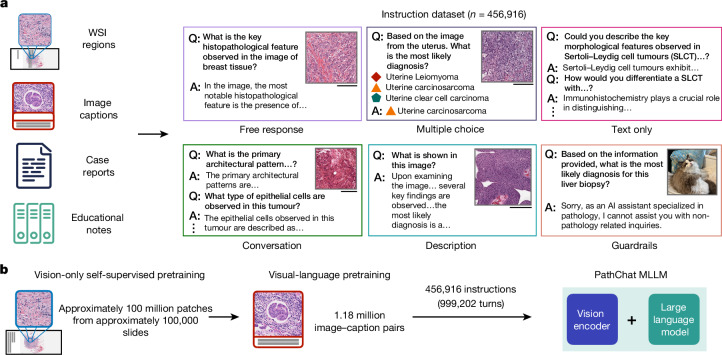
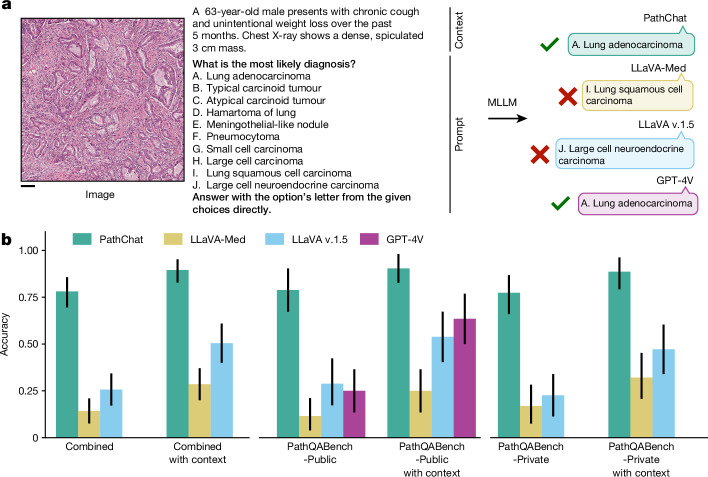
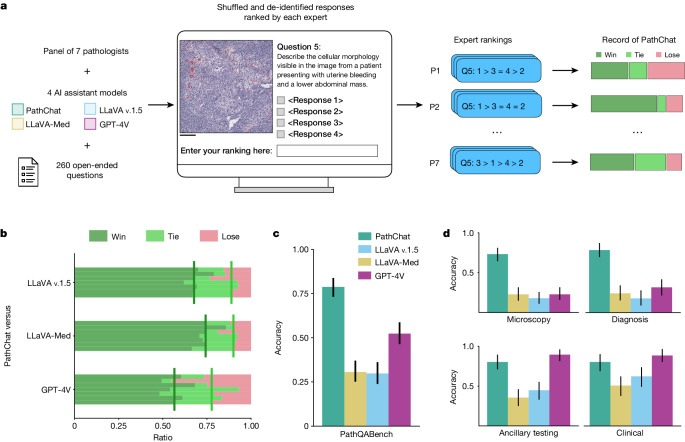
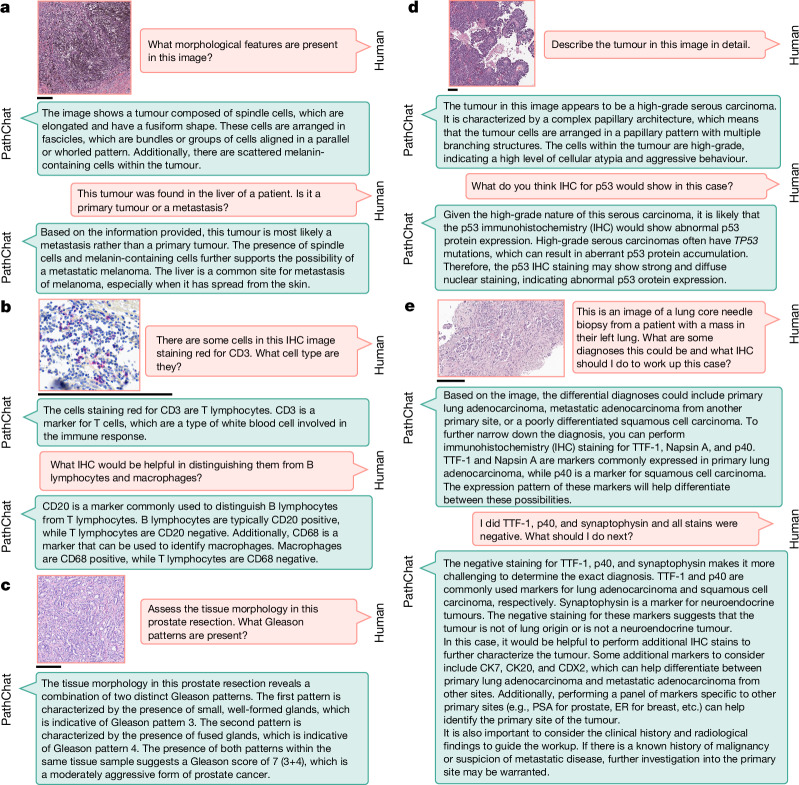
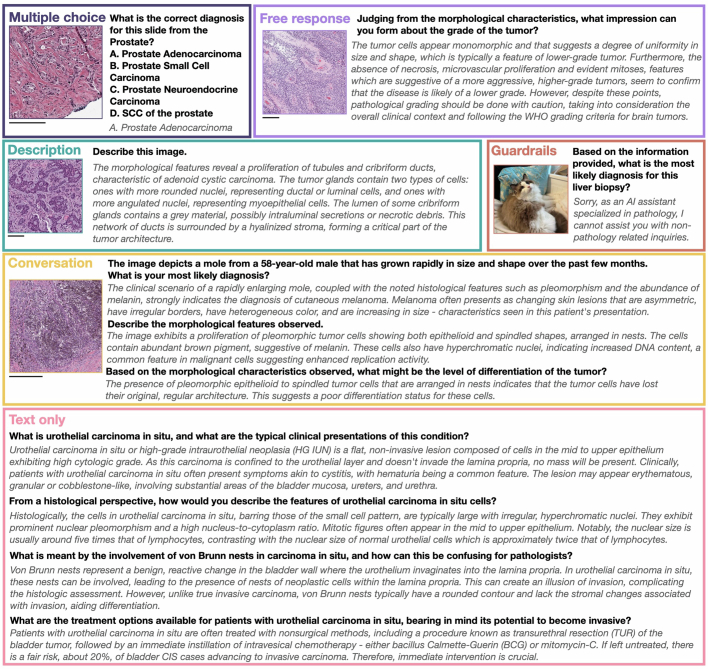
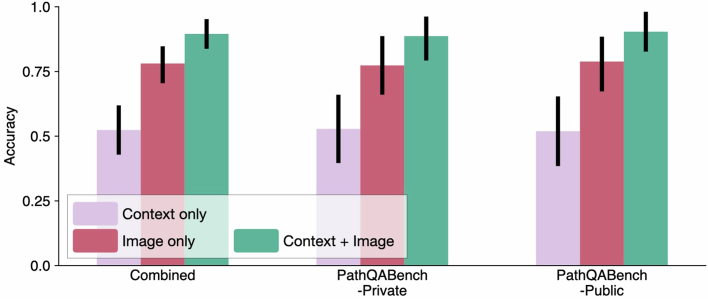
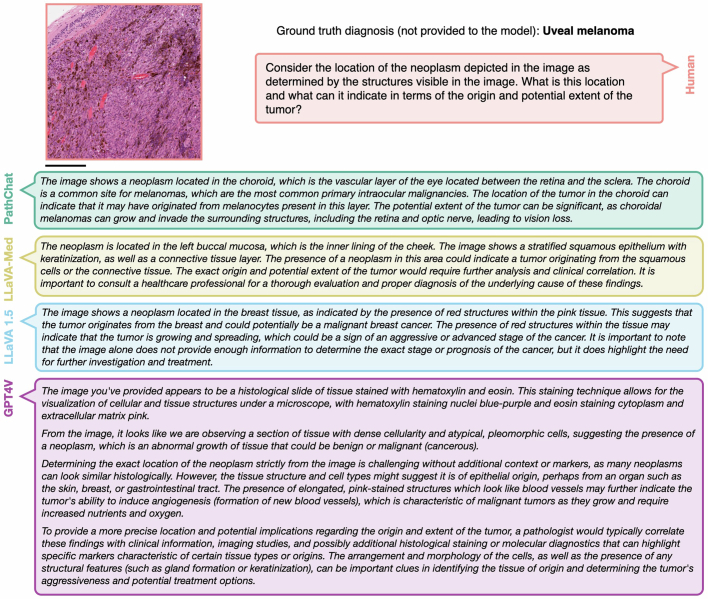
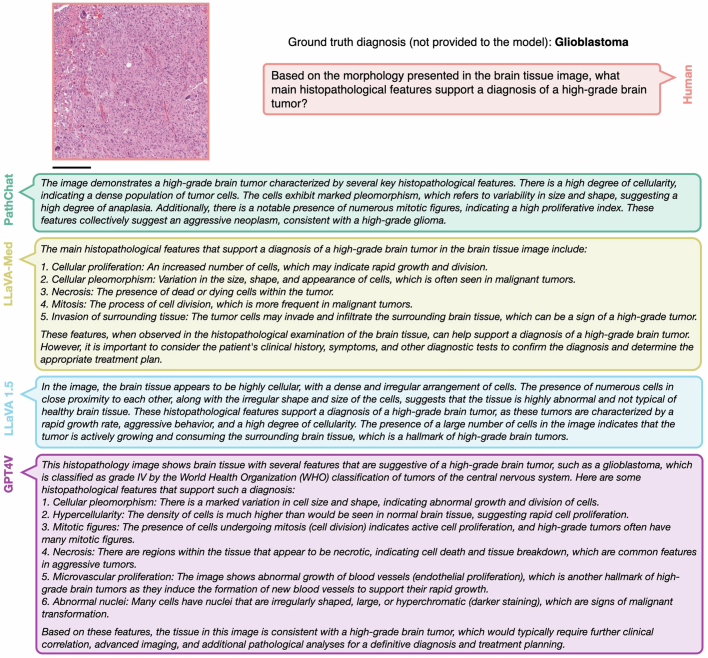
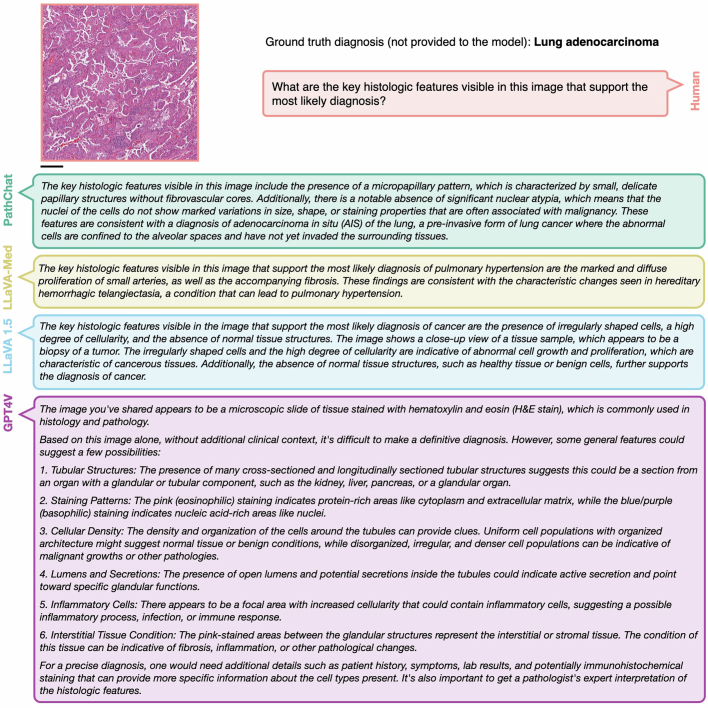
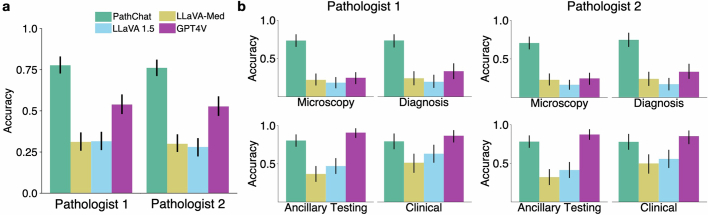
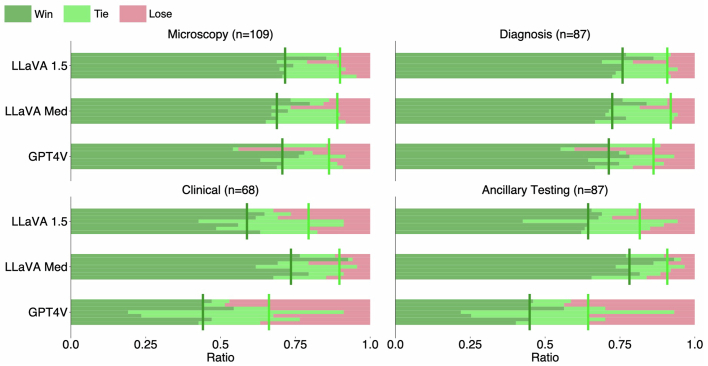
Computational pathology 1,2 has witnessed considerable progress in the development of both task-specific predictive models and task-agnostic self-supervised vision encoders 3,4 . However, despite the explosive growth of generative artificial intelligence (AI), there have been few studies on building general-purpose multimodal AI assistants and copilots 5 tailored to pathology. Here we present PathChat, a vision-language generalist AI assistant for human pathology. We built PathChat by adapting a foundational vision encoder for pathology, combining it with a pretrained large language model and fine-tuning the whole system on over 456,000 diverse visual-language instructions consisting of 999,202 question and answer turns. We compare PathChat with several multimodal vision-language AI assistants and GPT-4V, which powers the commercially available multimodal general-purpose AI assistant ChatGPT-4 (ref. 6 ). PathChat achieved state-of-the-art performance on multiple-choice diagnostic questions from cases with diverse tissue origins and disease models. Furthermore, using open-ended questions and human expert evaluation, we found that overall PathChat produced more accurate and pathologist-preferable responses to diverse queries related to pathology. As an interactive vision-language AI copilot that can flexibly handle both visual and natural language inputs, PathChat may potentially find impactful applications in pathology education, research and human-in-the-loop clinical decision-making.
Overview
The claims and statistics of this paper haven’t been checked yet.
Free: it reads the open-access text and checks the first 5 claims that cite a source we can check. Create a free account to check every claim.
Integrity signals
Registry
Cites
Statistics
Figures
Verification
Claims the paper makes
The claims and statistics of this paper haven’t been checked yet.
Free: it reads the open-access text and checks the first 5 claims that cite a source we can check. Create a free account to check every claim.
Claims other papers make about this one
Each is checked against this paper’s own text: does it say what the citing paper says it does?
The source backs part of the claim, not all of it — or backs it for a different population, condition or comparison.
In the citing paper
“The synthetic region-level captions can easily be generated with the generative AI model to provide a wealth of text guidance88,127.”
From A multimodal whole-slide foundation model for pathology (2025) · cites this paper as [88]
Experimental — accuracy not yet measured
Self-check
Percentages, sums and reported differences re-computed from the paper’s own numbers.
The self-check needs the paper’s full text.
Citations
Cites
Microsoft COCO: Common Objects in Context
Lin, T.-Y., Maire, M., Belongie, S., Hays, J., Perona, P., Ramanan, D., Dollár, P., & Zitnick, C. L. (2014) · Lecture Notes in Computer Science · doi:10.1007/978-3-319-10602-1_48 · Cited by 45,460
Language Models are Few-Shot Learners
Brown, T. B., Mann, B., Ryder, N., Subbiah, M., Kaplan, J., Dhariwal, P., Neelakantan, A., Shyam, P., Sastry, G., Askell, A., et al. (2020) · arXiv · doi:10.48550/arxiv.2005.14165 · Cited by 23,372
Learning Transferable Visual Models From Natural Language Supervision
Radford, A., Kim, J. W., Hallacy, C., Ramesh, A., Goh, G., Agarwal, S., Sastry, G., Askell, A., Mishkin, P., Clark, J., et al. (2021) · arXiv · doi:10.48550/arxiv.2103.00020 · Cited by 15,293
QuPath: Open source software for digital pathology image analysis
Bankhead, P., Loughrey, M. B., Fernández, J. A., Dombrowski, Y., McArt, D. G., Dunne, P. D., McQuaid, S., Gray, R. T., Murray, L. J., Coleman, H. G., et al. (2017) · Scientific Reports · doi:10.1038/s41598-017-17204-5 · Cited by 8,908
Training language models to follow instructions with human feedback
Ouyang, L., Wu, J., Jiang, X., Almeida, D., Wainwright, C. L., Mishkin, P., Zhang, C., Agarwal, S., Slama, K., Ray, A., et al. (2022) · arXiv · doi:10.48550/arxiv.2203.02155 · Cited by 4,208
Large Language Models Encode Clinical Knowledge
Singhal, K., Azizi, S., Tu, T., Mahdavi, S. S., Wei, J., Chung, H. W., Scales, N., Tanwani, A., Cole-Lewis, H., Pfohl, S., et al. (2022) · arXiv · doi:10.48550/arxiv.2212.13138 · Cited by 4,083
Large language models encode clinical knowledge
Singhal, K., Azizi, S., Tu, T., Mahdavi, S. S., Wei, J., Chung, H. W., Scales, N., Tanwani, A., Cole-Lewis, H., Pfohl, S., et al. (2023) · Nature · doi:10.1038/s41586-023-06291-2 · Cited by 4,083
Ehteshami Bejnordi, B., Veta, M., Johannes van Diest, P., van Ginneken, B., Karssemeijer, N., Litjens, G., van der Laak, J. A. W. M., and the CAMELYON16 Consortium, Hermsen, M., Manson, Q. F., et al. (2017) · JAMA · doi:10.1001/jama.2017.14585 · Cited by 3,293
Retrieval-Augmented Generation for Knowledge-Intensive NLP Tasks
Lewis, P., Perez, E., Piktus, A., Petroni, F., Karpukhin, V., Goyal, N., Küttler, H., Lewis, M., Yih, W.-T., Rocktäschel, T., et al. (2020) · arXiv · doi:10.48550/arxiv.2005.11401 · Cited by 3,101
Coudray, N., Ocampo, P. S., Sakellaropoulos, T., Narula, N., Snuderl, M., Fenyö, D., Moreira, A. L., Razavian, N., & Tsirigos, A. (2018) · Nature Medicine · doi:10.1038/s41591-018-0177-5 · Cited by 2,930
Research works printed but not linked: 1
- Tsuneki, M. & Kanavati, F. Inference of captions from histopathological patches. In Proc. International Conference on Medical Imaging with Deep Learning (Konukoglu, E. et al.) 1235–1250 (PMLR, 2022).
Cited by
Items 201–300 of 563
Computational pathology for breast cancer: Where do we stand for prognostic applications?
Gessain, G., & Lacroix‐Triki, M. (2025) · The Breast · doi:10.1016/j.breast.2025.104464 · Cited by 10
“Of interest, Modella.ai has recently built “ PathChat ” , a generative AI model that can deal with images and natural language data, creating a conversational copilot to assist pathologists in analyzing histopathology images and interacting with them [30].”
Foundation models: the next level of AI in ART
Hammer, H. L., Thambawita, V. L., & Riegler, M. A. (2025) · Human Reproduction · doi:10.1093/humrep/deaf136 · Cited by 8
Kim, S., Yang, S., Jung, J., Choi, J., Kang, M., & Joo, J. (2025) · Advanced Science · doi:10.1002/advs.202413786 · Cited by 10
His‐MMDM: Multi‐Domain and Multi‐Omics Translation of Histopathological Images with Diffusion Models
Li, Z., Su, T., Zhang, B., Han, W., Zhang, S., Sun, G., 丛玉炜, Chen, X., Qi, J., Wang, Y., et al. (2026) · Advanced Science · doi:10.1002/advs.202518066 · Cited by 7
PromptBio-Bench: Benchmarking LLM-based Bioinformatics Agents for End-to-End Data AnalysisPreprint
Guo, W., Zhang, M., Han, B., Ma, Y., Leng, Y., Hebbar, S., Zhou, X., Gu, W., Yang, X., & Dhar, S. (2026) · bioRxiv (Cold Spring Harbor Laboratory) · doi:10.64898/2026.05.05.723092 · Cited by 7
Du, S., Liang, S., & Gu, Y. (2025) · Journal of Biomedical Informatics · doi:10.1016/j.jbi.2025.104811 · Cited by 6
Qin, Z., He, Z., Zhang, Y., Shen, Y., & Li, K. (2025) · Pattern Recognition · doi:10.1016/j.patcog.2025.112178 · Cited by 11
From task-specific to foundation models: A paradigm shift in medical vision-language analysis
Ali, M. U., Zafar, A., Kim, S., Kim, K. S., & Lee, S. W. (2025) · Computer Science Review · doi:10.1016/j.cosrev.2025.100831 · Cited by 10
Xinming, X. U., Haoxuan, L. I., Guan, Z., Dian, Z. E. N. G., ZHENG, Q., Qin, Y., Yang, W. E. N., Li, H., Lim, C. T., Wong, T. Y., et al. (2025) · Virtual Reality & Intelligent Hardware · doi:10.1016/j.vrih.2025.08.001 · Cited by 7
Histolytics: A panoptic spatial analysis framework for interpretable histopathology
Lehtonen, O., Nordlund, N. K., Salloum, S., Kalliala, I. E. J., Virtanen, A., & Hautaniemi, S. (2025) · Computational and Structural Biotechnology Journal · doi:10.1016/j.csbj.2025.11.022 · Cited by 6
“To increase the acceptance and trust in these artificial intelligence (AI) predictions, improvements in textual and visual explainability have also been rapid [6 – 9].”
Chen, Y., Jong, M. S., Jiang, M. Y., & Li, M. (2026) · Computer Assisted Language Learning · doi:10.1080/09588221.2026.2664202 · Cited by 7
Safety and security of large language models in healthcare
Clusmann, J., Freyer, O., Ostermann, M., Ferber, D., Laleh, N. G., Hilgers, L., Kolbinger, F. R., Schneider, C. V., Downing, A., Wekenborg, M., et al. (2026) · Nature · doi:10.1038/s41586-026-10687-1 · Cited by 8
From pixels to patients: the evolution and future of deep learning in cancer diagnostics
Yang, Y., Shen, H., Chen, K., & Li, X. (2024) · Trends in Molecular Medicine · doi:10.1016/j.molmed.2024.11.009 · Cited by 7
ALPaCA: Adapting Llama for Pathology Context Analysis to enable slide-level question answering
Gao, Z., He, K., Su, W., Pang, X., Machado, I. P., Jimenez‐Liñan, M., Rous, B., Wang, C., Li, C., McGough, W., et al. (2026) · Nature Communications · doi:10.1038/s41467-026-76372-z · Cited by 7
“Among them, pathology-focused LVLMs 33 – 36 are advancing an emerging direction in computational pathology, enabling pathology descriptions, interactive diagnostics, and even follow-up immunohistochemistry (IHC) recommendations for H&E-stained pathology images.”
Self-citationFloris, G., Djerroudi, L., Zels, G., Schepper, M. D., Richard, F., Brahimaj, R., Derksen, P. W. B., Christgen, M., Lakhani, S. R., van Diest, P. J., et al. (2025) · Modern Pathology · doi:10.1016/j.modpat.2025.100837 · Cited by 6
Innovation in Lung Cancer Management from Herbal Nanomedicine to Artificial Intelligence
Choudhary, F., Naikoo, U. M., Rizwan, A., Kaur, J., Abdin, M. Z., & Farooqi, H. (2025) · Journal of Nanotheranostics · doi:10.3390/jnt6030019 · Cited by 6
Liu, J., Yang, M., Bi, Y., Zhang, J., Yang, Y., Li, Y., Shen, H., Chen, K., & Li, X. (2025) · Cell Reports Medicine · doi:10.1016/j.xcrm.2025.102332 · Cited by 7
“In 36–40 Despite these successes, the application of LLMs in genomic diagnostics remains largely unexplored.”
Yao, L., Gu, T., Li, X., Jiao, Y., Li, M., Graff, J. C., Li, Y., & Gu, W. (2025) · Die Naturwissenschaften · doi:10.1007/s00114-025-02036-5 · Cited by 6
“One example is that PathChat produced more accurate and pathologist-preferable responses to diverse queries related to pathology (Lu et al. 2024).”
A Multimodal Vision-text AI Copilot for Brain Disease Diagnosis and Medical ImagingPreprint
Zhang, G., Gao, Z., Duan, C., Liu, J., Lizhu, Y., Liu, Y., Chen, Q., Wang, L., Fei, K., Wang, T., et al. (2025) · medRxiv · doi:10.1101/2025.01.09.25320293 · Cited by 10
UniBiomed: A Universal Foundation Model for Grounded Biomedical Image Interpretation
Wu, L., Nie, Y., He, S., Zhuang, J., Luo, L., Li, T., Xie, Z., Chen, D., Zhao, Y., Mahboobani, N., et al. (2025) · arXiv · doi:10.48550/arxiv.2504.21336 · Cited by 6
“Visual information from biomedical imaging enables detailed anatomical and functional analysis from cell to organ levels [3–7], while the textual information from diagnostic findings provides fine-grained descriptions for interpreting imaging [8–10].”
Tang, Z., Su, Y., Hansen, P., & Zhang, P. (2026) · Information Processing & Management · doi:10.1016/j.ipm.2026.104668 · Cited by 5
Wang, J., Zhang, S., Li, J., Deng, M., Zeng, Z., Dong, Z., Chen, F.-F., Liu, W., Wu, L., & Yu, H. (2025) · BMC Gastroenterology · doi:10.1186/s12876-025-04045-0 · Cited by 8
Self-citationWatanabe, H., Uehara, O., Morikawa, T., Kojima, T., Suga, T., Toyofuku, A., Takada, S., & Abiko, Y. (2025) · Journal of Dental Sciences · doi:10.1016/j.jds.2025.08.037 · Cited by 5
“4 Notably, AI-based diagnostic tools have been employed in dermatology since the late 1980s.”
Meng, X., Wong, W., Pushpanathan, K., Srinivasan, S., Xue, C., Wang, M., Miao, H., Li, H., Yang, L., Cen, L., et al. (2025) · Eye · doi:10.1038/s41433-025-04013-8 · Cited by 6
Deep learning enhanced label-free cervical screening via stimulated Raman cytology
He, Y., Zhao, M., Zhang, H., Ji, M., & Wang, C. (2025) · Talanta · doi:10.1016/j.talanta.2025.128982 · Cited by 5
Self-citationKhoury, Z. H., & Sultan, A. S. (2025) · Head and Neck Pathology · doi:10.1007/s12105-025-01850-7 · Cited by 5
Patient safety in AI-powered diagnostic pathology
Rugge, M., Fraschini, M., Orvieto, E., Didaci, L., Sandonà, L., D’Amuri, A., Saba, L., & Faa, G. (2025) · Journal of Clinical Pathology · doi:10.1136/jcp-2025-210231 · Cited by 6
“14 49 As a result, GAI-based histology reporting is still a visionary effort that lacks the needed operational context and requires further refinement and clinical validation.”
Evaluating the Reliability of GPT ‐4o in Histological Image Interpretation
Mavrych, V., Yousef, E. M., Yaqinuddin, A., Shaikh, A. A., & Bolgova, O. (2025) · Clinical Anatomy · doi:10.1002/ca.70065 · Cited by 5
Bani, M. A. (2026) · Cancers · doi:10.3390/cancers18030421 · Cited by 5
“Early results indicate consistent gains over unimodal baselines for survival modeling and treatment-response prediction and suggest that multimodal attention maps can surface human-readable rationales that complement heatmaps [75,76].”
Wang, R., Ba, W., Li, Y., Zhou, Y., Liu, B., Wang, B., Wang, Y., Yang, Z., Zhang, K., Yan, R., et al. (2026) · Lecture notes in computer science · doi:10.1007/978-3-032-38059-3_44 · Cited by 5
Liu, X., Hung, K. F., Yu, W., Ng, R. A. W. T., Li, W., Niu, T., Chen, H., & Yuan, Y. (2026) · Cell Reports Medicine · doi:10.1016/j.xcrm.2026.102652 · Cited by 7
“Computer-aided diagnosis (CAD) has been extensively explored in various medical imaging domains, including chest X-ray, 19 skin, 18 and pathology, 16 among others.”
Tackling Cancer through Global Team Science
Eccles, R. L., Carreno, G., de la Rica, L., Balmer, G. M., & Scott, D. (2025) · Cancer Discovery · doi:10.1158/2159-8290.cd-25-0282 · Cited by 5
Position Paper: Unlocking the Potential of AI Researchers in Scientific Discovery—What Is Missing?
Yu, H., Liu, S., Yang, H., Yan, Y., Qu, M., & Jin, Y. (2026) · International Joint Conference on Neural Networks (IJCNN) · doi:10.1109/ijcnn69854.2026.11729527 · Cited by 5
“PathCha [9], a vision-language AI assistant tailored for human pathology, excels in diagnostic accuracy and user preference by integrating a specialized vision encoder with a pretrained LLM. AI has been recognized as a transformative technology and powerful paradigm in various scientific fields…”
scPlantFormer: A Lightweight Foundation Model for Plant Single-Cell Omics AnalysisPreprint
Zhang, X., Xu, J., Chen, D., & Chen, L. (2024) · Research Square · doi:10.21203/rs.3.rs-5219487/v1 · Cited by 7
Revolutionizing Disease Diagnosis with Large Language Models: A Systematic ReviewPreprint
Bojesomo, A., Seghier, M. L., Hadjileontiadis, L. J., & Shehhi, A. A. (2024) · Research Square · doi:10.21203/rs.3.rs-5704278/v1 · Cited by 6
The effect of medical explanations from large language models on diagnostic decisions in radiologyPreprint
Spitzer, P., Hendriks, D., Rudolph, J., Schlaeger, S., Ricke, J., Kühl, N., Hoppe, B. F., & Feuerriegel, S. (2025) · medRxiv · doi:10.1101/2025.03.04.25323357 · Cited by 10
MTBBench: A Multimodal Sequential Clinical Decision-Making Benchmark in OncologyPreprint
Vasilev, K., Misrahi, A., Jain, E., Cheng, P. F., Liakopoulos, P., Michielin, O. A., Moor, M., & Bunne, C. (2025) · arXiv (Cornell University) · doi:10.48550/arxiv.2511.20490 · Cited by 7
“Vision-language models can describe pathology images (Lu et al., 2024a; Dai et al., 2025; Lu et al., 2024b), LLMs can summarize clinical notes (Choudhuri et al., 2025; Yang et al., 2024), and medical agents are increasingly able to query tools, retrieve knowledge, and even hold multi-turn clinical…”
Lingshu: A Generalist Foundation Model for Unified Multimodal Medical Understanding and Reasoning
Xu, W., Chan, H. P., Li, L., Aljunied, M., Yuan, R., Wang, J., Xiao, C., Chen, G., Liu, C., Li, Z., et al. (2025) · arXiv · doi:10.48550/arxiv.2506.07044 · Cited by 4
“These contributions represent a step forward in aligning MLLMs with real-world medical applications.”
Self-citationChristiansen, I. S., Hartvig, R., & Jensen, T. (2025) · Journal of Pathology Informatics · doi:10.1016/j.jpi.2025.100440 · Cited by 4
Shen, X., Zhang, F., Tang, C., Sokóvić, M., Mišić, D. M., Xu, H., Yang, Y., & Liu, J. (2025) · Rapid Communications in Mass Spectrometry · doi:10.1002/rcm.10045 · Cited by 5
“Existing studies highlight the clinical utility of AI in computational pathology, including its application in diagnosis and prognosis [97].”
Enhancing Structured Pathology Report Generation With Foundation Model and Modular Design
Kim, K. A., Hong, S., Yoo, S., Kang, Y., & Shim, H. S. (2025) · IEEE Access · doi:10.1109/access.2025.3588121 · Cited by 6
“Unlike models [18], [19] based on GPT-4V or Gemini 1.5 Flash, which require substantial computational resources for inference, T5-small operates efficiently with as little as 1.5 to 2.2 GB of memory during training, making it more practical for clinical applications.”
InfluentialPrompt injection attacks on vision-language models for surgical decision support
Zhang, Z., Qadir, M. I., Carstens, M., Zhang, E. H., Loiselle, M. S., Martinus, F. M., Mroczkowski, M. K., Clusmann, J., Kather, J. N., & Kolbinger, F. R. (2026) · npj Digital Surgery · doi:10.1038/s44484-026-00014-6 · Cited by 6
Jin, T., Yu, X., Ai, Z., & Guo, H. (2025) · Advanced ultrasound in diagnosis and therapy · doi:10.26599/audt.2025.250104 · Cited by 4
Wei, Y., Mei, Z., Xie, C., Yuan, F., & Xu, D. (2025) · International Journal of Surgery · doi:10.1097/js9.0000000000003828 · Cited by 4
Crayons × Code: Re‐Exploring Children's Drawings With Multimodal AI and Dynamic Ethics
Qu, C. (2025) · Area · doi:10.1111/area.70079 · Cited by 4
Integrating artificial intelligence ( AI ) into colorectal cancer reporting
Bräutigam, K., Baker, A., Koelzer, V. H., Kather, J. N., & Graham, T. A. (2026) · The Journal of Pathology · doi:10.1002/path.70029 · Cited by 4
“Recent developments include generic self-supervised models for tissue classi fi cation and disease subtyping [4], foundation models [5,6] for pan-cancer detection, and large language models (LLMs) such as PathChat, a ChatGPT-like [7] AI-assistant for histopathology [8].”
Inamdar, V., & Shaila, S. G. (2026) · International Journal of Breast Cancer · doi:10.1155/ijbc/5948413 · Cited by 5
“Lu et al. [33] built a multimodal generative AI copilot called PathChat, which combines a pathology-vision encoder with a large-language model for interactive slide interpretation.”
Three‐Dimensional Ag 2 Se Thermoelectric Network Advances Multimodal Intelligent Perception
Yu, F., Sun, P., Liu, Y. J., Wang, X., Hou, S., Wu, Z., Xiao, L., Wang, J., Miao, Z., Mao, J., et al. (2026) · Advanced Energy Materials · doi:10.1002/aenm.202506640 · Cited by 4
Self-citationGenerative AI for multimodal content: a survey with empirical and experimental evaluations
Taha, K. (2026) · Artificial Intelligence Review · doi:10.1007/s10462-026-11525-6 · Cited by 5
Using Large Language Models for Medical Diagnosis: A Survey and Future Trends
Ashqar, R. I., Ashqar, A., Elehnawy, M., & Ashqar, H. I. (2026) · Lecture notes in networks and systems · doi:10.1007/978-3-032-15784-3_30 · Cited by 4
A multi-modal foundation model for brain disease diagnosis and medical imaging
Zhang, G.-X., Gao, Z., Duan, C.-H., Liu, J.-X., Lizhu, Y., Liu, Y., Chen, Q.-Q., Wang, L., Fei, K., Wang, T.-Y., et al. (2026) · Patterns · doi:10.1016/j.patter.2026.101538 · Cited by 3
Huynh, C. D. (2026) · Intelligence-Based Medicine · doi:10.1016/j.ibmed.2026.100386 · Cited by 4
Foundation models in computational pathology: methods, applications and clinical implications
Sali, R., Aschenaki, Y., Leveillee, R. J., Baba, F., Tessema, L., Dixon, C. M., Bachhamba, K., & Zhang, D. Y. (2026) · BMJ Oncology · doi:10.1136/bmjonc-2026-001102 · Cited by 8
Wang, Z., Fang, Y., & Li, Q. (2026) · Journal of Translational Medicine · doi:10.1186/s12967-026-08211-0 · Cited by 4
Sevim, S., Hajar, C., & Sonawane, S. (2026) · Journal of Pathology and Translational Medicine · doi:10.4132/jptm.2026.04.27 · Cited by 5
PathFound: An agentic multimodal model activating evidence-seeking pathological diagnosis
Hua, S., Wu, J., Shen, T., Hu, K., Huang, Z., Ni, S., Zhang, Z., Li, Y., Wang, Z., & Zhang, X. (2026) · Medical Image Analysis · doi:10.1016/j.media.2026.104200 · Cited by 7
Generative artificial intelligence (AI): a key innovation or just hype in primary care settings?
Rahmanti, A. R., Iqbal, U., Reddy, S., Gao, X. W., Nguyen, H. X., & Li, Y. (2024) · BMJ Health & Care Informatics · doi:10.1136/bmjhci-2024-101367 · Cited by 4
Ma, R., Zhou, L., Jiang, S., Zhao, X., Ma, R., Sun, J., Xia, L., Liu, X., Wang, X., Meng, Q., et al. (2025) · Analytical Chemistry · doi:10.1021/acs.analchem.5c00023 · Cited by 4
Precision oncology: from large language models to multi-agent systems
Guo, X., Chen, J., Zhang, Y., Zhang, X., Lu, J., Qin, Q., Chen, J., Gao, X., & Wang, J. (2026) · Frontiers in Oncology · doi:10.3389/fonc.2026.1828507 · Cited by 5
“Foundation models represented by TITAN (65) and PathChat (66) can directly integrate WSIs with clinical records.”
Self-citationHighlighting recent achievements to advance more effective cancer immunotherapy
Belmonte, B., Spada, S., Allavena, P., Benelli, M., Bronte, V., Casorati, G., D’Ambrosio, L., Ferrara, R., Mondino, A., Nisticò, P., et al. (2025) · Journal of Experimental & Clinical Cancer Research · doi:10.1186/s13046-025-03316-8 · Cited by 4
Diagnosing Autoimmune Hepatitis: Histological Correlations and Emerging Technologies
Cazzaniga, G., Bolis, F., Caime, C., Piazza, R., Žigutytė, L., Kather, J. N., Pagni, F., Invernizzi, P., Carbone, M., & Gerussi, A. (2025) · Liver International · doi:10.1111/liv.70377 · Cited by 4
“…interfaces, pathologists can pose free-text queries (such as requests for regional inflammatory cell densities or the spatial distribution of fibrosis) and receive instant, evidence-referenced insights that bridge the gap between high-dimensional image data and clinical decision making [140, 141].”
Multimodal Generative AI in Diagnostics: Bridging Medical Imaging and Clinical ReasoningPreprint
Maleki, M., & Ghahari, S. (2025) · Preprints.org · doi:10.20944/preprints202508.1425.v1 · Cited by 6
Xu, J., Jiang, M., Koga, S., Zhang, N. R., & Huang, Z. (2026) · Frontiers in Bioinformatics · doi:10.3389/fbinf.2026.1746714 · Cited by 3
“This metric captures the overall spatial agreement of the entire top-K set, accounting for the 8 × 8 patch window size when computing bounding box overlaps.”
ConVLM: Context-guided vision-language model for fine-grained histopathology image classification
Sohail, A., Ganapathi, I. I., Alawode, B., Javed, S., Bennamoun, M., & Mahmood, A. (2025) · Information Fusion · doi:10.1016/j.inffus.2025.103737 · Cited by 6
Historical Report Guided Bi-modal Concurrent Learning for Pathology Report Generation
Zhang, L., Yun, B., Li, Q., & Wang, Y. (2025) · Lecture notes in computer science · doi:10.1007/978-3-032-04978-0_33 · Cited by 8
Meng, H., Tang, Y., Qi, Y., Zhou, Q., He, L., & Chen, S. (2025) · Frontiers in Artificial Intelligence · doi:10.3389/frai.2025.1638904 · Cited by 3
“Tools like OpenAI’s ChatGPT (Liu et al., 2024), PathChat (Lu et al., 2024), and Microsoft’s Copilot (Daza et al., 2024) have far surpassed their original scope as language models and now significantly contribute to medical diagnostics and decision-making across (Dave et al., 2023).”
Cui, H., Zhang, Z., Zhang, J., Du, C., Zhang, W., & Cui, H. (2025) · Aesthetic Plastic Surgery · doi:10.1007/s00266-025-05393-8 · Cited by 3
“For instance, LLMs have demonstrated strong auxiliary diagnostic capabilities in radiology [7], pathology [8], and dermatology [9], which rely heavily on image analysis.”
Universal and transferable attacks on pathology foundation models using microscopic perturbations
Wang, Y., Yang, X., Shen, C., Dong, S., Pillar, N., & Özcan, A. (2026) · Light Science & Applications · doi:10.1038/s41377-026-02347-w · Cited by 3
“…cial Intelligence (AI) into computational pathology, utilizing general-purpose foundation models, has signi fi cantly enhanced performance on a vast range of tasks, including cancer detection, subtyping, grading, and staging 1 – 6 , compared to task-expert AI models that specialize in only one task.”
The AI-powered pathologist: A global survey mapping initial trends in AI adoption and outlook
Herman, M. K., Qazi, S., Farrell, E., Song, J., Cecchini, M. J., Mirza, K., Bui, M. M., & Hacking, S. M. (2025) · Journal of Pathology Informatics · doi:10.1016/j.jpi.2025.100526 · Cited by 3
Marins, L. V., Pacca, A. M., Campos, C. F. F., de Oliveira, I. M., Monteiro, G. B. M., Souza, J. P. S. D. E., Perez, M. A. G., Furtado, L. B., da Silva, S. R. L., Santana, F. A. D. O., et al. (2025) · Surgical and Experimental Pathology · doi:10.1186/s42047-025-00210-7 · Cited by 3
Leveraging large language models to analyze solid dosage disintegration images
Chen, S., Yang, Y., Mi, Z., Deng, L., & Fu, Y. S. (2025) · Acta Pharmaceutica Sinica B · doi:10.1016/j.apsb.2025.11.019 · Cited by 3
Balan, J., & Larson, N. B. (2025) · Scientific Reports · doi:10.1038/s41598-025-30947-w · Cited by 3
Foundation models: Insights and implications for gastrointestinal cancer
Shi, L., Huang, R., Zhao, L.-L., & Guo, A.-J. (2025) · World Journal of Gastroenterology · doi:10.3748/wjg.v31.i47.112921 · Cited by 5
WSISum: WSI summarization via dual-level semantic reconstruction
Wang, B., Zhang, K., Wang, Y., Gu, Y., Luan, H., Zhou, Y., Hu, T., Wang, R., Yang, Z., Jiang, Z., et al. (2026) · Medical Image Analysis · doi:10.1016/j.media.2026.103970 · Cited by 6
Sarwal, R. D., Tarca, V., Dubin, C. A., Kalavros, N., Bhatti, G., Bhattacharya, S., Butte, A. J., Romero, R., Stolovitzky, G. A., Oskotsky, T., et al. (2026) · Cell Reports Medicine · doi:10.1016/j.xcrm.2026.102594 · Cited by 3
Cheng, Y., Azouzi, N., Laurent-Bellue, A., Guo, Z., Chung, T., Zeng, Q., Ghodsifard, A., Albrecht, T., Roessler, S. K., Boulagnon‐Rombi, C., et al. (2026) · Annals of Oncology · doi:10.1016/j.annonc.2026.02.018 · Cited by 4
Patel, A., Vallamchetla, S. K., Safa, A., Tatit, C. P., Bestic, O., Knox, A. K., Roberts, M., Tatum, W. O., & Freund, B. E. (2026) · Scientific Reports · doi:10.1038/s41598-026-46333-z · Cited by 3
“More recently, a new class of general-purpose, multimodal large language models (LLMs) have demonstrated the ability to process and reason across different data types, including video, audio, and text by leveraging advanced computer vision and natural language processing capabilities 6,19,20 .”
Self-citationCheng, F., Li, Q., He, L., Li, H., Brooks, B. W., Yu, Z., & You, J. (2026) · Environmental Science & Technology · doi:10.1021/acs.est.6c01342 · Cited by 4
Tracing the Pen: Electronic Health Records Amid the Rise of Generative AI
Nargesi, A. A., You, J. G.-T., Bitterman, D. S., Succi, M. D., Mishuris, R. G., Poon, E. G., & Landman, A. (2026) · npj Digital Medicine · doi:10.1038/s41746-026-02508-6 · Cited by 4
“With digitalization of anatomical pathology slides, 30 .”
Evaluating the diagnostic performance of multimodal large language models in thyroid cytology
Laohawetwanit, T., Dixit, S., Agarwal, S., Yoshikawa, A. L., & Bychkov, A. (2026) · Human Pathology · doi:10.1016/j.humpath.2026.106156 · Cited by 3
Spatial biomarker discovery via interpretable semantic learning in histopathology
Liang, J., Jiang, X., Reitsam, N. G., Lenz, T., Zhang, L., Gustav, M., Carrero, Z. I., Muti, H. S., Neidlinger, P., Clusmann, J., et al. (2026) · Cancer Cell · doi:10.1016/j.ccell.2026.05.014 · Cited by 6
Shi, P., Li, J., Yang, Z., Cao, Y., Ju, L., Bao, H., Xu, H., Fan, Y., Ren, T., Xiao, Y., et al. (2026) · npj Digital Medicine · doi:10.1038/s41746-026-02942-6 · Cited by 4
“2 and 6).”
Sajjad, U., Crossland, N. A., Gürcan, M. N., Beamer, G., & Niazi, M. K. K. (2026) · PLoS ONE · doi:10.1371/journal.pone.0358334 · Cited by 3
Pande, A., Kumar, A., & Anjankar, A. P. (2025) · Multidisciplinary Reviews · doi:10.31893/multirev.2025218 · Cited by 3
“By employing powerful machine learning, AI can assess diverse types of clinical data, such as genetics, pictures, and real-time health monitoring, to recommend individualised therapies and forecast how well they work (Lu et al., 2024).”
Smartphone assisted telepathology: A review
Tanveer, N., & Naz, F. (2025) · Annals of Diagnostic Pathology · doi:10.1016/j.anndiagpath.2025.152493 · Cited by 3
Dong, X., Yu, W., Lin, J., Guo, Z., Wang, H., & Yang, J. (2026) · Surveys in Geophysics · doi:10.1007/s10712-026-09957-4 · Cited by 5
Ramanathan, V., Xu, T., Pati, P., Ahmed, F., Goubran, M., & Martel, A. L. (2025) · IEEE/CVF International Conference on Computer Vision (ICCV) · doi:10.1109/iccv51701.2025.02217 · Cited by 5
“WSI-Text Alignment : Recent vision-language models (e.g. CLIP [53], CoCa [74], Llava [42], and BLIP-2 [39]) have advanced text alignment at the patch-level in digital pathology [44, 45, 80].”
Challenges, Limitations, and Ethical Considerations of AI in Immunology and Healthcare
Rajchenberg, D., Hess, R., Lins, M. P., Manor, A., Degany, O., & Shoenfeld, Y. (2025) · Advances in computational intelligence and robotics book series · doi:10.4018/979-8-3693-9725-1.ch014 · Cited by 5
Concept-Guided Backdoor Attack on Vision Language ModelsPreprint
Shen, H., Lyu, W., Xu, H., & Ma, T. (2025) · arXiv (Cornell University) · doi:10.48550/arxiv.2512.00713 · Cited by 3
“…adopted for tasks such as image captioning and visual question answering(VQA), spanning both everyday applications and specialized domains like biomedicine (Li et al., 2023a; Lu et al., 2024), recommender systems (Liu et al., 2024; Tian et al., 2024a) and autonomous driving (Tian et al., 2024b).”
Modeling patient tissues at molecular resolution with EvaPreprint
Liu, Y., Sharma, R., Bieniosek, M. F., Kang, A., Wu, E., Chou, P., Li, I., Rahim, M. K., Bauer, E., Ji, R., et al. (2025) · bioRxiv (Cold Spring Harbor Laboratory) · doi:10.64898/2025.12.10.693553 · Cited by 7
“Some approaches further incorporated semantic information from internet captions [15] or clinical annotations [16].”
Characterizing Interpretive and Diagnostic Competency Development in Pathology Training
Brunyé, T. T., Shucard, H. L., Eguchi, M., Drew, T., Marotti, J. D., Lomo, L. C., Kilgore, M., Allison, K. H., Kerr, K. F., Elmore, J. G., et al. (2025) · Modern Pathology · doi:10.1016/j.modpat.2025.100802 · Cited by 2
Toh, H. J., Chan, H. Y., Ploug, T., Holm, S., & Lysaght, T. (2025) · Asian Bioethics Review · doi:10.1007/s41649-025-00380-2 · Cited by 2
“Some examples are ClinicalBERT (Huang et al. 2019) that predicts hospital readmission risk based on unstructured clinical text data in electronic health records, PathChat (Lu et al. 2024) that is used as clinical decision support (CDS) to analyse histopathology images and suggest diagnosis, and algorithms such as deep…”
Wang, L., Tian, F., Li, F., Wu, M., Hou, L., Wang, J., Zhao, J., Feng, X., Li, C., Wang, X., et al. (2025) · EBioMedicine · doi:10.1016/j.ebiom.2025.106060 · Cited by 3
“18 VLMs can analyse multi-level features within imaging data and align visual and linguistic modalities, 19 linking imaging information to pathology text to generate rich and semantically coherent predictions.”
Self-citationA pretrained foundation model for headache disorders based on magnetoencephalography
Liao, P., Liang, J., Qiu, D., Lin, C., Xiong, Z., Wang, H., Gao, J., Wang, Y., & Lyu, B. (2025) · Journal of Neural Engineering · doi:10.1088/1741-2552/ae2805 · Cited by 2
“…applications, foundation models have demonstrated significant potential in extracting pathological features and facilitating clinical diagnosis (Lu et al 2024, Wang et al 2024b), including tumor segmentation based on structural MRI (Chen et al 2024, Cox et al 2024) and disease detection in…”
Hahnfeldt, R., Laukamp, K. R., Schönfeld, M. H., Galldiks, N., Werner, J.-M., Fervers, P., Görtz, L., Gertz, R. J., Nelles, C., Nasirov, N., et al. (2025) · European Journal of Radiology Artificial Intelligence · doi:10.1016/j.ejrai.2025.100054 · Cited by 2
Tang, Z., Chen, L., Wang, L., Jiang, Y., Li, J., & Wang, X. (2025) · Lecture notes in computer science · doi:10.1007/978-3-032-10351-2_12 · Cited by 2
Opportunities and challenges of artificial intelligence in hepatology
Morel, S. M. G., Wu, S., Kendall, T. J., Guha, I. N., & Fallowfield, J. A. (2026) · npj gut and liver. · doi:10.1038/s44355-025-00052-w · Cited by 2
“A more generalist domain-speci fi c vision language model for pathology, PathChat, was also recently introduced 110 .”
Zhang, S., Wang, J., & An, D. (2026) · IEEE Internet of Things Journal · doi:10.1109/jiot.2026.3664119 · Cited by 2
“PathChat [36] achieved diagnostic accuracy surpassing GPT-4V through large-scale vision–language fine-tuning, and MMGRec [37] introduced relation-aware self-attention for nonsequential interaction modeling.”
Self-citationIntelligent histology for tumor neurosurgery
Hou, X., Kondepudi, A., Jiang, C., Lyu, Y., Harake, E. S., Chowdury, A., Meißner, A.-K., Neuschmelting, V., Reinecke, D., Fürtjes, G., et al. (2026) · Neuro-Oncology Advances · doi:10.1093/noajnl/vdag065 · Cited by 2
“Recent computational pathology models have embraced multimodal learning to improve performance across multiple cancer types and include visual question answering [55].”
Data- and knowledge-driven multimodal learning in computational pathology: A comprehensive survey
Liu, M., Cai, C., Chen, D., Li, J., Li, J., Ming, W., & Xu, J. (2026) · EngMedicine · doi:10.1016/j.engmed.2026.100132 · Cited by 3
Metadata
- Authors
- Lu, M. Y., Chen, B., Williamson, D. F. K., Chen, R. J., Zhao, M., Chow, A. K., Ikemura, K., Kim, A., Pouli, D., Patel, A., Soliman, A., Chen, C., Ding, T., Wang, J. J., Gerber, G., Liang, I., Le, L. P., Parwani, A. V., Weishaupt, L. L., & Mahmood, F.
- Affiliations
- Broad Institute (US)
- Brigham and Women's Hospital (US)
- The Ohio State University Wexner Medical Center (US)
- Mayo Clinic (US)
- Harvard University (US)
- Corresponding author
- Mahmood, Faisal
- ORCID
- Venue
- Nature
- Published
- 2024-06-12
- Volume
- 634
- Issue
- 8033
- Pages
- 466-473
- ISSN
- 0028-0836 (ISSN-L)
- 1476-4687
- PMC
- PMC11464372
- OpenAlex
- W4399567248
- Semantic Scholar
- 15074299f9b3cfd1230f29fca3a26236dc8681b8
- Cited by
- 461
- References
- 68
- Citations by year
- 2026: 189 · 2025: 229 · 2024: 43
- FWCI
- 64.68
- Type
- journal article
- Language
- en
- Open access
- hybrid
- doi.org
- Licence
- cc-by
- creativecommons.org/licenses/by/4.0 (tdm)
- creativecommons.org/licenses/by/4.0 (vor)
- Locations
- Nature (publishedVersion, cc-by)
- PubMed Central (publishedVersion, cc-by)
- PubMed (publishedVersion)
- Digital Access to Scholarship at Harvard (DASH) (Harvard University) (submittedVersion, cc-by)
- RePEc: Research Papers in Economics (submittedVersion)
- Funders
- National Institute of General Medical Sciences (R35GM149270)
- Topics
- Physical Sciences › Computer Science › Computer Vision and Pattern Recognition › Multimodal Machine Learning Applications
- Health Sciences › Medicine › Health Informatics › Artificial Intelligence in Healthcare and Education
- Physical Sciences › Computer Science › Artificial Intelligence › AI in cancer detection
- Keywords
- vision-language models, computational pathology, large language models, pathology education, clinical decision support, human-in-the-loop
- MeSH terms
- Clinical Decision-Making, Artificial Intelligence, Diagnostic Imaging, Female, Humans, Language, Male, Natural Language Processing, Pathology
About these checks
Registry, retraction, Cites and statistics results are computed, not judged, with one exception: a printed reference that no index lists is read once by a model before it counts as a citation error. Claims are extracted by a model and kept only when their quote appears verbatim in the text; each cited source is then checked, with a model’s help, for whether it says what the claim relies on. Those verdicts can be wrong — read the claim’s quote and the cited source before relying on one.
Statistics and arithmetic are recomputed, not judged.
Confidence bands are shown only for fields calibrated on our annotated test set. None is calibrated yet, so no band is shown.
What counts as a claim ›How we measure confidence ›How we check this ›
Are you an author, or do you see a problem with this page? Request a review
Data sources
Bibliographic data: Semantic Scholar, OpenAlex, Crossref.
Contains information from the Semantic Scholar Academic Graph Datasets, made available under the ODC Attribution License (ODC-BY 1.0).
Semantic Scholar’s data is described in: Kinney, R., et al. (2023). The Semantic Scholar Open Data Platform. arXiv:2301.10140.
