

A Drosophila computational brain model reveals sensorimotor processing
Open accessPublished version of a preprint
The DOI matches its Crossref record; 104 of the 104 references it cites were found in a registry or an index; 79 of the 94 sources its claims cite were checked for support.
Abstract
We create a leaky integrate-and-fire computational model of the entire Drosophila brain, on the basis of neural connectivity and neurotransmitter identity, to study circuit properties of feeding and grooming behaviours.
Overview
CoChat Summary
## TL;DR
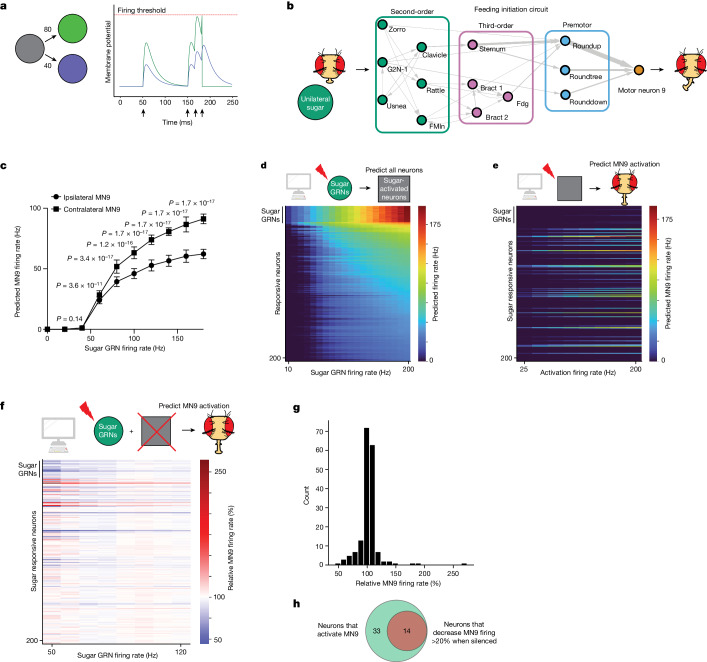
The paper builds a whole-brain leaky integrate-and-fire model of the adult Drosophila central brain using FlyWire connectivity and neurotransmitter predictions, and shows it can predict sensorimotor transformations in feeding and grooming circuits. Across 164 experimentally testable predictions, 91% matched empirical results, with especially strong performance on taste pathways and the antennal grooming circuit.
## Key findings
- The model used all FlyWire neurons: 127,400 proofread neurons from connectome materialization v.630, with more than 125,000 neurons and 50 million synaptic connections in the underlying adult central brain connectome.
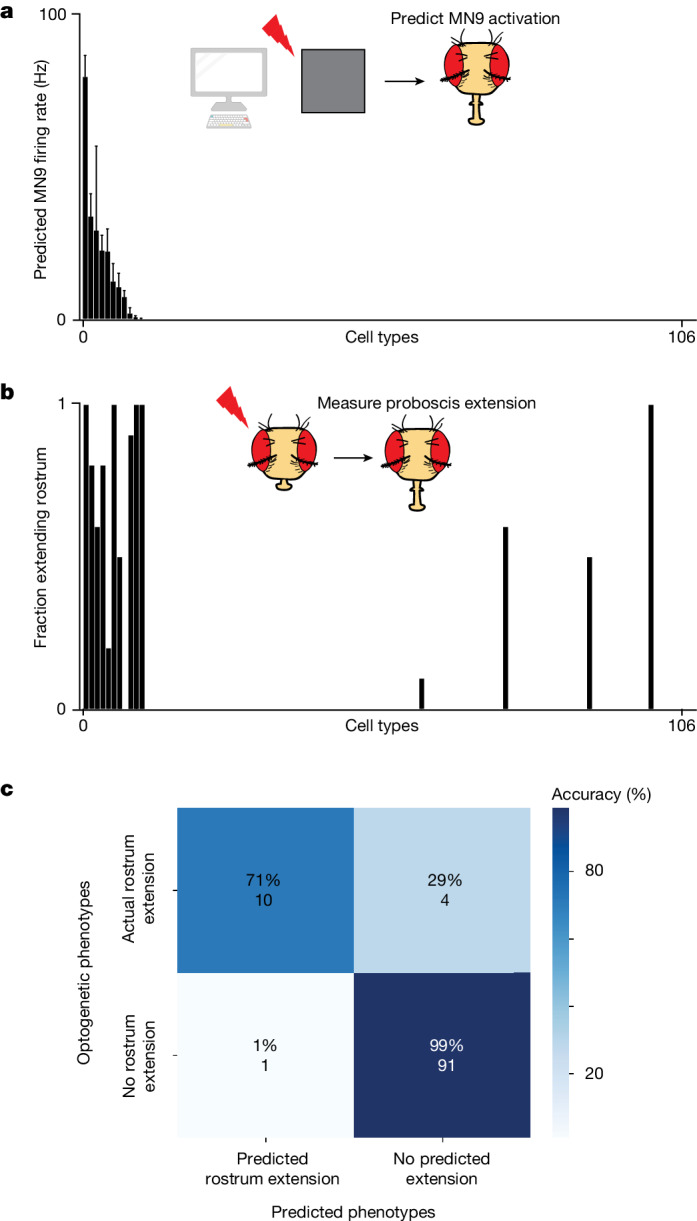
- Across 164 predictions that could be tested empirically, 91% were consistent with experimental results; excluding the optogenetic split-GAL4 experiments, accuracy was 84%.
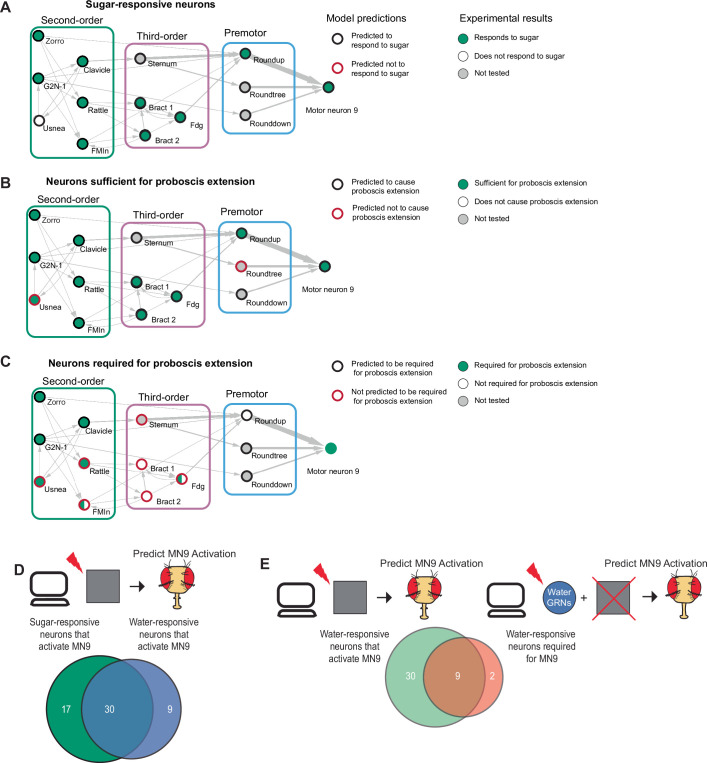
- For feeding initiation, the model predicted that activating sugar GRNs activates proboscis motor neurons including MN6, MN8, MN9, and MN11; in total, it identified 47 neurons predicted to be sugar-responsive and sufficient for feeding initiation, with 14 also predicted to be required for MN9 activity.
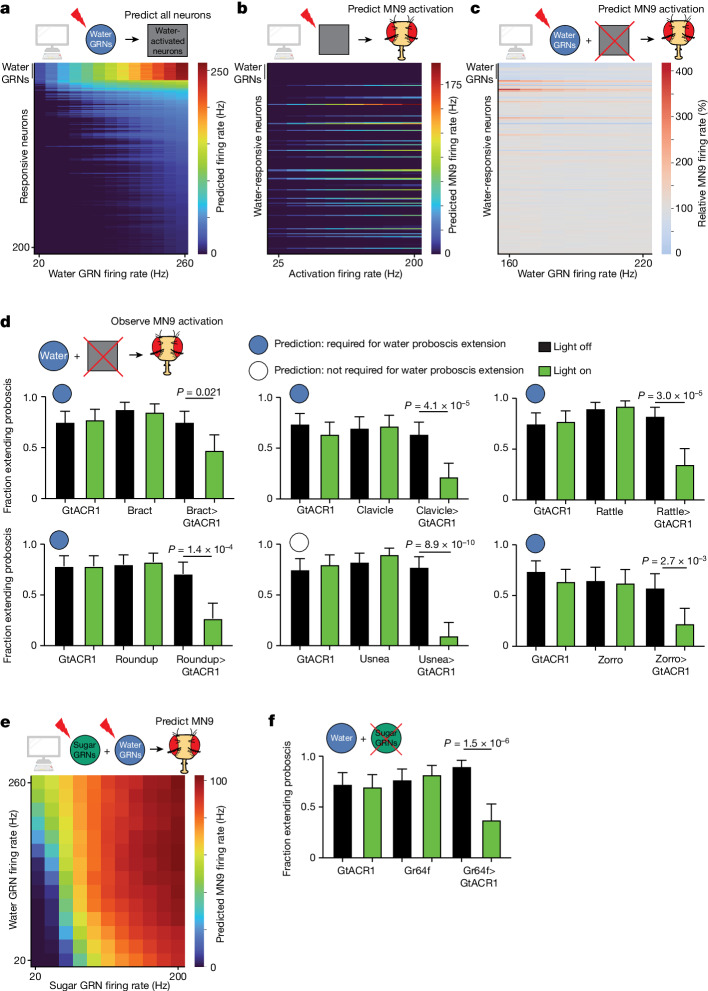
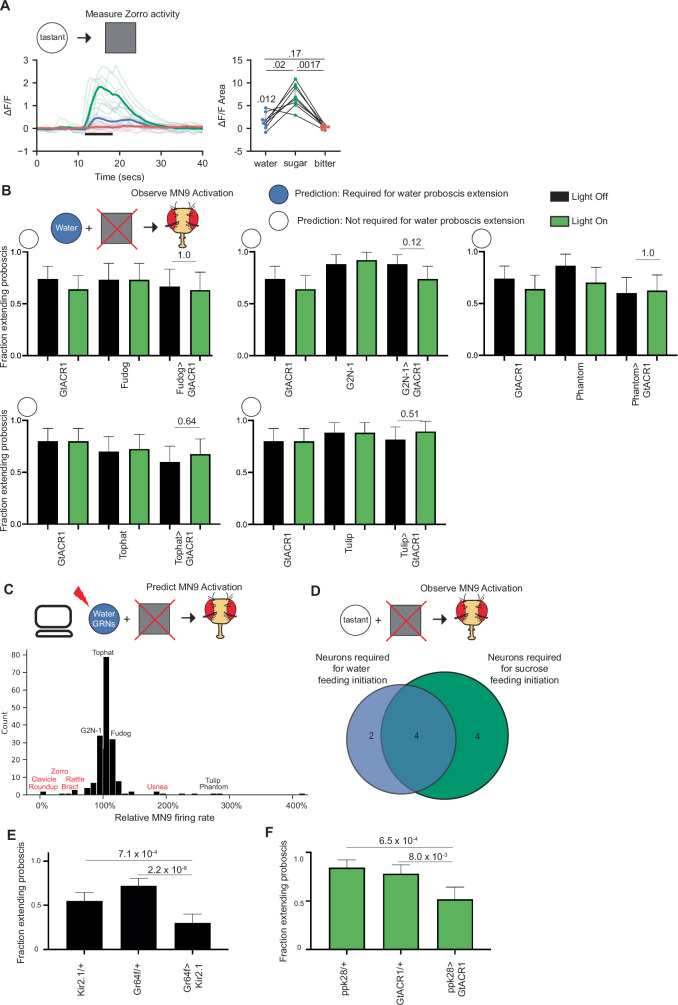
- In the water pathway, the model identified 39 water-responsive neurons sufficient for MN9 activation and 9 neurons predicted to be both necessary and sufficient for water feeding initiation; experiments confirmed water responses in Fudog and Zorro and showed 5 of 6 predicted water-silencing neurons decreased proboscis extension.
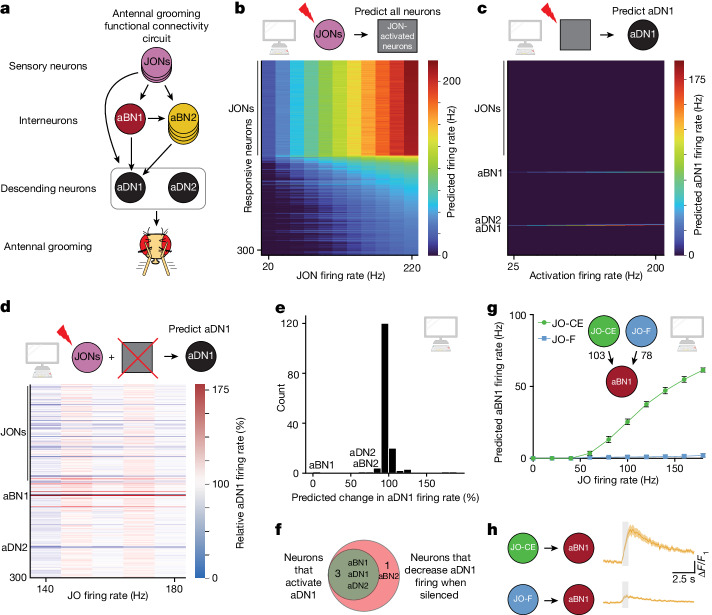
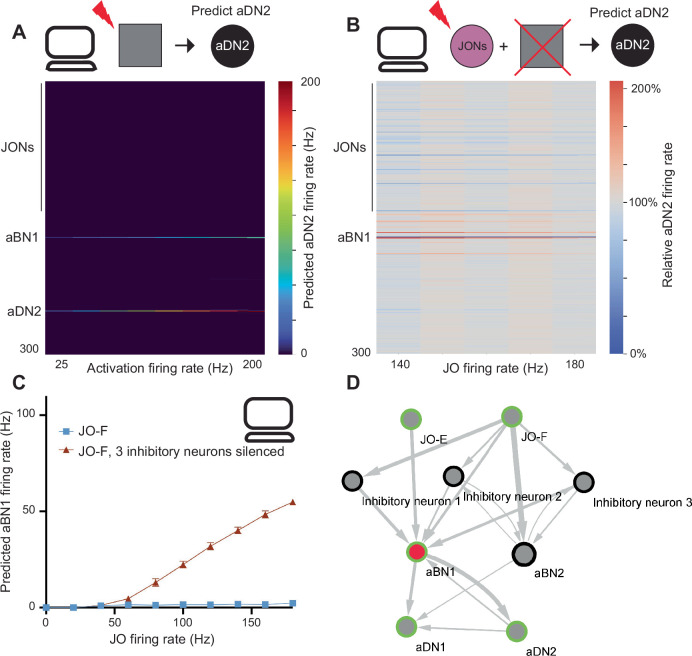
- For antennal grooming, the model identified aBN1, aBN2, aDN1, and aDN2 as JON-responsive; it predicted that JO-CE activates aBN1 robustly while JO-F does not, which was confirmed by calcium imaging.
## Methods
- Built a whole-brain leaky integrate-and-fire spiking model in Brian2 using FlyWire synaptic weights and neurotransmitter predictions, with Wsyn = 0.275 mV as the single free parameter; baseline firing was assumed to be 0 Hz.
- Simulated sensory input by driving specific neurons with Poisson-distributed firing and ran 30 simulations of 1,000 ms per experiment; for taste circuits, activation frequencies ranged from 10–200 Hz for sugar and 20–260 Hz for water.
- Validated predictions with optogenetics, silencing, calcium imaging, and behavioural PER assays in flies, including screens of SEZ split-GAL4 lines and experiments on taste and antennal grooming circuits.
## Limitations
- Stated by the paper: the model treats neurons as only excitatory or inhibitory, ignores neural morphology, receptor dynamics, gap junctions, neuropeptides, neuromodulation, and non-spiking neurons, and assumes basal firing of 0 Hz; therefore, absolute firing rates are unlikely to be accurate.
- Stated by the paper: the model may perform poorly in circuits with extensive basal inhibition or extensive neuromodulation/extrasynaptic signalling, and its accuracy is limited by the accuracy of the underlying synapse and neurotransmitter predictions.
- Evident from the text: many validations are based on a relatively small number of specifically chosen circuits and genetic lines, so the results may not generalize to all brain regions or behaviours.
Model-written summary. Check it against the paper before relying on it.
Integrity signals
Registry
Cites
Statistics
Figures
Verification
Claims the paper makes
42 Valid · 4 Not valid · 2 Not checked · 111 Own results and interpretations
At least one cited source doesn’t support this claim or points to a different paper, and none confirmed it — see the verdicts below.
In the paper
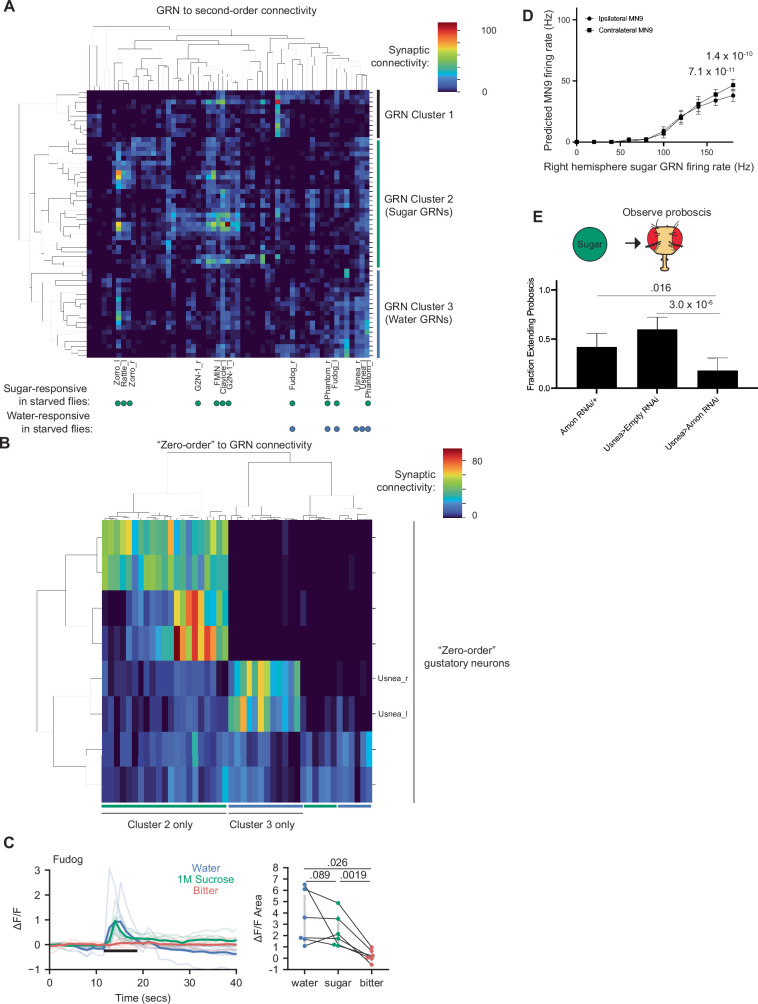
“Our calcium imaging experiments (Extended Data Figs. 1c and 3a) combined with previous experiments4 confirm that five neurons predicted to respond to sugar and water do respond to both sugar and water in vivo: Clavicle, Fudog, Phantom, Rattle and Zorro.”
§ A Drosophila computational brain model reveals sensorimotor processing > Main
What the sources say
- Disputedcites [4] Shiu, P. K., Sterne, G. R., Engert, S., Dickson, B. J. & Scott, K. Taste quality and hunger interactions in a feeding sensorimotor circuit. eLife 11, e79887 (2022). 35791902 PMC9292995 sourceExperimental — accuracy not yet measured
The Results section, “Feeding initiation neurons respond to sugar taste detection” (page unavailable), reports that Phantom responded to both water and sugar, but Clavicle did so only in a thirsty-like state. It says the other sugar-responsive neurons did not respond to water in food-deprived flies, contrary to the claim that all five named neurons were confirmed to respond to both. (LLM, conf=0.88)
Checked by a reasoning model — may be wrong.
plainstates an association- Asserted: passes — The authors put it forward as true.
- Checkable: passes — It can be checked against evidence.
- Load-bearing: passes — The paper’s conclusions depend on it.
- Based: passes — The paper gives a reason why it holds.
- Disputed
At least one cited source doesn’t support this claim or points to a different paper, and none confirmed it — see the verdicts below.
In the paper
“Thus, we conclude that cluster 2 corresponds to sugar GRNs, consistent with their previous assignment23, and cluster 3 corresponds to water GRNs.”
§ A Drosophila computational brain model reveals sensorimotor processing > Methods > Classification of GRNs Bitter and Ir94e GRNs were identified previously by their distinctive morphology23. Water and sugar GRNs were identified previously by morphology; to confirm these assignments and to incorporate new GRNs identified in Flywire, we performed hierarchical clustering using the connectivity of GRNs onto second-order neurons, using cosine distance as a measure of similarity70. This identified three broad clusters of GRNs (Extended Data Fig. 1a). We compared this clustering with the response properties of second-order neurons in starved flies, the nutritional state for which we have the most complete data4. Cluster 2 GRNs synapse onto, among others, G2N-1 and FMIN, which respond exclusively to sugar. Cluster 3 neurons synapse comparatively strongly onto Fudog and Phantom, which respond to both water and sugar in starved flies; cluster 3 neurons also synapse more strongly, on average, onto Usnea than cluster 2 neurons. Usnea responds exclusively to water. Thus, we conclude that cluster 2 corresponds to sugar GRNs, consistent with their previous assignment23, and cluster 3 corresponds to water GRNs. We speculate that cluster 1 GRNs are Ppk23-glut GRNs31 that may respond to salt; however, little is known about this pathway, making testing this hypothesis challenging. We also examined the connectivity of ‘zero-order’ gustatory neurons onto cluster 2 and 3 GRNs. This clustering corresponds strongly with the GRN to second-order clustering (Extended Data Fig. 1), verifying that these clusters reflect distinct taste modalities. As a conservative measure, we chose to examine only those sugar GRNs that fully correspond between the GRN to second-order clustering and the zero-order to GRN clustering. Recently, the FlyWire brain (FAFB) dataset (on the basis of which the Flywire dataset was prepared) was found to be left–right inverted1,2. In this paper, we refer to the true biological side. Thus, we note that ‘right hemisphere GRNs’ in this paper correspond to ‘left hemisphere GRNs’ described previously4,23.
What the sources say
- Disputedcites [23] Engert, S., Sterne, G. R., Bock, D. D. & Scott, K. Drosophila gustatory projections are segregated by taste modality and connectivity. eLife 11, e78110 (2022). 35611959 PMC9170244 sourceExperimental — accuracy not yet measured
The Results section (‘Different GRN classes can be identified by morphology and connectivity’) assigns group 2 to bitter GRNs, not sugar GRNs. It identifies group 4 as the hypothesized sugar-GRN group. The paper calls these clusters ‘groups,’ so its numbering does not support the cited assignment of cluster 2. (LLM, conf=0.88)
Checked by a reasoning model — may be wrong.
plainstates an association- Asserted: passes — The authors put it forward as true.
- Checkable: passes — It can be checked against evidence.
- Load-bearing: passes — The paper’s conclusions depend on it.
- Based: passes — The paper gives a reason why it holds.
- Disputed
At least one cited source doesn’t support this claim or points to a different paper, and none confirmed it — see the verdicts below.
In the paper
“Because GRN reconstructions on the left hemisphere are more complete23, probably due to challenges imaging and reconstructing neurons at the brain’s periphery, we performed unilateral left hemisphere activation for all simulations, except for Extended Data Fig. 1d.”
§ A Drosophila computational brain model reveals sensorimotor processing > Methods > Computational modelling of water and sugar GRN activity
What the sources say
- Disputedcites [23] Engert, S., Sterne, G. R., Bock, D. D. & Scott, K. Drosophila gustatory projections are segregated by taste modality and connectivity. eLife 11, e78110 (2022). 35611959 PMC9170244 sourceExperimental — accuracy not yet measured
The Introduction and Discussion report that 83–96% of expected GRNs were reconstructed on the right hemisphere, compared with 54–63% on the left. The Results section (“GRN axons contain presynaptic and postsynaptic sites”) also says EM-volume misalignments prevented identification of additional left-hemisphere GRNs. The source therefore says the right, not the left, is more complete. (LLM, conf=0.90)
Checked by a reasoning model — may be wrong.
hedged- Asserted: passes — The authors put it forward as true.
- Checkable: passes — It can be checked against evidence.
- Load-bearing: passes — The paper’s conclusions depend on it.
- Based: passes — The paper gives a reason why it holds.
- Disputed
At least one cited source doesn’t support this claim or points to a different paper, and none confirmed it — see the verdicts below.
In the paper
“Thus, we conclude that cluster 2 corresponds to sugar GRNs, consistent with their previous assignment23, and cluster 3 corresponds to water GRNs.”
§ A Drosophila computational brain model reveals sensorimotor processing > Methods > Classification of GRNs Bitter and Ir94e GRNs were identified previously by their distinctive morphology23. Water and sugar GRNs were identified previously by morphology; to confirm these assignments and to incorporate new GRNs identified in Flywire, we performed hierarchical clustering using the connectivity of GRNs onto second-order neurons, using cosine distance as a measure of similarity70. This identified three broad clusters of GRNs (Extended Data Fig. 1a). We compared this clustering with the response properties of second-order neurons in starved flies, the nutritional state for which we have the most complete data4. Cluster 2 GRNs synapse onto, among others, G2N-1 and FMIN, which respond exclusively to sugar. Cluster 3 neurons synapse comparatively strongly onto Fudog and Phantom, which respond to both water and sugar in starved flies; cluster 3 neurons also synapse more strongly, on average, onto Usnea than cluster 2 neurons. Usnea responds exclusively to water. Thus, we conclude that cluster 2 corresponds to sugar GRNs, consistent with their previous assignment23, and cluster 3 corresponds to water GRNs. We speculate that cluster 1 GRNs are Ppk23-glut GRNs31 that may respond to salt; however, little is known about this pathway, making testing this hypothesis challenging. We also examined the connectivity of ‘zero-order’ gustatory neurons onto cluster 2 and 3 GRNs. This clustering corresponds strongly with the GRN to second-order clustering (Extended Data Fig. 1), verifying that these clusters reflect distinct taste modalities. As a conservative measure, we chose to examine only those sugar GRNs that fully correspond between the GRN to second-order clustering and the zero-order to GRN clustering. Recently, the FlyWire brain (FAFB) dataset (on the basis of which the Flywire dataset was prepared) was found to be left–right inverted1,2. In this paper, we refer to the true biological side. Thus, we note that ‘right hemisphere GRNs’ in this paper correspond to ‘left hemisphere GRNs’ described previously4,23.
What the sources say
- Disputedcites [23] Engert, S., Sterne, G. R., Bock, D. D. & Scott, K. Drosophila gustatory projections are segregated by taste modality and connectivity. eLife 11, e78110 (2022). 35611959 PMC9170244 sourceExperimental — accuracy not yet measured
In Results (‘Different GRN classes can be identified by morphology and connectivity’), the source assigns group 3 to candidate low-salt GRNs, not water GRNs. It identifies group 6 as the best match for water GRNs. These are the source’s own group numbers; the passage does not establish how they relate to clusters numbered in the citing paper. (LLM, conf=0.88)
Checked by a reasoning model — may be wrong.
plainstates an association- Asserted: passes — The authors put it forward as true.
- Checkable: passes — It can be checked against evidence.
- Load-bearing: passes — The paper’s conclusions depend on it.
- Based: passes — The paper gives a reason why it holds.
- Disputed
Every source the paper cites for this claim was checked and supports it.
In the paper
“Here we create a leaky integrate-and-fire computational model of the entire Drosophila brain, on the basis of neural connectivity and neurotransmitter identity3, to study circuit properties of feeding and grooming behaviours.”
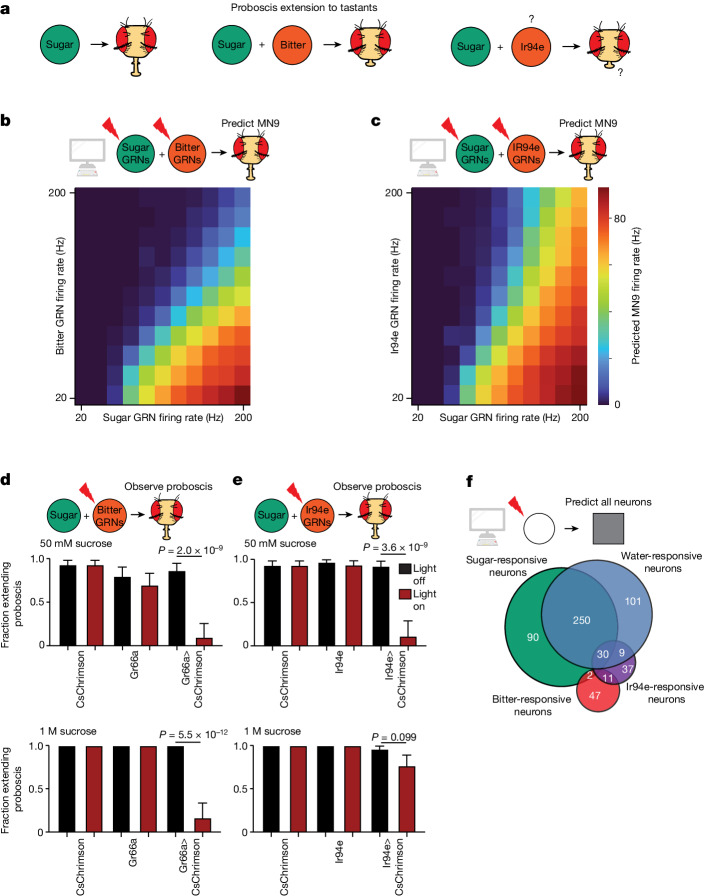
§ A Drosophila computational brain model reveals sensorimotor processing > Abstract The recent assembly of the adult Drosophila melanogaster central brain connectome, containing more than 125,000 neurons and 50 million synaptic connections, provides a template for examining sensory processing throughout the brain1,2. Here we create a leaky integrate-and-fire computational model of the entire Drosophila brain, on the basis of neural connectivity and neurotransmitter identity3, to study circuit properties of feeding and grooming behaviours. We show that activation of sugar-sensing or water-sensing gustatory neurons in the computational model accurately predicts neurons that respond to tastes and are required for feeding initiation4. In addition, using the model to activate neurons in the feeding region of the Drosophila brain predicts those that elicit motor neuron firing5—a testable hypothesis that we validate by optogenetic activation and behavioural studies. Activating different classes of gustatory neurons in the model makes accurate predictions of how several taste modalities interact, providing circuit-level insight into aversive and appetitive taste processing. Additionally, we applied this model to mechanosensory circuits and found that computational activation of mechanosensory neurons predicts activation of a small set of neurons comprising the antennal grooming circuit, and accurately describes the circuit response upon activation of different mechanosensory subtypes6–10. Our results demonstrate that modelling brain circuits using only synapse-level connectivity and predicted neurotransmitter identity generates experimentally testable hypotheses and can describe complete sensorimotor transformations.
What the sources say
- Supportedcites [3] Eckstein, N. et al. Neurotransmitter classification from electron microscopy images at synaptic sites in Drosophila melanogaster. Cell 187, 2574–2594.e23 (2024). 38729112 PMC11106717 source
The citation is attached to “neurotransmitter identity,” not to the citing authors’ statement that they created a leaky integrate-and-fire model. The source’s Abstract reports transmitter predictions across a Drosophila whole brain, and its Results (“An overview of neurotransmitter usage in the nervous system”) report neuron-level predictions for the FAFB-FlyWire dataset. (LLM, conf=0.93)
plain- Asserted: passes — The authors put it forward as true.
- Checkable: passes — It can be checked against evidence.
- Load-bearing: passes — The paper’s conclusions depend on it.
- Based: passes — The paper gives a reason why it holds.
- Supported
88 more claims · 16 with their cited sources checked
Create a free account to see all 159 claims and to verify the 3 references still open.
- It may state two separate claims as one. 51
- Probably not a substantial claim. 20
Claims other papers make about this one
Each is checked against this paper’s own text: does it say what the citing paper says it does?
The cited source says what the claim attributes to it.
In the citing paper
“Shiu et al.34 and Pospisil et al.39 use the connectome to model Drosophila brain dynamics and include connection weights (number of synapses) and putative connection signs (excitatory or inhibitory).”
From Neuronal wiring diagram of an adult brain (2024) · cites this paper as [34]
The cited source says what the claim attributes to it.
In the citing paper
“This effort has now been extended to leverage the full connectome34,39 and to—for example—predict taste responses of neurons34.”
From Neuronal wiring diagram of an adult brain (2024) · cites this paper as [34]
In the citing paper
“Here, using connectome-informed models7–9 and functional studies, we explain two fundamental mechanisms by which Drosophila implement context-appropriate halting.”
From Neural circuit mechanisms underlying context-specific halting in Drosophila (2024) · cites this paper as [7]
In the citing paper
“Notably, connectomics revealed that this halting pathway diverges from the previously described proboscis extension pathway7,41 (Fig. 5a).”
From Neural circuit mechanisms underlying context-specific halting in Drosophila (2024) · cites this paper as [7]
Citations
Cites
Fiji: an open-source platform for biological-image analysis
Schindelin, J., Arganda-Carreras, I., Frise, E., Kaynig, V., Longair, M., Pietzsch, T., Preibisch, S., Rueden, C., Saalfeld, S., Schmid, B., et al. (2012) · Nature Methods · doi:10.1038/nmeth.2019 · Cited by 66,890 · cited 2×
“First, in Fiji, z stacks for each timepoint were maximum intensity projected and then movement corrected using the StackReg plugin with ‘Rigid Body’ or ‘Translation’ transformation 79 .”
MethodUltrasensitive fluorescent proteins for imaging neuronal activity
Chen, T.-W., Wardill, T. J., Sun, Y., Pulver, S. R., Renninger, S. L., Baohan, A., Schreiter, E. R., Kerr, R. A., Orger, M. B., Jayaraman, V., et al. (2013) · Nature · doi:10.1038/nature12354 · Cited by 6,474
A pyramid approach to subpixel registration based on intensity
Thevenaz, P., Ruttimann, U. E., & Unser, M. (1998) · IEEE Transactions on Image Processing · doi:10.1109/83.650848 · Cited by 3,078
Independent optical excitation of distinct neural populations
Klapoetke, N. C., Murata, Y., Kim, S. S., Pulver, S. R., Birdsey-Benson, A., Cho, Y. K., Morimoto, T. K., Chuong, A. S., Carpenter, E. J., Tian, Z., et al. (2014) · Nature Methods · doi:10.1038/nmeth.2836 · Cited by 2,344 · cited 1×
“Experiments were performed as in the GtAcr1 experiments, except that flies were exposed to red light rather than green light 77 .”
MethodNeuronal Dynamics: From Single Neurons to Networks and Models of Cognition
Gerstner, W., Kistler, W. M., Naud, R., & Paninski, L. (2014) · doi:10.1017/cbo9781107447615 · Cited by 1,515 · cited 4×
“…that generate behaviour, we implement a simple leaky integrate-and-fire model using the connection weights derived from the entire adult Drosophila central brain connectome of reconstructed electron microscopy neurons 1,17–20 , as well as neurotransmitter predictions for each neuron 3,21 .”
MethodInfluentialA connectome and analysis of the adult Drosophila central brain
Scheffer, L. K., Xu, C. S., Januszewski, M., Lu, Z., Takemura, S.-Y., Hayworth, K. J., Huang, G. B., Shinomiya, K., Maitlin-Shepard, J., Berg, S., et al. (2020) · eLife · doi:10.7554/elife.57443 · Cited by 1,128 · cited 3×
“Two different approaches have been used thus far to analyze the recent Drosophila hemibrain and larval connectomes 13,16 .”
BackgroundMethodSelf-citationA Complete Electron Microscopy Volume of the Brain of Adult Drosophila melanogaster
Zheng, Z., Lauritzen, J. S., Perlman, E., Robinson, C. G., Nichols, M., Milkie, D., Torrens, O., Price, J., Fisher, C. B., Sharifi, N., et al. (2018) · Cell · doi:10.1016/j.cell.2018.06.019 · Cited by 1,050 · cited 3×
“We find that computational activation of labellar sugar-sensing GRNs activates several proboscis MNs involved in feeding, including MNs 6, 8, 9 and 11 (Fig.”
BackgroundSelf-citationThe organization of the chemosensory system in Drosophila melanogaster: a rewiew
Stocker, R. F. (1994) · Cell and Tissue Research · doi:10.1007/bf00305372 · Cited by 950 · cited 1×
“GRNs respond to specific taste categories, such as appetitive sugar or aversive bitter compounds, resulting in acceptance (that is, proboscis extension and feeding) or avoidance, respectively 24,33,35,38 .”
BackgroundNeuromodulation of neuronal circuits: back to the future
Marder, E. (2012) · Neuron · doi:10.1016/j.neuron.2012.09.010 · Cited by 904
Brian 2, an intuitive and efficient neural simulator
Stimberg, M., Brette, R., & Goodman, D. F. (2019) · eLife · doi:10.7554/elife.47314 · Cited by 749
Research works printed but not linked: 1
- Dethier, V. G. The Hungry Fly: a Physiological Study of the Behavior Associated With Feeding (Harvard Univ. Press, 1976).
Cited by
Neuronal wiring diagram of an adult brain
Dorkenwald, S., Matsliah, A., Sterling, A. R., Schlegel, P., Yu, S.-C., McKellar, C. E., Lin, A., Costa, M., Eichler, K., Yin, Y., et al. (2024) · Nature · doi:10.1038/s41586-024-07558-y · Cited by 570
“Also included are neurons that extend into the brain through the nerves and neck connective, which are essential for tracing sensorimotor pathways, as illustrated here and in the accompanying studies 11,12,34,36–45 .”
BackgroundInfluentialSelf-citationWhole-brain annotation and multi-connectome cell typing of Drosophila
Schlegel, P., Yin, Y., Bates, A. S., Dorkenwald, S., Eichler, K., Brooks, P., Han, D. S., Gkantia, M., dos Santos, M., Munnelly, E. J., et al. (2024) · Nature · doi:10.1038/s41586-024-07686-5 · Cited by 413
“It will also make numerous network analyses possible as well as substantially reduce the degrees of freedom in brain scale modelling 65,66 .”
BackgroundNeuronal wiring diagram of an adult brain
Dorkenwald, S., Matsliah, A., Sterling, A. R., Schlegel, P., Yu, S.-C., McKellar, C. E., Lin, A., Costa, M., Eichler, K., Yin, Y., et al. (2023) · doi:10.1101/2023.06.27.546656 · Cited by 149
Self-citationConnectome-constrained networks predict neural activity across the fly visual system
Lappalainen, J. K., Tschopp, F. D., Prakhya, S., McGill, M., Nern, A., Shinomiya, K., Takemura, S.-Y., Gruntman, E., Macke, J. H., & Turaga, S. C. (2024) · Nature · doi:10.1038/s41586-024-07939-3 · Cited by 128
Whole-brain annotation and multi-connectome cell typing quantifies circuit stereotypy in Drosophila
Schlegel, P., Yin, Y., Bates, A. S., Dorkenwald, S., Eichler, K., Brooks, P., Han, D. S., Gkantia, M., dos Santos, M., Munnelly, E. J., et al. (2023) · doi:10.1101/2023.06.27.546055 · Cited by 102
Self-citationNeural circuit mechanisms underlying context-specific halting in Drosophila
Sapkal, N., Mancini, N., Kumar, D. S., Spiller, N., Murakami, K., Vitelli, G., Bargeron, B., Maier, K., Eichler, K., Jefferis, G. S. X. E., et al. (2024) · Nature · doi:10.1038/s41586-024-07854-7 · Cited by 54
“Model details, including the original code, are described elsewhere 7 .”
InfluentialSelf-citationNeural circuit mechanisms underlying context-specific halting in Drosophila
Sapkal, N., Mancini, N., Kumar, D. S., Spiller, N., Murakami, K., Vitelli, G., Bargeron, B., Maier, K., Eichler, K., Jefferis, G. S. X. E., et al. (2023) · doi:10.1101/2023.09.25.559438 · Cited by 54
Self-citationNeuroMechFly v2: simulating embodied sensorimotor control in adult Drosophila
Wang-Chen, S., Stimpfling, V. A., Lam, T. K. C., Özdil, P. G., Genoud, L., Hurtak, F., & Ramdya, P. (2024) · Nature Methods · doi:10.1038/s41592-024-02497-y · Cited by 43
Connectomic analysis of taste circuits in Drosophila
Walker, S. R., Peña-Garcia, M., & Devineni, A. V. (2025) · Scientific Reports · doi:10.1038/s41598-025-89088-9 · Cited by 24
“We identified GRNs in the connectome based on GRN lists from recent studies, 17,18 neuron annotations in FlyWire, and manual inspection of each neuron’s morphology (see Methods).”
InfluentialPrediction of neural activity in connectome-constrained recurrent networks
Beiran, M., & Litwin-Kumar, A. (2024) · doi:10.1101/2024.02.22.581667 · Cited by 16
Artificial intelligence in rock mechanics
Zhao, G., & Wu, Y. (2025) · International Journal of Rock Mechanics and Mining Sciences · doi:10.1016/j.ijrmms.2025.106245 · Cited by 25
Li, J., Dhaliwal, R., Stanley, M., Junca, P., & Gordon, M. D. (2025) · Current Biology · doi:10.1016/j.cub.2025.04.035 · Cited by 15
The coming wave of confluent biosynthetic, bioinformational and bioengineering technologies
Pretorius, I. S., Dixon, T. A., Boers, M., Paulsen, I. T., & Johnson, D. L. (2025) · Nature Communications · doi:10.1038/s41467-025-58030-y · Cited by 21
“The recent FlyWire-related publications of a fruit fl y ’ s connectome — a 3D map of Drosophila melanogaster ’ s 139,255 neurons and the 54.5 million synaptic connections between them — offer an important step in this direction 20 – 23 .”
InfluentialPrediction of neural activity in connectome-constrained recurrent networks
Beirán, M., & Litwin-Kumar, A. (2025) · Nature Neuroscience · doi:10.1038/s41593-025-02080-4 · Cited by 39
“This benchmark is appropriate when such models are used to predict the function of specific neurons or neuron types or to guide experiments that manipulate specific neurons 14,16,19 .”
InfluentialSynaptic-resolution connectomics: towards large brains and connectomic screening
Helmstaedter, M. N. (2025) · Nature reviews. Neuroscience · doi:10.1038/s41583-025-00998-z · Cited by 31
“The potential for constraining synaptic learning models from such large-scale connectomic snapshots may allow systematic approaches to determine where and under which sensory conditions individual imprinting of experience is directly shaping neuronal cortical circuits.”
Infrequent strong connections constrain connectomic predictions of neuronal function
Currier, T. A., & Clandinin, T. R. (2025) · Cell · doi:10.1016/j.cell.2025.05.007 · Cited by 20
Tanaka, R., Hara, Y., Sato, K., Kohatsu, S., Murakami, H., Higuchi, T., Awasaki, T., Kondo, S., Toyoda, A., Kamikouchi, A., et al. (2025) · Science · doi:10.1126/science.adp5831 · Cited by 11
Boulanger-Weill, J., Kämpf, F., Schuhknecht, G. F. P., Schalek, R. L., Garza, R., Petkova, M. D., Vohra, S. K., Wu, Y., Savaliya, J. H., Tiller, R., et al. (2025) · bioRxiv (Cold Spring Harbor Laboratory) · doi:10.1101/2025.03.14.643363 · Cited by 11
“…optogenetics, and behavioral analysis, can refine models of neural networks (Turner-Evans et al. , 2020; Ammer et al. , 2023), predict neural dynamics (Lappalainen et al. , 2024; Shiu et al. , 2024), and elucidate the mechanistic basis of behavior (Dombrovski et al. , 2023; Shiu et al. , 2024).”
A complete wiring diagram of the fruit-fly brain
Devineni, A. V. (2024) · Nature · doi:10.1038/d41586-024-03029-6 · Cited by 13
Bridging molecular and cellular neuroscience with proximity labeling technologies
Lee, J.-G., Jeong, I., & Kim, K.-E. (2025) · Experimental & Molecular Medicine · doi:10.1038/s12276-025-01491-4 · Cited by 12
“Recently, the connectome of the computational brain has been shown to offer key insights into brain structure and information processing 5 .”
Connectome simulations identify a central pattern generator for fly walking
Pugliese, S. M., Chou, G. M., Abe, E. T. T., Turcu, D., Lancaster, J. K., Tuthill, J. C., & Brunton, B. W. (2026) · Nature · doi:10.1101/2025.09.12.675944 · Cited by 26
“Since r max and τ have direct biological interpre-858 tations, we used reasonable ranges for rate limits and time constants, respectively, of Drosophila neurons given experimental literature [47, 44] and consistency with previous fly neuron simulation studies [48, 37].”
InfluentialThe Developmental Origins of Behavioral Individuality
de Bivort, B. L. (2025) · Annual Review of Cell and Developmental Biology · doi:10.1146/annurev-cellbio-101323-025423 · Cited by 16
Centralized brain networks underlie body part coordination during groomingPreprint
Özdil, P. G., Arreguit, J., Scherrer, C., Ijspeert, A. J., & Ramdya, P. P. (2024) · bioRxiv (Cold Spring Harbor Laboratory) · doi:10.1101/2024.12.17.628844 · Cited by 8
Selective presynaptic inhibition of leg proprioception in behaving Drosophila
Dallmann, C. J., Luo, Y., Agrawal, S., Mamiya, A., Chou, G. M., Cook, A., Sustar, A., Brunton, B. W., & Tuthill, J. C. (2025) · Nature · doi:10.1038/s41586-025-09554-2 · Cited by 35
“To explore the interactions between the excitatory and inhibitory descending inputs to chief 9A neurons, we simulated neural activity in the VNC using a connectome-constrained computational model 42 (Fig.”
Lau, F., Binacchi, R., Brugnara, S., Cumplido-Mayoral, A., Savino, S. D., Khan, I., Orso, A., Sartori, S., Bellosta, P., Carl, M., et al. (2025) · Neuroscience · doi:10.1016/j.neuroscience.2025.03.042 · Cited by 6
Sexual dimorphism in the complete Drosophila male central nervous system connectome
Berg, S., Beckett, I. R., Costa, M., Schlegel, P., Januszewski, M., Marin, E. C., Nern, A., Preibisch, S., Qiu, W., Takemura, S.-Y., et al. (2026) · Cell · doi:10.1016/j.cell.2026.08.015 · Cited by 145
Bridging complexity through integrative systems neuroscience
Chang, E. H. (2024) · Frontiers in Systems Biology · doi:10.3389/fsysb.2024.1487298 · Cited by 6
“Already, computational models of the full fruit fl y brain have been developed to understand sensorimotor processing with experimentally testable hypotheses (Shiu et al., 2024).”
A pair of interneurons that confer positive real-time valence to sweet sensation in Drosophila
Christie, K. W., Dadyala, T. S., Sinakevitch, I. G., Chung, P., Ito, M., & Shao, L. (2026) · Current Biology · doi:10.1016/j.cub.2025.12.058 · Cited by 7
Evolution of taste processing shifts dietary preference
Bertolini, E., Münch, D., Pascual, J., Sgammeglia, N., Bruzzone, M., Ribeiro, C., & Auer, T. O. (2026) · Nature · doi:10.1038/s41586-025-09766-6 · Cited by 3
“Taste signals from the labellum are relayed by sensory neurons via interneurons to motor neurons 16,17 that initiate feeding through pro-boscis extension (motor neuron 9) and maintain ingestion through pharynx pumping (motor neurons 10–13) 51,52 (Fig.”
From Sensory Detection to Motor Action: The Comprehensive Drosophila Taste-Feeding ConnectomePreprint
Tastekin, I., Vicente, I. D. H., Beresford, R. J., Morris, B. J., Beckett, I. R., Schlegel, P., Gkantia, M., FlyEM Project Team, Cambridge Connectomics Group, Marin, E. C., et al. (2025) · bioRxiv (Cold Spring Harbor Laboratory) · doi:10.1101/2025.08.25.671814 · Cited by 3
“Previous studies have provided important insights into labellar bristle GRNs, including some morphological types, and their functional connection to the motor neuron 9 47,112 , but a comprehensive overview of gus-tatory circuits across body parts and motor outputs has been lacking.”
Artificial intelligence meets brain theory (again)
Arbib, M. A. (2025) · Biological Cybernetics · doi:10.1007/s00422-025-01013-5 · Cited by 3
BrainScale, Enabling Scalable Online Learning in Spiking Neural NetworksPreprint
Wang, C., Dong, X., Ji, Z., Jiang, J., Liu, X., & Wu, S. (2024) · bioRxiv (Cold Spring Harbor Laboratory) · doi:10.1101/2024.09.24.614728 · Cited by 6
“Remarkably, BrainScale facilitates the training of a whole-brain-scale SNN model of the Drosophila brain [21, 22], successfully fitting the functional activities across the entire Drosophila brain [23, 24].”
Invariant synaptic density across speciesPreprint
Castro, A. F., & Cardona, A. (2024) · bioRxiv (Cold Spring Harbor Laboratory) · doi:10.1101/2024.07.18.604056 · Cited by 5
Calle-Schuler, S. A., Santana-Cruz, A., Kmecová, L., Hampel, S., & Seeds, A. M. (2026) · eLife · doi:10.7554/elife.108044.3 · Cited by 4
Model-agnostic linear-memory online learning in spiking neural networks
Wang, C., Dong, X., Ji, Z., Xiao, M., Jiang, J., Liu, X., Huan, Y., & Wu, S. (2026) · Nature Communications · doi:10.1038/s41467-026-68453-w · Cited by 8
“Notably, BrainTrace scales to a whole-brain SNN of the Drosophila connectome 15,16 and successfully fi ts whole-brain functional activity patterns 17,18 .”
InfluentialQin, Z., Peng, J., Yue, S., & Fu, Q. (2025) · Journal of The Royal Society Interface · doi:10.1098/rsif.2025.0433 · Cited by 6
What are memories made of? A survey of neuroscientists on the structural basis of long-term memory
Zeleznikow-Johnston, A., Kendziorra, E., & McKenzie, A. T. (2025) · PLoS ONE · doi:10.1371/journal.pone.0326920 · Cited by 5
“…view on what information is retrievable from structure alone may have been influenced by the recent demonstration that a whole-brain model of Drosophila , reconstructed from preserved brain slices imaged using electron microscopy, partially reproduced the animal’s natural feeding behavior [31].”
Multi-output computation by single neuron biophysics in a visual systemPreprint
Seung, H. S. (2025) · bioRxiv (Cold Spring Harbor Laboratory) · doi:10.1101/2025.02.02.636137 · Cited by 2
Tastekin, I., Vicente, I. D. H., Beresford, R. J., Morris, B. J., Beckett, I. R., Schlegel, P., Gkantia, M., FlyEM Project Team, Cambridge Connectomics Group, Marin, E. C., et al. (2026) · Cell · doi:10.1016/j.cell.2026.08.016 · Cited by 7
Population morphology implies a common developmental blueprint for Drosophila motion detectors
Drummond, N., Zhao, A., & Borst, A. (2026) · PLoS Computational Biology · doi:10.1371/journal.pcbi.1014657
A central somatotopic map of the fly leg supports spatially targeted grooming
Elabbady, L., Chou, G. M., Sustar, A., Cook, A., Collman, F., & Tuthill, J. C. (2026) · Current Biology · doi:10.1016/j.cub.2026.03.045 · Cited by 4
Recent experience and internal state shape local search strategies in flies
Goldschmidt, D., Guo, Y., Chitnis, S. S., Christoforou, C. P., Turner‐Evans, D. B., Ribeiro, C., Hermundstad, A. M., Jayaraman, V., & Haberkern, H. (2026) · Current Biology · doi:10.1016/j.cub.2026.02.037 · Cited by 6
A coupling network for brain computing: E–I balanced embedding in dual-attractor dynamics systems
Yao, S., Wang, Z., Zhu, R., Cheng, W., & Chai, Y. (2026) · Brain Research Bulletin · doi:10.1016/j.brainresbull.2026.111788 · Cited by 1
Feeding decision-making by a single neuron via disparate neurotransmitters
Savaş, D., Okoro, A. M., Moșneanu, R. A., Crown, A. M., Chang, Z., Siegel, R., Sorkaç, A., Zandawala, M., & Barnea, G. (2026) · Nature Communications · doi:10.1038/s41467-026-69443-8 · Cited by 7
“We observed that at light intensities of 108, 62.38, and 15.46 µ W.mm − 2 , the experimental fl ies fed signi fi cantly less from the food paired with light (Fig.”
InfluentialNeuron Segment Connectivity Prediction With Multimodal Features for Connectomics
Chen, Q., Chen, X., Wang, C., Xiong, Z., & Wu, F. (2026) · IEEE Transactions on Medical Imaging · doi:10.1109/tmi.2026.3658169 · Cited by 1
“Analyzing this most comprehensive connectome has yielded significant insights into whole-brain network properties [5], connectome-based cell typing [6], brain causality [7], and numerous other areas [8], [9], [10].”
Hillert, D. G. (2026) · Frontiers in Language Sciences · doi:10.3389/flang.2025.1710323 · Cited by 1
Koh, Z. M., Arceo, R. A., Hammer, J., Chau, K., Light, S. E. W., Dolojan, A., Januszewski, M., Svara, F., & Smith, C. J. (2025) · Cell Reports · doi:10.1016/j.celrep.2025.116761 · Cited by 4
“5–7,42 To test this idea, we While the number of neurons in a circuit provides an understanding of circuit complexity, it does not incorporate the directional flow of information through circuit levels.”
Kamiyama, D., Kamiyama, R., Nishida, Y., Sego, A., Vining, G. B., Bui, K. C., Fitch, M., Do, H. G. T., Avraham, O., & Chihara, T. (2025) · Nature Communications · doi:10.1038/s41467-025-65900-y · Cited by 3
“Recent connectomic research in model organisms, such as Drosophila melanogaster , has further revealed individual neurons involved in assembling these intricate systems 16 – 28 .”
Convergent multi-modular architecturefor adaptive learning in Drosophila and artificial intelligence
Wang, L., & Li, Q. (2025) · iScience · doi:10.1016/j.isci.2025.113799 · Cited by 3
Yu, S., Qin, Z., Liu, T., Xu, B., Vogelstein, R. J., Brown, J. I., & Vogelstein, J. T. (2025) · Lecture notes in computer science · doi:10.1007/978-3-032-00800-8_32 · Cited by 4
Partial recurrence enables robust and efficient computationPreprint
Ghosh, M., & Goodman, D. F. M. (2025) · bioRxiv (Cold Spring Harbor Laboratory) · doi:10.1101/2025.07.28.667142 · Cited by 1
“…essentially quantify how networks how networks process and retain information, they are likely to be relevant for many tasks in both neuroscience and machine learning, and could even be approximated from real circuits via connectome-based models (Lappalainen et al., 2024; Shiu et al., 2024).”
Ethically Aligned Design in Autonomous and Intelligent Systems: An Overview
Burnside, A., & Bodde, E. R. (2025) · IEEE International Symposium on Ethics in Engineering, Science, and Technology (ETHICS) · doi:10.1109/ethics65148.2025.11098316 · Cited by 1
Matos, Y. B., Velichkova, N., Riera, M. K., da Luz, M. G. E., & Berni, J. (2025) · Frontiers in Neuroscience · doi:10.3389/fnins.2025.1557624 · Cited by 1
“As recently demonstrated in a breakthrough work (Shiu et al., 2024), theoretical tools are paramount to comprehend the sensorial processes in the Drosophila brain.”
Koh, Z. M., Arceo, R. A., Hammer, J., Chau, K., Light, S. E. W., Dolojan, A., Januszewski, M., Svara, F., & Smith, C. J. (2025) · bioRxiv (Cold Spring Harbor Laboratory) · doi:10.1101/2025.03.05.641432 · Cited by 1
“To explore how sensory acuity could be coded in the spinal cord, we considered the hypothesis that the number of synaptic connections for a given neuron could refine the number of neurons involved in a circuit 6,7,42,43 .”
Amino acids activate parallel chemosensory pathways in Drosophila
Guillemin, J., Davis, G., Audette, K., Avonda, T., Freed, E., Vitters, A., Cerniglia, J., Woods, B., Wagner, E., Schwartz, L. T., et al. (2025) · Chemical Senses · doi:10.1093/chemse/bjaf035 · Cited by 5
Cascades and convergence: dynamic signal flow in a synapse-level brain networkPreprint
Betzel, R., Puxeddu, M. G., Seguin, C., et al. (2025) · bioRxiv · doi:10.1101/2024.12.04.624189 · Cited by 4
“Comparatively, computational studies using whole-brain leaky integrate-and-fire models (e.g. [59]) demonstrate excellent alignment with experimental data for gustatory and grooming circuits.”
Cell-type specific projection patterns promote balanced activity in cortical microcircuitsPreprint
Kurth, A. C., Albers, J., Diesmann, M., & van Albada, S. J. (2024) · bioRxiv (Cold Spring Harbor Laboratory) · doi:10.1101/2024.10.03.616539 · Cited by 7
“These efforts enabled further work on the statistical analysis of the connectivity [29] and a computational model of the whole fly brain at neuronal resolution [30].”
Largest brain map ever reveals fruit fly’s neurons in exquisite detail
Reardon, S. (2024) · Nature · doi:10.1038/d41586-024-03190-y · Cited by 4
Scanning and active sampling behaviours emerge from conserved insect neural circuitsPreprint
Freas, C. A., & Wystrach, A. (2026) · eLife · doi:10.7554/elife.110165.3
A structured framework for human–AI resemblance: Evidence, inference and perception
Wang, P., Law, E. L., Zou, L., Jiang, Y., Hertwig, R., PAAS, F. G. W. C., & Laureys, S. (2026) · Physics of Life Reviews · doi:10.1016/j.plrev.2026.09.003
The use of Drosophila to study sleep impairments in stimulant use disorder
Miles, M., Karatas, M., & Rothenfluh, A. (2026) · Frontiers in Cell and Developmental Biology · doi:10.3389/fcell.2026.1913395
“…into a leaky-integrate-and-fire model of neural circuits was used to predict the impact of taste neurons on neurons controlling feeding initiation (Shiu et al., 2024); similar neural network models have also been used to generate testable hypotheses within the fly visual system (Lappalainen et…”
Menon, V., Creighton, C., Vazquez-Muñoz, M., & Dahanukar, A. A. (2026) · iScience · doi:10.1016/j.isci.2026.117467
Connectomic mapping of pharyngeal and gut sensory circuits in adult Drosophila
Giakoumas, D. S., Zhu, J. M., Jamal, A., & Yao, Z. (2026) · iScience · doi:10.1016/j.isci.2026.117359 · Cited by 4
Li, Q., Ping, W., Zhang, K., & Wang, C. (2026) · bioRxiv (Cold Spring Harbor Laboratory) · doi:10.64898/2026.08.21.745055 · Cited by 2
“Pure simulation [44] propagates activity through a fixed connectome but cannot tune effective weights against recordings.”
Motor neurons organize Drosophila feeding sequences via a disinhibitory cascade
Sui, X.-W., Yi, J.-J., Zhou, Y., Wang, Y.-L., Zhang, X., Tu, Y., Cao, L.-H., & Luo, D.-G. (2026) · Nature Neuroscience · doi:10.1038/s41593-026-02412-y
Dhiman, N., & Panwar, S. (2026) · Neuroinformatics · doi:10.1007/s12021-026-09811-3
“Whole-brain fly modeling and effectome pro - posals similarly emphasize that anatomy is a powerful prior but does not by itself uniquely determine dynamics (Beiran and Litwin-Kumar, 2025; Pospisil et al., 2024; Shiu et al., 2024).”
Building digital twin brains at the limits of measurement
Zhang, R., Hou, Y., Lu, W., & Feng, J. (2026) · Nature Reviews Electrical Engineering · doi:10.1038/s44287-026-00320-8 · Cited by 3
Partial recurrence can enable robust and efficient computation
Ghosh, M., & Goodman, D. F. M. (2026) · Communications AI & Computing · doi:10.1038/s44488-026-00013-z · Cited by 2
“As these metrics essentially quantify how networks process and retain information, they are likely to be relevant for many tasks in both neuroscience and machine learning, and could even be approximated from realcircuitsviaconnectome-basedmodels 42,43 .”
The embodied brain: Bridging the brain, body, and behavior with biorealistic neuromechanical models
Wang, S., & Ramdya, P. P. (2026) · Current Opinion in Neurobiology · doi:10.1016/j.conb.2026.103244 · Cited by 6
Robust collision prediction neural network based on η-form perceptron against visual variability
Zheng, Y., Chen, H., Wang, Y., Li, H., & Peng, J. (2026) · Expert Systems with Applications · doi:10.1016/j.eswa.2026.133611
Ultrasensitive voltage imaging reveals distinct electrical microdomains in neuronsPreprint
Hao, Y. A., Jayne, L. L., Lee, S., Dittrich, M. N., Zhang, M., Haziza, S., Bendifallah, I., Sims, R. R., Bouazza‐Arostegui, B., White, A. D., et al. (2026) · bioRxiv (Cold Spring Harbor Laboratory) · doi:10.64898/2026.05.27.728040 · Cited by 5
From Connectome to Cognition: Building the First Digital Organism
Vopson, M. M. (2026) · IPI Letters · doi:10.59973/ipil.361
“In October 2024, a global consortium of scientists, the FlyWire Consortium [1], published a major scientific breakthrough in the journal Nature [2].”
The Drosophila connectome reveals axo-axonic synapses on descending neurons
Ceballos, C. C., Lopez, J., Roachford, T., Sanchez, D., Jara, S. D., Robbins, K., Spencer, C., Murphey, R. K., & Pena, R. F. O. (2026) · iScience · doi:10.1016/j.isci.2026.115624 · Cited by 1
Scanning and active sampling behaviours emerge from conserved insect neural circuitsPreprint
Freas, C. A., & Wystrach, A. (2026) · eLife · doi:10.7554/elife.110165.1 · Cited by 1
Scanning and active sampling behaviours emerge from conserved insect neural circuitsPreprint
Freas, C. A., & Wystrach, A. (2026) · eLife · doi:10.7554/elife.110165 · Cited by 1
Song, A., LaVergne, A., & Wróbel, B. (2026) · bioRxiv (Cold Spring Harbor Laboratory) · doi:10.64898/2026.03.04.709724 · Cited by 2
Cascades and convergence: Dynamic signal flow in a synapse-level brain network
Betzel, R. F., Puxeddu, M. G., Seguin, C., & Mišić, B. (2026) · PLOS complex systems. · doi:10.1371/journal.pcsy.0000091 · Cited by 4
A central somatotopic map of the fly leg supports spatially targeted groomingPreprint
Elabbady, L., Chou, G. M., Sustar, A., et al. (2026) · bioRxiv · doi:10.64898/2026.02.27.708590 · Cited by 5
Connectomic mapping of pharyngeal and gut sensory circuits in adult DrosophilaPreprint
Giakoumas, D. S., Zhu, J. M., Jamal, A., et al. (2025) · bioRxiv (Cold Spring Harbor Laboratory) · doi:10.64898/2025.12.14.694216
Calle-Schuler, S. A., Santana-Cruz, A., Kmecová, L., Hampel, S., & Seeds, A. M. (2026) · eLife · doi:10.7554/elife.108044 · Cited by 4
Calle-Schuler, S. A., Santana-Cruz, A., Kmecová, L., Hampel, S., & Seeds, A. M. (2025) · eLife · doi:10.7554/elife.108044.1
Christie, K. W., Dadyala, T. S., Chung, P., Ito, M., & Shao, L. (2025) · bioRxiv (Cold Spring Harbor Laboratory) · doi:10.1101/2025.10.31.685871
Scanning and active sampling behaviours emerge from conserved insect neural circuits
Freas, C. A., & Wystrach, A. (2026) · eLife · doi:10.1101/2025.10.13.682010
“…it is sufficiently conserved to allow for neural modelling of insect navigation in various contexts (Adden et al., 2022; Clément et al., 2023; Collett et al., 2025; Goulard et al., 2023; Shiu et al., 2024; Steinbeck et al., 2020; Stone et al., 2017; Webb and Wystrach, 2016; Wystrach et al., 2020b).”
An essential experimental control for functional connectivity mapping with optogenetics
Tadres, D., Shiozaki, H. M., Tastekin, I., Stern, D. L., & Louis, M. (2025) · Genetics · doi:10.1093/genetics/iyaf174 · Cited by 8
Evaluating ultrastructural preservation quality in banked brain tissuePreprint
Garrood, M., Keberle, A., Sowa, A., Janssen, W. G. M., Thorn, E. L., Sanctis, C. D., Farrell, K. W., Crary, J. F., & McKenzie, A. T. (2025) · bioRxiv (Cold Spring Harbor Laboratory) · doi:10.1101/2025.05.09.652503 · Cited by 8
Connectomics 2.0: Simulating the brain
Dattaro, L. (2025) · The Transmitter · doi:10.53053/bwtn6816
Disentangling how the brain is wired
Sprecher, S. G. (2024) · Fly · doi:10.1080/19336934.2024.2440950 · Cited by 2
Kamiyama, D., Nishida, Y., Kamiyama, R., et al. (2024) · Research Square · doi:10.21203/rs.3.rs-5684747/v1
On the path toward brain-scale simulations
Wang, F., & Aimone, J. B. (2024) · Nature Computational Science · doi:10.1038/s43588-024-00743-z
Evolution of taste processing shifts dietary preference
Bertolini, E., Münch, D., Pascual, J., Sgammeglia, N., Ribeiro, C., & Auer, T. O. (2024) · doi:10.1101/2024.10.11.617601 · Cited by 3
Use citizen science to turbocharge big-data projects
(2024) · Nature · doi:10.1038/d41586-024-03182-y · Cited by 1
Imagining the ultimate systems neuroscience paper
Humphries, M. D. (2024) · The Transmitter · doi:10.53053/qrku8647
Metadata
- Authors
- Shiu, P. K., Sterne, G. R., Spiller, N., Franconville, R., Sandoval, A., Zhou, J., Simha, N., Kang, C. H., Yu, S., Kim, J. S., Dorkenwald, S., Matsliah, A., Schlegel, P., Yu, S.-C., McKellar, C. E., Sterling, A., Costa, M., Eichler, K., Bates, A. S., Eckstein, N., Funke, J., Jefferis, G. S. X. E., Murthy, M., Bidaye, S. S., Hampel, S., Seeds, A. M., & Scott, K.
- Affiliations
- University of California, Berkeley (US)
- University of Rochester Medicine (US)
- Max Planck Florida Institute for Neuroscience (US)
- Howard Hughes Medical Institute (US)
- Sungkyunkwan University (KR)
- Princeton University (US)
- MRC Laboratory of Molecular Biology (GB)
- University of Cambridge (GB)
- University of Puerto Rico, Medical Sciences Campus (PR)
- Corresponding author
- Shiu, Philip K.
- ORCID
- Shiu, Philip K.
- Sterne, Gabriella R.
- Spiller, Nico
- Franconville, Romain
- Sandoval, Andrea
- Simha, Neha
- Yu, Seongbong
- Kim, Jinseop S.
- Dorkenwald, Sven
- Matsliah, Arie
- Schlegel, Philipp
- Yu, Szi-chieh
- McKellar, Claire E.
- Sterling, Amy
- Costa, Marta
- Eichler, Katharina
- Bates, Alexander Shakeel
- Eckstein, Nils
- Funke, Jan
- Jefferis, Gregory S. X. E.
- Murthy, Mala
- Bidaye, Salil S.
- Hampel, Stefanie
- Seeds, Andrew M.
- Scott, Kristin
- Venue
- Nature
- Published
- 2024-10-02
- Volume
- 634
- Issue
- 8032
- Pages
- 210-219
- ISSN
- 0028-0836 (ISSN-L)
- 1476-4687
- PMC
- PMC11446845
- OpenAlex
- W4403062868
- Semantic Scholar
- 1c747c588fa46133a6e0146d1eeb81c5be67150a
- Cited by
- 97
- References
- 84
- Citations by year
- 2026: 39 · 2025: 35 · 2024: 20
- FWCI
- 16.38
- Type
- journal article
- Language
- en
- Open access
- hybrid
- doi.org
- Licence
- cc-by
- creativecommons.org/licenses/by/4.0 (tdm)
- creativecommons.org/licenses/by/4.0 (vor)
- Locations
- Nature (publishedVersion, cc-by)
- bioRxiv (Cold Spring Harbor Laboratory) (acceptedVersion, cc-by-nc-nd)
- PubMed Central (publishedVersion, cc-by)
- PubMed (publishedVersion)
- PubMed Central (submittedVersion, cc-by-nc-nd)
- Apollo (University of Cambridge) (submittedVersion, cc-by)
- RePEc: Research Papers in Economics (submittedVersion)
- Funders
- National Science Foundation (2014862)
- Wellcome Trust (220343/Z/20/Z, 203261/Z/16/Z)
- National Institutes of Health (1rf1ns121911-01)
- National Institute of Mental Health (RF1MH117815, RF1MH129268, RF1MH120679)
- National Institute on Deafness and Other Communication Disorders (F32DC018225, R01DC013280)
- National Institute of Diabetes and Digestive and Kidney Diseases (F32DK117671)
- National Institute of Neurological Disorders and Stroke (RF1 NS121911, U24NS126935, R01NS121911, R35NS111580)
- Topics
- Life Sciences › Neuroscience › Cellular and Molecular Neuroscience › Neurobiology and Insect Physiology Research
- Life Sciences › Neuroscience › Cognitive Neuroscience › Neural dynamics and brain function
- Life Sciences › Neuroscience › Cellular and Molecular Neuroscience › Neuroscience and Neuropharmacology Research
- Keywords
- Drosophila melanogaster, computational models of the brain, leaky integrate-and-fire neurons, brain connectome, sensorimotor processing, gustatory neurons, taste processing, feeding behaviour, grooming, mechanosensory neurons, neurotransmitter identity
About these checks
Registry, retraction, Cites and statistics results are computed, not judged, with one exception: a printed reference that no index lists is read once by a model before it counts as a citation error. Claims are extracted by a model and kept only when their quote appears verbatim in the text; each cited source is then checked, with a model’s help, for whether it says what the claim relies on. Those verdicts can be wrong — read the claim’s quote and the cited source before relying on one.
The claim verdicts this report counts are experimental: their accuracy is not yet measured.
A language model drew the claims from the paper on 2026-10-10, under version 3 of the claim definition (model deepseek-v4.1-flash, prompt extract-v3).
A second model labelled each claim on 2026-10-10 (model jev-1.13-20260917, definition revision gold-guideline-v0.2).
Cited sources are checked with a language model’s help (gpt-6-sol).
Statistics and arithmetic are recomputed, not judged.
Confidence bands are shown only for fields calibrated on our annotated test set. None is calibrated yet, so no band is shown.
What counts as a claim ›How we measure confidence ›How we check this ›
Are you an author, or do you see a problem with this page? Request a review
Data sources
Bibliographic data: Semantic Scholar, OpenAlex, Crossref.
Contains information from the Semantic Scholar Academic Graph Datasets, made available under the ODC Attribution License (ODC-BY 1.0).
Semantic Scholar’s data is described in: Kinney, R., et al. (2023). The Semantic Scholar Open Data Platform. arXiv:2301.10140.
