

Accurate predictions on small data with a tabular foundation model
Open accessThe DOI matches its Crossref record; 64 of the 64 references it cites were found in a registry or an index; 1 of the 31 sources its claims cite were checked for support.
Abstract
Tabular data, spreadsheets organized in rows and columns, are ubiquitous across scientific fields, from biomedicine to particle physics to economics and climate science 1,2. The fundamental prediction task of filling in missing values of a label column based on the rest of the columns is essential for various applications as diverse as biomedical risk models, drug discovery and materials science. Although deep learning has revolutionized learning from raw data and led to numerous high-profile success stories 3–5, gradient-boosted decision trees 6–9 have dominated tabular data for the past 20 years. Here we present the Tabular Prior-data Fitted Network (TabPFN), a tabular foundation model that outperforms all previous methods on datasets with up to 10,000 samples by a wide margin, using substantially less training time. In 2.8 s, TabPFN outperforms an ensemble of the strongest baselines tuned for 4 h in a classification setting. As a generative transformer-based foundation model, this model also allows fine-tuning, data generation, density estimation and learning reusable embeddings. TabPFN is a learning algorithm that is itself learned across millions of synthetic datasets, demonstrating the power of this approach for algorithm development. By improving modelling abilities across diverse fields, TabPFN has the potential to accelerate scientific discovery and enhance important decision-making in various domains.
Overview
CoChat Summary
TL;DR
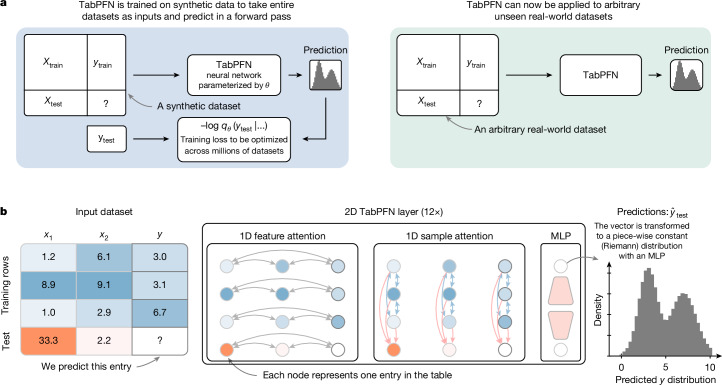
TabPFN is a tabular foundation model pretrained on millions of synthetic datasets that uses in-context learning to outperform prior methods on small- to medium-sized tabular data up to 10,000 samples and 500 features. It delivers strong classification and regression performance in a single forward pass and also supports fine-tuning, data generation, density estimation, reusable embeddings, and interpretability.
Key findings
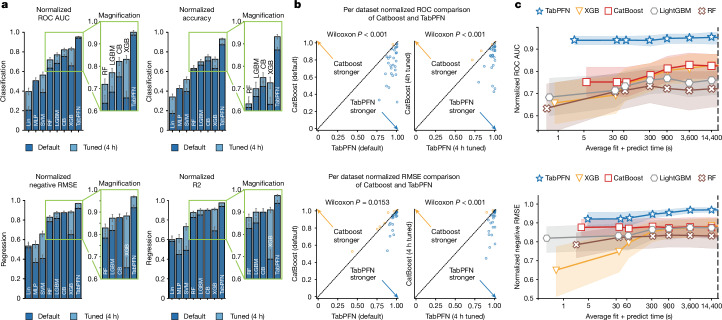
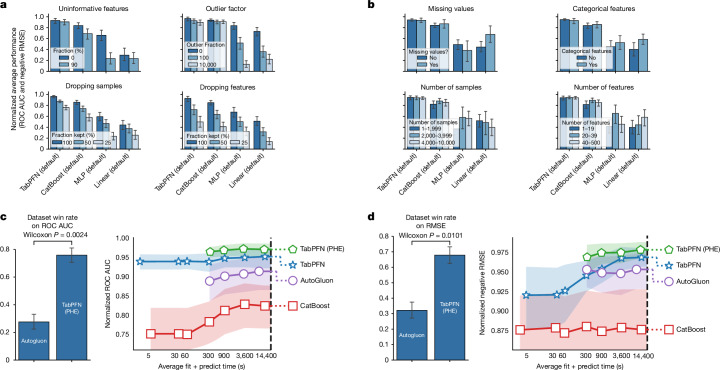
- On benchmarks with 29 classification and 28 regression datasets up to 10,000 samples, 500 features, and 10 classes, TabPFN outperformed tuned baselines. Classification normalized ROC AUC: TabPFN default 0.939 vs CatBoost default 0.752; tuned TabPFN 0.952 vs tuned CatBoost 0.822. Regression normalized RMSE: TabPFN default 0.923 vs CatBoost default 0.872; tuned TabPFN 0.968 vs tuned CatBoost 0.875.
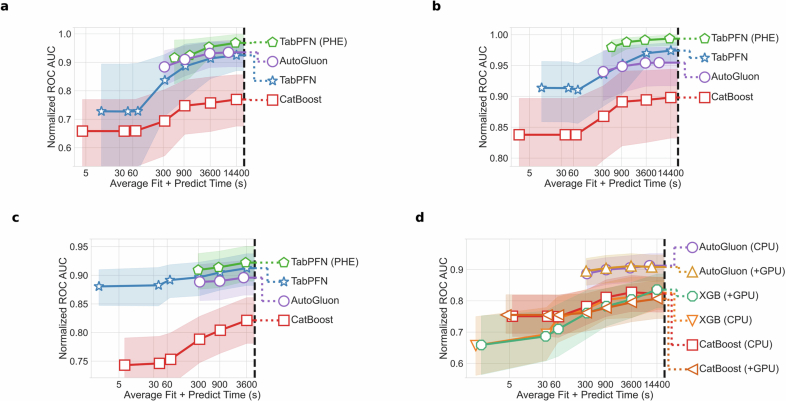
- TabPFN default took 2.8 s for classification and 4.8 s for regression on average, outperforming baselines tuned for 4 h—a speedup of 5,140× for classification and 3,000× for regression. TabPFN (PHE) reached average normalized ROC AUC 0.971 vs 0.939 for TabPFN default and 0.914 for AutoGluon; for regression, TabPFN (PHE) outperformed AutoGluon allowed 4 h after a 300 s tuning budget, a 48× speedup.
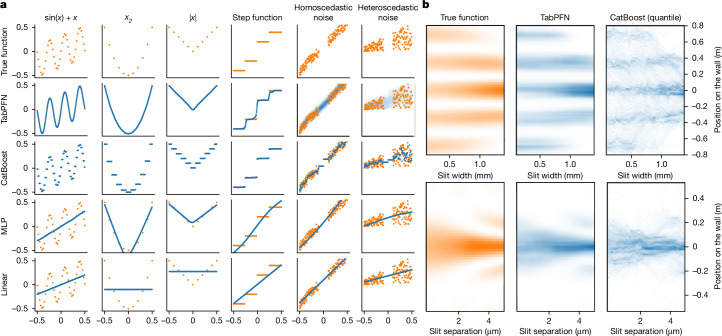
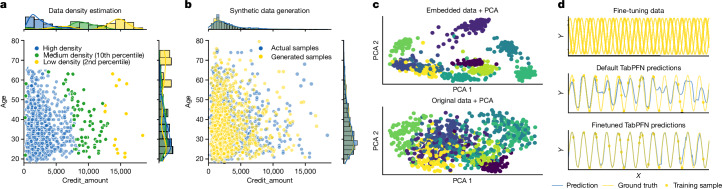
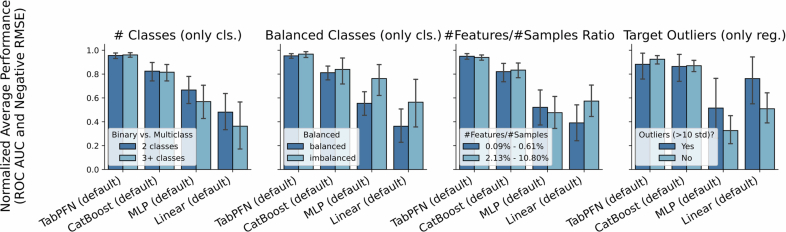
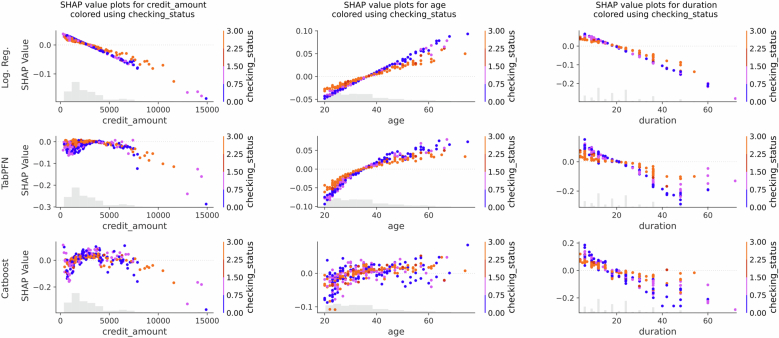
- TabPFN was robust to uninformative features and outliers, and with half the samples it performed as well as the next best method using all samples. It also demonstrated foundation-model abilities including density estimation, synthetic data generation, learned embeddings, fine-tuning, and SHAP-based feature importance.
Methods
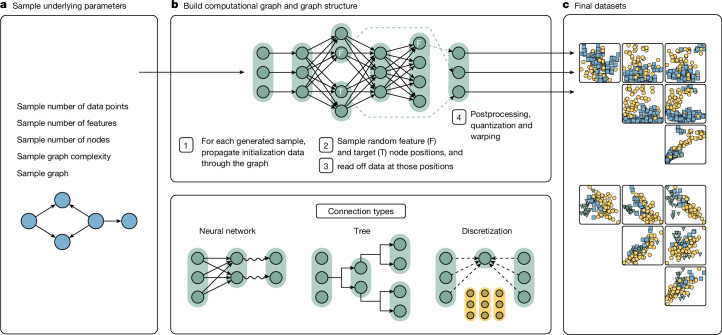
- TabPFN was pretrained on synthetic tabular datasets generated from structural causal models: around 100 million synthetic datasets per model training, with final models trained for approximately 2,000,000 steps at batch size 64 datasets, corresponding to around 130,000,000 synthetically generated datasets each.
- The architecture is a transformer encoder variant that treats each table cell as a separate position and uses two-way attention: each cell attends to other features in its row, then to the same feature across its column. At inference, training samples are provided as context and predictions are made in a single forward pass via in-context learning; train-state caching enables reuse for multiple test inferences.
- Evaluation used the AutoML Benchmark and OpenML-CTR23, with 29 classification and 28 regression datasets up to 10,000 samples, 500 features, and 10 classes. Each dataset and method was run for 10 repetitions with different random seeds and 90% train/10% test splits; hyperparameters were tuned by random search with five-fold cross-validation using time budgets from 30 s to 4 h. Metrics were ROC AUC and accuracy for classification, and R² and negative RMSE for regression, normalized per dataset.
Limitations
- The paper states that TabPFN inference may be slower than highly optimized approaches such as CatBoost; memory usage scales linearly with dataset size and can be prohibitive for very large datasets; and evaluation focused on datasets with up to 10,000 samples and 500 features, so scalability to larger datasets requires further study.
- The paper also states TabPFN is not optimized for real-time inference: for a dataset with 10,000 rows and 10 columns, it requires 0.2 s (0.6 s without GPU) to predict one sample, whereas CatBoost default can do so in 0.0002 s.
- The paper notes that for larger datasets and highly non-smooth regression datasets, CatBoost, XGBoost, or AutoGluon are likely to outperform TabPFN, and that natively the method is limited to predicting at most 10 classes unless pretrained on more classes or adapted with approaches such as one-vs-one, one-vs-rest, or ECOC.
Model-written summary. Check it against the paper before relying on it.
Integrity signals
Registry
Cites
Statistics
Figures
Verification
Claims the paper makes
1 Valid · 6 Not valid · 17 Not checked · 72 Own results and interpretations
The sources with a verdict support this claim; the rest weren’t checked yet, have no full text we could read, or their verdicts aren’t rated yet.
In the paper
“For larger datasets and highly non-smooth regression datasets, approaches such as CatBoost9, XGB7 or AutoGluon40 are likely to outperform TabPFN.”
§ Accurate predictions on small data with a tabular foundation model > Methods > User guide
What the sources say
- Check pendingcites [9] Prokhorenkova, L., Gusev, G., Vorobev, A., Dorogush, A. & Gulin, A. CatBoost: unbiased boosting with categorical features. In Proc. 30th International Conference on Advances in Neural Information Processing Systems (eds Bengio, S. et al.) 6639–6649 (Curran Associates, 2018). source
- Supportedcites [7] Chen, T. & Guestrin, C. Xgboost: A scalable tree boosting system. In Proc. 22nd ACM SIGKDD International Conference on Knowledge Discovery and Data Mining (eds Krishnapuram, B. et al.) 785–794 (ACM Press, 2016). source
The citation is offered to identify the system 'XGB' named in the citing sentence, and our copy is that system's paper: the Abstract and Introduction (KDD '16) describe XGBoost as 'a scalable end-to-end tree boosting system' that 'scales beyond billions of examples using far fewer resources than existing systems', used 'to achieve state-of-the-art results on many machine learning challenges'. The Introduction (p.1) further notes 17 of 29 Kaggle winning solutions in 2015 used XGBoost, and the evaluation sections report it running >10x faster than Spark MLLib/H2O on the 1.7-billion-example Criteo data, consistent with the 'larger datasets' framing. The head-to-head comparison against TabPFN and the 'highly non-smooth regression' qualification are the citing authors' own conclusion (TabPFN postdates this source) and are not attributed to this paper, so nothing here is unsupported for the part this citation carries. (LLM, conf=0.85)
- Check pendingcites [40] Erickson, N. et al. Autogluon-tabular: robust and accurate automl for structured data. Preprint at https://arxiv.org/abs/2003.06505 (2020). source
hedgedstates a possible cause- Asserted: passes — The authors put it forward as true.
- Checkable: passes — It can be checked against evidence.
- Load-bearing: unclear — It is unclear whether the paper’s conclusions depend on it.
- Based: passes — The paper gives a reason why it holds.
A result the paper states — it cites no source for it, so there is none to check. The quote shows it is in the paper.
In the paper
“This new supervised tabular learning method can be applied to any small- to moderate-sized dataset and yields dominant performance for datasets with up to 10,000 samples and 500 features.”
§ Accurate predictions on small data with a tabular foundation model > Main
plainstates a causen = 10,000- Asserted: passes — The authors put it forward as true.
- Checkable: passes — It can be checked against evidence.
- Load-bearing: passes — The paper’s conclusions depend on it.
- Based: passes — The paper gives a reason why it holds.
A result the paper reports from its own data — it cites no other source for it, so there is none to check. The quote shows it is in the paper.
In the paper
“We extract and visualize learned embeddings from the mfeat-factors dataset in Fig. 6c, showing improved class separation compared with the raw data on the first two principal components.”
§ Accurate predictions on small data with a tabular foundation model > Foundation model with interpretability
plainstates a cause- Asserted: passes — The authors put it forward as true.
- Checkable: passes — It can be checked against evidence.
- Load-bearing: unclear — It is unclear whether the paper’s conclusions depend on it.
- Based: passes — The paper gives a reason why it holds.
A result the paper reports from its own data — it cites no other source for it, so there is none to check. The quote shows it is in the paper.
In the paper
“we found that pre-processing inputs can help performance”
§ Accurate predictions on small data with a tabular foundation model > Methods > Details on the neural architecture
plainstates a possible cause- Asserted: passes — The authors put it forward as true.
- Checkable: passes — It can be checked against evidence.
- Load-bearing: unclear — It is unclear whether the paper’s conclusions depend on it.
- Based: passes — The paper gives a reason why it holds.
In the paper
“As our models are not fully permutation invariant, for each ensemble member, we shuffle the feature order, approximating order invariance64.”
§ Accurate predictions on small data with a tabular foundation model > Methods > Inference details
What the sources say
- Not checked yetcites [64] Murphy, R. L., Srinivasan, B., Rao, V. A. & Ribeiro, B. Janossy pooling: learning deep permutation-invariant functions for variable-size inputs. In Proc. 7th International Conference on Learning Representations (ICLR, 2019). source
plain- Asserted: passes — The authors put it forward as true.
- Checkable: passes — It can be checked against evidence.
- Load-bearing: passes — The paper’s conclusions depend on it.
- Based: passes — The paper gives a reason why it holds.
25 more claims
Create a free account to see all 96 claims and to verify the 28 references still open.
- Probably not a substantial claim. 32
- It may state two separate claims as one. 47
Self-check
Percentages, sums and reported differences re-computed from the paper’s own numbers.
Each contradiction between two passages listed here was confirmed by an independent check.
Rated minor: it would not touch a result — a value no result rests on, a p-value that stays on the same side of the significance level, or a conflict that is clerical, resolved elsewhere in the paper, or outside its own findings.
In the paper
§ Accurate predictions on small data with a tabular foundation model > Quantitative analysis > Comparison with tuned ensemble methods
“In just 2.8 s, TabPFN (default) outperforms AutoGluon for classification tasks, even if AutoGluon is allowed up to 4 h, a 5.140× speedup.”
§ Accurate predictions on small data with a tabular foundation model > Quantitative analysis > Comparison with state-of-the-art baselines
“The default of TabPFN, taking 2.8 s on average for classification and 4.8 s for regression, outperforms all baselines, even when tuning them for 4 h—a speedup of 5,140× and 3,000×, respectively.”
Rated minor: it would not touch a result — a value no result rests on, a p-value that stays on the same side of the significance level, or a conflict that is clerical, resolved elsewhere in the paper, or outside its own findings.
In the paper
§ Accurate predictions on small data with a tabular foundation model > Quantitative analysis
“TabPFN was pre-trained once using eight NVIDIA RTX 2080 GPUs over 2 weeks”
§ Accurate predictions on small data with a tabular foundation model > Methods > Training details
“One training run requires around 2 weeks on one node with eight Nvidia RTX 2080 Ti GPUs.”
Rated minor: it would not touch a result — a value no result rests on, a p-value that stays on the same side of the significance level, or a conflict that is clerical, resolved elsewhere in the paper, or outside its own findings.
In the paper
§ Accurate predictions on small data with a tabular foundation model > An architecture designed for tables
“This design enables the architecture to be invariant to the order of both samples and features”
§ Accurate predictions on small data with a tabular foundation model > Methods > Inference details
“As our models are not fully permutation invariant, for each ensemble member, we shuffle the feature order, approximating order invariance64.”
Citations
Cites
Breiman, L. (2001) · Machine Learning · doi:10.1023/a:1010933404324 · Cited by 133,538
Vaswani, A., Shazeer, N., Parmar, N., Uszkoreit, J., Jones, L., Gomez, A. N., Kaiser, L., & Polosukhin, I. (2017) · arXiv · doi:10.48550/arxiv.1706.03762 · Cited by 120,404
Distinctive Image Features from Scale-Invariant Keypoints
Lowe, D. G. (2004) · International Journal of Computer Vision · doi:10.1023/b:visi.0000029664.99615.94 · Cited by 62,647 · cited 2×
“Hand-designed features in computer vision, such as SIFT (Scale Invariant Feature Transform) 10 and HOG (Histogram of Oriented Gradients) 11 , have been replaced by learned convolutions; grammar-based approaches in natural language processing have been replaced by learned transformers 12 ; and the design of customized…”
Cortes, C., & Vapnik, V. (1995) · Machine Learning · doi:10.1007/bf00994018 · Cited by 59,421
XGBoost: A Scalable Tree Boosting System
Chen, T., & Guestrin, C. (2016) · Proceedings of the 22nd ACM SIGKDD International Conference on Knowledge Discovery and Data Mining · doi:10.1145/2939672.2939785 · Cited by 54,569 · cited 5×
“55, further optimizing TabPFN specifically for inference tasks has already been explored, resulting in four times faster inference performance compared with even XGBoost, but so far also reducing predictive quality.”
InfluentialHighly accurate protein structure prediction with AlphaFold
Jumper, J., Evans, R., Pritzel, A., Green, T., Figurnov, M., Ronneberger, O., Tunyasuvunakool, K., Bates, R., Žídek, A., Potapenko, A., et al. (2021) · Nature · doi:10.1038/s41586-021-03819-2 · Cited by 43,764 · cited 2×
“The transformer architecture is currently the favoured architecture for flexible deep learning and foundation models 4,5 .”
Histograms of Oriented Gradients for Human Detection
Dalal, N., & Triggs, B. (2005) · 2005 IEEE Computer Society Conference on Computer Vision and Pattern Recognition (CVPR'05) · doi:10.1109/cvpr.2005.177 · Cited by 33,584
Greedy function approximation: A gradient boosting machine
Friedman, J. H. (2001) · The Annals of Statistics · doi:10.1214/aos/1013203451 · Cited by 30,731 · cited 2×
“The list of development datasets can be found in Supplementary Tables 5 and 6.”
Language Models are Few-Shot Learners
Brown, T. B., Mann, B., Ryder, N., Subbiah, M., Kaplan, J., Dhariwal, P., Neelakantan, A., Shyam, P., Sastry, G., Askell, A., et al. (2020) · arXiv · doi:10.48550/arxiv.2005.14165 · Cited by 23,372 · cited 1×
“We build on a preliminary version of TabPFN 23 , which demonstrated the applicability of in-context-learning 17 for tabular data in principle but had many limitations that rendered it inapplicable in most cases.”
Quinlan, J. R. (1986) · Machine Learning · doi:10.1007/bf00116251 · Cited by 21,439
Research works printed but not linked: 11
- van Breugel, B. & van der Schaar, M. Position: why tabular foundation models should be a research priority. In Proc. 41st International Conference on Machine Learning 48976–48993 (PMLR, 2024).
- Akyürek, E., Schuurmans, D., Andreas, J., Ma, T. & Zhou, D. What learning algorithm is in-context learning? Investigations with linear models. In Proc. The Eleventh International Conference on Learning Representations (ICLR, 2023).
- Müller, S., Hollmann, N., Pineda-Arango, S., Grabocka, J. & Hutter, F. Transformers can do Bayesian inference. In Proc.The Tenth International Conference on Learning Representations (ICLR, 2022).
- Kingma, D. & Ba, J. Adam: A method for stochastic optimization. In Proc. International Conference on Learning Representations (ICLR, 2015).
- Bahdanau, D., Cho, K. & Bengio, Y. Neural machine translation by jointly learning to align and translate. In Proc. 3rd International Conference on Learning Representations (eds Bengio, Y. & LeCun, Y.) (ICLR, 2015).
- Gorishniy, Y., Rubachev, I., Khrulkov, V. & Babenko, A. Revisiting deep learning models for tabular data. In Proc. Advances in Neural Information Processing Systems 34 (eds Ranzato, M. et al.) 18932–18943 (NeurIPS, 2021).
- Fischer, S. F., Feurer, M. & Bischl, B. OpenML-CTR23 – a curated tabular regression benchmarking suite. In Proc. AutoML Conference 2023 (Workshop) (AutoML, 2023).
- Lundberg, S. M. & Lee, S.-I. A unified approach to interpreting model predictions. In Proc.Advances in Neural Information Processing Systems (eds Guyon, I. et al.) Vol. 30, 4765–4774 (Curran Associates, 2017).
- Nagler, T. Statistical foundations of prior-data fitted networks. In Proc. 40th International Conference on Machine Learning (eds Krause, A. et al.) Vol. 202, 25660–25676 (PMLR, 2023).
- Müller, S., Feurer, M., Hollmann, N. & Hutter, F. PFNS4BO: in-context learning for Bayesian optimization. In Proc. 40th International Conference on Machine Learning 25444–25470 (PMLR, 2023).
- Loshchilov, I. & Hutter, F. SGDR: Stochastic gradient descent with warm restarts. In Proc. 5th International Conference on Learning Representations (ICLR, 2017).
Cited by
Items 2,001–2,100 of 2,324
Importance-aware Semantic-Structural Fusion for Efficient Tabular Anomaly DetectionPreprint
Wang, L., & Zhang, H. (2026) · Research Square · doi:10.21203/rs.3.rs-9539313/v1
Sitani, D. (2026) · arXiv (Cornell University) · doi:10.48550/arxiv.2605.12852
“The model encodes each data modality independently using frozen TabPFN-v2 embeddings [14], projects them to a shared representation space via independent projection heads with l 2 normalization, and aligns cross-modal embeddings using a dual-label supervised contrastive loss that treats subjects as…”
Ching, J., Phoon, K., & Weng, M. (2026) · Geodata and AI. · doi:10.1016/j.geoai.2026.100092
Lundström-Imanov, G. O. Y. L.-F., & Comert, H. G. (2026) · arXiv (Cornell University) · doi:10.48550/arxiv.2605.19014
“Hollmann, Muller, Eggensperger, and Hutter [12] showed in TabPFN that a transformer pre-trained on synthetic tabular tasks can produce competitive predictions on small real tabular datasets, but their setting is non-sequential and treats each row as exchangeable.”
Automatic Workflow for Chemical Reaction Data Processing: A Case Study of Suzuki Reactions
Zhang, Y., Chen, Y., Liu, Y., Chen, J., Wang, X., Rao, S., Li, D., Tang, X., Wang, G., & Ma, J. (2026) · Communications in Computational Chemistry · doi:10.4208/cicc.2025.125.01
“Notably, we also included TabPFN[17] in our evaluation due to its recent emergence and impressive performance as a deep learning foundation model specifically designed for small tabular datasets (typically suitable for ≤ 10,000 samples).”
Spasic, D. M., Djuričić, G., Kovač, J. D., Bukva, B., Radlović, V., Maletic, M., Rajković, S., & Radulović, M. (2026) · Frontiers in Artificial Intelligence · doi:10.3389/frai.2026.1808422
“…exploratory TabPFN benchmarking showed moderate but not superior performance; TabICL was not prioritized as a primary benchmark because it was developed mainly for substantially larger tabular datasets than the present 168-patient cohort (Hollmann et al., 2025; Qu et al., 2025; Kwon et al., 2025).”
Mahfudz, F., & Khoirunnisya, K. (2026) · International Journal Software Engineering and Computer Science (IJSECS) · doi:10.35870/ijsecs.v6i1.6873
“On structured tabular data with strong linear relationships, they can perform competitively with far more complex alternatives (Hollmann et al., 2025; Khosravi et al., 2023; Nagaraju et al., 2023).”
Miao, Y. U., Li, L., He, Y., Jin, D., Jing, Y. A. N. G., Yang, L., & Ghim Ping, O. N. G. (2026) · Surfaces and Interfaces · doi:10.1016/j.surfin.2026.109648
Lottigier, P., Léon, C., & Varache, R. (2026) · Photosensitive Materials and their Applications · doi:10.1117/12.3098170
Generalist Model for Structured Data: Foundations, Frontiers and Applications
Cui, P., Zhang, X., Ye, H.-J., Chen, J., & Li, S. W. (2026) · International World Wide Web Conference (WWW) · doi:10.1145/3774905.3793922
Luo, J., Guo, H., Li, S., Hu, X., Yu, L. M., Zuo, D., Li, X. W., Liu, F., Ye, S., Zhao, S., et al. (2026) · Applied Energy · doi:10.1016/j.apenergy.2026.128098
Extrapolating laser weld penetration with machine learning, trading accuracy for generalisation
Chabrol, G. R., Hayot, V., Amhaz, R., Lecler, S., & Ferreira, A. A. (2026) · Lasers and Photonics for Advanced Manufacturing · doi:10.1117/12.3100349
“TabPFN is a "foundation model", similarly to YOLO for object detection [19].”
Zeng, D., Cheng, Y., Li, X., Wang, S., Liu, W., Yu, Z., Zhang, Z., Zhou, Y., & Ma, C. (2026) · Ore Geology Reviews · doi:10.1016/j.oregeorev.2026.107349
Landslide susceptibility analysis for Ancient Shu Roads using ensemble machine learning
Feng, H., Hu, Q., Zhao, X., Zheng, D., Li, J., Chen, S., & Zhao, P. (2026) · npj Heritage Science · doi:10.1038/s40494-026-02659-5
Learning-based regression for rapid design-space exploration in FPGA architectures
Al-Qawasmi, M., & Ye, A. G. (2026) · Results in Engineering · doi:10.1016/j.rineng.2026.111326
Wind Turbine Power Curve Modeling with Mixture of Experts
Martins, E. M., Checheliski, C. D. D. R., Pozzobon, E. P., Pinheiro, H., Schaf, F. M., Franchi, C. M., Dias, J. P., & Andrade, T. A. N. D. (2026) · IEEE Conference on Artificial Intelligence (CAI) · doi:10.1109/cai68641.2026.11536407
“Pretrained on a diverse set of synthetic tasks, it uses in-context learning (ICL) to produce accurate predictions on new datasets without task-specific fine-tuning [23].”
Reliable Interpretations of Deep Learning-Based Malware Detectors via Deep Q-Networks
Zhu, H., Zheng, C., Liu, Z., & Zhang, Y. (2026) · IEEE Transactions on Network and Service Management · doi:10.1109/tnsm.2026.3699408
“TabPFN [50], [51] exhibits significant advantages under such conditions.”
RelGT-AC: A Relational Graph Transformer for Autocomplete Tasks in Relational DatabasesPreprint
Jiang, P. (2026) · arXiv (Cornell University) · doi:10.48550/arxiv.2606.03040
“For tabular data, deep learning models such as FT-Transformer [Gorishniy et al., 2021] and TabPFN v2 [Hollmann et al., 2025] have advanced the state of the art on structured data.”
Chen, L., Zhe, L., Zhang, P., Yanxi, Q., xiaoyu, C., & Xu, L. (2026) · Computers and Electronics in Agriculture · doi:10.1016/j.compag.2026.111956
Chen, T., Zhou, Y., Gong, Z., He, H., Li, H., Chen, Z., Wang, D., Zhang, X., Liu, D., Peng, C., et al. (2026) · arXiv (Cornell University) · doi:10.48550/arxiv.2606.07291
Qian, H., Yang, X., Zheng, P., Shengpeng, W., Hu, R., & Chen, J. (2026) · Foods · doi:10.3390/foods15122069
“Built upon the Transformer architecture, TabPFN undergoes offline meta-learning on massive synthetic tabular datasets, encoding complex statistical prior knowledge into its network parameters [15].”
Lin, X., Wang, Y., Zhu, Y., Wang, N., Liu, J., Wang, Z., Hu, Y., Dong, S., Chen, H., Meng, J., et al. (2026) · Annals of Hematology · doi:10.1007/s00277-026-07086-x
“It performs fast, prior-informed predictions by approximating the posterior over functions and achieves strong performance on small tabular datasets without requiring extensive hyperparameter tuning [22].”
In-Context Learning for Latent Space Bayesian OptimizationPreprint
Vu, T. A., Lähdesmäki, H., & Martinelli, J. (2026) · arXiv (Cornell University) · doi:10.48550/arxiv.2606.09664
“Recent works present PFNs as a broad paradigm for Bayesian prediction (Muller et al., 2025; Zhang et al., 2025a).”
Leveraging CT-derived chronic imaging signatures for acute kidney injury evaluation
Kim, K., Choi, Y. H., Lee, H. G., Kim, B. J., Paek, J. H., Hong, J. U., & Lee, R. W. (2026) · Scientific Reports · doi:10.1038/s41598-026-57869-5
“state-of-the-art performance and extensive adaptability 16 .”
InfluentialSuleymanov, T., Makarov, D. M., Balayeva, E., Farajtabar, A., Zhao, H., & Jouyban, A. (2026) · Chemical Thermodynamics and Thermal Analysis · doi:10.1016/j.ctta.2026.100337
Amortized Posterior Inference over Correction Behaviors for Post-Hoc Tabular PredictionPreprint
Wang, T., Li, M., Wang, X. V., & Wang, L. (2026) · SSRN Electronic Journal · doi:10.2139/ssrn.6946590
Sharabiani, M. T. A., Bottle, A., & Mahani, A. (2026) · SoftwareX · doi:10.1016/j.softx.2026.102810
Da Avaliação Estática à Auditoria Contínua: o Grande Desafio da IA Clínica em Dados em Evolução
Gonçalves, M. A., & Rocha, L. (2026) · doi:10.5753/sbc.19871.1.4
Lange, C., Martínez, E., Neubauer, P. B., & Bournazou, M. N. C. (2026) · Systems and Control Transactions · doi:10.69997/sct.147199
LLM-Based Data Extraction and Machine Learning for CO2e Estimation of Semiconductor Components
Müller, A., & Rosenberg, E. F. (2026) · Lund University Publications Student Papers (Lund University)
Universal Encoders for Modular Relational Deep Learning
Peleška, J. (2026) · Lecture notes in computer science · doi:10.1007/978-3-032-37664-0_5
Multi-Modal Fusion Diagnosis Method for TCM Yin Deficiency Syndrome Based on Improved TabNet
Zhao, Y., Han, X., ZHANG, Y., Ma, X., Zhu, C., Chen, Y. Y., Wang, S., Wang, Q., & Jiang, M. (2026) · International Symposium on Robotics, Artificial Intelligence and Information Engineering (RAIIE) · doi:10.1109/raiie70320.2026.11566701
“Further optimizations were introduced by FT-Transformer [7], TabPFN [8], and NetMamba [9].”
Interpretable Network for Predicting Quality in Complex Industrial Processes using Tabular Data
Jiang, X., Hu, W., Zhang, Y., Kong, S., Yu, H., & Dong, S. (2026) · Chinese Control and Decision Conference (CCDC) · doi:10.1109/ccdc69976.2026.11559855
“Simple models may fail to capture complex patterns, while complex models tend to overfitting on table data [7].”
Batch-invariant spectral intelligence for robust and explainable insect authentication
Babor, M., Rossi, G., Altavilla, A., Schlüter, O., & Höhne, M. (2026) · Results in Engineering · doi:10.1016/j.rineng.2026.114041
Montero‐Manso, P., & Scharth, M. (2026) · arXiv (Cornell University) · doi:10.48550/arxiv.2606.27711
“TabPFN [29], a tabular foundation model, shows that a deliberately constructed synthetic prior can equip an estimator with inductive biases that transfer strongly to real tasks.”
Assessment of Material Supply Risks in Make-to-Order Manufacturing Using Machine Learning Methods
Mrykhin, A. L., & Antoshchuk, S. G. (2025) · doi:10.55056/ceur-ws.org/vol-4133/s_08_antoshchuk.pdf
“TabPFN (Tabular Prior-Fitted Network) is a recent transformer-based model designed specifically for tabular data classification [14], [15].”
LIMITATIONS OF APPLYING LARGE LANGUAGE MODELS TO TABULAR FINANCIAL DATA
Zhukova, E., Antsiferova, V., & Solodova, M. (2026) · Modeling Information Systems and Technologies · doi:10.58168/mist2026_166-171
Felizzi, F. (2026) · arXiv (Cornell University) · doi:10.48550/arxiv.2606.30702
“This is consistent with findings in Hollmann et al. (2025) showing that TabPFN v2 achieves state-of-the-art performance on small tabular datasets (N < 10,000), and extends this finding to a clinically structured, population-representative health benchmark.”
Text2Tabular – Reconstructing Tabular Research Data from Scientific Publications
Gottal, J., & Matthes, F. (2026) · Proceedings of the conference - Association for Computational Linguistics. Meeting · doi:10.18653/v1/2026.acl-long.303
“…has centered on transforming existing tabular datasets using generative models, including approaches based on probabilistic modeling (Shi et al., 2025; Patki et al., 2016; Nakamura-Sakai et al., 2024; Nguyen et al., 2024) and, more recently, trans-former architectures (Hollmann et al., 2023, 2025).”
Miao, L., Liu, J., Yang, L., & Wang, B. (2026) · International Conference on Robotics, Automation and Intelligent Transportation Systems (RAITS) · doi:10.1109/raits68656.2026.11580246
“The core predictor is built upon a Prior-Data Fitted Network (PFN) backbone [19], a Transformer-based architecture specifically optimized for small-sample tabular learning.”
Arp, L. R. (2026) · Leiden Repository (Leiden University) · doi:10.60602/1887-4306907
The Information Dilution Paradox in Low-Dimensional Thermodynamic ManifoldsPreprint
Arif, Z. (2026) · Engineering Archive (engrXiv) · doi:10.31224/7499
Dong, J., Gao, H., Chen, P., Xiao, J., Sun, Y., Han, X., & Han, S. (2026) · IEEE Transactions on Smart Grid · doi:10.1109/tsg.2026.3709823
“Recently, Noah Hollmann et al. proposed a TabPFN model [9], which is based on Bayesian inference and uses a pretrained Transformer to directly approximate the posterior distribution, demonstrating superior performance over traditional models on multiple medium-and small-scale tabular datasets and…”
InfluentialMapping Crop and Irrigation Types in Morocco Using a Satellite Embedding Foundation Model
Hachimi, C. E., Weng, Q., R’baiti, J., KHABBA, S., Moussaoui, E. H. E., Belaqziz, S., Hssaine, B. A., & Chehbouni, A. (2026) · IEEE Mediterranean and Middle-East Geoscience and Remote Sensing Symposium (M2GARSS) · doi:10.1109/m2garss67833.2026.11581979
“We benchmark these tasks using TabPFN [13], a state-of-the-art FM for tabular data, and compare its performance against established machine-learning approaches, namely CatBoost [14] and XGBoost [15].”
Pelitro, K. J., Manzano, J. F., Matavia, T. O., Soriano, K., Bilbao, K., Garcia, G. M., Angeles, A. J. D., Lagmay, A. M. F. A., & Bandoy, D. D. R. (2026) · medRxiv · doi:10.64898/2026.07.03.26357228
AlOtaibi, A., Eltahir, M., & AlSubaie, J. (2026) · arXiv (Cornell University) · doi:10.48550/arxiv.2607.04013
“TabPFN, one of the most prominent models in this class, is a Transformer pretrained on millions of synthetic datasets generated from structural causal model priors, where each synthetic dataset imitates how features relate to a target in real data [7].”
InfluentialKrishnan, S., Anuradha, J., & Madhuri, W. (2026) · Procedia Computer Science · doi:10.1016/j.procs.2026.06.379
A TabPFN- and CIEDE2000-Optimized Multi-Stage Color Clustering Framework for “Tang Yu”
Liu, K., Chen, B., Han, J., & Guo, Y. (2026) · Applied Sciences · doi:10.3390/app16146868
Meraal, D. D., Kamoona, A. M., Shao, W., Amani, A. M., Jalili, M., & Li, X. (2026) · SSRN Electronic Journal · doi:10.2139/ssrn.7291451
arif, Z. G. (2026) · Research Square · doi:10.21203/rs.3.rs-10268632/v1
LLM-MetaAS: A Semantic-Statistical Policy Routing Framework for AutoML Execution Strategy Selection
Peng, Z., Liu, P., Li, Y., Zhang, T., Zhao, Z., Dong, J., & Chai, A. (2026) · Applied Sciences · doi:10.3390/app16147033
Leveraging explicit priors for guided learning under data scarcity
Zhou, X., Wang, Y., Huang, A., Wang, X., & Zhang, L. (2026) · Engineering Applications of Artificial Intelligence · doi:10.1016/j.engappai.2026.115646
Yu, R., Bai, W., Jiang, S., Zuo, Y., Ke, T., & Jiang, G. (2026) · Sustainable Energy Technologies and Assessments · doi:10.1016/j.seta.2026.105211
Training-Free Nanophotonic Modeling with an In-Context Learning Foundation Model
Huang, S., Zhong, L., Miller, O. D., & Povinelli, M. L. (2026) · Conference on Lasers and Electro-Optics · doi:10.1364/cleo_fs.2026.fw2e.4
Kartikay, Sharma, G., Salaria, D., Koundal, A., & Laddi, L. (2026) · International Conference on Secure Cyber Computing and Communications (ICSCCC) · doi:10.1109/icsccc69031.2026.11600233
Gilou, S. C., Tagka, A., Lambrou, G. Ι., Papanastasiou, E., Matsopoulos, G. K., & Bamidis, P. D. (2026) · Bioengineering · doi:10.3390/bioengineering13070818
“This is in line with recent data, as exposure to HEMA has increased, mainly due to its use in nail products and dental materials [25,26].”
Yassin, K., Vadadkar, S. V., Rodenbücher, B., Fugmann, H., Trötschler, N., Joos, L., Reichert, S., Henning, H., & Velte, A. (2026) · Energy and Buildings · doi:10.1016/j.enbuild.2026.117963
Node4All: Learning Node Representation Beyond DatasetsPreprint
Lee, D., & Yoo, J. (2026) · arXiv (Cornell University) · doi:10.48550/arxiv.2607.17272
High-strength and ductile high-entropy alloy via expert-trajectory-guided processingPreprint
Xiong, J., Dong, S., Cao, B., Jiang, H., He, M., Chen, S., Yang, T., & Zhang, T. (2026) · Research Square · doi:10.21203/rs.3.rs-10164164/v1
Chowdhury, V., Aditto, T. A., Samrat, M., Imtiaz, H., & Zubair, A. (2026) · arXiv (Cornell University) · doi:10.48550/arxiv.2607.21246
“35 By training on such a wide variety of synthetic data, the model essentially develops an intuition for the kinds of patterns that tend to show up in small-to-medium tabular datasets including the way composition and properties tend to relate to each other in alloy systems. as its inference…”
InfluentialWang, Y., Wang, Y., Chen, H., Li, X., Fan, Y., Hao, Y., & Tian, J. (2026) · Journal of Hydrology · doi:10.1016/j.jhydrol.2026.136116
Predictive Feature Engineering for Stress Detection using Physiological Signals, A Comparative StudyPreprint
Nunez, J. G. G., Sabri, S., Kebria, P. M., Crook, J., & Brattain, L. J. (2026) · bioRxiv (Cold Spring Harbor Laboratory) · doi:10.64898/2026.07.24.740621
“• TabPFN [11], a tabular foundation model that performs in-context learning on engineered statistical features extracted from the lookback window, including tonic and phasic component statistics.”
Predicting Deprescribing of High-Risk Medications Using Provider EHR Use and Patient CharacteristicsPreprint
Gu, B., Jungo, K. T., Lauffenburger, J. C., Choudhry, N. K., Isaac, T., Zambrano, J., & Yang, J. (2026) · medRxiv · doi:10.64898/2026.07.25.26358746
Small Data at Small Scales: Learning Nanoparticle Affinities from Sparse Physicochemical DatasetsPreprint
Patrón, G. D., Stordy, B. P., Qing, J., Sepahi, Z., & Tsay, C. (2026) · ChemRxiv · doi:10.26434/chemrxiv.15006759/v1
From data to diagnosis in forensic pathology
Svensson, A. (2026) · Lund University Publications Student Papers (Lund University)
Detecting AIS Transmission Gaps Using Spatio-Temporal Kinematics of Marine Trajectories
Cimen, Y., & Demir, E. (2026) · IEEE International Conference on Mobile Data Management (MDM) · doi:10.1109/mdm71479.2026.00077
“The extracted descriptors are provided to TabPFN [7].”
Fertig, L., Kirchdorfer, L., & Sesterhenn, T. (2026) · arXiv (Cornell University) · doi:10.48550/arxiv.2607.27797
“In parallel, foundation models for tabular prediction with in-context learning have emerged beyond text [6, 7], motivating the question of whether such models can serve as competitive baselines when event log prefixes are represented in tabular form.”
Sun, R., Wu, Y., Luo, Z., Zheng, Q., Bai, Y., Pan, X., Ding, X., Liu, L., Dong, G., & Guan, X. (2026) · BMC Psychiatry · doi:10.1186/s12888-026-08484-1
“, TabPFN [20], and a Mamba-based fusion architecture [21].”
Huang, H., Xu, P., Wang, D.-W., Ezugwu, A. E.-S., Wang, H., Li, X., & Zhao, W. (2026) · International Communications in Heat and Mass Transfer · doi:10.1016/j.icheatmasstransfer.2026.112240
Ichikawa, Y., Shimaoka, H., & Sonobe, R. (2026) · Microchemical Journal · doi:10.1016/j.microc.2026.119251
Lyu, H., Andrews, J., Herring, D., Li, M., Spill, F., & Wang, S. (2026) · International Conference on Data-driven Optimization of Complex Systems (DOCS) · doi:10.1109/docs70981.2026.11698646
“NSGA-II [12], NSGA-II+DR [8] GPR-Mat´ern [13] QR [14] BNN [15] XGBoost [16] NSGA-II WeightedEnsemble L2 [14] TabPFN [17] Surrogate models + Optimizers Prob-RVEA [1], Prob-MOEA/D [1], TGPR-MO [7], DDMOEA/GAN [18] 3) Offline Data-Driven Multi-Objective Optimization Methods: The surrogate models and…”
Ensemble of Unsupervised Deep Learning for Clustering Imbalanced Tabular DataPreprint
Das, P., Hou, Y., Bhuiyan, M. K., & Samad, M. D. (2026) · arXiv (Cornell University) · doi:10.48550/arxiv.2608.00346
“TabClustPFN [15] extends a transformer-based tabular data classification framework, Tabular Prior-Data Fitted Network (TabPFN) [17], to unsupervised clustering.”
MIST-Saúde: Uma Ferramenta Flexível de Imputação Semântica de Dados Clínicos Tabulares
Quaresma, A. H., Fabri, C., Rodrigues, D. A., Ganem, I. M., Bianco, G. D., Filho, J. C. S., da Rocha, L. C. D., Marcolino, M. S., & Gonçalves, M. A. (2026) · doi:10.5753/sbcas_estendido.2026.21282
Zhang, B., Rafique, S., Alashti, M. R. S., Meethal, S. A., Velmurugan, V., Holthaus, P., Lakatos, G., Dickinson, A., & Amirabdollahian, F. (2026) · IEEE Internet of Things Journal · doi:10.1109/jiot.2026.3720795
“The tabular foundation model, specifically the prior-data fit network (PFN) [7], approximates this intractable integral via a transformer-based architecture PFN( · ).”
InfluentialTaming Structured Data Foundation Models with AutoML: A Hands-On Guide
Han, B., Erickson, N., Ansari, A. F., Shchur, O., Zhang, X., Zhang, S., Fang, H., Maddix, D. C., Schneider, M., & Wang, B. (2026) · ACM SIGKDD Conference on Knowledge Discovery and Data Mining (KDD) · doi:10.1145/3770855.3816471
Mixture-of-Experts Learning for Mixture-Response Interpretation and Screening of PE-ECC
Wang, Y., & Li, L. (2026) · Materials · doi:10.3390/ma19163363
“Tabular learning, stacking and adaptive expert combination are then used to handle the limited and heterogeneous PE-ECC data [27–29].”
Automated quality control of concrete vibration using multisensor fusion and machine learning
Zhao, X., Zhang, S., Li, Z., Huang, Y., Dong, W., Yu, Z., & Ma, G. (2026) · Automation in Construction · doi:10.1016/j.autcon.2026.107196
Liu, L., Guo, F., Liang, W., & Yao, K. (2026) · Neurocomputing · doi:10.1016/j.neucom.2026.134755
Variance-Adaptive Self-Regularizing Ensemble Learning for Robust Predictions in Small-Data Regimes
Alyahyan, S. Y. (2026) · Electronics · doi:10.3390/electronics15163546
High-Precision UAV Position Correction with UKF-TabPFN Hybrid Framework
Yao, Z. (2026) · International Conference on Electronic Information Technology and Computer Engineering (EITCE) · doi:10.1109/eitce70137.2026.11634524
“TabPFN [20] is the core model of this paper.”
Tabular Foundation Models and the Unity of Economic BehaviourPreprint
Aguiar, V. H. (2026) · arXiv (Cornell University) · doi:10.48550/arxiv.2608.06842
Li, Z., Wen, Z., Ma, M., Niu, W., Sui, Z., & Corke, H. (2026) · Foods · doi:10.3390/foods15162812
A Model-Agnostic Level-Set Approach for Prescriptive AnalyticsPreprint
Günder, K., Schmidt, F., & Pibernik, R. (2026) · SSRN Electronic Journal · doi:10.2139/ssrn.7263698
Yi, J., Zhu, S., Cui, M., & Deb, K. (2026) · Genetic and Evolutionary Computation Conference Companion (GECCO Companion) · doi:10.1145/3795101.3805466
“…we construct a heterogeneous ensemble M consisting of three complementary models: The ensemble consists of a Gaussian Process (GP) for uncertainty-aware modeling, a Radial Basis Function (RBF) network for global smooth approximation, and TabPFN for robust few-shot learning on tabular data [6].”
Unlocking the Power of Medical Tabular Data via Semantic-Aware Multimodal Pre-training
Liu, Y., Li, H., Zhu, J., Sun, J., Mar, V. J., Janda, M., Soyer, H. P., Ge, Z., & Yu, Z. (2026) · Lecture notes in computer science · doi:10.1007/978-3-032-38470-6_61
“Although vision-language models have rev-olutionized representation learning[23, 17, 22, 24], unstructured text often lacks the dense, quantitative diagnostic phenotypes inherent in structured tabular records[12].”
Lower-cost Vis-NIR spectrometer for estimating key soil properties in humid tropical regions
Setiawati, A. R., Minasny, B., Ng, W., & Jang, H. J. (2026) · Geoderma Regional · doi:10.1016/j.geodrs.2026.e01151
Mahadevaiah, P. (2026) · SSRN Electronic Journal · doi:10.2139/ssrn.7291267
A Comparative Study of Tree Models and Variant Deep Learning in Cardiovascular Disease Prediction
Yang, R., Zhu, W., & Xia, M. (2026) · International Conference on Computer Communication and Artificial Intelligence (CCAI) · doi:10.1109/ccai69603.2026.11642041
Surrogate modelling of HDM-4 informed pavement maintenance recommendations using machine learning
Sachin, Gupta, A., & Kumar, P. (2026) · Construction and Building Materials in Transportation · doi:10.1016/j.jcbmtr.2026.100020
Chen, Y., Yang, T., Li, M., Chen, T., Zhou, K., Xiao, H., Chi, X., Wang, X., Liu, P., Zhang, Z., et al. (2026) · npj Digital Medicine · doi:10.1038/s41746-026-03140-0
Comparing Transformer-Based and Classical Machine Learning Methods on Tabular Data
Kravchenko, A. Y., Tristanov, A. B., & Mnatsakanyan, D. A. (2026) · International Conference on Neural Networks and Neurotechnologies (NeuroNT) · doi:10.1109/neuront71829.2026.11650785
“TabPFN-2 [2], pretrained on 130 million synthetic datasets, was the first to match tuned ensembles on small-sample tabular tasks.”
Analytical theory of tunnel inflow driven by face-induced hydraulic head disturbance
Wang, K., He, C., Chen, Z., Xie, Z., Zou, Y., & Gu, H. (2026) · Tunnelling and Underground Space Technology · doi:10.1016/j.tust.2026.108040
Qin, S., Ren, Q., Li, M., Yu, Y., Chen, Y., & Kong, R. (2026) · Engineering Structures · doi:10.1016/j.engstruct.2026.123569
Mbodila, M., & Esan, O. A. (2026) · Frontiers in Big Data · doi:10.3389/fdata.2026.1889044
“More recently, advances in tabular deep learning, particularly attention-based and transformer-inspired architectures (Hollmann et al., 2025), have introduced new mechanisms for modeling feature interactions.”
Jayaprakash, B., & Bargavi, S. K. M. (2026) · Genetics and Molecular Research · doi:10.4238/wp8mas04
“[25] proposed the Multimodal Multiscale Cross-Attention Fusion Network (MMCAF-Net) to overcome the dimensionality issues between medical imaging and electronic health data.”
Desbrousses, R. L. E., Monteiro, D. K., Huo, J., Sarhosis, V., & Malomo, D. (2026) · Journal of Building Engineering · doi:10.1016/j.jobe.2026.117163
Dong, N. H., Yin, K., & Zhai, Q. (2026) · Journal of Computing in Civil Engineering · doi:10.1061/jccee5.cpeng-7540
How Far Can We Compress? Attention-Guided Dataset Distillation for TabPFN
Wang, T., Yu, M., Jiang, J., Li, J., Xu, G., Meng, X., Huang, W., & Li, G. (2026) · Lecture notes in computer science · doi:10.1007/978-3-032-37654-1_17
Wang, B., Tang, X., & Xu, W. (2026) · Applied Sciences · doi:10.3390/app16178442
Metadata
- Authors
- Hollmann, N., Müller, S., Purucker, L., Krishnakumar, A., Körfer, M., Hoo, S. B., Schirrmeister, R. T., & Hutter, F.
- Affiliations
- University of Freiburg (DE)
- Corresponding author
- Hollmann, Noah
- Müller, Samuel
- Hutter, Frank
- ORCID
- Venue
- Nature
- Published
- 2025-01-08
- Volume
- 637
- Issue
- 8045
- Pages
- 319-326
- ISSN
- 0028-0836 (ISSN-L)
- 1476-4687
- PMC
- PMC11711098
- OpenAlex
- W4406170795
- Semantic Scholar
- 6b238b17e419c7dd3912b9845449496bfb0a571a
- Cited by
- 2,323
- References
- 63
- Citations by year
- 2026: 1829 · 2025: 487
- FWCI
- 417.80
- Type
- journal article
- Language
- en
- Open access
- hybrid
- doi.org
- Licence
- cc-by
- creativecommons.org/licenses/by/4.0 (tdm)
- creativecommons.org/licenses/by/4.0 (vor)
- Locations
- Nature (publishedVersion, cc-by)
- PubMed Central (publishedVersion, cc-by)
- PubMed (publishedVersion)
- RePEc: Research Papers in Economics (submittedVersion)
- Funders
- European Commission (101045765)
- Deutsche Forschungsgemeinschaft (INST 39/963-1, “INST 39/963-1 FUGG”, SFB1597, 417962828, 39/963-1, 499552394)
- Hector Stiftung
- Topics
- Physical Sciences › Computer Science › Artificial Intelligence › Machine Learning and Data Classification
- Physical Sciences › Computer Science › Artificial Intelligence › Neural Networks and Applications
- Physical Sciences › Computer Science › Artificial Intelligence › Domain Adaptation and Few-Shot Learning
- Keywords
- tabular data, tabular foundation models, TabPFN, missing data estimation, small data, generative transformers, synthetic data, fine-tuning, density estimation, embeddings, gradient boosting decision tree, tabular data classification
About these checks
Registry, retraction, Cites and statistics results are computed, not judged, with one exception: a printed reference that no index lists is read once by a model before it counts as a citation error. Claims are extracted by a model and kept only when their quote appears verbatim in the text; each cited source is then checked, with a model’s help, for whether it says what the claim relies on. Those verdicts can be wrong — read the claim’s quote and the cited source before relying on one.
A language model drew the claims from the paper on 2026-11-24, under version 3 of the claim definition (model deepseek-v4.1-flash, prompt extract-v3).
A second model labelled each claim on 2026-11-24 (model jev-1.13-20260917, definition revision gold-guideline-v0.2).
Cited sources are checked with a language model’s help (qwen3.8-omni-flash).
Statistics and arithmetic are recomputed, not judged.
Confidence bands are shown only for fields calibrated on our annotated test set. None is calibrated yet, so no band is shown.
What counts as a claim ›How we measure confidence ›How we check this ›
Are you an author, or do you see a problem with this page? Request a review
Data sources
Bibliographic data: Semantic Scholar, OpenAlex, Crossref.
Contains information from the Semantic Scholar Academic Graph Datasets, made available under the ODC Attribution License (ODC-BY 1.0).
Semantic Scholar’s data is described in: Kinney, R., et al. (2023). The Semantic Scholar Open Data Platform. arXiv:2301.10140.
