

Human heart-forming organoids recapitulate early heart and foregut development
Open accessThe DOI matches its Crossref record; 55 of the 55 references it cites were found in a registry or an index.
Abstract
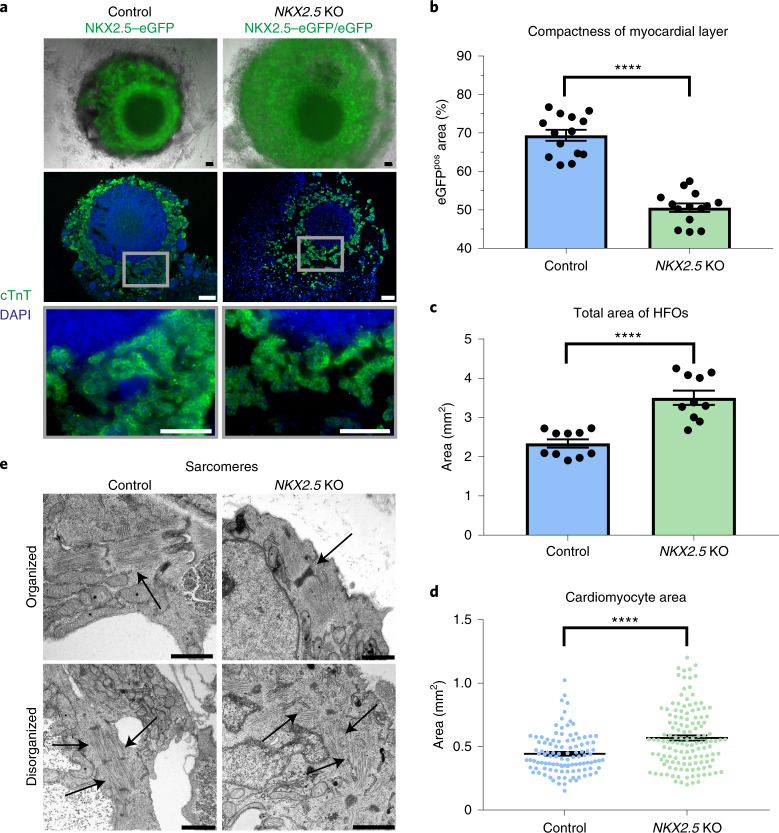
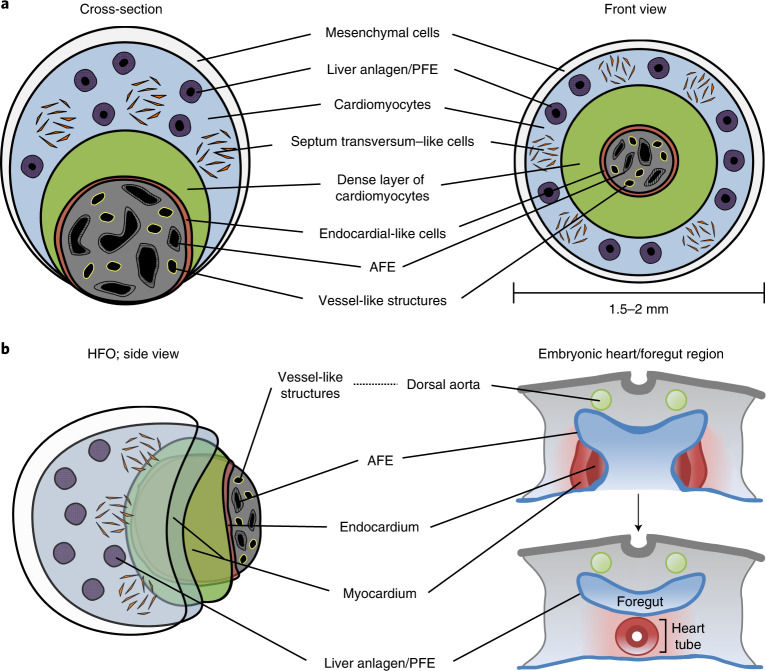
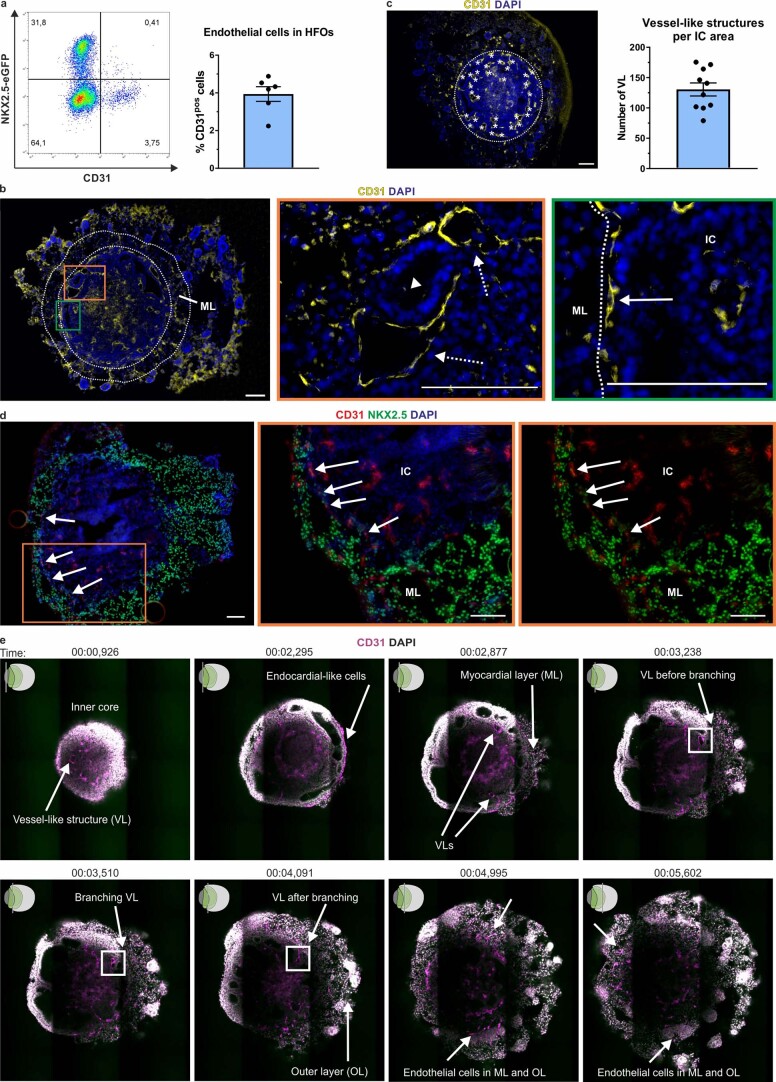
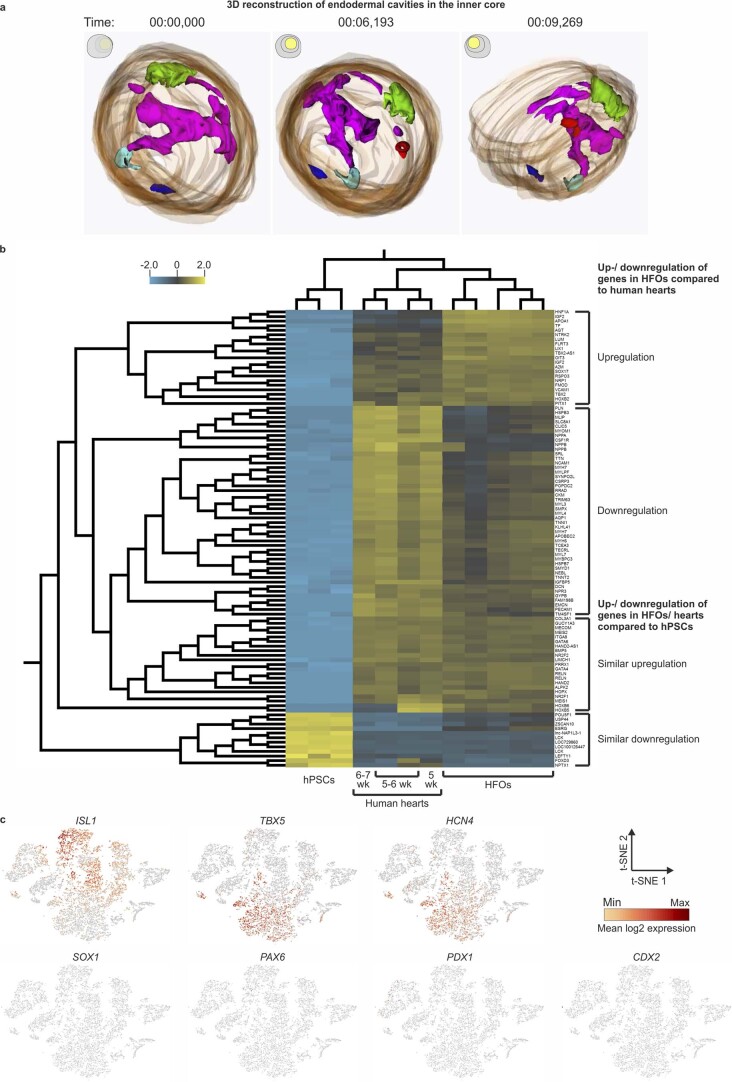
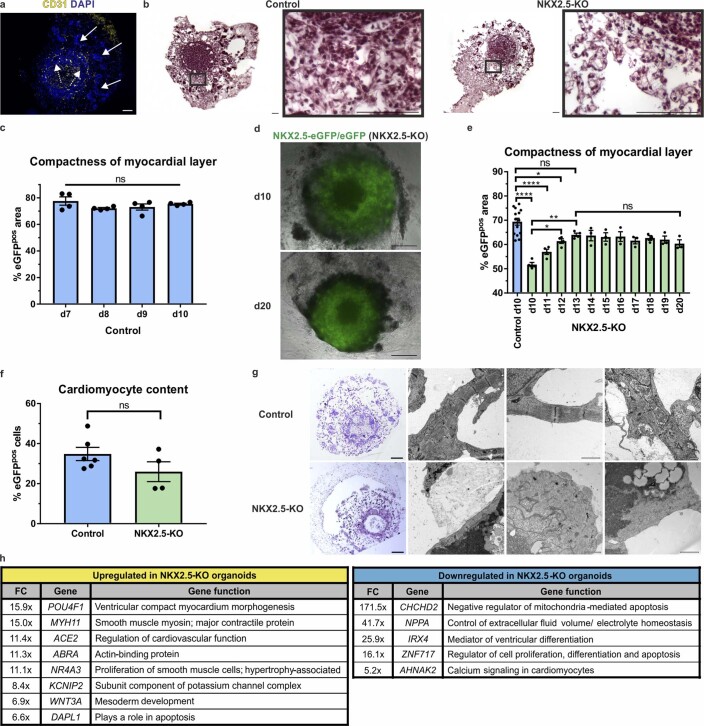
Organoid models of early tissue development have been produced for the intestine, brain, kidney and other organs, but similar approaches for the heart have been lacking. Here we generate complex, highly structured, three-dimensional heart-forming organoids (HFOs) by embedding human pluripotent stem cell aggregates in Matrigel followed by directed cardiac differentiation via biphasic WNT pathway modulation with small molecules. HFOs are composed of a myocardial layer lined by endocardial-like cells and surrounded by septum-transversum-like anlagen; they further contain spatially and molecularly distinct anterior versus posterior foregut endoderm tissues and a vascular network. The architecture of HFOs closely resembles aspects of early native heart anlagen before heart tube formation, which is known to require an interplay with foregut endoderm development. We apply HFOs to study genetic defects in vitro by demonstrating that NKX2.5 -knockout HFOs show a phenotype reminiscent of cardiac malformations previously observed in transgenic mice.
Overview
The claims and statistics of this paper haven’t been checked yet.
Free: it reads the open-access text and checks the first 5 claims that cite a source we can check. Create a free account to check every claim.
Integrity signals
Registry
Cites
Statistics
Figures
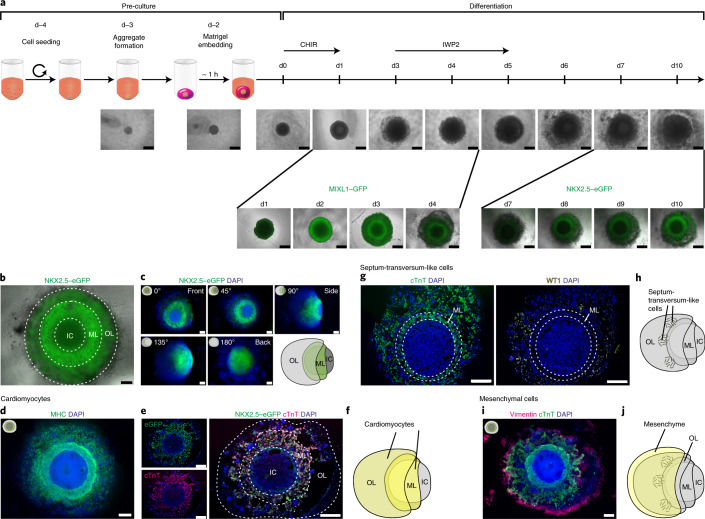
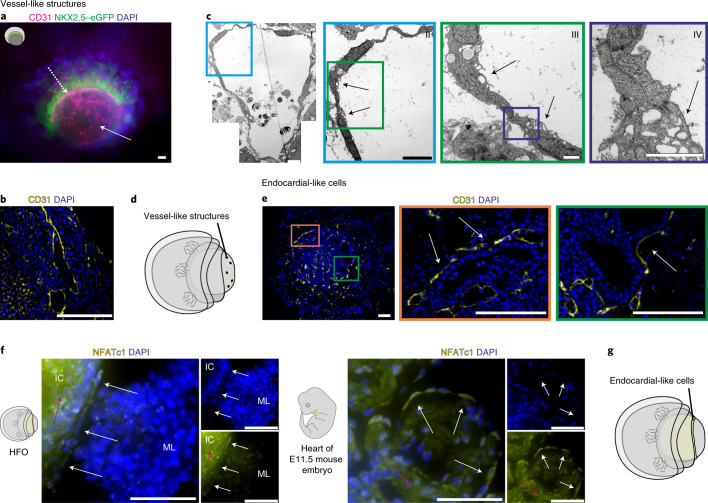
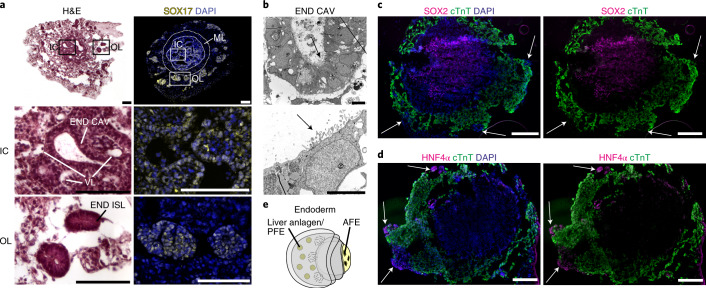
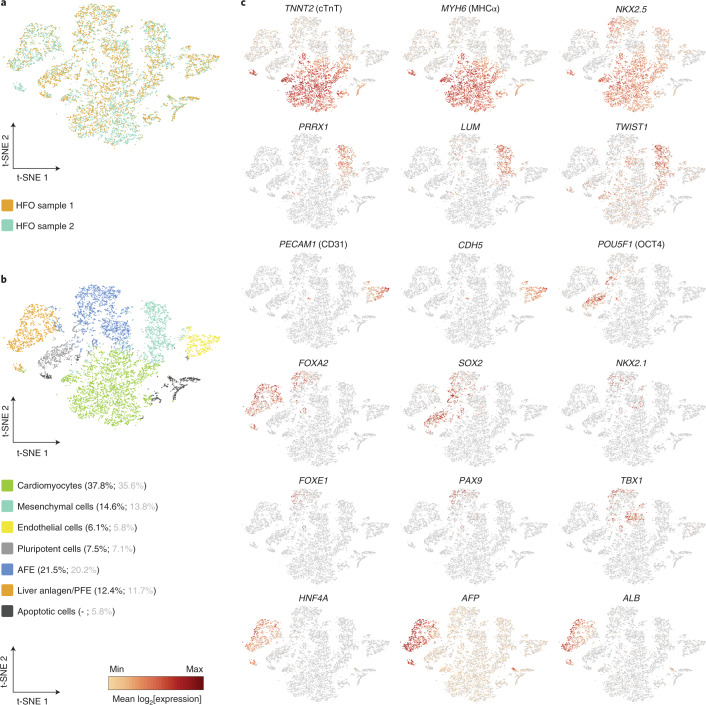
Verification
Claims the paper makes
The claims and statistics of this paper haven’t been checked yet.
Free: it reads the open-access text and checks the first 5 claims that cite a source we can check. Create a free account to check every claim.
Claims other papers make about this one
Each is checked against this paper’s own text: does it say what the citing paper says it does?
The cited source says what the claim attributes to it.
In the citing paper
“Immunofluorescence analysis for the endocardial marker NFATC1 (an endocardial specific cell marker19) revealed the formation of endocardial layers, similar to the endocardial lining of heart chambers”
From Self-assembling human heart organoids for the modeling of cardiac development and congenital heart disease (2021) · cites this paper as [19]
In the citing paper
“While demonstrating a large leap in self-assembling capabilities, these cardioids still relied heavily on complex growth factor mixtures, co-culture approaches to include epicardial clusters, and independent differentiation protocols to achieve their final results.”
From Self-assembling human heart organoids for the modeling of cardiac development and congenital heart disease (2021) · cites this paper as [19]
In the citing paper
“Hybrid cardiac-foregut organoids from human PSCs have also been reported very recently, with external heart layers and an internal endodermal core19”
From Self-assembling human heart organoids for the modeling of cardiac development and congenital heart disease (2021) · cites this paper as [19]
Self-check
Percentages, sums and reported differences re-computed from the paper’s own numbers.
The self-check needs the paper’s full text.
Citations
Cites
THE USE OF LEAD CITRATE AT HIGH pH AS AN ELECTRON-OPAQUE STAIN IN ELECTRON MICROSCOPY
Reynolds, E. S. (1963) · The Journal of Cell Biology · doi:10.1083/jcb.17.1.208 · Cited by 24,938
Single Lgr5 stem cells build crypt-villus structures in vitro without a mesenchymal niche
Sato, T., Vries, R. G., Snippert, H. J., van de Wetering, M., Barker, N., Stange, D. E., van Es, J. H., Abo, A., Kujala, P., Peters, P. J., et al. (2009) · Nature · doi:10.1038/nature07935 · Cited by 7,204
The GeneCards suite: from gene data mining to disease genome sequence analyses
Stelzer, G., Rosen, N., Plaschkes, I., Zimmerman, S., Twik, M., Fishilevich, S., Stein, T. I., Nudel, R., Lieder, I., Mazor, Y., et al. (2016) · Current Protocols in Bioinformatics · doi:10.1002/cpbi.5 · Cited by 5,550
Cerebral organoids model human brain development and microcephaly
Lancaster, M. A., Renner, M., Martin, C.-A., Wenzel, D., Bicknell, L. S., Hurles, M. E., Homfray, T., Penninger, J. M., Jackson, A. P., & Knoblich, J. A. (2013) · Nature · doi:10.1038/nature12517 · Cited by 5,372
Chemically defined generation of human cardiomyocytes
Burridge, P. W., Matsa, E., Shukla, P., Lin, Z. C., Churko, J. M., Ebert, A. D., Lan, F., Diecke, S., Huber, B., Mordwinkin, N. M., et al. (2014) · Nature Methods · doi:10.1038/nmeth.2999 · Cited by 1,606
Organoids as an in vitro model of human development and disease
Fatehullah, A., Tan, S. H., & Barker, N. (2016) · Nature Cell Biology · doi:10.1038/ncb3312 · Cited by 1,508
Chemically defined conditions for human iPSC derivation and culture
Chen, G., Gulbranson, D. R., Hou, Z., Bolin, J. M., Ruotti, V., Probasco, M. D., Smuga-Otto, K., Howden, S. E., Diol, N. R., Propson, N. E., et al. (2011) · Nature Methods · doi:10.1038/nmeth.1593 · Cited by 1,447
Lyons, I., Parsons, L. M., Hartley, L., Li, R., Andrews, J. E., Robb, L., & Harvey, R. P. (1995) · Genes & Development · doi:10.1101/gad.9.13.1654 · Cited by 1,141
Reconstruct: a free editor for serial section microscopy
FIALA, J. C. (2005) · Journal of Microscopy · doi:10.1111/j.1365-2818.2005.01466.x · Cited by 880
Role of the NF-ATc transcription factor in morphogenesis of cardiac valves and septum
de la Pompa, J. L., Timmerman, L. A., Takimoto, H., Yoshida, H., Elia, A. J., Samper, E., Potter, J., Wakeham, A., Marengere, L., Langille, B. L., et al. (1998) · Nature · doi:10.1038/32419 · Cited by 660
Research works printed but not linked: 2
- Klaus, A., Saga, Y., Taketo, M. M., Tzahor, E. & Birchmeier, W. Distinct roles of Wnt/β-catenin and Bmp signaling during early cardiogenesis. Proc. Natl Acad. Sci. USA 104, 18531–18536 (2007). · DOI · Paper page
- Monaghan, M. G. et al. Endocardial-to-mesenchymal transformation and mesenchymal cell colonization at the onset of human cardiac valve development. Development 143, 473–482 (2016).
Cited by
Zhao, Z., Chen, X., Dowbaj, A. M., Sljukic, A., Bratlie, K., Lin, L., Fong, E. L. S., Balachander, G. M., Chen, Z., Soragni, A., et al. (2022) · Nature Reviews Methods Primers · doi:10.1038/s43586-022-00174-y · Cited by 1,082
Cardioids reveal self-organizing principles of human cardiogenesis
Hofbauer, P., Jahnel, S. M., Papai, N., Giesshammer, M., Deyett, A., Schmidt, C., Penc, M., Tavernini, K., Grdseloff, N., Meledeth, C., et al. (2021) · Cell · doi:10.1016/j.cell.2021.04.034 · Cited by 588
Vascular endothelial cell development and diversity
Trimm, E., & Red-Horse, K. (2023) · Nature Reviews Cardiology · doi:10.1038/s41569-022-00770-1 · Cited by 537
Lewis-Israeli, Y. R., Wasserman, A. H., Gabalski, M. A., Volmert, B. D., Ming, Y., Ball, K. A., Yang, W., Zou, J., Ni, G., Pajares, N., et al. (2021) · Nature Communications · doi:10.1038/s41467-021-25329-5 · Cited by 536
Human organoids in basic research and clinical applications
Tang, X.-Y., Wu, S., Wang, D., Chu, C., Hong, Y., Tao, M., Hu, H., Xu, M., Guo, X., & Liu, Y. (2022) · Signal Transduction and Targeted Therapy · doi:10.1038/s41392-022-01024-9 · Cited by 484
“generated hPSC-derived 3D heart-forming organoids (HFOs) through the application of Matrigel and biphasic WNT pathway modulation.(168) The HFOs resembled the early cardiac and foregut anlagen.”
MethodNatural Hydrogel-Based Bio-Inks for 3D Bioprinting in Tissue Engineering: A Review
Fatimi, A., Okoro, O. V., Podstawczyk, D., Siminska-Stanny, J., & Shavandi, A. (2022) · Gels · doi:10.3390/gels8030179 · Cited by 276
“For instance, in the study undertaken in [218], a 3D heart-like organoid struct was fabricated via the encapsulation of free-suspended human pluripotent stem cells in Matrigel, after which biphasic WNT pathway modulation with small molecules was employed to initiate cardiac differentiation.”
BackgroundThree-Dimensional Cell Cultures: The Bridge between In Vitro and In Vivo Models
Urzì, O., Gasparro, R., Costanzo, E., De Luca, A., Giavaresi, G., Fontana, S., & Alessandro, R. (2023) · International Journal of Molecular Sciences · doi:10.3390/ijms241512046 · Cited by 224
“They generated organoids thanks to the encapsulation of human iPSCs in Matrigel and combined this strategy with directed cardiac differentiation induced by WNT pathway modulation [163].”
Multi-chamber cardioids unravel human heart development and cardiac defects
(2023) · doi:10.1016/j.cell.2023.10.030 · Cited by 205
Microfluidic organoids-on-a-chip: The future of human models
Saorin, G., Caligiuri, I., & Rizzolio, F. (2023) · Seminars in Cell & Developmental Biology · doi:10.1016/j.semcdb.2022.10.001 · Cited by 196
Integrating organoids and organ-on-a-chip devices
Zhao, Y., Landau, S., Okhovatian, S., Liu, C., Lu, R. X. Z., Lai, B. F. L., Wu, Q., Kieda, J., Cheung, K., Rajasekar, S., et al. (2024) · Nature Reviews Bioengineering · doi:10.1038/s44222-024-00207-z · Cited by 185
“High-fidelity cardiac organoids enable the study of cell–cell and cell–matrix interactions in heart development 128 and disease modelling 129 .”
Challenges and opportunities for the next generation of cardiovascular tissue engineering
Cho, S., Discher, D. E., Leong, K. W., Vunjak-Novakovic, G., & Wu, J. C. (2022) · Nature Methods · doi:10.1038/s41592-022-01591-3 · Cited by 176
Human organoids: New strategies and methods for analyzing human development and disease
Corsini, N. S., & Knoblich, J. A. (2022) · Cell · doi:10.1016/j.cell.2022.06.051 · Cited by 168
Silva, A. C., Matthys, O. B., Joy, D. A., Kauss, M. A., Natarajan, V., Lai, M. H., Turaga, D., Blair, A. P., Alexanian, M., Bruneau, B. G., et al. (2021) · Cell Stem Cell · doi:10.1016/j.stem.2021.11.007 · Cited by 167
Cardiac fibroblasts and mechanosensation in heart development, health and disease
Pesce, M., Duda, G. N., Forte, G., Girão, H., Raya, Á., Roca‐Cusachs, P., Sluijter, J. P. G., Tschöpe, C., & Linthout, S. V. (2022) · Nature Reviews Cardiology · doi:10.1038/s41569-022-00799-2 · Cited by 166
Progress in multicellular human cardiac organoids for clinical applications
Kim, H., Kamm, R. D., Vunjak-Novakovic, G., & Wu, J. C. (2022) · Cell Stem Cell · doi:10.1016/j.stem.2022.03.012 · Cited by 154
Human organoid models to study SARS-CoV-2 infection
Han, Y., Yang, L., Lacko, L. A., & Chen, S. (2022) · Nature Methods · doi:10.1038/s41592-022-01453-y · Cited by 163
Decellularized extracellular matrix mediates tissue construction and regeneration
Liu, C., Pei, M., Li, Q., & Zhang, Y. (2021) · Frontiers of Medicine · doi:10.1007/s11684-021-0900-3 · Cited by 163
Zhou, Y., Wu, Q., Li, Y., Feng, Y., Wang, Y., & Cheng, W. (2023) · Environment International · doi:10.1016/j.envint.2023.108171 · Cited by 149
Vascular cells improve functionality of human cardiac organoids
Voges, H. K., Foster, S. R., Reynolds, L., Parker, B. L., Devilée, L., Quaife-Ryan, G. A., Fortuna, P. R. J., Mathieson, E., Fitzsimmons, R., Lor, M., et al. (2023) · Cell Reports · doi:10.1016/j.celrep.2023.112322 · Cited by 139
Developments and Opportunities for 3D Bioprinted Organoids
Ren, Y., Yang, X., Ma, Z., Sun, X., Zhang, Y., Li, W., Yang, H., Qiang, L., Yang, Z., Liu, Y., et al. (2024) · International Journal of Bioprinting · doi:10.18063/ijb.v7i3.364 · Cited by 126
“of the Hannover Medical School, Germany, encapsulated free-suspended human PSCs in a matrix gel (Matrigel) in suspension culture in response to the classical Wnt signaling pathway, thereby effectively differentiating them into highly purified cardiomyocytes and establishing a 3D heart-like structure of a certain size…”
BackgroundCellular senescence and cardiovascular diseases: moving to the “heart” of the problem
Evangelou, K., Vasileiou, P. V. S., Papaspyropoulos, A., Hazapis, O. G., Petty, R., Demaria, M., & Gorgoulis, V. G. (2022) · Physiological Reviews · doi:10.1152/physrev.00007.2022 · Cited by 135
Fang, Y., Guo, Y., Ji, M., Li, B., Guo, Y., Zhu, J., Zhang, T., & Xiong, Z. (2021) · Advanced Functional Materials · doi:10.1002/adfm.202109810 · Cited by 127
Volmert, B. D., Kiselev, A. M., Juhong, A., Wang, F., Riggs, A., Kostina, A. S., O’Hern, C., Muniyandi, P., Wasserman, A. H., Huang, A., et al. (2023) · Nature Communications · doi:10.1038/s41467-023-43999-1 · Cited by 126
“The latest advances in human heart models are heart organoids generated from pluripotent stem cells 8 – 10 .”
InfluentialThe molecular mechanisms of cardiac development and related diseases
Li, Y., Du, J., Deng, S., Liu, B., Jing, X., Yan, Y., Liu, Y., Wang, J., Zhou, X., & She, Q. (2024) · Signal Transduction and Targeted Therapy · doi:10.1038/s41392-024-02069-8 · Cited by 125
Prondzynski, M., Berkson, P., Trembley, M. A., Tharani, Y., Shani, K., Bortolin, R. H., Sweat, M., Mayourian, J., Yücel, D., Cordoves, A. M., et al. (2024) · Nature Communications · doi:10.1038/s41467-024-50224-0 · Cited by 123
Yao, Q., Cheng, S., Pan, Q., Yu, J., Cao, G., Li, L., & Cao, H. (2024) · MedComm · doi:10.1002/mco2.735 · Cited by 122
“Drakhlis et al. 31 reviewed early heart and foregut development, contributing to the investigation of cardiac genetic defects in vitro.”
BackgroundMin, S., Kim, S., Sim, W., Choi, Y. S., Joo, H., Park, J.-H., Lee, S.-J., Kim, H., Lee, M. J., Jeong, I., et al. (2024) · Nature Communications · doi:10.1038/s41467-024-46928-y · Cited by 124
“This suggests that our cardiac tissue model with dynamic fl ow could mimic the native heart development process, as validated in heart-forming organoids 119 .”
Primate gastrulation and early organogenesis at single-cell resolution
Zhai, J., Guo, J., Wan, H., Qi, L. Q. L., Liu, L., Xiao, Z., Long, Y., Schmitz, D. A., Xu, Y., Yu, D., et al. (2022) · Nature · doi:10.1038/s41586-022-05526-y · Cited by 114
Advanced 3D imaging and organoid bioprinting for biomedical research and therapeutic applications
Maharjan, S., Ma, C., Singh, B., Kang, H., Orive, G., Yao, J., & Zhang, Y. S. (2024) · Advanced Drug Delivery Reviews · doi:10.1016/j.addr.2024.115237 · Cited by 114
Gastruloids enable modeling of the earliest stages of human cardiac and hepatic vascularization
Abilez, O. J., Yang, H., Guan, Y., Shen, M., Yıldırım, Z., Zhuge, Y., Venkateshappa, R., Zhao, S. R., Gomez, A. H., El‐Mokahal, M., et al. (2025) · Science · doi:10.1126/science.adu9375 · Cited by 111
Engineering spatial-organized cardiac organoids for developmental toxicity testing
Hoang, P., Kowalczewski, A., Sun, S., Winston, T. S., Archilla, A. M., Lemus, S. M., Ercan-Sencicek, A. G., Gupta, A. R., Liu, W., Kontaridis, M. I., et al. (2021) · Stem Cell Reports · doi:10.1016/j.stemcr.2021.03.013 · Cited by 100
“Recently, fully 3D heart organoids have been reported that form from Matrigel-embedded hPSC aggregates and develop into early heart and foregut endoderm tissues (Drakhlis et al., 2021).”
Backgroundvan der Velden, J., Asselbergs, F. W., Bakkers, J., Bátkai, S., Bertrand, L., Bezzina, C. R., Bot, I., Brundel, B. J. J. M., Carrier, L., Chamuleau, S. A. J., et al. (2022) · Cardiovascular Research · doi:10.1093/cvr/cvab370 · Cited by 105
Meier, A. B., Zawada, D., De Angelis, M. T., Martens, L. D., Santamaria, G., Zengerle, S., Nowak-Imialek, M., Kornherr, J., Zhang, F., Tian, Q., et al. (2023) · Nature Biotechnology · doi:10.1038/s41587-023-01718-7 · Cited by 96
“Unsupervised cluster analysis revealed that the most abundant cells were ventricular CMs (vCMs) expressing MYH7 and MYL2 (clusters 0, 1, 2, 3 and 4 and proliferative clusters 6 and 8; Fig.”
BackgroundConnecting past and present: single-cell lineage tracing
Chen, C., Liao, Y., & Peng, G. (2022) · Protein & Cell · doi:10.1007/s13238-022-00913-7 · Cited by 104
“For example, current breakthroughs allow for studying the cardiogenesis at multiple overlapping stages such as on gastruloids, foregut-heart organoids, or heart organoids (Drakhlis et al., 2021; Rossi et al., 2021; Hofbauer et al., 2021a, 2021b).”
BackgroundCellular and Engineered Organoids for Cardiovascular Models
Thomas, D., Choi, S., Alamana, C., Parker, K. K., & Wu, J. C. (2022) · Circulation Research · doi:10.1161/circresaha.122.320305 · Cited by 104
Biomanufacturing human tissues via organ building blocks
Wolf, K. J., Weiss, J. D., Uzel, S. G. M., Skylar‐Scott, M. A., & Lewis, J. A. (2022) · Cell stem cell · doi:10.1016/j.stem.2022.04.012 · Cited by 102
Ergir, E., Oliver-De La Cruz, J., Fernandes, S., Cassani, M., Niro, F., Pereira-Sousa, D., Vrbský, J., Vinarský, V., Perestrelo, A. R., Debellis, D., et al. (2022) · Scientific Reports · doi:10.1038/s41598-022-22225-w · Cited by 99
Replacing Animal Testing with Stem Cell-Organoids : Advantages and Limitations
Park, G., Rim, Y. A., Sohn, Y., Nam, Y., & Ju, J. H. (2024) · Stem Cell Reviews and Reports · doi:10.1007/s12015-024-10723-5 · Cited by 92
“Additionally, methods such as immunofluorescent staining, transmission electron microscopy, and scanning electron microscopy are also utilized [ 65, 66].”
MethodSong, M., Choi, D. B., Im, J. S., Song, Y. N., Kim, J. H., Lee, H., An, J., Kim, A., Choi, H. G., Kim, J., et al. (2024) · Cell Death and Disease · doi:10.1038/s41419-024-06703-9 · Cited by 92
“Drakhils et al., for instance, harnessed human iPSC aggregates embedded in matrigel to generate human heart-forming organoids, thereby recapitulating early human heart and foregut development [8].”
BackgroundGeneration of human iPSCs derived heart organoids structurally and functionally similar to heart
Lee, S.-G., Kim, Y.-J., Son, M.-Y., Oh, M.-S., Kim, J., Ryu, B., Kang, K.-R., Baek, J., Chung, G., Woo, D. H., et al. (2022) · Biomaterials · doi:10.1016/j.biomaterials.2022.121860 · Cited by 80
Silk fibroin-based hydrogels for cartilage organoids in osteoarthritis treatment
Shen, C., Zhou, Z., Li, R., Yang, S., Zhou, D., Zhou, F., Geng, Z., & Su, J. (2024) · Theranostics · doi:10.7150/thno.103491 · Cited by 90
Lyu, Q., Gong, S. P., Lees, J. G., Yin, J., Yap, L. W., Kong, A. M., Shi, Q., Fu, R., Zhu, Q., Dyer, A., et al. (2022) · Nature Communications · doi:10.1038/s41467-022-34860-y · Cited by 87
Zhuang, R. Z., Lock, R., Liu, B., & Vunjak-Novakovic, G. (2022) · Nature Biomedical Engineering · doi:10.1038/s41551-022-00885-3 · Cited by 84
The next generation of endothelial differentiation: Tissue-specific ECs
Nguyen, J., Lin, Y.-Y., & Gerecht, S. (2021) · Cell stem cell · doi:10.1016/j.stem.2021.05.002 · Cited by 82
Yang, J., Lei, W., Xiao, Y., Tan, S., Yang, J., Lin, Y., Yang, Z., Zhao, D., Zhang, C., Shen, Z., et al. (2024) · Cell Proliferation · doi:10.1111/cpr.13631 · Cited by 80
Reconstructing the heart using iPSCs: Engineering strategies and applications
Cho, S., Lee, C., Skylar‐Scott, M. A., Heilshorn, S. C., & Wu, J. C. (2021) · Journal of Molecular and Cellular Cardiology · doi:10.1016/j.yjmcc.2021.04.006 · Cited by 79
Endothelial cell dysfunction in cardiac disease: driver or consequence?
Allbritton‐King, J. D., & García‐Cardeña, G. (2023) · Frontiers in Cell and Developmental Biology · doi:10.3389/fcell.2023.1278166 · Cited by 79
“These systems have already shown immense promise in modeling cardiogenesis (Hofbauer et al., 2021) and congenital defects (Drakhlis et al., 2021).”
BackgroundScalise, M., Marino, F., Salerno, L., Cianflone, E., Molinaro, C., Salerno, N., Angelis, A. D., Viglietto, G., Urbanek, K., & Torella, D. (2021) · International Journal of Molecular Sciences · doi:10.3390/ijms222413180 · Cited by 76
Embryonic exposure of polystyrene nanoplastics affects cardiac development
Li, J., Weng, H., Liu, S., Li, F., Xu, K., Wen, S., Chen, X., Li, C., Nie, Y., Liao, B., et al. (2023) · The Science of The Total Environment · doi:10.1016/j.scitotenv.2023.167406 · Cited by 74
From engineered heart tissue to cardiac organoid
Cho, J., Lee, H., Rah, W., Chang, H., & Yoon, Y. (2022) · Theranostics · doi:10.7150/thno.67661 · Cited by 74
“Heart-forming organoids (HFOs) Differentiating hPSC aggregates embedded in Matrigel via biphasic WNT pathway modulation [128] Stage: pre-heart tube-like stage at 2–3 weeks of human gestation Cardiac development, cardiac malformation in HFOs generated with NKX2.”
MethodCellular interplay between cardiomyocytes and non-myocytes in diabetic cardiomyopathy
Phang, R. J., Ritchie, R. H., Hausenloy, D. J., Lees, J. G., & Lim, S. Y. (2022) · Cardiovascular Research · doi:10.1093/cvr/cvac049 · Cited by 72
Harnessing organs-on-a-chip to model tissue regeneration
Tavakol, D. N., Fleischer, S., & Vunjak-Novakovic, G. (2021) · Cell Stem Cell · doi:10.1016/j.stem.2021.05.008 · Cited by 63
“recently demonstrated that human heart-forming organoids could model the structural complexity of early heart and foregut development, with potential to model genetic mutations causing cardiac malformation, another area where OOCs can serve as a template for regenerative interventions in congenital disease (Drakhlis e…”
BackgroundMing, Y., Hao, S., Wang, F., Lewis‐Israeli, Y. R., Volmert, B. D., Xu, Z., Goestenkors, A. P., Aguirre, A., & Zhou, C. (2022) · Biosensors and Bioelectronics · doi:10.1016/j.bios.2022.114136 · Cited by 71
“Self-assembling hHOs are reported to have densely packed cells and sizes ranging from several hundred micrometers to 1 mm in diameter (Drakhlis et al., 2021; Hofbauer et al., 2021; Lewis-Israeli et al., 2021b).”
BackgroundInfluentialFeng, W. H., Schriever, H. C., Jiang, S., Bais, A. S., Wu, H., Kostka, D., & Li, G. (2022) · Communications Biology · doi:10.1038/s42003-022-03346-4 · Cited by 72
Yang, X., Chen, D., Sun, Q., Wang, Y., Xia, Y., Yang, J., Lin, C., Dang, X., Cen, Z., Liang, D., et al. (2023) · Cell Discovery · doi:10.1038/s41421-023-00543-1 · Cited by 70
Hamidzada, H., Pascual‐Gil, S., Wu, Q., Kent, G. M., Massé, S., Kantores, C., Kuzmanov, U., Gomez-Garcia, M. J., Rafatian, N., Gorman, R. A., et al. (2024) · Nature Cardiovascular Research · doi:10.1038/s44161-024-00471-7 · Cited by 67
Electro-metabolic coupling in multi-chambered vascularized human cardiac organoids
Ghosheh, M., Ehrlich, A., Ioannidis, K., Ayyash, M., Goldfracht, I., Cohen, M., Fischer, A., Mintz, Y., Gepstein, L., & Nahmias, Y. (2023) · Nature Biomedical Engineering · doi:10.1038/s41551-023-01071-9 · Cited by 65
“Recent work demonstrated that geometric confinement induces a central cavity to form in cardiac organoids 29,30,38 .”
BackgroundLewis‐Israeli, Y. R., Wasserman, A. H., & Aguirre, A. (2021) · Biomolecules · doi:10.3390/biom11091277 · Cited by 65
“[45] used human ESCs to differentiate 3D aggregates embedded in a drop of Matrigel to provide matrix support.”
BackgroundMethodAccelerating cardiovascular research: recent advances in translational 2D and 3D heart models
Mohr, E., Thum, T., & Bär, C. (2022) · European Journal of Heart Failure · doi:10.1002/ejhf.2631 · Cited by 63
A combined human gastruloid model of cardiogenesis and neurogenesis
Olmsted, Z. T., & Paluh, J. L. (2022) · iScience · doi:10.1016/j.isci.2022.104486 · Cited by 63
de Boer, R. A., Heymans, S. R. B., Backs, J., Carrier, L., Coats, A. J. S., Dimmeler, S., Eschenhagen, T., Filippatos, G. S., Gepstein, L., Hulot, J., et al. (2022) · European Journal of Heart Failure · doi:10.1002/ejhf.2414 · Cited by 62
Generating 3D human cardiac constructs from pluripotent stem cells
Liu, C., Feng, X., Li, G., Gokulnath, P., & Xiao, J. (2022) · EBioMedicine · doi:10.1016/j.ebiom.2022.103813 · Cited by 62
Engineering multiscale structural orders for high-fidelity embryoids and organoids
Shao, Y., & Fu, J. (2022) · Cell stem cell · doi:10.1016/j.stem.2022.04.003 · Cited by 62
Merits and challenges of iPSC-derived organoids for clinical applications
Xu, Z., Yang, J., Xin, X., Liu, C., Li, L., Mei, X., & Li, M. (2023) · Frontiers in Cell and Developmental Biology · doi:10.3389/fcell.2023.1188905 · Cited by 63
“Researchers from Hanover Medical College in Germany embedded iPSC aggregates into matrix glue and treated them with Wnt signal pathway activator CHIR and inhibitor IWP2 successively, and successfully obtained cardiac organoids which are very similar to the early heart structure, which can be used to study the early de…”
MethodFrom organoids to organoids-on-a-chip: Current applications and challenges in biomedical research
Liu, K., Chen, X., Fan, Z., Ren, F., Liu, J., & Hu, B. (2025) · Chinese Medical Journal · doi:10.1097/cm9.0000000000003535 · Cited by 61
Ho, B. X., Pang, J. K. S., Phua, Q. H., Liew, L. C., Poh, B. M., Chen, Y., Loh, Y.-H., An, Ö., Yang, H. H., Seshachalam, V. P., et al. (2022) · Stem Cell Research & Therapy · doi:10.1186/s13287-022-03215-1 · Cited by 59
“Discussion Chambered organoids represent a powerful platform to dissect genetic defects in vitro and potentially model translational research [12, 13].”
BackgroundMethodInfluentialGaldos, F. X., Lee, C., Lee, S., Paige, S. L., Goodyer, W. R., Xu, S., Samad, T., Escobar, G. V., Darsha, A. K., Beck, A., et al. (2023) · eLife · doi:10.7554/elife.80075 · Cited by 59
Yang, H., Yang, Y., Kiskin, F. N., Shen, M., & Zhang, J. Z. (2023) · Stem Cell Research & Therapy · doi:10.1186/s13287-023-03470-w · Cited by 58
Generation of heart-forming organoids from human pluripotent stem cells
Drakhlis, L., Biswanath, S., & Zweigerdt, R. (2021) · Nature Protocols · doi:10.1038/s41596-021-00629-8 · Cited by 58
Self-citationOrganoids from pluripotent stem cells and human tissues: When two cultures meet each other
Artegiani, B., & Hendriks, D. F. G. (2025) · Developmental Cell · doi:10.1016/j.devcel.2025.01.005 · Cited by 57
Cheng, Y., Chen, Z., Yang, S., Liu, T., Yin, L., Pu, Y., & Liang, G. (2021) · The Science of The Total Environment · doi:10.1016/j.scitotenv.2021.149584 · Cited by 55
Lin, Z., Garbern, J. C., Liu, R., Li, Q., Juncosa, E. M., Elwell, H., Sokol, M. K., Aoyama, J., Deumer, U.-S., Hsiao, E., et al. (2023) · Science Advances · doi:10.1126/sciadv.ade8513 · Cited by 54
“Intracellular electrophysiology recordings such as patch clamp can only assay cells one at a time, require membrane disruption, locally singularize spatially distributed electrical activities, and are challenging for 3D cardiac microtissue application ( 16 – 19 ).”
Branco, M. A., Dias, T. P., Cabral, J. M. S., Pinto-do-Ó, P., & Diogo, M. M. (2022) · Nature Communications · doi:10.1038/s41467-022-34730-7 · Cited by 50
“Altogether, these data demonstrate that (1) WNT and RA are critical stimuli for PE/STM/PFH organoids specification, (2) removal of RA pathway activation results in the specification of liver bud organoids, and (3) the removal of WNT signaling activation between D5 and D7 of differentiation allows the co-emergence of C…”
BackgroundMethodResultZhu, Y., Jiang, D., Qiu, Y. L., Liu, X., Bian, Y., Tian, S., Wang, X., Hsia, K. J., Wan, H., Zhuang, L., et al. (2024) · Bioactive Materials · doi:10.1016/j.bioactmat.2024.05.019 · Cited by 53
“Different types of organoids have been reported, such as the brain [9 – 11], heart [12 – 14], liver [15 – 17], pancreas [18,19], lung cancer [20 – 22], etc.”
BackgroundRecent Advances in Generation of In Vitro Cardiac Organoids
Sahara, M. (2023) · International Journal of Molecular Sciences · doi:10.3390/ijms24076244 · Cited by 52
“, 2021 Heart-Forming Organoid H hPSC aggregates Matrigel CHIR, IWP2 - Formation of three-layered self-assembly: (inner) endothelial/endocardial/foregut cells; (middle) myocardial/epicardial cells; (outer) mesenchyme/liver cells - Recapitulation of early heart and foregut development (+) Cardiogenesis & disease modelin…”
BackgroundMethodDardano, M., Kleemiß, F., Kosanke, M., Lang, D., Wilson, L., Franke, A., Teske, J., Shivaraj, A., de la Roche, J., Fischer, M., et al. (2024) · Nature Cell Biology · doi:10.1038/s41556-024-01526-4 · Cited by 52
“Heart-forming organoids acquire a specific spatial multi-tissue organization, resembling anatomical aspects of cardiac and foregut development of the native embryo 28 .”
InfluentialSelf-citationEngineering approaches for cardiac organoid formation and their characterization
Joddar, B., Natividad-Diaz, S. L., Padilla, A. E., Esparza, A., Ramirez, S. P., Chambers, D. R., & Ibaroudene, H. (2022) · Translational research · doi:10.1016/j.trsl.2022.08.009 · Cited by 51
van Loo, B., ten Den, S. A., Araújo‐Gomes, N., de Jong, V., Snabel, R. R., Schot, M., Rivera‐Arbeláez, J. M., Veenstra, G. J. C., Passier, R. C., Kamperman, T., et al. (2023) · Nature Communications · doi:10.1038/s41467-023-42297-0 · Cited by 50
“Compartmentalization in (micro)wells 3,27 – 31 or within hanging droplets 32 can offer improved size control.”
Human blood vessel organoids reveal a critical role for CTGF in maintaining microvascular integrity
Romeo, S. G., Secco, I., Schneider, E., Reumiller, C. M., Santos, C. X. C., Zoccarato, A., Musale, V., Pooni, A., Yin, X., Theofilatos, K., et al. (2023) · Nature Communications · doi:10.1038/s41467-023-41326-2 · Cited by 48
Heart organoids and tissue models for modeling development and disease
Miyamoto, M., Nam, L., Kannan, S., & Kwon, C. (2021) · Seminars in Cell & Developmental Biology · doi:10.1016/j.semcdb.2021.03.011 · Cited by 41
“…factors would affect morphogenesis in the organoids of Silva et al. In the most recent version of a developmental cardiac organoid, Drakhlis et al. [104], presented a method to form hiPSC-derived developmental cardiac organoids which consisted of both cardiac and endodermal lineages (similar to…”
Galdos, F. X., Xu, S., Goodyer, W. R., Duan, L., Huang, Y. V., Lee, S., Zhu, H., Lee, C., Wei, N., Lee, D. C., et al. (2022) · Nature Communications · doi:10.1038/s41467-022-33045-x · Cited by 50
Zubrzycki, M., Schramm, R., Costard‐Jäckle, A., Grohmann, J., Gummert, J. F., & Zubrzycka, M. (2024) · International Journal of Molecular Sciences · doi:10.3390/ijms25137117 · Cited by 47
Clinical trials in-a-dish for cardiovascular medicine
Wu, X., Swanson, K., Yıldırım, Z., Liu, W., Liao, R., & Wu, J. C. (2024) · European Heart Journal · doi:10.1093/eurheartj/ehae519 · Cited by 47
Zawada, D. M., Kornherr, J., Meier, A. B., Santamaria, G., Dorn, T., Nowak‐Imialek, M., Ortmann, D., Zhang, F., Lachmann, M., Dreßen, M., et al. (2023) · Nature Communications · doi:10.1038/s41467-023-36764-x · Cited by 45
Maturation of human cardiac organoids enables complex disease modeling and drug discovery
Pocock, M. W., Reid, J. D., Robinson, H., Charitakis, N., Krycer, J. R., Foster, S. R., Fitzsimmons, R. L., Lor, M., Devilée, L., Batho, C. A. P., et al. (2025) · Nature Cardiovascular Research · doi:10.1038/s44161-025-00669-3 · Cited by 45
“Multicellular mixing and organoid protocols have been established to promote cellular complexity 5–9 .”
O’Hern, C., Caywood, S., Aminova, S., Kiselev, A. M., Volmert, B. D., Cao, W., Wang, F., Dionise, M., Sewavi, M.-L., Skoric, M., et al. (2025) · Cell stem cell · doi:10.1016/j.stem.2025.09.011 · Cited by 45
Cardiac Organoids: A 3D Technology for Modeling Heart Development and Disease
Zhu, L., Liu, K. Y., Feng, Q., & Liao, Y. (2022) · Stem Cell Reviews and Reports · doi:10.1007/s12015-022-10385-1 · Cited by 44
Recent Advances in Electrophysiological Recording Platforms for Brain and Heart Organoids
Chung, W. G., Kim, E., Song, H., Lee, J., Lee, S., Lim, K., Jeong, I., & Park, J. (2022) · Advanced NanoBiomed Research · doi:10.1002/anbr.202200081 · Cited by 43
Fan, S., Xiao, G., Ni, J., Zhao, Y., Du, H., Liang, Y., Lv, M., He, S., Fan, G., & Zhu, Y. (2023) · Biomedicine & Pharmacotherapy · doi:10.1016/j.biopha.2023.114642 · Cited by 43
Organoid‐Guided Precision Medicine: From Bench to Bedside
Tao, B., Li, X., Hao, M., Tian, T., Li, Y., Li, X., Yang, C., Li, Q., Feng, Q., Zhou, H., et al. (2025) · MedComm · doi:10.1002/mco2.70195 · Cited by 43
In vitro models of the human heart
Hofbauer, P., Jahnel, S. M., & Mendjan, S. (2021) · Development · doi:10.1242/dev.199672 · Cited by 35
Andrade, A. C., Wolf, M., Binder, H., Gomes, F. G., Manstein, F., Peking, P., Poupardin, R., Zweigerdt, R., Schallmoser, K., & Strunk, D. (2021) · International Journal of Molecular Sciences · doi:10.3390/ijms22083890 · Cited by 42
“Ideally, somatic cells together with vascular endothelial cells and stromal cells functioning as pericytes can be generated from the same iPSC clone for organoid formation and development of organ regeneration strategies [7,8].”
BackgroundSelf-citationParihar, A., Pandita, V., & Khan, R. (2022) · Biotechnology and Bioengineering · doi:10.1002/bit.28166 · Cited by 41
Standardized production of hPSC-derived cardiomyocyte aggregates in stirred spinner flasks
Kriedemann, N., Triebert, W., Teske, J., Mertens, M., Franke, A., Ullmann, K., Manstein, F., Drakhlis, L., Haase, A., Halloin, C., et al. (2024) · Nature Protocols · doi:10.1038/s41596-024-00976-2 · Cited by 41
Self-citationAdvances in cardiac organoid research: implications for cardiovascular disease treatment
Huang, Z., Jia, K., Tan, Y., Yang, Y. P., Xiao, W., Zhou, X., Yi, J., & Zhang, C. (2025) · Cardiovascular Diabetology · doi:10.1186/s12933-025-02598-8 · Cited by 40
Advancing organoid design through co-emergence, assembly, and bioengineering
Tenreiro, M. F., Branco, M. A., Cotovio, J. P., Cabral, J. M. S., Fernandes, T. G., & Diogo, M. M. (2023) · Trends in biotechnology · doi:10.1016/j.tibtech.2022.12.021 · Cited by 39
Sculpting the heart: Cellular mechanisms shaping valves and trabeculae
Gunawan, F., Priya, R., & Stainier, D. Y. R. (2021) · Current Opinion in Cell Biology · doi:10.1016/j.ceb.2021.04.009 · Cited by 35
Progress in Bioengineering Strategies for Heart Regenerative Medicine
Häneke, T., & Sahara, M. (2022) · International Journal of Molecular Sciences · doi:10.3390/ijms23073482 · Cited by 34
“have reported hPSC-derived hybrid cardiac-foregut organoids, which resembled early native heart development before heart tube formation through an interaction with foregut endoderm tissues [143].”
BackgroundShou, Y., Johnson, S. C., Quek, Y. J., Li, X., & Tay, A. K. P. (2022) · Materials Today Bio · doi:10.1016/j.mtbio.2022.100269 · Cited by 35
Qian, S., Mao, J., Liu, Z., Zhao, B., Zhao, Q., Lu, B., Zhang, L., Mao, X., Cheng, L., Cui, W., et al. (2022) · Smart Medicine · doi:10.1002/smmd.20220007 · Cited by 34
Metadata
- Authors
- Drakhlis, L., Biswanath, S., Farr, C.-M., Lupanow, V., Teske, J., Ritzenhoff, K., Franke, A., Manstein, F., Bolesani, E., Kempf, H., Liebscher, S., Schenke-Layland, K., Hegermann, J., Nolte, L., Meyer, H., de la Roche, J., Thiemann, S., Wahl-Schott, C., Martin, U., & Zweigerdt, R.
- Affiliations
- Medizinische Hochschule Hannover (DE)
- Novo Nordisk (Denmark) (DK)
- University of Tübingen (DE)
- Laser Zentrum Hannover (DE)
- Corresponding author
- Drakhlis, Lika
- ORCID
- Venue
- Nature Biotechnology
- Published
- 2021-02-08
- Volume
- 39
- Issue
- 6
- Pages
- 737-746
- ISSN
- 0733-222X (ISSN-L)
- 1087-0156
- 1546-1696
- PMC
- PMC8192303
- OpenAlex
- W3128197056
- Cited by
- 452
- References
- 55
- Citations by year
- 2026: 74 · 2025: 91 · 2024: 88 · 2023: 69 · 2022: 86 · 2021: 43
- FWCI
- 22.68
- Type
- journal article
- Language
- en
- Update notices
- correction (2021-05-20)
- Open access
- hybrid
- doi.org
- Licence
- cc-by
- creativecommons.org/licenses/by/4.0 (tdm)
- creativecommons.org/licenses/by/4.0 (vor)
- Locations
- Nature Biotechnology (publishedVersion, cc-by)
- PubMed Central (publishedVersion, cc-by)
- PubMed (publishedVersion)
- Funders
- Children’s Hospital of Wisconsin Research Institute
- Murdoch Children's Research Institute
- European Commission (H2020)
- Deutsche Forschungsgemeinschaft (REBIRTH EXC62/2, ZW64/4-1, TRR- 152, KFO 311, EXC62/2, Exc-62, SFB/TRR152, ZW64/7-1, WA 2597/3-1, KFO311/ZW64/7-1)
- Agence Nationale de la Recherche (ANR-18-ENM3-0002)
- Universiteit Leiden
- Monash University
- Bundesministerium für Bildung und Forschung (01EK1602A, 82DZL00401, 01EK1601A, 13N14086, 031L0249, 13XP5092B)
- Medizinischen Hochschule Hannover
- Horizon 2020 Framework Programme
- Topics
- Life Sciences › Biochemistry, Genetics and Molecular Biology › Molecular Biology › Pluripotent Stem Cells Research
- Life Sciences › Biochemistry, Genetics and Molecular Biology › Molecular Biology › Congenital heart defects research
- Life Sciences › Biochemistry, Genetics and Molecular Biology › Molecular Biology › Developmental Biology and Gene Regulation
- Keywords
- foregut endoderm, cardiac differentiation, pluripotent stem cells, Wnt signaling, Matrigel, congenital heart disease, heart tube formation, endocardium, myocardium, vascular system, three-dimensional organoids
- MeSH terms
- Homeobox Protein Nkx-2.5, Heart, Humans, Intestines, Organoids, Sequence Analysis, RNA, Body Patterning, Embryonic Development, Green Fluorescent Proteins, Hepatocyte Nuclear Factor 4, SOXB1 Transcription Factors, SOXF Transcription Factors, Gene Knockdown Techniques
About these checks
Registry, retraction, Cites and statistics results are computed, not judged, with one exception: a printed reference that no index lists is read once by a model before it counts as a citation error. Claims are extracted by a model and kept only when their quote appears verbatim in the text; each cited source is then checked, with a model’s help, for whether it says what the claim relies on. Those verdicts can be wrong — read the claim’s quote and the cited source before relying on one.
Statistics and arithmetic are recomputed, not judged.
Confidence bands are shown only for fields calibrated on our annotated test set. None is calibrated yet, so no band is shown.
What counts as a claim ›How we measure confidence ›How we check this ›
Are you an author, or do you see a problem with this page? Request a review
Data sources
Bibliographic data: Semantic Scholar, OpenAlex, Crossref.
Contains information from the Semantic Scholar Academic Graph Datasets, made available under the ODC Attribution License (ODC-BY 1.0).
Semantic Scholar’s data is described in: Kinney, R., et al. (2023). The Semantic Scholar Open Data Platform. arXiv:2301.10140.
