

The DOI matches its Crossref record; 66 of the 66 references it cites were found in a registry or an index; 10 of the 14 sources its claims cite were checked for support.
Expanding RNAi therapeutics to extrahepatic tissues with lipophilic conjugates
Open accessPublished version of a preprint
Abstract
Therapeutics based on short interfering RNAs (siRNAs) delivered to hepatocytes have been approved, but new delivery solutions are needed to target additional organs. Here we show that conjugation of 2'-O-hexadecyl (C16) to siRNAs enables safe, potent and durable silencing in the central nervous system (CNS), eye and lung in rodents and non-human primates with broad cell type specificity. We show that intrathecally or intracerebroventricularly delivered C16-siRNAs were active across CNS regions and cell types, with sustained RNA interference (RNAi) activity for at least 3 months. Similarly, intravitreal administration to the eye or intranasal administration to the lung resulted in a potent and durable knockdown. The preclinical efficacy of an siRNA targeting the amyloid precursor protein was evaluated through intracerebroventricular dosing in a mouse model of Alzheimer's disease, resulting in amelioration of physiological and behavioral deficits. Altogether, C16 conjugation of siRNAs has the potential for safe therapeutic silencing of target genes outside the liver with infrequent dosing.
Overview
AI snapshot
Written from the paper’s full text.
TL;DR
Conjugating 2'-O-hexadecyl (C16) to chemically stabilized siRNAs enables potent, durable RNAi silencing in the CNS, eye, and lung after local administration in rodents and nonhuman primates. The platform supports infrequent dosing and candidate selection for extrahepatic clinical trials.
Key findings
- In rats, C16-siRNA with 5'-VP and 2'-O-C16 at sense-strand N6 produced up to 90% SOD1 knockdown in spinal cord and up to 75% in brain after a single 0.9 mg intrathecal (IT) dose; there was no activity in striatum, liver, or kidney at the tested dose and time point. Brain regions showed >75% silencing for at least 3 months, lower spinal cord out to 6 months, and the frontal cortex siRNA half-life for the 0.9 mg group was calculated at 3–4 months.
- In nonhuman primates (NHPs), APP-targeting C16-siRNA with both 5'-VP and 2'-O-C16 after a single 60 mg IT dose gave up to 70% APP knockdown in spinal cord and up to 80% in brain, including 25% in deep brain striatum, at 3 months; CSF soluble APP knockdown was >75% for 3 months, recovered to 50% at 4.5 months, and fully recovered by 9 months in most animals. No activity was seen in NHP liver or kidney at 3 months after 60 mg IT.
- In NHP eye, a single intravitreal TTR-targeting C16-siRNA dose sustained >80% aqueous humor TTR knockdown out to 6 months at 100 or 300 μg/eye; at 3 μg/eye, TTR protein remained reduced by 77% at 1 month, and RPE TTR mRNA knockdown was >95% at 100 and 300 μg/eye at 6 months. An unconjugated siRNA showed no knockdown at 10 μg/eye and only 33% at 30 μg/eye at 1 month, versus 81% for the C16 conjugate at 10 μg/eye.
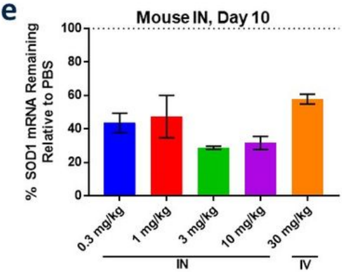
- In mouse lung, intranasal SOD1 C16-siRNA at 10 mg/kg reduced whole-lung SOD1 mRNA by 62–78% in the first month and by 57% at 2 months; doses of 0.3, 1, 3, or 10 mg/kg gave 57%, 53%, 71%, and 68% reductions at day 10, while a single intravenous 30 mg/kg dose reduced SOD1 mRNA by 42% at day 10.
Methods
- Oligonucleotides were synthesized with 2'-F, 2'-O-methyl, phosphorothioate, GNA, 5'-(E)-vinylphosphonate, and 2'-O-C16 phosphoramidites, then purified and annealed into siRNAs.
- In vivo studies used rat IT lumbar puncture (0.07, 0.3, or 0.9 mg; repeat 0.3 mg monthly), NHP IT (45 or 60 mg), NHP intravitreal injection (3, 10, 30, 100, or 300 μg/eye), and mouse intranasal or intravenous dosing; tissues, CSF, and aqueous humor were collected at indicated time points.
- Main analyses included RT-qPCR with the ΔΔCt method for target mRNA normalized to housekeeping genes, ELISA/MSD for TTR and soluble APP proteins, LC-HRMS for siRNA quantitation, and IHC/ISH plus histopathology for distribution, cell-type uptake, and safety.
Limitations
- Stated: the precise mechanism by which 2'-O-C16 promotes intracellular delivery is under investigation; only a small fraction (<5%) of C16-siRNA is retained in the CNS after IT administration; no concurrent vehicle controls were tested in the NHP CNS safety assessment; IT administration success varied, contributing to exposure variability; oligodendrocyte uptake was below IHC detection; and alveolar activity could not be assessed because SOD1 is only expressed in large airways.
- Evident from the text: the findings are nonclinical, using rodents and NHPs, with no human efficacy or safety data; several NHP groups had small sample sizes (N=1–4 per group); and activity was absent in some regions or organs at the tested dose levels and time points, such as rat striatum, liver, and kidney.
Model-written summary. Check it against the paper before relying on it.
Integrity signals
Registry
Cites
Statistics
Figures
Verification
Claims the paper makes
61 Own result · 7 Own method · 5 Partly supported · 4 Own interpretation · 4 No basis given · 2 No full text of the sources · 1 Supported so far · accuracy not yet measured
The cited sources support only part of this claim — read each source’s verdict below.
In the paper
“Next, we evaluated other siRNA design elements and con rmed that full chemical modi cation with strategic placement of 2'-uoro and 2'-O-methyl modi cations 9 is required for robust siRNA activity in the CNS.”
What the sources say
- Partly supportedcites [9] Foster, D. J. et al. Advanced siRNA designs further improve in vivo performance of GalNAc-siRNA conjugates. Mol. Ther. 26, 708–717 (2018). sourceExperimental — accuracy not yet measured
The Introduction and Results (page unavailable) describe fully 2′-F/2′-OMe-modified GalNAc-siRNAs and show that modification placement affects activity. But the in vivo experiments measured silencing in liver, not the CNS, and the paper does not establish that full chemical modification is required for robust CNS activity. (LLM, conf=0.88)
boosteddirect- Asserted: passes — The authors put it forward as true.
- Checkable: passes — It can be checked against evidence.
- Load-bearing: passes — The paper’s conclusions depend on it.
- Based: passes — The paper gives a reason why it holds.
- Partly supported
The sources with a verdict support this claim; the rest weren’t checked yet, have no full text we could read, or their verdicts aren’t rated yet.
In the paper
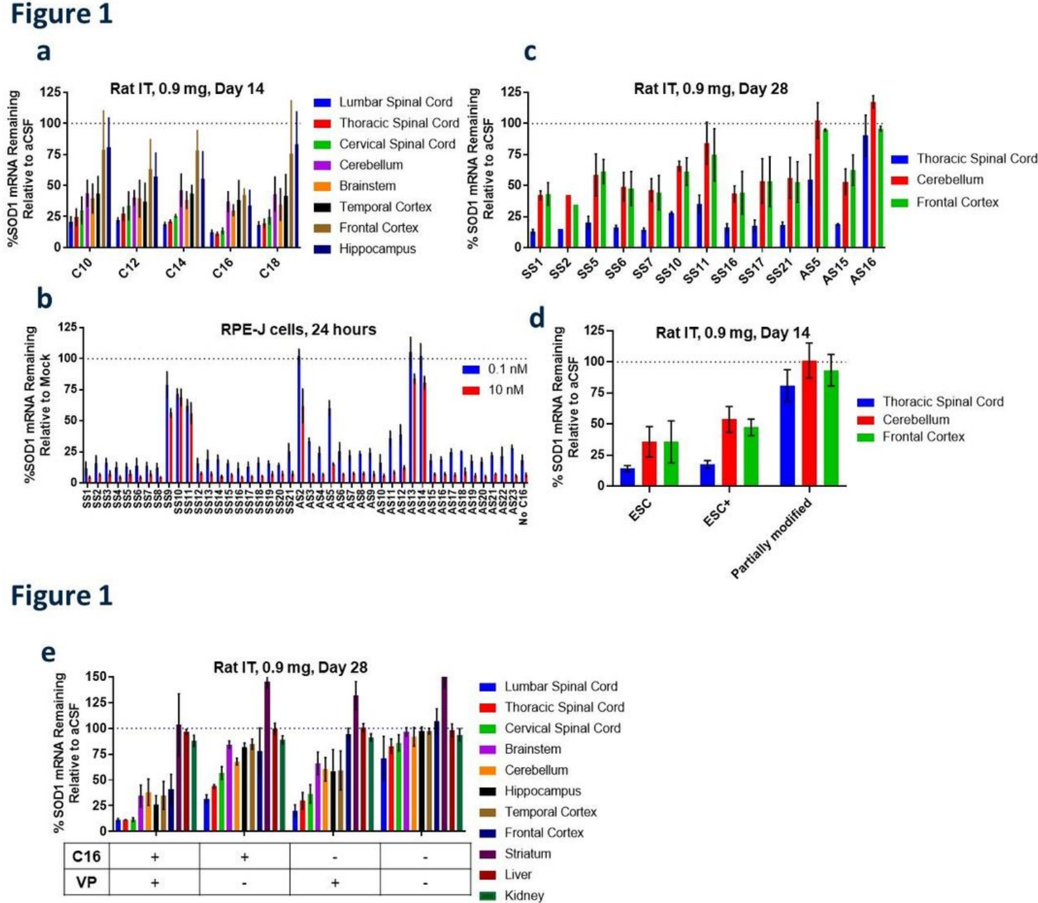
“Furthermore, the ESC+ chemistry employing glycol nucleic acid (GNA) in the antisense seed region for increased speci city 10,30 retained activity in rat two weeks after a single 0.9 mg IT dose (Fig. 1d).”
What the sources say
- Supportedcites [10] Janas, M. M. et al. Selection of GalNAc-conjugated siRNAs with limited off-target-driven rat hepatotoxicity. Nat. Commun. 9, 723 (2018). source
The Results section, “Impact of destabilizing seed-mediated off-target binding” (page not available), reports that GNA in the antisense seed region reduced off-target effects while maintaining on-target activity. The citation supports that chemistry and specificity point; the rat intrathecal-dose result is attributed to the citing paper’s Fig. 1d, not to this source. (LLM, conf=0.90)
- Not checked — no full text of the sourcecites [30] Hall, H. et al. Magnetic resonance spectroscopic methods for the assessment of metabolic functions in the diseased brain. Curr. Top. Behav. Neurosci. 11, 169–198 (2012). source
plaindirectSingle case- Asserted: passes — The authors put it forward as true.
- Checkable: passes — It can be checked against evidence.
- Load-bearing: passes — The paper’s conclusions depend on it.
- Based: passes — The paper gives a reason why it holds.
- Supported
A result the paper reports from its own data — it cites no other source for it, so there is none to check. The quote shows it is in the paper.
In the paper
“Here we report that conjugation of 2'-O-hexadecyl (C16) to siRNAs enables e cient silencing in the central nervous system (CNS), eye, and lung of multiple nonclinical species with broad cell type speci city.”
plaindirect- Asserted: passes — The authors put it forward as true.
- Checkable: passes — It can be checked against evidence.
- Load-bearing: passes — The paper’s conclusions depend on it.
- Based: passes — The paper gives a reason why it holds.
A result the paper reports from its own data — it cites no other source for it, so there is none to check. The quote shows it is in the paper.
In the paper
“There was no activity in the rat striatum, liver, and kidney at the tested dose level and time point.”
plain- Asserted: passes — The authors put it forward as true.
- Checkable: passes — It can be checked against evidence.
- Load-bearing: passes — The paper’s conclusions depend on it.
- Based: passes — The paper gives a reason why it holds.
A result the paper reports from its own data — it cites no other source for it, so there is none to check. The quote shows it is in the paper.
In the paper
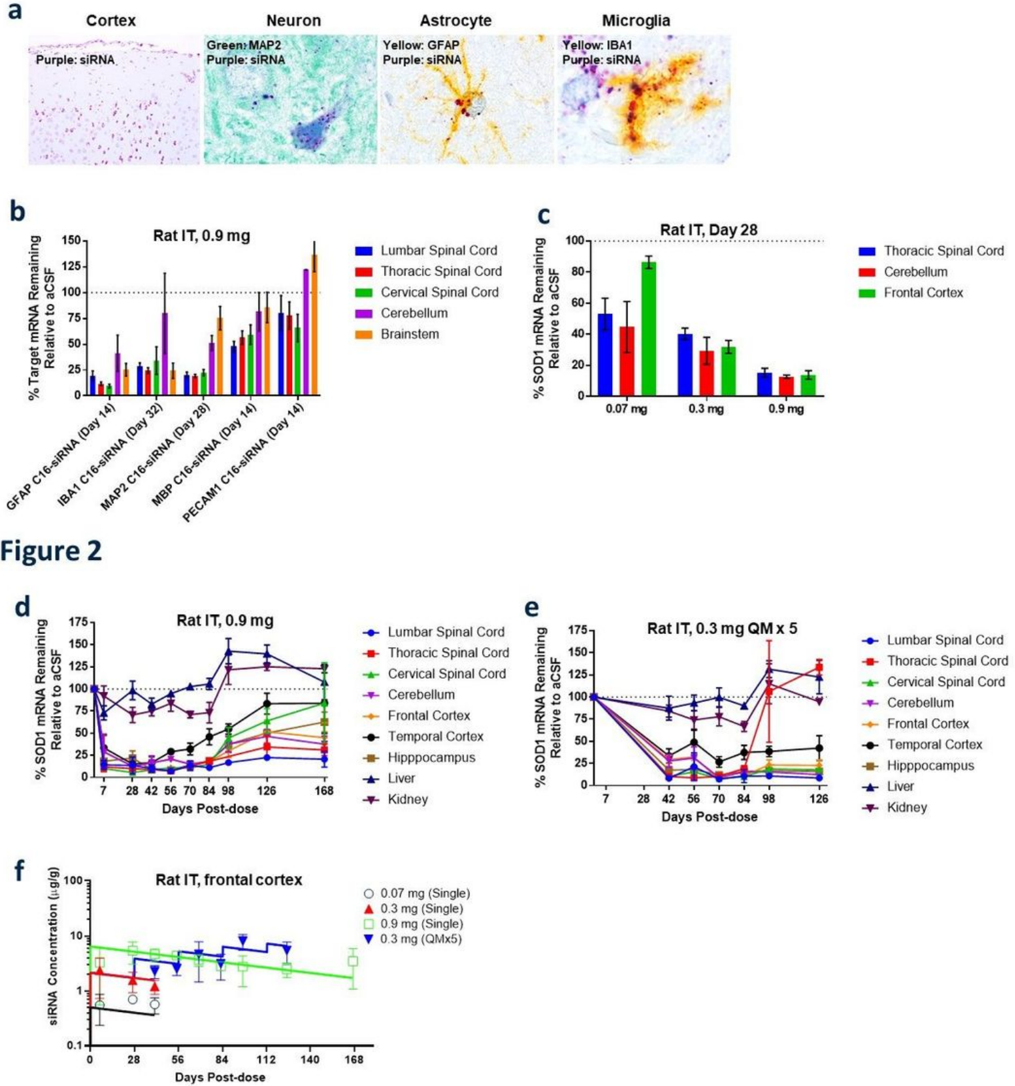
“At one month post a single IT dose of 0.07 mg, 0.3 mg, or 0.9 mg, dose dependent SOD1 knockdown was observed in the spinal cord and the brain (Fig. 2c).”
plaincorrelational- Asserted: passes — The authors put it forward as true.
- Checkable: passes — It can be checked against evidence.
- Load-bearing: passes — The paper’s conclusions depend on it.
- Based: passes — The paper gives a reason why it holds.
A result the paper reports from its own data — it cites no other source for it, so there is none to check. The quote shows it is in the paper.
In the paper
“The dose-exposure relationship of the SOD1 C16-siRNA could be characterized across all dose levels explored with a rst-order pharmacokinetic model.”
hedgedcorrelational- Asserted: passes — The authors put it forward as true.
- Checkable: passes — It can be checked against evidence.
- Load-bearing: unclear — It is unclear whether the paper’s conclusions depend on it.
- Based: passes — The paper gives a reason why it holds.
A result the paper reports from its own data — it cites no other source for it, so there is none to check. The quote shows it is in the paper.
In the paper
“Similarly, intravitreal and intranasal administration of C16-siRNAs resulted in potent and sustained knockdown in the eye and lung, respectively.”
- Also stated in: § Introduction · boosted
“We also demonstrate that the C16-siRNA platform enables durable silencing after IVT delivery into the eye and via IN delivery into the lung.”
boosteddirect- Asserted: passes — The authors put it forward as true.
- Checkable: passes — It can be checked against evidence.
- Load-bearing: passes — The paper’s conclusions depend on it.
- Based: passes — The paper gives a reason why it holds.
- Also stated in: § Introduction · boosted
A result the paper reports from its own data — it cites no other source for it, so there is none to check. The quote shows it is in the paper.
In the paper
“Consistent with positive siRNA IHC results, robust knockdown by RT-qPCR was observed in neurons, astrocytes, and microglia (Fig. 2b).”
plain- Asserted: passes — The authors put it forward as true.
- Checkable: passes — It can be checked against evidence.
- Load-bearing: passes — The paper’s conclusions depend on it.
- Based: passes — The paper gives a reason why it holds.
A result the paper reports from its own data — it cites no other source for it, so there is none to check. The quote shows it is in the paper.
In the paper
“Only minimal SOD1 knockdown was detected in liver or kidney under these conditions.”
plain- Asserted: passes — The authors put it forward as true.
- Checkable: passes — It can be checked against evidence.
- Load-bearing: passes — The paper’s conclusions depend on it.
- Based: passes — The paper gives a reason why it holds.
A result the paper reports from its own data — it cites no other source for it, so there is none to check. The quote shows it is in the paper.
In the paper
“Frontal cortex exposure was generally linear with increasing dose at all time points evaluated.”
hedgedcorrelational- Asserted: passes — The authors put it forward as true.
- Checkable: passes — It can be checked against evidence.
- Load-bearing: unclear — It is unclear whether the paper’s conclusions depend on it.
- Based: passes — The paper gives a reason why it holds.
- Probably not a substantial claim. 10
- It may state two separate claims as one. 29
- The quote only partly states this claim. 1
The cited sources support only part of this claim — read each source’s verdict below.
In the paper
“For liver targets, lipid nanoparticles (LNPs) and N-acetylgalactosamine (GalNAc) conjugates are two clinically validated delivery strategies, with multiple regulatory approvals that include Onpattro® (patisiran) 2,3 , Givlaari® (givosiran) 4 , Oxlumo® (lumaisran) 5 , and Leqvio® (inclisiran) [6][7][8] , and numerous additional programs in various stages of clinical development across several thera”
What the sources say
- Partly supportedcites [2] Adams, D. et al. Patisiran, an RNAi therapeutic, for hereditary transthyretin amyloidosis. N. Engl. J. Med. 379, 11–21 (2018). sourceExperimental — accuracy not yet measured
The paper’s introduction describes patisiran as a hepatically directed RNAi therapeutic, and the Results report benefit in a phase 3 trial, supporting its use as a clinical example for a liver target. But our copy calls patisiran investigational and does not identify its delivery system as a lipid nanoparticle or report regulatory approval. The citation is attached to Onpattro (patisiran), not to the other named drugs. (LLM, conf=0.84)
- Not checked — no full text of the sourcecites [3] Kristen, A. V. et al. Patisiran, an RNAi therapeutic for the treatment of hereditary transthyretin-mediated amyloidosis. Neurodegener. Dis. Manag. 9, 5–23 (2019). source
- Supportedcites [4] Balwani, M. et al. Phase 3 trial of RNAi therapeutic givosiran for acute intermittent porphyria. N. Engl. J. Med. 382, 2289–2301 (2020). source
This citation is attached to Givlaari (givosiran), not to the other listed drugs. The paper says givosiran uses a GalNAc conjugate for targeted delivery to hepatocytes and reports its FDA and EMA approvals (Discussion). (LLM, conf=0.93)
- Partly supportedcites [5] Garrelfs, S. F. et al. Lumasiran, an RNAi therapeutic for primary hyperoxaluria type 1. N. Engl. J. Med. 384, 1216–1226 (2021). sourceExperimental — accuracy not yet measured
The Results identify lumasiran as a liver-directed RNAi therapeutic, and the Discussion reports substantial oxalate reductions in its phase 3 trial, supporting its use as a clinically studied example. This citation is attached to the lumasiran example, not the other named drugs. Our copy does not identify lumasiran as a GalNAc conjugate or state that Oxlumo received regulatory approval; it calls lumasiran investigational. (LLM, conf=0.84)
plain- Asserted: passes — The authors put it forward as true.
- Checkable: passes — It can be checked against evidence.
- Load-bearing: fails — The paper’s conclusions may not depend on it.
- Based: passes — The paper gives a reason why it holds.
Probably not a substantial claim. The paper’s conclusions may not depend on it.
- Partly supported
The cited sources support only part of this claim — read each source’s verdict below.
In the paper
“The naturally occurring RNAi pathway can also be harnessed in extrahepatic organs by building on nearly two decades of efforts on liver siRNA design optimization [9][10][11][12] ; however, novel delivery approaches are needed.”
What the sources say
- Partly supportedcites [9] Foster, D. J. et al. Advanced siRNA designs further improve in vivo performance of GalNAc-siRNA conjugates. Mol. Ther. 26, 708–717 (2018). sourceExperimental — accuracy not yet measured
The Introduction states that synthetic siRNAs harness the endogenous RNAi pathway and describes targeted delivery to hepatocytes; the Discussion describes further optimization of siRNA designs. The paper does not establish that these designs can be used in extrahepatic organs or state that novel delivery approaches are needed for them. No page numbers are available in our copy. (LLM, conf=0.85)
- Partly supportedcites [10] Janas, M. M. et al. Selection of GalNAc-conjugated siRNAs with limited off-target-driven rat hepatotoxicity. Nat. Commun. 9, 723 (2018). sourceExperimental — accuracy not yet measured
The Introduction (page unavailable) says exogenous siRNAs can harness the natural RNAi pathway and describes chemical modifications and GalNAc-mediated delivery to hepatocytes. It does not address harnessing RNAi in extrahepatic organs, establish nearly two decades of liver siRNA design optimization, or say that novel delivery approaches are needed for those organs. (LLM, conf=0.85)
- Partly supportedcites [11] Nair, J. K. et al. Impact of enhanced metabolic stability on pharmacokinetics and pharmacodynamics of GalNAc-siRNA conjugates. Nucleic Acids Res. 45, 10969–10977 (2017). sourceExperimental — accuracy not yet measured
The Introduction describes advances in siRNA design and chemistry and explains how GalNAc conjugation enables delivery to the liver. It does not establish a nearly two-decade period of liver optimization or address whether those designs can be applied to extrahepatic organs. The statement that novel delivery approaches are needed follows the citation rather than being directly attributed to it. (LLM, conf=0.82)
plainconditional- Asserted: passes — The authors put it forward as true.
- Checkable: passes — It can be checked against evidence.
- Load-bearing: passes — The paper’s conclusions depend on it.
- Based: passes — The paper gives a reason why it holds.
It may state two separate claims as one.
- Partly supported
The cited sources support only part of this claim — read each source’s verdict below.
In the paper
“2'-O-C16 was well tolerated across both strands, with potency similar to the unconjugated siRNA, except for a few positions known to be sensitive to sterically demanding 2'-modi cations 9 .”
What the sources say
- Partly supportedcites [9] Foster, D. J. et al. Advanced siRNA designs further improve in vivo performance of GalNAc-siRNA conjugates. Mol. Ther. 26, 708–717 (2018). sourceExperimental — accuracy not yet measured
The Introduction and Results describe how sterically demanding 2′ modifications can reduce RNAi activity at particular positions in the sense and antisense strands. But the paper examines 2′-OMe and 2′-F, not 2′-O-C16; it does not establish that 2′-O-C16 was tolerated across both strands or had potency similar to unconjugated siRNA. Page numbers are unavailable in our copy. (LLM, conf=0.79)
plain- Asserted: passes — The authors put it forward as true.
- Checkable: passes — It can be checked against evidence.
- Load-bearing: passes — The paper’s conclusions depend on it.
- Based: passes — The paper gives a reason why it holds.
It may state two separate claims as one.
- Partly supported
The cited sources support only part of this claim — read each source’s verdict below.
In the paper
“Additionally, off-target mitigation strategies involving placing a thermally destabilizing modi cation such as GNA in the antisense strand seed region 10 also performed well, thus allowing for translation of safety improvements with the ESC+ platform beyond liver.”
What the sources say
- Partly supportedcites [10] Janas, M. M. et al. Selection of GalNAc-conjugated siRNAs with limited off-target-driven rat hepatotoxicity. Nat. Commun. 9, 723 (2018). sourceExperimental — accuracy not yet measured
Split into 2 atoms — 1 confirmed, 1 partially supported, 0 disputed, 0 misattributed, 0 unverifiable. Expand the claim to see per-atom verdicts.
plaindirect- Asserted: passes — The authors put it forward as true.
- Checkable: passes — It can be checked against evidence.
- Load-bearing: passes — The paper’s conclusions depend on it.
- Based: passes — The paper gives a reason why it holds.
It may state two separate claims as one.
- Partly supported
A result the paper reports from its own data — it cites no other source for it, so there is none to check. The quote shows it is in the paper.
In the paper
“Dose dependent silencing in the frontal cortex corresponded with drug exposure through the 0.07 mg, 0.3 mg, and 0.9 mg groups (Fig. 2f), with the siRNA half-life for the 0.9 mg group calculated to be three to four months.”
plaincorrelational- Asserted: passes — The authors put it forward as true.
- Checkable: passes — It can be checked against evidence.
- Load-bearing: passes — The paper’s conclusions depend on it.
- Based: passes — The paper gives a reason why it holds.
It may state two separate claims as one.
A result the paper reports from its own data — it cites no other source for it, so there is none to check. The quote shows it is in the paper.
In the paper
“APP siRNAs, with or without 5'-VP on the antisense strand and/or sense N6 2'-O-C16 conjugation, were well-tolerated and there were no test item-related microscopic ndings in the examined brain, spinal cord, and dorsal root ganglia sections.”
plain- Asserted: passes — The authors put it forward as true.
- Checkable: passes — It can be checked against evidence.
- Load-bearing: passes — The paper’s conclusions depend on it.
- Based: passes — The paper gives a reason why it holds.
It may state two separate claims as one.
A result the paper reports from its own data — it cites no other source for it, so there is none to check. The quote shows it is in the paper.
In the paper
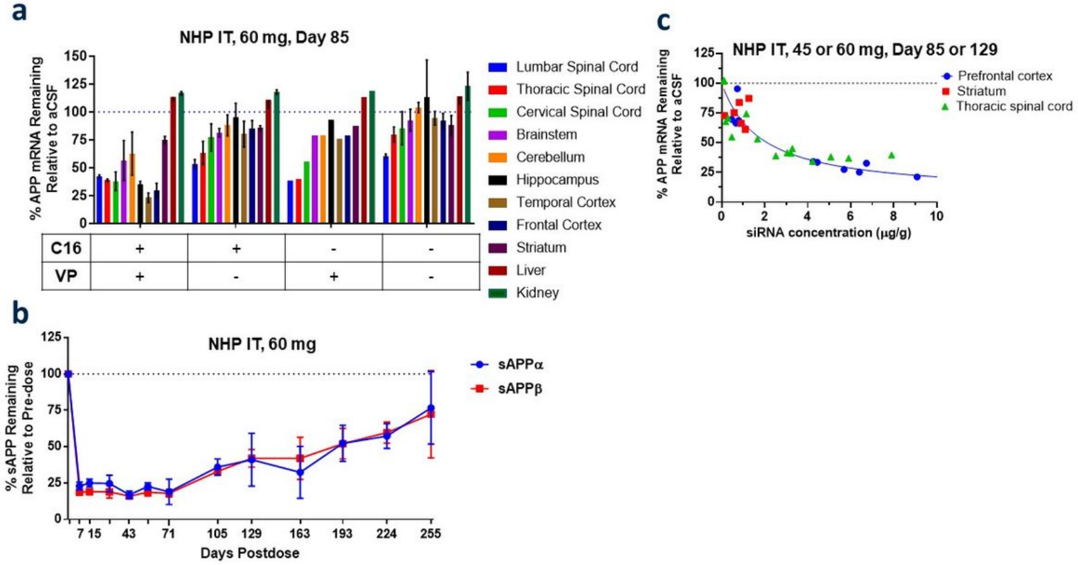
“Nadir of knockdown was observed as early as one week post-dose (earliest time point tested), with sustained >75% APP silencing for three months post-dose.”
plain- Asserted: passes — The authors put it forward as true.
- Checkable: passes — It can be checked against evidence.
- Load-bearing: passes — The paper’s conclusions depend on it.
- Based: passes — The paper gives a reason why it holds.
It may state two separate claims as one.
A result the paper reports from its own data — it cites no other source for it, so there is none to check. The quote shows it is in the paper.
In the paper
“One month after a single 0.9 mg IT dose, most tested positions provided activity equivalent to sense strand N6 (Fig. 1c), con rming tolerance of 2'-O-C16 modi cation at multiple positions of the siRNA sense strand.”
plain- Asserted: passes — The authors put it forward as true.
- Checkable: passes — It can be checked against evidence.
- Load-bearing: passes — The paper’s conclusions depend on it.
- Based: passes — The paper gives a reason why it holds.
It may state two separate claims as one.
A result the paper reports from its own data — it cites no other source for it, so there is none to check. The quote shows it is in the paper.
In the paper
“Intrathecally delivered C16-siRNAs are active across CNS regions and cell types, with sustained silencing for at least three months, which is an especially important outcome considering the challenging dosing route.”
- Also stated in: § Introduction · hedged
“Our results indicate that C16-siRNAs administered via a clinically feasible intrathecal (IT) route of administration have durable activity across CNS regions and cell types, with a favorable nonclinical safety pro le to date.”
plaindirect- Asserted: passes — The authors put it forward as true.
- Checkable: passes — It can be checked against evidence.
- Load-bearing: passes — The paper’s conclusions depend on it.
- Based: passes — The paper gives a reason why it holds.
It may state two separate claims as one.
- Rests on an assumption: The intrathecal route of administration is clinically feasible.
- Also stated in: § Introduction · hedged
A result the paper reports from its own data — it cites no other source for it, so there is none to check. The quote shows it is in the paper.
In the paper
“Consistent with the rat data, siRNA containing both 5'-VP and 2'-O-C16 had the best activity across CNS regions, with up to 70% APP knockdown in the spinal cord and up to 80% in the brain, including 25% knockdown in deep brain (striatum).”
plaindirect- Asserted: passes — The authors put it forward as true.
- Checkable: passes — It can be checked against evidence.
- Load-bearing: passes — The paper’s conclusions depend on it.
- Based: passes — The paper gives a reason why it holds.
It may state two separate claims as one.
A result the paper reports from its own data — it cites no other source for it, so there is none to check. The quote shows it is in the paper.
In the paper
“Silencing appeared to be additive with 88%, 85%, and 81% silencing observed in frontal cortex, cerebellum, and thoracic spinal cord, respectively, at 1 month after three 0.3 mg doses, compared to 85%, 82%, and 82% in those regions at the same time point following a single 0.9 mg dose (Fig. 2d).”
hedgeddirect- Asserted: passes — The authors put it forward as true.
- Checkable: passes — It can be checked against evidence.
- Load-bearing: passes — The paper’s conclusions depend on it.
- Based: passes — The paper gives a reason why it holds.
It may state two separate claims as one.
A result the paper reports from its own data — it cites no other source for it, so there is none to check. The quote shows it is in the paper.
In the paper
“APP knockdown recovered to 50% at 4.5 months, with full recovery at nine months in most animals as assessed by CSF protein biomarkers.”
plain- Asserted: passes — The authors put it forward as true.
- Checkable: passes — It can be checked against evidence.
- Load-bearing: passes — The paper’s conclusions depend on it.
- Based: passes — The paper gives a reason why it holds.
It may state two separate claims as one.
A result the paper reports from its own data — it cites no other source for it, so there is none to check. The quote shows it is in the paper.
In the paper
“In the lower spinal cord, the maximal level of target knockdown was observed as early as one week post-dose (earliest time point tested), with sustained silencing out to six months.”
plaindirect- Asserted: passes — The authors put it forward as true.
- Checkable: passes — It can be checked against evidence.
- Load-bearing: passes — The paper’s conclusions depend on it.
- Based: passes — The paper gives a reason why it holds.
It may state two separate claims as one.
A result the paper reports from its own data — it cites no other source for it, so there is none to check. The quote shows it is in the paper.
In the paper
“Following a single IT dose of 60 mg, an unconjugated siRNA lacking 2'-O-C16 as well as 5'-VP had minimal activity in the spinal cord and no activity in the brain at three months post-dose (Fig. 3a).”
plain- Asserted: passes — The authors put it forward as true.
- Checkable: passes — It can be checked against evidence.
- Load-bearing: passes — The paper’s conclusions depend on it.
- Based: passes — The paper gives a reason why it holds.
It may state two separate claims as one.
A result the paper reports from its own data — it cites no other source for it, so there is none to check. The quote shows it is in the paper.
In the paper
“The siRNA combining both 5'-VP and 2'-O-C16 had the best activity across CNS regions, with up to 90% SOD1 knockdown in the spinal cord and up to 75% in the brain.”
plaindirect- Asserted: passes — The authors put it forward as true.
- Checkable: passes — It can be checked against evidence.
- Load-bearing: passes — The paper’s conclusions depend on it.
- Based: passes — The paper gives a reason why it holds.
It may state two separate claims as one.
A result the paper reports from its own data — it cites no other source for it, so there is none to check. The quote shows it is in the paper.
In the paper
“IHC also revealed siRNA in vascular endothelium and perivascular macrophages (data not shown), which was shown to be nonfunctional by RT-qPCR (Fig. 2b).”
plain- Asserted: passes — The authors put it forward as true.
- Checkable: passes — It can be checked against evidence.
- Load-bearing: passes — The paper’s conclusions depend on it.
- Based: passes — The paper gives a reason why it holds.
It may state two separate claims as one.
A result the paper reports from its own data — it cites no other source for it, so there is none to check. The quote shows it is in the paper.
In the paper
“Addition of 5'-VP to the antisense strand or internal 2'-O-C16 conjugation at N6 of the sense strand produced knockdown in the spinal cord (up to 60% APP lowering), but only modest activity in the brain (up to 30% APP lowering) at three months post-dose.”
plaindirect- Asserted: passes — The authors put it forward as true.
- Checkable: passes — It can be checked against evidence.
- Load-bearing: passes — The paper’s conclusions depend on it.
- Based: passes — The paper gives a reason why it holds.
It may state two separate claims as one.
A result the paper reports from its own data — it cites no other source for it, so there is none to check. The quote shows it is in the paper.
In the paper
“RNAi activity in the CNS generally increased with lipid chain length, with 2'-O-C16 providing optimal activity in the rat spinal cord and brain at two weeks after a single IT dose of 0.9 mg (Fig. 1a).”
plaindirect- Asserted: passes — The authors put it forward as true.
- Checkable: passes — It can be checked against evidence.
- Load-bearing: passes — The paper’s conclusions depend on it.
- Based: passes — The paper gives a reason why it holds.
It may state two separate claims as one.
A result the paper reports from its own data — it cites no other source for it, so there is none to check. The quote shows it is in the paper.
In the paper
“Fortuitously, the variability in delivery allowed us to observe a robust exposure response relationship, which was conserved across these tissues.”
plaincorrelational- Asserted: passes — The authors put it forward as true.
- Checkable: passes — It can be checked against evidence.
- Load-bearing: passes — The paper’s conclusions depend on it.
- Based: passes — The paper gives a reason why it holds.
It may state two separate claims as one.
A result the paper reports from its own data — it cites no other source for it, so there is none to check. The quote shows it is in the paper.
In the paper
“Notably, higher concentrations of C16-siRNA and greater silencing were observed in prefrontal cortex and thoracic spinal cord than in the deep brain region of the striatum.”
plaincorrelational- Asserted: passes — The authors put it forward as true.
- Checkable: passes — It can be checked against evidence.
- Load-bearing: unclear — It is unclear whether the paper’s conclusions depend on it.
- Based: passes — The paper gives a reason why it holds.
It may state two separate claims as one.
A result the paper reports from its own data — it cites no other source for it, so there is none to check. The quote shows it is in the paper.
In the paper
“Evidence of accumulation was observed in this tissue following repeat doses, with the siRNA exposure following the third monthly 0.3 mg dose similar to a single 0.9 mg dose, and additive accumulation observed following the fourth and fth doses.”
plaincorrelational- Asserted: passes — The authors put it forward as true.
- Checkable: passes — It can be checked against evidence.
- Load-bearing: passes — The paper’s conclusions depend on it.
- Based: passes — The paper gives a reason why it holds.
It may state two separate claims as one.
A result the paper reports from its own data — it cites no other source for it, so there is none to check. The quote shows it is in the paper.
In the paper
“Brain regions showed >75% silencing for at least three months with partial recovery out to six months, except for temporal cortex where SOD1 knockdown started to recover at two months post-dose.”
plaindirect- Asserted: passes — The authors put it forward as true.
- Checkable: passes — It can be checked against evidence.
- Load-bearing: passes — The paper’s conclusions depend on it.
- Based: passes — The paper gives a reason why it holds.
It may state two separate claims as one.
A result the paper reports from its own data — it cites no other source for it, so there is none to check. The quote shows it is in the paper.
In the paper
“The addition of either 5'-VP to the antisense strand or internal 2'-O-C16 conjugation at sense strand N6 produced robust knockdown in the spinal cord (up to 80% SOD1 mRNA lowering), but only modest knockdown in the brain (up to 50% SOD1 mRNA lowering).”
plaindirect- Asserted: passes — The authors put it forward as true.
- Checkable: passes — It can be checked against evidence.
- Load-bearing: passes — The paper’s conclusions depend on it.
- Based: passes — The paper gives a reason why it holds.
It may state two separate claims as one.
A result the paper reports from its own data — it cites no other source for it, so there is none to check. The quote shows it is in the paper.
In the paper
“Doses of 0.3, 1, 3, or 10 mg/kg by IN injection resulted in SOD1 mRNA reductions of 57%, 53%, 71%, and 68%, respectively, while a single intravenous (IV) injection at 30 mg/kg reduced SOD1 mRNA by 42% at the same day ten timepoint (Fig. 5e).”
plaindirect- Asserted: passes — The authors put it forward as true.
- Checkable: passes — It can be checked against evidence.
- Load-bearing: passes — The paper’s conclusions depend on it.
- Based: passes — The paper gives a reason why it holds.
It may state two separate claims as one.
A result the paper reports from its own data — it cites no other source for it, so there is none to check. The quote shows it is in the paper.
In the paper
“Here we report for the rst time a systematic evaluation of lipophiles of varying lengths and siRNA design features to identify an optimal conjugate with 2'-O-C16 that enables widespread siRNA distribution in the spinal cord and brain following administration into rodent and NHP CSF via a clinically feasible IT dosing route, with no safety signals observed in our studies.”
plaindirect- Asserted: passes — The authors put it forward as true.
- Checkable: passes — It can be checked against evidence.
- Load-bearing: passes — The paper’s conclusions depend on it.
- Based: passes — The paper gives a reason why it holds.
It may state two separate claims as one.
- Rests on an assumption: The intrathecal route of administration is clinically feasible.
A result the paper reports from its own data — it cites no other source for it, so there is none to check. The quote shows it is in the paper.
In the paper
“SOD1 mRNA in lung was reduced by 62%-78% in the rst month, with sustained activity out to two months post-dose with 57% mRNA lowering.”
plaindirect- Asserted: passes — The authors put it forward as true.
- Checkable: passes — It can be checked against evidence.
- Load-bearing: passes — The paper’s conclusions depend on it.
- Based: passes — The paper gives a reason why it holds.
It may state two separate claims as one.
A result the paper reports from its own data — it cites no other source for it, so there is none to check. The quote shows it is in the paper.
In the paper
“Within the affected areas, there were minimal decreases in Luxol Fast Blue (LFB) staining intensity and a minimal increase in the number of IBA-1 positive microglia.”
plain- Asserted: passes — The authors put it forward as true.
- Checkable: passes — It can be checked against evidence.
- Load-bearing: passes — The paper’s conclusions depend on it.
- Based: passes — The paper gives a reason why it holds.
It may state two separate claims as one.
The paper states this without a source or data behind it here, so there is nothing to check it against. The quote shows it is in the paper.
In the paper
“The same conjugation strategy also enables broad siRNA distribution and durable activity in the eye and lung after local delivery.”
plaindirect- Asserted: passes — The authors put it forward as true.
- Checkable: passes — It can be checked against evidence.
- Load-bearing: fails — The paper’s conclusions may not depend on it.
- Based: fails — The paper may give no reason why it holds.
Probably not a substantial claim. The paper’s conclusions may not depend on it. The paper may give no reason why it holds. It may state two separate claims as one.
A result the paper reports from its own data — it cites no other source for it, so there is none to check. The quote shows it is in the paper.
In the paper
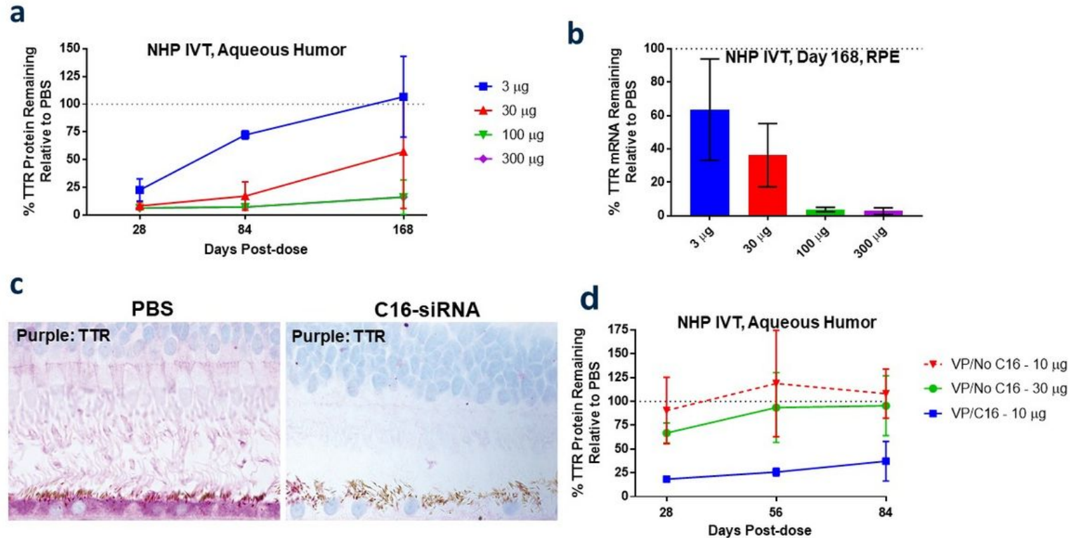
“At one month, aqueous humor TTR protein levels in animals treated with the unconjugated siRNA showed no knockdown at the 10 μg/eye dose and a modest 33% knockdown at the 30 μg/eye dose, compared to 81% knockdown observed for the 2'-O-C16 conjugate at 10 μg/eye (Fig. 4d).”
plaindirect- Asserted: passes — The authors put it forward as true.
- Checkable: passes — It can be checked against evidence.
- Load-bearing: passes — The paper’s conclusions depend on it.
- Based: passes — The paper gives a reason why it holds.
It may state two separate claims as one.
In the paper
“RNA interference (RNAi) therapeutics utilize an endogenous mechanism whereby short interfering RNAs (siRNAs) direct the RNA-induced silencing complex (RISC) to target gene transcripts, resulting in a sequence-speci c and catalytic RNA cleavage and subsequent lowering of the target protein 1 .”
What the sources say
- Not checked — no full text of the sourcecites [1] Setten, R. L., Rossi, J. J. & Han, S. P. The current state and future directions of RNAi-based therapeutics. Nat. Rev. Drug Discov. 18, 421–446 (2019). source
plaindirect- Asserted: passes — The authors put it forward as true.
- Checkable: passes — It can be checked against evidence.
- Load-bearing: fails — The paper’s conclusions may not depend on it.
- Based: passes — The paper gives a reason why it holds.
Probably not a substantial claim. The paper’s conclusions may not depend on it.
What the paper did — it cites no source for this, so there is none to check. The quote shows it is in the paper.
In the paper
“Proper placement of the needle was con rmed via CSF back ow in the hub of the needle.”
plaindirect- Asserted: fails — The authors may not put it forward as true.
- Checkable: passes — It can be checked against evidence.
- Load-bearing: fails — The paper’s conclusions may not depend on it.
- Based: fails — The paper may give no reason why it holds.
Probably not a substantial claim. The authors may not put it forward as true. The paper’s conclusions may not depend on it. The paper may give no reason why it holds. The quote only partly states this claim.
What the paper did — it cites no source for this, so there is none to check. The quote shows it is in the paper.
In the paper
“Intravitreal injections were performed by a board-certi ed veterinary ophthalmologist.”
plain- Asserted: passes — The authors put it forward as true.
- Checkable: passes — It can be checked against evidence.
- Load-bearing: fails — The paper’s conclusions may not depend on it.
- Based: passes — The paper gives a reason why it holds.
Probably not a substantial claim. The paper’s conclusions may not depend on it.
What the paper did — it cites no source for this, so there is none to check. The quote shows it is in the paper.
In the paper
“Standards and samples were added to the plate, 100 µL/well, in duplicate and incubated for 2 hours at room temperature with shaking at 600 rpm.”
plain- Asserted: passes — The authors put it forward as true.
- Checkable: passes — It can be checked against evidence.
- Load-bearing: fails — The paper’s conclusions may not depend on it.
- Based: passes — The paper gives a reason why it holds.
Probably not a substantial claim. The paper’s conclusions may not depend on it.
What the paper did — it cites no source for this, so there is none to check. The quote shows it is in the paper.
In the paper
“H&E based microscopic ndings were recorded in the Pristima v7.0.0 System (Xybion, NJ) and graded on a scale of 1-5, (1=minimal, 2= mild, 3=moderate, 4=marked, and 5=severe) by a board-certi ed veterinary pathologist.”
plain- Asserted: passes — The authors put it forward as true.
- Checkable: passes — It can be checked against evidence.
- Load-bearing: fails — The paper’s conclusions may not depend on it.
- Based: passes — The paper gives a reason why it holds.
Probably not a substantial claim. The paper’s conclusions may not depend on it.
What the paper did — it cites no source for this, so there is none to check. The quote shows it is in the paper.
In the paper
“All studies were conducted using protocols consistent with local, state and federal regulations, as applicable, and approved by the Institutional Animal Care and Use Committee (IACUC) at Alnylam Pharmaceuticals, Charles River Laboratories (CRL), or LabCorp (formerly Covance, Inc.), as applicable.”
plain- Asserted: passes — The authors put it forward as true.
- Checkable: passes — It can be checked against evidence.
- Load-bearing: fails — The paper’s conclusions may not depend on it.
- Based: passes — The paper gives a reason why it holds.
Probably not a substantial claim. The paper’s conclusions may not depend on it. It may state two separate claims as one.
What the paper did — it cites no source for this, so there is none to check. The quote shows it is in the paper.
In the paper
“Proper placement of the needle was con rmed via CSF back ow in the hub of the needle.”
plaindirect- Asserted: passes — The authors put it forward as true.
- Checkable: passes — It can be checked against evidence.
- Load-bearing: fails — The paper’s conclusions may not depend on it.
- Based: passes — The paper gives a reason why it holds.
Probably not a substantial claim. The paper’s conclusions may not depend on it.
What the paper did — it cites no source for this, so there is none to check. The quote shows it is in the paper.
In the paper
“The identities and purities of all oligonucleotides were con rmed using ESI-LC/MS and IEX HPLC, respectively.”
plain- Asserted: passes — The authors put it forward as true.
- Checkable: passes — It can be checked against evidence.
- Load-bearing: fails — The paper’s conclusions may not depend on it.
- Based: passes — The paper gives a reason why it holds.
Probably not a substantial claim. The paper’s conclusions may not depend on it.
The paper relies on this without support.
The intrathecal route of administration is clinically feasible.
“Our results indicate that C16-siRNAs administered via a clinically feasible intrathecal (IT) route of administration have durable activity across CNS regions and cell types, with a favorable nonclinical safety pro le to date.”
“Here we report for the rst time a systematic evaluation of lipophiles of varying lengths and siRNA design features to identify an optimal conjugate with 2'-O-C16 that enables widespread siRNA distribution in the spinal cord and brain following administration into rodent and NHP CSF via a clinically feasible IT dosing route, with no safety signals observed in our studies.”
The paper relies on this without support.
SOD1 is only expressed in large airways.
“We were not able to assess activity in the alveoli since SOD1 is only expressed in large airways.”
The paper relies on this without support.
Durability of silencing in nonclinical species predicts infrequent dosing in humans.
“The sustained knockdown observed may allow for bi-annual or even less frequent dosing of C16-siRNAs in humans, which is an important consideration due to the challenging nature of IT or IVT dosing.”
Claims other papers make about this one
Each is checked against this paper’s own text: does it say what the citing paper says it does?
The cited source doesn’t support the claim as written.
In the citing paper
“For example, unconjugated siRNA structures administered carrier-free into CSF penetrate throughout the CNS but are not sufficiently internalized by cells to achieve potent gene silencing [8].”
From Elucidating brain transport pathways and cell type-dependent gene silencing of a durable lipid–siRNA conjugate administered into cerebrospinal fluid (2025) · cites this paper as [8]
Checked by a reasoning model — may be wrong.
Experimental — accuracy not yet measuredThe cited source doesn’t support the claim as written.
In the citing paper
“For example, unconjugated siRNA structures administered carrier-free into CSF are able to disperse homogenously into the CNS but are not sufficiently internalized by cells to achieve sustained gene silencing.22”
From Lipid-siRNA conjugate accesses a perivascular transport mechanism and achieves widespread and durable knockdown in the central nervous system (2024) · cites this paper as [22]
Checked by a reasoning model — may be wrong.
Experimental — accuracy not yet measuredThe source backs part of the claim, not all of it — or backs it for a different population, condition or comparison.
In the citing paper
“However, the delivery of mRNA to the brain remains a formidable challenge due to the blood–brain barrier (BBB)18,19.”
From Blood–brain-barrier-crossing lipid nanoparticles for mRNA delivery to the central nervous system (2025) · cites this paper as [19]
Experimental — accuracy not yet measuredThe cited source says what the claim attributes to it.
In the citing paper
“vinyl phosphonate was integrated at the 5′ antisense position, which is an important feature for maximal silencing in the CNS [8,22].”
From Elucidating brain transport pathways and cell type-dependent gene silencing of a durable lipid–siRNA conjugate administered into cerebrospinal fluid (2025) · cites this paper as [8]
The cited source says what the claim attributes to it.
In the citing paper
“Notably, C16-siRNA did not achieve knockdown in the striatum of rats, and the divalent siRNA was not effective throughout the striatum of Dorset sheep.22,49”
From Lipid-siRNA conjugate accesses a perivascular transport mechanism and achieves widespread and durable knockdown in the central nervous system (2024) · cites this paper as [22]
The check wasn’t confident either way, so it gives no verdict — never disputed.
In the citing paper
“Notably, C16-siRNA did not achieve knockdown in the striatum of rats, and the divalent siRNA was not effective throughout the striatum of Dorset sheep.22,49”
From Lipid-siRNA conjugate accesses a perivascular transport mechanism and achieves widespread and durable knockdown in the central nervous system (2024) · cites this paper as [22]
Experimental — accuracy not yet measured
Self-check
Percentages, sums and reported differences re-computed from the paper’s own numbers.
Each contradiction between two passages listed here was confirmed by an independent check.
Rated minor: it would not touch a result — a value no result rests on, a p-value that stays on the same side of the significance level, or a conflict that is clerical, resolved elsewhere in the paper, or outside its own findings.
In the paper
§ Additional information
“was administered as a single intravitreal (IVT) injection to cynomolgus monkeys at 60 mg at 3, 30, 100 or 300 μg/eye.”
§ C16 conjugation enables e cient siRNA delivery to the eye
“A single IVT dose of this siRNA showed dose-dependent lowering of TTR in the aqueous humor, with sustained >80% knockdown out to six months at the dose of 100 or 300 μg/eye (Fig. 4a).”
Citations
Cites
Patisiran, an RNAi Therapeutic, for Hereditary Transthyretin Amyloidosis
Adams, D., Gonzalez-Duarte, A., O’Riordan, W. D., Yang, C.-C., Ueda, M., Kristen, A. V., Tournev, I., Schmidt, H. H., Coelho, T., Berk, J. L., et al. (2018) · New England Journal of Medicine · doi:10.1056/nejmoa1716153 · Cited by 3,047
Nusinersen versus Sham Control in Infantile-Onset Spinal Muscular Atrophy
Finkel, R. S., Mercuri, E., Darras, B. T., Connolly, A. M., Kuntz, N. L., Kirschner, J., Chiriboga, C. A., Saito, K., Servais, L., Tizzano, E., et al. (2017) · New England Journal of Medicine · doi:10.1056/nejmoa1702752 · Cited by 2,337
Two Phase 3 Trials of Inclisiran in Patients with Elevated LDL Cholesterol
Ray, K. K., Wright, R. S., Kallend, D., Koenig, W., Leiter, L. A., Raal, F. J., Bisch, J. A., Richardson, T., Jaros, M., Wijngaard, P. L. J., et al. (2020) · New England Journal of Medicine · doi:10.1056/nejmoa1912387 · Cited by 1,665
The current state and future directions of RNAi-based therapeutics
Setten, R. L., Rossi, J. J., & Han, S.-P. (2019) · Nature Reviews Drug Discovery · doi:10.1038/s41573-019-0017-4 · Cited by 1,443
Nair, J. K., Willoughby, J. L. S., Chan, A., Charisse, K., Alam, M. R., Wang, Q., Hoekstra, M., Kandasamy, P., Kel’in, A. V., Milstein, S., et al. (2014) · Journal of the American Chemical Society · doi:10.1021/ja505986a · Cited by 1,141
Self-citationInclisiran in Patients at High Cardiovascular Risk with Elevated LDL Cholesterol
Ray, K. K., Landmesser, U., Leiter, L. A., Kallend, D., Dufour, R., Karakas, M., Hall, T., Troquay, R. P. T., Turner, T., Visseren, F. L. J., et al. (2017) · New England Journal of Medicine · doi:10.1056/nejmoa1615758 · Cited by 992
Mechanisms and optimization of in vivo delivery of lipophilic siRNAs
Wolfrum, C., Shi, S., Jayaprakash, K. N., Jayaraman, M., Wang, G., Pandey, R. K., Rajeev, K. G., Nakayama, T., Charrise, K., Ndungo, E. M., et al. (2007) · Nature Biotechnology · doi:10.1038/nbt1339 · Cited by 974
Self-citationInclisiran for the Treatment of Heterozygous Familial Hypercholesterolemia
Raal, F. J., Kallend, D., Ray, K. K., Turner, T., Koenig, W., Wright, R. S., Wijngaard, P. L. J., Curcio, D., Jaros, M. J., Leiter, L. A., et al. (2020) · New England Journal of Medicine · doi:10.1056/nejmoa1913805 · Cited by 818
Phase 3 Trial of RNAi Therapeutic Givosiran for Acute Intermittent Porphyria
Balwani, M., Sardh, E., Ventura, P., Peiró, P. A., Rees, D. C., Stölzel, U., Bissell, D. M., Bonkovsky, H. L., Windyga, J., Anderson, K. E., et al. (2020) · New England Journal of Medicine · doi:10.1056/nejmoa1913147 · Cited by 608
Lumasiran, an RNAi Therapeutic for Primary Hyperoxaluria Type 1
Garrelfs, S. F., Frishberg, Y., Hulton, S. A., Koren, M. J., O’Riordan, W. D., Cochat, P., Deschênes, G., Shasha-Lavsky, H., Saland, J. M., van’t Hoff, W. G., et al. (2021) · New England Journal of Medicine · doi:10.1056/nejmoa2021712 · Cited by 531
Research works printed but not linked: 1
- Beaucage, S. L. Solid-phase synthesis of siRNA oligonucleotides. Curr. Opin. Drug Discov. Dev. 11, 203–216 (2008).
Cited by
Sorted by citations
Chemistry, structure and function of approved oligonucleotide therapeutics
Egli, M., & Manoharan, M. (2023) · Nucleic Acids Research · doi:10.1093/nar/gkad067 · Cited by 909
“A lipid-conjugated siRNA for CNS applications (429) and an antibody-conjugated siRNA for muscle delivery (430) have entered clinical studies.”
BackgroundSelf-citationRNAi-based drug design: considerations and future directions
Tang, Q., & Khvorova, A. (2024) · Nature Reviews Drug Discovery · doi:10.1038/s41573-024-00912-9 · Cited by 330
“Indeed, different scaffolds can generate distinct cell-type uptake profiles 51,52,99,145 .”
RNA interference in the era of nucleic acid therapeutics
Jadhav, V., Vaishnaw, A. K., Fitzgerald, K. J., & Maier, M. A. (2024) · Nature Biotechnology · doi:10.1038/s41587-023-02105-y · Cited by 232
“These include AOC-1001, a siRNA conjugated to a humanized antibody recognizing the transferrin receptor 1 for muscle targeting (ClinicalTrials.gov: NCT05027269); ALN-APP, the first CNS-targeted siRNA conjugate (ClinicalTrials.gov: NCT05231785); and ARO-HIF2, a siRNA conjugate using integrin-targeting peptides for targ…”
Self-citationChemically Modified Platforms for Better RNA Therapeutics
Shi, Y., Zhen, X., Zhang, Y., Li, Y., Koo, S., Saiding, Q., Kong, N., Liu, G., Chen, W., & Tao, W. (2024) · Chemical Reviews · doi:10.1021/acs.chemrev.3c00611 · Cited by 189
Blood–brain-barrier-crossing lipid nanoparticles for mRNA delivery to the central nervous system
Wang, C., Xue, Y., Markovic, T., Li, H., Wang, S., Zhong, Y., Du, S., Zhang, Y., Hou, X., Yu, Y., et al. (2025) · Nature Materials · doi:10.1038/s41563-024-02114-5 · Cited by 171
“However, the delivery of mRNA to the brain remains a formidable challenge due to the blood–brain barrier (BBB) 18,19 .”
Targeted tissue delivery of RNA therapeutics using antibody–oligonucleotide conjugates (AOCs)
Malecová, B., Burke, R. S., Cochran, M., Hood, M. D., Johns, R. E., Kovach, P., Doppalapudi, V. R., Erdogan, G., Arias, J. D., Darimont, B. D., et al. (2023) · Nucleic Acids Research · doi:10.1093/nar/gkad415 · Cited by 164
Endosomal escape of RNA therapeutics: How do we solve this rate-limiting problem?
Dowdy, S. F. (2023) · RNA · doi:10.1261/rna.079507.122 · Cited by 171
“The conjugation ofmore hydrophobicity to both ASOs and siRNAs, such as cholesterol or lipids, results in both semiselective delivery to tissues, especially the liver and neurons of the CNS likely due to insertion into LDL particles, and an enhanced endosomal escape (Soutschek et al. 2004; Biscans et al. 2019; Wang et…”
BackgroundStrategies for non-viral vectors targeting organs beyond the liver
Kim, J., Eygeris, Y., Ryals, R. C., Jozić, A., & Sahay, G. (2023) · Nature Nanotechnology · doi:10.1038/s41565-023-01563-4 · Cited by 160
“Centyrin 42 and lipophilic ligands 43”
Where should siRNAs go: applicable organs for siRNA drugs
Ahn, I., Kang, C. S., & Han, J. (2023) · Experimental & Molecular Medicine · doi:10.1038/s12276-023-00998-y · Cited by 162
Barker, S. J., Thayer, M. B., Kim, C., Tatarakis, D., Simon, M. J., Dial, R., Nilewski, L., Wells, R. C., Zhou, Y., Afetian, M., et al. (2024) · Science Translational Medicine · doi:10.1126/scitranslmed.adi2245 · Cited by 142
RNA‐based medicine: from molecular mechanisms to therapy
Sparmann, A., & Vogel, J. (2023) · The EMBO Journal · doi:10.15252/embj.2023114760 · Cited by 151
“…being explored, including antibody conjugates (Cuellar et al , 2015; Dugal-Tessier et al , 2021; Malecova et al , 2023), peptide conjugates (Klabenkova et al , 2021), hydrophobic (Biscans et al , 2019) or lipophilic conjugates (Brown et al , 2022) as well as multiva-lency (Alterman et al , 2019).”
Derivatization with fatty acids in peptide and protein drug discovery
Kurtzhals, P., Østergaard, S., Nishimura, E., & Kjeldsen, T. (2022) · Nature Reviews Drug Discovery · doi:10.1038/s41573-022-00529-w · Cited by 139
Amplifying gene expression with RNA-targeted therapeutics
Khorkova, O., Stahl, J., Joji, A., Volmar, C., & Wahlestedt, C. (2023) · Nature Reviews Drug Discovery · doi:10.1038/s41573-023-00704-7 · Cited by 136
“…lipids (cholesterol, 2′-O-hexadecyl (2′-O-C 16 )), cell targeting or penetrating peptides (RVG, transferrin), sugars (N-acetyl galactosamine (GalNAc)), antibodies and small molecules, has demonstrated unprecedented success in ensuring efficient delivery and enhanced pharmacokinetics of NBTs 9,161 .”
Nucleic Acid Therapeutics: Successes, Milestones, and Upcoming Innovation
Belgrad, J., Fakih, H. H., & Khvorova, A. (2024) · Nucleic Acid Therapeutics · doi:10.1089/nat.2023.0068 · Cited by 130
“Preclinically, lung delivery and activity of ASOs and siRNA have been validated [15,164,165].”
InfluentialNovel Drug Delivery Systems: An Important Direction for Drug Innovation Research and Development
Chen, Q., Yang, Z., Liu, H., Man, J., Oladejo, A. O., Ibrahim, S., Wang, S., & Hao, B. (2024) · Pharmaceutics · doi:10.3390/pharmaceutics16050674 · Cited by 134
“In recent studies conducted by Alnylam researchers, it has been discovered that O-hexadecyl (C16) modified siRNA can effectively penetrate the central nervous system, eyes, or lungs and produce gene knockout effects for a duration of up to three months [160].”
BackgroundThree ‘E’ challenges for siRNA drug development
Guo, S., Zhang, M., & Huang, Y. (2023) · Trends in Molecular Medicine · doi:10.1016/j.molmed.2023.10.005 · Cited by 104
Gene therapy for CNS disorders: modalities, delivery and translational challenges
Gao, J., Gunasekar, S., Xia, Z. J., Shalin, K., Jiang, C., Chen, H., Lee, D., Lee, S., Pisal, N. D., Luo, J. N., et al. (2024) · Nature reviews. Neuroscience · doi:10.1038/s41583-024-00829-7 · Cited by 100
“ALN-APP achieved efficient delivery to the CNS, resulting in gene silencing in rodents and non-human primates that lasted for 3–4 months after a single intrathecal injection 72 .”
RNA chemistry and therapeutics
Wang, S., Weissman, D., & Dong, Y. (2025) · Nature Reviews Drug Discovery · doi:10.1038/s41573-025-01237-x · Cited by 109
“For example, C16-modified siRNA has been reported to induce gene knockout effects in CNS for up to 3 months by intrathecal or intracerebroventricular administration 134 .”
Frameworks for transformational breakthroughs in RNA-based medicines
Androsavich, J. R. (2024) · Nature Reviews Drug Discovery · doi:10.1038/s41573-024-00943-2 · Cited by 100
“2b and 3a), and into new therapeutic areas such as CNS disorders 36,142 .”
Vaidya, A., Moore, S., Chatterjee, S., Guerrero, E. D., Kim, M., Farbiak, L., Dilliard, S. A., & Siegwart, D. J. (2024) · Advanced Materials · doi:10.1002/adma.202313791 · Cited by 89
Engineering approaches for RNA-based and cell-based osteoarthritis therapies
DeJulius, C. R., Walton, B. L., Colazo, J. M., d’Arcy, R., Francini, N., Brunger, J. M., & Duvall, C. L. (2024) · Nature Reviews Rheumatology · doi:10.1038/s41584-023-01067-4 · Cited by 85
“Finally, to enhance pharmacokinetics and cellular uptake, particularly of siRNA, miRNA and anti-miRNA, cholesterol, fatty acids or targeting ligands such as N-acetylgalactosamine (GalNAc) can also be conjugated to the end(s) of the strand 49,50 .”
Modulation of macrophage metabolism as an emerging immunotherapy strategy for cancer
Dussold, C., Zilinger, K., Turunen, J. R., Heimberger, A. B., & Miska, J. M. (2024) · Journal of Clinical Investigation · doi:10.1172/jci175445 · Cited by 81
“There are a variety of strategies for overcoming the BBB that do not rely on medicinal chemistry strategies, such as BBB-opening ultrasound or conjugating long-carbon chains to targeting RNA linkers, but these have not been leveraged yet for metabolic therapeutic approaches (92–95).”
Adams, D., Sekijima, Y., Conceição, I. M., Waddington‐Cruz, M., Polydefkis, M. J., Echaniz‐Laguna, A., & Reilly, M. M. (2023) · The Lancet Neurology · doi:10.1016/s1474-4422(23)00334-4 · Cited by 73
Precision RNA base editing with engineered and endogenous effectors
Pfeiffer, L. S., & Stafforst, T. (2023) · Nature Biotechnology · doi:10.1038/s41587-023-01927-0 · Cited by 68
“Various uptake ligands such as lipids 177–180 , peptides 181 and other agents have been chemically linked to RNA drugs to improve their delivery (reviewed in ref.”
BackgroundSelf-assembled lipid–prodrug nanoparticles
Couvreur, P., Lepêtre‐Mouelhi, S., Garbayo, E., & Blanco‐Prieto, M. J. (2023) · Nature Reviews Bioengineering · doi:10.1038/s44222-023-00082-0 · Cited by 70
O’Reilly, D., Belgrad, J., Ferguson, C. M., Summers, A., Sapp, E., McHugh, C. A., Mathews, E. W., Boudi, A., Buchwald, J. E., Ly, S., et al. (2023) · Molecular Therapy · doi:10.1016/j.ymthe.2023.05.006 · Cited by 59
Ongoing Clinical Trials of Nonviral siRNA Therapeutics
Narasipura, E. A., VanKeulen‐Miller, R., Ma, Y., & Fenton, O. S. (2023) · Bioconjugate Chemistry · doi:10.1021/acs.bioconjchem.3c00205 · Cited by 66
Microbe-induced gene silencing boosts crop protection against soil-borne fungal pathogens
Wen, H.-G., Zhao, J., Zhang, B., Gao, F., Wu, X., Yan, Y., Zhang, J., & Guo, H. (2023) · Nature Plants · doi:10.1038/s41477-023-01507-9 · Cited by 62
Chemical optimization of siRNA for safe and efficient silencing of placental sFLT1
Davis, S. M., Hariharan, V. N., Lo, A. S., Turanov, A. A., Echeverria, D., Sousa, J., McHugh, N., Biscans, A., Alterman, J. F., Karumanchi, S. A., et al. (2022) · Molecular Therapy — Nucleic Acids · doi:10.1016/j.omtn.2022.06.009 · Cited by 61
Anwar, S., Mir, F., & Yokota, T. (2023) · Pharmaceutics · doi:10.3390/pharmaceutics15041130 · Cited by 65
RNA interference (RNAi)-based therapeutics for treatment of rare neurologic diseases
Germain, N. D., Chung, W. K., & Sarmiere, P. D. (2022) · Molecular Aspects of Medicine · doi:10.1016/j.mam.2022.101148 · Cited by 60
Therapeutic RNA-silencing oligonucleotides in metabolic diseases
Goga, A., & Stoffel, M. (2022) · Nature Reviews Drug Discovery · doi:10.1038/s41573-022-00407-5 · Cited by 58
Lipid Nanoparticles for Nucleic Acid Delivery to Endothelial Cells
Liu, G. W., Guzman, E. B., Menon, N., & Langer, R. (2023) · Pharmaceutical Research · doi:10.1007/s11095-023-03471-7 · Cited by 58
“Moreover, a recent report highlighted the importance of nonintravenous routes in facilitating nucleic acid delivery to cells of the central nervous system [262], which is challenging to target from the blood space due to the blood–brain barrier.”
BackgroundCochran, M., Arias, D., Burke, R. S., Chu, D., Erdogan, G., Hood, M., Kovach, P., Kwon, H. W., Chen, Y., Moon, M., et al. (2024) · Journal of Medicinal Chemistry · doi:10.1021/acs.jmedchem.4c00802 · Cited by 59
Anand, P., Zhang, Y., Patil, S., & Kaur, K. (2025) · Journal of Medicinal Chemistry · doi:10.1021/acs.jmedchem.4c02528 · Cited by 56
D’souza, A. A., Nozohouri, S., Bleier, B. S., & Amiji, M. M. (2022) · Pharmaceutical Research · doi:10.1007/s11095-022-03433-5 · Cited by 49
“Intrathecal administration sustained the silencing effect for up to 6 months in the lower spinal cord, while the brain regions showed silencing for up to 3 months with partial recovery up to 6 months [96].”
BackgroundDNAzymes: Expanding the Potential of Nucleic Acid Therapeutics
Larcher, L. M., Pitout, I. L., Keegan, N., Veedu, R. N., & Fletcher, S. (2023) · Nucleic Acid Therapeutics · doi:10.1089/nat.2022.0066 · Cited by 48
“), peptides (eg, cell penetrating peptides, protein domains, antibodies (ie, monoclonal and polyclonal), aptamers [82,106], viral vectors [107], and other molecules such as 2¢-O-hexadecyl [14,108] some of which have been applied to DNAzymes [109,110].”
BackgroundRNAi therapies: Expanding applications for extrahepatic diseases and overcoming delivery challenges
Lee, J. W., Shim, M. K., Kim, H., Jang, H., Lee, Y., & Kim, S. H. (2023) · Advanced Drug Delivery Reviews · doi:10.1016/j.addr.2023.115073 · Cited by 48
Targeting RNA with synthetic oligonucleotides: Clinical success invites new challenges
Hofman, C. R., & Corey, D. R. (2023) · Cell chemical biology · doi:10.1016/j.chembiol.2023.09.005 · Cited by 56
Polyplex designs for improving the stability and safety of RNA therapeutics
Uchida, S., Lau, C. Y. J., Oba, M., & Miyata, K. (2023) · Advanced Drug Delivery Reviews · doi:10.1016/j.addr.2023.114972 · Cited by 46
Structural Modifications of siRNA Improve Its Performance In Vivo
Chernikov, I. V., Ponomareva, U. A., & Chernolovskaya, E. L. (2023) · International Journal of Molecular Sciences · doi:10.3390/ijms24020956 · Cited by 44
“Future Prospects Future prospects for the extrahepatic use of siRNA are successful using Alnylam’s advanced chemical modification patterns IKARIA and their lipophilic monomeric siRNAs, which may be in clinical practice in a few years for treating diseases of the lungs, brain, and muscles or other organs [74,75,90,91].”
BackgroundMotamedi, H., Ari, M. M., Alvandi, A., & Abiri, R. (2024) · Frontiers in Microbiology · doi:10.3389/fmicb.2024.1393646 · Cited by 47
Therapeutic Oligonucleotides: An Outlook on Chemical Strategies to Improve Endosomal Trafficking
Mangla, P., Vicentini, Q., & Biscans, A. (2023) · Cells · doi:10.3390/cells12182253 · Cited by 44
“Therefore, to solve the endosomal delivery problem, it is crucial to acknowledge the balance between enhancing endosomal escape for better efficacy, having a partial depot effect for long duration of response, and maintaining safety.”
BackgroundWang, C., Wang, S., Xue, Y., Zhong, Y., Li, H., Hou, X., Kang, D. D., Liu, Z., Tian, M., Wang, L., et al. (2024) · Nature Biotechnology · doi:10.1038/s41587-024-02487-7 · Cited by 53
Development of nucleic acid medicines based on chemical technology
Kawamoto, Y., Wu, Y., Takahashi, Y., & Takakura, Y. (2023) · Advanced Drug Delivery Reviews · doi:10.1016/j.addr.2023.114872 · Cited by 34
Fàbrega, C., Aviñó, A. M., Navarro, N., Jorge, A. F., Grijalvo, S., & Eritja, R. (2023) · Pharmaceutics · doi:10.3390/pharmaceutics15020320 · Cited by 34
“These lipophilic siRNAs can be delivered into the central nervous system, eye and lungs of rats and non-human primates, where they exert inhibitory properties for at least 3 months [92].”
BackgroundGoto, A., Yamamoto, S., & Iwasaki, S. (2022) · Biopharmaceutics & Drug Disposition · doi:10.1002/bdd.2338 · Cited by 34
Ganesh, S., Kim, M. J., Lee, J., Feng, X., Ule, K., Mahan, A. L., Krishnan, H. S., Wang, Z., Anzahaee, M. Y., Singhal, G., et al. (2024) · Molecular Therapy · doi:10.1016/j.ymthe.2024.03.035 · Cited by 31
“14,15 In this study, chemically stabilized siRNAs were conjugated to palmitic acid, octadecanoic acid, do-cosanoic acid, or tetracosanoic acid referred to as C16, C18, C22, and C24 respectively, to target the murine Aldh2 , Stat3 , or Cd274 genes (Table S1).”
Belgrad, J., Tang, Q., Hildebrand, S. R., Summers, A., Sapp, E., Echeverria, D., O’Reilly, D., Luu, E., Bramato, B. M., Allen, S. E., et al. (2024) · Nucleic Acids Research · doi:10.1093/nar/gkae368 · Cited by 36
“These differences might be even more pronounced in the context of siRNAs conjugated to lipid moieties, where the ratio between lipophilic conjugate and charged RNA is known to alter distribution ( 6 , 8 , 46–48 ).”
BackgroundInfluentialClinical applications of oligonucleotides for cancer therapy
DeFranciscis, V., Amabile, G., & Kortylewski, M. (2025) · Molecular Therapy · doi:10.1016/j.ymthe.2025.02.045 · Cited by 35
Andersson, P. U., Burel, S. A., Estrella, H., Foy, J. W.-D., Hagedorn, P., Harper, T. A., Henry, S. P., Hoflack, J.-C., Holgersen, E. M., Levin, A. A., et al. (2025) · Nucleic Acid Therapeutics · doi:10.1089/nat.2024.0072 · Cited by 38
“132 When designing the “ productive uptake distribution ” experiment, we propose to use the same administration route and delivery system as intended in the clinic.”
Recent Progress of Small Interfering RNA Delivery on the Market and Clinical Stage
Guo, F., Li, Y., Yu, W., Fu, Y., Zhang, J., & Cao, H. (2024) · Molecular Pharmaceutics · doi:10.1021/acs.molpharmaceut.3c01158 · Cited by 32
Miller, R., Paquette, J. D., Barker, A., Sapp, E., McHugh, N., Bramato, B. M., Yamada, N., Alterman, J. F., Echeverria, D., Yamada, K., et al. (2024) · Molecular Therapy — Nucleic Acids · doi:10.1016/j.omtn.2024.102359 · Cited by 29
“Clinical data on CSF-admin-istered siRNAs is limited, with only one compound (ALN-APP) 11 reaching clinical trials and demonstrating a signi fi cant reduction in amyloid precursor protein (APP) cerebrospinal fl uid biomarkers.”
Liver‐directed drugs for t ransthyretin‐mediated amyloidosis
Brannagan, T. H., Berk, J. L., Gillmore, J. D., Maurer, M. S., Waddington‐Cruz, M., Fontana, M., Masri, A., Obici, L. P., Brambatti, M., Baker, B. F., et al. (2022) · Journal of the Peripheral Nervous System · doi:10.1111/jns.12519 · Cited by 31
Greenberg, S. M., & van Veluw, S. J. (2024) · Stroke · doi:10.1161/strokeaha.124.044293 · Cited by 29
Bio–Nano Toolbox for Precision Alzheimer's Disease Gene Therapy
Liu, Y., Xia, X., Zheng, M., & Shi, B. (2024) · Advanced Materials · doi:10.1002/adma.202314354 · Cited by 31
Intrathecal delivery of Macromolecules: Clinical status and emerging technologies
Ajeeb, R., & Clegg, J. R. (2023) · Advanced Drug Delivery Reviews · doi:10.1016/j.addr.2023.114949 · Cited by 31
siRNA modification and delivery for drug development
Zhang, M., & Huang, Y. (2022) · Trends in Molecular Medicine · doi:10.1016/j.molmed.2022.08.003 · Cited by 27
Furan-Derived Lipid Nanoparticles for Transporting mRNA to the Central Nervous System
Liu, Z., Zhang, Y., Li, H., Guo, K., Tian, M., Cao, D., Kang, D. D., Xue, Y., Hou, X., Wang, C., et al. (2025) · Journal of the American Chemical Society · doi:10.1021/jacs.4c16326 · Cited by 26
Sekijima, Y., & Sousa, L. (2024) · Amyloid · doi:10.1080/13506129.2024.2435573 · Cited by 24
“Recent animal studies have also shown that the conjugation of 2 ′ -O-hexadecyl to siRNA allowed safe, potent, and durable gene silencing in the CNS [103], suggesting that this technique could be applied for CNS amyloidosis.”
Advances in structural-guided modifications of siRNA
Li, Q., Dong, M., & Chen, P. (2024) · Bioorganic & Medicinal Chemistry · doi:10.1016/j.bmc.2024.117825 · Cited by 27
Advances in gene and cellular therapeutic approaches for Huntington’s disease
Piao, X., Li, D., Liu, H., Guo, Q., & Yu, Y. (2024) · Protein & Cell · doi:10.1093/procel/pwae042 · Cited by 23
“Currently, Alnylam has harnessed its advanced CNS delivery platform to innovate and scrutinize a 2 ʹ -O-hexadecyl (C16) group linked siRNA (C16-siRNA) conjugate (Brown et al., 2022; Anonymous, 2022).”
Nucleic acid-based therapeutics for the treatment of central nervous system disorders
McCartan, R., Khorkova, O., Volmar, C., & Wahlestedt, C. (2023) · Frontiers in Genetics · doi:10.3389/fgene.2023.1250276 · Cited by 22
Duan, C., Kang, M., Pan, X., Gan, Z., Huang, V., Li, G., Place, R. F., & Li, L. (2024) · Molecular Therapy — Nucleic Acids · doi:10.1016/j.omtn.2024.102147 · Cited by 26
“13,14 We have developed another approach for delivering duplex RNA (e.g., siRNA) to the CNS by conjugating a single-stranded accessory oligonucleotide (ACO) to siRNAs, creating a novel modality termed siRNA-ACO, a platform technology called smart chemistry-aided delivery (SCAD).”
BackgroundIwamoto, N., Liu, Y., Frank-Kamenetsky, M. D., Maguire, A., Tseng, W. C., Taborn, K., Kothari, N., Ali, A., Bowman, K., Shelke, J. D., et al. (2024) · Molecular Therapy — Nucleic Acids · doi:10.1016/j.omtn.2024.102246 · Cited by 24
“…to impact the activity of CNS administered oligonucleotides, increasing lipophilicity has also been shown to improve activity in the CNS. 59,60 Accordingly, we evaluated the lipophilicity of a small panel of SNP3-targeting oligonucleotides by assessing retention times on a C18…”
Advancements in RNA-based therapies from bench to bedside
Singh, A., Tekade, M., Nagaraja, S., Bharti, A., & Tekade, R. K. (2026) · npj Drug Discovery. · doi:10.1038/s44386-025-00037-y · Cited by 24
“For instance, various approaches are under exploration for achieving extrahepatic delivery, including antibody conjugates 67 – 69 , peptide conjugates 70 , hydrophobic 71 or lipophilic conjugates 72 , as well as multivalency 73 .”
Long non-coding RNA-targeting therapeutics: discovery and development update
Khorkova, O., Stahl, J., Joji, A., Volmar, C., Zeier, Z. R., & Wahlestedt, C. (2023) · Expert Opinion on Drug Discovery · doi:10.1080/17460441.2023.2236552 · Cited by 21
“Following the recent clinical success of GalNac conjugates (Table 1), the discovery of blood-brain barrier penetrant ‘C16’ ligand further expands the scope of CNS-targeting NBTs [28].”
BackgroundBarker, S. J., Thayer, M. B., Kim, C., Tatarakis, D., Simon, M. J., Dial, R. L., Nilewski, L., Wells, R. C., Zhou, Y., Afetian, M. E., et al. (2023) · bioRxiv (Cold Spring Harbor Laboratory) · doi:10.1101/2023.04.25.538145 · Cited by 21
“Several technologies have emerged to enable less invasive routes of administration and/or facilitate 55 delivery of therapeutics to the CNS with varying degrees of success, including cholesterolconjugates, peptide-conjugates, aptamers, and sugars [15, 16].”
BackgroundMolecular Therapeutics in Development to Treat Alzheimer’s Disease
Tartaglia, M. C., & Ingelsson, M. (2024) · Molecular Diagnosis & Therapy · doi:10.1007/s40291-024-00738-6 · Cited by 23
Unlocking the Potential of Chemically Modified Nucleic Acid Therapeutics
Gao, J., Nutan, B., Gargouri, D., Pisal, N. D., Do, V., Zubair, M., Alanzi, H., Wang, H., Lee, D., Joshi, N., et al. (2024) · Advanced Therapeutics · doi:10.1002/adtp.202400231 · Cited by 20
Colazo, J. M., Keech, M. C., Shah, V., Hoogenboezem, E. N., Lo, J. H.-J., Francini, N., Cassidy, N. T., Yu, F. Z., Sorets, A. G., McCune, J. T., et al. (2025) · Nature Biomedical Engineering · doi:10.1038/s41551-025-01376-x · Cited by 20
Peptide-Based Nanoparticles for Systemic Extrahepatic Delivery of Therapeutic Nucleotides
Wickline, S. A., Hou, K. K., & Pan, H. (2023) · International Journal of Molecular Sciences · doi:10.3390/ijms24119455 · Cited by 23
“, transferrin receptors [15], lipophilic hydrocarbon chains [16], or cholesterol [17]) suggest that inroads may be made in some cases, but these approaches are still early in design and evaluation.”
BackgroundEfficient and selective kidney targeting by chemically modified carbohydrate conjugates
Kumar, V., Wahane, A. V., Tham, M. S., Somlo, S., Gupta, A., & Bahal, R. (2024) · Molecular Therapy · doi:10.1016/j.ymthe.2024.10.020 · Cited by 20
Therapeutic Advances in Targeting the Amyloid-β Pathway for Alzheimer’s Disease
Zhang, B., Li, Y., Li, H., Shen, X., & Zhu, Z. (2025) · Brain Sciences · doi:10.3390/brainsci15101101 · Cited by 20
“…intrathecal dose lowered APP mRNA and sAPP α / β by ~75% in non-human primates, with effects lasting 2–3 months and normalizing by nine months; in APP transgenic mice, treatment reduced APP expression, A β 40 deposition, and inflammation, while improving synaptic and behavioral outcomes [159].”
Neumayer, C., Ng, D., Requena, D., Jiang, C. S., Qureshi, A., VAUGHAN, R. D., Prakash, T. P., Revenko, A. S., & Simon, S. M. (2023) · Molecular Therapy · doi:10.1016/j.ymthe.2023.11.012 · Cited by 20
“28 Theserecentadvancesintargeteddeliveryhavelaidthe foundation for siRNA therapies to address the need to target hard-to-drug proteins in oncology and translate to the clinic.”
Self-delivering, chemically modified CRISPR RNAs for AAV co-delivery and genome editing in vivo
Zhang, H., Kelly, K. L., Lee, J. L. C., Echeverria, D., Cooper, D., Panwala, R., Amrani, N., Chen, Z., Gaston, N., Wagh, A. A., et al. (2023) · Nucleic Acids Research · doi:10.1093/nar/gkad1125 · Cited by 19
Multispecies-targeting siRNAs for the modulation of JAK1 in the skin
Tang, Q., Gross, K. Y., Fakih, H. H., et al. (2024) · Molecular Therapy — Nucleic Acids · doi:10.1016/j.omtn.2024.102117 · Cited by 19
Natural antisense transcripts as drug targets
Khorkova, O., Stahl, J., Joji, A., Volmar, C., Zeier, Z. R., & Wahlestedt, C. (2022) · Frontiers in Molecular Biosciences · doi:10.3389/fmolb.2022.978375 · Cited by 22
“tissues or cell types to reduce potential side effects and improve efficacy, such as N-acetylgalactosamine (GalNAc) conjugation to target the liver or 2′-O-hexadecyl (C16) for central nervous system (CNS) targeting (Brown et al., 2022).”
BackgroundRNAi-mediated silencing of SOD1 profoundly extends survival and functional outcomes in ALS mice
Weiss, A., Gilbert, J. W., Flores, I. V. R., Belgrad, J., Ferguson, C. M., Dogan, E. O., Wightman, N., Mocarski, K., Echeverria, D., Harkins, A. L., et al. (2025) · Molecular Therapy · doi:10.1016/j.ymthe.2025.05.010 · Cited by 20
“23 The 2 ′ -O- hexadecyl (C16) lipid conjugate 24 and the divalent siRNA scaffold 25 are currently the two most advanced siRNA scaffolds for CNS delivery.”
Self-citationSmidt, J. M., Lykke, L., Stidsen, C. E., Pristovšek, N., & Gothelf, K. V. (2023) · Nucleic Acids Research · doi:10.1093/nar/gkad1015 · Cited by 18
Pelizaeus–Merzbacher disease: on the cusp of myelin medicine
Elitt, M. S., & Tesar, P. J. (2024) · Trends in Molecular Medicine · doi:10.1016/j.molmed.2024.03.005 · Cited by 16
Vrancx, C., & Annaert, W. G. (2025) · Trends in Neurosciences · doi:10.1016/j.tins.2025.05.007 · Cited by 18
Cheng, S.-Y., Caiazzi, J., Biscans, A., Alterman, J. F., Echeverria, D., McHugh, N., Hassler, M. R., Jolly, S. M., Giguere, D., Cipi, J., et al. (2023) · Molecular Therapy — Nucleic Acids · doi:10.1016/j.omtn.2023.102088 · Cited by 20
“19 However, ef fi cient gene silencing in retinal PR cells has not yet been evaluated systematically.”
BackgroundEnhancing Neuronal Cell Uptake of Therapeutic Nucleic Acids with Tetrahedral DNA Nanostructures
Martins, A. S. G., Reis, S., Benson, E., Domingues, M. M., Cortinhas, J., Silva, J. A. V., Santos, S. D., Santos, N. C., Pêgo, A. P., & Moreno, P. M. D. (2024) · Small · doi:10.1002/smll.202309140 · Cited by 17
Sarli, S. L., Fakih, H. H., Kelly, K., Devi, G., Rembetsy-Brown, J. M., McEachern, H. R., Ferguson, C. M., Echeverria, D., Lee, J., Sousa, J., et al. (2024) · Nucleic Acids Research · doi:10.1093/nar/gkae260 · Cited by 18
Strategies to Improve the Lipophilicity of Hydrophilic Macromolecular Drugs
Lindner, S., Keim, S., Haddadzadegan, S., Romero, O. F., Zöller, K., Stern, G., Cesi, I., Kafedjiiski, K., & Bernkop‐Schnürch, A. (2025) · Advanced Healthcare Materials · doi:10.1002/adhm.202503721 · Cited by 20
Lipid-conjugated siRNA hitchhikes endogenous albumin for tumor immunotherapy
Hu, B., Kong, S., Weng, Y., Zhao, D., Hussain, A., Jiao, Q., Zhan, S., Qiu, L., Lin, J., Xie, M., et al. (2023) · Chinese Chemical Letters · doi:10.1016/j.cclet.2023.108210 · Cited by 16
Nanotechnology‐empowered therapeutics targeting neurodegenerative diseases
Wang, Z., Gonzalez, K. M., Cordova, L. E., & Lu, J. (2023) · Wiley Interdisciplinary Reviews Nanomedicine and Nanobiotechnology · doi:10.1002/wnan.1907 · Cited by 18
Wang, Q., Zhang, Z., Wang, Z., Wang, J., Ren, Y., Sun, X., Tian, J., Kang, F., Zhao, X., & Yan, H. (2024) · Advanced Functional Materials · doi:10.1002/adfm.202400485 · Cited by 16
Engineering considerations for next-generation oligonucleotide therapeutics
Ebrahimi, S. B., Bhattacharjee, H., Sonti, S., Fuerst, D. E., Doyle, P. S., Lu, Y., & Samanta, D. (2024) · Nature Chemical Engineering · doi:10.1038/s44286-024-00152-z · Cited by 16
“Additionally, a recent study demonstrated that C 16 -lipid-conjugated siRNA can achieve sustained gene silencing in the brain for up to three months following intrathecal injection 27 .”
Rare coding variants in CHRNB2 reduce the likelihood of smoking
Rajagopal, V. M., Watanabe, K., Mbatchou, J. S., Ayer, A. H., Quon, P., Sharma, D., Kessler, M. D., Praveen, K., Gelfman, S., Parikshak, N., et al. (2023) · Nature Genetics · doi:10.1038/s41588-023-01417-8 · Cited by 15
“Phenotype definitions We defined six phenotypes for the primary analysis: (1) ever smoker: cases were those who ever smoked regularly (including both former and current smokers), and controls were those who never smoked in their lifetime; (2) heavy smoker: cases were those who smoked ten or more cigarettes per day (in…”
MethodNucleic Acid Conjugates: Unlocking Therapeutic Potential
Kashyap, D., & Booth, M. J. (2024) · ACS Bio & Med Chem Au · doi:10.1021/acsbiomedchemau.4c00092 · Cited by 16
McDowall, S., Bagda, V., Hodgetts, S. I., Mastaglia, F. L., & Li, D. (2024) · Translational Neurodegeneration · doi:10.1186/s40035-024-00450-9 · Cited by 15
Ma, R. K., Tsai, P.-Y., Farghli, A. R., Shumway, A. J., Kanke, M., Gordan, J. D., Gujral, T. S., Vakili, K., Nukaya, M., Noetzli, L. J., et al. (2024) · PLoS Genetics · doi:10.1371/journal.pgen.1011216 · Cited by 17
Madaoui, M., Datta, D., Wassarman, K., Zlatev, I., Egli, M., Ross, B. S., & Manoharan, M. (2022) · Organic Letters · doi:10.1021/acs.orglett.2c01848 · Cited by 13
Self-citationGao, S., Guan, H., Bloomer, H., Wich, D., Song, D., Khirallah, J., Ye, Z., Zhao, Y., Chen, M., Xu, C., et al. (2023) · Proceedings of the National Academy of Sciences · doi:10.1073/pnas.2308415120 · Cited by 16
Andreone, B. J., Lin, J. S., Tocci, J., Rook, M. L., Omer, A., Carito, L. M., Yang, C., Zhoba, H. B., Dejesus, C., Traore, M., et al. (2025) · Epilepsia · doi:10.1111/epi.18278 · Cited by 13
“…small interfering RNA technology, has potency, distribution, and durability appropriate for neurological disease. epilepsy might include delivery of modified monomeric siRNA 25 and adeno-associated virus-mediated delivery of microRNA or zinc finger proteins for a gene knockdown or editing approach.”
Noncoding RNA therapeutics for substance use disorder
Seyednejad, S. A., & Sartor, G. C. (2022) · Advances in Drug and Alcohol Research · doi:10.3389/adar.2022.10807 · Cited by 13
“Further supporting the usefulness of siRNA-based drugs for CNS uses, recent preclinical experiments identified novel, chemically modified siRNAs that exhibited safe, potent, and long-lasting gene silencing in the brain of rodents and nonhuman primates following intrathecal administration (148).”
BackgroundZetrini, A. E., Abbasi, A. Z., He, C., Lip, H., Alradwan, I., Rauth, A. M., Henderson, J. T., & Wu, X. Y. (2024) · Materials Today Bio · doi:10.1016/j.mtbio.2024.101206 · Cited by 12
“These products are formulated mainly based on two platform systems: lipid nanoparticles (LNP) and siRNA conjugates, such as siRNA conjugate with N-acetylgalactosamine (Gal-NAc) or lipid 2 ′ -O-hexadecyl (C16) [19,28,33].”
BackgroundExploring the Potential of Nasal Drug Delivery for Brain Targeted Therapy: A Detailed Analysis
Ghosh, M., Roy, D., Thakur, S., & Singh, A. (2024) · Biopharmaceutics & Drug Disposition · doi:10.1002/bdd.2400 · Cited by 14
Metadata
- Authors
- Brown, K. M., Nair, J. K., Janas, M. M., Anglero-Rodriguez, Y. I., Dang, L. T. H., Peng, H., Theile, C. S., Castellanos-Rizaldos, E., Brown, C., Foster, D., Kurz, J., Allen, J., Maganti, R., Li, J., Matsuda, S., Stricos, M., Chickering, T., Jung, M., Wassarman, K., Rollins, J., Woods, L., Kelin, A., Guenther, D. C., Mobley, M. W., Petrulis, J., McDougall, R., Racie, T., Bombardier, J., Cha, D., Agarwal, S., Johnson, L., Jiang, Y., Lentini, S., Gilbert, J., Nguyen, T., Chigas, S., LeBlanc, S., Poreci, U., Kasper, A., Rogers, A. B., Chong, S., Davis, W., Sutherland, J. E., Castoreno, A., Milstein, S., Schlegel, M. K., Zlatev, I., Charisse, K., Keating, M., Manoharan, M., Fitzgerald, K., Wu, J.-T., Maier, M. A., & Jadhav, V.
- Affiliations
- Alnylam Pharmaceuticals (United States) (US)
- Corresponding author
- Maier, Martin A.
- Jadhav, Vasant
- ORCID
- Venue
- Nature Biotechnology
- Published
- 2022-06-02
- Volume
- 40
- Issue
- 10
- Pages
- 1500-1508
- ISSN
- 0733-222X (ISSN-L)
- 1087-0156
- 1546-1696
- OpenAlex
- W4281688566
- Cited by
- 258
- References
- 55
- Citations by year
- 2026: 56 · 2025: 62 · 2024: 68 · 2023: 56 · 2022: 16
- FWCI
- 13.94
- Type
- journal article
- Language
- en
- Open access
- green
- doi.org
- Licence
- Locations
- Nature Biotechnology (publishedVersion)
- Research Square (acceptedVersion, cc-by)
- PubMed (publishedVersion)
- Funders
- Funded by Alnylam Pharmaceuticals, Cambridge, MA USA
- Topics
- Life Sciences › Biochemistry, Genetics and Molecular Biology › Molecular Biology › RNA Interference and Gene Delivery
- Physical Sciences › Materials Science › Biomaterials › Nanoparticle-Based Drug Delivery
- Life Sciences › Neuroscience › Neurology › Barrier Structure and Function Studies
- Keywords
- siRNA therapeutics, intrathecal drug delivery, intracerebroventricular administration, intravitreal delivery, amyloid precursor protein, Alzheimer's disease, non-human primates
- MeSH terms
- RNAi Therapeutics, Animals, Primates, Amyloid beta-Protein Precursor, RNA Interference, RNA, Small Interfering, Mice
About these checks
Registry, retraction, Cites and statistics results are computed, not judged, with one exception: a printed reference that no index lists is read once by a model before it counts as a citation error. Claims are extracted by a model and kept only when their quote appears verbatim in the text; each cited source is then checked, with a model’s help, for whether it says what the claim relies on. Those verdicts can be wrong — read the claim’s quote and the cited source before relying on one.
A language model drew the claims from the paper on 2026-10-20, under version 3 of the claim definition (model deepseek-v4.1-flash, prompt extract-v3).
A second model labelled each claim on 2026-10-20 (model jev-1.13-20260917, definition revision gold-guideline-v0.2).
Cited sources are checked with a language model’s help (gpt-6-sol).
Statistics and arithmetic are recomputed, not judged.
Confidence bands are shown only for fields calibrated on our annotated test set. None is calibrated yet, so no band is shown.
What counts as a claim ›How we measure confidence ›How we check this ›
Are you an author, or do you see a problem with this page? Request a review
