

The DOI matches its Crossref record; 55 of the 57 references it cites were found in a registry or an index.
Modular cytokine receptor-targeting chimeras for targeted degradation of cell surface and extracellular proteins
Open accessAbstract
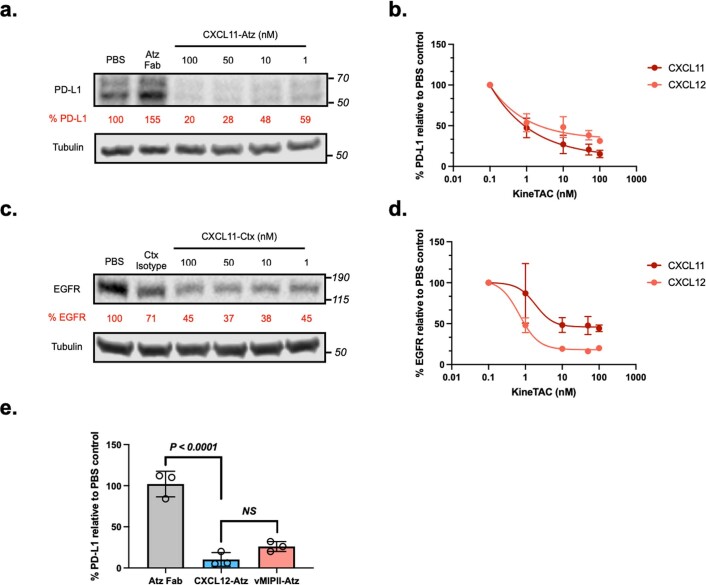
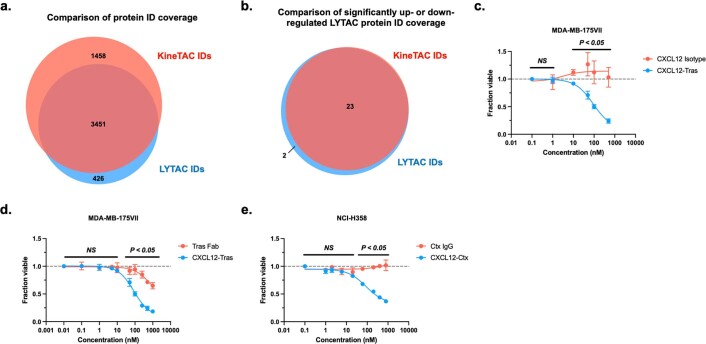
Targeted degradation of cell surface and extracellular proteins via lysosomal delivery is an important means to modulate extracellular biology. However, these approaches have limitations due to lack of modularity, ease of development, restricted tissue targeting and applicability to both cell surface and extracellular proteins. We describe a lysosomal degradation strategy, termed cytokine receptor-targeting chimeras (KineTACs), that addresses these limitations. KineTACs are fully genetically encoded bispecific antibodies consisting of a cytokine arm, which binds its cognate cytokine receptor, and a target-binding arm for the protein of interest. We show that KineTACs containing the cytokine CXCL12 can use the decoy recycling receptor, CXCR7, to target a variety of target proteins to the lysosome for degradation. Additional KineTACs were designed to harness other CXCR7-targeting cytokines, CXCL11 and vMIPII, and the interleukin-2 (IL-2) receptor-targeting cytokine IL-2. Thus, KineTACs represent a general, modular, selective and simple genetically encoded strategy for inducing lysosomal delivery of extracellular and cell surface targets with broad or tissue-specific distribution.
Overview
The claims and statistics of this paper haven’t been checked yet.
Run the check — free, no account needed. It reads the open-access text and checks the sources it cites.
Integrity signals
Registry
Cites
Statistics
Figures
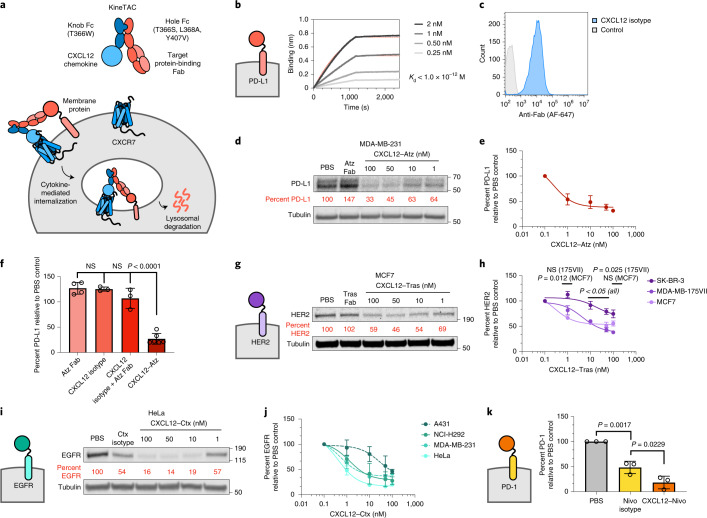
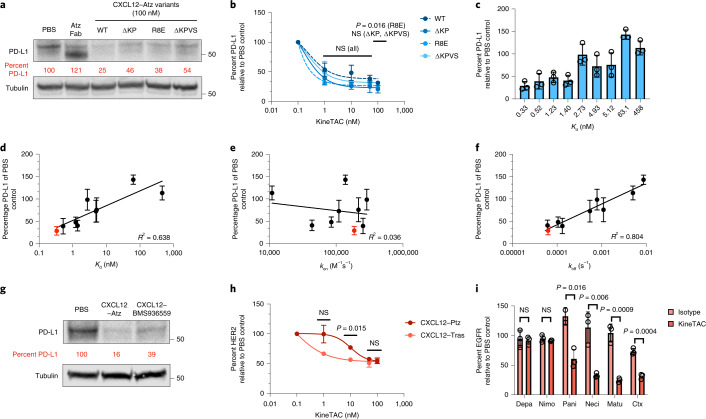
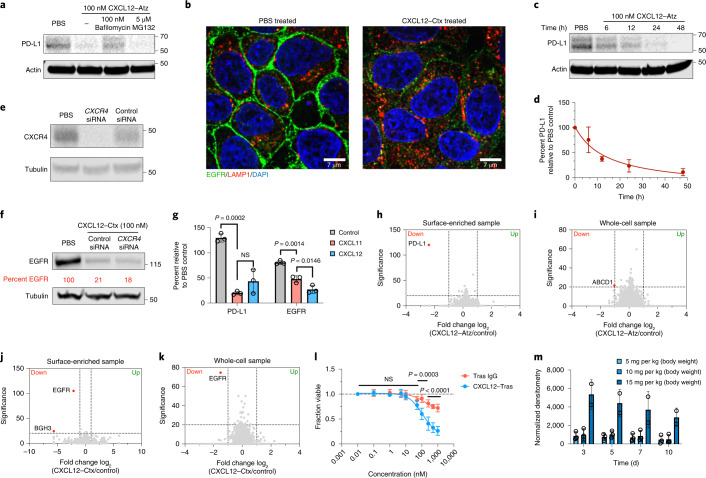
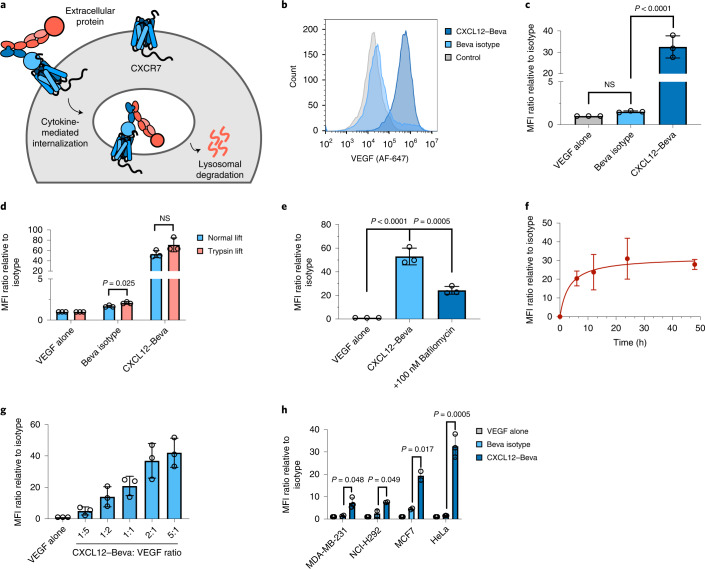
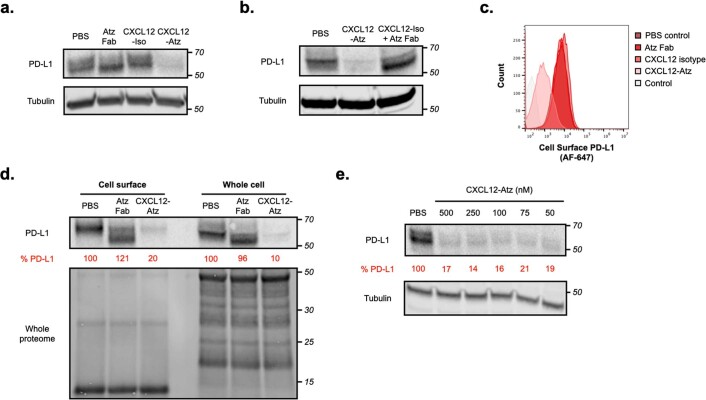
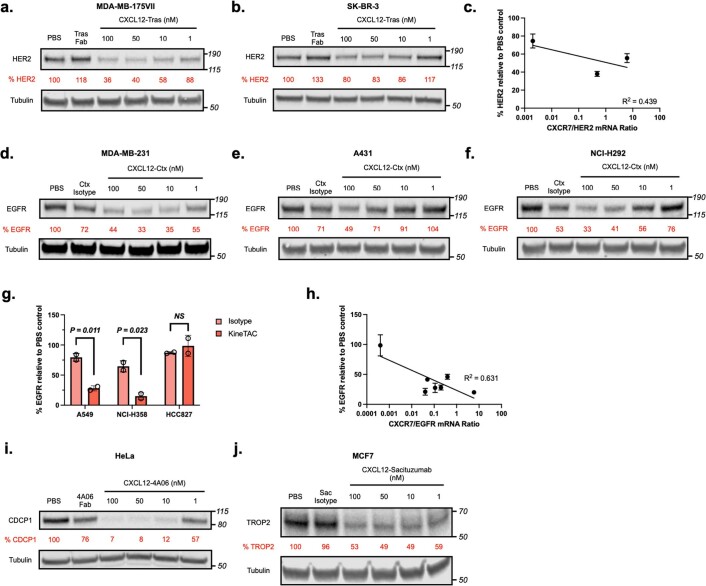
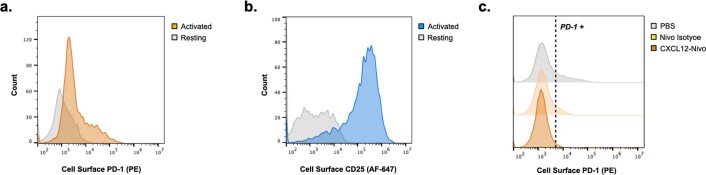
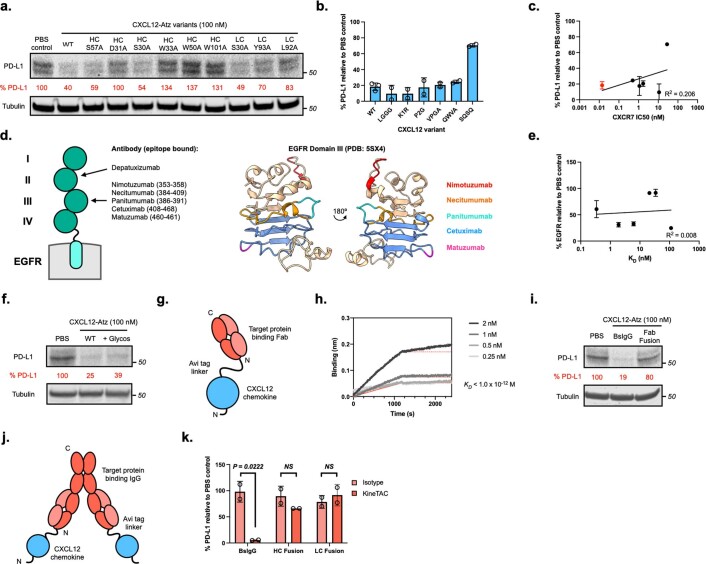
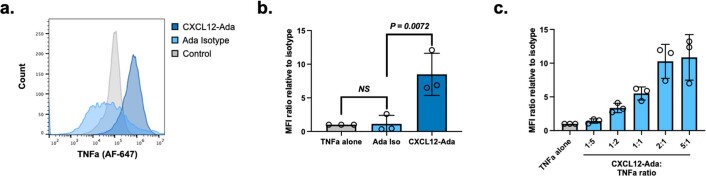
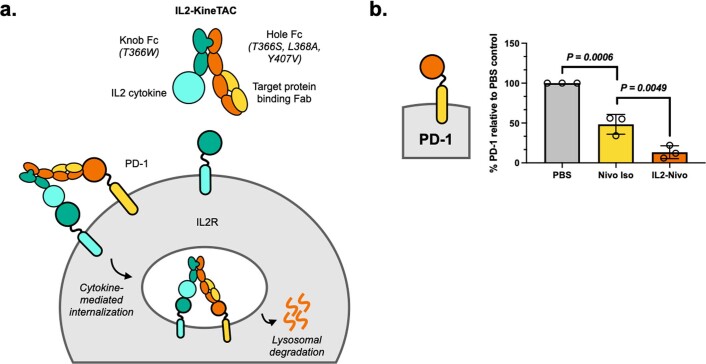
Verification
Claims the paper makes
The claims and statistics of this paper haven’t been checked yet.
Run the check — free, no account needed. It reads the open-access text and checks the sources it cites.
Claims other papers make about this one
Each is checked against this paper’s own text: does it say what the citing paper says it does?
In the citing paper
“To address the challenge of targeting soluble proteins outside cells, James A. Wells’ team developed cytokine receptor-targeting chimeras (KineTACs), a modular cytokine receptor targeting chimera for the targeted degradation of cell surface and extracellular proteins. KineTAC is a fully recombinant bispecific antibody based on a human scaffold that employs the internalization of homologous”
From Recent advances in targeting the “undruggable” proteins: from drug discovery to clinical trials (2023) · cites this paper as [546]
Self-check
Percentages, sums and reported differences re-computed from the paper’s own numbers.
The self-check needs the paper’s full text.
Citations
Cites
The Cancer Cell Line Encyclopedia enables predictive modelling of anticancer drug sensitivity
Barretina, J., Caponigro, G., Stransky, N., Venkatesan, K., Margolin, A. A., Kim, S., Wilson, C. J., Lehár, J., Kryukov, G. V., Sonkin, D., et al. (2012) · Nature · doi:10.1038/nature11003 · Cited by 7,950
Freeman, G. J., Long, A. J., Iwai, Y., Bourque, K., Chernova, T., Nishimura, H., Fitz, L. J., Malenkovich, N., Okazaki, T., Byrne, M. C., et al. (2000) · The Journal of Experimental Medicine · doi:10.1084/jem.192.7.1027 · Cited by 5,294
Epidermal growth factor receptor mutations in lung cancer
Sharma, S. V., Bell, D. W., Settleman, J., & Haber, D. A. (2007) · Nature Reviews Cancer · doi:10.1038/nrc2088 · Cited by 3,170
Sakamoto, K. M., Kim, K. B., Kumagai, A., Mercurio, F., Crews, C. M., & Deshaies, R. J. (2001) · Proceedings of the National Academy of Sciences · doi:10.1073/pnas.141230798 · Cited by 2,609
Lenalidomide Causes Selective Degradation of IKZF1 and IKZF3 in Multiple Myeloma Cells
Krönke, J., Udeshi, N. D., Narla, A., Grauman, P., Hurst, S. N., McConkey, M., Svinkina, T., Heckl, D., Comer, E., Li, X., et al. (2014) · Science · doi:10.1126/science.1244851 · Cited by 1,879
Lysosome-targeting chimaeras for degradation of extracellular proteins
Banik, S. M., Pedram, K., Wisnovsky, S., Ahn, G., Riley, N. M., & Bertozzi, C. R. (2020) · Nature · doi:10.1038/s41586-020-2545-9 · Cited by 1,199
Reprogramming human T cell function and specificity with non-viral genome targeting
Roth, T. L., Puig-Saus, C., Yu, R., Shifrut, E., Carnevale, J., Li, P. J., Hiatt, J., Saco, J., Krystofinski, P., Li, H., et al. (2018) · Nature · doi:10.1038/s41586-018-0326-5 · Cited by 839
PROteolysis TArgeting Chimeras (PROTACs) — Past, present and future
Pettersson, M., & Crews, C. M. (2019) · Drug Discovery Today Technologies · doi:10.1016/j.ddtec.2019.01.002 · Cited by 830
Glycosylation as a strategy to improve antibody-based therapeutics
Jefferis, R. (2009) · Nature Reviews Drug Discovery · doi:10.1038/nrd2804 · Cited by 829
‘Knobs-into-holes’ engineering of antibody C H 3 domains for heavy chain heterodimerization
Ridgway, J. B., Presta, L. G., & Carter, P. M. (1996) · Protein Engineering Design and Selection · doi:10.1093/protein/9.7.617 · Cited by 816
Cited by
Sorted by citations
The present and future of bispecific antibodies for cancer therapy
Klein, C., Brinkmann, U., Reichert, J. M., & Kontermann, R. E. (2024) · Nature Reviews Drug Discovery · doi:10.1038/s41573-024-00896-6 · Cited by 528
Recent advances in targeting the “undruggable” proteins: from drug discovery to clinical trials
Xie, X., Yu, T., Li, X., Zhang, N., Foster, L. J., Peng, C., Huang, W., & He, G. (2023) · Signal Transduction and Targeted Therapy · doi:10.1038/s41392-023-01589-z · Cited by 396
Targeted protein degradation for cancer therapy
Hinterndorfer, M., Spiteri, V. A., Ciulli, A., & Winter, G. E. (2025) · Nature reviews. Cancer · doi:10.1038/s41568-025-00817-8 · Cited by 263
Proximity-Based Modalities for Biology and Medicine
Liu, X., & Ciulli, A. (2023) · ACS Central Science · doi:10.1021/acscentsci.3c00395 · Cited by 206
Ahn, G., Riley, N. M., Kamber, R. A., Wisnovsky, S., von Hase, S. M., Bassik, M. C., Banik, S. M., & Bertozzi, C. R. (2023) · Science · doi:10.1126/science.adf6249 · Cited by 199
Transferrin receptor targeting chimeras for membrane protein degradation
Zhang, D., Duque-Jimenez, J., Facchinetti, F., Brixi, G., Rhee, K., Feng, W. W., Janne, P. A., & Zhou, X. X. (2024) · Nature · doi:10.1038/s41586-024-07947-3 · Cited by 210
Extracellular targeted protein degradation: an emerging modality for drug discovery
Wells, J. A., & Kumru, K. S. (2023) · Nature Reviews Drug Discovery · doi:10.1038/s41573-023-00833-z · Cited by 202
Self-citationThe Dawn of a New Era: Targeting the “Undruggables” with Antibody-Based Therapeutics
Qian, L., Lin, X., Gao, X., Khan, R. U., Liao, J.-Y., Du, S., Ge, J., Zeng, S., & Yao, S. Q. (2023) · Chemical Reviews · doi:10.1021/acs.chemrev.2c00915 · Cited by 155
Designed endocytosis-inducing proteins degrade targets and amplify signals
Huang, B., Abedi, M. H., Ahn, G., Coventry, B., Sappington, I., Tang, C., Wang, R., Schlichthaerle, T., Zhang, J. Z., Wang, Y., et al. (2024) · Nature · doi:10.1038/s41586-024-07948-2 · Cited by 174
Strategies to therapeutically modulate cytokine action
Leonard, W. J., & Lin, J. (2023) · Nature Reviews Drug Discovery · doi:10.1038/s41573-023-00746-x · Cited by 123
Targeted protein degradation directly engaging lysosomes or proteasomes
Kim, J., Byun, I., Kim, D. Y., Joh, H., Kim, H. J., & Lee, M. J. (2024) · Chemical Society Reviews · doi:10.1039/d3cs00344b · Cited by 108
A covalent peptide-based lysosome-targeting protein degradation platform for cancer immunotherapy
Xiao, Y., He, Z., Li, W., Chen, D., Niu, X., Yang, X., Zeng, W., Wang, M., Qian, Y., Su, Y., et al. (2025) · Nature Communications · doi:10.1038/s41467-025-56648-6 · Cited by 102
Zhang, B., Brahma, R. K., Zhu, L., Feng, J., Hu, S., Qian, L., Du, S., Yao, S. Q., & Ge, J. (2023) · Journal of the American Chemical Society · doi:10.1021/jacs.3c08886 · Cited by 88
Dendronized DNA Chimeras Harness Scavenger Receptors To Degrade Cell Membrane Proteins
Zhu, C., Wang, W., Wang, Y., Zhang, Y., & Li, J. (2023) · Angewandte Chemie International Edition · doi:10.1002/anie.202300694 · Cited by 88
Zhou, Y., Li, C., Chen, X., Zhao, Y., Liao, Y., Huang, P., Wu, W., Nieto, N. S., Li, L., & Tang, W. (2024) · Nature Communications · doi:10.1038/s41467-024-52685-9 · Cited by 99
Su, L., Tian, Y., Zheng, Q., Cao, Y., Yao, M., Wang, S., Xu, W., Xi, C., Clocchiatti, A., Nie, G., et al. (2024) · Cell chemical biology · doi:10.1016/j.chembiol.2024.01.002 · Cited by 81
Cell Membrane as A Promising Therapeutic Target: From Materials Design to Biomedical Applications
Wu, X., Hu, J., & Yoon, J. (2024) · Angewandte Chemie International Edition · doi:10.1002/anie.202400249 · Cited by 79
Duan, Q., Jia, H., Chen, W., Qin, C., Zhang, K., Jia, F., Fu, T., Wei, Y., Fan, M., Wu, Q., et al. (2024) · Advanced Science · doi:10.1002/advs.202308924 · Cited by 71
Yu, J., Li, H., Fang, T., Yun, C., Liu, X., Xu, J., Jiang, X., & Cai, X. (2023) · Journal of the American Chemical Society · doi:10.1021/jacs.3c07687 · Cited by 72
Chen, S., Cui, J., Chen, H., Yu, B., & Long, S. (2023) · European Journal of Medicinal Chemistry · doi:10.1016/j.ejmech.2023.115911 · Cited by 70
Opportunities and challenges of protein-based targeted protein degradation
Shen, F., & Dassama, L. M. K. (2023) · Chemical Science · doi:10.1039/d3sc02361c · Cited by 70
Targeted protein posttranslational modifications by chemically induced proximity for cancer therapy
Peng, Y., Liu, J., Inuzuka, H., & Wei, W. (2023) · Journal of Biological Chemistry · doi:10.1016/j.jbc.2023.104572 · Cited by 68
Tian, Y., Miao, Y., Guo, P., Wang, J., & Han, D. (2023) · Angewandte Chemie International Edition · doi:10.1002/anie.202316089 · Cited by 64
Wang, Q., Yang, X., Yuan, R., Shen, A., Wang, P., Li, H., Zhang, J., Tian, C., Jiang, Z., Li, W., et al. (2024) · Nature Communications · doi:10.1038/s41467-024-46130-0 · Cited by 72
Siepe, D. H., Picton, L. K., & García, K. C. (2023) · ACS Synthetic Biology · doi:10.1021/acssynbio.2c00587 · Cited by 62
Targeted degradation of membrane and extracellular proteins with LYTACs
Li, Y., Yang, Y., Zhang, R., Ge, R., & Xie, S. (2024) · Acta Pharmacologica Sinica · doi:10.1038/s41401-024-01364-y · Cited by 61
Journey of PROTAC: From Bench to Clinical Trial and Beyond
Berkley, K., Zalejski, J., Sharma, N., & Sharma, A. K. (2025) · Biochemistry · doi:10.1021/acs.biochem.4c00577 · Cited by 62
Development of Integrin-Facilitated Bispecific Aptamer Chimeras for Membrane Protein Degradation
Sun, W., Zhang, H., Xie, W., Ma, L., Dang, Y., Liu, Y., Li, L., Qu, F., & Tan, W. (2024) · Journal of the American Chemical Society · doi:10.1021/jacs.4c04794 · Cited by 60
Targeted degradation of extracellular secreted and membrane proteins
Chen, X., Zhou, Y., Zhao, Y., & Tang, W. (2023) · Trends in Pharmacological Sciences · doi:10.1016/j.tips.2023.08.013 · Cited by 59
Expanding the horizons of targeted protein degradation: A non-small molecule perspective
Huang, X., Wu, F., Ye, J., Wang, L., Wang, X., Li, X., & He, G. (2024) · Acta Pharmaceutica Sinica B · doi:10.1016/j.apsb.2024.01.010 · Cited by 62
Chen, Y., Liu, F., Pal, S., & Hu, Q. (2024) · Chemical Society Reviews · doi:10.1039/d4cs00411f · Cited by 59
Moon, B., Kim, Y., & Kim, S. (2023) · International Journal of Molecular Sciences · doi:10.3390/ijms241613004 · Cited by 53
Biospecific Chemistry for Covalent Linking of Biomacromolecules
Cao, L., & Wang, L. (2024) · Chemical Reviews · doi:10.1021/acs.chemrev.4c00066 · Cited by 53
Leveraging aptamers for targeted protein degradation
Yang, Z., Pang, Q., Zhou, J., Xuan, C., & Xie, S. (2023) · Trends in Pharmacological Sciences · doi:10.1016/j.tips.2023.05.008 · Cited by 50
Shao, J., Lin, X., Wang, H., Zhao, C., Yao, S. Q., Ge, J., Zeng, S., & Qian, L. (2024) · Angewandte Chemie International Edition · doi:10.1002/anie.202319232 · Cited by 55
Engineered platelets as targeted protein degraders and application to breast cancer models
Chen, Y., Pal, S., Li, W., Liu, F., Yuan, S., & Hu, Q. (2024) · Nature Biotechnology · doi:10.1038/s41587-024-02494-8 · Cited by 49
Directed evolution of genetically encoded LYTACs for cell-mediated delivery
Yang, J. L., Yamada‐Hunter, S. A., Labanieh, L., Sotillo, E., Cheah, J. S., Roberts, D. S., Mackall, C. L., Bertozzi, C. R., & Ting, A. Y. (2024) · Proceedings of the National Academy of Sciences · doi:10.1073/pnas.2320053121 · Cited by 45
Nanoparticle‐Mediated Targeted Protein Degradation: An Emerging Therapeutics Technology
Baker, A., Ho, A. P. T., Itzhaki, L. S., & Fruk, L. (2025) · Angewandte Chemie International Edition · doi:10.1002/anie.202503958 · Cited by 44
Polyvalent folate receptor-targeting chimeras for degradation of membrane proteins
Xiao, D., Dong, J., Xie, F., Feng, X., Wang, J., Xu, X., Tang, B., Sun, C., Wang, Y., Zhong, W., et al. (2025) · Nature Chemical Biology · doi:10.1038/s41589-025-01924-1 · Cited by 54
ROTACs leverage signaling-incompetent R-spondin for targeted protein degradation
Sun, R., Meng, Z., Lee, H.-Y., Offringa, R., & Niehrs, C. (2023) · Cell chemical biology · doi:10.1016/j.chembiol.2023.05.010 · Cited by 41
Induced proximity-based therapeutic modalities
King, E. A., Meyers, M., & Nomura, D. K. (2025) · Nature Reviews Drug Discovery · doi:10.1038/s41573-025-01316-z · Cited by 61
Targeted protein degradation in the transmembrane and extracellular space
Zhu, R., Zhang, H., & Chen, P. R. (2025) · Science · doi:10.1126/science.adx5094 · Cited by 43
Yao, S., Wang, Y., Tang, Q., Yin, Y., Geng, Y., Xu, L., Liang, S., Xiang, J., Fan, J., Tang, J., et al. (2024) · Nature Communications · doi:10.1038/s41467-024-51720-z · Cited by 46
Targeted protein degradation: current molecular targets, localization, and strategies
Pliatsika, D., Blatter, C., & Riedl, R. (2024) · Drug Discovery Today · doi:10.1016/j.drudis.2024.104178 · Cited by 40
TAC‐tics for Leveraging Proximity Biology in Drug Discovery
Nalawansha, D. A., Mangano, K., den Besten, W., & Potts, P. R. (2023) · ChemBioChem · doi:10.1002/cbic.202300712 · Cited by 36
Targeted degradation of extracellular proteins: state of the art and diversity of degrader designs
Mamun, M. A. A., Bakunts, A. G., & Chernorudskiy, A. L. (2025) · Journal of Hematology & Oncology · doi:10.1186/s13045-025-01703-4 · Cited by 41
Deubiquitinase-Targeting Chimeras (DUBTACs) as a Potential Paradigm-Shifting Drug Discovery Approach
Ma, Z., Zhou, M., Chen, H., Shen, Q., & Zhou, J. (2025) · Journal of Medicinal Chemistry · doi:10.1021/acs.jmedchem.4c02975 · Cited by 43
USP28-Based Deubiquitinase-Targeting Chimeras for Cancer Treatment
Wang, Z., Qian, C., Xiong, Y., Zhang, D., Inuzuka, H., Zhong, Y., Xie, L., Chen, X., Jin, J. J., & Wei, W. (2025) · Journal of the American Chemical Society · doi:10.1021/jacs.5c01889 · Cited by 36
USP7-Based Deubiquitinase-Targeting Chimeras Stabilize AMPK
Liu, J., Hu, X., Luo, K., Xiong, Y., Chen, L., Wang, Z., Inuzuka, H., Qian, C., Yu, X., Xie, L., et al. (2024) · Journal of the American Chemical Society · doi:10.1021/jacs.4c02373 · Cited by 37
CYpHER: catalytic extracellular targeted protein degradation with high potency and durable effect
Crook, Z. R., Sevilla, G. P., Young, P., Girard, E. J., Phi, T.-D., Howard, M. L., Price, J., Olson, J. M., & Nairn, N. W. (2024) · Nature Communications · doi:10.1038/s41467-024-52975-2 · Cited by 37
Malarvannan, M., Unnikrishnan, S., Monohar, S., Ravichandiran, V., & Paul, D. (2024) · Bioorganic Chemistry · doi:10.1016/j.bioorg.2024.107984 · Cited by 34
Targeted Protein Degradation Mediated by Genetically Engineered Lysosome-Targeting Exosomes
Wang, T., Sun, L., Ren, T., Hou, M., Long, Y., Jiang, J., & He, J. (2023) · Nano Letters · doi:10.1021/acs.nanolett.3c03148 · Cited by 32
Chemically engineered antibodies for autophagy-based receptor degradation
Cheng, B., Li, M., Zheng, J., Liang, J., Li, Y., Liang, R., Tian, H., Zhou, Z., Ding, L., Ren, J., et al. (2025) · Nature Chemical Biology · doi:10.1038/s41589-024-01803-1 · Cited by 33
Protein-Based Degraders: From Chemical Biology Tools to Neo-Therapeutics
Ou, L., Setegne, M. T., Elliot, J., Shen, F., & Dassama, L. M. K. (2025) · Chemical Reviews · doi:10.1021/acs.chemrev.4c00595 · Cited by 33
Engineering Covalent Aptamer Chimeras for Enhanced Autophagic Degradation of Membrane Proteins
Shi, Y., Yun, Y., Wang, R., Liu, Z., Wu, Z., Xiang, Y., & Zhang, J. (2025) · Angewandte Chemie International Edition · doi:10.1002/anie.202425123 · Cited by 31
Conjugation with glucagon like peptide-1 enables targeted protein degradation
Zhu, L., Zhou, Y., Zhang, B., Luo, Y., Chen, F., Yan, X., Cai, Y., Jiang, L., & Ge, J. (2023) · Bioorganic Chemistry · doi:10.1016/j.bioorg.2023.106908 · Cited by 30
He, W., Chen, C., Zheng, J., Li, Y., Shi, H., Zhou, Y., Li, M., Gong, P., Liu, K., Shao, X., et al. (2025) · Nature Communications · doi:10.1038/s41467-025-62776-w · Cited by 34
Wang, Z., Yuan, L., Liao, X., Guo, X., & Chen, J. (2024) · Journal of Medicinal Chemistry · doi:10.1021/acs.jmedchem.3c02143 · Cited by 28
Hijacking Extracellular Targeted Protein Degrader–Drug Conjugates for Enhanced Drug Delivery
Zhao, F., Wu, Y., Schaefer, K., Zhang, Y., Miao, K., Yao, Z. W., Ganjave, S. D., Kumru, K. S., Peters-Clarke, T. M., Inague, A., et al. (2025) · Journal of the American Chemical Society · doi:10.1021/jacs.5c15047 · Cited by 32
Self-citationDiscovery of VH domains that allosterically inhibit ENPP1
Solomon, P. E., Bracken, C. J., Carozza, J. A., Wang, H., Young, E. P., Wellner, A., Liu, C. C., Sweet-Cordero, A., Li, L., & Wells, J. A. (2023) · Nature Chemical Biology · doi:10.1038/s41589-023-01368-5 · Cited by 28
Self-citationIGF2 Peptide-Based LYTACs for Targeted Degradation of Extracellular and Transmembrane Proteins
Mikitiuk, M., Barczyński, J., Bielski, P., Arciniega, M., Tyrcha, U., Hec, A., Lipińska, A. D., Rychłowski, M., Holak, T. A., & Sitar, T. (2023) · Molecules · doi:10.3390/molecules28227519 · Cited by 26
Howell, R. A., Wang, S., Khambete, M., McDonald, D. M., & Spiegel, D. A. (2024) · Journal of the American Chemical Society · doi:10.1021/jacs.3c13320 · Cited by 26
Conditionally Activatable Chimeras for Tumor-Specific Membrane Protein Degradation
Liu, H., Fu, Z., Han, Y., Fang, Y., Shen, W., Chen, Z., Zhu, R., Zhang, H., & Chen, P. R. (2024) · Journal of the American Chemical Society · doi:10.1021/jacs.4c06160 · Cited by 27
Guo, C., Gao, F., Wu, G., Li, J., Sheng, C., He, S., & Hu, H. (2024) · Advanced Science · doi:10.1002/advs.202410778 · Cited by 24
Bao, Y., Xu, Z., Cheng, K., Li, X., Chen, F., Yuan, D., Zhang, F., Run-Yu, A., Zeng, X., Zhao, Y., et al. (2025) · Journal of the American Chemical Society · doi:10.1021/jacs.4c17054 · Cited by 28
Lin, J., Wu, Y., Liang, X., Tang, M., Sun, X., Lu, S., Jin, J., Guo, X., Wang, B., Chen, H., et al. (2025) · Advanced Science · doi:10.1002/advs.202500311 · Cited by 26
Yang, J., & Zhu, H. (2025) · Journal of Medicinal Chemistry · doi:10.1021/acs.jmedchem.5c01019 · Cited by 24
Efficient amyloid-β degradation in Alzheimer’s disease using SPYTACs
Teng, F., Liu, J., Cui, T., Tan, X., Liu, K., Hou, Z., (54356), L. Z., Xie, Y., Li, R., Li, D., et al. (2026) · Cell · doi:10.1016/j.cell.2026.01.034 · Cited by 25
Therapeutic potential of cis-targeting bispecific antibodies
Oslund, R., Holland, P. M., Lesley, S. A., & Fadeyi, O. (2024) · Cell chemical biology · doi:10.1016/j.chembiol.2024.07.004 · Cited by 23
Zhou, Y., Liao, Y., Zhao, Y., & Tang, W. (2024) · ChemMedChem · doi:10.1002/cmdc.202300643 · Cited by 22
He, S., Huang, W., Zhu, Y., Gao, F., Fang, Y., Zhu, J., Bao, Y., Dong, G., & Sheng, C. (2025) · Angewandte Chemie International Edition · doi:10.1002/anie.202511467 · Cited by 21
Lesiak, L., Dadina, N., Zheng, S., Schelvis, M., & Schepartz, A. (2023) · ACS Central Science · doi:10.1021/acscentsci.3c01173 · Cited by 22
Yu, S., Shi, T., Li, C., Xie, C., Wang, F., & Liu, X. (2024) · Nano Letters · doi:10.1021/acs.nanolett.4c03102 · Cited by 21
Induced proximity at the cell surface
Till, N. A., Ramanathan, M., & Bertozzi, C. R. (2025) · Nature Biotechnology · doi:10.1038/s41587-025-02592-1 · Cited by 21
Engineered Virus‐Like Nanoparticles Enable Multimodal Protein Degradation for Enhanced Tumor Therapy
Dou, Q., Wang, J., Mao, M., Shui, L., Hu, Y., & Zhang, Y. (2025) · Advanced Materials · doi:10.1002/adma.202507608 · Cited by 21
He, H., Zhou, C., & Chen, X. (2023) · Journal of the American Chemical Society · doi:10.1021/jacs.3c08843 · Cited by 20
Fang, T., Zheng, Z., Li, N., Zhang, Y., Ma, J., Yun, C., & Cai, X. (2024) · Chemical Science · doi:10.1039/d4sc05093b · Cited by 21
Wang, X., Shuai, W., Yang, P., Liu, Y., Zhang, Y., & Wang, G. (2024) · Ageing Research Reviews · doi:10.1016/j.arr.2024.102584 · Cited by 19
The application of targeted protein degradation technologies to G protein‐coupled receptors
Keen, A. C., Jörg, M., & Halls, M. L. (2023) · British Journal of Pharmacology · doi:10.1111/bph.16079 · Cited by 21
Generative design of therapeutics that bind and modulate protein states
Chen, T., Hong, L., Yudistyra, V., Vincoff, S., & Chatterjee, P. (2023) · Current Opinion in Biomedical Engineering · doi:10.1016/j.cobme.2023.100496 · Cited by 18
Harnessing the Deubiquitinase USP1 for Targeted Protein Stabilization
Qian, C., Wang, Z., Xiong, Y., Zhang, D., Zhong, Y., Inuzuka, H., Qi, Y., Xie, L., Chen, X., Wei, W., et al. (2025) · Journal of the American Chemical Society · doi:10.1021/jacs.5c01662 · Cited by 21
Dual membrane receptor degradation via folate receptor targeting chimera
Wang, Z., Li, Z., Hogstrom, J. M., Inuzuka, H., Jing, R., Yan, P., Hou, T., Qi, Y., Huang, D., Wang, J., et al. (2025) · Nature Communications · doi:10.1038/s41467-025-63882-5 · Cited by 18
Lysosome-targeting chimeras enable targeted protein degradation
Li, B., Li, Y., Zhang, J. J., Badama, S., Zhao, X., Wang, L., Zhang, T. W., Wang, X., Yi, X., Ding, G., et al. (2026) · Cell chemical biology · doi:10.1016/j.chembiol.2026.01.008 · Cited by 19
Design principles and therapeutic applications of novel synthetic WNT signaling agonists
Post, Y., Lu, C., Fletcher, R. B., Yeh, W., Nguyen, H., Lee, S., & Li, Y. (2024) · iScience · doi:10.1016/j.isci.2024.109938 · Cited by 18
Du, J., Han, S., Zhou, H., Wang, J., Wang, F., Zhao, M., Song, R., Li, K., Zhu, H., Zhang, W., et al. (2024) · European Journal of Nuclear Medicine and Molecular Imaging · doi:10.1007/s00259-024-06804-9 · Cited by 18
Jiang, S., Lv, X., Ouyang, Z., Chi, H., Zeng, Y., Wang, Y., He, J., Chen, J., Chen, J., An, K., et al. (2024) · Angewandte Chemie International Edition · doi:10.1002/anie.202407986 · Cited by 19
Zhou, H., Hou, B., Shan, Y., Huang, L., Chen, F., Ren, S., Zhang, S., Pan, J., Dang, Y., Yu, H., et al. (2025) · Angewandte Chemie International Edition · doi:10.1002/anie.202504233 · Cited by 16
Targeted Extracellular Protein Degradation by Dendronized DNA Chimeras
Zhu, C., Wang, W., Wang, Y., Zhang, W., Zhang, Y., & Li, J. (2024) · ACS Chemical Biology · doi:10.1021/acschembio.3c00645 · Cited by 16
Yun, C., Li, N., Zhang, Y., Fang, T., Ma, J., Zheng, Z., Zhou, S. H., & Cai, X. (2024) · ACS Chemical Biology · doi:10.1021/acschembio.4c00584 · Cited by 17
Ning, Y., Li, B., Wu, C., Feng, L., Huang, X., & Liu, B. (2025) · ACS Nano · doi:10.1021/acsnano.5c00745 · Cited by 18
Chang, X., Qiu, X., Tong, X., Gan, S., Yi, W., Xie, S., Liu, X., Zuo, C., & Tan, W. (2025) · Advanced Science · doi:10.1002/advs.202501222 · Cited by 16
Lu, R. H.-H., Krishna, J., Alp, Y., & Thayumanavan, S. (2026) · Journal of the American Chemical Society · doi:10.1021/jacs.5c17519 · Cited by 17
Functionalized Protein Binders in Developmental Biology
Schnider, S. T., Viganò, M., Affolter, M., & Aguilar, G. (2024) · Annual Review of Cell and Developmental Biology · doi:10.1146/annurev-cellbio-112122-025214 · Cited by 14
Mukai, K., Cost, R., Zhang, X. S., Condiff, E., Cotton, J., Liu, X., Boudanova, E., Niebel, B., Piepenhagen, P. A., Cai, X., et al. (2024) · mAbs · doi:10.1080/19420862.2024.2415333 · Cited by 16
Wang, Z., Zheng, M., Li, M., Lu, H., Liu, N., Chen, Y., Yang, N., Zeng, W., Dong, Y., Li, J., et al. (2024) · Molecular Cancer Therapeutics · doi:10.1158/1535-7163.mct-24-0319 · Cited by 15
Emerging Concepts of Targeted Protein Degrader Technologies via Lysosomal Pathways
Alam, M. M., Wasim, S., & Lee, S. (2025) · International Journal of Molecular Sciences · doi:10.3390/ijms26125582 · Cited by 14
Nalawansha, D. A., Mazis, G., Husemoen, G., Ashton, K. S., Deng, W., Wurz, R. P., Tran, A. T., Lanman, B. A., Xie, J., Guenette, R. G., et al. (2025) · Nature Communications · doi:10.1038/s41467-025-63128-4 · Cited by 15
Targeted protein degradation technologies: Emerging mechanisms and nano-based innovations
Hou, M., Zhao, R., Wang, S., Jiang, B., & Yan, X. (2025) · Nano Research · doi:10.26599/nr.2025.94907983 · Cited by 14
Recent advances in targeting protein degradation for tumor immunotherapy
Li, S., Jin, Y., Wu, H., Yuan, H., & Zhao, J. (2025) · Journal of Hematology & Oncology · doi:10.1186/s13045-025-01765-4 · Cited by 14
Degradation of extracellular and membrane proteins in targeted therapy: Status quo and quo vadis
Li, Z., Ma, S., Zhang, S., Ma, Z., Du, L., & Li, M. (2023) · Drug Discovery Today · doi:10.1016/j.drudis.2023.103716 · Cited by 14
Metadata
- Authors
- Pance, K., Gramespacher, J. A., Byrnes, J. R., Salangsang, F., Serrano, J.-A. C., Cotton, A. D., Steri, V., & Wells, J. A.
- Affiliations
- University of California, San Francisco (US)
- Corresponding author
- Wells, James A.
- ORCID
- Venue
- Nature Biotechnology
- Published
- 2022-09-22
- Volume
- 41
- Issue
- 2
- Pages
- 273-281
- ISSN
- 0733-222X (ISSN-L)
- 1087-0156
- 1546-1696
- PMC
- PMC9931583
- OpenAlex
- W4296691508
- Cited by
- 265
- References
- 57
- Citations by year
- 2026: 68 · 2025: 97 · 2024: 58 · 2023: 41 · 2022: 1
- FWCI
- 16.08
- Type
- journal article
- Language
- en
- Open access
- hybrid
- doi.org
- Locations
- Nature Biotechnology (publishedVersion, cc-by)
- PubMed Central (publishedVersion, cc-by)
- PubMed (publishedVersion)
- eScholarship (California Digital Library) (submittedVersion, cc-by)
- Funders
- U.S. Department of Health & Human Services | NIH | National Cancer Institute (1F31CA265080-01, 5F32CA239417, R01CA248323)
- U.S. Department of Health & Human Services | National Institutes of Health (R35GM122451)
- Topics
- Life Sciences › Biochemistry, Genetics and Molecular Biology › Molecular Biology › Protein Degradation and Inhibitors
- Life Sciences › Immunology and Microbiology › Immunology › Monoclonal and Polyclonal Antibodies Research
- Life Sciences › Biochemistry, Genetics and Molecular Biology › Molecular Biology › CRISPR and Genetic Engineering
- Keywords
- targeted protein degradation, lysosomal degradation, bispecific antibodies, CXCL12, CXCR7, decoy receptor, CXCL11, interleukin-2 receptor, interleukin-2, cell surface proteins, extracellular proteins, tissue-specific targeting
- MeSH terms
- Proteolysis Targeting Chimera, Cell Membrane, Interleukin-2, Signal Transduction, Receptors, Cytokine, Chemokine CXCL12, Proteolysis
About these checks
Registry, retraction, Cites and statistics results are computed, not judged, with one exception: a printed reference that no index lists is read once by a model before it counts as a citation error. Claims are extracted by a model and kept only when their quote appears verbatim in the text; each cited source is then checked, with a model’s help, for whether it says what the claim relies on. Those verdicts can be wrong — read the claim’s quote and the cited source before relying on one.
Statistics and arithmetic are recomputed, not judged.
Confidence bands are shown only for fields calibrated on our annotated test set. None is calibrated yet, so no band is shown.
What counts as a claim ›How we measure confidence ›How we check this ›
Are you an author, or do you see a problem with this page? Request a review
