

The DOI matches its Crossref record; 63 of the 63 references it cites were found in a registry or an index.
Engineered phage with antibacterial CRISPR–Cas selectively reduce E. coli burden in mice
Open accessAbstract
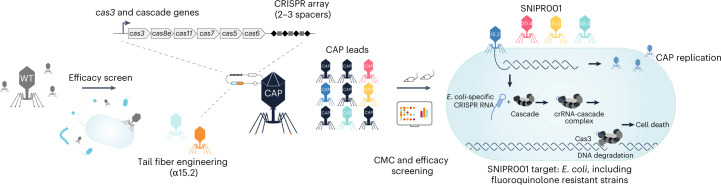
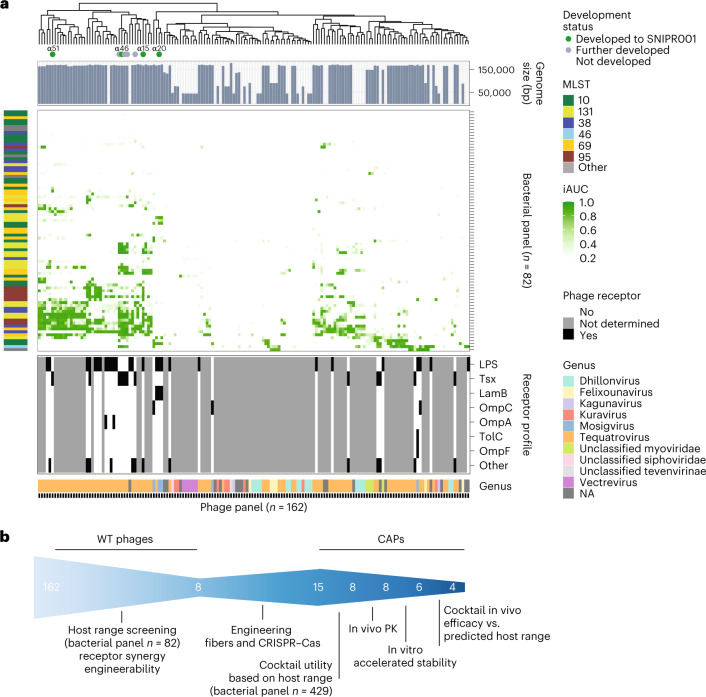
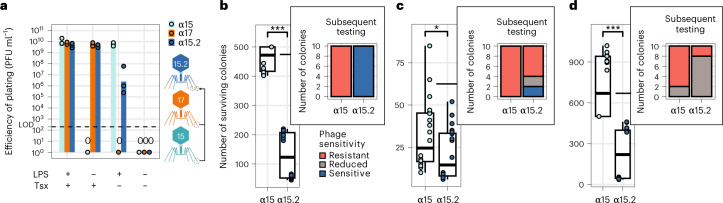
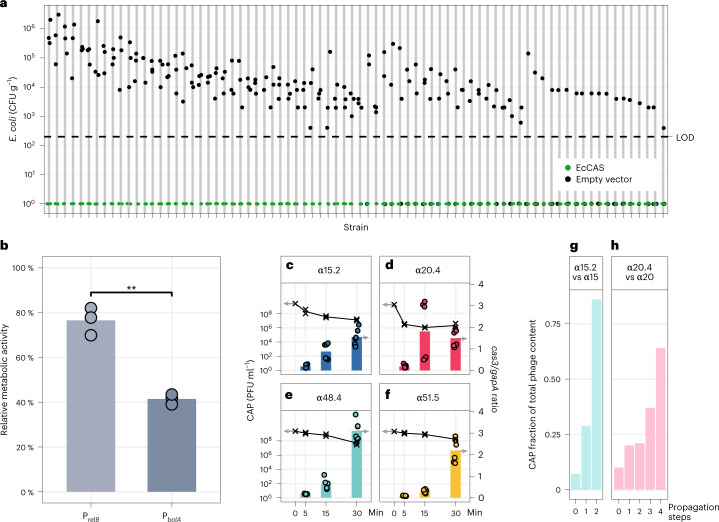
Antibiotic treatments have detrimental effects on the microbiome and lead to antibiotic resistance. To develop a phage therapy against a diverse range of clinically relevant Escherichia coli , we screened a library of 162 wild-type (WT) phages, identifying eight phages with broad coverage of E. coli , complementary binding to bacterial surface receptors, and the capability to stably carry inserted cargo. Selected phages were engineered with tail fibers and CRISPR–Cas machinery to specifically target E. coli . We show that engineered phages target bacteria in biofilms, reduce the emergence of phage-tolerant E. coli and out-compete their ancestral WT phages in coculture experiments. A combination of the four most complementary bacteriophages, called SNIPR001, is well tolerated in both mouse models and minipigs and reduces E. coli load in the mouse gut better than its constituent components separately. SNIPR001 is in clinical development to selectively kill E. coli , which may cause fatal infections in hematological cancer patients.
Overview
The claims and statistics of this paper haven’t been checked yet.
Run the check — free, no account needed. It reads the open-access text and checks the sources it cites.
Integrity signals
Registry
Cites
Statistics
Figures
Verification
Claims the paper makes
The claims and statistics of this paper haven’t been checked yet.
Run the check — free, no account needed. It reads the open-access text and checks the sources it cites.
Claims other papers make about this one
Each is checked against this paper’s own text: does it say what the citing paper says it does?
The source backs part of the claim, not all of it — or backs it for a different population, condition or comparison.
In the citing paper
“Overall, these studies have established encouraging safety profiles and provided preliminary pharmacokinetic and immunogenicity data in immunocompromised populations, laying an important foundation for oncology-directed applications.”
From Phage therapy in oncology: opportunities for cancer prevention and treatment (2026) · cites this paper as [129]
Experimental — accuracy not yet measuredThe source backs part of the claim, not all of it — or backs it for a different population, condition or comparison.
In the citing paper
“SNIPR001 was recovered from fecal samples in a dose-dependent manner and corresponded with a numerical reduction in gut E. coli levels, demonstrating clinical proof of concept for this targeted approach.”
From Phage therapy in oncology: opportunities for cancer prevention and treatment (2026) · cites this paper as [129]
Experimental — accuracy not yet measuredThe source backs part of the claim, not all of it — or backs it for a different population, condition or comparison.
In the citing paper
“In a Phase 1 randomized, double-blind, placebo-controlled, multiple-dose, dose-escalation study trial (NCT05277350i) involving 36 healthy volunteers across three dose levels, 7-day oral administration of SNIPR001 was well tolerated, with only mild to moderate adverse events and no treatment-related discontinuations.”
From Phage therapy in oncology: opportunities for cancer prevention and treatment (2026) · cites this paper as [129]
Experimental — accuracy not yet measuredThe cited source says what the claim attributes to it.
In the citing paper
“SNIPR001 was recovered from fecal samples in a dose-dependent manner and corresponded with a numerical reduction in gut E. coli levels, demonstrating clinical proof of concept for this targeted approach.”
From Phage therapy in oncology: opportunities for cancer prevention and treatment (2026) · cites this paper as [129]
The cited source says what the claim attributes to it.
In the citing paper
“Building on this foundation, SNIPR001 represents a next-generation, orally administered CRISPR–phage therapeutic designed to selectively reduce gut colonization by E. coli, a major source of bloodstream infections in patients with hematological malignancies [129]”
From Phage therapy in oncology: opportunities for cancer prevention and treatment (2026) · cites this paper as [129]
The cited source says what the claim attributes to it.
In the citing paper
“SNIPR001 was recovered from fecal samples in a dose-dependent manner and corresponded with a numerical reduction in gut E. coli levels, demonstrating clinical proof of concept for this targeted approach.”
From Phage therapy in oncology: opportunities for cancer prevention and treatment (2026) · cites this paper as [129]
Self-check
Percentages, sums and reported differences re-computed from the paper’s own numbers.
The self-check needs the paper’s full text.
Citations
Cites
Trimmomatic: a flexible trimmer for Illumina sequence data
Bolger, A. M., Lohse, M., & Usadel, B. (2014) · Bioinformatics · doi:10.1093/bioinformatics/btu170 · Cited by 65,548
SPAdes: A New Genome Assembly Algorithm and Its Applications to Single-Cell Sequencing
Bankevich, A., Nurk, S., Antipov, D., Gurevich, A. A., Dvorkin, M. V., Kulikov, A. S., Lesin, V. M., Nikolenko, S., Pham, S., Prjibelski, A. D., et al. (2012) · Journal of Computational Biology · doi:10.1089/cmb.2012.0021 · Cited by 26,312
Global burden of bacterial antimicrobial resistance in 2019: a systematic analysis
Murray, C. J. L., Ikuta, K. S., Sharara, F., Swetschinski, L., Robles Aguilar, G., Gray, A., Han, C., Bisignano, C., Rao, P., Wool, E., et al. (2022) · The Lancet · doi:10.1016/s0140-6736(21)02724-0 · Cited by 16,316
Mash: fast genome and metagenome distance estimation using MinHash
Ondov, B. D., Treangen, T. J., Melsted, P., Mallonee, A. B., Bergman, N. H., Koren, S., & Phillippy, A. M. (2016) · Genome biology · doi:10.1186/s13059-016-0997-x · Cited by 3,373
Small CRISPR RNAs Guide Antiviral Defense in Prokaryotes
Brouns, S. J. J., Jore, M. M., Lundgren, M., Westra, E. R., Slijkhuis, R. J. H., Snijders, A. P. L., Dickman, M. J., Makarova, K. S., Koonin, E. V., & van der Oost, J. (2008) · Science · doi:10.1126/science.1159689 · Cited by 2,460
Multilocus Sequence Typing of Total-Genome-Sequenced Bacteria
Larsen, M. V., Cosentino, S., Rasmussen, S., Friis, C., Hasman, H., Marvig, R. L., Jelsbak, L., Sicheritz‐Pontén, T., Ussery, D. W., Aarestrup, F. M., et al. (2012) · Journal of Clinical Microbiology · doi:10.1128/jcm.06094-11 · Cited by 2,333
Lutz, R. (1997) · Nucleic Acids Research · doi:10.1093/nar/25.6.1203 · Cited by 1,694
Dedrick, R. M., Guerrero-Bustamante, C. A., Garlena, R. A., Russell, D. A., Ford, K., Harris, K., Gilmour, K. C., Soothill, J. S., Jacobs‐Sera, D., Schooley, R. T., et al. (2019) · Nature Medicine · doi:10.1038/s41591-019-0437-z · Cited by 1,418
Using ggtree to Visualize Data on Tree‐Like Structures
Yu, G. (2020) · Current Protocols in Bioinformatics · doi:10.1002/cpbi.96 · Cited by 1,388
Schooley, R. T., Biswas, B., Gill, J. J., Hernandez-Morales, A., Lancaster, J., Lessor, L., Barr, J. J., Reed, S. L., Rohwer, F., Benler, S., et al. (2017) · Antimicrobial Agents and Chemotherapy · doi:10.1128/aac.00954-17 · Cited by 1,254
Cited by
Sorted by citations
Items 101–200 of 282
Genomic insights into bacteriophages: a new frontier in AMR detection and phage therapy
Banerjee, B., Halder, S., Kumar, S., Chaddha, M., Ali, R., Mohite, R., Bano, M., & Pandey, R. (2025) · Briefings in Functional Genomics · doi:10.1093/bfgp/elaf011 · Cited by 12
Gut–brain axis in health and brain disease
Olasunkanmi, O. I., Zheng, L., & Zheng, P. (2026) · Chinese Medical Journal · doi:10.1097/cm9.0000000000003920 · Cited by 12
Zhao, R., Wang, C., 李佳楣, Liao, Y., Huang, C., Hu, T., Zhang, H., & Zhang, W. (2026) · Molecular Biomedicine · doi:10.1186/s43556-026-00456-x · Cited by 13
Kippnich, J., Benz, F., Uecker, H., & Baumdicker, F. (2025) · Genetics · doi:10.1093/genetics/iyaf192 · Cited by 12
Yu, W., Guo, X., Li, X., Wei, Y., Lyu, Y., Zhang, L., Wang, J., & Shan, A. (2024) · Materials Today Bio · doi:10.1016/j.mtbio.2024.101183 · Cited by 11
Phage therapeutic delivery methods and clinical trials for combating clinically relevant pathogens
Selim, H. M. R. M., Gomaa, F. A. M., Alshahrani, M. Y., Morgan, R. N., & Aboshanab, K. M. (2024) · Therapeutic Delivery · doi:10.1080/20415990.2024.2426824 · Cited by 11
Bacteriophage-Based Bioanalysis
Parker, D. R., & Nugen, S. R. (2024) · Annual Review of Analytical Chemistry · doi:10.1146/annurev-anchem-071323-084224 · Cited by 10
Engineering bacteriophages for targeted superbug eradication
Ghaznavi, G., Vosough, P., Ghasemian, A., Tabar, M. M. M., Tayebi, L., Taghizadeh, S., & Savardashtaki, A. (2025) · Molecular Biology Reports · doi:10.1007/s11033-025-10332-6 · Cited by 10
Bacteriophage-based therapies in oral cancer: A new frontier in oncology
Panneerselvam, V. P., Vajravelu, L. K., Lathakumari, R. H., Vimala, P. B., Nair, D. M., & Thulukanam, J. (2025) · Cancer Pathogenesis and Therapy · doi:10.1016/j.cpt.2025.03.003 · Cited by 10
Extreme diversity of phage amplification rates and phage–antibiotic interactions revealed by PHORCE
Mulla, Y., Müller, J., Trimcev, D., & Bollenbach, T. (2025) · PLoS Biology · doi:10.1371/journal.pbio.3003065 · Cited by 10
Oliveira, M. T. D. S., Madureira-Carvalho, Á., Dinis‐Oliveira, R. J., & da Silva, D. D. (2025) · Frontiers in Antibiotics · doi:10.3389/frabi.2025.1554061 · Cited by 10
Programming virulent bacteriophages by developing a multiplex genome engineering method
Zhang, H., Zhu, R., Wang, Z., He, R., Zhang, Y., Luan, J., Yan, Y., Zhang, Y., & Wang, H. (2025) · mBio · doi:10.1128/mbio.03582-24 · Cited by 10
Marzouk, E., & Alajaji, A. I. (2025) · Veterinary Sciences · doi:10.3390/vetsci12101014 · Cited by 14
Sustainable bioremediation through microbial community design and smart ecological monitoring
Pegu, D., Sarkar, S., Kumar, A. A., & Teronpi, V. (2025) · Annals of Microbiology · doi:10.1186/s13213-025-01831-9 · Cited by 10
Applications of designer phage encoding recombinant gene payloads
Schmitt, D. S., Siegel, S. D., & Selle, K. (2023) · Trends in biotechnology · doi:10.1016/j.tibtech.2023.09.008 · Cited by 10
Bacteriophage therapy inspired new age technologies to control antimicrobial resistance
Chavan, R., & Purandare, K. (2025) · Journal of Umm Al-Qura University for Applied Sciences · doi:10.1007/s43994-025-00231-8 · Cited by 9
Exploring deep learning in phage discovery and characterization
Silva, M. K. D. P., Nicoleti, V. Y. U., Rodrigues, B. D. P. P., de Araújo, A. S. F., Ellwanger, J. H., Almeida, J., & Lemos, L. N. (2025) · Virology · doi:10.1016/j.virol.2025.110559 · Cited by 9
Pablo, J. D. M., Solar, J. C. D., Enciso, E. T. H., Polveiro, R. C., Vieira, D. D. S., Ramos-Sanchez, E. M., Bardales, W., Maicelo, J. L., & Lapa, R. M. L. (2025) · Frontiers in Veterinary Science · doi:10.3389/fvets.2025.1571694 · Cited by 9
Steering the course: targeting and exploiting surface receptors in phage therapy
Tran, V., & Burrows, L. L. (2025) · Journal of Bacteriology · doi:10.1128/jb.00375-25 · Cited by 10
Galtier, M., Krawczyk, A. O., Fuche, F. J., Charpenay, L. H., Stzepourginski, I., Pignotti, S., Arraou, M., Terrasse, R., Brödel, A. K., Poquet, C., et al. (2026) · Science Translational Medicine · doi:10.1126/scitranslmed.adw8114 · Cited by 9
CRISPR-Cas9 Direct Fusions for Improved Genome Editing via Enhanced Homologous Recombination
Tabassum, T., Pietrogrande, G., Healy, M. D., & Wolvetang, E. J. (2023) · International Journal of Molecular Sciences · doi:10.3390/ijms241914701 · Cited by 9
Ouyang, J., Sun, L., She, Z., Li, R., Zeng, F., Yao, Z., & Wu, S. (2024) · ACS Applied Materials & Interfaces · doi:10.1021/acsami.4c03534 · Cited by 9
Skin microbiome engineering: Challenges and opportunities in skin diseases treatment
Lyu, Y., Shen, J., Che, Y., & Dai, L. (2025) · iMetaOmics. · doi:10.1002/imo2.70012 · Cited by 8
Chen, J., Han, J., Yang, Z., Zhou, W., He, Y., Chen, X., Li, X., Zou, T., & You, J. (2025) · Animals · doi:10.3390/ani15121713 · Cited by 8
Towards airway microbiome engineering for improving respiratory health
Hern, K. E., & Prindle, A. B. (2025) · Advanced Drug Delivery Reviews · doi:10.1016/j.addr.2025.115662 · Cited by 8
Olanrewaju, O. S., & Bezuidenhout, C. C. (2025) · Frontiers in Microbiology · doi:10.3389/fmicb.2025.1635233 · Cited by 8
Omnipresent Allies: The Role of Temperate Phages in Microbial Adaptation Across Ecosystems
Tang, X., Liao, H., Gao, J., Yang, Q., Rensing, C., & Zhou, S. (2025) · Environmental Microbiology · doi:10.1111/1462-2920.70204 · Cited by 8
Sun, L., Xu, B., Ye, T., Liang, Y., & Chen, X. (2025) · Foods · doi:10.3390/foods14244192 · Cited by 8
The role of bacteriophages and CRISPR-Cas in combating multidrug-resistant bacteria
Ghazaei, C. (2026) · Natural Products and Bioprospecting · doi:10.1007/s13659-025-00567-y · Cited by 8
Karpe, A. V., Beale, D. J., & Tran, C. D. (2023) · Microorganisms · doi:10.3390/microorganisms11071800 · Cited by 8
Tang, H., Gao, J., Wang, H., Sun, M., Zhang, S., Song, C., & Li, Q. (2025) · Communications Biology · doi:10.1038/s42003-025-07521-1 · Cited by 8
Lee, C., Lee, H. J., Jeong, S. H., & Lee, S. J. (2025) · Frontiers in Microbiology · doi:10.3389/fmicb.2025.1575339 · Cited by 7
Rahman, M. A., Akter, S., Ashrafudoulla, M., Jung, S.-J., Rapak, M. T., & Ha, S. (2025) · Food Research International · doi:10.1016/j.foodres.2025.117803 · Cited by 7
Nayak, A., Bera, S., Purohit, S., & Jain, C. K. (2025) · Behavioural Brain Research · doi:10.1016/j.bbr.2025.116019 · Cited by 11
Microbiome and Hemato-immune Aging
Johansson, A., Ho, N. P. Y., & Takizawa, H. (2024) · Experimental Hematology · doi:10.1016/j.exphem.2024.104685 · Cited by 7
Kang, S., Han, J., Choi, Y.-H., Jeong, I.-C., & Bae, J. (2025) · Frontiers in Microbiology · doi:10.3389/fmicb.2024.1491516 · Cited by 7
Jing, J., Zeng, C., Tian, L., Han, J., Chen, L., Wang, T., Meng, Z., & Meng, Q. (2025) · ACS Infectious Diseases · doi:10.1021/acsinfecdis.4c00944 · Cited by 6
Microbial diversity in drug-naïve Parkinson’s disease patients
Papić, E., Rački, V., Hero, M., Zimani, A. N., Sajko, M. Č., Rožmarić, G., Čizmarević, N. S., Ostojić, S., Kapović, M., Hauser, G., et al. (2025) · PLoS ONE · doi:10.1371/journal.pone.0328761 · Cited by 6
Helicobacter pylori eradication: developing antibiotic-independent antimicrobial moieties
Yan, H., Li, Z., Cai, J., & Wang, L. (2025) · Critical Reviews in Microbiology · doi:10.1080/1040841x.2025.2554619 · Cited by 6
CRISPR-Cas mediated targeting of resistance genes for combating ESKAPE pathogen infections: A Review
Khan, M. F., Javed, M., Kaur, J., Badwal, A. K., & Singh, S. (2025) · International Journal of Biological Macromolecules · doi:10.1016/j.ijbiomac.2025.149180 · Cited by 6
Ding, B., Fan, M., Shi, Y., Chen, X., & Duan, Y. (2025) · Microbiome Research Reports · doi:10.20517/mrr.2025.62 · Cited by 6
Jo, S. J., Park, S. C., & Kim, S. G. (2026) · International Journal of Antimicrobial Agents · doi:10.1016/j.ijantimicag.2026.107734 · Cited by 6
Garmendia-Antoñana, N., Dorado‐Morales, P., Gil, C., García, B., Echeverz, M., Solano, C., Penadés, J. R., & Lasa, Í. (2026) · npj Biofilms and Microbiomes · doi:10.1038/s41522-026-00931-x · Cited by 6
Diagnosing and engineering gut microbiomes
Barazzone, E. C., Diard, M., Hug, I., Larsson, L., & Slack, E. M. C. (2024) · EMBO Molecular Medicine · doi:10.1038/s44321-024-00149-4 · Cited by 7
Phage therapy in oncology: opportunities for cancer prevention and treatment
Mutalik, V. K., Inman, J. L., Chang, H., Arkin, A., & Mao, J.-H. (2026) · Trends in Molecular Medicine · doi:10.1016/j.molmed.2026.02.001 · Cited by 7
Mini-review: Insight of bacteriophage therapy in clinical practice
Ghosh, S., Pradhan, S., & Ghosh, K. (2025) · Virology · doi:10.1016/j.virol.2025.110583 · Cited by 5
Shi, L., Su, Y., Li, Z., Li, X., Liu, S., Li, X., Fu, L., & Zhou, Y. (2025) · Probiotics and Antimicrobial Proteins · doi:10.1007/s12602-025-10633-z · Cited by 5
Chen, Y., Ding, M., Chen, X., Zou, T., Liu, Y. B., Chen, J., & You, J. (2026) · Journal of Animal Science and Biotechnology/Journal of animal science and biotechnology · doi:10.1186/s40104-025-01322-6 · Cited by 7
Profiling the gut resistome to unlock antimicrobial resistance biology and inform clinical risk
Chaudhry, Z., Cazares, A., Thomson, N. R., & Heyderman, R. S. (2026) · Nature Communications · doi:10.1038/s41467-026-75659-5 · Cited by 5
Kim, B., Kim, S., Choi, Y.-J., Shin, M., & Kim, J. (2024) · The Journal of Microbiology · doi:10.1007/s12275-024-00180-7 · Cited by 5
Progress of bacteriophage as therapeutic agent against Helicobacter pylori, especially in India
Paul, S. K., & Mukhopadhyay, A. K. (2025) · Discover Applied Sciences · doi:10.1007/s42452-025-06971-w · Cited by 5
Sabri, M., Handi, K. E., Cara, O., Stradis, A. D., & Elbeaino, T. (2024) · Phytopathologia Mediterranea · doi:10.36253/phyto-15623 · Cited by 5
Armed phages are heading for clinical trials
Lewis, J. M., & Sagona, A. P. (2023) · Nature Microbiology · doi:10.1038/s41564-023-01415-w · Cited by 5
Zhao, X., Li, R., Zhao, J., Sun, R., Zhang, S., Pan, Q., Lu, H., & Chai, J. (2025) · Medicine Bulletin · doi:10.1002/mdb2.70012 · Cited by 4
Translational research priorities for bacteriophage therapeutics
Schooley, R. T. (2024) · Essays in Biochemistry · doi:10.1042/ebc20240020 · Cited by 4
Phage-Based Approaches to Chronic Pseudomonas aeruginosa Lung Infection in Cystic Fibrosis
Hwang, W., Yong, J. H., Lenneman, B. R., & Yonker, L. M. (2026) · Antibiotics · doi:10.3390/antibiotics15020125 · Cited by 4
Ma, C., Zou, Z., Zhao, W., Rao, Y., Liu, B., Sun, M., & Chen, D. (2026) · Microbial Pathogenesis · doi:10.1016/j.micpath.2026.108381 · Cited by 5
Xu, S., Yang, S., Jiao, X., Cai, J., Wu, J., & Qiao, J. (2026) · Archives of Microbiology · doi:10.1007/s00203-026-04830-9 · Cited by 4
Park, H., Kim, J. S., Kim, D. J., & Suk, K. T. (2026) · Microorganisms · doi:10.3390/microorganisms14030720 · Cited by 5
Engineering the Gut Microbiome: Emerging Genome-Editing Strategies and Therapeutic Applications
Liu, W., Li, Z., Zhu, J., Sun, Z., Yan, L., Luo, M., Chen, H., & Yin, Y. (2026) · Microorganisms · doi:10.3390/microorganisms14061174 · Cited by 4
Gut microbiota in health and disease
Li, Y. N., Xiao, X., Jiang, X., Li, X., WANG, W., & Lin, R. (2026) · Molecular Biomedicine · doi:10.1186/s43556-026-00512-6 · Cited by 6
Taglialegna, A. (2023) · Nature Reviews Microbiology · doi:10.1038/s41579-023-00910-5 · Cited by 4
Engineering living therapeutics and diagnostics: A new frontier in human health
Raja, S., Kumar, I., Onajobi, G., Yu, Y., & Wilson, C. J. (2023) · Current Opinion in Systems Biology · doi:10.1016/j.coisb.2023.100484 · Cited by 4
Dommann, J., Keiser, J., Garneau, J. R., Gandelin, A., Casanova, C., Keller, P. M., Sayasone, S., Vonaesch, P., & Schneeberger, P. H. H. (2024) · Communications Biology · doi:10.1038/s42003-024-07135-z · Cited by 4
Jung, G., Zin, H., Son, B., Shin, H., & Kim, J. (2025) · Scientific Reports · doi:10.1038/s41598-025-04494-3 · Cited by 5
The Y-ome Conundrum: Insights into Uncharacterized Genes and Approaches for Functional Annotation
Sajid, S., Mashkoor, M., Jørgensen, M. G., Christensen, L. P., Hansen, P. B., Franzyk, H., Mirza, O., & Prabhala, B. K. (2023) · Molecular and Cellular Biochemistry · doi:10.1007/s11010-023-04827-8 · Cited by 4
Zhang, L., Xu, T., Chen, W., Chai, Y., Wu, Y., & Du, X. (2025) · Frontiers in Cellular and Infection Microbiology · doi:10.3389/fcimb.2025.1674534 · Cited by 3
CRISPR-based antimicrobials and nanomotor technologies for drug-resistant biofilms
Sun, Q., Kawuribi, V., Xie, Y., Xu, H., & Zheng, S. (2026) · Journal of Drug Delivery Science and Technology · doi:10.1016/j.jddst.2026.108002 · Cited by 3
Bacteriophage Therapy Against Klebsiella Pneumoniae
Ding, W., Wen, Y., Chen, L., & Du, H. (2026) · Microorganisms · doi:10.3390/microorganisms14010201 · Cited by 3
Phage-mediated delivery of CRISPR payloads
Beckley, J., & Barrangou, R. (2026) · Current Opinion in Microbiology · doi:10.1016/j.mib.2025.102704 · Cited by 3
Cross-order detection of bacteriophage transduction in microbial communities using RNA barcoding
LaTurner, Z. W., Dysart, M. J., Schwartz, S. K., Zeng, E., Chappell, J., Silberg, J. J., & Stadler, L. B. (2026) · Nature Communications · doi:10.1038/s41467-026-70995-y · Cited by 3
Rokkas, T., & Graham, D. Y. (2026) · Gastroenterology · doi:10.1053/j.gastro.2026.02.041 · Cited by 3
Microecological control of antimicrobial resistance using CRISPR-based precision interventions
Karunakar, K. K., Prabakaran, Jayashree, Philip, S., & Kataria, K. R. (2026) · Medicine in Microecology · doi:10.1016/j.medmic.2026.100173 · Cited by 3
Liu, M., Liu, L., Fu, H., Li, X., Wang, Y., & Xu, B. (2026) · Infection and Drug Resistance · doi:10.2147/idr.s611271 · Cited by 3
The application value of bacteriophage in patients with severe drug-resistant bacterial infections
Chen, J., & Huang, M. (2024) · Journal of Translational Critical Care Medicine · doi:10.1097/jtccm-d-24-00022 · Cited by 3
Tagliaferri, T. L., Krüttgen, A., Mendes, T. A. D. O., dos Santos, S. G., & Horz, H. (2025) · PLoS ONE · doi:10.1371/journal.pone.0328521 · Cited by 3
Bacteriophage Therapy for Urinary Tract Infections
Dunne, M., Perepanova, T. S., & Johansen, T. E. B. (2024) · Springer eBooks · doi:10.1007/978-3-319-92366-6_15 · Cited by 3
CRISPR-Cas3-armed bacteriophages for drug-resistant bacteria
Merabishvili, M., & Pirnay, J. (2024) · The Lancet Infectious Diseases · doi:10.1016/s1473-3099(24)00489-4 · Cited by 3
Phage genome engineering with retrons
Osterman, I. А., & Sorek, R. (2024) · Nature Biotechnology · doi:10.1038/s41587-024-02392-z · Cited by 3
Vega, I. I., Rodríguez, N. E. R., Acosta-Pérez, V. J., Zepeda-Velázquez, A. P., Vega-Sánchez, V., ARANA, J. L. D. L. R., NOGUEZ, J. B. P., & Gómez‐De‐Anda, F. (2025) · Polish Journal of Microbiology · doi:10.33073/pjm-2025-014 · Cited by 2
Shang, J., Zhou, Q., & Wei, Y. (2025) · Microorganisms · doi:10.3390/microorganisms13092058 · Cited by 2
Manavalan, V. A., Vinayagam, S., Sundaram, T., Chopra, S., Chopra, H., & Malik, T. (2025) · Premier journal of science. · doi:10.70389/pjs.100120 · Cited by 2
Duarte, J., Pereira, C., Calado, R., & Almeida, A. (2025) · PHAGE · doi:10.1177/26416549251360248 · Cited by 2
LysR-type regulator LrhA promotes CRISPR-Cas immunity in Escherichia coli
Fang, M., Yap, J., Fei, M., Gong, M., Li, N., Lu, Y., Yu, M., Xu, Y., Wu, F., Gao, H., et al. (2026) · Nucleic Acids Research · doi:10.1093/nar/gkag204 · Cited by 2
Štrimaite, M., Bailey, H., Keyhanfar, D., Lee, R., & Williams, G. R. (2026) · Pharmaceuticals · doi:10.3390/ph19030478 · Cited by 2
Swain, M. P., Mehta, C. H., Padya, B. S., Sharma, S., Velagacherla, V., Mitra, A., Mohanty, S., & Mukherjee, T. (2026) · Inflammopharmacology · doi:10.1007/s10787-026-02187-5 · Cited by 2
Gluth, A., Zmasek, C. M., Chiu, S., & Moon, T. S. (2026) · Cell Reports Methods · doi:10.1016/j.crmeth.2026.101430 · Cited by 2
Expanding the Microbial Genomic Landscape and Biotechnological Applications of CRISPR-Cas Systems
Singh, S., Tiwari, H., Singh, M., Gautam, V., Gautam, A., & Gautam, H. K. (2026) · Biology · doi:10.3390/biology15100748 · Cited by 2
Cheng, H., & Wong, C. C. (2026) · Molecular Cancer · doi:10.1186/s12943-026-02698-3 · Cited by 2
Bacteriophage nanoparticles: an emerging modular delivery platform
Whiley, L., Zhu, H. X., Garcia‐Bennett, A. E., & Jaschke, P. R. (2026) · Current Opinion in Biotechnology · doi:10.1016/j.copbio.2026.103527 · Cited by 2
CRISPR-based gene editing for antimicrobial resistance control in human medicine
Alvi, A. A., Hussain, M., Noureen, S., Malik, Z. A., Zahoor, S., Jamil, A., Mohsin, M. A., Azeem, A., Javaid, H., & Hassan, Z. (2026) · Archives of Microbiology · doi:10.1007/s00203-026-04988-2 · Cited by 2
Zhang, B., Shu, X., Masud, A., Karmakar, J., Fan, J., Nime, I., Acharjee, M., Pan, F., & Islam, M. S. (2026) · Frontiers in Cellular and Infection Microbiology · doi:10.3389/fcimb.2026.1879718 · Cited by 2
Phage-based depletion of Variovorax reveals interactions within intact microbiomes
Hessler, T., Chiniquy, D. M., Adler, B. A., Hoff, J., Tucker, E., Huddy, R. J., Sachdeva, R., Lei, S., Harrison, S., Barrangou, R., et al. (2026) · Microbiome · doi:10.1186/s40168-026-02539-x · Cited by 2
Fonkou, M. D. M., & Kong, J. D. (2024) · Nature Biotechnology · doi:10.1038/s41587-024-02493-9 · Cited by 2
Potenziale der Bakteriophagentherapie in Deutschland: Evidenzlage und klinische Relevanz
Broecker, F., & Willy, C. (2025) · Bundesgesundheitsblatt - Gesundheitsforschung - Gesundheitsschutz · doi:10.1007/s00103-025-04048-y · Cited by 2
Phage therapy: A primer for orthopaedic trauma surgeons
Chen, B., Moriarty, T. F., Metsemakers, W., & Chittò, M. (2024) · Injury · doi:10.1016/j.injury.2024.111847 · Cited by 2
Rupp, M., Ferry, T., Mirzaei, M. K., Alt, V., Deng, L., & Walter, N. (2025) · Die Orthopädie · doi:10.1007/s00132-025-04690-z · Cited by 1
Li, S., Lian, S., Chen, Z., Luo, Y., & Xia, P. (2025) · Probiotics and Antimicrobial Proteins · doi:10.1007/s12602-025-10705-0 · Cited by 1
Gulig, P. A., Swindle, S., & Eisenman, D. (2025) · Applied Biosafety · doi:10.1177/15356760251388486 · Cited by 1
Strategic Demonstration of the Clinical Utility of Nontraditional Antibacterials
Prasad, N., & Nambiar, S. (2025) · Infectious Disease Clinics of North America · doi:10.1016/j.idc.2025.11.006 · Cited by 1
Metadata
- Authors
- Gencay, Y. E., Jasinskytė, D., Robert, C., Semsey, S., Martínez, V., Petersen, A. Ø., Brunner, K., de Santiago Torio, A., Salazar, A., Turcu, I. C., Eriksen, M. K., Koval, L., Takos, A., Pascal, R., Schou, T. S., Bayer, L., Bryde, T., Johansen, K. C., Bak, E. G., Smrekar, F., Doyle, T. B., Satlin, M. J., Gram, A., Carvalho, J., Jessen, L., Hallström, B., Hink, J., Damholt, B., Troy, A., Grove, M., Clube, J., Grøndahl, C., Haaber, J. K., van der Helm, E., Zdravkovic, M., & Sommer, M. O. A.
- Affiliations
- JMI Laboratories (US)
- Weill Cornell Medicine (US)
- Novo Nordisk Foundation (DK)
- Corresponding author
- Sommer, Morten Otto Alexander
- ORCID
- Venue
- Nature Biotechnology
- Published
- 2023-05-04
- Volume
- 42
- Issue
- 2
- Pages
- 265-274
- ISSN
- 0733-222X (ISSN-L)
- 1087-0156
- 1546-1696
- PMC
- PMC10869271
- OpenAlex
- W4372330661
- Cited by
- 282
- References
- 63
- Citations by year
- 2026: 92 · 2025: 114 · 2024: 59 · 2023: 17
- FWCI
- 45.54
- Type
- journal article
- Language
- en
- Open access
- hybrid
- doi.org
- Locations
- Nature Biotechnology (publishedVersion, cc-by)
- PubMed Central (publishedVersion, cc-by)
- PubMed (publishedVersion)
- Technical University of Denmark, DTU Orbit (Technical University of Denmark, DTU) (submittedVersion, other-oa)
- Funders
- Wellcome Trust
- Combating Antibiotic-Resistant Bacteria Biopharmaceutical Accelerator (IDSEP160030)
- Lundbeckfonden (R77-2010-6772, R140-2013-13496)
- Novo Nordisk Fonden (NNF21OC0070455, NNF22OC0081058, NNF21OC0072832, NNF14OC0011335, NNF17OC0028232, NNF10CC1016517, NNF22OC0080975, NNF21OC0069281)
- Biomedical Advanced Research and Development Authority (IDSEP160030)
- Topics
- Life Sciences › Immunology and Microbiology › Virology › Bacteriophages and microbial interactions
- Life Sciences › Biochemistry, Genetics and Molecular Biology › Molecular Biology › CRISPR and Genetic Engineering
- Life Sciences › Biochemistry, Genetics and Molecular Biology › Genetics › Virus-based gene therapy research
- Keywords
- phage therapy, CRISPR-Cas, Escherichia coli, bacteriophages, phage engineering, biofilm, gut microbiota, antibiotic resistance, minipig model, phage cocktail
- MeSH terms
- Animals, Anti-Bacterial Agents, Bacteriophages, Escherichia coli, Humans, Swine, Swine, Miniature, Mice, CRISPR-Cas Systems
About these checks
Registry, retraction, Cites and statistics results are computed, not judged, with one exception: a printed reference that no index lists is read once by a model before it counts as a citation error. Claims are extracted by a model and kept only when their quote appears verbatim in the text; each cited source is then checked, with a model’s help, for whether it says what the claim relies on. Those verdicts can be wrong — read the claim’s quote and the cited source before relying on one.
Statistics and arithmetic are recomputed, not judged.
Confidence bands are shown only for fields calibrated on our annotated test set. None is calibrated yet, so no band is shown.
What counts as a claim ›How we measure confidence ›How we check this ›
Are you an author, or do you see a problem with this page? Request a review
