

The DOI matches its Crossref record; 63 of the 63 references it cites were found in a registry or an index.
Engineered phage with antibacterial CRISPR–Cas selectively reduce E. coli burden in mice
Open accessAbstract
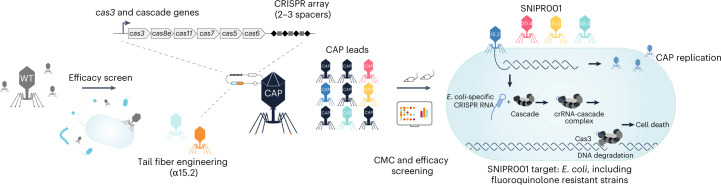
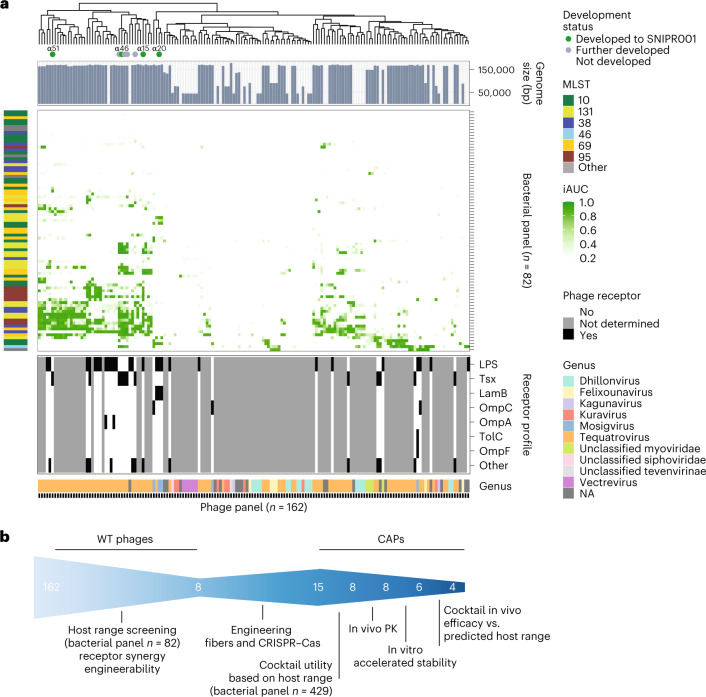
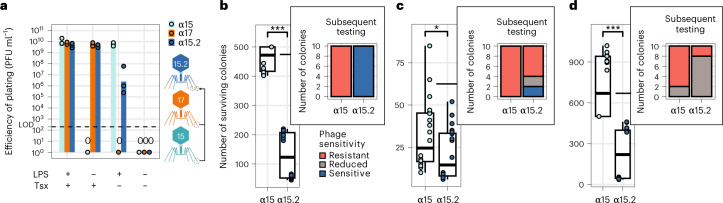
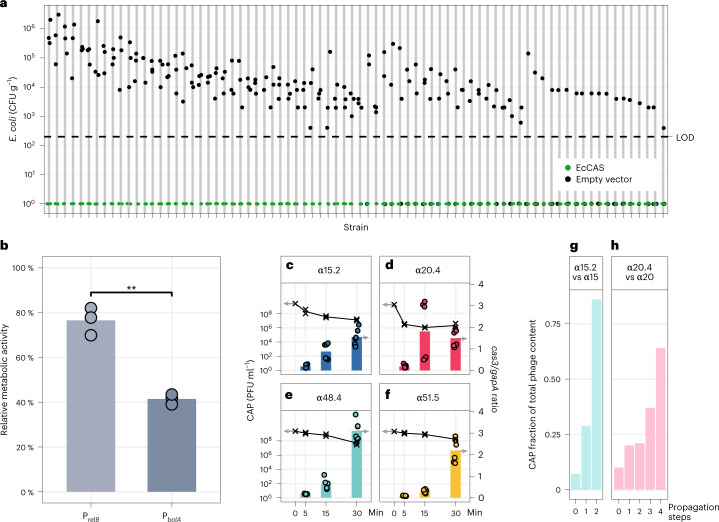
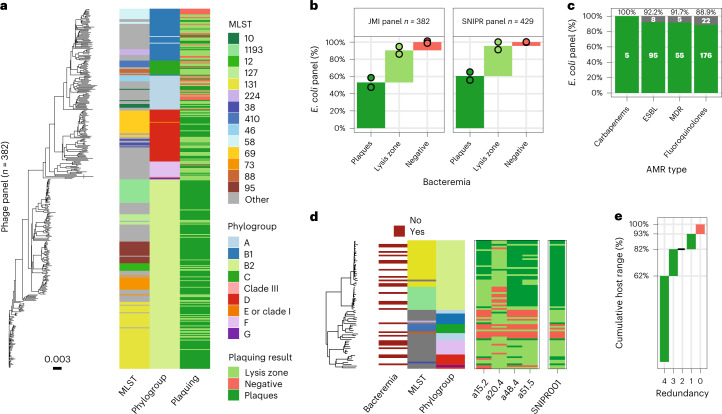
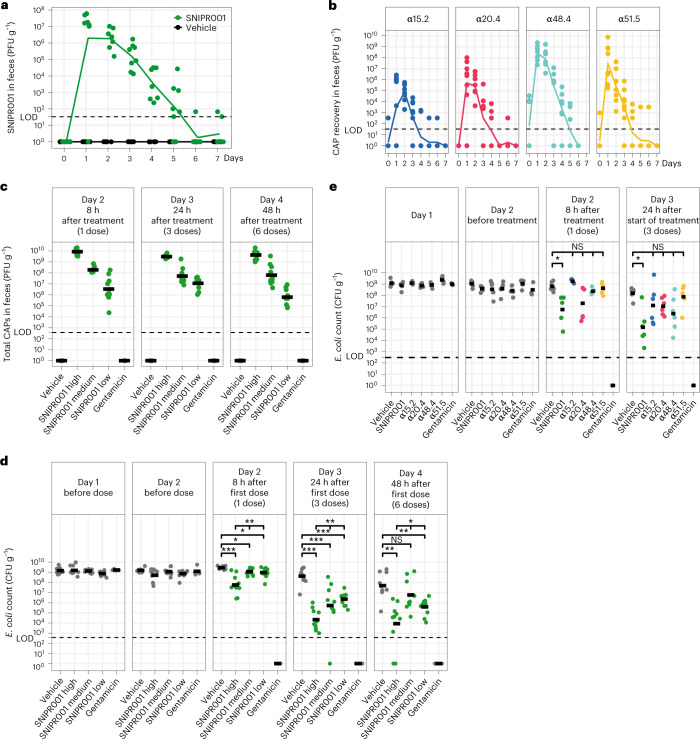
Antibiotic treatments have detrimental effects on the microbiome and lead to antibiotic resistance. To develop a phage therapy against a diverse range of clinically relevant Escherichia coli , we screened a library of 162 wild-type (WT) phages, identifying eight phages with broad coverage of E. coli , complementary binding to bacterial surface receptors, and the capability to stably carry inserted cargo. Selected phages were engineered with tail fibers and CRISPR–Cas machinery to specifically target E. coli . We show that engineered phages target bacteria in biofilms, reduce the emergence of phage-tolerant E. coli and out-compete their ancestral WT phages in coculture experiments. A combination of the four most complementary bacteriophages, called SNIPR001, is well tolerated in both mouse models and minipigs and reduces E. coli load in the mouse gut better than its constituent components separately. SNIPR001 is in clinical development to selectively kill E. coli , which may cause fatal infections in hematological cancer patients.
Overview
The claims and statistics of this paper haven’t been checked yet.
Run the check — free, no account needed. It reads the open-access text and checks the sources it cites.
Integrity signals
Registry
Cites
Statistics
Figures
Verification
Claims the paper makes
The claims and statistics of this paper haven’t been checked yet.
Run the check — free, no account needed. It reads the open-access text and checks the sources it cites.
Claims other papers make about this one
Each is checked against this paper’s own text: does it say what the citing paper says it does?
The source backs part of the claim, not all of it — or backs it for a different population, condition or comparison.
In the citing paper
“Overall, these studies have established encouraging safety profiles and provided preliminary pharmacokinetic and immunogenicity data in immunocompromised populations, laying an important foundation for oncology-directed applications.”
From Phage therapy in oncology: opportunities for cancer prevention and treatment (2026) · cites this paper as [129]
Experimental — accuracy not yet measuredThe source backs part of the claim, not all of it — or backs it for a different population, condition or comparison.
In the citing paper
“SNIPR001 was recovered from fecal samples in a dose-dependent manner and corresponded with a numerical reduction in gut E. coli levels, demonstrating clinical proof of concept for this targeted approach.”
From Phage therapy in oncology: opportunities for cancer prevention and treatment (2026) · cites this paper as [129]
Experimental — accuracy not yet measuredThe source backs part of the claim, not all of it — or backs it for a different population, condition or comparison.
In the citing paper
“In a Phase 1 randomized, double-blind, placebo-controlled, multiple-dose, dose-escalation study trial (NCT05277350i) involving 36 healthy volunteers across three dose levels, 7-day oral administration of SNIPR001 was well tolerated, with only mild to moderate adverse events and no treatment-related discontinuations.”
From Phage therapy in oncology: opportunities for cancer prevention and treatment (2026) · cites this paper as [129]
Experimental — accuracy not yet measuredThe cited source says what the claim attributes to it.
In the citing paper
“SNIPR001 was recovered from fecal samples in a dose-dependent manner and corresponded with a numerical reduction in gut E. coli levels, demonstrating clinical proof of concept for this targeted approach.”
From Phage therapy in oncology: opportunities for cancer prevention and treatment (2026) · cites this paper as [129]
The cited source says what the claim attributes to it.
In the citing paper
“Building on this foundation, SNIPR001 represents a next-generation, orally administered CRISPR–phage therapeutic designed to selectively reduce gut colonization by E. coli, a major source of bloodstream infections in patients with hematological malignancies [129]”
From Phage therapy in oncology: opportunities for cancer prevention and treatment (2026) · cites this paper as [129]
The cited source says what the claim attributes to it.
In the citing paper
“SNIPR001 was recovered from fecal samples in a dose-dependent manner and corresponded with a numerical reduction in gut E. coli levels, demonstrating clinical proof of concept for this targeted approach.”
From Phage therapy in oncology: opportunities for cancer prevention and treatment (2026) · cites this paper as [129]
Self-check
Percentages, sums and reported differences re-computed from the paper’s own numbers.
The self-check needs the paper’s full text.
Citations
Cites
Trimmomatic: a flexible trimmer for Illumina sequence data
Bolger, A. M., Lohse, M., & Usadel, B. (2014) · Bioinformatics · doi:10.1093/bioinformatics/btu170 · Cited by 65,548
SPAdes: A New Genome Assembly Algorithm and Its Applications to Single-Cell Sequencing
Bankevich, A., Nurk, S., Antipov, D., Gurevich, A. A., Dvorkin, M. V., Kulikov, A. S., Lesin, V. M., Nikolenko, S., Pham, S., Prjibelski, A. D., et al. (2012) · Journal of Computational Biology · doi:10.1089/cmb.2012.0021 · Cited by 26,312
Global burden of bacterial antimicrobial resistance in 2019: a systematic analysis
Murray, C. J. L., Ikuta, K. S., Sharara, F., Swetschinski, L., Robles Aguilar, G., Gray, A., Han, C., Bisignano, C., Rao, P., Wool, E., et al. (2022) · The Lancet · doi:10.1016/s0140-6736(21)02724-0 · Cited by 16,316
Mash: fast genome and metagenome distance estimation using MinHash
Ondov, B. D., Treangen, T. J., Melsted, P., Mallonee, A. B., Bergman, N. H., Koren, S., & Phillippy, A. M. (2016) · Genome biology · doi:10.1186/s13059-016-0997-x · Cited by 3,373
Small CRISPR RNAs Guide Antiviral Defense in Prokaryotes
Brouns, S. J. J., Jore, M. M., Lundgren, M., Westra, E. R., Slijkhuis, R. J. H., Snijders, A. P. L., Dickman, M. J., Makarova, K. S., Koonin, E. V., & van der Oost, J. (2008) · Science · doi:10.1126/science.1159689 · Cited by 2,460
Multilocus Sequence Typing of Total-Genome-Sequenced Bacteria
Larsen, M. V., Cosentino, S., Rasmussen, S., Friis, C., Hasman, H., Marvig, R. L., Jelsbak, L., Sicheritz‐Pontén, T., Ussery, D. W., Aarestrup, F. M., et al. (2012) · Journal of Clinical Microbiology · doi:10.1128/jcm.06094-11 · Cited by 2,333
Lutz, R. (1997) · Nucleic Acids Research · doi:10.1093/nar/25.6.1203 · Cited by 1,694
Dedrick, R. M., Guerrero-Bustamante, C. A., Garlena, R. A., Russell, D. A., Ford, K., Harris, K., Gilmour, K. C., Soothill, J. S., Jacobs‐Sera, D., Schooley, R. T., et al. (2019) · Nature Medicine · doi:10.1038/s41591-019-0437-z · Cited by 1,418
Using ggtree to Visualize Data on Tree‐Like Structures
Yu, G. (2020) · Current Protocols in Bioinformatics · doi:10.1002/cpbi.96 · Cited by 1,388
Schooley, R. T., Biswas, B., Gill, J. J., Hernandez-Morales, A., Lancaster, J., Lessor, L., Barr, J. J., Reed, S. L., Rohwer, F., Benler, S., et al. (2017) · Antimicrobial Agents and Chemotherapy · doi:10.1128/aac.00954-17 · Cited by 1,254
Cited by
Sorted by citations
Items 201–282 of 282
Defensomes, counter-defensomes, and the remodeling of microbial communities
Kavagutti, V., Beavogui, A., Wiart, N., Wincker, P., & Oliveira, P. H. (2026) · PNAS Nexus · doi:10.1093/pnasnexus/pgag073 · Cited by 1
Khalid, M., & Altabbal, M. (2026) · Student Research Conference on Applied Computing (SRC) · doi:10.1109/src70627.2026.11550505 · Cited by 1
Luo, X., Wu, Y., Ming, Y., Wang, J., Ma, Z., Zhang, A., & Hu, S. (2026) · Frontiers in Microbiology · doi:10.3389/fmicb.2026.1868543 · Cited by 1
Omosigho, P. O., Famuwagun, T. S., & Okesanya, O. J. (2026) · Exploration of Medicine · doi:10.37349/emed.2026.1001422 · Cited by 1
Li, J., Zhang, H., Yu, H., Liang, P., Xu, S., Zhong, L., Fu, X., Zhang, Y., & Wang, Y. (2026) · Frontiers in Microbiology · doi:10.3389/fmicb.2026.1851321 · Cited by 1
Nanomedicine for biofilm associated infections: opportunities, challenges, and clinical translation
Farah, H. S., Abosaoda, M. K., Mousa, H. M., Jyothi, S. R., Nayak, P. P., Janney-J, B., Singh, G., & Singh‐Chauhan, A. (2026) · Microfluidics and Nanofluidics · doi:10.1007/s10404-026-02919-7 · Cited by 1
Zhang, F., Yang, L., Wang, X., Lu, B., & Cao, B. (2026) · 中国科学通报:英文版 · doi:10.1016/j.scib.2026.08.028 · Cited by 1
Phage therapy: from basic biology to clinical application
Sinclair, H., Lin, R. C. Y., Zakour, N. L. B., Bollyky, P. L., & Iredell, J. R. (2026) · Nature Reviews Microbiology · doi:10.1038/s41579-026-01352-5 · Cited by 3
Lee, H. J., Jeong, S. H., & Lee, S. J. (2025) · The Journal of Microbiology · doi:10.71150/jm.2501012 · Cited by 1
Moghadam, M. T., Shahkolahi, S., Hashim, I. A., Asgharihajimahalleh, S., Khodadadi, G., Moghbeli, F., Sabzi, S., & Shahbazi, S. (2025) · Journal of Basic Microbiology · doi:10.1002/jobm.70078 · Cited by 1
Williams, J., Nezis, I. P., & Sagona, A. P. (2026) · Current Opinion in Microbiology · doi:10.1016/j.mib.2025.102706 · Cited by 1
Yi, T., Dong, Z., & Leung, S. S. Y. (2026) · Pharmaceutics · doi:10.3390/pharmaceutics18030318 · Cited by 1
Wang, R., Zhan, M., Wang, Q., Xia, N., Chen, T., Gong, S., Zhang, Q., Liu, L., Zhang, Y., & Zeng, R. (2026) · BMC Veterinary Research · doi:10.1186/s12917-026-05451-6 · Cited by 1
Dams, D., Łątka, A., Hulsens, M., Drulis‐Kawa, Z., & Briers, Y. (2026) · Journal of Biological Engineering · doi:10.1186/s13036-026-00724-y · Cited by 1
Targeting Foodborne Pathogens with Bacteriophages: Mechanisms, Applications, and Resistance
Edison, L. K., & Kariyawasam, S. (2026) · Pathogens · doi:10.3390/pathogens15070711 · Cited by 1
Wang, P., Hsiung, A., Fraise, C., Seres, G., Chong, L. M., You, K., Moh, A., Su, C., Sapanel, Y., Zhuang, I., et al. (2026) · PNAS Nexus · doi:10.1093/pnasnexus/pgag273 · Cited by 1
Zhang, J., Liu, Y., Wang, Y., Zhang, W., Liu, J., & Zhang, Z. (2026) · Frontiers in Microbiology · doi:10.3389/fmicb.2026.1906882 · Cited by 1
Engineered Phage Enables Efficient Control of Gene Expression upon Infection of the Host Cell
Wei, T., Lai, W., Chen, Q., & Sun, C. (2024) · International Journal of Molecular Sciences · doi:10.3390/ijms26010250 · Cited by 1
Bacteriophage therapy in the era of bacterial resistance: future prospects
Yang, F., Zhou, C., Tan, Y., & Wu, G. (2025) · Reviews in Medical Microbiology · doi:10.1097/mrm.0000000000000424 · Cited by 1
Industry updates from the field of stem cell research and regenerative medicine in May 2023
Ilić, D., & Liović, M. (2023) · Regenerative Medicine · doi:10.2217/rme-2023-0111 · Cited by 1
Scientists edit the genes of gut bacteria in living mice
Conroy, G. (2024) · Nature · doi:10.1038/d41586-024-02238-3 · Cited by 1
Jayarajan, D., Mulavagili, S., & Vijayasimha, M. (2026) · Frontiers in Microbiology · doi:10.3389/fmicb.2026.1773181 · Cited by 1
Leitner, L., Du, J., Meile, S., Baggenstos, J., Jaggi, T., Piffaretti, P., Hunold, L., Matter, C. I., Kessler, T. M., Loesser, M. J., et al. (2023) · European Urology · doi:10.1016/s0302-2838(23)00778-9
Sequence analysis of Discoknowium, an A5 mycobacteriophage
Carline, K. B. R., Fleeharty, M. S., Fang, L., Shijo, M., Doherty, M. K., Riddick, Z. A., Royster, M. O., Stukes, A. R., Tchadi, B. V., Thomas, A. N., et al. (2023) · Microbiology Resource Announcements · doi:10.1128/mra.00920-23
Dommann, J., Keiser, J., Garneau, J. R., Gandelin, A., Casanova, C., Keller, P. M., Sayasone, S., Vonaesch, P., & Schneeberger, P. H. H. (2024) · bioRxiv (Cold Spring Harbor Laboratory) · doi:10.1101/2024.01.17.575993
TERAPIA FÁGICA: UMA ABORDAGEM INOVADORA NO TRATAMENTO DE INFECÇÕES POR BACTÉRIAS RESISTENTES
de Souza, J. C., Basilio, M. A. M., & Gonçalves, M. G. (2025) · RECIMA21 - Revista Científica Multidisciplinar · doi:10.47820/recima21.v6i2.6264
Utilizing Bacteriophages to Manage Biofilm Infections on Medical Devices: A Systematic Review
Rai, N. K., Ramesh, P. S., & Shetty, V. (2025) · Journal of Pure and Applied Microbiology · doi:10.22207/jpam.19.2.31
A live, programmable microbiota therapeutic disables virulence in gut pathogens
(2025) · Nature Biomedical Engineering · doi:10.1038/s41551-025-01452-2
Šimečková, H., Bárdy, P., Kuntová, L., Macháčová, E., Botka, T., Bíňovský, J., Houser, J., Farka, Z., Plevka, P., Pantůček, R., et al. (2025) · ACS Synthetic Biology · doi:10.1021/acssynbio.5c00387
Ding, T., Wei, F., Zhang, Q., Zheng, L., & Zhou, Z. (2025) · Microbial Pathogenesis · doi:10.1016/j.micpath.2025.108003
Research progress of compact Class 2 Cas effector proteins
Liu, B., Huang, S., & ZHENG, W. (2025) · Scientia Sinica Vitae · doi:10.1360/ssv-2025-0095
CRISPR-Cas opens a new era of antimicrobial therapy as a powerful gene editing tool
Yang, S., Jiao, X., Liu, J., Liu, Y., Wang, M., Li, S., & Qiao, J. (2025) · World Journal of Microbiology and Biotechnology · doi:10.1007/s11274-025-04591-5
Transmission thresholds for the spread of infections in healthcare facilities
Toth, D. J. A., Khader, K., Mitchell, C., & Samore, M. H. (2025) · PLoS Computational Biology · doi:10.1371/journal.pcbi.1013577
The hitchhiker’s guide to cross-species DNA delivery
Kiga, K., & Ibarra‐Chávez, R. (2025) · Trends in Microbiology · doi:10.1016/j.tim.2025.10.014
Zhao, Y., & Xin, X. (2025) · X-Disciplinarity · doi:10.63174/xdi.hkrh5552
Zhang, H., Song, Y., Liu, W., Zheng, X., An, X., Li, C., Chen, W., Wang, H., & Zhang, Y. (2025) · Synthetic and Systems Biotechnology · doi:10.1016/j.synbio.2025.11.002
Semsey, S., Søndberg, E., Røen, M., Hallström, B. M., Petersen, A. Ø., Alfastsen, L., Bosch, B. R., Wohl, B. M., Clube, J., van der Helm, E., et al. (2025) · Nucleic Acids Research · doi:10.1093/nar/gkaf1394 · Cited by 1
Self-citationFusion of a different kind: The antibody revolution
Rees, A. R. (2026) · Elsevier eBooks · doi:10.1016/b978-0-443-43876-9.00012-0
Hu, J., Ren, A., Liang, X., Yang, H., & Ma, L. (2026) · Bio-Design and Manufacturing · doi:10.1631/bdm.2500622
Esper, J. R., Mathias, J., Lankapalli, A. K., Iannetelli, T., Sands, K. M., Walsh, T. R., Toleman, M. A., & Martins, W. M. B. S. (2026) · Microbiological Research · doi:10.1016/j.micres.2026.128537
Olowu, B. I., Azeez, A. O., Adeyemi, S. O., Idris, N. O., Ukauwa, C. B., Zakariya, M. E., Oluwatomisin, S., & Tinubu, O. B. (2026) · Microbes & Immunity · doi:10.36922/mi026070021
Syrym, N. S., Yespembetov, B., Kokanov, S. K., Куралбаевич, Н. А., Bulatov, Y. A., Abdimukhtar, A. R., Toleukhan, A. T., Serikbay, Y., Terebay, A. A., Anarbekova, A. M., et al. (2026) · Pathogens · doi:10.3390/pathogens15060559
Nguyen, T. D., Gould, C. E., Sanborn, J. T., Tutin, J., Pan, Y., Gao, H., Ruszaj, D. M., Angevine, D. J., Bussa, J., Atakora, D., et al. (2026) · bioRxiv (Cold Spring Harbor Laboratory) · doi:10.64898/2026.05.27.728049
Bian, X., Huang, Z., Xu, C., Yue, J., & Wu, Y. (2026) · Journal of Materials Chemistry B · doi:10.1039/d6tb00650g
Guo, Q., Shen, Q., Zhao, L., Zhou, X., Yan, S., Xue, Y., & Zheng, Y. (2026) · Biotechnology and Bioengineering · doi:10.1002/bit.70281
Gut microbiota as a modifier of acute pancreatitis course: therapeutic perspectives
Chooklin, S., & Chuklin, S. S. (2026) · EMERGENCY MEDICINE · doi:10.22141/2224-0586.22.4.2026.2031
Artificial intelligence and CRISPR-based approaches for targeted delivery of bacteriophages
Pradhan, R. R., Pati, S., & Samal, S. K. (2026) · International Journal of Pharmaceutics · doi:10.1016/j.ijpharm.2026.127155
Al-Mutawa, M., Al-Otaibi, K., & Carter, J. (2026) · Entomology and Applied Science Letters · doi:10.51847/hjmizsr7fx
Dhahir, A. M. (2026) · Center of Medicine · doi:10.65591/com-136-2026
Gençoğlu, H. S., Aydemir, E., & Ayaz, F. (2026) · Antonie van Leeuwenhoek · doi:10.1007/s10482-026-02373-z · Cited by 1
Singh, A., Kumar, A., Sharma, S., Ruokolainen, J., Kesari, K. K., & Kashyap, B. K. (2026) · Environmental Technology & Innovation · doi:10.1016/j.eti.2026.105129
Approaching the post-antibiotic era: phage therapy current practices and future horizons
Stellfox, M. E., Massey, J., Kramer, K. H., Shields, R. K., Urish, K. L., Haidar, G., & Tyne, D. V. (2026) · mBio · doi:10.1128/mbio.03254-25
Gomes, S. R. M., de Souza, H. C. A., Portes, A. B., Conte‐Júnior, C. A., & Panzenhagen, P. (2026) · Frontiers in Nutrition · doi:10.3389/fnut.2026.1897467
Putting Evolution to Work: Host Range Alteration for Phage Therapy
Stanchek, R., & Hyman, P. (2026) · Viruses · doi:10.3390/v18080871
First-in-Human Adjunctive Bacteriophage Therapy for Malakoplakia
Aslam, S., Brubaker, A. L., Shah, M. M., Martin, T., Mandt, T., Windham-Herman, A.-M., Zhang, H., Bryde, T., Gençay, Y. E., Gram, A., et al. (2026) · Clinical Infectious Diseases · doi:10.1093/cid/ciag446
Self-citationNutrients as signals that spatially organize plant–microbe interactions
Song, S., Pai, H., Uchida, K., & Nobori, T. (2026) · Current Opinion in Plant Biology · doi:10.1016/j.pbi.2026.102939
Cristian, R.-E., Vrâncianu, C. O., Constantin, M., Păun, M., Milea, E. C., Malaescu, D., & Chifiriuc, M. C. (2026) · Gut Microbes · doi:10.1080/19490976.2026.2722482
Bacteriophages as emerging modulators of antitumor immunity in the tumor microenvironment
Chen, X., Zhang, J., Gao, F., & Du, H. (2026) · Microbiological Research · doi:10.1016/j.micres.2026.128700
Akhtar, M. S., & Amin, A. (2026) · Functional & Integrative Genomics · doi:10.1007/s10142-026-02026-4
Bian, Y., Lou, J., Zhang, H., Xu, H., Zhang, L., & Liu, Y. (2026) · Veterinary Microbiology · doi:10.1016/j.vetmic.2026.111209
Recent Advances in CRISPR/Cas Technologies for Biological Discovery, Therapeutics, and Diagnostics
Kim, M., Do, H. S., Jang, H. Y., Lee, K. E., & Lee, S. J. (2026) · Biomolecules · doi:10.3390/biom16091268
Microbiome-Based Therapies: Phage Intervention
Hadi, J. L., Thaqi, A., Ammann, J., Mirzaei, M. K., & Deng, L. (2026) · Springer eBooks · doi:10.1007/978-3-032-26410-7_23
Lu, J., Xuan, M., Yu, L., Xie, Z., Chu, Q., Wei, S., Wang, T., Xue, C., & Li, L. (2026) · MedComm · doi:10.1002/mco2.70994
Hansen, M. K., & Østergaard, L. (2026) · Antibiotics · doi:10.3390/antibiotics15090899
Bacteriophages in humans: From discovery and mechanisms to therapeutic promise in combating disease
Yuan, X., Li, N., Zhu, S., & Zuo, T. (2026) · Chinese Medical Journal · doi:10.1097/cm9.0000000000004296
Guo, H., Zhang, C., Wang, R., Yang, Y., Wang, G., Cui, S., Lu, W., Yang, B., Lyu, X., Tian, P., et al. (2026) · Gut Microbes · doi:10.1080/19490976.2026.2728330
Bacteriophages: perspectives in the personalised therapy of the diseases caused by bacterial agents
Vlassov, V. V., Витальевна, М. В., Константинович, Б. И., & Викторовна, Т. Н. (2026) · Russian Journal for Personalized Medicine · doi:10.18705/2782-3806-2026-6-4-274-281
Kumar, M., Singh, P., Almohannadi, N., & Khodor, S. A. (2026) · Frontiers in Microbiology · doi:10.3389/fmicb.2026.1943873
Li, T., Pang, T. C., Guo, L., Dong, C., & Chang, Y. (2026) · Advanced Clinical Engineering · doi:10.2738/ace.2026.0012
A bacteriophage split DNA polymerase incorporates a sliding clamp-derived processivity subunitPreprint
Basu, D., Min, R. K., Inlow, K., Pogliano, J., Villa, E., & Corbett, K. D. (2026) · bioRxiv (Cold Spring Harbor Laboratory) · doi:10.64898/2026.09.30.755723
Bhatti, M., Thalib, H. I., Tayyebah, A., Zobairi, A., Dahan, N., & Hassan, F. E. (2026) · Frontiers in Immunology · doi:10.3389/fimmu.2026.1889115
Engineered bacteriophages for bacterial control and detection: From genome design to translation
Kim, J. (2026) · Microbiological Research · doi:10.1016/j.micres.2026.128754
Nano Delivery Systems for In Vivo CRISPR/Cas-Based Gene Therapy: From Vectors to Clinical Outcomes
Chen, R., Zhou, H., Wu, Q., & Gong, C. (2026) · ACS Nano · doi:10.1021/acsnano.6c12154
Bacteriophages at the Renal Allograft–Infection Interface: Where We Are and Where We Are Headed
Chancharoenthana, W., Kamolratanakul, S., Traitanon, O., Leelahavanichkul, A., & Tasanarong, A. (2026) · PHAGE · doi:10.1177/26416549261492864
Branda, F., Maria, F. D., Alexiev, I., Demir, A. B., Limon, Ö., Ceccarelli, G., Scarpa, F., Russo, A., Spoto, S., & Ciccozzi, M. (2026) · Microorganisms · doi:10.3390/microorganisms14102308
The global patent landscape of CRISPR–Cas applications in medicine
Yu, Y., Zhang, Y., Xu, Y., Wen, C., Li, L., & Yu, T. (2026) · Nature Biotechnology · doi:10.1038/s41587-026-03337-4
Saeed, U., & Piracha, Z. Z. (2026) · Frontiers in Microbiology · doi:10.3389/fmicb.2026.1964616
Phage-Based Biofilm Control in Engineered Water Environments
Zhang, X., Ruan, C., Balcázar, J. L., Liao, J., Shen, H., Shen, Y., Alvarez, P. J. J., & Yu, P. (2026) · Environmental Science & Technology · doi:10.1021/acs.est.6c07569
Pradeep, A., Mathew, A. I., Koyyappurath, S., Vemula, P. K., Bhat, S. G., & Narayanan, S. (2026) · Vaccine · doi:10.1016/j.vaccine.2026.129284
Byrne, S., Collins, A. C. Z., Nolan, A. C., Wigneshweraraj, S., & Zeden, M. S. (2026) · Trends in Microbiology · doi:10.1016/j.tim.2026.10.001
CRISPR/Cas in food microbial biotechnology: from genome editing to precision microbiology
Juszczuk‐Kubiak, E., Piłka, N., Zielińska, E., & Roszko, M. Ł. (2026) · Frontiers in Microbiology · doi:10.3389/fmicb.2026.1996037
Shamsuzzaman, M., Konika, T. A., Hasan, M. N., Ahamed, S., Kim, S., Choi, Y.-J., & Kim, J. (2026) · Bacteriophage · doi:10.1016/j.phage.2026.100018
Metadata
- Authors
- Gencay, Y. E., Jasinskytė, D., Robert, C., Semsey, S., Martínez, V., Petersen, A. Ø., Brunner, K., de Santiago Torio, A., Salazar, A., Turcu, I. C., Eriksen, M. K., Koval, L., Takos, A., Pascal, R., Schou, T. S., Bayer, L., Bryde, T., Johansen, K. C., Bak, E. G., Smrekar, F., Doyle, T. B., Satlin, M. J., Gram, A., Carvalho, J., Jessen, L., Hallström, B., Hink, J., Damholt, B., Troy, A., Grove, M., Clube, J., Grøndahl, C., Haaber, J. K., van der Helm, E., Zdravkovic, M., & Sommer, M. O. A.
- Affiliations
- JMI Laboratories (US)
- Weill Cornell Medicine (US)
- Novo Nordisk Foundation (DK)
- Corresponding author
- Sommer, Morten Otto Alexander
- ORCID
- Venue
- Nature Biotechnology
- Published
- 2023-05-04
- Volume
- 42
- Issue
- 2
- Pages
- 265-274
- ISSN
- 0733-222X (ISSN-L)
- 1087-0156
- 1546-1696
- PMC
- PMC10869271
- OpenAlex
- W4372330661
- Cited by
- 282
- References
- 63
- Citations by year
- 2026: 92 · 2025: 114 · 2024: 59 · 2023: 17
- FWCI
- 45.54
- Type
- journal article
- Language
- en
- Open access
- hybrid
- doi.org
- Locations
- Nature Biotechnology (publishedVersion, cc-by)
- PubMed Central (publishedVersion, cc-by)
- PubMed (publishedVersion)
- Technical University of Denmark, DTU Orbit (Technical University of Denmark, DTU) (submittedVersion, other-oa)
- Funders
- Wellcome Trust
- Combating Antibiotic-Resistant Bacteria Biopharmaceutical Accelerator (IDSEP160030)
- Lundbeckfonden (R77-2010-6772, R140-2013-13496)
- Novo Nordisk Fonden (NNF21OC0070455, NNF22OC0081058, NNF21OC0072832, NNF14OC0011335, NNF17OC0028232, NNF10CC1016517, NNF22OC0080975, NNF21OC0069281)
- Biomedical Advanced Research and Development Authority (IDSEP160030)
- Topics
- Life Sciences › Immunology and Microbiology › Virology › Bacteriophages and microbial interactions
- Life Sciences › Biochemistry, Genetics and Molecular Biology › Molecular Biology › CRISPR and Genetic Engineering
- Life Sciences › Biochemistry, Genetics and Molecular Biology › Genetics › Virus-based gene therapy research
- Keywords
- phage therapy, CRISPR-Cas, Escherichia coli, bacteriophages, phage engineering, biofilm, gut microbiota, antibiotic resistance, minipig model, phage cocktail
- MeSH terms
- Animals, Anti-Bacterial Agents, Bacteriophages, Escherichia coli, Humans, Swine, Swine, Miniature, Mice, CRISPR-Cas Systems
About these checks
Registry, retraction, Cites and statistics results are computed, not judged, with one exception: a printed reference that no index lists is read once by a model before it counts as a citation error. Claims are extracted by a model and kept only when their quote appears verbatim in the text; each cited source is then checked, with a model’s help, for whether it says what the claim relies on. Those verdicts can be wrong — read the claim’s quote and the cited source before relying on one.
Statistics and arithmetic are recomputed, not judged.
Confidence bands are shown only for fields calibrated on our annotated test set. None is calibrated yet, so no band is shown.
What counts as a claim ›How we measure confidence ›How we check this ›
Are you an author, or do you see a problem with this page? Request a review
