

Genotoxic effects of base and prime editing in human hematopoietic stem cells
Open accessThe DOI matches its Crossref record; 58 of the 59 references it cites were found in a registry or an index.
Abstract
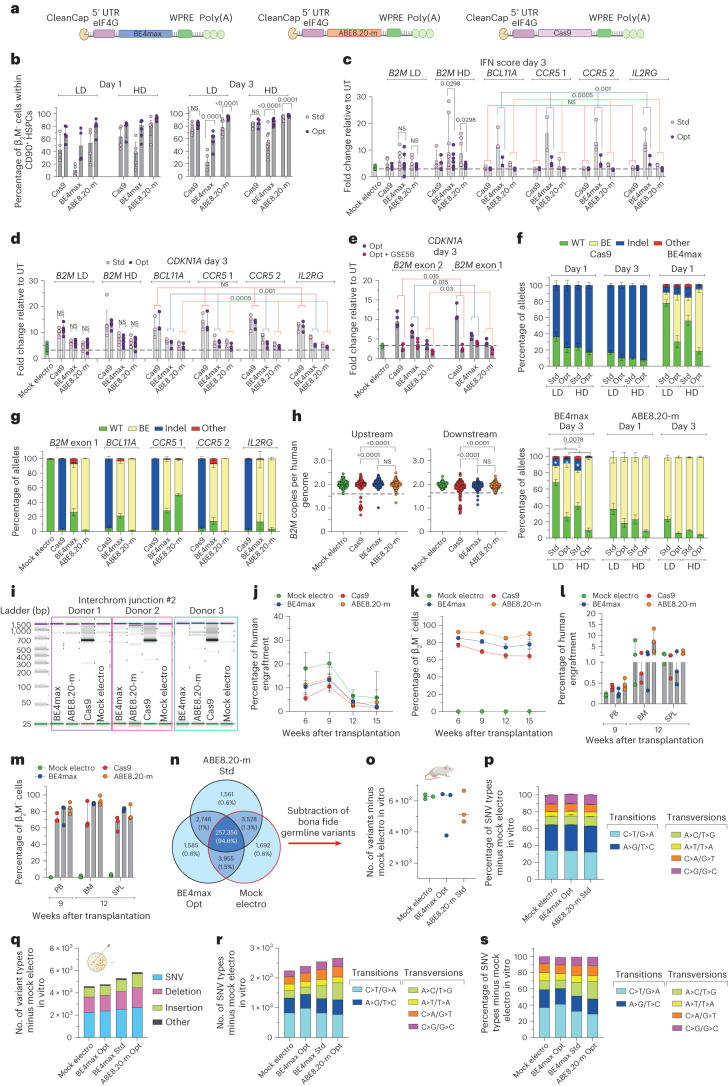
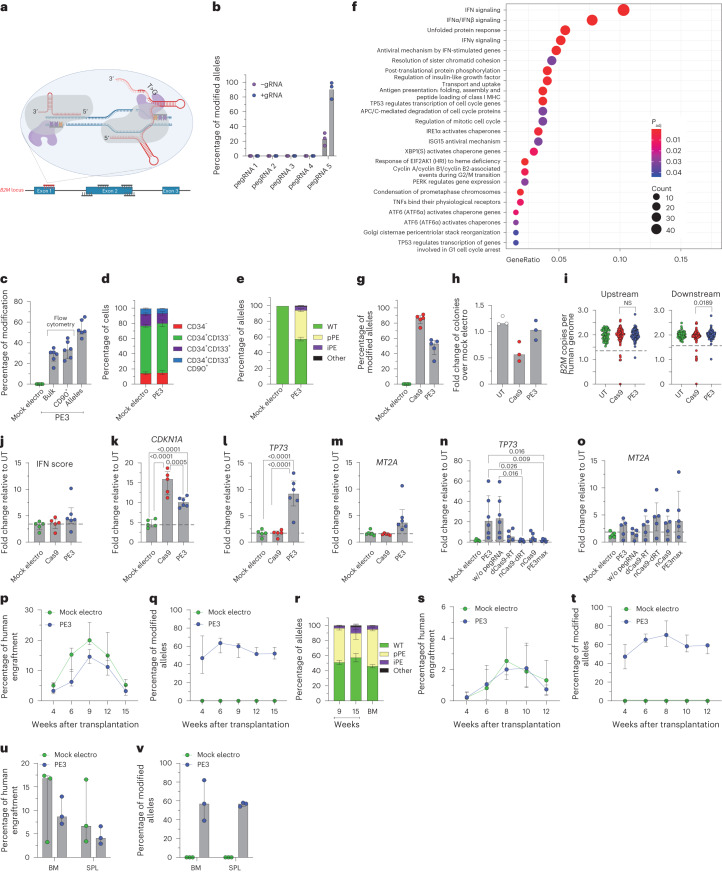
Base and prime editors (BEs and PEs) may provide more precise genetic engineering than nuclease-based approaches because they bypass the dependence on DNA double-strand breaks. However, little is known about their cellular responses and genotoxicity. Here, we compared state-of-the-art BEs and PEs and Cas9 in human hematopoietic stem and progenitor cells with respect to editing efficiency, cytotoxicity, transcriptomic changes and on-target and genome-wide genotoxicity. BEs and PEs induced detrimental transcriptional responses that reduced editing efficiency and hematopoietic repopulation in xenotransplants and also generated DNA double-strand breaks and genotoxic byproducts, including deletions and translocations, at a lower frequency than Cas9. These effects were strongest for cytidine BEs due to suboptimal inhibition of base excision repair and were mitigated by tailoring delivery timing and editor expression through optimized mRNA design. However, BEs altered the mutational landscape of hematopoietic stem and progenitor cells across the genome by increasing the load and relative proportions of nucleotide variants. These findings raise concerns about the genotoxicity of BEs and PEs and warrant further investigation in view of their clinical application.
Overview
The claims and statistics of this paper haven’t been checked yet.
Free: it reads the open-access text and checks the first 5 claims that cite a source we can check. Create a free account to check every claim.
Integrity signals
Registry
Cites
Statistics
Figures
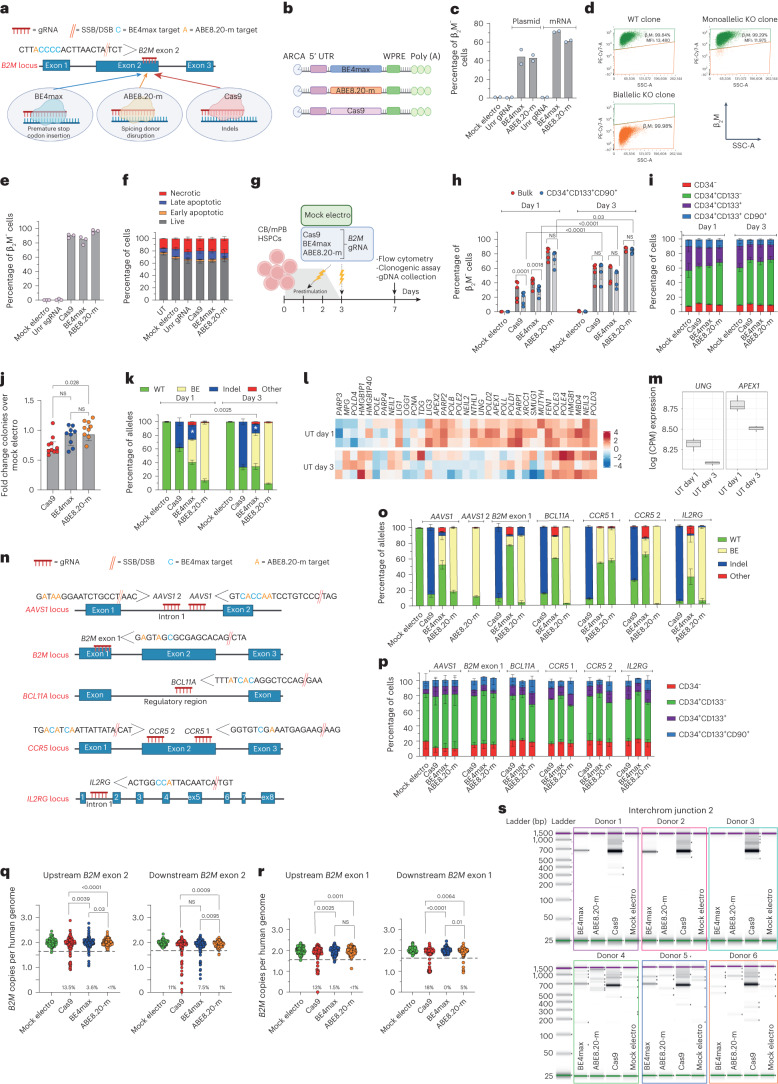
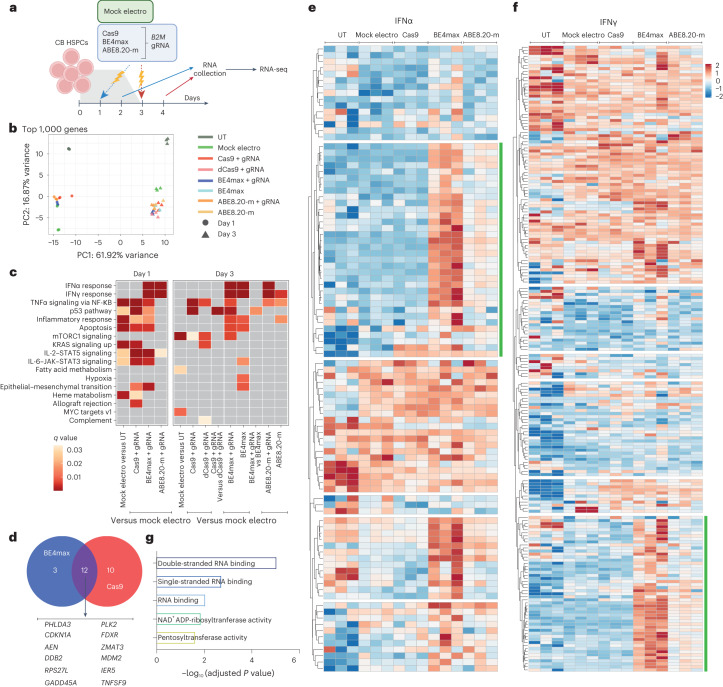
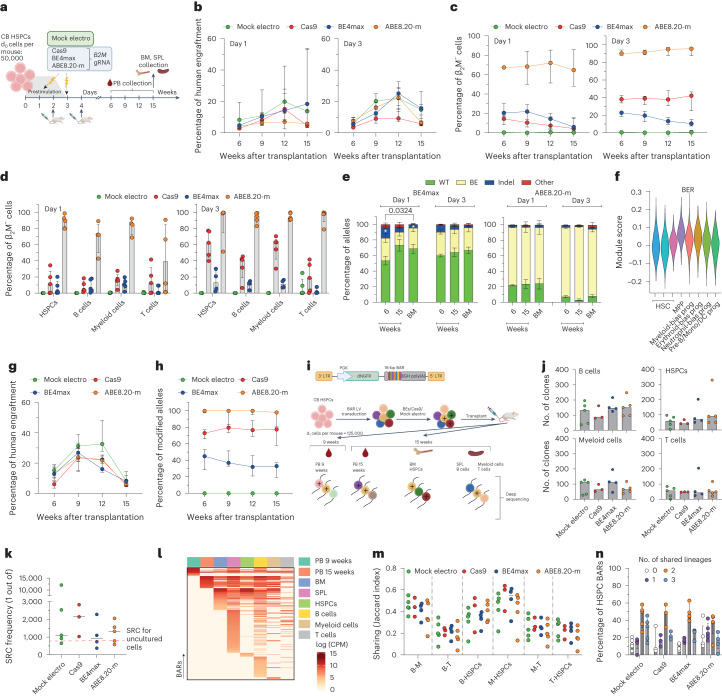
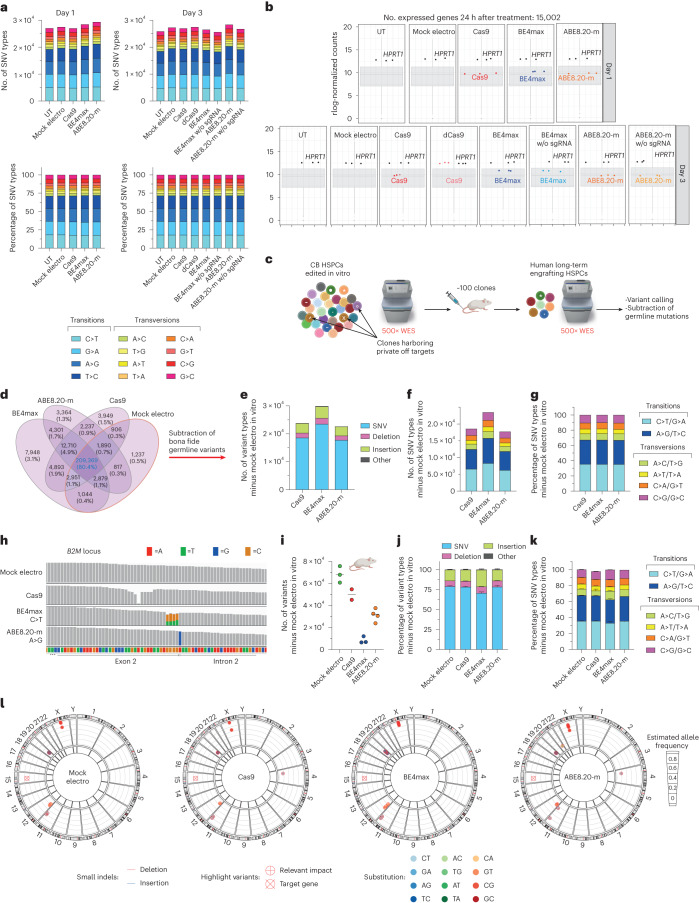
Verification
Claims the paper makes
The claims and statistics of this paper haven’t been checked yet.
Free: it reads the open-access text and checks the first 5 claims that cite a source we can check. Create a free account to check every claim.
Claims other papers make about this one
Each is checked against this paper’s own text: does it say what the citing paper says it does?
The source backs part of the claim, not all of it — or backs it for a different population, condition or comparison.
In the citing paper
“Due to ABE’s low rate of DSB induction and subsequent indel formation, the p53 DSB response is largely not activated and in the case of hematopoietic stem cells, engraftment potential is less impacted by ABE.11”
From Adenine base editor for knockout of proteins: A practical guide from design to analysis with updated MultiEditRbatch (2026) · cites this paper as [11]
Experimental — accuracy not yet measuredThe source backs part of the claim, not all of it — or backs it for a different population, condition or comparison.
In the citing paper
“These DSBs activate TP53, which reduces viability of edited cells and significantly decreases long-term engraftment potential.11”
From Adenine base editor for knockout of proteins: A practical guide from design to analysis with updated MultiEditRbatch (2026) · cites this paper as [11]
Experimental — accuracy not yet measuredThe source backs part of the claim, not all of it — or backs it for a different population, condition or comparison.
In the citing paper
“Although ABE has been reported to create DSBs, it is at a significantly lower rate than Cas9 (up to ˜3% indel rate in hematopoietic stem cells reported by Fiumara et al.).11”
From Adenine base editor for knockout of proteins: A practical guide from design to analysis with updated MultiEditRbatch (2026) · cites this paper as [11]
Experimental — accuracy not yet measuredThe source backs part of the claim, not all of it — or backs it for a different population, condition or comparison.
In the citing paper
“One of the main advantages of ABE-based gene knockout is how amenable the system is to multiplex knockouts.11,12,27”
From Adenine base editor for knockout of proteins: A practical guide from design to analysis with updated MultiEditRbatch (2026) · cites this paper as [11]
Experimental — accuracy not yet measured
Self-check
Percentages, sums and reported differences re-computed from the paper’s own numbers.
The self-check needs the paper’s full text.
Citations
Cites
Fitting Linear Mixed-Effects Models Using lme4
Bates, D., Mächler, M., Bolker, B., & Walker, S. (2015) · Journal of Statistical Software · doi:10.18637/jss.v067.i01 · Cited by 86,835
Programmable editing of a target base in genomic DNA without double-stranded DNA cleavage
Komor, A. C., Kim, Y. B., Packer, M. S., Zuris, J. A., & Liu, D. R. (2016) · Nature · doi:10.1038/nature17946 · Cited by 5,437 · cited 2×
“Thus, CBEs were further engineered by adding one or two UG inhibitor (UGI) domains from a bacteriophage protein, improving their efficiency 16 .”
Search-and-replace genome editing without double-strand breaks or donor DNA
Anzalone, A. V., Randolph, P. B., Davis, J. R., Sousa, A. A., Koblan, L. W., Levy, J. M., Chen, P. J., Wilson, C., Newby, G. A., Raguram, A., et al. (2019) · Nature · doi:10.1038/s41586-019-1711-4 · Cited by 4,767 · cited 14×
“Cas9-treated, but not PE3-treated, HSPCs showed a trend toward lower clonogenic capacity than mock-electroporated cells, indicating a stronger impact of Cas9 than PE3 on HSPCs (Fig.”
InfluentialEasy quantitative assessment of genome editing by sequence trace decomposition
Brinkman, E. K., Chen, T., Amendola, M., & van Steensel, B. (2014) · Nucleic Acids Research · doi:10.1093/nar/gku936 · Cited by 2,390 · cited 1×
“…BE and Cas9 efficiencies were measured by PCR amplification at the target locus, followed by amplicon Sanger sequencing (Eurofins Scientific), whose results were then analyzed by EditR software (http:// baseeditr.com) 48 using default parameters or by TIDE software (https:// tide.nki.nl/) 49 .”
Genome editing with CRISPR–Cas nucleases, base editors, transposases and prime editors
Anzalone, A. V., Koblan, L. W., & Liu, D. R. (2020) · Nature Biotechnology · doi:10.1038/s41587-020-0561-9 · Cited by 2,237 · cited 3×
“1b,c and Extended Data Recently, Cas nickase (nCas)-based technologies, such as base editing and prime editing, opened the possibility to generate small edits while bypassing DNA DSB and HDR engagement 13 and ensuring a more homogeneous genetic outcome at the target sites 14 .”
Kosicki, M., Tomberg, K., & Bradley, A. (2018) · Nature Biotechnology · doi:10.1038/nbt.4192 · Cited by 1,883 · cited 1×
“…of nuclease-dependent gene editing in HSPCs. Nuclease-induced DSBs at on-and off-target sites trigger the activation of a p53-dependent DNA damage response 5,6 , and their processing may sometimes lead to large deletions, trans-locations and chromothripsis, thus enhancing genotoxic risk 7–11 .”
Base editing: precision chemistry on the genome and transcriptome of living cells
Rees, H. A., & Liu, D. R. (2018) · Nature Reviews Genetics · doi:10.1038/s41576-018-0059-1 · Cited by 1,675
CRISPResso2 provides accurate and rapid genome editing sequence analysis
Clement, K., Rees, H., Canver, M. C., Gehrke, J. M., Farouni, R., Hsu, J. Y., Cole, M. A., Liu, D. R., Joung, J. K., Bauer, D. E., et al. (2019) · Nature Biotechnology · doi:10.1038/s41587-019-0032-3 · Cited by 1,660
Takata, M., Sasaki, M. S., Sonoda, E., Morrison, C., Hashimoto, M., Utsumi, H., Yamaguchi‐Iwai, Y., Shinohara, A., & Takeda, S. (1998) · The EMBO Journal · doi:10.1093/emboj/17.18.5497 · Cited by 1,229 · cited 1×
“Moreover, HDR-based editing is confined to S/G2 cell cycle phases, limiting it to the most primitive and quiescent compartment of HSPCs 12 .”
The promise and challenge of therapeutic genome editing
Doudna, J. A. (2020) · Nature · doi:10.1038/s41586-020-1978-5 · Cited by 1,126 · cited 1×
“In the last decade, CRISPR–Cas-engineered nucleases coupled with a single guide RNA (gRNA) have been widely used to introduce site-specific DNA double-strand breaks (DSBs) 2,3 .”
Improving cytidine and adenine base editors by expression optimization and ancestral reconstruction
Koblan, L. W., Doman, J. L., Wilson, C., Levy, J. M., Tay, T., Newby, G. A., Maianti, J. P., Raguram, A., & Liu, D. R. (2018) · Nature Biotechnology · doi:10.1038/nbt.4172 · Cited by 944 · cited 1×
“To compare different editors side by side, we selected a state-of-the-art version of a CBE (BE4max) 27 and an ABE (ABE8.”
Enhanced prime editing systems by manipulating cellular determinants of editing outcomes
Chen, P. J., Hussmann, J. A., Yan, J., Knipping, F., Ravisankar, P., Chen, P.-F., Chen, C., Nelson, J. W., Newby, G. A., Sahin, M., et al. (2021) · Cell · doi:10.1016/j.cell.2021.09.018 · Cited by 809
A single-cell resolution map of mouse hematopoietic stem and progenitor cell differentiation
Nestorowa, S., Hamey, F. K., Pijuan Sala, B., Diamanti, E., Shepherd, M., Laurenti, E., Wilson, N. K., Kent, D. G., & Göttgens, B. (2016) · Blood · doi:10.1182/blood-2016-05-716480 · Cited by 768
Genome-wide programmable transcriptional memory by CRISPR-based epigenome editing
Nuñez, J. K., Chen, J., Pommier, G. C., Cogan, J. Z., Replogle, J. M., Adriaens, C., Ramadoss, G. N., Shi, Q., Hung, K. L., Samelson, A. J., et al. (2021) · Cell · doi:10.1016/j.cell.2021.03.025 · Cited by 760 · cited 1×
“In the latter context, epigenome editing might eventually provide an intriguing alternative for targeted gene KO 39,40 .”
Engineered pegRNAs improve prime editing efficiency
Nelson, J. W., Randolph, P. B., Shen, S. P., Everette, K. A., Chen, P. J., Anzalone, A. V., An, M., Newby, G. A., Chen, J. C., Hsu, A., et al. (2022) · Nature Biotechnology · doi:10.1038/s41587-021-01039-7 · Cited by 727 · cited 1×
“Furthermore, other PE and pegRNA versions were recently reported to increase editing efficiency 23–26 , albeit remaining lower than what can be achieved using other editing systems. and were analyzed by a linear mixed effects (LME) model followed by post hoc analysis; NS, not significant. i ,…”
Chromothripsis as an on-target consequence of CRISPR–Cas9 genome editing
Leibowitz, M. L., Papathanasiou, S., Doerfler, P. A., Blaine, L. J., Sun, L., Yao, Y., Zhang, C.-Z., Weiss, M. J., & Pellman, D. (2021) · Nature Genetics · doi:10.1038/s41588-021-00838-7 · Cited by 583
CRISPR C-to-G base editors for inducing targeted DNA transversions in human cells
Kurt, I. C., Zhou, R., Iyer, S., Garcia, S. P., Miller, B. R., Langner, L. M., Grünewald, J., & Joung, J. K. (2021) · Nature Biotechnology · doi:10.1038/s41587-020-0609-x · Cited by 573 · cited 2×
“Of note, CBEs have also been previously reported to occasionally install transversions at the target site, with variable frequencies depending on the loci and the cell types 19,28 , despite the underlying mechanisms remaining unclear.”
EditR: A Method to Quantify Base Editing from Sanger Sequencing
Kluesner, M. G., Nedveck, D. A., Lahr, W. S., Garbe, J. R., Abrahante, J. E., Webber, B. R., & Moriarity, B. S. (2018) · The CRISPR Journal · doi:10.1089/crispr.2018.0014 · Cited by 565 · cited 1×
“…BE and Cas9 efficiencies were measured by PCR amplification at the target locus, followed by amplicon Sanger sequencing (Eurofins Scientific), whose results were then analyzed by EditR software (http:// baseeditr.com) 48 using default parameters or by TIDE software (https:// tide.nki.nl/) 49 .”
Directed evolution of adenine base editors with increased activity and therapeutic application
Gaudelli, N. M., Lam, D. K., Rees, H. A., Solá-Esteves, N. M., Barrera, L. A., Born, D. A., Edwards, A., Gehrke, J. M., Lee, S.-J., Liquori, A. J., et al. (2020) · Nature Biotechnology · doi:10.1038/s41587-020-0491-6 · Cited by 524 · cited 2×
“Following the GATK ‘Best Practice Workflows’, as reported in Gaudelli et al. 20 , duplicates were then marked using Picard (v2.”
Inheritable silencing of endogenous genes by hit-and-run targeted epigenetic editing
Amabile, A., Migliara, A., Capasso, P., Biffi, M., Cittaro, D., Naldini, L., & Lombardo, A. (2016) · Cell · doi:10.1016/j.cell.2016.09.006 · Cited by 516 · cited 1×
“In the latter context, epigenome editing might eventually provide an intriguing alternative for targeted gene KO 39,40 .”
Self-citationBeerman, I., Seita, J., Inlay, M. A., Weissman, I. L., & Rossi, D. J. (2014) · Cell Stem Cell · doi:10.1016/j.stem.2014.04.016 · Cited by 445 · cited 1×
“Similarly, the decrease in alleles carrying indels over time in the graft, when the output of long-term repopulating cells becomes prevalent, may correlate with the lower BER gene expression in primitive than in committed progenitors, a finding concordant with a previous report on mouse HSPCs 37 .”
Single-strand interruptions in replicating chromosomes cause double-strand breaks
Kuzminov, A. (2001) · Proceedings of the National Academy of Sciences · doi:10.1073/pnas.131009198 · Cited by 406
Base editing of haematopoietic stem cells rescues sickle cell disease in mice
Newby, G. A., Yen, J. S., Woodard, K. J., Mayuranathan, T., Lazzarotto, C. R., Li, Y., Sheppard-Tillman, H., Porter, S. N., Yao, Y., Mayberry, K., et al. (2021) · Nature · doi:10.1038/s41586-021-03609-w · Cited by 386 · cited 1×
“BEs have been successfully tested in different cell types, including primary HSPCs, with encouraging results in terms of efficiency and persistence of edited cells 17–21 , and an ABE is in clinical testing for the treatment of sickle cell disease (NCT05456880).”
Large deletions induced by Cas9 cleavage
Adikusuma, F., Piltz, S., Corbett, M. A., Turvey, M., McColl, S. R., Helbig, K. J., Beard, M. R., Hughes, J., Pomerantz, R. T., & Thomas, P. Q. (2018) · Nature · doi:10.1038/s41586-018-0380-z · Cited by 371
Schiroli, G., Conti, A., Ferrari, S., della Volpe, L., Jacob, A., Albano, L., Beretta, S., Calabria, A., Vavassori, V., Gasparini, P., et al. (2019) · Cell Stem Cell · doi:10.1016/j.stem.2019.02.019 · Cited by 342 · cited 1×
“…of nuclease-dependent gene editing in HSPCs. Nuclease-induced DSBs at on-and off-target sites trigger the activation of a p53-dependent DNA damage response 5,6 , and their processing may sometimes lead to large deletions, trans-locations and chromothripsis, thus enhancing genotoxic risk 7–11 .”
Self-citationTherapeutic base editing of human hematopoietic stem cells
Zeng, J., Wu, Y., Ren, C., Bonanno, J., Shen, A. H., Shea, D., Gehrke, J. M., Clement, K., Luk, K., Yao, Q., et al. (2020) · Nature Medicine · doi:10.1038/s41591-020-0790-y · Cited by 283 · cited 5×
“Indeed, the higher efficiency of ABE may reflect the absence of an endogenous antagonizing pathway in human cells, which instead is present and hinders fixation of the intended mutation both for CBEs and PEs.”
InfluentialAnalysis and minimization of cellular RNA editing by DNA adenine base editors
Rees, H. A., Wilson, C., Doman, J. L., & Liu, D. R. (2019) · Science Advances · doi:10.1126/sciadv.aax5717 · Cited by 282 · cited 1×
“Variant calling on RNA-seq base editing data was performed exploiting different tools similar to Li et al. 53 and Rees et al. 54 .”
Neugebauer, M. E., Hsu, A., Arbab, M., Krasnow, N. A., McElroy, A. N., Pandey, S., Doman, J. L., Huang, T. P., Raguram, A., Banskota, S., et al. (2023) · Nature Biotechnology · doi:10.1038/s41587-022-01533-6 · Cited by 272 · cited 2×
“However, it is possible that the higher precision of the ABE than the CBE may reflect a lower processivity and binding affinity of the former editor for eukaryotic DNA than its natural activity on bacterial RNA 32 .”
Quantitative evaluation of chromosomal rearrangements in gene-edited human stem cells by CAST-Seq
Turchiano, G., Andrieux, G., Klermund, J., Blattner, G., Pennucci, V., el Gaz, M., Monaco, G., Poddar, S., Mussolino, C., Cornu, T. I., et al. (2021) · Cell Stem Cell · doi:10.1016/j.stem.2021.02.002 · Cited by 232
A New Class of Medicines through DNA Editing
Porteus, M. H. (2019) · New England Journal of Medicine · doi:10.1056/nejmra1800729 · Cited by 229 · cited 1×
“…insertion or deletion (indels) of some nucleotides at the break site and resulting in disruption of coding or regulatory function, or (2) homology-directed recombination (HDR), which exploits an exogenous DNA repair template with homologous sequences, resulting in gene replacement or insertion 4 .”
Expansion of primitive human hematopoietic stem cells by culture in a zwitterionic hydrogel
Bai, T., Li, J., Sinclair, A., Imren, S., Merriam, F., Sun, F., O’Kelly, M. B., Nourigat, C., Jain, P., Delrow, J. J., et al. (2019) · Nature Medicine · doi:10.1038/s41591-019-0601-5 · Cited by 228 · cited 2×
“3k), which is in the range of previously reported findings from limiting dilution transplant of uncultured CB-derived HSPCs 29 .”
CRISPR prime editing with ribonucleoprotein complexes in zebrafish and primary human cells
Petri, K., Zhang, W., Ma, J., Schmidts, A., Lee, H., Horng, J. E., Kim, D. Y., Kurt, I. C., Clement, K., Hsu, J. Y., et al. (2022) · Nature Biotechnology · doi:10.1038/s41587-021-00901-y · Cited by 208 · cited 1×
“Furthermore, other PE and pegRNA versions were recently reported to increase editing efficiency 23–26 , albeit remaining lower than what can be achieved using other editing systems. and were analyzed by a linear mixed effects (LME) model followed by post hoc analysis; NS, not significant. i ,…”
The role of mismatch repair in DNA damage-induced apoptosis.
Li, G. (1999) · PubMed · Cited by 192
PrimeDesign software for rapid and simplified design of prime editing guide RNAs
Hsu, J. Y., Grünewald, J., Szalay, R., Shih, J., Anzalone, A. V., Lam, K. C., Shen, M. W., Petri, K., Liu, D. R., Joung, J. K., et al. (2021) · Nature Communications · doi:10.1038/s41467-021-21337-7 · Cited by 190 · cited 1×
“Similarly, the challenge in designing an efficient pegRNA, as reported here, highlights a potential hurdle of the current PE system that may be overcome by next-generation molecules and trained algorithms 41,42 .”
Efficient gene editing of human long-term hematopoietic stem cells validated by clonal tracking
Ferrari, S., Jacob, A., Beretta, S., Unali, G., Albano, L., Vavassori, V., Cittaro, D., Lazarevic, D., Brombin, C., Cugnata, F., et al. (2020) · Nature Biotechnology · doi:10.1038/s41587-020-0551-y · Cited by 187 · cited 3×
“…of nuclease-dependent gene editing in HSPCs. Nuclease-induced DSBs at on-and off-target sites trigger the activation of a p53-dependent DNA damage response 5,6 , and their processing may sometimes lead to large deletions, trans-locations and chromothripsis, thus enhancing genotoxic risk 7–11 .”
Self-citationPrime editing efficiency and fidelity are enhanced in the absence of mismatch repair
Ferreira da Silva, J., Oliveira, G. P., Arasa-Verge, E. A., Kagiou, C., Moretton, A., Timelthaler, G., Jiricny, J., & Loizou, J. I. (2022) · Nature Communications · doi:10.1038/s41467-022-28442-1 · Cited by 181
Predicting prime editing efficiency and product purity by deep learning
Mathis, N., Allam, A., Kissling, L., Marquart, K. F., Schmidheini, L., Solari, C., Balázs, Z., Krauthammer, M., & Schwank, G. (2023) · Nature Biotechnology · doi:10.1038/s41587-022-01613-7 · Cited by 162 · cited 1×
“Similarly, the challenge in designing an efficient pegRNA, as reported here, highlights a potential hurdle of the current PE system that may be overcome by next-generation molecules and trained algorithms 41,42 .”
Everette, K. A., Newby, G. A., Levine, R. M., Mayberry, K., Jang, Y., Mayuranathan, T., Nimmagadda, N., Dempsey, E., Li, Y., Bhoopalan, S. V., et al. (2023) · Nature Biomedical Engineering · doi:10.1038/s41551-023-01026-0 · Cited by 159
A web tool for the design of prime-editing guide RNAs
Chow, R. D., Chen, J. S., Shen, J., & Chen, S. (2020) · Nature Biomedical Engineering · doi:10.1038/s41551-020-00622-8 · Cited by 158 · cited 1×
“…editing was previously described in Gaudelli et al. 20 . pegRNAs targeting B2M were designed with pegFinder (http://peg-finder.sidichenlab.org/) 47 using the default parameters. pegRNAs were subcloned in the pU6-pegRNA-GG-acceptor using annealed oligo-nucleotides described in Supplementary…”
Improved cytosine base editors generated from TadA variants
Lam, D. K., Feliciano, P. R., Arif, A., Bohnuud, T., Fernandez, T. P., Gehrke, J. M., Grayson, P., Lee, K. D., Ortega, M. A., Sawyer, C., et al. (2023) · Nature Biotechnology · doi:10.1038/s41587-022-01611-9 · Cited by 135 · cited 1×
“Continuous engineering guided by the type of experimental findings reported here and the rationale design of next-generation editing systems may allow further performance improvement of these transformative tools 32,33 .”
Ferrari, S., Jacob, A., Cesana, D., Laugel, M., Beretta, S., Varesi, A., Unali, G., Conti, A., Canarutto, D., Albano, L., et al. (2022) · Cell stem cell · doi:10.1016/j.stem.2022.09.001 · Cited by 133 · cited 1×
“1b,c and Extended Data Recently, Cas nickase (nCas)-based technologies, such as base editing and prime editing, opened the possibility to generate small edits while bypassing DNA DSB and HDR engagement 13 and ensuring a more homogeneous genetic outcome at the target sites 14 .”
Self-citationScala, S., Basso-Ricci, L., Dionisio, F., Pellin, D., Giannelli, S., Salerio, F. A., Leonardelli, L., Cicalese, M. P., Ferrua, F., Aiuti, A., et al. (2018) · Nature Medicine · doi:10.1038/s41591-018-0195-3 · Cited by 115 · cited 1×
“Longitudinal analysis of PB revealed the progressive disappearance of some short-term engrafting clones and the emergence of long-term engrafting clones independent of the treatment, in line with previous observations on HDR-edited xenografts 6 and individuals treated with gene therapy 30 (Fig.”
Genetic engineering of hematopoiesis: current stage of clinical translation and future perspectives
Naldini, L. (2019) · EMBO Molecular Medicine · doi:10.15252/emmm.201809958 · Cited by 110 · cited 1×
“Gene editing represents a promising tool to engineer human hematopoietic stem/progenitor cells (HSPCs), opening the possibility to precisely correct disease-causing mutations while limiting the risk of genome-wide insertional mutagenesis and unregulated expression of the transgene 1 .”
Self-citationAl-Bahlani, S. M., Fraser, M. E., Wong, A. Y. C., Sayan, B. S., Bergeron, R., Melino, G., & Tsang, B. K. (2011) · Oncogene · doi:10.1038/onc.2011.134 · Cited by 93 · cited 1×
“These hypotheses are respectively in line with the reported induction of TP73 after pharmacological topoisomerase inhibition in eukaryotic cells 34 and with TP73-dependent apoptosis triggered by MMR 35 .”
Park, S. H., Cao, M., Pan, Y., Davis, T. H., Saxena, L., Deshmukh, H., Fu, Y., Treangen, T., Sheehan, V. A., & Bao, G. (2022) · Science Advances · doi:10.1126/sciadv.abo7676 · Cited by 93
Ahdesmäki, M. J., Gray, S. R., Johnson, J. H., & Lai, Z. (2016) · F1000Research · doi:10.12688/f1000research.10082.1 · Cited by 86 · cited 1×
“The latter operation was performed as described in Ahdesmäki et al. 55 , that is, by aligning sequences to human and mouse reference genomes and assigning each read to the organism showing the best alignment.”
Base and Prime Editing Technologies for Blood Disorders
Antoniou, P., Miccio, A., & Brusson, M. (2021) · Frontiers in Genome Editing · doi:10.3389/fgeed.2021.618406 · Cited by 84 · cited 1×
“BEs have been successfully tested in different cell types, including primary HSPCs, with encouraging results in terms of efficiency and persistence of edited cells 17–21 , and an ABE is in clinical testing for the treatment of sickle cell disease (NCT05456880).”
Mutations associated with base excision repair deficiency and methylation-induced genotoxic stress
Sobol, R. W., Watson, D. E., Nakamura, J., Yakes, F. M., Hou, E., Horton, J. K., Ladapo, J., Van Houten, B., Swenberg, J. A., Tindall, K. R., et al. (2002) · Proceedings of the National Academy of Sciences · doi:10.1073/pnas.092662499 · Cited by 83 · cited 1×
“5), which may allow incorporation of transversions and trigger the DNA damage response and apoptosis 43,44 .”
Reactivation of γ-globin expression through Cas9 or base editor to treat β-hemoglobinopathies
Wang, L., Li, L., Ma, Y., Hu, H., Li, Q., Yang, Y., Liu, W., Yin, S., Li, W., Fu, B., et al. (2020) · Cell Research · doi:10.1038/s41422-019-0267-z · Cited by 82
Schanz, S., Castor, D., Fischer, F., & Jiricny, J. (2009) · Proceedings of the National Academy of Sciences · doi:10.1073/pnas.0901726106 · Cited by 80
Structure-guided engineering of adenine base editor with minimized RNA off-targeting activity
Li, J., Yu, W., Huang, S., Wu, S., Li, L., Zhou, J., Cao, Y., Huang, X., & Qiao, Y. (2021) · Nature Communications · doi:10.1038/s41467-021-22519-z · Cited by 80 · cited 1×
“Variant calling on RNA-seq base editing data was performed exploiting different tools similar to Li et al. 53 and Rees et al. 54 .”
Genetic engineering meets hematopoietic stem cell biology for next-generation gene therapy
Ferrari, S., Valeri, E., Conti, A., Scala, S., Aprile, A., Di Micco, R., Kajaste-Rudnitski, A., Montini, E., Ferrari, G., Aiuti, A., et al. (2023) · Cell Stem Cell · doi:10.1016/j.stem.2023.04.014 · Cited by 70 · cited 1×
“In the last decade, CRISPR–Cas-engineered nucleases coupled with a single guide RNA (gRNA) have been widely used to introduce site-specific DNA double-strand breaks (DSBs) 2,3 .”
Self-citationMobilization-based chemotherapy-free engraftment of gene-edited human hematopoietic stem cells
Omer, A., Pedrazzani, G., Albano, L., Ghaus, S., Latroche, C., Manzi, M., Ferrari, S., Fiumara, M., Jacob, A., Vavassori, V., et al. (2022) · Cell · doi:10.1016/j.cell.2022.04.039 · Cited by 61 · cited 2×
“Optimized mRNAs were capped with 8 mM CleanCapAG (Trilink) 46 . mRNAs were purified using an RNeasy Plus Mini kit (Qiagen). mRNAs were denaturated and resolved by capillary electrophoresis on a 4200 TapeStation System (Agilent), according to the manufacturer’s instructions, to assess quality and…”
Self-citationSoldi, M., Sergi Sergi, L., Unali, G., Kerzel, T., Cuccovillo, I., Capasso, P., Annoni, A., Biffi, M., Rancoita, P. M. V., Cantore, A., et al. (2020) · Molecular Therapy - Methods & Clinical Development · doi:10.1016/j.omtm.2020.10.009 · Cited by 42
Self-citationDNA Mismatch Repair-dependent Activation of c-Abl/p73α/GADD45α-mediated Apoptosis
Li, L. S., Morales, J. C., Hwang, A., Wagner, M. W., & Boothman, D. A. (2008) · Journal of Biological Chemistry · doi:10.1074/jbc.m709954200 · Cited by 38 · cited 6×
“A broad mutation pattern is naturally installed by cytidine deaminases during somatic hypermutation, when MMR may interfere with BER because of excess U•G mismatches 45 .”
InfluentialBAR-Seq clonal tracking of gene-edited cells
Ferrari, S., Beretta, S., Jacob, A., Cittaro, D., Albano, L., Merelli, I., Naldini, L., & Genovese, P. (2021) · Nature Protocols · doi:10.1038/s41596-021-00529-x · Cited by 15 · cited 1×
“PCR amplicons for individual samples retrieved from sorted hematopoietic organs and lineages were generated by nested PCR using primers listed in Supplementary Table 2 and starting from >50 to 100 ng of purified gDNA, as previously described 52 .”
Self-citationCanarutto, D., Tucci, F., Gattillo, S., Zambelli, M., Calbi, V., Gentner, B., Ferrua, F., Marktel, S., Migliavacca, M., Barzaghi, F., et al. (2021) · Molecular Therapy — Methods & Clinical Development · doi:10.1016/j.omtm.2021.05.013 · Cited by 14
Self-citationGenotoxic effects of base and prime editing in human hematopoietic stem cells
Fiumara, M., Ferrari, S., & Naldini, L. (2023) · Data Archiving and Networked Services (DANS) · doi:10.17632/mnpg6dp8fh · Cited by 1
Self-citation
Cited by
Exploring treatment options in cancer: tumor treatment strategies
Liu, B., Zhou, H., Tan, L., Siu, K. T. H., & Guan, X.-Y. (2024) · Signal Transduction and Targeted Therapy · doi:10.1038/s41392-024-01856-7 · Cited by 1,201
Past, present, and future of CRISPR genome editing technologies
Pacesa, M., Pelea, O., & Jinek, M. (2024) · Cell · doi:10.1016/j.cell.2024.01.042 · Cited by 609
Durable and efficient gene silencing in vivo by hit-and-run epigenome editing
Cappelluti, M. A., Mollica Poeta, V., Valsoni, S., Quarato, P., Merlin, S., Merelli, I., & Lombardo, A. (2024) · Nature · doi:10.1038/s41586-024-07087-8 · Cited by 188
“This feature represents a safety advantage, especially when aiming at multiplex epi-silencing, as both gene editing, and to a lesser extent, base editing can cause reciprocal chromosomal translocations 33,35,36 .”
BackgroundSelf-citationRevolutionizing medicine: recent developments and future prospects in stem-cell therapy
Hussen, B. M., Taheri, M. N., Yashooa, R. K., Abdullah, G. H., Abdullah, S. R., Kheder, R. K., & Mustafa, S. A. (2024) · International Journal of Surgery · doi:10.1097/js9.0000000000002109 · Cited by 187
Lei, T., Wang, Y., Zhang, Y., Yang, Y., Cao, J., Huang, J., Chen, J., Chen, H., Zhang, J., wang, L., et al. (2024) · Leukemia · doi:10.1038/s41375-024-02444-y · Cited by 177
“However, BE can also produce low rates of indels and other detrimental transcriptional responses [50].”
Metadata
- Authors
- Fiumara, M., Ferrari, S., Omer-Javed, A., Beretta, S., Albano, L., Canarutto, D., Varesi, A., Gaddoni, C., Brombin, C., Cugnata, F., Zonari, E., Naldini, M. M., Barcella, M., Gentner, B., Merelli, I., & Naldini, L.
- Affiliations
- Vita-Salute San Raffaele University (IT)
- The San Raffaele Telethon Institute for Gene Therapy (IT)
- Corresponding author
- Ferrari, Samuele
- Naldini, Luigi
- ORCID
- Venue
- Nature Biotechnology
- Published
- 2023-09-07
- Volume
- 42
- Issue
- 6
- Pages
- 877-891
- ISSN
- 0733-222X (ISSN-L)
- 1087-0156
- 1546-1696
- PMC
- PMC11180610
- OpenAlex
- W4386495872
- Cited by
- 220
- References
- 59
- Citations by year
- 2026: 67 · 2025: 74 · 2024: 67 · 2023: 12
- FWCI
- 19.81
- Type
- journal article
- Language
- en
- Update notices
- correction (2024-01-25)
- Open access
- hybrid
- doi.org
- Licence
- cc-by
- creativecommons.org/licenses/by/4.0 (tdm)
- creativecommons.org/licenses/by/4.0 (vor)
- Locations
- Nature Biotechnology (publishedVersion, cc-by)
- PubMed Central (publishedVersion, cc-by)
- PubMed (publishedVersion)
- Archivio Istituzionale della Ricerca - Università Vita-Salute San Raffaele (submittedVersion, cc-by)
- Funders
- European Hematology Association
- European Commission (101031856)
- Horizon 2020 Framework Programme
- HORIZON EUROPE Marie Sklodowska-Curie Actions (H2020)
- Topics
- Life Sciences › Biochemistry, Genetics and Molecular Biology › Molecular Biology › CRISPR and Genetic Engineering
- Life Sciences › Biochemistry, Genetics and Molecular Biology › Molecular Biology › RNA regulation and disease
- Life Sciences › Biochemistry, Genetics and Molecular Biology › Genetics › Virus-based gene therapy research
- Keywords
- base editing, prime editing, genotoxicity, hematopoietic stem cells, hematopoietic stem and progenitor cells, Cas9, DNA double-strand breaks, base excision repair, hematopoietic repopulation, transcriptional response, genome editing safety
- MeSH terms
- Gene Editing, Animals, DNA Damage, DNA Repair, Hematopoietic Stem Cells, Humans, Mice, DNA Breaks, Double-Stranded, CRISPR-Cas Systems
About these checks
Registry, retraction, Cites and statistics results are computed, not judged, with one exception: a printed reference that no index lists is read once by a model before it counts as a citation error. Claims are extracted by a model and kept only when their quote appears verbatim in the text; each cited source is then checked, with a model’s help, for whether it says what the claim relies on. Those verdicts can be wrong — read the claim’s quote and the cited source before relying on one.
Statistics and arithmetic are recomputed, not judged.
Confidence bands are shown only for fields calibrated on our annotated test set. None is calibrated yet, so no band is shown.
What counts as a claim ›How we measure confidence ›How we check this ›
Are you an author, or do you see a problem with this page? Request a review
Data sources
Bibliographic data: Semantic Scholar, OpenAlex, Crossref.
Contains information from the Semantic Scholar Academic Graph Datasets, made available under the ODC Attribution License (ODC-BY 1.0).
Semantic Scholar’s data is described in: Kinney, R., et al. (2023). The Semantic Scholar Open Data Platform. arXiv:2301.10140.
