

Pangenome-based genome inference allows efficient and accurate genotyping across a wide spectrum of variant classes
Open accessPublished version of a preprint
The DOI matches its Crossref record; 89 of the 89 references it cites were found in a registry or an index.
Abstract
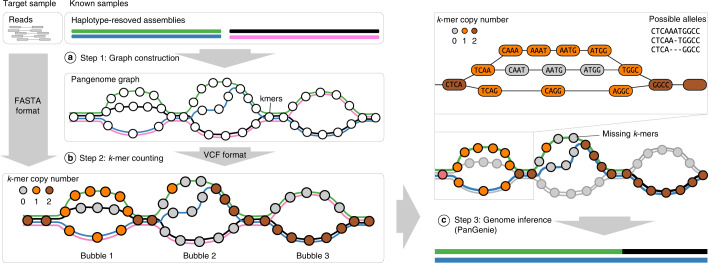
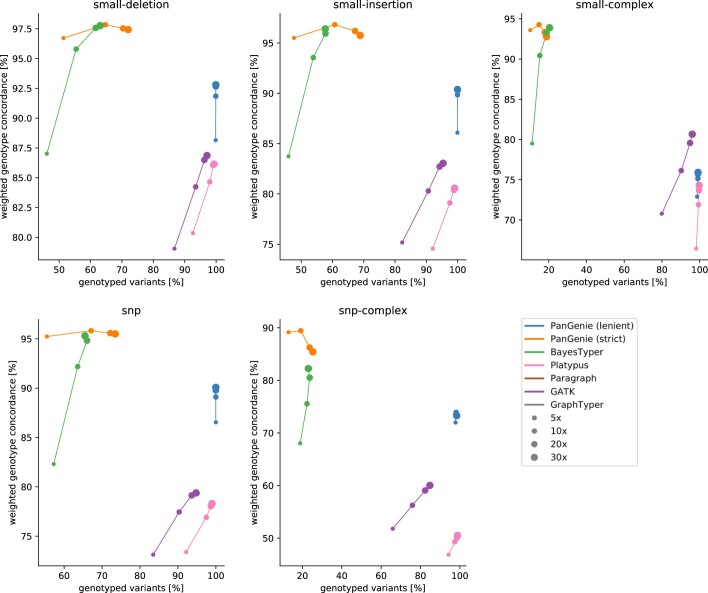
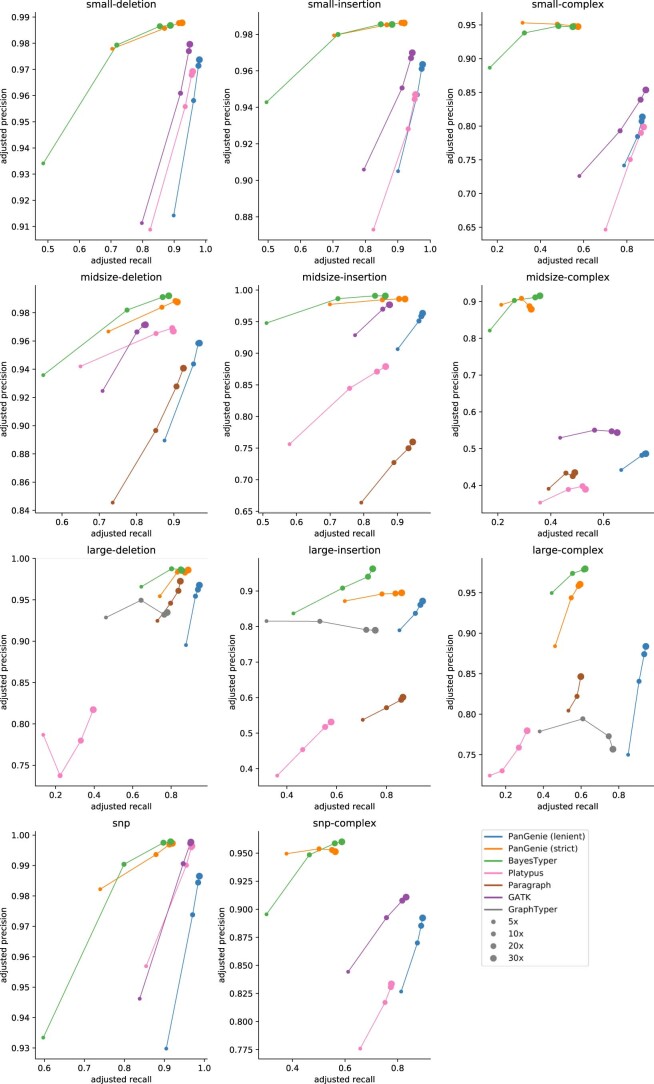
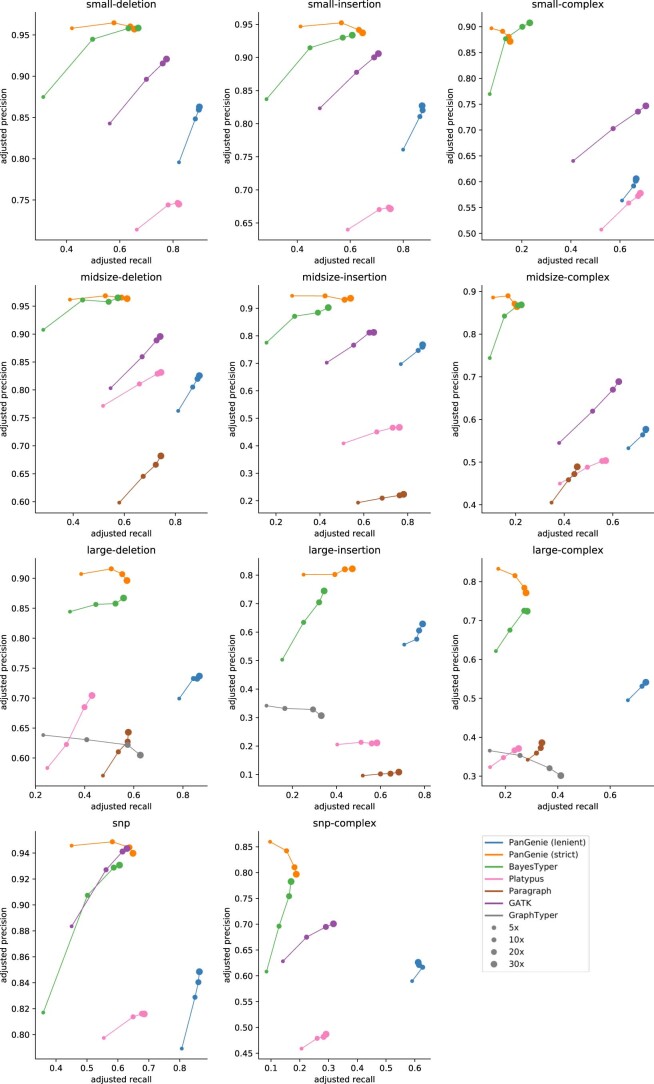
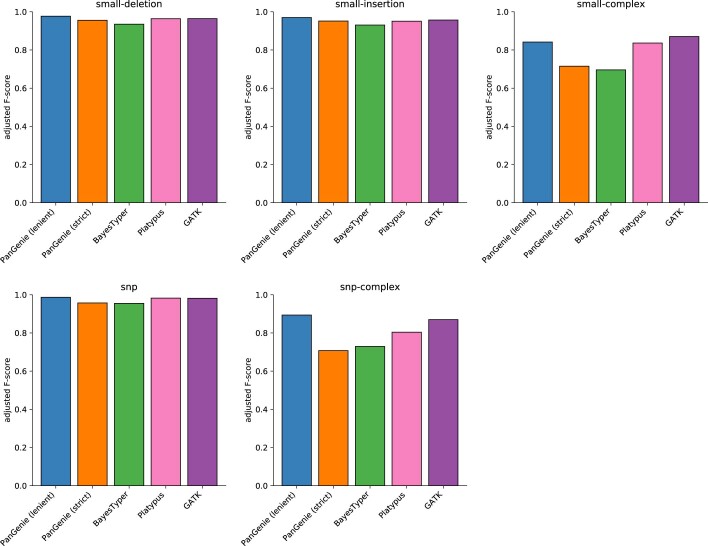
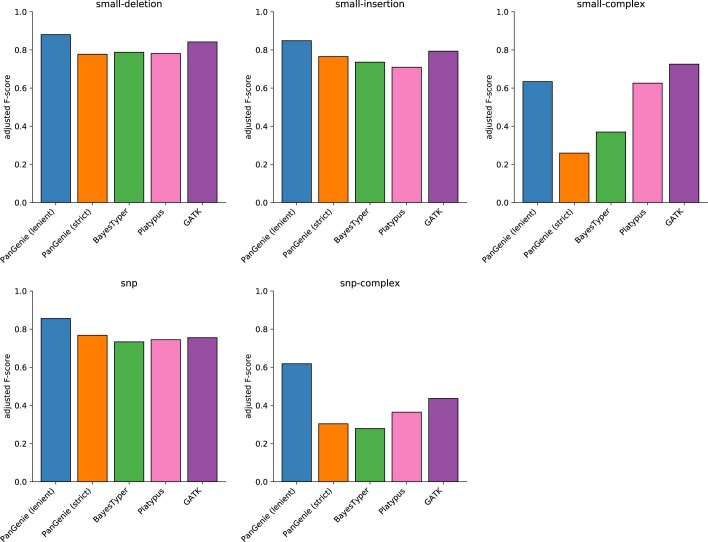
Typical genotyping workflows map reads to a reference genome before identifying genetic variants. Generating such alignments introduces reference biases and comes with substantial computational burden. Furthermore, short-read lengths limit the ability to characterize repetitive genomic regions, which are particularly challenging for fast k -mer-based genotypers. In the present study, we propose a new algorithm, PanGenie, that leverages a haplotype-resolved pangenome reference together with k -mer counts from short-read sequencing data to genotype a wide spectrum of genetic variation—a process we refer to as genome inference. Compared with mapping-based approaches, PanGenie is more than 4 times faster at 30-fold coverage and achieves better genotype concordances for almost all variant types and coverages tested. Improvements are especially pronounced for large insertions (≥50 bp) and variants in repetitive regions, enabling the inclusion of these classes of variants in genome-wide association studies. PanGenie efficiently leverages the increasing amount of haplotype-resolved assemblies to unravel the functional impact of previously inaccessible variants while being faster compared with alignment-based workflows.
Overview
The claims and statistics of this paper haven’t been checked yet.
Free: it reads the open-access text and checks the first 5 claims that cite a source we can check. Create a free account to check every claim.
Integrity signals
Registry
Cites
Statistics
Figures
Verification
Claims the paper makes
The claims and statistics of this paper haven’t been checked yet.
Free: it reads the open-access text and checks the first 5 claims that cite a source we can check. Create a free account to check every claim.
Claims other papers make about this one
Each is checked against this paper’s own text: does it say what the citing paper says it does?
The source backs part of the claim, not all of it — or backs it for a different population, condition or comparison.
In the citing paper
“In addition, the DRAGEN multigenome mapper is already incorporated for SV and CNV calling, something that is not currently possible with any other graph genome implementations because they focus primarily on genotyping variants14,73.”
From Comprehensive genome analysis and variant detection at scale using DRAGEN (2025) · cites this paper as [14]
Experimental — accuracy not yet measuredThe cited source says what the claim attributes to it.
In the citing paper
“In line with previous results5,54, we obtained high genotype concordance across all variant types and genomic contexts (Extended Data Fig. 9).”
From A draft human pangenome reference. (2023) · cites this paper as [54]
The cited source says what the claim attributes to it.
In the citing paper
“The results are shown in Fig. 3a, which shows the weighted genotype concordance 30 across different types of variants, with the Minigraph-Cactus HPRC graphs showing much higher accuracy across all SV variant types than the HGSVC.”
From Pangenome graph construction from genome alignments with Minigraph-Cactus (2024) · cites this paper as [30]
The cited source says what the claim attributes to it.
In the citing paper
“To this end, we have ensured that graphs produced with Minigraph-Cactus are compatible with most state-of-the art pangenome tools (re-engineering the tools as necessary) such as vg 3,6 , Giraffe 3,5,6 , PanGenie 30 and GraphAligner 27 .”
From Pangenome graph construction from genome alignments with Minigraph-Cactus (2024) · cites this paper as [30]
The check wasn’t confident either way, so it gives no verdict — never disputed.
In the citing paper
“Using the current set of 64 haplotypes, DRAGEN outperforms existing pangenome implementations (for example, Giraffe14) not only in accuracy (SNVs: 99.85% versus 99.74% F-measure), but also in scalability and runtime.”
From Comprehensive genome analysis and variant detection at scale using DRAGEN (2025) · cites this paper as [14]
Experimental — accuracy not yet measured
Self-check
Percentages, sums and reported differences re-computed from the paper’s own numbers.
The self-check needs the paper’s full text.
Citations
Cites
Controlling the False Discovery Rate: A Practical and Powerful Approach to Multiple Testing
Benjamini, Y., & Hochberg, Y. (1995) · Journal of the Royal Statistical Society Series B: Statistical Methodology · doi:10.1111/j.2517-6161.1995.tb02031.x · Cited by 109,482
Fast and accurate short read alignment with Burrows-Wheeler transform
Li, H., & Durbin, R. (2009) · Bioinformatics · doi:10.1093/bioinformatics/btp324 · Cited by 58,607
PLINK: a tool set for whole-genome association and population-based linkage analyses.
Purcell, S., Neale, B., Todd-Brown, K., Thomas, L., Ferreira, M. A. R., Bender, D., Maller, J., Sklar, P., de Bakker, P. I. W., Daly, M. J., et al. (2007) · The American Journal of Human Genetics · doi:10.1086/519795 · Cited by 34,089
A global reference for human genetic variation
The 1000 Genomes Project Consortium, authors, C., Auton, A., Abecasis, G. R., Steering committee, Altshuler, D. M., Durbin, R. M., Abecasis, G. R., Bentley, D. R., Chakravarti, A., et al. (2015) · Nature · doi:10.1038/nature15393 · Cited by 18,247
Self-citationThe variant call format and VCFtools
Danecek, P., Auton, A., Abecasis, G., Albers, C. A., Banks, E., DePristo, M. A., Handsaker, R. E., Lunter, G., Marth, G. T., Sherry, S. T., et al. (2011) · Bioinformatics · doi:10.1093/bioinformatics/btr330 · Cited by 16,200
Graph-based genome alignment and genotyping with HISAT2 and HISAT-genotype
Kim, D., Paggi, J. M., Park, C., Bennett, C., & Salzberg, S. L. (2019) · Nature Biotechnology · doi:10.1038/s41587-019-0201-4 · Cited by 15,022
Minimap2: Pairwise alignment for nucleotide sequences
Li, H. (2018) · Bioinformatics · doi:10.1093/bioinformatics/bty191 · Cited by 14,807 · cited 1×
“C , -DQA1 , -DQB1 and -DRB1 ) in all processed input assemblies with one exception ( HLA-DRB1 in NA19238), which was resolved by manual curation with minimap2 53 .”
BackgroundFast and accurate long-read alignment with Burrows-Wheeler transform.
Li, H., & Durbin, R. (2010) · Bioinformatics · doi:10.1093/bioinformatics/btp698 · Cited by 12,063
A framework for variation discovery and genotyping using next-generation DNA sequencing data
DePristo, M. A., Banks, E., Poplin, R., Garimella, K. V., Maguire, J. R., Hartl, C., Philippakis, A. A., del Angel, G., Rivas, M. A., Hanna, M., et al. (2011) · Nature Genetics · doi:10.1038/ng.806 · Cited by 11,456
dbSNP: the NCBI database of genetic variation
Sherry, S. T. (2001) · Nucleic Acids Research · doi:10.1093/nar/29.1.308 · Cited by 7,502
Cited by
Items 101–200 of 301
Locityper enables targeted genotyping of complex polymorphic genes
Prodanov, T., Plender, E. G., Seebohm, G., Meuth, S. G., Eichler, E. E., & Marschall, T. (2025) · Nature Genetics · doi:10.1038/s41588-025-02362-4 · Cited by 29
“Pangenie calls variants across the whole genome; consequently, it had a heavier runtime and memory footprint: at 24 threads, its pangenome indexing (executed once) and genotyping steps took 34 min and 1 h and 40 min, respectively, and consumed 60 and 37 Gb of RAM.”
InfluentialSelf-citationRomain, S. J., & Lemaitre, C. (2023) · Bioinformatics · doi:10.1093/bioinformatics/btad237 · Cited by 19
“As concerns SVs, the last generation of SV genotypers for short Illumina reads, Paragraph (Chen et al. 2019), graphTyper2 (Eggertsson et al. 2019), the latest Giraffe (Sire´n et al. 2021), and PanGenie (Ebler et al. 2022), are all based on such sequence graphs.”
Rocha, J. L., Lou, R. N., & Sudmant, P. H. (2024) · Current Opinion in Genetics & Development · doi:10.1016/j.gde.2024.102233 · Cited by 14
“Further constructing pangenome graphs from these assemblies enabled fast and accurate population-scale SV genotyping from short reads using a k-mer-based approach [20] (see also Ref.”
Impact and characterization of serial structural variations across humans and great apes
Höps, W., Rausch, T., Jendrusch, M., Ashraf, H., Audano, P. A., Austine, O., Basile, A. O., Beck, C. R., Bonder, M. J., Byrska-Bishop, M., et al. (2024) · Nature Communications · doi:10.1038/s41467-024-52027-9 · Cited by 15
Self-citationWang, J., Wu, J., Sun, Q., Wu, Q., Li, Y., Duan, S., Yang, L., Wu, W., Wang, Z., Liu, Y., et al. (2023) · BMC Genomics · doi:10.1186/s12864-023-09412-3 · Cited by 15
“However, the underrepresentation of ethnolinguistically diverse Chinese populations in human genomic research hindered the full discovery and understanding of the pattern of human genetic diversity and the function of human genetic variants [22, 23].”
BackgroundPorubskỳ, D., Höps, W., Ashraf, H., Hsieh, P., Rodríguez–Martín, B., Yilmaz, F., Ebler, J., Hallast, P., Maggiolini, F. A. M., Harvey, W. T., et al. (2021) · bioRxiv (Cold Spring Harbor Laboratory) · doi:10.1101/2021.12.20.472354 · Cited by 12
Self-citationDynamics of genome evolution in the era of pangenome analysis
Loegler, V., Friedrich, A., & Schacherer, J. (2025) · Cell Genomics · doi:10.1016/j.xgen.2025.101067 · Cited by 24
Bai, W.-Y., Liu, S., Duan, Z., Yang, J.-J., Chen, J., Hou, J., Wu, L., Li, N., Qi, T., & Yang, J. (2026) · Nature Genetics · doi:10.1038/s41588-026-02612-z · Cited by 16
“One alternative strategy is to build a graph-based pangenome from highly accurate de novo assemblies in a relatively small cohort and to map short-read data from large cohorts to the pangenome for SV genotyping 22 .”
Xie, S., Isaacs, K., Becker, G. M., & Murdoch, B. M. (2023) · Journal of Animal Science and Biotechnology/Journal of animal science and biotechnology · doi:10.1186/s40104-023-00923-3 · Cited by 13
GWAS advancements to investigate disease associations and biological mechanisms
Omidiran, O., Patel, A., Usman, S., Mhatre, I., Abdelhalim, H., DeGroat, W., Narayanan, R., Singh, K., Mendhe, D., & Ahmed, Z. (2024) · Clinical and Translational Discovery · doi:10.1002/ctd2.296 · Cited by 20
Jana, U., Rodriguez, O. L., Lees, W., Engelbrecht, E., Vanwinkle, Z., Peres, A., Gibson, W. S., Shields, K. M., Schultze, S., Dorgham, A., et al. (2025) · Cell Genomics · doi:10.1016/j.xgen.2025.101058 · Cited by 22
Self-citationEffects of spaced k-mers on alignment-free genotyping
Häntze, H., & Horton, P. (2023) · Bioinformatics · doi:10.1093/bioinformatics/btad202 · Cited by 14
“Hence, this study will concentrate on a single application, namely PanGenie (Ebler et al. 2022), which had higher genotype concordance and faster computing time than other applications.”
BackgroundMethodInfluentialYi, D., Nam, J., & Jeong, H. (2023) · Briefings in Bioinformatics · doi:10.1093/bib/bbad297 · Cited by 15
“The field of SV particularly benefits from using pangenomes, employing them increasingly for identification and genotyping [29, 30, 89, 93].”
BackgroundGalià‐Camps, C., Schell, T., Pegueroles, C., Baranski, D., Hamadou, A. B., Horaud, M., Antich, A., Turón, X., Pascual, M., Greve, C., et al. (2025) · Scientific Reports · doi:10.1038/s41598-025-24574-8 · Cited by 14
Small polymorphisms are a source of ancestral bias in structural variant breakpoint placement
Audano, P. A., & Beck, C. R. (2024) · Genome Research · doi:10.1101/gr.278203.123 · Cited by 19
“These advances enable more complete transposable element (TE) analysis, improve genotyping in short-read samples, and support new biological insights (Ebert et al. 2021; Ebler et al. 2022; Rozowsky et al. 2023).”
BackgroundSelf-citationShi, G., Dai, Y., Zhou, D., Chen, M., Zhang, J., Bi, Y., Liu, S., & Wu, Q. (2024) · Mycology: An International Journal on Fungal Biology · doi:10.1080/21501203.2024.2358868 · Cited by 14
“Before this analysis, the k -mers present in a genome were selected as reference, since the neo k -mers in other samples were carriers of the allele-specific k -mers (Ebler et al. 2022).”
Omics-Driven Strategies for Developing Saline-Smart Lentils: A Comprehensive Review
Ali, F., Zhao, Y., Ali, A., Waseem, M., Arif, M. A. R., Shah, O. U., Liao, L., & Wang, Z. (2024) · International Journal of Molecular Sciences · doi:10.3390/ijms252111360 · Cited by 12
“Pan-genome construction [277–279] is facilitated by machine learning, enabling the identification of core, dispensable, and specific genes that accelerate functional validation and uncover regulatory roles in genomics [235,280].”
BackgroundMethodZhang, W., Macias-Velasco, J. F., Zhuo, X., Belter, E. A., Tomlinson, C., Garza, J. E., Tekkey, N., Li, D., & Wang, T. (2025) · Nucleic Acids Research · doi:10.1093/nar/gkaf028 · Cited by 21
“…functional genomics analysis on genome graphs, including short-read and long-read mapping (GraphAlign [ 5 ]), transcript analysis (RPVG [ 6 ]), genotyping (PanGenie [ 7 ]), peak callings (Graph Peak Caller [ 8 ]), motif analysis (GRAFIMO [ 9 ]), and graph visualization (Sequence tube maps [ 10 ]).”
Retrotransposon insertions associated with risk of neurologic and psychiatric diseases
Ahn, H. W., Worman, Z., Lechsinska, A., Payer, L. M., Wang, T., Malik, N., Li, W., Burns, K. H., Nath, A., & Levin, H. L. (2022) · EMBO Reports · doi:10.15252/embr.202255197 · Cited by 10
“One significant opportunity that is provided by the new long read methods is their haplotype-resolved pangenome assemblies can be leveraged by new algorithms to improve genotyping of structural variants detected in short read sequence data (Ebler et al , 2022).”
Pangenome-aware DeepVariantPreprint
Asri, M., Chang, P.-C., Mier, J. C., Sirén, J., Eskandar, P., Kolesnikov, A., Cook, D. E., Brambrink, L., Hickey, G., Novak, A. M., et al. (2025) · bioRxiv (Cold Spring Harbor Laboratory) · doi:10.1101/2025.06.05.657102 · Cited by 12
Yang, Q., Sun, J., Wang, X., Wang, J., Liu, Q., Ru, J., Zhang, X., Wang, S., Hao, R., Bian, P., et al. (2025) · Nature Communications · doi:10.1038/s41467-025-57756-z · Cited by 9
K-mer analysis of long-read alignment pileups for structural variant genotyping
English, A. C., Cunial, F., Metcalf, G., Gibbs, R. A., & Sedlazeck, F. J. (2025) · Nature Communications · doi:10.1038/s41467-025-58577-w · Cited by 20
A map of blood regulatory variation in South Africans enables GWAS interpretation
Castel, S. E., Tluway, F. D., Emde, A., Smyth, N., Karim, M. A., Sengupta, D., Gray, O. A., Hendershott, M. C., von Baeyer, S. L., Burke, E. E., et al. (2025) · Nature Genetics · doi:10.1038/s41588-025-02223-0 · Cited by 14
Graph-based pangenome reveals structural variation dynamics during cucumber breeding
Zhao, X., Yu, J., Zhang, J., Sun, H., Wu, S., Zhao, J., Zhou, Y., Hammar, S. A., Lin, Y.-C., Zhang, Z., et al. (2026) · Nature Genetics · doi:10.1038/s41588-026-02506-0 · Cited by 17
The 1000 Chinese Pangenome empowers medical and population genetics
Wang, Y., Duan, Z., Chen, D., Shi, D., Ding, Y., Wang, Z., Li, B., Wang, Z., Guo, M., Yang, W., et al. (2026) · Nature · doi:10.1038/s41586-026-10315-y · Cited by 16
“To simplify the representations of multiallelic reference variant sites, we decomposed them into constituent biallelic variants by clipping shared affixes between reference and alternative alleles using a modified script of PanGenie 97 .”
A Pangenome Approach to Detect and Genotype TE Insertion Polymorphisms
Groza, C., Bourque, G., & Goubert, C. (2022) · Methods in molecular biology · doi:10.1007/978-1-0716-2883-6_5 · Cited by 8
The Effect of Methodological Considerations on the Construction of Gene-Based Plant Pan-genomes
Glick, L., & Mayrose, I. (2023) · Genome Biology and Evolution · doi:10.1093/gbe/evad121 · Cited by 11
Liu, C., Xu, H., Li, Z., Wang, Y., Zhang, J., Qiao, S., & Zhang, H. (2025) · Frontiers in Plant Science · doi:10.3389/fpls.2025.1673637 · Cited by 11
Pangenomic genotyping with the marker array
Mun, T., Vaddadi, K., & Langmead, B. (2023) · Algorithms for Molecular Biology · doi:10.1186/s13015-023-00225-3 · Cited by 10
“The third was PanGenie [16], a pangenome-based genotyper for short reads.”
BackgroundMethodQuah, F. X., Almeida, M. V., Blumer, M., Yuan, C. U., Fischer, B., See, K., Jackson, B., Zatha, R., Rusuwa, B., Turner, G. F., et al. (2024) · bioRxiv (Cold Spring Harbor Laboratory) · doi:10.1101/2024.03.28.587230 · Cited by 8
Locityper: targeted genotyping of complex polymorphic genesPreprint
Prodanov, T., Plender, E. G., Seebohm, G., Meuth, S. G., Eichler, E. E., & Marschall, T. (2024) · bioRxiv (Cold Spring Harbor Laboratory) · doi:10.1101/2024.05.03.592358 · Cited by 8
“In order to facilitate comparison to unphased Pangenie call sets, we converted Locityper–predicted locus haplotypes into phased diploid variant calls, and compared Pangenie and Locityper call sets to the ground truth variant calls, extracted from the phased whole genome assemblies for the 40 HPRC samples.”
InfluentialSelf-citationTaming large-scale genomic analyses via sparsified genomics
Alser, M., Eudine, J., & Mutlu, O. (2025) · Nature Communications · doi:10.1038/s41467-024-55762-1 · Cited by 12
“In addition, other potential applications are pangenome mapping 3,98 , quanti fi cation of transcript expression 99 , identifying de novovariationsbydirectlycomparingreadsequencesbetweenrelated individuals 62 , identifying somatic variations by directly comparing reads sequenced from normal and…”
Gao, Y., Yang, L., Kuhn, K. L., Li, W., Zanton, G. I., Bowman, M., Zhao, P., Zhou, Y., Fang, L., Cole, J. B., et al. (2025) · Journal of Advanced Research · doi:10.1016/j.jare.2025.04.014 · Cited by 10
“Additionally, the SV catalog generated from this study will significantly aid in future imputation, enhancing the value of existing short-read data by enabling reprocessing through advanced tools like PanGenie [71].”
Beyond single references: pangenome graphs and the future of genomic medicine
Nyaga, D. M., Zaied, R. E., Silander, O., Black, M. A., & O'Sullivan, J. M. (2025) · Frontiers in Genetics · doi:10.3389/fgene.2025.1679660 · Cited by 12
Linderman, M. D., Wallace, J., van der Heyde, A., Wieman, E., Brey, D., Shi, Y., Hansen, P., Shamsi, Z., Liu, J. Z., Gelb, B. D., et al. (2024) · Bioinformatics · doi:10.1093/bioinformatics/btae129 · Cited by 8
“…SV genotypers [versus SV discovery tools with integral genotyping (Cai et al. 2019, Popic et al. 2023)], with pre-trained models available (Bai et al. 2021), capable of genotyping a wide range of SVs, e.g. not just those sourced from phased assemblies (Ebler et al. 2022), in a single sample.”
Using bioinformatics to investigate functional diversity: a case study of MHC diversity in koalas
Silver, L. W., McLennan, E. A., Beaman, J. E., da Silva, K. B., Timms, P., Hogg, C. J., & Belov, K. (2024) · Immunogenetics · doi:10.1007/s00251-024-01356-6 · Cited by 7
“…the entire koala range to perform a long-read sequencing on it would be possible to identify a comprehensive reference set of structural variants for koalas which could be used to improve performance of structural variant detection tools from short-read data (Ebler et al. 2022; Nguyen et al. 2023).”
BackgroundThe big challenge for livestock genomics is to make sequence data pay
Johnsson, M. (2023) · Peer Community Journal · doi:10.24072/pcjournal.300 · Cited by 8
“However, there are methods for genotyping structural variants from short read sequence once they are known (Ebler et al., 2022; Hickey et al., 2020), suggesting that it might be possible to sequence a smaller number of animals and impute the structural variants.”
MethodPangenome genotyped structural variation improves molecular phenotype mapping in cattlePreprint
Leonard, A. S., Mapel, X. M., & Pausch, H. (2023) · bioRxiv (Cold Spring Harbor Laboratory) · doi:10.1101/2023.06.21.545879 · Cited by 7
A Unified Framework to Analyze Transposable Element Insertion Polymorphisms using Graph GenomesPreprint
Groza, C., Chen, X., Wheeler, T. J., Bourque, G., & Goubert, C. (2023) · bioRxiv (Cold Spring Harbor Laboratory) · doi:10.1101/2023.09.11.557209 · Cited by 7
Antipov, D., Rautiainen, M., Nurk, S., Walenz, B. P., Solar, S. J., Phillippy, A. M., & Koren, S. (2024) · bioRxiv (Cold Spring Harbor Laboratory) · doi:10.1101/2024.12.20.629807 · Cited by 8
Walker, K., Kalra, D., Lowdon, R. F., Chen, G., Molik, D. C., Soto, D. C., Dabbaghie, F., Khleifat, A. A., Mahmoud, M., Paulin, L. F., et al. (2022) · F1000Research · doi:10.12688/f1000research.110194.1 · Cited by 8
Increased mutation rate and interlocus gene conversion within human segmental duplicationsPreprint
Vollger, M. R., DeWitt, W. S., Dishuck, P. C., Harvey, W. T., Guitart, X., Goldberg, M. E., Rozanski, A. N., Lucas, J., Asri, M., Munson, K. M., et al. (2022) · bioRxiv (Cold Spring Harbor Laboratory) · doi:10.1101/2022.07.06.498021 · Cited by 7
“We focused on the comparison of 102 haplotype-resolved genomes generated as part of the HPRC (n=94) or other efforts (n=8) (Ebert et al. 2021; Ebler et al. 2022; IHGSC 2001; Schneider et al. 2017; Nurk et al. 2022; Liao et al. 2022) where phased genome assemblies had been assembled using high-fidelity (HiFi) long-read…”
MethodSelf-citationA global map for introgressed structural variation and selection in humans
Hsieh, P., Soisangwan, N., Gordon, D., Javidh, A., Harvey, W. T., Porubskỳ, D., Hoekzema, K., Baker, C. A., Munson, K. M., Kinipi, C., et al. (2026) · Science · doi:10.1126/science.adz7518 · Cited by 11
Self-citationMa, W., & Chaisson, M. (2025) · Nature Genetics · doi:10.1038/s41588-025-02346-4 · Cited by 9
“PAs typically range between”
Ma, Z., Xu, X., Peng, W., Zhang, T., Chen, Z., Cao, S., Zhang, F., Wang, Y., Xiao, H., Zhang, Y., et al. (2026) · Nature Communications · doi:10.1038/s41467-026-70026-w · Cited by 8
From structural pangenomes to functional panomics in plants
Cochetel, N., & Cantù, D. (2026) · Molecular Biology and Evolution · doi:10.1093/molbev/msag087 · Cited by 11
Pangenomics: A new era in the field of neurodegenerative diseases
Abondio, P., Bruno, F., Passarino, G., Montesanto, A., & Luiselli, D. (2023) · Ageing Research Reviews · doi:10.1016/j.arr.2023.102180 · Cited by 7
Building immunoglobulin and T cell receptor gene databases for the future
Watson, C. T., Collins, A. M., Ohlin, M., Heather, J., Peres, A., Lees, W., & Yaari, G. (2025) · ImmunoInformatics · doi:10.1016/j.immuno.2025.100059 · Cited by 7
Inversion polymorphism in a complete human genome assemblyPreprint
Porubskỳ, D., Harvey, W. T., Rozanski, A. N., Ebler, J., Höps, W., Ashraf, H., Hasenfeld, P., Paten, B., Sanders, A. D., Marschall, T., et al. (2022) · bioRxiv (Cold Spring Harbor Laboratory) · doi:10.1101/2022.10.06.511148 · Cited by 5
Self-citationMinimizing Reference Bias with an Impute-First ApproachPreprint
Vaddadi, K., Mun, T., & Langmead, B. (2023) · bioRxiv (Cold Spring Harbor Laboratory) · doi:10.1101/2023.11.30.568362 · Cited by 5
“Our past work also assessed the PanGenie genotyper [41], for example, which could be integrated into the personalization phase [32].”
MethodRoberts, M., & Josephs, E. B. (2025) · Evolution Letters · doi:10.1093/evlett/qraf011 · Cited by 7
“…is typically assumed to have little effect on the qualitative relationship between diversity and N e (Buffalo, 2021), but recent pangenomic studies have uncovered troves of nonreference variation across a variety of species (Ebler et al. (2022); Rice et al. (2023), reviewed in Bayer et al. (2020)).”
Lv, G., Yang, P., Guo, A., Cao, M., Li, D., Liu, Z., Wang, M., Sun, J., Ding, R., & Yu, T. (2025) · Journal of Animal Science and Biotechnology/Journal of animal science and biotechnology · doi:10.1186/s40104-025-01236-3 · Cited by 4
“…we used in the Pan method, is an accurate and efficient genotyping algorithm that improves genotyping performance by utilizing the pan-genome reference and k-mer counts of haplotype resolution, and is particularly outstanding in variant identification in large insertion and repeat regions [34].”
Du, Z., He, J.-B., Xiao, P.-X., Hu, J., Yang, N., & Jiao, W. (2025) · Molecular Plant · doi:10.1016/j.molp.2025.08.001 · Cited by 6
Yang, Z., Fan, H., Chen, Y., Li, J., Chen, M., Tan, Y. L., Guo, L., Li, J., Liu, K., & Yang, Q. (2025) · Advanced Science · doi:10.1002/advs.202512036 · Cited by 6
Yang, L., Gao, Y., Kuhn, K. L., Bhowmik, N., Li, W., Zanton, G. I., Fang, L., Cole, J. B., Li, C., Baldwin, R. L., et al. (2026) · Nature Communications · doi:10.1038/s41467-026-68807-4 · Cited by 5
Approaches to Studying Viral Pangenome Variation Graphs
Downing, T. (2026) · Genomics Proteomics & Bioinformatics · doi:10.1093/gpbjnl/qzag003 · Cited by 7
“Lastly, PanGenie uses a k-mer-based approach to support genotyping, and has high specificity in detecting mutations and sub-consensus changes in closely related specimens [53].”
Rare disease genomics in an era of human pangenomics and telomere-to-telomere genome references
Folland, C., Monahan, G., Breen, J., Johari, M., Patel, H. R., & Ravenscroft, G. (2026) · European Journal of Human Genetics · doi:10.1038/s41431-026-02125-7 · Cited by 6
“For example, Pangenie is a short-read genotyper for SNVs, indels, and SVs represented in a pangenome graph that leverages an alignment-free approach [39].”
gaftools: a toolkit for analyzing and manipulating pangenome alignments
Pani, S., Dabbaghie, F., Marschall, T., & Söylev, A. (2026) · Bioinformatics · doi:10.1093/bioinformatics/btag406 · Cited by 8
“…(Li et al. 2020, Garrison et al. 2024, Hickey et al. 2024), read alignment on graphs (Li et al. 2020, Rautiainen and Marschall 2020, Sir � en et al. 2021, Dabbaghie et al. 2023), variant discovery and genotyping (Garrison et al. 2018, Ebler et al. 2022, Prodanov et al. 2024, S € oylev et al. 2024).”
Self-citationHe, G., Liu, C., & Wang, M. (2025) · Forensic Science International · doi:10.1016/j.forsciint.2025.112370 · Cited by 4
Construction and representation of human pangenome graphsPreprint
Andreace, F., Lechat, P., Dufresne, Y., & Chikhi, R. (2023) · bioRxiv (Cold Spring Harbor Laboratory) · doi:10.1101/2023.06.02.542089 · Cited by 4
“Pangenome-based approaches have already been successfully applied to short reads mapping and genotyping [8,30].”
MethodHaplotype-aware sequence alignment to pangenome graphsPreprint
Chandra, G., Gibney, D., & Jain, C. (2023) · bioRxiv (Cold Spring Harbor Laboratory) · doi:10.1101/2023.11.15.566493 · Cited by 5
Pan-genomics of polyploid crops: from complexity to breeding
Naik, Y. D., Thudi, M., Kamal, N. M., Egan, A. N., Janga, M. R., & Puppala, N. (2026) · Frontiers in Plant Science · doi:10.3389/fpls.2026.1800432 · Cited by 4
Arshad, F., Jayaraman, S., Talenti, A., Owen, R. S., Mohsin, M. R., Mansoor, S., Asif, M., & Prendergast, J. G. D. (2025) · GigaScience · doi:10.1093/gigascience/giaf099 · Cited by 5
“The PanGenie Snakemake pipeline [ 31 ] was used for the construction of the graph genome from our 4 newly generated haplotype-resolved assemblies NIBGE_UOEAWB_hap1 (Azikheli 1), NIBGE_UOEAWB_hap2 (Azikheli 2), NIBGE_UOENRWB_hap1 (Nili-Ravi 1), and NIBGE_UOENRWB_hap2 (Nili-Ravi 2) and the 7 publicly…”
InfluentialChen, G., Shi, G., Dai, Y., Zhao, R.-L., & Wu, Q. (2024) · Journal of Fungi · doi:10.3390/jof10080575 · Cited by 4
GGTyper: genotyping complex structural variants using short-read sequencing data
Mirus, T., Lohmayer, R., Döhring, C., Halldórsson, B. V., & Kehr, B. (2024) · Bioinformatics · doi:10.1093/bioinformatics/btae391 · Cited by 4
“Finally, k -mer based genotyping approaches (Sibbesen et al. 2018, Ebler et al. 2022) count haplotype-specific k -mers in unaligned read data.”
MethodEfficient and Scalable Alignment-Free Distributed Genotyping of SNPs and Short Indels
Rocco, L. D., & Petrillo, U. F. (2025) · IEEE Transactions on Computational Biology and Bioinformatics · doi:10.1109/tcbbio.2025.3525547 · Cited by 3
“Finally we mention the currently most recent AF tool: Pan-Genie [8].”
Li, C., Bonder, M. J., Syed, S. A., HGSVC Functional Analysis Working Group, Zody, M. C., Chaisson, M., Talkowski, M. E., Marschall, T., Korbel, J. O., Eichler, E. E., et al. (2023) · bioRxiv (Cold Spring Harbor Laboratory) · doi:10.1101/2023.05.15.540856 · Cited by 3
Self-citationRoberts, M., & Josephs, E. B. (2024) · bioRxiv (Cold Spring Harbor Laboratory) · doi:10.1101/2024.05.17.594778 · Cited by 3
“However, current SNP-based methods are not perfect either and there is significant evidence that SNPs capture a biased and incomplete picture of genetic diversity.”
Jana, U., Rodriguez, O. L., Engelbrecht, E., Lees, W., Vanwinkle, Z., Peres, A., Gibson, W. S., Shields, K. M., Schultze, S., Dorgham, A., et al. (2025) · SSRN Electronic Journal · doi:10.2139/ssrn.5175047 · Cited by 3
Self-citationPVGwfa: a multi-level parallel sequence-to-graph alignment algorithm
Peng, C., Xia, Z., Tang, S., Guo, Y., Yang, C., Tang, T., & Cui, Y. (2025) · The Journal of Supercomputing · doi:10.1007/s11227-025-07184-z · Cited by 2
Structural and deleterious burdens and their effects on yield traits in foxtail millet domestication
Du, M., Zhang, F., Wang, X., Zhang, T., Yang, X., Liu, Y., Zhang, Y., Hou, T., Hang, G., Fang, X., et al. (2025) · iScience · doi:10.1016/j.isci.2025.113295 · Cited by 3
Yang, L., Wang, J., Kuhn, K., Li, W., Zanton, G. I., Neupane, M., Boschiero, C., Cole, J. B., Li, B., Li, C., et al. (2026) · Nature Communications · doi:10.1038/s41467-026-75219-x · Cited by 4
A complete genome for the common marmoset
Hebbar, P., Potapova, T., Loucks, H., Ray, K., Rodrigues, M. F., Ryabov, F., Malukiewicz, J., Yoo, D., de Lima, L. G., Haber, A., et al. (2026) · Cell · doi:10.1016/j.cell.2026.07.017 · Cited by 4
Self-citationAllele detection using k -mer-based sequencing error profiles
Ashraf, H., Ebler, J., & Marschall, T. (2023) · Bioinformatics Advances · doi:10.1093/bioadv/vbad149 · Cited by 2
“This results in reference bias (Garrison et al. 2018), and pangenomic approaches have been proposed to overcome this problem (Computational Pan-Genomics Consortium 2018, Eizenga et al. 2020, Sire´n et al. 2021, Ebler et al. 2022).”
BackgroundSelf-citationHaplotype-Aware Sequence Alignment to Pangenome Graphs
Chandra, G., Gibney, D., & Jain, C. (2024) · Lecture notes in computer science · doi:10.1007/978-1-0716-3989-4_36 · Cited by 2
Investigating mobile element variations by statistical genetics
Kojima, S. (2024) · Human Genome Variation · doi:10.1038/s41439-024-00280-1 · Cited by 3
MHConstructor: a high-throughput, haplotype-informed solution to the MHC assembly challenge
Wade, K. J., Suseno, R., Kizer, K., Williams, J. P., Boquett, J. A., Caillier, S. J., Pollock, N. R., Renschen, A., Santaniello, A., Oksenberg, J. R., et al. (2024) · Genome biology · doi:10.1186/s13059-024-03412-6 · Cited by 5
Integer Programming Framework for Pangenome-Based Genome Inference
Chandra, G., Hossen, M. H., Scholz, S., Dilthey, A., Gibney, D., & Jain, C. (2025) · Lecture notes in computer science · doi:10.1007/978-3-031-90252-9_49 · Cited by 2
Self-citationThe Great Genotyper: a graph-based method for population genotyping of small and structural variants
Shokrof, M., Abuelanin, M., Brown, C. T., & Mansour, T. A. (2025) · GigaScience · doi:10.1093/gigascience/giaf112 · Cited by 2
Jiang, T., Hu, H. K., Gao, R., Cao, S., Jiang, Z., Zhou, M., Gao, W., Zhou, S., & Wang, G. (2026) · Nature Methods · doi:10.1038/s41592-026-03219-2 · Cited by 4
“Early attempts, such as the pangenome-guided SV detection tool PanSVR 16 and several short-read-based genotypers 12,17–19 demonstrate the potential of leveraging pangenomes for accurate SV detection and genotyping.”
The price of sequencing the livestock genomics
Pszczoła, M. (2023) · Peer Community In Animal Science · doi:10.24072/pci.animsci.100192 · Cited by 1
Ultra-fast joint-genotyping with SparkGORPreprint
Guðbjartsson, H., Ísleifsson, H. Þ., Ragnarsson, B., Guimaraes, R., Wu, H., Ólafsdóttir, H., & Stefánsson, S. K. (2022) · bioRxiv (Cold Spring Harbor Laboratory) · doi:10.1101/2022.10.25.513331 · Cited by 2
“PanGenie [7] leverages a haplotype-resolved pangenome reference together with k-mer counts from short-read sequencing and allows read mapping and genotype calling to be performed efficiently in a single step, however, currently it cannot be used to genotype very rare variants that are present only in the sample, but i…”
BackgroundSmall allelic variants are a source of ancestral bias in structural variant breakpoint placementPreprint
Audano, P. A., & Beck, C. R. (2023) · bioRxiv (Cold Spring Harbor Laboratory) · doi:10.1101/2023.06.25.546295 · Cited by 4
“These advances enable more complete transposable element (TE) analysis, improve genotyping in short-read samples, and support new biological insights (Ebert et al. , 2021; Ebler et al., 2022; Rozowsky et al., 2023).”
BackgroundSelf-citationKAGE 2: Fast and accurate genotyping of structural variation using pangenomesPreprint
Grytten, I., Rand, K. D., & Sandve, G. K. (2023) · bioRxiv (Cold Spring Harbor Laboratory) · doi:10.1101/2023.12.23.572333 · Cited by 4
Li, C., Bonder, M. J., Syed, S. A., Jensen, M., HGSVC Functional Analysis Working Group, Gerstein, M., Zody, M. C., Chaisson, M., Talkowski, M. E., Marschall, T., et al. (2024) · Genome Research · doi:10.1101/gr.279419.124 · Cited by 11
“Furthermore, our analysis utilized the latest characterized SV call set from PanGenie (Ebler et al. 2022) that only contained genotyped deletions and insertions (Ebert et al. 2021).”
InfluentialSelf-citationPangenome-based genome inference using integer programming
Chandra, G., Hossen, M. H., Scholz, S., Dilthey, A., Gibney, D., & Jain, C. (2025) · Genome Research · doi:10.1101/gr.280567.125 · Cited by 3
“Pangenie and KAGE also use the long-range haplotype information available in the haplotype-resolved pangenome references.”
InfluentialSelf-citationSex-specific Genetic Regulatory Effects in ChickensPreprint
Zhang, H., Lin, B., Xi, Y., Zhu, D., Peng, C., Tu, J., Liu, H., Guan, D., Ouyang, Q., Liu, B., et al. (2026) · bioRxiv (Cold Spring Harbor Laboratory) · doi:10.64898/2026.02.26.708179 · Cited by 4
DuoHash: Fast Hashing of Spaced Seeds with Application to Spaced K-mers Counting
Gemin, L., Pizzi, C., & Comin, M. (2025) · Lecture notes in computer science · doi:10.1007/978-3-032-02489-3_3 · Cited by 1
Comprehensive detection of structural variations in long and short reads dataset of French cattle
Naji, M. M., Klopp, C., Eché, C., Franco, A. D., Birbes, C., Marcuzzo, C., Suin, A., Iampietro, C., Kuchly, C., Vernette, C., et al. (2025) · Scientific Reports · doi:10.1038/s41598-025-24477-8 · Cited by 3
Gohar, Y., Neumann, M., Hülse, L., Wind, D., Mock, J., Buchholz, K., Helle, M., Sorg, U. R., Degrandi, D., Pfeffer, K., et al. (2025) · BMC Genomics · doi:10.1186/s12864-025-12372-5 · Cited by 3
“Variant calls from Medaka and Sniffles2 were merged using bcftools concat with duplicate removal, followed by position-wise merging across samples using a modified version of the merge_vcfs.py script from PanGenie [95].”
Self-citationPangenomes, Super-Pangenomes and Beyond
Khan, A. W., Gupta, S., & Nguyen, H. T. (2026) · Sustainability Sciences in Asia and Africa · doi:10.1007/978-981-95-5109-5_3 · Cited by 1
Gelaye, Y., Musie, S., & Luo, H. (2026) · Bioscience Nanotechnology · doi:10.1186/s44331-026-00014-w · Cited by 1
Tang, S., Li, D., Lu, Y., Gao, Z., Wang, B., Liu, X., Wei, H., & Wu, J. (2026) · Biology · doi:10.3390/biology15050447 · Cited by 1
“When these choices are left implicit, technical drift can be mistaken for biological disagreement once cohorts and reference versions are combined [58,62].”
Haplotype‐Resolved Genome Assemblies for Norwegian Red Cattle
Hettasch, T. J., Kent, M., Gjuvsland, A. B., Árnyasi, M., & Våge, D. I. (2026) · Animal Genetics · doi:10.1002/age.70087 · Cited by 1
Markovski, T. (2024) · Cosmological and Astrobiological Review Journal for the Study of the Universe Life and the Natural Sciences · doi:10.65932/car-2024-1-4 · Cited by 1
Building and applying pangenome references to capture genetic diversity
Ashraf, H., Doerr, D., Ebler, J., & Marschall, T. (2026) · Nature Reviews Genetics · doi:10.1038/s41576-026-00987-7 · Cited by 4
Self-citationGray, O. A., Yerges-Armstrong, L., Castel, S. E., Brandenburg, J., Oyesola, O., Kamiza, A. B., Kalungi, A., Hendershott, M. C., Karim, M., Emde, A., et al. (2026) · Kidney International · doi:10.1016/j.kint.2026.06.038 · Cited by 2
Song, J., An, J., Xia, H., Li, W., Hu, J., Li, Q., Li, C., Shen, X., Cheng, H., Zhou, Y., et al. (2026) · Genome biology · doi:10.1186/s13059-026-04230-8 · Cited by 1
“Pan-genom-ics effectively mitigates the biases and limitations of a single reference genome [19].”
Agptools: a utility suite for editing genome assemblies
Ricemeyer, E. S., Carroll, R. A., & Warren, W. C. (2025) · Bioinformatics · doi:10.1093/bioinformatics/btaf388 · Cited by 4
Navarro, A. T. (2023) · doi:10.18174/630278 · Cited by 2
Metadata
- Authors
- Ebler, J., Ebert, P., Clarke, W. E., Rausch, T., Audano, P. A., Houwaart, T., Mao, Y., Korbel, J. O., Eichler, E. E., Zody, M. C., Dilthey, A. T., & Marschall, T.
- Affiliations
- Heinrich Heine University Düsseldorf (DE)
- New York Genome Center (US)
- European Molecular Biology Laboratory (DE)
- University of Washington (US)
- Howard Hughes Medical Institute (US)
- University of Cologne (DE)
- Corresponding author
- Marschall, Tobias
- ORCID
- Venue
- Nature Genetics
- Published
- 2022-04
- Volume
- 54
- Issue
- 4
- Pages
- 518-525
- ISSN
- 1061-4036 (ISSN-L)
- 1546-1718
- PMC
- PMC9005351
- OpenAlex
- W4223416923
- Semantic Scholar
- ac7c600024e4af795e0bc2fb9b609fe45dcf6c2d
- Cited by
- 277
- References
- 86
- Citations by year
- 2026: 57 · 2025: 62 · 2024: 66 · 2023: 57 · 2022: 27
- FWCI
- 18.78
- Type
- journal article
- Language
- en
- Open access
- hybrid
- doi.org
- Licence
- cc-by
- creativecommons.org/licenses/by/4.0 (tdm)
- creativecommons.org/licenses/by/4.0 (vor, 10 d)
- Locations
- Nature Genetics (publishedVersion, cc-by)
- bioRxiv (Cold Spring Harbor Laboratory) (acceptedVersion, cc-by-nd)
- PubMed Central (publishedVersion, cc-by)
- PubMed (publishedVersion)
- Kölner Universitäts PublikationsServer (Universität zu Köln) (publishedVersion)
- Funders
- U.S. Department of Health & Human Services | NIH | National Human Genome Research Institute (1U01HG010973, HG010169)
- Bundesministerium für Bildung und Forschung (031L0184, 031L0181A)
- Topics
- Life Sciences › Biochemistry, Genetics and Molecular Biology › Molecular Biology › Genomics and Phylogenetic Studies
- Life Sciences › Biochemistry, Genetics and Molecular Biology › Genetics › Genomic variations and chromosomal abnormalities
- Life Sciences › Biochemistry, Genetics and Molecular Biology › Genetics › Genomics and Rare Diseases
- Keywords
- genotyping, pan-genome, k-mer counts, short-read sequencing, reference bias, repetitive regions, structural variants, variant calling, haplotype-resolved genome assembly
- MeSH terms
- Algorithms, Genotype, Humans, Genetic Variation, Genome, Human, Sequence Analysis, DNA, Genomics, Genome-Wide Association Study, High-Throughput Nucleotide Sequencing
About these checks
Registry, retraction, Cites and statistics results are computed, not judged, with one exception: a printed reference that no index lists is read once by a model before it counts as a citation error. Claims are extracted by a model and kept only when their quote appears verbatim in the text; each cited source is then checked, with a model’s help, for whether it says what the claim relies on. Those verdicts can be wrong — read the claim’s quote and the cited source before relying on one.
Statistics and arithmetic are recomputed, not judged.
Confidence bands are shown only for fields calibrated on our annotated test set. None is calibrated yet, so no band is shown.
What counts as a claim ›How we measure confidence ›How we check this ›
Are you an author, or do you see a problem with this page? Request a review
Data sources
Bibliographic data: Semantic Scholar, OpenAlex, Crossref.
Contains information from the Semantic Scholar Academic Graph Datasets, made available under the ODC Attribution License (ODC-BY 1.0).
Semantic Scholar’s data is described in: Kinney, R., et al. (2023). The Semantic Scholar Open Data Platform. arXiv:2301.10140.
