

Pangenome-based genome inference allows efficient and accurate genotyping across a wide spectrum of variant classes
Open accessPublished version of a preprint
The DOI matches its Crossref record; 89 of the 89 references it cites were found in a registry or an index.
Abstract
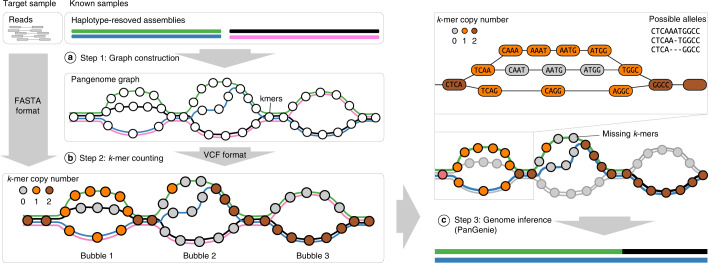
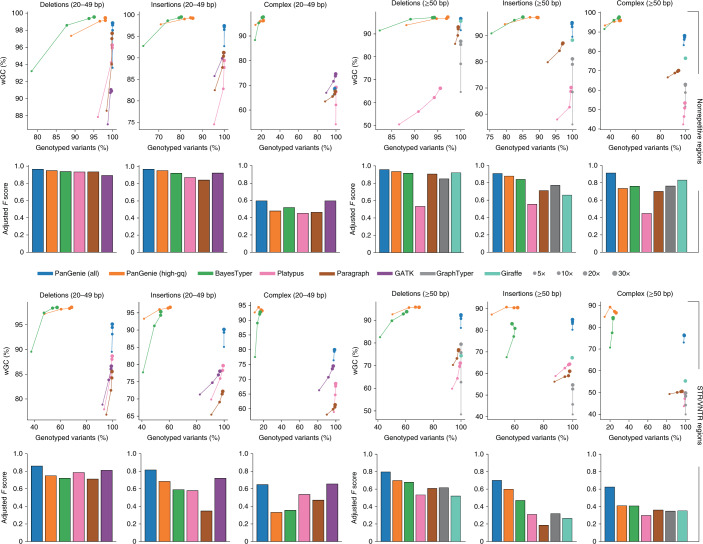
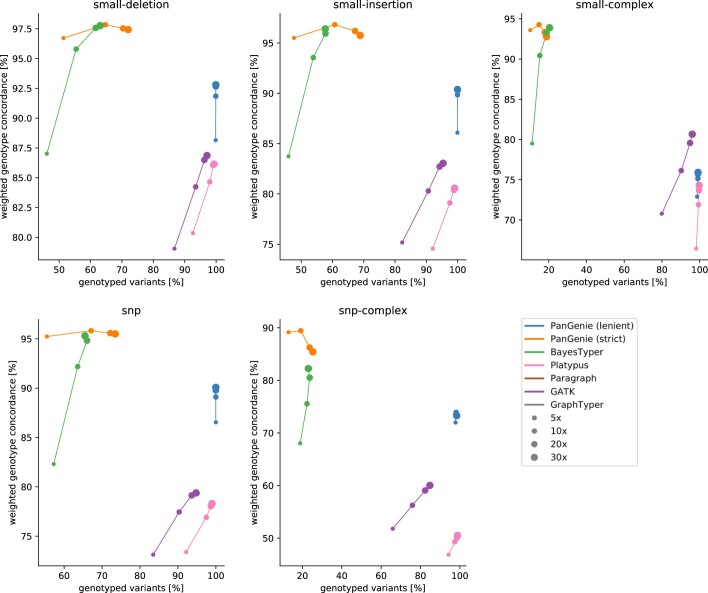
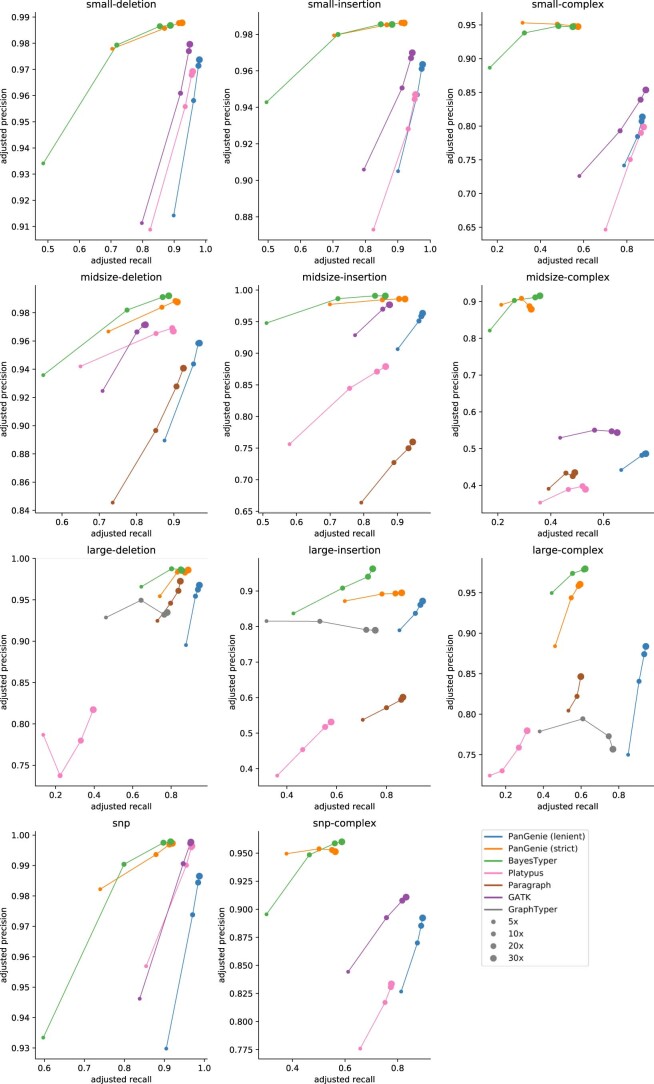
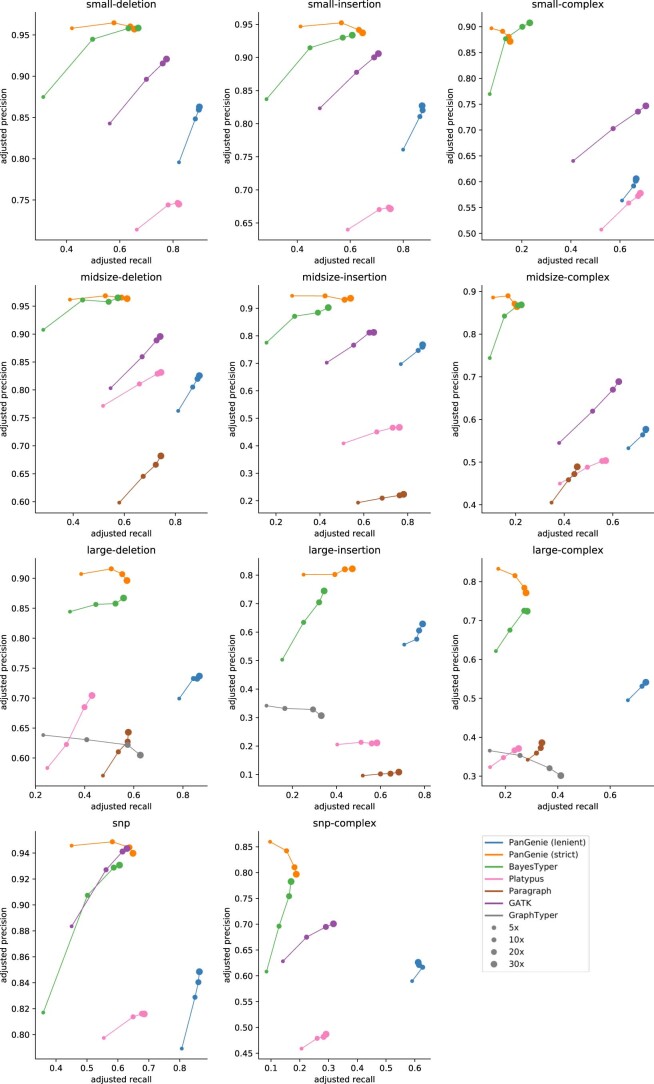
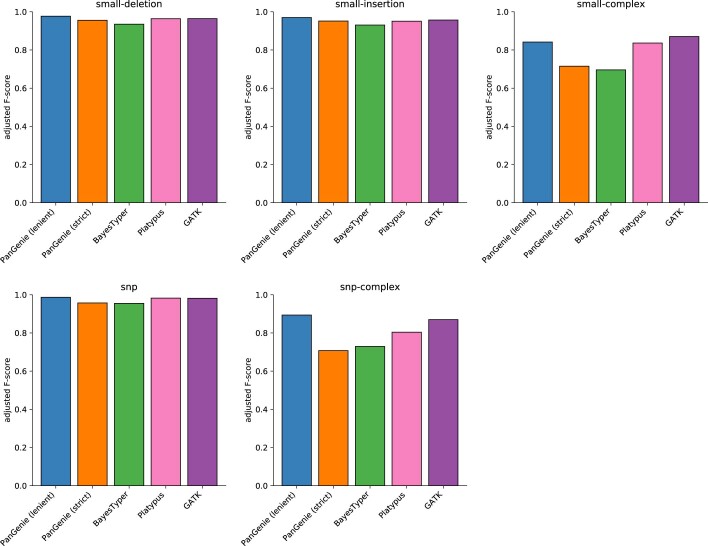
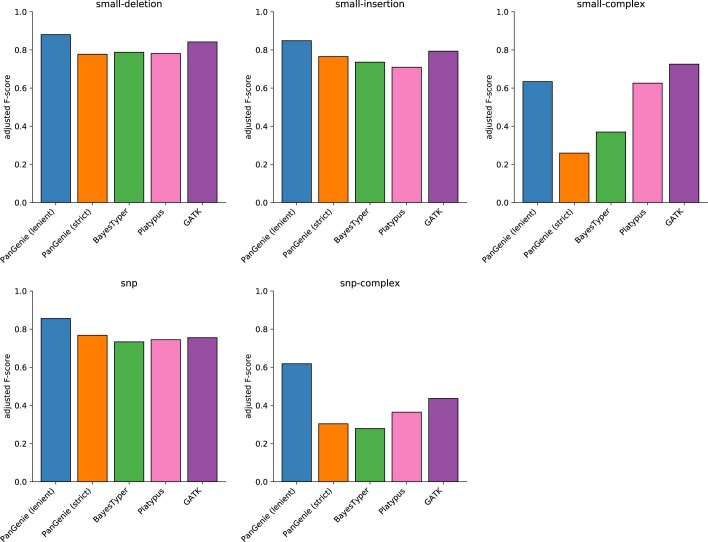
Typical genotyping workflows map reads to a reference genome before identifying genetic variants. Generating such alignments introduces reference biases and comes with substantial computational burden. Furthermore, short-read lengths limit the ability to characterize repetitive genomic regions, which are particularly challenging for fast k -mer-based genotypers. In the present study, we propose a new algorithm, PanGenie, that leverages a haplotype-resolved pangenome reference together with k -mer counts from short-read sequencing data to genotype a wide spectrum of genetic variation—a process we refer to as genome inference. Compared with mapping-based approaches, PanGenie is more than 4 times faster at 30-fold coverage and achieves better genotype concordances for almost all variant types and coverages tested. Improvements are especially pronounced for large insertions (≥50 bp) and variants in repetitive regions, enabling the inclusion of these classes of variants in genome-wide association studies. PanGenie efficiently leverages the increasing amount of haplotype-resolved assemblies to unravel the functional impact of previously inaccessible variants while being faster compared with alignment-based workflows.
Overview
The claims and statistics of this paper haven’t been checked yet.
Free: it reads the open-access text and checks the first 5 claims that cite a source we can check. Create a free account to check every claim.
Integrity signals
Registry
Cites
Statistics
Figures
Verification
Claims the paper makes
The claims and statistics of this paper haven’t been checked yet.
Free: it reads the open-access text and checks the first 5 claims that cite a source we can check. Create a free account to check every claim.
Claims other papers make about this one
Each is checked against this paper’s own text: does it say what the citing paper says it does?
The source backs part of the claim, not all of it — or backs it for a different population, condition or comparison.
In the citing paper
“In addition, the DRAGEN multigenome mapper is already incorporated for SV and CNV calling, something that is not currently possible with any other graph genome implementations because they focus primarily on genotyping variants14,73.”
From Comprehensive genome analysis and variant detection at scale using DRAGEN (2025) · cites this paper as [14]
Experimental — accuracy not yet measuredThe cited source says what the claim attributes to it.
In the citing paper
“In line with previous results5,54, we obtained high genotype concordance across all variant types and genomic contexts (Extended Data Fig. 9).”
From A draft human pangenome reference. (2023) · cites this paper as [54]
The cited source says what the claim attributes to it.
In the citing paper
“The results are shown in Fig. 3a, which shows the weighted genotype concordance 30 across different types of variants, with the Minigraph-Cactus HPRC graphs showing much higher accuracy across all SV variant types than the HGSVC.”
From Pangenome graph construction from genome alignments with Minigraph-Cactus (2024) · cites this paper as [30]
The cited source says what the claim attributes to it.
In the citing paper
“To this end, we have ensured that graphs produced with Minigraph-Cactus are compatible with most state-of-the art pangenome tools (re-engineering the tools as necessary) such as vg 3,6 , Giraffe 3,5,6 , PanGenie 30 and GraphAligner 27 .”
From Pangenome graph construction from genome alignments with Minigraph-Cactus (2024) · cites this paper as [30]
The check wasn’t confident either way, so it gives no verdict — never disputed.
In the citing paper
“Using the current set of 64 haplotypes, DRAGEN outperforms existing pangenome implementations (for example, Giraffe14) not only in accuracy (SNVs: 99.85% versus 99.74% F-measure), but also in scalability and runtime.”
From Comprehensive genome analysis and variant detection at scale using DRAGEN (2025) · cites this paper as [14]
Experimental — accuracy not yet measured
Self-check
Percentages, sums and reported differences re-computed from the paper’s own numbers.
The self-check needs the paper’s full text.
Citations
Cites
Controlling the False Discovery Rate: A Practical and Powerful Approach to Multiple Testing
Benjamini, Y., & Hochberg, Y. (1995) · Journal of the Royal Statistical Society Series B: Statistical Methodology · doi:10.1111/j.2517-6161.1995.tb02031.x · Cited by 109,482
Fast and accurate short read alignment with Burrows-Wheeler transform
Li, H., & Durbin, R. (2009) · Bioinformatics · doi:10.1093/bioinformatics/btp324 · Cited by 58,607
PLINK: a tool set for whole-genome association and population-based linkage analyses.
Purcell, S., Neale, B., Todd-Brown, K., Thomas, L., Ferreira, M. A. R., Bender, D., Maller, J., Sklar, P., de Bakker, P. I. W., Daly, M. J., et al. (2007) · The American Journal of Human Genetics · doi:10.1086/519795 · Cited by 34,089
A global reference for human genetic variation
The 1000 Genomes Project Consortium, authors, C., Auton, A., Abecasis, G. R., Steering committee, Altshuler, D. M., Durbin, R. M., Abecasis, G. R., Bentley, D. R., Chakravarti, A., et al. (2015) · Nature · doi:10.1038/nature15393 · Cited by 18,247
Self-citationThe variant call format and VCFtools
Danecek, P., Auton, A., Abecasis, G., Albers, C. A., Banks, E., DePristo, M. A., Handsaker, R. E., Lunter, G., Marth, G. T., Sherry, S. T., et al. (2011) · Bioinformatics · doi:10.1093/bioinformatics/btr330 · Cited by 16,200
Graph-based genome alignment and genotyping with HISAT2 and HISAT-genotype
Kim, D., Paggi, J. M., Park, C., Bennett, C., & Salzberg, S. L. (2019) · Nature Biotechnology · doi:10.1038/s41587-019-0201-4 · Cited by 15,022
Minimap2: Pairwise alignment for nucleotide sequences
Li, H. (2018) · Bioinformatics · doi:10.1093/bioinformatics/bty191 · Cited by 14,807 · cited 1×
“C , -DQA1 , -DQB1 and -DRB1 ) in all processed input assemblies with one exception ( HLA-DRB1 in NA19238), which was resolved by manual curation with minimap2 53 .”
BackgroundFast and accurate long-read alignment with Burrows-Wheeler transform.
Li, H., & Durbin, R. (2010) · Bioinformatics · doi:10.1093/bioinformatics/btp698 · Cited by 12,063
A framework for variation discovery and genotyping using next-generation DNA sequencing data
DePristo, M. A., Banks, E., Poplin, R., Garimella, K. V., Maguire, J. R., Hartl, C., Philippakis, A. A., del Angel, G., Rivas, M. A., Hanna, M., et al. (2011) · Nature Genetics · doi:10.1038/ng.806 · Cited by 11,456
dbSNP: the NCBI database of genetic variation
Sherry, S. T. (2001) · Nucleic Acids Research · doi:10.1093/nar/29.1.308 · Cited by 7,502
Haplotype-resolved de novo assembly using phased assembly graphs with hifiasm
Cheng, H., Concepcion, G. T., Feng, X., Zhang, H., & Li, H. (2021) · Nature Methods · doi:10.1038/s41592-020-01056-5 · Cited by 5,859 · cited 1×
“In direct comparison to the previously used HiFi assembler Peregrine 72 , hifiasm substantially reduces the number of sequence collapses, leading to overall more correct assemblies (see the evaluation in Cheng et al. 71 ).”
ResultA fast, lock-free approach for efficient parallel counting of occurrences of k -mers
Marçais, G., & Kingsford, C. (2011) · Bioinformatics · doi:10.1093/bioinformatics/btr011 · Cited by 4,661
Buniello, A., MacArthur, J. A. L., Cerezo, M., Harris, L. W., Hayhurst, J., Malangone, C., McMahon, A., Morales, J., Mountjoy, E., Sollis, E., et al. (2019) · Nucleic Acids Research · doi:10.1093/nar/gky1120 · Cited by 4,000 · cited 2×
“It was in LD with two GWAS variants (rs10843151 and rs11049566), which are both linked to body fat 58 .”
BackgroundMethodHowie, B. N., Donnelly, P., & Marchini, J. (2009) · PLoS Genetics · doi:10.1371/journal.pgen.1000529 · Cited by 3,928
Next-generation genotype imputation service and methods
Das, S., Forer, L., Schönherr, S., Sidore, C., Locke, A. E., Kwong, A., Vrieze, S. I., Chew, E. Y., Levy, S., McGue, M., et al. (2016) · Nature Genetics · doi:10.1038/ng.3656 · Cited by 3,808
Haplotype-based variant detection from short-read sequencing
Garrison, E., & Marth, G. (2012) · arXiv · doi:10.48550/arxiv.1207.3907 · Cited by 3,700
Strong association of de novo copy number mutations with autism
Sebat, J., Lakshmi, B., Malhotra, D., Troge, J., Lese-Martin, C., Walsh, T., Yamrom, B., Yoon, S., Krasnitz, A., Kendall, J., et al. (2007) · Science · doi:10.1126/science.1138659 · Cited by 2,795
DELLY: structural variant discovery by integrated paired-end and split-read analysis
Rausch, T., Zichner, T., Schlattl, A., Stütz, A. M., Benes, V., & Korbel, J. O. (2012) · Bioinformatics · doi:10.1093/bioinformatics/bts378 · Cited by 2,459
Self-citationThe ENCODE (ENCyclopedia Of DNA Elements) Project
(2004) · Science · doi:10.1126/science.1105136 · Cited by 2,390
BEDTools: The Swiss‐Army Tool for Genome Feature Analysis
Quinlan, A. R. (2014) · Current Protocols in Bioinformatics · doi:10.1002/0471250953.bi1112s47 · Cited by 2,370
An integrated map of structural variation in 2,504 human genomes
Sudmant, P. H., Rausch, T., Gardner, E. J., Handsaker, R. E., Abyzov, A., Huddleston, J., Zhang, Y., Ye, K., Jun, G., Hsi-Yang Fritz, M., et al. (2015) · Nature · doi:10.1038/nature15394 · Cited by 2,354
Self-citationThe UCSC Table Browser data retrieval tool
Karolchik, D. (2004) · Nucleic Acids Research · doi:10.1093/nar/gkh103 · Cited by 2,316 · cited 1×
“Furthermore, we stratify our analyses by considering variants outside and inside short-tandem repeats (STRs) and variable-number tandem repeats (VNTRs) 47 .”
MethodA One-Penny Imputed Genome from Next-Generation Reference Panels
Browning, B. L., Zhou, Y., & Browning, S. R. (2018) · The American Journal of Human Genetics · doi:10.1016/j.ajhg.2018.07.015 · Cited by 2,092
A linear complexity phasing method for thousands of genomes
Delaneau, O., Marchini, J., & Zagury, J.-F. (2012) · Nature Methods · doi:10.1038/nmeth.1785 · Cited by 1,850 · cited 1×
“Therefore, additional engineering would be required to use much larger panels, which could be approached similarly to how statistical phasing packages prune the solution space and/or proceed iteratively 65–67 .”
BackgroundRare Structural Variants Disrupt Multiple Genes in Neurodevelopmental Pathways in Schizophrenia
Walsh, T., McClellan, J. M., McCarthy, S. E., Addington, A. M., Pierce, S. B., Cooper, G. M., Nord, A. S., Kusenda, M., Malhotra, D., Bhandari, A., et al. (2008) · Science · doi:10.1126/science.1155174 · Cited by 1,800
Self-citationSanders, S. J., Ercan-Sencicek, A. G., Hus, V., Luo, R., Murtha, M. T., Moreno-De-Luca, D., Chu, S. H., Moreau, M. P., Gupta, A. R., Thomson, S. A., et al. (2011) · Neuron · doi:10.1016/j.neuron.2011.05.002 · Cited by 1,263
Genotype Imputation with Millions of Reference Samples
Browning, B. L., & Browning, S. R. (2016) · The American Journal of Human Genetics · doi:10.1016/j.ajhg.2015.11.020 · Cited by 1,146
Byrska-Bishop, M., Evani, U. S., Zhao, X., Basile, A. O., Abel, H. J., Regier, A. A., Corvelo, A., Clarke, W. E., Musunuri, R., Nagulapalli, K., et al. (2022) · Cell · doi:10.1016/j.cell.2022.08.004 · Cited by 1,094
Self-citationWGS500 Consortium, Rimmer, A., Phan, H., Mathieson, I., Iqbal, Z., Twigg, S. R. F., Wilkie, A. O. M., McVean, G., & Lunter, G. (2014) · Nature Genetics · doi:10.1038/ng.3036 · Cited by 1,057
A structural variation reference for medical and population genetics
Collins, R. L., Brand, H., Karczewski, K. J., Zhao, X., Alföldi, J., Francioli, L. C., Khera, A. V., Lowther, C., Gauthier, L. D., Wang, H., et al. (2020) · Nature · doi:10.1038/s41586-020-2287-8 · Cited by 1,037 · cited 3×
“9).”
BackgroundMethodLi, N., & Stephens, M. (2003) · Genetics · doi:10.1093/genetics/165.4.2213 · Cited by 1,025
Genotype Imputation with Thousands of Genomes
Howie, B., Marchini, J., & Stephens, M. (2011) · G3 Genes|Genomes|Genetics · doi:10.1534/g3.111.001198 · Cited by 966
Multi-platform discovery of haplotype-resolved structural variation in human genomes
Chaisson, M. J. P., Sanders, A. D., Zhao, X., Malhotra, A., Porubsky, D., Rausch, T., Gardner, E. J., Rodriguez, O. L., Guo, L., Collins, R. L., et al. (2019) · Nature Communications · doi:10.1038/s41467-018-08148-z · Cited by 891 · cited 12×
“We show the number of variants in our final callset and the intermediate stages of variant calling in the first three columns of Supplementary Table 2.”
MethodInfluentialSelf-citationVariation graph toolkit improves read mapping by representing genetic variation in the reference
Garrison, E., Sirén, J., Novak, A. M., Hickey, G., Eizenga, J. M., Dawson, E. T., Jones, W., Garg, S., Markello, C., Lin, M. F., et al. (2018) · Nature Biotechnology · doi:10.1038/nbt.4227 · Cited by 821
Extensive sequencing of seven human genomes to characterize benchmark reference materials
Zook, J. M., Catoe, D., McDaniel, J., Vang, L., Spies, N., Sidow, A., Weng, Z., Liu, Y., Mason, C. E., Alexander, N., et al. (2016) · Scientific Data · doi:10.1038/sdata.2016.25 · Cited by 811 · cited 1×
“2) based on Illumina reads from the Genome in a Bottle (GIAB) consortium 45 and 1000 Genomes Project high-coverage data 46 .”
MethodThe Wellcome Trust Case Control Consortium (2010) · Nature · doi:10.1038/nature08979 · Cited by 807
Haplotype-resolved diverse human genomes and integrated analysis of structural variation
Ebert, P., Audano, P. A., Zhu, Q., Rodriguez-Martin, B., Porubsky, D., Bonder, M. J., Sulovari, A., Ebler, J., Zhou, W., Serra Mari, R., et al. (2021) · Science · doi:10.1126/science.abf7117 · Cited by 702 · cited 1×
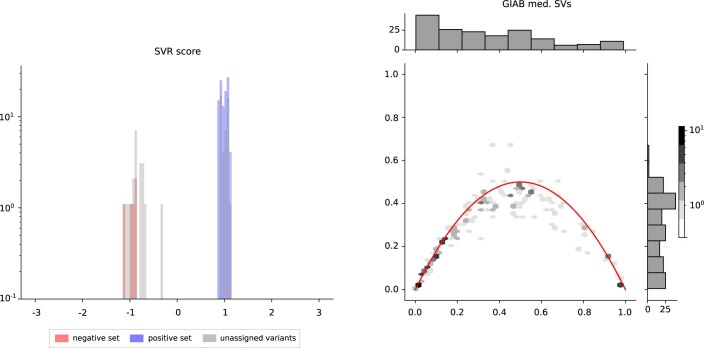
“Similar to the approach introduced previously 4 , we employed Mendelian consistency of the genotyped trios and the genotype quality reported by PanGenie to compute an integrated score for genotyping reliability of each variant.”
MethodSelf-citationPhenotypic impact of genomic structural variation: insights from and for human disease
Weischenfeldt, J., Symmons, O., Spitz, F., & Korbel, J. O. (2013) · Nature Reviews Genetics · doi:10.1038/nrg3373 · Cited by 658
Self-citationDe novo assembly and genotyping of variants using colored de Bruijn graphs
Iqbal, Z., Caccamo, M., Turner, I., Flicek, P., & McVean, G. (2012) · Nature Genetics · doi:10.1038/ng.1028 · Cited by 634
Williams, N. M., Zaharieva, I., Martin, A., Langley, K., Mantripragada, K., Fossdal, R., Stefansson, H., Stefansson, K., Magnusson, P., Gudmundsson, O. O., et al. (2010) · The Lancet · doi:10.1016/s0140-6736(10)61109-9 · Cited by 572
SpeedSeq: ultra-fast personal genome analysis and interpretation
Chiang, C., Layer, R. M., Faust, G. G., Lindberg, M. R., Rose, D. B., Garrison, E. P., Marth, G. T., Quinlan, A. R., & Hall, I. M. (2015) · Nature Methods · doi:10.1038/nmeth.3505 · Cited by 569
De novo assembly of haplotype-resolved genomes with trio binning
Koren, S., Rhie, A., Walenz, B. P., Dilthey, A. T., Bickhart, D. M., Kingan, S. B., Hiendleder, S., Williams, J. L., Smith, T. P. L., & Phillippy, A. M. (2018) · Nature Biotechnology · doi:10.1038/nbt.4277 · Cited by 522
Self-citationThe Human Pangenome Project: a global resource to map genomic diversity
Wang, T., Antonacci-Fulton, L., Howe, K., Lawson, H. A., Lucas, J. K., Phillippy, A. M., Popejoy, A. B., Asri, M., Carson, C., Chaisson, M. J. P., et al. (2022) · Nature · doi:10.1038/s41586-022-04601-8 · Cited by 494
Self-citationA genome-wide association study identifies protein quantitative trait loci (pQTLs)
Melzer, D., Perry, J. R. B., Hernandez, D., Corsi, A.-M., Stevens, K., Rafferty, I., Lauretani, F., Murray, A., Gibbs, J. R., Paolisso, G., et al. (2008) · PLoS Genetics · doi:10.1371/journal.pgen.1000072 · Cited by 480
IPD—the Immuno Polymorphism Database
Robinson, J., Mistry, K., McWilliam, H., Lopez, R., & Marsh, S. G. E. (2010) · Nucleic Acids Research · doi:10.1093/nar/gkp879 · Cited by 447
A robust benchmark for detection of germline large deletions and insertions
Zook, J. M., Hansen, N. F., Olson, N. D., Chapman, L., Mullikin, J. C., Xiao, C., Sherry, S., Koren, S., Phillippy, A. M., Boutros, P. C., et al. (2020) · Nature Biotechnology · doi:10.1038/s41587-020-0538-8 · Cited by 418
Self-citationPangenomics enables genotyping of known structural variants in 5202 diverse genomes
Sirén, J., Monlong, J., Chang, X., Novak, A. M., Eizenga, J. M., Markello, C., Sibbesen, J. A., Hickey, G., Chang, P.-C., Carroll, A., et al. (2021) · Science · doi:10.1126/science.abg8871 · Cited by 400
An open resource for accurately benchmarking small variant and reference calls
Zook, J. M., McDaniel, J., Olson, N. D., Wagner, J., Parikh, H., Heaton, H., Irvine, S. A., Trigg, L., Truty, R., McLean, C. Y., et al. (2019) · Nature Biotechnology · doi:10.1038/s41587-019-0074-6 · Cited by 399
High-resolution comparative analysis of great ape genomes
Kronenberg, Z. N., Fiddes, I. T., Gordon, D., Murali, S., Cantsilieris, S., Meyerson, O. S., Underwood, J. G., Nelson, B. J., Chaisson, M. J. P., Dougherty, M. L., et al. (2018) · Science · doi:10.1126/science.aar6343 · Cited by 350 · cited 2×
“A comparison with nonhuman primate genomes 62,63 shows that the 43-mer occurs as two copies in gorilla ( Gorilla gorilla ), but is a single copy in chimpanzee ( Pan troglodytes ), bonobo ( Pan panis-cus ) and the Sumatran orangutan ( Pongo abelii ).”
BackgroundMethodSelf-citationThe structure, function and evolution of a complete human chromosome 8
Logsdon, G. A., Vollger, M. R., Hsieh, P., Mao, Y., Liskovykh, M. A., Koren, S., Nurk, S., Mercuri, L., Dishuck, P. C., Rhie, A., et al. (2021) · Nature · doi:10.1038/s41586-021-03420-7 · Cited by 341 · cited 2×
“A comparison with nonhuman primate genomes 62,63 shows that the 43-mer occurs as two copies in gorilla ( Gorilla gorilla ), but is a single copy in chimpanzee ( Pan troglodytes ), bonobo ( Pan panis-cus ) and the Sumatran orangutan ( Pongo abelii ).”
BackgroundMethodSelf-citationHigh frequencies of de novo CNVs in bipolar disorder and schizophrenia
Malhotra, D., McCarthy, S., Michaelson, J. J., Vacic, V., Burdick, K. E., Yoon, S., Cichon, S., Corvin, A., Gary, S., Gershon, E. S., et al. (2011) · Neuron · doi:10.1016/j.neuron.2011.11.007 · Cited by 325
Genotyping structural variants in pangenome graphs using the vg toolkit
Hickey, G., Heller, D., Monlong, J., Sibbesen, J. A., Sirén, J., Eizenga, J., Dawson, E. T., Garrison, E., Novak, A. M., & Paten, B. (2020) · Genome Biology · doi:10.1186/s13059-020-1941-7 · Cited by 319
Graphtyper enables population-scale genotyping using pangenome graphs
Eggertsson, H. P., Jonsson, H., Kristmundsdottir, S., Hjartarson, E., Kehr, B., Masson, G., Zink, F., Hjorleifsson, K. E., Jonasdottir, A., Jonasdottir, A., et al. (2017) · Nature Genetics · doi:10.1038/ng.3964 · Cited by 276
Byrska‐Bishop, M. S., Evani, U. S., Zhao, X., et al. (2021) · bioRxiv (Cold Spring Harbor Laboratory) · doi:10.1101/2021.02.06.430068 · Cited by 259 · cited 2×
“2) based on Illumina reads from the Genome in a Bottle (GIAB) consortium 45 and 1000 Genomes Project high-coverage data 46 .”
MethodA synthetic-diploid benchmark for accurate variant-calling evaluation
Li, H., Bloom, J. M., Farjoun, Y., Fleharty, M., Gauthier, L., Neale, B., & MacArthur, D. (2018) · Nature Methods · doi:10.1038/s41592-018-0054-7 · Cited by 253
Curated variation benchmarks for challenging medically relevant autosomal genes
Wagner, J., Olson, N. D., Harris, L., McDaniel, J., Cheng, H., Fungtammasan, A., Hwang, Y.-C., Gupta, R., Wenger, A. M., Rowell, W. J., et al. (2022) · Nature Biotechnology · doi:10.1038/s41587-021-01158-1 · Cited by 241 · cited 3×
“2) based on Illumina reads from the Genome in a Bottle (GIAB) consortium 45 and 1000 Genomes Project high-coverage data 46 .”
MethodSelf-citationCleary, J. G., Braithwaite, R., Gaastra, K., Hilbush, B. S., Inglis, S., Irvine, S. A., Jackson, A., Littin, R., Rathod, M., Ware, D., et al. (2015) · doi:10.1101/023754 · Cited by 230
Fast and accurate genomic analyses using genome graphs
Rakocevic, G., Semenyuk, V., Lee, W.-P., Spencer, J., Browning, J., Johnson, I. J., Arsenijevic, V., Nadj, J., Ghose, K., Suciu, M. C., et al. (2019) · Nature Genetics · doi:10.1038/s41588-018-0316-4 · Cited by 221
GraphTyper2 enables population-scale genotyping of structural variation using pangenome graphs
Eggertsson, H. P., Kristmundsdottir, S., Beyter, D., Jonsson, H., Skuladottir, A., Hardarson, M. T., Gudbjartsson, D. F., Stefansson, K., Halldorsson, B. V., & Melsted, P. (2019) · Nature Communications · doi:10.1038/s41467-019-13341-9 · Cited by 209
Human Genome Structural Variation Consortium, Porubsky, D., Ebert, P., Audano, P. A., Vollger, M. R., Harvey, W. T., Marijon, P., Ebler, J., Munson, K. M., Sorensen, M., et al. (2021) · Nature Biotechnology · doi:10.1038/s41587-020-0719-5 · Cited by 203
Self-citationImproved genome inference in the MHC using a population reference graph
Dilthey, A., Cox, C., Iqbal, Z., Nelson, M. R., & McVean, G. (2015) · Nature Genetics · doi:10.1038/ng.3257 · Cited by 198
Self-citationParagraph: a graph-based structural variant genotyper for short-read sequence data
Chen, S., Krusche, P., Dolzhenko, E., Sherman, R. M., Petrovski, R., Schlesinger, F., Kirsche, M., Bentley, D. R., Schatz, M. C., Sedlazeck, F. J., et al. (2019) · Genome Biology · doi:10.1186/s13059-019-1909-7 · Cited by 196
HLA Diversity in the 1000 Genomes Dataset
Gourraud, P.-A., Khankhanian, P., Cereb, N., Yang, S. Y., Feolo, M., Maiers, M., D. Rioux, J., Hauser, S., & Oksenberg, J. (2014) · PLoS ONE · doi:10.1371/journal.pone.0097282 · Cited by 182
Chromosome-scale, haplotype-resolved assembly of human genomes
Garg, S., Fungtammasan, A., Carroll, A., Chou, M., Schmitt, A., Zhou, X., Mac, S., Peluso, P., Hatas, E., Ghurye, J., et al. (2021) · Nature Biotechnology · doi:10.1038/s41587-020-0711-0 · Cited by 182
Self-citationThree-stage quality control strategies for DNA re-sequencing data
Guo, Y., Ye, F., Sheng, Q., Clark, T., & Samuels, D. C. (2014) · Briefings in Bioinformatics · doi:10.1093/bib/bbt069 · Cited by 178
Genome measures used for quality control are dependent on gene function and ancestry
Wang, J., Raskin, L., Samuels, D. C., Shyr, Y., & Guo, Y. (2015) · Bioinformatics · doi:10.1093/bioinformatics/btu668 · Cited by 173 · cited 2×
“These numbers are in line with respective results for African (AFR), American (AMR), Asian (EAS) and European (EUR) individuals reported in previous studies 43,44 .”
MethodResultHLA*LA—HLA typing from linearly projected graph alignments
Dilthey, A. T., Mentzer, A. J., Carapito, R., Cutland, C., Cereb, N., Madhi, S. A., Rhie, A., Koren, S., Bahram, S., McVean, G., et al. (2019) · Bioinformatics · doi:10.1093/bioinformatics/btz235 · Cited by 155
Self-citationZhao, X., Collins, R. L., Lee, W.-P., Weber, A. M., Jun, Y., Zhu, Q., Weisburd, B., Huang, Y., Audano, P. A., Wang, H., et al. (2021) · The American Journal of Human Genetics · doi:10.1016/j.ajhg.2021.03.014 · Cited by 132 · cited 15×
“Our callset contains 209 of 250 medically relevant SVs reported by GIAB 57 .”
ResultInfluentialSelf-citationAccurate genotyping across variant classes and lengths using variant graphs
Sibbesen, J. A., Maretty, L., & Krogh, A. (2018) · Nature Genetics · doi:10.1038/s41588-018-0145-5 · Cited by 107
Human Genome Assembly in 100 Minutes
Chin, C.-S., & Khalak, A. (2019) · bioRxiv (Cold Spring Harbor Laboratory) · doi:10.1101/705616 · Cited by 97 · cited 1×
“In direct comparison to the previously used HiFi assembler Peregrine 72 , hifiasm substantially reduces the number of sequence collapses, leading to overall more correct assemblies (see the evaluation in Cheng et al. 71 ).”
ResultImmune diversity sheds light on missing variation in worldwide genetic diversity panels
Abi‐Rached, L., Gouret, P., Yeh, J.-H., Cristofaro, J. D., Pontarotti, P., Picard, C., & Paganini, J. (2018) · PLoS ONE · doi:10.1371/journal.pone.0206512 · Cited by 95 · cited 3×
“2) based on Illumina reads from the Genome in a Bottle (GIAB) consortium 45 and 1000 Genomes Project high-coverage data 46 .”
MethodAmato, K. R., Mallott, E. K., McDonald, D. T., Dominy, N. J., Goldberg, T. L., Lambert, J. E., Swedell, L., Metcalf, J. L., Gomez, A. M., Britton, G. A. O., et al. (2019) · Genome biology · doi:10.1186/s13059-019-1807-z · Cited by 95
High-Accuracy HLA Type Inference from Whole-Genome Sequencing Data Using Population Reference Graphs
Dilthey, A. T., Gourraud, P.-A., Mentzer, A. J., Cereb, N., Iqbal, Z., & McVean, G. (2016) · PLOS Computational Biology · doi:10.1371/journal.pcbi.1005151 · Cited by 92 · cited 1×
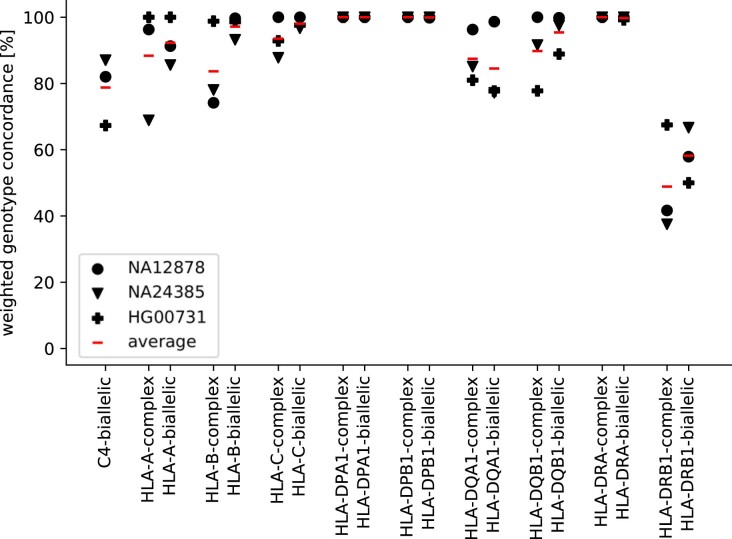
“To verify the accuracy of the assembly HLA types, we integrated publicly available HLA genotype data for samples from the 1000 Genomes Project 54–56 for HLA-A , -”
MethodSelf-citationIntegrating long-range connectivity information into de Bruijn graphs
Turner, I., Garimella, K. V., Iqbal, Z., & McVean, G. (2018) · Bioinformatics · doi:10.1093/bioinformatics/bty157 · Cited by 67
DNA-based methods in the immunohematology reference laboratory
Reid, M. E., & Denomme, G. A. (2011) · Transfusion and Apheresis Science · doi:10.1016/j.transci.2010.12.011 · Cited by 61
Fast genotyping of known SNPs through approximate k -mer matching
Shajii, A., Yörükoğlu, D., Yu, Y. W., & Berger, B. (2016) · Bioinformatics · doi:10.1093/bioinformatics/btw460 · Cited by 61
A robust benchmark for germline structural variant detection
Zook, J. M., Hansen, N. F., Olson, N. D., Chapman, L. M., Mullikin, J. C., Xiao, C., Sherry, S., Koren, S., Phillippy, A. M., Boutros, P. C., et al. (2019) · bioRxiv (Cold Spring Harbor Laboratory) · doi:10.1101/664623 · Cited by 60
Self-citationWang, X., Zhang, J., & Li, G. (2015) · BMC Bioinformatics · doi:10.1186/1471-2105-16-s12-s1 · Cited by 55
Genotype calling and phasing using next-generation sequencing reads and a haplotype scaffold
Menelaou, A., & Marchini, J. (2013) · Bioinformatics · doi:10.1093/bioinformatics/bts632 · Cited by 47
Toward fast and accurate SNP genotyping from whole genome sequencing data for bedside diagnostics
Sun, C., & Medvedev, P. (2018) · Bioinformatics · doi:10.1093/bioinformatics/bty641 · Cited by 44
Taylor‐Cousar, J. L., Zariwala, M. A., Burch, L. H., Pace, R. G., Drumm, M. L., Calloway, H. E., Fan, H., Weston, B. W., Wright, F. A., Knowles, M. R., et al. (2009) · PLoS ONE · doi:10.1371/journal.pone.0004270 · Cited by 42
Dolle, D., Liu, Z., Cotten, M. L., Simpson, J. T., Iqbal, Z., Durbin, R. M., McCarthy, S., & Keane, T. (2016) · Genome Research · doi:10.1101/gr.211748.116 · Cited by 26
Strand-seq enables reliable separation of long reads by chromosome via expectation maximization
Ghareghani, M., Porubskỳ, D., Sanders, A. D., Meiers, S., Eichler, E. E., Korbel, J. O., & Marschall, T. (2018) · Bioinformatics · doi:10.1093/bioinformatics/bty290 · Cited by 25
Self-citationAccurate chromosome-scale haplotype-resolved assembly of human genomes
Garg, S., Fungtammasan, A., Carroll, A., Chou, M., Schmitt, A., Zhou, X., Mac, S., Peluso, P., Hatas, E., Ghurye, J., et al. (2019) · bioRxiv (Cold Spring Harbor Laboratory) · doi:10.1101/810341 · Cited by 24
Self-citationPangenome-based Genome InferencePreprint
Ebler, J., Ebert, P., Clarke, W. E., Rausch, T., Audano, P. A., Houwaart, T., Mao, Y., Korbel, J. O., Eichler, E. E., Zody, M. C., et al. (2020) · Zenodo (CERN European Organization for Nuclear Research) · doi:10.5281/zenodo.4312742 · Cited by 4
Self-citationWang, J., Samuels, D. C., Shyr, Y., & Guo, Y. P. (2015) · BMC Bioinformatics · doi:10.1186/1471-2105-16-s15-p19 · Cited by 3 · cited 1×
“These numbers are in line with respective results for African (AFR), American (AMR), Asian (EAS) and European (EUR) individuals reported in previous studies 43,44 .”
ResultPangenome-based Genome Inference
Ebler, J., Ebert, P., Clarke, W. E., et al. (2021) · Zenodo (CERN European Organization for Nuclear Research) · doi:10.5281/zenodo.5607680 · Cited by 1
Self-citationEbler, J. (2021) · Zenodo (CERN European Organization for Nuclear Research) · doi:10.5281/zenodo.5767764 · Cited by 1
Self-citationgenotyping-experiments-commit3967f41e32cf
Ebler, J. (2022) · Zenodo (CERN European Organization for Nuclear Research) · doi:10.5281/zenodo.5864866 · Cited by 1
Self-citation
Cited by
A draft human pangenome reference.
Liao, W.-W., Asri, M., Ebler, J., Doerr, D., Haukness, M., Hickey, G., Lu, S., Lucas, J. K., Monlong, J., Abel, H. J., et al. (2023) · Nature · doi:10.1038/s41586-023-05896-x · Cited by 1,129
“For this purpose, we applied a machine learning approach similar to what we have presented previously (Ebert et al., 2021; Ebler et al., 2022).”
BackgroundMethodResultInfluentialSelf-citationByrska-Bishop, M., Evani, U. S., Zhao, X., Basile, A. O., Abel, H. J., Regier, A. A., Corvelo, A., Clarke, W. E., Musunuri, R., Nagulapalli, K., et al. (2022) · Cell · doi:10.1016/j.cell.2022.08.004 · Cited by 1,094
Self-citationHaplotype-resolved diverse human genomes and integrated analysis of structural variation
Ebert, P., Audano, P. A., Zhu, Q., Rodriguez-Martin, B., Porubsky, D., Bonder, M. J., Sulovari, A., Ebler, J., Zhou, W., Serra Mari, R., et al. (2021) · Science · doi:10.1126/science.abf7117 · Cited by 702
Self-citationThe Human Pangenome Project: a global resource to map genomic diversity
Wang, T., Antonacci-Fulton, L., Howe, K., Lawson, H. A., Lucas, J. K., Phillippy, A. M., Popejoy, A. B., Asri, M., Carson, C., Chaisson, M. J. P., et al. (2022) · Nature · doi:10.1038/s41586-022-04601-8 · Cited by 494
Self-citationSegmental duplications and their variation in a complete human genome
Vollger, M. R., Guitart, X., Dishuck, P. C., Mercuri, L., Harvey, W. T., Gershman, A., Diekhans, M., Sulovari, A., Munson, K. M., Lewis, A. P., et al. (2022) · Science · doi:10.1126/science.abj6965 · Cited by 350
Self-citation
Metadata
- Authors
- Ebler, J., Ebert, P., Clarke, W. E., Rausch, T., Audano, P. A., Houwaart, T., Mao, Y., Korbel, J. O., Eichler, E. E., Zody, M. C., Dilthey, A. T., & Marschall, T.
- Affiliations
- Heinrich Heine University Düsseldorf (DE)
- New York Genome Center (US)
- European Molecular Biology Laboratory (DE)
- University of Washington (US)
- Howard Hughes Medical Institute (US)
- University of Cologne (DE)
- Corresponding author
- Marschall, Tobias
- ORCID
- Venue
- Nature Genetics
- Published
- 2022-04
- Volume
- 54
- Issue
- 4
- Pages
- 518-525
- ISSN
- 1061-4036 (ISSN-L)
- 1546-1718
- PMC
- PMC9005351
- OpenAlex
- W4223416923
- Semantic Scholar
- ac7c600024e4af795e0bc2fb9b609fe45dcf6c2d
- Cited by
- 277
- References
- 86
- Citations by year
- 2026: 57 · 2025: 62 · 2024: 66 · 2023: 57 · 2022: 27
- FWCI
- 18.78
- Type
- journal article
- Language
- en
- Open access
- hybrid
- doi.org
- Licence
- cc-by
- creativecommons.org/licenses/by/4.0 (tdm)
- creativecommons.org/licenses/by/4.0 (vor, 10 d)
- Locations
- Nature Genetics (publishedVersion, cc-by)
- bioRxiv (Cold Spring Harbor Laboratory) (acceptedVersion, cc-by-nd)
- PubMed Central (publishedVersion, cc-by)
- PubMed (publishedVersion)
- Kölner Universitäts PublikationsServer (Universität zu Köln) (publishedVersion)
- Funders
- U.S. Department of Health & Human Services | NIH | National Human Genome Research Institute (1U01HG010973, HG010169)
- Bundesministerium für Bildung und Forschung (031L0184, 031L0181A)
- Topics
- Life Sciences › Biochemistry, Genetics and Molecular Biology › Molecular Biology › Genomics and Phylogenetic Studies
- Life Sciences › Biochemistry, Genetics and Molecular Biology › Genetics › Genomic variations and chromosomal abnormalities
- Life Sciences › Biochemistry, Genetics and Molecular Biology › Genetics › Genomics and Rare Diseases
- Keywords
- genotyping, pan-genome, k-mer counts, short-read sequencing, reference bias, repetitive regions, structural variants, variant calling, haplotype-resolved genome assembly
- MeSH terms
- Algorithms, Genotype, Humans, Genetic Variation, Genome, Human, Sequence Analysis, DNA, Genomics, Genome-Wide Association Study, High-Throughput Nucleotide Sequencing
About these checks
Registry, retraction, Cites and statistics results are computed, not judged, with one exception: a printed reference that no index lists is read once by a model before it counts as a citation error. Claims are extracted by a model and kept only when their quote appears verbatim in the text; each cited source is then checked, with a model’s help, for whether it says what the claim relies on. Those verdicts can be wrong — read the claim’s quote and the cited source before relying on one.
Statistics and arithmetic are recomputed, not judged.
Confidence bands are shown only for fields calibrated on our annotated test set. None is calibrated yet, so no band is shown.
What counts as a claim ›How we measure confidence ›How we check this ›
Are you an author, or do you see a problem with this page? Request a review
Data sources
Bibliographic data: Semantic Scholar, OpenAlex, Crossref.
Contains information from the Semantic Scholar Academic Graph Datasets, made available under the ODC Attribution License (ODC-BY 1.0).
Semantic Scholar’s data is described in: Kinney, R., et al. (2023). The Semantic Scholar Open Data Platform. arXiv:2301.10140.
