

Pangenome-based genome inference allows efficient and accurate genotyping across a wide spectrum of variant classes
Open accessPublished version of a preprint
The DOI matches its Crossref record; 89 of the 89 references it cites were found in a registry or an index.
Abstract
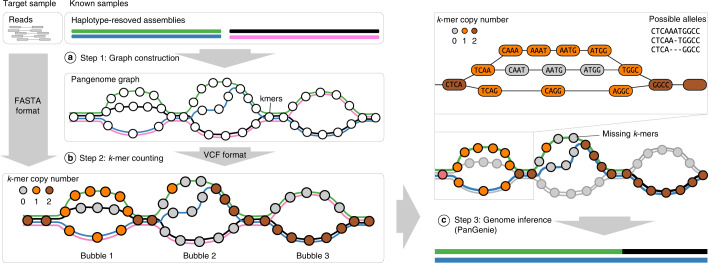
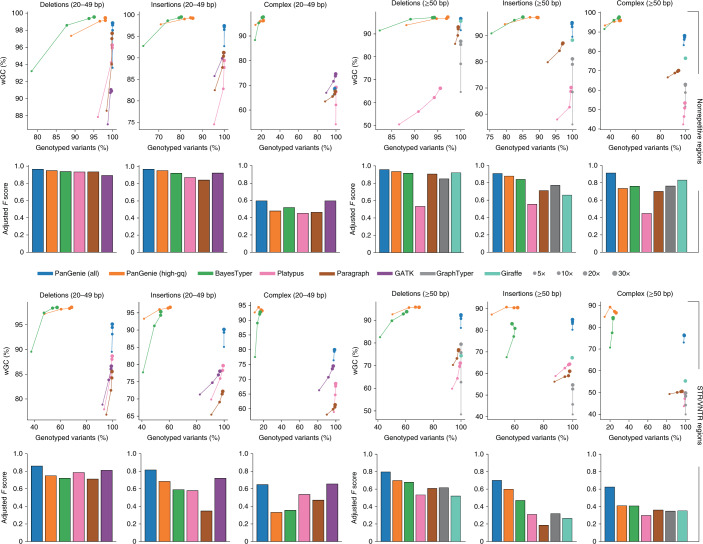
Typical genotyping workflows map reads to a reference genome before identifying genetic variants. Generating such alignments introduces reference biases and comes with substantial computational burden. Furthermore, short-read lengths limit the ability to characterize repetitive genomic regions, which are particularly challenging for fast k -mer-based genotypers. In the present study, we propose a new algorithm, PanGenie, that leverages a haplotype-resolved pangenome reference together with k -mer counts from short-read sequencing data to genotype a wide spectrum of genetic variation—a process we refer to as genome inference. Compared with mapping-based approaches, PanGenie is more than 4 times faster at 30-fold coverage and achieves better genotype concordances for almost all variant types and coverages tested. Improvements are especially pronounced for large insertions (≥50 bp) and variants in repetitive regions, enabling the inclusion of these classes of variants in genome-wide association studies. PanGenie efficiently leverages the increasing amount of haplotype-resolved assemblies to unravel the functional impact of previously inaccessible variants while being faster compared with alignment-based workflows.
Overview
The claims and statistics of this paper haven’t been checked yet.
Free: it reads the open-access text and checks the first 5 claims that cite a source we can check. Create a free account to check every claim.
Integrity signals
Registry
Cites
Statistics
Figures
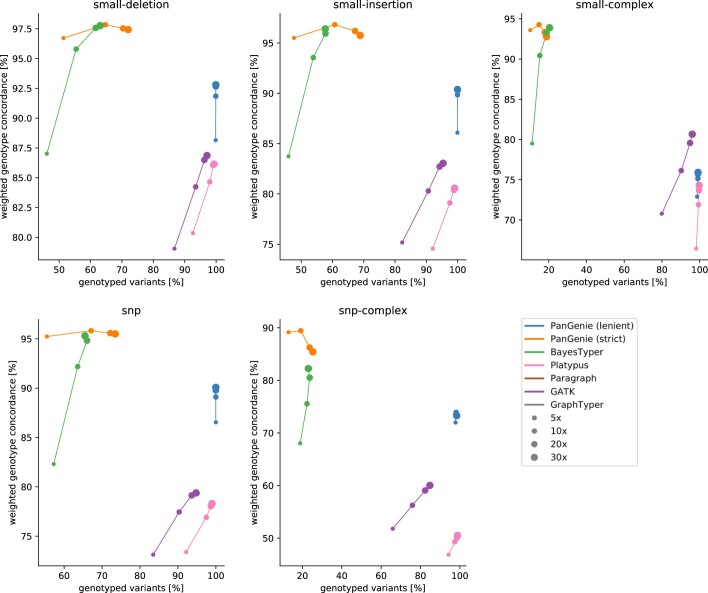
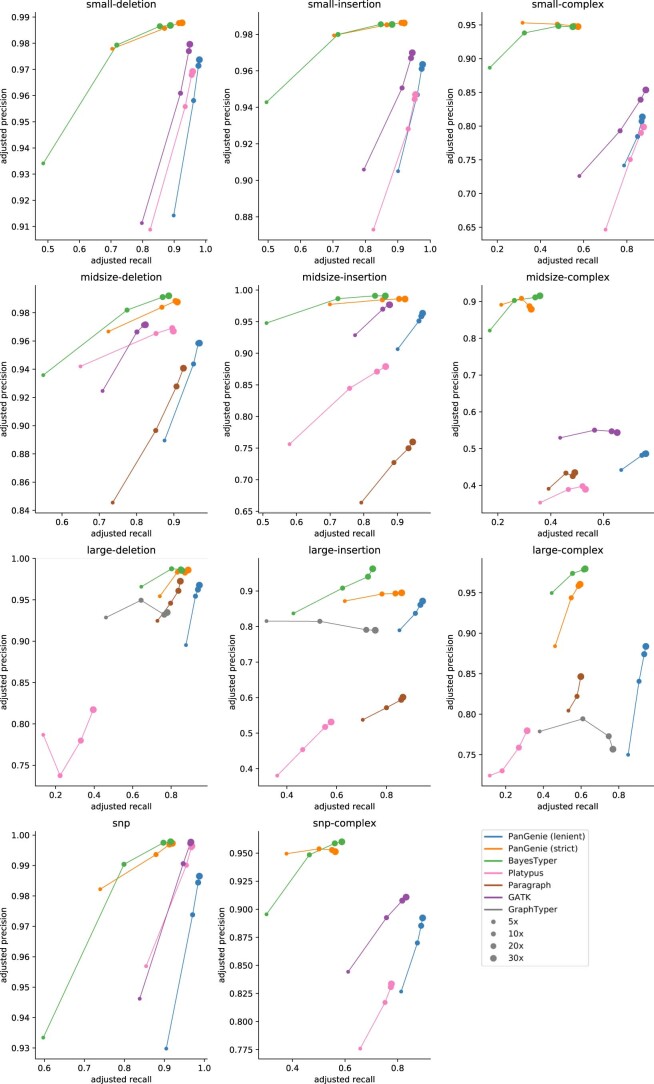
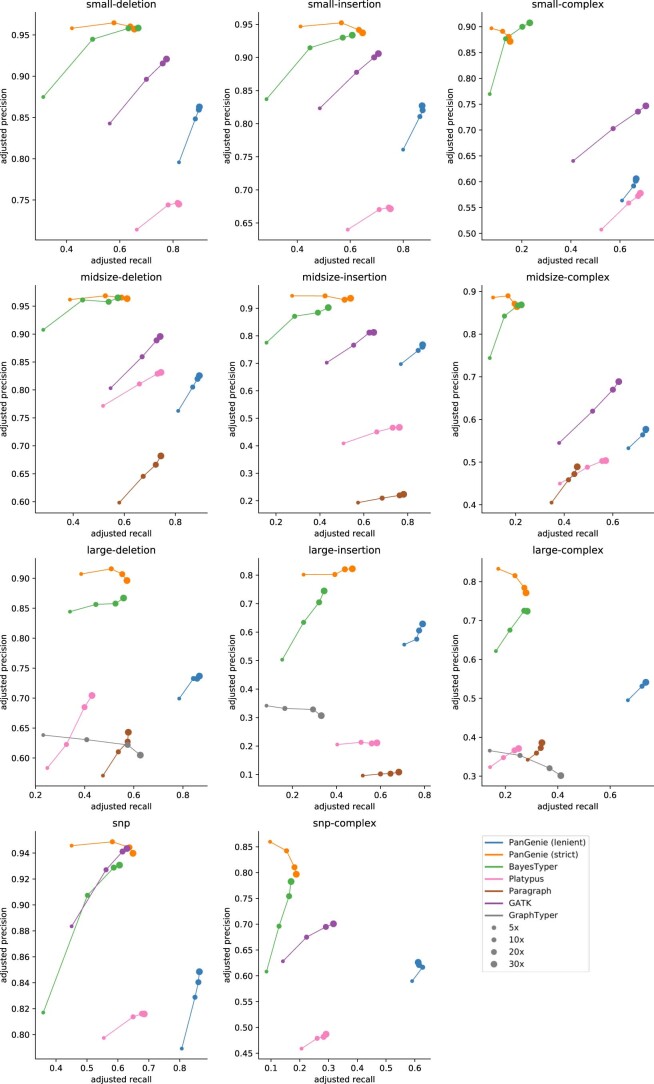
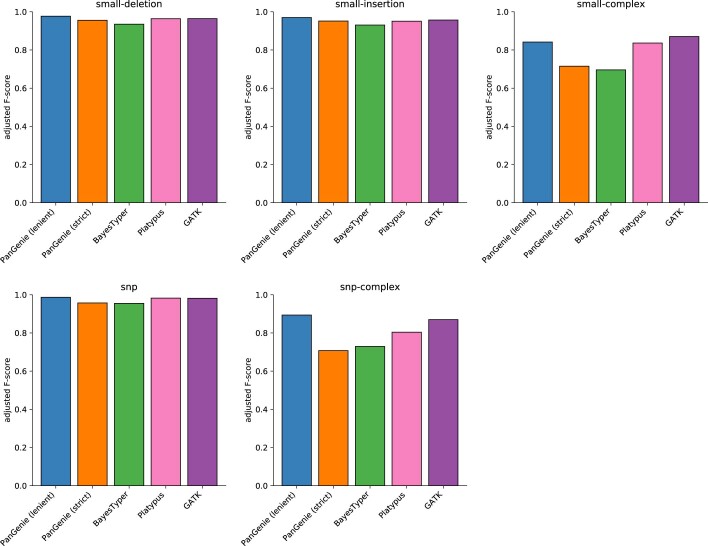
Verification
Claims the paper makes
The claims and statistics of this paper haven’t been checked yet.
Free: it reads the open-access text and checks the first 5 claims that cite a source we can check. Create a free account to check every claim.
Claims other papers make about this one
Each is checked against this paper’s own text: does it say what the citing paper says it does?
The source backs part of the claim, not all of it — or backs it for a different population, condition or comparison.
In the citing paper
“In addition, the DRAGEN multigenome mapper is already incorporated for SV and CNV calling, something that is not currently possible with any other graph genome implementations because they focus primarily on genotyping variants14,73.”
From Comprehensive genome analysis and variant detection at scale using DRAGEN (2025) · cites this paper as [14]
Experimental — accuracy not yet measuredThe cited source says what the claim attributes to it.
In the citing paper
“In line with previous results5,54, we obtained high genotype concordance across all variant types and genomic contexts (Extended Data Fig. 9).”
From A draft human pangenome reference. (2023) · cites this paper as [54]
The cited source says what the claim attributes to it.
In the citing paper
“The results are shown in Fig. 3a, which shows the weighted genotype concordance 30 across different types of variants, with the Minigraph-Cactus HPRC graphs showing much higher accuracy across all SV variant types than the HGSVC.”
From Pangenome graph construction from genome alignments with Minigraph-Cactus (2024) · cites this paper as [30]
The cited source says what the claim attributes to it.
In the citing paper
“To this end, we have ensured that graphs produced with Minigraph-Cactus are compatible with most state-of-the art pangenome tools (re-engineering the tools as necessary) such as vg 3,6 , Giraffe 3,5,6 , PanGenie 30 and GraphAligner 27 .”
From Pangenome graph construction from genome alignments with Minigraph-Cactus (2024) · cites this paper as [30]
The check wasn’t confident either way, so it gives no verdict — never disputed.
In the citing paper
“Using the current set of 64 haplotypes, DRAGEN outperforms existing pangenome implementations (for example, Giraffe14) not only in accuracy (SNVs: 99.85% versus 99.74% F-measure), but also in scalability and runtime.”
From Comprehensive genome analysis and variant detection at scale using DRAGEN (2025) · cites this paper as [14]
Experimental — accuracy not yet measured
Self-check
Percentages, sums and reported differences re-computed from the paper’s own numbers.
The self-check needs the paper’s full text.
Citations
Cites
Controlling the False Discovery Rate: A Practical and Powerful Approach to Multiple Testing
Benjamini, Y., & Hochberg, Y. (1995) · Journal of the Royal Statistical Society Series B: Statistical Methodology · doi:10.1111/j.2517-6161.1995.tb02031.x · Cited by 109,482
Fast and accurate short read alignment with Burrows-Wheeler transform
Li, H., & Durbin, R. (2009) · Bioinformatics · doi:10.1093/bioinformatics/btp324 · Cited by 58,607
PLINK: a tool set for whole-genome association and population-based linkage analyses.
Purcell, S., Neale, B., Todd-Brown, K., Thomas, L., Ferreira, M. A. R., Bender, D., Maller, J., Sklar, P., de Bakker, P. I. W., Daly, M. J., et al. (2007) · The American Journal of Human Genetics · doi:10.1086/519795 · Cited by 34,089
A global reference for human genetic variation
The 1000 Genomes Project Consortium, authors, C., Auton, A., Abecasis, G. R., Steering committee, Altshuler, D. M., Durbin, R. M., Abecasis, G. R., Bentley, D. R., Chakravarti, A., et al. (2015) · Nature · doi:10.1038/nature15393 · Cited by 18,247
Self-citationThe variant call format and VCFtools
Danecek, P., Auton, A., Abecasis, G., Albers, C. A., Banks, E., DePristo, M. A., Handsaker, R. E., Lunter, G., Marth, G. T., Sherry, S. T., et al. (2011) · Bioinformatics · doi:10.1093/bioinformatics/btr330 · Cited by 16,200
Graph-based genome alignment and genotyping with HISAT2 and HISAT-genotype
Kim, D., Paggi, J. M., Park, C., Bennett, C., & Salzberg, S. L. (2019) · Nature Biotechnology · doi:10.1038/s41587-019-0201-4 · Cited by 15,022
Minimap2: Pairwise alignment for nucleotide sequences
Li, H. (2018) · Bioinformatics · doi:10.1093/bioinformatics/bty191 · Cited by 14,807 · cited 1×
“C , -DQA1 , -DQB1 and -DRB1 ) in all processed input assemblies with one exception ( HLA-DRB1 in NA19238), which was resolved by manual curation with minimap2 53 .”
BackgroundFast and accurate long-read alignment with Burrows-Wheeler transform.
Li, H., & Durbin, R. (2010) · Bioinformatics · doi:10.1093/bioinformatics/btp698 · Cited by 12,063
A framework for variation discovery and genotyping using next-generation DNA sequencing data
DePristo, M. A., Banks, E., Poplin, R., Garimella, K. V., Maguire, J. R., Hartl, C., Philippakis, A. A., del Angel, G., Rivas, M. A., Hanna, M., et al. (2011) · Nature Genetics · doi:10.1038/ng.806 · Cited by 11,456
dbSNP: the NCBI database of genetic variation
Sherry, S. T. (2001) · Nucleic Acids Research · doi:10.1093/nar/29.1.308 · Cited by 7,502
Cited by
A draft human pangenome reference.
Liao, W.-W., Asri, M., Ebler, J., Doerr, D., Haukness, M., Hickey, G., Lu, S., Lucas, J. K., Monlong, J., Abel, H. J., et al. (2023) · Nature · doi:10.1038/s41586-023-05896-x · Cited by 1,129
“For this purpose, we applied a machine learning approach similar to what we have presented previously (Ebert et al., 2021; Ebler et al., 2022).”
BackgroundMethodResultInfluentialSelf-citationByrska-Bishop, M., Evani, U. S., Zhao, X., Basile, A. O., Abel, H. J., Regier, A. A., Corvelo, A., Clarke, W. E., Musunuri, R., Nagulapalli, K., et al. (2022) · Cell · doi:10.1016/j.cell.2022.08.004 · Cited by 1,094
Self-citationHaplotype-resolved diverse human genomes and integrated analysis of structural variation
Ebert, P., Audano, P. A., Zhu, Q., Rodriguez-Martin, B., Porubsky, D., Bonder, M. J., Sulovari, A., Ebler, J., Zhou, W., Serra Mari, R., et al. (2021) · Science · doi:10.1126/science.abf7117 · Cited by 702
Self-citationThe Human Pangenome Project: a global resource to map genomic diversity
Wang, T., Antonacci-Fulton, L., Howe, K., Lawson, H. A., Lucas, J. K., Phillippy, A. M., Popejoy, A. B., Asri, M., Carson, C., Chaisson, M. J. P., et al. (2022) · Nature · doi:10.1038/s41586-022-04601-8 · Cited by 494
Self-citationSegmental duplications and their variation in a complete human genome
Vollger, M. R., Guitart, X., Dishuck, P. C., Mercuri, L., Harvey, W. T., Gershman, A., Diekhans, M., Sulovari, A., Munson, K. M., Lewis, A. P., et al. (2022) · Science · doi:10.1126/science.abj6965 · Cited by 350
Self-citationPangenome Graph Construction from Genome Alignment with Minigraph-Cactus
Hickey, G., Monlong, J., Ebler, J., Novak, A., Eizenga, J. M., Gao, Y., Human Pangenome Reference Consortium, Marschall, T., Li, H., & Paten, B. (2022) · doi:10.1101/2022.10.06.511217 · Cited by 345
Self-citationPangenome graph construction from genome alignments with Minigraph-Cactus
Hickey, G., Monlong, J., Ebler, J., Novak, A. M., Eizenga, J. M., Gao, Y., Human Pangenome Reference Consortium, Abel, H. J., Antonacci-Fulton, L. L., Asri, M., et al. (2024) · Nature Biotechnology · doi:10.1038/s41587-023-01793-w · Cited by 343
“Gap parameters were thus: short-gap-open, 400; short-gap-extend, 30; long-gap-open, 1,200; long-gap-extend, 1.”
InfluentialSelf-citationTowards population-scale long-read sequencing
De Coster, W., Weissensteiner, M. H., & Sedlazeck, F. J. (2021) · Nature Reviews Genetics · doi:10.1038/s41576-021-00367-3 · Cited by 323
Single-cell genomics and regulatory networks for 388 human brains
Emani, P. S., Liu, J. J., Clarke, D., Jensen, M., Warrell, J., Gupta, C., Meng, R., Lee, C. Y., Xu, S., Dursun, C., et al. (2024) · Science · doi:10.1126/science.adi5199 · Cited by 163
Variant calling and benchmarking in an era of complete human genome sequences
Olson, N. D., Wagner, J., Dwarshuis, N. J., Miga, K. H., Sedlazeck, F. J., Salit, M., & Zook, J. M. (2023) · Nature Reviews Genetics · doi:10.1038/s41576-023-00590-0 · Cited by 181
“…along with refined graph-based variant-calling methods (Giraffe-DeepVariant) 108 and genotype inference methods (PanGenie) 107 , enabled further improvements in variant calling, particularly for large indels, SVs, highly polymorphic regions and regions with errors in the GRCh38 reference 107–109 .”
MethodRecurrent inversion polymorphisms in humans associate with genetic instability and genomic disorders
Porubsky, D., Höps, W., Ashraf, H., Hsieh, P., Rodriguez-Martin, B., Yilmaz, F., Ebler, J., Hallast, P., Maria Maggiolini, F. A., Harvey, W. T., et al. (2022) · Cell · doi:10.1016/j.cell.2022.04.017 · Cited by 156
“STAR+METHODS Detailed methods are provided in the online version of this paper and include the following: d KEY RESOURCES TABLE d RESOURCE AVAILABILITY 200 B Lead contact B Materials availability B Data and code availability d EXPERIMENTAL MODEL AND SUBJECT DETAILS d METHOD DETAILS B Human diversity panel B Strand-seq…”
MethodInfluentialSelf-citationComplex genetic variation in nearly complete human genomes
Logsdon, G. A., Ebert, P., Audano, P. A., Loftus, M. G., Porubskỳ, D., Ebler, J., Yilmaz, F., Hallast, P., Prodanov, T., Yoo, D., et al. (2025) · Nature · doi:10.1038/s41586-025-09140-6 · Cited by 205
“Pangenome references have enabled genome inference, a process leveraging haplotype structures to genotype all variation encoded within a pangenome in a new individual from short-read whole-genome sequencing data 3 .”
Self-citationComprehensive genome analysis and variant detection at scale using DRAGEN
Behera, S., Catreux, S., Rossi, M., Truong, S., Huang, Z., Ruehle, M., Visvanath, A., Parnaby, G., Roddey, C., Onuchic, V., et al. (2025) · Nature Biotechnology · doi:10.1038/s41587-024-02382-1 · Cited by 137
“In addition, the DRAGEN multigenome mapper is already incorporated for SV and CNV calling, something that is not currently possible with any other graph genome implementations because they focus primarily on genotyping variants 14,73 .”
InfluentialA survey of k-mer methods and applications in bioinformatics
Moeckel, C., Mareboina, M., Konnaris, M. A., Chan, C. S. Y., Mouratidis, I., Montgomery, A., Chantzi, N., Pavlopoulos, G. A., & Georgakopoulos-Soares, I. (2024) · Computational and Structural Biotechnology Journal · doi:10.1016/j.csbj.2024.05.025 · Cited by 131
“Algorithms such as Pangenome-based Genome Inference or PanGenie use haplotype-resolved pangenome references and k-mer counts from short-read sequencing data to analyze genetic variation [83].”
MethodA sheep pangenome reveals the spectrum of structural variations and their effects on tail phenotypes
Li, R., Gong, M., Zhang, X., Wang, F., Liu, Z., Zhang, L., Yang, Q., Xu, Y., Xu, M., Zhang, H., et al. (2023) · Genome Research · doi:10.1101/gr.277372.12 · Cited by 126
“Comprehensive characterization of SVs has been hindered by technical limitations in accurate detection and genotyping (Ebler et al. 2022), which are now being eliminated by recent advances in sequencing technologies and computational algorithms.”
Plant pan-genomics: recent advances, new challenges, and roads ahead
Li, W., Liu, J., Zhang, H., Liu, Z., Wang, Y., Xing, L., He, Q., & Du, H. (2022) · Journal of genetics and genomics/Journal of Genetics and Genomics · doi:10.1016/j.jgg.2022.06.004 · Cited by 134
Grapevine pangenome facilitates trait genetics and genomic breeding
Liu, Z., Wang, N., Su, Y., Long, Q., Peng, Y., Shangguan, L., Zhang, F., Cao, S., Wang, X., Ge, M., et al. (2024) · Nature Genetics · doi:10.1038/s41588-024-01967-5 · Cited by 154
“Indeed, the most significant enhancement of the pangenome lies in the discovery of SVs 30,50 .”
Structural variation in 1,019 diverse humans based on long-read sequencing
Schloissnig, S., Pani, S., Ebler, J., Hain, C., Tsapalou, V., Söylev, A., Hüther, P., Ashraf, H., Prodanov, T., Asparuhova, M., et al. (2025) · Nature · doi:10.1038/s41586-025-09290-7 · Cited by 177
“Giggles serves as a long-read alternative to PanGenie’s short-read-based approach 80 .”
Self-citationThe Need for a Human Pangenome Reference Sequence
Miga, K. H., & Wang, T. (2021) · Annual Review of Genomics and Human Genetics · doi:10.1146/annurev-genom-120120-081921 · Cited by 137
SVision: a deep learning approach to resolve complex structural variants
Lin, J., Wang, S., Audano, P. A., Meng, D., Flores, J. I., Kosters, W. A., Yang, X., Jia, P., Marschall, T., Beck, C. R., et al. (2022) · Nature Methods · doi:10.1038/s41592-022-01609-w · Cited by 115
Self-citationApplications of long-read sequencing to Mendelian genetics
Mastrorosa, F. K., Miller, D. E., & Eichler, E. E. (2023) · Genome Medicine · doi:10.1186/s13073-023-01194-3 · Cited by 104
“Importantly, once linkage disequilibrium and breakpoints of common SVs were fully resolved, the analysis showed that new genotyping tools (e.g., PanG-enie) [91] could be employed to go back to existing SRS datasets to make new associations.”
MethodSelf-citationMolecular Breeding and Drought Tolerance in Chickpea
Asati, R., Tripathi, M. K., Tiwari, S., Yadav, R. K., & Tripathi, N. (2022) · Life · doi:10.3390/life12111846 · Cited by 160
Haplotype-aware pantranscriptome analyses using spliced pangenome graphs
Sibbesen, J. A., Eizenga, J. M., Novak, A. M., Sirén, J., Chang, X., Garrison, E., & Paten, B. (2023) · Nature Methods · doi:10.1038/s41592-022-01731-9 · Cited by 83
Leonard, A. S., Crysnanto, D., Fang, Z.-H., Heaton, M. P., Vander Ley, B. L., Herrera, C., Bollwein, H., Bickhart, D. M., Kuhn, K. L., Smith, T. P. L., et al. (2022) · Nature Communications · doi:10.1038/s41467-022-30680-2 · Cited by 80
The complete and fully-phased diploid genome of a male Han Chinese
Yang, C., Zhou, Y., Song, Y., Wu, D., Zeng, Y., Nie, L., Liu, P., Zhang, S., Chen, G., Xu, J., et al. (2023) · Cell Research · doi:10.1038/s41422-023-00849-5 · Cited by 101
Self-citationFerraj, A., Audano, P. A., Balachandran, P., Czechanski, A., Flores, J. I., Radecki, A. A., Mosur, V. V., Gordon, D., Walawalkar, I. A., Eichler, E. E., et al. (2023) · Cell Genomics · doi:10.1016/j.xgen.2023.100291 · Cited by 90
“Newly emerging tools and techniques can further integrate our callset in the genotyping of large breeding panels, such as the CC, DO, and BXD.(65) An ongoing difficulty in genome assembly is the reconstruction of repetitive element sequences, including TEs.”
MethodSelf-citationPangenome graphs and their applications in biodiversity genomics
Secomandi, S., Gallo, G. R., Rossi, R., Fernandes, C., Jarvis, E. D., Bonisoli‐Alquati, A., Gianfranceschi, L., & Formenti, G. (2025) · Nature Genetics · doi:10.1038/s41588-024-02029-6 · Cited by 100
“By improving SV genotyping, pangenome graphs can also help to integrate SVs into genome-wide association studies, especially as long reads gradually replace short reads in resequencing projects 24,36,105 .”
Diversity and consequences of structural variation in the human genome
Collins, R. L., & Talkowski, M. E. (2025) · Nature Reviews Genetics · doi:10.1038/s41576-024-00808-9 · Cited by 105
Wold, J., Koepfli, K., Galla, S. J., Eccles, D., Hogg, C. J., Lec, M. F. L., Guhlin, J. G., Santure, A. W., & Steeves, T. E. (2021) · Molecular Ecology · doi:10.1111/mec.16141 · Cited by 82
A gentle introduction to pangenomics
Matthews, C., Watson‐Haigh, N. S., Burton, R. A., & Sheppard, A. E. (2024) · Briefings in Bioinformatics · doi:10.1093/bib/bbae588 · Cited by 78
Temperature‐smart plants: A new horizon with omics‐driven plant breeding
Raza, A., Bashir, S., Khare, T. R., Karikari, B., Copeland, R. G. R., Jamla, M., Abbas, S., Charagh, S., Nayak, S. N., Djalović, I. G., et al. (2024) · Physiologia Plantarum · doi:10.1111/ppl.14188 · Cited by 72
Gaps and complex structurally variant loci in phased genome assemblies
Porubsky, D., Vollger, M. R., Harvey, W. T., Rozanski, A. N., Ebert, P., Hickey, G., Hasenfeld, P., Sanders, A. D., Stober, C., Human Pangenome Reference Consortium, et al. (2023) · Genome Research · doi:10.1101/gr.277334.122 · Cited by 58
“” We focus on discontinuities that create internal gaps within contig alignments 1Mbpinlengthtodocumentregionsofputativestructural differences that cannot be readily aligned to a single reference (Fig.”
BackgroundSelf-citationGraph construction method impacts variation representation and analyses in a bovine super-pangenome
Leonard, A. S., Crysnanto, D., Mapel, X. M., Bhati, M., & Pausch, H. (2023) · Genome Biology · doi:10.1186/s13059-023-02969-y · Cited by 57
“Pangenomes can leverage existing datasets like short reads to accurately genotype structural variants [19].”
BackgroundA Draft Human Pangenome Reference
Liao, W.-W., Asri, M., Ebler, J., Doerr, D., Haukness, M., Hickey, G., Lu, S., Lucas, J. K., Monlong, J., Abel, H. J., et al. (2022) · bioRxiv (Cold Spring Harbor Laboratory) · doi:10.1101/2022.07.09.499321 · Cited by 58
Self-citationSmith, T. P. L., Bickhart, D. M., Boichard, D., Chamberlain, A. J., Djikeng, A., Jiang, Y., Low, W. Y., Pausch, H., Demyda-Peyrás, S., Prendergast, J., et al. (2023) · Genome biology · doi:10.1186/s13059-023-02975-0 · Cited by 57
Comparing methods for constructing and representing human pangenome graphs
Andreace, F., Lechat, P., Dufresne, Y., & Chikhi, R. (2023) · Genome biology · doi:10.1186/s13059-023-03098-2 · Cited by 76
“Pangenomes are at the basis of bioinformatics tools that perform high-quality short read mapping [4], genotyping of SNPs, indels, and SVs [7], RNA-seq mapping [8]; de novo variant calling [2]; to store, compress and retrieve high-quality genomes [9]; to condensate all the information from a high…”
BackgroundChin, C.-S., Behera, S., Khalak, A., Sedlazeck, F. J., Sudmant, P. H., Wagner, J., & Zook, J. M. (2023) · Nature Methods · doi:10.1038/s41592-023-01914-y · Cited by 54
“Stringomics graph with ‘stringlet‘ 21 , Seqwish 22 and de Bruijn graph based approaches 26,31 provide algorithms and data structures for improving storage and query efficiency and reduce bias caused by the alignment processes.”
BackgroundGenome-wide association testing beyond SNPs
Harris, L. W., McDonagh, E. M., Zhang, X., Fawcett, K. A., Foreman, A., Daneck, P., Sergouniotis, P. I., Parkinson, H., Mazzarotto, F., Inouye, M., et al. (2024) · Nature Reviews Genetics · doi:10.1038/s41576-024-00778-y · Cited by 67
“…as that from the 1000 Genomes ONT sequencing consortium 140 have generated high-depth long-read data in thousands of individuals from diverse populations 141 and are applying new techniques to represent a more complete view of genomic variants using methods such as pan-genome graphs 142,143 (Fig.”
Advancing long-read nanopore genome assembly and accurate variant calling for rare disease detection
Negi, S., Stenton, S. L., Berger, S., Canigiula, P., McNulty, B., Violich, I., Gardner, J. M. V., Hillaker, T. L., O’Rourke, S. M., O’Leary, M., et al. (2025) · The American Journal of Human Genetics · doi:10.1016/j.ajhg.2025.01.002 · Cited by 68
Beyond the Human Genome Project: The Age of Complete Human Genome Sequences and Pangenome References
Taylor, D. J., Eizenga, J. M., Li, Q., Das, A., Jenike, K. M., Kenny, E. E., Miga, K. H., Monlong, J., McCoy, R. C., Paten, B., et al. (2024) · Annual Review of Genomics and Human Genetics · doi:10.1146/annurev-genom-021623-081639 · Cited by 81
“Underscoring this point, pangenome-based methods implemented in tools such as PanGenie (44), Paragraph (24, 149), GraphTyper (13), and the vg toolkit (133) have allowed for the efficient analysis of long-read-discovered SVs in short-read sequencing data from thousands of samples.”
MethodThe phased pan-genome of tetraploid European potato
Sun, H., Tusso, S., Dent, C., Goel, M., Wijfjes, R. Y., Correa-Baus, L., Xiao, D., Campoy, J. A., Kurdadze, A., Walkemeier, B., et al. (2025) · Nature · doi:10.1038/s41586-025-08843-0 · Cited by 61
“However, using multiple divergent haplotypes as a composite reference could facilitate the separation of the short reads during the alignments and in consequence this would allow the analysis of individual haplotypes of a tetraploid genome 33–35 .”
Zhao, K., Xue, H., Li, G., Chitikineni, A., Fan, Y., Cao, Z., Dong, X., Lu, H., Zhao, K., Zhang, L., et al. (2025) · Nature Genetics · doi:10.1038/s41588-025-02170-w · Cited by 65
Naithani, S., Deng, C. H., Sahu, S. K., & Jaiswal, P. (2023) · Biomolecules · doi:10.3390/biom13091403 · Cited by 55
Integrated analysis of the complete sequence of a macaque genome
Zhang, S., Xu, N., Fu, L., Yang, X., Ma, K., Li, Y., Yang, Z., Li, Z., Feng, Y., Jiang, X., et al. (2025) · Nature · doi:10.1038/s41586-025-08596-w · Cited by 48
“To gain a deeper insight into both the fixed and polymorphic genetic variants in MFA and MMU, we used WGS of 94 unrelated MFA, 67 unrelated CMMU (Chinese rhesus macaque) and 88 unrelated IMMU (Indian rhesus macaque) individuals to identify 558,157 fixed SNVs (roughly 558 kbp), 76,997 fixed indels (roughly 284 kbp) and…”
Self-citationA 25-year odyssey of genomic technology advances and structural variant discovery
Porubskỳ, D., & Eichler, E. E. (2024) · Cell · doi:10.1016/j.cell.2024.01.002 · Cited by 60
Self-citationThe motif composition of variable number tandem repeats impacts gene expression
Lu, T.-Y. T., Smaruj, P. N., Fudenberg, G., Mancuso, N., & Chaisson, M. (2023) · Genome Research · doi:10.1101/gr.276768.122 · Cited by 54
What Are We Learning from Plant Pangenomes?
Jayakodi, M., Shim, H., & Mascher, M. (2024) · Annual Review of Plant Biology · doi:10.1146/annurev-arplant-090823-015358 · Cited by 60
A complete diploid human genome benchmark for personalized genomics
Hansen, N. F., Dwarshuis, N. J., Ji, H. J., Rhie, A., Loucks, H., Logsdon, G. A., Vollger, M. R., Storer, J. M., Kim, J., Adam, E., et al. (2026) · Cell · doi:10.1016/j.cell.2026.06.016 · Cited by 98
Self-citationPersonalized pangenome references
Sirén, J., Eskandar, P., Ungaro, M. T., Hickey, G., Eizenga, J. M., Novak, A. M., Chang, X. H., Chang, P.-C., Kolmogorov, M., Carroll, A. W., et al. (2024) · Nature Methods · doi:10.1038/s41592-024-02407-2 · Cited by 65
“Illumina short reads were used with Delly [27], SVaBA [37], Scalpel [8], Manta [4] and MetaSV [22] as well as with vg call [12] and Pangenie [6].”
MethodResultInfluentialComprehensive and accurate genome analysis at scale using DRAGEN accelerated algorithmsPreprint
Behera, S., Catreux, S., Rossi, M., Truong, S., Huang, Z., Ruehle, M., Visvanath, A., Parnaby, G., Roddey, C., Onuchic, V., et al. (2024) · bioRxiv (Cold Spring Harbor Laboratory) · doi:10.1101/2024.01.02.573821 · Cited by 39
Bredemeyer, K. R., Hillier, L., Harris, A. J., Hughes, G. M., Foley, N. M., Lawless, C., Carroll, R. A., Storer, J. M., Batzer, M. A., Rice, E. S., et al. (2023) · Nature Genetics · doi:10.1038/s41588-023-01548-y · Cited by 43
Pangenome-genotyped structural variation improves molecular phenotype mapping in cattle
Leonard, A. S., Mapel, X. M., & Pausch, H. (2024) · Genome Research · doi:10.1101/gr.278267.123 · Cited by 38
GBZ file format for pangenome graphs
Sirén, J., & Paten, B. (2022) · Bioinformatics · doi:10.1093/bioinformatics/btac656 · Cited by 35
Mapping and functional characterization of structural variation in 1060 pig genomes
Yang, L., Yin, H. H., Bai, L., Yao, W., Tao, T., Zhao, Q., Gao, Y., Teng, J., Xu, Z., Lin, Q., et al. (2024) · Genome biology · doi:10.1186/s13059-024-03253-3 · Cited by 45
Rodriguez, O. L., Silver, C. A., Shields, K. M., Smith, M. L., & Watson, C. T. (2022) · Cell Genomics · doi:10.1016/j.xgen.2022.100228 · Cited by 35
Fitness consequences of structural variation inferred from a House Finch pangenome
Fang, B., & Edwards, S. V. (2024) · Proceedings of the National Academy of Sciences · doi:10.1073/pnas.2409943121 · Cited by 43
Inversion polymorphism in a complete human genome assembly
Porubskỳ, D., Harvey, W. T., Rozanski, A. N., Ebler, J., Höps, W., Ashraf, H., Hasenfeld, P., Paten, B., Sanders, A. D., Marschall, T., et al. (2023) · Genome biology · doi:10.1186/s13059-023-02919-8 · Cited by 38
Self-citationA unified framework to analyze transposable element insertion polymorphisms using graph genomes
Groza, C., Chen, X., Wheeler, T. J., Bourque, G., & Goubert, C. (2024) · Nature Communications · doi:10.1038/s41467-024-53294-2 · Cited by 53
“The set includes high-quality pME variants for Alu, LINE-1 and SVA elements reported for HG002.”
Nguyen, T. V., Jagt, C. J. V., Wang, J., Daetwyler, H. D., Xiang, R., Goddard, M. E., Nguyen, L. T., Ross, E. M., Hayes, B. J., Chamberlain, A. J., et al. (2023) · Genetics Selection Evolution · doi:10.1186/s12711-023-00783-5 · Cited by 44
“, Pangenie [42], Vg [43], and Giraffe [44]), improved efficiency and compatibility are required to become feasible at the population scale with long-read sequences [41].”
BackgroundHouwaart, T., Scholz, S., Pollock, N. R., Palmer, W. H., Kichula, K. M., Strelow, D. R., Le, D. B., Belick, D., Hülse, L., Lautwein, T., et al. (2023) · HLA · doi:10.1111/tan.15020 · Cited by 32
Self-citationAntipov, D., Rautiainen, M., Nurk, S., Walenz, B. P., Solar, S. J., Phillippy, A. M., & Koren, S. (2025) · Genome Research · doi:10.1101/gr.280383.124 · Cited by 53
Fragile sites, chromosomal lesions, tandem repeats, and disease
Mirceta, M., Shum, N., Schmidt, M. H. M., & Pearson, C. E. (2022) · Frontiers in Genetics · doi:10.3389/fgene.2022.985975 · Cited by 30
PanKmer: k-mer-based and reference-free pangenome analysis
Aylward, A., Petrus, S., Mamerto, A., Hartwick, N. T., & Michael, T. P. (2023) · Bioinformatics · doi:10.1093/bioinformatics/btad621 · Cited by 44
“…have many applications in genomics and pangenomics, and they have recently been used as markers for GWAS (Holley et al. 2016, Sheikhizadeh et al. 2016, Aun et al. 2018, Khan et al. 2020, Voichek and Weigel 2020, Gupta 2021, Jayakodi et al. 2021, Jonkheer et al. 2022, Karikari et al. 2022, 2023).”
MethodA sequence-aware merger of genomic structural variations at population scale
Zheng, Z., Zhu, M., Zhang, J., Liu, X., Hou, L., Liu, W., Yuan, S., Luo, C., Yao, X., Jian-quan, L., et al. (2024) · Nature Communications · doi:10.1038/s41467-024-45244-9 · Cited by 30
K-mer-based Approaches to Bridging Pangenomics and Population Genetics
Roberts, M., Davis, O., Josephs, E. B., & Williamson, R. J. (2025) · Molecular Biology and Evolution · doi:10.1093/molbev/msaf047 · Cited by 32
Advances in the discovery and analyses of human tandem repeats
Chaisson, M., Sulovari, A., Valdmanis, P. N., Miller, D. E., & Eichler, E. E. (2023) · Emerging Topics in Life Sciences · doi:10.1042/etls20230074 · Cited by 33
Self-citationKolmogorov, M., Billingsley, K. J., Mastoras, M., Meredith, M., Monlong, J., Lorig-Roach, R., Asri, M., Jerez, P. Á., Malik, L., Dewan, R., et al. (2023) · bioRxiv (Cold Spring Harbor Laboratory) · doi:10.1101/2023.01.12.523790 · Cited by 27
“Multiple new approaches have been recently developed to to genotype SVs within larger collections of short-read samples using similarly constructed pangenomes, thus providing means to ascertain their frequencies in larger populations (Ebler et al., 2022; Sirén et al., 2021).”
BackgroundHuman-specific gene expansions contribute to brain evolution
(2025) · doi:10.1016/j.cell.2025.06.037 · Cited by 25
Genomic structural variation: A complex but important driver of human evolution
Soto, D. C., Uribe‐Salazar, J. M., Shew, C. J., Sekar, A., McGinty, S. P., & Dennis, M. Y. (2023) · American Journal of Biological Anthropology · doi:10.1002/ajpa.24713 · Cited by 26
Copy number variation contributes to parallel local adaptation in an invasive plant
Wilson, J., Bieker, V. C., van Boheemen, L. A., Connallon, T., Martin, M. D., Battlay, P., & Hodgins, K. A. (2025) · Proceedings of the National Academy of Sciences · doi:10.1073/pnas.2413587122 · Cited by 28
k-mer-Based Genome-Wide Association Studies in Plants: Advances, Challenges, and Perspectives
Karikari, B., Lemay, M., & Belzile, F. J. (2023) · Genes · doi:10.3390/genes14071439 · Cited by 33
Du, Z., He, J.-B., & Jiao, W. (2024) · Genome biology · doi:10.1186/s13059-024-03239-1 · Cited by 33
A stepwise guide for pangenome development in crop plants: an alfalfa (Medicago sativa) case study
Kaur, H., Shannon, L. M., & Samac, D. A. (2024) · BMC Genomics · doi:10.1186/s12864-024-10931-w · Cited by 32
“Different variant callers for graph based pange-nomes include ‘vg call’ utility in VG Toolkit (only works with VG format), GraphTyper [204, 205], Paragraph [203], BayesTyper [207], and PanGenie [206].”
BackgroundPlant graph-based pangenomics: techniques, applications, and challenges
Du, Z., He, J.-B., & Jiao, W. (2025) · aBIOTECH · doi:10.1007/s42994-025-00206-7 · Cited by 31
“…(Table 2) such as vg (Garrison et al. 2018), Paragraph (Chen et al. 2019), Gramtools (Letcher et al. 2021), HISAT-genotyper (Kim et al. 2019), and GraphTyper (Eggertsson et al. 2019), as well as k-mer-based tools (Table 3) such as BayesTyper (Sibbesen et al. 2018) and PanGenie (Ebler et al. 2022).”
Envisioning a new era: Complete genetic information from routine, telomere-to-telomere genomes
Miga, K. H., & Eichler, E. E. (2023) · The American Journal of Human Genetics · doi:10.1016/j.ajhg.2023.09.011 · Cited by 26
Self-citationTrait Improvement of Solanaceae Fruit Crops for Vertical Farming by Genome Editing
Kwon, C. (2022) · Journal of Plant Biology · doi:10.1007/s12374-022-09370-5 · Cited by 24
Sarashetti, P., Lipovac, J., Tomas, F., Šikić, M., & Liu, J. (2024) · Genome biology · doi:10.1186/s13059-024-03452-y · Cited by 20
BubbleGun: enumerating bubbles and superbubbles in genome graphs
Dabbaghie, F., Ebler, J., & Marschall, T. (2022) · Bioinformatics · doi:10.1093/bioinformatics/btac448 · Cited by 29
Self-citationKAGE: fast alignment-free graph-based genotyping of SNPs and short indels
Grytten, I., Rand, K. D., & Sandve, G. K. (2022) · Genome biology · doi:10.1186/s13059-022-02771-2 · Cited by 27
“The more recent method PanGenie [10] takes the approach of Malva one step further and uses known population haplotype information to infer the likelihood of genotypes for variants that do not have unique kmers, such as variants in repetitive regions of the genome.”
MethodFrom the reference human genome to human pangenome: Premise, promise and challenge
Singh, V. K., Pandey, S., & Bhardwaj, A. (2022) · Frontiers in Genetics · doi:10.3389/fgene.2022.1042550 · Cited by 23
“These include graph building tools like minigraph (Li, Feng, and Chu 2020), graph aligners like deBGA (Liu et al., 2016), BGREAT (Limasset et al., 2016), HISTA2 (Kim et al., 2019) etc, tools for graph visualization including Bandage (Wick et al., 2015), AGB (Mikheenko, 2019) etc. and variant detection tools like PanGe…”
MethodA Hitchhiker's Guide to long-read genomic analysis
Mahmoud, M., Agustinho, D. P., & Sedlazeck, F. J. (2025) · Genome Research · doi:10.1101/gr.279975.124 · Cited by 27
“Furthermore, some methodsin SV genotyping are already utilizing regional graphs to identify if variants are present in a BAM file (Chen et al. 2019; Ebler et al. 2022; English et al. 2024a) Finally, while the graph approach holds great promise in ge-nomeanalysis,furtherresearchis essentialto…”
k ‐mer‐based GWAS enhances the discovery of causal variants and candidate genes in soybean
Lemay, M., de Ronne, M., Bélanger, R. R., & Belzile, F. J. (2023) · The Plant Genome · doi:10.1002/tpg2.20374 · Cited by 21
“Moreover, despite recent improvements in computational approaches for genotyping SVs (e.g., Ebler et al., 2022; Sirén et al., 2021), such approaches remain relatively inaccurate compared to SNP genotyping workflows.”
BackgroundWang, Y., Li, P., Zhu, Y., Zhang, F., Zhang, S., He, Y., Wu, Y., Lin, Y., Wang, H., Ren, W., et al. (2024) · Advanced Science · doi:10.1002/advs.202400322 · Cited by 25
Quah, F. X., Almeida, M. V., Blumer, M., Yuan, C. U., Fischer, B., See, K., Jackson, B., Zatha, R., Rusuwa, B., Turner, G. F., et al. (2025) · Genome Research · doi:10.1101/gr.279674.124 · Cited by 26
“…Munby et al. 2021), this study demonstrates the potential of the pangenome graph as a computationally efficient method to compare multiple long-read assemblies and characterize polymorphic TE insertions at an unbiased, genome-wide level (Ebler et al. 2022; Groza et al. 2024; Igolkina et al. 2024).”
Pig pangenome graph reveals functional features of non-reference sequences
Miao, J., Wei, X., Cao, C., Sun, J., Xu, Y., Zhang, Z., Wang, Q., Pan, Y., & Wang, Z. (2024) · Journal of Animal Science and Biotechnology/Journal of animal science and biotechnology · doi:10.1186/s40104-023-00984-4 · Cited by 20
““NRSs + reference genome” is commonly employed to construct the liner format of a pangenome [9, 10].”
MethodOrigin and Evolution of Genes in Eukaryotes: Mechanisms, Dynamics, and Functional Implications
Saccone, S., Brancato, D., Bruno, F., Coniglio, E., Sturiale, V., & Federico, C. (2025) · Genes · doi:10.3390/genes16060702 · Cited by 17
Chen, W., Xie, Q., Fu, J., Li, S., Shi, Y., Lu, J., Zhang, Y., Zhao, Y., Ma, R., Li, B., et al. (2025) · Genome biology · doi:10.1186/s13059-024-03470-w · Cited by 21
“We then applied PanGenie [42] to genotype SVs captured in the graph pangenome for the 301 peach accessions using short sequencing reads.”
Unraveling the hidden complexity of cancer through long-read sequencing
Li, Q., Keşküş, A. G., Wagner, J., Izydorczyk, M., Timp, W., Sedlazeck, F. J., Klein, A. P., Zook, J. M., Kolmogorov, M., & Schatz, M. C. (2025) · Genome Research · doi:10.1101/gr.280041.124 · Cited by 20
“With the established cohort-level variant callset/pangenome, variants in an individual of interest can be characterized through genotyping, i.e., determining an individual ’ s genotype for each known variant in the data set (Chen et al. 2019; Ebler et al. 2022; Grytten et al. 2023).”
Pangenomes: new tools for ecological and evolutionary genomics
Fang, B., & Edwards, S. V. (2025) · Trends in Ecology & Evolution · doi:10.1016/j.tree.2025.11.010 · Cited by 17
Population-scale genotyping of structural variation in the era of long-read sequencing
Quan, C., Lu, H. X., Lu, Y., & Zhou, G. (2022) · Computational and Structural Biotechnology Journal · doi:10.1016/j.csbj.2022.05.047 · Cited by 16
Pasa: leveraging population pangenome graph to scaffold prokaryote genome assemblies
Do, V. H., Nguyen, S. H., Le, D. Q., Nguyen, T. T., Nguyen, C. H., Ho, T. H., Vo, N. S., Nguyen, T. T., Nguyen, H. A., & Cao, M. D. (2023) · Nucleic Acids Research · doi:10.1093/nar/gkad1170 · Cited by 16
“…to capture the diversity of bacterial genomes ( 36 ) and has been a dispensable tool in microbial genomics studies ( 37 ) to generate biological insights such as understanding the evolution of bacterial species ( 38 ,39 ), variant detection ( 40 ) and studying antimicrobial resistance ( 41 ).”
MethodWold, J., Guhlin, J. G., Dearden, P. K., Santure, A. W., & Steeves, T. E. (2023) · Molecular Ecology Resources · doi:10.1111/1755-0998.13783 · Cited by 24
Haplotype-aware sequence alignment to pangenome graphs
Chandra, G., Gibney, D., & Jain, C. (2024) · Genome Research · doi:10.1101/gr.279143.124 · Cited by 24
“Accordingly, the latest methods for pangenome graph construction use phased assemblies to construct a graph (Li et al. 2020, 2024; Ebler et al. 2022; Garrison et al. 2023; Liao et al. 2023; Hickey et al. 2024).”
Schneller, N. M., Strugnell, J. M., Field, M. A., Johannesson, K., & Cooke, I. (2025) · Molecular Ecology · doi:10.1111/mec.17776 · Cited by 16
Comprehensive variant discovery in the era of complete human reference genomes
Čechová, M., & Miga, K. H. (2023) · Nature Methods · doi:10.1038/s41592-022-01740-8 · Cited by 13
Human Pangenomics: Promises and Challenges of a Distributed Genomic Reference
Abondio, P., Cilli, E., & Luiselli, D. (2023) · Life · doi:10.3390/life13061360 · Cited by 19
Wu, Z., Li, T., Jiang, Z., Zheng, J., Gu, Y., Liu, Y., Liu, Y., & Xie, Z. (2024) · Nucleic Acids Research · doi:10.1093/nar/gkae086 · Cited by 18
“( 91 ).”
The impact of long-read sequencing on human population-scale genomics
Rausch, T., Marschall, T., & Korbel, J. O. (2025) · Genome Research · doi:10.1101/gr.280120.124 · Cited by 16
“Partiallyalleviating thesewell-understoodlimitations,hybrid approaches to genome inference have been developed — such as PanGenie (Ebler et al. 2022) — which leverage haplotype-resolved whole genome assemblies of a relatively small number of individuals to detect and genotype variants discovered in these samples from…”
Self-citationLocityper enables targeted genotyping of complex polymorphic genes
Prodanov, T., Plender, E. G., Seebohm, G., Meuth, S. G., Eichler, E. E., & Marschall, T. (2025) · Nature Genetics · doi:10.1038/s41588-025-02362-4 · Cited by 29
“Pangenie calls variants across the whole genome; consequently, it had a heavier runtime and memory footprint: at 24 threads, its pangenome indexing (executed once) and genotyping steps took 34 min and 1 h and 40 min, respectively, and consumed 60 and 37 Gb of RAM.”
InfluentialSelf-citationRomain, S. J., & Lemaitre, C. (2023) · Bioinformatics · doi:10.1093/bioinformatics/btad237 · Cited by 19
“As concerns SVs, the last generation of SV genotypers for short Illumina reads, Paragraph (Chen et al. 2019), graphTyper2 (Eggertsson et al. 2019), the latest Giraffe (Sire´n et al. 2021), and PanGenie (Ebler et al. 2022), are all based on such sequence graphs.”
Metadata
- Authors
- Ebler, J., Ebert, P., Clarke, W. E., Rausch, T., Audano, P. A., Houwaart, T., Mao, Y., Korbel, J. O., Eichler, E. E., Zody, M. C., Dilthey, A. T., & Marschall, T.
- Affiliations
- Heinrich Heine University Düsseldorf (DE)
- New York Genome Center (US)
- European Molecular Biology Laboratory (DE)
- University of Washington (US)
- Howard Hughes Medical Institute (US)
- University of Cologne (DE)
- Corresponding author
- Marschall, Tobias
- ORCID
- Venue
- Nature Genetics
- Published
- 2022-04
- Volume
- 54
- Issue
- 4
- Pages
- 518-525
- ISSN
- 1061-4036 (ISSN-L)
- 1546-1718
- PMC
- PMC9005351
- OpenAlex
- W4223416923
- Semantic Scholar
- ac7c600024e4af795e0bc2fb9b609fe45dcf6c2d
- Cited by
- 277
- References
- 86
- Citations by year
- 2026: 57 · 2025: 62 · 2024: 66 · 2023: 57 · 2022: 27
- FWCI
- 18.78
- Type
- journal article
- Language
- en
- Open access
- hybrid
- doi.org
- Licence
- cc-by
- creativecommons.org/licenses/by/4.0 (tdm)
- creativecommons.org/licenses/by/4.0 (vor, 10 d)
- Locations
- Nature Genetics (publishedVersion, cc-by)
- bioRxiv (Cold Spring Harbor Laboratory) (acceptedVersion, cc-by-nd)
- PubMed Central (publishedVersion, cc-by)
- PubMed (publishedVersion)
- Kölner Universitäts PublikationsServer (Universität zu Köln) (publishedVersion)
- Funders
- U.S. Department of Health & Human Services | NIH | National Human Genome Research Institute (1U01HG010973, HG010169)
- Bundesministerium für Bildung und Forschung (031L0184, 031L0181A)
- Topics
- Life Sciences › Biochemistry, Genetics and Molecular Biology › Molecular Biology › Genomics and Phylogenetic Studies
- Life Sciences › Biochemistry, Genetics and Molecular Biology › Genetics › Genomic variations and chromosomal abnormalities
- Life Sciences › Biochemistry, Genetics and Molecular Biology › Genetics › Genomics and Rare Diseases
- Keywords
- genotyping, pan-genome, k-mer counts, short-read sequencing, reference bias, repetitive regions, structural variants, variant calling, haplotype-resolved genome assembly
- MeSH terms
- Algorithms, Genotype, Humans, Genetic Variation, Genome, Human, Sequence Analysis, DNA, Genomics, Genome-Wide Association Study, High-Throughput Nucleotide Sequencing
About these checks
Registry, retraction, Cites and statistics results are computed, not judged, with one exception: a printed reference that no index lists is read once by a model before it counts as a citation error. Claims are extracted by a model and kept only when their quote appears verbatim in the text; each cited source is then checked, with a model’s help, for whether it says what the claim relies on. Those verdicts can be wrong — read the claim’s quote and the cited source before relying on one.
Statistics and arithmetic are recomputed, not judged.
Confidence bands are shown only for fields calibrated on our annotated test set. None is calibrated yet, so no band is shown.
What counts as a claim ›How we measure confidence ›How we check this ›
Are you an author, or do you see a problem with this page? Request a review
Data sources
Bibliographic data: Semantic Scholar, OpenAlex, Crossref.
Contains information from the Semantic Scholar Academic Graph Datasets, made available under the ODC Attribution License (ODC-BY 1.0).
Semantic Scholar’s data is described in: Kinney, R., et al. (2023). The Semantic Scholar Open Data Platform. arXiv:2301.10140.
