

Design principles for cyclin K molecular glue degraders
Open accessThe DOI matches its Crossref record; 66 of the 66 references it cites were found in a registry or an index.
Abstract
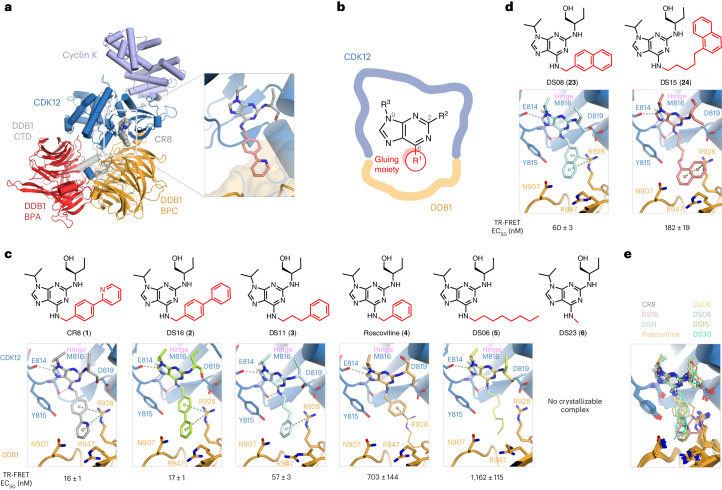
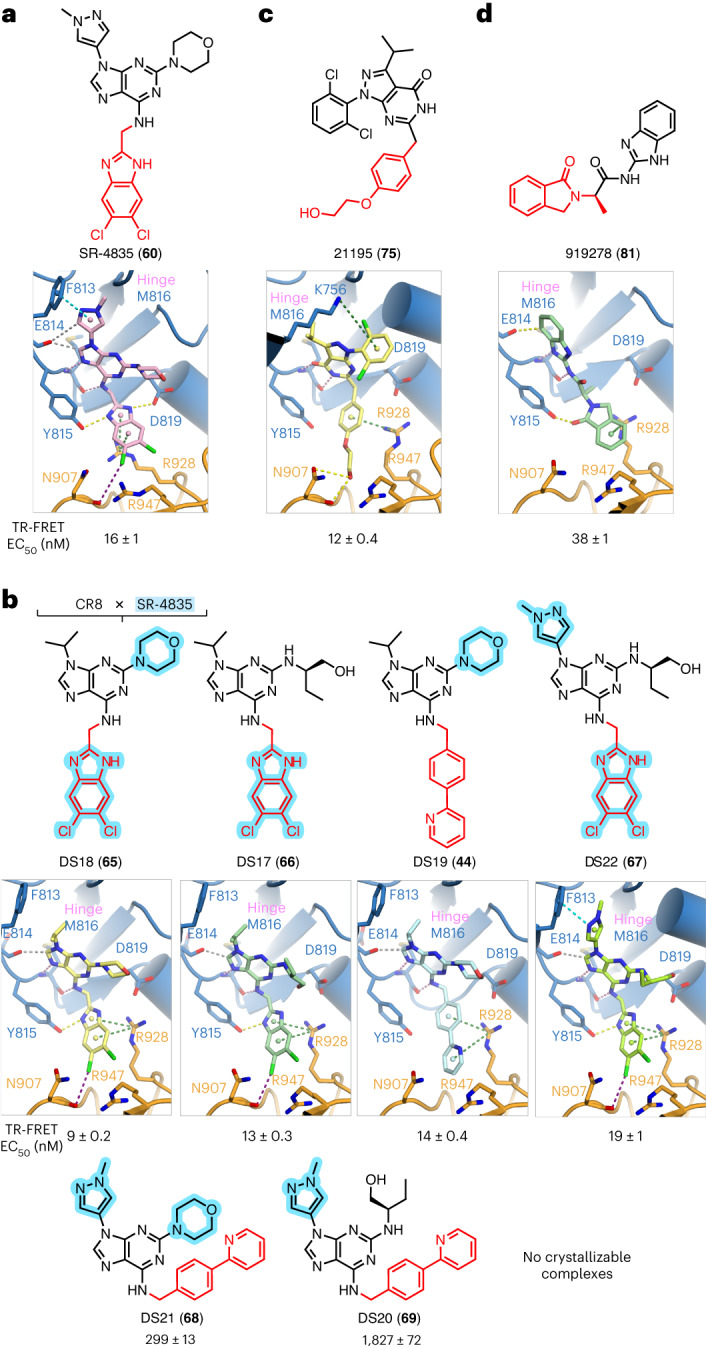
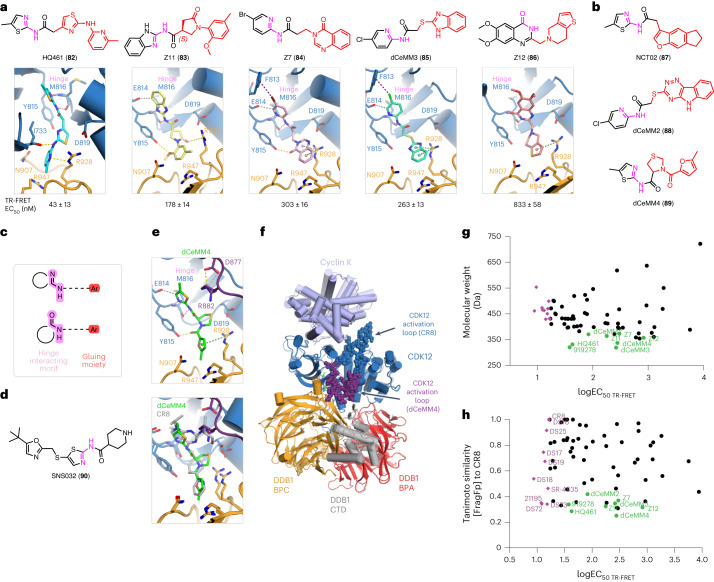
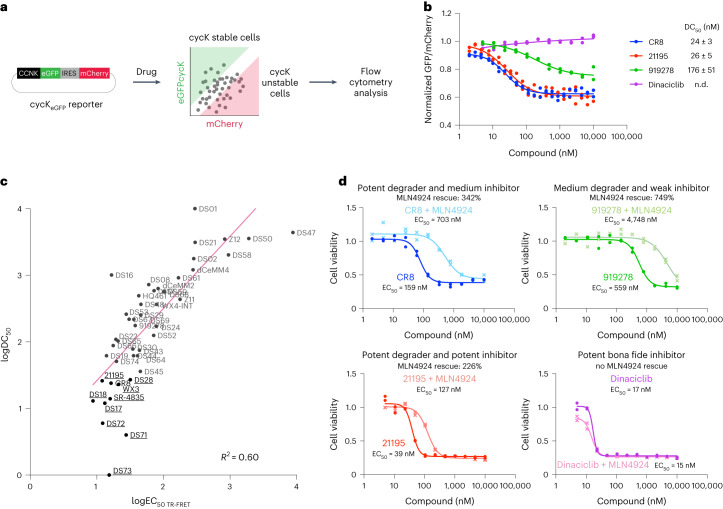
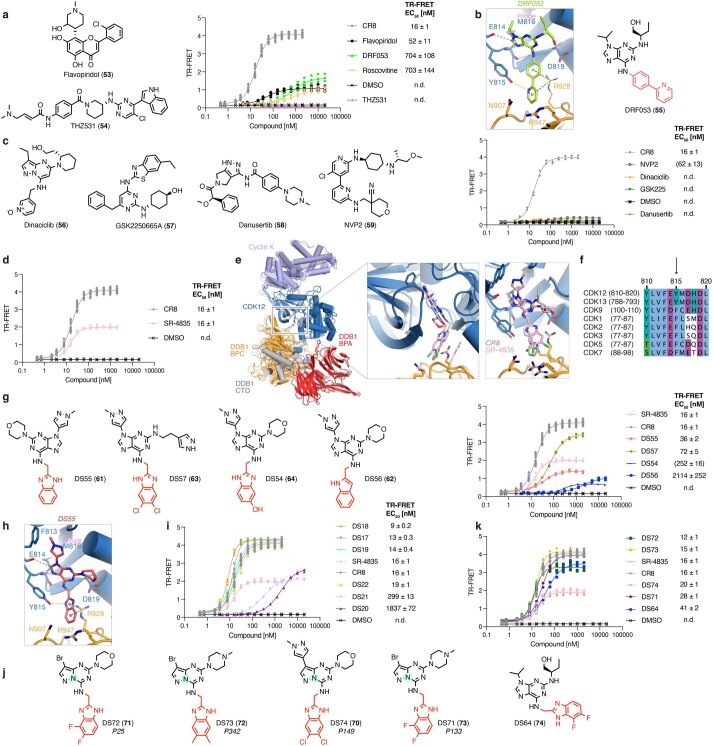
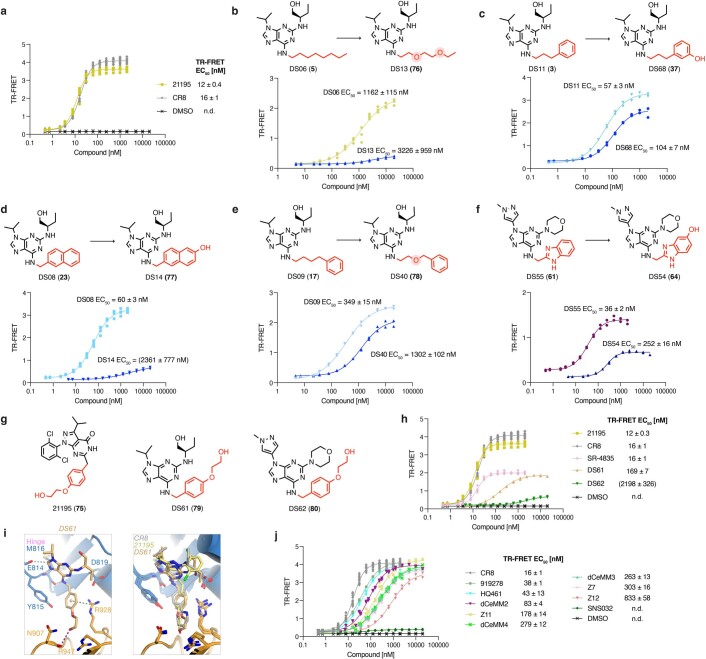
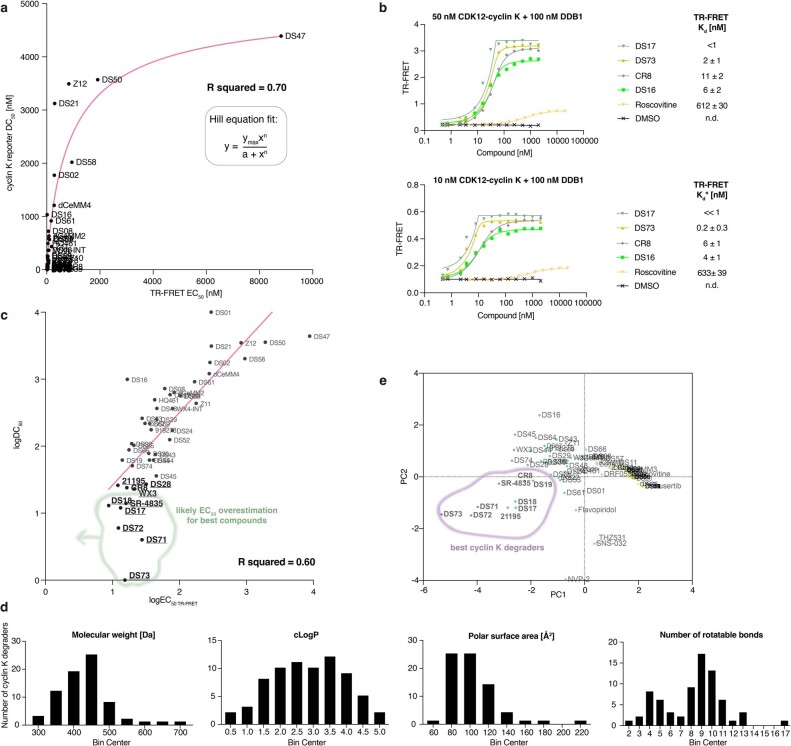
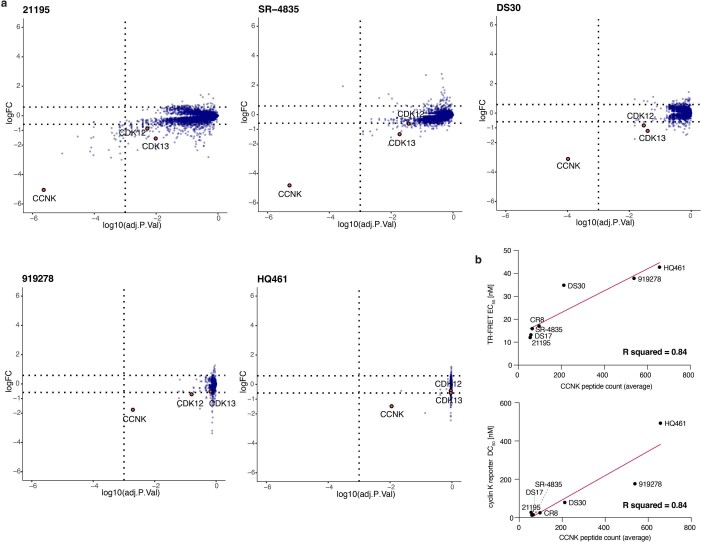
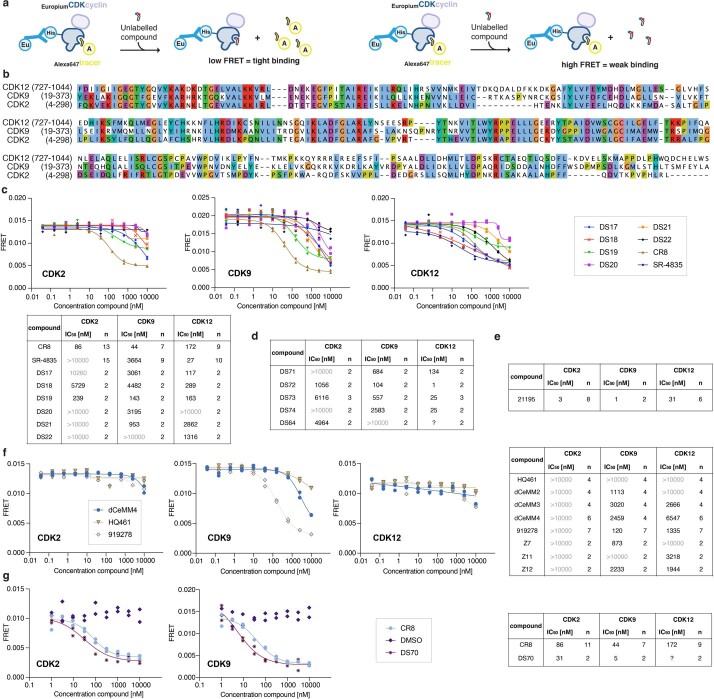
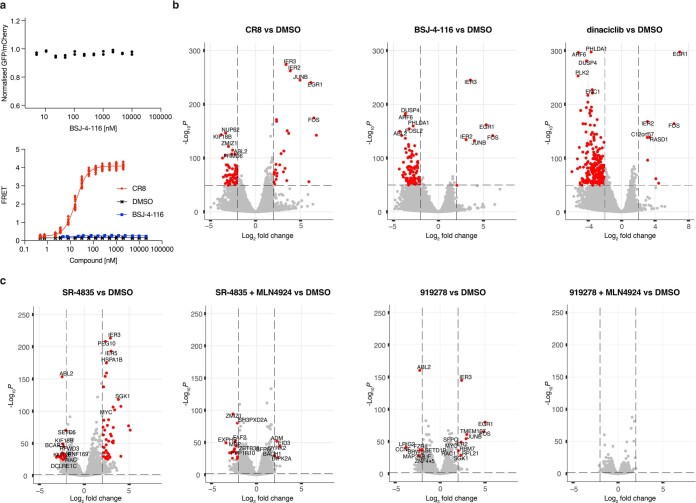
Molecular glue degraders are an effective therapeutic modality, but their design principles are not well understood. Recently, several unexpectedly diverse compounds were reported to deplete cyclin K by linking CDK12–cyclin K to the DDB1–CUL4–RBX1 E3 ligase. Here, to investigate how chemically dissimilar small molecules trigger cyclin K degradation, we evaluated 91 candidate degraders in structural, biophysical and cellular studies and reveal all compounds acquire glue activity via simultaneous CDK12 binding and engagement of DDB1 interfacial residues, in particular Arg928. While we identify multiple published kinase inhibitors as cryptic degraders, we also show that these glues do not require pronounced inhibitory properties for activity and that the relative degree of CDK12 inhibition versus cyclin K degradation is tuneable. We further demonstrate cyclin K degraders have transcriptional signatures distinct from CDK12 inhibitors, thereby offering unique therapeutic opportunities. The systematic structure–activity relationship analysis presented herein provides a conceptual framework for rational molecular glue design.
Overview
The claims and statistics of this paper haven’t been checked yet.
Free: it reads the open-access text and checks the first 5 claims that cite a source we can check. Create a free account to check every claim.
Integrity signals
Registry
Cites
Statistics
Figures
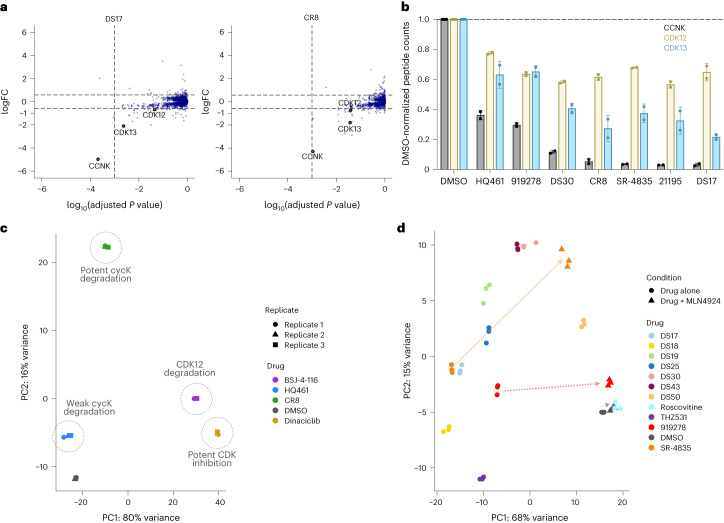
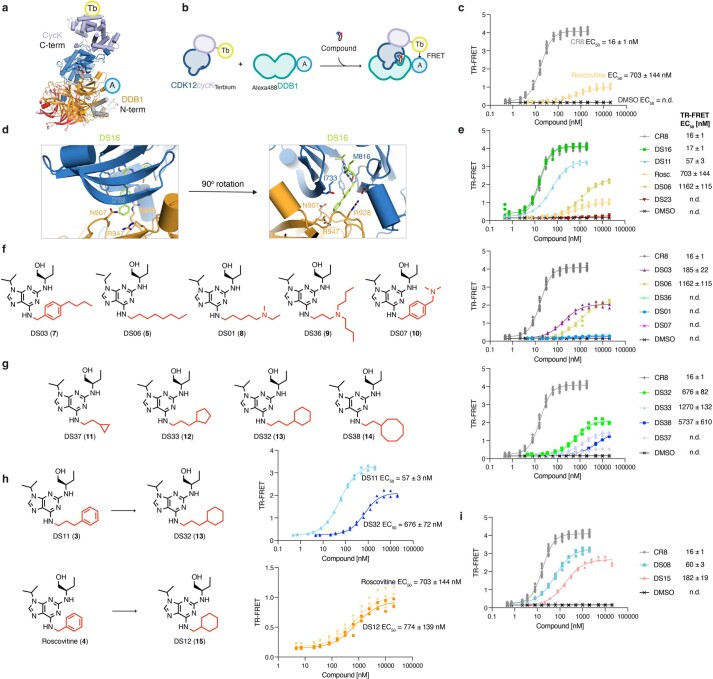
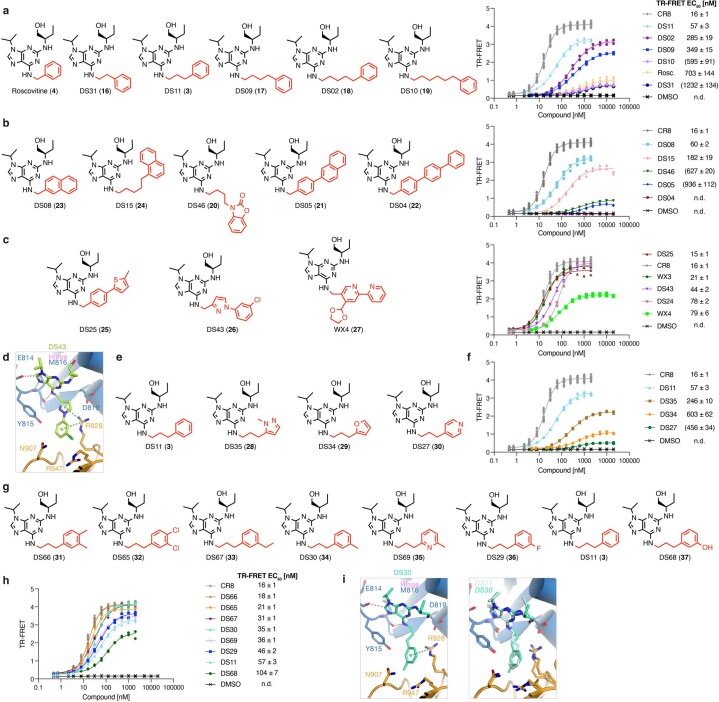
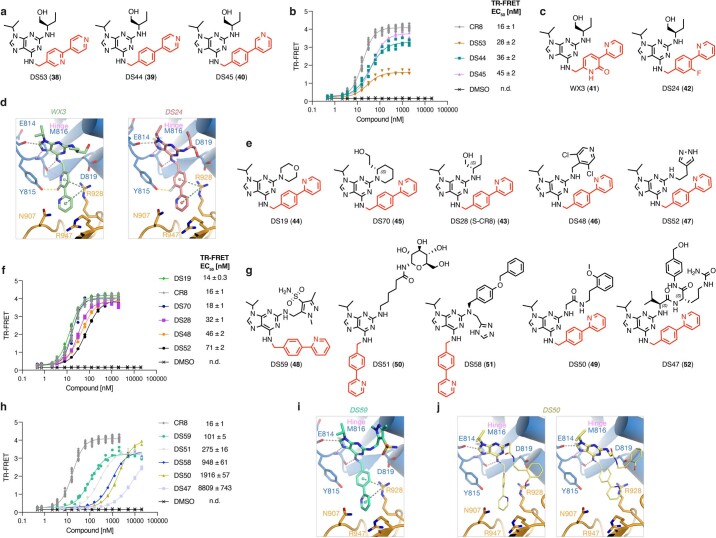
Verification
Claims the paper makes
The claims and statistics of this paper haven’t been checked yet.
Free: it reads the open-access text and checks the first 5 claims that cite a source we can check. Create a free account to check every claim.
Claims other papers make about this one
Each is checked against this paper’s own text: does it say what the citing paper says it does?
The source backs part of the claim, not all of it — or backs it for a different population, condition or comparison.
In the citing paper
“and since then numerous cycK degraders have been discovered in both serendipitous screens and through more targeted approaches (Dieter et al. 2021;Houles et al. 2023;Kozicka et al. 2024).”
From From serendipity to strategy: molecular glue degraders in cancer therapeutics (2025) · cites this paper as Kozicka et al. 2024
Experimental — accuracy not yet measured
Self-check
Percentages, sums and reported differences re-computed from the paper’s own numbers.
The self-check needs the paper’s full text.
Citations
Cites
Moderated estimation of fold change and dispersion for RNA-seq data with DESeq2
Love, M. I., Huber, W., & Anders, S. (2014) · Genome Biology · doi:10.1186/s13059-014-0550-8 · Cited by 95,106
limma powers differential expression analyses for RNA-sequencing and microarray studies
Ritchie, M. E., Phipson, B., Wu, D., Hu, Y., Law, C. W., Shi, W., & Smyth, G. K. (2015) · Nucleic Acids Research · doi:10.1093/nar/gkv007 · Cited by 40,458
Features and development of Coot
Emsley, P., Lohkamp, B., Scott, W. G., & Cowtan, K. (2010) · Acta Crystallographica Section D Biological Crystallography · doi:10.1107/s0907444910007493 · Cited by 29,915 · cited 1×
“Reciprocal space refinement was performed using phenix.refine 54 , followed by iterative real space refinement in COOT 55 .”
Phaser crystallographic software
McCoy, A. J., Grosse-Kunstleve, R. W., Adams, P. D., Winn, M. D., Storoni, L. C., & Read, R. J. (2007) · Journal of Applied Crystallography · doi:10.1107/s0021889807021206 · Cited by 20,612 · cited 2×
“The structures of the different DDB1ΔB–CDK12–cyclin K-compound complexes were solved by means of molecular replacement with PHASER 53 using a previously solved structure of the complex induced by CR8 (Protein Data Bank (PDB) 6TD3 (ref.”
Overview of the CCP 4 suite and current developments
Winn, M. D., Ballard, C. C., Cowtan, K. D., Dodson, E. J., Emsley, P., Evans, P. R., Keegan, R. M., Krissinel, E. B., Leslie, A. G. W., McCoy, A., et al. (2011) · Acta Crystallographica Section D Biological Crystallography · doi:10.1107/s0907444910045749 · Cited by 12,353 · cited 1×
“Space group determination was done with POINTLESS 51 , and datasets were merged and scaled with AIMLESS 51 .”
Friesner, R. A., Banks, J. L., Murphy, R. B., Halgren, T. A., Klicic, J. J., Mainz, D. T., Repasky, M. P., Knoll, E. H., Shelley, M., Perry, J. K., et al. (2004) · Journal of Medicinal Chemistry · doi:10.1021/jm0306430 · Cited by 10,057
Inference of Macromolecular Assemblies from Crystalline State
Krissinel, E., & Henrick, K. (2007) · Journal of Molecular Biology · doi:10.1016/j.jmb.2007.05.022 · Cited by 9,984 · cited 2×
“4a–c, 53 – 59 ), and first focused on the CDK12-selective inhibitor SR-4835 (refs.”
Friesner, R. A., Murphy, R. B., Repasky, M. P., Frye, L. L., Greenwood, J. R., Halgren, T. A., Sanschagrin, P. C., & Mainz, D. T. (2006) · Journal of Medicinal Chemistry · doi:10.1021/jm051256o · Cited by 6,851
Towards automated crystallographic structure refinement with phenix.refine
Afonine, P. V., Grosse-Kunstleve, R. W., Echols, N., Headd, J. J., Moriarty, N. W., Mustyakimov, M., Terwilliger, T. C., Urzhumtsev, A., Zwart, P. H., & Adams, P. D. (2012) · Acta Crystallographica Section D Biological Crystallography · doi:10.1107/s0907444912001308 · Cited by 5,511 · cited 1×
“Reciprocal space refinement was performed using phenix.refine 54 , followed by iterative real space refinement in COOT 55 .”
MolProbity: More and better reference data for improved all‐atom structure validation
Williams, C. J., Headd, J. J., Moriarty, N. W., Prisant, M. G., Videau, L. L., Deis, L. N., Verma, V., Keedy, D. A., Hintze, B. J., Chen, V. B., et al. (2018) · Protein Science · doi:10.1002/pro.3330 · Cited by 4,599 · cited 1×
“Structure validation was carried out with Molprobity 58 , and visualizations were generated with PyMol (Schrödinger).”
Cited by
Targeted protein degradation: from mechanisms to clinic
Tsai, J. M., Nowak, R. P., Ebert, B. L., & Fischer, E. S. (2024) · Nature Reviews Molecular Cell Biology · doi:10.1038/s41580-024-00729-9 · Cited by 438
“This example, and the expansion of CR8 derivatives, highlights an underappreciated flexibility in recruiting CRLs by molecular glues and suggests that multiple interfaces — not necessarily involving the target itself — can be remodelled to induce TPD 101–103 .”
Self-citationTargeted protein degradation for cancer therapy
Hinterndorfer, M., Spiteri, V. A., Ciulli, A., & Winter, G. E. (2025) · Nature Reviews Cancer · doi:10.1038/s41568-025-00817-8 · Cited by 210
“60,61,95).”
Self-citationMolecular glues for protein-protein interactions: Progressing toward a new dream
Konstantinidou, M., & Arkin, M. R. (2024) · Cell Chemical Biology · doi:10.1016/j.chembiol.2024.04.002 · Cited by 187
Induced protein degradation for therapeutics: past, present, and future
Yoon, H., Rutter, J. C., Li, Y.-D., & Ebert, B. L. (2024) · Journal of Clinical Investigation · doi:10.1172/jci175265 · Cited by 67
“Structural studies revealed that the CDK inhibitor CR8 binds the active site of CDK12 and bridges the CDK12-DDB1 interface (68, 71).”
Self-citationMolecular glues and induced proximity: An evolution of tools and discovery
Robinson, S. A., Co, J., & Banik, S. M. (2024) · Cell chemical biology · doi:10.1016/j.chembiol.2024.04.001 · Cited by 63
Design of a Cereblon construct for crystallographic and biophysical studies of protein degraders
Kroupova, A., Spiteri, V. A., Rutter, Z. J., Furihata, H., Darren, D., Ramachandran, S., Chakraborti, S., Haubrich, K., Pethe, J., Gonzales, D., et al. (2024) · Nature Communications · doi:10.1038/s41467-024-52871-9 · Cited by 47
“Ternary co-crystal structures have also enabled structure-driven design of Cyclin K degraders which glue CDK12 to the CRL4 adaptor protein DDB1 (Damage speci fi c DNA binding protein 1) to induce ubiquitination and degradation of CDK12-complexed Cyclin K 39 – 42 .”
BackgroundEmerging strategies for prospective discovery of molecular glue degraders
Wang, B., Cao, S., & Zheng, N. (2024) · Current Opinion in Structural Biology · doi:10.1016/j.sbi.2024.102811 · Cited by 52
New strategies to enhance the efficiency and precision of drug discovery
An, Q., Huang, L., Wang, C., Wang, D., & Tu, Y. (2025) · Frontiers in Pharmacology · doi:10.3389/fphar.2025.1550158 · Cited by 50
Kumar, S., Venkatachalapathy, M., Sistla, R. K., & Poongavanam, V. (2024) · Drug Discovery Today · doi:10.1016/j.drudis.2024.104205 · Cited by 51
High-throughput ligand diversification to discover chemical inducers of proximity
Shaum, J. B., Ordoño, M. M. I., Steen, E. A., Wenge, D. V., Cheong, H., Janowski, J., Hunkeler, M., Bilotta, E. M., Rutter, Z. J., Barta, P. A., et al. (2026) · Nature Chemical Biology · doi:10.1038/s41589-025-02137-2 · Cited by 47
Self-citationTargeted protein degradation in CNS disorders: a promising route to novel therapeutics?
Kuemper, S., Cairns, A. G., Birchall, K., Yao, Z., & Large, J. M. (2024) · Frontiers in Molecular Neuroscience · doi:10.3389/fnmol.2024.1370509 · Cited by 35
“…PPI effects such as extending or remodeling surfaces and steric exclusion appear to be considerations for the efficacy and selectivity of glue interactions, which may influence the choices made in glue design (Geiger et al., 2022; Kozicka et al., 2023; Jiang et al., 2024; Oleinikovas et al., 2024).”
Targeting CDKs in cancer therapy: advances in PROTACs and molecular glues
Marei, H. E. S., Bedair, K., Hasan, A., Al-Mansoori, L., Gaiba, A., Morrione, A., Cenciarelli, C., & Giordano, A. (2025) · npj Precision Oncology · doi:10.1038/s41698-025-00931-8 · Cited by 43
Bioisoteres for carboxylic acids: From ionized isosteres to novel unionized replacements
Hall, A., Chatzopoulou, M., & Frost, J. R. (2024) · Bioorganic & Medicinal Chemistry · doi:10.1016/j.bmc.2024.117653 · Cited by 28
Breaking Bad Proteins—Discovery Approaches and the Road to Clinic for Degraders
Bouvier, C., Lawrence, R., Cavallo, F., Xolalpa, W., Jordan, A. M., Hjerpe, R., & Rodríguez, M. S. (2024) · Cells · doi:10.3390/cells13070578 · Cited by 32
“Analysis showed that although these compounds are structurally different from CR8 (identified by data mining described above), they act by a similar mechanism of binding CDK12 and recruiting Cyclin K and DDB1 [155].”
BackgroundDual-site molecular glues for enhancing protein-protein interactions of the CDK12-DDB1 complex
Zhang, Z., Li, Y., Yang, J., Li, J., Lin, X., Liu, T., Yang, S., Lin, J., Xue, S., Yu, J., et al. (2024) · Nature Communications · doi:10.1038/s41467-024-50642-0 · Cited by 30
“As anticipated, this led to a decrease in cyclin K degradation, possibly due to the stronger electron-withdrawing groups reducing the strength of cation-π interactions, thereby lowering the gluing effect (Table S1) 33 .”
InfluentialDegradation by Design: New Cyclin K Degraders from Old CDK Inhibitors
Thomas, K. L., Bouguenina, H., Miller, D. S. J., Sialana, F. J., Hayhow, T. G., Choudhary, J. S., Rossanese, O. W., & Bellenie, B. R. (2024) · ACS Chemical Biology · doi:10.1021/acschembio.3c00616 · Cited by 27
Degradome analysis to identify direct protein substrates of small-molecule degraders
Jochem, M., Schrempf, A., Wagner, L.-M., Segal, D., Cisneros, J., Ng, A., Winter, G. E., & Krijgsveld, J. (2025) · Cell Chemical Biology · doi:10.1016/j.chembiol.2024.10.007 · Cited by 25
Self-citationSun, J., Gu, M., Peng, L., Guo, J., Chen, P., Wen, Y., Fang, F., Chen, X., Liu, T., Chen, Y., et al. (2024) · Journal of the American Chemical Society · doi:10.1021/jacs.4c11003 · Cited by 27
Discovery of a DCAF11-dependent cyanoacrylamide-containing covalent degrader of BET-proteins
Tin, G., Cigler, M., Hinterndorfer, M., Dong, K. D., Imrichová, H., Gygi, S. P., & Winter, G. E. (2024) · Bioorganic & Medicinal Chemistry Letters · doi:10.1016/j.bmcl.2024.129779 · Cited by 28
Self-citationIn silico modeling of targeted protein degradation
Lv, W., Jia, X., Tang, B., Ma, C., Fan, X., Jin, X., Niu, Z., & Han, X. (2025) · European Journal of Medicinal Chemistry · doi:10.1016/j.ejmech.2025.117432 · Cited by 30
Facilitating the development of molecular glues: Opportunities from serendipity and rational design
Jiang, W., Jiang, Y., Luo, Y., Qiao, W., & Yang, T. (2023) · European Journal of Medicinal Chemistry · doi:10.1016/j.ejmech.2023.115950 · Cited by 24
Development of Potent and Selective CK1α Molecular Glue Degraders
Geng, Q., Jiang, Z., Byun, W. S., Donovan, K. A., Zhuang, Z., Jiang, F., Jones, H. M., Razumkov, H., Tang, M. T., Sarott, R. C., et al. (2025) · Journal of Medicinal Chemistry · doi:10.1021/acs.jmedchem.4c02415 · Cited by 22
Self-citationMolecular glues evolve from serendipity to rational design
Shrivastav, P., Singh, R., & Wiemer, A. J. (2025) · Trends in Pharmacological Sciences · doi:10.1016/j.tips.2025.10.013 · Cited by 22
The reversible inhibitor SR-4835 binds Cdk12/cyclin K in a noncanonical G-loop conformation
Schmitz, M., Kaltheuner, I. H., Anand, K., Düster, R., Moecking, J., Monastyrskyi, A., Duckett, D. R., Roush, W. R., & Geyer, M. (2023) · Journal of Biological Chemistry · doi:10.1016/j.jbc.2023.105501 · Cited by 21
Targeting cyclin-dependent kinases: From pocket specificity to drug selectivity
Huang, Y., Liu, W., Zhao, C., Shi, X., Zhao, Q., Jia, J., & Wang, A. (2024) · European Journal of Medicinal Chemistry · doi:10.1016/j.ejmech.2024.116547 · Cited by 19
Rational Design of CDK12/13 and BRD4 Molecular Glue Degraders
Zhuang, Z., Byun, W. S., Kozicka, Z., Donovan, K. A., Dwyer, B. G., Thornhill, A. M., Jones, H. M., Jiang, Z., Zhu, X., Fischer, E. S., et al. (2025) · Angewandte Chemie International Edition · doi:10.1002/anie.202508427 · Cited by 23
Self-citationPan, Y., Wang, Y., & Gou, S. (2025) · Bioorganic Chemistry · doi:10.1016/j.bioorg.2025.108491 · Cited by 19
Druglike Molecular Degraders of the Oncogenic RNA-Binding Protein HuR
Kassabri, L., & Benhamou, R. I. (2025) · JACS Au · doi:10.1021/jacsau.5c00551 · Cited by 17
Primed for degradation: How weak protein interactions enable molecular glue degraders
Hanzl, A., Inghelram, C., Schmitt, S., & Thomä, N. H. (2025) · Current Opinion in Structural Biology · doi:10.1016/j.sbi.2025.103052 · Cited by 17
Self-citationYang, J., Chang, Y., Zhou, K., Huang, W., Tien, J. C.-Y., Zhang, P., Liu, W., Zhou, L., Zhou, Y., Ren, X., et al. (2025) · Journal of Medicinal Chemistry · doi:10.1021/acs.jmedchem.5c00127 · Cited by 15
Dual E3 ligase recruitment by monovalent degraders for tunable SMARCA 2/4 degradation
Spiteri, V. A., Segal, D., Correa-Sáez, A., Iso, K., Casement, R., Ordoño, M. M. I., Nakasone, M. A., Sathe, G. J., Schätz, C., Peters, H. E., et al. (2026) · Nature Chemical Biology · doi:10.1038/s41589-026-02224-y · Cited by 19
Self-citationGhosh, P., Schmitz, M., Pandurangan, T., Tadesse, S., Chan, S. C., Mosior, J., Sun, L., Palve, V. C., Grassie, D., Anand, K., et al. (2025) · RSC Chemical Biology · doi:10.1039/d4cb00190g · Cited by 18
Quantifying Cooperativity through Binding Free Energies in Molecular Glue Degraders
Dudás, B., Athanasiou, C., Mobarec, J. C., & Rosta, E. (2025) · Journal of Chemical Theory and Computation · doi:10.1021/acs.jctc.5c00064 · Cited by 15
Extrapolating Lessons from Targeted Protein Degradation to Other Proximity-Inducing Drugs
Winter, G. E. (2024) · ACS Chemical Biology · doi:10.1021/acschembio.4c00191 · Cited by 13
Self-citationTargeting the cell-cycle machinery for cancer therapy
Peng, Y., Liu, J., Inuzuka, H., Liu, J., & Wei, W. (2025) · Trends in Cell Biology · doi:10.1016/j.tcb.2025.08.008 · Cited by 12
Charged molecular glue discovery enabled by targeted degron display
Zhuang, Z., Byun, W. S., Chrustowicz, J., Kozicka, Z., Li, V. L., Abeja, D. M., Donovan, K. A., Sepic, S., You, I., Slabicki, M. M., et al. (2026) · Nature Chemical Biology · doi:10.1038/s41589-026-02182-5 · Cited by 15
“We and others have shown that subtle chemical modifications can endow gain-of-function MGD properties upon existing chemical ligands 32,33 .”
Self-citationFrom serendipity to strategy: molecular glue degraders in cancer therapeutics
Darling, S., Bajrami, I., & West, S. C. (2025) · Critical Reviews in Biochemistry and Molecular Biology · doi:10.1080/10409238.2025.2564068 · Cited by 9
“Similarly, tR-FRet and fluorescence polarization (FP) assays offer robust scalable formats for detecting molecular glue-induced interactions in vitro (Simonetta et al. 2019; wang et al. 2021; Hsia et al. 2024; Kozicka et al. 2024).”
Chen, Z., Chi, G., Balo, T., Chen, X., Montes, B. R., Clifford, S. C., D’Angiolella, V., Szabo, T., Kiss, A., Novak, T., et al. (2025) · Nature Communications · doi:10.1038/s41467-025-58350-z · Cited by 10
“These features are consistent with previously de fi ned molecular glue systems 48,49 , establishing UM171 a bona fi de molecular glue for KBTBD4 WT and HDAC2.”
Rational discovery of molecular glue degraders based on block chemistry
Wei, J., Feng, W., Chen, Q., Li, Q., & Chen, Z. (2025) · Drug Discovery Today · doi:10.1016/j.drudis.2025.104480 · Cited by 12
Xu, Q., Liu, W., Liu, H., & Zheng, Z. (2025) · Journal of Chemical Information and Modeling · doi:10.1021/acs.jcim.5c00387 · Cited by 11
Opportunities in proximity modulation: Bridging academia and industry
Đikić, I., Mayor‐Ruiz, C., Winter, G. E., Koch, K., Ciulli, A., & Thomä, N. H. (2025) · Molecular Cell · doi:10.1016/j.molcel.2025.07.018 · Cited by 11
Self-citationZheng, S., Chen, Y., Zhu, Z., Li, N., He, C., Koeffler, H. P., Han, X., Wei, Q., & Xu, L. (2025) · Journal of Zhejiang University SCIENCE B · doi:10.1631/jzus.b2500021 · Cited by 11
Drugging the undruggable: Chemical and biological insights into molecular glues in the pipeline
Metwally, K. A., Yahya, G., & Abo-Dya, N. E. (2025) · European Journal of Medicinal Chemistry · doi:10.1016/j.ejmech.2025.118132 · Cited by 10
Sun, S., Tian, F., Qiao, H., Xin, Q., Zhang, X., Song, N., Yan, Y., Liu, L., Wang, Y., Zhang, L., et al. (2025) · Advanced Materials · doi:10.1002/adma.202518331 · Cited by 11
Mechanisms that matter: unbiased cellular screening for degraders
Burston, H. E., Rosethorne, E. M., Cavallo, F., Jordan, A. M., Baruah, P. S., Swift, D., & Hjerpe, R. (2025) · npj Drug Discovery. · doi:10.1038/s44386-025-00028-z · Cited by 8
“1 B) 23,25,26 can potentlyinduceaternarycomplexbetweenCDK12andDDB1,highlighting thatgluescanbeidenti fi ed from compound collections that contain lead-like molecules.”
Targeting CDK12/13 Drives Mitotic Arrest to Overcome Resistance to KRASG12C Inhibitors
Stern, Y. E., Ghosh, P., Peroza, J., Solanki, H. S., Imbody, D. J., Bridenstine, L., Pandurangan, T., Frydman, S. M., Nickens, K. N., Walker-Mimms, H. L., et al. (2025) · Cancer Research · doi:10.1158/0008-5472.can-25-0450 · Cited by 7
Salcius, M., Tutter, A. V., Fouché, M., Koc, H., King, D., Dhembi, A., Golosov, A. A., Jahnke, W., Henry, C., Argoti, D., et al. (2025) · RSC Chemical Biology · doi:10.1039/d4cb00279b · Cited by 8
Murcko, M. A. (2026) · Journal of Medicinal Chemistry · doi:10.1021/acs.jmedchem.5c03222 · Cited by 10
Methods to Study the Molecular Mechanism and Drive the Design of Protein Degraders
Crowe, C., & Ciulli, A. (2026) · Chemical Reviews · doi:10.1021/acs.chemrev.5c00800 · Cited by 6
Piech, S., Brüschweiler, S., Westphalen, J., Siess, K. M., Murias, J. G., Konrat, R., Bigenzahn, J. W., & Superti‐Furga, G. (2024) · ACS Chemical Biology · doi:10.1021/acschembio.4c00077 · Cited by 8
Small molecule targeted protein degradation via the UPS: venturing beyond E3 substrate receptors
Guo, R., Yang, F., & Cherney, E. C. (2025) · RSC Medicinal Chemistry · doi:10.1039/d4md00718b · Cited by 8
Guo, J., Tang, H., Zhao, W., Li, Y., Song, S., Feng, F., Huang, S., Wang, X., Zhou, Y., Pei, J., et al. (2025) · Journal of Medicinal Chemistry · doi:10.1021/acs.jmedchem.5c00722 · Cited by 8
Zhang, N., Li, R., Shen, H., Huang, L., Liu, S., Liao, H., Cong, W., Hu, X. M., & Hu, H. (2025) · ACS Applied Materials & Interfaces · doi:10.1021/acsami.5c02939 · Cited by 6
Phage therapy and its role in cancer treatment and control
El‐Moaty, H. I. A., Doghish, A. S., Moustafa, H. A. M., Elkalla, W. S., Sayed, G. A., Elshami, N. H., Mageed, S. S. A., Mohammed, O. A., Elrebehy, M. A., AlFarsi, K., et al. (2025) · Folia Microbiologica · doi:10.1007/s12223-025-01342-9 · Cited by 7
“One promising area is targeted protein degradation, particularly through technologies like proteolysis-targeting chimeras (PROTACs) and molecular glues, which allow the destruction of previously “undruggable” cancer-driving proteins (Li and Song 2020; Zhao et al. 2022; Kozicka et al. 2024).”
Synthetic modification of protein surfaces to mediate induced-proximity pharmacology
Jones, L. H. (2024) · RSC Medicinal Chemistry · doi:10.1039/d4md00388h · Cited by 6
Choo, M. Z. Y., Lim, E., Wong, W. S. F., & Chai, C. L. L. (2025) · Journal of Medicinal Chemistry · doi:10.1021/acs.jmedchem.5c00055 · Cited by 5
Clues for glues: from serendipity to nature’s blueprints in degrader discovery
Kozicka, Z. (2025) · Essays in Biochemistry · doi:10.1042/ebc20253058 · Cited by 6
Self-citationGray, J. L., Xiao, Z., Rogga, V. V., Zhang, X., & Tate, E. W. (2026) · Journal of the American Chemical Society · doi:10.1021/jacs.5c12299 · Cited by 6
Molecular glue degraders: Rational design, specificity engineering, and advanced delivery
Ma, L., Wang, N., Zhu, J., Wu, L., He, S., & Zhang, B. (2026) · Acta Pharmaceutica Sinica B · doi:10.1016/j.apsb.2026.02.020 · Cited by 10
“Building on the structure of SR-4835 (EC 50 ≈ 30 nmol/L in MDA-MB-231 cells) 36,72 , long-timescale molecular dynamics simulations suggested a transiently accessible pocket/groove that becomes apparent in the assembled CDK12 — DDB1 context, providing an opportunity for extended substituents to…”
Lessons from natural molecular glue degraders
Cao, S. (2024) · Biochemical Society Transactions · doi:10.1042/bst20230836 · Cited by 6
Zhang, Y., Li, L., Xu, J., Che, C.-C., Jia, J., Lu, H., You, Q., & Xu, X. (2026) · Molecules · doi:10.3390/molecules31030459 · Cited by 5
“By comparing crystal structures of diverse cyclin K degraders with varying chemotypes, the authors established a structural framework for rational design of molecular glues targeting cyclin K, providing valuable insights for future drug development efforts [120–123].”
A pharmacological modality to sequester homomeric proteins
Livnah, E., Suss, O., Rogel, A., Gilat, A., Abdan, Y., Villegas, J. A., Gabizon, R., Nadir, A., Shamir, Y., Steinman, N. Y., et al. (2026) · Nature Chemical Biology · doi:10.1038/s41589-026-02141-0 · Cited by 4
“In cells, we observed that a PINCH targeting Keap1 exhibited a longer duration of action and a PINCH targeting BCL6 displayed selective lowering of B cell viability compared to their monomeric parents.”
Diversity in CDK structural mechanisms of regulation and drug discovery opportunities
Rowland, R. J., Noble, M. E. M., & Endicott, J. (2026) · Trends in Biochemical Sciences · doi:10.1016/j.tibs.2025.12.007 · Cited by 4
Chen, P.-H. B., & Baskin, J. M. (2024) · Nature Chemical Biology · doi:10.1038/s41589-024-01639-9 · Cited by 4
The MYCN/Aurora-A complex is a cyclin activating kinase for CDK12Preprint
Müller, M., Eing, L., Uhl, L., Schmitz, M., Kaneva, I. N., Byrne, D. P., Fleischhauer, D., Burgess, S. G., Fischer, S., Gebauer, N., et al. (2025) · bioRxiv (Cold Spring Harbor Laboratory) · doi:10.1101/2025.01.15.633177 · Cited by 4
A Glutathione S-Transferase Pi Molecular Glue Tethers Splicing Factors and Remodels Cell Metabolism
Leace, D. M., Ware, M. L., Murtagh, O. L., Tsai, H.-K., Chang, C., & Hsu, K. (2025) · Journal of the American Chemical Society · doi:10.1021/jacs.5c06951 · Cited by 3
Roles of CDK12/CDK13 and development of inhibitors and degraders
Li, Z. F., Ke, Y., Zhang, R., Zhang, R., & Zhang, L. (2026) · Biomedicine & Pharmacotherapy · doi:10.1016/j.biopha.2026.119077 · Cited by 4
DDB1 engagement defines the selectivity of S656 analogs for cyclin K degradation over CDK inhibition
Moison, C., Mendoza‐Sanchez, R., Gracias, D., Schuetz, D. A., Spinella, J.-F., Girard, S., Thavonekham, B., Chagraoui, J., Durand, A., Fortier, S., et al. (2025) · EMBO Reports · doi:10.1038/s44319-025-00448-y · Cited by 3
Rajan, N., Khanal, T., Adik, A., Valenciaga, A., Nigam, A., Liyanarachchi, S., & Ringel, M. D. (2025) · Endocrine Related Cancer · doi:10.1530/erc-24-0124 · Cited by 2
Liu, Y., Yang, Z., Liao, Z., Chen, S., Qin, Z., Liang, Z., Chen, L., Bao, C., Wei, M., Zhang, L., et al. (2025) · Journal of Medicinal Chemistry · doi:10.1021/acs.jmedchem.5c01681 · Cited by 2
Chen, D., Hu, J., Yu, Y. S., Li, K., Wang, T., Wang, Z., Yuan, Y., Shao, X., Ying, M., Yang, B., et al. (2025) · Journal of Medicinal Chemistry · doi:10.1021/acs.jmedchem.5c02232 · Cited by 2
Pandurangan, T., Zeleke, S. T., Iermolaieva, A., Ghosh, P., Mosior, J., Sun, L., Grassie, D., Schmitz, M., Kalaga, M. N., Albritton, W., et al. (2026) · Journal of Medicinal Chemistry · doi:10.1021/acs.jmedchem.5c02086 · Cited by 4
Wilk, P., Wątor, E., Muszak, D., Kochanowski, P., Krojer, T. J., & Grudnik, P. (2026) · Communications Chemistry · doi:10.1038/s42004-026-01897-9 · Cited by 2
“One of the promising applications of surface-binding fragments is in the development of proximity-labeling probes, such as proteolysis targeting chimeras (PROTACs) 54 or molecular glues 55,56 , which can facilitate targeted protein degradation or stabilization.”
Targeted protein degradation: bridging chemical biology and clinical translation
Zhang, Y., Fu, J.-W., Liu, Y., Wu, R. Y., Liang, Y., Zhang, W., Yuan, T., Zhu, H., He, Q.-J., & Yang, B. (2026) · Acta Pharmacologica Sinica · doi:10.1038/s41401-026-01861-2 · Cited by 6
“This strategy provides a blueprint for the rational design of molecules targeting other target – E3 pairs with pre-existing weak interactions [97].”
Proteome-wide identification of the druggable CRBN interactome
Galli, P., Xiao, S., Meng, Y., Hanzl, A., Bendel, A. M., Baur, R., Aguirre, J. D., Díaz-Rovira, A. M., Stammnitz, M. R., Kempf, G., et al. (2026) · Nature Biotechnology · doi:10.1038/s41587-026-03237-7 · Cited by 3
Self-citationEmerging pharmacology of targeted protein degraders
Barghout, S. H., & Eldeeb, M. A. (2025) · Journal of Pharmacology and Experimental Therapeutics · doi:10.1016/j.jpet.2025.103694 · Cited by 2
A functional map of CDK-drug interactions at single amino acid resolutionPreprint
Gould, S. I., Acosta, J., Bielo, L. B., Jaboldinov, A., Johnson, G. A., Contreras, M. E., Wuest, A. N., Brémont, E., Toure, M. A., Xiang, Y., et al. (2025) · bioRxiv (Cold Spring Harbor Laboratory) · doi:10.1101/2025.11.02.685764 · Cited by 2
Self-citationTherapeutic targeting of CDK12: a medicinal chemistry perspective
Wang, F., Dai, H., Wan, K., & Wang, M. (2026) · Bioorganic & Medicinal Chemistry · doi:10.1016/j.bmc.2026.118552 · Cited by 1
Rupanagunta, G. P., Patra, J., Upadhyay, J., Nandave, M., & Ansari, M. N. (2026) · Cell Biochemistry and Biophysics · doi:10.1007/s12013-026-01989-2 · Cited by 2
DNA-Encoded Library (DEL) Selection Identifies a Distinct DDB1 Ligand Binding Site
Guduru, S. K. R., Caldwell, J. P., Digianantonio, K. M., Prophet, S. M., Yang, S., Gareiss, P. C., Jones, C., Harbin, A., Driscoll, B., Karim, M. F., et al. (2026) · ACS Medicinal Chemistry Letters · doi:10.1021/acsmedchemlett.6c00003 · Cited by 1
Wang, J., Yin, G., Chi, Y., Feng, Y., Zhou, C., Nie, H., Zhang, Z., Meng, S., Chen, Y., Zhou, Z., et al. (2026) · Angewandte Chemie International Edition · doi:10.1002/anie.3518516 · Cited by 2
Grau, B. W., Tailor, D., Pandrala, M., Schultz, K., Hsu, E., Dheeraj, A., Rolig, A. S., Struntz, N. B., Luong, P., Stoyanova, T. I., et al. (2026) · European Journal of Medicinal Chemistry · doi:10.1016/j.ejmech.2026.118931 · Cited by 1
Molecular Glue Degraders in Early Development for Cancer Therapy
Özdemir, E. S., Jang, H., Keskin, O., Gürsoy, A., & Nussinov, R. (2026) · Medicinal Research Reviews · doi:10.1002/med.70104 · Cited by 1
Fitness criteria for PROTACs as chemical probes: principles and applications
Sturbaut, M., & Ciulli, A. (2026) · Essays in Biochemistry · doi:10.1042/ebc20260006 · Cited by 1
Yuan, R., Lei, Q., Xu, H., & Yun, W. (2024) · Animal Models and Experimental Medicine · doi:10.1002/ame2.12457 · Cited by 1
“16 Cyclins and cell cycle progression are involved in the regulation of cell self-renewal and apoptosis.”
BackgroundPROTACs of cyclin-dependent kinases
Veselá, D., Řezníčková, E., Mik, V., & Jorda, R. (2024) · Annual reports in medicinal chemistry · doi:10.1016/bs.armc.2024.10.003
Application of DELs for E3 Ligase Ligand Discovery and Targeted Protein Degradation
Malone, M. L., Sanchez, N. A., Hu, S. L., & Phelps, C. B. (2025) · Royal Society of Chemistry eBooks · doi:10.1039/9781788016032-00134
DMCCB Basel Symposium 2025: Strategies for Addressing Challenging Targets
Benfatti, F., Compagnone, N., Dapiaggi, F., Rossolini, T., & Williams, S. R. (2025) · CHIMIA International Journal for Chemistry · doi:10.2533/chimia.2025.272
Rational Design of CDK12/13 and BRD4 Molecular Glue Degraders
Zhuang, Z., Byun, W. S., Kozicka, Z., Donovan, K. A., Dwyer, B. G., Thornhill, A. M., Jones, H. M., Jiang, Z., Zhu, X., Fischer, E. S., et al. (2025) · Angewandte Chemie · doi:10.1002/ange.202508427 · Cited by 4
Self-citationProgress on molecular glue degraders
Chen, J., Deng, Z., Li, H., & Liu, L. (2026) · Scientia Sinica Chimica · doi:10.1360/ssc-2025-0228
An Integrative Computational Biophysical Workflow for Molecular Glue Discovery
Wang, M., Muhammad, D., Xia, W., Leng, J., Lei, Z., Sun, Z., & Zhang, J. Z. H. (2026) · Journal of Computational Biophysics and Chemistry · doi:10.1142/s2737416526500547
Molecular Glue Degraders Redefining Targeted Therapies From Discovery to Therapeutic Applications
Wen, J., Yu, J., Wen, W., & Jiang, B. (2026) · MedComm – Oncology · doi:10.1002/mog2.70058
Molecular Glue Degraders and the Expanding Design Space of Drug Discovery
Kozicka, Z. (2026) · CHIMIA International Journal for Chemistry · doi:10.2533/chimia.2026.179
Self-citationLarge‐Scale Profiling of Kinase Degradation by Using Norbornene‐Based Hydrophobic Tag (HyT) Strategy
Gu, M., Miao, F., Peng, L., Sun, J., Chen, P., Yang, F., Yan, J., Gao, L., Lu, X., Yao, S. Q., et al. (2026) · Angewandte Chemie International Edition · doi:10.1002/anie.2319269 · Cited by 1
Wang, J., Yin, G., Chi, Y., Feng, Y., Zhou, C., Nie, H., Zhang, Z., Meng, S., Chen, Y., Zhou, Z., et al. (2026) · Angewandte Chemie · doi:10.1002/ange.3518516
Li, S., Tian, Z., Ma, Y., Lin, Y., Liu, H., Yang, J., & Wang, P. (2026) · Journal of Medicinal Chemistry · doi:10.1021/acs.jmedchem.6c01039
Jagannath, M., Sunderesan, A., Gupta, M. K., & Sudandiradoss, C. (2026) · Frontiers in Immunology · doi:10.3389/fimmu.2026.1869543
“This ability to exploit a protein ’ s shape complementarity and turn weak and nonproductive interactions into productive docking sites for induced degradation has made MGDs attractive for viral proteins with scaffolding based functions (103).”
Sun, Y., Zhang, Y., Yan, W. W., Duan, J., Qiao, K., Yan, G., Xue, J., Wang, J., Zhan, M., Li, Q., et al. (2026) · Science Advances · doi:10.1126/sciadv.aec6492
“Nevertheless, Cyclin K itself has gained increasing attention as a promising therapeutic target ( 47 ).”
Drugging the proteome via large-scale chemoproteomics
Li, Y., Wang, J., Wang, T., 柯细松, & 曲翊 (2026) · Trends in Biochemical Sciences · doi:10.1016/j.tibs.2026.06.005
Xue, Y., Ali, S., Chen, H., & Zhou, J. (2026) · Journal of Medicinal Chemistry · doi:10.1021/acs.jmedchem.6c01988 · Cited by 1
Metadata
- Authors
- Kozicka, Z., Suchyta, D. J., Focht, V., Kempf, G., Petzold, G., Jentzsch, M., Zou, C., Di Genua, C., Donovan, K. A., Coomar, S., Cigler, M., Mayor-Ruiz, C., Schmid-Burgk, J. L., Häussinger, D., Winter, G. E., Fischer, E. S., Słabicki, M., Gillingham, D., Ebert, B. L., & Thomä, N. H.
- Affiliations
- University of Basel (CH)
- Friedrich Miescher Institute (CH)
- University of Bonn (DE)
- Broad Institute (US)
- Harvard University (US)
- Austrian Academy of Sciences (AT)
- Corresponding author
- Thomä, Nicolas H.
- ORCID
- Venue
- Nature Chemical Biology
- Published
- 2023-09-07
- Volume
- 20
- Issue
- 1
- Pages
- 93-102
- ISSN
- 1552-4450 (ISSN-L)
- 1552-4469
- PMC
- PMC10746543
- OpenAlex
- W4386498961
- Semantic Scholar
- 912980ae640f3301ac42767123794ece6dd660c4
- Cited by
- 113
- References
- 66
- Citations by year
- 2026: 42 · 2025: 45 · 2024: 24 · 2023: 2
- FWCI
- 10.16
- Type
- journal article
- Language
- en
- Open access
- hybrid
- doi.org
- Licence
- cc-by
- creativecommons.org/licenses/by/4.0 (tdm)
- creativecommons.org/licenses/by/4.0 (vor)
- Locations
- Nature Chemical Biology (publishedVersion, cc-by)
- PubMed Central (publishedVersion, cc-by)
- PubMed (publishedVersion)
- DORA PSI (Paul Scherrer Institute) (submittedVersion, other-oa)
- Funders
- Deutsche Forschungsgemeinschaft (KA 3071/6-1, CRC 1035, EXC 2124, X06SA, 1861/10-3, 3071/4-1, TRR261, FP7/2007–2013, 390838134, 201302640, KA 3071/4-1, 398967434, ZUK63)
- Schweizerischer Nationalfonds zur Förderung der Wissenschaftlichen Forschung (301206, 179541, 310030)
- Eberhard Karls Universität Tübingen (ZUK 63)
- Paul Scherrer Institut
- Studienstiftung des Deutschen Volkes
- National Heart, Lung, and Blood Institute (R01HL082945)
- National Cancer Institute (P01CA108631, P50CA206963, R01CA214608, R01CA218278)
- Topics
- Life Sciences › Biochemistry, Genetics and Molecular Biology › Molecular Biology › Protein Degradation and Inhibitors
- Life Sciences › Biochemistry, Genetics and Molecular Biology › Molecular Biology › Ubiquitin and proteasome pathways
- Physical Sciences › Chemistry › Organic Chemistry › Chemical Synthesis and Analysis
- Keywords
- molecular glues, cyclin K, CDK12, protein degradation, structure-activity relationship, kinase inhibitors, gene expression signatures
- MeSH terms
- Structure-Activity Relationship, Cyclins, Ubiquitin-Protein Ligases, Proteolysis
About these checks
Registry, retraction, Cites and statistics results are computed, not judged, with one exception: a printed reference that no index lists is read once by a model before it counts as a citation error. Claims are extracted by a model and kept only when their quote appears verbatim in the text; each cited source is then checked, with a model’s help, for whether it says what the claim relies on. Those verdicts can be wrong — read the claim’s quote and the cited source before relying on one.
Statistics and arithmetic are recomputed, not judged.
Confidence bands are shown only for fields calibrated on our annotated test set. None is calibrated yet, so no band is shown.
What counts as a claim ›How we measure confidence ›How we check this ›
Are you an author, or do you see a problem with this page? Request a review
Data sources
Bibliographic data: Semantic Scholar, OpenAlex, Crossref.
Contains information from the Semantic Scholar Academic Graph Datasets, made available under the ODC Attribution License (ODC-BY 1.0).
Semantic Scholar’s data is described in: Kinney, R., et al. (2023). The Semantic Scholar Open Data Platform. arXiv:2301.10140.
