

Differential roles of Aβ42/40, p-tau231 and p-tau217 for Alzheimer’s trial selection and disease monitoring
Open accessThe DOI matches its Crossref record; 55 of the 55 references it cites were found in a registry or an index.
Abstract
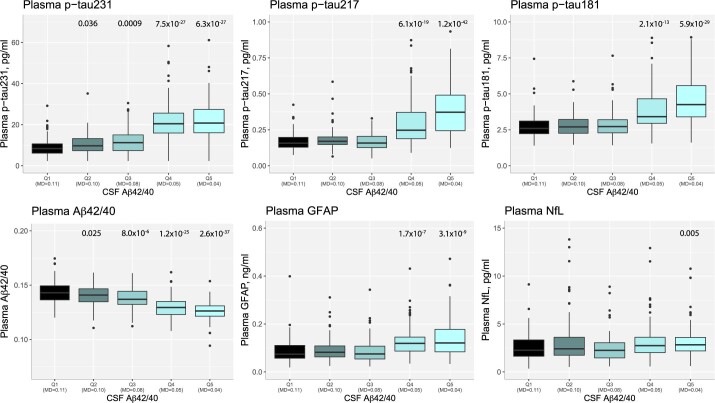
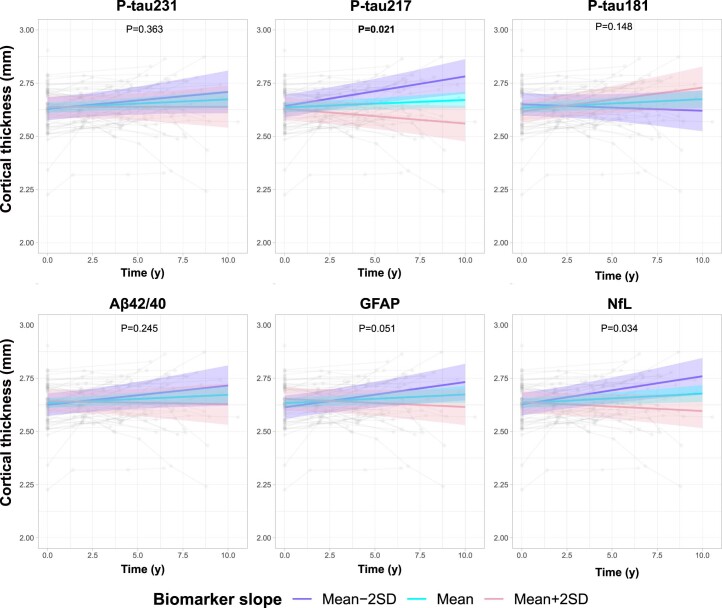
Blood biomarkers indicative of Alzheimer’s disease (AD) pathology are altered in both preclinical and symptomatic stages of the disease. Distinctive biomarkers may be optimal for the identification of AD pathology or monitoring of disease progression. Blood biomarkers that correlate with changes in cognition and atrophy during the course of the disease could be used in clinical trials to identify successful interventions and thereby accelerate the development of efficient therapies. When disease-modifying treatments become approved for use, efficient blood-based biomarkers might also inform on treatment implementation and management in clinical practice. In the BioFINDER-1 cohort, plasma phosphorylated (p)-tau231 and amyloid-β42/40 ratio were more changed at lower thresholds of amyloid pathology. Longitudinally, however, only p-tau217 demonstrated marked amyloid-dependent changes over 4–6 years in both preclinical and symptomatic stages of the disease, with no such changes observed in p-tau231, p-tau181, amyloid-β42/40, glial acidic fibrillary protein or neurofilament light. Only longitudinal increases of p-tau217 were also associated with clinical deterioration and brain atrophy in preclinical AD. The selective longitudinal increase of p-tau217 and its associations with cognitive decline and atrophy was confirmed in an independent cohort (Wisconsin Registry for Alzheimer’s Prevention). These findings support the differential association of plasma biomarkers with disease development and strongly highlight p-tau217 as a surrogate marker of disease progression in preclinical and prodromal AD, with impact for the development of new disease-modifying treatments.
Overview
The claims and statistics of this paper haven’t been checked yet.
Free: it reads the open-access text and checks the first 5 claims that cite a source we can check. Create a free account to check every claim.
Integrity signals
Registry
Cites
Statistics
Figures
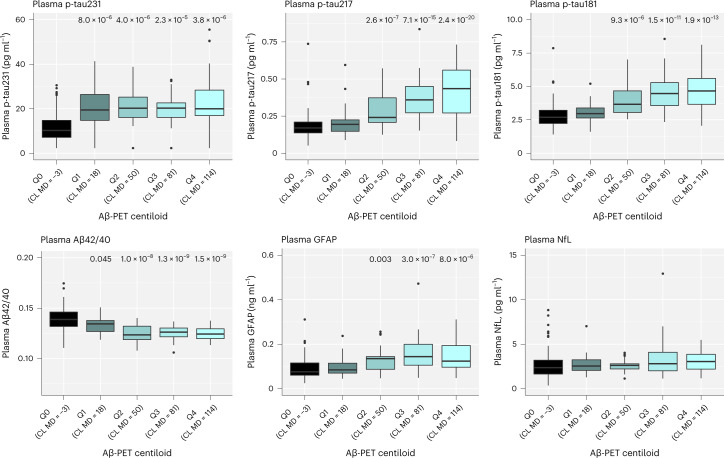
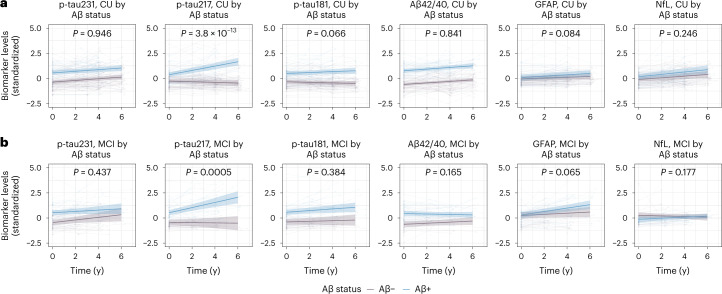
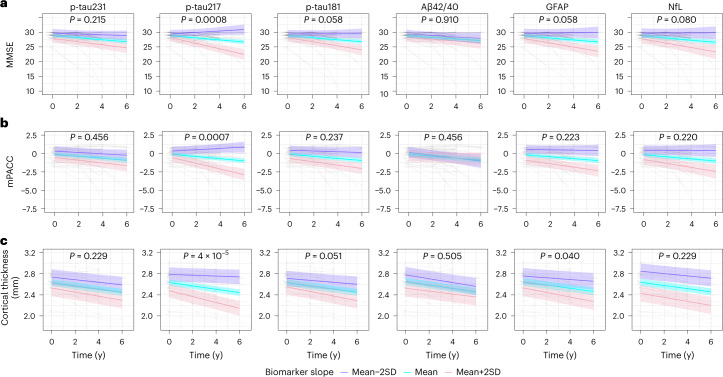
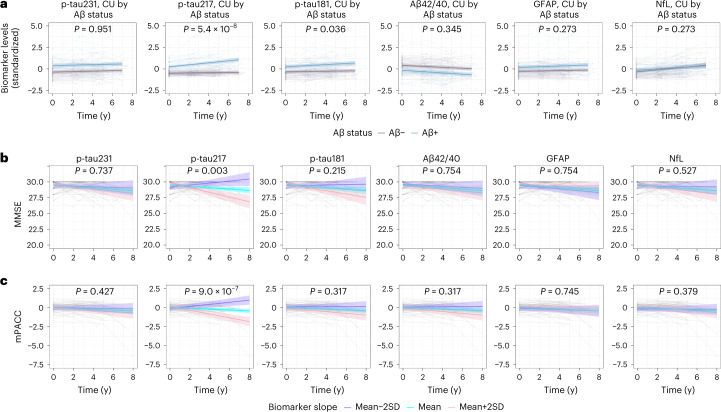
Verification
Claims the paper makes
The claims and statistics of this paper haven’t been checked yet.
Free: it reads the open-access text and checks the first 5 claims that cite a source we can check. Create a free account to check every claim.
Claims other papers make about this one
Each is checked against this paper’s own text: does it say what the citing paper says it does?
The source backs part of the claim, not all of it — or backs it for a different population, condition or comparison.
In the citing paper
“Plasma levels of p-tau are strongly associated with PET and CSF biomarkers of AD pathology19–25, neuropathological changes associated with AD20,23,26,27 and the subsequent development of AD dementia20,23,28.”
From Highly accurate blood test for Alzheimer's disease is similar or superior to clinical cerebrospinal fluid tests (2024) · cites this paper as [19]
Experimental — accuracy not yet measuredThe cited source says what the claim attributes to it.
In the citing paper
“Additionally, p-tau217 demonstrates a unique longitudinal trajectory, showing increases associated with worsening brain atrophy and declining cognitive performance in individuals with elevated Aβ pathology.24,25”
From Diagnostic Accuracy of a Plasma Phosphorylated Tau 217 Immunoassay for Alzheimer Disease Pathology (2024) · cites this paper as [24]
Self-check
Percentages, sums and reported differences re-computed from the paper’s own numbers.
The self-check needs the paper’s full text.
Citations
Cites
Palmqvist, S., Janelidze, S., Quiroz, Y. T., Zetterberg, H., Lopera, F., Stomrud, E., Su, Y., Chen, Y., Serrano, G. E., Leuzy, A., et al. (2020) · JAMA · doi:10.1001/jama.2020.12134 · Cited by 1,603 · cited 3×
“For example, while all p-tau biomarkers relate to AD postmortem pathology 6,14,15 , in AD brain tissue, p-tau217 is prominently seen in granulovacuolar degeneration bodies and multivesicular bodies in neurons, which is not observed for p-tau181 and p-tau231 (ref.”
Self-citationThe Centiloid Project: standardizing quantitative amyloid plaque estimation by PET
Klunk, W. E., Koeppe, R. A., Price, J. C., Benzinger, T. L., Devous, M. D., Jagust, W. J., Johnson, K. A., Mathis, C. A., Minhas, D., Pontecorvo, M. J., et al. (2015) · Alzheimer's & Dementia · doi:10.1016/j.jalz.2014.07.003 · Cited by 1,348 · cited 1×
“Next, we analyzed plasma biomarkers when grouping participants by Aβ-PET centiloids, which is an established measure to increase comparability across Aβ-PET methods 22 .”
Karikari, T. K., Pascoal, T. A., Ashton, N. J., Janelidze, S., Benedet, A. L., Rodriguez, J. L., Chamoun, M., Savard, M., Kang, M. S., Therriault, J., et al. (2020) · The Lancet Neurology · doi:10.1016/s1474-4422(20)30071-5 · Cited by 1,316
Self-citationJanelidze, S., Mattsson, N., Palmqvist, S., Smith, R., Beach, T. G., Serrano, G. E., Chai, X., Proctor, N. K., Eichenlaub, U., Zetterberg, H., et al. (2020) · Nature Medicine · doi:10.1038/s41591-020-0755-1 · Cited by 1,247 · cited 1×
“Recently, blood biomarkers reflecting Aβ 3,4 , tau 5–8 , neurodegeneration 9,10 and astrogliosis 11,12 , have been developed and validated.”
Self-citationBiomarkers for neurodegenerative diseases
Hansson, O. (2021) · Nature Medicine · doi:10.1038/s41591-021-01382-x · Cited by 1,159
Self-citationAssociation of plasma neurofilament light with neurodegeneration in patients with Alzheimer disease
Mattsson, N., Andreasson, U., Zetterberg, H., Blennow, K., & Initiative, F. T. A. D. N. (2017) · JAMA Neurology · doi:10.1001/jamaneurol.2016.6117 · Cited by 1,070
Self-citationDefining imaging biomarker cut points for brain aging and Alzheimer's disease
Jack, C. R., Wiste, H. J., Weigand, S. D., Therneau, T. M., Lowe, V. J., Knopman, D. S., Gunter, J. L., Senjem, M. L., Jones, D. T., Kantarci, K., et al. (2017) · Alzheimer's & Dementia · doi:10.1016/j.jalz.2016.08.005 · Cited by 931
High-precision plasma β-amyloid 42/40 predicts current and future brain amyloidosis
Schindler, S. E., Bollinger, J. G., Ovod, V., Mawuenyega, K. G., Li, Y., Gordon, B. A., Holtzman, D. M., Morris, J. C., Benzinger, T. L. S., Xiong, C., et al. (2019) · Neurology · doi:10.1212/wnl.0000000000008081 · Cited by 885 · cited 3×
“Recently, blood biomarkers reflecting Aβ 3,4 , tau 5–8 , neurodegeneration 9,10 and astrogliosis 11,12 , have been developed and validated.”
Self-citationThe Preclinical Alzheimer Cognitive Composite: Measuring Amyloid-Related Decline
Donohue, M. C., Sperling, R. A., Salmon, D. P., Rentz, D. M., Raman, R., Thomas, R. G., Weiner, M., & Aisen, P. S. (2014) · JAMA Neurology · doi:10.1001/jamaneurol.2014.803 · Cited by 860
Mattsson, N., Cullen, N. C., Andreasson, U., Zetterberg, H., & Blennow, K. (2019) · JAMA Neurology · doi:10.1001/jamaneurol.2019.0765 · Cited by 726 · cited 1×
“This includes a marker of global neurodegeneration, plasma NfL, which has been shown to associate with clinical progression in patients with more advanced symptoms 24,25 .”
Self-citation
Cited by
Items 301–400 of 467
Croese, T., Mummery, C. J., Bregman, N., Bracha, D., Baruch, K., Kertser, A., Raveh, S., Shochat, E., & Schwartz, M. (2026) · Nature Medicine · doi:10.1038/s41591-026-04547-8 · Cited by 4
Liu, D., Li, H., Liu, Q., Li, H., Tang, Y., Cheng, K., Li, T., Chu, Y., Jia, X., Yu, W., et al. (2025) · Frontiers in Aging Neuroscience · doi:10.3389/fnagi.2025.1599761 · Cited by 4
Aschenbrenner, A. J., Hassenstab, J. J., Schindler, S. E., Janelidze, S., Hansson, O., Morris, J. C., & Grober, E. H. (2024) · The Journal of Prevention of Alzheimer s Disease · doi:10.14283/jpad.2024.130 · Cited by 4
“Recently, plasma biomarkers of AD pathology have become widely available and likely will form the basis of a cost-effective cohort enrichment strategy for future clinical trials that additionally make serial assessments more feasible (25–27).”
Self-citationBlood-based biomarkers in the oldest old: towards Alzheimer's disease detection in primary care
Contador, J., & Suárez‐Calvet, M. (2024) · The Lancet Regional Health - Europe · doi:10.1016/j.lanepe.2024.101077 · Cited by 5
Gicas, K. M., Honer, W. G., Petyuk, V., Wilson, R. S., Boyle, P. A., Leurgans, S. E., Schneider, J. A., Jager, P. L. D., & Bennett, D. A. (2023) · Journal of Clinical and Experimental Neuropsychology · doi:10.1080/13803395.2023.2232583 · Cited by 4
“…of p-tau 217 predict future memory problems in cognitively unimpaired persons with autosomal dominant AD (Aguillonm et al., 2022), and that level of, and longitudinal change in, p-tau 217 is associated with greater global cognitive decline in early AD (Ashton et al., 2022; Mielke et al., 2022).”
BackgroundArranz, J., Zhu, N., Rubio‐Guerra, S., Rodríguez‐Baz, Í., Carmona‐Iragui, M., Barroeta, I., Illán‐Gala, I., Santos‐Santos, M., Fortea, J., Lleó, A., et al. (2023) · medRxiv · doi:10.1101/2023.04.20.23288852 · Cited by 5
Integrating visual assessments and quantification methods for tau PET staging
Gu, Y., Yun, J., Moscoso, A., Schöll, M., Shin, D., Lee, E. H., Kang, H., Yim, S., Jo, H., Kim, J. P., et al. (2025) · Alzheimer s & Dementia · doi:10.1002/alz.70352 · Cited by 3
Self-citationIdris, M., Saini, F., Ivain, P., Baksh, R. A., Bianchi, L. A., Pape, S. E., Zetterberg, H., Wijeratne, P. A., & Strydom, A. (2025) · Alzheimer s & Dementia · doi:10.1002/alz.70446 · Cited by 3
Self-citationDevelopment of New Blood Immunoassay and Biomarkers for Tau in the Diagnosis of Alzheimer’s Disease
Li, X., Zeng, H., Durairaj, P., Wen, W., Li, T., Zhao, Y., Liu, Y., Liu, X., Qiu, Y., Xing, J., et al. (2025) · ACS Chemical Neuroscience · doi:10.1021/acschemneuro.5c00301 · Cited by 3
Equivalence of the FCSRT and RAVLT to detect medial Temporal lobe atrophy and tauopathy
Aumont, É., Amiel, K., Lopez, D. O., Arias, J. F., Montembeault, M., Bezgin, G., Hall, B. J., Trudel, L., Chan, T., Rahmouni, N., et al. (2025) · Scientific Reports · doi:10.1038/s41598-025-21260-7 · Cited by 3
Self-citationEvaluation of a panel of plasma biomarkers for Alzheimer's disease in a diverse research cohort
DuBois, K. N., Pal, S., Reader, J. M., Jackman, B. M., Perkins, M., Khobeir, N., Bakulski, K. M., Heidebrink, J. L., Hampstead, B. M., Morgan, D., et al. (2025) · Journal of Alzheimer s Disease · doi:10.1177/13872877251393405 · Cited by 3
“923 – 25 Levels of pTau-217 pTau-217 show utility as a biomarker in CSF A β + and /or A β PET + participants when to CSF A β − and PET The University of Michigan Memory and Aging Project (UM-MAP) is a prospective observational, longitudinal study, enrolling older adults across the cognitive…”
Mattsson, N., Karlsson, L., Tang, W., Blennow, K., Zetterberg, H., Bateman, R. J., Schindler, S. E., Barthélemy, N. R., Palmqvist, S., Stomrud, E., et al. (2025) · EMBO Molecular Medicine · doi:10.1038/s44321-025-00348-7 · Cited by 4
“…considering that they have been robustly associated with A β in the past (Schindler et al, 2019; Mattsson-Carlgren et al, 2021; Wisch et al, 2023; Ashton et al, 2022), and that their effects have been shown to be complimentary both when predicting A β -status in vivo (Janelidze et al, 2022), and…”
Self-citationCánovas, R., Cox, T. O., Doré, V., Bourgeat, P., Fripp, J., Feizpour, A., Shishegar, R., Fowler, C. J., Laws, S. M., Porter, T., et al. (2026) · Annals of Neurology · doi:10.1002/ana.78163 · Cited by 4
“16 Longitudinal assessments of plasma A β 42/40 are dif-fi cult to characterize, with few studies assessing how plasma A β 42/40 changes over time in relation to changes in cognition or in A β accumulation, 14,17,18 and none have focused on where on the A β -PET trajectory it becomes abnormal.”
Self-citationLiu, W.-Z., Xue, M., Sheng, Z.-H., Wei, Y.-Q., Ma, Y., Li, J., Song, J., Chi, S., Ou, Y., & Initiative, A. D. N. (2026) · Journal of Translational Medicine · doi:10.1186/s12967-026-07939-z · Cited by 4
“Only fewer studies have investigated the association between plasma p-tau217 levels and cognitive function [17–20], with cognitive assessments restricted to the modified Preclinical Alzheimer Cognitive Composite (mPACC) and MMSE scores.”
Presenilin-dependent regulation of neuronal tau pathology via the autophagy and proteasome pathways
del Ser‐Badia, A., Soto-Faguás, C. M., Vecino, R., Vendrell, C., Molina‐Porcel, L., Sánchez‐Valle, R., Rodríguez-Álvarez, J., Vicario‐Abejón, C., & Saura, C. A. (2026) · Acta Neuropathologica Communications · doi:10.1186/s40478-026-02270-6 · Cited by 3
“Elevated levels of phosphorylated tau (pTau) species in brain and plasma are associated with cognitive decline and conversion to dementia, making them potentially useful biomarkers for clinical diagnosis [5–8].”
He, Y., 杜雨柔, Liu, D., Che, P., Wang, Y., Li, J., Wang, C., & Zhang, N. (2026) · Translational Psychiatry · doi:10.1038/s41398-026-04043-0 · Cited by 4
Chong, J. R., Cheah, I. K.-M., Tang, R. M. Y., Halliwell, B. B., Chen, C. P., & Lai, M. K. P. (2026) · Free Radical Biology and Medicine · doi:10.1016/j.freeradbiomed.2026.06.043 · Cited by 3
Lee, J., Olafson, E., Toth, B., Casavant, E., Schauer, S. P., Bittner, T., Meyer, M. R., Verghese, P. B., Venkatesh, V., West, T., et al. (2026) · Alzheimer s & Dementia · doi:10.1002/alz.71604 · Cited by 3
Wang, J., Wang, D.-Z., Li, B.-H., Yang, S., Guo, F., Zheng, B., & Wang, J.-H. (2025) · Journal of Alzheimer s Disease · doi:10.1177/13872877251322809 · Cited by 3
Wang, Y., Zhu, T., Cheng, Q., Cui, X., Zhang, P.-F., Lu, Z., & Initiative, A. D. N. (2025) · Journal of Alzheimer s Disease Reports · doi:10.1177/25424823251331110 · Cited by 4
The Silent Saboteur: How Mitochondria Shape the Long-Term Fate of the Injured BrainPreprint
Kansakar, S. B. S., Sterben, S. P., Anamala, C. C., Thielen, M. D., & Liaudanskaya, V. (2025) · bioRxiv (Cold Spring Harbor Laboratory) · doi:10.1101/2025.03.19.644244 · Cited by 4
Pa, C., Shen, S., Dai, Y. L., & Wu, M. (2025) · Frontiers in Human Neuroscience · doi:10.3389/fnhum.2025.1614132 · Cited by 2
Malotaux, V., Ashton, N. J., Öhrfelt, A., Chen, Y., Su, Y., Garcia‐Ospina, G., Guzman‐Martínez, C., Villegas‐Lanau, A., Gómez‐Ramirez, J., Giraldo, M., et al. (2025) · Alzheimer s & Dementia · doi:10.1002/alz.70421 · Cited by 2
Self-citationHernández, S., Valladares‐Rodríguez, S., Novo, M., & Al‐Soufi, W. (2025) · Journal of dementia and Alzheimer's disease · doi:10.3390/jdad2040038 · Cited by 2
“This suggests that plasma A β 42/40 and p-tau231 function primarily as state markers, effectively distinguishing between amyloid-positive and amyloid-negative individuals, but lacking the capacity to determine the stage or rate of disease progression [7,49,50].”
Hellquist, E., Janelidze, S., Weidung, B., Franzon, K., Giedraitis, V., Ingelsson, M., Bali, D., Veličkaitė, V., Zetterberg, H., Hansson, O., et al. (2025) · Journal of Alzheimer s Disease · doi:10.1177/13872877251390387 · Cited by 2
Self-citationMartín‐Fuentes, I., Fernandez‐Gamez, B., Vidal‐Almela, S., Caro‐Rus, A., Solis‐Urra, P., Sánchez‐Aranda, L., Fernández‐Ortega, J., Sanchez‐Martinez, J., Coca‐Pulido, A., Olvera‐Rojas, M., et al. (2025) · Brain and Behavior · doi:10.1002/brb3.70636 · Cited by 3
“Participants will remain seated and isolated in a room, watching a standardized neutral documentary on a tablet for 30 min without any cognitive engagement (https://youtu.be/WLeTofB2wbo? feature=shared).”
Self-citationAssociation Between Plasma Phosphorylated Tau‐217 and Cognition in Parkinson's Disease
Kouchache, T., Chan, T., Sun, S., Liu, L., Delva, A., Gan‐Or, Z., Rosa‐Neto, P., Gagnon, J., Dagher, A., Postuma, R. B., et al. (2026) · Movement Disorders · doi:10.1002/mds.70400 · Cited by 2
Fandos, N., Pascual‐Lucas, M., Sarasa, L., Terencio, J. V., Sáez, M. E., Tartari, J. P., Sanabria, Á., Sotolongo‐Grau, Ó., Cano, A. C., Tárraga, L., et al. (2026) · The Journal of Prevention of Alzheimer s Disease · doi:10.1016/j.tjpad.2025.100465 · Cited by 2
Yan, C., Liu, J., Lv, S., Duan, C., Wu, Q., Chen, Y., Kong, X., & Huang, L. (2026) · Chemical Engineering Journal · doi:10.1016/j.cej.2026.173635 · Cited by 2
Vascular stiffness predicts plasma markers of neurodegeneration among older African Americans
Budak, M., Heffernan, K. S., Paruzel, V., Moallemian, S., Fausto, B. A., Ashton, N. J., Zetterberg, H., Elahi, F. M., & Gluck, M. A. (2026) · The Journal of Prevention of Alzheimer s Disease · doi:10.1016/j.tjpad.2026.100523 · Cited by 2
“While plasma p-tau217 performs well across clinical stages of AD and shows robust associations with tau pathology [22 – 26], plasma p-tau231 may be particularly sensitive to very early pathological changes, potentially preceding overt amyloid accumulation [27 – 30].”
Self-citationContextualizing Blood‐Based Biomarkers for Dementia Globally
Duran-Aniotz, C. A., Pizarro, M., Migeot, J., Salazar‐Londoño, S., Santamaría‐García, H. A., O’Bryant, S. E., & Ibáñez, A. M. (2026) · Journal of Neurochemistry · doi:10.1111/jnc.70443 · Cited by 3
Arslan, B., Gobom, J., Simrén, J., Fahlén, H., Andréasson, U., Benedet, A. L., Kvartsberg, H., & Zetterberg, H. (2026) · Clinical Chemistry and Laboratory Medicine (CCLM) · doi:10.1515/cclm-2026-0370 · Cited by 2
Self-citationChai, L., Zhan, Y., Huang, Y., Tian, M., Zhao, G., Ni, J., Xiong, X., Huang, J., & Lin, B. (2026) · Alzheimer s Research & Therapy · doi:10.1186/s13195-026-02104-6 · Cited by 2
“Consequently, although p-tau elevation often co-occurs with Aβ-related pathology, its primary clinical value in differential diagnosis lies in its unique capacity to capture the tau-mediated neurodegenerative processes that directly drive symptomatic impairment [16, 17].”
Zhang, L., Yang, C., Yao, Q., Du, X., Ding, S., Shi, Y., Sheng, C., Wang, M., Han, Y., & Luo, H. (2026) · Advanced Science · doi:10.1002/advs.75983 · Cited by 4
“In contrast, plasma-based biomarkers have emerged as a transformative approach, providing a minimally invasive, cost-efficient, and scalable method for detecting AD pathology [ 9, 10 ].”
Fiorenzato, E., Cauzzo, S., Musso, G., Biundo, R., Ceolin, C., Cosma, C., Fogliano, C. A., Meissner, W. G., Misenti, V., Moz, S., et al. (2026) · Frontiers in Aging Neuroscience · doi:10.3389/fnagi.2026.1854831 · Cited by 2
CSF and plasma tau biomarkers in the Down syndrome–Alzheimer’s disease continuum
Arranz, J., Lantero‐Rodriguez, J., Braun-Wohlfahrt, L. S., Vaqué‐Alcázar, L., Rodríguez‐Baz, Í., Kac, P. R., Arslan, B., Maure‐Blesa, L., Pertierra, L., Videla, L., et al. (2026) · EBioMedicine · doi:10.1016/j.ebiom.2026.106370 · Cited by 2
“39 Clinically validated CSF biomarkers, A β 1–42 , A β 1–40 , p-tau181 and t-tau, were measured during routine runs scheduled every two weeks following previously re-ported methods.”
Self-citationPlasma Biomarkers for Neocortical Tau Burden
Molfetta, G. D., Brum, W. S., Pola, I., Tan, K., Benedet, A. L., Sauer, M., Montoliu‐Gaya, L., Janelidze, S., Mattsson, N., Rahmouni, N., et al. (2026) · JAMA Neurology · doi:10.1001/jamaneurol.2026.2650 · Cited by 3
Self-citationBlood biomarkers of Alzheimer’s disease: important considerations for use in clinical practice
Fullam, S., O’Dowd, S., & O’Connor, A. (2024) · Neural Regeneration Research · doi:10.4103/nrr.nrr-d-23-02017 · Cited by 2
“Pre-symptomatic change is also seen in plasma measures in FAD: increases in p-tau181, p-tau217, glial fibrillary acidic protein (GFAP), and NfL begin over a decade prior to estimated symptom onset (O’Connor et al., 2021; Ashton et al., 2022).”
BackgroundChang, H., Huang, K., Huang, C.-G., Huang, C., Huang, S., Lin, K., & Chang, C. (2024) · International Journal of Molecular Sciences · doi:10.3390/ijms25115607 · Cited by 2
“With the success of amyloid-removing therapy in AD, using plasma pTau181 for trial selection prior to PET imaging may be beneficial [40].”
BackgroundBiomarkers for Neurodegenerative Diseases
Abdelmoaty, M. M., Lu, E., & Foster, E. G. (2024) · Springer eBooks · doi:10.1007/978-3-031-68237-7_44 · Cited by 2
Michaelian, J. C., Feizpour, A., Vickers, J. C., Alty, J., Collins, J. M., Doré, V., Ireland, C., King, A. E., Martins, R. N., Woodward, M., et al. (2026) · Alzheimer s & Dementia Diagnosis Assessment & Disease Monitoring · doi:10.1002/dad2.70386 · Cited by 2
“14,22 Although plasma pTau181 levels were, on average, higher in participants Moreover, the novelty of this study lies in its real-world application of incorporating plasma pTau181 levels to determine AD probability forroutinepatientsattendingamemoryandcognitionclinicforassess-ment.”
Haraldsen, I., Hatlestad‐Hall, C., Marra, C., Maestú, F., Renvall, H., & Rossini, P. M. (2024) · Drug repurposing · doi:10.58647/drugrepo.24.1.0005 · Cited by 5
Rumo a uma nova era no diagnóstico e tratamento da doença de Alzheimer
Ferrari‐Souza, J. P., & Schilling, L. P. (2023) · PAJAR - Pan-American Journal of Aging Research · doi:10.15448/2357-9641.2023.1.44542 · Cited by 3
Liu, M., Zhu, L., Li, F., Shi, X., Shen, Y.-F., & Liu, M. (2024) · bioRxiv (Cold Spring Harbor Laboratory) · doi:10.1101/2024.02.06.579113 · Cited by 2
Clinicopathological and prognostic correlations of plasma biomarkers in neurodegenerative diseasesPreprint
Malpetti, M., Chouliaras, L., Murley, A. G., Swann, P., Coyle-Gilchrist, I. T. S., Bevan-Jones, W. R., Savulich, G., Perquin, M. N., Wiggins, J., Bowns, L., et al. (2025) · medRxiv · doi:10.64898/2025.12.07.25341788 · Cited by 2
Self-citationChen, A., Shea, D. W., & Daggett, V. (2024) · Scientific Reports · doi:10.1038/s41598-024-57107-w · Cited by 1
Jia, D., Lei, C., Ren, W., & Liu, C. (2024) · Analytical Chemistry · doi:10.1021/acs.analchem.4c00577 · Cited by 1
Shekari, M., Escalante, A. G., Milà‐Alomà, M., Falcón, C., López‐Martos, D., Sánchez‐Benavides, G., Brugulat‐Serrat, A., Niñerola‐Baizán, A., Ashton, N. J., Karikari, T. K., et al. (2024) · Alzheimer s & Dementia · doi:10.1002/alz.091448 · Cited by 1
Self-citationYang, Y., Guan, H., Zhang, Z., Wu, H., Xiong, Y., Xu, C., Mao, H., You, W., Kuang, Y., Zhang, Q., et al. (2025) · npj Biosensing · doi:10.1038/s44328-025-00056-9 · Cited by 3
“These fi ndings align with clinical evidence establishing plasma pTau217 as a superior AD biomarker versus pTau181 for diagnosis 19,20 , predicting AD conversion 19,21 , tracking progression in pre-clinical/prodromal AD 22 – 24 .”
Developing educational materials to aid in Alzheimer's blood biomarker disclosure
Romano, R. R., Roby, D., Wilhoite, S., Velez, M., Jefferson, A. L., & Bolton, C. J. (2025) · Alzheimer s & Dementia Translational Research & Clinical Interventions · doi:10.1002/trc2.70182 · Cited by 1
Rad, A. R., Nadaki, A., Khosravi, F., Nasiri, H., Ghayourvahdat, A., & Initiative, A. D. N. (2025) · Scientific Reports · doi:10.1038/s41598-025-32404-0 · Cited by 1
Kang, H., Gu, Y., Lee, J., Yoon, S., Zetterberg, H., Blennow, K., González‐Ortiz, F., Ashton, N. J., Day, T. A., Weiner, M. W., et al. (2026) · Alzheimer s Research & Therapy · doi:10.1186/s13195-025-01952-y · Cited by 2
“Plasma phosphorylated tau 217 (pTau217) has emerged as a promising blood-based marker that reflects both amyloid and tau PET status [14–18], with prior studies, including ours, demonstrating its ability to delineate AT biomarker profiles across the Alzheimer’s disease (AD) continuum [14, 15, 19–21].”
Self-citationZamani, J., Vahid, A., Wilson, E. N., Hosseini, S. M. H., & Initiative, T. F. L. D. N. (2026) · Alzheimer s & Dementia · doi:10.1002/alz.71265 · Cited by 1
Li, S., Wei, S., Wang, L., Yu, T., Wang, H., Yang, S. B., Cao, W., & Zhang, X. (2026) · International Journal of Biological Macromolecules · doi:10.1016/j.ijbiomac.2026.151452 · Cited by 1
Vijayalakshmi, A., & Vengadasamy, P. (2026) · CNS & Neurological Disorders - Drug Targets · doi:10.2174/0118715273448693251223103034 · Cited by 2
The modifier matrix: emerging roles of ubiquitin-like proteins in Alzheimer’s disease
颜亭祥, Vaquer, J., Springer, W., & Fiesel, F. C. (2026) · Molecular Neurodegeneration Advances · doi:10.1186/s44477-026-00031-2 · Cited by 1
“…light (NfL), and Glial fibrillary acidic protein (GFAP)) in longitudinal cohorts, with confirmation across orthogonal assay platforms (e.g., immunoassay and mass spectrometry), may enable biologically defined patient subtypes that help stratify patients for targeted interventions [187].”
Xu, Z., Xue, Y., Zheng, Y., & Wu, B. (2026) · Health Affairs Scholar · doi:10.1093/haschl/qxag109 · Cited by 1
“…pathology supported by validated biomarkers for Alzheimer’s disease, including amyloid PET, CSF analysis, and BBMs (eg, p-tau181, p-tau217), 24-26 is increasingly emphasized as essential for optimizing care and enabling timely treatment, particularly following the recent approval of DMTs.…”
Plasma Amyloid Beta and Tau Associations with Cerebral Amyloid Angiopathy Presence and Severity
Bax, F., Liu, L., van Harten, T. W., Gökçal, E., Horn, M. J., Warren, A. D., Saba, A., Shirzadi, Z., DiPucchio, Z. Y., Schwab, K. M., et al. (2026) · Annals of Neurology · doi:10.1002/ana.78264 · Cited by 1
“14,44 This interpretation is supported by the observation that group differences in A β fragments are more pronounced in patients with brain A β deposition as de fi ned by high p-tau217 concentrations (see Figs 1 and 2), suggesting at least some overlap with AD-driven changes in this subgroup.”
Jin, B., Li, A., Xu, F., Chen, C., Dong, J., Wang, J., Dantong, T., Gu, Y., & Liu, H. (2026) · Alzheimer s Research & Therapy · doi:10.1186/s13195-026-02119-z · Cited by 1
“This gradient proved robust across multiple age cutpoints and was absent for the Aβ42/Aβ40 ratio, underscoring its predominantly tau-related nature [35]; cross-ethnic generalizability was further supported by comparable performance between our Chinese primary cohort and the ADNI-Asian subgroup (AUC…”
Kim, K. Y., Ham, H., Yoon, E. J., Kim, E., Kim, Y. K., & Lee, J. (2026) · The Journal of Prevention of Alzheimer s Disease · doi:10.1016/j.tjpad.2026.100644 · Cited by 1
Li, C., Cheng, T., & Lin, C. Y. (2026) · npj Parkinson's Disease · doi:10.1038/s41531-026-01469-7 · Cited by 1
Plasma Phosphorylated Tau 217 in Participants at Risk for Chronic Traumatic Encephalopathy
Miner, A. E., Zetterberg, H., Blennow, K., Groh, J. R., Singh, A., Dieckhoff, K., Tripodis, Y., Adler, C. H., Balcer, L. J., Bernick, C. B., et al. (2026) · JAMA Network Open · doi:10.1001/jamanetworkopen.2026.22966 · Cited by 2
Self-citationDiagnostic performance of plasma pTau217 in genetically admixed South American populations
Adami, P. V. M., de Alvarenga, J. C., Freccero, P., Huber, H., Fernández, J., Burgos, I. C. B., Postillone, M. B., Engelmann, G. T. O., Mintz, I., Romano‐Silva, M. A., et al. (2026) · Nature Communications · doi:10.1038/s41467-026-76434-2 · Cited by 1
“Among BBMs, plasma pTau217 has emerged as the most reliable biomarker, demonstrating diagnostic accuracy and disease speci fi city comparable to CSF and PET measures 4 , and consistently out-performing plasma A β 42/A β 40 in detecting A β pathology 5 .”
Obara, K., Janelidze, S., Ito, D., Karlsson, L., Yamamoto, M., Mastrangelo, A., Tran, S., Tsujikawa, K., Nishio, Y., Ogi, T., et al. (2026) · EBioMedicine · doi:10.1016/j.ebiom.2026.106511 · Cited by 1
Self-citationLiu, Z., Cai, Y. Q., Li, A., Lan, G., Sun, P., Liu, L., Zhu, Y., Yang, J., Zhou, Y., Guo, L., et al. (2023) · Research Square · doi:10.21203/rs.3.rs-3172107/v1 · Cited by 1
Connection between drug-mediated neurotransmission and salivary microbiomePreprint
Hisamatsu, D., Ogata, Y., Takeshige‐Amano, H., Suda, W., Hatano, T., Asaoka, D., Mabuchi, Y., Naraoka, Y., Sato, N., Asada, T., et al. (2023) · bioRxiv (Cold Spring Harbor Laboratory) · doi:10.1101/2023.08.20.553896 · Cited by 1
Use of preclinical Alzheimer’s disease trajectories for clinical trial designPreprint
Langhough, R. E., Norton, D., Cody, K. A., Du, L., Jonaitis, E. M., Wilson, R. E., Reyes, R. E. R., Hermann, B. P., Zetterberg, H., & Johnson, S. C. (2025) · medRxiv · doi:10.1101/2025.05.01.25326668 · Cited by 1
Self-citationYakoub, Y., Qiu, T., Peyrot, C., Salvadó, G., Villeneuve, S., Binette, A. P., & Initiative, A. D. N. (2025) · medRxiv · doi:10.1101/2025.09.30.25337003 · Cited by 4
Self-citationOosthoek, M., Leistra, A., Hok‐A‐Hin, Y. S., Tanck, M. W. T., Okuda, T., Veld, L. I. ‘., Aladdin, A., van Bokhoven, P., Tijms, B. M., Jutten, R. J., et al. (2026) · medRxiv · doi:10.64898/2026.08.27.26361425 · Cited by 1
Chaki, T., Horiguchi, Y., Tachibana, S., Sato, S., Hirahata, T., Nishihara, N., Kii, N., Yoshikawa, Y., Hayamizu, K., & Yamakage, M. (2024) · Research Square · doi:10.21203/rs.3.rs-3910445/v1
Clinical Assessment of a Plasma AT(N) Panel for Alzheimer’s DiseasePreprint
Collier, B. B., Chappell, M. R., Brandon, W. C., Le, T. V., Harris, A. B., Volpe, J. M., Martone, R. L., Winslow, J. W., Boles, D., Valcour, A., et al. (2024) · medRxiv · doi:10.1101/2024.08.06.24310938
Unraveling Alzheimer's: A holistic approach to diagnosis, stages and intervention
Dasari, R. D. R., Bhukya, G., Varadammagari, S. V. S., Gujjala, A. G. A., Mugannagari, P. M. P., Pasala, P. K., Reddy, K. S., & Vattikuti, U. M. R. (2025) · International Journal of Science and Research Archive · doi:10.30574/ijsra.2025.15.1.1078
Wang, M., Zhang, Z., Shi, Y., Shu, H., Xie, C., Ren, Q., & Wang, Z. (2025) · Neuropsychiatric Disease and Treatment · doi:10.2147/ndt.s516476
“Although several blood biomarkers that aid in the diagnosis of AD have been developed, 16 the evidence regarding the accuracy of blood-based biomarkers in diagnosing patients with aMCI remains limited at present.”
Fluid and Imaging Markers of Glial Reactivity
Suárez‐Calvet, M. (2025) · Springer eBooks · doi:10.1007/978-3-031-80849-4_6 · Cited by 1
Fluid and Imaging Markers of Amyloid Pathology
West, T., Meyer, M. R., Kirmess, K. M., Yarasheski, K. E., Braunstein, J. B., & Verghese, P. B. (2025) · Springer eBooks · doi:10.1007/978-3-031-80849-4_1
Shekari, M., Escalante, A. G., Milà‐Alomà, M., Falcón, C., López‐Martos, D., Sánchez‐Benavides, G., Brugulat‐Serrat, A., Niñerola‐Baizán, A., Ashton, N. J., Karikari, T. K., et al. (2025) · medRxiv · doi:10.1101/2025.07.09.25331011
Self-citationPreclinical dementia rating scores are associated with plasma phosphorylated tau‐217
Huang, Q., Jonaitis, E. M., Studer, R. L., Wilson, R. E., Reyes, R. E. R., Zetterberg, H., Du, L., Hermann, B. P., Johnson, S. C., & Langhough, R. E. (2025) · Alzheimer s & Dementia Diagnosis Assessment & Disease Monitoring · doi:10.1002/dad2.70179
“Plasma pTau217 has emerged as an effective biomarker for detecting AD pathology and for differential diagnosis of etiology in mild cognitive impairment (MCI) 13–15 . pTau217 can identify amyloid plaques even in cognitively normal adults 16,17 .”
Self-citationP-TAU205 IS A BIOMARKER LINKED TO TAU-PET ABNORMALITY: A CROSS-SECTIONAL AND LONGITUDINAL STUDYPreprint
Lantero‐Rodriguez, J., Janelidze, S., Palmqvist, S., Braun-Wohlfahrt, L. S., Vávra, J., Bali, D., Dolado, A. O., Mattsson, N., Stomrud, E., Zetterberg, H., et al. (2025) · medRxiv · doi:10.1101/2025.10.21.25338437
Self-citationNeurodegeneration and Precision Medicine: Innovative Approaches in Alzheimer’s Disease Therapy
Ornelas, R., Rojas, A. M. T., Medina, P., Araujo, J. E. G., Valdez, G., Palacio, J. M. V., Aparicio, J. G. P., & López, L. F. J. (2025) · IECCMEXICO · doi:10.64784/009
Special Issue: “New Insights of Biomarkers in Neurodegenerative Diseases”
Liampas, I. (2025) · International Journal of Molecular Sciences · doi:10.3390/ijms262210869
Raich, L., Könken, M., Grochowska, K. M., Puig, B., Mayer, C., Hadjilaou, A., Schlemm, E., Shafiq, M., Thomalla, G., Magnus, T. U., et al. (2025) · bioRxiv (Cold Spring Harbor Laboratory) · doi:10.1101/2025.11.27.690912
“This finding highlights the potential utility of biomarker ratios, which can provide normalized measures of compartmental distribution and have proven valuable for other amyloid-associated 12,28,29 and, more recently, synaptic biomarkers 16 .”
Song, Z., Morgan, S. E., & Zaman, S. H. (2025) · medRxiv · doi:10.64898/2025.12.13.25342199
Bun, S., Ito, D., Tezuka, T., Kubota, M., Ueda, R., Takahata, K., Moriguchi, S., Kurose, S., Momota, Y., Suzuki, N., et al. (2024) · Figshare · doi:10.6084/m9.figshare.26614732
Bun, S., Ito, D., Tezuka, T., Kubota, M., Ueda, R., Takahata, K., Moriguchi, S., Kurose, S., Momota, Y., Suzuki, N., et al. (2024) · Figshare · doi:10.6084/m9.figshare.26614744
Thunborg, C., Wang, R., Rosenberg, A., Sindi, S., Andersen, P., Andrieu, S., Broersen, L. M., Coley, N., Couderc, C., Duval, C. Z., et al. (2024) · Figshare · doi:10.6084/m9.figshare.26727316
Arranz, J., Zhu, N., Rubio‐Guerra, S., Rodríguez‐Baz, Í., Ferrer, R., Carmona‐Iragui, M., Barroeta, I., Illán‐Gala, I., Santos‐Santos, M., Fortea, J., et al. (2024) · Figshare · doi:10.6084/m9.figshare.26739393
Niimi, Y., Janelidze, S., Sato, K., Tomita, N., Tsukamoto, T., Kato, T., Yoshiyama, K., Kowa, H., Iwata, A., Ihara, R., et al. (2024) · Figshare · doi:10.6084/m9.figshare.25884992
Self-citationLu, J., Ma, X., Zhang, H., Xiao, Z., Li, M., Wu, J., Ju, Z., Chen, L., Zheng, L., Ge, J., et al. (2024) · Figshare · doi:10.6084/m9.figshare.26600593
Additional file 1 of The dynamics of plasma biomarkers across the Alzheimer’s continuum
Guo, Y., Shen, X.-N., Wang, H.-F., Chen, S.-D., Zhang, Y.-R., Chen, S., Cui, M., Cheng, W., Dong, Q., Ma, T., et al. (2024) · Figshare · doi:10.6084/m9.figshare.26567207
Altomare, D., Libri, I., Alberici, A., Rivolta, J., Padovani, A., Ashton, N. J., Zetterberg, H., Blennow, K., & Borroni, B. (2024) · Figshare · doi:10.6084/m9.figshare.25802834
Self-citationBun, S., Ito, D., Tezuka, T., Kubota, M., Ueda, R., Takahata, K., Moriguchi, S., Kurose, S., Momota, Y., Suzuki, N., et al. (2024) · Figshare · doi:10.6084/m9.figshare.26614741
Bun, S., Ito, D., Tezuka, T., Kubota, M., Ueda, R., Takahata, K., Moriguchi, S., Kurose, S., Momota, Y., Suzuki, N., et al. (2024) · Figshare · doi:10.6084/m9.figshare.26614735
Lantero‐Rodriguez, J., Vrillon, A., Fernández‐Lebrero, A., Ortiz‐Romero, P., Snellman, A., Montoliu‐Gaya, L., Brum, W. S., Cognat, E., Dumurgier, J., Puig‐Pijoan, A., et al. (2023) · Figshare · doi:10.6084/m9.figshare.22625720
Self-citationLiu, Z., Shi, D., Cai, Y., Li, A., Lan, G., Sun, P., Liu, L., Zhu, Y., Yang, J., Zhou, Y., et al. (2024) · Figshare · doi:10.6084/m9.figshare.26707541
Silva‐Spínola, A., Leitão, M. J., Nadal, A., Bastard, N. L., Santana, I. J., & Baldeiras, I. (2024) · Figshare · doi:10.6084/m9.figshare.26690144
Bun, S., Ito, D., Tezuka, T., Kubota, M., Ueda, R., Takahata, K., Moriguchi, S., Kurose, S., Momota, Y., Suzuki, N., et al. (2024) · Figshare · doi:10.6084/m9.figshare.26614738
VINCI-AD: Investigating Transcutaneous Vagus Nerve Stimulation in Amnestic Mild Cognitive Impairment
Dolphin, H. (2024) · Trinity's Access to Research Output (TARA) (Trinity College Dublin)
The Dementia Cascade: From the Preclinical Stage
Chen, Q., Xu, J., Gao, H., & Cai, H. (2026) · Springer eBooks · doi:10.1007/978-981-95-5222-1_1
Metadata
- Authors
- Ashton, N. J., Janelidze, S., Mattsson-Carlgren, N., Binette, A. P., Strandberg, O., Brum, W. S., Karikari, T. K., González-Ortiz, F., Di Molfetta, G., Meda, F. J., Jonaitis, E. M., Koscik, R. L., Cody, K., Betthauser, T. J., Li, Y., Vanmechelen, E., Palmqvist, S., Stomrud, E., Bateman, R. J., Zetterberg, H., Johnson, S. C., Blennow, K., & Hansson, O.
- Affiliations
- King's College London (GB)
- Lund University (SE)
- Universidade Federal do Rio Grande do Sul (BR)
- University of Pittsburgh (US)
- University of Gothenburg (SE)
- University of Wisconsin–Madison (US)
- Washington University in St. Louis (US)
- ADx NeuroSciences (BE)
- Sahlgrenska University Hospital (SE)
- Corresponding author
- Blennow, Kaj
- Hansson, Oskar
- ORCID
- Ashton, Nicholas J.
- Janelidze, Shorena
- Binette, Alexa Pichet
- Brum, Wagner S.
- Karikari, Thomas K.
- Meda, Francisco J.
- Jonaitis, Erin M.
- Koscik, Rebecca Langhough
- Cody, Karly
- Betthauser, Tobey J.
- Vanmechelen, Eugeen
- Palmqvist, Sebastian
- Stomrud, Erik
- Bateman, Randall J.
- Zetterberg, Henrik
- Johnson, Sterling C.
- Blennow, Kaj
- Hansson, Oskar
- Venue
- Nature Medicine
- Published
- 2022-12
- Volume
- 28
- Issue
- 12
- Pages
- 2555-2562
- ISSN
- 1078-8956 (ISSN-L)
- 1546-170X
- PMC
- PMC9800279
- OpenAlex
- W4310603866
- Cited by
- 436
- References
- 53
- Citations by year
- 2026: 99 · 2025: 128 · 2024: 135 · 2023: 72 · 2022: 1
- FWCI
- 52.02
- Type
- journal article
- Language
- en
- Open access
- hybrid
- doi.org
- Licence
- cc-by
- creativecommons.org/licenses/by/4.0 (tdm)
- creativecommons.org/licenses/by/4.0 (vor)
- Locations
- Nature Medicine (publishedVersion, cc-by)
- PubMed Central (publishedVersion, cc-by)
- PubMed (publishedVersion)
- Digital Commons@Becker (Washington University School of Medicine) (submittedVersion, cc-by)
- UCL Discovery (University College London) (submittedVersion)
- Lund University Publications (Lund University) (submittedVersion)
- Funders
- Alzheimer's Association (ADSF-21-831377-C, ZEN-21-848495, ADSF‐21‐831376‐C, ADSF-21-831376-C, ADSF-21-831381-C and ADSF-21-831377-C, #ADSF-21-831381-C, 2021 Zenith Award, -21- 831377-C)
- Alzheimer's Drug Discovery Foundation (201809–2016862, 201809-2016615, #RDAPB‐201809‐2016615)
- Eli Lilly and Company
- Pfizer
- Biogen
- Familjen Erling-Perssons Stiftelse (FO2019-0228, 860197)
- Stiftelsen för Gamla Tjänarinnor (860197, FO2019‐0228)
- EU Joint Programme – Neurodegenerative Disease Research (JPND2019-466-236)
- Prothena
- Australian Government
- Cerveau Technologies
- European Commission (HORIZON2020, JPND2019‐466‐236, 860197)
- Lunds Universitet
- Eisai
- Hjärnfonden (FO2019-0029, ALZ2022-0006), FO2021-0293, FO2017‑0243, FO2017, ALFGBG-715986, FO2020‐0271, FO2019‐0228, #ALFGBG-965240, JPND2019-466-236)
- Knut och Alice Wallenbergs Stiftelse (681712, 2017‐0383)
- Vetenskapsrådet (ALFGBG-965240, ALZ2022-0006, 2017-00915, 2016-00906, (#ALFGBG-715986, 681712, FO2021-0293, 2018-, JPND2019-466-236, 2018-02052, 2021-02219, 2017-00383, FO2017-0243, 2018-02532)
- Konung Gustaf V:s och Drottning Victorias Frimurarestiftelse (2020-O000028, 2020-0314, FO2017-0243)
- Region Skåne
- Skånes universitetssjukhus (2020-O000028)
- Siemens Healthineers
- Marcus och Amalia Wallenbergs minnesfond (2015.0125)
- Julius Clinical
- UK Dementia Research Institute (#2017-00915)
- Olav Thon Stiftelsen (#FO2019-0228)
- Stiftelsen Bundy Academy
- National Institutes of Health (ZEN-21- 848495, AG027161)
- Genentech
- Parkinsonfonden (1280/20)
- Avid Radiopharmaceuticals
- National Institute on Aging (R01AG068398, RF1AG027161, R01AG021155, R01AG027161, P30AG062715)
- Topics
- Life Sciences › Neuroscience › Cellular and Molecular Neuroscience › Alzheimer's disease research and treatments
- Health Sciences › Medicine › Psychiatry and Mental health › Dementia and Cognitive Impairment Research
- Health Sciences › Medicine › Clinical Neurology › Amyotrophic Lateral Sclerosis Research
- Keywords
- Alzheimer's disease, blood biomarkers, phosphorylated tau217, preclinical Alzheimer's disease, prodromal Alzheimer's disease, disease progression, brain atrophy, cognitive decline, disease-modifying therapy, clinical trial selection, neurofilament light chain, Wisconsin Registry for Alzheimer's Prevention
- MeSH terms
- Alzheimer Disease, Atrophy, Humans, Peptide Fragments, Biomarkers, Amyloid beta-Peptides, tau Proteins, Disease Progression, Cognitive Dysfunction
About these checks
Registry, retraction, Cites and statistics results are computed, not judged, with one exception: a printed reference that no index lists is read once by a model before it counts as a citation error. Claims are extracted by a model and kept only when their quote appears verbatim in the text; each cited source is then checked, with a model’s help, for whether it says what the claim relies on. Those verdicts can be wrong — read the claim’s quote and the cited source before relying on one.
Statistics and arithmetic are recomputed, not judged.
Confidence bands are shown only for fields calibrated on our annotated test set. None is calibrated yet, so no band is shown.
What counts as a claim ›How we measure confidence ›How we check this ›
Are you an author, or do you see a problem with this page? Request a review
Data sources
Bibliographic data: Semantic Scholar, OpenAlex, Crossref.
Contains information from the Semantic Scholar Academic Graph Datasets, made available under the ODC Attribution License (ODC-BY 1.0).
Semantic Scholar’s data is described in: Kinney, R., et al. (2023). The Semantic Scholar Open Data Platform. arXiv:2301.10140.
