

Differential roles of Aβ42/40, p-tau231 and p-tau217 for Alzheimer’s trial selection and disease monitoring
Open accessThe DOI matches its Crossref record; 55 of the 55 references it cites were found in a registry or an index.
Abstract
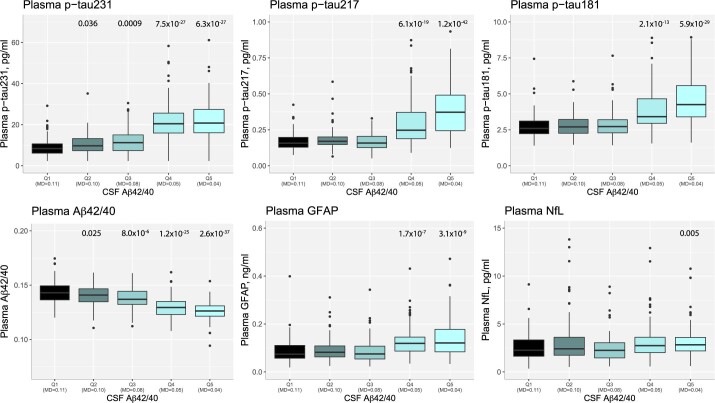
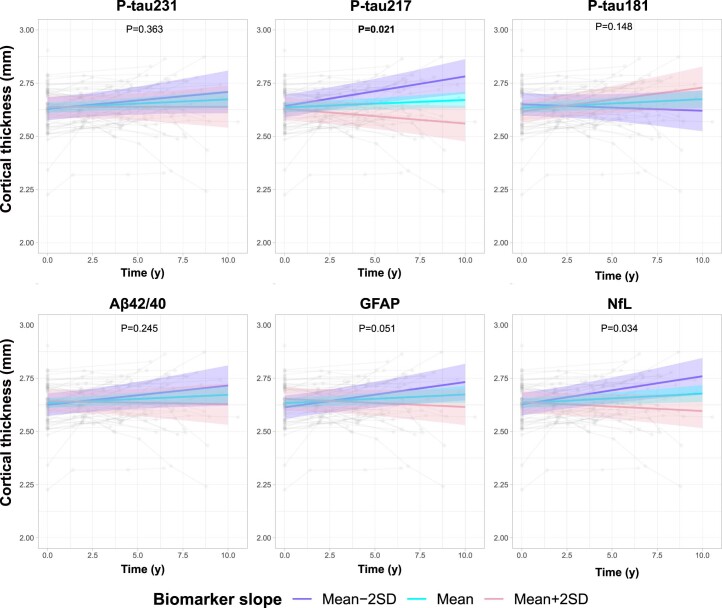
Blood biomarkers indicative of Alzheimer’s disease (AD) pathology are altered in both preclinical and symptomatic stages of the disease. Distinctive biomarkers may be optimal for the identification of AD pathology or monitoring of disease progression. Blood biomarkers that correlate with changes in cognition and atrophy during the course of the disease could be used in clinical trials to identify successful interventions and thereby accelerate the development of efficient therapies. When disease-modifying treatments become approved for use, efficient blood-based biomarkers might also inform on treatment implementation and management in clinical practice. In the BioFINDER-1 cohort, plasma phosphorylated (p)-tau231 and amyloid-β42/40 ratio were more changed at lower thresholds of amyloid pathology. Longitudinally, however, only p-tau217 demonstrated marked amyloid-dependent changes over 4–6 years in both preclinical and symptomatic stages of the disease, with no such changes observed in p-tau231, p-tau181, amyloid-β42/40, glial acidic fibrillary protein or neurofilament light. Only longitudinal increases of p-tau217 were also associated with clinical deterioration and brain atrophy in preclinical AD. The selective longitudinal increase of p-tau217 and its associations with cognitive decline and atrophy was confirmed in an independent cohort (Wisconsin Registry for Alzheimer’s Prevention). These findings support the differential association of plasma biomarkers with disease development and strongly highlight p-tau217 as a surrogate marker of disease progression in preclinical and prodromal AD, with impact for the development of new disease-modifying treatments.
Overview
The claims and statistics of this paper haven’t been checked yet.
Free: it reads the open-access text and checks the first 5 claims that cite a source we can check. Create a free account to check every claim.
Integrity signals
Registry
Cites
Statistics
Figures
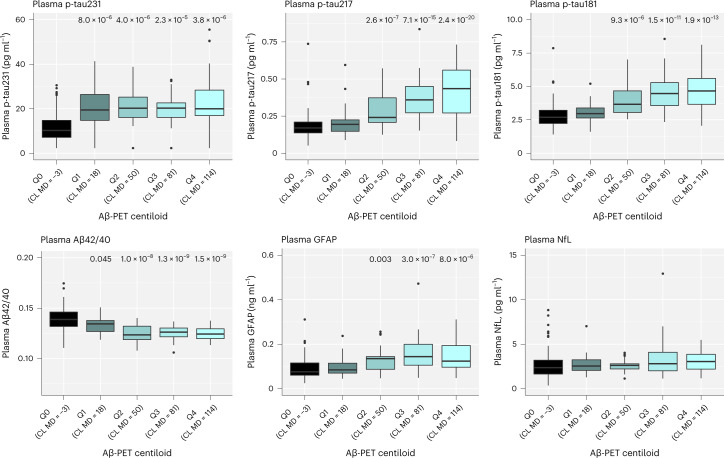
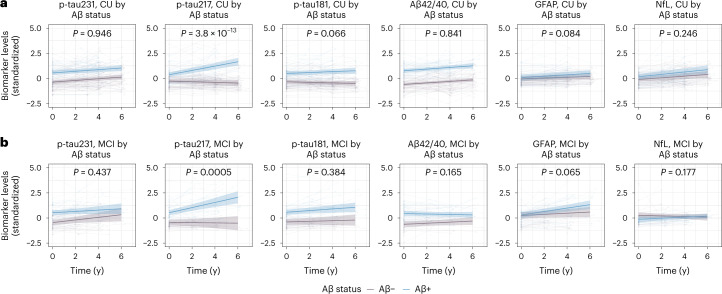
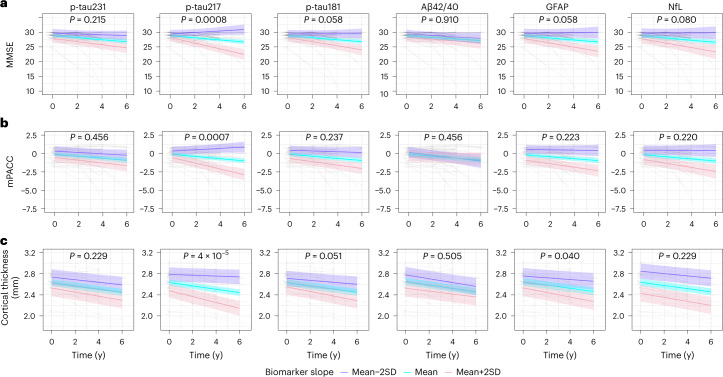
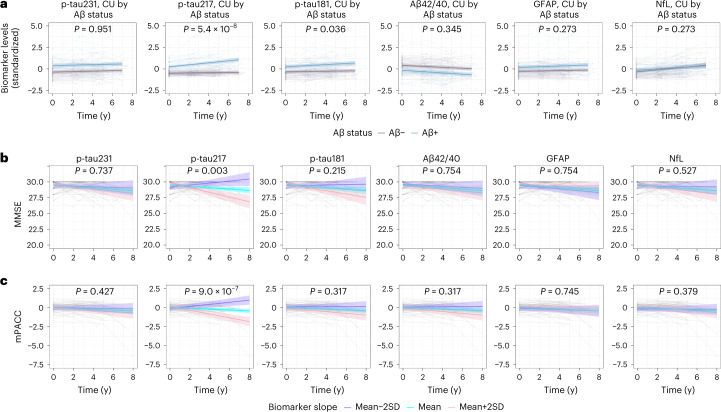
Verification
Claims the paper makes
The claims and statistics of this paper haven’t been checked yet.
Free: it reads the open-access text and checks the first 5 claims that cite a source we can check. Create a free account to check every claim.
Claims other papers make about this one
Each is checked against this paper’s own text: does it say what the citing paper says it does?
The source backs part of the claim, not all of it — or backs it for a different population, condition or comparison.
In the citing paper
“Plasma levels of p-tau are strongly associated with PET and CSF biomarkers of AD pathology19–25, neuropathological changes associated with AD20,23,26,27 and the subsequent development of AD dementia20,23,28.”
From Highly accurate blood test for Alzheimer's disease is similar or superior to clinical cerebrospinal fluid tests (2024) · cites this paper as [19]
Experimental — accuracy not yet measuredThe cited source says what the claim attributes to it.
In the citing paper
“Additionally, p-tau217 demonstrates a unique longitudinal trajectory, showing increases associated with worsening brain atrophy and declining cognitive performance in individuals with elevated Aβ pathology.24,25”
From Diagnostic Accuracy of a Plasma Phosphorylated Tau 217 Immunoassay for Alzheimer Disease Pathology (2024) · cites this paper as [24]
Self-check
Percentages, sums and reported differences re-computed from the paper’s own numbers.
The self-check needs the paper’s full text.
Citations
Cites
Palmqvist, S., Janelidze, S., Quiroz, Y. T., Zetterberg, H., Lopera, F., Stomrud, E., Su, Y., Chen, Y., Serrano, G. E., Leuzy, A., et al. (2020) · JAMA · doi:10.1001/jama.2020.12134 · Cited by 1,603 · cited 3×
“For example, while all p-tau biomarkers relate to AD postmortem pathology 6,14,15 , in AD brain tissue, p-tau217 is prominently seen in granulovacuolar degeneration bodies and multivesicular bodies in neurons, which is not observed for p-tau181 and p-tau231 (ref.”
Self-citationThe Centiloid Project: standardizing quantitative amyloid plaque estimation by PET
Klunk, W. E., Koeppe, R. A., Price, J. C., Benzinger, T. L., Devous, M. D., Jagust, W. J., Johnson, K. A., Mathis, C. A., Minhas, D., Pontecorvo, M. J., et al. (2015) · Alzheimer's & Dementia · doi:10.1016/j.jalz.2014.07.003 · Cited by 1,348 · cited 1×
“Next, we analyzed plasma biomarkers when grouping participants by Aβ-PET centiloids, which is an established measure to increase comparability across Aβ-PET methods 22 .”
Karikari, T. K., Pascoal, T. A., Ashton, N. J., Janelidze, S., Benedet, A. L., Rodriguez, J. L., Chamoun, M., Savard, M., Kang, M. S., Therriault, J., et al. (2020) · The Lancet Neurology · doi:10.1016/s1474-4422(20)30071-5 · Cited by 1,316
Self-citationJanelidze, S., Mattsson, N., Palmqvist, S., Smith, R., Beach, T. G., Serrano, G. E., Chai, X., Proctor, N. K., Eichenlaub, U., Zetterberg, H., et al. (2020) · Nature Medicine · doi:10.1038/s41591-020-0755-1 · Cited by 1,247 · cited 1×
“Recently, blood biomarkers reflecting Aβ 3,4 , tau 5–8 , neurodegeneration 9,10 and astrogliosis 11,12 , have been developed and validated.”
Self-citationBiomarkers for neurodegenerative diseases
Hansson, O. (2021) · Nature Medicine · doi:10.1038/s41591-021-01382-x · Cited by 1,159
Self-citationAssociation of plasma neurofilament light with neurodegeneration in patients with Alzheimer disease
Mattsson, N., Andreasson, U., Zetterberg, H., Blennow, K., & Initiative, F. T. A. D. N. (2017) · JAMA Neurology · doi:10.1001/jamaneurol.2016.6117 · Cited by 1,070
Self-citationDefining imaging biomarker cut points for brain aging and Alzheimer's disease
Jack, C. R., Wiste, H. J., Weigand, S. D., Therneau, T. M., Lowe, V. J., Knopman, D. S., Gunter, J. L., Senjem, M. L., Jones, D. T., Kantarci, K., et al. (2017) · Alzheimer's & Dementia · doi:10.1016/j.jalz.2016.08.005 · Cited by 931
High-precision plasma β-amyloid 42/40 predicts current and future brain amyloidosis
Schindler, S. E., Bollinger, J. G., Ovod, V., Mawuenyega, K. G., Li, Y., Gordon, B. A., Holtzman, D. M., Morris, J. C., Benzinger, T. L. S., Xiong, C., et al. (2019) · Neurology · doi:10.1212/wnl.0000000000008081 · Cited by 885 · cited 3×
“Recently, blood biomarkers reflecting Aβ 3,4 , tau 5–8 , neurodegeneration 9,10 and astrogliosis 11,12 , have been developed and validated.”
Self-citationThe Preclinical Alzheimer Cognitive Composite: Measuring Amyloid-Related Decline
Donohue, M. C., Sperling, R. A., Salmon, D. P., Rentz, D. M., Raman, R., Thomas, R. G., Weiner, M., & Aisen, P. S. (2014) · JAMA Neurology · doi:10.1001/jamaneurol.2014.803 · Cited by 860
Mattsson, N., Cullen, N. C., Andreasson, U., Zetterberg, H., & Blennow, K. (2019) · JAMA Neurology · doi:10.1001/jamaneurol.2019.0765 · Cited by 726 · cited 1×
“This includes a marker of global neurodegeneration, plasma NfL, which has been shown to associate with clinical progression in patients with more advanced symptoms 24,25 .”
Self-citation
Cited by
Diagnostic Accuracy of a Plasma Phosphorylated Tau 217 Immunoassay for Alzheimer Disease Pathology
Ashton, N. J., Brum, W. S., Di Molfetta, G., Benedet, A. L., Arslan, B., Jonaitis, E., Langhough, R. E., Cody, K., Wilson, R., Carlsson, C. M., et al. (2024) · JAMA Neurology · doi:10.1001/jamaneurol.2023.5319 · Cited by 884
Self-citationBlood biomarkers for Alzheimer’s disease in clinical practice and trials
Hansson, O., Blennow, K., Zetterberg, H., & Dage, J. (2023) · Nature Aging · doi:10.1038/s43587-023-00403-3 · Cited by 522
Self-citationBarthélemy, N. R., Salvadó, G., Schindler, S. E., He, Y., Janelidze, S., Collij, L. E., Saef, B., Henson, R. L., Chen, C. D., Gordon, B. A., et al. (2024) · Nature Medicine · doi:10.1038/s41591-024-02869-z · Cited by 448
“Plasma levels of p-tau are strongly associated with PET and CSF biomarkers of AD pathology 19–25 , neuropathological changes associated with AD 20,23,26,27 and the subsequent development of AD dementia 20,23,28 .”
BackgroundSelf-citationAlzheimer's disease: From immunotherapy to immunoprevention
Jucker, M., & Walker, L. C. (2023) · Cell · doi:10.1016/j.cell.2023.08.021 · Cited by 353
Plasma proteomic profiles predict future dementia in healthy adults
Guo, Y., You, J., Zhang, Y., Liu, W.-S., Huang, Y.-Y., Zhang, Y.-R., Zhang, W., Dong, Q., Feng, J.-F., Cheng, W., et al. (2024) · Nature Aging · doi:10.1038/s43587-023-00565-0 · Cited by 293
“Beyond predictive accuracy, optimal dementia prediction biomarkers should be highly specific for the corresponding pathology 11,19 .”
BackgroundHampel, H., Hu, Y., Cummings, J., Mattke, S., Iwatsubo, T., Nakamura, A., Vellas, B., O’Bryant, S., Shaw, L. M., Cho, M., et al. (2023) · Neuron · doi:10.1016/j.neuron.2023.05.017 · Cited by 283
Self-citationCSF MTBR-tau243 is a specific biomarker of tau tangle pathology in Alzheimer’s disease
Horie, K., Salvadó, G., Barthélemy, N. R., Janelidze, S., Li, Y., He, Y., Saef, B., Chen, C. D., Jiang, H., Strandberg, O., et al. (2023) · Nature Medicine · doi:10.1038/s41591-023-02443-z · Cited by 249
Self-citationBrum, W. S., Cullen, N. C., Janelidze, S., Ashton, N. J., Zimmer, E. R., Therriault, J., Benedet, A. L., Rahmouni, N., Tissot, C., Stevenson, J., et al. (2023) · Nature Aging · doi:10.1038/s43587-023-00471-5 · Cited by 248
Self-citationUpdates in Alzheimer's disease: from basic research to diagnosis and therapies
Liu, E., Zhang, Y., & Wang, J.-Z. (2024) · Translational Neurodegeneration · doi:10.1186/s40035-024-00432-x · Cited by 199
“It is generally believed that the status of Aβ biomarkers determines whether an individual belongs to the AD spectrum, while changes in tau determine whether an individual within the AD spectrum has AD [524, 556].”
BackgroundPlasma phospho-tau in Alzheimer’s disease: towards diagnostic and therapeutic trial applications
Gonzalez-Ortiz, F., Kac, P. R., Brum, W. S., Zetterberg, H., Blennow, K., & Karikari, T. K. (2023) · Molecular Neurodegeneration · doi:10.1186/s13024-023-00605-8 · Cited by 214
“Benussi A, Karikari TK, Ashton N, Gazzina S, Premi E, Benussi L, et al. Diagnostic and prognostic value of serum NfL and p‑Tau181 in frontotemporal lobar degeneration.”
BackgroundResultInfluentialSelf-citationBiomarker-based staging of Alzheimer disease: rationale and clinical applications
Therriault, J., Schindler, S. E., Salvadó, G., Pascoal, T. A., Benedet, A. L., Ashton, N. J., Karikari, T. K., Apostolova, L., Murray, M. E., Verberk, I., et al. (2024) · Nature Reviews Neurology · doi:10.1038/s41582-024-00942-2 · Cited by 197
Self-citationPalmqvist, S., Whitson, H. E., Allen, L. A., Suarez‐Calvet, M., Galasko, D., Karikari, T. K., Okrahvi, H. R., Paczynski, M., Schindler, S. E., Teunissen, C. E., et al. (2025) · Alzheimer's & Dementia · doi:10.1002/alz.70535 · Cited by 167
Self-citationSpecific associations between plasma biomarkers and postmortem amyloid plaque and tau tangle loads
Salvadó, G., Ossenkoppele, R., Ashton, N. J., Beach, T. G., Serrano, G. E., Reiman, E. M., Zetterberg, H., Mattsson‐Carlgren, N., Janelidze, S., Blennow, K., et al. (2023) · EMBO Molecular Medicine · doi:10.15252/emmm.202217123 · Cited by 205
Self-citationCardiovascular Disease and Alzheimer's Disease: The Heart–Brain Axis
Saeed, A., Lopez, O., Cohen, A., & Reis, S. E. (2023) · Journal of the American Heart Association · doi:10.1161/jaha.123.030780 · Cited by 166
Rabinovici, G. D., Knopman, D. S., Arbizu, J., Benzinger, T. L. S., Donohoe, K. J., Hansson, O., Herscovitch, P., Kuo, P. H., Lingler, J. H., Minoshima, S., et al. (2025) · Alzheimer s & Dementia · doi:10.1002/alz.14338 · Cited by 206
Self-citationArranz, J., Zhu, N., Rubio‐Guerra, S., Rodríguez‐Baz, Í., Ferrer, R., Carmona‐Iragui, M., Barroeta, I., Illán‐Gala, I., Santos‐Santos, M., Fortea, J., et al. (2024) · Alzheimer s Research & Therapy · doi:10.1186/s13195-024-01513-9 · Cited by 193
“Thus, blood-based markers have the potential to be of great use in screening, early diagnosis, tracking progression, and ultimately, monitoring the efficacy of treatment [16–20].”
A comprehensive head-to-head comparison of key plasma phosphorylated tau 217 biomarker tests
Warmenhoven, N., Salvadó, G., Janelidze, S., Mattsson, N., Bali, D., Dolado, A. O., Kolb, H. C., Triana‐Baltzer, G., Barthélemy, N. R., Schindler, S. E., et al. (2024) · Brain · doi:10.1093/brain/awae346 · Cited by 166
Self-citationBarthélemy, N. R., Saef, B., Li, Y., Gordon, B. A., He, Y., Horie, K., Stomrud, E., Salvadó, G., Janelidze, S., Sato, C., et al. (2023) · Nature Aging · doi:10.1038/s43587-023-00380-7 · Cited by 153
Self-citationChallenges in the practical implementation of blood biomarkers for Alzheimer’s disease
Schöll, M., Verberk, I. M. W., del Campo, M., Delaby, C., Therriault, J., Chong, J. R., Palmqvist, S., & Alcolea, D. A. (2024) · The Lancet Healthy Longevity · doi:10.1016/j.lanhl.2024.07.013 · Cited by 164
Self-citationMattsson-Carlgren, N., Collij, L. E., Stomrud, E., Pichet Binette, A., Ossenkoppele, R., Smith, R., Karlsson, L., Lantero-Rodriguez, J., Snellman, A., Strandberg, O., et al. (2024) · JAMA Neurology · doi:10.1001/jamaneurol.2023.4596 · Cited by 148
Self-citationOssenkoppele, R., Salvadó, G., Janelidze, S., Binette, A. P., Bali, D., Karlsson, L., Palmqvist, S., Mattsson, N., Stomrud, E., Therriault, J., et al. (2025) · Nature Aging · doi:10.1038/s43587-025-00835-z · Cited by 153
Self-citationJanelidze, S., Barthélemy, N. R., Salvadó, G., Schindler, S. E., Palmqvist, S., Mattsson, N., Braunstein, J. B., Ovod, V., Bollinger, J. G., He, Y., et al. (2024) · JAMA Neurology · doi:10.1001/jamaneurol.2024.2619 · Cited by 146
Self-citationCentiloid recommendations for clinical context‐of‐use from the AMYPAD consortium
Collij, L. E., Bollack, A., Joie, R. L., Shekari, M., Bullich, S., Roé-Vellvé, N., Koglin, N., Jovalekic, A., García, D. V., Drzezga, A. E., et al. (2024) · Alzheimer s & Dementia · doi:10.1002/alz.14336 · Cited by 140
Diagnosis of Alzheimer's disease using plasma biomarkers adjusted to clinical probability
Therriault, J., Janelidze, S., Benedet, A. L., Ashton, N. J., Arranz Martínez, J., Gonzalez-Escalante, A., Bellaver, B., Alcolea, D., Vrillon, A., Karim, H., et al. (2024) · Nature Aging · doi:10.1038/s43587-024-00731-y · Cited by 131
Self-citationDisease staging of Alzheimer’s disease using a CSF-based biomarker model
Salvadó, G., Horie, K., Barthélemy, N. R., Vogel, J. W., Pichet Binette, A., Chen, C. D., Aschenbrenner, A. J., Gordon, B. A., Benzinger, T. L. S., Holtzman, D. M., et al. (2024) · Nature Aging · doi:10.1038/s43587-024-00599-y · Cited by 113
“These biomarkers have shown their utility in improving the diagnostic workup of AD and the prediction of disease progression 12,13,19,26,27 .”
BackgroundSelf-citationMontoliu-Gaya, L., Benedet, A. L., Tissot, C., Vrillon, A., Ashton, N. J., Brum, W. S., Lantero-Rodriguez, J., Stevenson, J., Nilsson, J., Sauer, M., et al. (2023) · Nature Aging · doi:10.1038/s43587-023-00405-1 · Cited by 122
Self-citationMendes, A. J., Ribaldi, F., Lathuilière, A., Ashton, N. J., Janelidze, S., Zetterberg, H., Scheffler, M., Assal, F., Garibotto, V., Blennow, K., et al. (2024) · Journal of Neurology · doi:10.1007/s00415-023-12148-5 · Cited by 121
Self-citationConsiderations in the clinical use of amyloid PET and CSF biomarkers for Alzheimer's disease
Leuzy, A., Bollack, A., Pellegrino, D., Teunissen, C. E., Joie, R. L., Rabinovici, G. D., Franzmeier, N., Johnson, K. A., Barkhof, F., Shaw, L. M. J., et al. (2025) · Alzheimer s & Dementia · doi:10.1002/alz.14528 · Cited by 126
Self-citationAnti‐amyloid antibody treatments for Alzheimer's disease
Perneczky, R., Dom, G., Chan, A., Falkai, P., & Bassetti, C. (2024) · European Journal of Neurology · doi:10.1111/ene.16049 · Cited by 106
“Several studies have demonstrated that plasma and serum levels of A β 42 and the ratio of A β 42/A β 40 are reduced in patients with AD, indicating that these BBBMs may be useful for detecting early stages of AD [5].”
BackgroundPlasma brain-derived tau is an amyloid-associated neurodegeneration biomarker in Alzheimer’s disease
González‐Ortiz, F., Kirsebom, B., Contador, J., Tanley, J. E., Selnes, P., Gísladóttir, B., Pålhaugen, L., Hemminghyth, M. S., Jarholm, J. A., Skogseth, R. E., et al. (2024) · Nature Communications · doi:10.1038/s41467-024-47286-5 · Cited by 104
“In addition, these biomarkers can monitor longitudinal changes in A β pathophysiology among individuals enrolled in clinical trials as well as in those being monitored through various stages of the AD continuum 12,13 .”
BackgroundMethodSelf-citationAshton, N. J., Keshavan, A., Brum, W. S., Andréasson, U., Arslan, B., Droescher, M., Barghorn, S., Vanbrabant, J., Lambrechts, C., Loo, M. V., et al. (2025) · Alzheimer s & Dementia · doi:10.1002/alz.14508 · Cited by 109
Self-citationShun, H., Zhang, L., Su, Y., Liang, X., Yang, J., Luo, Q., & Luo, H. (2024) · Science Advances · doi:10.1126/sciadv.abm3088 · Cited by 103
González‐Ortiz, F., Ferreira, P. C. L., González‐Escalante, A., Montoliu‐Gaya, L., Ortiz‐Romero, P., Kac, P. R., Turton, M., Kvartsberg, H., Ashton, N. J., Zetterberg, H., et al. (2023) · Alzheimer s & Dementia · doi:10.1002/alz.13525 · Cited by 102
Self-citationAlzheimer’s disease and its treatment–yesterday, today, and tomorrow
Kim, A. Y., Jerdi, S. A., MacDonald, R., & Triggle, C. R. (2024) · Frontiers in Pharmacology · doi:10.3389/fphar.2024.1399121 · Cited by 118
Plasma p‐tau immunoassays in clinical research for Alzheimer's disease
Teunissen, C. E., Kolster, R., Triana‐Baltzer, G., Janelidze, S., Zetterberg, H., & Kolb, H. C. (2024) · Alzheimer s & Dementia · doi:10.1002/alz.14397 · Cited by 103
Self-citationPlasma p-tau217 in Alzheimer’s disease: Lumipulse and ALZpath SIMOA head-to-head comparison
Pilotto, A., Quaresima, V., Trasciatti, C., Tolassi, C., Bertoli, D., Mordenti, C., Galli, A., Rizzardi, A., Caratozzolo, S., Zancanaro, A., et al. (2024) · Brain · doi:10.1093/brain/awae368 · Cited by 103
Self-citationLongitudinal blood biomarker trajectories in preclinical Alzheimer's disease
Yakoub, Y., Ashton, N. J., Strikwerda‐Brown, C., Montoliu‐Gaya, L., Karikari, T. K., Kac, P. R., González‐Ortiz, F., Gallego-Rudolf, J., Meyer, P., St‐Onge, F., et al. (2023) · Alzheimer s & Dementia · doi:10.1002/alz.13318 · Cited by 102
“36,37 It is plausible, therefore, that plasma A β 42/40 ratio and pTau231 begin to change prior to PET positivity and that their rate of change slows when pathologies are detected on a PET scan.”
Self-citationNoh, M., Kwon, H. S., Kwon, M., Nahm, M., Jin, H. K., Bae, J., & Kim, S. H. (2025) · Molecular Neurodegeneration · doi:10.1186/s13024-025-00867-4 · Cited by 98
“Longitudinal increases in p-tau217 are associated with clinical deterioration and brain atrophy in CU subjects [312].”
The dynamics of plasma biomarkers across the Alzheimer’s continuum
Guo, Y., Shen, X.-N., Wang, H.-F., Chen, S.-D., Zhang, Y.-R., Chen, S.-F., Cui, M., Cheng, W., Dong, Q., Ma, T., et al. (2023) · Alzheimer's Research & Therapy · doi:10.1186/s13195-023-01174-0 · Cited by 95
“Recent studies overcame both of the above shortcomings, but they examined only the preclinical stage of AD [22] or preclinical and prodromal stages [23] and lacked an understanding of the whole AD continuum.”
ResultLongitudinal changes in Alzheimer's‐related plasma biomarkers and brain amyloid
Bilgel, M., An, Y., Walker, K. A., Moghekar, A., Ashton, N. J., Kac, P. R., Karikari, T. K., Blennow, K., Zetterberg, H., Jedynak, B., et al. (2023) · Alzheimer s & Dementia · doi:10.1002/alz.13157 · Cited by 95
Self-citationBlood-based biomarkers in Alzheimer’s disease – moving towards a new era of diagnostics
Arslan, B., Zetterberg, H., & Ashton, N. J. (2024) · Clinical Chemistry and Laboratory Medicine (CCLM) · doi:10.1515/cclm-2023-1434 · Cited by 99
Self-citationRamanan, V. K., Graff-Radford, J., Syrjanen, J., Shir, D., Algeciras-Schimnich, A., Lucas, J., Martens, Y. A., Carrasquillo, M. M., Day, G. S., Ertekin-Taner, N., et al. (2023) · Neurology · doi:10.1212/wnl.0000000000207675 · Cited by 89
Khalafi, M., Dartora, W. J., McIntire, L. B., Butler, T., Wartchow, K. M., Hojjati, S. H., Razlighi, Q. R., Shirbandi, K., Zhou, L., Chen, K., et al. (2024) · Alzheimer s & Dementia · doi:10.1002/alz.14458 · Cited by 99
Self-citationPractical AI application in psychiatry: historical review and future directions
Sun, J., Lu, T., Shao, X., Han, Y., Xia, Y., Zheng, Y., Wang, Y., Li, X., Ravindran, A. V., Fan, L., et al. (2025) · Molecular Psychiatry · doi:10.1038/s41380-025-03072-3 · Cited by 100
Zeng, X., Chen, Y., Sehrawat, A., Lee, J., Lafferty, T. K., Kofler, J., Berman, S., Sweet, R. A., Tudorascu, D. L., Klunk, W. E., et al. (2024) · Molecular Neurodegeneration · doi:10.1186/s13024-024-00711-1 · Cited by 94
“Different Different p-tau species might increase at different stages of the AD continuum [91, 98].”
BackgroundSelf-citationRabinovici, G. D., Knopman, D. S., Arbizu, J., Benzinger, T. L. S., Donohoe, K. J., Hansson, O., Herscovitch, P., Kuo, P. H., Lingler, J. H., Minoshima, S., et al. (2025) · Journal of Nuclear Medicine · doi:10.2967/jnumed.124.268756 · Cited by 90
Self-citationZhong, X., Wang, Q., Yang, M., Lin, G., Yao, K., Wu, Z., Xu, D., Zhou, H., Chen, B., Shi, H., et al. (2025) · Alzheimer s & Dementia · doi:10.1002/alz.14536 · Cited by 91
“36 Recent immunoassay research suggests that CSF p-tau217 correlates better with amyloid PET and tau PET than CSF p-tau181.”
Comparison of two plasma p-tau217 assays to detect and monitor Alzheimer’s pathology
Therriault, J., Ashton, N. J., Pola, I., Triana-Baltzer, G., Brum, W. S., Di Molfetta, G., Arslan, B., Rahmouni, N., Tissot, C., Servaes, S., et al. (2024) · eBioMedicine · doi:10.1016/j.ebiom.2024.105046 · Cited by 84
“36 Although substantial variability was observed between individual-level tau PET change and individual-level plasma p-tau217 change, their overall association suggests that changes in plasma p-tau217 may be a useful secondary outcome in clinical trials targeting AD pathology, as was performed in…”
BackgroundSelf-citationP-tau217 as a Reliable Blood-Based Marker of Alzheimer’s Disease
Lai, R., Li, B., & Bishnoi, R. J. (2024) · Biomedicines · doi:10.3390/biomedicines12081836 · Cited by 89
Biological variation estimates of Alzheimer's disease plasma biomarkers in healthy individuals
Brum, W. S., Ashton, N. J., Simrén, J., di Molfetta, G., Karikari, T. K., Benedet, A. L., Zimmer, E. R., Lantero‐Rodriguez, J., Montoliu‐Gaya, L., Jeromin, A., et al. (2024) · Alzheimer's & Dementia · doi:10.1002/alz.13518 · Cited by 76
Self-citationZhang, D., Zhang, W., Chen, M., Gao, X., Yuan, H., Lin, X., Mao, X., Wang, C., Guo, X., Du, Y., et al. (2024) · Neuron · doi:10.1016/j.neuron.2024.02.017 · Cited by 84
Biomarker-guided decision making in clinical drug development for neurodegenerative disorders
Cummings, J. L., Teunissen, C. E., Fiske, B. K., Ber, I. L., Wildsmith, K. R., Schöll, M., Dunn, B., & Scheltens, P. (2025) · Nature Reviews Drug Discovery · doi:10.1038/s41573-025-01165-w · Cited by 89
CSF p-tau205: a biomarker of tau pathology in Alzheimer’s disease
Lantero‐Rodriguez, J., Montoliu‐Gaya, L., Benedet, A. L., Vrillon, A., Dumurgier, J., Cognat, E., Brum, W. S., Rahmouni, N., Stevenson, J., Servaes, S., et al. (2024) · Acta Neuropathologica · doi:10.1007/s00401-023-02659-w · Cited by 81
Self-citationThe potential clinical value of plasma biomarkers in Alzheimer's disease
Blennow, K., Galasko, D., Perneczky, R., Quevenco, F., van der Flier, W. M., Akinwonmi, A., Carboni, M., Jethwa, A., Suridjan, I., & Zetterberg, H. (2023) · Alzheimer's & Dementia · doi:10.1002/alz.13455 · Cited by 75
Self-citationDong, H. Y., Zhao, L., Wang, T., Chen, Y., Hao, W., Zhang, Z., Hao, Y., Zhang, C., Wei, X., Zhang, Y., et al. (2023) · Analytical Chemistry · doi:10.1021/acs.analchem.3c00974 · Cited by 73
Combining plasma Aβ and p-tau217 improves detection of brain amyloid in non-demented elderly
Niimi, Y., Janelidze, S., Sato, K., Tomita, N., Tsukamoto, T., Kato, T., Yoshiyama, K., Kowa, H., Iwata, A., Ihara, R., et al. (2024) · Alzheimer s Research & Therapy · doi:10.1186/s13195-024-01469-w · Cited by 76
“Furthermore, a recent study suggests that plasma p-tau has a strong surrogacy in preclinical and prodromal AD compared to Aβ42/40 ratio or p-tau231 [33].”
BackgroundSelf-citationAssociation of glial fibrillary acid protein, Alzheimer's disease pathology and cognitive decline
Peretti, D. E., Boccalini, C., Ribaldi, F., Scheffler, M., Marizzoni, M., Ashton, N. J., Zetterberg, H., Blennow, K., Frisoni, G. B., & Garibotto, V. (2024) · Brain · doi:10.1093/brain/awae211 · Cited by 72
“55 It is important to point out that the association between plasma GFAP and tau PET was independent of age, sex, education, MMSE, Centiloid and cortical thickness.”
Self-citationFluid-based biomarkers for neurodegenerative diseases
Cao, Y., Xu, Y., Cao, M., Chen, N., Zeng, Q., Lai, M. K. P., Fan, D., Sethi, G., & Cao, Y. (2025) · Ageing Research Reviews · doi:10.1016/j.arr.2025.102739 · Cited by 69
Plasma pTau217 predicts continuous brain amyloid levels in preclinical and early Alzheimer's disease
Devanarayan, V., Doherty, T., Charil, A., Sachdev, P., Ye, Y., Murali, L. K., Llano, D. A., Zhou, J., Reyderman, L., Hampel, H., et al. (2024) · Alzheimer's & Dementia · doi:10.1002/alz.14073 · Cited by 57
Plasma biomarkers for neurodegenerative disorders: ready for prime time?
Balogun, W. G., Zetterberg, H., Blennow, K., & Karikari, T. K. (2023) · Current Opinion in Psychiatry · doi:10.1097/yco.0000000000000851 · Cited by 66
Self-citationBlood Biomarkers of Alzheimer’s Disease and Cognition: A Literature Review
García‐Escobar, G., Manero, R. M., Fernández‐Lebrero, A., Ois, Á., Navalpotro‐Gómez, I., Puente, V., Muñana, J. C., Estragués-Gázquez, I., Puig‐Pijoan, A., & Jiménez-Baladó, J. (2024) · Biomolecules · doi:10.3390/biom14010093 · Cited by 67
Clinical value of plasma ALZpath pTau217 immunoassay for assessing mild cognitive impairment
Lehmann, S., Schraen‐Maschke, S., Vidal, J., Delaby, C., Buée, L., Blanc, F., Paquet, C., Allinquant, B., Bombois, S., Gabelle, A., et al. (2024) · Journal of Neurology Neurosurgery & Psychiatry · doi:10.1136/jnnp-2024-333467 · Cited by 63
Lehmann, S., Gabelle, A., Duchiron, M., Busto, G. U., Morchikh, M., Delaby, C., Hirtz, C., Mondésert, E., Cristol, J., Barnier-Figue, G., et al. (2025) · EBioMedicine · doi:10.1016/j.ebiom.2025.105805 · Cited by 67
“55,56 While the AUC increase between pTau217 and pTau217/A β 42 was statistically significant in both cohorts, the absolute difference was modest.”
Montoliu‐Gaya, L., Alosco, M. L., Yhang, E., Tripodis, Y., Sconzo, D., Ally, M., Grötschel, L., Ashton, N. J., Lantero‐Rodriguez, J., Sauer, M., et al. (2023) · Acta Neuropathologica · doi:10.1007/s00401-023-02660-3 · Cited by 60
Self-citationHuber, H., Blennow, K., Zetterberg, H., Boada, M., Jeromin, A., Weninger, H., Núñez‐Llaves, R., Aguilera, N., Ramis, M., Simrén, J., et al. (2024) · Alzheimer s & Dementia · doi:10.1002/alz.13697 · Cited by 57
“The validation cohort included 115 participants with suspected AD, displayed in Table 1.”
BackgroundInfluentialSelf-citationKac, P. R., González‐Ortiz, F., Emeršič, A., Dulewicz, M., Koutarapu, S., Turton, M., An, Y., Smirnov, D. S., Kulczyńska‐Przybik, A., Varma, V. R., et al. (2024) · Nature Communications · doi:10.1038/s41467-024-46876-7 · Cited by 58
Self-citationAlzheimer's disease neuropathology and its estimation with fluid and imaging biomarkers
Thal, D. R., Poesen, K., Vandenberghe, R. R., & Meyer, S. D. (2025) · Molecular Neurodegeneration · doi:10.1186/s13024-025-00819-y · Cited by 57
Plasma tau biomarkers for biological staging of Alzheimer’s disease
Montoliu‐Gaya, L., Salvadó, G., Therriault, J., Nilsson, J., Janelidze, S., Weiner, S., Ashton, N. J., Benedet, A. L., Rahmouni, N., Lantero‐Rodriguez, J., et al. (2025) · Nature Aging · doi:10.1038/s43587-025-00951-w · Cited by 58
Self-citationHuber, H., Ashton, N. J., Schieren, A., Montoliu‐Gaya, L., Molfetta, G. D., Brum, W. S., Lantero‐Rodriguez, J., Grötschel, L., Stoffel‐Wagner, B., Coenen, M., et al. (2023) · Alzheimer s & Dementia · doi:10.1002/alz.13163 · Cited by 55
“Some but not all of these biomarkers are increased in preclinical AD, 24,25 and are associated with disease progression.”
Self-citationPlasma p‐tau231 and p‐tau217 inform on tau tangles aggregation in cognitively impaired individuals
Ferreira, P. C. L., Therriault, J., Tissot, C., Ferrari‐Souza, J. P., Benedet, A. L., Povala, G., Bellaver, B., Leffa, D. T., Brum, W. S., Lussier, F. Z., et al. (2023) · Alzheimer s & Dementia · doi:10.1002/alz.13393 · Cited by 54
Self-citationFerreira, P. C. L., Zhang, Y., Snitz, B. E., Chang, C. H., Bellaver, B., Jacobsen, E. P., Kamboh, M. I., Zetterberg, H., Blennow, K., Pascoal, T. A., et al. (2023) · Alzheimer s & Dementia · doi:10.1002/alz.12986 · Cited by 50
Self-citationSaloner, R., VandeVrede, L. A., Asken, B. M., Paolillo, E. W., Gontrum, E. Q., Wolf, A. A., Lario‐Lago, A., Milà‐Alomà, M., Triana‐Baltzer, G., Kolb, H. C., et al. (2023) · Alzheimer s & Dementia · doi:10.1002/alz.13454 · Cited by 56
Gao, F., Dai, L., Wang, Q., Liu, C., Deng, K., Cheng, Z., Lv, X., Wu, Y., Zhang, Z., Tao, Q., et al. (2023) · 中国科学通报:英文版 · doi:10.1016/j.scib.2023.07.009 · Cited by 52
Cano, A. C., Capdevila, M., Puerta, R., Arranz, J., Montrreal, L., de Rojas, I., García‐González, P., Olivé, C., García‐Gutiérrez, F., Sotolongo‐Grau, Ó., et al. (2024) · EBioMedicine · doi:10.1016/j.ebiom.2024.105345 · Cited by 53
“19,21,22 In this sense, several studies have highlighted the robust clinical performance of pTau181 to differentiate AD dementia, with a well-established A β (+) status, from A β ( − ) controls.”
InfluentialSchöll, M., Vrillon, A., Ikeuchi, T., Quevenco, F. C., Iaccarino, L., Vasileva-Metodiev, S. Z., Burnham, S. C., Hendrix, J. A., Epelbaum, S., Zetterberg, H., et al. (2025) · The Journal of Prevention of Alzheimer s Disease · doi:10.1016/j.tjpad.2024.100056 · Cited by 54
Self-citationPahlke, S. C., Kahale, L. A., Mahinrad, S., Sousa‐Pinto, B., Vieira, R. J., McAteer, M. B., Claessen, T., Contador, J., Hofmann, A., Kuchenbecker, L. A., et al. (2025) · Alzheimer s & Dementia · doi:10.1002/alz.70828 · Cited by 52
Self-citationDu, L., Langhough, R. E., Wilson, R. E., Reyes, R. E. R., Hermann, B. P., Jonaitis, E. M., Betthauser, T. J., Chin, N. A., Christian, B., Chaby, L., et al. (2024) · Alzheimer's & Dementia · doi:10.1002/alz.14100 · Cited by 46
“11,13 There are multiple plasma p-tau immunoassays currently available with different assay configurations and analytical detection.”
Self-citationWang, S., Deng, R., Chen, Z., Huang, L., Song, Y., Yuan, D., Li, Y., Liu, H., Yang, F., Fan, B., et al. (2023) · ACS Nano · doi:10.1021/acsnano.3c09311 · Cited by 45
Self-citationLantero-Rodriguez, J., Salvadó, G., Snellman, A., Montoliu-Gaya, L., Brum, W. S., Benedet, A. L., Mattsson-Carlgren, N., Tideman, P., Janelidze, S., Palmqvist, S., et al. (2024) · Molecular Neurodegeneration · doi:10.1186/s13024-024-00707-x · Cited by 41
Self-citationSurface-Enhanced Raman Scattering Nanosensing and Imaging in Neuroscience
Boudries, R., Williams, H., Paquereau--Gaboreau, S., Bashir, S., Jodaylami, M. H., Chisanga, M., Trudeau, L., & Masson, J. (2024) · ACS Nano · doi:10.1021/acsnano.4c05200 · Cited by 46
Plasma biomarkers for prediction of Alzheimer’s disease neuropathologic change
Bermudez, C. L., Graff‐Radford, J., Syrjanen, J. A., Stricker, N. H., Algeciras‐Schimnich, A., Kouri, N., Kremers, W. K., Petersen, R. C., Jack, C. R., Knopman, D. S., et al. (2023) · Acta Neuropathologica · doi:10.1007/s00401-023-02594-w · Cited by 46
“Alzheimer’s disease (AD) biomarkers in the blood and cerebrospinal fluid (CSF) have been identified as important potential clinical tools for disease diagnosis and prognosis [2, 12].”
BackgroundLongitudinal associations of serum biomarkers with early cognitive, amyloid and grey matter changes
Meyer, S. D., Blujdea, E. R., Schaeverbeke, J. M., Reinartz, M., Luckett, E. S., Adamczuk, K., Laere, K. V., Dupont, P. J., Teunissen, C. E., Vandenberghe, R. R., et al. (2023) · Brain · doi:10.1093/brain/awad330 · Cited by 46
Ashton, N. J., Benedet, A. L., Molfetta, G. D., Pola, I., Anastasi, F., Fernández‐Lebrero, A., Puig‐Pijoan, A., Keshavan, A., Schott, J. M., Tan, K., et al. (2025) · Alzheimer s & Dementia · doi:10.1002/alz.14621 · Cited by 46
“These blood biomarkers do not entirely explain the extent of tau accumulation, 25 longitudinal clinical progression, 26 or response to amyloid clearance, 27 have not yet translated from CSF to blood, and biomarkers of vascular, TAR DNA-binding protein 43 (TDP-43) and 4R tau pathologies…”
Self-citationAPOEε4 potentiates amyloid β effects on longitudinal tau pathology
Ferrari-Souza, J. P., Bellaver, B., Ferreira, P. C. L., Benedet, A. L., Povala, G., Lussier, F. Z., Leffa, D. T., Therriault, J., Tissot, C., Soares, C., et al. (2023) · Nature Aging · doi:10.1038/s43587-023-00490-2 · Cited by 43
Self-citationXiao, Z., Wu, W., Ma, X., Wu, J., Liang, X., Zhou, X., Cao, Y., Zhao, Q., & Ding, D. (2023) · Alzheimer s & Dementia Diagnosis Assessment & Disease Monitoring · doi:10.1002/dad2.12514 · Cited by 48
Arias, J. F., Brum, W. S., Salvadó, G., Therriault, J., Servaes, S., Wang, Y., Aumont, É., Rahmouni, N., Macedo, A. C., Quispialaya, K. M., et al. (2025) · Brain · doi:10.1093/brain/awaf033 · Cited by 44
Self-citationHu, Y., Cho, M., Sachdev, P., Dage, J., Hendrix, S., Hansson, O., Bateman, R. J., & Hampel, H. (2024) · Med · doi:10.1016/j.medj.2024.08.004 · Cited by 42
“:3) to A+. 35 A study using longitudinal samples showed that only p-tau217 demonstrated marked amyloid-dependent changes over 4–6 years in both pre-clinical and symptomatic stages of the disease, with no such changes observed in p-tau231, p-tau181, A b 42/40, GFAP, or NfL. 32 In addition, plasma GFAP and p-tau181 incr…”
InfluentialSelf-citationVarma, V. R., An, Y., Kac, P. R., Bilgel, M., Moghekar, A., Loeffler, T., Amschl, D., Daurer, M., Prokesch, M., Troncoso, J. C., et al. (2024) · Med · doi:10.1016/j.medj.2025.100724 · Cited by 45
Self-citationAlzheimer Disease Blood Biomarkers in Patients With Out-of-Hospital Cardiac Arrest
Ashton, N. J., Knappe, M. M., Benedet, A. L., Grötschel, L., Lantero‐Rodriguez, J., Karikari, T. K., Hassager, C., Wise, M. P., Stammet, P., Kjærgaard, J., et al. (2023) · JAMA Neurology · doi:10.1001/jamaneurol.2023.0050 · Cited by 42
Self-citationBun, S., Ito, D., Tezuka, T., Kubota, M., Ueda, R., Takahata, K., Moriguchi, S., Kurose, S., Momota, Y., Suzuki, N., et al. (2023) · Alzheimer s Research & Therapy · doi:10.1186/s13195-023-01296-5 · Cited by 45
“Second, studies have reported that plasma tau phosphorylated at residue 217 (p-tau217) or residue 231 (p-tau231) may be more effective in distinguishing amyloid pathology than Aβ42/40 [42, 43].”
BackgroundA blood-based biomarker workflow for optimal tau-PET referral in memory clinic settings
Brum, W. S., Cullen, N. C., Therriault, J., Janelidze, S., Rahmouni, N., Stevenson, J., Servaes, S., Benedet, A. L., Zimmer, E. R., Stomrud, E., et al. (2024) · Nature Communications · doi:10.1038/s41467-024-46603-2 · Cited by 45
“Plasma pTau231 may react early to cerebral amyloidaccumulation but plateau at a stage when pTau217 is dynamically changing and likely re fl ecting tau accumulation 32 .”
Self-citationDyer, A. H., Dolphin, H., O’Connor, A., Morrison, L., Sedgwick, G., Young, C., Killeen, E., Gallagher, C., McFeely, A., Connolly, E., et al. (2024) · Alzheimer s Research & Therapy · doi:10.1186/s13195-024-01555-z · Cited by 45
“Plasma p-tau217 may also have prognostic utility—levels are associated with future AD progression as measured by clinical decline and hippocampal/cortical atrophy [18, 20, 22, 29, 35].”
BackgroundHuber, H., Montoliu‐Gaya, L., Brum, W. S., Vávra, J., Yakoub, Y., Weninger, H., Braun-Wohlfahrt, L. S., Simrén, J., Boada, M., Ruiz, A., et al. (2026) · Nature Medicine · doi:10.1038/s41591-025-04080-0 · Cited by 46
“…accuracy to detect AD pathology, primarily amyloid 3,24 , but is also tightly associated with severity of tau pathology assessed by tangle counts at post-mortem examination 2 and by tau PET during life 25 not only in the symptomatic phase of the disease 4 , but also in the asymptomatic phase 26 .”
Self-citationNew Pathways Identify Novel Drug Targets for the Prevention and Treatment of Alzheimer’s Disease
Penke, B., Szűcs, M., & Bogár, F. (2023) · International Journal of Molecular Sciences · doi:10.3390/ijms24065383 · Cited by 45
“A radical improvement in blood tests for AD diagnosis has been developed [117].”
BackgroundWen, J., Antoniades, M., Yang, Z., Hwang, G., Skampardoni, I., Wang, R., & Davatzikos, C. A. (2024) · Biological Psychiatry · doi:10.1016/j.biopsych.2024.04.017 · Cited by 43
Liu, Z., Shi, D., Cai, Y. Q., Li, A., Lan, G., Sun, P., Liu, L., Zhu, Y., Yang, J., Zhou, Y., et al. (2024) · Alzheimer s Research & Therapy · doi:10.1186/s13195-024-01458-z · Cited by 39
“Recently, plasma Aβ 42 /Aβ 40 [66, 67], p-Tau 181 [68], p-Tau 217 [69], p-Tau 231 [70], and GFAP [71] showed great potential in early diagnosis of AD.”
BackgroundThunborg, C., Wang, R., Rosenberg, A., Sindi, S., Andersen, P., Andrieu, S., Broersen, L. M., Coley, N., Couderc, C., Duval, C. Z., et al. (2024) · Alzheimer s Research & Therapy · doi:10.1186/s13195-024-01468-x · Cited by 44
“To ensure optimal effects, clinical trials are increasingly focusing on prodromal AD [4–6], including multimodal non-pharmacological intervention trials targeting multiple risk factors and disease mechanisms simultaneously [7, 8].”
BackgroundHeparin-enriched plasma proteome is significantly altered in Alzheimer’s disease
Guo, Q., Ping, L., Dammer, E. B., Duong, D. M., Yin, L., Xu, K., Shantaraman, A., Fox, E. J., Golde, T. E., Johnson, E. C. B., et al. (2024) · Molecular Neurodegeneration · doi:10.1186/s13024-024-00757-1 · Cited by 40
Sanchez, E., Coughlan, G., Wilkinson, T., Ramirez, J., Mirza, S. S., Baril, A., Dilliott, A. A., Frank, A. R., Lang, A. E., Hassan, A. A., et al. (2025) · Neurology · doi:10.1212/wnl.0000000000213438 · Cited by 42
Self-citationLan, G., Wang, M., González‐Ortiz, F., Zhang, L., Li, A., Li, B., Jiang, M., Yang, J., Chen, X., Shi, D., et al. (2025) · Nature Aging · doi:10.1038/s43587-025-00904-3 · Cited by 38
“However, plasma p-tau217 was recently found to be superior to other plasma p-tau epitopes and Aβ42/Aβ40 in terms of correlations with neurodegeneration and cognitive function in addition to Aβ and tau pathology 18,29,39 .”
InfluentialSelf-citation
Metadata
- Authors
- Ashton, N. J., Janelidze, S., Mattsson-Carlgren, N., Binette, A. P., Strandberg, O., Brum, W. S., Karikari, T. K., González-Ortiz, F., Di Molfetta, G., Meda, F. J., Jonaitis, E. M., Koscik, R. L., Cody, K., Betthauser, T. J., Li, Y., Vanmechelen, E., Palmqvist, S., Stomrud, E., Bateman, R. J., Zetterberg, H., Johnson, S. C., Blennow, K., & Hansson, O.
- Affiliations
- King's College London (GB)
- Lund University (SE)
- Universidade Federal do Rio Grande do Sul (BR)
- University of Pittsburgh (US)
- University of Gothenburg (SE)
- University of Wisconsin–Madison (US)
- Washington University in St. Louis (US)
- ADx NeuroSciences (BE)
- Sahlgrenska University Hospital (SE)
- Corresponding author
- Blennow, Kaj
- Hansson, Oskar
- ORCID
- Ashton, Nicholas J.
- Janelidze, Shorena
- Binette, Alexa Pichet
- Brum, Wagner S.
- Karikari, Thomas K.
- Meda, Francisco J.
- Jonaitis, Erin M.
- Koscik, Rebecca Langhough
- Cody, Karly
- Betthauser, Tobey J.
- Vanmechelen, Eugeen
- Palmqvist, Sebastian
- Stomrud, Erik
- Bateman, Randall J.
- Zetterberg, Henrik
- Johnson, Sterling C.
- Blennow, Kaj
- Hansson, Oskar
- Venue
- Nature Medicine
- Published
- 2022-12
- Volume
- 28
- Issue
- 12
- Pages
- 2555-2562
- ISSN
- 1078-8956 (ISSN-L)
- 1546-170X
- PMC
- PMC9800279
- OpenAlex
- W4310603866
- Semantic Scholar
- 2cbaee5a2a01c2d458f47ff48aca2e07a51ffceb
- Cited by
- 436
- References
- 53
- Citations by year
- 2026: 99 · 2025: 128 · 2024: 135 · 2023: 72 · 2022: 1
- FWCI
- 52.02
- Type
- journal article
- Language
- en
- Open access
- hybrid
- doi.org
- Licence
- cc-by
- creativecommons.org/licenses/by/4.0 (tdm)
- creativecommons.org/licenses/by/4.0 (vor)
- Locations
- Nature Medicine (publishedVersion, cc-by)
- PubMed Central (publishedVersion, cc-by)
- PubMed (publishedVersion)
- Digital Commons@Becker (Washington University School of Medicine) (submittedVersion, cc-by)
- UCL Discovery (University College London) (submittedVersion)
- Lund University Publications (Lund University) (submittedVersion)
- Funders
- Alzheimer's Association (ADSF-21-831377-C, ZEN-21-848495, ADSF‐21‐831376‐C, ADSF-21-831376-C, ADSF-21-831381-C and ADSF-21-831377-C, #ADSF-21-831381-C, 2021 Zenith Award, -21- 831377-C)
- Alzheimer's Drug Discovery Foundation (201809–2016862, 201809-2016615, #RDAPB‐201809‐2016615)
- Eli Lilly and Company
- Pfizer
- Biogen
- Familjen Erling-Perssons Stiftelse (FO2019-0228, 860197)
- Stiftelsen för Gamla Tjänarinnor (860197, FO2019‐0228)
- EU Joint Programme – Neurodegenerative Disease Research (JPND2019-466-236)
- Prothena
- Australian Government
- Cerveau Technologies
- European Commission (HORIZON2020, JPND2019‐466‐236, 860197)
- Lunds Universitet
- Eisai
- Hjärnfonden (FO2019-0029, ALZ2022-0006), FO2021-0293, FO2017‑0243, FO2017, ALFGBG-715986, FO2020‐0271, FO2019‐0228, #ALFGBG-965240, JPND2019-466-236)
- Knut och Alice Wallenbergs Stiftelse (681712, 2017‐0383)
- Vetenskapsrådet (ALFGBG-965240, ALZ2022-0006, 2017-00915, 2016-00906, (#ALFGBG-715986, 681712, FO2021-0293, 2018-, JPND2019-466-236, 2018-02052, 2021-02219, 2017-00383, FO2017-0243, 2018-02532)
- Konung Gustaf V:s och Drottning Victorias Frimurarestiftelse (2020-O000028, 2020-0314, FO2017-0243)
- Region Skåne
- Skånes universitetssjukhus (2020-O000028)
- Siemens Healthineers
- Marcus och Amalia Wallenbergs minnesfond (2015.0125)
- Julius Clinical
- UK Dementia Research Institute (#2017-00915)
- Olav Thon Stiftelsen (#FO2019-0228)
- Stiftelsen Bundy Academy
- National Institutes of Health (ZEN-21- 848495, AG027161)
- Genentech
- Parkinsonfonden (1280/20)
- Avid Radiopharmaceuticals
- National Institute on Aging (R01AG068398, RF1AG027161, R01AG021155, R01AG027161, P30AG062715)
- Topics
- Life Sciences › Neuroscience › Cellular and Molecular Neuroscience › Alzheimer's disease research and treatments
- Health Sciences › Medicine › Psychiatry and Mental health › Dementia and Cognitive Impairment Research
- Health Sciences › Medicine › Clinical Neurology › Amyotrophic Lateral Sclerosis Research
- Keywords
- Alzheimer's disease, blood biomarkers, phosphorylated tau217, preclinical Alzheimer's disease, prodromal Alzheimer's disease, disease progression, brain atrophy, cognitive decline, disease-modifying therapy, clinical trial selection, neurofilament light chain, Wisconsin Registry for Alzheimer's Prevention
- MeSH terms
- Alzheimer Disease, Atrophy, Humans, Peptide Fragments, Biomarkers, Amyloid beta-Peptides, tau Proteins, Disease Progression, Cognitive Dysfunction
About these checks
Registry, retraction, Cites and statistics results are computed, not judged, with one exception: a printed reference that no index lists is read once by a model before it counts as a citation error. Claims are extracted by a model and kept only when their quote appears verbatim in the text; each cited source is then checked, with a model’s help, for whether it says what the claim relies on. Those verdicts can be wrong — read the claim’s quote and the cited source before relying on one.
Statistics and arithmetic are recomputed, not judged.
Confidence bands are shown only for fields calibrated on our annotated test set. None is calibrated yet, so no band is shown.
What counts as a claim ›How we measure confidence ›How we check this ›
Are you an author, or do you see a problem with this page? Request a review
Data sources
Bibliographic data: Semantic Scholar, OpenAlex, Crossref.
Contains information from the Semantic Scholar Academic Graph Datasets, made available under the ODC Attribution License (ODC-BY 1.0).
Semantic Scholar’s data is described in: Kinney, R., et al. (2023). The Semantic Scholar Open Data Platform. arXiv:2301.10140.
