

Differential roles of Aβ42/40, p-tau231 and p-tau217 for Alzheimer’s trial selection and disease monitoring
Open accessThe DOI matches its Crossref record; 55 of the 55 references it cites were found in a registry or an index.
Abstract
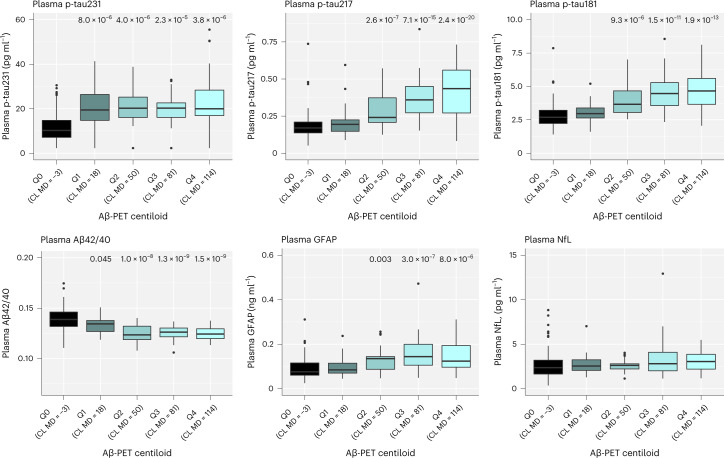
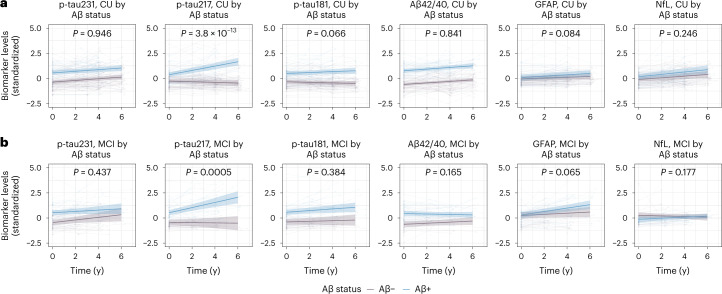
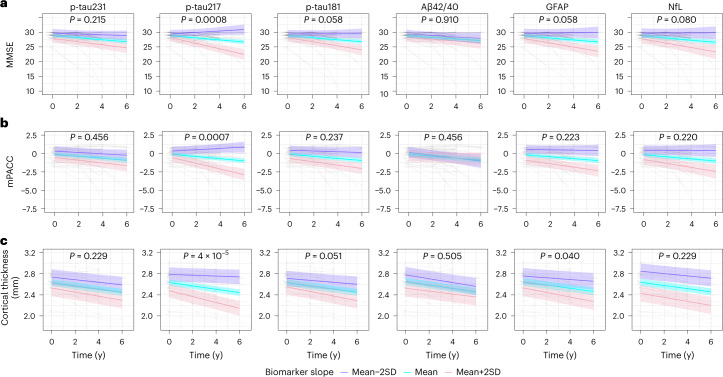
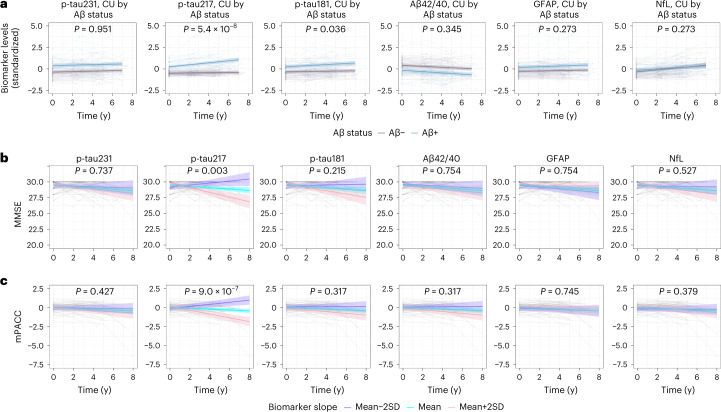
Blood biomarkers indicative of Alzheimer’s disease (AD) pathology are altered in both preclinical and symptomatic stages of the disease. Distinctive biomarkers may be optimal for the identification of AD pathology or monitoring of disease progression. Blood biomarkers that correlate with changes in cognition and atrophy during the course of the disease could be used in clinical trials to identify successful interventions and thereby accelerate the development of efficient therapies. When disease-modifying treatments become approved for use, efficient blood-based biomarkers might also inform on treatment implementation and management in clinical practice. In the BioFINDER-1 cohort, plasma phosphorylated (p)-tau231 and amyloid-β42/40 ratio were more changed at lower thresholds of amyloid pathology. Longitudinally, however, only p-tau217 demonstrated marked amyloid-dependent changes over 4–6 years in both preclinical and symptomatic stages of the disease, with no such changes observed in p-tau231, p-tau181, amyloid-β42/40, glial acidic fibrillary protein or neurofilament light. Only longitudinal increases of p-tau217 were also associated with clinical deterioration and brain atrophy in preclinical AD. The selective longitudinal increase of p-tau217 and its associations with cognitive decline and atrophy was confirmed in an independent cohort (Wisconsin Registry for Alzheimer’s Prevention). These findings support the differential association of plasma biomarkers with disease development and strongly highlight p-tau217 as a surrogate marker of disease progression in preclinical and prodromal AD, with impact for the development of new disease-modifying treatments.
Overview
The claims and statistics of this paper haven’t been checked yet.
Free: it reads the open-access text and checks the first 5 claims that cite a source we can check. Create a free account to check every claim.
Integrity signals
Registry
Cites
Statistics
Figures
Verification
Claims the paper makes
The claims and statistics of this paper haven’t been checked yet.
Free: it reads the open-access text and checks the first 5 claims that cite a source we can check. Create a free account to check every claim.
Claims other papers make about this one
Each is checked against this paper’s own text: does it say what the citing paper says it does?
The source backs part of the claim, not all of it — or backs it for a different population, condition or comparison.
In the citing paper
“Plasma levels of p-tau are strongly associated with PET and CSF biomarkers of AD pathology19–25, neuropathological changes associated with AD20,23,26,27 and the subsequent development of AD dementia20,23,28.”
From Highly accurate blood test for Alzheimer's disease is similar or superior to clinical cerebrospinal fluid tests (2024) · cites this paper as [19]
Experimental — accuracy not yet measuredThe cited source says what the claim attributes to it.
In the citing paper
“Additionally, p-tau217 demonstrates a unique longitudinal trajectory, showing increases associated with worsening brain atrophy and declining cognitive performance in individuals with elevated Aβ pathology.24,25”
From Diagnostic Accuracy of a Plasma Phosphorylated Tau 217 Immunoassay for Alzheimer Disease Pathology (2024) · cites this paper as [24]
Self-check
Percentages, sums and reported differences re-computed from the paper’s own numbers.
The self-check needs the paper’s full text.
Citations
Cites
Palmqvist, S., Janelidze, S., Quiroz, Y. T., Zetterberg, H., Lopera, F., Stomrud, E., Su, Y., Chen, Y., Serrano, G. E., Leuzy, A., et al. (2020) · JAMA · doi:10.1001/jama.2020.12134 · Cited by 1,603 · cited 3×
“For example, while all p-tau biomarkers relate to AD postmortem pathology 6,14,15 , in AD brain tissue, p-tau217 is prominently seen in granulovacuolar degeneration bodies and multivesicular bodies in neurons, which is not observed for p-tau181 and p-tau231 (ref.”
Self-citationThe Centiloid Project: standardizing quantitative amyloid plaque estimation by PET
Klunk, W. E., Koeppe, R. A., Price, J. C., Benzinger, T. L., Devous, M. D., Jagust, W. J., Johnson, K. A., Mathis, C. A., Minhas, D., Pontecorvo, M. J., et al. (2015) · Alzheimer's & Dementia · doi:10.1016/j.jalz.2014.07.003 · Cited by 1,348 · cited 1×
“Next, we analyzed plasma biomarkers when grouping participants by Aβ-PET centiloids, which is an established measure to increase comparability across Aβ-PET methods 22 .”
Karikari, T. K., Pascoal, T. A., Ashton, N. J., Janelidze, S., Benedet, A. L., Rodriguez, J. L., Chamoun, M., Savard, M., Kang, M. S., Therriault, J., et al. (2020) · The Lancet Neurology · doi:10.1016/s1474-4422(20)30071-5 · Cited by 1,316
Self-citationJanelidze, S., Mattsson, N., Palmqvist, S., Smith, R., Beach, T. G., Serrano, G. E., Chai, X., Proctor, N. K., Eichenlaub, U., Zetterberg, H., et al. (2020) · Nature Medicine · doi:10.1038/s41591-020-0755-1 · Cited by 1,247 · cited 1×
“Recently, blood biomarkers reflecting Aβ 3,4 , tau 5–8 , neurodegeneration 9,10 and astrogliosis 11,12 , have been developed and validated.”
Self-citationBiomarkers for neurodegenerative diseases
Hansson, O. (2021) · Nature Medicine · doi:10.1038/s41591-021-01382-x · Cited by 1,159
Self-citationAssociation of plasma neurofilament light with neurodegeneration in patients with Alzheimer disease
Mattsson, N., Andreasson, U., Zetterberg, H., Blennow, K., & Initiative, F. T. A. D. N. (2017) · JAMA Neurology · doi:10.1001/jamaneurol.2016.6117 · Cited by 1,070
Self-citationDefining imaging biomarker cut points for brain aging and Alzheimer's disease
Jack, C. R., Wiste, H. J., Weigand, S. D., Therneau, T. M., Lowe, V. J., Knopman, D. S., Gunter, J. L., Senjem, M. L., Jones, D. T., Kantarci, K., et al. (2017) · Alzheimer's & Dementia · doi:10.1016/j.jalz.2016.08.005 · Cited by 931
High-precision plasma β-amyloid 42/40 predicts current and future brain amyloidosis
Schindler, S. E., Bollinger, J. G., Ovod, V., Mawuenyega, K. G., Li, Y., Gordon, B. A., Holtzman, D. M., Morris, J. C., Benzinger, T. L. S., Xiong, C., et al. (2019) · Neurology · doi:10.1212/wnl.0000000000008081 · Cited by 885 · cited 3×
“Recently, blood biomarkers reflecting Aβ 3,4 , tau 5–8 , neurodegeneration 9,10 and astrogliosis 11,12 , have been developed and validated.”
Self-citationThe Preclinical Alzheimer Cognitive Composite: Measuring Amyloid-Related Decline
Donohue, M. C., Sperling, R. A., Salmon, D. P., Rentz, D. M., Raman, R., Thomas, R. G., Weiner, M., & Aisen, P. S. (2014) · JAMA Neurology · doi:10.1001/jamaneurol.2014.803 · Cited by 860
Mattsson, N., Cullen, N. C., Andreasson, U., Zetterberg, H., & Blennow, K. (2019) · JAMA Neurology · doi:10.1001/jamaneurol.2019.0765 · Cited by 726 · cited 1×
“This includes a marker of global neurodegeneration, plasma NfL, which has been shown to associate with clinical progression in patients with more advanced symptoms 24,25 .”
Self-citationPlasma p-tau231: a new biomarker for incipient Alzheimer’s disease pathology.
Ashton, N. J., Pascoal, T. A., Karikari, T. K., Benedet, A. L., Lantero-Rodriguez, J., Brinkmalm, G., Snellman, A., Schöll, M., Troakes, C., Hye, A., et al. (2021) · Acta Neuropathologica · doi:10.1007/s00401-021-02275-6 · Cited by 719 · cited 3×
“Recently, blood biomarkers reflecting Aβ 3,4 , tau 5–8 , neurodegeneration 9,10 and astrogliosis 11,12 , have been developed and validated.”
Self-citationthe Dominantly Inherited Alzheimer Network, Barthélemy, N. R., Li, Y., Joseph-Mathurin, N., Gordon, B. A., Hassenstab, J., Benzinger, T. L. S., Buckles, V., Fagan, A. M., Perrin, R. J., et al. (2020) · Nature Medicine · doi:10.1038/s41591-020-0781-z · Cited by 651
Self-citationBenedet, A. L., Milà-Alomà, M., Vrillon, A., Ashton, N. J., Pascoal, T. A., Lussier, F., Karikari, T. K., Hourregue, C., Cognat, E., Dumurgier, J., et al. (2021) · JAMA Neurology · doi:10.1001/jamaneurol.2021.3671 · Cited by 638 · cited 1×
“Recently, blood biomarkers reflecting Aβ 3,4 , tau 5–8 , neurodegeneration 9,10 and astrogliosis 11,12 , have been developed and validated.”
Self-citationThijssen, E. H., La Joie, R., Strom, A., Fonseca, C., Iaccarino, L., Wolf, A., Spina, S., Allen, I. E., Cobigo, Y., Heuer, H., et al. (2021) · The Lancet Neurology · doi:10.1016/s1474-4422(21)00214-3 · Cited by 607
Self-citationHansson, O., Edelmayer, R. M., Boxer, A. L., Carrillo, M. C., Mielke, M. M., Rabinovici, G. D., Salloway, S., Sperling, R., Zetterberg, H., & Teunissen, C. E. (2022) · Alzheimer's & Dementia · doi:10.1002/alz.12756 · Cited by 607 · cited 1×
“As highlighted in the recent Alzheimer’s Association Appropriate Use recommendation for use of AD biomarkers 2 , these changes in longitudinal measures of blood biomarkers should also be associated with established measures of AD progression, including worsening in objective cognitive performance…”
Self-citationPlasma GFAP is an early marker of amyloid-β but not tau pathology in Alzheimer's disease
Pereira, J. B., Janelidze, S., Smith, R., Mattsson-Carlgren, N., Palmqvist, S., Teunissen, C. E., Zetterberg, H., Stomrud, E., Ashton, N. J., Blennow, K., et al. (2021) · Brain · doi:10.1093/brain/awab223 · Cited by 598
Self-citationA multicentre validation study of the diagnostic value of plasma neurofilament light.
Ashton, N. J., Janelidze, S., Al Khleifat, A., Leuzy, A., van der Ende, E. L., Karikari, T. K., Benedet, A. L., Pascoal, T. A., Lleó, A., Parnetti, L., et al. (2021) · Nature Communications · doi:10.1038/s41467-021-23620-z · Cited by 545 · cited 1×
“Recently, blood biomarkers reflecting Aβ 3,4 , tau 5–8 , neurodegeneration 9,10 and astrogliosis 11,12 , have been developed and validated.”
Self-citationPalmqvist, S., Tideman, P., Cullen, N., Zetterberg, H., Blennow, K., Initiative, T. A. D. N., Dage, J. L., Stomrud, E., Janelidze, S., Mattsson-Carlgren, N., et al. (2021) · Nature Medicine · doi:10.1038/s41591-021-01348-z · Cited by 524 · cited 1×
“These markers, in particular different variants of phosphorylated tau (p-tau), exhibit high performance in identifying AD pathology in the differential diagnosis of cognitive decline and demonstrate excellent prognostic performance to predict progression to AD dementia 13 .”
Self-citationHead-to-Head Comparison of 8 Plasma Amyloid-β 42/40 Assays in Alzheimer Disease
Janelidze, S., Teunissen, C. E., Zetterberg, H., Allué, J. A., Sarasa, L., Eichenlaub, U., Bittner, T., Ovod, V., Verberk, I. M. W., Toba, K., et al. (2021) · JAMA Neurology · doi:10.1001/jamaneurol.2021.3180 · Cited by 494
Self-citationOssenkoppele, R., Rabinovici, G. D., Smith, R., Cho, H., Schöll, M., Strandberg, O., Palmqvist, S., Mattsson, N., Janelidze, S., Santillo, A., et al. (2018) · JAMA · doi:10.1001/jama.2018.12917 · Cited by 472
Self-citationBlood plasma phosphorylated-tau isoforms track CNS change in Alzheimer’s disease
Barthélemy, N. R., Horie, K., Sato, C., & Bateman, R. J. (2020) · Journal of Experimental Medicine · doi:10.1084/jem.20200861 · Cited by 437 · cited 3×
“Other p-tau217 assays may have more sensitive performance at the earliest changes of Aβ-PET 34 .”
Self-citationBrickman, A. M., Manly, J. J., Honig, L. S., Sanchez, D., Reyes‐Dumeyer, D., Lantigua, R. A., Lao, P. J., Stern, Y., Vonsattel, J. P., Teich, A. F., et al. (2021) · Alzheimer's & Dementia · doi:10.1002/alz.12301 · Cited by 387
Longitudinal plasma p-tau217 is increased in early stages of Alzheimer’s disease
Mattsson-Carlgren, N., Janelidze, S., Palmqvist, S., Cullen, N., Svenningsson, A. L., Strandberg, O., Mengel, D., Walsh, D. M., Stomrud, E., Dage, J. L., et al. (2020) · Brain · doi:10.1093/brain/awaa286 · Cited by 368 · cited 1×
“Our results confirm that p-tau217 is dynamic biomarker, even in preclinical AD 19 , accurately reflecting the progression of AD pathology, and now this is shown in comparison with a compendium of blood biomarkers also reported to reflect AD pathophysiology.”
Self-citationMilà-Alomà, M., Ashton, N. J., Shekari, M., Salvadó, G., Ortiz-Romero, P., Montoliu-Gaya, L., Benedet, A. L., Karikari, T. K., Lantero-Rodriguez, J., Vanmechelen, E., et al. (2022) · Nature Medicine · doi:10.1038/s41591-022-01925-w · Cited by 353
Self-citationLantero Rodriguez, J., Karikari, T. K., Suárez-Calvet, M., Troakes, C., King, A., Emersic, A., Aarsland, D., Hye, A., Zetterberg, H., Blennow, K., et al. (2020) · Acta Neuropathologica · doi:10.1007/s00401-020-02195-x · Cited by 350
Self-citationBlood phospho-tau in Alzheimer disease: analysis, interpretation, and clinical utility
Karikari, T. K., Ashton, N. J., Brinkmalm, G., Brum, W. S., Benedet, A. L., Montoliu-Gaya, L., Lantero-Rodriguez, J., Pascoal, T. A., Suárez-Calvet, M., Rosa-Neto, P., et al. (2022) · Nature Reviews Neurology · doi:10.1038/s41582-022-00665-2 · Cited by 329
Self-citationLa Joie, R., Ayakta, N., Seeley, W. W., Borys, E., Boxer, A. L., DeCarli, C., Doré, V., Grinberg, L. T., Huang, E., Hwang, J., et al. (2019) · Alzheimer's & Dementia · doi:10.1016/j.jalz.2018.09.001 · Cited by 317
The Wisconsin Registry for Alzheimer's Prevention: A review of findings and current directions
Johnson, S. C., Koscik, R. L., Jonaitis, E. M., Clark, L. R., Mueller, K. D., Berman, S. E., Bendlin, B. B., Engelman, C. D., Okonkwo, O. C., Hogan, K. J., et al. (2018) · Alzheimer's & Dementia: Diagnosis, Assessment & Disease Monitoring · doi:10.1016/j.dadm.2017.11.007 · Cited by 316
Self-citationOptimizing the preclinical Alzheimer's cognitive composite with semantic processing: The PACC5
Papp, K. V., Rentz, D. M., Orlovsky, I., Sperling, R. A., & Mormino, E. C. (2017) · Alzheimer's & Dementia: Translational Research & Clinical Interventions · doi:10.1016/j.trci.2017.10.004 · Cited by 303
Soluble P‐tau217 reflects amyloid and tau pathology and mediates the association of amyloid with tau
Mattsson‐Carlgren, N., Janelidze, S., Bateman, R. J., Smith, R., Stomrud, E., Serrano, G. E., Reiman, E. M., Palmqvist, S., Dage, J. L., Beach, T. G., et al. (2021) · EMBO Molecular Medicine · doi:10.15252/emmm.202114022 · Cited by 261 · cited 1×
“However, over time, p-tau217 is the only biomarker that clearly changes with disease progression, which is in line with earlier observations that p-tau217 may later become more reflective of tau pathology, after the initial deposition of Aβ 27 .”
Self-citationPontecorvo, M. J., Lu, M., Burnham, S. C., Schade, A. E., Dage, J. L., Shcherbinin, S., Collins, E. C., Sims, J. R., & Mintun, M. A. (2022) · JAMA Neurology · doi:10.1001/jamaneurol.2022.3392 · Cited by 261
Plasma biomarkers for Alzheimer’s Disease in relation to neuropathology and cognitive change
Smirnov, D. S., Ashton, N. J., Blennow, K., Zetterberg, H., Simrén, J., Lantero-Rodriguez, J., Karikari, T. K., Hiniker, A., Rissman, R. A., Salmon, D. P., et al. (2022) · Acta Neuropathologica · doi:10.1007/s00401-022-02408-5 · Cited by 221
Self-citationAmyloid burden and neural function in people at risk for Alzheimer's Disease
Johnson, S. C., Christian, B. T., Okonkwo, O. C., Oh, J. M., Harding, S., Xu, G., Hillmer, A. T., Wooten, D. W., Murali, D., Barnhart, T. E., et al. (2014) · Neurobiology of Aging · doi:10.1016/j.neurobiolaging.2013.09.028 · Cited by 218
Self-citationCentiloid cut-off values for optimal agreement between PET and CSF core AD biomarkers
for the Alzheimer’s Disease Neuroimaging Initiative, F. T. A. S., Salvadó, G., Molinuevo, J. L., Brugulat-Serrat, A., Falcon, C., Grau-Rivera, O., Suárez-Calvet, M., Pavia, J., Niñerola-Baizán, A., Perissinotti, A., et al. (2019) · Alzheimer's Research & Therapy · doi:10.1186/s13195-019-0478-z · Cited by 195
Self-citationBayoumy, S., Verberk, I. M. W., den Dulk, B., Hussainali, Z., Zwan, M., van der Flier, W. M., Ashton, N. J., Zetterberg, H., Blennow, K., Vanbrabant, J., et al. (2021) · Alzheimer's Research & Therapy · doi:10.1186/s13195-021-00939-9 · Cited by 190
Self-citationJanelidze, S., Palmqvist, S., Leuzy, A., Stomrud, E., Verberk, I. M. W., Zetterberg, H., Ashton, N. J., Pesini, P., Sarasa, L., Allué, J. A., et al. (2022) · Alzheimer's & Dementia · doi:10.1002/alz.12395 · Cited by 188
Self-citationCerebrospinal fluid p-tau231 as an early indicator of emerging pathology in Alzheimer's disease
Ashton, N. J., Benedet, A. L., Pascoal, T. A., Karikari, T. K., Lantero-Rodriguez, J., Brum, W. S., Mathotaarachchi, S., Therriault, J., Savard, M., Chamoun, M., et al. (2022) · eBioMedicine · doi:10.1016/j.ebiom.2022.103836 · Cited by 184 · cited 1×
“Data from CSF studies have also shown that p-tau217 exhibits larger fold-changes in symptomatic phases 30 , while subtle changes of p-tau231 are observed with regional Aβ deposition 31 and these results now translate to blood.”
Self-citationAmyloid and tau imaging biomarkers explain cognitive decline from late middle-age
Betthauser, T. J., Koscik, R. L., Jonaitis, E. M., Allison, S. L., Cody, K. A., Erickson, C. M., Rowley, H. A., Stone, C. K., Mueller, K. D., Clark, L. R., et al. (2020) · Brain · doi:10.1093/brain/awz378 · Cited by 176
Self-citationImplementing the centiloid transformation for 11C-PiB and β-amyloid 18F-PET tracers using CapAIBL
Bourgeat, P., Doré, V., Fripp, J., Ames, D., Masters, C. L., Salvado, O., Villemagne, V. L., & Rowe, C. C. (2018) · NeuroImage · doi:10.1016/j.neuroimage.2018.08.044 · Cited by 157
Measuring longitudinal cognition: Individual tests versus composites
Jonaitis, E. M., Koscik, R. L., Clark, L. R., Ma, Y., Betthauser, T. J., Berman, S. E., Allison, S. L., Mueller, K. D., Hermann, B. P., Van Hulle, C. A., et al. (2019) · Alzheimer's & Dementia: Diagnosis, Assessment & Disease Monitoring · doi:10.1016/j.dadm.2018.11.006 · Cited by 143
Self-citationSchindler, S. E., Karikari, T. K., Ashton, N. J., Henson, R. L., Yarasheski, K. E., West, T., Meyer, M. R., Kirmess, K. M., Li, Y., Saef, B., et al. (2022) · Neurology · doi:10.1212/wnl.0000000000200358 · Cited by 141
Self-citationDetermining clinically meaningful decline in preclinical Alzheimer disease
Insel, P. S., Weiner, M., Mackin, R. S., Mormino, E., Lim, Y. Y., Stomrud, E., Palmqvist, S., Masters, C. L., Maruff, P. T., Hansson, O., et al. (2019) · Neurology · doi:10.1212/wnl.0000000000007831 · Cited by 128
Self-citationLeuzy, A., Janelidze, S., Mattsson-Carlgren, N., Palmqvist, S., Jacobs, D., Cicognola, C., Stomrud, E., Vanmechelen, E., Dage, J. L., & Hansson, O. (2021) · Neurology · doi:10.1212/wnl.0000000000012727 · Cited by 128
Self-citationBenedet, A. L., Leuzy, A., Pascoal, T. A., Ashton, N. J., Mathotaarachchi, S., Savard, M., Therriault, J., Kang, M. S., Chamoun, M., Schöll, M., et al. (2020) · Brain · doi:10.1093/brain/awaa342 · Cited by 121 · cited 1×
“This includes a marker of global neurodegeneration, plasma NfL, which has been shown to associate with clinical progression in patients with more advanced symptoms 24,25 .”
Self-citationPlasma p‐tau231, p‐tau181, PET Biomarkers, and Cognitive Change in Older Adults
Meyer, P., Ashton, N. J., Karikari, T. K., Strikwerda‐Brown, C., Köbe, T., Gonneaud, J., Pichet Binette, A., Ozlen, H., Yakoub, Y., Simrén, J., et al. (2022) · Annals of Neurology · doi:10.1002/ana.26308 · Cited by 91
Self-citationFarrell, M. E., Papp, K. V., Buckley, R. F., Jacobs, H. I. L., Schultz, A. P., Properzi, M. J., Vannini, P., Hanseeuw, B. J., Rentz, D. M., Johnson, K. A., et al. (2022) · Neurology · doi:10.1212/wnl.0000000000200137 · Cited by 70
Cellular localization of p-tau217 in brain and its association with p-tau217 plasma levels
Wennström, M., Janelidze, S., Nilsson, K. P. R., Bank, T. N. B., Serrano, G. E., Beach, T. G., Dage, J. L., & Hansson, O. (2022) · Acta Neuropathologica Communications · doi:10.1186/s40478-021-01307-2 · Cited by 59 · cited 1×
“23 ).”
Self-citationIncreased amyloidogenic APP processing in APOE ɛ4-negative individuals with cerebral β-amyloidosis
Mattsson, N., Insel, P. S., Palmqvist, S., Stomrud, E., van Westen, D., Minthon, L., Zetterberg, H., Blennow, K., & Hansson, O. (2016) · Nature Communications · doi:10.1038/ncomms10918 · Cited by 59
Self-citationCerebrospinal fluid ratios with Aβ42 predict preclinical brain β‐amyloid accumulation
Racine, A. M., Koscik, R. L., Nicholas, C. R., Clark, L. R., Okonkwo, O. C., Oh, J. M., Hillmer, A. T., Murali, D., Barnhart, T. E., Betthauser, T. J., et al. (2016) · Alzheimer's & Dementia: Diagnosis, Assessment & Disease Monitoring · doi:10.1016/j.dadm.2015.11.006 · Cited by 58
Self-citationKaeser, S. A., Häsler, L. M., Lambert, M., Bergmann, C., Bottelbergs, A., Theunis, C., Mercken, M., & Jucker, M. (2022) · Acta Neuropathologica · doi:10.1007/s00401-021-02400-5 · Cited by 41
Salvadó, G., Ossenkoppele, R., Ashton, N. J., Beach, T. G., Serrano, G. E., Zetterberg, H., Mattsson, N., Janelidze, S., Blennow, K., & Hansson, O. (2022) · medRxiv · doi:10.1101/2022.08.22.22279052 · Cited by 6 · cited 1×
“In addition, p-tau variants in blood have been validated against neuropathology exhibited at postmortem 5,6,14–16 .”
Self-citationLeuzy, A., Janelidze, S., Mattsson, N., Palmqvist, S., Jacobs, D., Cicognola, C., Stomrud, E., Vanmechelen, E., Dage, J. L., & Hansson, O. (2021) · Alzheimer s & Dementia · doi:10.1002/alz.055316 · Cited by 1 · cited 1×
“Data from CSF studies have also shown that p-tau217 exhibits larger fold-changes in symptomatic phases 30 , while subtle changes of p-tau231 are observed with regional Aβ deposition 31 and these results now translate to blood.”
Self-citation
Cited by
Diagnostic Accuracy of a Plasma Phosphorylated Tau 217 Immunoassay for Alzheimer Disease Pathology
Ashton, N. J., Brum, W. S., Di Molfetta, G., Benedet, A. L., Arslan, B., Jonaitis, E., Langhough, R. E., Cody, K., Wilson, R., Carlsson, C. M., et al. (2024) · JAMA Neurology · doi:10.1001/jamaneurol.2023.5319 · Cited by 884
Self-citationBlood biomarkers for Alzheimer’s disease in clinical practice and trials
Hansson, O., Blennow, K., Zetterberg, H., & Dage, J. (2023) · Nature Aging · doi:10.1038/s43587-023-00403-3 · Cited by 522
Self-citationBarthélemy, N. R., Salvadó, G., Schindler, S. E., He, Y., Janelidze, S., Collij, L. E., Saef, B., Henson, R. L., Chen, C. D., Gordon, B. A., et al. (2024) · Nature Medicine · doi:10.1038/s41591-024-02869-z · Cited by 448
“Plasma levels of p-tau are strongly associated with PET and CSF biomarkers of AD pathology 19–25 , neuropathological changes associated with AD 20,23,26,27 and the subsequent development of AD dementia 20,23,28 .”
BackgroundSelf-citationAlzheimer's disease: From immunotherapy to immunoprevention
Jucker, M., & Walker, L. C. (2023) · Cell · doi:10.1016/j.cell.2023.08.021 · Cited by 353
Plasma proteomic profiles predict future dementia in healthy adults
Guo, Y., You, J., Zhang, Y., Liu, W.-S., Huang, Y.-Y., Zhang, Y.-R., Zhang, W., Dong, Q., Feng, J.-F., Cheng, W., et al. (2024) · Nature Aging · doi:10.1038/s43587-023-00565-0 · Cited by 293
“Beyond predictive accuracy, optimal dementia prediction biomarkers should be highly specific for the corresponding pathology 11,19 .”
Background
Metadata
- Authors
- Ashton, N. J., Janelidze, S., Mattsson-Carlgren, N., Binette, A. P., Strandberg, O., Brum, W. S., Karikari, T. K., González-Ortiz, F., Di Molfetta, G., Meda, F. J., Jonaitis, E. M., Koscik, R. L., Cody, K., Betthauser, T. J., Li, Y., Vanmechelen, E., Palmqvist, S., Stomrud, E., Bateman, R. J., Zetterberg, H., Johnson, S. C., Blennow, K., & Hansson, O.
- Affiliations
- King's College London (GB)
- Lund University (SE)
- Universidade Federal do Rio Grande do Sul (BR)
- University of Pittsburgh (US)
- University of Gothenburg (SE)
- University of Wisconsin–Madison (US)
- Washington University in St. Louis (US)
- ADx NeuroSciences (BE)
- Sahlgrenska University Hospital (SE)
- Corresponding author
- Blennow, Kaj
- Hansson, Oskar
- ORCID
- Ashton, Nicholas J.
- Janelidze, Shorena
- Binette, Alexa Pichet
- Brum, Wagner S.
- Karikari, Thomas K.
- Meda, Francisco J.
- Jonaitis, Erin M.
- Koscik, Rebecca Langhough
- Cody, Karly
- Betthauser, Tobey J.
- Vanmechelen, Eugeen
- Palmqvist, Sebastian
- Stomrud, Erik
- Bateman, Randall J.
- Zetterberg, Henrik
- Johnson, Sterling C.
- Blennow, Kaj
- Hansson, Oskar
- Venue
- Nature Medicine
- Published
- 2022-12
- Volume
- 28
- Issue
- 12
- Pages
- 2555-2562
- ISSN
- 1078-8956 (ISSN-L)
- 1546-170X
- PMC
- PMC9800279
- OpenAlex
- W4310603866
- Cited by
- 436
- References
- 53
- Citations by year
- 2026: 99 · 2025: 128 · 2024: 135 · 2023: 72 · 2022: 1
- FWCI
- 52.02
- Type
- journal article
- Language
- en
- Open access
- hybrid
- doi.org
- Licence
- cc-by
- creativecommons.org/licenses/by/4.0 (tdm)
- creativecommons.org/licenses/by/4.0 (vor)
- Locations
- Nature Medicine (publishedVersion, cc-by)
- PubMed Central (publishedVersion, cc-by)
- PubMed (publishedVersion)
- Digital Commons@Becker (Washington University School of Medicine) (submittedVersion, cc-by)
- UCL Discovery (University College London) (submittedVersion)
- Lund University Publications (Lund University) (submittedVersion)
- Funders
- Alzheimer's Association (ADSF-21-831377-C, ZEN-21-848495, ADSF‐21‐831376‐C, ADSF-21-831376-C, ADSF-21-831381-C and ADSF-21-831377-C, #ADSF-21-831381-C, 2021 Zenith Award, -21- 831377-C)
- Alzheimer's Drug Discovery Foundation (201809–2016862, 201809-2016615, #RDAPB‐201809‐2016615)
- Eli Lilly and Company
- Pfizer
- Biogen
- Familjen Erling-Perssons Stiftelse (FO2019-0228, 860197)
- Stiftelsen för Gamla Tjänarinnor (860197, FO2019‐0228)
- EU Joint Programme – Neurodegenerative Disease Research (JPND2019-466-236)
- Prothena
- Australian Government
- Cerveau Technologies
- European Commission (HORIZON2020, JPND2019‐466‐236, 860197)
- Lunds Universitet
- Eisai
- Hjärnfonden (FO2019-0029, ALZ2022-0006), FO2021-0293, FO2017‑0243, FO2017, ALFGBG-715986, FO2020‐0271, FO2019‐0228, #ALFGBG-965240, JPND2019-466-236)
- Knut och Alice Wallenbergs Stiftelse (681712, 2017‐0383)
- Vetenskapsrådet (ALFGBG-965240, ALZ2022-0006, 2017-00915, 2016-00906, (#ALFGBG-715986, 681712, FO2021-0293, 2018-, JPND2019-466-236, 2018-02052, 2021-02219, 2017-00383, FO2017-0243, 2018-02532)
- Konung Gustaf V:s och Drottning Victorias Frimurarestiftelse (2020-O000028, 2020-0314, FO2017-0243)
- Region Skåne
- Skånes universitetssjukhus (2020-O000028)
- Siemens Healthineers
- Marcus och Amalia Wallenbergs minnesfond (2015.0125)
- Julius Clinical
- UK Dementia Research Institute (#2017-00915)
- Olav Thon Stiftelsen (#FO2019-0228)
- Stiftelsen Bundy Academy
- National Institutes of Health (ZEN-21- 848495, AG027161)
- Genentech
- Parkinsonfonden (1280/20)
- Avid Radiopharmaceuticals
- National Institute on Aging (R01AG068398, RF1AG027161, R01AG021155, R01AG027161, P30AG062715)
- Topics
- Life Sciences › Neuroscience › Cellular and Molecular Neuroscience › Alzheimer's disease research and treatments
- Health Sciences › Medicine › Psychiatry and Mental health › Dementia and Cognitive Impairment Research
- Health Sciences › Medicine › Clinical Neurology › Amyotrophic Lateral Sclerosis Research
- Keywords
- Alzheimer's disease, blood biomarkers, phosphorylated tau217, preclinical Alzheimer's disease, prodromal Alzheimer's disease, disease progression, brain atrophy, cognitive decline, disease-modifying therapy, clinical trial selection, neurofilament light chain, Wisconsin Registry for Alzheimer's Prevention
- MeSH terms
- Alzheimer Disease, Atrophy, Humans, Peptide Fragments, Biomarkers, Amyloid beta-Peptides, tau Proteins, Disease Progression, Cognitive Dysfunction
About these checks
Registry, retraction, Cites and statistics results are computed, not judged, with one exception: a printed reference that no index lists is read once by a model before it counts as a citation error. Claims are extracted by a model and kept only when their quote appears verbatim in the text; each cited source is then checked, with a model’s help, for whether it says what the claim relies on. Those verdicts can be wrong — read the claim’s quote and the cited source before relying on one.
Statistics and arithmetic are recomputed, not judged.
Confidence bands are shown only for fields calibrated on our annotated test set. None is calibrated yet, so no band is shown.
What counts as a claim ›How we measure confidence ›How we check this ›
Are you an author, or do you see a problem with this page? Request a review
Data sources
Bibliographic data: Semantic Scholar, OpenAlex, Crossref.
Contains information from the Semantic Scholar Academic Graph Datasets, made available under the ODC Attribution License (ODC-BY 1.0).
Semantic Scholar’s data is described in: Kinney, R., et al. (2023). The Semantic Scholar Open Data Platform. arXiv:2301.10140.
