

Molecular residual disease and efficacy of adjuvant chemotherapy in patients with colorectal cancer
Open accessThe DOI matches its Crossref record; 22 of the 22 references it cites were found in a registry or an index.
Abstract
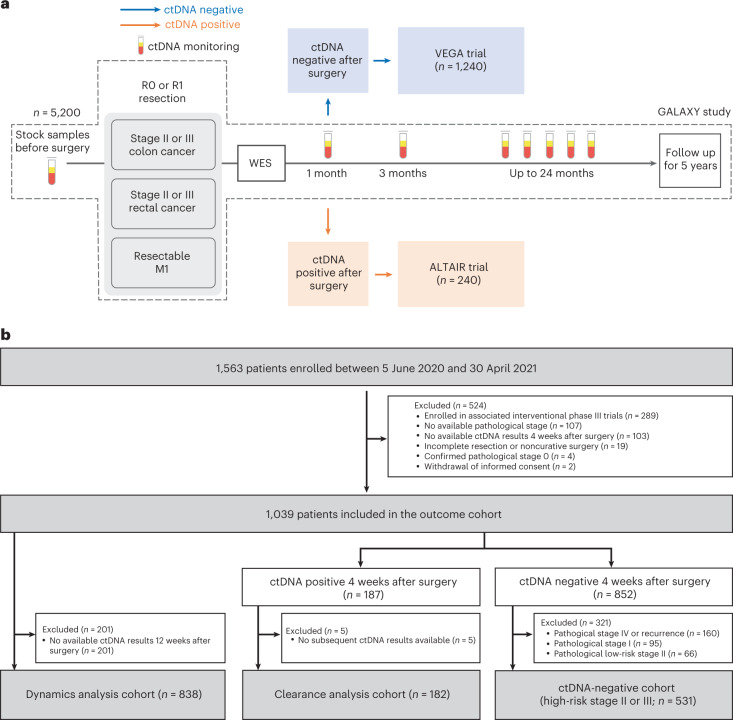
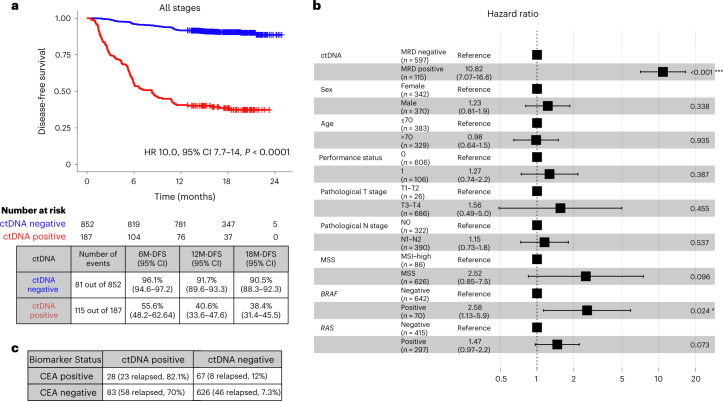
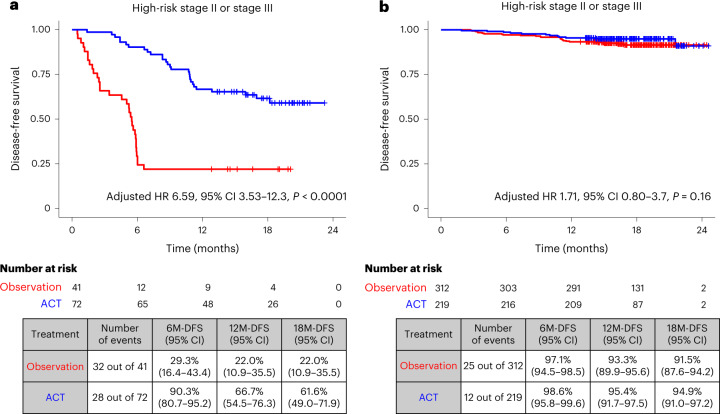
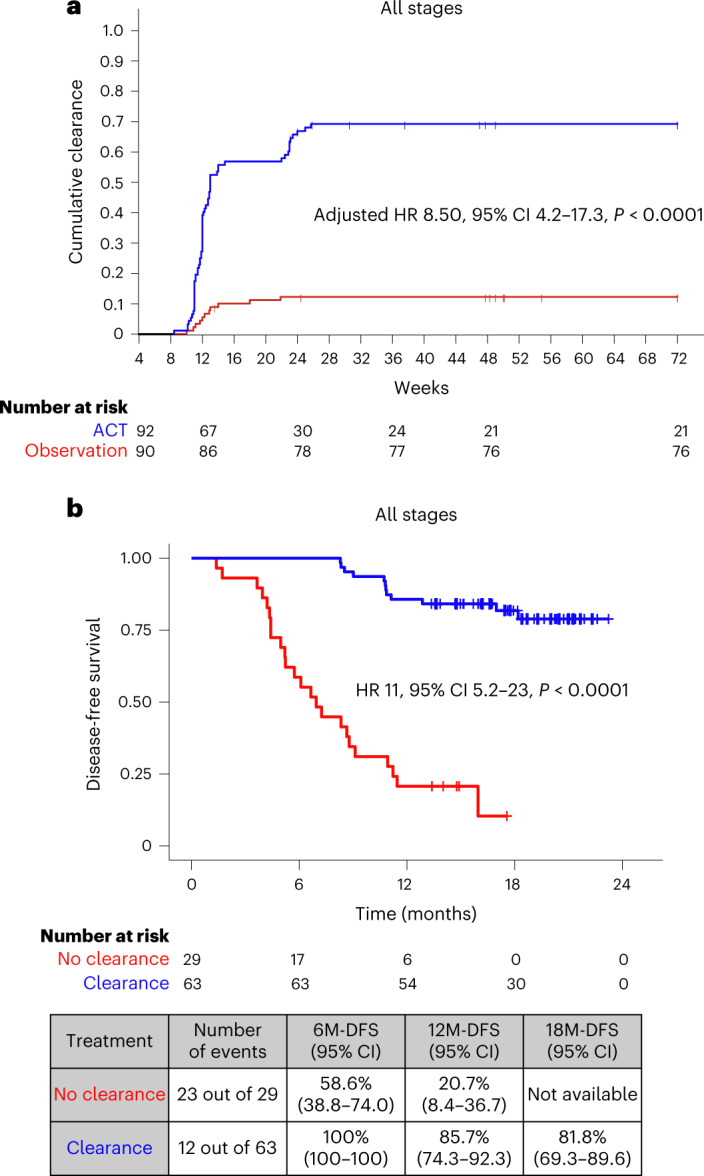
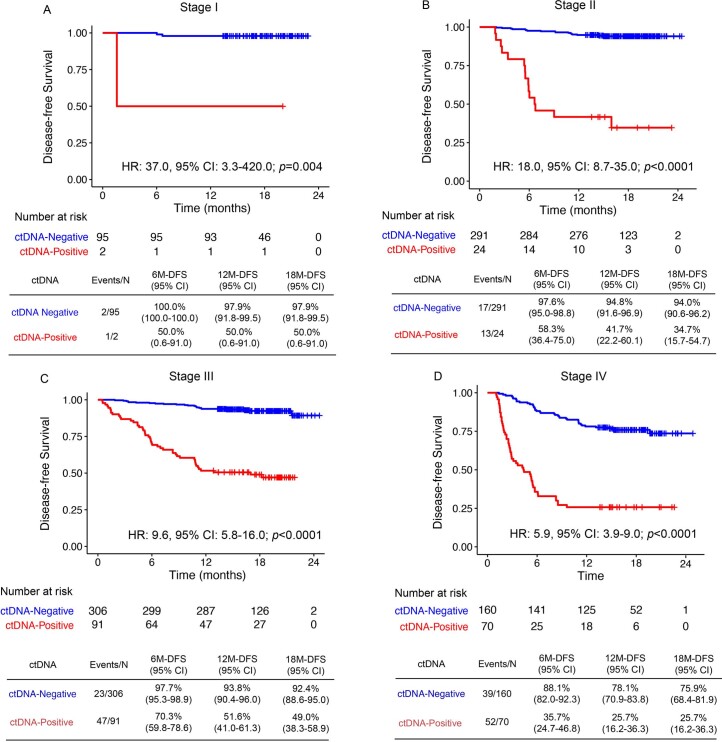
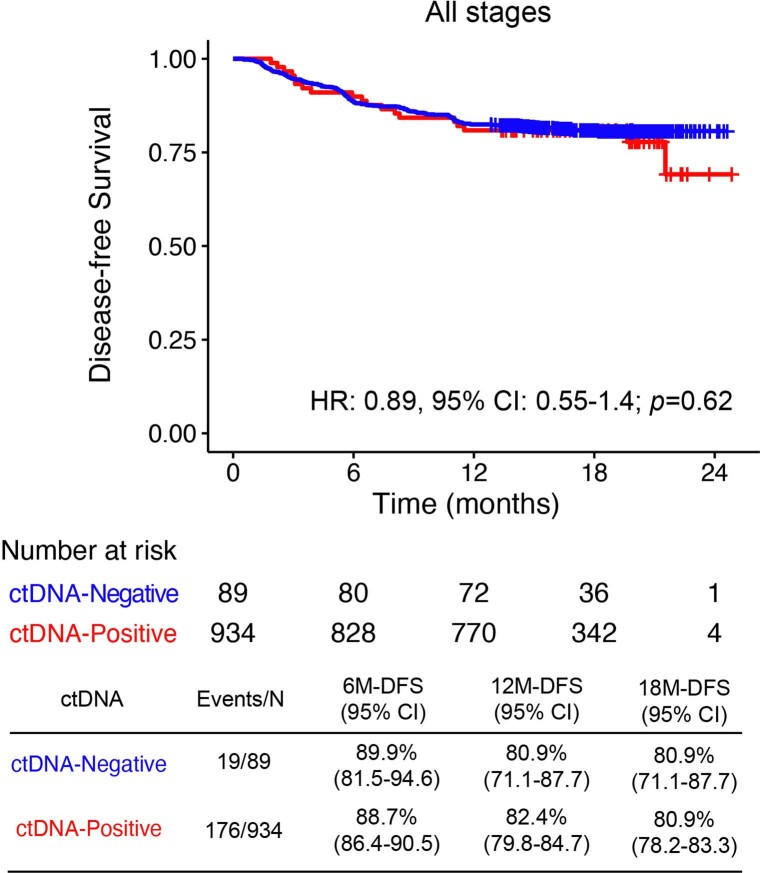
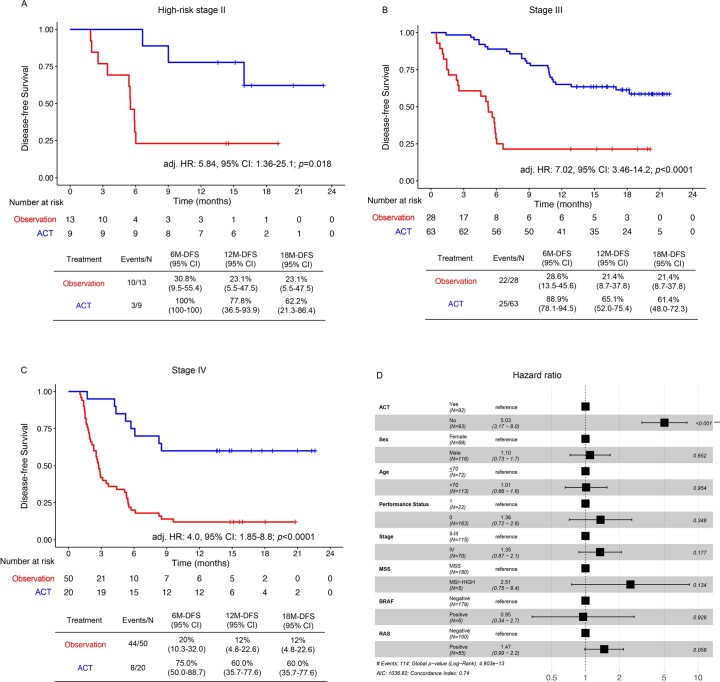
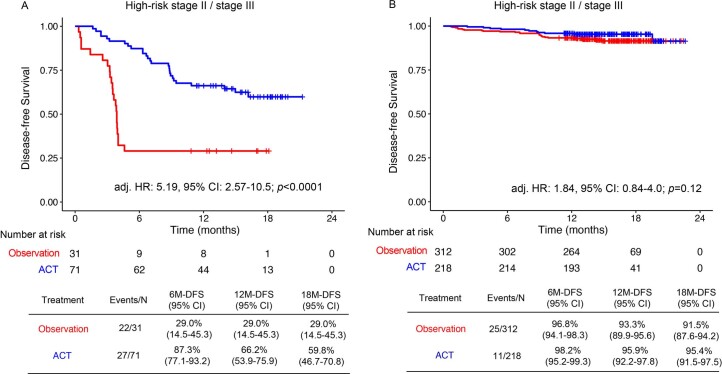
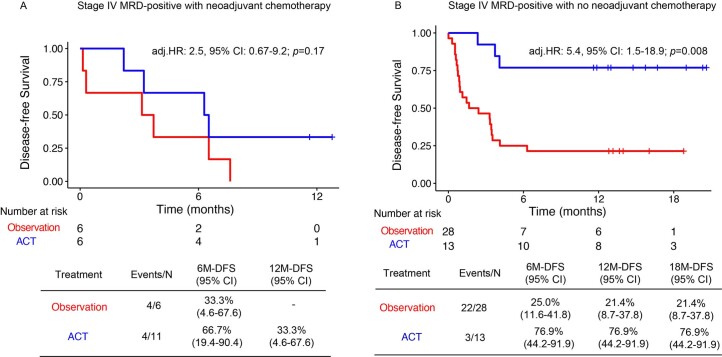
Despite standard-of-care treatment, more than 30% of patients with resectable colorectal cancer (CRC) relapse. Circulating tumor DNA (ctDNA) analysis may enable postsurgical risk stratification and adjuvant chemotherapy (ACT) treatment decision-making. We report results from GALAXY, which is an observational arm of the ongoing CIRCULATE-Japan study (UMIN000039205) that analyzed presurgical and postsurgical ctDNA in patients with stage II–IV resectable CRC ( n = 1,039). In this cohort, with a median follow-up of 16.74 months (range 0.49–24.83 months), postsurgical ctDNA positivity (at 4 weeks after surgery) was associated with higher recurrence risk (hazard ratio (HR) 10.0, P < 0.0001) and was the most significant prognostic factor associated with recurrence risk in patients with stage II or III CRC (HR 10.82, P < 0.001). Furthermore, postsurgical ctDNA positivity identified patients with stage II or III CRC who derived benefit from ACT (HR 6.59, P < 0.0001). The results of our study, a large and comprehensive prospective analysis of ctDNA in resectable CRC, support the use of ctDNA testing to identify patients who are at increased risk of recurrence and are likely to benefit from ACT.
Overview
The claims and statistics of this paper haven’t been checked yet.
Free: it reads the open-access text and checks the first 5 claims that cite a source we can check. Create a free account to check every claim.
Integrity signals
Registry
Cites
Statistics
Figures
Verification
Claims the paper makes
The claims and statistics of this paper haven’t been checked yet.
Free: it reads the open-access text and checks the first 5 claims that cite a source we can check. Create a free account to check every claim.
Claims other papers make about this one
Each is checked against this paper’s own text: does it say what the citing paper says it does?
The source backs part of the claim, not all of it — or backs it for a different population, condition or comparison.
In the citing paper
“Because KRAS mutations are often clonal founder events, mutant KRAS ctDNA can serve as a highly informative molecular marker for tumor burden, treatment response, minimal residual disease, and emergence of resistance [29,47,77,78].”
From Precision Targeting of KRAS-Mutant Cancers: Beyond G12C Toward G12D and Pan-RAS Therapeutic Strategies (2026) · cites this paper as [77]
Experimental — accuracy not yet measured
Self-check
Percentages, sums and reported differences re-computed from the paper’s own numbers.
The self-check needs the paper’s full text.
Citations
Cites
Oxaliplatin, Fluorouracil, and Leucovorin as Adjuvant Treatment for Colon Cancer
André, T., Boni, C., Mounedji-Boudiaf, L., Navarro, M., Tabernero, J., Hickish, T., Topham, C., Zaninelli, M., Clingan, P., Bridgewater, J., et al. (2004) · New England Journal of Medicine · doi:10.1056/nejmoa032709 · Cited by 3,689
Circulating Tumor DNA Analysis Guiding Adjuvant Therapy in Stage II Colon Cancer
Tie, J., Cohen, J. D., Lahouel, K., Lo, S. N., Wang, Y., Kosmider, S., Wong, R., Shapiro, J., Lee, M., Harris, S., et al. (2022) · New England Journal of Medicine · doi:10.1056/nejmoa2200075 · Cited by 1,091
Kuebler, J. P., Wieand, H. S., O'Connell, M. J., Smith, R. E., Colangelo, L. H., Yothers, G., Petrelli, N. J., Findlay, M. P., Seay, T. E., Atkins, J. N., et al. (2007) · Journal of Clinical Oncology · doi:10.1200/jco.2006.08.2974 · Cited by 1,056
Reinert, T., Henriksen, T. V., Christensen, E., Sharma, S., Salari, R., Sethi, H., Knudsen, M., Nordentoft, I., Wu, H.-T., Tin, A. S., et al. (2019) · JAMA Oncology · doi:10.1001/jamaoncol.2019.0528 · Cited by 1,011
Self-citationEngstrom, P. F., Arnoletti, J. P., Benson, A. B., Chen, Y.-J., Choti, M. A., Cooper, H. S., Covey, A., Dilawari, R. A., Early, D. S., Enzinger, P. C., et al. (2009) · Journal of the National Comprehensive Cancer Network · doi:10.6004/jnccn.2009.0056 · Cited by 683
Tie, J., Cohen, J. D., Wang, Y., Christie, M., Simons, K., Lee, M., Wong, R., Kosmider, S., Ananda, S., McKendrick, J., et al. (2019) · JAMA Oncology · doi:10.1001/jamaoncol.2019.3616 · Cited by 668
ctDNA guiding adjuvant immunotherapy in urothelial carcinoma
Powles, T., Assaf, Z. J., Davarpanah, N., Banchereau, R., Szabados, B. E., Yuen, K. C., Grivas, P., Hussain, M., Oudard, S., Gschwend, J. E., et al. (2021) · Nature · doi:10.1038/s41586-021-03642-9 · Cited by 646
Self-citationPersonalized Detection of Circulating Tumor DNA Antedates Breast Cancer Metastatic Recurrence
Coombes, R. C., Page, K., Salari, R., Hastings, R. K., Armstrong, A., Ahmed, S., Ali, S., Cleator, S., Kenny, L., Stebbing, J., et al. (2019) · Clinical Cancer Research · doi:10.1158/1078-0432.ccr-18-3663 · Cited by 510
Self-citationAdjuvant Chemotherapy for Stage II Colon Cancer With Poor Prognostic Features
O'Connor, E. S., Greenblatt, D. Y., LoConte, N. K., Gangnon, R. E., Liou, J.-I., Heise, C. P., & Smith, M. A. (2011) · Journal of Clinical Oncology · doi:10.1200/jco.2010.34.3426 · Cited by 451
Wang, Y., Li, L., Cohen, J. D., Kinde, I., Ptak, J., Popoli, M., Schaefer, J., Silliman, N., Dobbyn, L., Tie, J., et al. (2019) · JAMA Oncology · doi:10.1001/jamaoncol.2019.0512 · Cited by 224
Research works printed but not linked: 1
- Gray JR A class of K-sample tests for comparing the cumulative incidence of a competing risk Ann. Stat. 1998 16 1141 1154
Cited by
Cancer biomarkers: Emerging trends and clinical implications for personalized treatment
Passaro, A., Al Bakir, M., Hamilton, E. G., Diehn, M., André, F., Roy-Chowdhuri, S., Mountzios, G., Wistuba, I. I., Swanton, C., & Peters, S. (2024) · Cell · doi:10.1016/j.cell.2024.02.041 · Cited by 672
“…assays at a landmark timepoint in the weeks following curative-intent treatment has been shown to be a powerful and early indicator of prognosis in early-stage lung 162,198 breast 199–201 , and colorectal cancers 191,202–204 , among others 197 , usually with a significant lead time over imaging.”
ctDNA-based molecular residual disease and survival in resectable colorectal cancer
Nakamura, Y., Watanabe, J., Akazawa, N., Hirata, K., Kataoka, K., Yokota, M., Kato, K., Kotaka, M., Kagawa, Y., Yeh, K.-H., et al. (2024) · Nature Medicine · doi:10.1038/s41591-024-03254-6 · Cited by 255
“It serves to screen patients for ctDNA-guided MRD status, leading to their assignment to one of the two randomized ctDNA-guided interventional phase 3 trials: ALTAIR (treatment escalation in MRD-positive patients) and VEGA (treatment de-escalation in MRD-negative patients) 3,7 .”
InfluentialSelf-citationPant, S., Wainberg, Z. A., Weekes, C. D., Furqan, M., Kasi, P. M., Devoe, C. E., Leal, A. D., Chung, V., Basturk, O., VanWyk, H., et al. (2024) · Nature Medicine · doi:10.1038/s41591-023-02760-3 · Cited by 267
“Similarly unfavorable outcomes occur in resected MRD + CRC 35–37 .”
BackgroundMechanisms of metastatic colorectal cancer
Cañellas-Socias, A., Sancho, E., & Batlle, E. (2024) · Nature Reviews Gastroenterology & Hepatology · doi:10.1038/s41575-024-00934-z · Cited by 249
“The current implementation of circulating tumour DNA (ctDNA) detection enabled the identification of patients with stages II or III CRC bearing minimal residual disease 24,25 .”
Practical recommendations for using ctDNA in clinical decision making
Cohen, S. A., Liu, M. C., & Aleshin, A. (2023) · Nature · doi:10.1038/s41586-023-06225-y · Cited by 171
Self-citationMinimal residual disease as a target for liquid biopsy in patients with solid tumours
Pantel, K., & Alix-Panabières, C. (2025) · Nature Reviews Clinical Oncology · doi:10.1038/s41571-024-00967-y · Cited by 146
“Furthermore, detection of ctDNA after surgery positively identified patients with stage II or III CRC who benefited from adjuvant chemotherapy (HR 6.59, 95% CI 3.53–12.3; P < 0.0001) 34 .”
InfluentialTie, J., Wang, Y., Lo, S., Lahouel, K., Cohen, J. D., Wong, R., Shapiro, J. D., Harris, S. J., Khattak, A., Burge, M., et al. (2025) · Nature Medicine · doi:10.1038/s41591-025-03579-w · Cited by 202
“The GALAXY observational study has similarly demonstrated that patients with higher postoperative ctDNA molecular burden are less likely to achieve ctDNA clearance with chemotherapy 1 .”
Widman, A. J., Shah, M. J., Frydendahl, A., Halmos, D., Khamnei, C. C., Øgaard, N., Rajagopalan, S., Arora, A., Deshpande, A. S., Hooper, W. F., et al. (2024) · Nature Medicine · doi:10.1038/s41591-024-03040-4 · Cited by 169
“10).”
Kelly, R. J., Landon, B. V., Zaidi, A. H., Singh, D., Canzoniero, J. V., Balan, A., Hales, R. K., Voong, K. R., Battafarano, R. J., Jobe, B. A., et al. (2024) · Nature Medicine · doi:10.1038/s41591-024-02877-z · Cited by 147
“These findings are consistent with previous studies, where ctDNA MRD positive 4 weeks after surgery confers a significantly higher risk of recurrence and can guide adjuvant chemotherapy treatment decision-making 28,29 .”
ResultVerschoor, Y. L., van de Haar, J., van den Berg, J. G., van Sandick, J. W., Kodach, L. L., van Dieren, J. M., Balduzzi, S., Grootscholten, C., Ijsselsteijn, M. E., Veenhof, A. A. F. A., et al. (2024) · Nature Medicine · doi:10.1038/s41591-023-02758-x · Cited by 158
“In line with prior research in colorectal cancer and esophagogastric tumors 47,48 , we observed an association between ctDNA and recurrence risk.”
ResultSelf-citationDisulfide bond-driven nanoassembly of lipophilic epirubicin prodrugs for breast cancer therapy
Yuan, H., Chen, Y., Hu, Y., Li, Y., Zhang, H., Zhang, S., Chen, Q., Zhou, W., Sun, J. X., He, Z., et al. (2025) · Journal of Pharmaceutical Investigation · doi:10.1007/s40005-025-00731-z · Cited by 168
“Chemotherapy remains a cornerstone in cancer treatment, especially for systemic malignancies (Gogishvili et al. 2022; Kotani et al. 2023).”
Personalizing adjuvant therapy for patients with colorectal cancer
Yang, L., Yang, J., Kleppe, A., Danielsen, H. E., & Kerr, D. J. (2023) · Nature Reviews Clinical Oncology · doi:10.1038/s41571-023-00834-2 · Cited by 142
Stage IV Colorectal Cancer Management and Treatment
Dominguez, O. H., Yılmaz, S., & Steele, S. R. (2023) · Journal of Clinical Medicine · doi:10.3390/jcm12052072 · Cited by 135
Black, J. R., Bartha, G. T., Abbott, C. W., Boyle, S. M., Karasaki, T., Li, B., Chen, R., Harris, J., Veeriah, S., Colopi, M., et al. (2025) · Nature Medicine · doi:10.1038/s41591-024-03216-y · Cited by 130
“Liquid biopsy for detecting circulating tumor DNA (ctDNA, namely cell-free DNA derived from a tumor) holds promise as a strategy for personalized clinical management of early-stage cancers 1–7 .”
Using cfDNA and ctDNA as Oncologic Markers: A Path to Clinical Validation
Dao, J., Conway, P., Subramani, B., Meyyappan, D., Russell, S., & Mahadevan, D. (2023) · International Journal of Molecular Sciences · doi:10.3390/ijms241713219 · Cited by 121
Henriksen, T. V., Demuth, C., Frydendahl, A., Nors, J., Nesic, M., Rasmussen, M. H., Reinert, T., Larsen, O. H., Jaensch, C., Løve, U. S., et al. (2023) · Annals of Oncology · doi:10.1016/j.annonc.2023.11.009 · Cited by 98
Martínez-Castedo, B., Camblor, D. G., Martín-Arana, J., Carbonell‐Asins, J. A., García-Micó, B., Gambardella, V., Huerta, M., Roselló, S., Roda, D., Gimeno-Valiente, F., et al. (2024) · Annals of Oncology · doi:10.1016/j.annonc.2024.12.006 · Cited by 97
Mannucci, A., & Goel, A. (2024) · Molecular Cancer · doi:10.1186/s12943-024-02174-w · Cited by 82
Recommendations for the Equitable and Widespread Implementation of Liquid Biopsy for Cancer Care
Febbo, P. G., Allo, M. A., Alme, E. B., Carter, G. C., Dumanois, R. H., Essig, A., Kiernan, E. P., Kubler, C. B., Martin, N. A., Popescu, M. C., et al. (2024) · JCO Precision Oncology · doi:10.1200/po.23.00382 · Cited by 77
Casolino, R., Beer, P. A., Chakravarty, D., Davis, M. B., Malapelle, U., Mazzarella, L., Normanno, N., Pauli, C., Subbiah, V., Turnbull, C., et al. (2024) · CA A Cancer Journal for Clinicians · doi:10.3322/caac.21825 · Cited by 97
Clinical application of circulating tumour DNA in colorectal cancer
Loft, M., To, Y. H., Gibbs, P., & Tie, J. (2023) · The Lancet. Gastroenterology & hepatology · doi:10.1016/s2468-1253(23)00146-2 · Cited by 77
Neoadjuvant chemotherapy for early-stage colon cancer
Audisio, A., Fazio, R., Daprà, V., Assaf, I., Hendlisz, A., & Sclafani, F. (2023) · Cancer Treatment Reviews · doi:10.1016/j.ctrv.2023.102676 · Cited by 68
Personalized ctDNA for Monitoring Disease Status in Head and Neck Squamous Cell Carcinoma
Hanna, G. J., Dennis, M. J., Scarfo, N., Mullin, M. S., Sethi, R. K. V., Sehgal, K., Annino, D. J., Goguen, L. A., Haddad, R. I., Tishler, R. B., et al. (2024) · Clinical Cancer Research · doi:10.1158/1078-0432.ccr-24-0590 · Cited by 77
“…we report a retrospective observational study from a large, heterogeneous cohort of patients with predominantly HPV-negative HNSCC to evaluate the performance of a custom-built, commercially available ctDNA assay that is utilized in other cancer types (11, 12) but has not been evaluated in HNSCC.”
Whole genome sequencing-powered ctDNA sequencing for breast cancer detection
García-Murillas, I., Abbott, C. W., Cutts, R. J., Boyle, S. M., Pugh, J. L., Keough, K. C., Li, B., Pyke, R. M., Navarro, F. C. P., Chen, R., et al. (2025) · Annals of Oncology · doi:10.1016/j.annonc.2025.01.021 · Cited by 69
Zheng, J., Qin, C., Wang, Q., Tian, D., & Chen, Z. (2024) · EBioMedicine · doi:10.1016/j.ebiom.2024.105109 · Cited by 67
Wang, Y., Lu, K., Yang, X., Xu, S., Chu, H., & Fang, X. (2025) · Frontiers in Immunology · doi:10.3389/fimmu.2025.1678907 · Cited by 69
Nakamura, Y., Tsukada, Y., Matsuhashi, N., Murano, T., Shiozawa, M., Takahashi, Y., Oki, E., Goto, M., Kagawa, Y., Kanazawa, A., et al. (2024) · Clinical Cancer Research · doi:10.1158/1078-0432.ccr-24-1651 · Cited by 69
“Although several studies have suggested limited benefit of adjuvant chemotherapy among patients with postoperative ctDNA-negative results, only one included a substantial proportion of patients with rectal cancer (37–39).”
Self-citationImmunotherapy of MSI Cancer: Facts and Hopes
Wilbur, H. C., Le, D. T., & Agarwal, P. (2023) · Clinical Cancer Research · doi:10.1158/1078-0432.ccr-21-1935 · Cited by 58
Han, C. J., Ning, X., Burd, C. E., Spakowicz, D. J., Tounkara, F., Kalady, M. F., Noonan, A. M., McCabe, S., & Ah, D. M. V. (2024) · Cancers · doi:10.3390/cancers16142597 · Cited by 69
“Several risk factors of chemotoxicity have been identified, such as patient and clinical factors (e.g., age, body mass index [BMI], and types and doses of chemotherapy) [7,19].”
BackgroundEmpowering effective biomarker-driven precision oncology: A call to action
Lawler, M., Keeling, P., Kholmanskikh, O., Minnaard, W., Moehlig-Zuttermeister, H., Normanno, N., Philip, R., Popp, C., Salgado, R., Santiago-Walker, A., et al. (2024) · European Journal of Cancer · doi:10.1016/j.ejca.2024.114225 · Cited by 63
“Numerous studies evaluating prognostic value of ctDNA testing [7,8], have clearly demonstrated that MRD detection is a key prognostic factor associated with recurrence risk.”
Kataoka, K., Mori, K., Nakamura, Y., Watanabe, J., Akazawa, N., Hirata, K., Yokota, M., Kato, K., Kotaka, M., Yamazaki, K., et al. (2024) · Annals of Oncology · doi:10.1016/j.annonc.2024.08.2240 · Cited by 68
Self-citationGarcía-Murillas, I., Cutts, R. J., Walsh-Crestani, G., Phillips, E., Hrebien, S., Dunne, K., Sidhu, K., Daber, R. D., Hubert, B., Graybill, C., et al. (2024) · Breast Cancer Research and Treatment · doi:10.1007/s10549-024-07508-2 · Cited by 58
Wehrle, C. J., Hong, H., Kamath, S. D., Schlegel, A. A., Fujiki, M., Hashimoto, K., Kwon, C. H. D., Miller, C. C., Walsh, R. M., & Aucejo, F. (2024) · Annals of Surgery · doi:10.1097/sla.0000000000006386 · Cited by 57
“7,9,10 However, this platform remains relatively unstudied in HCC, especially in patients undergoing curative-intent resection.”
Botta, G. P., Abdelrahim, M., Drengler, R. L., Aushev, V. N., Esmail, A., Laliotis, G., Brewer, C. M., George, G. V., Abbate, S., Chandana, S. R., et al. (2024) · The Oncologist · doi:10.1093/oncolo/oyae155 · Cited by 60
Self-citationLiquid biopsies across the cancer care continuum
Landon, B. V., Annapragada, A. V., Niknafs, N., Velculescu, V. E., & Anagnostou, V. (2025) · Nature Medicine · doi:10.1038/s41591-025-04093-9 · Cited by 69
“…GALAXY study (an observational portion of the interventional CIRCULATE–Japan study) showed that detectable postoperative ctDNA was significantly associated with risk of recurrence and, importantly, was indicative of benefit from adjuvant chemotherapy for patients with stage II and III disease 172 .”
Ben‐David, R., Tillu, N., Cumarasamy, S., Alerasool, P., Rich, J. M., Kaufmann, B., Elkun, Y., Attalla, K., Mehrazin, R., Wiklund, P. N., et al. (2024) · European Urology Oncology · doi:10.1016/j.euo.2024.03.002 · Cited by 48
Slater, S., Bryant, A., Aresu, M., Begum, R., Chen, H.-C., Peckitt, C., Lazaro-Alcausi, R., Carter, P. D., Anandappa, G., Khakoo, S. S., et al. (2024) · Clinical Cancer Research · doi:10.1158/1078-0432.ccr-24-0226 · Cited by 54
“6, 7). ctDNA clearance rates seem to range from 31% to 87% (8–10) following ACT, compared with 12.2% to 20% (11) without ACT, with superior disease-free survival in patients who achieve clearance (12).”
BackgroundResultInfluentialYoo, C., Jeong, H., Jeong, J. H., Kim, K., Lee, S., Ryoo, B., Hwang, D. W., Lee, J. H., Moon, D.-B., Kim, K., et al. (2024) · Journal of Hepatology · doi:10.1016/j.jhep.2024.10.043 · Cited by 60
Self-citationAnalytical validation of NeXT Personal®, an ultra-sensitive personalized circulating tumor DNA assay
Northcott, J. M., Bartha, G. T., Harris, J., Li, C., Navarro, F. C. P., Pyke, R. M., Hong, M., Zhang, Q., Ma, S., Chen, T. X., et al. (2024) · Oncotarget · doi:10.18632/oncotarget.28565 · Cited by 44
State-of-the-Art Management of Colorectal Cancer: Treatment Advances and Innovation
Pathak, P., Chan, G. H. J., Deming, D. A., & Chee, C. E. (2024) · American Society of Clinical Oncology Educational Book · doi:10.1200/edbk_438466 · Cited by 49
Verschoor, N., Bos, M. K., Hoop, E. O., Martens, J. W. M., Sleijfer, S., Jager, A., & Beije, N. (2024) · European Journal of Cancer · doi:10.1016/j.ejca.2024.114159 · Cited by 44
Zaanan, A., Didelot, A., Broudin, C., Laliotis, G., Spickard, E. A., Dutta, P., Saltel-Fulero, A., Sullo, F. G., Pizzamiglio, M., Mariani, A., et al. (2025) · Nature Communications · doi:10.1038/s41467-025-62056-7 · Cited by 54
Self-citationAkaike, T., Thakuria, M., Silk, A. W., Hippe, D. S., Park, S. Y., So, N. A., Maloney, N. J., Gunnell, L., Eschholz, A., Kim, E., et al. (2024) · Journal of Clinical Oncology · doi:10.1200/jco.23.02054 · Cited by 45
Self-citationHu, S., Xia, K., Huang, X., Zhao, Y., Zhang, Q., Huang, D., Xu, W., Chen, Z., Wang, C., & Zhang, Z. (2023) · Journal of Nanobiotechnology · doi:10.1186/s12951-023-02104-w · Cited by 37
“Currently, the treatment of CRC mainly relies on traditional methods such as surgery, chemotherapy [7, 8], and radiotherapy [9], but these approaches have several limitations, including low efficacy, lack of specificity, and significant side effects [10].”
BackgroundLongitudinal ultrasensitive ctDNA monitoring for high-resolution lung cancer risk prediction
Black, J. R., Karasaki, T., Abbott, C. W., Li, B., Veeriah, S., Bakir, M. A., Liu, W. K., Huebner, A., Martínez‐Ruiz, C., Pawlik, P., et al. (2025) · Cell · doi:10.1016/j.cell.2025.10.020 · Cited by 55
Biomarkers in Colorectal Cancer: Actual and Future Perspectives
Lișcu, H.-D., Verga, N. I., Atasiei, D.-I., Badiu, C. D., Dumitru, A. V., Ultimescu, F., Pavel, C. J. V., Stefan, R.-E., Manole, D.-C., & Ionescu, A.-I. (2024) · International Journal of Molecular Sciences · doi:10.3390/ijms252111535 · Cited by 40
Zhang, Q., Wang, X., Chen, J., Wu, J., Zhou, M., Xia, R., Wang, W., Zheng, X., & Xie, Z. (2024) · Chemical Communications · doi:10.1039/d4cc04512b · Cited by 37
Negro, S., Pulvirenti, A., Trento, C., Indraccolo, S., Ferrari, S., Scarpa, M., Urso, E. D. L., Bergamo, F., Pucciarelli, S., Deidda, S., et al. (2025) · International Journal of Molecular Sciences · doi:10.3390/ijms26062486 · Cited by 41
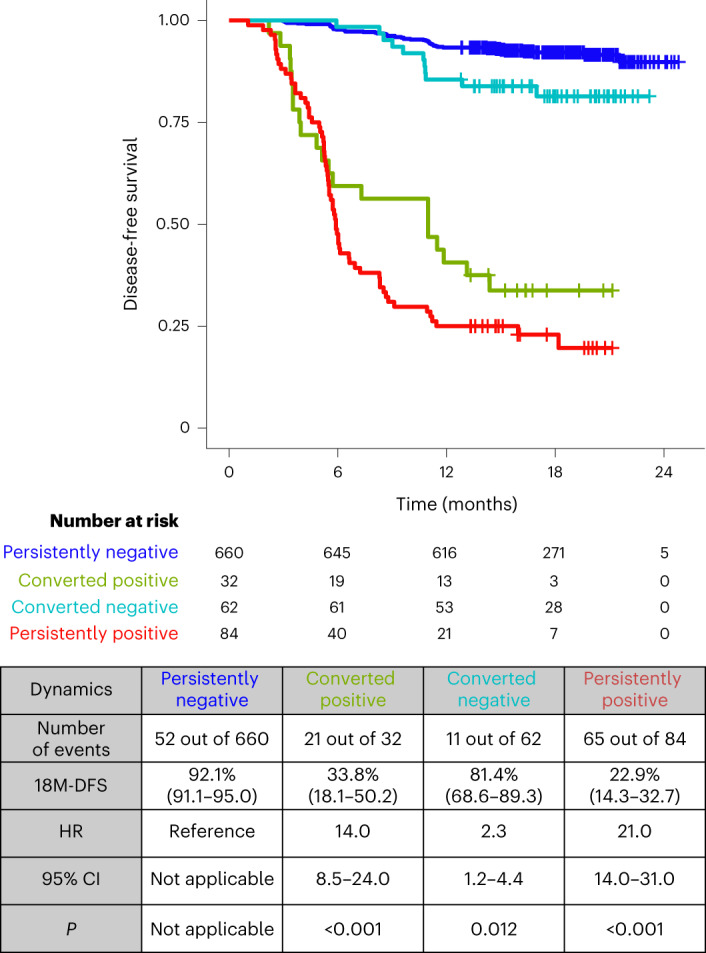
“Kotani et al. found that patients who converted from a ctDNA-negative to ctDNA-positive status during follow-up exhibited a markedly higher risk of recurrence, with an HR of 14.0 (95% CI: 8.5–24.0; p < 0.001) [23].”
InfluentialSanz‐García, E., Zou, J., Avery, L. M., Spreafico, A., Waldron, J. N., Goldstein, D. P., Hansen, A. R., Cho, J., de Almeida, J. R., Hope, A. J., et al. (2024) · Cell Death and Differentiation · doi:10.1038/s41418-024-01272-y · Cited by 38
Hong, H., Wehrle, C. J., Zhang, M., Fares, S., Stitzel, H. J., Garib, D., Estfan, B. N., Kamath, S. D., Krishnamurthi, S., Ma, W. W., et al. (2024) · Cancers · doi:10.3390/cancers16050927 · Cited by 35
“The results of the GALAXY study further demonstrate the association of post-operative ctDNA with an increased recurrence risk and the ability to identify patients who derived benefits from adjuvant chemotherapy in patients with stage II or III CRC [28].”
BackgroundAdjuvant therapy for stage II melanoma: the need for further studies
Lee, R. J., Mandalà, M., Long, G. V., Eggermont, A. M. M., van Akkooi, A. C. J., Sandhu, S. K., Garbe, C., & Lorigan, P. C. (2023) · European Journal of Cancer · doi:10.1016/j.ejca.2023.05.003 · Cited by 33
“The Circulating tumour DNA (ctDNA) is emerging as a powerful tool for the detection of minimal residual disease and is being examined across a number of tumour types (including breast [51], colorectal [52,53], bladder [54], melanoma [55]).”
Exploring the Role of Circulating Cell-Free RNA in the Development of Colorectal Cancer
Kan, C.-M., Pei, X. M., Yeung, M. H. Y., Jin, N., Ng, S. S. M., Tsang, H. F., Cho, W. C. S., Yim, A. K., Yu, A. C.-S., & Wong, S. C. C. (2023) · International Journal of Molecular Sciences · doi:10.3390/ijms241311026 · Cited by 34
“(MRD), which can inform treatment decisions, particularly for patients with a borderline performance status who are concerned about treatment side effects [4,6].”
BackgroundMethodHashimoto, T., Nakamura, Y., Oki, E., Kobayashi, S., Yuda, J., Shibuki, T., Bando, H., & Yoshino, T. (2024) · International Journal of Clinical Oncology · doi:10.1007/s10147-024-02493-4 · Cited by 34
Self-citationAssociation of post-operative ctDNA detection with outcomes of patients with early breast cancers
Cutts, R. J., Ulrich, L., Beaney, M., Robert, M., Coakley, M. F., Bunce, C., Walsh-Crestani, G., Hrebien, S., Kalashnikova, E. V., Wu, H.-T., et al. (2024) · ESMO Open · doi:10.1016/j.esmoop.2024.103687 · Cited by 37
“Recently presented data in colon cancer 14 suggest that identi fi cation of patients with detectable ctDNA following primary treatment can identify those at high risk of disease progression, and therefore may impact frequency of surveillance and/or inform decisions for the administration of guided…”
BackgroundSelf-citationMultimodal cell-free DNA whole-genome TAPS is sensitive and reveals specific cancer signals
Vavoulis, D. V., Cutts, A., Thota, N., Brown, J., Sugar, R., Rueda, A., Ardalan, A., Howard, K., Santo, F. M., Sannasiddappa, T., et al. (2025) · Nature Communications · doi:10.1038/s41467-024-55428-y · Cited by 41
Ma, D.-N., Gao, X., Wang, L., Yin, H., Feng, L.-H., & Zhu, Y. (2025) · Biomarker Research · doi:10.1186/s40364-025-00796-w · Cited by 45
Kramer, A., Greuter, M. J. E., Schraa, S. J., Vink, G. R., Phallen, J. A., Velculescu, V. E., Meijer, G. A., van den Broek, D. A., Koopman, M., Roodhart, J. M. L., et al. (2024) · Therapeutic Advances in Medical Oncology · doi:10.1177/17588359241266164 · Cited by 35
“16 In the base-case analysis, the treatment effect of ACT on recurrence risk was estimated as an HR of 0.731 for all patients.”
BackgroundMethodInfluentialMining nucleic acid “omics” to boost liquid biopsy in cancer
Tivey, A., Lee, R. J., Clipson, A., Hill, S. M., Lorigan, P. C., Rothwell, D. G., Dive, C., & Mouliere, F. C. (2024) · Cell Reports Medicine · doi:10.1016/j.xcrm.2024.101736 · Cited by 44
Circulating Tumor DNA: A Pan-Cancer Biomarker in Solid Tumors with Prognostic and Predictive Value
Hitchen, N., Shahnam, A., & Tie, J. (2024) · Annual Review of Medicine · doi:10.1146/annurev-med-100223-090016 · Cited by 36
Pakeeraiah, K., Mal, S., Mahapatra, M., Mekap, S. K., Sahu, P. K., & Paidesetty, S. K. (2023) · International Journal of Biological Macromolecules · doi:10.1016/j.ijbiomac.2023.128402 · Cited by 30
Correa, A. F., Kalashnikova, E. V., Wu, H.-T., Winters, R. M., Balcioglu, M., Sudhaman, S., Connolly, D. C., Gong, Y., Uzzo, R. G., Sethi, H., et al. (2024) · The Oncologist · doi:10.1093/oncolo/oyae180 · Cited by 30
“7,11 ,12 For instance, in colorectal cancer, ctDNA is an excellent biomarker for recurrence prediction in stages II and III patients after curative-intent surgery, both in the immediate post-operative setting and during follow-up.”
BackgroundMethodSelf-citationMartín-Arana, J., Gimeno-Valiente, F., Henriksen, T. V., García-Micó, B., Martínez-Castedo, B., Gambardella, V., Martínez‐Ciarpaglini, C., Lucas, B. P.-D., Huerta, M., Camblor, D. G., et al. (2025) · Nature Cancer · doi:10.1038/s43018-025-00960-z · Cited by 45
Next-Generation Molecular Residual Disease Assays: Do We Have the Tools to Evaluate Them Properly?
Stetson, D., Labrousse, P., Russell, H., Shera, D. M., Abbosh, C., Dougherty, B. A., Barrett, J. C., Hodgson, D., & Hadfield, J. (2024) · Journal of Clinical Oncology · doi:10.1200/jco.23.02301 · Cited by 36
Carr, D. J., & Welch, H. G. (2023) · JAMA Internal Medicine · doi:10.1001/jamainternmed.2023.3603 · Cited by 37
Li, Y., Heer, A. K., Sloane, H. S., Edelstein, D. L., Tie, J., Gibbs, P., & Barzi, A. (2024) · JAMA Health Forum · doi:10.1001/jamahealthforum.2024.1270 · Cited by 32
The SCRUM-MONSTAR Cancer-Omics Ecosystem: Striving for a Quantum Leap in Precision Medicine
Hashimoto, T., Nakamura, Y., Fujisawa, T., Imai, M., Shibuki, T., Iida, N., Ozaki, H., Nonomura, N., Morizane, C., Iwata, H., et al. (2024) · Cancer Discovery · doi:10.1158/2159-8290.cd-24-0206 · Cited by 31
“The initial results of the GALAXY study highlighted the profound association between the ctDNA status after surgery and recurrence risk, suggesting that postoperative adjuvant chemotherapy effectively reduces recurrence in ctDNA-positive patients (3).”
ResultSelf-citationNakamura, Y., Kaneva, K., Lo, C., Neems, D. S., Freaney, J. E., Boulos, H., Hyun, S. W., Islam, F., Yamada-Hanff, J., Driessen, T. M., et al. (2024) · Clinical Cancer Research · doi:10.1158/1078-0432.ccr-24-2396 · Cited by 41
Self-citationLiquid Biopsy in Early-Stage Lung Cancer: Current and Future Clinical Applications
Vandekerckhove, O., Cuppens, K., Pat, K., Pont, B. D., Froyen, G., & Maes, B. (2023) · Cancers · doi:10.3390/cancers15102702 · Cited by 32
“The presence of MRD was the most significant prognostic factor associated with recurrence risk in patients with stage II or III CRC (HR 10.82, p 0.001), but more importantly, MRD-positive patients showed the greatest benefit of adjuvant chemotherapy.”
BackgroundInfluentialWehrle, C. J., Raj, R., Aykun, N., Orabi, D., Stackhouse, K. A., Chang, J. H., Estfan, B. N., Kamath, S. D., Krishnamurthi, S., Walsh, R. M., et al. (2023) · JCO Clinical Cancer Informatics · doi:10.1200/cci.23.00111 · Cited by 33
“21 Finally, there are no studies to date evaluating ctDNA monitoring in the perioperative period surrounding LT for CCLM.”
InfluentialApplications of Liquid Biopsy for Surgical Patients With Cancer: A Review
Mahuron, K. M., & Fong, Y. (2023) · JAMA Surgery · doi:10.1001/jamasurg.2023.5394 · Cited by 35
Circulating tumor DNA in clinical trials for solid tumors: Challenges and current applications
Parisi, C., Tagliamento, M., Belcaid, L., Aldea, M. D., Bayle, A., Remon-Masip, J., Italiano, A., Planchard, D., Besse, B., & Barlési, F. (2023) · The Journal of Liquid Biopsy · doi:10.1016/j.jlb.2023.100007 · Cited by 31
“The study revealed that patients who tested positive for ctDNA four weeks after surgery faced a higher risk of recurrence compared to those with negative ctDNA results [85].”
AI-powered liquid biopsy for early detection of gastrointestinal cancers
Hussain, M. S., Rejili, M. S., Khan, A., Alshammari, S. O., Tan, C. S., Haouala, F., Ashique, S., & Alshammari, Q. A. (2025) · Clinica Chimica Acta · doi:10.1016/j.cca.2025.120484 · Cited by 31
Measurable residual disease (MRD)-testing in haematological and solid cancers
Chen, J., Gale, R. P., Hu, Y., Wen, Y., Wang, T., & Zhang, W. (2024) · Leukemia · doi:10.1038/s41375-024-02252-4 · Cited by 35
Conca, V., Ciracì, P., Boccaccio, C., Minelli, A., Antoniotti, C., & Cremolini, C. (2024) · Cancer Treatment Reviews · doi:10.1016/j.ctrv.2024.102735 · Cited by 27
Li, Y., Xu, J., Hu, X., Chen, Y., Liu, F., Chen, Y. F., Ma, X., Dong, Q., Sun, L., Mo, S., et al. (2024) · International Journal of Surgery · doi:10.1097/js9.0000000000001236 · Cited by 32
“Postoperative ctDNA has proven to be a strong predictor of recurrence in localized CRC and CRLM patients [18,23,25 – 27] .”
BackgroundParikh, A. R., Chee, B. H., Tsai, J., Rich, T. A., Price, K. S., Patel, S. A., Zhang, L., Ibrahim, F., Esquivel, M., Seventer, E. E. V., et al. (2024) · Clinical Cancer Research · doi:10.1158/1078-0432.ccr-23-3660 · Cited by 29
Circulating Tumor DNA Testing for Minimal Residual Disease and Its Application in Colorectal Cancer
Abidoye, O., Ahn, D. H., Borad, M. J., Wu, C., Bekaii‐Saab, T., Chakrabarti, S., & Sonbol, M. B. (2025) · Cells · doi:10.3390/cells14030161 · Cited by 31
“Current studies have reported variations in ctDNA clearance rates in patients with ACT [56,58,69].”
Holz, A., Paul, B., Zapf, A., Pantel, K., & Joosse, S. A. (2025) · Cancer Treatment Reviews · doi:10.1016/j.ctrv.2025.102999 · Cited by 27
Akiyoshi, T., Shinozaki, E., Maeda, Y., Taguchi, S., Chino, A., Hanaoka, Y., Toda, S., Matoba, S., Tin, A., Spickard, E. A., et al. (2025) · Clinical Cancer Research · doi:10.1158/1078-0432.ccr-25-1242 · Cited by 27
Updates on the Management of Colorectal Cancer in Older Adults
O'Donnell, C., Hubbard, J. M., & Jin, Z. (2024) · Cancers · doi:10.3390/cancers16101820 · Cited by 33
“There is potential to spare both younger and older patients from chemotherapy without significantly impacting their chance of disease recurrence. ctDNA may be the most significant prognostic factor associated with recurrence for stage II and III CRC [81].”
BackgroundEckhoff, A. M., Kanu, E. N., Fletcher, A. A., Bao, M., Aushev, V. N., Spickard, E. A., Nussbaum, D. P., & Allen, P. J. (2024) · Annals of Surgical Oncology · doi:10.1245/s10434-023-14751-2 · Cited by 21
“3,4 However, in comparison, the detection rate of ctDNA in PDAC is lower, presumably owing to factors driven by disease biology, such as dense extracellular matrix, low-tumor cell content, lower shedding of ctDNA in the bloodstream, and low mutational burden.”
Self-citationHIBRID: histology-based risk-stratification with deep learning and ctDNA in colorectal cancer
Loeffler, C. M. L., Bando, H., Sainath, S., Muti, H. S., Jiang, X., van Treeck, M., Reitsam, N. G., Carrero, Z. I., Meneghetti, A. R., Nishikawa, T., et al. (2025) · Nature Communications · doi:10.1038/s41467-025-62910-8 · Cited by 31
“Previous studies have shown that this correlation had already been found as early as four weeks after primary tumor resection 18 .”
Self-citationDextran-Coated Iron Oxide Nanoparticles Loaded with 5-Fluorouracil for Drug-Delivery Applications
Predoi, D., Balaș, M., Badea, M. A., Ciobanu, C. S., Buton, N., & Dinischiotu, A. (2023) · Nanomaterials · doi:10.3390/nano13121811 · Cited by 24
“Surgical resection is the standard treatment for patients with CRC, followed by adjuvant chemotherapy [11].”
Liquid biopsy in colorectal cancer: Onward and upward
Torresan, S., de Scordilli, M., Bortolot, M., Nardo, P. D., Foltran, L., Fumagalli, A., Guardascione, M., Ongaro, E., & Puglisi, F. (2023) · Critical Reviews in Oncology/Hematology · doi:10.1016/j.critrevonc.2023.104242 · Cited by 25
Frydendahl, A., Nors, J., Rasmussen, M. H., Henriksen, T. V., Nesic, M., Reinert, T., Afterman, D., Lauterman, T., Kuzman, M., Gonzalez, S., et al. (2024) · European Journal of Cancer · doi:10.1016/j.ejca.2024.114314 · Cited by 27
Szeto, S., Kytölä, S. I., Erkan, E. P., Ahtiainen, M., Mecklin, J., Kuopio, T., Sallinen, V. J., Lepistö, A., Koskenvuo, L. E., Renkonen‐Sinisalo, L., et al. (2025) · Cancer Medicine · doi:10.1002/cam4.70943 · Cited by 25
“However, although the recurrence risk for ctDNA-positive molecular residual disease is high, it is not 100% [27], and especially local recurrences may be detected with long intervals from primary resection.”
Raj, R., Wehrle, C. J., Aykun, N., Stitzel, H. J., Ma, W. W., Krishnamurthi, S., Estfan, B. N., Kamath, S. D., Kwon, D. C. H., & Aucejo, F. (2023) · Cancers · doi:10.3390/cancers15215220 · Cited by 22
Frydendahl, A., Rasmussen, M. H., Jensen, S. Ø., Henriksen, T. V., Demuth, C., Diekema, M. H., Ditzel, H. J., Wen, S. W. C., Pedersen, J. S., Dyrskjøt, L., et al. (2024) · International Journal of Molecular Sciences · doi:10.3390/ijms25084252 · Cited by 26
“The identification of cancer through ctDNA analysis has several clinical implications, and, currently, the use of ctDNA analysis to detect and monitor residual disease after the operation is extensively investigated [3,5,16].”
BackgroundMethodCrisafulli, G. (2025) · Genes · doi:10.3390/genes16010071 · Cited by 22
“In contrast, among the tumor-informed tests, Signatera stands out as the preferred option in 41% (five out of twelve) cases [77,86,87].”
Yu, J. B., He, A. R., Ouf, M., Mehta, R. J., Anaya, D. A., Denbo, J. W., Bridges, C., Tin, A. S., Aushev, V. N., Palsuledesai, C. C., et al. (2025) · JCO Precision Oncology · doi:10.1200/po-24-00443 · Cited by 32
Self-citationLaPelusa, M. B., Qiao, W., Iorgulescu, J. B., Lucas, F. S., Patel, K., Bhamidipati, D., Thomas, J. V., You, Y. N., Foo, W. C., Maru, D. M., et al. (2025) · Nature Communications · doi:10.1038/s41467-025-59615-3 · Cited by 24
“Circulating tumor DNA (ctDNA) has shown promise in guiding treatment approaches to adjuvant therapy for resectable colorectal cancer (CRC) and some metastatic solid tumors 8 – 10 .”
Circulating tumor DNA in cholangiocarcinoma: current clinical applications and future perspectives
Wang, J., Li, Y., Liang, Z., Zhang, Y., Li, T., Tian, C., Zhao, J., Jin, B., Cao, J., & Lin, Y. (2025) · Frontiers in Cell and Developmental Biology · doi:10.3389/fcell.2025.1616064 · Cited by 25
Camblor, D. G., Martínez-Castedo, B., Martín-Arana, J., Gimeno-Valiente, F., García-Micó, B., Martinez, F. M., Seguí, V., García-Bartolomé, M., González, D., Guimera, A., et al. (2025) · Cancer Treatment Reviews · doi:10.1016/j.ctrv.2025.103066 · Cited by 28
Gimeno-Valiente, F., Martín-Arana, J., Tébar-Martínez, R., Gambardella, V., Martínez‐Ciarpaglini, C., García-Micó, B., Martínez-Castedo, B., Lucas, B. P.-D., García-Bartolomé, M., Seguí, V., et al. (2023) · ESMO Open · doi:10.1016/j.esmoop.2023.102051 · Cited by 26
Role of circular RNAs and gut microbiome in gastrointestinal cancers and therapeutic targets
Abdullah, S. T., Abdullah, S. R., Hussen, B. M., Younis, Y. M., Rasul, M. F., & Taheri, M. N. (2023) · Non-coding RNA Research · doi:10.1016/j.ncrna.2023.12.002 · Cited by 20
“Following surgery, adjuvant therapy is administered to lower the possibility of a cancer recurrence [140].”
BackgroundOh, Y., Yoon, S. M., Lee, J., Park, J. H., Lee, S., Hong, T., Chung, L. I., Sudhaman, S., Riddell, T., Palsuledesai, C. C., et al. (2024) · Thoracic Cancer · doi:10.1111/1759-7714.15281 · Cited by 26
Gong, Z., Mao, Y., Liu, Y., Hu, X. F., Zhang, Y., Zhu, L., Guo, S., Ding, Z., & Zhang, L. (2024) · Journal of Colloid and Interface Science · doi:10.1016/j.jcis.2024.07.010 · Cited by 20
Tan, Z., Tian, L., Luo, Y., Ai, K., Zhang, X., Yuan, H., Zhou, J., Ye, G., Yang, S., Zhong, M., et al. (2024) · Bioactive Materials · doi:10.1016/j.bioactmat.2024.10.015 · Cited by 19
“Postresection relapse in CRC is mainly attributed to the existence of CRC cells in the remaining foci [4].”
BackgroundLongitudinal Testing of Circulating Tumor DNA in Patients With Metastatic Renal Cell Carcinoma
Basu, A., Au, C., Kommalapati, A., Kandala, H., Sudhaman, S., Mahmood, T., Carson, C., Pajak, N., Dutta, P., Calhoun, M. A., et al. (2024) · JCO Precision Oncology · doi:10.1200/po-24-00667 · Cited by 22
SEOM-GEMCAD-TTD clinical guidelines for the adjuvant treatment of colon cancer (2023)
Pericay, C., Montagut, C. O., Reina, J. J., Melián, M., Alcaide, J., Tarazona, N., Ruiz‐Casado, A., González‐Flores, E., Graña, B., & Grávalos, C. (2024) · Clinical & Translational Oncology · doi:10.1007/s12094-024-03559-5 · Cited by 25
“In recent years, numerous retrospective studies have demonstrated that the detection of ctDNA immediately after surgery and at any time during follow-up, known as mutation tracking, is associated with poorer DFS and identifies patients at high risk of relapse in localized CRC [64–66].”
Background
Metadata
- Authors
- Kotani, D., Oki, E., Nakamura, Y., Yukami, H., Mishima, S., Bando, H., Shirasu, H., Yamazaki, K., Watanabe, J., Kotaka, M., Hirata, K., Akazawa, N., Kataoka, K., Sharma, S., Aushev, V. N., Aleshin, A., Misumi, T., Taniguchi, H., Takemasa, I., Kato, T., Mori, M., & Yoshino, T.
- Affiliations
- National Cancer Center Hospital East (JP)
- Kyushu University (JP)
- Osaka Medical and Pharmaceutical University (JP)
- Shizuoka Cancer Center (JP)
- Yokohama City University Medical Center (JP)
- Sano Hospital (JP)
- University of Occupational and Environmental Health Japan (JP)
- Sendai Medical Center (JP)
- Hyogo Medical University (JP)
- Natera (United States) (US)
- Aichi Cancer Center (JP)
- Sapporo Medical University (JP)
- Osaka National Hospital (JP)
- Tokai University (JP)
- Corresponding author
- Oki, Eiji
- ORCID
- Kotani, Daisuke
- Oki, Eiji
- Nakamura, Yoshiaki
- Yukami, Hiroki
- Mishima, Saori
- Bando, Hideaki
- Shirasu, Hiromichi
- Yamazaki, Kentaro
- Watanabe, Jun
- Kotaka, Masahito
- Hirata, Keiji
- Akazawa, Naoya
- Kataoka, Kozo
- Sharma, Shruti
- Aushev, Vasily N.
- Aleshin, Alexey
- Misumi, Toshihiro
- Taniguchi, Hiroya
- Takemasa, Ichiro
- Kato, Takeshi
- Mori, Masaki
- Yoshino, Takayuki
- Venue
- Nature Medicine
- Published
- 2023-01
- Volume
- 29
- Issue
- 1
- Pages
- 127-134
- ISSN
- 1078-8956 (ISSN-L)
- 1546-170X
- PMC
- PMC9873552
- OpenAlex
- W4316507345
- Cited by
- 526
- References
- 21
- Citations by year
- 2026: 130 · 2025: 161 · 2024: 167 · 2023: 67
- FWCI
- 64.04
- Type
- journal article
- Language
- en
- Open access
- hybrid
- doi.org
- Licence
- cc-by
- creativecommons.org/licenses/by/4.0 (tdm)
- creativecommons.org/licenses/by/4.0 (vor, 15 d)
- Locations
- Nature Medicine (publishedVersion, cc-by)
- PubMed Central (publishedVersion, cc-by)
- PubMed (publishedVersion)
- Funders
- Japan Agency for Medical Research and Development (19ck0106447h0002)
- Topics
- Health Sciences › Medicine › Oncology › Colorectal Cancer Treatments and Studies
- Health Sciences › Medicine › Oncology › Colorectal Cancer Surgical Treatments
- Health Sciences › Medicine › Pathology and Forensic Medicine › Genetic factors in colorectal cancer
- Keywords
- colorectal cancer, circulating tumor DNA, liquid biopsy, adjuvant chemotherapy, molecular residual disease, cancer recurrence risk, risk stratification, stage II and III colorectal cancer, galaxies
- MeSH terms
- Humans, Japan, Neoplasm Recurrence, Local, Biomarkers, Tumor, Colorectal Neoplasms, Proportional Hazards Models, Chemotherapy, Adjuvant, Neoplasm, Residual
About these checks
Registry, retraction, Cites and statistics results are computed, not judged, with one exception: a printed reference that no index lists is read once by a model before it counts as a citation error. Claims are extracted by a model and kept only when their quote appears verbatim in the text; each cited source is then checked, with a model’s help, for whether it says what the claim relies on. Those verdicts can be wrong — read the claim’s quote and the cited source before relying on one.
Statistics and arithmetic are recomputed, not judged.
Confidence bands are shown only for fields calibrated on our annotated test set. None is calibrated yet, so no band is shown.
What counts as a claim ›How we measure confidence ›How we check this ›
Are you an author, or do you see a problem with this page? Request a review
Data sources
Bibliographic data: Semantic Scholar, OpenAlex, Crossref.
Contains information from the Semantic Scholar Academic Graph Datasets, made available under the ODC Attribution License (ODC-BY 1.0).
Semantic Scholar’s data is described in: Kinney, R., et al. (2023). The Semantic Scholar Open Data Platform. arXiv:2301.10140.
