

Molecular residual disease and efficacy of adjuvant chemotherapy in patients with colorectal cancer
Open accessThe DOI matches its Crossref record; 22 of the 22 references it cites were found in a registry or an index.
Abstract
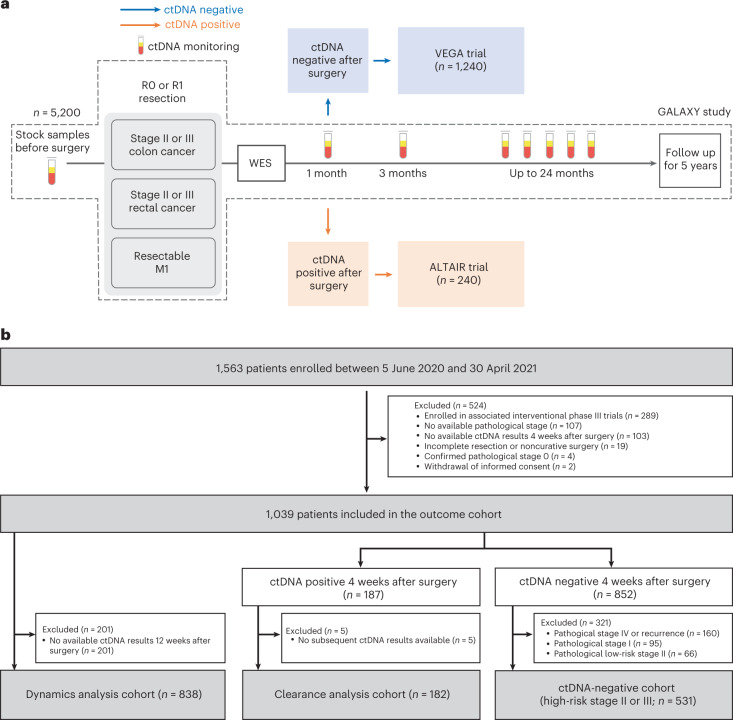
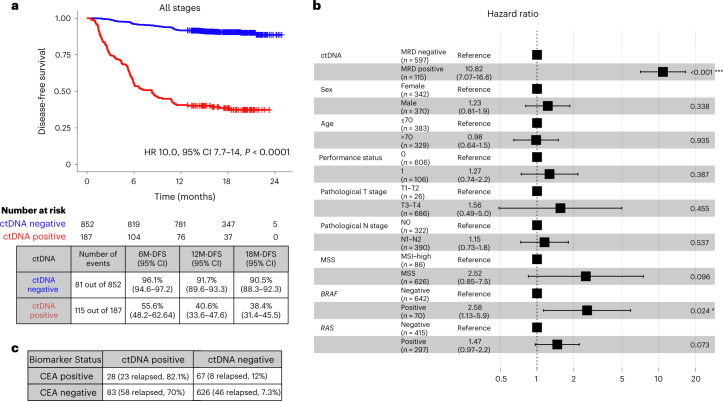
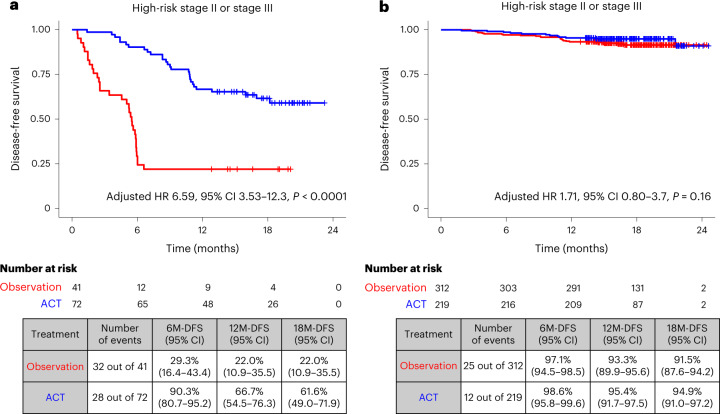
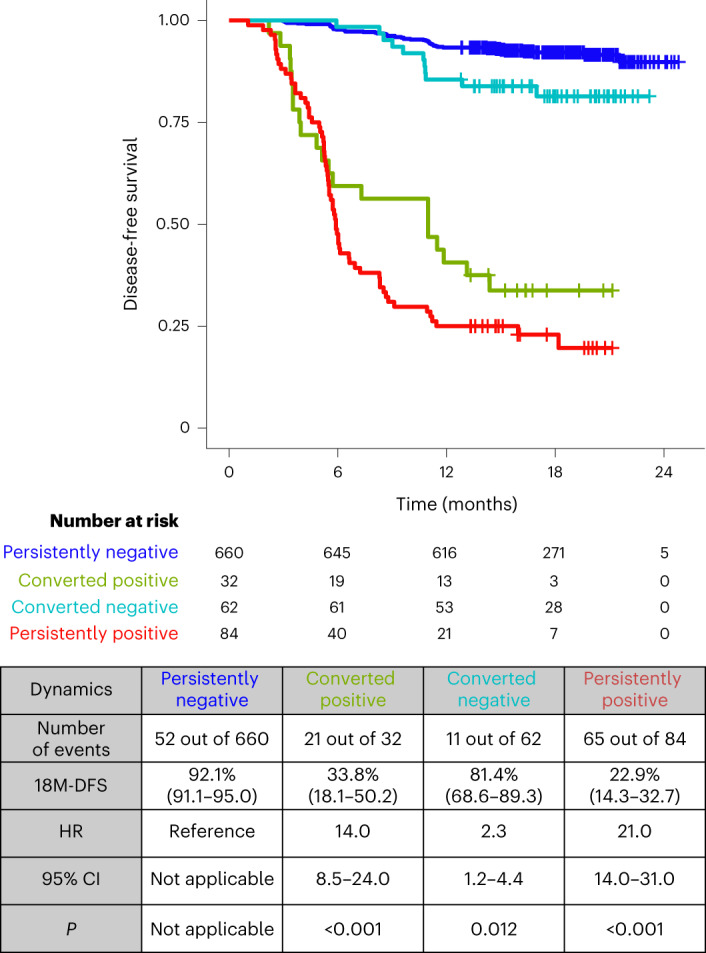
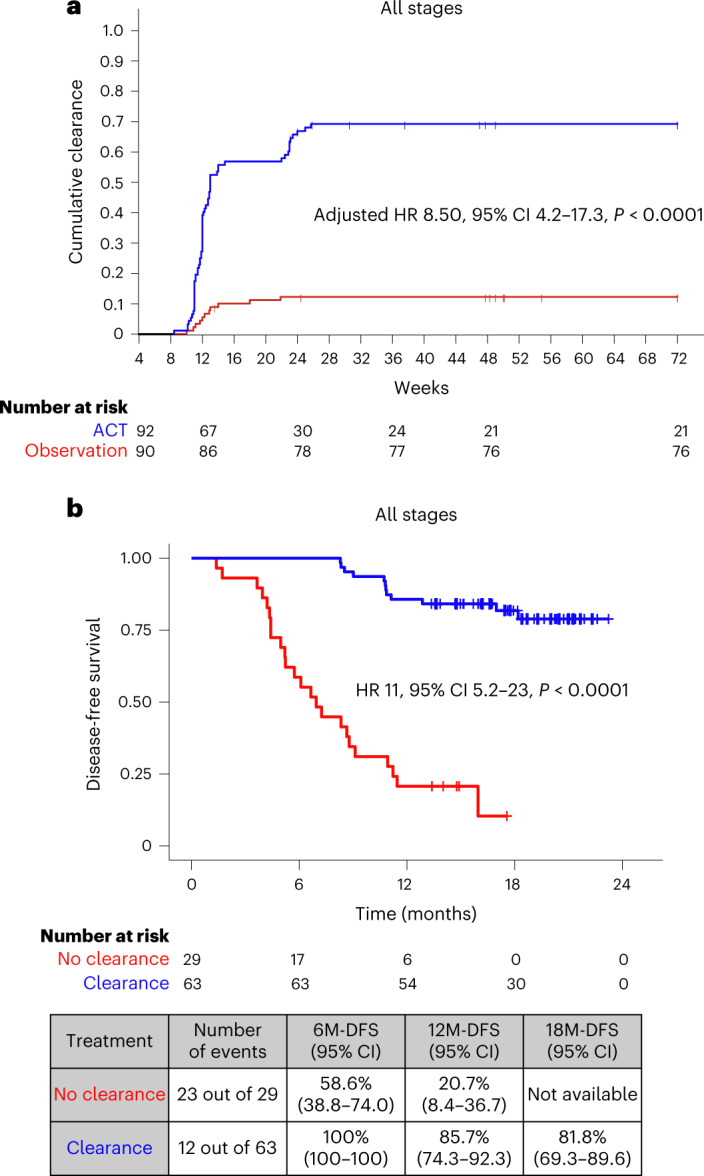
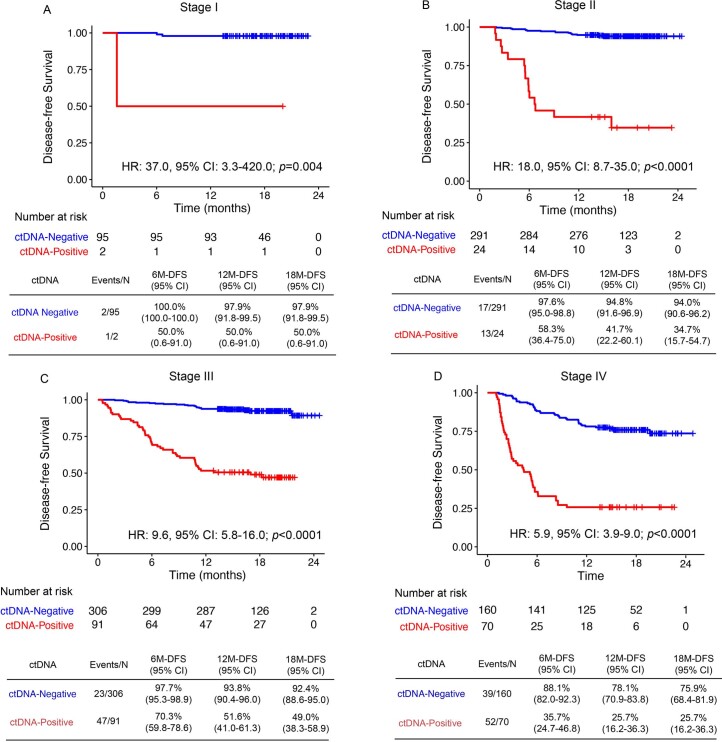
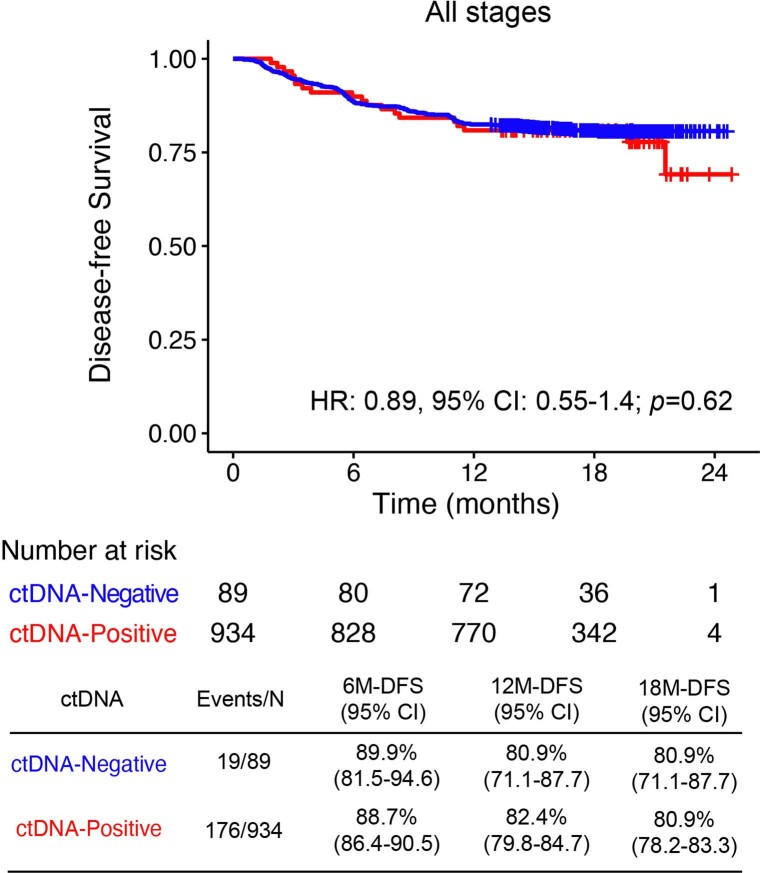
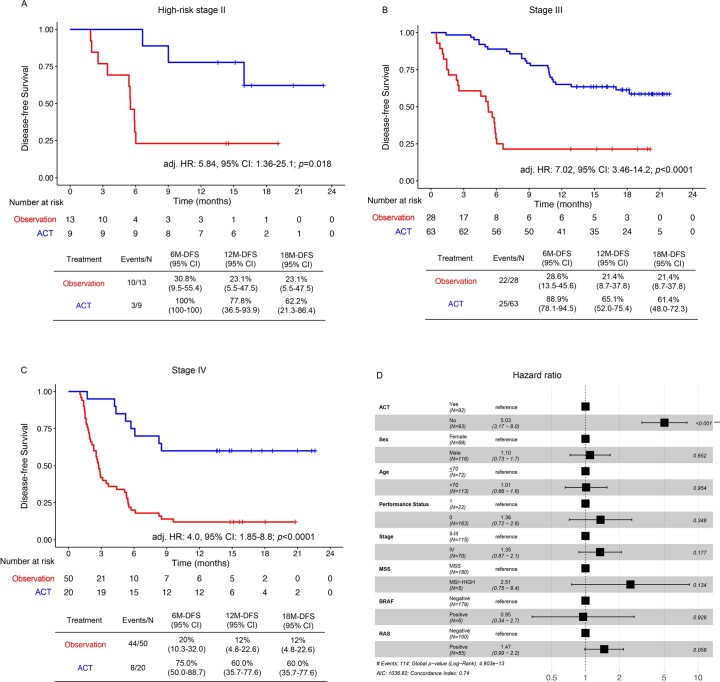
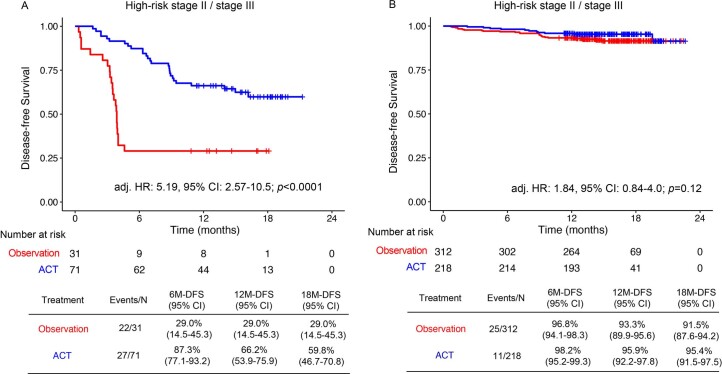
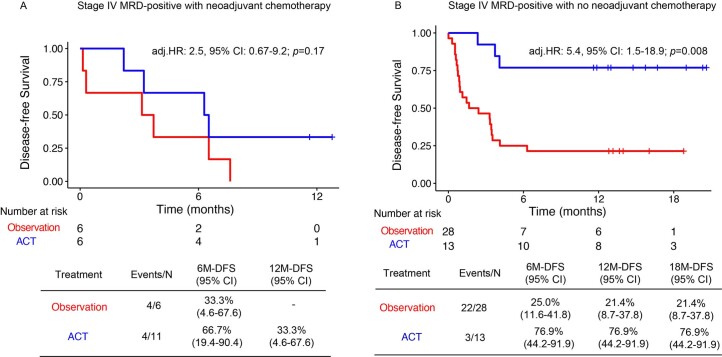
Despite standard-of-care treatment, more than 30% of patients with resectable colorectal cancer (CRC) relapse. Circulating tumor DNA (ctDNA) analysis may enable postsurgical risk stratification and adjuvant chemotherapy (ACT) treatment decision-making. We report results from GALAXY, which is an observational arm of the ongoing CIRCULATE-Japan study (UMIN000039205) that analyzed presurgical and postsurgical ctDNA in patients with stage II–IV resectable CRC ( n = 1,039). In this cohort, with a median follow-up of 16.74 months (range 0.49–24.83 months), postsurgical ctDNA positivity (at 4 weeks after surgery) was associated with higher recurrence risk (hazard ratio (HR) 10.0, P < 0.0001) and was the most significant prognostic factor associated with recurrence risk in patients with stage II or III CRC (HR 10.82, P < 0.001). Furthermore, postsurgical ctDNA positivity identified patients with stage II or III CRC who derived benefit from ACT (HR 6.59, P < 0.0001). The results of our study, a large and comprehensive prospective analysis of ctDNA in resectable CRC, support the use of ctDNA testing to identify patients who are at increased risk of recurrence and are likely to benefit from ACT.
Overview
The claims and statistics of this paper haven’t been checked yet.
Free: it reads the open-access text and checks the first 5 claims that cite a source we can check. Create a free account to check every claim.
Integrity signals
Registry
Cites
Statistics
Figures
Verification
Claims the paper makes
The claims and statistics of this paper haven’t been checked yet.
Free: it reads the open-access text and checks the first 5 claims that cite a source we can check. Create a free account to check every claim.
Claims other papers make about this one
Each is checked against this paper’s own text: does it say what the citing paper says it does?
The source backs part of the claim, not all of it — or backs it for a different population, condition or comparison.
In the citing paper
“Because KRAS mutations are often clonal founder events, mutant KRAS ctDNA can serve as a highly informative molecular marker for tumor burden, treatment response, minimal residual disease, and emergence of resistance [29,47,77,78].”
From Precision Targeting of KRAS-Mutant Cancers: Beyond G12C Toward G12D and Pan-RAS Therapeutic Strategies (2026) · cites this paper as [77]
Experimental — accuracy not yet measured
Self-check
Percentages, sums and reported differences re-computed from the paper’s own numbers.
The self-check needs the paper’s full text.
Citations
Cites
Oxaliplatin, Fluorouracil, and Leucovorin as Adjuvant Treatment for Colon Cancer
André, T., Boni, C., Mounedji-Boudiaf, L., Navarro, M., Tabernero, J., Hickish, T., Topham, C., Zaninelli, M., Clingan, P., Bridgewater, J., et al. (2004) · New England Journal of Medicine · doi:10.1056/nejmoa032709 · Cited by 3,689
Circulating Tumor DNA Analysis Guiding Adjuvant Therapy in Stage II Colon Cancer
Tie, J., Cohen, J. D., Lahouel, K., Lo, S. N., Wang, Y., Kosmider, S., Wong, R., Shapiro, J., Lee, M., Harris, S., et al. (2022) · New England Journal of Medicine · doi:10.1056/nejmoa2200075 · Cited by 1,091
Kuebler, J. P., Wieand, H. S., O'Connell, M. J., Smith, R. E., Colangelo, L. H., Yothers, G., Petrelli, N. J., Findlay, M. P., Seay, T. E., Atkins, J. N., et al. (2007) · Journal of Clinical Oncology · doi:10.1200/jco.2006.08.2974 · Cited by 1,056
Reinert, T., Henriksen, T. V., Christensen, E., Sharma, S., Salari, R., Sethi, H., Knudsen, M., Nordentoft, I., Wu, H.-T., Tin, A. S., et al. (2019) · JAMA Oncology · doi:10.1001/jamaoncol.2019.0528 · Cited by 1,011
Self-citationEngstrom, P. F., Arnoletti, J. P., Benson, A. B., Chen, Y.-J., Choti, M. A., Cooper, H. S., Covey, A., Dilawari, R. A., Early, D. S., Enzinger, P. C., et al. (2009) · Journal of the National Comprehensive Cancer Network · doi:10.6004/jnccn.2009.0056 · Cited by 683
Tie, J., Cohen, J. D., Wang, Y., Christie, M., Simons, K., Lee, M., Wong, R., Kosmider, S., Ananda, S., McKendrick, J., et al. (2019) · JAMA Oncology · doi:10.1001/jamaoncol.2019.3616 · Cited by 668
ctDNA guiding adjuvant immunotherapy in urothelial carcinoma
Powles, T., Assaf, Z. J., Davarpanah, N., Banchereau, R., Szabados, B. E., Yuen, K. C., Grivas, P., Hussain, M., Oudard, S., Gschwend, J. E., et al. (2021) · Nature · doi:10.1038/s41586-021-03642-9 · Cited by 646
Self-citationPersonalized Detection of Circulating Tumor DNA Antedates Breast Cancer Metastatic Recurrence
Coombes, R. C., Page, K., Salari, R., Hastings, R. K., Armstrong, A., Ahmed, S., Ali, S., Cleator, S., Kenny, L., Stebbing, J., et al. (2019) · Clinical Cancer Research · doi:10.1158/1078-0432.ccr-18-3663 · Cited by 510
Self-citationAdjuvant Chemotherapy for Stage II Colon Cancer With Poor Prognostic Features
O'Connor, E. S., Greenblatt, D. Y., LoConte, N. K., Gangnon, R. E., Liou, J.-I., Heise, C. P., & Smith, M. A. (2011) · Journal of Clinical Oncology · doi:10.1200/jco.2010.34.3426 · Cited by 451
Wang, Y., Li, L., Cohen, J. D., Kinde, I., Ptak, J., Popoli, M., Schaefer, J., Silliman, N., Dobbyn, L., Tie, J., et al. (2019) · JAMA Oncology · doi:10.1001/jamaoncol.2019.0512 · Cited by 224
Research works printed but not linked: 1
- Gray JR A class of K-sample tests for comparing the cumulative incidence of a competing risk Ann. Stat. 1998 16 1141 1154
Cited by
Items 301–400 of 526
Bi, Y.-H., Xia, C., Zhang, X., & Liu, H. (2023) · Oncology Letters · doi:10.3892/ol.2023.13993 · Cited by 3
Lucchesi, N., Ally, J. M., & Reilley, M. J. (2023) · Journal for ImmunoTherapy of Cancer · doi:10.1136/jitc-2023-007434 · Cited by 3
Where Is the Future of Adjuvant Therapy for Hepatocellular Carcinoma?
Fu, Y., Zhang, Y., Hu, D., Zhou, Z., Xu, L., & Chen, M. (2025) · Journal of Clinical Oncology · doi:10.1200/jco-24-02615 · Cited by 8
Falco, A. D., Grisolia, P., Giuffrida, R., Iannarone, C., Graziano, C., Scrima, M., Cossu, A. M., Tufano, R., Yow, M. V., Brown, C. M., et al. (2025) · bioRxiv (Cold Spring Harbor Laboratory) · doi:10.1101/2025.10.20.683167 · Cited by 4
“…the sensitivity of such assays remains limited because, despite the use of ultra-deep sequencing, somatic mutations can be un-70 detectable if they are absent from the finite plasma volume obtained during standard sample collection, creating an intrinsic sensitivity limitation [9, 10, 11, 12].”
Gervaso, L., Ciardiello, D., Gregato, G., Guidi, L., Valenza, C., Ascione, L., Boldrini, L., Frassoni, S., Cella, C. A., Spada, F., et al. (2024) · Therapeutic Advances in Medical Oncology · doi:10.1177/17588359241249602 · Cited by 2
ctDNA responds to neoadjuvant treatment in locally advanced rectal cancer
Bürtin, F., Elias, L., Hinz, S., Förster, M., Hildebrandt, G., Frerker, B., & Bock, F. (2024) · Journal of Cancer Research and Clinical Oncology · doi:10.1007/s00432-024-05944-7 · Cited by 3
Schrock-Kelley, S., Souter, V., Hall, M. J., Sha, Y., Sengupta, U., ElNaggar, A. C., Liu, M. C., & Weitzel, J. N. (2024) · Communications Medicine · doi:10.1038/s43856-024-00608-6 · Cited by 2
Landon, B. V., Huang, J., Evangelopoulou, E. G., Anagnostou, V., & Canzoniero, J. V. (2024) · International review of cytology · doi:10.1016/bs.ircmb.2024.12.002 · Cited by 3
Latest Advances in Perioperative care for Resectable Non-small lung cancer
Oya, Y., & Tanaka, I. (2025) · Respiratory Investigation · doi:10.1016/j.resinv.2025.04.001 · Cited by 5
Tsukada, Y., Saitô, N., Nishizawa, Y., Ohno, R., Fujita, F., Koda, K., Ohue, M., Shinto, E., Murata, A., Koide, Y., et al. (2025) · Annals of Surgery Open · doi:10.1097/as9.0000000000000579 · Cited by 2
Self-citationPersonalized Treatment Modalities for Rectal Cancer: Advances in Neoadjuvant Treatment
Pakvisal, N., Pappas, L., Caughey, B. A., Ricciardi, R., & Parikh, A. R. (2025) · Journal of Clinical Medicine · doi:10.3390/jcm14134411 · Cited by 2
“One such candidate biomarker is circulating tumor DNA (ctDNA), which is evolving into a promising instrument for predicting outcomes in early-stage colon cancer [68].”
Hisamatsu, Y., Ando, K., Kudo, K., Nakanishi, R., Kawazoe, T., Zaitsu, Y., Kusumoto, T., Hata, T., Kagawa, Y., Yoshizumi, T., et al. (2025) · Cancer Science · doi:10.1111/cas.70114 · Cited by 2
“Previous studies have shown that the presence and quantity of ctDNA are useful for predicting recurrence of CRC [12, 13, 15].”
Self-citationDaprà, V., Gandini, A., Schietroma, F., Rossini, D., Boccaccino, A., Caira, G., Calegari, M. A., Zoratto, F., Costantini, M., Formica, V., et al. (2025) · ESMO Open · doi:10.1016/j.esmoop.2025.105496 · Cited by 3
“35,36 In the last update of the DYNAMIC trial, 37 the use of a ctDNA-guided approach seemed to increase RFS when compared with standard management, also in pT4N0 patients (5-year RFS 81% versus 70%), but a 5-year risk of recurrence of 20% was signi fi cantly higher than that of 10% observed in the…”
Targeting the Met-RIPK1 signaling axis to enforce apoptosis and necroptosis in colorectal cancer
Rossmanith, J. M., Krummeich, J., Moser, A., Lohmann, K., Linnebacher, M., Roth, W., & Metzig, M. O. (2025) · Cell Death and Disease · doi:10.1038/s41419-025-08054-5 · Cited by 2
“While ampli fi cation of the MET gene is a common driver of resistance after anti-EGFR treatment [1, 3, 26], in therapy naïve CRC, Met overexpression and constitutive activation are commonly linked to transcriptional upregulation [27 – 29].”
Peng, Y., Shang, R., Wang, Z.-J., Ye, Q.-Y., Tang, X.-Y., Cheng, X., & Ying, H. (2025) · Drug Design Development and Therapy · doi:10.2147/dddt.s556619 · Cited by 2
The utility of ctDNA in rectal cancer
Brar, G. S., & Kasi, P. M. (2025) · The Oncologist · doi:10.1093/oncolo/oyaf354 · Cited by 3
Wang, H., Kramer, A., Greuter, M. J. E., Alarcon, C. R., Lissenberg-Witte, B. I., Meijer, G. A., Kok, N. F. M., van den Broek, D. A., Vink, G. R., Roodhart, J. M. L., et al. (2025) · Therapeutic Advances in Medical Oncology · doi:10.1177/17588359251384238 · Cited by 6
“5,43 If that would be the case, withholding ACT in ctDNA-negative patients would have a limited impact.”
InfluentialInoue, A., Morimoto, Y., Nishizawa, Y., Hashimoto, M., Ozato, Y., Furukawa, K., Hirota, M., Miyazaki, Y., Tomokuni, A., Motoori, M., et al. (2025) · PLoS ONE · doi:10.1371/journal.pone.0335591 · Cited by 2
ColoStem, a core oncofetal signature that identifies poor prognosis colorectal tumors
Solé, L., Cantón, E., Maqueda, M., Lobo‐Jarne, T., Barbáchano, A., Torres, F., Cabré-Romans, J.-J., Montoto, Á., Fernández‐Ibarrondo, L., Martínez-Garcia, D., et al. (2025) · British Journal of Cancer · doi:10.1038/s41416-025-03280-2 · Cited by 2
Radiopathological Correlation in Locally Advanced Rectal Cancer After Neoadjuvant Treatment
Martín-Sánchez, M., Villarejo‐Campos, P., Domínguez-Prieto, V., Ruiz-Hispán, E., Zulueta, B. L.-B., Idoate, C. P., León-Arellano, M., Guadalajara, H., García-Olmo, D., & Qian, S. (2025) · Cancers · doi:10.3390/cancers17243937 · Cited by 3
The Methylation Level of Circulating Tumor DNA Predicts Prognosis for Stage I-III Colorectal Cancer
Irie, T., Sugimoto, K., Momose, H., Tsuchiya, Y., Tsukamoto, R., Honjo, K., Ro, H., Ishiyama, S., Takahashi, M., Pisanic, T. R., et al. (2026) · Journal of Gastrointestinal Cancer · doi:10.1007/s12029-025-01365-y · Cited by 2
“…clonal, somatic single-nucleotide variants (SNVs), which were identified from formalin-fixed, paraffin-embedded tumor tissue samples from surgical resection or biopsy, had to be established for the next-generation sequencing (NGS) assay (Signatera, Natera, Inc.) used in the GALAXY study [11 ].”
Integrating artificial intelligence ( AI ) into colorectal cancer reporting
Bräutigam, K., Baker, A., Koelzer, V. H., Kather, J. N., & Graham, T. A. (2026) · The Journal of Pathology · doi:10.1002/path.70029 · Cited by 4
“In addition, circulating tumour DNA (ctDNA) has emerged as a powerful tool for risk strati fi cation, for example in the detection of minimal residual disease (MRD) in the adjuvant setting [166 – 168].”
Cancer evolution and multi-omic profile of relapsed colorectal liver metastases after treatment
Tomás, L., Raschzok, N., Blanc, E., Gallardo‐Gómez, M., Menne, A., Astrahantseff, K., Chiara, L. D., Geisel, D., Pratschke, J., Modest, D. P., et al. (2026) · Genome Medicine · doi:10.1186/s13073-026-01614-0 · Cited by 2
“The metastatic relapse is typically managed with the same therapeutic approaches used for the initial metastasis [12], often with limited improvement in patient outcomes [13–15].”
Miyazaki, K., Montcusí, B., Morine, Y., Okuno, K., Pascual, M., Tokunaga, T., Noma, T., Kinugasa, Y., Shimada, M., Cai, G., et al. (2026) · Molecular Cancer · doi:10.1186/s12943-026-02624-7 · Cited by 4
“…recent years have witnessed a burgeoning interest in developing liquid biopsy assays for detecting molecular residual disease (MRD), which could guide clinical decision-making for ACT among patients with stage II-III CRC, in contrast to the limitations of tissue-based biomarkers [2, 9–13].”
Zhang, Y., Zhang, B., Pang, W., Gu, W., Wang, X., Yuan, H., Fang, S., Zhang, J., Li, X., Xing, X., et al. (2026) · Microbiome · doi:10.1186/s40168-026-02378-w · Cited by 2
“For patients with stage II or III CRC, surgical resection constitutes the standard of care; however, postoperative recurrence occurs in over 30% of these individuals [3, 4].”
Single-Institution Experience Using Circulating Tumor DNA to Monitor Recurrence in Rectal Cancer
Hulse, J. C., Quinn, K. M., Oberholtzer, N. P., Mattila, C., Hill, E., George, V. V., & Donahue, C. A. (2026) · Diseases of the Colon & Rectum · doi:10.1097/dcr.0000000000004242 · Cited by 2
Liu, Z., Yang, Y., Yu, B., Yang, Y., Yuan, C., Chen, C., Yang, X., Zhang, S., Li, C., Chao, Y., et al. (2026) · Journal of Thoracic and Cardiovascular Surgery · doi:10.1016/j.jtcvs.2026.04.014 · Cited by 2
Postoperative surveillance after surgery for colorectal liver metastasis: a cross-sectional study
Nzenwa, I., Pathak, S., Knight, S., Mowbray, N. G., O’Reilly, D. J., & Jones, R. P. (2023) · Annals of The Royal College of Surgeons of England · doi:10.1308/rcsann.2023.0027 · Cited by 2
Kataoka, K., Takeshi, Y., Yamazaki, K., Mori, K. P., Matsuhashi, N., Shiozawa, M., Iwai, T., Goto, M., Yasui, M., Takii, Y., et al. (2024) · Journal of the Anus Rectum and Colon · doi:10.23922/jarc.2024-025 · Cited by 5
“In the GALAXY trial, the largest ctDNA platform study in CRC, the 18-month DFS in ctDNA-positive patients with resected oligometastatic CRC was reported to be 49.0%, while in those with ctDNA negativity was 92.4%[18].”
BackgroundInfluentialSelf-citationHsieh, R. W., Symonds, L. K., Siu, J. J., & Cohen, S. A. (2024) · International review of cytology · doi:10.1016/bs.ircmb.2024.08.006 · Cited by 3
Sugiura, K., Takebe, K., Aoyama, J., Oshima, G., Kikuchi, H., Okabayashi, K., Aiko, S., & Kitagawa, Y. (2024) · Surgery Today · doi:10.1007/s00595-024-02965-0 · Cited by 2
“A sub-analysis of the ongoing CIRCULATE-Japan study reported that postsurgical ctDNA positivity identified patients with stage II or III colorectal cancer who derived benefits from AC [32].”
Risk factors, monitoring, and treatment strategies for early recurrence after rectal cancer surgery
Wu, S., Wu, C., & Ye, K. (2024) · World Journal of Gastrointestinal Surgery · doi:10.4240/wjgs.v17.i1.100232 · Cited by 2
“%) and 90.5% (95%CI: 88.3%-92.3%), respectively[22].”
InfluentialClark, P., Karasik, N., Campbell, S. R., Woody, N. M., Ku, J. A., Silver, N. L., Bottalico, D. M., Prendes, B., Lamarre, E., Scharpf, J., et al. (2025) · Journal of Clinical Virology · doi:10.1016/j.jcv.2025.105760 · Cited by 3
Lucocq, J. E., Trinder, T., Homyer, K., Baig, H. Z., Patil, P., & Muthukumarasamy, G. (2025) · International Journal of Surgery · doi:10.1097/js9.0000000000002300 · Cited by 2
“Whilst molecular phenotypes and biomarkers were not used in the present model, the included variables should be available to the vast majority of pathology and surgical departments which improves the generalizability of the models [ 33 , 34 ] .”
Gottschalk, Z., & Cohen, S. A. (2025) · Advances in Oncology · doi:10.1016/j.yao.2025.01.001 · Cited by 2
Ali, M. F., Riviere-Cazaux, C., Johnson, S. H., Salvatori, R., Penheiter, A. R., Smadbeck, J. B., Murphy, S. J., Harris, F. R., McCune, L. F., Carlstrom, L. P., et al. (2025) · Clinical Cancer Research · doi:10.1158/1078-0432.ccr-24-3233 · Cited by 3
“This contrasts with other tumor types wherein ctDNA has been used to classify response to neoadjuvant and adjuvant therapies (42–44).”
Meng, H., Dong, H., Chen, C., Ye, C., Yan, J., Yu, X., Ye, G., & Shao, Y. (2025) · Scientific Reports · doi:10.1038/s41598-025-10354-x · Cited by 2
Molecular diagnostics in clinical oncology: an overview
Имянитов, Е. Н., & Соколенко, А. П. (2025) · Exploration of Medicine · doi:10.37349/emed.2025.1001346 · Cited by 4
Xia, S., Liu, L., Zhou, Y., Zhu, Y., Dai, Q., & Peng, H. (2025) · Discover Oncology · doi:10.1007/s12672-025-03394-2 · Cited by 3
“Recent studies revealed that a ctDNA-guided approach to treating stage II colon cancer reduced the utilization of adjuvant chemotherapy without compromising recurrence-free survival [10, 28].”
Yuan, H., Feng, W., Yang, S., Yin, H., Ouyang, S., Xie, H., Tang, H., Ou, X., Gong, X., & Yuan, J. (2025) · Journal of Cellular and Molecular Medicine · doi:10.1111/jcmm.70809 · Cited by 2
“However, chemotherapy can produce a series of adverse reactions [24].”
Post-surgical ctDNA in patients with CRC
Hindson, J. (2023) · Nature Reviews Gastroenterology & Hepatology · doi:10.1038/s41575-023-00752-9 · Cited by 2
Samnani, S. S., Ding, P. Q., Lee‐Ying, R. M., Cheung, W. Y., & Karim, S. (2024) · JCO Oncology Practice · doi:10.1200/op.24.00060 · Cited by 2
“15 Many studies are ongoing to optimize the choice of ACT and evaluate whether deintensi fi cation or intensi fi cation strategies can improve outcomes.”
Bañobre, J. R., & Goel, A. (2023) · JAMA Oncology · doi:10.1001/jamaoncol.2023.0329 · Cited by 2
A Practical Approach for Targeting Structural Variants Genome-wide in Plasma Cell-free DNAPreprint
Murata, M. M., Igari, F., Urbanowicz, R. J., Mouakkad, L., Kim, S., Chen, Z., Vizio, D. D., Posadas, E. M., Giuliano, A. E., & Tanaka, H. (2023) · bioRxiv (Cold Spring Harbor Laboratory) · doi:10.1101/2023.10.25.564058 · Cited by 2
“57,58 However, many amplified oncogenes lack mutations.”
Current Status and Future Challenges of Liquid Biopsy
Ohara, S., & Suda, K. (2025) · Cells · doi:10.3390/cells14242000 · Cited by 2
“The DYNAMIC trial [4] demonstrated the feasibility of treatment de-escalation, whereas the GALAXY [5] study confirmed the benefit of adjuvant chemotherapy in MRD-positive patients.”
Kuş, T., & Çiçin, İ. (2024) · Immunotherapy · doi:10.2217/imt-2023-0184 · Cited by 1
Vail, E., Boland, P. M., Beninato, T., Eskander, M. F., Grandhi, M. S., In, H., Kennedy, T. J., Langan, R. C., Maggi, J. C., Moore, D. F., et al. (2024) · Surgical Oncology Insight · doi:10.1016/j.soi.2024.100013 · Cited by 1
Utility of circulating tumor DNA in secondary liver malignancies: What we know and what is to come
Wehrle, C. J., Tocci, N. X., Sun, K., Jiao, C., Hong, H., Gross, A. R., Allkushi, E., Uysal, M., Linganna, M. W., Stackhouse, K., et al. (2024) · Journal of Surgical Oncology · doi:10.1002/jso.27838 · Cited by 1
“51,56,57 Finally, though not a common treatment approach, ctDNA has been described by Wehrle et al before and after liver transplantation for CRLM, specifically showing that transplant can clear ctDNA in this context, and that postoperative ctDNA may help indicate recurrence, though the latter has…”
Ding, Z., Piao, Y., Jiang, T., Chen, J., Wang, Y., Yu, H., & Zheng, Z. (2024) · World Journal of Gastrointestinal Surgery · doi:10.4240/wjgs.v16.i10.3202 · Cited by 2
Hong, Q., Zhu, J., Lin, H., Chen, Y., Bai, H., Yan, L., Li, X., & You, J. (2024) · Clinical and Translational Medicine · doi:10.1002/ctm2.70041 · Cited by 1
Postoperative adjuvant therapy with molecularly targeted agents for non-small cell lung cancer
Miyoshi, T., & Tsuboi, M. (2024) · International Journal of Clinical Oncology · doi:10.1007/s10147-024-02671-4 · Cited by 1
Stefan, R. E., Bîrlă, R., Gheorghe, M., Dinu, D., Hoara, P. A., Ciuc, D. M., Dinca, V.-G., & Constantinoiu, S. M. (2025) · Life · doi:10.3390/life15071011 · Cited by 5
“The preoperative detection of circulating DNA (GEMCAD 1402 study) [156] or at 4 weeks post-surgery (GALAXY study) has been associated with an increased rate of systemic recurrence, reduced DFS, and OS [157].”
Zhang, H., Wang, D., Tong, Z., Xiang, T., Dai, X., Bao, X., Zhu, X., Liu, L., Zheng, Y., Zhao, P., et al. (2025) · PLoS ONE · doi:10.1371/journal.pone.0313472 · Cited by 1
“The GraphPad Prism 8 (GraphPad Software, Inc., La Jolla, CA, USA) was used for chart making.”
Neoadjuvante Therapie des Kolonkarzinoms
Modest, D. P. (2025) · TumorDiagnostik & Therapie · doi:10.1055/a-2543-5101 · Cited by 1
Chong, Z., Huang, F., McLeod, M., Irwin, R., Smithson, M., Yue, Z., Gao, M., & Hardiman, K. M. (2025) · BMC Cancer · doi:10.1186/s12885-025-14958-4 · Cited by 4
“…have now been multiple small studies of circulating DNA assessing its utility as a predictor of complete response which have not found it to have high enough sensitivity to be useful this purpose although it does appear to predict which colon cancer patients will benefit from chemotherapy [17, 18].”
Liquid biopsy current techniques
Uner, B., & Çevik, Ö. D. (2025) · Elsevier eBooks · doi:10.1016/b978-0-443-27496-1.00007-5 · Cited by 1
Fukumoto, Y., Kataoka, K., Muroi, Y., Koba, M., Ito, K., Rao, Z., Imada, A., Jihyung, S., Horio, Y., Kuwahara, R., et al. (2025) · International Journal of Clinical Oncology · doi:10.1007/s10147-025-02943-7 · Cited by 2
Self-citationOh, C. R., Lee, J., Kim, J. E., Jun, H. R., Kim, S. Y., Kim, T. W., Kim, J., Chun, S., & Hong, Y. S. (2026) · Clinical & Translational Oncology · doi:10.1007/s12094-025-04168-6 · Cited by 2
“Recently, ctDNA has been increasingly recognized as a potent biomarker in CRC, especially for detecting minimal residual disease and guiding adjuvant chemotherapy decisions [16, 17].”
Uematsu, Y., Matsuda, S., Kitago, M., Uemura, S., Shimane, G., Nakano, Y., Tanaka, M., Hori, S., Hasegawa, Y., Abe, Y., et al. (2026) · Journal of Gastroenterology · doi:10.1007/s00535-026-02343-2 · Cited by 1
Molecular analysis of tumor recurrence using established cancer stem cell-line and drug discovery
Nakano, K., Oki, E., Yamazaki, M., Suzuki, M., Kawai, S., Zaitsu, Y., Nishime, C., Ando, K., Nagae, G., Harimoto, N., et al. (2026) · International Journal of Clinical Oncology · doi:10.1007/s10147-025-02948-2 · Cited by 1
Self-citationKanesaka, T., Imai, K., Ikematsu, H., Abe, S., & Yano, T. (2026) · Japanese Journal of Clinical Oncology · doi:10.1093/jjco/hyag014 · Cited by 1
Górzyńska, I., Konieczka, A., Gaj, P., Świerniak, M., Stoklosa, T., Grąt, M., & Kornasiewicz, O. (2026) · Diagnostics · doi:10.3390/diagnostics16050645 · Cited by 1
“While this tumor-informed strategy is recognized as the gold standard for MRD detection [54,55], it is not without limitations.”
Zhang, B., Dong, L., Gao, J., Yuan, L., Wang, W., Zhou, Z., Wang, N., & Chen, Z. (2026) · Integrated Diagnostics · doi:10.1016/j.intdia.2026.100003 · Cited by 1
George, A. M., Chen, Y., Gladchuk, S., Alcaide, M., Dalal, H., Meng, P., Brueffer, C., Saghir, H., Kimbung, S., Aaltonen, K. E., et al. (2026) · EMBO Molecular Medicine · doi:10.1038/s44321-026-00447-z · Cited by 1
“A second possibility is cure of microscopic residual disease in the adjuvant setting, consistent with fi ndings from other cancer types such as colorectal (Kotani et al, 2023).”
Hlauschek, D., Dandachi, N., Gnant, M., Parsons, H., DeMichele, A. M., Heitzer, E., Rinnerthaler, G., & Balić, M. (2026) · EBioMedicine · doi:10.1016/j.ebiom.2026.106407 · Cited by 1
“Landmark analyses are already routinely used in ctDNA research (e.g., 16,44,45 ) due to their straightforward implementation in practice.”
Circulating tumor DNA in gastrointestinal cancers: promise, pitfalls, and the path forward
Mukherjee, S., Sarfraz, A., Aung, K. L., & Ahluwalia, M. S. (2026) · EClinicalMedicine · doi:10.1016/j.eclinm.2026.104122 · Cited by 1
“12,13 For .”
Yoshikawa, K., Ooki, A., Shinozaki, E., Toyokawa, E., Suzuki, K., Shiozawa, M., Maeda, S., Yamaguchi, K., & Osumi, H. (2026) · International Journal of Molecular Sciences · doi:10.3390/ijms27167261 · Cited by 1
韩, 峥., Zhang, Y., Tian, Q., Zhu, H., Wang, H., & Li, C. (2026) · Journal of Gastrointestinal Cancer · doi:10.1007/s12029-026-01578-9 · Cited by 1
Minimal Residual Disease Testing in Solid Tumors
Turner, S. A., & Muthusamy, S. (2023) · Advances in Molecular Pathology · doi:10.1016/j.yamp.2023.07.006 · Cited by 1
Zoghbi, S. E. R., Martín, M., Pérez, J. C. G., Valero, M., Rincón, D., Peña-Huertas, M., Fusco, J. P., López, E., Zafra, J., Luengas, D. F., et al. (2023) · Oncology · doi:10.1159/000534888 · Cited by 1
“These results remained signi fi cant independently of factors like BRAFV600E or microsatellite instability (MSI) status [45].”
BackgroundClinical significance of gene alterations in oral squamous cell carcinoma
Nakashiro, K., Tokuzen, N., Kuribayashi, N., Goda, H., & UCHIDA, D. (2024) · Japanese Journal of Oral & Maxillofacial Surgery · doi:10.5794/jjoms.70.110 · Cited by 1
Five decades of colorectal cancer pathology: The World and China
Lai, M. (2024) · Chinese Science Bulletin (Chinese Version) · doi:10.1360/tb-2024-0088 · Cited by 1
Moniz, C. M. V., Bonadio, R. C., Neto, F. L., Chen, A. T. C., Ribeiro, R. R. E., Siqueira, M. B., Braghiroli, M. I., Crosara, M. A. T., Ortega, C. D., Nahas, C. S. R., et al. (2024) · Clinics · doi:10.1016/j.clinsp.2026.101048 · Cited by 1
“7,8 The authors propose a prospective study to evaluate the role of ctDNA dynamic monitoring in a cohort of patients treated with standard-of-care definitive chemoradiation.”
Integration of NGS testing with conventional molecular genetic methods in oncology
Shatalov, P. A., Veselovsky, E., Raigorodskaya, M. P., Shinkarkina, A. P., Murzaeva, A. V., Doroshenko, Y. Y., Averinskaya, D. A., Traspov, A. A., Каприн, А. Д., & Shegai, P. (2024) · P A Herzen Journal of Oncology · doi:10.17116/onkolog20241306184 · Cited by 2
Inoue, A., Nishizawa, Y., Hashimoto, M., Ozato, Y., Morimoto, Y., Tomokuni, A., Motoori, M., & Fujitani, K. (2024) · World Journal of Surgical Oncology · doi:10.1186/s12957-024-03631-y · Cited by 2
Contemporary Use of ctDNA for the Colorectal Surgeon
Heit, M., & Cohen, S. A. (2024) · Clinics in Colon and Rectal Surgery · doi:10.1055/s-0044-1801379 · Cited by 1
What the Clinician Needs to Know About Laboratory Analyses of Circulating Tumor DNA
Jacobsen, C. M., do Canto, L. M., Kahns, S., Hansen, T. F., & Andersen, R. F. (2025) · Clinical Colorectal Cancer · doi:10.1016/j.clcc.2025.01.003 · Cited by 3
Han, B., Hu, H., Zhang, J., Xie, X., & Deng, Y. (2025) · British Journal of Hospital Medicine · doi:10.12968/hmed.2024.0704 · Cited by 1
Sharma, M., Dande, P. R., Saraf, A., Gawad, J., Maheshwari, R., & Ashique, S. (2025) · BENTHAM SCIENCE PUBLISHERS eBooks · doi:10.2174/9789815305906125010015 · Cited by 1
Takahashi, G., Yamada, T., Uehara, K., Shinji, S., Matsuda, A., Yokoyama, Y., Iwai, T., Miyasaka, T., Kanaka, S., Kikuchi, Y., et al. (2025) · Surgical Case Reports · doi:10.70352/scrj.cr.25-0109 · Cited by 1
Reason, E. H., Aiduk, M. D., Nash, A. L., McDuff, S. G. R., Renner, D., Kollipara, R. K., Satta, S., Velichko, S., Kalashnikova, E. V., Rodriguez, A. A., et al. (2025) · Annals of Surgical Oncology · doi:10.1245/s10434-025-17851-3 · Cited by 1
“22 More recently, in the GALAXY study investigating the use of ctDNA in an observational cohort of 1039 patients with stage II–IV CRC, Kotani et al. found that patients with detectable ctDNA 4 weeks after surgery who received adjuvant chemotherapy had improved DFS, while those without detectable ctDNA who received adj…”
Potential of circulating tumor DNA to refine immunotherapy
Lee, R. J., & Luke, J. J. (2023) · Cancer · doi:10.1002/cncr.34714 · Cited by 1
“16 This may be related to the site of initial metastatic spread because subcutaneous and nodal disease appears less likely to be associated with detectable ctDNA compared to visceral organs.”
Vavoulis, D. V., Cutts, A., Thota, N., Brown, J. A., Sugar, R., Rueda, A., Ardalan, A., Santo, F. M., Sannasiddappa, T., Miller, B., et al. (2023) · medRxiv · doi:10.1101/2023.09.29.23296336 · Cited by 1
A Practical Approach for Targeting Structural Variants Genome-wide in Plasma Cell-free DNAPreprint
Tanaka, H., Murata, M. M., Igari, F., Urbanowicz, R. J., Mouakkad, L., Kim, S., Chen, Z., Vizio, D. D., Posadas, E. M., & Giuliano, A. E. (2024) · Research Square · doi:10.21203/rs.3.rs-3492157/v1 · Cited by 1
“51,52 However, ampli�ed oncogenes lack mutations in most instances.”
BackgroundHIBRID: Histology and ct-DNA based Risk-stratification with Deep LearningPreprint
Loeffler, C. M. L., Bando, H., Sainath, S., Muti, H. S., Jiang, X., van Treeck, M., Reitsam, N. G., Carrero, Z. I., Nishikawa, T., Misumi, T., et al. (2024) · medRxiv · doi:10.1101/2024.07.23.24310822 · Cited by 1
“; https://doi.org/10.1101/2024.07.23 .24310822 doi: medRxiv preprint studies have shown that this correlation had already been found as early as four weeks after primary tumor resection 12 .”
BackgroundInfluentialSelf-citationTakeda, H., Mimori, K., Oshima, M., Shirabe, K., & Kitagawa, Y. (2025) · Annals of Gastroenterological Surgery · doi:10.1002/ags3.70003 · Cited by 1
Kim, G. Y., Tie, J., & Gibbs, P. (2025) · Journal of the National Comprehensive Cancer Network · doi:10.6004/jnccn.2025.7037 · Cited by 1
Kano, Y. (2026) · International Journal of Molecular Sciences · doi:10.3390/ijms27135796
“A future precision oncology framework for KRAS -mutant cancers should therefore integrate baseline genomic profiling with serial ctDNA analysis and dynamic assessment of treatment-induced evolution [47,77–79].”
Gambardella, V., Tarazona, N., Roda, D., & Cervantes, A. M. R. (2023) · ESMO Open · doi:10.1016/j.esmoop.2023.101203
Podcast article: Biomarker testing in colorectal cancer
Lieu, C. H. (2023) · Future Oncology · doi:10.2217/fon-2022-1293
Feng, Z., Sun, Z., Song, Y., zhang, Y., hai, Y., Zheng, M., wu, Z., Ren, S., & Zhang, Q. (2023) · Research Square · doi:10.21203/rs.3.rs-3175058/v1
Special issue on circulating tumor DNA: Introductory editorial
Condoluci, A., & Rossi, D. (2023) · Seminars in Hematology · doi:10.1053/j.seminhematol.2023.08.001 · Cited by 1
Esen, S. A., & Uncu, D. (2023) · Journal of Surgical Oncology · doi:10.1002/jso.27537
Postoperative ctDNA predicts survival in colorectal cancer
Dooper, M. (2023) · doi:10.55788/e8684d07
„Cancer of unknown primary“ – histologische und molekularpathologische Grundlagen in der Diagnostik
Bochtler, T., Becker, H., & Stenzinger, A. (2024) · Die Onkologie · doi:10.1007/s00761-023-01442-6
A panorama of colon cancer in the era of liquid biopsy
Devalle, S., Aran, V., Júnior, C. D. S. B., Pannain, V. L., Brackmann, P., Gregório, M. L., Manso, J. E. F., & Moura‐Neto, V. (2024) · The Journal of Liquid Biopsy · doi:10.1016/j.jlb.2024.100148
“…in resected stage I-IV CRC patients with post-surgical ctDNA (MRD), evidencing the value of ctDNA as a strati fi cation marker for adjuvant therapy [193], while DYNAMIC demonstrated the power of ctDNA in selecting stage II CRC patients who could be spared from additional chemotherapy in hundreds…”
Advances in fundafmental and translational oncology: the year 2023 update
Имянитов, Е. Н. (2024) · Practical oncology · doi:10.31917/2501001
Zhu, W., Zhao, S., Cheng, X., Wu, C., Liu, Z., & Huang, J. (2024) · International Immunopharmacology · doi:10.1016/j.intimp.2024.112172
Neoadjuvant Therapy in Colon Cancer
Beets, G. L. (2024) · Springer eBooks · doi:10.1007/978-3-031-59630-8_5 · Cited by 1
Hadfield, J., Abbosh, C., Hodgson, D., & Stetson, D. (2024) · Journal of Clinical Oncology · doi:10.1200/jco-24-01599
Metadata
- Authors
- Kotani, D., Oki, E., Nakamura, Y., Yukami, H., Mishima, S., Bando, H., Shirasu, H., Yamazaki, K., Watanabe, J., Kotaka, M., Hirata, K., Akazawa, N., Kataoka, K., Sharma, S., Aushev, V. N., Aleshin, A., Misumi, T., Taniguchi, H., Takemasa, I., Kato, T., Mori, M., & Yoshino, T.
- Affiliations
- National Cancer Center Hospital East (JP)
- Kyushu University (JP)
- Osaka Medical and Pharmaceutical University (JP)
- Shizuoka Cancer Center (JP)
- Yokohama City University Medical Center (JP)
- Sano Hospital (JP)
- University of Occupational and Environmental Health Japan (JP)
- Sendai Medical Center (JP)
- Hyogo Medical University (JP)
- Natera (United States) (US)
- Aichi Cancer Center (JP)
- Sapporo Medical University (JP)
- Osaka National Hospital (JP)
- Tokai University (JP)
- Corresponding author
- Oki, Eiji
- ORCID
- Kotani, Daisuke
- Oki, Eiji
- Nakamura, Yoshiaki
- Yukami, Hiroki
- Mishima, Saori
- Bando, Hideaki
- Shirasu, Hiromichi
- Yamazaki, Kentaro
- Watanabe, Jun
- Kotaka, Masahito
- Hirata, Keiji
- Akazawa, Naoya
- Kataoka, Kozo
- Sharma, Shruti
- Aushev, Vasily N.
- Aleshin, Alexey
- Misumi, Toshihiro
- Taniguchi, Hiroya
- Takemasa, Ichiro
- Kato, Takeshi
- Mori, Masaki
- Yoshino, Takayuki
- Venue
- Nature Medicine
- Published
- 2023-01
- Volume
- 29
- Issue
- 1
- Pages
- 127-134
- ISSN
- 1078-8956 (ISSN-L)
- 1546-170X
- PMC
- PMC9873552
- OpenAlex
- W4316507345
- Cited by
- 526
- References
- 21
- Citations by year
- 2026: 130 · 2025: 161 · 2024: 167 · 2023: 67
- FWCI
- 64.04
- Type
- journal article
- Language
- en
- Open access
- hybrid
- doi.org
- Licence
- cc-by
- creativecommons.org/licenses/by/4.0 (tdm)
- creativecommons.org/licenses/by/4.0 (vor, 15 d)
- Locations
- Nature Medicine (publishedVersion, cc-by)
- PubMed Central (publishedVersion, cc-by)
- PubMed (publishedVersion)
- Funders
- Japan Agency for Medical Research and Development (19ck0106447h0002)
- Topics
- Health Sciences › Medicine › Oncology › Colorectal Cancer Treatments and Studies
- Health Sciences › Medicine › Oncology › Colorectal Cancer Surgical Treatments
- Health Sciences › Medicine › Pathology and Forensic Medicine › Genetic factors in colorectal cancer
- Keywords
- colorectal cancer, circulating tumor DNA, liquid biopsy, adjuvant chemotherapy, molecular residual disease, cancer recurrence risk, risk stratification, stage II and III colorectal cancer, galaxies
- MeSH terms
- Humans, Japan, Neoplasm Recurrence, Local, Biomarkers, Tumor, Colorectal Neoplasms, Proportional Hazards Models, Chemotherapy, Adjuvant, Neoplasm, Residual
About these checks
Registry, retraction, Cites and statistics results are computed, not judged, with one exception: a printed reference that no index lists is read once by a model before it counts as a citation error. Claims are extracted by a model and kept only when their quote appears verbatim in the text; each cited source is then checked, with a model’s help, for whether it says what the claim relies on. Those verdicts can be wrong — read the claim’s quote and the cited source before relying on one.
Statistics and arithmetic are recomputed, not judged.
Confidence bands are shown only for fields calibrated on our annotated test set. None is calibrated yet, so no band is shown.
What counts as a claim ›How we measure confidence ›How we check this ›
Are you an author, or do you see a problem with this page? Request a review
Data sources
Bibliographic data: Semantic Scholar, OpenAlex, Crossref.
Contains information from the Semantic Scholar Academic Graph Datasets, made available under the ODC Attribution License (ODC-BY 1.0).
Semantic Scholar’s data is described in: Kinney, R., et al. (2023). The Semantic Scholar Open Data Platform. arXiv:2301.10140.
