

Molecular residual disease and efficacy of adjuvant chemotherapy in patients with colorectal cancer
Open accessThe DOI matches its Crossref record; 22 of the 22 references it cites were found in a registry or an index.
Abstract
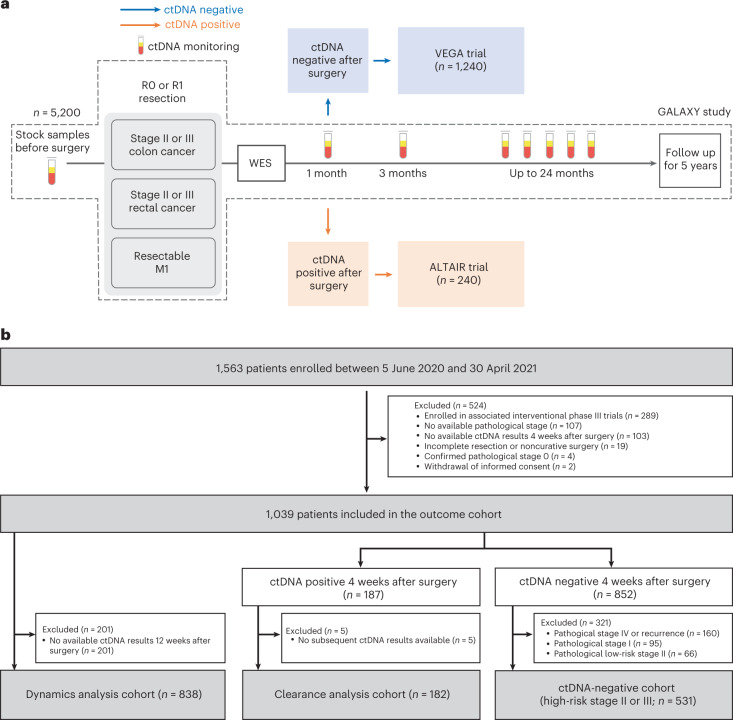
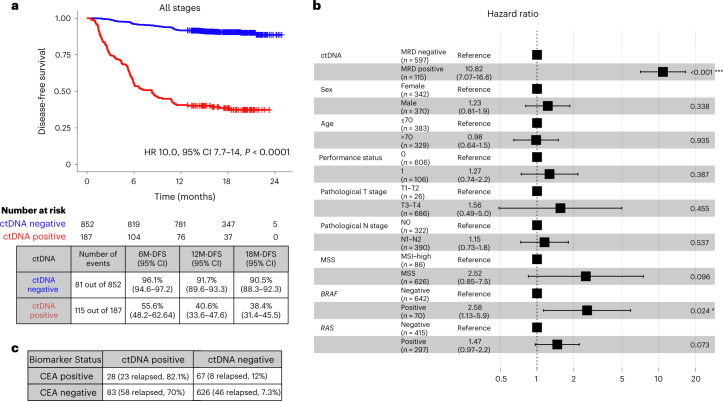
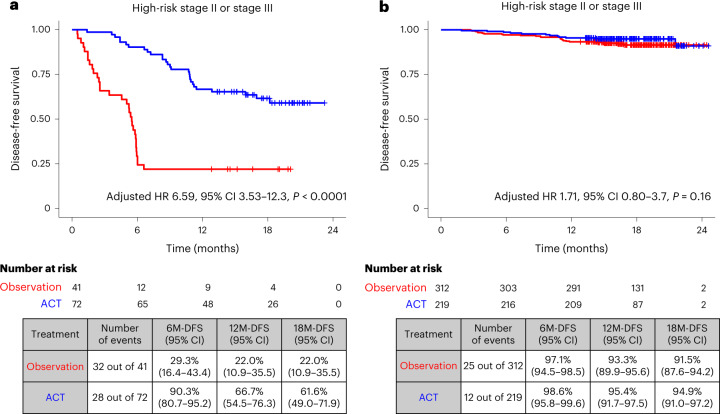
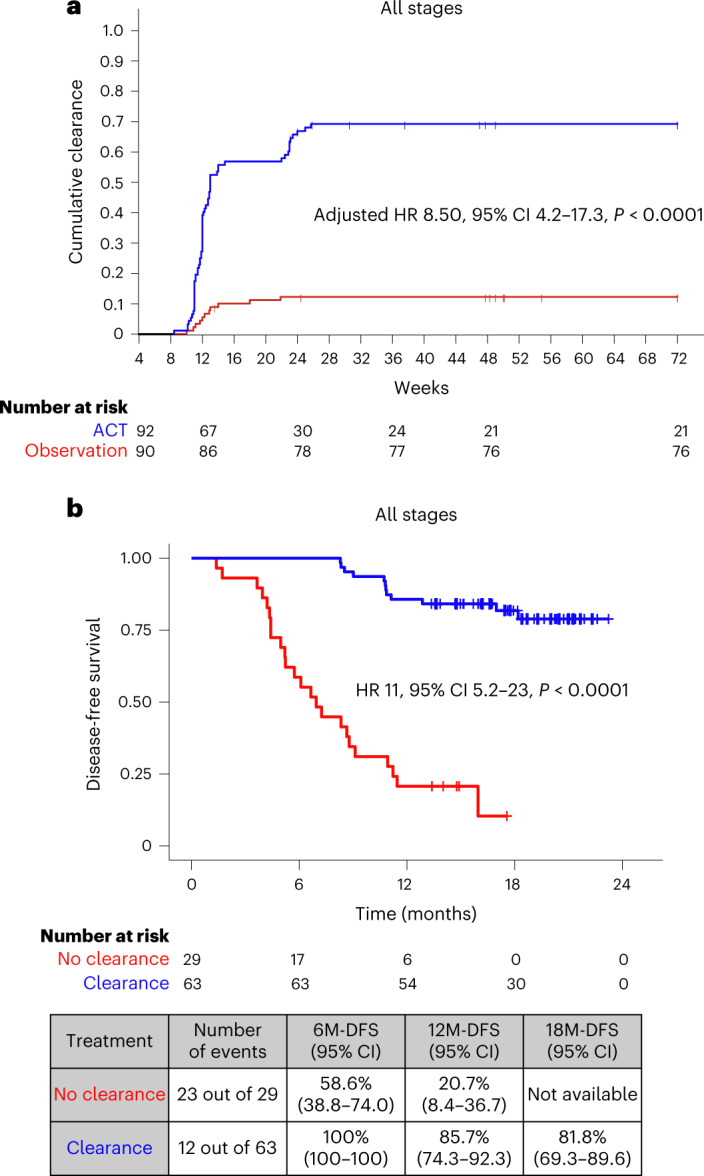
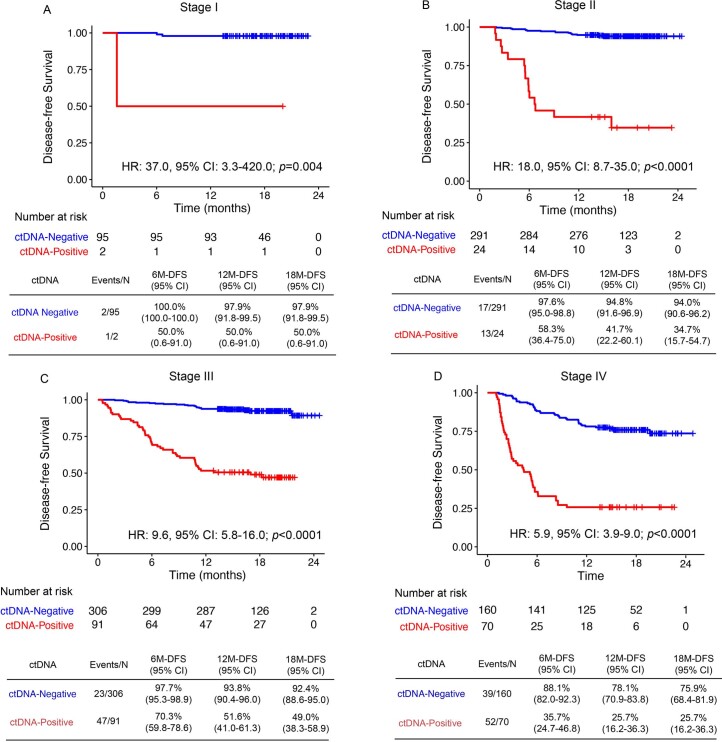
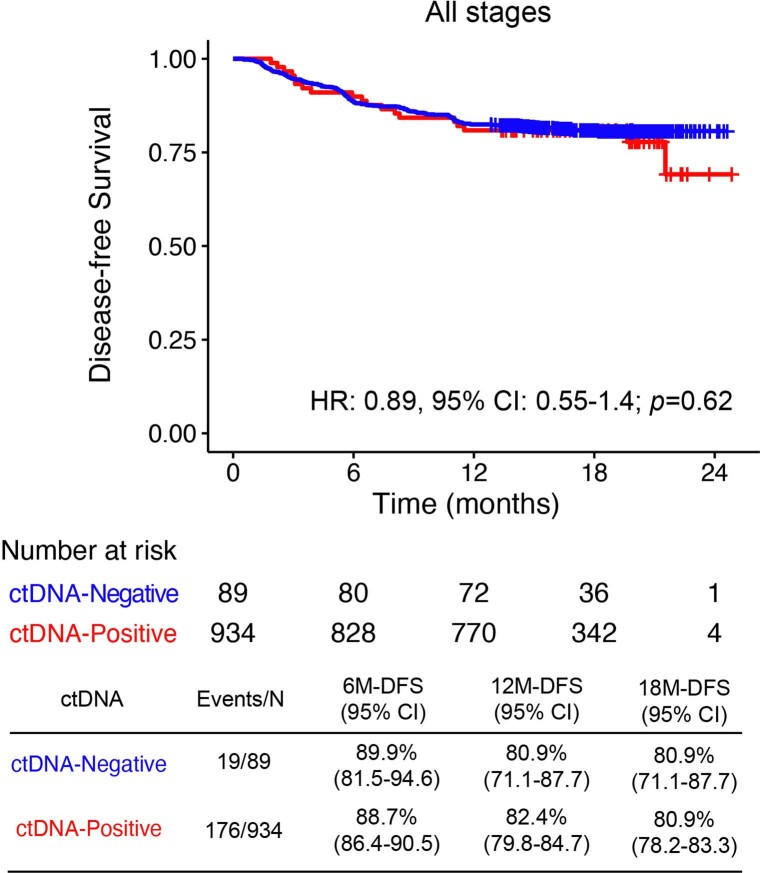
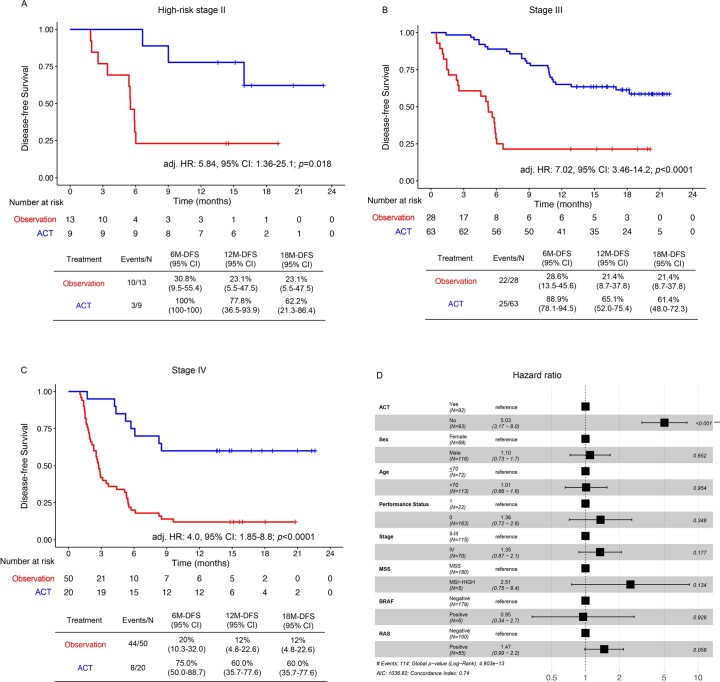
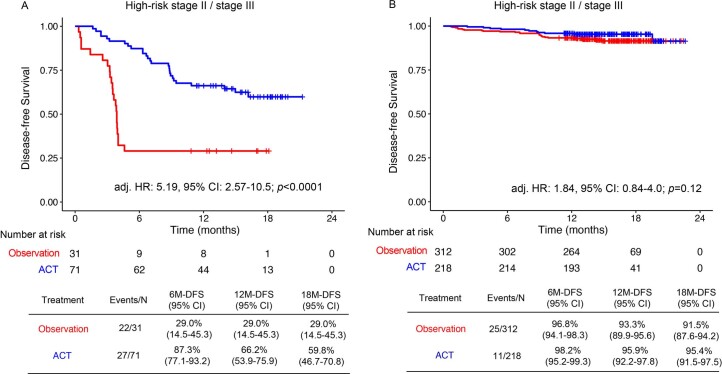
Despite standard-of-care treatment, more than 30% of patients with resectable colorectal cancer (CRC) relapse. Circulating tumor DNA (ctDNA) analysis may enable postsurgical risk stratification and adjuvant chemotherapy (ACT) treatment decision-making. We report results from GALAXY, which is an observational arm of the ongoing CIRCULATE-Japan study (UMIN000039205) that analyzed presurgical and postsurgical ctDNA in patients with stage II–IV resectable CRC ( n = 1,039). In this cohort, with a median follow-up of 16.74 months (range 0.49–24.83 months), postsurgical ctDNA positivity (at 4 weeks after surgery) was associated with higher recurrence risk (hazard ratio (HR) 10.0, P < 0.0001) and was the most significant prognostic factor associated with recurrence risk in patients with stage II or III CRC (HR 10.82, P < 0.001). Furthermore, postsurgical ctDNA positivity identified patients with stage II or III CRC who derived benefit from ACT (HR 6.59, P < 0.0001). The results of our study, a large and comprehensive prospective analysis of ctDNA in resectable CRC, support the use of ctDNA testing to identify patients who are at increased risk of recurrence and are likely to benefit from ACT.
Overview
The claims and statistics of this paper haven’t been checked yet.
Free: it reads the open-access text and checks the first 5 claims that cite a source we can check. Create a free account to check every claim.
Integrity signals
Registry
Cites
Statistics
Figures
Verification
Claims the paper makes
The claims and statistics of this paper haven’t been checked yet.
Free: it reads the open-access text and checks the first 5 claims that cite a source we can check. Create a free account to check every claim.
Claims other papers make about this one
Each is checked against this paper’s own text: does it say what the citing paper says it does?
The source backs part of the claim, not all of it — or backs it for a different population, condition or comparison.
In the citing paper
“Because KRAS mutations are often clonal founder events, mutant KRAS ctDNA can serve as a highly informative molecular marker for tumor burden, treatment response, minimal residual disease, and emergence of resistance [29,47,77,78].”
From Precision Targeting of KRAS-Mutant Cancers: Beyond G12C Toward G12D and Pan-RAS Therapeutic Strategies (2026) · cites this paper as [77]
Experimental — accuracy not yet measured
Self-check
Percentages, sums and reported differences re-computed from the paper’s own numbers.
The self-check needs the paper’s full text.
Citations
Cites
Oxaliplatin, Fluorouracil, and Leucovorin as Adjuvant Treatment for Colon Cancer
André, T., Boni, C., Mounedji-Boudiaf, L., Navarro, M., Tabernero, J., Hickish, T., Topham, C., Zaninelli, M., Clingan, P., Bridgewater, J., et al. (2004) · New England Journal of Medicine · doi:10.1056/nejmoa032709 · Cited by 3,689
Circulating Tumor DNA Analysis Guiding Adjuvant Therapy in Stage II Colon Cancer
Tie, J., Cohen, J. D., Lahouel, K., Lo, S. N., Wang, Y., Kosmider, S., Wong, R., Shapiro, J., Lee, M., Harris, S., et al. (2022) · New England Journal of Medicine · doi:10.1056/nejmoa2200075 · Cited by 1,091
Kuebler, J. P., Wieand, H. S., O'Connell, M. J., Smith, R. E., Colangelo, L. H., Yothers, G., Petrelli, N. J., Findlay, M. P., Seay, T. E., Atkins, J. N., et al. (2007) · Journal of Clinical Oncology · doi:10.1200/jco.2006.08.2974 · Cited by 1,056
Reinert, T., Henriksen, T. V., Christensen, E., Sharma, S., Salari, R., Sethi, H., Knudsen, M., Nordentoft, I., Wu, H.-T., Tin, A. S., et al. (2019) · JAMA Oncology · doi:10.1001/jamaoncol.2019.0528 · Cited by 1,011
Self-citationEngstrom, P. F., Arnoletti, J. P., Benson, A. B., Chen, Y.-J., Choti, M. A., Cooper, H. S., Covey, A., Dilawari, R. A., Early, D. S., Enzinger, P. C., et al. (2009) · Journal of the National Comprehensive Cancer Network · doi:10.6004/jnccn.2009.0056 · Cited by 683
Tie, J., Cohen, J. D., Wang, Y., Christie, M., Simons, K., Lee, M., Wong, R., Kosmider, S., Ananda, S., McKendrick, J., et al. (2019) · JAMA Oncology · doi:10.1001/jamaoncol.2019.3616 · Cited by 668
ctDNA guiding adjuvant immunotherapy in urothelial carcinoma
Powles, T., Assaf, Z. J., Davarpanah, N., Banchereau, R., Szabados, B. E., Yuen, K. C., Grivas, P., Hussain, M., Oudard, S., Gschwend, J. E., et al. (2021) · Nature · doi:10.1038/s41586-021-03642-9 · Cited by 646
Self-citationPersonalized Detection of Circulating Tumor DNA Antedates Breast Cancer Metastatic Recurrence
Coombes, R. C., Page, K., Salari, R., Hastings, R. K., Armstrong, A., Ahmed, S., Ali, S., Cleator, S., Kenny, L., Stebbing, J., et al. (2019) · Clinical Cancer Research · doi:10.1158/1078-0432.ccr-18-3663 · Cited by 510
Self-citationAdjuvant Chemotherapy for Stage II Colon Cancer With Poor Prognostic Features
O'Connor, E. S., Greenblatt, D. Y., LoConte, N. K., Gangnon, R. E., Liou, J.-I., Heise, C. P., & Smith, M. A. (2011) · Journal of Clinical Oncology · doi:10.1200/jco.2010.34.3426 · Cited by 451
Wang, Y., Li, L., Cohen, J. D., Kinde, I., Ptak, J., Popoli, M., Schaefer, J., Silliman, N., Dobbyn, L., Tie, J., et al. (2019) · JAMA Oncology · doi:10.1001/jamaoncol.2019.0512 · Cited by 224
Research works printed but not linked: 1
- Gray JR A class of K-sample tests for comparing the cumulative incidence of a competing risk Ann. Stat. 1998 16 1141 1154
Cited by
Items 101–200 of 526
Li, X., Liu, T., Bacchiocchi, A., Li, M., Cheng, W., Wittkop, T., Mendez, F. L., Wang, Y., Tang, P., Yao, Q., et al. (2024) · EMBO Molecular Medicine · doi:10.1038/s44321-024-00115-0 · Cited by 26
“The sequencing of a bespoke panel can be exhaustive; therefore, the average molecular depth is primarily constrained by the amount of available input material (Abbosh et al, 2017; Coombes et al, 2019; Kotani et al, 2023; Zhao et al, 2023).”
BackgroundJiao, H., Lin, S., Gu, J., Jiang, D., Cui, P., Huang, Z., Fang, Y., Wang, H., Miao, L., Tang, H., et al. (2025) · Molecular Cancer · doi:10.1186/s12943-025-02332-8 · Cited by 29
“Monitoring minimal residual disease (MRD) through circulating tumor DNA (ctDNA) has been linked to early recurrence and poorer prognosis across various cancer types [18–21].”
Locoregional treatment for colorectal liver metastases aiming for precision medicine
Maki, H., Jain, A. J., Haddad, A., Lendoire, M., Chun, Y. S., & Vauthey, J. (2023) · Annals of Gastroenterological Surgery · doi:10.1002/ags3.12689 · Cited by 18
Integration of liquid biopsy and immunotherapy: opening a new era in colorectal cancer treatment
Yao, S., Han, Y., Yang, M., Jin, K., & Lan, H. (2023) · Frontiers in Immunology · doi:10.3389/fimmu.2023.1292861 · Cited by 21
“4 weeks post-surgery is the strongest prognostic risk factor for DFS in stage II to IV CRC patients, regardless of BRAF V600E or MSI status (78, 79).”
BackgroundEnhanced chemotherapy and anti-metastasis with in situ nanosphere-to-nanofiber transition
Zhang, H., Peng, L., Qin, W., Jia, D., Zhao, R., Jiang, M., Ji, M. H., Wang, L., Li, G., & Zheng, Z. (2023) · Nano Today · doi:10.1016/j.nantod.2023.102122 · Cited by 18
Oligometastasis of Gastric Cancer: A Review
Yasufuku, I., Tsuchiya, H., Fujibayashi, S., Okumura, N., Sengoku, Y., Fukada, M., Asai, R., Sato, Y., Tajima, J. Y., Kiyama, S., et al. (2024) · Cancers · doi:10.3390/cancers16030673 · Cited by 19
“Although there is little evidence for correlations between survival outcomes and ctDNA in resectable gastric cancer, being positive for ctDNA in resectable colorectal cancer confirmed using liquid biopsy is a robust poor prognostic factor for postoperative recurrence of disease [54].”
BackgroundSelf-citationSwartjes, H., Sijtsma, F. P. C., Elferink, M. A. G., van Erning, F. N., Moons, L. M. G., Verheul, H. M. W., Berbée, M., Vissers, P. A. J., & de Wilt, J. H. W. (2024) · European Journal of Cancer · doi:10.1016/j.ejca.2024.114104 · Cited by 21
Kobayashi, S., Nakamura, Y., Hashimoto, T., Bando, H., Oki, E., Karasaki, T., Horinouchi, H., Ozaki, Y., Iwata, H., Kato, T., et al. (2025) · International Journal of Clinical Oncology · doi:10.1007/s10147-024-02683-0 · Cited by 28
Self-citationHoang, T., Choi, M. K., Oh, J. H., & Kim, J. (2025) · International Journal of Cancer · doi:10.1002/ijc.35442 · Cited by 24
“17,54,59 – 67,69 – 71,73 – 84,86 – 90 The ctDNA levels were assessed at multiple time points, including baseline, before, during, and after NAT, as well as pre-and postoperative, pre-and post-ACT, and through longitudinal or serial surveillance testing.”
Circulating Tumor DNA Testing in Solid Tumors and Lymphoma: ASCO Guideline
Lockwood, C. M., Messersmith, H. J., Kim, A. S., Rajagopal, P. S., Swami, U., Xian, R. R., Aisner, D. L., Arcila, M. E., Kurttila, F., Lovly, C. M., et al. (2026) · JCO Oncology Practice · doi:10.1200/op-26-00311 · Cited by 30
Circulating Tumor DNA and Management of Colorectal Cancer
Krell, M., Llera, B. G., & Brown, Z. J. (2023) · Cancers · doi:10.3390/cancers16010021 · Cited by 21
“However, 38/44 patients with an anti-EGFR drug-free interval of 18 months or more had a ctDNA RAS / BRAF wild-type status, which supports the role of ctDNA assessment in improving treatment efficacy as the length of the anti-EGFR free interval is not sufficient for patient selection for further…”
BackgroundHoang, V. N., Nguyen, N. L., Le, D. N., Nguyen, V. S., Thi, H. N., Vu, H. T., Ho, H. H., Le, H. M., Nguyễn, T. D., Vo, H. N., et al. (2025) · JCO oncology advances. · doi:10.1200/oa-24-00084 · Cited by 21
Optimizing Treatment Strategy for Oligometastases/Oligo-Recurrence of Colorectal Cancer
Yokoi, R., Tajima, J. Y., Fukada, M., Hayashi, H., Kuno, M., Asai, R., Sato, Y., Yasufuku, I., Kiyama, S., Tanaka, Y., et al. (2023) · Cancers · doi:10.3390/cancers16010142 · Cited by 20
Grange, R., Rousset, P., Williet, N., Guesnon, M., Milot, L. M., Passot, G., Phelip, J., Roy, B. L., Gléhen, O., & Képénékian, V. (2024) · Annals of Surgical Oncology · doi:10.1245/s10434-023-14840-2 · Cited by 19
“4 5–10 These strategies, based on complete surgical resection, have been reinforced by the locoregional administration of chemotherapy with techniques, such as hepatic intra-arterial infusion and hyperthermic intraperitoneal chemotherapy (HIPEC).”
Kalil, J. A., Krzywoń, L., Petrillo, S. K., Tsamchoe, M., Zlotnik, O., Lazaris, A., & Metrakos, P. P. (2024) · Frontiers in Oncology · doi:10.3389/fonc.2024.1418696 · Cited by 17
Liu, Z., Wang, G., Yang, Y., Su, Y., Zhang, H., Liu, J., Cui, P., Fan, X., Yang, J., Zhang, Z., et al. (2025) · Cell Reports Medicine · doi:10.1016/j.xcrm.2025.102334 · Cited by 36
“11 Similarly, the DYNAMIC study demonstrated that a ctDNA-guided strategy in stage II colon cancer reduced the use of adjuvant chemotherapy without compromising survival.”
InfluentialStrategic Insight into the Combination Therapies for Metastatic Colorectal Cancer
Kano, Y., Suenaga, M., & Uetake, H. (2023) · Current Oncology · doi:10.3390/curroncol30070480 · Cited by 18
“These results indicate that MRD status based on ctDNA could stratify patients at postsurgical risk of recurrence and it can be useful information for deciding to conduct adjuvant chemotherapy [6].”
BackgroundFan, W., Xia, Z., Chen, R., Lin, D., Li, F., Zheng, Y., Luo, J., Xiong, Y., Yu, P., Gao, W., et al. (2024) · Therapeutic Advances in Medical Oncology · doi:10.1177/17588359231220607 · Cited by 20
“26,40 Several aspects must be considered.”
Chen, Y., Yu, M., Liu, M., Sun, Y., Ling, C., Yu, M., Zhang, W., Zhang, W., & Peng, X. (2024) · Advanced Science · doi:10.1002/advs.202309760 · Cited by 15
Essential updates 2022–2023: Surgical and adjuvant therapies for locally advanced colorectal cancer
Kajiwara, Y., & Ueno, H. (2024) · Annals of Gastroenterological Surgery · doi:10.1002/ags3.12853 · Cited by 20
“Recently, the presence of circulating tumor DNA (ctDNA) after surgery has drawn attention as a risk factor for CRC recurrence of CRC. 65,66 The results of the DYNAMIC trial, an RCT designed to investigate whether a ctDNA-guided approach, compared with a standard approach in Stage II colon cancer,…”
ResultMögele, T., Höck, M., Sommer, F., Friedrich, L., Sommer, S., Schmutz, M., Altenburger, A., Messmann, H., Anthuber, M., Kröncke, T. J., et al. (2024) · Cancers · doi:10.3390/cancers16244173 · Cited by 14
“In this context, previous studies have shown the power of post-surgical ctDNA as a marker for MRD and as a predictor for recurrence-free survival [14,22,26].”
Nakano, K., Oki, E., Yamazaki, M., Suzuki, M., Kawai, S., Fujita, T., Kato, A., Zaitsu, Y., Jogo, T., Kato, C., et al. (2025) · Cell Death Discovery · doi:10.1038/s41420-025-02567-w · Cited by 16
“Monitoring MRD through circulating tumor DNA analysis is useful for evaluating the risk of recurrence in CRC [4].”
Self-citationAdvances in liquid biopsy for bone and soft-tissue sarcomas
Wang, Y., Fujiwara, T., Kurozumi, T., Ando, T., Ishimaru, T., Kondo, H., Nakata, E., Kunisada, T., & Ozaki, T. (2025) · International Journal of Clinical Oncology · doi:10.1007/s10147-025-02813-2 · Cited by 16
Bando, H., Watanabe, J., Takahashi, Y., Kotaka, M., Matsuhashi, N., Oki, E., Komatsu, Y., Shiozawa, M., Hirata, K., Miyamoto, Y., et al. (2026) · Nature Medicine · doi:10.1038/s41591-026-04428-0 · Cited by 31
Self-citationPezeshki, P. S., & Ghalehtaki, R. (2023) · Biomarker Research · doi:10.1186/s40364-023-00521-5 · Cited by 14
“…response (cCR) to nCRT, a promising The clinical application of ctDNA to predict response to neoadjuvant chemoradiotherapy in patients with locally-advanced rectal cancer Parmida Sadat Pezeshki 1,2 and Reza Ghalehtaki 2,3* marker to stratify patients based on their response would be of value.”
BackgroundAllan, Z., Liu, D. S., Lee, M., Tie, J., & Clemons, N. J. (2024) · Clinical Chemistry · doi:10.1093/clinchem/hvad188 · Cited by 14
Ben‐David, R., Alerasool, P., Kalola, H., Tillu, N., Almoflihi, M., Tsao, C., Galsky, M. D., Sfakianos, J. P., Wiklund, P. N., Waingankar, N., et al. (2024) · JCO Precision Oncology · doi:10.1200/po.24.00281 · Cited by 17
Early MRD predicts disease recurrence and benefit from adjuvant chemotherapy in CRC
Killock, D. (2023) · Nature Reviews Clinical Oncology · doi:10.1038/s41571-023-00737-2 · Cited by 14
Vojjala, N., Gibatova, V., Shah, R. N., Singal, S., Prabhu, R. R., Krishnamoorthy, G., Riggins, K. S., & Moka, N. (2025) · Cancers · doi:10.3390/cancers17152520 · Cited by 16
Wullaert, L., Jansen, M. P. H. M., Kraan, J., Meyer, Y., Voigt, K. R., Makrodimitris, S., de Weerd, V., Beaufort, C. M., Van, M. N., Vermaas, M., et al. (2025) · EClinicalMedicine · doi:10.1016/j.eclinm.2025.103406 · Cited by 13
“8,9 Current MRD approaches largely focus on the detection of cancer-derived material, such as circulating tumour cells (CTCs) or circulating tumour-derived DNA fragments in the blood of patients, which provides real-time information and can be measured repeatedly.”
Doghish, A. S., Zaki, M. B., Eldeib, M. G., Radwan, A., Moussa, R., Abdelwahab, M. M., Kizilaslan, E. Z., Alhamshry, N. A. A., Ashour, A. E., & Elimam, H. (2023) · Pathology - Research and Practice · doi:10.1016/j.prp.2023.155044 · Cited by 15
Crosstalk Between the Nervous System and Colorectal Cancer
Li, X., Ye, C., Wang, M., Kwan, P., Tian, X., & Zhang, Y. (2024) · Neuroscience Bulletin · doi:10.1007/s12264-024-01238-7 · Cited by 17
“For patients with single BMs in good systemic condition, tumor resection and whole-brain radiotherapy combined with stereotactic radiotherapy may be considered [132].”
Molinari, C., Marisi, G., Laliotis, G., Spickard, E. A., Rapposelli, I. G., Petracci, E., George, G. V., Dutta, P., Sharma, S., Malhotra, M., et al. (2024) · Scientific Reports · doi:10.1038/s41598-024-80855-8 · Cited by 15
Self-citationCirculating Tumor DNA Testing in Curatively Resected Colorectal Cancer and Salvage Resection
Ji, J., Wang, C., Goel, A., Melstrom, K. A., Zerhouni, Y. A., Lai, L. L., Melstrom, L. G., Raoof, M., Fong, Y., Kaiser, A. M., et al. (2024) · JAMA Network Open · doi:10.1001/jamanetworkopen.2024.52661 · Cited by 21
Diergaarde, B. B., Young, G., Hall, D. W., Mazloom, A. R., Costa, G. L., Subramaniam, S., Palomares, M. R., Garces, J., Baehner, F. L., Schoen, R. E., et al. (2025) · Journal of Surgical Oncology · doi:10.1002/jso.27989 · Cited by 17
“…who were ctDNA positive at the PS timepoint, had a PDT timepoint sample and at least one additional sample after the PDT timepoint, by ctDNA status during surveillance: persistent ctDNA positive, persistent ctDNA negative, or mixed ctDNA results. their shorter follow up time of 18 months [12].”
Liquid Biopsies in the Early Diagnosis, Prognosis, and Tailored Treatment of Colorectal Cancer
Liatsou, Ε., Kollias, I., Trapali, M., Tsilimigras, D. I., Gavriatopoulou, M., & Ntanasis‐Stathopoulos, I. (2025) · Cancers · doi:10.3390/cancers17060927 · Cited by 19
“…a high-risk tumor profile, as defined by clinicopathological characteristics, and those with undetectable serial ctDNA to groups of either observation or adjuvant chemotherapy like in the VEGA-trial protocol, it is possible to identify the patients who will benefit from sparing overtreatment [84].”
Huang, Y., Tian, H., Yue, Z., Liang, L., Huang, C., Zhu, H., & Yang, J. (2025) · Materials Today Bio · doi:10.1016/j.mtbio.2025.101707 · Cited by 15
“Despite surgical intervention, over 30 % of CRC patients experience long-term recurrence under standard treatment regiments [3,4].”
Bikhchandani, M., Amersi, F. F., Hendifar, A. E., Gangi, A., Osipov, A., Zaghiyan, K. N., Atkins, K. M., Cho, M. T., Aguirre, F. P., Hazelett, D. J., et al. (2023) · Genes · doi:10.3390/genes14051054 · Cited by 17
“In the largest observational cohort to date of postsurgical ctDNA surveillance in resected colorectal cancer, the presence of ctDNA has been independently associated with decreased recurrence-free survival [39].”
BackgroundJohnson, B. (2023) · Cancers · doi:10.3390/cancers15225484 · Cited by 14
Yu, J. B., Avriett, T. A., Ray, C. M., & Kim, R. D. (2024) · Journal of Gastrointestinal Oncology · doi:10.21037/jgo-23-815 · Cited by 13
“Based on established evidence from other solid tumors, the positive tumor-informed ctDNA assay is almost the definitive presence of surveillance-targeting malignancy (9).”
Soueidy, C., Zaanan, A., Gelli, M., Moati, É., Gallois, C., Taly, V., Laurent‐Puig, P., Benhaïm, L., & Taïeb, J. (2024) · ESMO Gastrointestinal Oncology · doi:10.1016/j.esmogo.2024.100068 · Cited by 20
Chibaudel, B., Raeisi, M., Cohen, R., Yothers, G., Goldberg, R. M., Bachet, J., Wolmark, N., Yoshino, T., Schmoll, H., Kerr, R. S., et al. (2024) · Journal of Clinical Oncology · doi:10.1200/jco.24.00394 · Cited by 19
Self-citationClinical Applications of Circulating Tumor DNA Profiling in GI Cancers
Battaglin, F., & Lenz, H. (2024) · JCO Oncology Practice · doi:10.1200/op.24.00167 · Cited by 16
“30 The observational GALAXY study from Kotani et al 31 con fi rmed that ctDNA positivity after surgery was the strongest prognostic factor associated with high risk of disease relapse in stage II and III CRC and identi fi ed patients who bene fi tted more from adjuvant treatment.”
Gallois, C., Sroussi, M., André, T., Mouillet‐Richard, S., Agueeff, N., Mulot, C., Vernerey, D., Louvet, C., Bachet, J., Dourthe, L.-M., et al. (2025) · Journal of Clinical Oncology · doi:10.1200/jco.23.02262 · Cited by 14
Exploring and bypassing resistance to targeted therapies in colorectal cancer
Favier, S., Xiong, W., Chalabi-Dchar, M., Chettab, K., Piercey, O., Wu, T., Fenouil, T., Albaret, M.-A., Jordheim, L. P., Diaz, J.-J., et al. (2025) · Biomedicine & Pharmacotherapy · doi:10.1016/j.biopha.2025.118741 · Cited by 12
Liquid biopsy for breast cancer and other solid tumors: a review of recent advances
Ohmura, H., Hanamura, F., Okumura, Y., Ando, Y., Masuda, T., Mimori, K., Akashi, K., & Baba, E. (2024) · Breast Cancer · doi:10.1007/s12282-024-01556-8 · Cited by 16
“The time from the point of ctDNA positivity to radiological recurrence was an average of 6.6 months, and ctDNA detected mutations including APC , BRAF , KRAS , and TP53 [56].”
InfluentialMoretto, R., Germani, M. M., Borelli, B., Conca, V., Rossini, D., Boraschi, P., Donati, F., Urbani, L., Lonardi, S., Bergamo, F., et al. (2024) · ESMO Open · doi:10.1016/j.esmoop.2024.102991 · Cited by 16
Wang, Q., Chen, M., Yang, B. J., Zheng, W., Liu, X., & Jian, G. (2024) · International Immunopharmacology · doi:10.1016/j.intimp.2024.113766 · Cited by 16
Ghidini, M., Hahne, J. C., Senti, C., Heide, T., Proszek, P., Shaikh, R., Carter, P. D., Hubank, M. J. F., Trevisani, F., Garrone, O., et al. (2024) · Clinical Cancer Research · doi:10.1158/1078-0432.ccr-24-0924 · Cited by 12
Negoi, I. (2025) · World Journal of Gastroenterology · doi:10.3748/wjg.v31.i18.106670 · Cited by 15
“Positive ctDNA at 4 weeks after surgery was associated with a higher recurrence risk (HR = 10; P < 0.0001) and was the most significant prognostic factor associated with relapse in patients with stages II-III disease (HR = 10.82; P < 0.001)[39].”
InfluentialSugimoto, K., Sakamoto, K., Tsuchiya, T., Takahashi, T., Ohge, H., Satō, T., Taguri, M., Morita, S., & Sadahiro, S. (2023) · International Journal of Colorectal Disease · doi:10.1007/s00384-023-04559-7 · Cited by 11
“In patients with high-risk stage II or stage III disease, Kotani et al. [26] found that those with a ctDNA-positive status 4 weeks after surgery derived significant benefit from postoperative adjuvant chemotherapy, while those with a ctDNA-negative status 4 weeks after surgery did not.”
BackgroundPutting comprehensive genomic profiling of ctDNA to work: 10 proposed use cases
Desai, A. P., Pasquina, L. W., Nulsen, C., Keller-Evans, R. B., Mata, D. A., Tukachinsky, H., & Oxnard, G. R. (2024) · The Journal of Liquid Biopsy · doi:10.1016/j.jlb.2024.100140 · Cited by 10
Hamabe, A., Takemasa, I., Ishii, M., Okuya, K., Hida, K., Nishizaki, D., Sumii, A., Arizono, S., Kohno, S., Tokunaga, K., et al. (2024) · Journal of Gastroenterology · doi:10.1007/s00535-024-02133-8 · Cited by 10
“Furthermore, with recent advances in ctDNA and multiomics analysis, individualization of colorectal cancer treatment is becoming a reality [29–32].”
BackgroundSelf-citationIkushima, H., Watanabe, K., Shinozaki‐Ushiku, A., Oda, K., & Kage, H. (2024) · ESMO Open · doi:10.1016/j.esmoop.2024.103998 · Cited by 12
Yun, J. H., Choi, Y. Y., & Cheong, J.-H. (2025) · Cancer Research and Treatment · doi:10.4143/crt.2024.1222 · Cited by 11
“This concept was elegantly demonstrated in CRC, where a landmark study showed that ctDNA status effectively stratified patients’ need for adjuvant therapy [75,76].”
Abraham, J. P., Domenyuk, V., Perdigones, N., Klimov, S., Antani, S., Yoshino, T., Heath, E. I., Lou, E., Liu, S. V., Marshall, J. L., et al. (2025) · Scientific Reports · doi:10.1038/s41598-025-08986-0 · Cited by 13
Self-citationBroche, J., Kelemen, O., Aishwarya, S., Schütz, L., Muyas, F., Forschner, A., Schroeder, C., & Ossowski, S. (2025) · Journal of Translational Medicine · doi:10.1186/s12967-025-06993-3 · Cited by 10
“The presence of ctDNA after surgery or therapy is termed molecular residual disease (MRD) [12].”
Hu, S., Feng, J., Fu, W., & Guo, Y. (2024) · Cell Biochemistry and Biophysics · doi:10.1007/s12013-024-01430-6 · Cited by 10
Tamai, K., Hirose, H., Okamura, S., Akazawa, Y., Koh, M., Hayashi, K., Katsura, Y., Tanaka, N., Ebisui, C., & Yano, M. (2023) · Journal of the Anus Rectum and Colon · doi:10.23922/jarc.2023-016 · Cited by 10
“Particularly, research on ctDNA-based postoperative adjuvant chemotherapy selection is rapidly progressing[42-44].”
BackgroundLutfi, A., Afghan, M. K., Swed, B., & Kasi, P. M. (2023) · Case Reports in Oncology · doi:10.1159/000535174 · Cited by 11
“The sensitivity of this test is also in fl uenced by the amount of ctDNA shed by different cancer types, especially low-shedding cancers [6].”
BackgroundKramer, A., van Schaik, L. F., van den Broek, D. A., Meijer, G. A., Gutiérrez‐Ibarluzea, I., Cordero, L. G., Fijneman, R. J. A., Ligtenberg, M. J. L., Schuuring, E. M. D., van Harten, W. H., et al. (2025) · PharmacoEconomics · doi:10.1007/s40273-025-01470-7 · Cited by 9
Circulating tumor DNA in colorectal cancer: biology, methods and applications
Chen, H., An, Y., Wang, C., & Zhou, J. (2025) · Discover Oncology · doi:10.1007/s12672-025-02220-z · Cited by 15
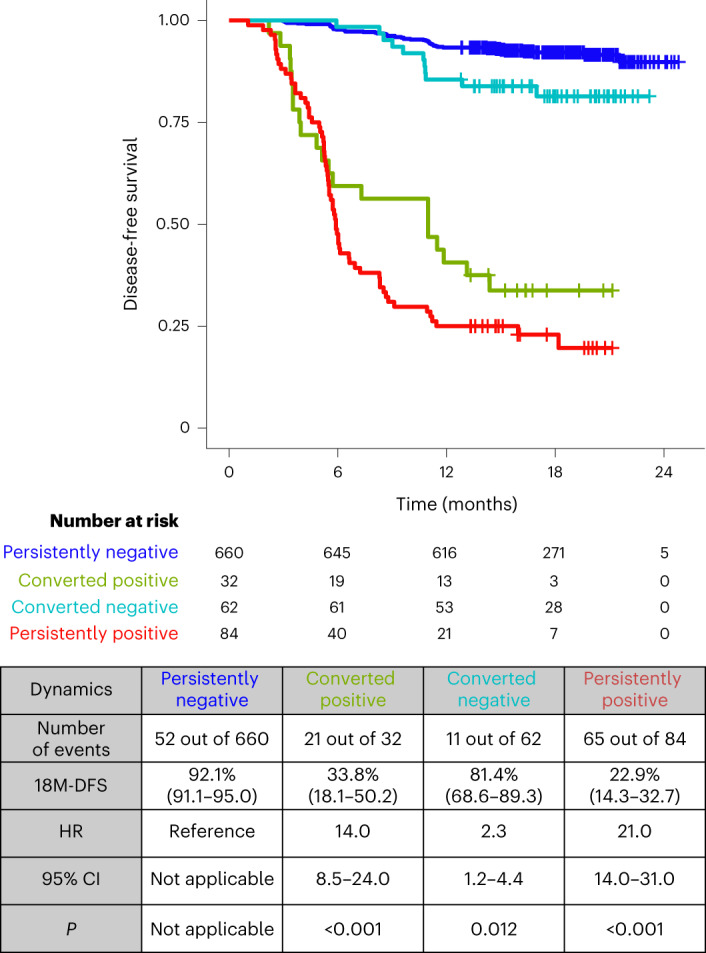
“This indicated that persistent ctDNA positivity or a shift from negative to positive during ACT was a strong predictor of recurrence [115].”
InfluentialNasca, V., Bergamo, F., Foltran, L., Antonuzzo, L., Bencardino, K. B., Dell’Aquila, E., Corallo, S., Spallanzani, A., Brunetti, O., Spada, D., et al. (2025) · BMC Cancer · doi:10.1186/s12885-025-14063-6 · Cited by 13
Liquid biopsy: An innovative tool in oncology. Where do we stand?
Martella, S., Wekking, D., Lai, E., Lambertini, M., Pettinato, A., Parrino, A., Semonella, F., Sanna, G., Maccioni, A., Scartozzi, M., et al. (2025) · Seminars in Oncology · doi:10.1016/j.seminoncol.2025.152343 · Cited by 11
Martelli, V., Vidal, J., Salvans, S., Fernández‐Rodríguez, C., Badia-Ramentol, J., Linares, J., Jiménez‐Toscano, M., Sibilio, A., Gibert, J., Pérez, M., et al. (2025) · Cancers · doi:10.3390/cancers17091461 · Cited by 11
“…study monitored ctDNA MRD status by using a tumor-based technology (Signatera, Austin, TX, USA) in patients with stage II–IV CRC. Interim analyses revealed a strong correlation between post-surgical ctDNA positivity and high recurrence risk compared to other clinicopathological features [73].”
Manca, P., Chen, C., Shah, F., Lee, C. Y., Domenico, D., Omer, D. M. R., Gonzalez, S., de Bruijn, I., Ahuno, S. T., Chatila, W. K., et al. (2025) · npj Precision Oncology · doi:10.1038/s41698-025-01208-w · Cited by 17
Nakamura, Y., Reiter, J. G., Natarajan, P., Babiarz, J., Srinivasan, P., Joshi, J. P., Lin, Y., Chen, T.-C., Liang, N., Maw, S., et al. (2026) · npj Precision Oncology · doi:10.1038/s41698-026-01277-5 · Cited by 12
Self-citationVail, E., Choubey, A. P., Alexander, H. R., August, D. A., Berry, A., Boland, P. M., Eskander, M. F., Grandhi, M. S., Haliani, B., In, H., et al. (2024) · Cancer Medicine · doi:10.1002/cam4.6884 · Cited by 10
“25 The ongoing CIRCULATE-US study (NRG-GI008) is exploring these findings in a prospective, randomized trial in which detection of postoperative ctDNA guides the use and intensity of adjuvant chemotherapy.”
BackgroundBando, H., Yamaguchi, T., Mitani, S., Sawada, K., Mishima, S., Komine, K., Okugawa, Y., Hosoda, W., & Ebi, H. (2024) · Cancer Science · doi:10.1111/cas.16039 · Cited by 11
Self-citationde Moraes, F. C. A., Kelly, F. A., Souza, M. E. C., & Burbano, R. M. R. (2024) · International Journal of Colorectal Disease · doi:10.1007/s00384-024-04668-x · Cited by 11
Kramer, A., Alarcon, C. R., van den Broek, D. A., Vessies, D. C. L., Erve, I. V. ’., Meijer, G. A., Vink, G. R., Schuuring, E. M. D., Fijneman, R. J. A., Coupé, V. M. H., et al. (2024) · Molecular Oncology · doi:10.1002/1878-0261.13562 · Cited by 11
Oki, E., Nakanishi, R., Ando, K., Takemasa, I., Watanabe, J., Matsuhashi, N., Kato, T., Kagawa, Y., Kotaka, M., Hirata, K., et al. (2024) · ESMO Gastrointestinal Oncology · doi:10.1016/j.esmogo.2023.100034 · Cited by 10
Self-citationDing, X., Cai, X.-M., Wang, Q., Liu, N., Zhong, W., Xi, X., & Lu, Y. (2024) · Phytomedicine · doi:10.1016/j.phymed.2024.155833 · Cited by 11
Integration of circulating tumor DNA in biliary tract cancer: the emerging landscape
Awosika, J. A., Monge, C., & Greten, T. F. (2024) · Hepatic Oncology · doi:10.1080/20450923.2024.2403334 · Cited by 9
Zhou, Q., Chen, X., Zeng, B., Zhang, M., Guo, N., Wu, S., Zeng, H., & Sun, F. (2024) · Journal of the National Cancer Center · doi:10.1016/j.jncc.2024.05.007 · Cited by 18
ctDNA/MRD Testing for Colon Cancer: A Work in Progress or Ready for Prime-Time Standard of Care?
Caughey, B. A., & Parikh, A. R. (2024) · Journal of the National Comprehensive Cancer Network · doi:10.6004/jnccn.2024.7049 · Cited by 13
Liu, Z., Shi, Z., Jiang, W., Shen, Z., Chen, W., Shen, K., Yihong, S., Tang, Z., & Wang, X. (2025) · MedComm · doi:10.1002/mco2.70065 · Cited by 11
Impact of Minimal Residual Disease on Early Recurrence of Liver Metastatic Colorectal Cancer
Kawashima, M., Yamada, T., Miyasaka, T., Kanaka, S., Kuriyama, S., Uehara, K., Matsuda, A., Ohta, R., Sonoda, H., Taniai, N., et al. (2025) · Cancer Science · doi:10.1111/cas.16442 · Cited by 12
“In MRD-negative patients with high-risk pathological stage II or stage III colorectal cancer, adjuvant chemotherapy demonstrated no benefits in terms of RFS [24].”
InfluentialTakei, S., Kotani, D., Laliotis, G., Sato, K., Fujiwara, N., Kawazoe, A., Hashimoto, T., Mishima, S., Nakayama, I., Nakamura, Y., et al. (2025) · Annals of Surgery · doi:10.1097/sla.0000000000006699 · Cited by 15
“…on evaluating the association of ctDNA status with TRG scores, patients with TRG1 score were noted to be more frequently ctDNA-positive (73% [8/11]) than those with TRG3 scores ( P = 0.0014) (Supplemental Digital Content Figure 1A, Supplemental Digital Content 1, http://links.lww.com/SLA/…”
InfluentialSelf-citationHu, Q., Kimura, Y., Ikeda, S., Tanaka, Y., Nakanoko, T., Ota, M., Yoshizumi, T., Eto, M., & Oki, E. (2025) · BJC Reports · doi:10.1038/s44276-025-00158-x · Cited by 8
Self-citationGeng, H., Ma, L., Wu, L., Yao, C., Wang, C., Gan, X., Li, Y., & Chen, F. (2025) · Frontiers in Oncology · doi:10.3389/fonc.2025.1594234 · Cited by 12
Agüera-Sánchez, A., Ros, E. P., Martínez‐Martínez, I., & García-Molina, F. (2026) · Journal of Personalized Medicine · doi:10.3390/jpm16010048 · Cited by 11
“In a large cohort study of 1039 patients, the presence of ctDNA 4–8 weeks post-surgery was associated with a >10-fold higher risk of relapse compared to ctDNA-negative patients [106].”
Ahmed, H. M., Al-Hussainy, A. F., Mustafa, W. W., Jyothi, S. R., Nayak, P. P., Janney, J. B., Singh, G., Sinha, A., Sameer, H. N., Salih, R. M., et al. (2026) · Discover Oncology · doi:10.1007/s12672-026-04495-2 · Cited by 10
“The ALTAIR study in Japan investigates the efficacy of post-operative ctDNA to guide adjuvant therapy decisions, whereas the CIRCULATE-Japan trial is a large-scale platform study aimed at validating ctDNA as a surrogate endpoint for disease-free survival in various stages of CRC [180, 181].”
Sinicrope, F. A., Segovia, D., Sharma, N., Alberts, S. R., Hardin, A. I., Rich, T. A., & Shi, Q. (2026) · Journal of Clinical Oncology · doi:10.1200/jco-25-02086 · Cited by 23
Advancing the applications of liquid biopsies in oncology
Valpione, S., Clipson, A., Rothwell, D. G., Dive, C., & Mouliere, F. C. (2026) · Nature Reviews Genetics · doi:10.1038/s41576-026-00974-y · Cited by 12
“Personalized tumour-informed approaches have significantly lowered the analytical detection limits of ctDNA to single molecules among millions of non-tumour cfDNA molecules (or ppm), with demonstrable impact for tracking MRD in lung 98,99 , colorectal 100,101 and other cancers 83,102,103 .”
GLUT-1 may predict metastases and death in patients with locally advanced rectal cancer
Kim, T. H., Kwak, Y., Song, C., Lee, H. S., Kim, D., Oh, H., Kim, J. W., Lee, K., Kang, S., & Js, K. (2023) · Frontiers in Oncology · doi:10.3389/fonc.2023.1094480 · Cited by 8
“have reported results from GALAXY, which is an observational arm of the ongoing CIRCULATE-Japan study (UMIN000039205) that analyzed preoperative and postoperative ctDNA in patients with stage IIIV resectable colorectal cancer (28).”
ResultImprovement of patient care using cancer genomic profiling: SCRUM-/CIRCULATE-Japan experience
Ohtsu, A., Goto, K., & Yoshino, T. (2023) · Proceedings of the Japan Academy Series B · doi:10.2183/pjab.99.015 · Cited by 11
Self-citationKobayashi, S., Bando, H., Taketomi, A., Takamoto, T., Shinozaki, E., Shiozawa, M., Hara, H., Yamazaki, K., Komori, K., Matsuhashi, N., et al. (2023) · BMC Cancer · doi:10.1186/s12885-023-11311-5 · Cited by 10
Self-citationOligometastases of Esophageal Squamous Cell Carcinoma: A Review
Sato, Y., Tanaka, Y., Yokoi, R., Tsuchiya, H., Sengoku, Y., Fukada, M., Yasufuku, I., Asai, R., Tajima, J. Y., Kiyama, S., et al. (2024) · Cancers · doi:10.3390/cancers16040704 · Cited by 8
“Although there is very little evidence at this time for correlations between survival outcomes and ctDNA in esophageal cancer [61], being positive for ctDNA in resectable colorectal cancer confirmed by liquid biopsy is a robustly poor prognostic factor for postoperative recurrence of disease [62].”
BackgroundSelf-citationWu, C. S.-Y., Pai, R. K., Kosiorek, H., Banerjee, I., Pfeiffer, A., Hagen, C. E., Hartley, C., Graham, R. P., Sonbol, M. B., Bekaii‐Saab, T., et al. (2024) · Clinical Cancer Research · doi:10.1158/1078-0432.ccr-23-3211 · Cited by 10
Prognostic and predictive role of immune microenvironment in colorectal cancer
Kuznetsova, O. A., Fedyanin, M. Y., Эдуардовна, З. Л., Moskvina, L., Kuznetsova, O., Lebedeva, A., Tryakin, A. A., Kireeva, G. S., Borshchev, G. G., Tjulandin, S., et al. (2024) · World Journal of Gastrointestinal Oncology · doi:10.4251/wjgo.v16.i3.643 · Cited by 9
Evaluation of Molecular Residual Disease by a Fixed Panel in Resectable Colorectal Cancer
Yang, J., Yu, C., Li, H., Peng, D., Zhou, Q., Yao, J., Lv, J., Fang, S., Shi, J., Wei, Y., et al. (2024) · Cancer Research and Treatment · doi:10.4143/crt.2023.1371 · Cited by 10
“Moreover, the dynamic changes in ctDNA during ACT have been shown to reflect treatment efficacy, as patients who achieve ctDNA clearance exhibit significantly longer disease-free survival (DFS) compared to those with persistent ctDNA positivity [9].”
InfluentialSamaille, T., Falcoz, A., Cohen, R., Laurent‐Puig, P., André, T., Taïeb, J., Auclin, É., & Vernerey, D. (2024) · The Oncologist · doi:10.1093/oncolo/oyae140 · Cited by 9
“8,12,13 In surveillance strategies, a combination of CEA and imaging has been reported as efficient as ctDNA in detecting relapses.”
MethodLiquid biopsy in renal cell carcinoma
Machaalani, M., Eid, M., Semaan, K., Chehade, R. E. H., Nawfal, R., Baca, S. C., & Choueiri, T. K. (2024) · The Oncologist · doi:10.1093/oncolo/oyae230 · Cited by 8
“26,27 However, current ctDNA bespoke approaches, including the one employed by Correa et al, may still not be sufficiently sensitive to distinguish patients who are cured with surgery from those with minimal residual disease where adjuvant immunotherapy may be helpful.”
MethodNguyen, H. T., Hoang, V.-T.-L., Nguyen, T. V., Trinh, N. A. L., Pham, T. H., Le, D. N., Ho, H. H., Nguyen, T. D., Nguyen, H. D., Do, T. T., et al. (2024) · ESMO Real World Data and Digital Oncology · doi:10.1016/j.esmorw.2024.100076 · Cited by 13
Circulating tumor DNA: A new tool to predict recurrence and guide treatment of colorectal cancer
Quang, E. V., Gandini, A., Taly, V., Laurent‐Puig, P., Zaanan, A., & Taïeb, J. (2025) · Clinics and Research in Hepatology and Gastroenterology · doi:10.1016/j.clinre.2025.102611 · Cited by 10
Lygre, K. B., Forthun, R. B., Høysæter, T., Hjelle, S. M., Eide, G. E., Gjertsen, B. T., Pfeffer, F., & Hovland, R. (2024) · BJS Open · doi:10.1093/bjsopen/zrad146 · Cited by 9
“CEA does not detect recurrence at an early stage 35,42,43 , whereas CT scanning has a threshold of 5–10 mm for detection of lesions and often yields unspecific findings 44–46 .”
BackgroundTargeting drug resistant colorectal cancer with apigenin nanoarchitectures
Goleij, P., Ferdousmakan, S., Tabari, M. A. K., Amini, A., Larsen, D. S., Daglia, M., Javan, A., Li, T., Khan, H., & Xu, Y. (2025) · Translational Oncology · doi:10.1016/j.tranon.2025.102455 · Cited by 8
“The primary strategy for treating CRC involves a combination of chemotherapy and surgery, which is the only way to improve survival outcomes [12].”
Pellatt, A. J., Bent, A. H., Hornstein, N. J., Parseghian, C. M., Huey, R. W., Raghav, K. P. S., Morris, V. K., Overman, M. J., Morelli, P., Willis, J. A., et al. (2025) · JCO Precision Oncology · doi:10.1200/po-25-00142 · Cited by 9
Liu, Q., Li, X., Jin, T., Huo, S., Su, S., & Liu, N. (2025) · Diagnostic Cytopathology · doi:10.1002/dc.70009 · Cited by 10
“Multiple studies have shown that patients with detectable ctDNA after surgery face a much higher risk of relapse—often 7 to 10 times greater—compared to those with no ctDNA detected [115–118].”
Metadata
- Authors
- Kotani, D., Oki, E., Nakamura, Y., Yukami, H., Mishima, S., Bando, H., Shirasu, H., Yamazaki, K., Watanabe, J., Kotaka, M., Hirata, K., Akazawa, N., Kataoka, K., Sharma, S., Aushev, V. N., Aleshin, A., Misumi, T., Taniguchi, H., Takemasa, I., Kato, T., Mori, M., & Yoshino, T.
- Affiliations
- National Cancer Center Hospital East (JP)
- Kyushu University (JP)
- Osaka Medical and Pharmaceutical University (JP)
- Shizuoka Cancer Center (JP)
- Yokohama City University Medical Center (JP)
- Sano Hospital (JP)
- University of Occupational and Environmental Health Japan (JP)
- Sendai Medical Center (JP)
- Hyogo Medical University (JP)
- Natera (United States) (US)
- Aichi Cancer Center (JP)
- Sapporo Medical University (JP)
- Osaka National Hospital (JP)
- Tokai University (JP)
- Corresponding author
- Oki, Eiji
- ORCID
- Kotani, Daisuke
- Oki, Eiji
- Nakamura, Yoshiaki
- Yukami, Hiroki
- Mishima, Saori
- Bando, Hideaki
- Shirasu, Hiromichi
- Yamazaki, Kentaro
- Watanabe, Jun
- Kotaka, Masahito
- Hirata, Keiji
- Akazawa, Naoya
- Kataoka, Kozo
- Sharma, Shruti
- Aushev, Vasily N.
- Aleshin, Alexey
- Misumi, Toshihiro
- Taniguchi, Hiroya
- Takemasa, Ichiro
- Kato, Takeshi
- Mori, Masaki
- Yoshino, Takayuki
- Venue
- Nature Medicine
- Published
- 2023-01
- Volume
- 29
- Issue
- 1
- Pages
- 127-134
- ISSN
- 1078-8956 (ISSN-L)
- 1546-170X
- PMC
- PMC9873552
- OpenAlex
- W4316507345
- Semantic Scholar
- 4f4abf246c2b5b6ef0edbf1e4a520d231e0cc143
- Cited by
- 526
- References
- 21
- Citations by year
- 2026: 130 · 2025: 161 · 2024: 167 · 2023: 67
- FWCI
- 64.04
- Type
- journal article
- Language
- en
- Open access
- hybrid
- doi.org
- Licence
- cc-by
- creativecommons.org/licenses/by/4.0 (tdm)
- creativecommons.org/licenses/by/4.0 (vor, 15 d)
- Locations
- Nature Medicine (publishedVersion, cc-by)
- PubMed Central (publishedVersion, cc-by)
- PubMed (publishedVersion)
- Funders
- Japan Agency for Medical Research and Development (19ck0106447h0002)
- Topics
- Health Sciences › Medicine › Oncology › Colorectal Cancer Treatments and Studies
- Health Sciences › Medicine › Oncology › Colorectal Cancer Surgical Treatments
- Health Sciences › Medicine › Pathology and Forensic Medicine › Genetic factors in colorectal cancer
- Keywords
- colorectal cancer, circulating tumor DNA, liquid biopsy, adjuvant chemotherapy, molecular residual disease, cancer recurrence risk, risk stratification, stage II and III colorectal cancer, galaxies
- MeSH terms
- Humans, Japan, Neoplasm Recurrence, Local, Biomarkers, Tumor, Colorectal Neoplasms, Proportional Hazards Models, Chemotherapy, Adjuvant, Neoplasm, Residual
About these checks
Registry, retraction, Cites and statistics results are computed, not judged, with one exception: a printed reference that no index lists is read once by a model before it counts as a citation error. Claims are extracted by a model and kept only when their quote appears verbatim in the text; each cited source is then checked, with a model’s help, for whether it says what the claim relies on. Those verdicts can be wrong — read the claim’s quote and the cited source before relying on one.
Statistics and arithmetic are recomputed, not judged.
Confidence bands are shown only for fields calibrated on our annotated test set. None is calibrated yet, so no band is shown.
What counts as a claim ›How we measure confidence ›How we check this ›
Are you an author, or do you see a problem with this page? Request a review
Data sources
Bibliographic data: Semantic Scholar, OpenAlex, Crossref.
Contains information from the Semantic Scholar Academic Graph Datasets, made available under the ODC Attribution License (ODC-BY 1.0).
Semantic Scholar’s data is described in: Kinney, R., et al. (2023). The Semantic Scholar Open Data Platform. arXiv:2301.10140.
