

Molecular residual disease and efficacy of adjuvant chemotherapy in patients with colorectal cancer
Open accessThe DOI matches its Crossref record; 22 of the 22 references it cites were found in a registry or an index.
Abstract
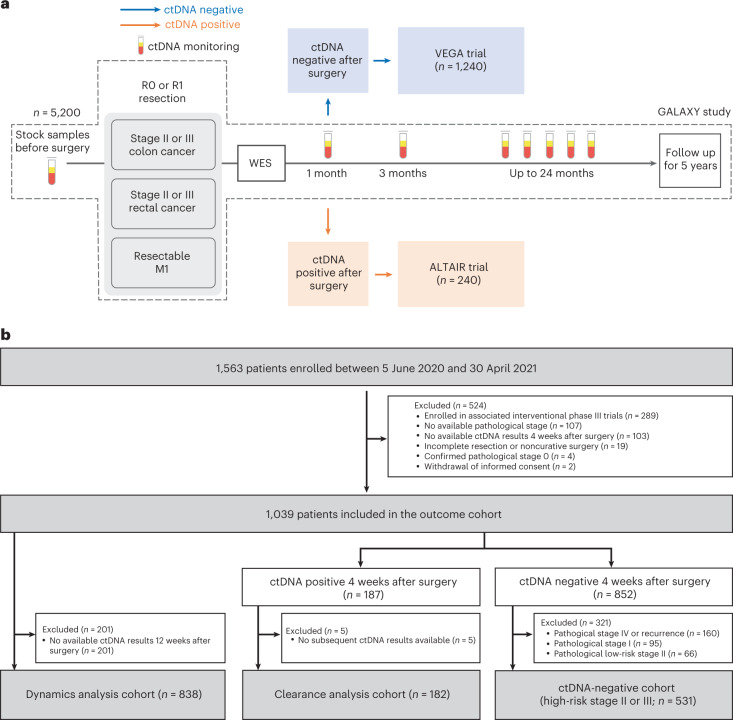
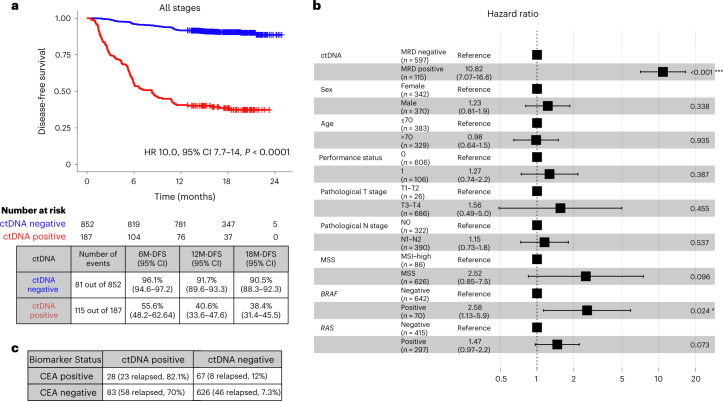
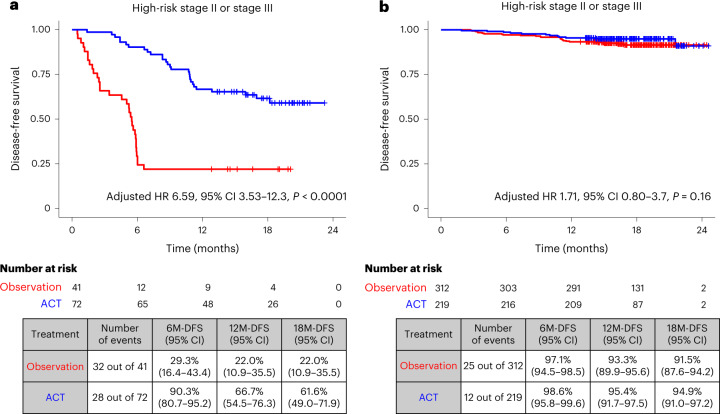
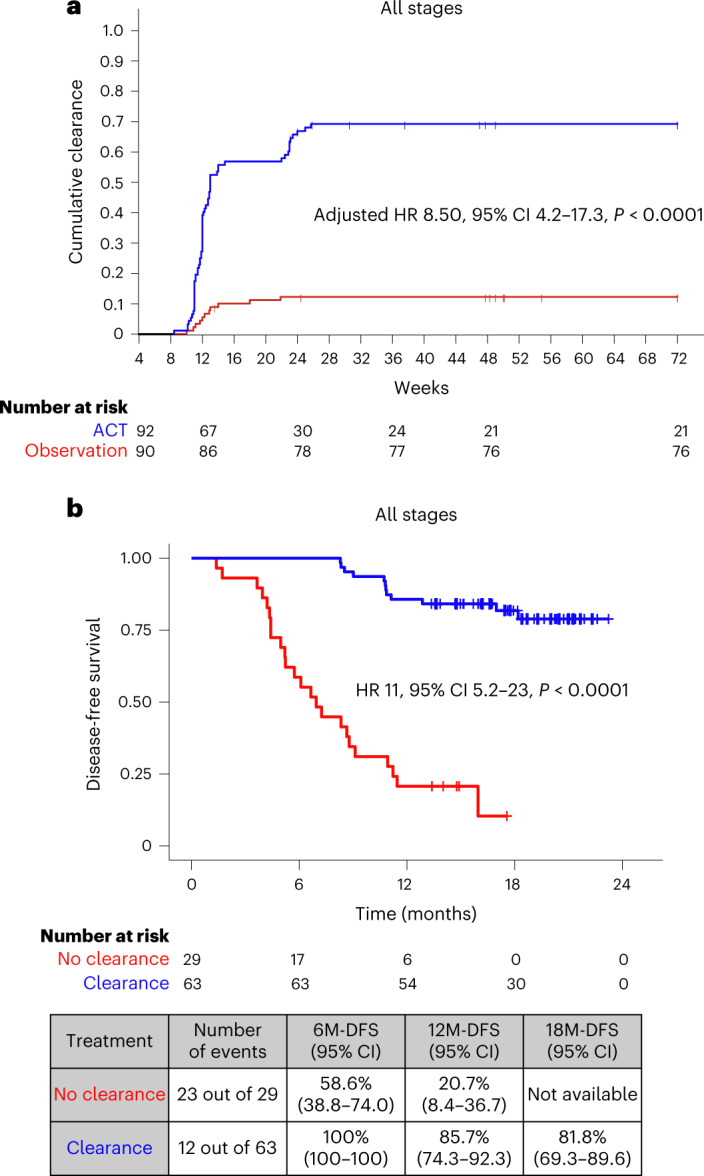
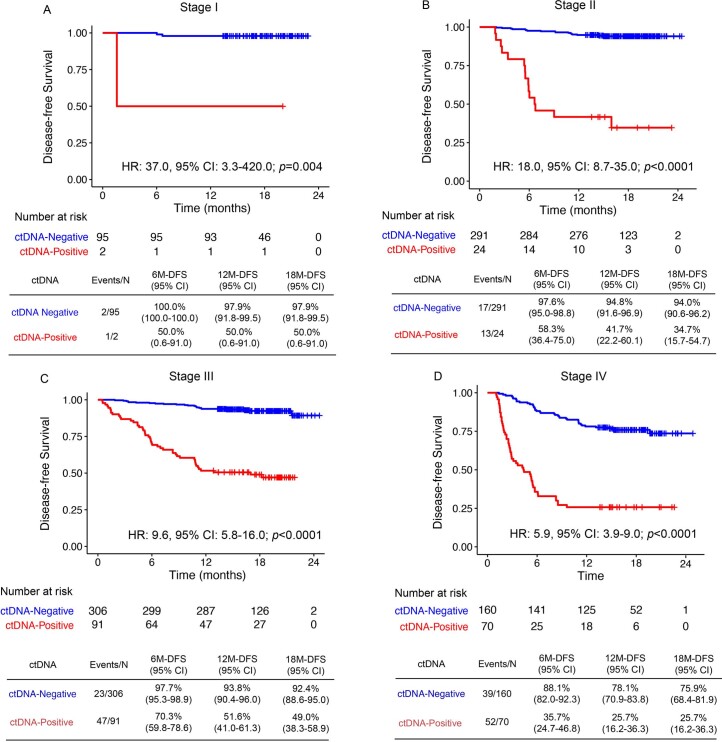
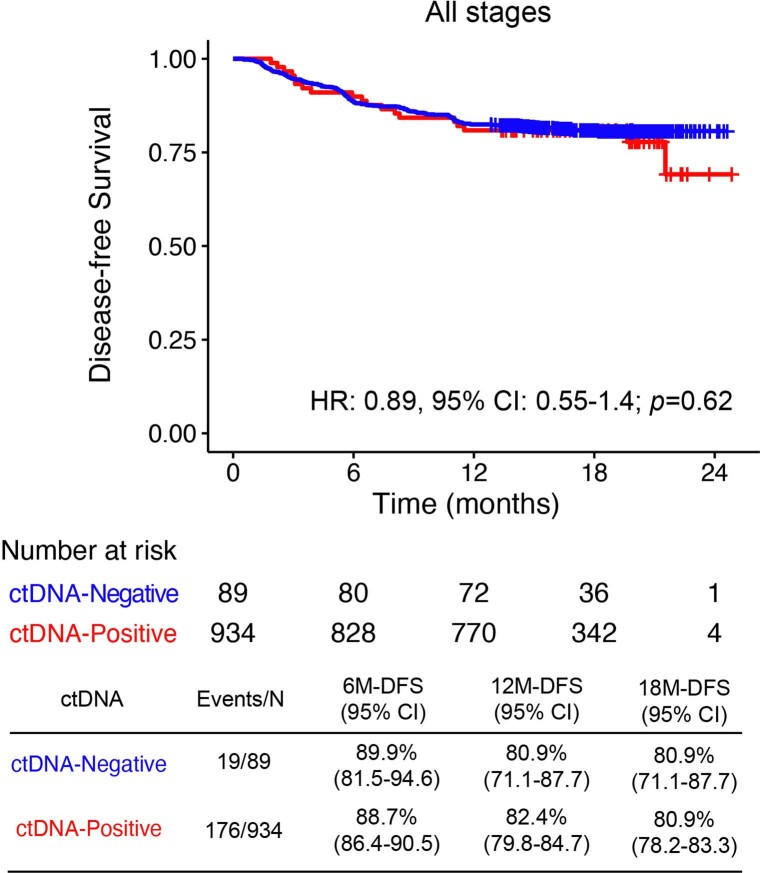
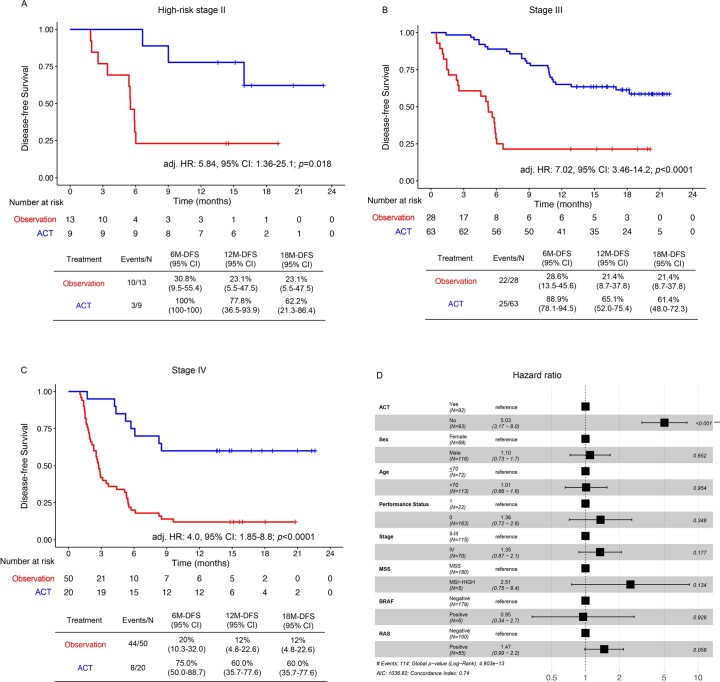
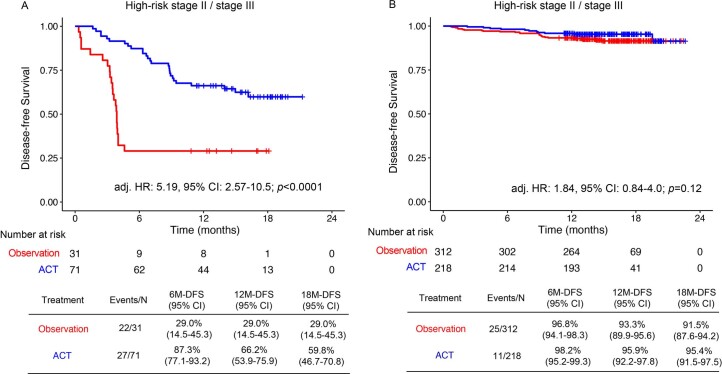
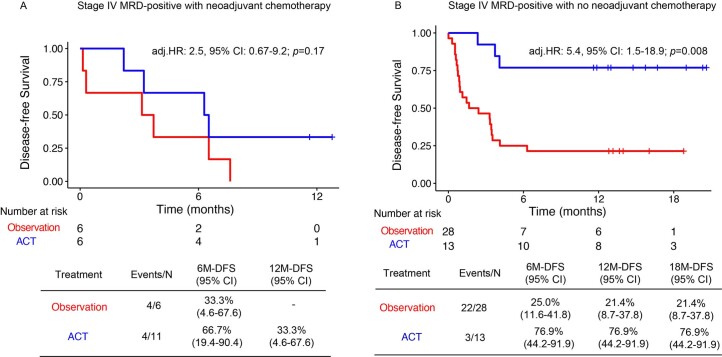
Despite standard-of-care treatment, more than 30% of patients with resectable colorectal cancer (CRC) relapse. Circulating tumor DNA (ctDNA) analysis may enable postsurgical risk stratification and adjuvant chemotherapy (ACT) treatment decision-making. We report results from GALAXY, which is an observational arm of the ongoing CIRCULATE-Japan study (UMIN000039205) that analyzed presurgical and postsurgical ctDNA in patients with stage II–IV resectable CRC ( n = 1,039). In this cohort, with a median follow-up of 16.74 months (range 0.49–24.83 months), postsurgical ctDNA positivity (at 4 weeks after surgery) was associated with higher recurrence risk (hazard ratio (HR) 10.0, P < 0.0001) and was the most significant prognostic factor associated with recurrence risk in patients with stage II or III CRC (HR 10.82, P < 0.001). Furthermore, postsurgical ctDNA positivity identified patients with stage II or III CRC who derived benefit from ACT (HR 6.59, P < 0.0001). The results of our study, a large and comprehensive prospective analysis of ctDNA in resectable CRC, support the use of ctDNA testing to identify patients who are at increased risk of recurrence and are likely to benefit from ACT.
Overview
The claims and statistics of this paper haven’t been checked yet.
Free: it reads the open-access text and checks the first 5 claims that cite a source we can check. Create a free account to check every claim.
Integrity signals
Registry
Cites
Statistics
Figures
Verification
Claims the paper makes
The claims and statistics of this paper haven’t been checked yet.
Free: it reads the open-access text and checks the first 5 claims that cite a source we can check. Create a free account to check every claim.
Claims other papers make about this one
Each is checked against this paper’s own text: does it say what the citing paper says it does?
The source backs part of the claim, not all of it — or backs it for a different population, condition or comparison.
In the citing paper
“Because KRAS mutations are often clonal founder events, mutant KRAS ctDNA can serve as a highly informative molecular marker for tumor burden, treatment response, minimal residual disease, and emergence of resistance [29,47,77,78].”
From Precision Targeting of KRAS-Mutant Cancers: Beyond G12C Toward G12D and Pan-RAS Therapeutic Strategies (2026) · cites this paper as [77]
Experimental — accuracy not yet measured
Self-check
Percentages, sums and reported differences re-computed from the paper’s own numbers.
The self-check needs the paper’s full text.
Citations
Cites
Oxaliplatin, Fluorouracil, and Leucovorin as Adjuvant Treatment for Colon Cancer
André, T., Boni, C., Mounedji-Boudiaf, L., Navarro, M., Tabernero, J., Hickish, T., Topham, C., Zaninelli, M., Clingan, P., Bridgewater, J., et al. (2004) · New England Journal of Medicine · doi:10.1056/nejmoa032709 · Cited by 3,689
Circulating Tumor DNA Analysis Guiding Adjuvant Therapy in Stage II Colon Cancer
Tie, J., Cohen, J. D., Lahouel, K., Lo, S. N., Wang, Y., Kosmider, S., Wong, R., Shapiro, J., Lee, M., Harris, S., et al. (2022) · New England Journal of Medicine · doi:10.1056/nejmoa2200075 · Cited by 1,091
Kuebler, J. P., Wieand, H. S., O'Connell, M. J., Smith, R. E., Colangelo, L. H., Yothers, G., Petrelli, N. J., Findlay, M. P., Seay, T. E., Atkins, J. N., et al. (2007) · Journal of Clinical Oncology · doi:10.1200/jco.2006.08.2974 · Cited by 1,056
Reinert, T., Henriksen, T. V., Christensen, E., Sharma, S., Salari, R., Sethi, H., Knudsen, M., Nordentoft, I., Wu, H.-T., Tin, A. S., et al. (2019) · JAMA Oncology · doi:10.1001/jamaoncol.2019.0528 · Cited by 1,011
Self-citationEngstrom, P. F., Arnoletti, J. P., Benson, A. B., Chen, Y.-J., Choti, M. A., Cooper, H. S., Covey, A., Dilawari, R. A., Early, D. S., Enzinger, P. C., et al. (2009) · Journal of the National Comprehensive Cancer Network · doi:10.6004/jnccn.2009.0056 · Cited by 683
Tie, J., Cohen, J. D., Wang, Y., Christie, M., Simons, K., Lee, M., Wong, R., Kosmider, S., Ananda, S., McKendrick, J., et al. (2019) · JAMA Oncology · doi:10.1001/jamaoncol.2019.3616 · Cited by 668
ctDNA guiding adjuvant immunotherapy in urothelial carcinoma
Powles, T., Assaf, Z. J., Davarpanah, N., Banchereau, R., Szabados, B. E., Yuen, K. C., Grivas, P., Hussain, M., Oudard, S., Gschwend, J. E., et al. (2021) · Nature · doi:10.1038/s41586-021-03642-9 · Cited by 646
Self-citationPersonalized Detection of Circulating Tumor DNA Antedates Breast Cancer Metastatic Recurrence
Coombes, R. C., Page, K., Salari, R., Hastings, R. K., Armstrong, A., Ahmed, S., Ali, S., Cleator, S., Kenny, L., Stebbing, J., et al. (2019) · Clinical Cancer Research · doi:10.1158/1078-0432.ccr-18-3663 · Cited by 510
Self-citationAdjuvant Chemotherapy for Stage II Colon Cancer With Poor Prognostic Features
O'Connor, E. S., Greenblatt, D. Y., LoConte, N. K., Gangnon, R. E., Liou, J.-I., Heise, C. P., & Smith, M. A. (2011) · Journal of Clinical Oncology · doi:10.1200/jco.2010.34.3426 · Cited by 451
Wang, Y., Li, L., Cohen, J. D., Kinde, I., Ptak, J., Popoli, M., Schaefer, J., Silliman, N., Dobbyn, L., Tie, J., et al. (2019) · JAMA Oncology · doi:10.1001/jamaoncol.2019.0512 · Cited by 224
Research works printed but not linked: 1
- Gray JR A class of K-sample tests for comparing the cumulative incidence of a competing risk Ann. Stat. 1998 16 1141 1154
Cited by
Items 401–500 of 526
ctDNA beim CRC im multimodalen Therapiekonzept: Personalisierte Medizin
Renz, B. W., Angele, M. K., & Holdenrieder, S. (2024) · Trillium Diagnostik · doi:10.47184/td.2024.03.01
Lokal begrenztes Kolonkarzinom: Adjuvante und neoadjuvante Therapie
Modest, D. P., & Stintzing, S. (2024) · Trillium Krebsmedizin · doi:10.47184/tk.2024.05.3
Landscape of Genomic Profiling and Circulating Tumor DNA Among Rare Genitourinary Cancers
Kazarian, A. G., Bhanvadia, R. R., Khene, Z., Gerald, T., Brooks, B., Lotan, Y., Tachibana, I., Gaston, K. E., Woldu, S. L., & Margulis, V. (2024) · Clinical Genitourinary Cancer · doi:10.1016/j.clgc.2024.102245
Viewpoint: prognostic markers can personalize adjuvant therapeutic options
Kerr, R. S., & Yang, L. (2024) · Academia oncology. · doi:10.20935/acadonco7393 · Cited by 1
Circulating tumor DNA (ctDNA) as a new and evolving tool in solid organ transplantation
Kasi, P. M. (2024) · Elsevier eBooks · doi:10.1016/b978-0-443-21901-6.00014-8
Wehrle, C. J., Fares, S., Shanmugarajah, K., Wakam, G. K., Calderon, E., Kusakabe, J., Satish, S., Linganna, M. W., Khalil, M., Pita, A., et al. (2024) · Digestive Disease Interventions · doi:10.1055/s-0044-1789612
Hechtman, J. F., Baskovich, B. W., Fussell, A. M., Geiersbach, K. B., Iorgulescu, J. B., Sirohi, D., Snow, A. N., & Sidiropoulos, N. (2024) · Journal of Molecular Diagnostics · doi:10.1016/j.jmoldx.2024.08.010
Technical Considerations for Oncologic Colectomy
Bauer, P. S., Wlodarczyk, J. R., & Widmar, M. (2025) · Clinics in Colon and Rectal Surgery · doi:10.1055/s-0044-1801356
Detection of Molecular Residual Disease Using ctDNA
Sener, S. F. (2025) · Journal of Surgical Oncology · doi:10.1002/jso.28027
“With median follow ‐ up of 17 months, there was a higher risk of recurrence in patients who were ctDNA ‐ positive versus ctDNA ‐ negative at the post-surgical timepoint [8].”
Early Detection of Krukenberg Tumors Utilizing ctDNA Testing and CEA Monitoring
DeRidder, A. M., Check, C. M., Kunk, P. R., & Martin, C. (2025) · Case Reports in Oncological Medicine · doi:10.1155/crom/5335858
“The GALAXY study, performed by Kotani et 3 Case Reports in Oncological Medicine (HR) =10, p 0 0001 ) and was the most prognostic factor associated with recurrent risk (HR: 10.82, p 0 001 ) [26].”
InfluentialPostoperative Adjuvant Therapy with Molecularly Targeted Agents for Non-small Cell Lung Cancer
Miyoshi, T., & Tsuboi, M. (2025) · Haigan · doi:10.2482/haigan.65.1
Wang, P.-J., Wang, J., Yao, X., Cheng, W.-L., Sun, L. Z., Yan, J., Yu, Y., Li, S., Li, D.-P., & Jia, J. (2025) · World Journal of Gastrointestinal Oncology · doi:10.4251/wjgo.v17.i5.105027
“The GALAXY study demonstrated that molecular residual disease identified in circulating tumor DNA four weeks after surgery serves as the most significant prognostic indicator for disease-free survival[35].”
Buckley, D. N., Kalfa, A. J., Gooden, G. C., Lewinger, J. P., Pacheco, M., Gayton, J., SPICER, D. V., Carpten, J. D., Stewart, D. B., Lenz, H., et al. (2025) · medRxiv · doi:10.1101/2025.05.20.25328012 · Cited by 1
“Recent work by Parikh et al. found that a tumor-naïve assay using plasma-only circulating DNA methylation and genomic alterations as markers (Reveal, Guardant Inc.), demonstrated comparable sensitivity and specificity to tumor-informed approaches in colorectal cancer patients (18, 48).”
AI enabled exome and transcriptome liquid biopsy platform spanning the continuum of care in oncologyPreprint
Abraham, J. P., Domenyuk, V., Borderias, M. P., Klimov, S., Antani, S., Yoshino, T., Heath, E. I., Lou, E., Liu, S. V., Marshall, J. L., et al. (2025) · medRxiv · doi:10.1101/2025.05.23.25328255
“For example, recent data in early-stage colon cancer have shown that patients who are MRD-positive on liquid biopsy benefit from the use of adjuvant chemotherapy, whereas MRD-negative patients do not 59 .”
Self-citationYajima, S., Kobayashi, S., Hashimoto, T., Nakamura, Y., Yamashita, R., Misumi, T., Sakamoto, Y., Horasawa, S., Fujisawa, T., Imai, M., et al. (2025) · International Journal of Clinical Oncology · doi:10.1007/s10147-025-02798-y · Cited by 1
Self-citationCheruku, S. P., Joisa, V., Rao, C. M., & Kumar, N. (2025) · BioNanoScience · doi:10.1007/s12668-025-02003-4
“Of the available treatment modalities, surgery continues to be the standard of care treatment between CC stages 0 and II, followed by radiotherapy, 5-FU-based chemotherapy, or a targeted therapy regimen [6, 7].”
Intérêt de la détection de l’ADN tumoral circulant dans les cancers colorectaux en 2025
Laurent‐Puig, P. (2025) · Bulletin de l Académie Nationale de Médecine · doi:10.1016/j.banm.2025.03.009 · Cited by 1
Zhang, K., Han, J., & Zhai, Z. (2025) · Frontiers in Surgery · doi:10.3389/fsurg.2025.1581993
A reference-free strategy for circulating tumor DNA detection from whole-genome sequencing dataPreprint
Oroperv, C., Frydendahl, A., Henriksen, T. V., Santacatterina, G., Antonello, A., Calonaci, N., Rasmussen, M. H., Caravagna, G., IMPROVE-consortia, Andersen, C. L., et al. (2025) · bioRxiv (Cold Spring Harbor Laboratory) · doi:10.1101/2025.07.23.666290
“Several studies have demonstrated that ctDNA testing could improve recurrence monitoring [4–6] and may be beneficial for guiding treatment decisions [7–9].”
Comprehensive genetic profiling using tissue and blood in locally advanced tumors
Fujiyoshi, K., Sugihara, R., Miyamoto, N., Watanabe, Y., Sudo, T., Numata, S., Akiba, J., Abe, H., Ichinose, Y., Inoue, K., et al. (2025) · Oncology Reports · doi:10.3892/or.2025.8967 · Cited by 2
“…tissue is widely implemented, whereas circulating tumor DNA (ctDNA) detection is a noninvasive method for assessing genomic profiles using peripheral blood (1,2). ctDNA constitutes only a minor fraction of the cell‑free DNA (cfDNA) circulating in cancer patients, complicating ctDNA detection (3,4).”
Wang, C., Li, B., & Yuan, Y. (2025) · Oncology and Translational Medicine · doi:10.1097/ot9.0000000000000116
Treatment Modalities, Targeted Therapies, and Immunotherapy in Metastatic Colorectal Cancer
Karakullukcu, M., & Şenocak, D. (2025) · IntechOpen eBooks · doi:10.5772/intechopen.1012530
Integration of Circulating Tumor DNA into Clinical Practice for Melanoma
Harris, M. S., Steimle, A. K., & Ma, V. T.-L. (2025) · IntechOpen eBooks · doi:10.5772/intechopen.1012473
Real-World Utilization of Circulating Tumor DNA: A Retrospective Analysis in Vietnam
Brar, G. S., & Parikh, A. R. (2025) · JCO oncology advances. · doi:10.1200/oa-25-00032 · Cited by 1
The current status of immunotherapy in colorectal cancer: A systematic review
Cholewa, H., Guerrero-Antolino, P., David, Q., Jorge, S.-M., Frasson, M., & Lorente, B. F. (2025) · Cirugía Española · doi:10.1016/j.cireng.2025.800225 · Cited by 2
Brown, K. G. M., & Chang, G. J. (2025) · Annals of Surgery · doi:10.1097/sla.0000000000006965
Povedano, E., Carbonaro, A. B., Serafín, V., Gamella, M., Giuffrida, A., Montero‐Calle, A., Pingarrón, J. M., Barderas, R., & Campuzano, S. (2025) · Biosensors · doi:10.3390/bios15110739
“Although chemotherapy is the mainstay of CRC treatment [9], resistance to therapy, combined with the usually late disease diagnosis, constitutes the leading cause of therapeutic failure, disease progression, and discouraging prognoses [10–12].”
Hashimoto, T., Hirano, H., Takashima, A., Sekine, S., Kanato, K., Mizusawa, J., Fukuda, H., Tsukamoto, S., & Kanemitsu, Y. (2025) · ESMO Gastrointestinal Oncology · doi:10.1016/j.esmogo.2025.100212
Living therapeutics: Colorectal related diseases precision therapy with engineered organisms
Huang, J., Lan, Y., Chen, L., Guan, X., Liang, R., Liang, J., Gao, M., Gan, J., Guo, Y., & Zhang, S. (2025) · Chinese Chemical Letters · doi:10.1016/j.cclet.2025.112151
Efficacy of Adjuvant Chemotherapy for T1-2 Stage III Colorectal Cancer
Maeda, H., Oba, K., Kashiwabara, K., Aoyama, T., Mayanagi, S., Kanda, M., Honda, M., Muto, M., Sakamoto, J., Yamagishi, H., et al. (2025) · Cancers · doi:10.3390/cancers17233856
“A study of 1039 patients with stage II– IV CRC after radical resection demonstrated that ctDNA positivity at 4 weeks post-surgery was associated with a significantly higher risk of recurrence [43].”
Lim, S. H. (2025) · Korean Journal of Medicine · doi:10.3904/kjm.2025.100.6.274
Ushiyama, S., Habu, T., Nakayama, I., Yoshida, M., Sakamoto, N., Kawazoe, A., Yamamoto, K., Okemoto, D., Matsubara, Y., Seguchi, K., et al. (2025) · JCO Oncology Practice · doi:10.1200/op-25-00705
Self-citationHu, S., Xia, K., Huang, X., Zhao, Y., Zhang, Q., Huang, D., Xu, W., Chen, Z., Wang, C., & Zhang, Z. (2024) · Figshare · doi:10.6084/m9.figshare.26620960
Brown, O., Johnson, E., & Turner, A. (2021) · Pharmaceutical Sciences and Drug Design · doi:10.51847/bcdfiwdvg9
Patel, D., & Shah, P. V. (2026) · Research Square · doi:10.21203/rs.3.rs-8484798/v1
Prognostic value of tumor-informed ctDNA in HPV-independent head and neck squamous cell carcinomaPreprint
Ruiz‐Torres, D. A., Roberts, T. J., Du, P., Mendel, J., Neagele, S., Bonora, G., Zhang, F., Efthymiou, V., Merkin, R. D., Lin, D. T., et al. (2026) · medRxiv · doi:10.64898/2026.01.09.26343802
“This finding is consistent with prior work in other solid tumors, such as colorectal carcinoma (CRC), where the detection of ctDNA after adjuvant chemotherapy has been shown to predict recurrence 29–32 .”
Lee, C. I., Kanata, D., & García‐Aguilar, J. (2026) · Clinics in Colon and Rectal Surgery · doi:10.1055/a-2771-7935 · Cited by 1
Jesús, C. C.-D., Centeno‐Girona, H., Garau-Rolon, F., Melero-Rodríguez, H., Alicea, I., & Cruz–Correa, M. (2026) · ESMO Real World Data and Digital Oncology · doi:10.1016/j.esmorw.2025.100652
“26 27-29 This study demonstrates the value and feasibility of ctDNA testing in a community oncology setting in San Juan, Puerto Rico.”
Clinical Applications of Liquid Biopsy
Kim, S. H., & Kim, Y. (2026) · Springer eBooks · doi:10.1007/978-981-99-4418-7_5
Tang, X., Ren, Y., Li, Y., Lv, Y., Zhao, L., & He, Y. (2026) · Molecular Nutrition & Food Research · doi:10.1002/mnfr.70338 · Cited by 1
“Chemotherapy-induced S-TME, in particular, may facilitate CRC progression, leading to poor treatment outcomes [27–29].”
Sasaki, K., Emoto, S., Yokoyama, Y., & Ishihara, S. (2026) · International Journal of Clinical Oncology · doi:10.1007/s10147-026-02966-8 · Cited by 1
Adjuvant therapy in stage II-III colon cancer: 3 vs. 6 months, MSI-H, ctDNA integration
Pericay, C., Pla, M. M., Ferrer, E. F., & Plana, J. F. (2026) · Revisiones en cáncer · doi:10.20960/revcancer.00137
Slater, S., Sng, C. C. T., Anandappa, G., Chen, H.-C., Begum, R., Sharma, S., Laliotis, G., Renner, D., Lazaro-Alcausi, R., Rana, T., et al. (2026) · Research Square · doi:10.21203/rs.3.rs-8574150/v1
Self-citationAnamika, F., Hornstein, N. J., Ajredini, M., & Monson, J. R. T. (2026) · Clinics in Colon and Rectal Surgery · doi:10.1055/a-2771-8166
Biología molecular del cáncer colorrectal
García‐Foncillas, J., Jiménez, P., Ávila-Rodríguez, V., Macías, S. I. G., Manrique, M. E., Rendón-Hernández, J., Angarita, J. M., Calvo, J. F., & Bonilla, C. E. (2026) · Revista Colombiana de Hematología y Oncología · doi:10.51643/22562915.853
Anatomical and Biological Staging in Colorectal Cancer: TNM + Risk by ctDNA (MRD)
LLAVERO, N. T., & Bartolomé, M. G. (2026) · Revisiones en cáncer · doi:10.20960/revcancer.00140
Ishihara, R. (2026) · Clinical Endoscopy · doi:10.5946/ce.2025.208
“48 If a similar approach could be applied to ESCC, additional selective treatments could be performed.”
Wu, X., Zhang, J., & Cheng, F. (2026) · World Journal of Surgical Oncology · doi:10.1186/s12957-026-04302-w
“Patients included in this study were required to meet the following eligibility criteria: [1] availability of complete survival information [2]. confirmation of valid and adequate follow-up data [3]. patients diagnosed with stage I-III cancer without distant metastasis (M0) [4].”
Lin, K., Cailun, W., Qiao, B., Zhang, N., Yang, D., Jin, D., Li, C., Lv, J., He, M., Lin, Z., et al. (2026) · JCO Precision Oncology · doi:10.1200/po-25-00858 · Cited by 1
Zhang, X., Wu, T., Feng, Q., Cai, X., Yu, K., Shen, T., Pan, D., Tan, J., Ju, Y., Zhang, L.-J., et al. (2026) · International Journal of Surgery · doi:10.1097/js9.0000000000004830
Tang, H., Xie, Y., Li, Q., Zhou, Y., Zhao, X., Zheng, Y., Liu, L., Li, Y. Q., Huang, Y., & Mao, Y. (2026) · Abdominal Radiology · doi:10.1007/s00261-026-05456-7
Cancer du côlon : traitement chirurgical, pronostic
Mariani, A., Lellouche, E., Gallois, C., Cazelles, A., Manceau, G., Taı̈eb, J., & Karoui, M. (2026) · EMC - Gastro-entérologie · doi:10.1016/s1155-1968(25)41964-6
Madi, M., Haddad, A., Ito, K., Bhutiani, N., & Vauthey, J. (2026) · Cancers · doi:10.3390/cancers18071111
“However, the GALAXY trial reported that ctDNA detection following the resection of stage II-IV CRC can identify patients who benefit from ACT based on an analysis of 644 patients [97].”
Liu, H., Gu, Z., Yu, K., Zhao, Z.-R., Yan, W., Fang, Y., Yu, X., Jiang, L., & Wang, Y. (2026) · Clinical Lung Cancer · doi:10.1016/j.cllc.2026.03.015 · Cited by 1
Circulating biomarkers of response to systemic treatments in advanced hepatocellular carcinoma
Campani, C. (2023) · theses.fr (ABES) · doi:10.70675/3ec25263z4942z4eb1zbc98z0ec33fa57a18
Pan, Y., Yang, H., Shao, J., Qiang, X., & Wang, Q. (2026) · Human Vaccines & Immunotherapeutics · doi:10.1080/21645515.2026.2654318 · Cited by 1
“121,122 Recent advances in multi-omics technologies-including genomics, epigenomics, transcriptomics, proteomics, and metabolomics-have enabled a comprehensive molecular dissection of therapy-related carcinogenesis and clonal evolution in survivors of hematologic malignancies.”
Prognostic value of number of harvested lymph nodes in Stage III colorectal cancer patients
Shiraishi, T., Hashimoto, S., Tominaga, T., Takamura, Y., Katayama, H., Yamashita, M., Nöda, K., Shoko, T. E. I., Ono, R., Ishii, M., et al. (2026) · Surgery Today · doi:10.1007/s00595-026-03286-0
“Recent reports have indicated that circulating tumor DNA (ctDNA) is useful for detecting minimal residual disease [22].”
Circulating Tumor DNA for Minimal Residual Disease in Colon Cancer: Ready for Prime Time?
Wu, Y. L., & Manji, G. A. (2026) · Journal of Clinical Oncology · doi:10.1200/jco-26-00369
Hemmati-Ghavshough, M., Fu, M. Z., Patel, D., Packiam, V. T., & Ghodoussipour, S. (2026) · Urology Case Reports · doi:10.1016/j.eucr.2026.103460
“15 Although ctDNA has been validated as a biomarker in colorectal, breast, lung, bladder, ovarian, and esophageal cancers, 16,17 its application in RCC — particularly metastatic RCC (mRCC) — remains limited.”
Preoperative ctDNA and tumor volume predict colorectal cancer recurrence after metastasis resection
Oyoshi, H., Bando, H., Yamashita, R., Kageyama, S., Nakamura, Y., Horasawa, S., Nakamura, M., Fujisawa, T., Tomizawa, K., Motegi, A., et al. (2026) · npj Precision Oncology · doi:10.1038/s41698-026-01450-w
“In patients with CRC, ctDNA testing has shown clinical relevance in various contexts, including post-curative resection 7 .”
Self-citationHiraki, H., Yashima‐Abo, A., Sasaki, N., Koizumi, Y., Abe, M., Sasaki, T., Tamada, S., Jain, M., Idogawa, M., Sasaki, Y., et al. (2026) · Research Square · doi:10.21203/rs.3.rs-9417145/v1
Takahashi, T., Mannucci, A., Shigeyasu, K., Kopetz, S., Fakih, M., Maurel, J., Fujiwara, T., & Goel, A. (2026) · JCO Precision Oncology · doi:10.1200/po-25-01229 · Cited by 2
Licitra-Rosa, E., Mantini, G., Persiani, F., Ponterio, E., Bella, S. D., Lorenzon, L., Scaglione, G., Caimano, M., D’Ugo, D., Salvatore, L., et al. (2026) · bioRxiv (Cold Spring Harbor Laboratory) · doi:10.64898/2026.05.18.725955
“…peripheral dissemination, disseminated tumor cells must not only exploit the immune-privileged, highly vascularized placental blueprint to evade clearance, but also fundamentally rewire their cellular energetic programs to maximize nutrient extraction from the surrounding microenvironment [21,22].”
Yao, N., Li, W., Duan, N., Han, F., Yu, G., & Qu, J. (2026) · Clinical & Translational Oncology · doi:10.1007/s12094-026-04405-6
“…testing to assess clearance; and (iv) during surveillance, interpret new or recurrent ctDNA positivity as a molecular high-risk signal that warrants closer imaging, multidisciplinary review, and consideration of pre-emptive systemic and/or metastasis-directed approaches [6–9, 12–14, 17, 18, 22].”
InfluentialLiu, Q., Chen, P., Lei, L. I. U., Wang, M., & Li, Z. (2026) · Discover Oncology · doi:10.1007/s12672-026-05259-8
“Advances in endoscopic diagnosis and minimally invasive therapy have markedly improved survival for patients with early-stage CRC [1, 3, 4]; nevertheless, more than 30% of those who undergo curative resection ultimately relapse [5].”
Cardone, C., Facchini, S., Ascef, B. D. O., Cassata, A., Stefano, A. D., Chiodini, P., & Avallone, A. (2026) · Cancer Treatment Reviews · doi:10.1016/j.ctrv.2026.103160
Abdelrahim, M., Esmail, A., Al‐Judaibi, B., Khorshid, O., Bhoori, S., & Mazzaferro, V. (2026) · Frontiers in Oncology · doi:10.3389/fonc.2026.1826765 · Cited by 2
Atallah, S. (2026) · Springer eBooks · doi:10.1007/978-3-032-21069-2_26
Gu, R.-T., Liu, T., Piao, Z., Jin, H., Wang, X.-W., & Li, X. R. (2026) · World Journal of Gastrointestinal Oncology · doi:10.4251/wjgo.120942
Cherri, S., Salvi, D., Pezzuto, E., Tabbone, E., Zaniboni, A., & Cesaro, P. (2026) · World Journal of Gastroenterology · doi:10.3748/wjg.120118
Tago, T., Takamizawa, Y., Kato, T., Nagata, H., Moritani, K., Tsukamoto, S., & Kanemitsu, Y. (2026) · Annals of Gastroenterological Surgery · doi:10.1002/ags3.70235
“…years, circulating tumor DNA has been reported to be potentially useful for predicting the efficacy of adjuvant chemotherapy and for treatment monitoring; however, its high cost and issues related to generalizability continue to limit its widespread implementation in routine clinical practice [31].”
Self-citationXie, G., Li, M., Li, B., Guo, S., Wang, Y., Liu, J., Miao, R., Hou, W., & Wei, X. (2026) · Chemical Engineering Journal · doi:10.1016/j.cej.2026.179014
Dottorini, L., Viti, M., Arru, M., Senzani, F., & Petrelli, F. (2026) · Annals of Surgical Oncology · doi:10.1245/s10434-026-20026-3
“15,16 Optimal ctDNA sampling timepoints (pre-surgery, 4 weeks post-surgery, during adjuvant therapy) remain under investigation.”
Circulating Tumor DNA Analysis in Adrenocortical Carcinoma: A Retrospective Cohort Study
Balderrama-Brondani, V., Marcal, L., Moussa, M. J., Long, J. P., Varghese, J. M., Waguespack, S. G., Jimenez, C. A., Graham, P. H., Fisher, S. B., Perrier, N. D., et al. (2026) · Endocrine Pathology · doi:10.1007/s12022-026-09927-x
Gervaso, L., Ciardiello, D., Frassoni, S., Bagnardi, V., Gregato, G., Cella, C. A., Benini, L., Tamayo, D., Spada, F., Bertolini, F., et al. (2026) · Cancer Treatment and Research Communications · doi:10.1016/j.ctarc.2026.101316 · Cited by 2
Aakash, M., Premkumar, G., & Venkateswaramurthy, N. (2026) · Research Journal of Pharmacology and Pharmacodynamics · doi:10.52711/2321-5836.2026.00033
Shan, Y., Zhang, X., Liu, J., Hu, B., Yang, L., Wang, H., Li, J. D., Jiang, Z., & Gong, G. (2026) · Frontiers in Medicine · doi:10.3389/fmed.2026.1906283
“Large-scale analyses from the CIRCULATE-Japan platform further support postsurgical ctDNA as a strong prognostic marker and as a tool for identifying patients who may benefit from adjuvant chemotherapy (7, 8).”
Mierzejewska, Ż. A., Vranković, B., Đurić, D., Bojić, M. G., Vještica, M., & Škrbić, R. (2026) · TrAC Trends in Analytical Chemistry · doi:10.1016/j.trac.2026.119042 · Cited by 1
Koo, T. H., Chowdhary, R., Arora, K., Lai, K. C. L., & Zakaria, A. D. (2026) · Biomedicines · doi:10.3390/biomedicines14081674
“The initial cohort of 1039 stage II–III patients demonstrated a postoperative ctDNA positivity recurrence HR of 10.0 (95% CI 6.8–14.7, p 0.0001), exceeding the prognostic strength of any prior biomarker in this disease [5].”
InfluentialFan, Z., & Li, L. (2026) · Journal of Gastroenterology · doi:10.1007/s00535-026-02490-6
Beyond the biopsy: the new era of non-invasive staging and biomarkers in colorectal cancer
Srouji, N. A., Ismaiel, A., Puia, A., Ismaiel, M., Abosheisha, M., Popa, S., & Puia, I. C. (2026) · Clinical & Translational Oncology · doi:10.1007/s12094-026-04531-1
Li, P., Chen, Z., Chen, Y., Zhang, X., Zeng, C., Yang, S., & Xiong, Y. (2026) · Epigenomics · doi:10.1080/17501911.2026.2715276
NIR-Activated Enteric Prodrug Microparticles for Bioimaging-Guided Chemotherapy of Colorectal Cancer
Zhou, L., Fei, Y., Wang, Z., Wang, X., Zhu, L., Zhao, F., Duan, N., Wang, Y., Wang, J., Zhong, W., et al. (2026) · ACS Applied Materials & Interfaces · doi:10.1021/acsami.6c14869
Oroperv, C., Frydendahl, A., Henriksen, T. V., Santacatterina, G., Antonello, A., Calonaci, N., Rasmussen, M. H., Caravagna, G., IMPROVE-consortia, Andersen, C. L., et al. (2026) · PLoS Computational Biology · doi:10.1371/journal.pcbi.1013356 · Cited by 1
“Several studies have demonstrated that ctDNA testing could improve recurrence monitoring [4–6] and may be beneficial for guiding treatment decisions [7–9].”
Hadjigeorgiou, L., Yerolatsite, M., Torounidou, N., Zarkavelis, G., Schizas, D., Tatsis, V., Rausei, S., Vlachos, K., & Lianos, G. D. (2026) · Journal of Clinical Medicine · doi:10.3390/jcm15166222
“The clinical value of ctDNA MRD is best established in colorectal cancer [19–21], where the randomized DYNAMIC trial showed that a ctDNA-guided approach to adjuvant therapy in stage II colon cancer reduced treatment without compromising recurrence-free survival [22].”
Chen, E., Cao, G., & Song, Z. (2026) · Biochimica et Biophysica Acta (BBA) - Reviews on Cancer · doi:10.1016/j.bbcan.2026.189688
de Nóbrega, M., Kaorey, N., Godoy, L. R., Dickinson, K., Wu, D., Tanchingco, A., Agnihotram, R. V., & Burnier, J. V. (2026) · The Journal of Liquid Biopsy · doi:10.1016/j.jlb.2026.100487
Methyltransferase-assisted single duplex sequencing for detecting circulating tumor DNA
Jiang, Z., Wu, Y., Guo, Y., Luo, R., Wang, W., Tang, F., Fu, W., Zhou, X., & Wen, L. (2026) · EMBO Molecular Medicine · doi:10.1038/s44321-026-00509-2
“For example, positive ctDNA detection after surgery in colorectal cancer (CRC) patients has been shown to be an independent prognostic factor for relapse, making it a criterion for chemotherapy recommendation (Kotani et al, 2023; Tie et al, 2022).”
Clinical significance of WES-defined ERBB2 amplification in resectable colorectal cancer
Hamabe, A., Hamabe, A., Suwa, Y., Akazawa, N., Hirata, K., Ikeda, M., Yokota, M., Kato, K., Kotaka, M., Nishizawa, Y., et al. (2026) · International Journal of Clinical Oncology · doi:10.1007/s10147-026-03161-5
Self-citationBeyond tissue biopsy: ctDNA methylation analysis for prediction of colorectal cancer prognosis
Irie, T., & Sugimoto, K. (2026) · Epigenomics · doi:10.1080/17501911.2026.2719145
刘, 晶. (2026) · Advances in Clinical Medicine · doi:10.12677/acm.2026.1682996
Ruan, Z., Chen, Z., Yu, W., Zhang, M., & Liu, X. (2026) · MedComm – Oncology · doi:10.1002/mog2.70090
Liquid biopsy in colorectal cancer: redefining surgical decision-making
Rausa, E., Grandis, M. C. D., Bergamo, F., Aiolfi, A., & Vitellaro, M. (2026) · Updates in Surgery · doi:10.1007/s13304-026-02823-3
Yao, N., Xu, G., Duan, N., Han, F., Li, W., & Qu, J. (2026) · Frontiers in Oncology · doi:10.3389/fonc.2026.1908199
Fan, W., & Zheng, C. (2026) · Frontiers in Oncology · doi:10.3389/fonc.2026.1907210 · Cited by 1
“CIRCULATE-Japan studies have shown strong prognostic strati fi - cation and associations between molecular residual disease and bene fi t from adjuvant therapy (114, 115).”
Cui, N., Hao, H., Hu, X., & Li, Y. (2026) · Frontiers in Medicine · doi:10.3389/fmed.2026.1942673
Metadata
- Authors
- Kotani, D., Oki, E., Nakamura, Y., Yukami, H., Mishima, S., Bando, H., Shirasu, H., Yamazaki, K., Watanabe, J., Kotaka, M., Hirata, K., Akazawa, N., Kataoka, K., Sharma, S., Aushev, V. N., Aleshin, A., Misumi, T., Taniguchi, H., Takemasa, I., Kato, T., Mori, M., & Yoshino, T.
- Affiliations
- National Cancer Center Hospital East (JP)
- Kyushu University (JP)
- Osaka Medical and Pharmaceutical University (JP)
- Shizuoka Cancer Center (JP)
- Yokohama City University Medical Center (JP)
- Sano Hospital (JP)
- University of Occupational and Environmental Health Japan (JP)
- Sendai Medical Center (JP)
- Hyogo Medical University (JP)
- Natera (United States) (US)
- Aichi Cancer Center (JP)
- Sapporo Medical University (JP)
- Osaka National Hospital (JP)
- Tokai University (JP)
- Corresponding author
- Oki, Eiji
- ORCID
- Kotani, Daisuke
- Oki, Eiji
- Nakamura, Yoshiaki
- Yukami, Hiroki
- Mishima, Saori
- Bando, Hideaki
- Shirasu, Hiromichi
- Yamazaki, Kentaro
- Watanabe, Jun
- Kotaka, Masahito
- Hirata, Keiji
- Akazawa, Naoya
- Kataoka, Kozo
- Sharma, Shruti
- Aushev, Vasily N.
- Aleshin, Alexey
- Misumi, Toshihiro
- Taniguchi, Hiroya
- Takemasa, Ichiro
- Kato, Takeshi
- Mori, Masaki
- Yoshino, Takayuki
- Venue
- Nature Medicine
- Published
- 2023-01
- Volume
- 29
- Issue
- 1
- Pages
- 127-134
- ISSN
- 1078-8956 (ISSN-L)
- 1546-170X
- PMC
- PMC9873552
- OpenAlex
- W4316507345
- Semantic Scholar
- 4f4abf246c2b5b6ef0edbf1e4a520d231e0cc143
- Cited by
- 526
- References
- 21
- Citations by year
- 2026: 130 · 2025: 161 · 2024: 167 · 2023: 67
- FWCI
- 64.04
- Type
- journal article
- Language
- en
- Open access
- hybrid
- doi.org
- Licence
- cc-by
- creativecommons.org/licenses/by/4.0 (tdm)
- creativecommons.org/licenses/by/4.0 (vor, 15 d)
- Locations
- Nature Medicine (publishedVersion, cc-by)
- PubMed Central (publishedVersion, cc-by)
- PubMed (publishedVersion)
- Funders
- Japan Agency for Medical Research and Development (19ck0106447h0002)
- Topics
- Health Sciences › Medicine › Oncology › Colorectal Cancer Treatments and Studies
- Health Sciences › Medicine › Oncology › Colorectal Cancer Surgical Treatments
- Health Sciences › Medicine › Pathology and Forensic Medicine › Genetic factors in colorectal cancer
- Keywords
- colorectal cancer, circulating tumor DNA, liquid biopsy, adjuvant chemotherapy, molecular residual disease, cancer recurrence risk, risk stratification, stage II and III colorectal cancer, galaxies
- MeSH terms
- Humans, Japan, Neoplasm Recurrence, Local, Biomarkers, Tumor, Colorectal Neoplasms, Proportional Hazards Models, Chemotherapy, Adjuvant, Neoplasm, Residual
About these checks
Registry, retraction, Cites and statistics results are computed, not judged, with one exception: a printed reference that no index lists is read once by a model before it counts as a citation error. Claims are extracted by a model and kept only when their quote appears verbatim in the text; each cited source is then checked, with a model’s help, for whether it says what the claim relies on. Those verdicts can be wrong — read the claim’s quote and the cited source before relying on one.
Statistics and arithmetic are recomputed, not judged.
Confidence bands are shown only for fields calibrated on our annotated test set. None is calibrated yet, so no band is shown.
What counts as a claim ›How we measure confidence ›How we check this ›
Are you an author, or do you see a problem with this page? Request a review
Data sources
Bibliographic data: Semantic Scholar, OpenAlex, Crossref.
Contains information from the Semantic Scholar Academic Graph Datasets, made available under the ODC Attribution License (ODC-BY 1.0).
Semantic Scholar’s data is described in: Kinney, R., et al. (2023). The Semantic Scholar Open Data Platform. arXiv:2301.10140.
