

Molecular residual disease and efficacy of adjuvant chemotherapy in patients with colorectal cancer
Open accessThe DOI matches its Crossref record; 22 of the 22 references it cites were found in a registry or an index.
Abstract
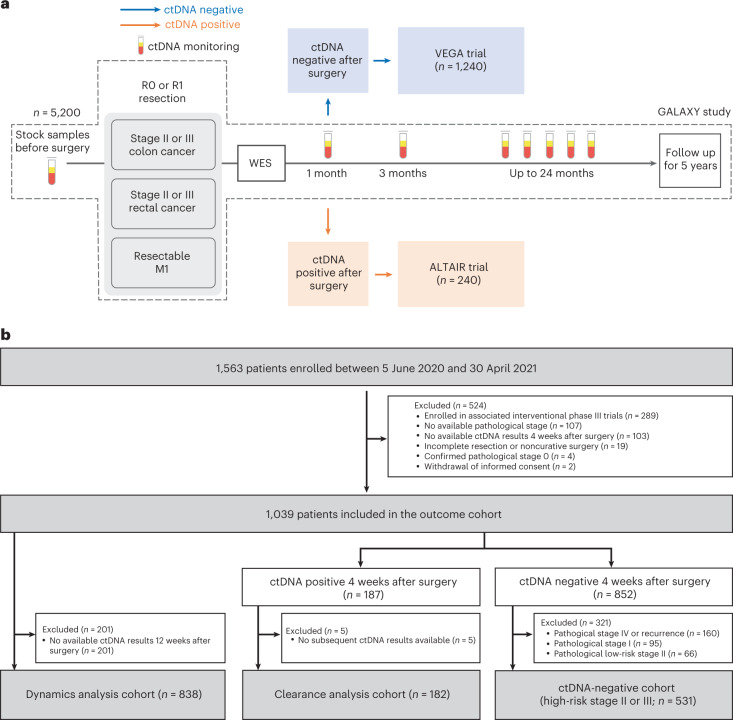
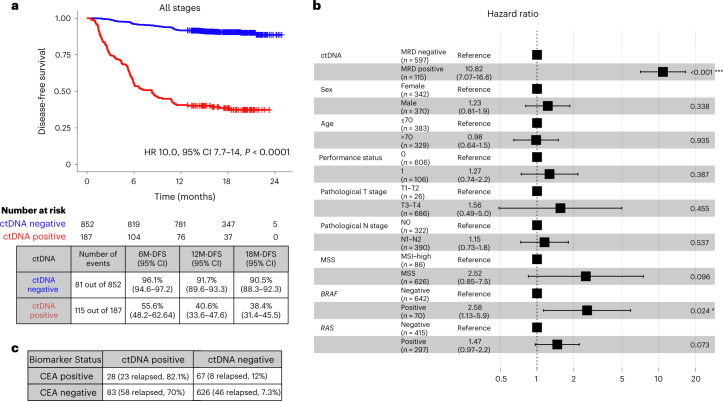
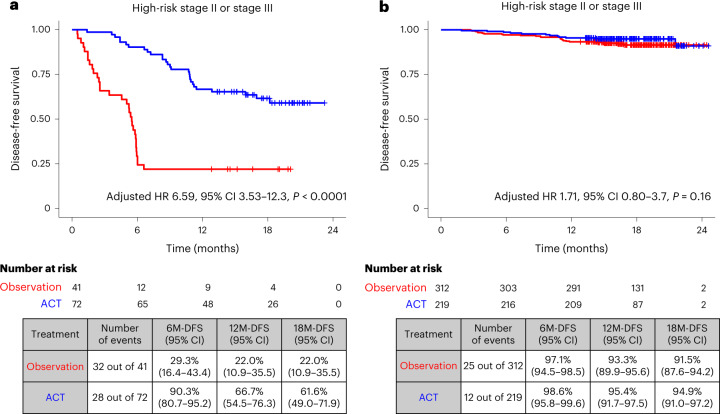
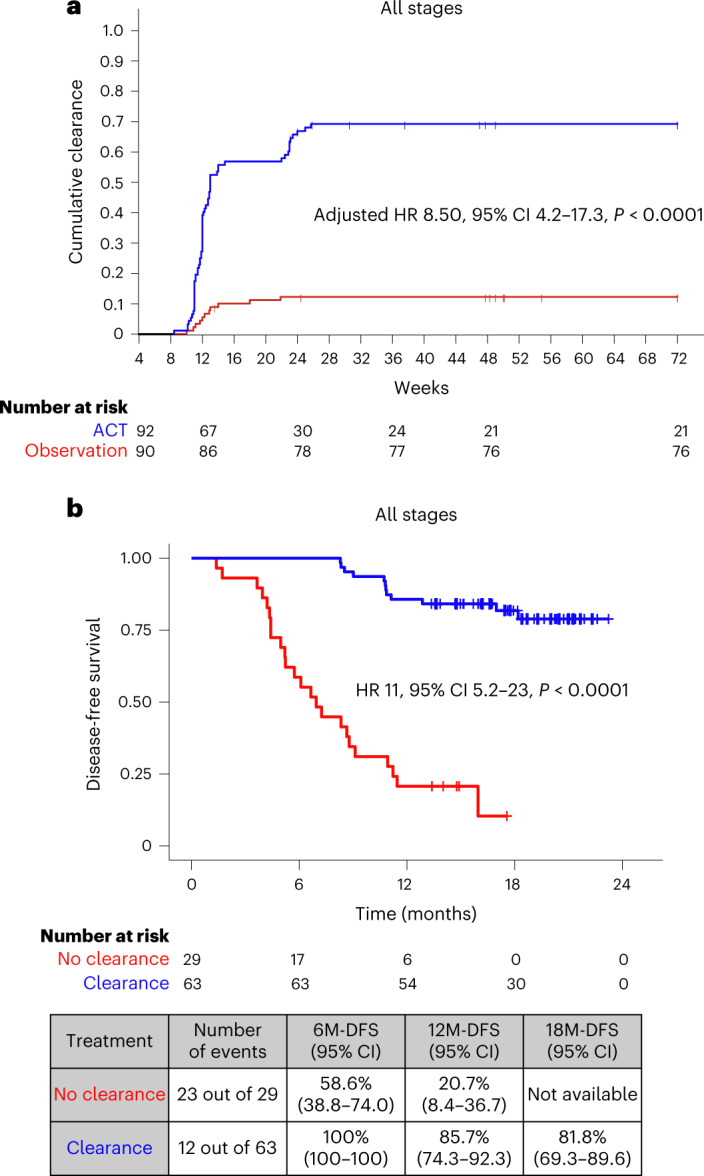
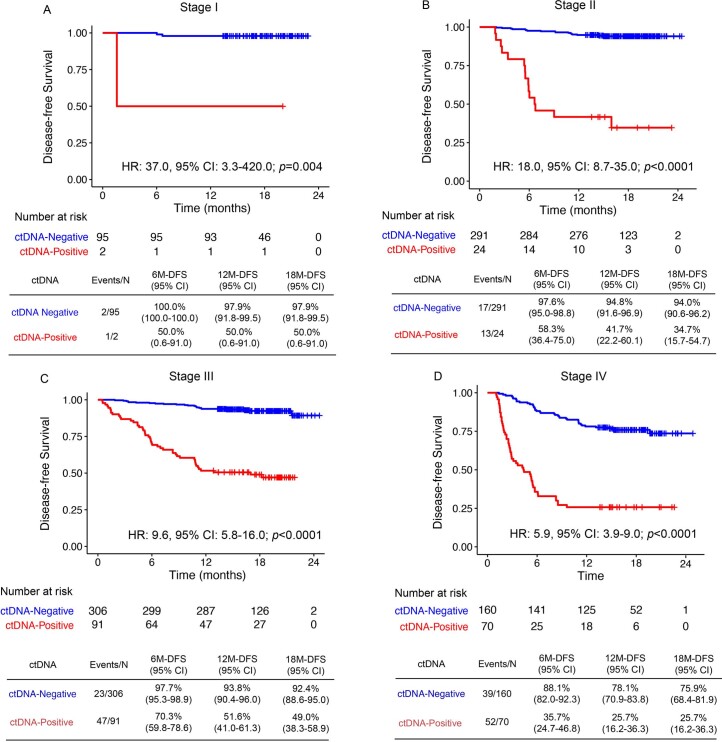
Despite standard-of-care treatment, more than 30% of patients with resectable colorectal cancer (CRC) relapse. Circulating tumor DNA (ctDNA) analysis may enable postsurgical risk stratification and adjuvant chemotherapy (ACT) treatment decision-making. We report results from GALAXY, which is an observational arm of the ongoing CIRCULATE-Japan study (UMIN000039205) that analyzed presurgical and postsurgical ctDNA in patients with stage II–IV resectable CRC ( n = 1,039). In this cohort, with a median follow-up of 16.74 months (range 0.49–24.83 months), postsurgical ctDNA positivity (at 4 weeks after surgery) was associated with higher recurrence risk (hazard ratio (HR) 10.0, P < 0.0001) and was the most significant prognostic factor associated with recurrence risk in patients with stage II or III CRC (HR 10.82, P < 0.001). Furthermore, postsurgical ctDNA positivity identified patients with stage II or III CRC who derived benefit from ACT (HR 6.59, P < 0.0001). The results of our study, a large and comprehensive prospective analysis of ctDNA in resectable CRC, support the use of ctDNA testing to identify patients who are at increased risk of recurrence and are likely to benefit from ACT.
Overview
The claims and statistics of this paper haven’t been checked yet.
Free: it reads the open-access text and checks the first 5 claims that cite a source we can check. Create a free account to check every claim.
Integrity signals
Registry
Cites
Statistics
Figures
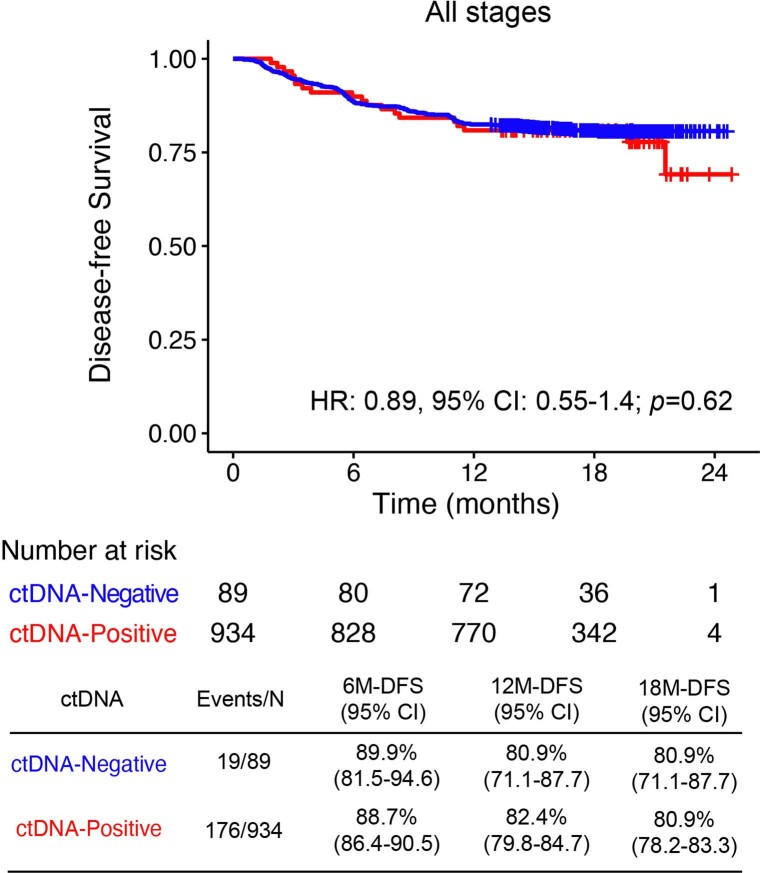
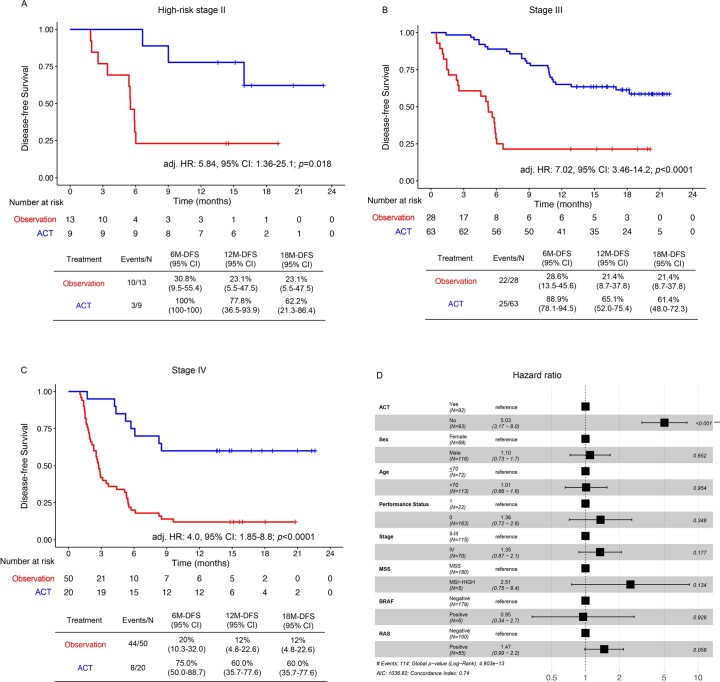
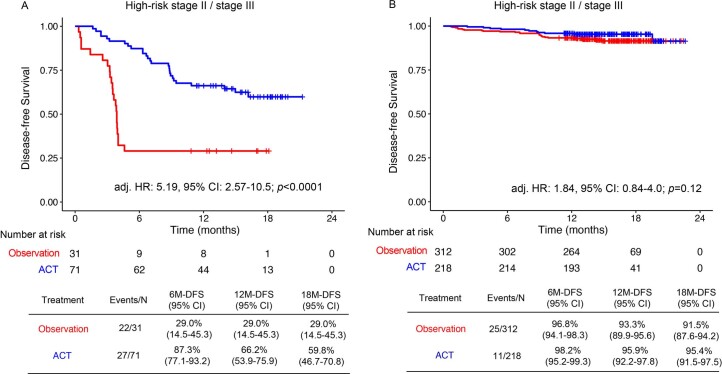
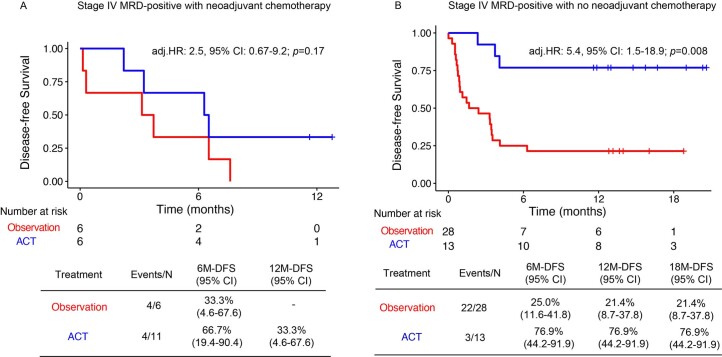
Verification
Claims the paper makes
The claims and statistics of this paper haven’t been checked yet.
Free: it reads the open-access text and checks the first 5 claims that cite a source we can check. Create a free account to check every claim.
Claims other papers make about this one
Each is checked against this paper’s own text: does it say what the citing paper says it does?
The source backs part of the claim, not all of it — or backs it for a different population, condition or comparison.
In the citing paper
“Because KRAS mutations are often clonal founder events, mutant KRAS ctDNA can serve as a highly informative molecular marker for tumor burden, treatment response, minimal residual disease, and emergence of resistance [29,47,77,78].”
From Precision Targeting of KRAS-Mutant Cancers: Beyond G12C Toward G12D and Pan-RAS Therapeutic Strategies (2026) · cites this paper as [77]
Experimental — accuracy not yet measured
Self-check
Percentages, sums and reported differences re-computed from the paper’s own numbers.
The self-check needs the paper’s full text.
Citations
Cites
Oxaliplatin, Fluorouracil, and Leucovorin as Adjuvant Treatment for Colon Cancer
André, T., Boni, C., Mounedji-Boudiaf, L., Navarro, M., Tabernero, J., Hickish, T., Topham, C., Zaninelli, M., Clingan, P., Bridgewater, J., et al. (2004) · New England Journal of Medicine · doi:10.1056/nejmoa032709 · Cited by 3,689
Circulating Tumor DNA Analysis Guiding Adjuvant Therapy in Stage II Colon Cancer
Tie, J., Cohen, J. D., Lahouel, K., Lo, S. N., Wang, Y., Kosmider, S., Wong, R., Shapiro, J., Lee, M., Harris, S., et al. (2022) · New England Journal of Medicine · doi:10.1056/nejmoa2200075 · Cited by 1,091
Kuebler, J. P., Wieand, H. S., O'Connell, M. J., Smith, R. E., Colangelo, L. H., Yothers, G., Petrelli, N. J., Findlay, M. P., Seay, T. E., Atkins, J. N., et al. (2007) · Journal of Clinical Oncology · doi:10.1200/jco.2006.08.2974 · Cited by 1,056
Reinert, T., Henriksen, T. V., Christensen, E., Sharma, S., Salari, R., Sethi, H., Knudsen, M., Nordentoft, I., Wu, H.-T., Tin, A. S., et al. (2019) · JAMA Oncology · doi:10.1001/jamaoncol.2019.0528 · Cited by 1,011
Self-citationEngstrom, P. F., Arnoletti, J. P., Benson, A. B., Chen, Y.-J., Choti, M. A., Cooper, H. S., Covey, A., Dilawari, R. A., Early, D. S., Enzinger, P. C., et al. (2009) · Journal of the National Comprehensive Cancer Network · doi:10.6004/jnccn.2009.0056 · Cited by 683
Tie, J., Cohen, J. D., Wang, Y., Christie, M., Simons, K., Lee, M., Wong, R., Kosmider, S., Ananda, S., McKendrick, J., et al. (2019) · JAMA Oncology · doi:10.1001/jamaoncol.2019.3616 · Cited by 668
ctDNA guiding adjuvant immunotherapy in urothelial carcinoma
Powles, T., Assaf, Z. J., Davarpanah, N., Banchereau, R., Szabados, B. E., Yuen, K. C., Grivas, P., Hussain, M., Oudard, S., Gschwend, J. E., et al. (2021) · Nature · doi:10.1038/s41586-021-03642-9 · Cited by 646
Self-citationPersonalized Detection of Circulating Tumor DNA Antedates Breast Cancer Metastatic Recurrence
Coombes, R. C., Page, K., Salari, R., Hastings, R. K., Armstrong, A., Ahmed, S., Ali, S., Cleator, S., Kenny, L., Stebbing, J., et al. (2019) · Clinical Cancer Research · doi:10.1158/1078-0432.ccr-18-3663 · Cited by 510
Self-citationAdjuvant Chemotherapy for Stage II Colon Cancer With Poor Prognostic Features
O'Connor, E. S., Greenblatt, D. Y., LoConte, N. K., Gangnon, R. E., Liou, J.-I., Heise, C. P., & Smith, M. A. (2011) · Journal of Clinical Oncology · doi:10.1200/jco.2010.34.3426 · Cited by 451
Wang, Y., Li, L., Cohen, J. D., Kinde, I., Ptak, J., Popoli, M., Schaefer, J., Silliman, N., Dobbyn, L., Tie, J., et al. (2019) · JAMA Oncology · doi:10.1001/jamaoncol.2019.0512 · Cited by 224
Research works printed but not linked: 1
- Gray JR A class of K-sample tests for comparing the cumulative incidence of a competing risk Ann. Stat. 1998 16 1141 1154
Cited by
Items 201–300 of 526
Fang, C.-Y., Wen, J., Wu, J., Li, Z., Huang, S., Huang, Y., Chen, J., Su, H., Xie, X., Luo, K., et al. (2025) · Molecular Biomedicine · doi:10.1186/s43556-025-00310-6 · Cited by 10
Yee, E. J., McCarter, M. D., Vogel, J. D., Schulick, R. D., Lieu, C. H., & Lentz, R. W. (2025) · Current Oncology Reports · doi:10.1007/s11912-025-01725-8 · Cited by 8
“Postoperative ctDNA is a strong prognostic marker for disease-free and overall survival, consistently linked to outcomes across assays, populations, and tumor characteristics. ctDNA positivity often anticipates radiologic recurrence by several months [ 4 , 31 , 36 ].”
Toboni, M. D., Evans, E. T., Scalise, C. B., Hardesty, M., Berman, T. A., Dinkins, K. G., Oladipo, F., Hook, N., Ferguson, J., Dutta, P., et al. (2025) · Gynecologic Oncology · doi:10.1016/j.ygyno.2025.11.005 · Cited by 7
Alarcon, C. R., Georgiadis, A. P., Franken, I. A., Wang, H., van Nassau, S. C. M. W., Schraa, S. J., van der Kruijssen, D. E. W., van Rooijen, K. L., Linders, T. C., Diemen, P. D., et al. (2025) · British journal of surgery · doi:10.1093/bjs/znaf281 · Cited by 8
“…performance of the ctDNA test employed in the PROVENC3 study is similar to the results of tumour-informed bespoke panel-based approaches, including the GALAXY study in Japan and the DYNAMIC study in Australia (14.8% and 15.3% of patients harboured detectable ctDNA post-surgery respectively) 5,9 .”
InfluentialFlach, S., Pipinikas, C., Huberty, T., Lechner, A., Murray, C., Marsico, G., Howarth, K., Walz, C., Käsmann, L., Mock, A., et al. (2026) · npj Precision Oncology · doi:10.1038/s41698-026-01309-0 · Cited by 15
“ctDNA analysis shows promise for detecting MRD and monitoring recurrence after curative-intent surgery 17,25,26,37,62,63 .”
Is Older Age an Independent Prognostic Factor of Survival in Metastatic Colorectal Cancer?
Toquero, P., Mondéjar, R., Romero-Laorden, N., Méndez, E., Castillo, L. O., Hernández‐Marín, B., Donnay, O., & Colomer, R. (2024) · Oncology · doi:10.1159/000535187 · Cited by 11
“Circulating tumor DNA analysis, which is a minimally invasive biomarker, may enable postsurgical risk strati fi cation and adjuvant chemotherapy treatment decision-making identifying patients at higher risk of recurrence who are likely to bene fi t from adjuvant chemotherapy [11].”
Hashimoto, T., Nakamura, Y., Komatsu, Y., Yuki, S., Takahashi, N., Okano, N., Hirano, H., Ohtsubo, K., Ohta, T., Oki, E., et al. (2024) · BJC Reports · doi:10.1038/s44276-024-00073-7 · Cited by 7
Self-citationSystematic Reversal of Drug Resistance in Cancer
Zhu, S., Wang, X., & Jiang, H. (2024) · Targets · doi:10.3390/targets2030015 · Cited by 7
An updated landscape on nanopharmaceutical delivery for mitigation of colon cancer
Shahzad, M., Hameed, H., Amjad, A., Khan, M. A., Qureshi, I. S., Hameed, A., Saeed, A., & Munir, R. (2025) · Naunyn-Schmiedeberg's Archives of Pharmacology · doi:10.1007/s00210-024-03482-0 · Cited by 7
Ren, Q., Li, S., Zhong, G., Li, Y., Huang, D., Zhang, L., Feng, Y., Long, G., & Mao, M. (2024) · Cancer Medicine · doi:10.1002/cam4.70511 · Cited by 11
“Studies [35, 45, 46] showed that MRD-negative patients derived limited benefit from adjuvant therapy, whereas MRD-positive patients benefited significantly, with ctDNA clearance after adjuvant therapy linked to improved disease-free survival.”
Zhang, X., Fang, Q., Yuan, J., Dai, L., Luo, R., Huang, T., & Wu, Y. (2025) · Frontiers in Immunology · doi:10.3389/fimmu.2025.1576042 · Cited by 7
Chen, Y., Zhang, J., Han, G., Tang, J., Guo, F., Li, W., Xie, L., Xu, H., Zhang, X., Tian, Y., et al. (2023) · Frontiers in Immunology · doi:10.3389/fimmu.2023.1232858 · Cited by 8
Saito, T., Kurokawa, Y., Fujitani, K., Kawabata, R., Takeno, A., Mikami, J., Endo, S., Matsuyama, J., Akamaru, Y., Hirota, M., et al. (2024) · British Journal of Cancer · doi:10.1038/s41416-023-02540-3 · Cited by 7
Use of Circulating Tumor DNA to Guide Decision-making in Adjuvant Colon Cancer
Gottschalk, Z., & Cohen, S. A. (2024) · Current Oncology Reports · doi:10.1007/s11912-024-01565-y · Cited by 7
Management of lateral pelvic lymph nodes in rectal cancer: Is it time to reach an Agreement?
Zoghbi, S. E. R., López‐Campos, F., & Couñago, F. (2024) · World Journal of Clinical Oncology · doi:10.5306/wjco.v15.i4.472 · Cited by 7
O'Donnell, C., Naleid, N., Siripoon, T., Zablonski, K. G., Storandt, M. H., Selfridge, J. E., Hallemeier, C. L., Conces, M. L., Jethwa, K. R., Bajor, D. L., et al. (2024) · Cancers · doi:10.3390/cancers16132407 · Cited by 9
“In concurrence with the results of the current study, in a small subset of patients from the GALAXY trial with ctDNA positivity after oligometastatic resection, post-intervention chemotherapy did not result in prolonged DFS in those that had received pre-operative chemotherapy [15].”
ResultNRXN1 as a Prognostic Biomarker: Linking Copy Number Variation to EMT and Survival in Colon Cancer
Bang, H. J., Shim, H.-J., Park, M., Yoon, S.-W., Yoo, K. H., Kim, Y., Lee, H., Nam, J., Hwang, J., Bae, W. K., et al. (2024) · International Journal of Molecular Sciences · doi:10.3390/ijms252111423 · Cited by 7
Zhou, J., Huang, J. C., Zhou, Z., Fan, R., Deng, X., Qiu, M., Wu, Q., & Wang, Z. (2025) · BMJ Open · doi:10.1136/bmjopen-2024-090394 · Cited by 9
Tajiri, T., Mima, K., Beppu, T., Hayashi, H., Horino, T., Adachi, Y., Imai, K., Masuda, T., Miyamoto, Y., & Iwatsuki, M. (2025) · Cancers · doi:10.3390/cancers17040640 · Cited by 6
“Furthermore, prospective trials are needed to estimate the utility of preoperative and perioperative chemotherapy for high-risk cohorts in the RAS -Beppu classification system.”
Xu, D., Bao, Q., Wang, H., Jin, K., Liu, M., Liu, W. Y., Yan, X., Wang, L., Wang, Y., Li, J., et al. (2025) · International Journal of Surgery · doi:10.1097/js9.0000000000002504 · Cited by 13
De-Escalating Anticancer Treatment: Watch Your Step
Ferrero, J.-M., Bouriga, R., Gal, J., & Milano, G. A. (2025) · Cancers · doi:10.3390/cancers17152474 · Cited by 7
“Detecting minimal residual disease through the analysis of circulating tumor DNA (ctDNA) may improve the assessment of cancer recurrence risk and help distinguish patients who can safely avoid additional treatment from those who would benefit from adjuvant chemotherapy [13,14].”
Ando, K., Hamabe, A., Nakamura, Y., Watanabe, J., Hirata, K., Kataoka, K., Miyo, M., Kato, K., Akazawa, N., Kagawa, Y., et al. (2025) · Annals of Surgery · doi:10.1097/sla.0000000000006948 · Cited by 11
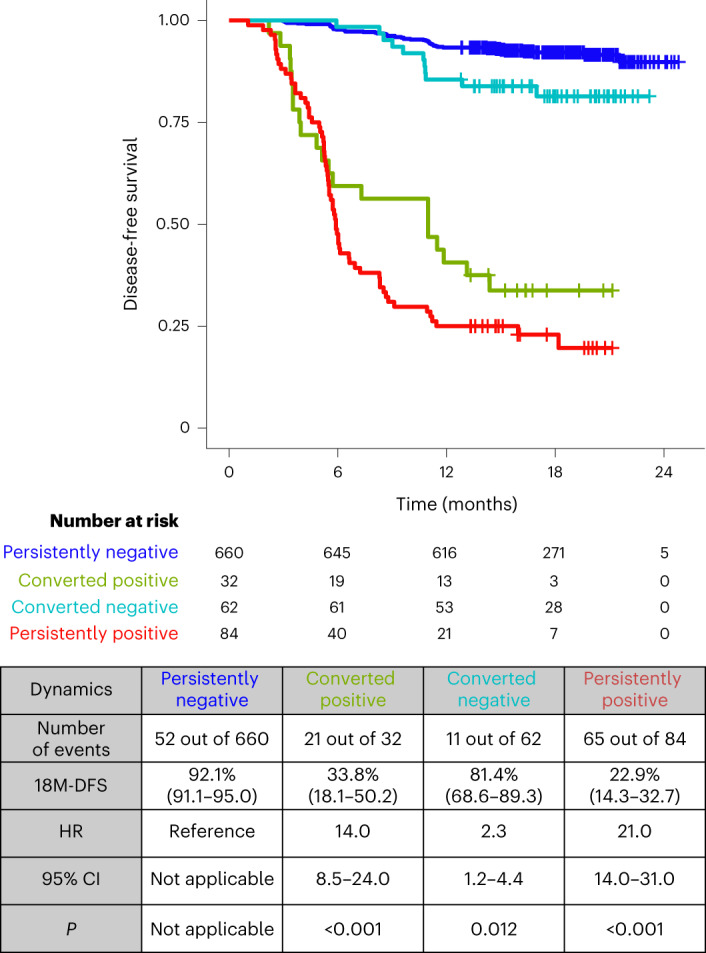
“17,18,30,31 Upon analyzing ctDNA dynamics from the MRD window to 6 months postsurgery, patients who remained or turned ctDNA positive at the 6-month time point were observed to have signi fi cantly shorter DFS compared with those who were serially ctDNA negative.”
Self-citationChen, J., Xu, C., Zhang, S., Sui, H., Fang, K., Li, S., Yang, R., Yang, C., Shao, D., Zheng, Q., et al. (2025) · Biomaterials · doi:10.1016/j.biomaterials.2025.123773 · Cited by 8
Ruiz‐Torres, D. A., Roberts, T. J., Du, P., Mendel, J., Neagele, S., Bonora, G., Zhang, F., Efthymiou, V., Merkin, R. D., Lin, D. T., et al. (2026) · JAMA Otolaryngology–Head & Neck Surgery · doi:10.1001/jamaoto.2025.4837 · Cited by 6
Martini, G., Napolitano, S., Ciardiello, D., Bielo, L. B., Martinelli, E., Troiani, T., Zampino, M. G., Fazio, N., Curigliano, G., & Ciardiello, F. (2026) · Nature Reviews Clinical Oncology · doi:10.1038/s41571-026-01126-1 · Cited by 9
Belmont, E., Bansal, V. V., Yousef, M., Zeineddine, M. A. A., Su, D. G., Dhiman, A., Liao, C., Polite, B. N., Eng, O. S., Fournier, K. F., et al. (2024) · JCO Precision Oncology · doi:10.1200/po.23.00531 · Cited by 7
Niu, J., Su, M., De‐E, L., Li, N., Xin, Y., Chen, Q., Yunjian, Y., Feihe, M., Elsabahy, M., & Gao, H. (2024) · Advanced Healthcare Materials · doi:10.1002/adhm.202402887 · Cited by 8
New Opportunities for Minimizing Toxicity in Rectal Cancer Management
Couwenberg, A. M., Varvoglis, D. N., Grieb, B. C., Marijnen, C. A. M., Ciombor, K. K., & Guillem, J. G. (2023) · American Society of Clinical Oncology Educational Book · doi:10.1200/edbk_389558 · Cited by 10
Jones, R. P., Lee, L. Y. W., Corrie, P. G., Danson, S. J., & Vimalachandran, D. (2023) · British journal of surgery · doi:10.1093/bjs/znad332 · Cited by 6
Wen, X., Coradduzza, D., Shen, J., Scanu, A. M., Muroni, M. R., Massidda, M., Rallo, V., Carru, C., Angius, A., & Miglio, M. R. D. (2023) · Medicina · doi:10.3390/medicina59101886 · Cited by 8
Fazio, R., Audisio, A., Daprà, V., Conti, C., Benhima, N., Abbassi, F.-Z., Assaf, I., Hendlisz, A., & Sclafani, F. (2024) · Cancer Treatment Reviews · doi:10.1016/j.ctrv.2024.102752 · Cited by 7
Towards circulating tumor DNA-guided treatment of muscle-invasive bladder cancer
Lindskrog, S. V., & Dyrskjøt, L. (2024) · Translational Andrology and Urology · doi:10.21037/tau-24-7 · Cited by 9
Li, J., Wu, C., Song, Y., Fan, Y., Li, C., Li, H., & Zhang, S. (2025) · Thoracic Cancer · doi:10.1111/1759-7714.70017 · Cited by 7
Colorectal cancer staging—time for a re-think on TNM?
Seligmann, J. F. (2025) · British journal of surgery · doi:10.1093/bjs/znaf047 · Cited by 7
Liquid Biopsy for Colorectal Cancer: Advancing Detection and Clinical Application
Li, Y., Zhang, Q., & Cook, S. M. (2025) · International Journal of Translational Medicine · doi:10.3390/ijtm5020014 · Cited by 6
“Therefore, the ctDNA analysis post-surgical may guide the treatment plan by stratification of post-surgical risks [66].”
Dynamic Monitoring of Recurrent Ovarian Cancer Using Serial ctDNA: A Real-World Case Series
Rios‐Doria, E., Reichel, J. B., Radke, M. R., Manhardt, E., Rubin-Saika, M., Lockwood, C. M., Swisher, E. M., & Banda, K. (2025) · Current Oncology · doi:10.3390/curroncol32100585 · Cited by 5
Lutfi, A., Afghan, M. K., & Kasi, P. M. (2023) · Cureus · doi:10.7759/cureus.43391 · Cited by 5
“Our case is unique from a therapeutic standpoint since while aggressive systemic chemotherapy and surgery rendered the patient with no evidence of disease, molecularly, from an MRD or ctDNA standpoint, the patient was still positive (not cured) [21-22].”
BackgroundCallesen, L. B., Hansen, T. F., Andersen, R. F., Pallisgaard, N., Kramer, S., Schlander, S., Rafaelsen, S. R., Boysen, A. K., Jensen, L. H., Jakobsen, A. K. M., et al. (2023) · Acta Oncologica · doi:10.1080/0284186x.2023.2259083 · Cited by 5
Niemann, B. R., Moise, J., Sestito, M. P., Malla, M., Train, K., Murken, D. R., Mayers, K., Groves, E., & Garland‐Kledzik, M. (2024) · Journal of Clinical Medicine · doi:10.3390/jcm13061684 · Cited by 7
“The GALAXY trial also demonstrated that ctDNA trends in relation to adjuvant therapy were predictive of recurrence-free survival (RFS), highlighting ctDNA as a potential marker of treatment response [8].”
BackgroundMethodNCI workshop on ctDNA in cancer treatment and clinical care
Sorg, B. S., Byun, J. S., Westbrook, V. A., Tricoli, J. V., Doroshow, J. H., & Harris, L. N. (2024) · JNCI Journal of the National Cancer Institute · doi:10.1093/jnci/djae179 · Cited by 5
Fan, J., Cai, X., Gui, H., Lin, M., Xu, W., Wang, D., Zhang, Y., Gao, C., Yang, L., Yang, C., et al. (2024) · Materials Today Bio · doi:10.1016/j.mtbio.2024.101219 · Cited by 9
“Currently, adjuvant treatments, including chemotherapy, radiotherapy, immunotherapy and targeted therapy, are integral strategies for alleviating postoperative tumor relapse and metastasis [5 – 7].”
BackgroundThe Evolving Role of Genomics in Colorectal Cancer
Berner, A., & Murugaesu, N. (2024) · Clinical Oncology · doi:10.1016/j.clon.2024.10.033 · Cited by 6
“This trend has been consistently observed in comparable studies [90].”
Kitagawa, S., & Seike, M. (2025) · Japanese Journal of Clinical Oncology · doi:10.1093/jjco/hyaf013 · Cited by 6
Chen, Z., Qi, H., Xue, Y., Zhang, Y., Zhang, Z., Xu, S., Liao, S., Zeng, X., Wu, J., Lv, X., et al. (2025) · MedComm – Oncology · doi:10.1002/mog2.70015 · Cited by 7
The emerging clinical utility of ctDNA to guide adjuvant treatment in cancer
Sanderson, E., Gibbs, P., & Tie, J. (2025) · The Lancet Regional Health - Western Pacific · doi:10.1016/j.lanwpc.2025.101595 · Cited by 5
Targeting KRAS in colorectal cancer immunotherapy: rationale, challenges and future directions
Zhu, G., Pei, L., Ye, D., Tang, Q., Xu, H., & Bi, F. (2025) · Biochimica et Biophysica Acta (BBA) - Reviews on Cancer · doi:10.1016/j.bbcan.2025.189382 · Cited by 8
Rajdev, L. N., King, G. T., Lieu, C. H., Cohen, S. A., Pant, S., Uboha, N. V., Deming, D. A., Malla, M., Kasi, A., Klute, K. A., et al. (2025) · JCO Precision Oncology · doi:10.1200/po-24-00489 · Cited by 12
Pu, W., Chen, F., Tang, Y., Qu, Y., Han, Y., Zha, J., Jin, J., & Kong, F. (2024) · Chinese Journal of Cancer Research · doi:10.21147/j.issn.1000-9604.2024.04.07 · Cited by 10
Liquid biopsy- A pivotal test to help navigate clinical decisions at a precision center in India!
Limaye, S. A., Shreenivas, A. V., Patil, D., Sambath, J., George, I. A., Parab, A., Datta, A., Jain, P., Singh, S., Madre, C., et al. (2025) · The Journal of Liquid Biopsy · doi:10.1016/j.jlb.2025.100323 · Cited by 5
“Through this analysis, we aim to highlight the pragmatic value of integrating sequential genomic insights into standard cancer care, demonstrating its impact [4] on personalizing therapy, minimizing overtreatment, and detecting relapse before radiologic progression.”
Real-Time Therapy Response Monitoring Using Surface Biomarkers on Circulating Tumor Cells
Andhari, S. S., Farmaha, J. K., Vashisht, A., Vashisht, V., Woodall, J., Mondal, A. K., Jones, K., Pandita, A., Shafi, G., Uttarwar, M., et al. (2026) · Cancers · doi:10.3390/cancers18030391 · Cited by 5
Anti-diabetic Drugs and Cancer: Integrated Mechanisms of Tumor Suppression and Clinical Translation
Asadalizadeh, M., Rahbar, M. K. M., Mahmoudie, T., Abbasi, M., Akbari, M., Shakiba, D., Shabestari, A. M., & Ebrahimifar, M. (2026) · Indian Journal of Clinical Biochemistry · doi:10.1007/s12291-026-01411-x · Cited by 7
Localized colorectal cancer database integrating 4 randomized controlled trials; (JCOG2310A)
Kataoka, K., Ouchi, A., Suwa, Y., Hirano, H., Yamaguchi, T., Takamizawa, Y., Hanaoka, M., Iguchi, K., Boku, S., Nagata, K., et al. (2024) · European Journal of Surgical Oncology · doi:10.1016/j.ejso.2024.108354 · Cited by 4
Self-citationImpact of Small Tumor Size on Prognosis in T3N1 Colon Cancer
Tamai, K., Tei, M., Tsujimura, N., Nishida, K., Mori, S., Yoshikawa, Y., Nomura, M., Hamakawa, T., Takiuchi, D., Tsujie, M., et al. (2025) · World Journal of Surgery · doi:10.1002/wjs.12480 · Cited by 4
Yanes, R. B., Saridogan, T., Gorantla, V. C., Overacre-Delgoffe, A. E., Hsieh, R. W., Celebrezze, J. P., Magge, T., Singh, M., Saeed, A., Zureikat, A. H., et al. (2025) · Technology in Cancer Research & Treatment · doi:10.1177/15330338251317094 · Cited by 4
Sasaki, T., Iwaya, T., Yaegashi, M., Idogawa, M., Hiraki, H., Abé, M., Koizumi, Y., Sasaki, N., Yashima‐Abo, A., Fujisawa, R., et al. (2025) · Annals of Surgery Open · doi:10.1097/as9.0000000000000549 · Cited by 5
Liu, M., Mu, T., Gu, J., Xu, M., & Chen, S. (2025) · Cancer Reports · doi:10.1002/cnr2.70167 · Cited by 10
“The comprehensive GALAXY trial reported that stage II or III CRC patients who tested positive for ctDNA MRD after surgery could benefit from ACT [28].”
Maffezzoli, M., Nagpal, R., Elewaily, M. I., Pedapati, L., Samuel, J., Buti, S., Malapelle, U., Maniam, A., & Banna, G. L. (2025) · Current Oncology Reports · doi:10.1007/s11912-025-01701-2 · Cited by 4
“…have validated the clinical significance of ctDNA during surveil - lance following surgical resection, demonstrating a clear advantage in disease-free survival (DFS) for patients with negative ctDNA after surgery, with striking hazard ratios (HR) and a high negative predictive value [25, 26].”
Alam, R., Fuchs, J. W., & Shenoy, N. K. (2025) · Med · doi:10.1016/j.medj.2025.100806 · Cited by 6
Yue, P., Zhou, Z., Li, Z., Du, C., Jiang, L., Yang, L., Jiao, Y., & Zhao, D. (2025) · International Journal of Cancer · doi:10.1002/ijc.70233 · Cited by 4
“11 However, the unique anatomical and physiological characteristics of PM, such as the peritoneal-plasma barrier, could limit the effectiveness of blood-based ctDNA analysis for early PM detection.”
Zeng, Y., Yang, J., Wang, K., Xu, H., Zheng, Y., Guo, S., Luo, J., Liu, S., Ming, X., & Xue, Y. (2025) · Biomacromolecules · doi:10.1021/acs.biomac.5c01421 · Cited by 4
Nguyen, T., Hoang, V. N., Nguyen, T. H., Tran, T. H., Nguyen, N. L., Vo, T. T. B., Nguyen, D. S., Giang, H., Nguyen, H., & Tu, L. N. (2025) · Therapeutic Advances in Medical Oncology · doi:10.1177/17588359251393090 · Cited by 6
Baden, J. F., Lin, C.-H. J., Anfora, A., Beer, J. P., Bisselou, K. S., Bungo, J., Corner, A. S., Danek, T., Dickey, J. S., Godsey, J. H., et al. (2026) · JCO Precision Oncology · doi:10.1200/po-25-00267 · Cited by 9
“3,5,12,13 MRD results may inform decisions such as escalation of adjuvant therapy in ctDNA-positive patients or de-escalation in ctDNA-negative patients, supporting more tailored treatment strategies.”
Jiang, T., Lu, C. L., Shen, Y., Meng, W., Chen, H. R., & Wang, Z. (2026) · Journal of Gastrointestinal Surgery · doi:10.1016/j.gassur.2026.102411 · Cited by 6
Liquid Biopsies for Cancer: A Translational Science Review
Mezzanotte-Sharpe, J., Piemonte, K. M., & Park, B. H. (2026) · JAMA · doi:10.1001/jama.2026.13898 · Cited by 8
Şahin, İ. H., Yanes, R. B., Saridogan, T., Holder‐Murray, J., & Dasari, A. N. (2024) · The Cancer Journal · doi:10.1097/ppo.0000000000000731 · Cited by 5
Prognostic utility of circulating tumor DNA methylation analysis in stage IV colorectal cancer
Momose, H., Sugimoto, K., Irie, T., Nomura, S., Ro, H., Ishiyama, S., Takahashi, M., Pisanic, T. R., & Sakamoto, K. (2024) · Journal of Surgical Oncology · doi:10.1002/jso.27824 · Cited by 6
“The current study showed the usefulness of ctDNA methylation analysis for predicting the possibility of curative resection and long ‐ term outcomes after resection in Stage IV CRC.”
InfluentialTanaka, J., Nakagawa, T., Ono, Y., Kamura, Y., Ishida, T., Kawabata, H., Takahashi, K., Sato, H., Liss, A. S., Mizukami, Y., et al. (2025) · Molecular Oncology · doi:10.1002/1878-0261.70011 · Cited by 5
Hishinuma, E., Shigeta, S., Matsukawa, N., Okamura, Y., Motoike, I. N., Minato, T., Shibuya, Y., Yasuda, J., Kinoshita, K., Koshiba, S., et al. (2025) · International Journal of Molecular Sciences · doi:10.3390/ijms26125435 · Cited by 6
“Regarding ctDNA in colorectal cancer, some studies, including a phase II randomized clinical study, have indicated the potential benefit of ctDNA as a decision-making marker for the application of adjuvant chemotherapy [31,32].”
Xu, L., Mo, Y., Yu, B., & Fan, S. (2025) · Discover Oncology · doi:10.1007/s12672-025-03157-z · Cited by 5
“Moreover, 30% of stage II patients will develop recurrence [5].”
Nakano, T., Takao, S., Dairaku, K., Uno, N., Low, S., Hashimoto, M., Tsuda, Y., Hisamatsu, Y., Toshima, T., Yonemura, Y., et al. (2024) · Cancer Science · doi:10.1111/cas.16149 · Cited by 5
Wang, D., Putra, I. W. A. S., Oshima, H., Nguyen, H. G., Yurtsever, A., Borowiak, A. S., Sun, L., Oshima, M., & Watanabe, S. (2025) · Analytical Chemistry · doi:10.1021/acs.analchem.5c01597 · Cited by 3
Peixoto, R. D., Loree, J. M., Miranda, T. A., Vasconcelos, J. P. S., Renouf, D. J., Davies, J. M., Gill, S., Gill, S., Poon, V., Metcalf, C., et al. (2025) · ESMO Gastrointestinal Oncology · doi:10.1016/j.esmogo.2025.100190 · Cited by 4
Deligezer, U., Meral, R., Özgür, E., Yörüker, E. E., Bronkhorst, A. J., & Holdenrieder, S. (2025) · Cancers · doi:10.3390/cancers17142279 · Cited by 4
Sato, S., Nakayama, I., & Shitara, K. (2025) · Expert Review of Clinical Pharmacology · doi:10.1080/17512433.2025.2551748 · Cited by 4
“Circulating tumor DNA (ctDNA) is recognized as a dynamic biomarker of treatment response and has been demonstrated to predict recurrence risk and adjuvant therapy efficacy in colorectal cancer following curative resection [142,143].”
Habu, T., Ushiyama, S., Nakayama, I., Yura, M., Yoshida, M., Sakamoto, N., Kuwata, T., Shitara, K., & Kinoshita, T. (2025) · Annals of Surgical Oncology · doi:10.1245/s10434-025-18641-7 · Cited by 3
“38,39 Biomarker testing was conducted to support the use of ICI or anti-HER2 therapy.”
Heo, S., Ham, S., Lee, H., Han, B., Roh, H., Jeong, S., Kim, H., Bang, D., Song, S., & Kim, T. (2025) · PLoS ONE · doi:10.1371/journal.pone.0334282 · Cited by 5
Zhao, H., Meng, D., Wang, Y., Wang, Y., Li, Q., Guo, Y., Song, Q., & Wang, L. (2025) · Bioactive Materials · doi:10.1016/j.bioactmat.2025.11.027 · Cited by 11
Liu, L., Liang, W., Cao, W., Wang, H., Liang, H., Huang, L., Zhong, D., Gao, W. D., Deng, Q., Zhang, Y., et al. (2025) · MedComm · doi:10.1002/mco2.70483 · Cited by 7
“Although the current evidence for MRD-guided adjuvant therapy is still limited, several studies have suggested that detectable MRD after curative treatment may indicate potential benefit from adjuvant therapy [6, 7, 20].”
Influentialda Silva, M. C. E., de Campos, V. S., da Silva, M. P. A. D. V., & Ferrer, V. P. (2025) · ONCOLOGIE · doi:10.1515/oncologie-2025-0281 · Cited by 3
Franken, I. A., Heilijgers, F., Bakker, M.-C. E., Alarcon, C. R., van der Baan, F. H., Lemmens, M., Diemen, P. D.-V., Sausen, M., Meijer, G. A., Koopman, M., et al. (2026) · ESMO Open · doi:10.1016/j.esmoop.2025.105935 · Cited by 5
“5-9 However, in using negative ctDNA results to guide clinical decisions toward de-escalation of treatment, false-negative ctDNA results remain a concern.”
InfluentialLiquid biopsies in precision oncology for older adults with cancer
Zhao, Y., Herrera-Caceres, J. O., Nobes, J. H., Lyu, Z., Vetter, M. H. F., Falandry, C., Goede, V., Neuendorff, N. R., Loh, K. P., Canin, B. E., et al. (2026) · npj Precision Oncology · doi:10.1038/s41698-026-01285-5 · Cited by 3
“…fromtheGALAXYtrial(partoftheCIRCULATE-Japanstudyreviewing ctDNA-basedmolecularresidualdiseasedetectionandadjuvantche-motherapyef fi cacy in CRC) show good recruitment in older adults with a median age of 69 years, maximum age of 93 years, and 43% of the 1039-patient cohort were aged >70 86 .”
Deming, D. A., Kraus, S. G., Brand, J., Johnson, K. A., Abbott, D. E., Kratz, J. D., Turk, A. A., Emmerich, P. B., Carchman, E. H., Lubner, S. J., et al. (2026) · Clinical Cancer Research · doi:10.1158/1078-0432.ccr-25-2780 · Cited by 4
Özlük, A. A., Colley, W., Arik, Z. B., Köstek, O., Sunkari, A., Malla, M., & Akce, M. (2026) · Cancers · doi:10.3390/cancers18050754 · Cited by 5
Translating ctDNA into cutaneous melanoma care: An international expert survey
Geidel, G., Fekade, N., Raabe, K., Smit, D. J., Adam, L., Heidrich, I., Rünger, A., Kött, J., Zell, T., Amaral, T., et al. (2026) · European Journal of Cancer · doi:10.1016/j.ejca.2026.116676 · Cited by 3
Self-citationGalen, J. V., Willis, S. D., Bains, A., & Small, S. H. (2026) · Cancer and Metastasis Reviews · doi:10.1007/s10555-026-10322-5 · Cited by 3
Păduraru, D. N., Palcău, A. C., Gorecki, G.-P., Dinulescu, A., & Băean, M.-L. (2026) · International Journal of Molecular Sciences · doi:10.3390/ijms27093951 · Cited by 3
“CIRCULATE-Japan is evaluating ctDNA and the risk of recurrence in ctDNA-positive patients, while the BESPOKE CRC cohort has documented that serial ctDNA monitoring detects molecular recurrence before clinical relapse [27,114,115].”
Circulating Tumor DNA Status and Adjuvant Chemotherapy in Resected Colorectal Liver Metastases
Kataoka, K., Ito, K., Nakamura, Y., Watanabe, J., Akazawa, N., Nagata, J., Yokota, M., Kato, K., Kotaka, M., Hashimoto, T., et al. (2026) · JAMA Oncology · doi:10.1001/jamaoncol.2026.2191 · Cited by 13
Self-citationBrozos-Vázquez, E., Lago‐Lestón, R. M., Covela, M., Gómez, J. D. L. C., Montés, A. F., Candamio, S., Vidal, Y., Vázquez, F., Abalo, A., López, R., et al. (2023) · Cancers · doi:10.3390/cancers15143578 · Cited by 4
Zou, D., Ning, W., Xu, L., Lei, S., Wang, L., & Wang, Z. (2024) · Computational and Structural Biotechnology Journal · doi:10.1016/j.csbj.2024.05.051 · Cited by 3
Zhang, M., Chen, X., Zhou, Q., Guo, N., Cao, B., Zeng, H., Chen, W., & Sun, F. (2024) · Journal of the National Cancer Center · doi:10.1016/j.jncc.2024.10.002 · Cited by 5
“43 , 44 However, as the transition between ctDNA positivity and negativity is difficult to standardize across different studies, and the number of included studies was already substantial, we didn’t further include the conversion in our analysis.”
Current Status of Precision Medicine in Colorectal Cancer in Japan
Kojitani, Y., & Takeda, M. (2025) · International Journal of Molecular Sciences · doi:10.3390/ijms26115029 · Cited by 6
“Assay performance varies by platform, with detection limits typically ranging from 0.01% to 0.1% variant allele frequency (VAF) [78].”
InfluentialVerma, S., Young, S., Kennedy, T. A. C., Carvalhana, I., Black, M., Baer, K., Churchman, E. K. L., Warner, A., Allan, A. L., Izaguirre-Carbonell, J., et al. (2023) · Clinical Lung Cancer · doi:10.1016/j.cllc.2023.11.013 · Cited by 3
Wehrle, C. J., Perlmutter, B. C., Hong, H., Chang, J. H., Stackhouse, K. A., Naples, R., Hossain, M. S., Joyce, D., Simon, R., Kim, J., et al. (2023) · Journal of Surgical Oncology · doi:10.1002/jso.27569 · Cited by 3
“25,29,30 Thus, it seems possible that drawing circulating blood is more likely to carry a high tumor burden, given the systemic nature of the disease at the time of resection.”
BackgroundLueders, C., Gladitz, J., Bauer, G., Jenssen, C., Belaschki, J., von Kirchbach, A., Schneider, C., Kiefer, T., Voeller, H., & Merkel, D. (2024) · Diagnostics · doi:10.3390/diagnostics14070778 · Cited by 3
“A good example of this is the progress made in the field of liquid biopsy [4].”
BackgroundSommer, S., Schmutz, M., Hildebrand, K., Schiwitza, A., Benedikt, S., Eberle, M., Mögele, T., Sultan, A., Reichl, L., Campillo, M., et al. (2024) · Journal of Laboratory Medicine · doi:10.1515/labmed-2023-0156 · Cited by 6
Thiele, B., Stein, A., Schultheiß, C., Paschold, L., Jonas, H., Goekkurt, E., Rüssel, J., Schuch, G., Wierecky, J., Sinn, M., et al. (2024) · Clinical Colorectal Cancer · doi:10.1016/j.clcc.2024.06.003 · Cited by 3
Sawano, H., Matsuoka, H., Mizuno, T., Kamiya, T., Chong, Y., Iwama, H., Takahara, T., Hiro, J., Otsuka, K., Ishihara, T., et al. (2024) · Asian Journal of Surgery · doi:10.1016/j.asjsur.2024.07.001 · Cited by 3
He, L., Guo, X., Wang, W., Xu, W., Feng, X., Fu, Y., Tian, Y., He, Z., Luo, S., Bao, J., et al. (2024) · Advanced Therapeutics · doi:10.1002/adtp.202400199 · Cited by 6
Ce6-GFFY is a novel photosensitizer for colorectal cancer therapy
Qiao, W., Li, S., Luo, L., Chen, M., Zheng, X., Ye, J., Liang, Z., Wang, Q.-L., Hu, T., Zhou, L., et al. (2024) · Genes & Diseases · doi:10.1016/j.gendis.2024.101441 · Cited by 4
The Current State and Future of Plasma Cell-Free DNA Analysis in Urologic Malignancies
Akamatsu, S., Mizuno, K., Sumiyoshi, T., Goto, T., & Kobayashi, T. (2023) · Journal of Urologic Oncology · doi:10.22465/juo.234600060003 · Cited by 3
Metadata
- Authors
- Kotani, D., Oki, E., Nakamura, Y., Yukami, H., Mishima, S., Bando, H., Shirasu, H., Yamazaki, K., Watanabe, J., Kotaka, M., Hirata, K., Akazawa, N., Kataoka, K., Sharma, S., Aushev, V. N., Aleshin, A., Misumi, T., Taniguchi, H., Takemasa, I., Kato, T., Mori, M., & Yoshino, T.
- Affiliations
- National Cancer Center Hospital East (JP)
- Kyushu University (JP)
- Osaka Medical and Pharmaceutical University (JP)
- Shizuoka Cancer Center (JP)
- Yokohama City University Medical Center (JP)
- Sano Hospital (JP)
- University of Occupational and Environmental Health Japan (JP)
- Sendai Medical Center (JP)
- Hyogo Medical University (JP)
- Natera (United States) (US)
- Aichi Cancer Center (JP)
- Sapporo Medical University (JP)
- Osaka National Hospital (JP)
- Tokai University (JP)
- Corresponding author
- Oki, Eiji
- ORCID
- Kotani, Daisuke
- Oki, Eiji
- Nakamura, Yoshiaki
- Yukami, Hiroki
- Mishima, Saori
- Bando, Hideaki
- Shirasu, Hiromichi
- Yamazaki, Kentaro
- Watanabe, Jun
- Kotaka, Masahito
- Hirata, Keiji
- Akazawa, Naoya
- Kataoka, Kozo
- Sharma, Shruti
- Aushev, Vasily N.
- Aleshin, Alexey
- Misumi, Toshihiro
- Taniguchi, Hiroya
- Takemasa, Ichiro
- Kato, Takeshi
- Mori, Masaki
- Yoshino, Takayuki
- Venue
- Nature Medicine
- Published
- 2023-01
- Volume
- 29
- Issue
- 1
- Pages
- 127-134
- ISSN
- 1078-8956 (ISSN-L)
- 1546-170X
- PMC
- PMC9873552
- OpenAlex
- W4316507345
- Semantic Scholar
- 4f4abf246c2b5b6ef0edbf1e4a520d231e0cc143
- Cited by
- 526
- References
- 21
- Citations by year
- 2026: 130 · 2025: 161 · 2024: 167 · 2023: 67
- FWCI
- 64.04
- Type
- journal article
- Language
- en
- Open access
- hybrid
- doi.org
- Licence
- cc-by
- creativecommons.org/licenses/by/4.0 (tdm)
- creativecommons.org/licenses/by/4.0 (vor, 15 d)
- Locations
- Nature Medicine (publishedVersion, cc-by)
- PubMed Central (publishedVersion, cc-by)
- PubMed (publishedVersion)
- Funders
- Japan Agency for Medical Research and Development (19ck0106447h0002)
- Topics
- Health Sciences › Medicine › Oncology › Colorectal Cancer Treatments and Studies
- Health Sciences › Medicine › Oncology › Colorectal Cancer Surgical Treatments
- Health Sciences › Medicine › Pathology and Forensic Medicine › Genetic factors in colorectal cancer
- Keywords
- colorectal cancer, circulating tumor DNA, liquid biopsy, adjuvant chemotherapy, molecular residual disease, cancer recurrence risk, risk stratification, stage II and III colorectal cancer, galaxies
- MeSH terms
- Humans, Japan, Neoplasm Recurrence, Local, Biomarkers, Tumor, Colorectal Neoplasms, Proportional Hazards Models, Chemotherapy, Adjuvant, Neoplasm, Residual
About these checks
Registry, retraction, Cites and statistics results are computed, not judged, with one exception: a printed reference that no index lists is read once by a model before it counts as a citation error. Claims are extracted by a model and kept only when their quote appears verbatim in the text; each cited source is then checked, with a model’s help, for whether it says what the claim relies on. Those verdicts can be wrong — read the claim’s quote and the cited source before relying on one.
Statistics and arithmetic are recomputed, not judged.
Confidence bands are shown only for fields calibrated on our annotated test set. None is calibrated yet, so no band is shown.
What counts as a claim ›How we measure confidence ›How we check this ›
Are you an author, or do you see a problem with this page? Request a review
Data sources
Bibliographic data: Semantic Scholar, OpenAlex, Crossref.
Contains information from the Semantic Scholar Academic Graph Datasets, made available under the ODC Attribution License (ODC-BY 1.0).
Semantic Scholar’s data is described in: Kinney, R., et al. (2023). The Semantic Scholar Open Data Platform. arXiv:2301.10140.
