

Molecular residual disease and efficacy of adjuvant chemotherapy in patients with colorectal cancer
Open accessThe DOI matches its Crossref record; 22 of the 22 references it cites were found in a registry or an index.
Abstract
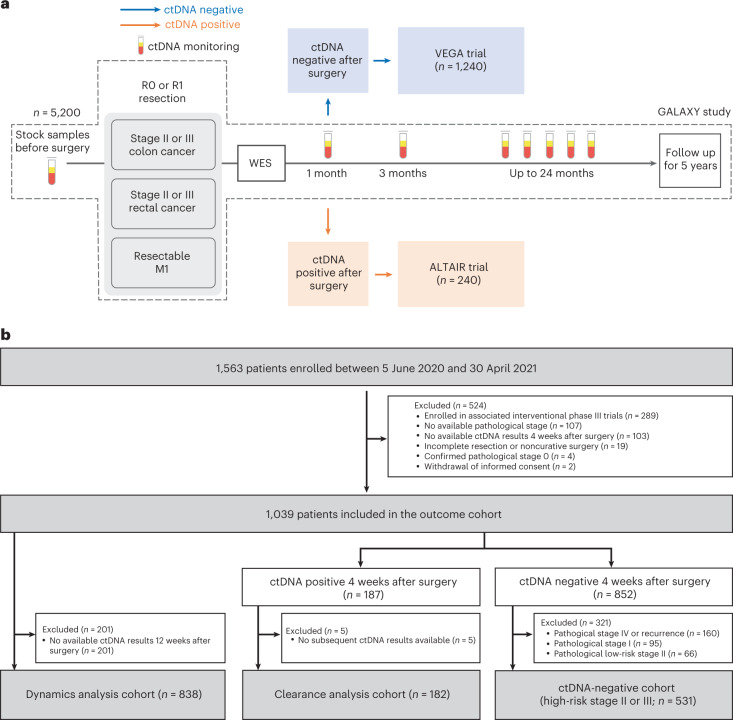
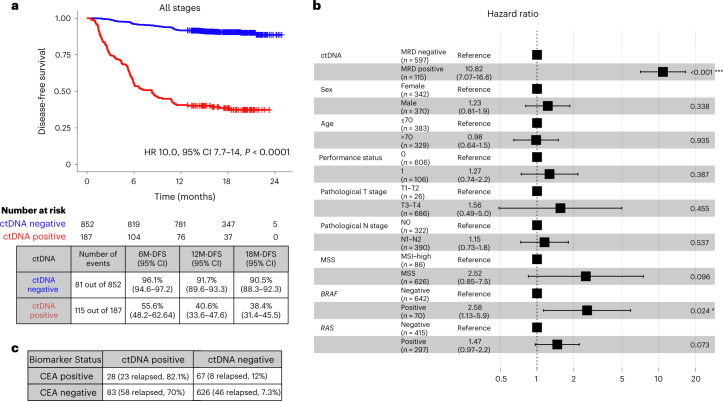
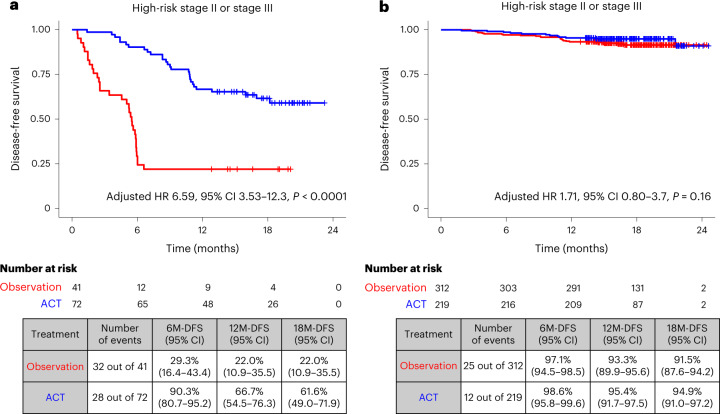
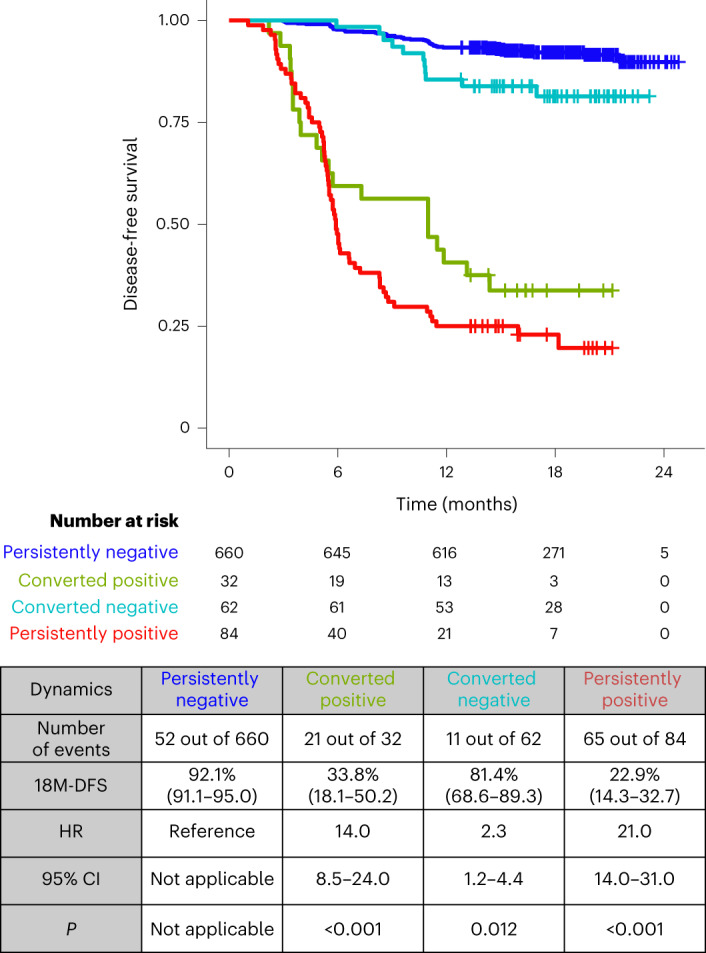
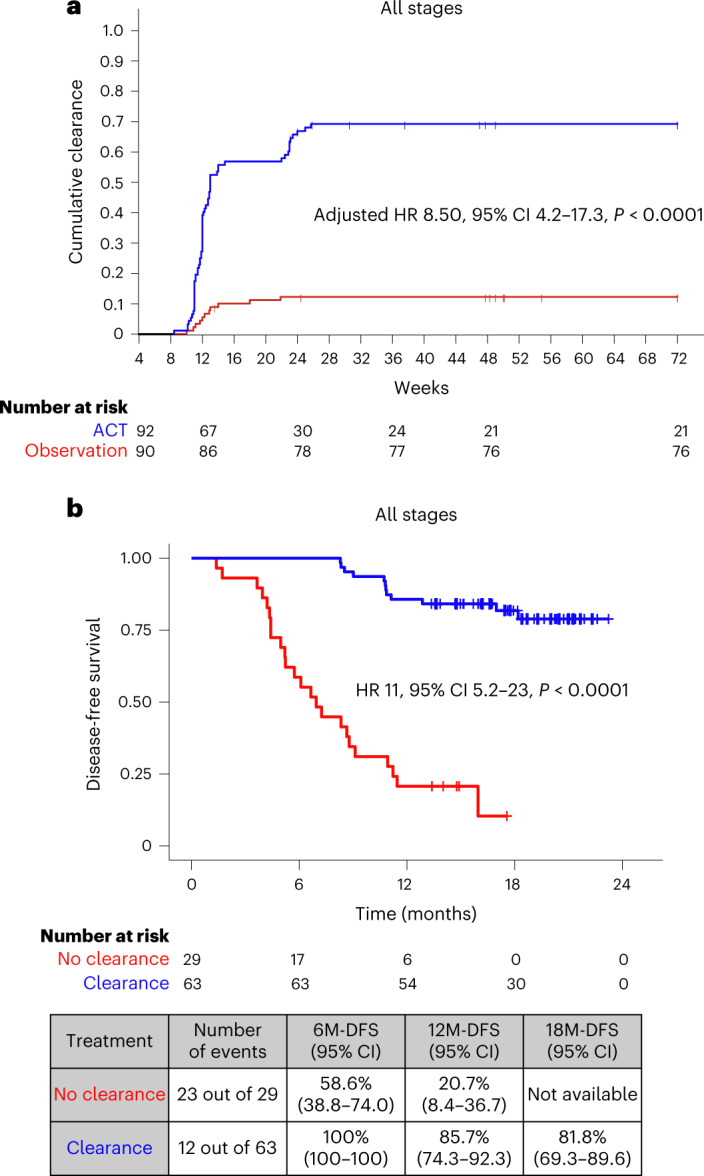
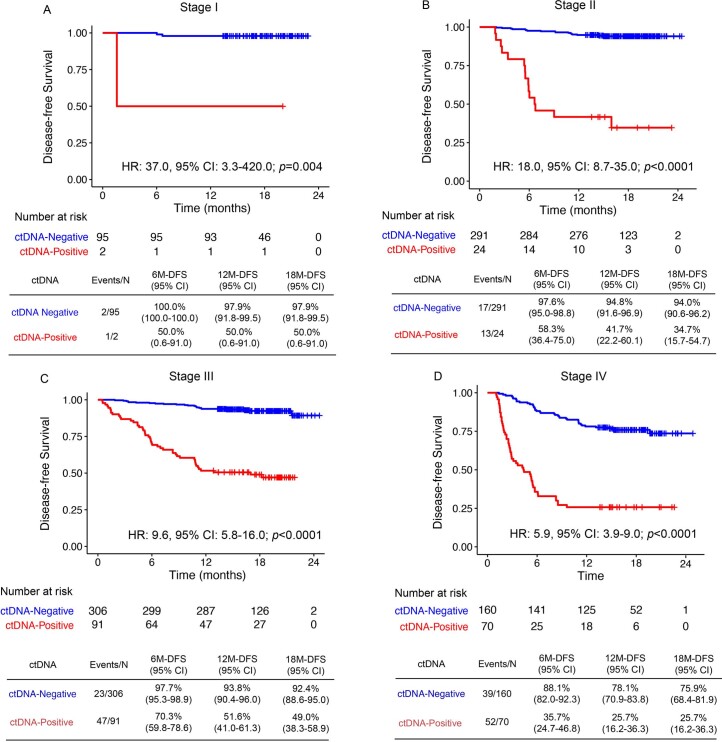
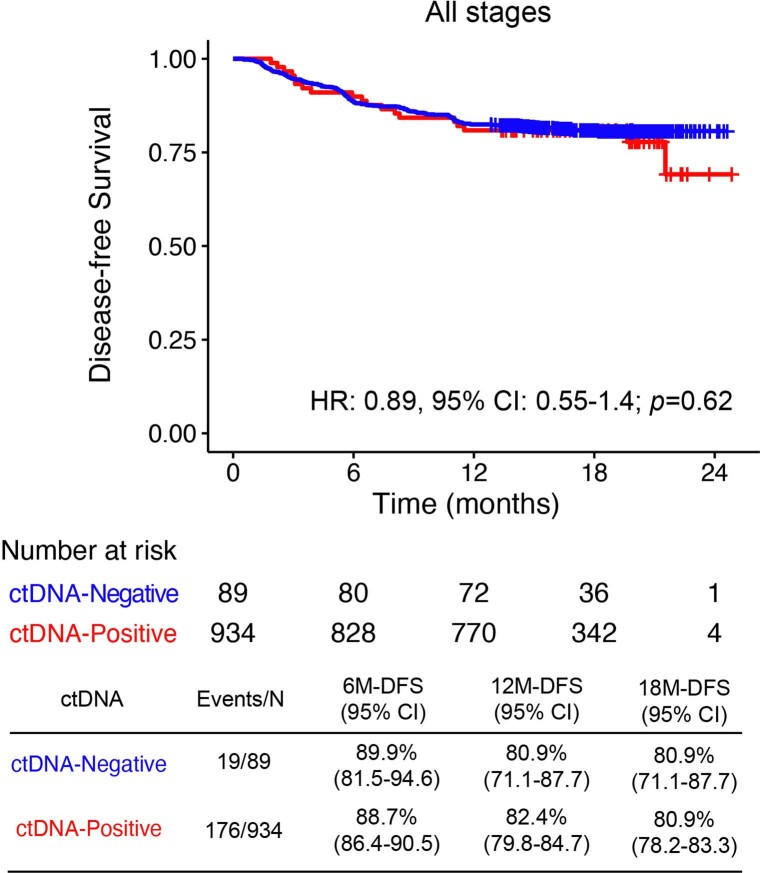
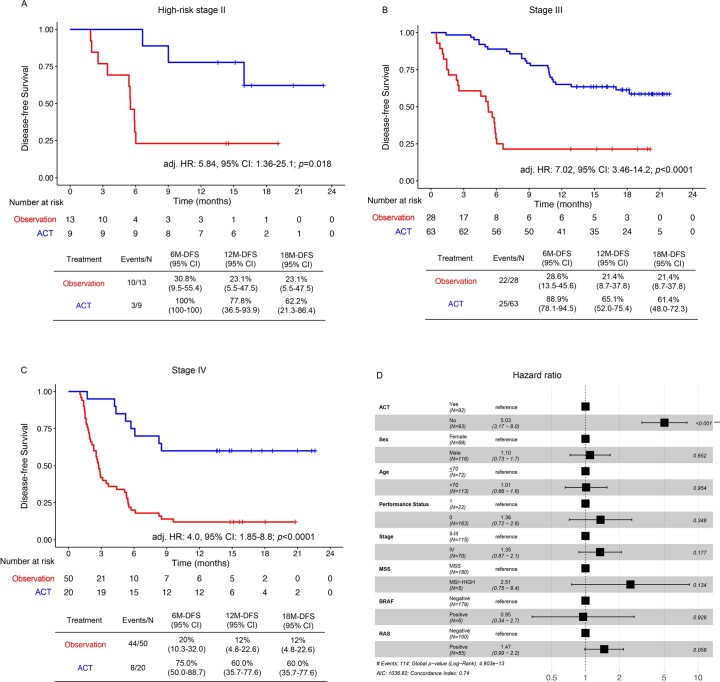
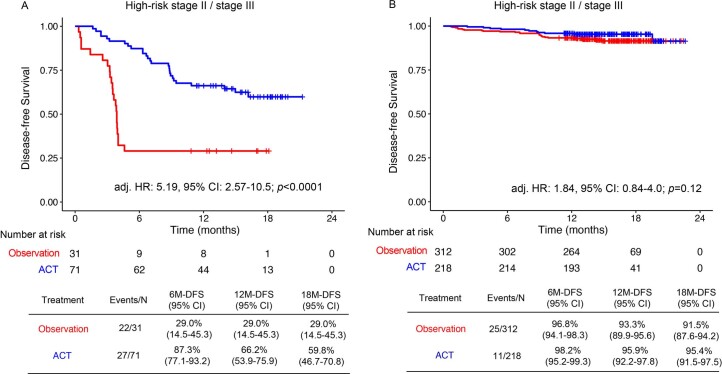
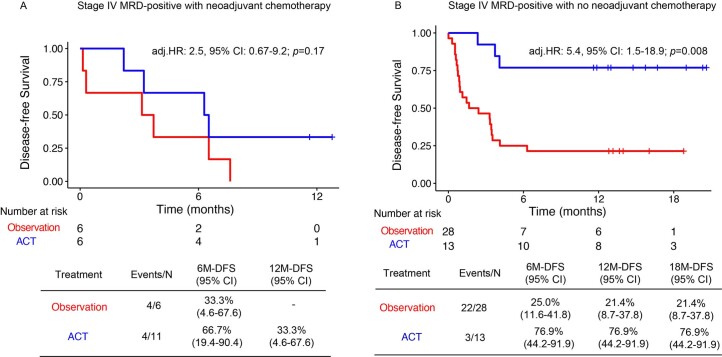
Despite standard-of-care treatment, more than 30% of patients with resectable colorectal cancer (CRC) relapse. Circulating tumor DNA (ctDNA) analysis may enable postsurgical risk stratification and adjuvant chemotherapy (ACT) treatment decision-making. We report results from GALAXY, which is an observational arm of the ongoing CIRCULATE-Japan study (UMIN000039205) that analyzed presurgical and postsurgical ctDNA in patients with stage II–IV resectable CRC ( n = 1,039). In this cohort, with a median follow-up of 16.74 months (range 0.49–24.83 months), postsurgical ctDNA positivity (at 4 weeks after surgery) was associated with higher recurrence risk (hazard ratio (HR) 10.0, P < 0.0001) and was the most significant prognostic factor associated with recurrence risk in patients with stage II or III CRC (HR 10.82, P < 0.001). Furthermore, postsurgical ctDNA positivity identified patients with stage II or III CRC who derived benefit from ACT (HR 6.59, P < 0.0001). The results of our study, a large and comprehensive prospective analysis of ctDNA in resectable CRC, support the use of ctDNA testing to identify patients who are at increased risk of recurrence and are likely to benefit from ACT.
Overview
The claims and statistics of this paper haven’t been checked yet.
Free: it reads the open-access text and checks the first 5 claims that cite a source we can check. Create a free account to check every claim.
Integrity signals
Registry
Cites
Statistics
Figures
Verification
Claims the paper makes
The claims and statistics of this paper haven’t been checked yet.
Free: it reads the open-access text and checks the first 5 claims that cite a source we can check. Create a free account to check every claim.
Claims other papers make about this one
Each is checked against this paper’s own text: does it say what the citing paper says it does?
The source backs part of the claim, not all of it — or backs it for a different population, condition or comparison.
In the citing paper
“Because KRAS mutations are often clonal founder events, mutant KRAS ctDNA can serve as a highly informative molecular marker for tumor burden, treatment response, minimal residual disease, and emergence of resistance [29,47,77,78].”
From Precision Targeting of KRAS-Mutant Cancers: Beyond G12C Toward G12D and Pan-RAS Therapeutic Strategies (2026) · cites this paper as [77]
Experimental — accuracy not yet measured
Self-check
Percentages, sums and reported differences re-computed from the paper’s own numbers.
The self-check needs the paper’s full text.
Citations
Cites
Oxaliplatin, Fluorouracil, and Leucovorin as Adjuvant Treatment for Colon Cancer
André, T., Boni, C., Mounedji-Boudiaf, L., Navarro, M., Tabernero, J., Hickish, T., Topham, C., Zaninelli, M., Clingan, P., Bridgewater, J., et al. (2004) · New England Journal of Medicine · doi:10.1056/nejmoa032709 · Cited by 3,689
Circulating Tumor DNA Analysis Guiding Adjuvant Therapy in Stage II Colon Cancer
Tie, J., Cohen, J. D., Lahouel, K., Lo, S. N., Wang, Y., Kosmider, S., Wong, R., Shapiro, J., Lee, M., Harris, S., et al. (2022) · New England Journal of Medicine · doi:10.1056/nejmoa2200075 · Cited by 1,091
Kuebler, J. P., Wieand, H. S., O'Connell, M. J., Smith, R. E., Colangelo, L. H., Yothers, G., Petrelli, N. J., Findlay, M. P., Seay, T. E., Atkins, J. N., et al. (2007) · Journal of Clinical Oncology · doi:10.1200/jco.2006.08.2974 · Cited by 1,056
Reinert, T., Henriksen, T. V., Christensen, E., Sharma, S., Salari, R., Sethi, H., Knudsen, M., Nordentoft, I., Wu, H.-T., Tin, A. S., et al. (2019) · JAMA Oncology · doi:10.1001/jamaoncol.2019.0528 · Cited by 1,011
Self-citationEngstrom, P. F., Arnoletti, J. P., Benson, A. B., Chen, Y.-J., Choti, M. A., Cooper, H. S., Covey, A., Dilawari, R. A., Early, D. S., Enzinger, P. C., et al. (2009) · Journal of the National Comprehensive Cancer Network · doi:10.6004/jnccn.2009.0056 · Cited by 683
Tie, J., Cohen, J. D., Wang, Y., Christie, M., Simons, K., Lee, M., Wong, R., Kosmider, S., Ananda, S., McKendrick, J., et al. (2019) · JAMA Oncology · doi:10.1001/jamaoncol.2019.3616 · Cited by 668
ctDNA guiding adjuvant immunotherapy in urothelial carcinoma
Powles, T., Assaf, Z. J., Davarpanah, N., Banchereau, R., Szabados, B. E., Yuen, K. C., Grivas, P., Hussain, M., Oudard, S., Gschwend, J. E., et al. (2021) · Nature · doi:10.1038/s41586-021-03642-9 · Cited by 646
Self-citationPersonalized Detection of Circulating Tumor DNA Antedates Breast Cancer Metastatic Recurrence
Coombes, R. C., Page, K., Salari, R., Hastings, R. K., Armstrong, A., Ahmed, S., Ali, S., Cleator, S., Kenny, L., Stebbing, J., et al. (2019) · Clinical Cancer Research · doi:10.1158/1078-0432.ccr-18-3663 · Cited by 510
Self-citationAdjuvant Chemotherapy for Stage II Colon Cancer With Poor Prognostic Features
O'Connor, E. S., Greenblatt, D. Y., LoConte, N. K., Gangnon, R. E., Liou, J.-I., Heise, C. P., & Smith, M. A. (2011) · Journal of Clinical Oncology · doi:10.1200/jco.2010.34.3426 · Cited by 451
Wang, Y., Li, L., Cohen, J. D., Kinde, I., Ptak, J., Popoli, M., Schaefer, J., Silliman, N., Dobbyn, L., Tie, J., et al. (2019) · JAMA Oncology · doi:10.1001/jamaoncol.2019.0512 · Cited by 224
Research works printed but not linked: 1
- Gray JR A class of K-sample tests for comparing the cumulative incidence of a competing risk Ann. Stat. 1998 16 1141 1154
Cited by
Items 501–526 of 526
Tsokkou, S., Chatzikomnitsa, P., Papakonstantinou, M., Gkaitatzi, A. D., Liampou, E., Kolympa, G., Fantakis, A., Toutziari, E., Giakoustidis, D. E., Papamitsou, T., et al. (2026) · Journal of Clinical Medicine · doi:10.3390/jcm15187061
“…of CIRCULATE-Japan established postoperative ctDNA positivity as the strongest independent prognostic factor and a predictor of adjuvant chemotherapy benefit [86]; a meta-analysis confirmed a markedly elevated recurrence risk with ctDNA positivity, more pronounced with tumor-informed assays [97].”
Yang, E., Wang, X., Zhang, J., Zhao, D., Yang, Z., Li, X., He, G., Guo, T., Wang, R., & Yuan, B. (2026) · Frontiers in Oncology · doi:10.3389/fonc.2026.1908802
Gao, P., & Zhang, J. (2026) · LabMed discovery. · doi:10.1016/j.lmd.2026.100144
Marsoni, S., Montagut, C., Pietrantonio, F., Bianchi, A. S., Lazzari, L., Bergamo, F., Zampino, M. G., Tarazona, N., Mandalà, M., Tamberi, S., et al. (2026) · Nature Cancer · doi:10.1038/s43018-026-01237-9
“Circulating tumor DNA (ctDNA), the fraction of cell-free DNA shed by tumor cells into the bloodstream, has emerged as the strongest Article https://doi.org/10.1038/s43018-026-01237-9 patients remains uncertain 16,17 .”
InfluentialAujla, A. S., & Ahmed, J. (2026) · Journal of Clinical Oncology · doi:10.1200/jco-26-01914
Kurative Therapie des lokal fortgeschrittenen Kolonkarzinoms – multimodale Therapie
Stintzing, S., & Jelas, I. (2026) · coloproctology · doi:10.1007/s00053-026-00995-5
Promises and Pitfalls of ctDNA testing in the Management of Cholangiocarcinoma
劉銘恩, Doger, B., Pant, A., Lamarca, Á., & Goyal, L. (2026) · JHEP Reports · doi:10.1016/j.jhepr.2026.102023
Molecular surgery in colorectal cancer: Integrating genomics into operative decision-making
Perea, J., & Spinelli, A. (2026) · European Journal of Surgical Oncology · doi:10.1016/j.ejso.2026.112130
Xu, J., Wang, H., Xu, M., Li, Y., Zhang, Y., Tan, J., & Lin, N. (2026) · Journal of Surgical Oncology · doi:10.1002/jso.70405
Liu, Y., Liu, Y., Liu, D., Ma, Y., Wang, J., Shao, Q., Ma, B., & Huang, Z. (2026) · European Journal of Surgical Oncology · doi:10.1016/j.ejso.2026.112171
Sagawa, T., Hirakawa, M., Nagashima, H., & Fujikawa, K. (2026) · Journal of Gastrointestinal Cancer · doi:10.1007/s12029-026-01598-5
“GALAXY within CIRCULATE-Japan confirmed the powerful prog - nostic value of postoperative ctDNA and the favorable outcomes associated with ctDNA clearance during adjuvant therapy [35, 36 ].”
Choksi, A., Varga, M. G., Farmer, T. E., Florou, V., Dill, D., Krabbe, K., Tsao, D., & Chen, A. M. (2026) · The Journal of Liquid Biopsy · doi:10.1016/j.jlb.2026.100669
“In the post-surgical setting, ctDNA-based minimal residual disease (MRD) detection has been shown to be of predictive utility in select cases and can identify high-risk patients who may potentially benefit from adjuvant therapy [9,10].”
Yu, X., Phạm, L., de Gruijl, T. D., Fransen, M. F., & van Maldegem, F. (2026) · Cancer and Metastasis Reviews · doi:10.1007/s10555-026-10383-6
“Consist-ently, the GALAXY study reported that ctDNA positivity at 4 weeks after surgery was strongly associated with an increased risk of recurrence and represented the most powerful prognostic factor for relapse among stage II and III colo-rectal cancer patients [172].”
Maddalena, G., Aziz, K. E., Sun, R., Newhook, T. E., Alfaro, K. D., Bowling, A., Gil, D. N., Behman, R. S., Yousef, M., You, Y. N., et al. (2026) · Gut · doi:10.1136/gutjnl-2026-339167
Exercise therapy in cancer prevention and treatment
Bliss, J. W., & Jones, L. W. (2026) · Nature Reviews Clinical Oncology · doi:10.1038/s41571-026-01201-7
“For example, in patients with resectable CRC, postsurgical circulating tumour DNA (ctDNA) positivity is a strong prognostic factor for disease recurrence, and clearance of ctDNA during adjuvant chemotherapy predicts DFS benefit 139 .”
Beyond RECIST: Rethinking endpoints and biomarkers for educative cancer therapy
Quan, A. T. (2026) · Critical Reviews in Oncology/Hematology · doi:10.1016/j.critrevonc.2026.105640
Hyde, H., Mageau, E., Leduc, C. M., Madhu, M. J., Dickinson, N., Nisa, T.-U., Czajka, K. M., Santi, S. A., Jani, P., Wai, G., et al. (2026) · Current Oncology · doi:10.3390/curroncol33100606 · Cited by 1
“[11,12,15,25,27,28,37,39,45–47, 51 ,”
Zhao, Q., Wu, C., Huang, X., Yang, M., & Zhang, B. (2026) · Frontiers in Cell and Developmental Biology · doi:10.3389/fcell.2026.1928945
“Among patients treated with adjuvant chemotherapy, sustained ctDNA clearance was associated with a 24-month DFS of 89.0%, compared with only 3.3% among patients with transient clearance (Kotani et al., 2023; Nakamura et al., 2024).”
InfluentialTranslating Biology into Biomarker-Driven Surgical Practice in Localized Colorectal Cancer
Delisle, M. E., Brown, K. G. M., & Smith, J. J. (2026) · Surgical Oncology Clinics of North America · doi:10.1016/j.soc.2026.06.005
Singh, J., Kumar, M., & Kamra, K. (2026) · Interdisciplinary medicine · doi:10.1002/inmd.70179
Guo, D., Zhang, S.-Y., Zhang, X., Lin, X., Aye, L., Liu, H.-C., Wang, X.-Y., Gu, Z., Fu, X.-T., Yang, G.-H., et al. (2026) · Cancer Letters · doi:10.1016/j.canlet.2026.218880
S3-Leitlinie Kolorektales Karzinom: Version 3.2 – März 2026 – AWMF-Registernummer: 021-007OL
Pox, C. P., Reichermeier, S., Aretz, S., Graeven, U., Hüneburg, R., Hüppe, D., Koch, C., Köhne, C.-H., Kolligs, F. T., Ludwig, L., et al. (2026) · Zeitschrift für Gastroenterologie · doi:10.1055/a-2853-0320
Chang, J., Li, Y., Mo, S., Chen, Z., Sheng, W., Li, W., & Peng, J. (2026) · European Journal of Cancer · doi:10.1016/j.ejca.2026.117793
Lefas, A. Y., & Chau, I. (2026) · The Lancet Regional Health - Western Pacific · doi:10.1016/j.lanwpc.2026.102001
“3,31 Trials evaluating the predictive value of ctDNA 1. ctDNA-guided treatment strategies (randomising the strategy) DYNAMIC.”
Kobayashi, S., Takamoto, T., Shiomi, A., Takahashi, A., Shiozawa, M., Taniguchi, H., Nishizawa, Y., Nobuoka, D., Yasuta, S., Kato, T., et al. (2026) · ESMO Open · doi:10.1016/j.esmoop.2026.108622
Self-citationXu, Y., Zhang, C., Liu, W., Feng, J., Wang, C., 何军明, Liang, W., Wu, Q., 吴印兵, Wang, W., et al. (2026) · Hepatology International · doi:10.1007/s12072-026-11163-8
Metadata
- Authors
- Kotani, D., Oki, E., Nakamura, Y., Yukami, H., Mishima, S., Bando, H., Shirasu, H., Yamazaki, K., Watanabe, J., Kotaka, M., Hirata, K., Akazawa, N., Kataoka, K., Sharma, S., Aushev, V. N., Aleshin, A., Misumi, T., Taniguchi, H., Takemasa, I., Kato, T., Mori, M., & Yoshino, T.
- Affiliations
- National Cancer Center Hospital East (JP)
- Kyushu University (JP)
- Osaka Medical and Pharmaceutical University (JP)
- Shizuoka Cancer Center (JP)
- Yokohama City University Medical Center (JP)
- Sano Hospital (JP)
- University of Occupational and Environmental Health Japan (JP)
- Sendai Medical Center (JP)
- Hyogo Medical University (JP)
- Natera (United States) (US)
- Aichi Cancer Center (JP)
- Sapporo Medical University (JP)
- Osaka National Hospital (JP)
- Tokai University (JP)
- Corresponding author
- Oki, Eiji
- ORCID
- Kotani, Daisuke
- Oki, Eiji
- Nakamura, Yoshiaki
- Yukami, Hiroki
- Mishima, Saori
- Bando, Hideaki
- Shirasu, Hiromichi
- Yamazaki, Kentaro
- Watanabe, Jun
- Kotaka, Masahito
- Hirata, Keiji
- Akazawa, Naoya
- Kataoka, Kozo
- Sharma, Shruti
- Aushev, Vasily N.
- Aleshin, Alexey
- Misumi, Toshihiro
- Taniguchi, Hiroya
- Takemasa, Ichiro
- Kato, Takeshi
- Mori, Masaki
- Yoshino, Takayuki
- Venue
- Nature Medicine
- Published
- 2023-01
- Volume
- 29
- Issue
- 1
- Pages
- 127-134
- ISSN
- 1078-8956 (ISSN-L)
- 1546-170X
- PMC
- PMC9873552
- OpenAlex
- W4316507345
- Semantic Scholar
- 4f4abf246c2b5b6ef0edbf1e4a520d231e0cc143
- Cited by
- 526
- References
- 21
- Citations by year
- 2026: 130 · 2025: 161 · 2024: 167 · 2023: 67
- FWCI
- 64.04
- Type
- journal article
- Language
- en
- Open access
- hybrid
- doi.org
- Licence
- cc-by
- creativecommons.org/licenses/by/4.0 (tdm)
- creativecommons.org/licenses/by/4.0 (vor, 15 d)
- Locations
- Nature Medicine (publishedVersion, cc-by)
- PubMed Central (publishedVersion, cc-by)
- PubMed (publishedVersion)
- Funders
- Japan Agency for Medical Research and Development (19ck0106447h0002)
- Topics
- Health Sciences › Medicine › Oncology › Colorectal Cancer Treatments and Studies
- Health Sciences › Medicine › Oncology › Colorectal Cancer Surgical Treatments
- Health Sciences › Medicine › Pathology and Forensic Medicine › Genetic factors in colorectal cancer
- Keywords
- colorectal cancer, circulating tumor DNA, liquid biopsy, adjuvant chemotherapy, molecular residual disease, cancer recurrence risk, risk stratification, stage II and III colorectal cancer, galaxies
- MeSH terms
- Humans, Japan, Neoplasm Recurrence, Local, Biomarkers, Tumor, Colorectal Neoplasms, Proportional Hazards Models, Chemotherapy, Adjuvant, Neoplasm, Residual
About these checks
Registry, retraction, Cites and statistics results are computed, not judged, with one exception: a printed reference that no index lists is read once by a model before it counts as a citation error. Claims are extracted by a model and kept only when their quote appears verbatim in the text; each cited source is then checked, with a model’s help, for whether it says what the claim relies on. Those verdicts can be wrong — read the claim’s quote and the cited source before relying on one.
Statistics and arithmetic are recomputed, not judged.
Confidence bands are shown only for fields calibrated on our annotated test set. None is calibrated yet, so no band is shown.
What counts as a claim ›How we measure confidence ›How we check this ›
Are you an author, or do you see a problem with this page? Request a review
Data sources
Bibliographic data: Semantic Scholar, OpenAlex, Crossref.
Contains information from the Semantic Scholar Academic Graph Datasets, made available under the ODC Attribution License (ODC-BY 1.0).
Semantic Scholar’s data is described in: Kinney, R., et al. (2023). The Semantic Scholar Open Data Platform. arXiv:2301.10140.
