

Lymph-node-targeted, mKRAS-specific amphiphile vaccine in pancreatic and colorectal cancer: the phase 1 AMPLIFY-201 trial
Open accessThe DOI matches its Crossref record; 59 of the 60 references it cites were found in a registry or an index.
Abstract
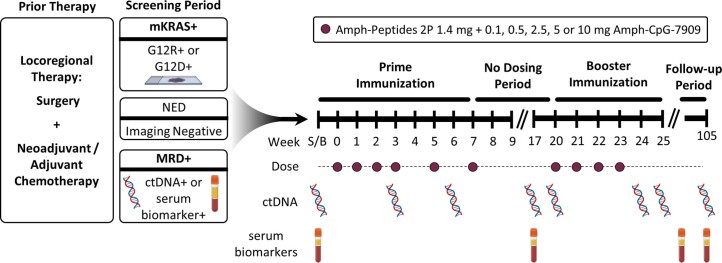
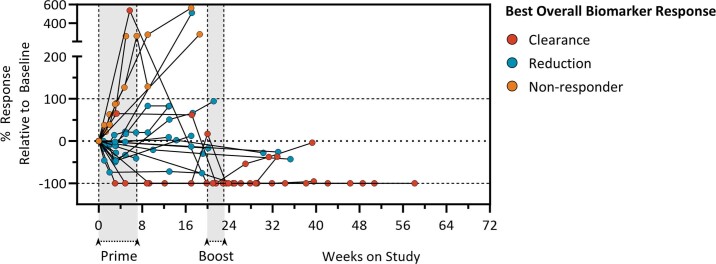
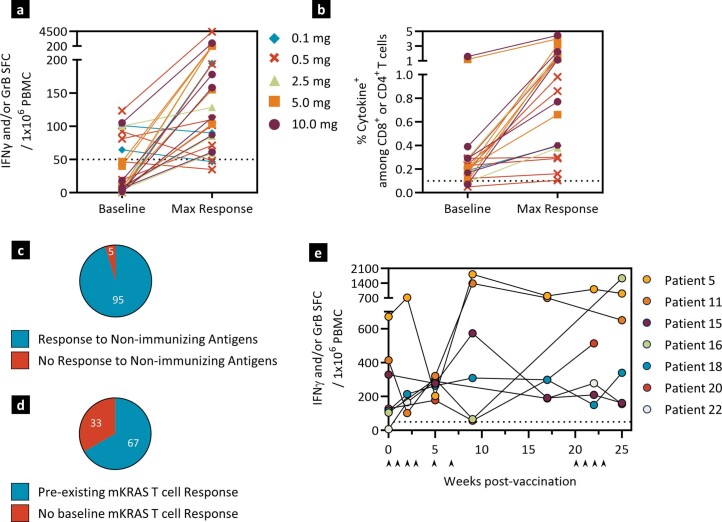
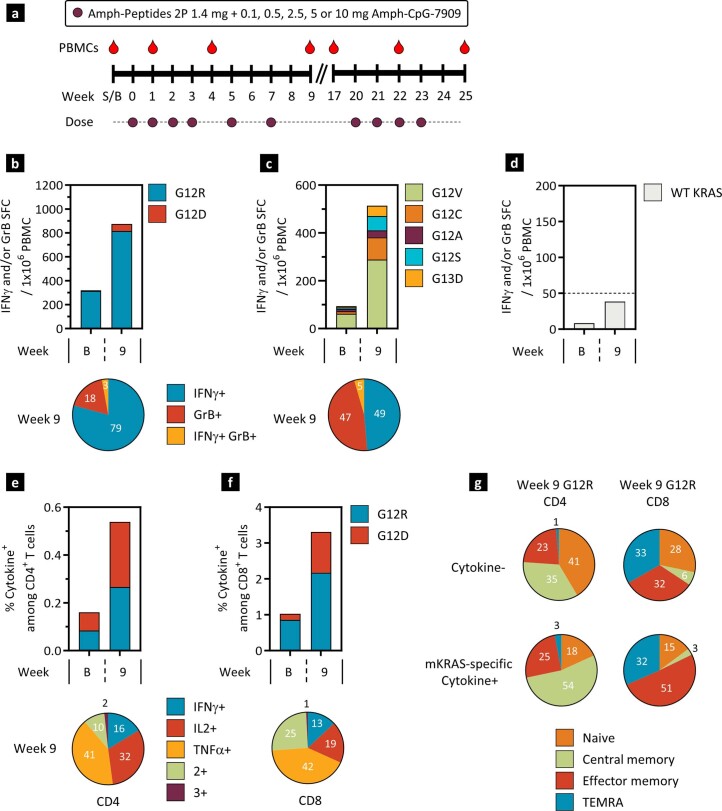
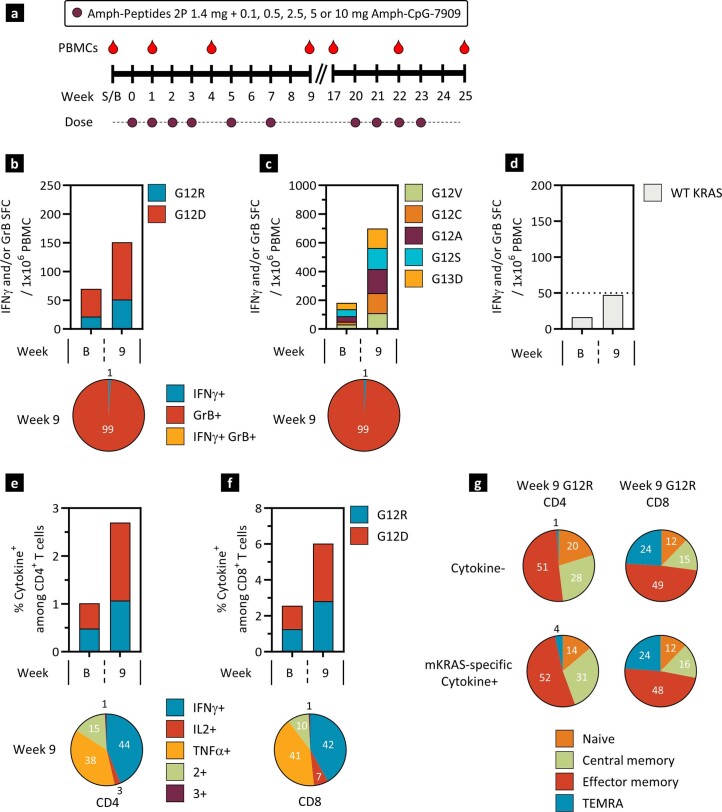
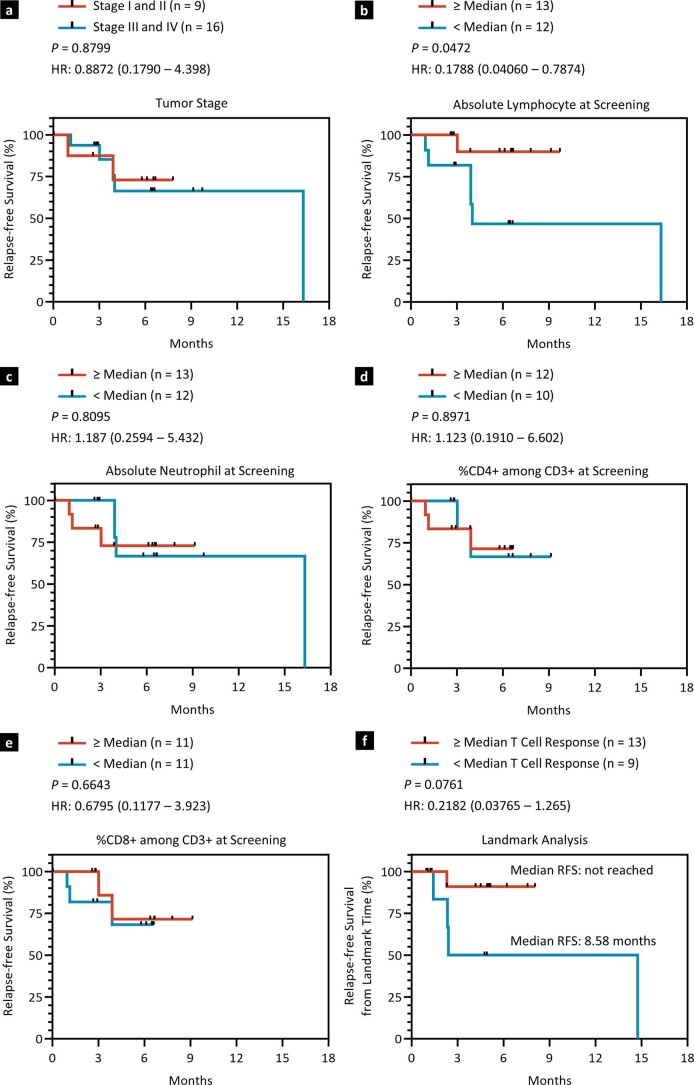
Pancreatic and colorectal cancers are often KRAS mutated and are incurable when tumor DNA or protein persists or recurs after curative intent therapy. Cancer vaccine ELI-002 2P enhances lymph node delivery and immune response using amphiphile (Amph) modification of G12D and G12R mutant KRAS (mKRAS) peptides (Amph-Peptides-2P) together with CpG oligonucleotide adjuvant (Amph-CpG-7909). We treated 25 patients (20 pancreatic and five colorectal) who were positive for minimal residual mKRAS disease (ctDNA and/or serum tumor antigen) after locoregional treatment in a phase 1 study of fixed-dose Amph-Peptides-2P and ascending-dose Amph-CpG-7909; study enrollment is complete with patient follow-up ongoing. Primary endpoints included safety and recommended phase 2 dose (RP2D). The secondary endpoint was tumor biomarker response (longitudinal ctDNA or tumor antigen), with exploratory endpoints including immunogenicity and relapse-free survival (RFS). No dose-limiting toxicities were observed, and the RP2D was 10.0 mg of Amph-CpG-7909. Direct ex vivo mKRAS-specific T cell responses were observed in 21 of 25 patients (84%; 59% both CD4 + and CD8 + ); tumor biomarker responses were observed in 21 of 25 patients (84%); biomarker clearance was observed in six of 25 patients (24%; three pancreatic and three colorectal); and the median RFS was 16.33 months. Efficacy correlated with T cell responses above or below the median fold increase over baseline (12.75-fold): median tumor biomarker reduction was −76.0% versus −10.2% ( P < 0.0014), and the median RFS was not reached versus 4.01 months (hazard ratio = 0.14; P = 0.0167). ELI-002 2P was safe and induced considerable T cell responses in patients with immunotherapy-recalcitrant KRAS-mutated tumors. ClinicalTrials.gov identifier: NCT04853017 .
Overview
The claims and statistics of this paper haven’t been checked yet.
Free: it reads the open-access text and checks the first 5 claims that cite a source we can check. Create a free account to check every claim.
Integrity signals
Registry
Cites
Statistics
Figures
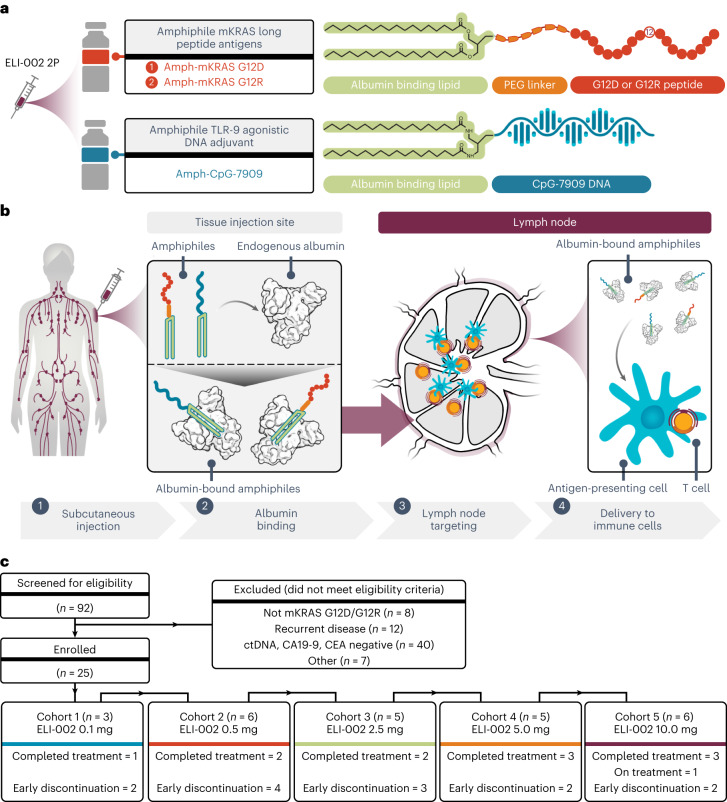
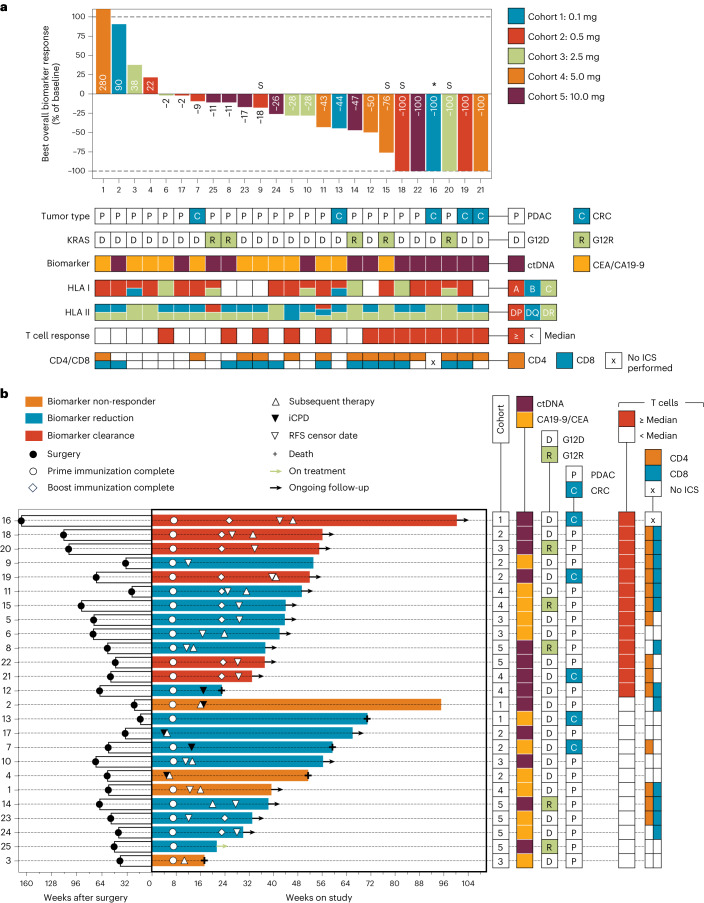
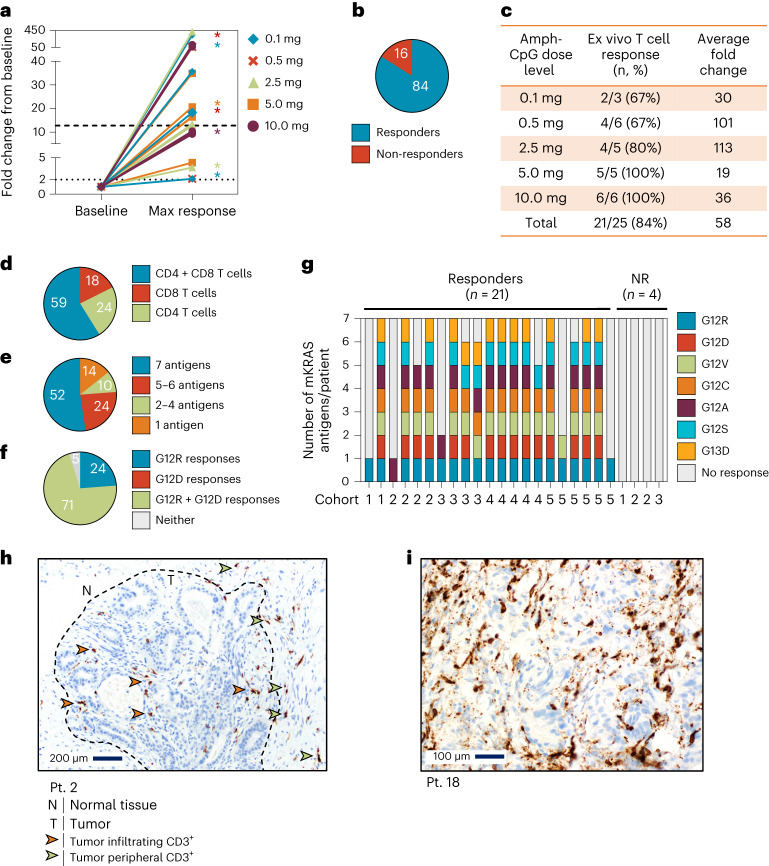
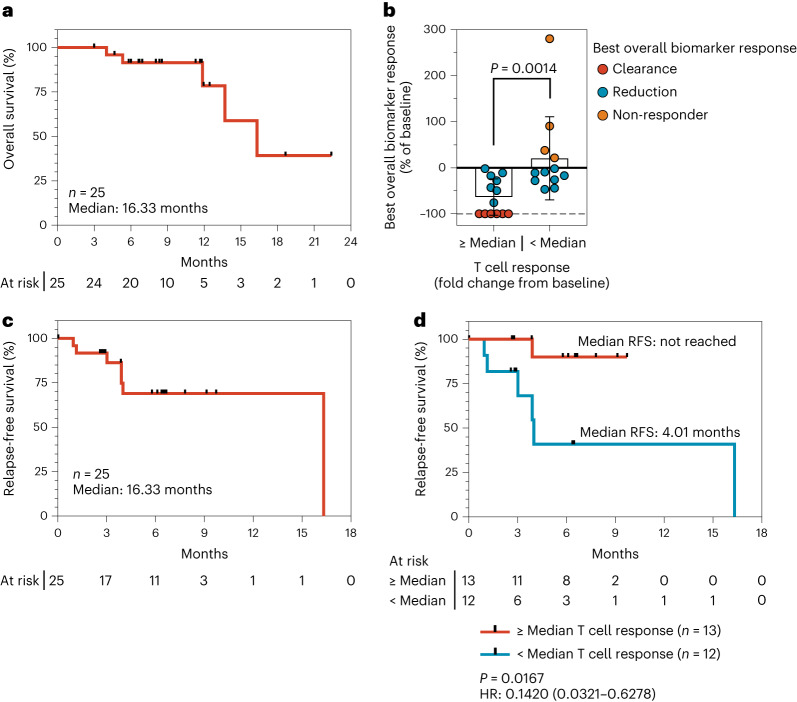
Verification
Claims the paper makes
The claims and statistics of this paper haven’t been checked yet.
Free: it reads the open-access text and checks the first 5 claims that cite a source we can check. Create a free account to check every claim.
Claims other papers make about this one
Each is checked against this paper’s own text: does it say what the citing paper says it does?
The cited source doesn’t support the claim as written.
In the citing paper
“The study showed 87% of patients experienced increased KRAS-specific T-cell responses and achieved biomarker clearance.”
From RAS Mutations in Advanced Colorectal Cancer: Mechanisms, Clinical Implications, and Novel Therapeutic Approaches (2025) · cites this paper as [108]
Checked by a reasoning model — may be wrong.
Experimental — accuracy not yet measuredThe cited source says what the claim attributes to it.
In the citing paper
“Additional emerging modalities include RNA-targeted therapeutics, antisense oligonucleotides, siRNA-based suppression [65,66], neoantigen vaccines [67,68], and adoptive T-cell therapies targeting mutant KRAS-derived epitopes [69,70].”
From Precision Targeting of KRAS-Mutant Cancers: Beyond G12C Toward G12D and Pan-RAS Therapeutic Strategies (2026) · cites this paper as [67]
In the citing paper
“ELI-002 2P is a lymph node-targeted immunotherapy consisting of Amphiphil (Amph)-modified G12D and G12R mutant KRAS peptides and an Amph-modified CpG oligonucleotide adjuvant.”
From RAS Mutations in Advanced Colorectal Cancer: Mechanisms, Clinical Implications, and Novel Therapeutic Approaches (2025) · cites this paper as [108]
In the citing paper
“In the recently published and promising AMPLIFY-201 study, the effectiveness of the cancer vaccine ELI-002 2P was demonstrated [108].”
From RAS Mutations in Advanced Colorectal Cancer: Mechanisms, Clinical Implications, and Novel Therapeutic Approaches (2025) · cites this paper as [108]
In the citing paper
“Furthermore, an amphiphile vaccine targeting p.G12D and p.G12R mutant KRAS has recently been tested in a phase I study for the adjuvant treatment of pancreatic cancer and CRC and showed good tolerability and promising efficacy.136”
From Current and emerging concepts for systemic treatment of metastatic colorectal cancer (2025) · cites this paper as [136]
Self-check
Percentages, sums and reported differences re-computed from the paper’s own numbers.
The self-check needs the paper’s full text.
Citations
Cites
Siegel, R. L., Miller, K. D., & Jemal, A. (2020) · CA: A Cancer Journal for Clinicians · doi:10.3322/caac.21590 · Cited by 20,444
Siegel, R. L., Miller, K. D., Fuchs, H. E., & Jemal, A. (2021) · CA: A Cancer Journal for Clinicians · doi:10.3322/caac.21654 · Cited by 16,522
PD-1 Blockade in Tumors with Mismatch-Repair Deficiency
Le, D. T., Uram, J. N., Wang, H., Bartlett, B. R., Kemberling, H., Eyring, A. D., Skora, A. D., Luber, B. S., Azad, N. S., Laheru, D., et al. (2015) · New England Journal of Medicine · doi:10.1056/nejmoa1500596 · Cited by 9,377
Safety and activity of anti-PD-L1 antibody in patients with advanced cancer
Brahmer, J. R., Tykodi, S. S., Chow, L. Q. M., Hwu, W.-J., Topalian, S. L., Hwu, P., Drake, C. G., Camacho, L. H., Kauh, J., Odunsi, K., et al. (2012) · New England Journal of Medicine · doi:10.1056/nejmoa1200694 · Cited by 7,945
An immunogenic personal neoantigen vaccine for patients with melanoma
Ott, P. A., Hu, Z., Keskin, D. B., Shukla, S. A., Sun, J., Bozym, D. J., Zhang, W., Luoma, A., Giobbie-Hurder, A., Peter, L., et al. (2017) · Nature · doi:10.1038/nature22991 · Cited by 2,936 · cited 1×
“Beyond the anti-tumor potential for CD8 + T cells, the role for CD4 + T cells includes support of CD8 + T cell activation and direct cytotoxic activity 42,43 .”
BackgroundPersonalized RNA mutanome vaccines mobilize poly-specific therapeutic immunity against cancer
Sahin, U., Derhovanessian, E., Miller, M., Kloke, B.-P., Simon, P., Löwer, M., Bukur, V., Tadmor, A. D., Luxemburger, U., Schrörs, B., et al. (2017) · Nature · doi:10.1038/nature23003 · Cited by 2,488 · cited 1×
“Beyond the anti-tumor potential for CD8 + T cells, the role for CD4 + T cells includes support of CD8 + T cell activation and direct cytotoxic activity 42,43 .”
BackgroundA Comprehensive Survey of Ras Mutations in Cancer
Prior, I. A., Lewis, P. D., & Mattos, C. (2012) · Cancer Research · doi:10.1158/0008-5472.can-11-2612 · Cited by 2,063 · cited 1×
“However, widely expressed (93% PDAC and 50% CRC) KRAS driver mutations (mKRASs) are attractive immunotherapy targets required for tumor survival with uniform expression throughout disease progression 9,10 .”
BackgroundPancreatic cancer genomes reveal aberrations in axon guidance pathway genes
Initiative, A. P. C. G., Biankin, A. V., Waddell, N., Kassahn, K. S., Gingras, M.-C., Muthuswamy, L. B., Johns, A. L., Miller, D. K., Wilson, P. J., Patch, A.-M., et al. (2012) · Nature · doi:10.1038/nature11547 · Cited by 2,058 · cited 3×
“Although ctDNA assessment allowed for detection of biomarker clearance (0 MTM/ml), we did not report any clearances for serum tumor biomarker reductions, as CA19-9 or CEA returned to the normal range but remained detectable.”
BackgroundMethodPark, W., Chawla, A., & O’Reilly, E. M. (2021) · JAMA · doi:10.1001/jama.2021.13027 · Cited by 1,882
Self-citationPersonalized RNA neoantigen vaccines stimulate T cells in pancreatic cancer
Rojas, L. A., Sethna, Z., Soares, K. C., Olcese, C., Pang, N., Patterson, E., Lihm, J., Ceglia, N., Guasp, P., Chu, A., et al. (2023) · Nature · doi:10.1038/s41586-023-06063-y · Cited by 1,432 · cited 2×
“However, recently, treatment with a personalized neoantigen vaccine administered in combination with checkpoint inhibitor and cytotoxic chemotherapy observed T cell responses that associated with prolonged RFS after adjuvant therapy in pancreatic cancer 38 .”
BackgroundSelf-citation
Cited by
Items 101–200 of 286
Lu, Z., Zhu, W., & Liu, X. (2025) · Seminars in Oncology · doi:10.1016/j.seminoncol.2025.152399 · Cited by 9
López-Estévez, A. M., Sanjurjo, L., Turrero, Á., Arriaga, I., Abrescia, N. G. A., Poveda, A. M., Jiménez‐Barbero, J., Vidal, A., Torres, D., & Alonso, M. J. (2024) · Journal of Controlled Release · doi:10.1016/j.jconrel.2024.07.032 · Cited by 10
Nguyen, H. T., Hoang, V.-T.-L., Nguyen, T. V., Trinh, N. A. L., Pham, T. H., Le, D. N., Ho, H. H., Nguyen, T. D., Nguyen, H. D., Do, T. T., et al. (2024) · ESMO Real World Data and Digital Oncology · doi:10.1016/j.esmorw.2024.100076 · Cited by 13
“For escalation in ctDNA-positive patients, novel approaches such as cancer vaccine 26 or personalized regimens in the ACT-3 trial (NCT04259944) are both based on speci fi c mutation pro fi le of MRD-positive patients.”
Dickey, E. M., Martos, M. P., Yanala, U., Corona, A., Ezenwajiaku, N., Pizzolato, J. F., Franceschi, D., Livingstone, A. S., Terrero, G., Hester, C. A., et al. (2024) · Surgical Oncology Insight · doi:10.1016/j.soi.2024.100116 · Cited by 13
Zhang, S., Zeng, Y., Cui, L., Zhang, Y., Chen, T., Xue, W., Wang, H., Liu, H., Zhang, Y., Chen, L., et al. (2025) · Journal of Nanobiotechnology · doi:10.1186/s12951-025-03423-w · Cited by 9
“We prepared three different XUA09C formulations: XUA09C-1018, XUA09C-2006 (XUA09C-7909) [37, 38], and XUA09C-2395 [39].”
Yee, E. J., McCarter, M. D., Vogel, J. D., Schulick, R. D., Lieu, C. H., & Lentz, R. W. (2025) · Current Oncology Reports · doi:10.1007/s11912-025-01725-8 · Cited by 8
Wu, C., Liu, W., Hu, X., Xie, Y., Li, S., Liu, X., Sun, Z., Li, X., Yu, X., Yuan, Y., et al. (2025) · Nature Communications · doi:10.1038/s41467-025-67197-3 · Cited by 9
KRAS Inhibition in Pancreatic Ductal Adenocarcinoma
Pradeep, R., Isbeih, N. J., Abraham, F. F., Noori, E., Yeung, Z. P., & Kundranda, M. N. (2026) · Journal of Clinical Medicine · doi:10.3390/jcm15020873 · Cited by 9
“KRAS-specific amphiphile vaccines (ELI-002) elicit robust T-cell responses and ctDNA clearance in PDAC MRD, whereas TCR therapies targeting KRAS neoepitopes have produced clinical re-gressions, providing immunologic complements to direct RAS targeting [106,166,167].”
Dendritic cell redundancy enables priming of anti-tumor CD4+ T cells in pancreatic cancer
Kureshi, C. T. S., Walsh, M. J., Kureshi, R., Cardot‐Ruffino, V., Agardy, D. A., Ali, L. R., Dougan, J. M., Li, Q., Shen, J., Zuo, C., et al. (2026) · Cancer Cell · doi:10.1016/j.ccell.2026.04.005 · Cited by 11
“87,88 Targeting cDC2s and leveraging MHC-II-presented peptides could reveal tumor antigens that yield productive anti-tumor CD4 + T cell responses in PDAC and other poorly immunogenic tumors.”
Ring, K. L., Mills, A. M., Howitt, B. E., Grisham, R. N., Euscher, E. D., Kim, H. S., Klopp, A. H., Kolin, D. L., McCluggage, W. G., Mirković, J., et al. (2025) · Gynecologic Oncology · doi:10.1016/j.ygyno.2025.04.583 · Cited by 10
SRC at the Crossroads of KRAS Inhibitor Resistance: Mechanisms and Therapeutic Opportunities
Tian, H., Zhao, D., Zhou, Z., Kim, A., Huang, H., Lee, Y. J., Qu, Z., Kang, R., Zeh, H. J., Westover, K. D., et al. (2026) · Cancer Letters · doi:10.1016/j.canlet.2025.218194 · Cited by 7
Keane, F., O'Connor, C. A., Moss, D., Chou, J. F., Perry, M., Crowley, F., Saxena, P., Chan, A., Schoenfeld, J. D., Singhal, A., et al. (2024) · JNCI Journal of the National Cancer Institute · doi:10.1093/jnci/djae269 · Cited by 9
Self-citationSignature Gene Mutations in Colorectal Cancer: Potential Neoantigens for Cancer Vaccines
Yoon, J., Moon, H., Jeon, Y., Choe, S., & Yoon, H. (2025) · International Journal of Molecular Sciences · doi:10.3390/ijms26104559 · Cited by 7
“Peptide-based vaccines are currently being evaluated in clinical trials, and in CRC, ELI-002 targeting KRAS mutations has demonstrated safety and promising therapeutic efficacy [114,115].”
Zeng, J., Jiang, W., & Wu, L. (2025) · Journal of Translational Research · doi:10.1080/29947448.2024.2427647 · Cited by 9
Chronic stress in cancer development and progression
Niu, X., Wu, T. H., Zeng, L., Wang, F., Lv, W., Zhang, L., & Zhou, F. (2025) · Science Bulletin · doi:10.1016/j.scib.2025.09.034 · Cited by 12
Tan, T., Diao, Y., Yu, X., Chen, L., & Fang, H. (2026) · Acta Pharmaceutica Sinica B · doi:10.1016/j.apsb.2025.12.044 · Cited by 9
Bever, K. M., Huff, A. L., Danilova, L., Wetzel, M., Tandurella, J. A., Durham, J. N., Wang, T., Lee, J. W., Coyne, E. M., Montagne, J. M., et al. (2026) · Cancer Immunology Research · doi:10.1158/2326-6066.cir-25-0545 · Cited by 9
Zhou, Y., Zhang, T., Wang, Z., & Xu, X. (2025) · Virology Journal · doi:10.1186/s12985-024-02604-7 · Cited by 7
“Morever, several clinical studies indicated that B-type CpG such as CpG7909 or CpG1018, used as adjuvants in vaccines targeting infectious diseases and cancers, could enhance Th1-skewed immune response of these vaccines [66, 67].”
Local Interactions in Aqueous Ethanol Solution Revealed by the C=O Stretching Probe
Wang, Z., Chen, C., Zhang, R., Ma, L., & Lin, K. (2025) · Molecules · doi:10.3390/molecules30071524 · Cited by 7
“In recent years, the self-assembly of amphiphilic molecules has garnered significant attention due to its extensive applications in materials science, medicine, and gene delivery [3–8].”
Inhibition of GTPase KRAS G12D : a review of patent literature
Li, Y., Yang, L., Li, X., & Zhang, X. (2024) · Expert Opinion on Therapeutic Patents · doi:10.1080/13543776.2024.2369630 · Cited by 9
“Clinical trials have demonstrated that ELI-002 can stimulate T cell responses and result in significant reduction of tumor biomarkers in immunotherapy-resistant KRAS-mutated tumors [104].”
Development of CAR-T Therapies and Personalized Vaccines for the Treatment of Cholangiocarcinoma
Li, D., Andaloori, L., Crowe, M., Lin, S., Hong, J., Zaidi, N., & Ho, M. (2024) · American Journal Of Pathology · doi:10.1016/j.ajpath.2024.10.021 · Cited by 7
Unlocking the promise of RAS inhibition in pancreatic cancer
Haldar, S. D., & Azad, N. S. (2024) · Nature Reviews Gastroenterology & Hepatology · doi:10.1038/s41575-024-00951-y · Cited by 7
“These data provide a strong rationale for developing strategies combining RAS inhibitors with immune-based therapeutics, such as immune checkpoint blockade and KRAS-targeted vaccines, in future clinical studies of patients with PDAC 9,10 .”
Oligometastatic pancreatic cancer: current state of management and emerging therapies
Khomiak, A., Balmaceda, N. B., Ghaffar, S. A., Lieu, C. H., Chiaro, M. D., Messersmith, W. A., & Lentz, R. W. (2025) · The Oncologist · doi:10.1093/oncolo/oyaf154 · Cited by 7
A T-cell receptor targeting RUNX1 frameshift mutations in acute myeloid leukemia
Struckman, N. E., Koutsoumpli, G., de Jong, R. C. M., van der Lee, D. I., Remst, D. F. G., Smith, S.-A. I., Honders, M. W., Hagedoorn, R. S., de Ru, A. H., Matsuda, M., et al. (2025) · Leukemia · doi:10.1038/s41375-025-02817-x · Cited by 7
Adenosine receptors on the immuno-oncology expressway: TIME, perspectives, and translation
Majumder, B., & Datta, S. (2026) · Frontiers in Immunology · doi:10.3389/fimmu.2025.1676702 · Cited by 9
Hydrogels for Cancer Immunotherapy: Strategies From Construction to Application
Chen, X., Wu, S.-Z., Zhang, Y., Feng, L., Yang, C., Yang, X., Men, K., Jq, Z., & Li, M. (2026) · MedComm · doi:10.1002/mco2.70615 · Cited by 7
Chen, Z., Qi, H., Xue, Y., Zhang, Y., Zhang, Z., Xu, S., Liao, S., Zeng, X., Wu, J., Lv, X., et al. (2025) · MedComm – Oncology · doi:10.1002/mog2.70015 · Cited by 7
Targeting KRAS in colorectal cancer immunotherapy: rationale, challenges and future directions
Zhu, G., Pei, L., Ye, D., Tang, Q., Xu, H., & Bi, F. (2025) · Biochimica et Biophysica Acta (BBA) - Reviews on Cancer · doi:10.1016/j.bbcan.2025.189382 · Cited by 8
Pan-RAS inhibitors and polo-like kinase 1: promising targets in colorectal cancer
Jayachandran, P., Elliott, A., Soni, S., Battaglin, F., Mittal, P., Algaze, S. D., Lo, J. H., Yang, Y., Ashouri, K., Torres, E. T. R., et al. (2025) · Oncogene · doi:10.1038/s41388-025-03484-z · Cited by 6
“The vaccine appeared safe and effective in patients with immunotherapy-resistant KRAS mutant tumors [81]. mRNA vaccines encoding novel KRAS mutation epitopes are being evaluated as mono-therapy and with pembrolizumab.”
State-of-the-art and upcoming trends in RAS-directed therapies in gastrointestinal malignancies
Vanclooster, P., Seghers, S., & Prenen, H. (2024) · Current Opinion in Oncology · doi:10.1097/cco.0000000000001042 · Cited by 6
Yaku, H., Takahashi, K., Okada, H., Kobiyama, K., Shiokawa, M., Uza, N., Kodama, Y., Ishii, K. J., & Seno, H. (2024) · Biochemical and Biophysical Research Communications · doi:10.1016/j.bbrc.2024.150534 · Cited by 5
Laheurte, C., Boullerot, L., Ndao, B., Malfroy, M., Queiroz, L., Guillaume, P., Loyon, R., Seffar, E., Gravelin, E., Renaudin, A., et al. (2025) · Cell Reports Medicine · doi:10.1016/j.xcrm.2025.102196 · Cited by 5
Cancer Vaccination and Immune-Based Approaches in Pancreatic Cancer
Bloom, M. D., Shaikh, A. R., Sun, Z., Bashir, B., & Snook, A. E. (2025) · Cancers · doi:10.3390/cancers17142356 · Cited by 7
“These assays may measure IFN γ or granzyme release from antigen-specific T cells [11,13,20,22,23,25,29,42,166], MHC class I tetramer analysis [30], or T-cell receptor diversity [11,39].”
InfluentialShen, M., Hao, Y., Han, X., Wang, B., Luo, L., Chen, T., Chen, S., Zou, L., Huang, J., Wang, W., et al. (2025) · Journal for ImmunoTherapy of Cancer · doi:10.1136/jitc-2025-011863 · Cited by 6
Recent Therapies and Biomarkers in Mucinous Ovarian Carcinoma
Przywara, G., Biegańska, O., Biczak, E., Białoń, A., Fidorowicz, D., Dankowska, A., Łapińska, Z., & Kulbacka, J. (2025) · Cells · doi:10.3390/cells14161232 · Cited by 5
“A key advantage of these vaccines is their broad availability, given their set composition and no HLA restrictions [65].”
Meade, E., & Garvey, M. (2025) · International Journal of Molecular Sciences · doi:10.3390/ijms26178307 · Cited by 6
“Short [148].”
Lymphatic metastasis in pancreatic cancer: from bedside to bench and back
Shi, H., Qin, C. Y., Zhao, Y., Zhao, B., Li, Z., Li, T., Huang, L., & Wang, W. (2025) · Cancer and Metastasis Reviews · doi:10.1007/s10555-025-10297-9 · Cited by 7
“In the AMPLIFY-201 phase 1 trial, this vaccine achieved mKRAS-specific CD4+ and CD8+ T cell responses in ~ 84% of patients with minimal residual PDAC disease, with biomarker reductions and prolonged relapse-free intervals correlating with the magnitude of T cell induction [158].”
Advances in the development of personalized neoantigen therapies
Brightman, S. E., & Butterfield, L. H. (2025) · The Journal of Experimental Medicine · doi:10.1084/jem.20241234 · Cited by 5
Pipe dream to pipeline: Journey of cancer vaccines and the road ahead
Onkar, S., Bozkus, C. C., Saxena, M., & Bhardwaj, N. (2026) · Cell Reports Medicine · doi:10.1016/j.xcrm.2025.102575 · Cited by 7
Cancer Neoantigen Vaccines Emerge Efficacious
Sultan, H., & Schreiber, R. D. (2026) · Annual Review of Medicine · doi:10.1146/annurev-med-071723-045853 · Cited by 5
Chemical Strategy and AI-Enabled Peptide Vaccine Development
Wang, X.-X., Su, J.-Y., & Li, Y.-M. (2026) · JACS Au · doi:10.1021/jacsau.6c00008 · Cited by 5
Fei, J., Cai, C., Wu, W., Shen, H., Han, Y., & Zeng, S. (2026) · Cell Reports Medicine · doi:10.1016/j.xcrm.2026.102728 · Cited by 9
Prophylactic and therapeutic cancer vaccine with continuous localized immunomodulation
Kota, N., Gonzalez, D. D., Liu, H., Viswanath, D. I., Pol, R. V., Wood, A., Trani, N. D., Chua, C. Y. X., & Grattoni, A. (2024) · Nanomedicine Nanotechnology Biology and Medicine · doi:10.1016/j.nano.2024.102776 · Cited by 6
Exogenous or in situ vaccination to trigger clinical responses in pancreatic cancer
Beatty, G. L., & Jaffee, E. M. (2024) · Carcinogenesis · doi:10.1093/carcin/bgae065 · Cited by 5
Inflammation, Immunosuppression, and Immunotherapy in Pancreatic Cancer—Where Are We Now?
Fudalej, M. M., Krupa, K., Badowska-Kozakiewicz, A. M., & Deptała, A. (2025) · Cancers · doi:10.3390/cancers17091484 · Cited by 5
“The therapy was well-tolerated, induced significant T-cell responses, and resulted in biomarker clearance and improved RFS [89].”
Pan, X., han, T., Zhao, Z., Wang, X. M., & Fang, X. (2024) · International Journal of Nanomedicine · doi:10.2147/ijn.s466459 · Cited by 7
“6–8 However, only 1% of PC patients with microsatellite instability may benefit from a single dose of immunotherapy because of the unique resistance of PC to immunotherapy.”
BackgroundBeg, M. M. A., Aslam, M., Ayaz, A., Akhtar, M. S., & Zaman, W. (2025) · Cells · doi:10.3390/cells14181453 · Cited by 6
“The platform’s architecture improves the delivery of antigen to lymphoid tissue, which may increase the priming effectiveness of CD8 T cells [43].”
Zhao, W., Noor, K. S., Sun, S., Xu, H., Meng, J., He, X., & Sheng, W. (2025) · Advanced Healthcare Materials · doi:10.1002/adhm.202503947 · Cited by 5
Peng, J., Yang, J., Antonopoulou, G., Fang, R., Adhikari, B., Vogt, M., Wolf, E., Sun, C., Du, S., Godfrey, L., et al. (2026) · Nature Communications · doi:10.1038/s41467-026-69013-y · Cited by 4
“Given the recent advances on antigen-based therapies to improve the tumor antigenicity 54,55 , our fi ndings on the combinatory effect of MEKi and HDACi on supporting the antigen presentation machinery provide functional evidence and avenues to induce more durable immune-mediated tumor elimination…”
Recent Advances in mRNA Therapeutic Cancer Vaccines
Laflin, A. D., Pan, J., You, M., & Jiang, S. (2026) · Annual Review of Biomedical Engineering · doi:10.1146/annurev-bioeng-110824-034150 · Cited by 5
Wang, H. H., Huff, A. L., Haldar, S. D., Berg, M., Thoburn, C. J., Heumann, T. R., Anders, R. A., Barrett, B., Bever, K. M., Pishvaian, M. J., et al. (2026) · Nature Communications · doi:10.1038/s41467-026-74711-8 · Cited by 4
“A lymph node-targeted peptide vaccine against KRAS G12D and G12R showed evidence of immunogenicity in the high-risk adjuvant setting, primarily in patients with pancreatic ductal adenocarcinoma 32 .”
The Landmark Series: The Future of Pancreatic Cancer Clinical Trials
Seo, Y. D., Katz, M. H. G., & Snyder, R. A. (2025) · Annals of Surgical Oncology · doi:10.1245/s10434-024-16840-2 · Cited by 4
“32 Beyond KRAS inhibition, there also have been exciting recent advances in targeting the fibroblast growth factor receptor (FGFR) pathway, which has been demonstrated to drive PDAC oncogenesis and progression.”
The enhancing effect of DNA tetrahedron-based lactoferrin as an assembled adjuvant in immunotherapy
Xu, M., Zhou, T., Yang, B., Wang, J., Sun, X., Dong, C., Song, C., Chao, J., Zhu, D., & Weng, L. (2025) · Chemical Engineering Journal · doi:10.1016/j.cej.2025.159941 · Cited by 4
Sun, P., Wang, L., Liu, Z., & Xu, Z. (2025) · Frontiers in Oncology · doi:10.3389/fonc.2025.1592072 · Cited by 7
Future of Dendritic Cell–Based Approaches in Pancreatic Cancer
Somasundaram, A., & Yeh, J. J. (2024) · Journal of Clinical Oncology · doi:10.1200/jco.24.00846 · Cited by 4
Zhao, B., Zhou, B., Li, Q., Su, C., Ma, J., & Yang, L. (2024) · MedComm – Future Medicine · doi:10.1002/mef2.70006 · Cited by 3
A lentiviral vector targeting a KRAS neoepitope for cancer immunotherapy
Goloudina, A. R., Chevalier, F. L., Authié, P., Ciret, S., Nemirov, K., Fert, I., Moncoq, F., Vesin, B., Noirat, A., Blanc, C., et al. (2025) · Scientific Reports · doi:10.1038/s41598-025-05134-6 · Cited by 3
“Naturally occurring T cell responses against KRAS mutations were also found in unvaccinated patients with pancreatic cancer, both in TILs and in peripheral blood lymphocytes 75,76 .”
Updates on molecular targets and clinical trials with targeted therapies for pancreatic cancer
Safyan, R. A., & Chiorean, E. G. (2025) · Surgical Oncology · doi:10.1016/j.suronc.2025.102268 · Cited by 4
Targeting pattern recognition receptors for cancer therapy: Mechanisms and strategies
Ouyang, D., Chen, R., Xie, H., Yang, X., Li, Q., & Chen, J. (2025) · Acta Pharmaceutica Sinica B · doi:10.1016/j.apsb.2025.09.007 · Cited by 3
Immunotherapy for precision medicine in colorectal cancer
Cao, M., Xu, M. Y., Bairmani, Z. A., Bashir, B., Waldman, S. A., & Snook, A. E. (2025) · Expert Review of Precision Medicine and Drug Development · doi:10.1080/23808993.2025.2560303 · Cited by 3
Parikh, C. N., DeMarco, K. D., Bhalerao, N., Giwa, H. K., Kane, G. I., Dinnell, R. W., Ma, B., Mori, H., Brassil, M. L., Murphy, K. C., et al. (2026) · Nature Communications · doi:10.1038/s41467-026-74574-z · Cited by 5
“…to the spleen of patients that are often removed during surgery, or amphiphile-modi fi ed KRAS vaccines used in other trials home to the lymph nodes 75 , both our intratumoral as well as NP approaches direct cytokine and antigen signals to the PDAC TME to mediate local immune responses there.”
Yang, C., Fan, J., Zhang, Y., Zhang, Y., Xia, L., Cao, X., & Wu, X. (2025) · Annals of Medicine · doi:10.1080/07853890.2025.2591308 · Cited by 4
“[ 159 ]”
Lee, W., Woo, H.-M., Cho, J. H., & Kim, M. S. (2025) · Frontiers in Oncology · doi:10.3389/fonc.2025.1718911 · Cited by 3
“KRAS targeted peptide vaccines, including TG01/GM-CSF and ELI-002 2P, have demonstrated encouraging survival and immunogenicity outcomes (22, 23).”
Negahi, A., Khosravi-Mashizi, M., Najdsepas, H., Negahban, H., Mousavi-Beni, S. A., Damavand, R. S., Naseri, A., Jayervand, F., Shahbazi, A., Rahmani, A., et al. (2025) · Asian Pacific Journal of Cancer Prevention · doi:10.31557/apjcp.2025.26.12.4299 · Cited by 4
mRNA Vaccines for Cancer Treatment
Torphy, R. J., Balachandran, V., & Soares, K. C. (2026) · Surgical Oncology Clinics of North America · doi:10.1016/j.soc.2025.10.006 · Cited by 3
Qiao, N., Chen, J., Liu, Y., Chen, Z. J., & Chen, S. J. (2026) · MedScience · doi:10.1007/s11684-026-1210-6 · Cited by 5
Zhang, Z., Chen, J., Shi, Q. W., Zhou, Z., Wang, B., Gu, P., Zhao, J., Dai, J., Sun, Q., & Teng, Y. (2026) · Advanced Composites and Hybrid Materials · doi:10.1007/s42114-026-01846-z · Cited by 3
Targeting KRAS for cancer therapy
Jia, J., Liu, R., Adamide, T. A., Fernandez, I. E., & Stathopoulos, G. T. (2026) · British Journal of Pharmacology · doi:10.1111/bph.70546 · Cited by 4
Unraveling (K)RAS in pancreatic ductal adenocarcinoma
Doleschal, B. (2024) · memo - Magazine of European Medical Oncology · doi:10.1007/s12254-024-01003-6 · Cited by 5
Sandstad, V. B. B., Modvig, S., & Holmström, M. O. (2025) · Cancer Immunology Immunotherapy · doi:10.1007/s00262-025-04107-y · Cited by 3
Immunotherapy in Gastrointestinal Cancers: Current Insights
Jiang, X., Zhan, Y., Yang, D., & Bao, L. (2025) · Clinical Pharmacology Advances and Applications · doi:10.2147/cpaa.s497836 · Cited by 9
Billing, L., Martin, L., Henser‐Brownhill, T., Samangouei, P., Leach, A., Knight, P., Apostolidou, M., Ladak, A., Nagel, B., & Kwok, A. (2025) · Advanced Science · doi:10.1002/advs.202514417 · Cited by 3
Precision Oncology in Pancreatic Cancer and Future Treatment Directions
Mahmasani, L. A., & O'Reilly, E. M. (2025) · Surgical Oncology Clinics of North America · doi:10.1016/j.soc.2025.03.002 · Cited by 3
Self-citationPancreatic Cancer: Early Detection and Novel Therapies
Murthy, A. V., Nagendran, A., & Rao, D. (2025) · Journal of Translational Gastroenterology · doi:10.14218/jtg.2024.00037 · Cited by 4
Wang, M., Pang, L., Sun, Y., Han, J., Fan, J., Shen, W., Hu, X., Yang, B., Ning, H., Kong, Y., et al. (2025) · Neoplasia · doi:10.1016/j.neo.2025.101200 · Cited by 3
Driving Precision Medicine in Pancreatic Cancer With Molecular Genetics
Farooq, M., & Pishvaian, M. J. (2025) · Seminars in Radiation Oncology · doi:10.1016/j.semradonc.2025.08.004 · Cited by 3
Emerging Systemic Therapy Considerations for Pancreatic Cancer
Liang, K.-L., Guo, M. Z., & Zaidi, N. (2025) · Seminars in Radiation Oncology · doi:10.1016/j.semradonc.2025.07.006 · Cited by 2
Therapeutic cancer vaccines in pancreatic cancer
Wang, Y., Huang, P., Li, C., Tu, S., & Yang, H. (2025) · Frontiers in Immunology · doi:10.3389/fimmu.2025.1674743 · Cited by 3
RNA-based cancer vaccines: mechanisms, clinical progress, and translational challenges
Al‐Kabariti, A. Y., Kadhim, M. A., Mousa, H. M., Jyothi, S. R., Nayak, P. P., Janney, J. B., Singh, G., & Chauhan, A. S. (2025) · Immunologic Research · doi:10.1007/s12026-025-09725-3 · Cited by 2
Harnessing Vaccines in the Treatment of Solid Tumors: Advances, Challenges, and Future Directions
Iranzo, J. S., Giordano, E., Marsicano, R. M., Trapani, D., Marra, A., Belli, C., Zagami, P., Giachetti, P. P. M. B., Ferraro, E., Minchella, I., et al. (2026) · Vaccines · doi:10.3390/vaccines14020135 · Cited by 3
Recent developments in cancer immuno-interception strategies
Zhu, Z., Mathew, J., Barrett, B., Wang, H. H., Huff, A. L., Armstrong, T. D., Jaffee, E. M., & Zaidi, N. (2026) · Trends in Molecular Medicine · doi:10.1016/j.molmed.2026.02.004 · Cited by 3
Biomineralized nanoemulsion delivers mRNA for potent cancer immunotherapy
Xu, Y., Tang, X., Guo, Z., Wang, Y., He, C., Wei, H., Xue, Y., Ou, Y., Ye, L., Zhao, Y., et al. (2026) · Journal of Controlled Release · doi:10.1016/j.jconrel.2026.114889 · Cited by 2
Advancing precision medicine in pancreatic cancer using novel biomarkers and clinical targets
Murthy, D., Seyhan, A. A., den Hollander, P., Lu, S., Kuburich, N. A., Gould, C., Karam, A., Sun, K., Schupp, P. G., Safran, H., et al. (2026) · Molecular Aspects of Medicine · doi:10.1016/j.mam.2026.101476 · Cited by 3
Preclinical development of a mutant KRAS targeting therapeutic cancer vaccine
Pinto, C., Bischl, R., Knežević, L., Ahmadi-Erber, S. M., Huang, K. B., Schmidt, S., Steinberger, P., Orlinger, K. K., Lauterbach, H., & Raguz, J. (2026) · Cancer Gene Therapy · doi:10.1038/s41417-026-01034-7 · Cited by 2
“The”
Neoantigen-based T cell vaccines design strategies, therapeutic barriers, and clinical advances
Shi, J., Wang, J., 罗红梅, Zhao, Q., Yao, Z., Wu, G., Li, Z., Wang, H., Chen, G. D., & Wu, D. (2026) · Vaccine · doi:10.1016/j.vaccine.2026.128659 · Cited by 2
Nanoparticles for colorectal cancer therapy: A review
Yang, C.-W., Fang, H.-M., Gong, X.-Y., Wang, J., & Zou, T. (2026) · Biomaterials Advances · doi:10.1016/j.bioadv.2026.214926 · Cited by 4
Steinbuck, M. P., Seenappa, L. M., Zhan, W., Palmer, E., Jakubowski, A., Cabana-Puig, X., Jüng, M., McNeil, L. K., Haqq, C. M., Fitzgerald, K. A., et al. (2026) · Science Advances · doi:10.1126/sciadv.aec1416 · Cited by 2
“Together, the strong cellular and humoral responses and minimal adverse effects observed in NHP, combined with clinical data using a similar AMP-conjugated CpG adjuvant ( 28 ), indicate promise for AMP-DNA adjuvant evaluation in future clinical studies.”
InfluentialSelf-citationHu, N., Liu, Y., Du, Y., Gao, Y., Wang, Y., Sun, H., Meng, Y., Han, D., & Shi, X. (2025) · Nano Today · doi:10.1016/j.nantod.2025.102798 · Cited by 3
A new era with advanced immunotherapy
Lopez, C. B., Ruijgrok, E. J., & van Eijck, C. H. J. (2024) · Translational Gastroenterology and Hepatology · doi:10.21037/tgh-24-37 · Cited by 2
Neoantigen vaccines at the crossroads: lessons from AMPLIFY-201
Wang, H. H., & Yarchoan, M. M. (2025) · Nature Reviews Clinical Oncology · doi:10.1038/s41571-025-01076-0 · Cited by 2
“The AMPLIFY-201 trial 2,3 contributes to the growing body of evidence supporting neoantigen vaccines and provides hope that a long-anticipated turning point might be approaching, although single-arm studies in patients without radiographical evidence of disease — such as this trial — have inherent…”
InfluentialNORPACT-1: implications for future trials
Snyder, R. A., & Katz, M. H. G. (2024) · The Lancet. Gastroenterology & hepatology · doi:10.1016/s2468-1253(24)00054-2 · Cited by 1
The Possible Role of Immunotherapy in Locally Advanced Pancreatic Cancer Treatment
Barakat, R., Sidira, D., Stavropoulos, A., Konsolas, N., Palantzas, A., & Filippou, D. K. (2025) · Acta Medica Academica · doi:10.5644/ama2006-124.479 · Cited by 1
“Nonetheless, adverse effects such as fatigue, injection site reactions, and myalgia were also noted (20).”
Targeting RAS for Cancer Treatment: What a Long, Strange Trip It's Been
Cox, A. D., & Der, C. J. (2025) · Annual Review of Cancer Biology · doi:10.1146/annurev-cancerbio-071024-082459 · Cited by 1
Oncogene Mutations: The Shared Antigen Vaccines That Work?
Paredes, R., Haldar, S. D., Pant, S., & O'Reilly, E. M. (2025) · Annual Review of Medicine · doi:10.1146/annurev-med-043024-111400 · Cited by 1
“MRD-targeted vaccines could enhance immune surveillance, prevent recurrence, and improve survival (37).”
InfluentialSelf-citationYuntao, Y. A. N. G., Zhang, Y., Shen, Z., Chen, S., Zhang, Y., & Wang, X. (2026) · Open Medicine · doi:10.1515/med-2025-1323 · Cited by 1
Grewal, U. S., Patel, R. R., Loeffler, B. T., Rathjens, S., Rosenzweig, A., Zelada-Arenas, F., Abdilleh, K., Vadehra, D., Hornstein, N. J., Brown, T. J., et al. (2026) · JCO oncology advances. · doi:10.1200/oa-25-00140 · Cited by 1
Molecular origin, discovery, validation and application of neoantigens
Lyu, Q., & Hu, S. (2026) · Asian Journal of Pharmaceutical Sciences · doi:10.1016/j.ajps.2026.101143 · Cited by 4
“…this, early-phase trials of the lymph node– targeted amphiphile vaccine ELI-002 in resected KRAS-mutant pancreatic and colorectal cancer induced KRAS-specific T-cell responses in approximately 80%–85% of patients, and higher-magnitude responses correlated with improved relapse-free survival [ 94 ].”
Liu, Y., Hacan, B. A., Zheng, J., Ge, X., Yu, D., Chen, Z., Xu, Y., Shao, N., Shen, H., Liu, X., et al. (2026) · Journal of Functional Biomaterials · doi:10.3390/jfb17040185 · Cited by 1
“In recent years, cancer immunotherapies, such as immune checkpoint inhibitors and therapeutic cancer vaccines, have been explored as novel treatment strategies for CRC, aiming to eliminate tumor cells by activating the host immune system [5–11].”
KRAS and MYC synergistic inhibition: a powerful strategy targeting KRAS-mutant cancers
Yan, M., Liu, K., Xu, J., Liu, Y., Ji, L., & Zhang, S. (2026) · Molecular Cancer · doi:10.1186/s12943-026-02659-w · Cited by 1
“The AMPLIFY 201 trial (NCT04853017) investigated ELI-002 2P, a lymph node-targeted KRAS [G12D]/G12R amphiphile vaccine directed against KRAS [G12D] and [G12R] mutations in patients with PDAC and CRC [162, 163].”
Xue, Y., Yu, J., Zhou, H., Chen, W., Qi, C. H. E. N., Hu, L., Luo, R., Chen, Y., Wang, X., & He, X. (2026) · Frontiers in Immunology · doi:10.3389/fimmu.2026.1803792 · Cited by 1
“Early clinical evidence supports this concept: a phase I trial demonstrated that the ELI-002 2P vaccine induced robust KRAS-speci fi c T-cell responses and signi fi cantly prolonged recurrence-free survival (RFS) (25).”
Metadata
- Authors
- Pant, S., Wainberg, Z. A., Weekes, C. D., Furqan, M., Kasi, P. M., Devoe, C. E., Leal, A. D., Chung, V., Basturk, O., VanWyk, H., Tavares, A. M., Seenappa, L. M., Perry, J. R., Kheoh, T., McNeil, L. K., Welkowsky, E., DeMuth, P. C., Haqq, C. M., & O’Reilly, E. M.
- Affiliations
- The University of Texas MD Anderson Cancer Center (US)
- University of California, Los Angeles (US)
- Massachusetts General Hospital (US)
- University of Iowa (US)
- Northwell Health (US)
- University of Colorado Anschutz (US)
- City Of Hope National Medical Center (US)
- Corresponding author
- Pant, Shubham
- Haqq, Christopher M.
- ORCID
- Venue
- Nature Medicine
- Published
- 2024-01-09
- Volume
- 30
- Issue
- 2
- Pages
- 531-542
- ISSN
- 1078-8956 (ISSN-L)
- 1546-170X
- PMC
- PMC10878978
- OpenAlex
- W4390707107
- Semantic Scholar
- c30aa6c7d49d4cebece9bfbc806c0fec1a2f90dd
- Cited by
- 267
- References
- 60
- Citations by year
- 2026: 96 · 2025: 114 · 2024: 57
- FWCI
- 44.65
- Type
- journal article
- Language
- en
- Open access
- hybrid
- doi.org
- Licence
- cc-by
- creativecommons.org/licenses/by/4.0 (tdm)
- creativecommons.org/licenses/by/4.0 (vor)
- Locations
- Nature Medicine (publishedVersion, cc-by)
- PubMed Central (publishedVersion, cc-by)
- PubMed (publishedVersion)
- eScholarship (California Digital Library) (submittedVersion, cc-by)
- Funders
- Elicio Therapeutics
- Topics
- Life Sciences › Immunology and Microbiology › Immunology › Immunotherapy and Immune Responses
- Health Sciences › Medicine › Oncology › Pancreatic and Hepatic Oncology Research
- Health Sciences › Medicine › Oncology › Cancer Immunotherapy and Biomarkers
- Keywords
- pancreatic cancer, colorectal cancer, minimal residual disease, circulating tumor DNA, T cell response, relapse-free survival, immunotherapy resistance, lymph node targeting
- MeSH terms
- Antigens, Neoplasm, Humans, Neoplasm Recurrence, Local, Peptides, Biomarkers, Tumor, Vaccines, Colorectal Neoplasms, Proto-Oncogene Proteins p21(ras)
About these checks
Registry, retraction, Cites and statistics results are computed, not judged, with one exception: a printed reference that no index lists is read once by a model before it counts as a citation error. Claims are extracted by a model and kept only when their quote appears verbatim in the text; each cited source is then checked, with a model’s help, for whether it says what the claim relies on. Those verdicts can be wrong — read the claim’s quote and the cited source before relying on one.
Statistics and arithmetic are recomputed, not judged.
Confidence bands are shown only for fields calibrated on our annotated test set. None is calibrated yet, so no band is shown.
What counts as a claim ›How we measure confidence ›How we check this ›
Are you an author, or do you see a problem with this page? Request a review
Data sources
Bibliographic data: Semantic Scholar, OpenAlex, Crossref.
Contains information from the Semantic Scholar Academic Graph Datasets, made available under the ODC Attribution License (ODC-BY 1.0).
Semantic Scholar’s data is described in: Kinney, R., et al. (2023). The Semantic Scholar Open Data Platform. arXiv:2301.10140.
