

Lymph-node-targeted, mKRAS-specific amphiphile vaccine in pancreatic and colorectal cancer: the phase 1 AMPLIFY-201 trial
Open accessThe DOI matches its Crossref record; 59 of the 60 references it cites were found in a registry or an index.
Abstract
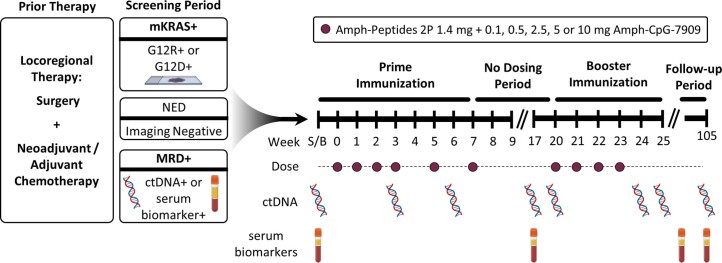
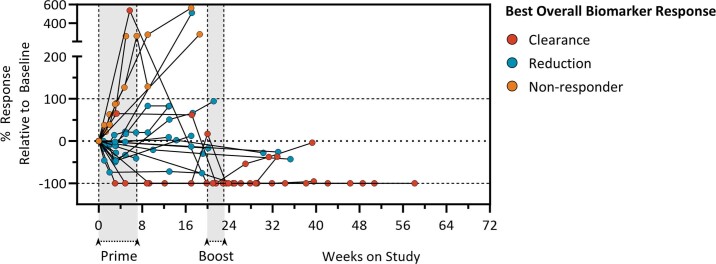
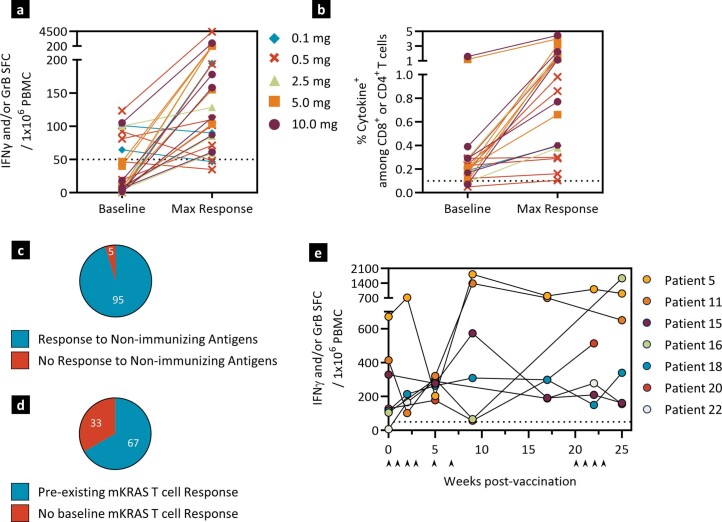
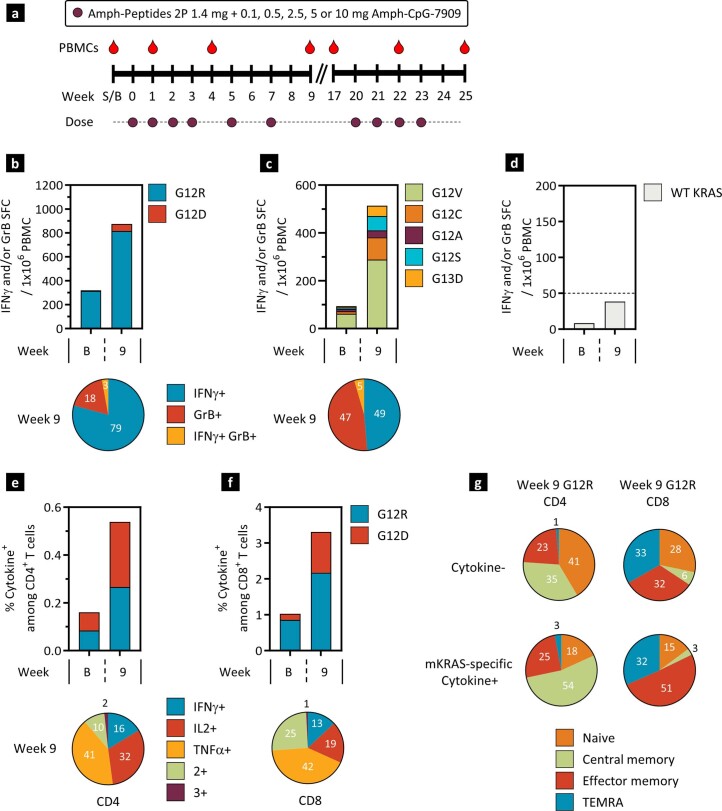
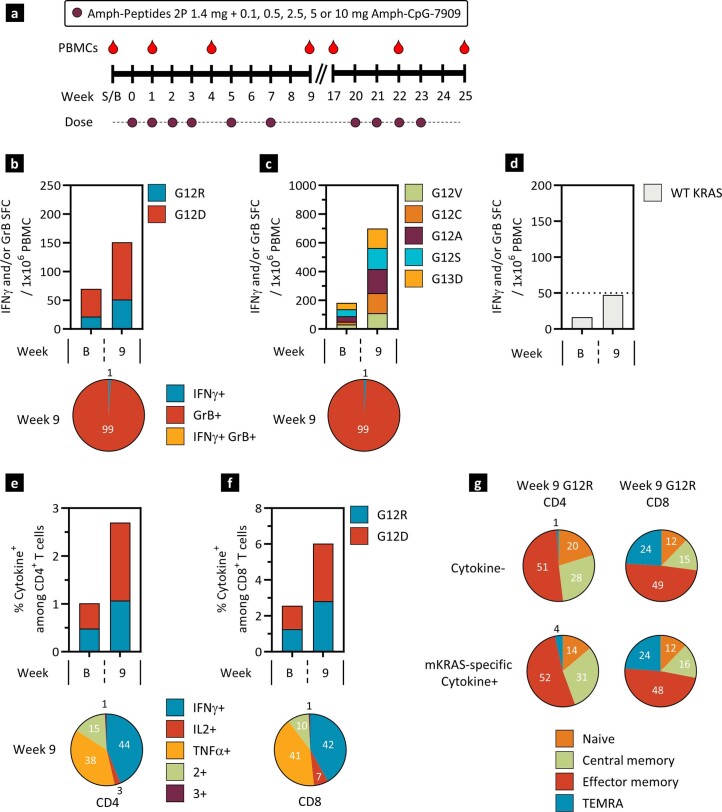
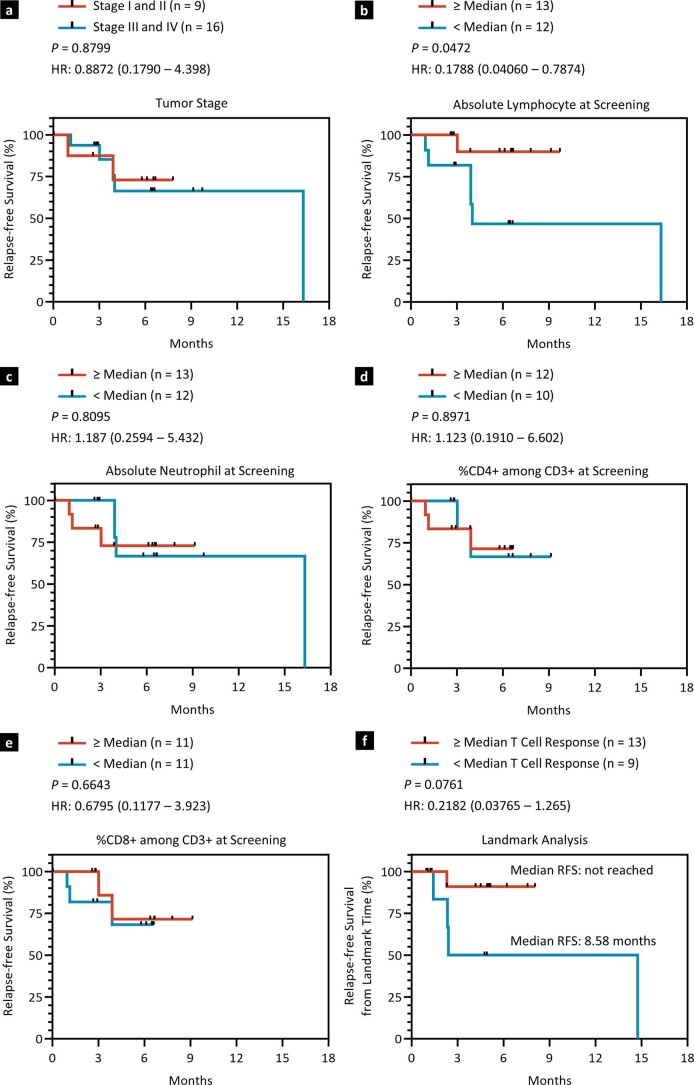
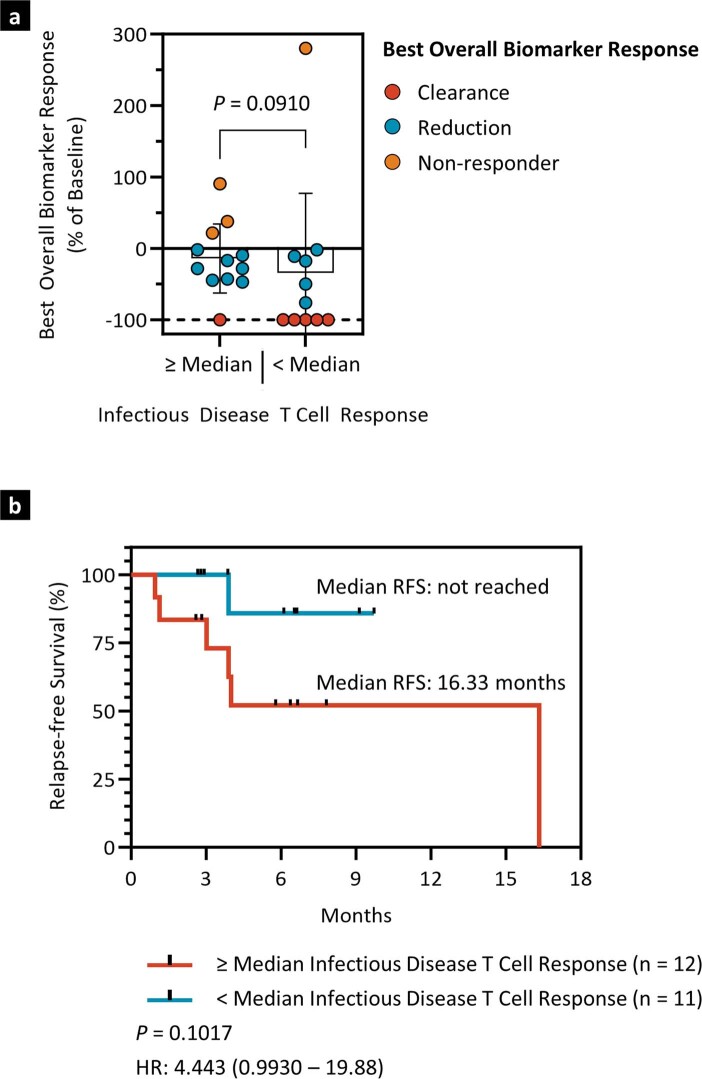
Pancreatic and colorectal cancers are often KRAS mutated and are incurable when tumor DNA or protein persists or recurs after curative intent therapy. Cancer vaccine ELI-002 2P enhances lymph node delivery and immune response using amphiphile (Amph) modification of G12D and G12R mutant KRAS (mKRAS) peptides (Amph-Peptides-2P) together with CpG oligonucleotide adjuvant (Amph-CpG-7909). We treated 25 patients (20 pancreatic and five colorectal) who were positive for minimal residual mKRAS disease (ctDNA and/or serum tumor antigen) after locoregional treatment in a phase 1 study of fixed-dose Amph-Peptides-2P and ascending-dose Amph-CpG-7909; study enrollment is complete with patient follow-up ongoing. Primary endpoints included safety and recommended phase 2 dose (RP2D). The secondary endpoint was tumor biomarker response (longitudinal ctDNA or tumor antigen), with exploratory endpoints including immunogenicity and relapse-free survival (RFS). No dose-limiting toxicities were observed, and the RP2D was 10.0 mg of Amph-CpG-7909. Direct ex vivo mKRAS-specific T cell responses were observed in 21 of 25 patients (84%; 59% both CD4 + and CD8 + ); tumor biomarker responses were observed in 21 of 25 patients (84%); biomarker clearance was observed in six of 25 patients (24%; three pancreatic and three colorectal); and the median RFS was 16.33 months. Efficacy correlated with T cell responses above or below the median fold increase over baseline (12.75-fold): median tumor biomarker reduction was −76.0% versus −10.2% ( P < 0.0014), and the median RFS was not reached versus 4.01 months (hazard ratio = 0.14; P = 0.0167). ELI-002 2P was safe and induced considerable T cell responses in patients with immunotherapy-recalcitrant KRAS-mutated tumors. ClinicalTrials.gov identifier: NCT04853017 .
Overview
The claims and statistics of this paper haven’t been checked yet.
Free: it reads the open-access text and checks the first 5 claims that cite a source we can check. Create a free account to check every claim.
Integrity signals
Registry
Cites
Statistics
Figures
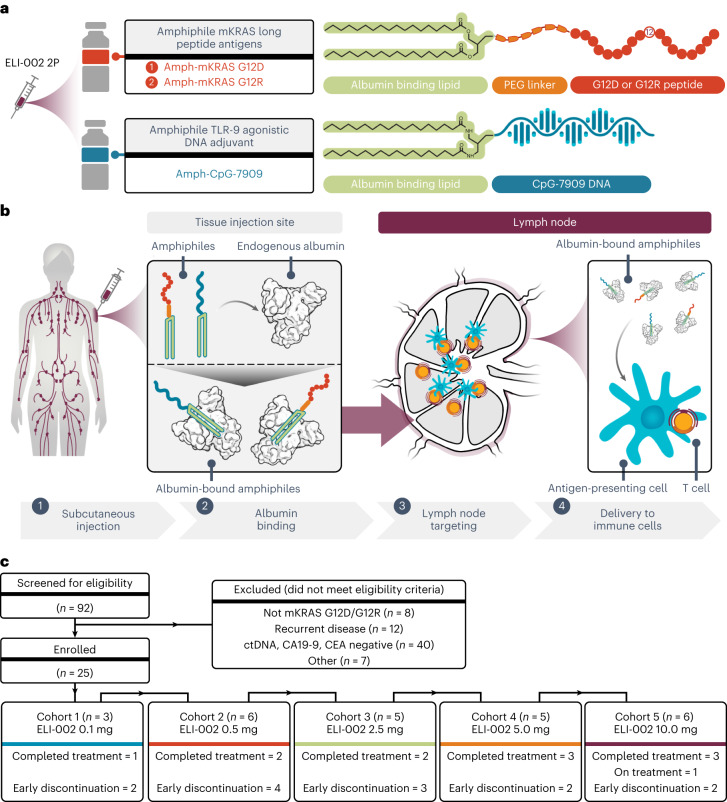
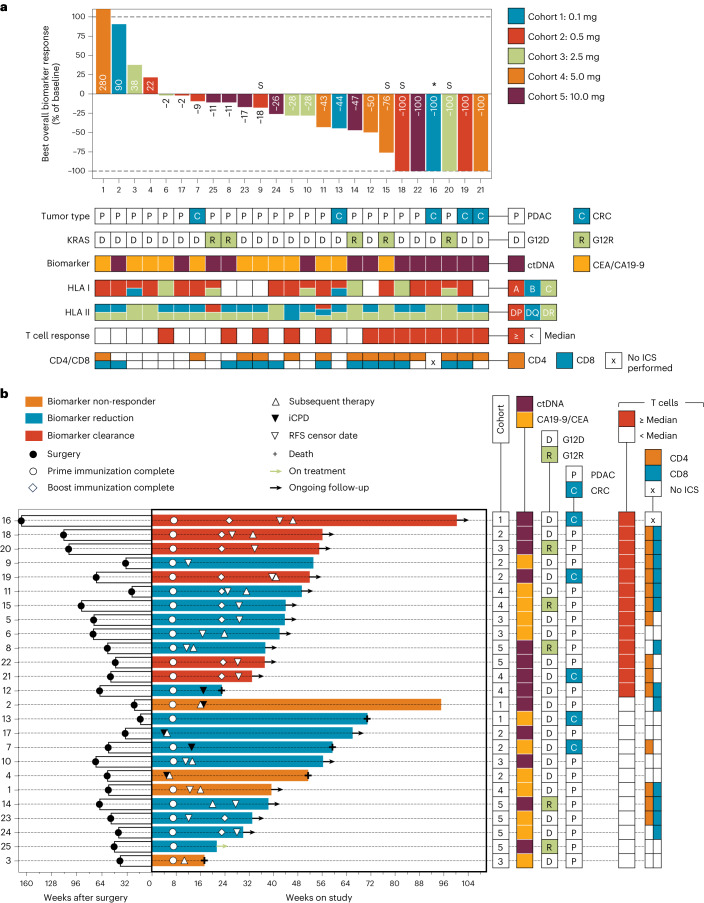
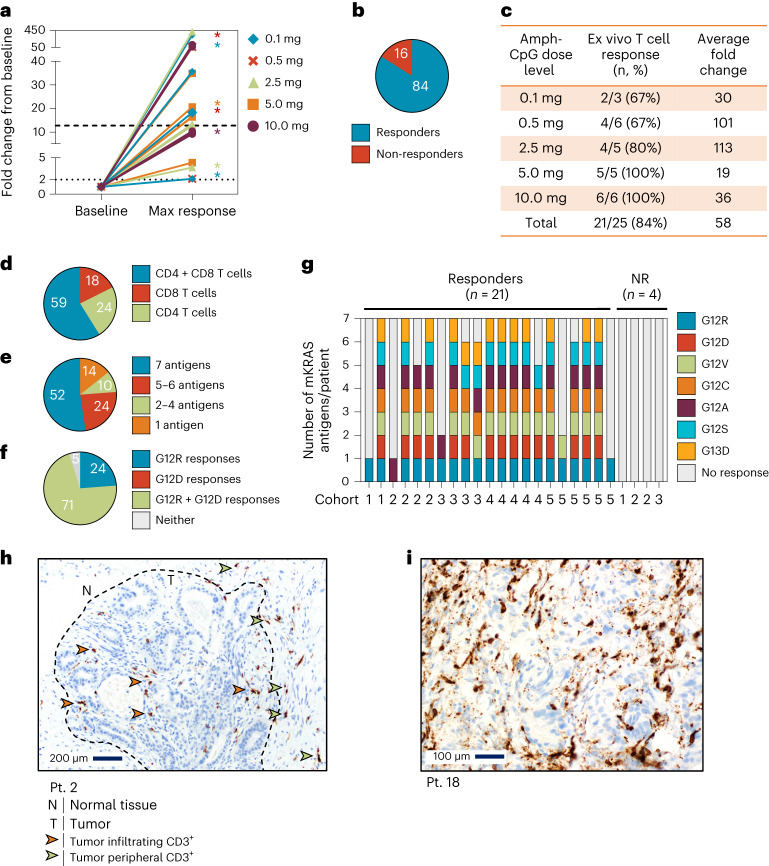
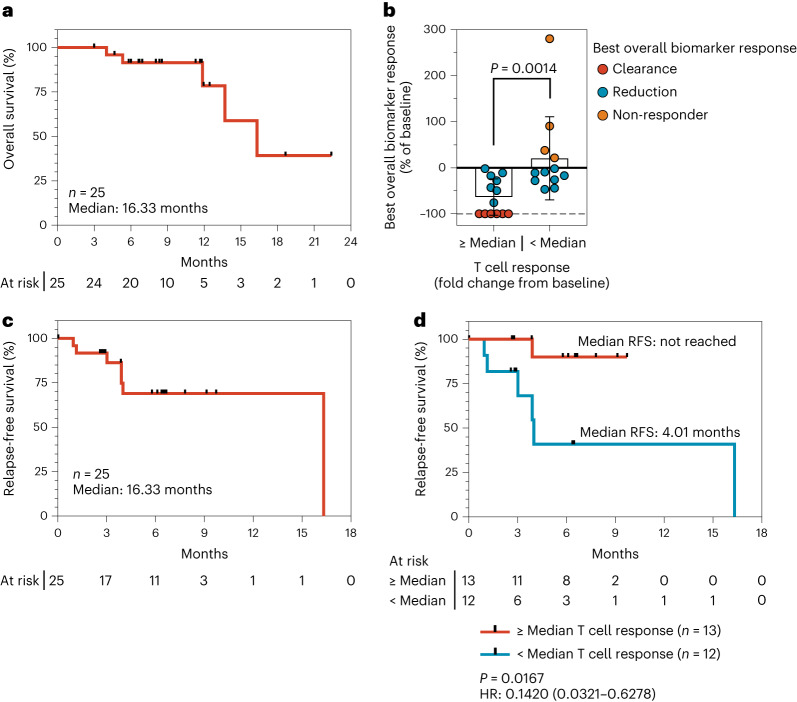
Verification
Claims the paper makes
The claims and statistics of this paper haven’t been checked yet.
Free: it reads the open-access text and checks the first 5 claims that cite a source we can check. Create a free account to check every claim.
Claims other papers make about this one
Each is checked against this paper’s own text: does it say what the citing paper says it does?
The cited source doesn’t support the claim as written.
In the citing paper
“The study showed 87% of patients experienced increased KRAS-specific T-cell responses and achieved biomarker clearance.”
From RAS Mutations in Advanced Colorectal Cancer: Mechanisms, Clinical Implications, and Novel Therapeutic Approaches (2025) · cites this paper as [108]
Checked by a reasoning model — may be wrong.
Experimental — accuracy not yet measuredThe cited source says what the claim attributes to it.
In the citing paper
“Additional emerging modalities include RNA-targeted therapeutics, antisense oligonucleotides, siRNA-based suppression [65,66], neoantigen vaccines [67,68], and adoptive T-cell therapies targeting mutant KRAS-derived epitopes [69,70].”
From Precision Targeting of KRAS-Mutant Cancers: Beyond G12C Toward G12D and Pan-RAS Therapeutic Strategies (2026) · cites this paper as [67]
In the citing paper
“ELI-002 2P is a lymph node-targeted immunotherapy consisting of Amphiphil (Amph)-modified G12D and G12R mutant KRAS peptides and an Amph-modified CpG oligonucleotide adjuvant.”
From RAS Mutations in Advanced Colorectal Cancer: Mechanisms, Clinical Implications, and Novel Therapeutic Approaches (2025) · cites this paper as [108]
In the citing paper
“In the recently published and promising AMPLIFY-201 study, the effectiveness of the cancer vaccine ELI-002 2P was demonstrated [108].”
From RAS Mutations in Advanced Colorectal Cancer: Mechanisms, Clinical Implications, and Novel Therapeutic Approaches (2025) · cites this paper as [108]
In the citing paper
“Furthermore, an amphiphile vaccine targeting p.G12D and p.G12R mutant KRAS has recently been tested in a phase I study for the adjuvant treatment of pancreatic cancer and CRC and showed good tolerability and promising efficacy.136”
From Current and emerging concepts for systemic treatment of metastatic colorectal cancer (2025) · cites this paper as [136]
Self-check
Percentages, sums and reported differences re-computed from the paper’s own numbers.
The self-check needs the paper’s full text.
Citations
Cites
Siegel, R. L., Miller, K. D., & Jemal, A. (2020) · CA: A Cancer Journal for Clinicians · doi:10.3322/caac.21590 · Cited by 20,444
Siegel, R. L., Miller, K. D., Fuchs, H. E., & Jemal, A. (2021) · CA: A Cancer Journal for Clinicians · doi:10.3322/caac.21654 · Cited by 16,522
PD-1 Blockade in Tumors with Mismatch-Repair Deficiency
Le, D. T., Uram, J. N., Wang, H., Bartlett, B. R., Kemberling, H., Eyring, A. D., Skora, A. D., Luber, B. S., Azad, N. S., Laheru, D., et al. (2015) · New England Journal of Medicine · doi:10.1056/nejmoa1500596 · Cited by 9,377
Safety and activity of anti-PD-L1 antibody in patients with advanced cancer
Brahmer, J. R., Tykodi, S. S., Chow, L. Q. M., Hwu, W.-J., Topalian, S. L., Hwu, P., Drake, C. G., Camacho, L. H., Kauh, J., Odunsi, K., et al. (2012) · New England Journal of Medicine · doi:10.1056/nejmoa1200694 · Cited by 7,945
An immunogenic personal neoantigen vaccine for patients with melanoma
Ott, P. A., Hu, Z., Keskin, D. B., Shukla, S. A., Sun, J., Bozym, D. J., Zhang, W., Luoma, A., Giobbie-Hurder, A., Peter, L., et al. (2017) · Nature · doi:10.1038/nature22991 · Cited by 2,936 · cited 1×
“Beyond the anti-tumor potential for CD8 + T cells, the role for CD4 + T cells includes support of CD8 + T cell activation and direct cytotoxic activity 42,43 .”
BackgroundPersonalized RNA mutanome vaccines mobilize poly-specific therapeutic immunity against cancer
Sahin, U., Derhovanessian, E., Miller, M., Kloke, B.-P., Simon, P., Löwer, M., Bukur, V., Tadmor, A. D., Luxemburger, U., Schrörs, B., et al. (2017) · Nature · doi:10.1038/nature23003 · Cited by 2,488 · cited 1×
“Beyond the anti-tumor potential for CD8 + T cells, the role for CD4 + T cells includes support of CD8 + T cell activation and direct cytotoxic activity 42,43 .”
BackgroundA Comprehensive Survey of Ras Mutations in Cancer
Prior, I. A., Lewis, P. D., & Mattos, C. (2012) · Cancer Research · doi:10.1158/0008-5472.can-11-2612 · Cited by 2,063 · cited 1×
“However, widely expressed (93% PDAC and 50% CRC) KRAS driver mutations (mKRASs) are attractive immunotherapy targets required for tumor survival with uniform expression throughout disease progression 9,10 .”
BackgroundPancreatic cancer genomes reveal aberrations in axon guidance pathway genes
Initiative, A. P. C. G., Biankin, A. V., Waddell, N., Kassahn, K. S., Gingras, M.-C., Muthuswamy, L. B., Johns, A. L., Miller, D. K., Wilson, P. J., Patch, A.-M., et al. (2012) · Nature · doi:10.1038/nature11547 · Cited by 2,058 · cited 3×
“Although ctDNA assessment allowed for detection of biomarker clearance (0 MTM/ml), we did not report any clearances for serum tumor biomarker reductions, as CA19-9 or CEA returned to the normal range but remained detectable.”
BackgroundMethodPark, W., Chawla, A., & O’Reilly, E. M. (2021) · JAMA · doi:10.1001/jama.2021.13027 · Cited by 1,882
Self-citationPersonalized RNA neoantigen vaccines stimulate T cells in pancreatic cancer
Rojas, L. A., Sethna, Z., Soares, K. C., Olcese, C., Pang, N., Patterson, E., Lihm, J., Ceglia, N., Guasp, P., Chu, A., et al. (2023) · Nature · doi:10.1038/s41586-023-06063-y · Cited by 1,432 · cited 2×
“However, recently, treatment with a personalized neoantigen vaccine administered in combination with checkpoint inhibitor and cytotoxic chemotherapy observed T cell responses that associated with prolonged RFS after adjuvant therapy in pancreatic cancer 38 .”
BackgroundSelf-citation
Cited by
Items 201–286 of 286
Taing, K., Dabirian, K., & Shreenivas, A. V. (2026) · Cancers · doi:10.3390/cancers18091420 · Cited by 1
“Those with robust T cell responses had an 88% reduced risk of relapse compared to those with weaker T cell responses [64].”
Lee, J. Y., Lafon, C., Mouratidis, P., BULLOCK, T., Vidal-Jové, J., Gannon, J., Vlaisavljevich, E., Grüll, H., Meakem, T. D., & MOONEN, C. T. W. (2026) · ULTRASONOGRAPHY · doi:10.14366/usg.25199 · Cited by 1
“FUS-mediated homing may also be leveraged to support the recruitment of T cells expanded through novel vaccine approaches [51,52].”
Saha, S., Chakraborty, S., & Nayak, A. (2026) · Critical Reviews in Oncology/Hematology · doi:10.1016/j.critrevonc.2026.105345 · Cited by 1
The role of inflammation in the immune evasion of KRas
Homan, E. J., & Bremel, R. D. (2026) · Frontiers in Immunology · doi:10.3389/fimmu.2026.1831303 · Cited by 1
“Some extended progression-free survival has been reported in PDAC vaccine applications, however KRas mutants have been combined with other neoepitopes which may have contributed to the outcome in the absence of responses detected to KRas peptides (40, 42, 43).”
Niazi, S. K. (2026) · Biomolecules · doi:10.3390/biom16071015 · Cited by 1
He, T., Li, G., & FUZhen, Q. (2026) · Frontiers in Medicine · doi:10.3389/fmed.2026.1900701 · Cited by 1
Sun, Y., Cui, G., Shi, Y., Xu, B., Qu, L., Meng, F., & Zhong, Z. (2024) · Advanced Functional Materials · doi:10.1002/adfm.202416147 · Cited by 1
Targeting Neoantigens Conserved Across Organs and Species Overcomes Tumor Immune EscapePreprint
Mestrallet, G., Ward, R. W., Brown, M., Boumelha, J., Rentzeperis, F., Vaninov, N., Saffern, M., Olumuyide, E., Suri, P., Balan, S., et al. (2025) · SSRN Electronic Journal · doi:10.1101/2025.09.25.678519 · Cited by 1
“…clinical studies are assessing the efficacy of vaccination against shared neoantigens within KRAS , p53 genes and MMRd frameshift mutations ( 16 , 27 ) , it remains unclear whether this approach can elicit long-lasting immune memory responses that are conserved across tissues, which immune…”
Kano, Y. (2026) · International Journal of Molecular Sciences · doi:10.3390/ijms27135796
“Additional emerging modalities include RNA-targeted therapeutics, antisense oligonucleotides, siRNA-based suppression [65,66], neoantigen vaccines [67,68], and adoptive T-cell therapies targeting mutant KRAS-derived epitopes [69,70].”
Human vaccines and immunotherapeutics: News January 2024
Ellis, R. J., & Weiss, A. (2024) · Human Vaccines & Immunotherapeutics · doi:10.1080/21645515.2024.2314870
Progress in the development of vaccines for pancreatic adenocarcinoma
Mahmoud, S., Elsayed Ahmed, M., & Mohamed, H. (2024) · Annals of Pancreatic Disorders and Treatment · doi:10.17352/apdt.000011
Kono, M., Rokugo, M., Quadarella, J. D., Saito, S., Komatsuda, H., Fu, C., Woo, S.-B., Egloff, A. M., & Uppaluri, R. (2024) · bioRxiv (Cold Spring Harbor Laboratory) · doi:10.1101/2024.06.26.600828
“Thus, therapies targeting shared antigens, including TAAs, have been a focus of many studies (33) (34) (35).”
BackgroundFirst person profile: Eileen M. O’Reilly, MD
Nierengarten, M. B. (2024) · Cancer · doi:10.1002/cncr.35554
Kazemi-Harikandei, S.-Z., Karimi, A., & Tavangar, S. M. (2024) · Middle East Journal of Digestive Diseases · doi:10.34172/mejdd.2024.387
“12 Knowledge of the molecular alterations in PCLs and their application in clinical settings have been previously demonstrated to improve clinical outcomes.”
BackgroundPatny, A., & Simon, D. (2024) · Elsevier eBooks · doi:10.1016/b978-0-443-21861-3.00005-x
Mimori, K., Fujii, T., Sho, M., Endo, I., Shirabe, K., & Kitagawa, Y. (2024) · Annals of Gastroenterological Surgery · doi:10.1002/ags3.12882
Decoding the tumor-suppressive mechanisms of NDRG family genes in colon cancer
Weng, X., Zhu, J., & Zhou, X. (2025) · Gene Reports · doi:10.1016/j.genrep.2025.102295
Spatiotemporal Flt3L delivery via photoactivation enhances tumor-selective immunotherapy
Yin, S., Liu, Q., Liu, B., Li, M., & Fan, M. (2025) · Chemical Communications · doi:10.1039/d5cc03786g
Aktuelle Entwicklungen der Immuntherapie beim Pankreaskarzinom
Ellenrieder, V., & König, A. O. (2025) · Die Gastroenterologie · doi:10.1007/s11377-025-00910-2
Vaccine for pancreatic and colorectal cancer: phase I AMPLIFY-201 trial
Hindson, J. (2025) · Nature Reviews Gastroenterology & Hepatology · doi:10.1038/s41575-025-01123-2
Comprehensive Genomic Profiling for Resectable Pancreatic Cancer: The Earlier the Better?
Ko, A. H. (2025) · JCO Oncology Practice · doi:10.1200/op-25-01170
Therapeutic vaccines can challenge pancreatic cancer before it takes hold
King, A. (2025) · Nature · doi:10.1038/d41586-025-03947-z
Advances in Cancer Vaccines for Colorectal Cancer: Insights from Clinical Trials
Zuo, M. (2025) · International Conference on Bioinformatics and Biomedical Science (ICBBS) · doi:10.1145/3778067.3778082
“Leveraging albumin’s transport mechanism, it efficiently accumulates in lymph nodes and thus activate the immune system among both pancreatic and CRC patients [42].”
Katoueezadeh, M., Thinakaran, Y., Laein, M. H., Iyappan, R., Ngan, S. C., Baker, J., Patel, R., Kalailingam, P., MacPherson, R. E. K., Klentrou, P., et al. (2026) · bioRxiv (Cold Spring Harbor Laboratory) · doi:10.64898/2026.02.09.704828
RECENT FINDINGS IN IMMUNOTHERAPY TREATMENT OF PANCREATIC CANCER - A NARRATIVE REVIEW
Cholewiński, M., Pełszyk, A., Marciniak, D., Kącikowska, J., Rosół, N., Ziółkowska, N., Szajewski, P., Łapicka, J., Pluta, A., & Kruszewska, N. (2026) · Archiv Euromedica · doi:10.35630/2026/16/iss.1.018
Frisch, A., Martin, E., Cannon, T. L., Wadlow, R. C., Raghavan, S., Sen, T., & Karim, N. A. (2026) · Current Oncology · doi:10.3390/curroncol33030148
Improving Preclinical Cancer Drug Development Models to Avoid Clinical Failure
Gewirtz, D. A., Teicher, B. A., & Greenberg, E. F. (2026) · Clinical Cancer Research · doi:10.1158/1078-0432.ccr-25-3535 · Cited by 1
What are the Latest Advances in Pancreatic Cancer Care?
Alshwayyat, S., Almasri, N., Maraqa, K., Samrah, S. A., Aljawabrah, S., Abdallah, R. A., Arjah, S., Melhem, A. A., Abid, R., Alshwaiyat, Y., et al. (2026) · touchREVIEWS in Oncology & Haematology · doi:10.17925/ohr.2026.22.1.2
Diao, Z., Wang, Y., Mu, S., Wu, X., Yu, S., & Wang, Z. (2026) · Frontiers in Oncology · doi:10.3389/fonc.2026.1756245 · Cited by 1
Poor-prognosis cancers: from resignation to revolution
Iovanna, J., Chelala, C., Choi, K. S., Couvreur, P., Ducreux, M. P., Dusetti, N., Gallinger, S., Hamamoto, R., Hammel, P. R., Janowska, A., et al. (2026) · Journal of Gastrointestinal Surgery Open · doi:10.1016/j.jogsop.2026.100012
Interest of adjuvant and neoadjuvant vaccination in the early stages of cancer
Damon, M., Clairet, A., Eberst, G., & Adotévi, O. (2026) · Critical Reviews in Oncology/Hematology · doi:10.1016/j.critrevonc.2026.105290
Neue Hoffnung durch Immuntherapie?
König, A. O., & Ellenrieder, V. (2026) · InFo Hämatologie + Onkologie · doi:10.1007/s15004-026-1296-7
Role of cancer vaccines in cancer immunotherapy
Kottarath, S. K., Singh, J., Pandey, A., & Srivastava, Y. (2026) · Elsevier eBooks · doi:10.1016/b978-0-443-41551-7.00009-6
Therapeutic cancer vaccines: navigating clinical translation and multimodal synergy
Chu, T.-H., Huynh, T. L., & Phuong, L.-T. (2026) · Frontiers in Immunology · doi:10.3389/fimmu.2026.1818121
Emerging concepts, hot topics, and open questions in today’s pancreatic cancer research
Keber, C. U., Schmitt, M., Visekruna, A., Brichkina, A. I., von Strandmann, E. P., Bartsch, J. W., Huber, M., Bauer, U., Gress, T. M., & Lauth, M. (2026) · Biochimica et Biophysica Acta (BBA) - Reviews on Cancer · doi:10.1016/j.bbcan.2026.189614
Immune interception in cancer: prioritizing vaccination in high-risk and premalignant settings
Zhang, Q., Wang, L., Ze, L., Wei, T., & Zhang, W. (2026) · Frontiers in Immunology · doi:10.3389/fimmu.2026.1862551 · Cited by 1
“Antigens are more stable and predictable, ranging from recurrent driver mutations like KRAS or TERT promoter alterations to tumor-associated proteins aberrantly expressed during early carcinogenesis (8).”
Immunotherapy in pancreatic cancer: overcoming the challenges of tumor heterogeneity
Nakamura, M., He, Z., Dhulia, R., Manji, G. A., & Reya, T. (2026) · Trends Open · doi:10.1016/j.treopn.2026.04.001 · Cited by 1
Bansal, A., Stoffel, E. M., Lim, R., Stanich, P. P., Patel, S. G., Burke, C. A., Hall, M. J., Singh, A., Boardman, L. A., Samadder, N. J., et al. (2026) · Frontiers in Immunology · doi:10.3389/fimmu.2026.1809281
CD40 Agonism in Pancreatic Ductal Adenocarcinoma: Expression, Biology, and Therapeutic Targeting
Kucukcelebi, S., van Diepen, A. E., de Vos‐Geelen, J., van Eijck, C. H. J., van Montfoort, N., & van Eijck, C. W. F. (2026) · Cancers · doi:10.3390/cancers18111743
“Vaccine strategies in PDAC, including personalized neoantigen approaches and KRAS-targeted vaccines, aim to generate de novo tumor-specific T cell responses against epitopes less constrained by tolerance [134,135].”
Zhao, K., Yang, Q., Yan, Y., Zhu, J., & Zheng, S. (2026) · Translational Oncology · doi:10.1016/j.tranon.2026.102823
“Personalized vaccine strategies based on spatial immune profiling, including mKRAS-specific vaccines and neoantigen-targeted vaccines, represent innovative approaches [117].”
Mamuti, M., Zhu, D., Yin, C., Zhang, X., Yu, Q., Jin, Z., Jiang, L., Chen, W., & Jiang, X. (2026) · Advanced Materials · doi:10.1002/adma.73533 · Cited by 1
Karam, M. N., Hajj, J., Crane, C. H., Ramia, P., Geara, F., Hamadeh, N., Scott, J. G., Grobmyer, S., Almond, R., O'Reilly, E. M., et al. (2026) · Frontiers in Oncology · doi:10.3389/fonc.2026.1762867
“Patients with T-cell responses above the median demonstrated statistically signi fi cant KRAS tumor biomarker reduction (-76% vs. -10.2%, p 0.0014) and longer relapse-free survival (hazard ratio = 0.14 for high responders, p = 0.0167) (132).”
InfluentialSelf-citationRizk, E. M., Foley, P. A., & Osataphan, S. A. (2026) · Cancers · doi:10.3390/cancers18122001
“…25 minimal-residual-disease-positive patients (20 PDAC and 5 CRC) after locoregional therapy received ELI-002; 84% mounted ex vivo mutant-KRAS -specific T cell responses (59% with concurrent CD4+ and CD8+), 84% had tumor biomarker reductions, and 24% achieved complete biomarker clearance [213].”
Parent, B. D., Kelly, A. E., Hoffman, M. T., Dougan, M. L., Aguirre, A. J., & Dougan, S. K. (2025) · Immunotherapy Advances · doi:10.1093/immadv/ltag013
“For patients with lower tumour mutational burden, therapeutic vaccination against personalized neoantigens [21, 22] or mutant KRAS [23, 24] may generate a robust pool of antitumour T cells capable of tumour rejection.”
Yang, X., Tao, X., Qi, W., Luo, R., Lan, T., Xie, K., Cai, Y., Gao, F., Lv, Y., Liu, C., et al. (2026) · Journal of Pharmaceutical Analysis · doi:10.1016/j.jpha.2026.101718
Shan, Y., Zhang, X., Liu, J., Hu, B., Yang, L., Wang, H., Li, J. D., Jiang, Z., & Gong, G. (2026) · Frontiers in Medicine · doi:10.3389/fmed.2026.1906283
“Neoantigen-directed vaccines and mutant KRAS-targeted vaccines provide a conceptual bridge between molecular relapse and immune intervention (28–30).”
EGUCHI, K., Kajita, Y., Suguru, M., Somekawa, K., & Chin, K. (2026) · Journal of Clinical Question · doi:10.69854/jcq.2026.0020
Nanotechnology-Enabled Therapeutic Cancer Vaccines: From Antigen Design to Delivery
Su, B., Cao, J., Wang, Z., Gao, H., Ren, D., Huang, W., Wang, L., & You, Y. J. (2026) · ACS Nano Medicine · doi:10.1021/acsnanomed.6c00109
Zhu, J., Bai, L., Wang, C., Liu, J., Chen, Y., Zhang, W., Weng, J., Wei, L., & Wei, Z. (2026) · Materials Today Bio · doi:10.1016/j.mtbio.2026.103505
Advances in Immunological Combination Therapy for Colorectal Cancer
Wu, J., Wen, R., Zhang, T., Cao, F., Zhu, X., Hao, L., Zhang, W., & Yu, G. (2026) · iMetaMed · doi:10.1002/imm3.70053
Rethinking PDAC: from immunological silence to therapeutic opportunity
Kali, S. K., Ramesh, R. P. G., Alam, A., Fernández-Cabezudo, M. J., Al-Awadhi, A. M., Kishore, U., & al-Ramadi, B. K. (2026) · Frontiers in Immunology · doi:10.3389/fimmu.2026.1909191
“Early trials of vaccines targeting neoantigens, mutant KRAS peptides, DCs, and ELI-002 have shown good safety pro fi les and have triggered antigen-speci fi c immune responses (20, 60, 62, 106).”
Leveraging endogenous proteins to improve cancer nanomedicine delivery
Xu, Z., Jolly, K. J., & Zhang, F. (2026) · Nanoscale · doi:10.1039/d6nr01492e
Li, S., Huang, J., Fang, R., Zhang, M., Jin, Y., Zhu, Y., & Ma, C. (2026) · Seminars in Oncology · doi:10.1016/j.seminoncol.2026.152541
Ramachandran, V., Koyou, H. L., Raajasekar, S., Mohamed, M. H., Mat, L. N. I., Swaminathan, V., Salleh, M. N., Prastiyanto, M. E., & Ahmad, N. A. B. (2026) · Frontiers in Oncology · doi:10.3389/fonc.2026.1933939
Immunotherapy for Digestive System Cancers: Progress, Challenges, and Future Directions
Sun, K., Li, H., Chi, H., Song, Y., Niu, Y., Ning, J., & Liu, H. (2026) · Biomedicines · doi:10.3390/biomedicines14091919
“Stronger on-treatment responses were associated with longer radio-https graphic recurrence-free and overall survival, but the single-arm, mixed-tumor design and response-defined analyses preclude causal claims of efficacy in PDAC [59,60].”
Sohaib, A., Abulfadl, M., MOAWAD, H. F. S., Elsheikh, Y. S., Alhefny, M. M., & Ali, M. S. (2026) · South Asian Journal of Cancer · doi:10.25259/sajc_33_2026
Zhao, X., Wang, H., Liu, Y., & Cao, L. (2026) · Frontiers in Oncology · doi:10.3389/fonc.2026.1919294
“The lymph-node-targeted amphiphile KRAS vaccine ELI-002 induced antigen-spe-ci fi c T-cell responses in most participants in the phase I AMPLIFY-201 study, supporting delivery and immunogenicity but not TDLN-speci fi c targeting or synergy with ICB (94).”
Abuhassan, Q., Sayed, U., Patel, P. N., Jyothi, S. R., Singh, G., Nayak, P. P., Arora, V., & Shakhmurova, G. (2026) · Advanced Pharmaceutical Bulletin · doi:10.34172/apb.47456
Hao, W., Liu, Y., Cheng, H., & Hou, M. (2026) · Frontiers in Oncology · doi:10.3389/fonc.2026.1894870
The Landmark Series: Mutation-Based Therapy of Pancreatic Cancer
Schaefer, M. L., Tsai, S., & Blair, A. B. (2026) · Annals of Surgical Oncology · doi:10.1245/s10434-026-20366-0
Endogenous albumin-hitchhiking for precision cancer therapy
Huang, T., Cai, Y., Shi, X., Liu, G., & Yang, Y. (2026) · Nano Today · doi:10.1016/j.nantod.2026.103182
mRNA Vaccines as Novel Immunotherapeutic Approaches in Gastrointestinal Cancers
Ghidini, M., Novazzi, F., Denaro, N., Petrillo, A., Ratti, M., Salati, M., Malvaso, R., Marco, L. D., Parisi, A., & Hahne, J. C. (2026) · Cells · doi:10.3390/cells15181673
“In parallel, off-the-shelf vaccines directed at shared antigens such as carcinoembryonic antigen and mutant KRAS are currently being tested [71,72].”
Hu, H., Jiang, F., Park, S. J., Ge, X., Goemans, M., Kang, M., Scott, E., Gong, D. H., Quintana, J. M., Rodriguez, V. E., et al. (2026) · Cell Reports · doi:10.1016/j.celrep.2026.118010
Neoantigen cancer vaccines for gastrointestinal tumors: opportunities and challenges
Zhao, Z., Du, X., Gao, X., Zhao, S., Zhang, L., & Nie, Y. (2026) · MedScience · doi:10.1007/s11684-026-1266-3
Wang, X., Liu, J., Hairulajiang, A., Wang, J., Wang, Q., Li, Z., Zou, B., & Feng, Y. (2026) · Molecular Cancer · doi:10.1186/s12943-026-02786-4
“…delivery can increase antibody exposure in TDLNs while retaining efficacy at reduced doses, lymph-node-targeted vaccination can elicit robust tumor-specific T-cell responses in patients, and Flt3L-mediated cDC1 expansion can enhance checkpoint efficacy through TDLN priming [157, 164, 165].”
Current landscape of RAS-targeted therapy for pancreatic cancer
Wu, Y. L., Herzberg, B., & Manji, G. A. (2026) · The Oncologist · doi:10.1093/oncolo/oyag379
Harnessing novel agents to target KRAS-driven pathways in pancreatic cancer
Kreidi, J., Hoyek, C., Eslinger, C. R., & Bekaii-Saab, T. (2026) · Expert Opinion on Biological Therapy · doi:10.1080/14712598.2026.2738708
“Results revealed durable mutant KRAS–specific T-cell responses with higher immune responses associated with longer relapse-free and overall survival [87,88].”
A bottleneck-first evaluation of antigen delivery platforms for therapeutic cancer vaccines
Wang, S., Zhang, M., Tian, J., Wu, J., Lu, S., Liu, L., & Liu, D. (2026) · Materials Today Bio · doi:10.1016/j.mtbio.2026.103715
“ELI-002 2P uses shared mutant-KRAS peptide and CpG amphiphiles designed to bind endogenous albumin; its phase I trial and follow-up document antigen-specific immunity in a non-individualized vaccine approach [107,108].”
AI-Guided Nanoparticle Design for Pancreatic Cancer Drug Delivery in Precision Oncology
Akter, M. F., Islam, M. R., Siddique, M. A. B., Asif, M., & Yaseen, H. S. (2026) · Integrative Biomedical Research · doi:10.25163/biomedical.10210951
Strategies to develop therapeutic cancer vaccines for pancreatic cancer
Coppi, M. M., Graciotti, M., Digklia, A., & Kandalaft, L. E. (2026) · The Lancet. Gastroenterology & hepatology · doi:10.1016/s2468-1253(26)00149-4
Turning cold tumors hot: Strategies to enhance antitumor immunity
Steffensen, V. G., Bratina, M., Tsiavou, C., Schmiegelow, K., & Zio, D. D. (2026) · The Journal of Experimental Medicine · doi:10.1084/jem.20260378
Amaya-Ramírez, D., Flórez-Suárez, J. B., Mora-Fonseca, J. D., & Parra-López, C. (2026) · bioRxiv (Cold Spring Harbor Laboratory) · doi:10.64898/2026.10.11.751335
Melakhessou, M. A., Marref, S. E., Becheker, I., & Khater, N. (2026) · Bulletin de l Académie Nationale de Médecine · doi:10.1016/j.banm.2026.07.014
Huang, P., Wu, W., Min, Y., Zhang, Y., Tao, Y., Liu, Z., Wei, Z., & Peng, X. (2026) · Experimental Hematology and Oncology · doi:10.1186/s40164-026-00848-3
“Recent technological advancements have initiated to reveal encouraging signs of clinical success for cancer vaccines in the treatment of established tumors such as pancreatic cancer, colorectal cancer (CRC) and melanoma [34, 35].”
George, B., Singh, H., Devoe, C., Chung, V. M., Hosein, P. J., Hendifar, A., Kim, D. W., Valerin, J. B., Bekaii‐Saab, T., Cardin, D. B., et al. (2026) · Nature Medicine · doi:10.1038/s41591-026-04734-7 · Cited by 1
Self-citationNanoengineered Biomaterials Manipulating Lymph Nodes for Effective Cancer Immunotherapy
Wei, Q., Chu, H., Zhou, X., Liu, Z., Sun, H., Jiang, Y., & Ji, F. (2026) · International Journal of Nanomedicine · doi:10.2147/ijn.s622059
“14,18 Within nodes, biomaterials sustain DC maturation, enhance cross-presentation, and promote T cell activation and memory, 14,48,64,65,86,90,94,95 whereas scaffolds and TLS induction extend regulation to the tissue scale.”
Preoperative gemcitabine versus 5-FU–based chemotherapy: is there a standard of care?
Ilson, D. H. (2026) · JNCI Journal of the National Cancer Institute · doi:10.1093/jnci/djag346
Wu, B., Xu, X., Jin, P., Chen, Y., Fang, X., Yue, S., Wang, G., 周嘉嘉, Wang, H., & Huang, P. (2026) · ACS Nano · doi:10.1021/acsnano.6c10137
Sustaining Antitumor Immunity: The Unmet Challenge of Durable T-Cell Responses in Cancer Vaccination
Luo, H., Feng, Q., Wang, F., & Shen, Z. (2026) · Vaccines · doi:10.3390/vaccines14110918
Engineered nanobiotechnology for cancer immunotherapy
Mao, C., Liu, Y., & Wang, J. (2026) · Science Bulletin · doi:10.1016/j.scib.2026.10.062
Vacina de mRNA no Câncer de Pâncreas: Resultados Duradouros em Ensaio Clínico Inicial
Moscatto, C., & Galhardi, C. M. (2026) · doi:10.66396/hmc.v5.c53
Kim, M., Wu, Y., Yu, N.-Y., Song, P.-J., Kim, G., Kim, D., Visetvichaporn, V., Kang, N.-W., Oh, Y., & Kim, D. (2026) · ACS Nano · doi:10.1021/acsnano.6c16289
Ali, A., Ali, W., Aleem, A. R., Yan, Z., Liu, C., Jin, J., & Fu, C. (2026) · Coordination Chemistry Reviews · doi:10.1016/j.ccr.2026.218706
Metadata
- Authors
- Pant, S., Wainberg, Z. A., Weekes, C. D., Furqan, M., Kasi, P. M., Devoe, C. E., Leal, A. D., Chung, V., Basturk, O., VanWyk, H., Tavares, A. M., Seenappa, L. M., Perry, J. R., Kheoh, T., McNeil, L. K., Welkowsky, E., DeMuth, P. C., Haqq, C. M., & O’Reilly, E. M.
- Affiliations
- The University of Texas MD Anderson Cancer Center (US)
- University of California, Los Angeles (US)
- Massachusetts General Hospital (US)
- University of Iowa (US)
- Northwell Health (US)
- University of Colorado Anschutz (US)
- City Of Hope National Medical Center (US)
- Corresponding author
- Pant, Shubham
- Haqq, Christopher M.
- ORCID
- Venue
- Nature Medicine
- Published
- 2024-01-09
- Volume
- 30
- Issue
- 2
- Pages
- 531-542
- ISSN
- 1078-8956 (ISSN-L)
- 1546-170X
- PMC
- PMC10878978
- OpenAlex
- W4390707107
- Semantic Scholar
- c30aa6c7d49d4cebece9bfbc806c0fec1a2f90dd
- Cited by
- 267
- References
- 60
- Citations by year
- 2026: 96 · 2025: 114 · 2024: 57
- FWCI
- 44.65
- Type
- journal article
- Language
- en
- Open access
- hybrid
- doi.org
- Licence
- cc-by
- creativecommons.org/licenses/by/4.0 (tdm)
- creativecommons.org/licenses/by/4.0 (vor)
- Locations
- Nature Medicine (publishedVersion, cc-by)
- PubMed Central (publishedVersion, cc-by)
- PubMed (publishedVersion)
- eScholarship (California Digital Library) (submittedVersion, cc-by)
- Funders
- Elicio Therapeutics
- Topics
- Life Sciences › Immunology and Microbiology › Immunology › Immunotherapy and Immune Responses
- Health Sciences › Medicine › Oncology › Pancreatic and Hepatic Oncology Research
- Health Sciences › Medicine › Oncology › Cancer Immunotherapy and Biomarkers
- Keywords
- pancreatic cancer, colorectal cancer, minimal residual disease, circulating tumor DNA, T cell response, relapse-free survival, immunotherapy resistance, lymph node targeting
- MeSH terms
- Antigens, Neoplasm, Humans, Neoplasm Recurrence, Local, Peptides, Biomarkers, Tumor, Vaccines, Colorectal Neoplasms, Proto-Oncogene Proteins p21(ras)
About these checks
Registry, retraction, Cites and statistics results are computed, not judged, with one exception: a printed reference that no index lists is read once by a model before it counts as a citation error. Claims are extracted by a model and kept only when their quote appears verbatim in the text; each cited source is then checked, with a model’s help, for whether it says what the claim relies on. Those verdicts can be wrong — read the claim’s quote and the cited source before relying on one.
Statistics and arithmetic are recomputed, not judged.
Confidence bands are shown only for fields calibrated on our annotated test set. None is calibrated yet, so no band is shown.
What counts as a claim ›How we measure confidence ›How we check this ›
Are you an author, or do you see a problem with this page? Request a review
Data sources
Bibliographic data: Semantic Scholar, OpenAlex, Crossref.
Contains information from the Semantic Scholar Academic Graph Datasets, made available under the ODC Attribution License (ODC-BY 1.0).
Semantic Scholar’s data is described in: Kinney, R., et al. (2023). The Semantic Scholar Open Data Platform. arXiv:2301.10140.
