

Lymph-node-targeted, mKRAS-specific amphiphile vaccine in pancreatic and colorectal cancer: the phase 1 AMPLIFY-201 trial
Open accessThe DOI matches its Crossref record; 59 of the 60 references it cites were found in a registry or an index.
Abstract
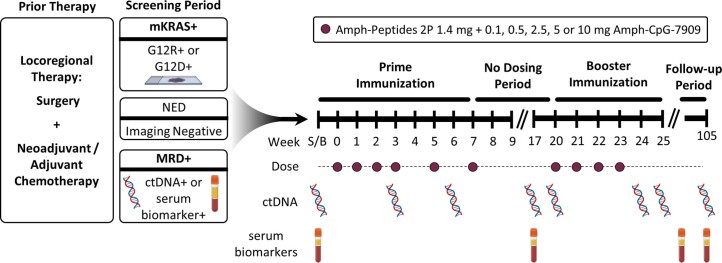
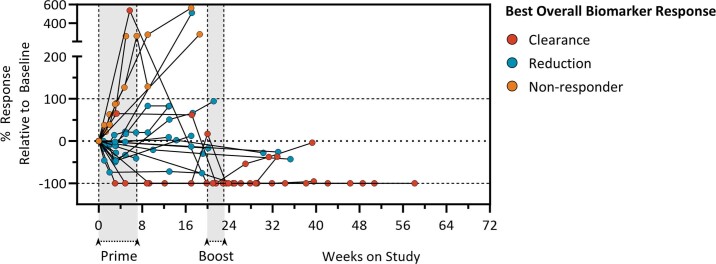
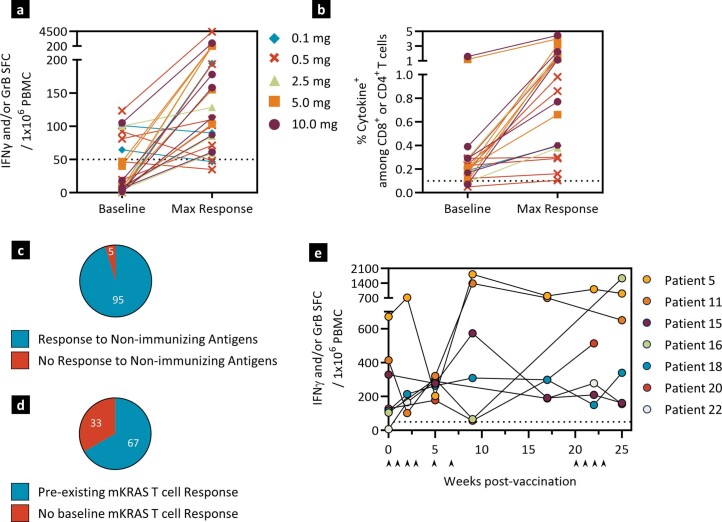
Pancreatic and colorectal cancers are often KRAS mutated and are incurable when tumor DNA or protein persists or recurs after curative intent therapy. Cancer vaccine ELI-002 2P enhances lymph node delivery and immune response using amphiphile (Amph) modification of G12D and G12R mutant KRAS (mKRAS) peptides (Amph-Peptides-2P) together with CpG oligonucleotide adjuvant (Amph-CpG-7909). We treated 25 patients (20 pancreatic and five colorectal) who were positive for minimal residual mKRAS disease (ctDNA and/or serum tumor antigen) after locoregional treatment in a phase 1 study of fixed-dose Amph-Peptides-2P and ascending-dose Amph-CpG-7909; study enrollment is complete with patient follow-up ongoing. Primary endpoints included safety and recommended phase 2 dose (RP2D). The secondary endpoint was tumor biomarker response (longitudinal ctDNA or tumor antigen), with exploratory endpoints including immunogenicity and relapse-free survival (RFS). No dose-limiting toxicities were observed, and the RP2D was 10.0 mg of Amph-CpG-7909. Direct ex vivo mKRAS-specific T cell responses were observed in 21 of 25 patients (84%; 59% both CD4 + and CD8 + ); tumor biomarker responses were observed in 21 of 25 patients (84%); biomarker clearance was observed in six of 25 patients (24%; three pancreatic and three colorectal); and the median RFS was 16.33 months. Efficacy correlated with T cell responses above or below the median fold increase over baseline (12.75-fold): median tumor biomarker reduction was −76.0% versus −10.2% ( P < 0.0014), and the median RFS was not reached versus 4.01 months (hazard ratio = 0.14; P = 0.0167). ELI-002 2P was safe and induced considerable T cell responses in patients with immunotherapy-recalcitrant KRAS-mutated tumors. ClinicalTrials.gov identifier: NCT04853017 .
Overview
The claims and statistics of this paper haven’t been checked yet.
Free: it reads the open-access text and checks the first 5 claims that cite a source we can check. Create a free account to check every claim.
Integrity signals
Registry
Cites
Statistics
Figures
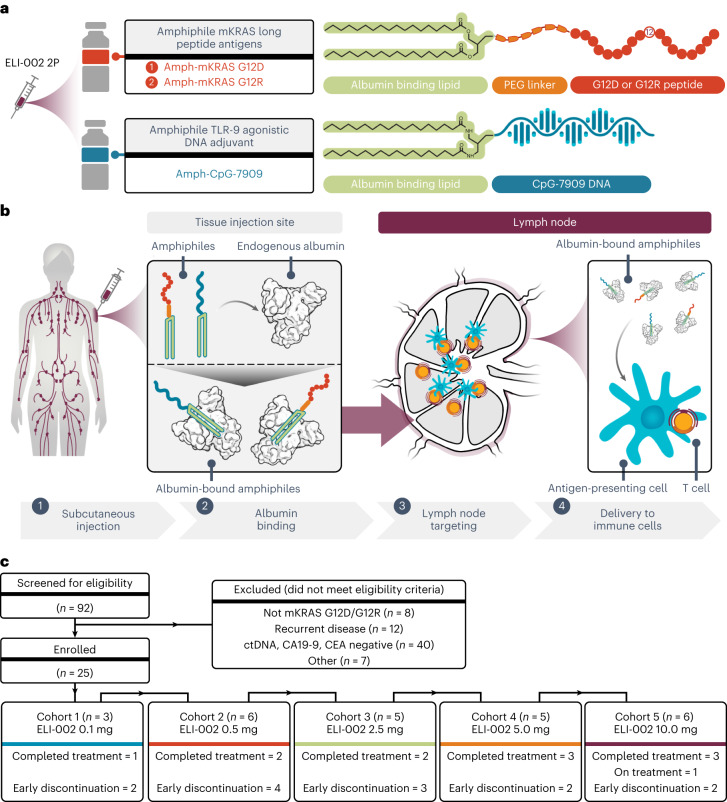
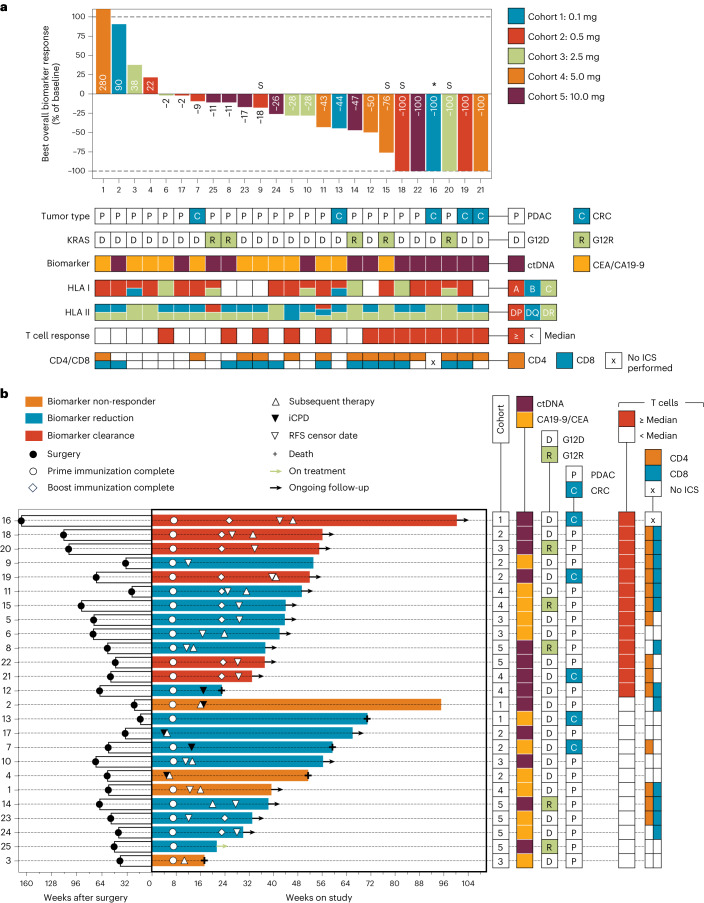
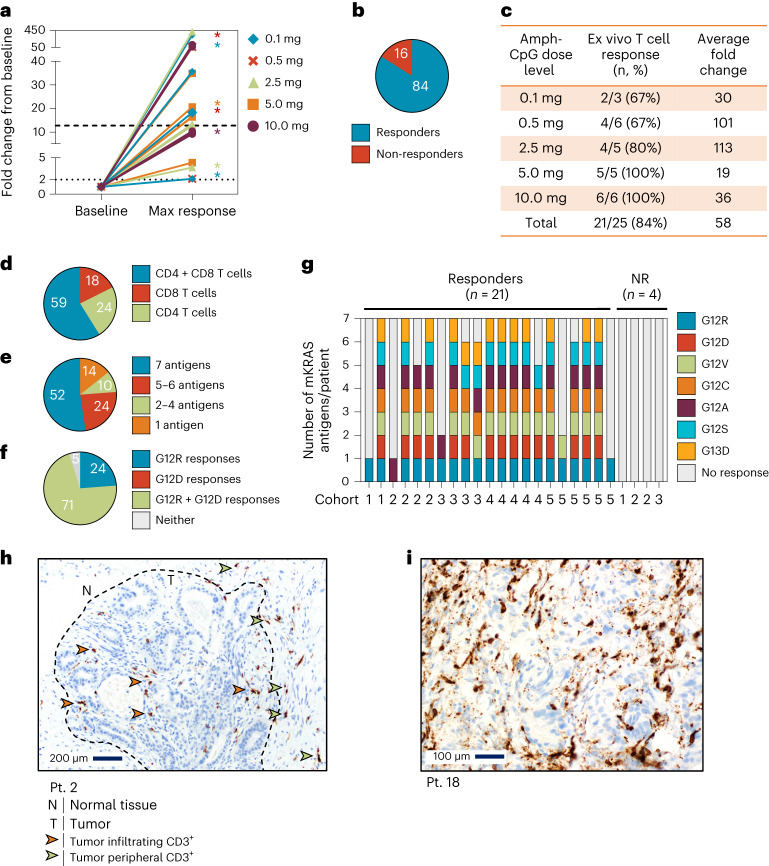
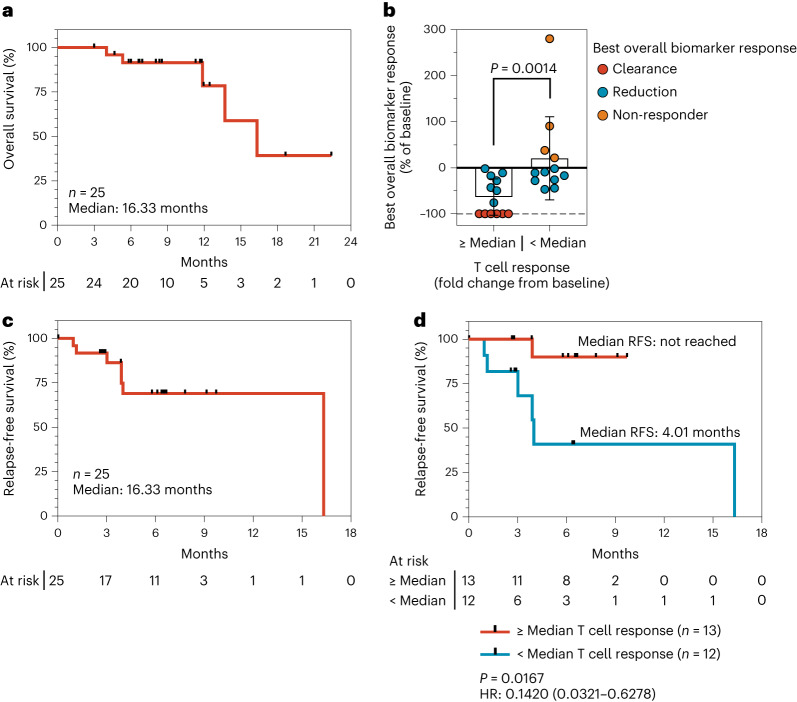
Verification
Claims the paper makes
The claims and statistics of this paper haven’t been checked yet.
Free: it reads the open-access text and checks the first 5 claims that cite a source we can check. Create a free account to check every claim.
Claims other papers make about this one
Each is checked against this paper’s own text: does it say what the citing paper says it does?
The cited source doesn’t support the claim as written.
In the citing paper
“The study showed 87% of patients experienced increased KRAS-specific T-cell responses and achieved biomarker clearance.”
From RAS Mutations in Advanced Colorectal Cancer: Mechanisms, Clinical Implications, and Novel Therapeutic Approaches (2025) · cites this paper as [108]
Checked by a reasoning model — may be wrong.
Experimental — accuracy not yet measuredThe cited source says what the claim attributes to it.
In the citing paper
“Additional emerging modalities include RNA-targeted therapeutics, antisense oligonucleotides, siRNA-based suppression [65,66], neoantigen vaccines [67,68], and adoptive T-cell therapies targeting mutant KRAS-derived epitopes [69,70].”
From Precision Targeting of KRAS-Mutant Cancers: Beyond G12C Toward G12D and Pan-RAS Therapeutic Strategies (2026) · cites this paper as [67]
In the citing paper
“ELI-002 2P is a lymph node-targeted immunotherapy consisting of Amphiphil (Amph)-modified G12D and G12R mutant KRAS peptides and an Amph-modified CpG oligonucleotide adjuvant.”
From RAS Mutations in Advanced Colorectal Cancer: Mechanisms, Clinical Implications, and Novel Therapeutic Approaches (2025) · cites this paper as [108]
In the citing paper
“In the recently published and promising AMPLIFY-201 study, the effectiveness of the cancer vaccine ELI-002 2P was demonstrated [108].”
From RAS Mutations in Advanced Colorectal Cancer: Mechanisms, Clinical Implications, and Novel Therapeutic Approaches (2025) · cites this paper as [108]
In the citing paper
“Furthermore, an amphiphile vaccine targeting p.G12D and p.G12R mutant KRAS has recently been tested in a phase I study for the adjuvant treatment of pancreatic cancer and CRC and showed good tolerability and promising efficacy.136”
From Current and emerging concepts for systemic treatment of metastatic colorectal cancer (2025) · cites this paper as [136]
Self-check
Percentages, sums and reported differences re-computed from the paper’s own numbers.
The self-check needs the paper’s full text.
Citations
Cites
Siegel, R. L., Miller, K. D., & Jemal, A. (2020) · CA: A Cancer Journal for Clinicians · doi:10.3322/caac.21590 · Cited by 20,444
Siegel, R. L., Miller, K. D., Fuchs, H. E., & Jemal, A. (2021) · CA: A Cancer Journal for Clinicians · doi:10.3322/caac.21654 · Cited by 16,522
PD-1 Blockade in Tumors with Mismatch-Repair Deficiency
Le, D. T., Uram, J. N., Wang, H., Bartlett, B. R., Kemberling, H., Eyring, A. D., Skora, A. D., Luber, B. S., Azad, N. S., Laheru, D., et al. (2015) · New England Journal of Medicine · doi:10.1056/nejmoa1500596 · Cited by 9,377
Safety and activity of anti-PD-L1 antibody in patients with advanced cancer
Brahmer, J. R., Tykodi, S. S., Chow, L. Q. M., Hwu, W.-J., Topalian, S. L., Hwu, P., Drake, C. G., Camacho, L. H., Kauh, J., Odunsi, K., et al. (2012) · New England Journal of Medicine · doi:10.1056/nejmoa1200694 · Cited by 7,945
An immunogenic personal neoantigen vaccine for patients with melanoma
Ott, P. A., Hu, Z., Keskin, D. B., Shukla, S. A., Sun, J., Bozym, D. J., Zhang, W., Luoma, A., Giobbie-Hurder, A., Peter, L., et al. (2017) · Nature · doi:10.1038/nature22991 · Cited by 2,936 · cited 1×
“Beyond the anti-tumor potential for CD8 + T cells, the role for CD4 + T cells includes support of CD8 + T cell activation and direct cytotoxic activity 42,43 .”
BackgroundPersonalized RNA mutanome vaccines mobilize poly-specific therapeutic immunity against cancer
Sahin, U., Derhovanessian, E., Miller, M., Kloke, B.-P., Simon, P., Löwer, M., Bukur, V., Tadmor, A. D., Luxemburger, U., Schrörs, B., et al. (2017) · Nature · doi:10.1038/nature23003 · Cited by 2,488 · cited 1×
“Beyond the anti-tumor potential for CD8 + T cells, the role for CD4 + T cells includes support of CD8 + T cell activation and direct cytotoxic activity 42,43 .”
BackgroundA Comprehensive Survey of Ras Mutations in Cancer
Prior, I. A., Lewis, P. D., & Mattos, C. (2012) · Cancer Research · doi:10.1158/0008-5472.can-11-2612 · Cited by 2,063 · cited 1×
“However, widely expressed (93% PDAC and 50% CRC) KRAS driver mutations (mKRASs) are attractive immunotherapy targets required for tumor survival with uniform expression throughout disease progression 9,10 .”
BackgroundPancreatic cancer genomes reveal aberrations in axon guidance pathway genes
Initiative, A. P. C. G., Biankin, A. V., Waddell, N., Kassahn, K. S., Gingras, M.-C., Muthuswamy, L. B., Johns, A. L., Miller, D. K., Wilson, P. J., Patch, A.-M., et al. (2012) · Nature · doi:10.1038/nature11547 · Cited by 2,058 · cited 3×
“Although ctDNA assessment allowed for detection of biomarker clearance (0 MTM/ml), we did not report any clearances for serum tumor biomarker reductions, as CA19-9 or CEA returned to the normal range but remained detectable.”
BackgroundMethodPark, W., Chawla, A., & O’Reilly, E. M. (2021) · JAMA · doi:10.1001/jama.2021.13027 · Cited by 1,882
Self-citationPersonalized RNA neoantigen vaccines stimulate T cells in pancreatic cancer
Rojas, L. A., Sethna, Z., Soares, K. C., Olcese, C., Pang, N., Patterson, E., Lihm, J., Ceglia, N., Guasp, P., Chu, A., et al. (2023) · Nature · doi:10.1038/s41586-023-06063-y · Cited by 1,432 · cited 2×
“However, recently, treatment with a personalized neoantigen vaccine administered in combination with checkpoint inhibitor and cytotoxic chemotherapy observed T cell responses that associated with prolonged RFS after adjuvant therapy in pancreatic cancer 38 .”
BackgroundSelf-citationT-Cell Transfer Therapy Targeting Mutant KRAS in Cancer
Tran, E., Robbins, P. F., Lu, Y.-C., Prickett, T. D., Gartner, J. J., Jia, L., Pasetto, A., Zheng, Z., Ray, S., Groh, E. M., et al. (2016) · New England Journal of Medicine · doi:10.1056/nejmoa1609279 · Cited by 1,368 · cited 1×
“Moreover, mKRAS-specific T cells have been isolated from TILs and peripheral blood in patients with CRC and in patients with non-small cell lung cancer (NSCLC), showing that T cells can localize and infiltrate tumors 12,26–28 .”
BackgroundRoyal, R. E., Levy, C., Turner, K., Mathur, A., Hughes, M., Kammula, U. S., Sherry, R. M., Topalian, S. L., Yang, J. C., Lowy, I., et al. (2010) · Journal of Immunotherapy · doi:10.1097/cji.0b013e3181eec14c · Cited by 1,257
Acquired Resistance to KRAS G12C Inhibition in Cancer
Awad, M. M., Liu, S., Rybkin, I. I., Arbour, K. C., Dilly, J., Zhu, V. W., Johnson, M. L., Heist, R. S., Patil, T., Riely, G. J., et al. (2021) · New England Journal of Medicine · doi:10.1056/nejmoa2105281 · Cited by 1,247
Analysis of survival by tumor response.
Anderson, J. R., Cain, K. C., & Gelber, R. D. (1983) · Journal of Clinical Oncology · doi:10.1200/jco.1983.1.11.710 · Cited by 1,107 · cited 1×
“To assess a time-to-response bias 29 RFS was analyzed in patients who were recurrence free ( n = 22) upon completion of ELI-002 priming immunization.”
MethodAnalysis of survival by tumor response.
Anderson, J. R., & Davis, R. B. (1986) · Journal of Clinical Oncology · doi:10.1200/jco.1986.4.1.115 · Cited by 1,000
Structure-based programming of lymph-node targeting in molecular vaccines
Liu, H., Moynihan, K. D., Zheng, Y., Szeto, G. L., Li, A. V., Huang, B., Van Egeren, D. S., Park, C., & Irvine, D. J. (2014) · Nature · doi:10.1038/nature12978 · Cited by 943 · cited 3×
“Preclinically, Amph vaccination delivered vaccine components to and activated resident APCs, robustly reprogramming the immune microenvironment to develop high-magnitude, functional T cell responses 15,18,19 .”
BackgroundImmune cell infiltration as an indicator of the immune microenvironment of pancreatic cancer
Ino, Y., Yamazaki-Itoh, R., Shimada, K., Iwasaki, M., Kosuge, T., Kanai, Y., & Hiraoka, N. (2013) · British Journal of Cancer · doi:10.1038/bjc.2013.32 · Cited by 849 · cited 2×
“Adoptive therapy with HLA C*08:02-restricted KRAS G12D-specific T cells has resulted in responses in patients with PDAC or MSS CRC 11–13 .”
BackgroundResultInfluentialO’Reilly, E. M., Oh, D.-Y., Dhani, N., Renouf, D. J., Lee, M. A., Sun, W., Fisher, G., Hezel, A., Chang, S.-C., Vlahovic, G., et al. (2019) · JAMA Oncology · doi:10.1001/jamaoncol.2019.1588 · Cited by 767 · cited 2×
“Due to small molecular weight ( 20 kDa), conventional peptides and molecular adjuvants in soluble vaccines exhibit poor immunogenicity due to ineffective and infrequent neoantigen mutations 5–8 .”
BackgroundResultInfluentialSelf-citationImmunogenicity of somatic mutations in human gastrointestinal cancers
Tran, E., Ahmadzadeh, M., Lu, Y.-C., Gros, A., Turcotte, S., Robbins, P. F., Gartner, J. J., Zheng, Z., Li, Y. F., Ray, S., et al. (2015) · Science · doi:10.1126/science.aad1253 · Cited by 729 · cited 2×
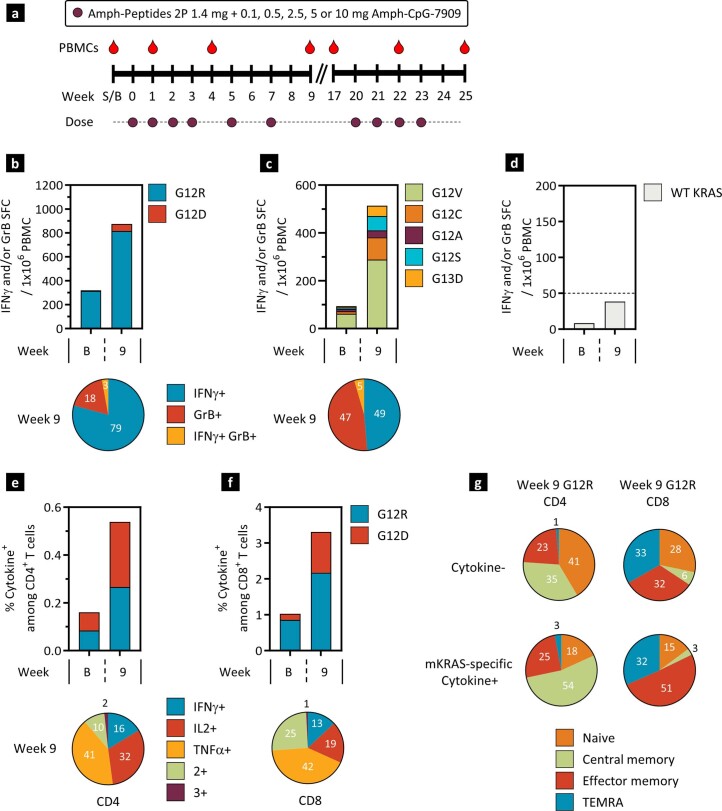
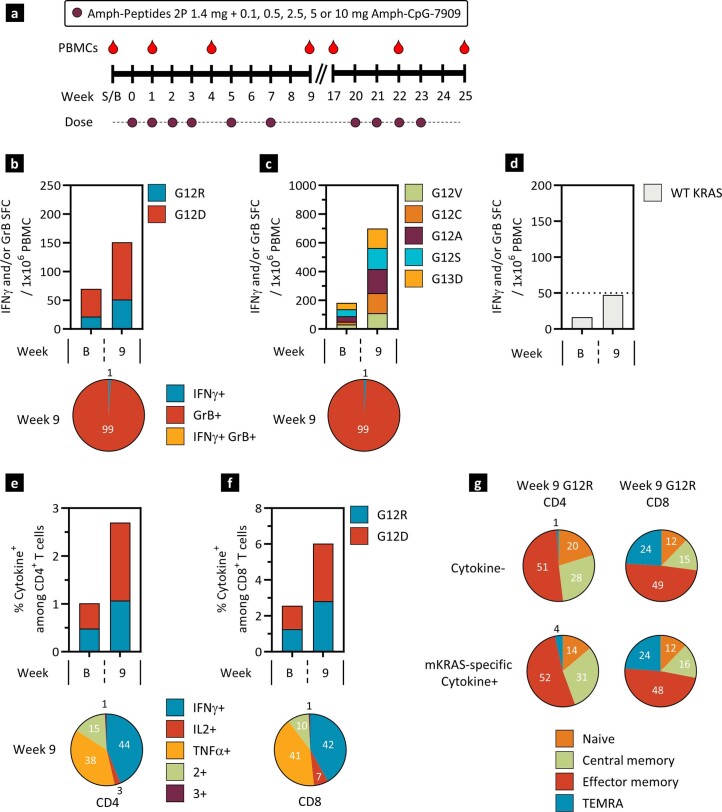
“Seventy-nine percent of T cells secreted IFNγ, and 18% secreted cytolytic marker GrB. Consistent with previous reports 25–28 , baseline antigen-specific T cell responses to G12R and G12D were also observed; however, ELI-002 2P vaccination greatly expanded the frequency of these pre-existing T cells…”
BackgroundTie, J., Cohen, J. D., Wang, Y., Christie, M., Simons, K., Lee, M., Wong, R., Kosmider, S., Ananda, S., McKendrick, J., et al. (2019) · JAMA Oncology · doi:10.1001/jamaoncol.2019.3616 · Cited by 668
From Sewer to Saviour—Targeting the Lymphatic System to Promote Drug Exposure and Activity
Trevaskis, N. L., Kaminskas, L. M., & Porter, C. J. H. (2015) · Nature Reviews Drug Discovery · doi:10.1038/nrd4608 · Cited by 654 · cited 1×
“https://doi.org/10.1038/s41591-023-02760-3 lymph node biodistribution where resident antigen-presenting cells (APCs) orchestrate immune responses 14 .”
BackgroundInfluentialMolecular residual disease and efficacy of adjuvant chemotherapy in patients with colorectal cancer
Kotani, D., Oki, E., Nakamura, Y., Yukami, H., Mishima, S., Bando, H., Shirasu, H., Yamazaki, K., Watanabe, J., Kotaka, M., et al. (2023) · Nature Medicine · doi:10.1038/s41591-022-02115-4 · Cited by 526 · cited 2×
“Similarly unfavorable outcomes occur in resected MRD + CRC 35–37 .”
BackgroundMoynihan, K. D., Opel, C. F., Szeto, G. L., Tzeng, A., Zhu, E. F., Engreitz, J. M., Williams, R. T., Rakhra, K., Zhang, M. H., Rothschilds, A. M., et al. (2016) · Nature Medicine · doi:10.1038/nm.4200 · Cited by 524 · cited 1×
“Antigen spreading has been observed in previous preclinical studies of lymph-node-targeted Amph vaccine therapy for solid tumors, suggesting a potential for future analysis to explore this effect in clinical study of ELI-002 19,52–54 .”
BackgroundNeoantigen T-Cell Receptor Gene Therapy in Pancreatic Cancer
Leidner, R., Sanjuan Silva, N., Huang, H., Sprott, D., Zheng, C., Shih, Y.-P., Leung, A., Payne, R., Sutcliffe, K., Cramer, J., et al. (2022) · New England Journal of Medicine · doi:10.1056/nejmoa2119662 · Cited by 517 · cited 15×
“Patient 16 with the longest follow-up (CRC) had three prior systemic adjuvant chemotherapies plus radiation therapy but was ctDNA positive throughout prior treatment and in screening but achieved clearance of ctDNA after treatment with ELI-002 2P and remained no evidence of disease (NED) on imaging throughout follow-u…”
BackgroundInfluentialAllen, P. J., Kuk, D., Castillo, C. F.-D., Basturk, O., Wolfgang, C. L., Cameron, J. L., Lillemoe, K. D., Ferrone, C. R., Morales-Oyarvide, V., He, J., et al. (2017) · Annals of Surgery · doi:10.1097/sla.0000000000001763 · Cited by 485 · cited 1×
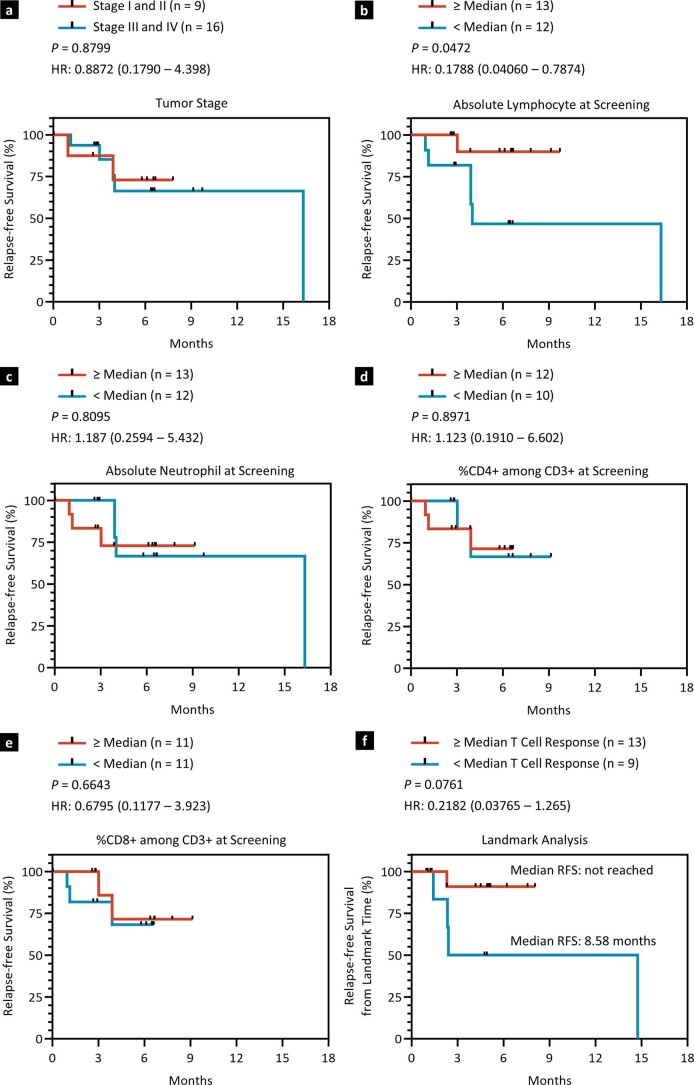
“To assess whether above-median T cell response was confounded by factors potentially associated with favorable prognosis 30 , we examined tumor stage and baseline immunologic parameters, including percentages of peripheral blood CD4 + and CD8 + T cells, peripheral blood neutrophil and total…”
BackgroundAnalysis of circulating tumour DNA to monitor disease burden following colorectal cancer surgery
Reinert, T., Schøler, L. V., Thomsen, R., Tobiasen, H., Vang, S., Nordentoft, I., Lamy, P., Kannerup, A.-S., Mortensen, F. V., Stribolt, K., et al. (2016) · Gut · doi:10.1136/gutjnl-2014-308859 · Cited by 463 · cited 11×
“Patient 16 with the longest follow-up (CRC) had three prior systemic adjuvant chemotherapies plus radiation therapy but was ctDNA positive throughout prior treatment and in screening but achieved clearance of ctDNA after treatment with ELI-002 2P and remained no evidence of disease (NED) on imaging throughout follow-u…”
BackgroundInfluentialEnhanced CAR–T cell activity against solid tumors by vaccine boosting through the chimeric receptor
Ma, L., Dichwalkar, T., Chang, J. Y. H., Cossette, B., Garafola, D., Zhang, A. Q., Fichter, M., Wang, C., Liang, S., Silva, M., et al. (2019) · Science · doi:10.1126/science.aav8692 · Cited by 439
Supersaxo, A., Hein, W. R., & Steffen, H. (1990) · Pharmaceutical Research · doi:10.1023/a:1015880819328 · Cited by 386 · cited 1×
“1b) 16,17 .”
Efficacy of a small-molecule inhibitor of KrasG12D in immunocompetent models of pancreatic cancer
Kemp, S. B., Cheng, N., Markosyan, N., Sor, R., Kim, I.-K., Hallin, J., Shoush, J., Quinones, L., Brown, N. V., Bassett, J. B., et al. (2023) · Cancer Discovery · doi:10.1158/2159-8290.cd-22-1066 · Cited by 370 · cited 1×
“Recent studies have shown that mKRAS-targeted kinase inhibitor efficacy is dependent on T cell activity to achieve full anti-tumor effect, and T cell vaccine combinations with checkpoint inhibition have demonstrated promise 50,55 .”
BackgroundTreatment sequencing in metastatic colorectal cancer
Modest, D. P., Pant, S., & Sartore-Bianchi, A. (2019) · European Journal of Cancer · doi:10.1016/j.ejca.2018.12.019 · Cited by 329
Self-citationGjertsen, M. K., Buanes, T., Rosseland, A. R., Bakka, A., Gladhaug, I., S�reide, O., Eriksen, J. A., M�ller, M., Baksaas, I., Lothe, R. A., et al. (2001) · International Journal of Cancer · doi:10.1002/ijc.1205 · Cited by 276
Subcutaneous drug delivery and the role of the lymphatics
McLennan, D. N., Porter, C. J. H., & Charman, S. A. (2005) · Drug Discovery Today: Technologies · doi:10.1016/j.ddtec.2005.05.006 · Cited by 259 · cited 1×
“1b) 16,17 .”
Palmer, C. D., Rappaport, A. R., Davis, M. J., Hart, M. G., Scallan, C. D., Hong, S.-J., Gitlin, L., Kraemer, L. D., Kounlavouth, S., Yang, A., et al. (2022) · Nature Medicine · doi:10.1038/s41591-022-01937-6 · Cited by 236 · cited 2×
“Recently, individualized neoantigen cancer vaccines have shown promising efficacy for PDAC, NSCLC, CRC and melanoma 38,48,50,51 .”
BackgroundAwad, M. M., Govindan, R., Balogh, K. N., Spigel, D. R., Garon, E. B., Bushway, M. E., Poran, A., Sheen, J. H., Kohler, V., Esaulova, E., et al. (2022) · Cancer Cell · doi:10.1016/j.ccell.2022.08.003 · Cited by 234 · cited 2×
“Recent studies have shown that mKRAS-targeted kinase inhibitor efficacy is dependent on T cell activity to achieve full anti-tumor effect, and T cell vaccine combinations with checkpoint inhibition have demonstrated promise 50,55 .”
BackgroundVaccine-boosted CAR T crosstalk with host immunity to reject tumors with antigen heterogeneity
Ma, L., Hostetler, A., Morgan, D. M., Maiorino, L., Sulkaj, I., Whittaker, C. A., Neeser, A., Pires, I. S., Yousefpour, P., Gregory, J., et al. (2023) · Cell · doi:10.1016/j.cell.2023.06.002 · Cited by 220 · cited 2×
“Antigen spreading has been observed in previous preclinical studies of lymph-node-targeted Amph vaccine therapy for solid tumors, suggesting a potential for future analysis to explore this effect in clinical study of ELI-002 19,52–54 .”
BackgroundLee, B., Lipton, L., Cohen, J., Tie, J., Javed, A. A., Li, L., Goldstein, D., Burge, M., Cooray, P., Nagrial, A., et al. (2019) · Annals of Oncology · doi:10.1093/annonc/mdz200 · Cited by 215 · cited 1×
“These results are promising as detectable ctDNA or persistently elevated CA19-9 after definitive PDAC therapy leads to rapid relapse and universal mortality 31–34 .”
BackgroundControl of T-Cell–Mediated Immune Response by HLA Class I in Human Pancreatic Carcinoma
Ryschich, E., Nötzel, T., Hinz, U., Autschbach, F., Ferguson, J., Simon, I., Weitz, J., Fröhlich, B., Klar, E., Büchler, M. W., et al. (2005) · Clinical Cancer Research · doi:10.1158/1078-0432.498.11.2 · Cited by 212
Circulating Tumor DNA as a Clinical Test in Resected Pancreatic Cancer
Groot, V. P., Mosier, S., Javed, A. A., Teinor, J. A., Gemenetzis, G., Ding, D., Haley, L. M., Yu, J., Burkhart, R. A., Hasanain, A., et al. (2019) · Clinical Cancer Research · doi:10.1158/1078-0432.ccr-19-0197 · Cited by 208
Carbone, D. P., Ciernik, I. F., Kelley, M. J., Smith, M. C., Nadaf, S., Kavanaugh, D., Maher, V. E., Stipanov, M., Contois, D., Johnson, B. E., et al. (2005) · Journal of Clinical Oncology · doi:10.1200/jco.2005.03.158 · Cited by 169
Cafri, G., Yossef, R., Pasetto, A., Deniger, D. C., Lu, Y.-C., Parkhurst, M., Gartner, J. J., Jia, L., Ray, S., Ngo, L. T., et al. (2019) · Nature Communications · doi:10.1038/s41467-019-08304-z · Cited by 165 · cited 2×
“Previous reports suggest that mKRAS-targeting T cell responses are not subject to central or peripheral tolerance 25,26 ; often, responses show fidelity to the specific primary tumor KRAS mutation.”
BackgroundHigh-affinity oligoclonal TCRs define effective adoptive T cell therapy targeting mutant KRAS-G12D
Sim, M. J. W., Lu, J., Spencer, M., Hopkins, F., Tran, E., Rosenberg, S. A., Long, E. O., & Sun, P. D. (2020) · Proceedings of the National Academy of Sciences · doi:10.1073/pnas.1921964117 · Cited by 123 · cited 5×
“Separately, crystal structures show that amino acid position 12 can act as a major histocompatibility complex (MHC) anchor without contact to cognate TCR CDR3, indicating a mechanism for cross-reactive responses dependent on shared epitopes among distinct mKRAS sequences 24,45 .”
BackgroundInfluentialBear, A. S., Blanchard, T., Cesare, J., Ford, M. J., Richman, L. P., Xu, C., Baroja, M. L., McCuaig, S., Costeas, C., Gabunia, K., et al. (2021) · Nature Communications · doi:10.1038/s41467-021-24562-2 · Cited by 113 · cited 2×
“However, cross-reactive mKRAS-specific T cell receptors (TCRs) have been recently reported with co-recognition of G12D and G12V 44 .”
BackgroundTherapeutic high affinity T cell receptor targeting a KRASG12D cancer neoantigen
Poole, A., Karuppiah, V., Hartt, A., Haidar, J. N., Moureau, S., Dobrzycki, T., Hayes, C., Rowley, C., Dias, J., Harper, S., et al. (2022) · Nature Communications · doi:10.1038/s41467-022-32811-1 · Cited by 110
Veatch, J. R., Jesernig, B. L., Kargl, J., Fitzgibbon, M., Lee, S. M., Baik, C., Martins, R., Houghton, A. M., & Riddell, S. R. (2019) · Cancer Immunology Research · doi:10.1158/2326-6066.cir-18-0402 · Cited by 89
Zent, C. S., Smith, B. J., Ballas, Z. K., Wooldridge, J. E., Link, B. K., Call, T. G., Shanafelt, T. D., Bowen, D. A., Kay, N. E., Witzig, T. E., et al. (2012) · Leukemia & Lymphoma · doi:10.3109/10428194.2011.608451 · Cited by 86 · cited 1×
“Previous clinical trial use of soluble TLR9 agonist CpG-7909 oligonucleotide was hampered by DLTs resembling cytokine release syndrome 39 .”
BackgroundMoynihan, K. D., Holden, R. L., Mehta, N. K., Wang, C., Karver, M. R., Dinter, J., Liang, S., Abraham, W., Melo, M. B., Zhang, A. Q., et al. (2018) · Cancer Immunology Research · doi:10.1158/2326-6066.cir-17-0607 · Cited by 83 · cited 1×
“Amph vaccine therapy enhanced efficacy with increased T cell expansion and tumor infiltration, leading to long-term eradication of solid tumors alongside decreased systemic toxicity 20,21 .”
BackgroundAdemmer, K., Ebert, M., Müller-Ostermeyer, F., Friess, H., Büchler, M. W., Schubert, W., & Malfertheiner, P. (2001) · Clinical and Experimental Immunology · doi:10.1046/j.1365-2249.1998.00546.x · Cited by 77
Dasari, V., McNeil, L. K., Beckett, K. J., Solomon, M., Ambalathingal, G. R., Thuy, T. L., Panikkar, A., Smith, C., Steinbuck, M. P., Jakubowski, A., et al. (2023) · Nature Communications · doi:10.1038/s41467-023-39770-1 · Cited by 74
Self-citationRieser, C. J., Zenati, M. S., Hamad, A. B., Abbas, A. I. A., Bahary, N., Zureikat, A. H., Zeh, H. J., & Hogg, M. E. (2018) · Annals of Surgical Oncology · doi:10.1245/s10434-018-6521-7 · Cited by 73
CD4+ T-cell immunity to mutated ras protein in pancreatic and colon cancer patients.
Qin, H., Chen, W., Takahashi, M., Disis, M. L., Byrd, D. R., McCahill, L., Bertram, K. A., Fenton, R. G., Peace, D. J., & Cheever, M. A. (1995) · PubMed · Cited by 71
Palmer, D. H., Valle, J. W., Ma, Y. T., Faluyi, O. O., Neoptolemos, J. P., Gjertsen, T. J., Iversen, B., Eriksen, J. A., Møller, A. W., Aksnes, A.-K., et al. (2020) · British Journal of Cancer · doi:10.1038/s41416-020-0752-7 · Cited by 70 · cited 1×
“The dose level of Amph-Peptides 2P was selected for initial evaluation based on prior clinical experience with similar unmodified mKRAS peptide immunogens 41 .”
MethodKhattak, A., Carlino, M., Meniawy, T., Ansstas, G., Medina, T., Taylor, M. H., Kim, K. B., McKean, M., Long, G. V., Sullivan, R. J., et al. (2023) · Cancer Research · doi:10.1158/1538-7445.am2023-ct001 · Cited by 51
A lymph node–targeted Amphiphile vaccine induces potent cellular and humoral immunity to SARS-CoV-2
Steinbuck, M. P., Seenappa, L. M., Jakubowski, A., McNeil, L. K., Haqq, C. M., & DeMuth, P. C. (2021) · Science Advances · doi:10.1126/sciadv.abe5819 · Cited by 50
Self-citationInjection site reactions after subcutaneous oligonucleotide therapy
van Meer, L., Moerland, M., Gallagher, J., van Doorn, M. B. A., Prens, E. P., Cohen, A. F., Rissmann, R., & Burggraaf, J. (2016) · British Journal of Clinical Pharmacology · doi:10.1111/bcp.12961 · Cited by 45 · cited 2×
“As expected for subcutaneous administration, the primary toxicities of ELI-002 2P were low-grade local and systemic effects common with vaccine administration, including fatigue, injection site reaction and myalgia 40 .”
BackgroundCombined PET and whole-tissue imaging of lymphatic-targeting vaccines in non-human primates
Martin, J. T., Hartwell, B. L., Kumarapperuma, S. C., Melo, M. B., Carnathan, D. G., Cossette, B. J., Adams, J., Gong, S., Zhang, W., Tokatlian, T., et al. (2021) · Biomaterials · doi:10.1016/j.biomaterials.2021.120868 · Cited by 40 · cited 2×
“Amph vaccine therapy enhanced efficacy with increased T cell expansion and tumor infiltration, leading to long-term eradication of solid tumors alongside decreased systemic toxicity 20,21 .”
BackgroundDrakes, D. J., Abbas, A. M., Shields, J. D., Steinbuck, M. P., Jakubowski, A., Seenappa, L. M., Haqq, C. M., & DeMuth, P. C. (2024) · Cancer Immunology Research · doi:10.1158/2326-6066.cir-22-0978 · Cited by 24 · cited 1×
“Antigen spreading has been observed in previous preclinical studies of lymph-node-targeted Amph vaccine therapy for solid tumors, suggesting a potential for future analysis to explore this effect in clinical study of ELI-002 19,52–54 .”
BackgroundSelf-citationSeenappa, L. M., Jakubowski, A., Steinbuck, M. P., Palmer, E., Haqq, C. M., Carter, C., Fontenot, J. A., Villinger, F. J., McNeil, L. K., & DeMuth, P. C. (2022) · npj Vaccines · doi:10.1038/s41541-022-00560-3 · Cited by 17 · cited 1×
“Preclinically, Amph vaccination delivered vaccine components to and activated resident APCs, robustly reprogramming the immune microenvironment to develop high-magnitude, functional T cell responses 15,18,19 .”
BackgroundSelf-citationBotta, G. P., Abdelrahim, M., Aushev, V. N., Esmail, A., Drummond, B. E., Sharma, S., Kalashnikova, E. V., Hook, N., Chandana, S. R., Tejani, M. A., et al. (2022) · Journal of Clinical Oncology · doi:10.1200/jco.2022.40.4_suppl.517 · Cited by 12 · cited 1×
“These results are promising as detectable ctDNA or persistently elevated CA19-9 after definitive PDAC therapy leads to rapid relapse and universal mortality 31–34 .”
BackgroundSelf-citationOptimized Anchor-Modified Peptides Targeting Mutated RAS Are Promising Candidates for Immunotherapy
Baleeiro, R. B., Chard, L. S., Liu, P., Lu, S., Lone, Y. C., Lemoine, N. R., & Wang, Y. (2022) · Frontiers in Immunology · doi:10.3389/fimmu.2022.902709 · Cited by 6 · cited 3×
“Responses occurred in four G12D patients (all four assessed using ctDNA) without any class I HLA alleles previously reported to restrict G12D T cell responses (bioRxiv 2020.06.15.149021) 11,23,24 .”
BackgroundInfluential
Cited by
Singhal, A., Li, B. T., & O’Reilly, E. M. (2024) · Nature Medicine · doi:10.1038/s41591-024-02903-0 · Cited by 332
“A pre-liminary efficacy signal correlated with T cell response 124 .”
Self-citationZhang, M., Liu, C., Tu, J., Tang, M., Ashrafizadeh, M., Nabavi, N., Sethi, G., Zhao, P., & Liu, S. (2025) · Molecular Cancer · doi:10.1186/s12943-025-02305-x · Cited by 259
Current and future immunotherapeutic approaches in pancreatic cancer treatment
Farhangnia, P., Khorramdelazad, H., Nickho, H., & Delbandi, A.-A. (2024) · Journal of Hematology & Oncology · doi:10.1186/s13045-024-01561-6 · Cited by 229
Recent advances in therapeutic cancer vaccines
Zaidi, N., Jaffee, E. M., & Yarchoan, M. M. (2025) · Nature reviews. Cancer · doi:10.1038/s41568-025-00820-z · Cited by 163
“…with antigens is needed (for example, Montanide and TLR) In patients with MRD Off-the-shelf mutant KRAS peptide vaccines for resected PDAC and CRC 25,69 Off-the-shelf peptide vaccine targeting fusion neoantigen for fibrolamellar cancer 115 Personalized neoantigen vaccine in melanoma 23 , lung…”
InfluentialRAS signaling in carcinogenesis, cancer therapy and resistance mechanisms
Yang, X., & Wu, H. K. (2024) · Journal of Hematology & Oncology · doi:10.1186/s13045-024-01631-9 · Cited by 146
Metadata
- Authors
- Pant, S., Wainberg, Z. A., Weekes, C. D., Furqan, M., Kasi, P. M., Devoe, C. E., Leal, A. D., Chung, V., Basturk, O., VanWyk, H., Tavares, A. M., Seenappa, L. M., Perry, J. R., Kheoh, T., McNeil, L. K., Welkowsky, E., DeMuth, P. C., Haqq, C. M., & O’Reilly, E. M.
- Affiliations
- The University of Texas MD Anderson Cancer Center (US)
- University of California, Los Angeles (US)
- Massachusetts General Hospital (US)
- University of Iowa (US)
- Northwell Health (US)
- University of Colorado Anschutz (US)
- City Of Hope National Medical Center (US)
- Corresponding author
- Pant, Shubham
- Haqq, Christopher M.
- ORCID
- Venue
- Nature Medicine
- Published
- 2024-01-09
- Volume
- 30
- Issue
- 2
- Pages
- 531-542
- ISSN
- 1078-8956 (ISSN-L)
- 1546-170X
- PMC
- PMC10878978
- OpenAlex
- W4390707107
- Cited by
- 267
- References
- 60
- Citations by year
- 2026: 96 · 2025: 114 · 2024: 57
- FWCI
- 44.65
- Type
- journal article
- Language
- en
- Open access
- hybrid
- doi.org
- Licence
- cc-by
- creativecommons.org/licenses/by/4.0 (tdm)
- creativecommons.org/licenses/by/4.0 (vor)
- Locations
- Nature Medicine (publishedVersion, cc-by)
- PubMed Central (publishedVersion, cc-by)
- PubMed (publishedVersion)
- eScholarship (California Digital Library) (submittedVersion, cc-by)
- Funders
- Elicio Therapeutics
- Topics
- Life Sciences › Immunology and Microbiology › Immunology › Immunotherapy and Immune Responses
- Health Sciences › Medicine › Oncology › Pancreatic and Hepatic Oncology Research
- Health Sciences › Medicine › Oncology › Cancer Immunotherapy and Biomarkers
- Keywords
- pancreatic cancer, colorectal cancer, minimal residual disease, circulating tumor DNA, T cell response, relapse-free survival, immunotherapy resistance, lymph node targeting
- MeSH terms
- Antigens, Neoplasm, Humans, Neoplasm Recurrence, Local, Peptides, Biomarkers, Tumor, Vaccines, Colorectal Neoplasms, Proto-Oncogene Proteins p21(ras)
About these checks
Registry, retraction, Cites and statistics results are computed, not judged, with one exception: a printed reference that no index lists is read once by a model before it counts as a citation error. Claims are extracted by a model and kept only when their quote appears verbatim in the text; each cited source is then checked, with a model’s help, for whether it says what the claim relies on. Those verdicts can be wrong — read the claim’s quote and the cited source before relying on one.
Statistics and arithmetic are recomputed, not judged.
Confidence bands are shown only for fields calibrated on our annotated test set. None is calibrated yet, so no band is shown.
What counts as a claim ›How we measure confidence ›How we check this ›
Are you an author, or do you see a problem with this page? Request a review
Data sources
Bibliographic data: Semantic Scholar, OpenAlex, Crossref.
Contains information from the Semantic Scholar Academic Graph Datasets, made available under the ODC Attribution License (ODC-BY 1.0).
Semantic Scholar’s data is described in: Kinney, R., et al. (2023). The Semantic Scholar Open Data Platform. arXiv:2301.10140.
