

Liraglutide in mild to moderate Alzheimer’s disease: a phase 2b clinical trial
Open accessThe DOI matches its Crossref record; 47 of the 47 references it cites were found in a registry or an index; none of the 12 sources its claims cite is checked for support yet.
Abstract
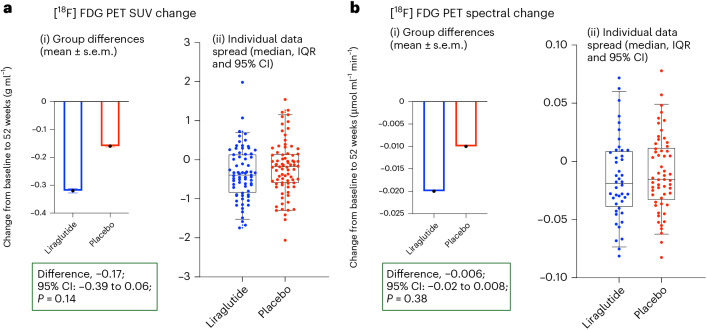
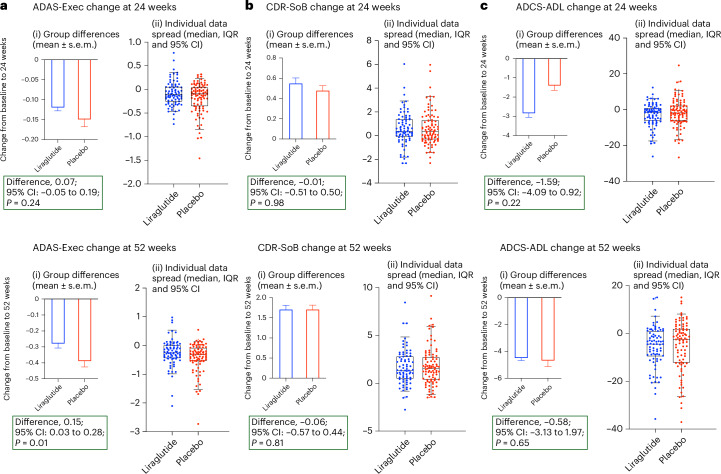
Liraglutide, a glucagon-like peptide 1 (GLP-1) agonist and antidiabetic drug, has shown neuroprotective effects in animal models. In this study, we aimed to evaluate the safety and efficacy of liraglutide in mild to moderate Alzheimer’s disease syndrome. ‘Evaluating liraglutide in Alzheimer’s disease’ (ELAD) is a multicenter, randomized, double-blind, placebo-controlled phase 2b trial in 204 participants with mild to moderate Alzheimer’s disease syndrome with no diabetes. Participants received daily injections of liraglutide or placebo for 52 weeks. They underwent fluorodeoxyglucose positron emission tomography, magnetic resonance imaging and detailed neuropsychometric evaluations. The primary outcome was a change in cerebral glucose metabolic rate. Secondary outcomes were safety and tolerability and cognitive changes. The primary outcome showed no significant differences in cerebral glucose metabolism (difference = −0.17; 95% confidence interval: −0.39 to 0.06; P = 0.14) between the two groups. The secondary outcome—score on the Alzheimer’s Disease Assessment Scale-Executive domain (ADAS-Exec)—performed better in liraglutide-treated patients compared to placebo (0.15; 95% confidence interval: 0.03−0.28; unadjusted P = 0.01). No significant differences were observed in Alzheimer’s Disease Cooperative Study-Activities of Daily Living (ADCS-ADL) (−0.58; 95% confidence interval: −3.13 to 1.97; unadjusted P = 0.65) or Clinical Dementia Rating-Sum of Boxes (CDR-SoB) (−0.06; 95% confidence interval: −0.57 to 0.44; unadjusted P = 0.81) scores. Liraglutide was generally safe and well tolerated in non-diabetic patients with Alzheimer’s disease. ClinicalTrials.gov identifier: NCT01843075 .
Overview
CoChat Summary
TL;DR
In the ELAD phase 2b trial of 204 non-diabetic participants with mild to moderate Alzheimer’s disease, liraglutide did not significantly change the primary outcome of cerebral glucose metabolism over 52 weeks. Liraglutide was generally safe and was associated with slower decline on the ADAS-Exec cognitive measure, with exploratory MRI signals of less brain volume loss.
Key findings
- Primary outcome: no significant difference in change in [18F]FDG PET SUV between liraglutide and placebo (adjusted difference = −0.17; 95% CI −0.39 to 0.06; P = 0.14); spectral analysis sensitivity results agreed.
- Secondary cognitive outcome: ADAS-Exec z-score favored liraglutide over placebo (0.15; 95% CI 0.03–0.28; unadjusted P = 0.01). No significant differences were observed for ADCS-ADL (−0.58; 95% CI −3.13 to 1.97; unadjusted P = 0.65) or CDR-SoB (−0.06; 95% CI −0.57 to 0.44; unadjusted P = 0.81).
- Safety: there were 991 adverse events; 450 in the placebo arm (87 participants) and 541 in the treatment arm (88 participants). Serious adverse events occurred in 18 (17.6%) placebo participants and 7 (6.9%) treatment participants. Gastrointestinal disorders were the most common adverse event in the liraglutide group, accounting for 25.5% of all adverse events reported in those treated with liraglutide.
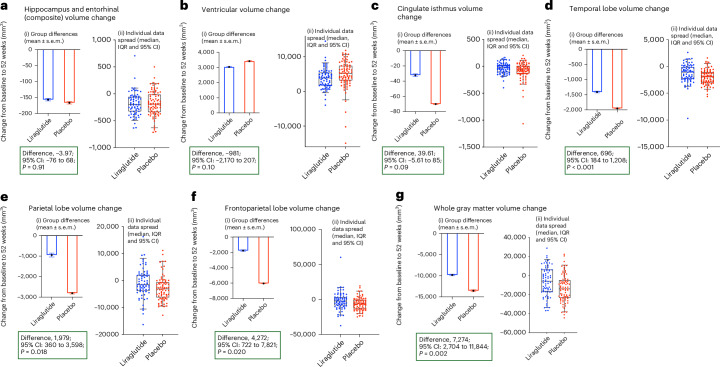
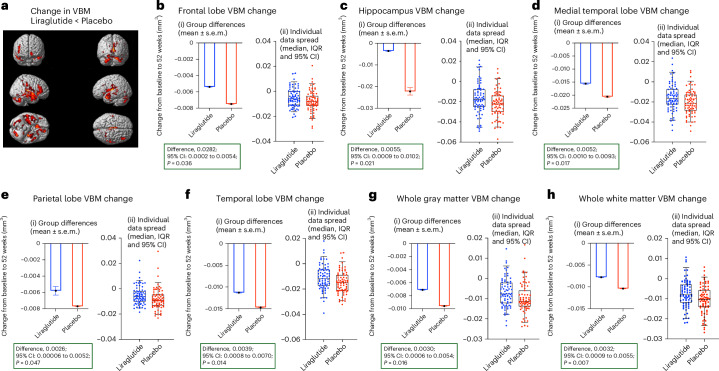
- Exploratory MRI: liraglutide-treated participants showed lower volume reductions in temporal lobe (696 mm3; 95% CI 184.37–1,208.12; P < 0.001) and total gray matter (7,274 mm3; 95% CI 2,704.05–11,844.8; unadjusted P = 0.002); parietal and frontoparietal lobes showed trends. No significant treatment difference was observed in hippocampus, entorhinal cortex, or ventricular volume.
Methods
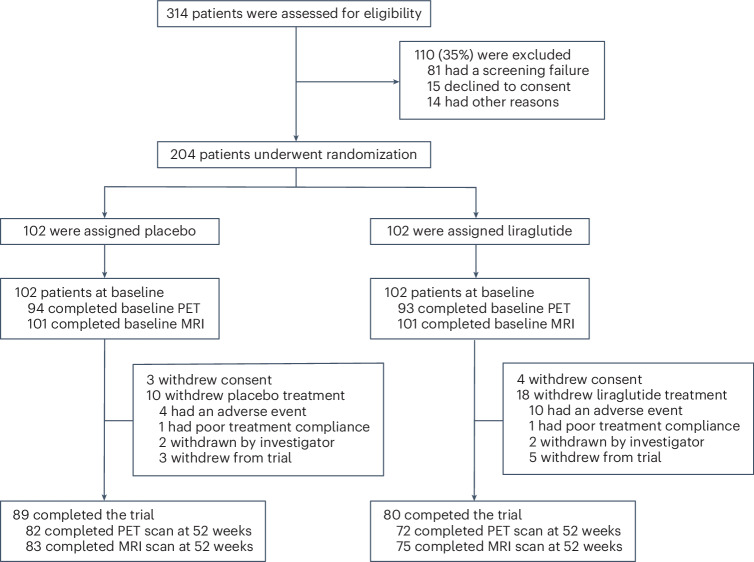
- Multicenter, randomized, double-blind, placebo-controlled phase 2b trial conducted at 24 UK sites; 204 participants with mild to moderate Alzheimer’s disease syndrome and no diabetes were randomized 1:1 to daily subcutaneous liraglutide (escalated to 1.8 mg) or placebo for 52 weeks; 169 completed the study.
- Primary outcome was change in cerebral glucose metabolic rate in a composite cortical region (hippocampus, medial temporal lobe, posterior cingulate) from baseline to 52 weeks using [18F]FDG PET. Secondary outcomes included safety/tolerability and cognitive changes (ADAS-Exec, CDR-SoB, ADCS-ADL); MRI volumetric and voxel-based morphometry analyses were exploratory.
- Primary analysis used ANCOVA adjusted for baseline values, age, and MMSE; repeated secondary outcomes used a multilevel mixed-effects model. Significance was 0.05 for primary/secondary outcomes and 0.01 for exploratory analyses; analyses were performed in MATLAB and Stata.
Limitations
- The paper states that attrition reduced the achieved sample size compared with the original power calculation, likely lowering the probability of detecting small effects; no formal power calculation was performed for secondary or exploratory endpoints, so those analyses should be interpreted as exploratory and hypothesis generating.
- The paper states limited population diversity (most participants were White), that optional β-amyloid, tau, and TSPO PET were not completed, that plasma biomarkers were not analyzed, and that mean imputation has limitations. It also notes the 12-month duration may be insufficient to establish long-term clinical benefit and that exploratory results were not corrected for multiple comparisons.
- Evident from the text: analyzable week 52 scans for the primary outcome were available for 72 (70.6%) liraglutide participants and 82 (80.4%) placebo participants, fewer than randomized; baseline imbalances were present for COWAT, WDS-F, and lipase; APOE genotype and CSF data were not collected or reported.
Model-written summary. Check it against the paper before relying on it.
Integrity signals
Registry
Cites
Statistics
Figures
Verification
Claims the paper makes
0 Valid · 0 Not valid · 10 Not checked · 32 Own results and interpretations
A result the paper reports from its own data — it cites no other source for it, so there is none to check. The quote shows it is in the paper.
In the paper
“The secondary outcome measures revealed that patients treated with liraglutide had a significantly slower decline in cognition (ADAS-Exec) and a slower reduction in MRI brain volume compared to the placebo arm, demonstrating a favorable response to liraglutide treatment.”
§ Liraglutide in mild to moderate Alzheimer’s disease: a phase 2b clinical trial > Discussion
boostedstates a cause- Asserted: passes — The authors put it forward as true.
- Checkable: passes — It can be checked against evidence.
- Load-bearing: passes — The paper’s conclusions depend on it.
- Based: passes — The paper gives a reason why it holds.
A result the paper reports from its own data — it cites no other source for it, so there is none to check. The quote shows it is in the paper.
In the paper
“The ELAD study showed no significant changes in cerebral glucose metabolism in participants with mild to moderate Alzheimer’s disease syndrome, which was the primary outcome measure.”
§ Liraglutide in mild to moderate Alzheimer’s disease: a phase 2b clinical trial > Discussion
plain- Asserted: passes — The authors put it forward as true.
- Checkable: passes — It can be checked against evidence.
- Load-bearing: passes — The paper’s conclusions depend on it.
- Based: passes — The paper gives a reason why it holds.
A result the paper reports from its own data — it cites no other source for it, so there is none to check. The quote shows it is in the paper.
In the paper
“The secondary outcome measures revealed that patients treated with liraglutide had a significantly slower decline in cognition (ADAS-Exec) and a slower reduction in MRI brain volume compared to the placebo arm, demonstrating a favorable response to liraglutide treatment.”
§ Liraglutide in mild to moderate Alzheimer’s disease: a phase 2b clinical trial > Discussion
boostedstates a cause- Asserted: passes — The authors put it forward as true.
- Checkable: passes — It can be checked against evidence.
- Load-bearing: passes — The paper’s conclusions depend on it.
- Based: passes — The paper gives a reason why it holds.
A result the paper states — it cites no source for it, so there is none to check. The quote shows it is in the paper.
In the paper
“Liraglutide was well tolerated by patients with Alzheimer’s disease syndrome.”
§ Liraglutide in mild to moderate Alzheimer’s disease: a phase 2b clinical trial > Discussion
plain- Asserted: passes — The authors put it forward as true.
- Checkable: passes — It can be checked against evidence.
- Load-bearing: unclear — It is unclear whether the paper’s conclusions depend on it.
- Based: passes — The paper gives a reason why it holds.
A result the paper reports from its own data — it cites no other source for it, so there is none to check. The quote shows it is in the paper.
In the paper
“Only four patients had missing data at baseline, which makes up 2% of the study population.”
§ Liraglutide in mild to moderate Alzheimer’s disease: a phase 2b clinical trial > Discussion
plainn = 4- Asserted: passes — The authors put it forward as true.
- Checkable: passes — It can be checked against evidence.
- Load-bearing: unclear — It is unclear whether the paper’s conclusions depend on it.
- Based: passes — The paper gives a reason why it holds.
12 more claims
Create a free account to see all 42 claims and to verify the 12 references still open.
- It may state two separate claims as one. 17
- Probably not a substantial claim. 17
Self-check
Percentages, sums and reported differences re-computed from the paper’s own numbers.
Each contradiction between two passages listed here was confirmed by an independent check.
Rated minor: it would not touch a result — a value no result rests on, a p-value that stays on the same side of the significance level, or a conflict that is clerical, resolved elsewhere in the paper, or outside its own findings.
In the paper
§ Liraglutide in mild to moderate Alzheimer’s disease: a phase 2b clinical trial > Methods > Outcomes
“at least two-thirds”
§ Liraglutide in mild to moderate Alzheimer’s disease: a phase 2b clinical trial > Methods > Outcomes
“(9/14) of the ADAS-Cog subtests completed.”
Rated minor: it would not touch a result — a value no result rests on, a p-value that stays on the same side of the significance level, or a conflict that is clerical, resolved elsewhere in the paper, or outside its own findings.
In the paper
§ Liraglutide in mild to moderate Alzheimer’s disease: a phase 2b clinical trial > Methods > Statistical analysis
“82 participants would be required per group to provide 80% power at a 5% significance level.”
§ Liraglutide in mild to moderate Alzheimer’s disease: a phase 2b clinical trial > Methods > Statistical analysis
“Allowing for a dropout of 15% over the study period, the trial required 103 participants per group (206 in total).”
Rated minor: it would not touch a result — a value no result rests on, a p-value that stays on the same side of the significance level, or a conflict that is clerical, resolved elsewhere in the paper, or outside its own findings.
In the paper
§ Liraglutide in mild to moderate Alzheimer’s disease: a phase 2b clinical trial > Results > Patient disposition
“| ADCS-ADL scoref | 66.1 ± 9.7 | 66.5 ± 9.5 | 66.3 ± 9.5 | 0.7664 |”
§ Liraglutide in mild to moderate Alzheimer’s disease: a phase 2b clinical trial > Results > Patient disposition
“fADCS-ADL; lower score indicates greater severity (range, 0−52).”
Cited works that were retracted
Works this paper cites that were later retracted, from the retraction notices publishers deposit. Major when the notice came out before this paper was published.
Rated major: it would touch a result — a value a result rests on, reported and recomputed p-values on opposite sides of the significance level, two passages that conflict with no sign which is right, or a cited work retracted before this paper was published.
In the paper
“It is also possible that as liraglutide has been shown to reduce microglial activation 33 , [ 18 F] FDG signal discrepancies could also reflect that 52 weeks of treatment may also be attenuating the inflammatory response, resulting in a relative reduction in glucose metabolism in patients who…”
Cited work 10.3390/ijms22020860 · retracted 2021-01-16 · notice 10.3390/ijms27157042 · this paper published 2025-12-01
Citations
Cites
1 retracted
Paladugu, L., Gharaibeh, A., Kolli, N., Learman, C., Hall, T. C., Li, L., Rossignol, J., Maiti, P., & Dunbar, G. L. (2021) · International Journal of Molecular Sciences · doi:10.3390/ijms22020860 · Cited by 80 · cited 1×
“It is also possible that as liraglutide has been shown to reduce microglial activation 33 , [ 18 F] FDG signal discrepancies could also reflect that 52 weeks of treatment may also be attenuating the inflammatory response, resulting in a relative reduction in glucose metabolism in patients who…”
RetractedDesikan, R. S., Ségonne, F., Fischl, B., Quinn, B. T., Dickerson, B. C., Blacker, D., Buckner, R. L., Dale, A. M., Maguire, R. P., Hyman, B. T., et al. (2006) · NeuroImage · doi:10.1016/j.neuroimage.2006.01.021 · Cited by 13,324 · cited 1×
“A trial of the GLP-1 analog exenatide in Alzheimer’s disease found a reduction of β-amyloid 42 in plasma neuronally derived extracellular vesicles 12 .”
Gerstein, H. C., Colhoun, H. M., Dagenais, G. R., Diaz, R., Lakshmanan, M., Pais, P., Probstfield, J., Riesmeyer, J. S., Riddle, M. C., Rydén, L., et al. (2019) · The Lancet · doi:10.1016/s0140-6736(19)31149-3 · Cited by 3,163 · cited 1×
“In one study evaluating dulaglutide, a GLP-1 analog, patients with diabetes showed delayed cognitive impairment ( n = 9,901) compared to placebo 8 .”
A 24-week, double-blind, placebo-controlled trial of donepezil in patients with Alzheimer's disease
Rogers, S. L., Farlow, M. R., Doody, R. S., Mohs, R., Friedhoff, L. T., & Donepezil Study Group* (1998) · Neurology · doi:10.1212/wnl.50.1.136 · Cited by 1,618 · cited 1×
“23).”
Athauda, D., Maclagan, K., Skene, S. S., Bajwa-Joseph, M., Letchford, D., Chowdhury, K., Hibbert, S., Budnik, N., Zampedri, L., Dickson, J., et al. (2017) · The Lancet · doi:10.1016/s0140-6736(17)31585-4 · Cited by 889 · cited 1×
“Exenatide treatment improved MDS-UPDRS scores in participants with Parkinson’s disease compared to controls 15,16 .”
Associations between cognitive, functional, and FDG-PET measures of decline in AD and MCI
Landau, S. M., Harvey, D., Madison, C. M., Koeppe, R. A., Reiman, E. M., Foster, N. L., Weiner, M. W., & Jagust, W. J. (2011) · Neurobiology of Aging · doi:10.1016/j.neurobiolaging.2009.07.002 · Cited by 750
McClean, P. L., Parthsarathy, V., Faivre, E., & Hölscher, C. (2011) · The Journal of Neuroscience · doi:10.1523/jneurosci.0529-11.2011 · Cited by 698 · cited 1×
“Preservation of cognitive function observed in liraglutide-treated participants was consistent with preclinical findings 20,21 and the cognitive benefits identified in a meta-analysis of antidiabetic agents in participants with Alzheimer’s disease 22 .”
Mohs, R. C., Knopman, D., Petersen, R. C., Ferris, S. H., Ernesto, C., Grundman, M., Sano, M., Bieliauskas, L., Geldmacher, D., Clark, C., et al. (1997) · Alzheimer Disease & Associated Disorders · doi:10.1097/00002093-199700112-00003 · Cited by 692 · cited 1×
“Further information on research design is available in the Nature Portfolio Reporting Summary linked to this article.”
Exenatide and the treatment of patients with Parkinson's disease
Aviles-Olmos, I., Dickson, J., Kefalopoulou, Z., Djamshidian, A., Ell, P., Soderlund, T., Whitton, P., Wyse, R., Isaacs, T., Lees, A., et al. (2013) · Journal of Clinical Investigation · doi:10.1172/jci68295 · Cited by 529 · cited 1×
“Exenatide treatment improved MDS-UPDRS scores in participants with Parkinson’s disease compared to controls 15,16 .”
Spectral Analysis of Dynamic PET Studies
Cunningham, V. J., & Jones, T. (1993) · Journal of Cerebral Blood Flow & Metabolism · doi:10.1038/jcbfm.1993.5 · Cited by 498 · cited 1×
“…hippocampal, medial temporal lobe and posterior cingulate) from baseline to follow-up (12 months) in the treatment group compared to the placebo group. rCMRGlc was estimated by creating parametric maps using spectral analysis with an arterial plasma input function as previously described 40,41 .”
Cited by
Items 101–132 of 132
Li, X., & Gozes, I. (2026) · Frontiers in Pharmacology · doi:10.3389/fphar.2026.1999276
Multiple target strategies in Alzheimer's disease therapy
Ma, X., Sun, H., & Ye, J. (2026) · Acta Pharmaceutica Sinica B · doi:10.1016/j.apsb.2026.10.018
Sharma, R., Kumar, G., & Thakur, A. (2026) · Inflammopharmacology · doi:10.1007/s10787-026-02433-w
Lakshmi, S. M., Singh, V., Vanangamudi, M., Taj, T., Shahin, H., Nath, R., Dutta, G., Avvari, S. K., Sridhar, S. B., Panigrahy, U. P., et al. (2026) · European Journal of Neuroscience · doi:10.1111/ejn.70718
Henriques, J. P., Henriques, M. J., Ribeiro, R. D. C. G., Cosentino, P. L. S., & Negrato, C. A. (2026) · The Egyptian Journal of Neurology Psychiatry and Neurosurgery · doi:10.1186/s41983-026-01275-1
“In Alzheimer’s disease, a phase 2b trial of liraglutide did not meet its primary metabolic endpoint but reported improvements in executive function and reduced brain atrophy as secondary outcomes [14].”
Floriano, J. F., & Menezes, M. E. (2026) · Revista Multidisciplinar do Nordeste Mineiro · doi:10.66104/pp7zdq81
GLP‐1 receptor agonists in Alzheimer's disease and MCI: a meta‐analysis
Siqueira, R. G. P., Ranalli, C., Yılmaz, D., Silva, M., Maltez, B. R. P., Berton, G. G., & Cummings, J. L. (2026) · Alzheimer s & Dementia Translational Research & Clinical Interventions · doi:10.1002/trc2.70334
“18 Magneticresonanceimagingfindingswereincon-sistent across trials: ELAD suggested partial structural preservation, while the Mullins exenatide trial did not show a consistent effect on gray-matter volume or cortical thickness.”
Reczka, K., Zalewska, Z., Szymkowiak, J., & Woźniak, M. (2026) · International Journal of Innovative Technologies in Social Science · doi:10.31435/ijitss.4(52).2026.6289
“[11, 15, 16, 17, 27, 29]”
InfluentialMetabolic endotyping for mechanism-informed Alzheimer’s and Parkinson’s disease trials
Santiago, J. A., Rascol, O., Foltynie, T., Meissner, W. G., Potashkin, J. A., Gutierrez-Silva, J. C., Shahrestani, M. N., Wu, Y., Rundek, T., & Haq, I. U. (2026) · Med · doi:10.1016/j.medj.2026.101336
Otto, B., Zantvoord, J. B., Siskind, D. J., & Vermeulen, J. M. (2026) · Progress in Neuro-Psychopharmacology and Biological Psychiatry · doi:10.1016/j.pnpbp.2026.111978
Kale, M. B., Yadav, A., Sangamwar, S., Wankhede, N. L., Taksande, B. G., Umekar, M. J., & Upaganlawar, A. B. (2026) · Elsevier eBooks · doi:10.1016/b978-0-443-44253-7.00011-4
Santerre, M., Shcherbik, N., & Sawaya, B. E. (2026) · Metabolism · doi:10.1016/j.metabol.2026.156810
Alzheimer's Disease: Mechanisms and Therapeutic Advances
Fu, G., Pan, M., Sun, Q., Yue, G.-X., & Lei, T. (2026) · MedComm · doi:10.1002/mco2.71093
“Meanwhile, drug repurposing of antidiabetic agents offers cost-effective and safe alternative strategies for AD intervention (Figure 4 ) [ 14, 15 ].”
InfluentialObesity pharmacotherapies and cognition
Börchers, S., Mazzini, G., Zetterberg, H., & Clemmensen, C. (2026) · Science · doi:10.1126/science.aek9987
Chen, P., Liang, Q., Liu, X., Yang, D., Si, Y., Yang, J., Li, X., Zheng, W., & Li, N. (2026) · Microorganisms · doi:10.3390/microorganisms14112606
Marmori, A. I. M., Reis, Y. L. E. D., Miranda, L. R., Nodari, P. L. F., Franco, A. D., Pesoa, A. M. S., Marecos, D. J. A., Portillo, R. A. L., & Hellman, A. R. B. (2026) · Revista de Medicina Familiar y Comunidad · doi:10.66476/mf.v3n2.7537
Medina, C. G., Izquiero, P., Amby, K. K., Mikkelsen, A. C. D., Thomsen, K. L., & Ballester, M. P. (2026) · Revista Española de Enfermedades Digestivas · doi:10.17235/reed.2026.12174/2026
Porse, A., Nilsson, M. S. D., & Rungby, J. (2026) · Ugeskrift for Læger · doi:10.61409/v02250092
Oraegbuna, C. S. (2026) · UND Scholarly Commons (University of North Dakota)
Lin, Y., He, J., Gong, J., Chen, J., Ke, Z., & Cai, F. (2026) · Neuroscience · doi:10.1016/j.neuroscience.2026.11.016
The Growing Role of Glucagon-Like Peptide-1 Receptor Agonists in Neuropsychiatry
Tunç, A. E. B., Park, M., Kansara, R., Paul, S., Grysman, N., & Grossberg, G. T. (2026) · Clinical Pharmacology Advances and Applications · doi:10.2147/cpaa.s580850
“59 A 2026 meta-analysis pooling three RCTs of liraglutide and exenatide (n=278) found no significant effect on global cognition (SMD −0.21; 95% CI −0.81 to 0.38), consistent with the EVOKE/EVOKE+ conclusions.”
InfluentialMengr, A., Sopko, Z., Vaculová, P., Charvát, V., Neprašová, B., Vrkoslav, V., Strnad, Š., Železná, B., Maletínská, L., & Pačesová, A. (2026) · Neuropharmacology · doi:10.1016/j.neuropharm.2026.111263
Guimarães, E. F., Pickler, M. E. O., & Borstmann, S. A. (2026) · DELOS Desarrollo Local Sostenible · doi:10.55905/rdelosv19.n88-044
Incretin-Based Therapies and the Gut–Brain Axis in Neurodegenerative Diseases
Lázaro, Á., Mohammed, V., Bridgeman, L., & Frangiamone, M. (2026) · Molecular Neurobiology · doi:10.1007/s12035-026-06334-5
“…the 11 human publications, six were randomized controlled trials in patients with, or at risk of neurodegenerative disease [84, 100, 108, 118, 122, 149]; three of these were phase 2 b/3 trials (ELAD, Exenatide-PD3, and the EVOKE/EVOKE + programme, which comprised two parallel phase 3 trials…”
Metabolic syndrome and Alzheimer's disease: Mechanistic links and precision prevention (Review)
Chen, H., Ding, T., Zhu, Y., Yang, M., Wang, F., 陈普文, Lin, H., Kang, H., Hu, M., Zhou, J., et al. (2026) · International Journal of Molecular Medicine · doi:10.3892/ijmm.2026.6051
“Liraglutide is a disease‑modifying drug under development for AD, and has demonstrated improvement in cognitive function and brain atrophy in phase II clinical trial (149).”
Alzheimer's disease beyond the brain: the role of the enteric nervous system
Koflanovich, B., & Grubišić, V. (2026) · Frontiers in Neuroscience · doi:10.3389/fnins.2026.1999936
Saykina, E. N., Kenkishvili, A. S., Maksimov, M. L., Sidorova, A. D., & Matveev, A. V. (2026) · Terapevt (General Physician) · doi:10.33920/med-12-2609-03
Krzeptowski, W., Maćkowiak, M., Wójtowicz, A. K., & Kajta, M. (2026) · Pharmacological Reports · doi:10.1007/s43440-026-00933-8
Alzaaman, L. F., Alhakami, N. I., Alzahrani, S. A., Aldammas, L. M., Alnabtawi, S. A., Alsahafi, A. A., Alhashim, L., AlQahtani, R. H., Seleman, W., Abdrabalameer, A. H., et al. (2026) · Annals of Middle Eastern Medicine · doi:10.24911/amem.15-3183
Caffeoylquinic Acids as Promising Compounds in Alzheimer's Disease
Touron, A., Page, G., Carres, L. I., Romain, C., Cases, J., & Thoreau, V. (2026) · Molecular Nutrition & Food Research · doi:10.1002/mnfr.70642
Mota, P. M. O., Malinski, M. E. S., da Silva, I. L., Wiltembürg, B. B., Alves, S. T., & da Silva, L. L. (2026) · Brazilian Journal of One Health · doi:10.70164/bjoh.v3i3.316
GLP-1 Receptor Signaling in Glioma and Its Convergence with Nutraceutical Mechanisms
Cueto‐Ureña, C., Ramírez-Expósito, M. J., & Martínez-Martos, J. M. (2026) · Nutraceuticals · doi:10.3390/nutraceuticals6040076
Metadata
- Authors
- Edison, P., Femminella, G. D., Ritchie, C., Nowell, J., Holmes, C., Walker, Z., Ridha, B., Raza, S., Livingston, N. R., Frangou, E., Love, S., Williams, G., Lawrence, R., Mcfarlane, B., Archer, H., Coulthard, E., Underwood, B. R., Koranteng, P., Karim, S., Bannister, C., Perneczky, R., Prasanna, A., Junaid, K., McGuinness, B., Nilforooshan, R., Macharouthu, A., Donaldson, A., Thacker, S., Russell, G., Malik, N., Mate, V., Knight, L., Kshemendran, S., Holscher, C., Mansouri, A., Chester-Jones, M., Holmes, J., Tan, T., Williams, S., Ashraf, A., Brooks, D. J., Harrison, J., Hinz, R., Tadros, G., Passmore, A. P., & Ballard, C.
- Affiliations
- Imperial College London (GB)
- Southern Health NHS Foundation Trust (GB)
- University College London (GB)
- Brighton and Sussex University Hospitals NHS Trust (GB)
- MRC Clinical Trials Unit at UCL (GB)
- King's College London (GB)
- South West London and St George's Mental Health NHS Trust (GB)
- North Bristol NHS Trust (GB)
- University of Bristol (GB)
- University of Cambridge (GB)
- Northamptonshire Healthcare NHS Foundation Trust (GB)
- Lancashire Care NHS Foundation Trust (GB)
- Black Country Partnership NHS Foundation Trust (GB)
- Nottinghamshire Healthcare NHS Foundation Trust (GB)
- Queen's University Belfast (GB)
- Surrey and Borders Partnership NHS Foundation Trust (GB)
- NHS Ayrshire and Arran (GB)
- NHS Lanarkshire (GB)
- Bradford District Care NHS Foundation Trust (GB)
- Cornwall Partnership NHS Foundation Trust (GB)
- Somerset Partnership NHS Foundation Trust (GB)
- University of Oxford (GB)
- Aarhus University (DK)
- University of Manchester (GB)
- Aston University (GB)
- Corresponding author
- Edison, Paul
- ORCID
- Edison, Paul
- Femminella, Grazia Daniela
- Ritchie, Craig
- Holmes, Clive
- Walker, Zuzana
- Ridha, Basil
- Livingston, Nicholas R.
- Frangou, Eleni
- Love, Sharon
- Coulthard, Elizabeth
- Underwood, Benjamin R.
- Karim, Salman
- Perneczky, Robert
- Junaid, Kehinde
- McGuinness, Bernadette
- Nilforooshan, Ramin
- Macharouthu, Ajay
- Donaldson, Andrew
- Thacker, Simon
- Russell, Gregor
- Holscher, Christian
- Mansouri, Anita
- Holmes, Jane
- Tan, Trisha
- Williams, Steve
- Ashraf, Azhaar
- Brooks, David J.
- Harrison, John
- Hinz, Rainer
- Tadros, George
- Ballard, Clive
- Venue
- Nature Medicine
- Published
- 2025-12-01
- Volume
- 32
- Issue
- 1
- Pages
- 353-361
- ISSN
- 1078-8956 (ISSN-L)
- 1546-170X
- PMC
- PMC12823385
- OpenAlex
- W4416850431
- Semantic Scholar
- 5d461d4dfcdf4fb836c0e2a3abe02adcb513e829
- Cited by
- 131
- References
- 47
- Citations by year
- 2026: 129 · 2025: 2
- FWCI
- 30.37
- Type
- journal article
- Language
- en
- Open access
- hybrid
- doi.org
- Licence
- cc-by
- creativecommons.org/licenses/by/4.0 (tdm)
- creativecommons.org/licenses/by/4.0 (vor)
- Locations
- Nature Medicine (publishedVersion, cc-by)
- Oxford University Research Archive (ORA) (University of Oxford) (publishedVersion)
- Research Explorer (The University of Manchester) (publishedVersion, cc-by)
- PubMed Central (publishedVersion, cc-by)
- PubMed (publishedVersion)
- Research Portal (King's College London) (publishedVersion, cc-by)
- Research Portal (Queen's University Belfast) (publishedVersion, cc-by)
- Explore Bristol Research (publishedVersion, cc-by)
- ORCA Online Research @Cardiff (Cardiff University) (acceptedVersion)
- Newcastle University ePrints (Newcastle Univesity) (submittedVersion, cc-by)
- Apollo (University of Cambridge) (submittedVersion)
- Newcastle University ePrints (Newcastle Univesity) (cc-by)
- Funders
- Alzheimer’s Drug Discovery Foundation (WNCN-P40813; WNCN-P62411)
- Topics
- Life Sciences › Neuroscience › Cellular and Molecular Neuroscience › Alzheimer's disease research and treatments
- Health Sciences › Medicine › Psychiatry and Mental health › Dementia and Cognitive Impairment Research
- Health Sciences › Medicine › Pharmacology (medical) › Cholinesterase and Neurodegenerative Diseases
- Keywords
- liraglutide, Alzheimer's disease, GLP-1 receptor agonists, brain glucose metabolism, neuroprotection, executive function, activities of daily living, cognitive decline, drug safety and tolerability, non-diabetic patients
- MeSH terms
- Liraglutide, Aged, Aged, 80 and over, Alzheimer Disease, Brain, Cognition, Double-Blind Method, Female, Glucose, Humans, Magnetic Resonance Imaging, Male, Middle Aged, Treatment Outcome, Positron-Emission Tomography, Glucagon-Like Peptide 1
About these checks
Registry, retraction, Cites and statistics results are computed, not judged, with one exception: a printed reference that no index lists is read once by a model before it counts as a citation error. Claims are extracted by a model and kept only when their quote appears verbatim in the text; each cited source is then checked, with a model’s help, for whether it says what the claim relies on. Those verdicts can be wrong — read the claim’s quote and the cited source before relying on one.
A language model drew the claims from the paper on 2026-11-27, under version 3 of the claim definition (model deepseek-v4.1-flash, prompt extract-v3).
A second model labelled each claim on 2026-11-27 (model jev-1.13-20260917, definition revision gold-guideline-v0.2).
Statistics and arithmetic are recomputed, not judged.
Confidence bands are shown only for fields calibrated on our annotated test set. None is calibrated yet, so no band is shown.
What counts as a claim ›How we measure confidence ›How we check this ›
Are you an author, or do you see a problem with this page? Request a review
Data sources
Bibliographic data: Semantic Scholar, OpenAlex, Crossref.
Contains information from the Semantic Scholar Academic Graph Datasets, made available under the ODC Attribution License (ODC-BY 1.0).
Semantic Scholar’s data is described in: Kinney, R., et al. (2023). The Semantic Scholar Open Data Platform. arXiv:2301.10140.
