

Liraglutide in mild to moderate Alzheimer’s disease: a phase 2b clinical trial
Open accessThe DOI matches its Crossref record; 47 of the 47 references it cites were found in a registry or an index; none of the 12 sources its claims cite is checked for support yet.
Abstract
Liraglutide, a glucagon-like peptide 1 (GLP-1) agonist and antidiabetic drug, has shown neuroprotective effects in animal models. In this study, we aimed to evaluate the safety and efficacy of liraglutide in mild to moderate Alzheimer’s disease syndrome. ‘Evaluating liraglutide in Alzheimer’s disease’ (ELAD) is a multicenter, randomized, double-blind, placebo-controlled phase 2b trial in 204 participants with mild to moderate Alzheimer’s disease syndrome with no diabetes. Participants received daily injections of liraglutide or placebo for 52 weeks. They underwent fluorodeoxyglucose positron emission tomography, magnetic resonance imaging and detailed neuropsychometric evaluations. The primary outcome was a change in cerebral glucose metabolic rate. Secondary outcomes were safety and tolerability and cognitive changes. The primary outcome showed no significant differences in cerebral glucose metabolism (difference = −0.17; 95% confidence interval: −0.39 to 0.06; P = 0.14) between the two groups. The secondary outcome—score on the Alzheimer’s Disease Assessment Scale-Executive domain (ADAS-Exec)—performed better in liraglutide-treated patients compared to placebo (0.15; 95% confidence interval: 0.03−0.28; unadjusted P = 0.01). No significant differences were observed in Alzheimer’s Disease Cooperative Study-Activities of Daily Living (ADCS-ADL) (−0.58; 95% confidence interval: −3.13 to 1.97; unadjusted P = 0.65) or Clinical Dementia Rating-Sum of Boxes (CDR-SoB) (−0.06; 95% confidence interval: −0.57 to 0.44; unadjusted P = 0.81) scores. Liraglutide was generally safe and well tolerated in non-diabetic patients with Alzheimer’s disease. ClinicalTrials.gov identifier: NCT01843075 .
Overview
CoChat Summary
TL;DR
In the ELAD phase 2b trial of 204 non-diabetic participants with mild to moderate Alzheimer’s disease, liraglutide did not significantly change the primary outcome of cerebral glucose metabolism over 52 weeks. Liraglutide was generally safe and was associated with slower decline on the ADAS-Exec cognitive measure, with exploratory MRI signals of less brain volume loss.
Key findings
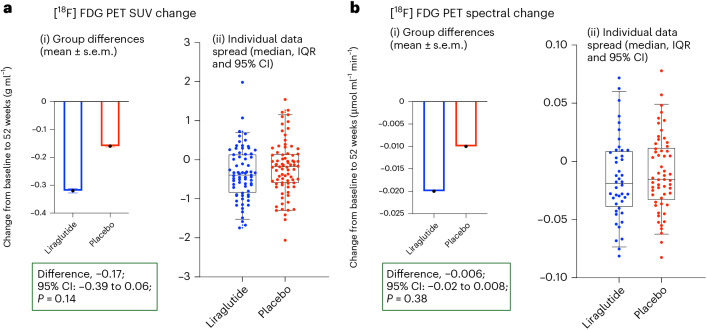
- Primary outcome: no significant difference in change in [18F]FDG PET SUV between liraglutide and placebo (adjusted difference = −0.17; 95% CI −0.39 to 0.06; P = 0.14); spectral analysis sensitivity results agreed.
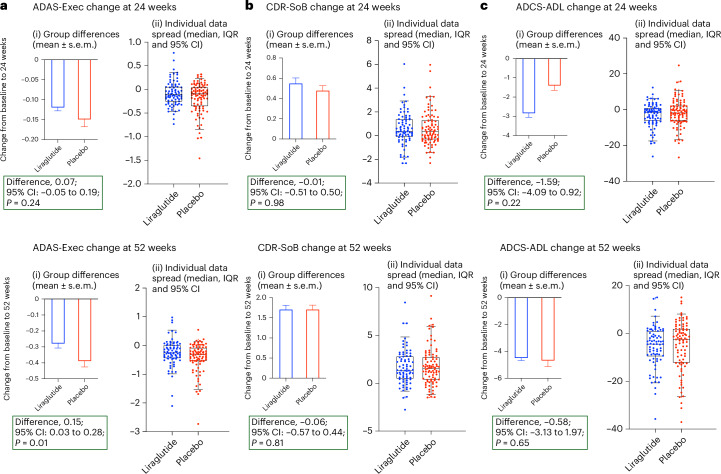
- Secondary cognitive outcome: ADAS-Exec z-score favored liraglutide over placebo (0.15; 95% CI 0.03–0.28; unadjusted P = 0.01). No significant differences were observed for ADCS-ADL (−0.58; 95% CI −3.13 to 1.97; unadjusted P = 0.65) or CDR-SoB (−0.06; 95% CI −0.57 to 0.44; unadjusted P = 0.81).
- Safety: there were 991 adverse events; 450 in the placebo arm (87 participants) and 541 in the treatment arm (88 participants). Serious adverse events occurred in 18 (17.6%) placebo participants and 7 (6.9%) treatment participants. Gastrointestinal disorders were the most common adverse event in the liraglutide group, accounting for 25.5% of all adverse events reported in those treated with liraglutide.
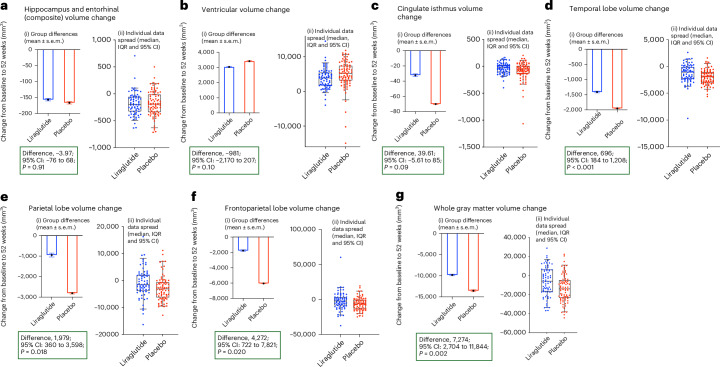
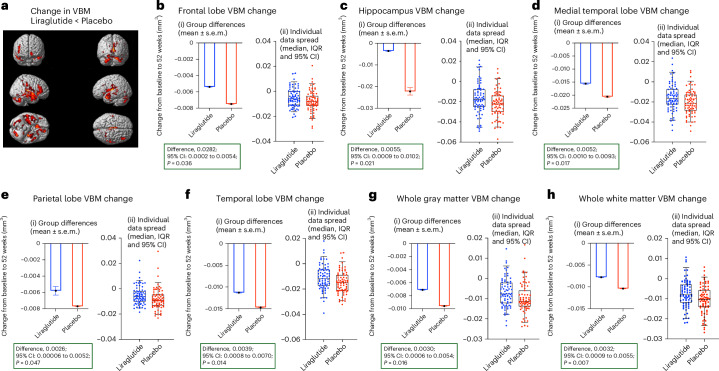
- Exploratory MRI: liraglutide-treated participants showed lower volume reductions in temporal lobe (696 mm3; 95% CI 184.37–1,208.12; P < 0.001) and total gray matter (7,274 mm3; 95% CI 2,704.05–11,844.8; unadjusted P = 0.002); parietal and frontoparietal lobes showed trends. No significant treatment difference was observed in hippocampus, entorhinal cortex, or ventricular volume.
Methods
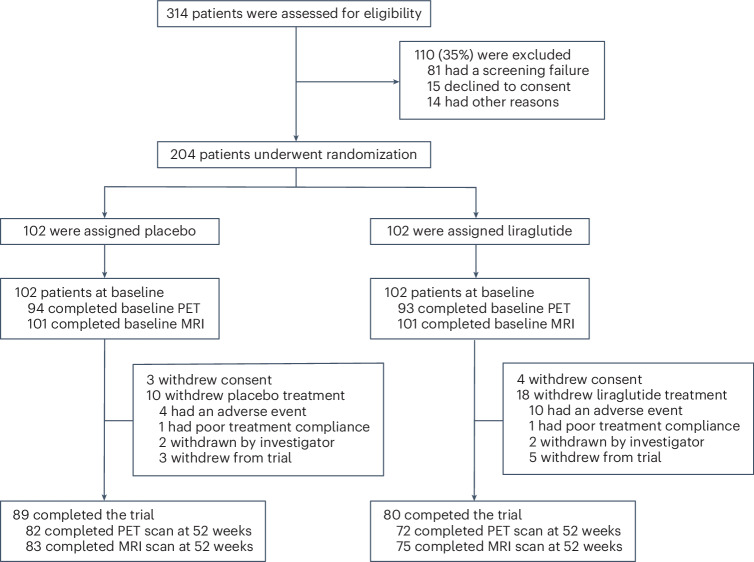
- Multicenter, randomized, double-blind, placebo-controlled phase 2b trial conducted at 24 UK sites; 204 participants with mild to moderate Alzheimer’s disease syndrome and no diabetes were randomized 1:1 to daily subcutaneous liraglutide (escalated to 1.8 mg) or placebo for 52 weeks; 169 completed the study.
- Primary outcome was change in cerebral glucose metabolic rate in a composite cortical region (hippocampus, medial temporal lobe, posterior cingulate) from baseline to 52 weeks using [18F]FDG PET. Secondary outcomes included safety/tolerability and cognitive changes (ADAS-Exec, CDR-SoB, ADCS-ADL); MRI volumetric and voxel-based morphometry analyses were exploratory.
- Primary analysis used ANCOVA adjusted for baseline values, age, and MMSE; repeated secondary outcomes used a multilevel mixed-effects model. Significance was 0.05 for primary/secondary outcomes and 0.01 for exploratory analyses; analyses were performed in MATLAB and Stata.
Limitations
- The paper states that attrition reduced the achieved sample size compared with the original power calculation, likely lowering the probability of detecting small effects; no formal power calculation was performed for secondary or exploratory endpoints, so those analyses should be interpreted as exploratory and hypothesis generating.
- The paper states limited population diversity (most participants were White), that optional β-amyloid, tau, and TSPO PET were not completed, that plasma biomarkers were not analyzed, and that mean imputation has limitations. It also notes the 12-month duration may be insufficient to establish long-term clinical benefit and that exploratory results were not corrected for multiple comparisons.
- Evident from the text: analyzable week 52 scans for the primary outcome were available for 72 (70.6%) liraglutide participants and 82 (80.4%) placebo participants, fewer than randomized; baseline imbalances were present for COWAT, WDS-F, and lipase; APOE genotype and CSF data were not collected or reported.
Model-written summary. Check it against the paper before relying on it.
Integrity signals
Registry
Cites
Statistics
Figures
Verification
Claims the paper makes
0 Valid · 0 Not valid · 10 Not checked · 32 Own results and interpretations
A result the paper reports from its own data — it cites no other source for it, so there is none to check. The quote shows it is in the paper.
In the paper
“The secondary outcome measures revealed that patients treated with liraglutide had a significantly slower decline in cognition (ADAS-Exec) and a slower reduction in MRI brain volume compared to the placebo arm, demonstrating a favorable response to liraglutide treatment.”
§ Liraglutide in mild to moderate Alzheimer’s disease: a phase 2b clinical trial > Discussion
boostedstates a cause- Asserted: passes — The authors put it forward as true.
- Checkable: passes — It can be checked against evidence.
- Load-bearing: passes — The paper’s conclusions depend on it.
- Based: passes — The paper gives a reason why it holds.
A result the paper reports from its own data — it cites no other source for it, so there is none to check. The quote shows it is in the paper.
In the paper
“The ELAD study showed no significant changes in cerebral glucose metabolism in participants with mild to moderate Alzheimer’s disease syndrome, which was the primary outcome measure.”
§ Liraglutide in mild to moderate Alzheimer’s disease: a phase 2b clinical trial > Discussion
plain- Asserted: passes — The authors put it forward as true.
- Checkable: passes — It can be checked against evidence.
- Load-bearing: passes — The paper’s conclusions depend on it.
- Based: passes — The paper gives a reason why it holds.
A result the paper reports from its own data — it cites no other source for it, so there is none to check. The quote shows it is in the paper.
In the paper
“The secondary outcome measures revealed that patients treated with liraglutide had a significantly slower decline in cognition (ADAS-Exec) and a slower reduction in MRI brain volume compared to the placebo arm, demonstrating a favorable response to liraglutide treatment.”
§ Liraglutide in mild to moderate Alzheimer’s disease: a phase 2b clinical trial > Discussion
boostedstates a cause- Asserted: passes — The authors put it forward as true.
- Checkable: passes — It can be checked against evidence.
- Load-bearing: passes — The paper’s conclusions depend on it.
- Based: passes — The paper gives a reason why it holds.
A result the paper states — it cites no source for it, so there is none to check. The quote shows it is in the paper.
In the paper
“Liraglutide was well tolerated by patients with Alzheimer’s disease syndrome.”
§ Liraglutide in mild to moderate Alzheimer’s disease: a phase 2b clinical trial > Discussion
plain- Asserted: passes — The authors put it forward as true.
- Checkable: passes — It can be checked against evidence.
- Load-bearing: unclear — It is unclear whether the paper’s conclusions depend on it.
- Based: passes — The paper gives a reason why it holds.
A result the paper reports from its own data — it cites no other source for it, so there is none to check. The quote shows it is in the paper.
In the paper
“Only four patients had missing data at baseline, which makes up 2% of the study population.”
§ Liraglutide in mild to moderate Alzheimer’s disease: a phase 2b clinical trial > Discussion
plainn = 4- Asserted: passes — The authors put it forward as true.
- Checkable: passes — It can be checked against evidence.
- Load-bearing: unclear — It is unclear whether the paper’s conclusions depend on it.
- Based: passes — The paper gives a reason why it holds.
12 more claims
Create a free account to see all 42 claims and to verify the 12 references still open.
- It may state two separate claims as one. 17
- Probably not a substantial claim. 17
Self-check
Percentages, sums and reported differences re-computed from the paper’s own numbers.
Each contradiction between two passages listed here was confirmed by an independent check.
Rated minor: it would not touch a result — a value no result rests on, a p-value that stays on the same side of the significance level, or a conflict that is clerical, resolved elsewhere in the paper, or outside its own findings.
In the paper
§ Liraglutide in mild to moderate Alzheimer’s disease: a phase 2b clinical trial > Methods > Outcomes
“at least two-thirds”
§ Liraglutide in mild to moderate Alzheimer’s disease: a phase 2b clinical trial > Methods > Outcomes
“(9/14) of the ADAS-Cog subtests completed.”
Rated minor: it would not touch a result — a value no result rests on, a p-value that stays on the same side of the significance level, or a conflict that is clerical, resolved elsewhere in the paper, or outside its own findings.
In the paper
§ Liraglutide in mild to moderate Alzheimer’s disease: a phase 2b clinical trial > Methods > Statistical analysis
“82 participants would be required per group to provide 80% power at a 5% significance level.”
§ Liraglutide in mild to moderate Alzheimer’s disease: a phase 2b clinical trial > Methods > Statistical analysis
“Allowing for a dropout of 15% over the study period, the trial required 103 participants per group (206 in total).”
Rated minor: it would not touch a result — a value no result rests on, a p-value that stays on the same side of the significance level, or a conflict that is clerical, resolved elsewhere in the paper, or outside its own findings.
In the paper
§ Liraglutide in mild to moderate Alzheimer’s disease: a phase 2b clinical trial > Results > Patient disposition
“| ADCS-ADL scoref | 66.1 ± 9.7 | 66.5 ± 9.5 | 66.3 ± 9.5 | 0.7664 |”
§ Liraglutide in mild to moderate Alzheimer’s disease: a phase 2b clinical trial > Results > Patient disposition
“fADCS-ADL; lower score indicates greater severity (range, 0−52).”
Cited works that were retracted
Works this paper cites that were later retracted, from the retraction notices publishers deposit. Major when the notice came out before this paper was published.
Rated major: it would touch a result — a value a result rests on, reported and recomputed p-values on opposite sides of the significance level, two passages that conflict with no sign which is right, or a cited work retracted before this paper was published.
In the paper
“It is also possible that as liraglutide has been shown to reduce microglial activation 33 , [ 18 F] FDG signal discrepancies could also reflect that 52 weeks of treatment may also be attenuating the inflammatory response, resulting in a relative reduction in glucose metabolism in patients who…”
Cited work 10.3390/ijms22020860 · retracted 2021-01-16 · notice 10.3390/ijms27157042 · this paper published 2025-12-01
Citations
Cites
1 retracted
Paladugu, L., Gharaibeh, A., Kolli, N., Learman, C., Hall, T. C., Li, L., Rossignol, J., Maiti, P., & Dunbar, G. L. (2021) · International Journal of Molecular Sciences · doi:10.3390/ijms22020860 · Cited by 80 · cited 1×
“It is also possible that as liraglutide has been shown to reduce microglial activation 33 , [ 18 F] FDG signal discrepancies could also reflect that 52 weeks of treatment may also be attenuating the inflammatory response, resulting in a relative reduction in glucose metabolism in patients who…”
RetractedDesikan, R. S., Ségonne, F., Fischl, B., Quinn, B. T., Dickerson, B. C., Blacker, D., Buckner, R. L., Dale, A. M., Maguire, R. P., Hyman, B. T., et al. (2006) · NeuroImage · doi:10.1016/j.neuroimage.2006.01.021 · Cited by 13,324 · cited 1×
“A trial of the GLP-1 analog exenatide in Alzheimer’s disease found a reduction of β-amyloid 42 in plasma neuronally derived extracellular vesicles 12 .”
Gerstein, H. C., Colhoun, H. M., Dagenais, G. R., Diaz, R., Lakshmanan, M., Pais, P., Probstfield, J., Riesmeyer, J. S., Riddle, M. C., Rydén, L., et al. (2019) · The Lancet · doi:10.1016/s0140-6736(19)31149-3 · Cited by 3,163 · cited 1×
“In one study evaluating dulaglutide, a GLP-1 analog, patients with diabetes showed delayed cognitive impairment ( n = 9,901) compared to placebo 8 .”
A 24-week, double-blind, placebo-controlled trial of donepezil in patients with Alzheimer's disease
Rogers, S. L., Farlow, M. R., Doody, R. S., Mohs, R., Friedhoff, L. T., & Donepezil Study Group* (1998) · Neurology · doi:10.1212/wnl.50.1.136 · Cited by 1,618 · cited 1×
“23).”
Athauda, D., Maclagan, K., Skene, S. S., Bajwa-Joseph, M., Letchford, D., Chowdhury, K., Hibbert, S., Budnik, N., Zampedri, L., Dickson, J., et al. (2017) · The Lancet · doi:10.1016/s0140-6736(17)31585-4 · Cited by 889 · cited 1×
“Exenatide treatment improved MDS-UPDRS scores in participants with Parkinson’s disease compared to controls 15,16 .”
Associations between cognitive, functional, and FDG-PET measures of decline in AD and MCI
Landau, S. M., Harvey, D., Madison, C. M., Koeppe, R. A., Reiman, E. M., Foster, N. L., Weiner, M. W., & Jagust, W. J. (2011) · Neurobiology of Aging · doi:10.1016/j.neurobiolaging.2009.07.002 · Cited by 750
McClean, P. L., Parthsarathy, V., Faivre, E., & Hölscher, C. (2011) · The Journal of Neuroscience · doi:10.1523/jneurosci.0529-11.2011 · Cited by 698 · cited 1×
“Preservation of cognitive function observed in liraglutide-treated participants was consistent with preclinical findings 20,21 and the cognitive benefits identified in a meta-analysis of antidiabetic agents in participants with Alzheimer’s disease 22 .”
Mohs, R. C., Knopman, D., Petersen, R. C., Ferris, S. H., Ernesto, C., Grundman, M., Sano, M., Bieliauskas, L., Geldmacher, D., Clark, C., et al. (1997) · Alzheimer Disease & Associated Disorders · doi:10.1097/00002093-199700112-00003 · Cited by 692 · cited 1×
“Further information on research design is available in the Nature Portfolio Reporting Summary linked to this article.”
Exenatide and the treatment of patients with Parkinson's disease
Aviles-Olmos, I., Dickson, J., Kefalopoulou, Z., Djamshidian, A., Ell, P., Soderlund, T., Whitton, P., Wyse, R., Isaacs, T., Lees, A., et al. (2013) · Journal of Clinical Investigation · doi:10.1172/jci68295 · Cited by 529 · cited 1×
“Exenatide treatment improved MDS-UPDRS scores in participants with Parkinson’s disease compared to controls 15,16 .”
Spectral Analysis of Dynamic PET Studies
Cunningham, V. J., & Jones, T. (1993) · Journal of Cerebral Blood Flow & Metabolism · doi:10.1038/jcbfm.1993.5 · Cited by 498 · cited 1×
“…hippocampal, medial temporal lobe and posterior cingulate) from baseline to follow-up (12 months) in the treatment group compared to the placebo group. rCMRGlc was estimated by creating parametric maps using spectral analysis with an arterial plasma input function as previously described 40,41 .”
Cited by
Cummings, J. L., Atri, A., Sano, M., Zetterberg, H., Scheltens, P., Knop, F. K., Johannsen, P., Wichmann, C. A., Abschneider, R. M., Leon, T., et al. (2026) · The Lancet · doi:10.1016/s0140-6736(26)00459-9 · Cited by 110
“21 Possible explanations for this divergence from the real-world evidence are the inclusion of participants with biologically defined Alzheimer’s disease rather than all-cause dementia; investigating the slowing of decline in a symptomatic Alzheimer’s disease population rather than reduced…”
The promise of GLP-1 receptor agonists for neurodegenerative diseases
Athauda, D. S., Greig, N. H., Meissner, W. G., Foltynie, T., & Gandhi, S. (2026) · Journal of Clinical Investigation · doi:10.1172/jci194745 · Cited by 45
Christodoulou, R. C., Eller, D., Papageorgiou, P. S., Angelopoulou, E., Vassiliou, E. K., & Papageorgiou, S. G. (2026) · Journal of Clinical Medicine · doi:10.3390/jcm15051884 · Cited by 28
“…in cerebral glucose metabolism between groups over the time of 52 weeks in the 204 participants, even though improved performance on the executive cognitive test, ADAS-Exec, was observed, but no significant benefit was observed in daily living activities, as measured by the ADAS-ADL [38].”
Podder, D., Stala, O., Miah, A., Agyapong, A., Moore, M. E., Hirani, R., Diegisser, D., Garcia, V. G., & Etienne, M. (2026) · Diabetology · doi:10.3390/diabetology7030046 · Cited by 20
Sabbagh, M. N., Cummings, J. L., Ballard, C. G., van der Flier, W. M., Heneka, M. T., Holst, J. J., Knudsen, L. B., Salloway, S., Tansey, M. G., & Drucker, D. J. (2025) · Nature Aging · doi:10.1038/s43587-025-01029-3 · Cited by 17
“Topline data from the two evoke trials indicate that participantts randomized to oral semaglutide did not demonstrate a reduction of progression of AD, as measured by the change in Clinical Dementia Rating–Sum of Boxes score compared to baseline, despite evidence for reduction in levels of…”
Self-citationGLP‐1 at the Metabolic–Cognitive Interface: Reward, Affect, and Memory
Gao, S., Décarie-Spain, L., Gu, C., Mazzini, G., Kanoski, S. E., & Borner, T. (2026) · Comprehensive physiology · doi:10.1002/cph4.70129 · Cited by 17
Ganamurali, N., & Sabarathinam, S. (2026) · Journal of Diabetes & Metabolic Disorders · doi:10.1007/s40200-025-01834-y · Cited by 16
“Early clinical trials in Alzheimer’s disease suggest liraglutide may preserve cerebral glucose metabolism and slow cognitive decline, although confirmatory Phase 3 results are still awaited and the evidence remains prelimi-nary [ 31, 32].”
Stinson, S. E., Shadrin, A. A., Rahman, Z., Rødevand, L. N., Broce, I., Persson, K., Selbæk, G., Stefánsson, H., Haavik, J., Parker, N., et al. (2026) · EBioMedicine · doi:10.1016/j.ebiom.2026.106254 · Cited by 9
“26 Functional annotation of shared metabolic loci further underscored distinct disease mechanisms.”
Wu, J., Li, J., Qin, X., & Chen, W. (2026) · Frontiers in Endocrinology · doi:10.3389/fendo.2026.1736410 · Cited by 8
Targeting brain connectivity in Alzheimer’s disease with repurposed drugs
Pini, L., Imbimbo, B. P., Griffa, A., Allali, G., & Pomara, N. (2025) · Ageing Research Reviews · doi:10.1016/j.arr.2025.103001 · Cited by 8
Niziński, P., Szalast, K., Makuch‐Kocka, A., Paruch, K., Ciechanowska, M. O., & Plech, T. (2026) · Molecules · doi:10.3390/molecules31020320 · Cited by 8
Davies, M. J., Aroda, V. R., Bajaj, M. S., ElSayed, N. A., Giorgino, F., Green, J., Kalyani, R. R., Maruthur, N. M., Mathieu, C., Rosas, S. E., et al. (2026) · Diabetes Care · doi:10.2337/dci26-0141 · Cited by 7
Glycolysis-enhancing α1-adrenergic antagonists have therapeutic potential in Alzheimer’s disease
Zhang, Q., Schultz, J. L., Simmering, J. E., Kirkpatrick, B. Q., Weber, M. A., Skuodas, S., Hicks, T., Pierce, G., Laughlin, M., George, B., et al. (2026) · Alzheimer s Research & Therapy · doi:10.1186/s13195-026-02135-z · Cited by 6
“…trial of liraglutide showed a ~ 50% reduction in temporal-lobe atrophy and slowed cognitive decline despite missing its primary cerebral glucose metabolism endpoint [17], whereas the EVOKE trials of oral semaglutide did not slow clinical progression despite favorable biomarker movement [18, 19].”
Hölscher, C. (2026) · Journal of Alzheimer s Disease · doi:10.1177/13872877261458402 · Cited by 6
Yang, M., & Liang, Z. (2026) · Frontiers in Immunology · doi:10.3389/fimmu.2026.1839620 · Cited by 5
Younis, A., Henney, A. E., Riley, D. R. J., Anson, M., Zhao, S. S., Hernández, G., Malik, R. A., Su, L., Lip, G. Y. H., Cuthbertson, D. J., et al. (2026) · Diabetes Research and Clinical Practice · doi:10.1016/j.diabres.2026.113083 · Cited by 4
Effects of obesity on brain health and cognition
McEntee, C. M., Savelieff, M. G., Noureldein, M. H., Eid, S., Grisold, W., Hassenstab, J. J., & Feldman, E. L. (2026) · Nature Reviews Neurology · doi:10.1038/s41582-026-01251-6 · Cited by 4
“These observations have prompted clinical trials evaluating GLP-1RAs in individuals with MCI or Alzheimer disease (NCT04777396, NCT04777409 and NCT01843075) 196,197 , although the early findings suggest little to no effect on dementia 198,199 .”
Vear, A., Olsen, S. A., Lange, E. C. H., Müller, M. A., Svendsen, C., & Clemmensen, C. (2026) · Cell Reports Medicine · doi:10.1016/j.xcrm.2026.102906 · Cited by 4
NLRP3 inflammasome as a central target for the pleiotropic effects of GLP-1 receptor agonists
Mahmoudi, A. A., Saeedi‐Boroujeni, A., Vadizadeh, A., Kesharwani, P., & Sahebkar, A. (2026) · International Immunopharmacology · doi:10.1016/j.intimp.2026.117063 · Cited by 4
Neuroprotective strategies for cognitive decline in type 2 diabetes
Cimini, F. A., Cuenca‐Royo, A., Gomis‐González, M., Forcano, L., Barchetta, I., Barone, E., Cavallo, M. G., & de la Torre, R. (2026) · Trends in Endocrinology and Metabolism · doi:10.1016/j.tem.2026.04.003 · Cited by 4
Pragati, G., Pozzilli, V., Giovanni, A. D., Sapio, E., Motolese, F., Capone, F., & Pozzilli, P. (2026) · Journal of Neuroendocrinology · doi:10.1111/jne.70246 · Cited by 3
“9 An executive function secondary outcome favoured liraglutide, while measures of activities of daily living and global clinical severity showed no significant differences.”
Elghanam, Y., & Kim, E. (2026) · Archives of Pharmacal Research · doi:10.1007/s12272-026-01615-y · Cited by 3
“%) trials as having some concerns, mainly due to missing outcome data (Gejl et al. 2016; Mullins et al. 2019; Hogg et al. 2022; Edison et al. 2025), deviations from intended interventions (Aviles-Olmos et al. 2013; Meissner et al. 2024; Dei Cas et al. 2024), and baseline imbalances between groups…”
Semaglutide for Alzheimer's disease after evoke and evoke+
Schneider, L. S. (2026) · The Lancet · doi:10.1016/s0140-6736(26)00514-3 · Cited by 3
Tudosie, A. C., Marin, L.-M., Popa, S. G., & Golli, A. L. (2026) · International Journal of Molecular Sciences · doi:10.3390/ijms27083628 · Cited by 3
Brain peptides in Alzheimer’s disease - pathophysiology and therapeutic advances
Pahal, S., Gupta, A., Kumar, V., Singh, P. B. R. P., Kaushik, M., Pahal, V., Atluri, G., & Chaudhary, A. (2026) · Cell and Tissue Research · doi:10.1007/s00441-026-04055-8 · Cited by 3
“…on biomarker signatures (p-tau217, p-tau181, amyloid-PET) and genetic risk factors (APOE4 genotype), enabling enrichment of trials to populations most likely to benefit from specific peptide mechanisms (Prades et al. 2025; Yang 2025; Zhang et al. 2025; Edison et al. 2025; Giri and Chandra 2025).”
Xiang, M., Cao, S.-Y., Sun, X.-H., Hu, J.-W., Lv, M., Li, J., & Li, W. (2026) · Translational Neurodegeneration · doi:10.1186/s40035-026-00573-1 · Cited by 3
“Moreover, a substantial proportion of patients experience pronounced gastrointestinal adverse effects and significant weight loss [187], which may limit the long-term tolerability in elderly NDDs populations.”
InfluentialCzarnecki, M., Baranowska-Bik, A., Litwiniuk, A., Kalisz, M., Domańska, A., Kurdyła, A., & Bik, W. (2026) · International Journal of Molecular Sciences · doi:10.3390/ijms27031609 · Cited by 3
Mourtzos, M.-A., Patoulias, D., Keklikoglou, N.-M., Karakasis, P., de Piñeres, V. G., Stefanakis, K., Rizzo, M., & Mantzoros, C. S. (2026) · Diabetes Research and Clinical Practice · doi:10.1016/j.diabres.2026.113345 · Cited by 3
Davies, M. J., Aroda, V. R., Bajaj, M. S., ElSayed, N. A., Giorgino, F., Green, J., Kalyani, R. R., Maruthur, N. M., Mathieu, C., Rosas, S. E., et al. (2026) · Diabetologia · doi:10.1007/s00125-026-06855-7 · Cited by 2
de Leijer, J. F., Biessels, G. J., Visseren, F. L. J., & van Sloten, T. T. (2026) · Diabetologia · doi:10.1007/s00125-026-06795-2 · Cited by 2
GLP-1 Receptor Agonists in Neurological Disorders: From Mechanisms to Clinical Translation
Li, P., Gao, Y., & Liu, W. (2026) · Drug Design Development and Therapy · doi:10.2147/dddt.s613616 · Cited by 2
“22 Taken together, these mixed results tell us that we need to be careful about picking the right patients, develop good biomarkers, and pay attention to drug specific properties in future studies.”
Feng, Y., 张彩利, Wei, Y., Liu, E., Sun, H., Flatt, P. R., Gault, V. A., Irwin, N., Hölscher, C., Hao, L., et al. (2026) · Biochemical Pharmacology · doi:10.1016/j.bcp.2026.118074 · Cited by 2
Appetite, Obesity, Metabolism, and Malignancy: Do Incretin-Mimetic Drugs Reduce Cancer Risk?
Renehan, A. G., & Pollak, M. (2026) · Cancer Prevention Research · doi:10.1158/1940-6207.capr-26-0018 · Cited by 2
Glucagon-Like Peptide-1 Receptor Agonists Inhibit the Initiation of Toxic Amyloid-β42 Aggregation
Fallot, L. B., Anderson, C. A., Pinc, J. R., Stevenson, A., Schleck, M. C., Hawryschuk, E., Li, O. Z., Palchak, J. C., Toole, J. R., Kubiak, R. W., II, et al. (2026) · Journal of the American Chemical Society · doi:10.1021/jacs.6c01289 · Cited by 2
Mjaaseth, U. N., Hsu, M.-F., Arballo, J., Haj, F. G., & Patel, V. (2026) · Frontiers in Aging Neuroscience · doi:10.3389/fnagi.2026.1710075 · Cited by 2
“…memory outcomes in AD patients (Hallschmid, 2021) however additional studies are warranted (Craft et al., 2020; Smith et al., 2025), and glucagon-like peptide receptor agonists are advancing in clinical trials (Edison et al., 2026; Tang et al., 2025; Wang et al., 2025; Nørgaard et al., 2022).”
Alsharif, M., Shrebaty, O., Aloudah, M. A., Alqahtani, M., AlOubili, R. S., Ahmed, M. J., AlBani, B., & Bana, A. E. (2026) · Frontiers in Aging Neuroscience · doi:10.3389/fnagi.2026.1969490 · Cited by 2
“Liraglutide was generally safe and well tolerated in this non-diabetic AD population (Edison et al., 2026).”
InfluentialAhmad, W. A., Sagy, Y. W., Arbel, R., Battat, E., Diker, D., Lavie, G., & Reges, O. (2026) · European Journal of Internal Medicine · doi:10.1016/j.ejim.2026.107164 · Cited by 1
The neuro-metabolic epidemic and the CB1R paradox
Vaccaro, F., Malta, G., Rizzo, M., Plescia, F., & Lavanco, G. (2026) · Current Opinion in Pharmacology · doi:10.1016/j.coph.2026.102631 · Cited by 1
Jiménez‐Mausbach, M., Tijms, B. M., Paterson, C., & Refsgaard, J. C. (2026) · Alzheimer s & Dementia Diagnosis Assessment & Disease Monitoring · doi:10.1002/dad2.70432 · Cited by 1
“9–11 Recent syntheses emphasize neuroimmune pathways as plausible mediators linking GLP-1 signaling to brain health, 12,13 and preliminary evidence suggests proteomics can identify AD-related biomarkers impacted by GLP-1RAs.”
Murugadoss, K., Venkatakrishnan, A., & Soundararajan, V. (2026) · Biology Methods and Protocols · doi:10.1093/biomethods/bpag043 · Cited by 1
“…randomized trial of 52-week subcutaneous liraglutide in 204 patients with mild-to-moderate AD, reported in 2025, did not reach its primary cerebral glucose metabolism endpoint but showed preservation of cortical brain volume on magnetic resonance imaging and a favorable cognitive trajectory [16].”
From comorbidity to continuum: Alzheimer’s disease and epilepsy are connected-now what?
Alves, S. S., Manzine, P. R., dos Santos, F. M., Migliaccio, M. M., Alves, L. D. C., da Silva-Júnior, R. M. P., Becerra-Hernández, L. V., González-Acosta, C. A., Buriticá, E., Cominetti, M. R., et al. (2026) · Neuroscience & Biobehavioral Reviews · doi:10.1016/j.neubiorev.2026.106682 · Cited by 1
Schechter, M., Sehtman-Shachar, D. R., Fishkin, A., Mosenzon, O., Cukierman‐Yaffe, T., Sharon, R., Leibowitz, G., Arkadir, D., & Aharon‐Hananel, G. (2026) · Alzheimer s & Dementia Translational Research & Clinical Interventions · doi:10.1002/trc2.70315 · Cited by 1
“25,26 34 The EVOKE and EVOKE + trials 34 and the ELAD trial 33 assessed neurological outcomes with oral semaglutide and liraglutide, respectively, versus placebo, in people with early Alzheimer’s disease (AD).”
Bi, Q., Zhang, L., Zhang, J. H., Wang, X., Zuo, C., Zhao, S., Wang, Z. L., Zhao, Z., & Wan, H. (2026) · Naunyn-Schmiedeberg s Archives of Pharmacology · doi:10.1007/s00210-026-05635-9 · Cited by 1
Grasso, M., Maggio, V., Caraci, F., & Rizzo, M. (2026) · Advances in Therapy · doi:10.1007/s12325-026-03760-8 · Cited by 1
“The trial failed to meet its primary outcome of changes in cerebral glucose metabolic rate [106], while the secondary outcome—score on (ADAS-Exec)— performed better in patients treated with lira-glutide compared to placebo group, suggesting that liraglutide is generally well tolerated and safe in…”
Insulin and Incretin Receptor Agonists Reciprocally Alter Their Blood–Brain Barrier Permeabilities
Fry, A., Rose, A., Weaver, R. R., Hansen, K., Blevins, J. E., Banks, W. A., & Rhea, E. M. (2026) · International Journal of Molecular Sciences · doi:10.3390/ijms27104611 · Cited by 1
“…clinical trial, ‘Evaluating liraglutide in Alzheimer’s disease’ (ELAD), identified that despite no significant differences in the cerebral glucose metabolic rate (primary outcome), cognition was improved as assessed by the AD Assessment Scale-Executive domain (ADAS-Exec, secondary outcome) [4].”
Zhang, L., Peng, F., Wanting, Z., Qianqian, J., Zhang, Z., Bai, B., Xue, G., & Hölscher, C. (2026) · Frontiers in Endocrinology · doi:10.3389/fendo.2026.1825379 · Cited by 1
“GLP-1 receptor agonists have shown protective effects in PD clinical trials (5 – 7) and Alzheimer ’ s disease (8).”
GLP-1 and GIP class drugs have neuroprotective properties in Alzheimer’s and Parkinson’s disease
Hölscher, C. (2026) · Frontiers in Neuroscience · doi:10.3389/fnins.2026.1906426 · Cited by 1
“This biomarker was chosen as the primary endpoint (Edison et al., 2026).”
Bariatric surgery and risk of dementia and Parkinson’s disease in patients with obesity
Shiekh, S. I., Papamargaritis, D., Goldney, J., Hernandes, G., Davies, M. J., Khunti, K., Yates, T. E., & Zaccardi, F. (2026) · International Journal of Obesity · doi:10.1038/s41366-026-02222-z · Cited by 1
Singh, A. K., Dunde, V., Maurya, M. H., Vora, N., Maheta, D., Frishman, W. H., & Aronow, W. S. (2026) · Cardiology in Review · doi:10.1097/crd.0000000000001405 · Cited by 1
GLP-1 receptor agonists for Alzheimer’s disease: Lessons from trials and translational challenges
Stringhi, R., Padovani, A., & Marcello, E. E. (2026) · Cell Reports Medicine · doi:10.1016/j.xcrm.2026.102918 · Cited by 1
“10 Liraglutide was generally safe and well tolerated in this non-diabetic AD population.”
Jiang, W., Chua, K., Tan, H. K., Tan, E., Lin, K., & Tang, H.-W. (2026) · npj Aging · doi:10.1038/s41514-026-00468-5 · Cited by 1
Huang, C., Yong, S., & Li, C.-J. (2026) · Biomedicine & Pharmacotherapy · doi:10.1016/j.biopha.2026.118977 · Cited by 1
Brucar, L. R., Miller, K. M., & Volkow, N. D. (2026) · Neuroscience & Biobehavioral Reviews · doi:10.1016/j.neubiorev.2026.106990
“In contrast, Edison et al. (2026) reported evidence suggestive of attenuated structural decline following 52 weeks of liraglutide treatment in individuals with mild-to-moderate Alzheimer’s disease.”
InfluentialWang, J., Pederson, A. M., Flanders, M. D., Choi, M., Buto, P. T., Sims, K. D., Chen, R., Couch, E., Gilsanz, P., Hayes, K. N., et al. (2026) · medRxiv · doi:10.64898/2026.09.04.26362304
Local co-expression of GLP1R and INS in human cortical interneurons
Faragó, N., Kocsis, A. K., Bordé, S., Zvara, Á., Barzó, P., Puskás, L. G., Tamás, G., & Csajbók, É. (2026) · Frontiers in Endocrinology · doi:10.3389/fendo.2026.1788432
“Some clinical evidence suggests that they may in fl uence cognitive outcomes in patients with metabolic dysfunction (10, 12).”
Heart and Brain: Linking Obesity-Related Inflammation, Cardiovascular Disease and Cognitive Function
Reiss, A. B., Gulkarov, S., Syed, U., Ben-Dor, G. A., Srivastava, A., Singh, M., & Leon, J. D. (2026) · Journal of Cardiovascular Development and Disease · doi:10.3390/jcdd13100477
“…2b ELAD trial of liraglutide in mild-to-moderate Alzheimer disease similarly did not improve activities of daily living or global clinical decline [279], and the phase 3 EXERT exercise trial in amnestic mild cognitive impairment showed no between-group differences on functional endpoints [280].”
Adhikari, S., Carlyle, B. C., & de Wet, H. (2026) · The Journal of Precision Medicine Health and Disease · doi:10.1016/j.premed.2026.100057
The human retina in Alzheimer’s disease: Pathology, mechanisms, and biomarkers
Müller, L. P. D. S., Majumdar, S., & Recio, B. S. (2026) · Ageing Research Reviews · doi:10.1016/j.arr.2026.103275
The gut neuroepithelial unit as a neurodegeneration-relevant interface in the gut–brain axis
Guo, S., Guo, R., Zhang, Q., Fu, L., Zhu, H., & Zhang, Q. (2026) · Translational Neurodegeneration · doi:10.1186/s40035-026-00582-0
“Like-wise, a phase 2b trial of GLP-1 agonist liraglutide in mild to moderate AD patients did not improve the primary endpoint (cerebral glucose metabolic rate), although secondary measures suggested selective benefit [103].”
Glycolysis: The Bridge Between Cellular Interaction and Alzheimer’s Disease
Lei, Q., He, Y., & Fang, B. (2026) · Biomolecules · doi:10.3390/biom16060796
“Liraglutide is safe and well-tolerated in individuals with mild to moderate AD, although its cognitive-enhancing effects on AD are not significant, according to a new clinical trial [215].”
Semaglutide for obesity management: A narrative review of efficacy, safety, and future directions
Hajibandeh, S., Tao, Y.-A., Hsieh, M.-H., Liu, H.-H. “., Cheng, Y.-F., Lee, K.-H., Hsieh, S.-Y., & Lu, C. (2026) · Journal of the American Pharmacists Association · doi:10.1016/j.japh.2026.103117
Popa, E., Popa, A. E., Poroch, V., Schreiner, T. G., Slănină, A. M., Poroch, M., Hatneanu, A. M., Ungureanu, M. I., Petroaie, A. D., Bacușcă, A. I., et al. (2026) · International Journal of Molecular Sciences · doi:10.3390/ijms27198738
“In the ELAD study [52], 204 participants without diabetes and with mild-to-moderate AD were randomized to liraglutide or placebo for 52 weeks.”
La maladie d’Alzheimer : avancées scientifiques, enjeux diagnostiques et perspectives thérapeutiques
Chenault, C., & Tchalla, A. (2026) · Soins · doi:10.1016/j.soin.2026.07.004
Alzheimer’s Disease: Progress in Biomarkers, Diagnostics and Therapies
Wilson, E. N., Sommer, B., Scheltens, P., & Nikolich, K. (2026) · Springer eBooks · doi:10.1007/978-3-032-31497-0_8
The Crosstalk Between Diabetes and Alzheimer's Disease: A Molecular Perspective
Çataklı, D., Özen, Ö., Tuncgovde, E. B., & Ozsarlak‐Sozer, G. (2026) · Basic & Clinical Pharmacology & Toxicology · doi:10.1111/bcpt.70294
Wu, Y., Di, Y., Wang, H. W., Wang, L., Zhang, J., Zhang, Y., & Lyu, D. (2026) · Ageing Research Reviews · doi:10.1016/j.arr.2026.103216
Alnsour, L., Al-Samydai, A. M., Sadek, B. S., & Akour, A. A. (2026) · Biomedicine & Pharmacotherapy · doi:10.1016/j.biopha.2026.119614
Jiang, L., Chen, X., Qian, J., Fang, K., Dai, C., Chang, D., Jin, L., Huang, W., Wang, Y., Duan, X., et al. (2026) · Alzheimer s & Dementia · doi:10.1002/alz.71845
“To ensure that the mediator-AD associations in Step 2 were not contaminated by the direct effect of GLP-1R on AD, any SNPs in LD (r 2 > 0.8) with the GLP-1R cis-eQTL instruments used in Step 1 were excluded from Step 2.”
InfluentialTiwari, S., Siddiqui, B., Fatima, S., Saifi, M., Khan, I. A., & Abdin, M. Z. (2026) · Ageing Research Reviews · doi:10.1016/j.arr.2026.103308
Giorgi, R. D., Lipunova, N., Mathias, E., Shang, F., & Taquet, M. (2026) · BMJ Mental Health · doi:10.1136/bmjment-2026-302828
Wang, Z., Xue, S., Zhou, X., Yuan, M., & Sun, X. (2026) · Expert Review of Clinical Immunology · doi:10.1080/1744666x.2026.2747225
“[ 109 ] ( C o n t i n u e d ) stroke remains limited, with inconsistent findings.”
InfluentialChen, M., Zuo, C., Li, R., Zhang, J., Yao, Z., Li, L., & Cheng, L. (2026) · Discover Neuroscience · doi:10.1186/s13064-026-00314-0
“…in AD patients with established cognitive impairment have not demonstrated clear disease-modifying efficacy, suggesting that such metabolic interventions may be more suitable for preventive application before the onset of cognitive decline or during the earliest stages of disease progression [125].”
Dammer, E. B., Afshar, S., Bian, S., Seyfried, N. T., Levey, A. I., Fortea, J., & Johnson, E. C. B. (2026) · medRxiv · doi:10.64898/2026.02.14.26346321
Targeting the peripheral immune system for treatment of Alzheimer’s disease
Almasarani, E., Fog, M. H., Vorup‐Jensen, T., & Juul‐Madsen, K. (2026) · Molecular Neurodegeneration Advances · doi:10.1186/s44477-026-00054-9
“A clinical study of liraglutide in mild AD has shown that liraglutide may have biological effects, suggested by bio-marker outcomes, including slowed brain atrophy and trends toward reduced cognitive decline [212].”
Tansey, M. G., Bozeat, S., Ackerman, P., Atri, A., Barnum, C. J., Brundin, P., de Carvalho, C. M. A., Fleisher, A., Graf, A., Head, E., et al. (2026) · Alzheimer s & Dementia Translational Research & Clinical Interventions · doi:10.1002/trc2.70287
“200 Additionally, post hoc or meta-analyses of several large CV outcome trials in individuals with type 2 diabetes have reported significantly lower risks of all-cause dementia.”
GLP-1 Receptor Agonists, Stroke, and Cognitive Outcomes: Systematic Review and Meta-RegressionPreprint
Danielli, M., Sibal, R., Collett, G., Awan, H., Sharma, C., Steckelmacher, J., Kennedy, C., & Gupta, A. K. (2026) · medRxiv · doi:10.64898/2026.09.18.26363449
Diabetes‐Associated Cognitive Impairment: Pathophysiology and Emerging Therapies
Corbali, O., Menon, P., Corbali, H. I., Jagannathan, R., & Levey, A. I. (2026) · Annals of Clinical and Translational Neurology · doi:10.1002/acn3.70487
“…metabolism (primary outcome) observed, modest improvement in executive function as a secondary outcome (unadjusted analysis, no change in CDR-SB) [211] SGLT2i Meta-analysis of RCTs No significant change in dementia risk [201] Retrospective cohort studies Lower incidence of dementia [208,…”
Leone, L., Kiernan, T. J., Kuwabara, S., Barnett, M. H., Devenney, E. M., Ahmed, R. M., & Lin, C. S.-Y. (2026) · Frontiers in Neurology · doi:10.3389/fneur.2026.1824840
“…trial in 204 patients with mild–moderate Alzheimer’s disease and no diabetes showed that those treated with liraglutide had a slower decline in cognitive function when measured by a specialized battery test, but there was no change compared to placebo in activities of daily living (137).”
Sudasinghe, K., & Hall, S. E. (2026) · Frontiers in Nutrition · doi:10.3389/fnut.2026.1839995
“In treated individuals, approximately 8.9% experienced ≥ 10% weight loss, while up to 39.2% experienced ≥ 5% weight loss (91).”
InfluentialTekieli, B., Cyran, W. K., Matsiusheuskaya, T., Cionżyńska, W., Machnik, K., Gaweł, B., Justkowska-Gebauer, A., Olesiński, M., Chudyba, E., & Górecki, M. (2026) · International Journal of Innovative Technologies in Social Science · doi:10.31435/ijitss.3(51).2026.6110
“While observational studies frequently report associations between incretin-based therapies and reduced dementia risk, randomized clinical trials have produced heterogeneous results (Edison et al., 2025; Sun et al., 2025; Wang et al., 2024; Tang et al., 2025).”
Abbatecola, A. M., Migliara, G., D’Agostino, F., Veronese, N., Giuliani, A., Caponnetto, S., Corbi, G., Signoriello, E., Incalzi, R. A., & Paolisso, G. (2026) · Nutrients · doi:10.3390/nu18203312
Wang, M., Guo, M., Li, S., Song, L., Wu, M., Zhao, J., Xu, T., & Zhou, Y. (2026) · Phytomedicine · doi:10.1016/j.phymed.2026.158708
Kumar, A., & Verma, V. (2026) · Pharmacological Research - Modern Chinese Medicine · doi:10.1016/j.prmcm.2026.100831
Li, J., Ji, C., Wang, J., Xiao, J., Li, H., Xie, X., Zhi, N., Song, Y., Cao, W., Wang, L., et al. (2026) · General Psychiatry · doi:10.1002/gps3.70052
Wrona, W., Wojdas, A., Wdowiak, W., Dorożalska, M., Jurczyk, M., Glapa, A., Ludwisiak, H., Cwalina, M., Owsik, J., & Ryś, W. (2026) · Quality in Sport · doi:10.12775/qs.2026.77.76169
Rakhmanovich, A. I., qizi, M. A. M., Rizoyevna, K. L., Tulkinovich, E. A., Tursunovich, S. A., & o'g'li, S. S. H. (2026) · International Journal of Drug Delivery Technology · doi:10.25258/ijddt.16.44s.15
“…are mechanistically coherent with GLP-1 receptor expression on neurons and microglia, liraglutide-mediated enhancement of neuronal PI3K– Akt signaling, reduction of Aβ oligomer-induced synaptic dysfunction in transgenic mouse models, and its documented anti-neuroinflammatory activity [26,27,28].”
InfluentialReframing Alzheimer’s Disease Through a Redox-Metabolic Framework
de Castro-Bono, A. V., Castro-Luna, G. M., & Guil‐Guerrero, J. L. (2026) · International Journal of Molecular Sciences · doi:10.3390/ijms27188294
“…did not significantly affect cerebral glucose metabolism but showed a slower decline in executive function and reduced brain volume loss [108], whereas the phase 3 EVOKE and EVOKE+ trials of oral semaglutide did not meet their primary end-point of slowing clinical progression in early…”
Translational Neuroscience: Foundations for Precision Therapies
Nikolich, K., & Malenka, R. C. (2026) · Springer eBooks · doi:10.1007/978-3-032-31497-0
Trajectory-Oriented Brain Vulnerability Framework for Cognitive Decline in Type 2 Diabetes
Komel, J., & Klen, J. (2026) · International Journal of Molecular Sciences · doi:10.3390/ijms27188342
“The Evaluating Liraglutide in Alzheimer’s Disease (ELAD) trial enrolled people with established AD without diabetes [95].”
GLP-1-BASED THERAPIES BEYOND DIABETES: EMERGING CLINICAL APPLICATIONS AND FUTURE PERSPECTIVES
Szeszko, A. M., Lubowiecka, M., Czernek, W. M., Cichorzewska, M., Płachta, M., & Wojtan, R. M. (2026) · Archiv Euromedica · doi:10.35630/2026/16/iss.4.14
Schroeder, J., Ciora, O.-A., Heesen, P., Bendszus, M., Levin, J., Perneczky, R., Bally, L., & Feuerriegel, S. (2026) · medRxiv · doi:10.64898/2026.08.21.26361012
Self-citationRaja, M., Patel, K., Krish, P., Chow, C., & Azam, Z. (2026) · Journal of Community Hospital Internal Medicine Perspectives · doi:10.55729/2000-9666.1651
Rash, B. G., Levitina, S., Botbyl, J. D., Conklin, C. J., Ingalhalikar, M., & Hare, J. M. (2026) · medRxiv · doi:10.64898/2026.09.16.26363132
Popa, A. E., Popa, E., Poroch, M., Coman, E. A., & Poroch, V. (2026) · Clinical Medical Reviews and Reports · doi:10.31579/2690-8794/322
Efeitos dos agonistas dos receptores de GLP-1 na doença de Alzheimer: uma revisão integrativa
Lisboa, A. E. M., Sant'Ana, G. A., Haddad, G. V., Pacheco, M. C. P., Bernardes, P. R., & Santos, A. M. D. S. (2026) · Revista Educação em Saúde/Revista Educação em Saúde Unievangélica
Shanghai archives of psychiatry
(n.d.) · iMPULSE (Heinz Maier-Leibnitz Zentrum)
Gomez, H. F. (2026) · Digital Access to Scholarship at Harvard (DASH) (Harvard University)
Parra, J. L., & Llanes, F. J. G. (2026) · Zaguan (Universidad de Zaragoza)
Williams, G. H. (2026) · Research Square · doi:10.21203/rs.3.rs-11315638/v1
Self-citationBertolini, B. A. C., Canal, L. V., Nogueira, I. R. S. G., Cardoso, A. S. R., & Ribeiro, R. C. (2026) · Aposta · doi:10.23900/ra.v24i121.2198
Metadata
- Authors
- Edison, P., Femminella, G. D., Ritchie, C., Nowell, J., Holmes, C., Walker, Z., Ridha, B., Raza, S., Livingston, N. R., Frangou, E., Love, S., Williams, G., Lawrence, R., Mcfarlane, B., Archer, H., Coulthard, E., Underwood, B. R., Koranteng, P., Karim, S., Bannister, C., Perneczky, R., Prasanna, A., Junaid, K., McGuinness, B., Nilforooshan, R., Macharouthu, A., Donaldson, A., Thacker, S., Russell, G., Malik, N., Mate, V., Knight, L., Kshemendran, S., Holscher, C., Mansouri, A., Chester-Jones, M., Holmes, J., Tan, T., Williams, S., Ashraf, A., Brooks, D. J., Harrison, J., Hinz, R., Tadros, G., Passmore, A. P., & Ballard, C.
- Affiliations
- Imperial College London (GB)
- Southern Health NHS Foundation Trust (GB)
- University College London (GB)
- Brighton and Sussex University Hospitals NHS Trust (GB)
- MRC Clinical Trials Unit at UCL (GB)
- King's College London (GB)
- South West London and St George's Mental Health NHS Trust (GB)
- North Bristol NHS Trust (GB)
- University of Bristol (GB)
- University of Cambridge (GB)
- Northamptonshire Healthcare NHS Foundation Trust (GB)
- Lancashire Care NHS Foundation Trust (GB)
- Black Country Partnership NHS Foundation Trust (GB)
- Nottinghamshire Healthcare NHS Foundation Trust (GB)
- Queen's University Belfast (GB)
- Surrey and Borders Partnership NHS Foundation Trust (GB)
- NHS Ayrshire and Arran (GB)
- NHS Lanarkshire (GB)
- Bradford District Care NHS Foundation Trust (GB)
- Cornwall Partnership NHS Foundation Trust (GB)
- Somerset Partnership NHS Foundation Trust (GB)
- University of Oxford (GB)
- Aarhus University (DK)
- University of Manchester (GB)
- Aston University (GB)
- Corresponding author
- Edison, Paul
- ORCID
- Edison, Paul
- Femminella, Grazia Daniela
- Ritchie, Craig
- Holmes, Clive
- Walker, Zuzana
- Ridha, Basil
- Livingston, Nicholas R.
- Frangou, Eleni
- Love, Sharon
- Coulthard, Elizabeth
- Underwood, Benjamin R.
- Karim, Salman
- Perneczky, Robert
- Junaid, Kehinde
- McGuinness, Bernadette
- Nilforooshan, Ramin
- Macharouthu, Ajay
- Donaldson, Andrew
- Thacker, Simon
- Russell, Gregor
- Holscher, Christian
- Mansouri, Anita
- Holmes, Jane
- Tan, Trisha
- Williams, Steve
- Ashraf, Azhaar
- Brooks, David J.
- Harrison, John
- Hinz, Rainer
- Tadros, George
- Ballard, Clive
- Venue
- Nature Medicine
- Published
- 2025-12-01
- Volume
- 32
- Issue
- 1
- Pages
- 353-361
- ISSN
- 1078-8956 (ISSN-L)
- 1546-170X
- PMC
- PMC12823385
- OpenAlex
- W4416850431
- Semantic Scholar
- 5d461d4dfcdf4fb836c0e2a3abe02adcb513e829
- Cited by
- 131
- References
- 47
- Citations by year
- 2026: 129 · 2025: 2
- FWCI
- 30.37
- Type
- journal article
- Language
- en
- Open access
- hybrid
- doi.org
- Licence
- cc-by
- creativecommons.org/licenses/by/4.0 (tdm)
- creativecommons.org/licenses/by/4.0 (vor)
- Locations
- Nature Medicine (publishedVersion, cc-by)
- Oxford University Research Archive (ORA) (University of Oxford) (publishedVersion)
- Research Explorer (The University of Manchester) (publishedVersion, cc-by)
- PubMed Central (publishedVersion, cc-by)
- PubMed (publishedVersion)
- Research Portal (King's College London) (publishedVersion, cc-by)
- Research Portal (Queen's University Belfast) (publishedVersion, cc-by)
- Explore Bristol Research (publishedVersion, cc-by)
- ORCA Online Research @Cardiff (Cardiff University) (acceptedVersion)
- Newcastle University ePrints (Newcastle Univesity) (submittedVersion, cc-by)
- Apollo (University of Cambridge) (submittedVersion)
- Newcastle University ePrints (Newcastle Univesity) (cc-by)
- Funders
- Alzheimer’s Drug Discovery Foundation (WNCN-P40813; WNCN-P62411)
- Topics
- Life Sciences › Neuroscience › Cellular and Molecular Neuroscience › Alzheimer's disease research and treatments
- Health Sciences › Medicine › Psychiatry and Mental health › Dementia and Cognitive Impairment Research
- Health Sciences › Medicine › Pharmacology (medical) › Cholinesterase and Neurodegenerative Diseases
- Keywords
- liraglutide, Alzheimer's disease, GLP-1 receptor agonists, brain glucose metabolism, neuroprotection, executive function, activities of daily living, cognitive decline, drug safety and tolerability, non-diabetic patients
- MeSH terms
- Liraglutide, Aged, Aged, 80 and over, Alzheimer Disease, Brain, Cognition, Double-Blind Method, Female, Glucose, Humans, Magnetic Resonance Imaging, Male, Middle Aged, Treatment Outcome, Positron-Emission Tomography, Glucagon-Like Peptide 1
About these checks
Registry, retraction, Cites and statistics results are computed, not judged, with one exception: a printed reference that no index lists is read once by a model before it counts as a citation error. Claims are extracted by a model and kept only when their quote appears verbatim in the text; each cited source is then checked, with a model’s help, for whether it says what the claim relies on. Those verdicts can be wrong — read the claim’s quote and the cited source before relying on one.
A language model drew the claims from the paper on 2026-11-27, under version 3 of the claim definition (model deepseek-v4.1-flash, prompt extract-v3).
A second model labelled each claim on 2026-11-27 (model jev-1.13-20260917, definition revision gold-guideline-v0.2).
Statistics and arithmetic are recomputed, not judged.
Confidence bands are shown only for fields calibrated on our annotated test set. None is calibrated yet, so no band is shown.
What counts as a claim ›How we measure confidence ›How we check this ›
Are you an author, or do you see a problem with this page? Request a review
Data sources
Bibliographic data: Semantic Scholar, OpenAlex, Crossref.
Contains information from the Semantic Scholar Academic Graph Datasets, made available under the ODC Attribution License (ODC-BY 1.0).
Semantic Scholar’s data is described in: Kinney, R., et al. (2023). The Semantic Scholar Open Data Platform. arXiv:2301.10140.
