

FlyWire: online community for whole-brain connectomics
Open accessPublished version of a preprint
The DOI matches its Crossref record; 75 of the 76 references it cites were found in a registry or an index; 41 of the 56 sources its claims cite were checked for support.
Abstract
Due to advances in automated image acquisition and analysis, whole-brain connectomes with 100,000 or more neurons are on the horizon. Proofreading of whole-brain automated reconstructions will require many person-years of effort, due to the huge volumes of data involved. Here we present FlyWire, an online community for proofreading neural circuits in a Drosophila melanogaster brain and explain how its computational and social structures are organized to scale up to whole-brain connectomics. Browser-based three-dimensional interactive segmentation by collaborative editing of a spatially chunked supervoxel graph makes it possible to distribute proofreading to individuals located virtually anywhere in the world. Information in the edit history is programmatically accessible for a variety of uses such as estimating proofreading accuracy or building incentive systems. An open community accelerates proofreading by recruiting more participants and accelerates scientific discovery by requiring information sharing. We demonstrate how FlyWire enables circuit analysis by reconstructing and analyzing the connectome of mechanosensory neurons.
Overview
CoChat Summary
TL;DR
FlyWire is an open online community and computational platform for proofreading a whole-brain Drosophila connectome, built on a ChunkedGraph data structure and browser-based 3D editing. It demonstrates scalable proofreading and circuit discovery by reconstructing mechanosensory pathways, estimating roughly 19 minutes of human effort per neuron.
Key findings
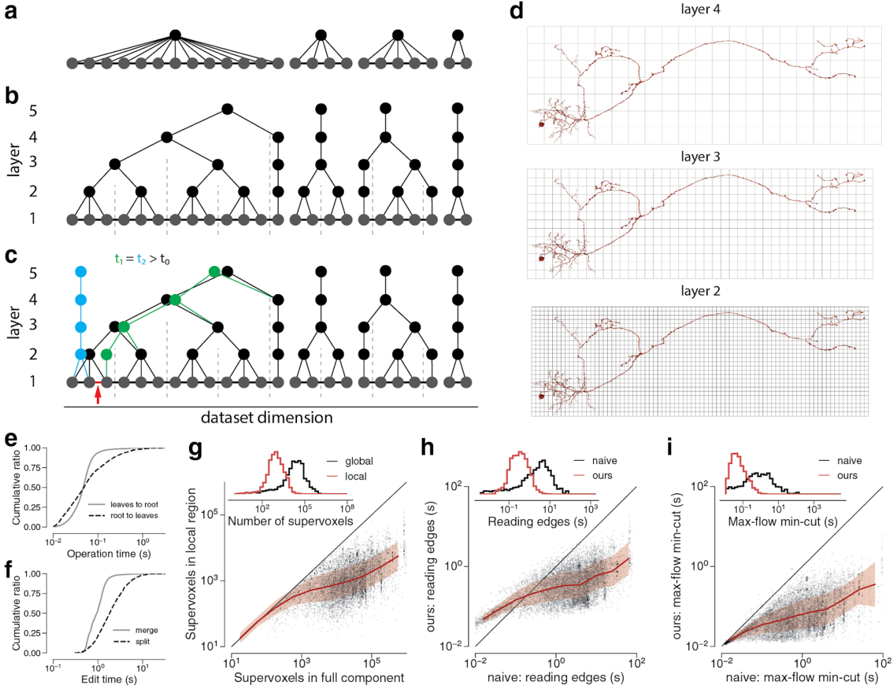
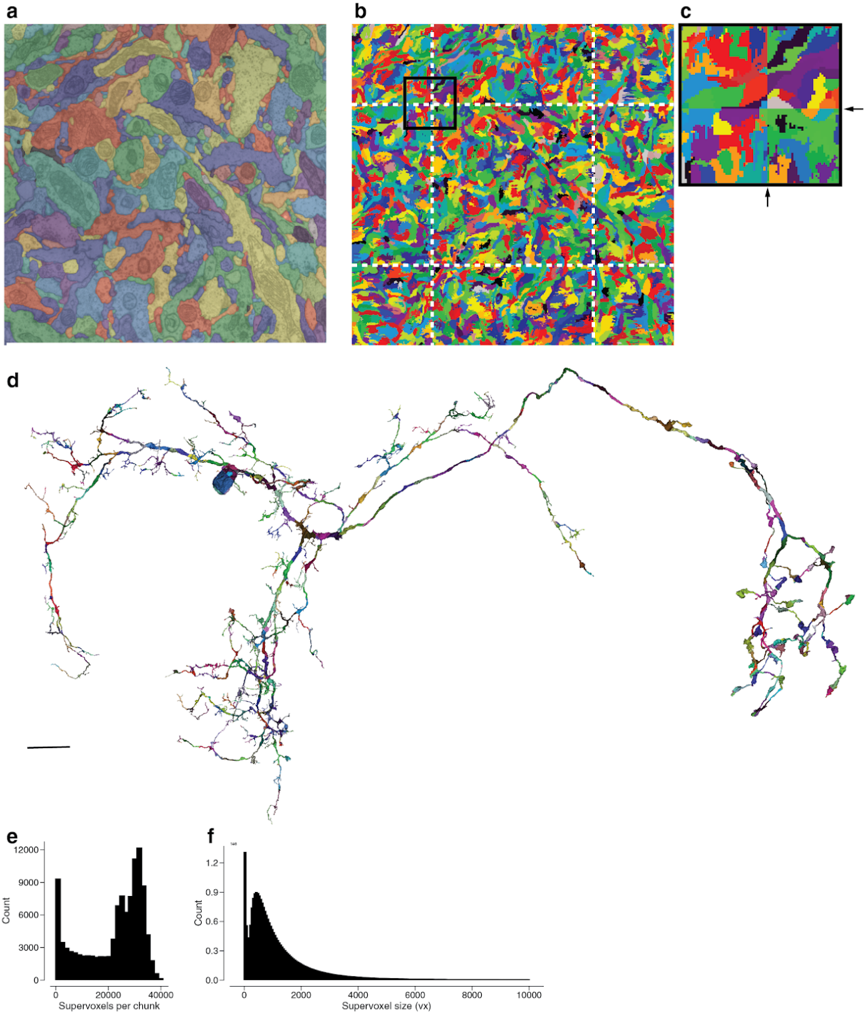
- The ChunkedGraph made edit operations over an order of magnitude faster than a naive supervoxel graph; server response times during beta were median 47 ms for supervoxel-to-root (95th percentile 111 ms, n=12,096) and median 48 ms for root-to-supervoxels per displayed chunk (95th percentile 465 ms, n=3,080,494). Merge edits had median 940 ms (95th percentile 1,841 ms, n=4,612); split edits had median 1,818 ms (95th percentile 7,137 ms, n=2,497).
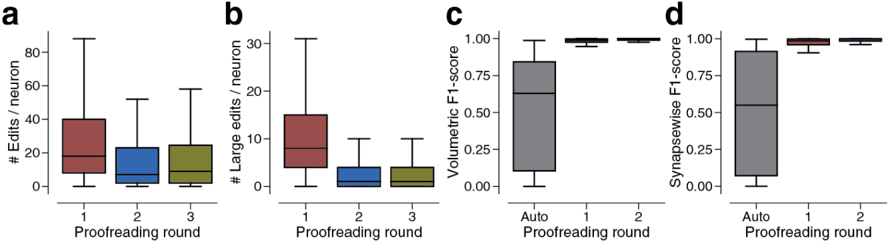
- Proofreading 183 neurons with 13 proofreaders over three rounds yielded median F1 scores of 0.99 for volumetric completeness and 0.99 for synapse assignment after one round; a faster regimen took a median of 13 minutes per cell, with mean proofreading time 19.1 minutes. A whole-brain backbone connectome for ~100,000 cells was estimated at 16 person-years.
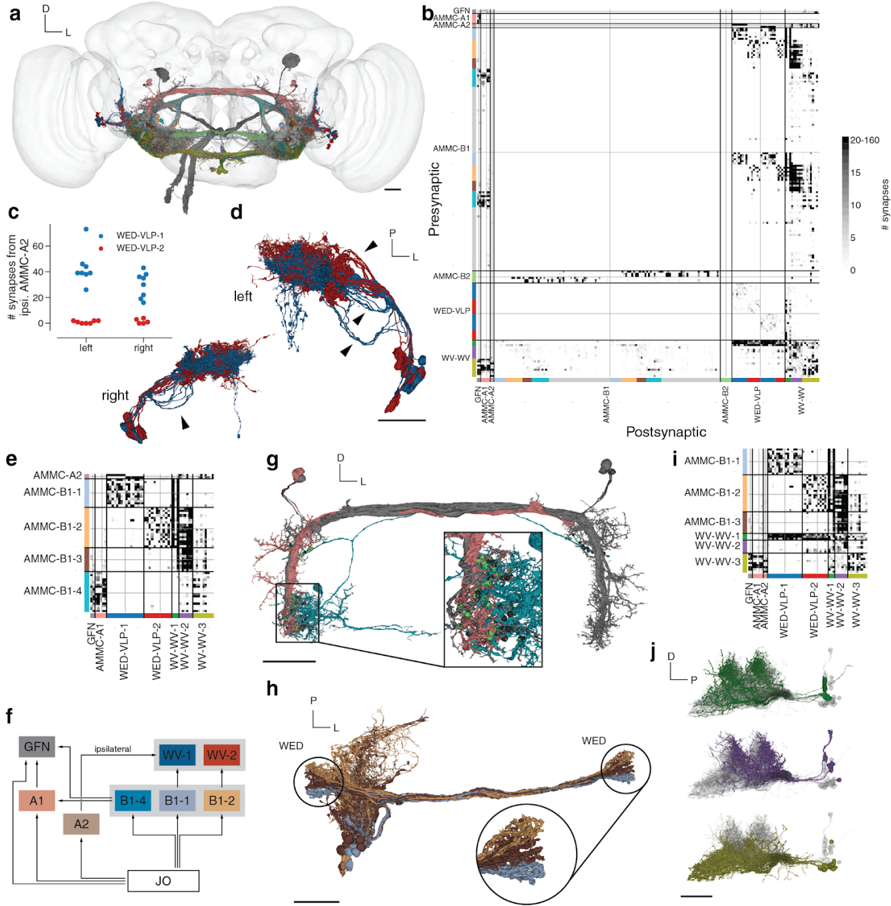
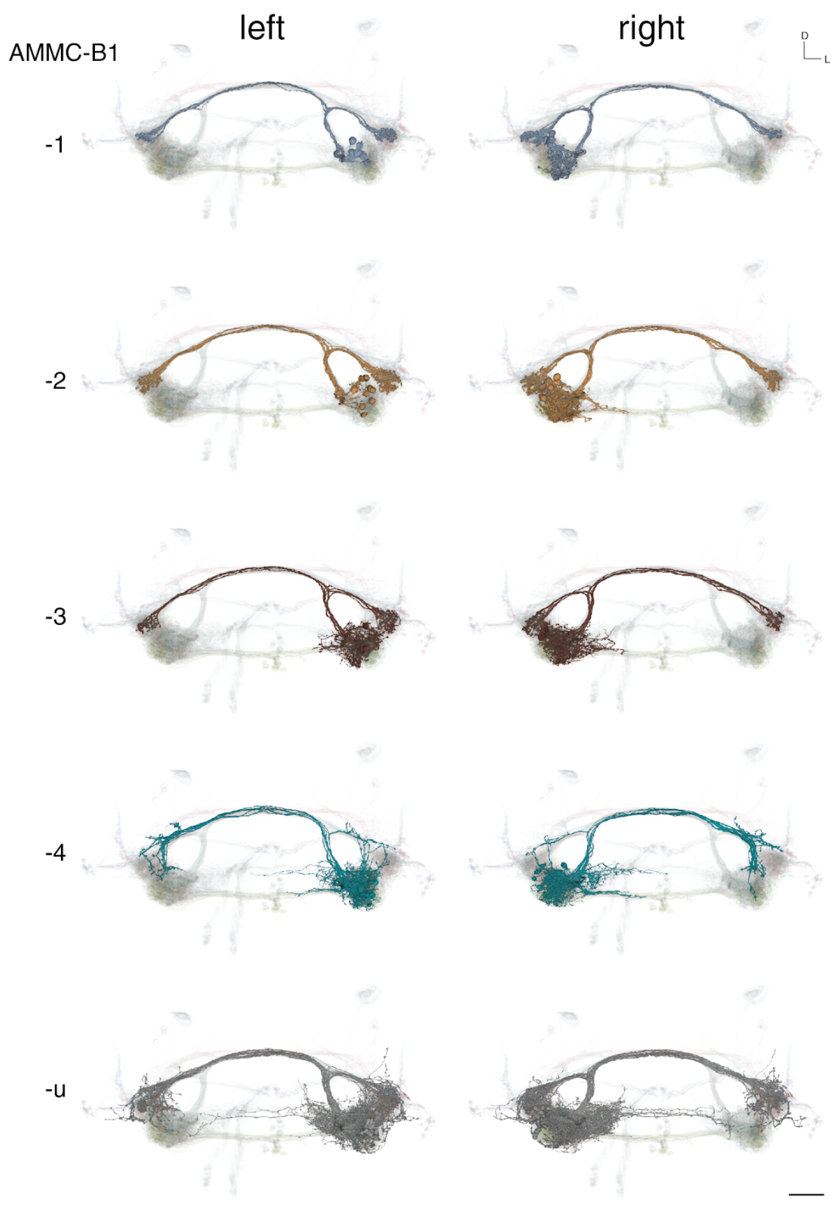
- In 178 mechanosensory neurons across seven cell classes, the authors identified 59 left and 58 right AMMC-B1 neurons, versus prior work identifying only 10 per hemisphere; only 14 of 59 left and 14 of 58 right AMMC-B1 neurons innervated WED-VLPs, and AMMC-B1 neurons divided into at least five connectivity-based subtypes.
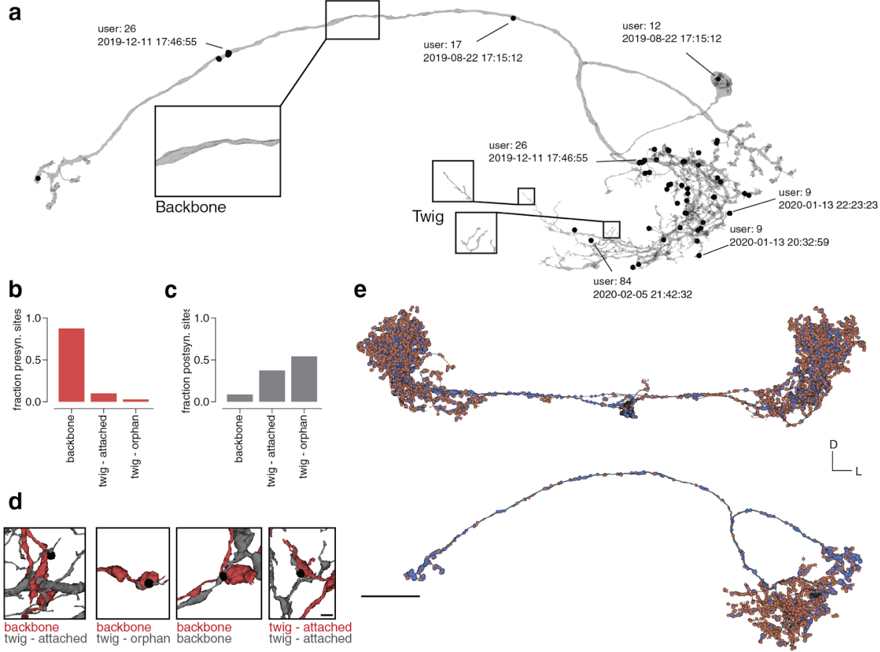
- Synapse omission from orphan twigs was quantified at 612 randomly picked synaptic locations: 40.6% of postsynaptic and 78.2% of presynaptic twigs were attached to backbones, leading to an estimate that 44.6% of synapses had both pre- and postsynaptic segments attached after proofreading; major connections (>9 synapses) were maintained at 99.7% with at least one synapse, and most minor connections with at least 3 synapses at 83%.
Methods
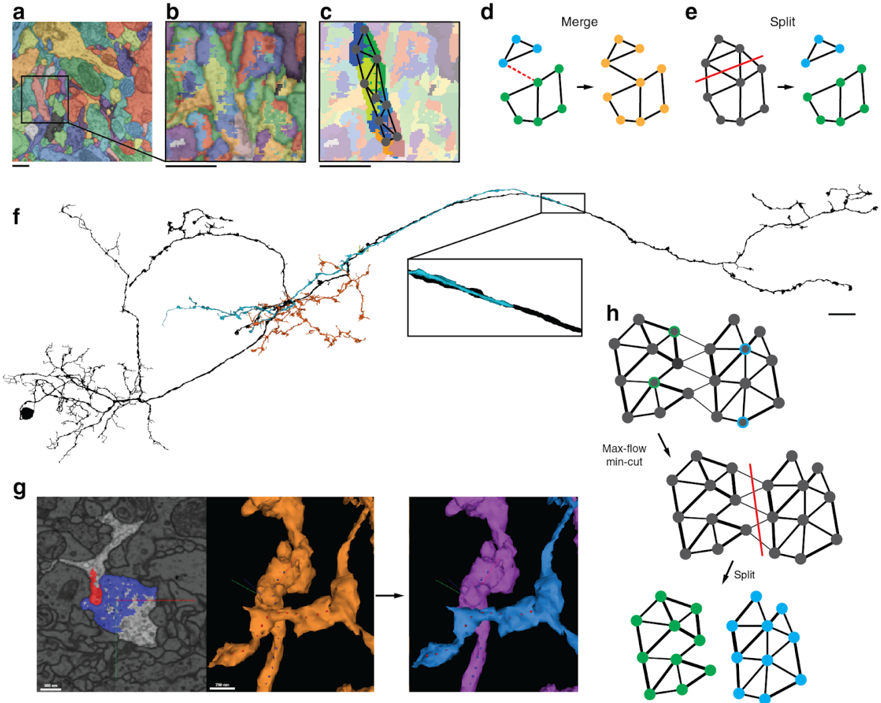
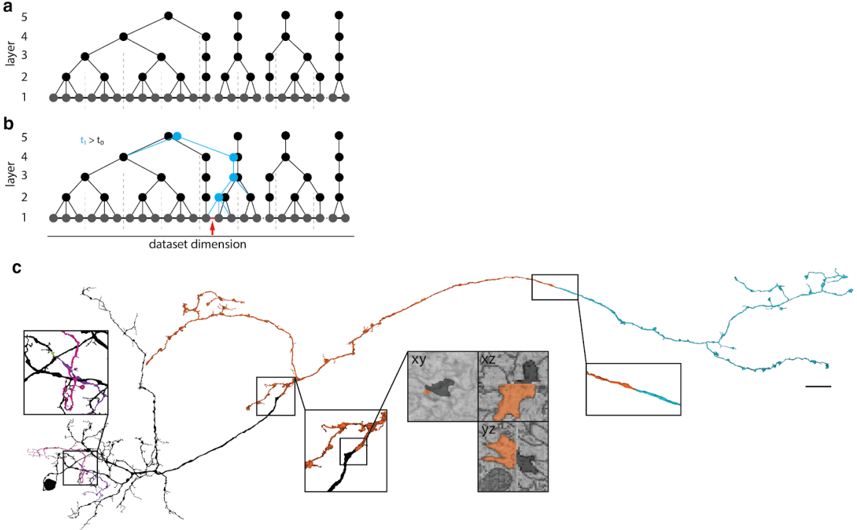
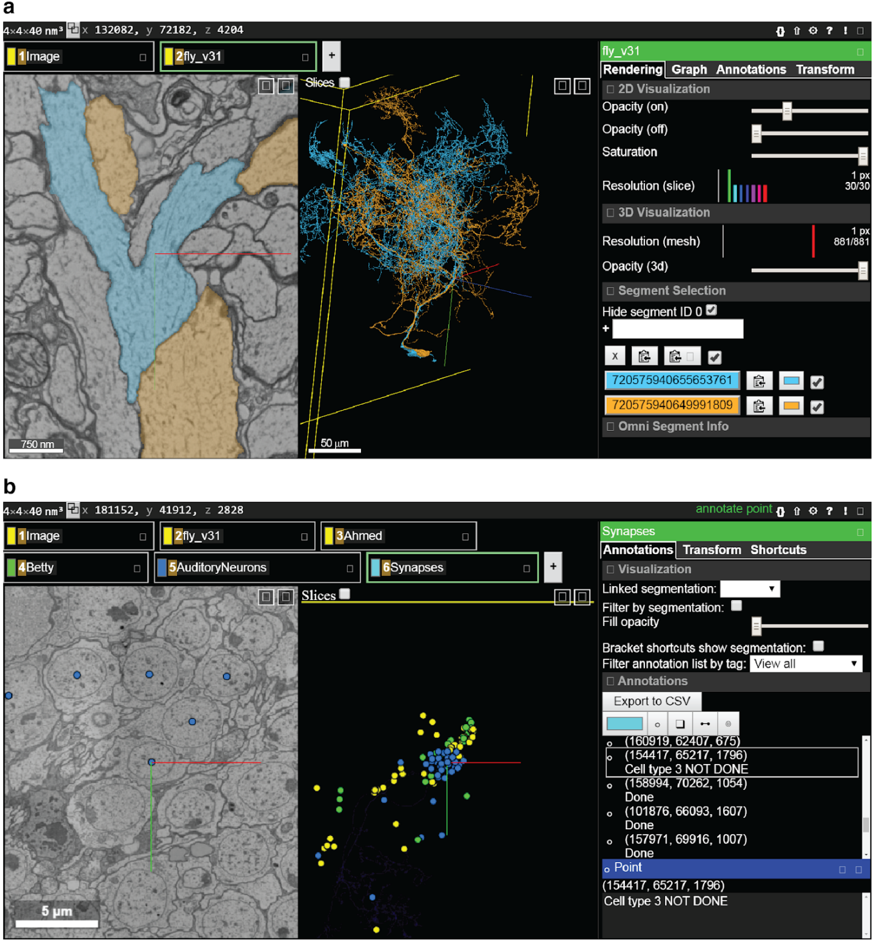
- Design: an open online proofreading community using a ChunkedGraph supervoxel graph with octree hierarchy, Google BigTable storage, and a Neuroglancer-based browser frontend; the FAFB EM dataset was realigned from v14 to v14.1 using self-supervised deep learning displacement fields.
- Data and sample: adult Drosophila melanogaster FAFB EM volume and automated segmentation; 183 neurons proofread by 13 proofreaders in three rounds; 178 mechanosensory neurons analyzed; 612 synaptic locations assessed for twig attachment; 999 synapses expert-evaluated; NBLAST comparison against 16,129 FlyCircuit cells.
- Analysis: server response timing for graph operations; F1 scores for volumetric completeness and synapse assignment; NBLAST matching; connectivity diagrams and subtype classification by synapse thresholds; max-flow min-cut for split operations.
Limitations
- Stated: proofreading largely avoided orphan twigs, so synapses involving orphan twigs are missing; false positive synapses remain among reported cell-type-to-cell-type connections; some left-hemisphere AMMC-B1 neurons lacked part of their arbor, possibly a developmental deformity; whole-brain proofreading time assumes ~100,000 neurons and 2,000 work hours per person-year; beta server timings were affected by load and are an underestimate.
- Stated: the open community relies on entry tests and subsequent spot checks, and recruitment initially came from Drosophila labs, with plans to expand to non-scientists later.
- Evident from the text: the connectome is a draft proofread mainly at the backbone level, with accuracy depending on the user’s desired proofreading level; the mechanosensory analysis is limited to one fly brain and selected cell classes, and some connectivity calls depend on manual exclusion of questionable synapses.
Model-written summary. Check it against the paper before relying on it.
Integrity signals
Registry
Cites
Statistics
Figures
Verification
Claims the paper makes
20 Valid · 9 Not valid · 8 Not checked · 98 Own results and interpretations
The cited sources support only part of this claim — read each source’s verdict below.
In the paper
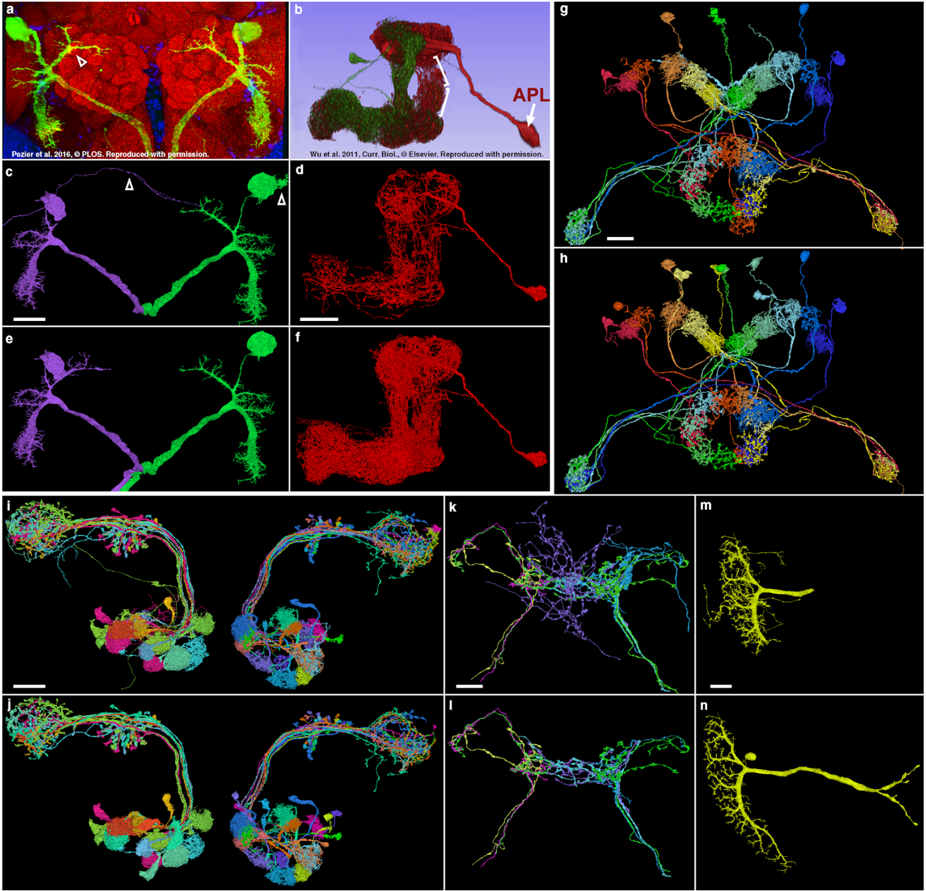
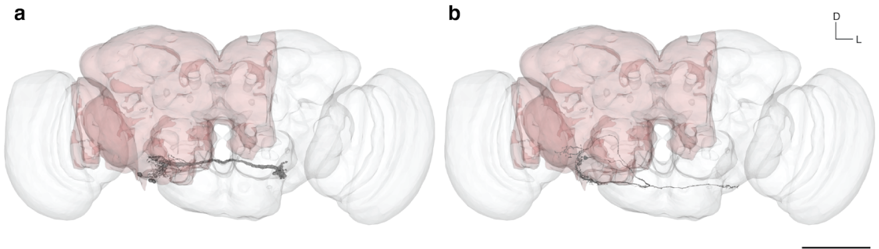
“Qualitative comparison between images of light microscopy-level stains of the giant fiber neurons 22 (Fig. 1 a,c,e) and a mushroom body APL neuron23 (Fig. 1 b,d,f) show that our semi-automated segmentation procedures are able to capture large enough portions of neurons to be easily recognizable.”
§ FlyWire: Online community for whole-brain connectomics > RESULTS > Neuron segmentation
What the sources say
- Could not verifycites [22] 22. Pézier AP, Jezzini SH, Bacon JP & Blagburn JM Shaking B Mediates Synaptic Coupling between Auditory Sensory Neurons and the Giant Fiber of Drosophila melanogaster. PLoS One 11, e0152211 (2016) doi: 10.1371/journal.pone.0152211. 27043822 PMC4833477 sourceExperimental — accuracy not yet measured
Split into 2 atoms — 0 confirmed, 0 partially supported, 0 disputed, 0 misattributed, 2 unverifiable. Expand the claim to see per-atom verdicts.
- Supportedcites [23] 23. Wu C-L Heterotypic gap junctions between two neurons in the drosophila brain are critical for memory. Curr. Biol. 21, 848– 854 (2011) doi: 10.1016/j.cub.2011.02.041. 21530256 source
Split into 2 atoms — 2 confirmed, 0 partially supported, 0 disputed, 0 misattributed, 0 unverifiable. Expand the claim to see per-atom verdicts.
plainstates a cause- Asserted: passes — The authors put it forward as true.
- Checkable: passes — It can be checked against evidence.
- Load-bearing: unclear — It is unclear whether the paper’s conclusions depend on it.
- Based: passes — The paper gives a reason why it holds.
- Could not verify
The cited sources support only part of this claim — read each source’s verdict below.
In the paper
“The walled garden community has historically used manual skeletonization to reconstruct neural circuits from FAFB 15,16.”
§ FlyWire: Online community for whole-brain connectomics > INTRODUCTION
What the sources say
- Partly supportedcites [15] 15. Felsenberg J Integration of Parallel Opposing Memories Underlies Memory Extinction. Cell 175, 709– 722.e15 (2018) doi: 10.1016/j.cell.2018.08.021. 30245010 PMC6198041 sourceExperimental — accuracy not yet measured
The STAR★Methods ‘Neuron reconstruction – tracing’ section (page unavailable) describes tracing neurons in FAFB with CATMAID along their centerlines, followed by review by experienced tracers. This supports manual, skeleton-like reconstruction of neural circuits from FAFB, but the paper does not identify a ‘walled garden community’ or establish that community’s historical practice. (LLM, conf=0.84)
- Supportedcites [16] 16. Dolan M-J Communication from Learned to Innate Olfactory Processing Centers Is Required for Memory Retrieval in Drosophila. Neuron 100, 651– 668.e8 (2018) doi: 10.1016/j.neuron.2018.08.037. 30244885 PMC6226615 source
The STAR★Methods (Method Details; page unavailable) describe manually tracing neurons in a whole adult female Drosophila brain EM volume to produce neuronal skeletons. The paper is therefore an example of the manual skeleton reconstruction practice cited in the sentence. (LLM, conf=0.86)
plain- Asserted: passes — The authors put it forward as true.
- Checkable: passes — It can be checked against evidence.
- Load-bearing: unclear — It is unclear whether the paper’s conclusions depend on it.
- Based: passes — The paper gives a reason why it holds.
- Partly supported
The cited sources support only part of this claim — read each source’s verdict below.
In the paper
“Fortunately, many fly neurons are redundantly connected, with up to hundreds of synapses between a connected pair 39.”
§ FlyWire: Online community for whole-brain connectomics > RESULTS > Extracting synaptic connections
What the sources say
- Partly supportedcites [39] 39. Takemura S-Y A visual motion detection circuit suggested by Drosophila connectomics. Nature 500, 175– 181 (2013) doi: 10.1038/nature12450. 23925240 PMC3799980 sourceExperimental — accuracy not yet measured
The Results sections on motor-neuron inputs and wiring-diagram errors describe connections with multiple synapses, often spread across multiple twigs, supporting the redundancy point. But the reported motor-neuron pairs have 1–28 synaptic inputs each; the passages do not substantiate hundreds of synapses between a connected pair. (LLM, conf=0.86)
plain- Asserted: passes — The authors put it forward as true.
- Checkable: passes — It can be checked against evidence.
- Load-bearing: passes — The paper’s conclusions depend on it.
- Based: passes — The paper gives a reason why it holds.
- Partly supported
The cited sources support only part of this claim — read each source’s verdict below.
In the paper
“adult connectomes have been mapped for only one species, C. elegans 2,3.”
§ FlyWire: Online community for whole-brain connectomics > INTRODUCTION
What the sources say
- Not checked — no full text of the sourcecites [2] 2. White JG, Southgate E, Thomson JN & Brenner S The structure of the nervous system of the nematode Caenorhabditis elegans. Philos. Trans. R. Soc. Lond. B Biol. Sci. 314, 1– 340 (1986) doi: 10.1098/rstb.1986.0056. 22462104 source
- Partly supportedcites [3] 3. Cook SJ Whole-animal connectomes of both Caenorhabditis elegans sexes. Nature 571, 63– 71 (2019) doi: 10.1038/s41586-019-1352-7. 31270481 PMC6889226 sourceExperimental — accuracy not yet measured
The Abstract reports whole-animal connectomes for both adult sexes of C. elegans. It also lists neural maps for other species, without establishing whether any are adult connectomes. The claim that C. elegans is the only species with mapped adult connectomes is therefore not supported by this copy. (LLM, conf=0.82)
plain- Asserted: passes — The authors put it forward as true.
- Checkable: passes — It can be checked against evidence.
- Load-bearing: passes — The paper’s conclusions depend on it.
- Based: passes — The paper gives a reason why it holds.
Every source the paper cites for this claim was checked and supports it.
In the paper
“Errors in the reconstruction were corrected by 50 person-years of human proofreading to create a first draft of the hemibrain connectome.”
§ FlyWire: Online community for whole-brain connectomics > INTRODUCTION
What the sources say
- Supportedcites [4] 4. Scheffer LK A connectome and analysis of the adult Drosophila central brain. Elife 9, (2020) doi: 10.7554/eLife.57443. PMC7546738 32880371 source
The Connectome reconstruction section reports over 50 person-years of proofreading effort to produce the hemibrain’s neuron and connectivity data. The Proofreading section says human proofreaders corrected errors left by machine segmentation. The paper says “over 50,” rather than exactly 50, person-years. (LLM, conf=0.91)
plainstates a cause- Asserted: passes — The authors put it forward as true.
- Checkable: passes — It can be checked against evidence.
- Load-bearing: unclear — It is unclear whether the paper’s conclusions depend on it.
- Based: passes — The paper gives a reason why it holds.
- Supported
50 more claims · 4 with their cited sources checked
Create a free account to see all 135 claims and to verify the 1 reference still open.
- Probably not a substantial claim. 36
- It may state two separate claims as one. 54
- The quote only partly states this claim. 1
Claims other papers make about this one
Each is checked against this paper’s own text: does it say what the citing paper says it does?
The cited source doesn’t support the claim as written.
In the citing paper
“The completion of the first whole-brain connectome of an adult fly, containing over 130,000 neurons and millions of synaptic connections1–3, offers an opportunity to analyse the statistical properties and topological features of a complete brain.”
From Network statistics of the whole-brain connectome of Drosophila (2024) · cites this paper as [2]
Checked by a reasoning model — may be wrong.
Experimental — accuracy not yet measuredThe source backs part of the claim, not all of it — or backs it for a different population, condition or comparison.
In the citing paper
“As previously described55, proofreading of the connectome was focused on the microtubule-rich ‘backbones’ of neurons. Microtubule-free ‘twigs’ were only added if discovered incidentally or sought out specifically by members of the community.”
From Neuronal wiring diagram of an adult brain (2023) · cites this paper as [55]
Experimental — accuracy not yet measuredThe source backs part of the claim, not all of it — or backs it for a different population, condition or comparison.
In the citing paper
“Whole nervous system connectome projects are nearing completion for the adult fruit fly 2,13”
From Connectome-constrained deep mechanistic networks predict neural responses across the fly visual system at single-neuron resolution (2023) · cites this paper as [13]
Experimental — accuracy not yet measuredThe source backs part of the claim, not all of it — or backs it for a different population, condition or comparison.
In the citing paper
“In the connectome we built using FlyWire 31, which allows proofreading of EM reconstructions in an entire female brain 39”
From Neural network organization for courtship-song feature detection in Drosophila (2022) · cites this paper as [31]
Experimental — accuracy not yet measuredThe source backs part of the claim, not all of it — or backs it for a different population, condition or comparison.
In the citing paper
“When ready, an onboarding coordinator tested the new proofreader before giving access to the Production dataset8.”
From Neuronal wiring diagram of an adult brain (2024) · cites this paper as [8]
Experimental — accuracy not yet measured
10 more claims about this paper
Create a free account to see every claim other papers make about this one.
Self-check
Percentages, sums and reported differences re-computed from the paper’s own numbers.
Each contradiction between two passages listed here was confirmed by an independent check.
Rated major: it would touch a result — a value a result rests on, reported and recomputed p-values on opposite sides of the significance level, two passages that conflict with no sign which is right, or a cited work retracted before this paper was published.
In the paper
§ FlyWire: Online community for whole-brain connectomics > RESULTS > Connections and subtypes in mechanosensory pathways
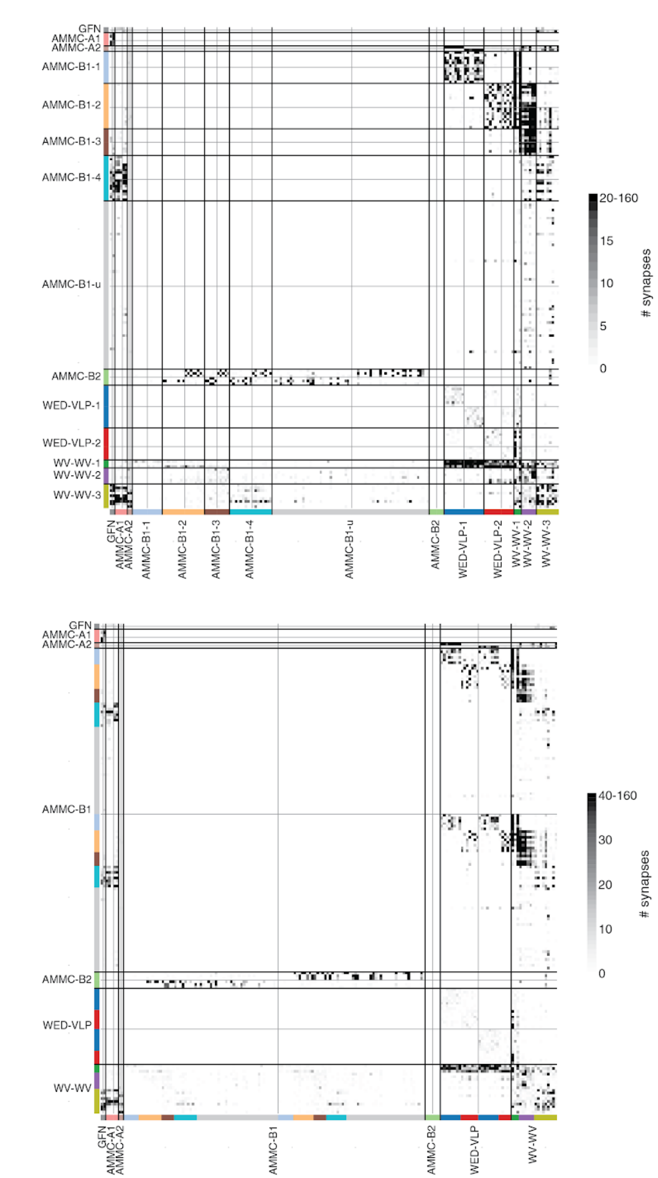
“AMMC-B1–4 neurons target only the WV-WV neurons”
§ FlyWire: Online community for whole-brain connectomics > METHODS > Cell type division by connectivity
“From the remaining AMMC-B1 cells, we labeled those as AMMC-B1–4 if they made at least 20 synapses onto AMMC-A1, AMMC-A2 and GFN cells combined.”
Rated minor: it would not touch a result — a value no result rests on, a p-value that stays on the same side of the significance level, or a conflict that is clerical, resolved elsewhere in the paper, or outside its own findings.
In the paper
§ FlyWire: Online community for whole-brain connectomics > RESULTS > Extracting synaptic connections
“We quantified synapses missing due to orphan twigs by evaluating the segmentation at 612 randomly picked synaptic locations.”
§ FlyWire: Online community for whole-brain connectomics > METHODS > Twig and backbone synapse evaluation
“One expert evaluated all synapses as true positive (615), false positive (285) or ambiguous (99) synapses. Next, this expert evaluated the reconstructions of the pre- and postsynaptic sides of the true positive synapses”
Citations
Cites
The structure of the nervous system of the nematode Caenorhabditis elegans
White, J. G., Southgate, E., Thomson, J. N., & Brenner, S. (1986) · Philosophical Transactions of the Royal Society of London. B, Biological Sciences · doi:10.1098/rstb.1986.0056 · Cited by 5,589
Bigtable: A Distributed Storage System for Structured Data
Chang, F., Dean, J., Ghemawat, S., Hsieh, W. C., Wallach, D. A., Burrows, M., Chandra, T., Fikes, A., & Gruber, R. E. (2008) · ACM Transactions on Computer Systems · doi:10.1145/1365815.1365816 · Cited by 3,460
Internet encyclopaedias go head to head
Giles, J. (2005) · Nature · doi:10.1038/438900a · Cited by 1,978
Whole-brain functional imaging at cellular resolution using light-sheet microscopy
Ahrens, M. B., Orger, M. B., Robson, D. N., Li, J. M., & Keller, P. J. (2013) · Nature Methods · doi:10.1038/nmeth.2434 · Cited by 1,392
A connectome and analysis of the adult Drosophila central brain
Scheffer, L. K., Xu, C. S., Januszewski, M., Lu, Z., Takemura, S.-Y., Hayworth, K. J., Huang, G. B., Shinomiya, K., Maitlin-Shepard, J., Berg, S., et al. (2020) · eLife · doi:10.7554/elife.57443 · Cited by 1,128 · cited 3×
“(4) 8 bits for a counter Dorkenwald et al.”
BackgroundInfluentialA Complete Electron Microscopy Volume of the Brain of Adult Drosophila melanogaster
Zheng, Z., Lauritzen, J. S., Perlman, E., Robinson, C. G., Nichols, M., Milkie, D., Torrens, O., Price, J., Fisher, C. B., Sharifi, N., et al. (2018) · Cell · doi:10.1016/j.cell.2018.06.019 · Cited by 1,050
Whole-animal connectomes of both Caenorhabditis elegans sexes
Cook, S. J., Jarrell, T. A., Brittin, C. A., Wang, Y., Bloniarz, A. E., Yakovlev, M. A., Nguyen, K. C. Q., Tang, L. T.-H., Bayer, E. A., Duerr, J. S., et al. (2019) · Nature · doi:10.1038/s41586-019-1352-7 · Cited by 921
Chiang, A.-S., Lin, C.-Y., Chuang, C.-C., Chang, H.-M., Hsieh, C.-H., Yeh, C.-W., Shih, C.-T., Wu, J.-J., Wang, G.-T., Chen, Y.-C., et al. (2011) · Current Biology · doi:10.1016/j.cub.2010.11.056 · Cited by 767
Self-citationNeural dynamics for landmark orientation and angular path integration
Seelig, J. D., & Jayaraman, V. (2015) · Nature · doi:10.1038/nature14446 · Cited by 718
A visual motion detection circuit suggested by Drosophila connectomics
Takemura, S.-Y., Bharioke, A., Lu, Z., Nern, A., Vitaladevuni, S., Rivlin, P. K., Katz, W. T., Olbris, D. J., Plaza, S. M., Winston, P., et al. (2013) · Nature · doi:10.1038/nature12450 · Cited by 686
Research works printed but not linked: 1
- Mu, S. et al. 3D reconstruction of cell nuclei in a full Drosophila brain. Preprint at bioRxiv https://doi.org/10.1101/2020.04.17.047167 (2021). · DOI · Paper page
Cited by
Items 101–200 of 298
Lazar, A. A., Liu, T., Turkcan, M. K., & Zhou, Y. (2021) · eLife · doi:10.7554/elife.62362 · Cited by 21
“These include the FlyCircuit (Chiang et al., 2011), the Fruit Fly Brain Observatory (FFBO/ NeuroNLP) (Ukani et al., 2019), Virtual Fly Brain (Milyaev et al., 2012), neuPrintExplorer (Clements et al., 2020), FlyWire (Dorkenwald et al., 2020), and CATMAID (Saalfeld et al., 2009).”
BackgroundSilversmith, W., Zlateski, A., Bae, J. A., Tartavull, I., Kemnitz, N., Wu, J., & Seung, H. S. (2022) · Frontiers in Neural Circuits · doi:10.3389/fncir.2022.977700 · Cited by 24
“Proofreading systems for editing the annotations and segmentation may have additional storage requirements such as a graph of connected segments (Anderson et al., 2011; Ai-Awami et al., 2016; Dorkenwald et al., 2021).”
BackgroundSelf-citationBehavioral algorithms and neural mechanisms underlying odor-modulated locomotion in insects
Wechsler, S. P., & Bhandawat, V. (2023) · Journal of Experimental Biology · doi:10.1242/jeb.200261 · Cited by 23
Heterogeneity of synaptic connectivity in the fly visual system
Cornean, J., Molina-Obando, S., Gür, B., Bast, A., Ramos-Traslosheros, G., Chojetzki, J., Lörsch, L., Ioannidou, M., Taneja, R., Schnaitmann, C., et al. (2024) · Nature Communications · doi:10.1038/s41467-024-45971-z · Cited by 20
“42).”
3D reconstruction of cell nuclei in a full Drosophila brain
Mu, S., Yu, S.-C., Turner, N. L., McKellar, C. E., Dorkenwald, S., Collman, F., Koolman, S., Moore, M., Morejohn, S., Silverman, B., et al. (2021) · bioRxiv (Cold Spring Harbor Laboratory) · doi:10.1101/2021.11.04.467197 · Cited by 20
“, 2018), after the alignment of the serial section images was improved (Dorkenwald et al., 2020).”
BackgroundMethodSelf-citationThe processing of proprioceptive signals in distributed networks: insights from insect motor control
Gebehart, C., & Büschges, A. (2024) · Journal of Experimental Biology · doi:10.1242/jeb.246182 · Cited by 20
Octopamine in the mushroom body circuitry for learning and memory
Selcho, M. (2024) · Learning & Memory · doi:10.1101/lm.053839.123 · Cited by 21
Disynaptic inhibition shapes tuning of OFF-motion detectors in Drosophila
Braun, A., Borst, A., & Meier, M. (2023) · Current Biology · doi:10.1016/j.cub.2023.05.007 · Cited by 17
“ai).(34) This development has enabled researchers to verify and reproduce previously published data, as well as discover unknown synaptic connections, without the need to generate a separate dataset.”
Aminergic and peptidergic modulation of insulin-producing cells in Drosophila
Held, M., Bisen, R. S., Zandawala, M., Chockley, A. S., Balles, I. S., Hilpert, S., Liessem, S., Cascino-Milani, F., & Ache, J. M. (2025) · eLife · doi:10.1101/2023.09.14.557555 · Cited by 20
“The pre-processing of all calcium imaging data was carried out with custom-written Python code based on the fly2p module as described before 22 .”
Collaborative augmented reconstruction of 3D neuron morphology in mouse and human brains
Zhang, L., Huang, L., Yuan, Z., Hang, Y., Zeng, Y., Li, K., Wang, L., Zeng, H., Chen, X., Zhang, H., et al. (2024) · Nature Methods · doi:10.1038/s41592-024-02401-8 · Cited by 22
Synaptic connectome of a neurosecretory network in the Drosophila brain
McKim, T. H., Gera, J., Gayban, A. J. B., Christie, K., Shin, J., Reinhard, N., Manoli, G., Hilpert, S., Callaerts, P., van Breugel, F., et al. (2026) · eLife · doi:10.1101/2024.08.28.609616 · Cited by 22
A circuit motif for color in the human foveal retina
Kim, Y. J., PACKER, O. S., & Dacey, D. M. (2024) · Proceedings of the National Academy of Sciences · doi:10.1073/pnas.2405138121 · Cited by 18
BIFROST: A method for registering diverse imaging datasets of the Drosophila brain
Brezovec, B. E., Berger, A. B., Hao, Y. A., Lin, A., Ahmed, O. M., Pacheco, D. A., Thiberge, S. Y., Murthy, M., & Clandinin, T. R. (2024) · Proceedings of the National Academy of Sciences · doi:10.1073/pnas.2322687121 · Cited by 17
Self-citationLi, J., Dhaliwal, R., Stanley, M., Junca, P., & Gordon, M. D. (2025) · Current Biology · doi:10.1016/j.cub.2025.04.035 · Cited by 15
ViMO - Visual Analysis of Neuronal Connectivity Motifs
Troidl, J., Warchol, S., Choi, J., Matelsky, J., Dhanyasi, N., Wang, X., Wester, B. A., Wei, D., Lichtman, J. W., Pfister, H., et al. (2023) · IEEE Transactions on Visualization and Computer Graphics · doi:10.1109/tvcg.2023.3327388 · Cited by 18
Brain bilateral asymmetry – insights from nematodes, zebrafish, and Drosophila
Lapraz, F., Fixary-Schuster, C., & Noselli, S. (2024) · Trends in Neurosciences · doi:10.1016/j.tins.2024.08.003 · Cited by 16
Ohashi, T. S., Ishikawa, Y., Awasaki, T., Su, M. P., Yoneyama, Y., Morimoto, N., & Kamikouchi, A. (2023) · Scientific Reports · doi:10.1038/s41598-022-27349-7 · Cited by 16
Visual feedback neurons fine-tune Drosophila male courtship via GABA-mediated inhibition
Mabuchi, Y., Cui, X., Xie, L., Kim, H., Jiang, T., & Yapici, N. (2023) · Current Biology · doi:10.1016/j.cub.2023.08.034 · Cited by 16
What do the mushroom bodies do for the insect brain? Twenty-five years of progress
Fiala, A., & Kaun, K. R. (2024) · Learning & Memory · doi:10.1101/lm.053827.123 · Cited by 18
“In more recent ai [Zheng et al. 2018; Dorkenwald et al. 2022], https://www.janelia.org/project-team/ fl yem/hemibrain [ Li et al. 2020], http://docs.neurodata.io/bilateral-connectome/de fi ne_data.html [ Winding et al. 2023]), and platforms that connect identi fi ed connectome neurons to existing…”
New Synapse Detection in the Whole-Brain Connectome of DrosophilaPreprint
Yu, S.-C., Bae, J. A., Matsliah, A., Dorkenwald, S., Gager, J., Hebditch, J., Silverman, B., Willie, K. P., Willie, R., Burke, A., et al. (2025) · bioRxiv (Cold Spring Harbor Laboratory) · doi:10.1101/2025.07.11.664377 · Cited by 31
“This performance was compared with previous predictions by 3 , which had been adjusted for the new alignment of the FAFB EM data used in the FlyWire brain connectome 11 .”
InfluentialSelf-citationShiu, P. K., Sterne, G. R., Spiller, N., Franconville, R., Sandoval, A., Zhou, J., Simha, N., Kang, C. H., Yu, S., Kim, J. S., et al. (2023) · doi:10.1101/2023.05.02.539144 · Cited by 98
Self-citationThe role of insulin and octopamine in regulating energy homeostasis and locomotion in insects
Bisen, R. S., Liessem, S., Held, M., & Ache, J. M. (2025) · Current Opinion in Insect Science · doi:10.1016/j.cois.2025.101457 · Cited by 13
Abdellah, M., Cantero, J. J. G., Guerrero, N. R., Foni, A., Coggan, J. S., Calì, C., Agus, M., Zisis, E., Keller, D. X., Hadwiger, M., et al. (2022) · Briefings in Bioinformatics · doi:10.1093/bib/bbac491 · Cited by 15
“Online collaborative efforts are introduced to accelerate the process [51], which could be effective in resolving fragmentation artifacts, but watertightness remains lacking.”
BackgroundTastant-receptor interactions: insights from the fruit fly
Arntsen, C., Guillemin, J., Audette, K., & Stanley, M. (2024) · Frontiers in Nutrition · doi:10.3389/fnut.2024.1394697 · Cited by 15
Neurons Underlying Aggression-Like Actions That Are Shared by Both Males and Females in Drosophila
Tao, L., Ayembem, D., Barranca, V. J., & Bhandawat, V. (2024) · Journal of Neuroscience · doi:10.1523/jneurosci.0142-24.2024 · Cited by 13
Mechanosensory Control of Locomotion in Animals and Robots: Moving Forward
Dallmann, C. J., Dickerson, B. H., Simpson, J. H., Wyart, C., & Jayaram, K. (2023) · Integrative and Comparative Biology · doi:10.1093/icb/icad057 · Cited by 15
Unveiling universal aspects of the cellular anatomy of the brain
Ansell, H. S., & Kovács, I. A. (2024) · Communications Physics · doi:10.1038/s42005-024-01665-y · Cited by 18
“As more data becomes available, it will be possible to expand our analysis to study larger scales (12, 13), further brain regions, additional organisms, including ongoing experiments in zebra fish (5), and individual variation.”
Gera, J., Agard, M., Nave, H., Sajadi, F., Thorat, L., Kondo, S., Nässel, D. R., Paluzzi, J.-P. V., & Zandawala, M. (2024) · eLife · doi:10.7554/elife.97043.1 · Cited by 13
Centralized brain networks controlling antennal grooming coordination
Özdil, P. G., Arreguit, J., Scherrer, C., Hurtak, F., Ijspeert, A. J., & Ramdya, P. P. (2026) · Nature Communications · doi:10.1038/s41467-026-72152-x · Cited by 15
“We used FlyWire Community labels 21,22,52 to identify neck motor neurons, but similar labels were not available for antennal motor neurons.”
Aminergic and peptidergic modulation of insulin-producing cells in DrosophilaPreprint
Held, M., Bisen, R. S., Zandawala, M., Chockley, A. S., Balles, I. S., Hilpert, S., Liessem, S., Cascino-Milani, F., & Ache, J. M. (2025) · eLife · doi:10.7554/elife.99548 · Cited by 23
Circuits for self-motion estimation and walking control in Drosophila
Chiappe, M. E. (2023) · Current Opinion in Neurobiology · doi:10.1016/j.conb.2023.102748 · Cited by 11
NeuVue: A scalable and customizable framework for electron microscopy proofreadingPreprint
Xenes, D., Kitchell, L. M., Rivlin, P. K., Martinez, H., Rose, V. A., Bishop, C., Brodsky, R., Celii, B., Joyce, J., Luna, D., et al. (2022) · bioRxiv (Cold Spring Harbor Laboratory) · doi:10.1101/2022.07.18.500521 · Cited by 14
Self-citationMapping of the zebrafish brain takes shape
Brooks, P. S., Champion, A. S., & Costa, M. (2022) · Nature Methods · doi:10.1038/s41592-022-01637-6 · Cited by 14
Learning Multimodal Volumetric Features for Large-Scale Neuron Tracing
Chen, Q., Chen, X., Wang, C., Liu, Y., Xiong, Z., & Wu, F. (2024) · Proceedings of the AAAI Conference on Artificial Intelligence · doi:10.1609/aaai.v38i2.27879 · Cited by 11
Neural Control of Naturalistic Behavior Choices
Asinof, S. K., & Card, G. M. (2024) · Annual Review of Neuroscience · doi:10.1146/annurev-neuro-111020-094019 · Cited by 10
Spatiotemporal computations in the insect celestial compass
Gkanias, E., & Webb, B. H. (2025) · Nature Communications · doi:10.1038/s41467-025-57937-w · Cited by 12
“3a and Supplementary Table S2, generated using data from the FlyWire database 33 ), they receive input from these via multiple interneurons, which might have a role in shaping their response into a smooth sinusoid (Supplementary Text S2).”
CONFIRMS: A Toolkit for Scalable, Black Box Connectome Assessment and Investigation
Bishop, C., Matelsky, J., Wilt, M., Downs, J., Rivlin, P. K., Plaza, S. M., Wester, B., & Gray-Roncal, W. (2021) · Annual International Conference of the IEEE Engineering in Medicine and Biology Society (EMBC) · doi:10.1109/embc46164.2021.9630109 · Cited by 10
“Despite many recent advances in 3D image segmentation [1], [2], [3], human expert annotation is still a requirement in order to guarantee large-scale, high-confidence neurite traces [4], [2], [5], [6].”
BackgroundMethodA gut-brain-gut interoceptive circuit loop gates sugar ingestion in DrosophilaPreprint
Cui, X., Meiselman, M. R., Thornton, S., & Yapici, N. (2024) · bioRxiv (Cold Spring Harbor Laboratory) · doi:10.1101/2024.09.02.610892 · Cited by 17
Identifying Inputs to Visual Projection Neurons in Drosophila Lobula by Analyzing Connectomic Data
Tanaka (田中涼介), R., & Clark, D. A. (2022) · eneuro · doi:10.1523/eneuro.0053-22.2022 · Cited by 10
Neural circuit mechanisms for steering control in walking Drosophila
Rayshubskiy, A., Holtz, S. L., Bates, A. S., Vanderbeck, Q. X., Capdevila, L. S., Rockwell, V., & Wilson, R. I. (2025) · eLife · doi:10.7554/elife.102230.3 · Cited by 14
Schifferer, M., Snaidero, N., Djannatian, M., Kerschensteiner, M., & Misgeld, T. (2021) · Frontiers in Neuroanatomy · doi:10.3389/fnana.2021.732506 · Cited by 13
Identification of a GABAergic neuroblast lineage modulating sweet and bitter taste sensitivity
Zhao, Y., Duan, J., Han, Z., Engström, Y., & Hartenstein, V. (2022) · Current Biology · doi:10.1016/j.cub.2022.10.029 · Cited by 9
Mating-driven variability in olfactory local interneuron wiring
Chou, Y.-H., Yang, C.-J., Huang, H.-W., Liou, N.-F., Panganiban, M. R., Luginbuhl, D., Yin, Y., Taisz, I., Liang, L., Jefferis, G. S. X. E., et al. (2022) · Science Advances · doi:10.1126/sciadv.abm7723 · Cited by 9
Deluca, A., Bascom, B., Planas, D. A. K., Kocher, M. A., Torres, M., & Arbeitman, M. N. (2025) · iScience · doi:10.1016/j.isci.2025.112037 · Cited by 8
“18,25,26 All the connectome neurons shown in Figure 1 are labeled as fru+ , except the DN1pAs, providing further confidence in our assignments.”
Connecting the dots in ethology: applying network theory to understand neural and animal collectives
Gosztolai, A., & Ramdya, P. P. (2022) · Current Opinion in Neurobiology · doi:10.1016/j.conb.2022.102532 · Cited by 9
“Similar reconstruction efforts are underway for the Drosophila central brain [17], central complex [18], olfactory system [19], motor circuits in the ventral nerve cord [20], and whole brain of a female fly [21,22].”
Aminergic and peptidergic modulation of Insulin-Producing Cells in DrosophilaPreprint
Held, M., Bisen, R. S., Zandawala, M., Chockley, A. S., Balles, I. S., Hilpert, S., Liessem, S., Cascino-Milani, F., & Ache, J. M. (2024) · eLife · doi:10.7554/elife.99548.1 · Cited by 7
Synaptic connectome of a neurosecretory network in the Drosophila brainPreprint
McKim, T. H., Gera, J., Gayban, A. J. B., Christie, K., Shin, J., Reinhard, N., Manoli, G., Hilpert, S., Callaerts, P., van Breugel, F., et al. (2026) · eLife · doi:10.7554/elife.102684 · Cited by 14
Falahati, H., Wu, Y., Fang, M., & Camilli, P. V. D. (2024) · Current Biology · doi:10.1016/j.cub.2024.11.010 · Cited by 7
Zebrafish brain atlases: a collective effort for a tiny vertebrate brain
Légaré, A., Lemieux, M., Desrosiers, P., & Koninck, P. D. (2023) · Neurophotonics · doi:10.1117/1.nph.10.4.044409 · Cited by 9
“40 Although the larval zebrafish neuroscience field has been dominated by impressive microscopy studies, comparatively few electrophysiological characterizations have been made, which can be attributed to, among other factors, the substantially greater yield and momentum of optical methods.”
BackgroundAn essential experimental control for functional connectivity mapping with optogenetics
Tadres, D., Shiozaki, H. M., Tastekin, I., Stern, D. L., & Louis, M. (2025) · Genetics · doi:10.1093/genetics/iyaf174 · Cited by 8
Fighting Flies: Quantifying and Analyzing Drosophila Aggression
Fernandez, M. P., Trannoy, S., & Certel, S. J. (2023) · Cold Spring Harbor Protocols · doi:10.1101/pdb.top107985 · Cited by 7
Global Neuron Shape Reasoning with Point Affinity TransformersPreprint
Troidl, J., Knittel, J., Li, W., Zhan, F., Pfister, H., & Turaga, S. C. (2024) · bioRxiv (Cold Spring Harbor Laboratory) · doi:10.1101/2024.11.24.625067 · Cited by 12
“Third, approaches for instance segmentation, such as Point Transformer V3 (PTv3) [48] combined with PointGroup (PG) [18] clustering, are designed for highly compact objects centered around object centroids.”
Mace, K. D., Zimmerman, A. J., Chesi, A., Doldur-Balli, F., Kim, H., Valle, E. A. D., Rosa, J. B., Pack, A. I., Grant, S. F. A., & Kayser, M. S. (2026) · Nature Communications · doi:10.1038/s41467-026-68343-1 · Cited by 6
“Using FlyWire, a publicly available Drosophila connectome dataset 60,61 , we identi fi ed 22 candidate cells that receive input from either of the descending NPF neurons (SLP.AVLP.4 and SLP.AVLP.5, in FlyWire) and have input regions in the SEZ ( “ gnathal ganglion ” in the FlyWire dataset) (Fig.”
Gera, J., Agard, M., Nave, H., Baldridge, A. B., Sajadi, F., Thorat, L., McKim, T. H., Kondo, S., Nässel, D. R., Omar, M. H., et al. (2025) · eLife · doi:10.7554/elife.97043.3 · Cited by 7
Columnar cholinergic neurotransmission onto T5 cells of Drosophila
Samara, E., Schilling, T., Ribeiro, I., Haag, J., Leonte, M.-B., & Borst, A. (2025) · Current Biology · doi:10.1016/j.cub.2025.02.004 · Cited by 6
Carrillo, J. A., Murakawa, H., Sato, M., & Wang, M. (2025) · PLoS Computational Biology · doi:10.1371/journal.pcbi.1011909 · Cited by 7
A cell type in the visual system that receives feedback about limb movement
Hartman, A. K., Collie, M. F., Kellogg, E. J., Jin, C., Holtz, S. L., & Wilson, R. I. (2025) · Current Biology · doi:10.1016/j.cub.2025.06.055 · Cited by 6
From comparative connectomics to large-scale working memory modeling in macaque and marmoset
Magrou, L., Theodoni, P., Arnsten, A. F. T., Rosa, M. G. P., & Wang, X.-J. (2026) · Cell Reports · doi:10.1016/j.celrep.2025.116847 · Cited by 8
Neuroscience: How the brain prioritizes behaviors
Barajas-Azpeleta, R., Tastekin, I., & Ribeiro, C. (2021) · Current Biology · doi:10.1016/j.cub.2021.08.048 · Cited by 6
Yuan, X., Li, H., & Guo, F. (2024) · PLoS Biology · doi:10.1371/journal.pbio.3002918 · Cited by 8
I2Bot: an open-source tool for multi-modal and embodied simulation of insect navigation
Sun, X., Mangan, M., Peng, J., & Yue, S. (2025) · Journal of The Royal Society Interface · doi:10.1098/rsif.2024.0586 · Cited by 7
Probing fine-scale connections in the brain
Landhuis, E. W.-Y. (2020) · Nature · doi:10.1038/d41586-020-02947-5 · Cited by 6
A Soma Segmentation Benchmark in Full Adult Fly Brain
Liu, X., Hu, B., Li, M., Huang, W., Zhang, Y., & Xiong, Z. (2023) · IEEE Computer Society Conference on Computer Vision and Pattern Recognition/Proceedings - IEEE Computer Society Conference on Computer Vision and Pattern Recognition/Proceedings · doi:10.1109/cvpr52729.2023.00715 · Cited by 11
“More recent works [11, 26] reconstruct all neurons on the FAFB dataset.”
BackgroundNeural circuit mechanisms for steering control in walking Drosophila
Rayshubskiy, A., Holtz, S. L., Bates, A., Vanderbeck, Q. X., Capdevila, L. S., & Wilson, R. I. (2024) · doi:10.7554/elife.102230.1 · Cited by 5
Eichler, K., Hampel, S., Alejandro-García, A., Calle-Schuler, S. A., Santana-Cruz, A., Kmecova, L., Blagburn, J. M., Hoopfer, E. D., & Seeds, A. M. (2024) · eLife · doi:10.7554/elife.87602.3 · Cited by 5
“ai platform (Dorkenwald et al., 2022) to seed all automatically-segmented neurons within the different nerve bundles as they entered the neuropil (right brain hemisphere nerves, Figure 5 – figure supplement 1B-D), and the neurons were then fully proofread and edited by human experts to identify their individual morpho…”
BackgroundMethodInfluentialOn human nanoscale synaptome: Morphology modeling and storage estimation
Nowinski, W. L. (2024) · PLoS ONE · doi:10.1371/journal.pone.0310156 · Cited by 8
Specialized parallel pathways for adaptive control of visual object pursuit
Collie, M. F., Jin, C., Rockwell, V., Kellogg, E. J., Vanderbeck, Q. X., Hartman, A. K., Holtz, S. L., & Wilson, R. I. (2026) · Neuron · doi:10.1016/j.neuron.2026.01.001 · Cited by 7
Photoemission electron microscopy for connectomics
Wildenberg, G. A., Boergens, K. M., Lambert, L., Li, R., Craig, A., Man, M. K. L., Moradi, A., Rieger, J., Duan, H., Dhesi, S. S., et al. (2025) · Proceedings of the National Academy of Sciences · doi:10.1073/pnas.2521349122 · Cited by 6
Eichler, K., Hampel, S., Alejandro-García, A., Calle-Schuler, S. A., Santana-Cruz, A., Kmecova, L., Blagburn, J. M., Hoopfer, E. D., & Seeds, A. M. (2023) · doi:10.1101/2023.02.11.528119 · Cited by 4
“ai platform (Dorkenwald et al., 2022) to seed all automatically-segmented neurons within the different nerve bundles as they entered the neuropil (right brain hemisphere nerves, Figure 5 – figure supplement 1B-D), and the neurons were then fully proofread and edited by human experts to identify their individual morpho…”
BackgroundMethodInfluentialCalle-Schuler, S. A., Santana-Cruz, A., Kmecová, L., Hampel, S., & Seeds, A. M. (2026) · eLife · doi:10.7554/elife.108044.3 · Cited by 4
Embodied Sensorimotor Control: Computational Modeling of the Neural Control of Movement
Almani, M. N., Lazzari, J., Walker, J. D., & Saxena, S. (2026) · Annual Review of Biomedical Engineering · doi:10.1146/annurev-bioeng-102723-020454 · Cited by 7
Approaching a connectome of the human foveal retina
Kim, Y. J., PACKER, O. S., Macrina, T., Pollreisz, A., Curcio, C. A., Lee, K., Kemnitz, N., Ih, D., Nguyen, T., Lu, R., et al. (2026) · Proceedings of the National Academy of Sciences · doi:10.1073/pnas.2603286123 · Cited by 7
“Conv olutional neural networks) (41, 42) were used to align the images, detect membrane boundaries, segment neurons, glia, blood vessels, conventional (inhibitory) and ribbon (excitatory) synapses, and predict synaptic relationships in the outer and inner synaptic layers (Fig.”
Self-citationAutomated Synapse Detection Method for Cerebellar Connectomics
Park, C., Gim, J., Lee, S., Lee, K. J., & Kim, J. S. (2022) · Frontiers in Neuroanatomy · doi:10.3389/fnana.2022.760279 · Cited by 5
“Recently, a fruit fly connectome has become within reach, since a complete fruit fly brain was imaged by EM and semi-automated volumetric reconstruction is being performed (Zheng et al., 2018; Dorkenwald et al., 2020).”
Self-citationWilson, A. M., & Babadi, M. (2023) · Patterns · doi:10.1016/j.patter.2023.100693 · Cited by 5
Wu, J., Turner, N. L., Bae, J. A., Vishwanathan, A., & Seung, H. S. (2022) · Frontiers in Neuroinformatics · doi:10.3389/fninf.2022.828169 · Cited by 4
“With additional help from proofreading (Kim et al., 2014; Zhao et al., 2018; Dorkenwald et al., 2020; Hubbard et al., 2020), reconstructed neurons with synaptic connectivity can be used for scientific discovery (Deutsch et al.”
MethodSelf-citationConnectivity Matrix Seriation via Relaxation
Borst, A., & Denk, W. T. (2024) · PLoS Computational Biology · doi:10.1371/journal.pcbi.1011904 · Cited by 6
Stimulus-Specific Modulation is Enabled by Differential Serotonin Receptor ExpressionPreprint
Jonaitis, J., Mazri, M. F. E. B., Sizemore, T. R., Ralston, J. D., Salman, F., Fletcher, E. J., Matheny, D. E., Ramachandra, K. L., & Dacks, A. M. (2023) · bioRxiv (Cold Spring Harbor Laboratory) · doi:10.1101/2023.06.21.546011 · Cited by 4
“Based on a whole brain EM dataset [40], initial estimates place the counts of v-PNs and lv-PNs at just over 70 PNs of each type per AL [22], although this might be an underestimation [41].”
BackgroundNeuronal correlates of time integration into memoriesPreprint
Frantzmann, F., Lamberty, M., Braune, L., Auger, G. M., Chouhan, N. S., Langenhan, T., Selcho, M., & Pauls, D. (2023) · bioRxiv (Cold Spring Harbor Laboratory) · doi:10.1101/2023.09.12.557375 · Cited by 4
“To confirm a direct modulation of MB KCs through DH31, we analysed the whole brain EM volume using Flywire (31, 42, 43) and found DCV release sites in a type B DN1p neuron, which is cryptochrome- and DH31-positive (Fig.”
MethodGera, J., Agard, M., Nave, H., Baldridge, A. B., Sajadi, F., Thorat, L., McKim, T. H., Kondo, S., Nässel, D. R., Omar, M. H., et al. (2025) · eLife · doi:10.7554/elife.97043 · Cited by 15
A connectome and transcriptome identity shift through a single transcription factor isoform
Smolin, N., Dombrovski, M., Hina, B. W., Moreno‐Sanchez, A., Gossart, R., Carmona, C. R., Rehan, A., Hussein, R. H., Mirshahidi, P., Ausborn, J., et al. (2026) · Current Biology · doi:10.1101/2024.06.14.598883 · Cited by 4
Moreno‐Sanchez, A., Vasserman, A. N., Jang, H., Hina, B. W., von Reyn, C. R., & Ausborn, J. (2024) · eLife · doi:10.7554/elife.99277.1 · Cited by 5
Mollá-Albaladejo, R., Jiménez-Caballero, M., & Sánchez‐Alcañiz, J. A. (2025) · eLife · doi:10.7554/elife.100947 · Cited by 6
Synaptic connectome of a neurosecretory network in the Drosophila brainPreprint
McKim, T. H., Gera, J., Gayban, A. J. B., Reinhard, N., Manoli, G., Hilpert, S., Helfrich‐Förster, C., & Zandawala, M. (2024) · eLife · doi:10.7554/elife.102684.1 · Cited by 6
A general strategy for generating expert-guided, simplified views of ontologies
Caron, A. R., Puig-Barbe, A., Quardokus, E. M., Balhoff, J. P., Belfiore, J., Chipampe, N.-J., Hardi, J., Herr, B. W., Kır, H., Roncaglia, P., et al. (2026) · Scientific Data · doi:10.1038/s41597-025-06383-w · Cited by 5
“…cell types 17 ; multiple transcriptomic cell type atlases developed for human, and mouse whole brains and brain regions 18,19 , hierarchies of Drosophila neuron types for annotation of connectomics 20 , the HuBMAP Human Reference Atlas (HRA) 21 , and the Human Developmental Cell Atlas (HDCA) 22 .”
Shi, B., & Zhu, Y. (2025) · Crystals · doi:10.3390/cryst16010014 · Cited by 4
Spatial continuity of neurons explains non-random network architecture
Reimann, M., Santander, D. E., Kanari, L., & Barros-Zulaica, N. (2026) · iScience · doi:10.1016/j.isci.2026.116144 · Cited by 3
“More-38 over, there has been remarkable progress in software tools for neuron image segmentation and network reconstruction from electron microscopy data, steadily enabling increasingly accurate large-scale con-40 nectivity reconstructions [12; 13; 14; 15; 16].”
Neurobiology of egg-laying behavior in Drosophila : neural control of the female reproductive system
Afkhami, M. (2024) · Journal of Neurogenetics · doi:10.1080/01677063.2024.2396352 · Cited by 3
“The Drosophila brain is one of the well-studied animal brains in terms of circuits and neuronal connectivity (Dorkenwald et al ., 2022; Schlegel et al ., 2017; C. S. Xu et al ., 2020).”
Péntek, B., & Ercsey-Ravasz, M. (2025) · Network Neuroscience · doi:10.1162/netn_a_00455 · Cited by 4
“The FlyWire project established by Dorkenwald et al. (2022) enabled citizen scientists from all around the world to contribute to the reconstruction of the Drosophila connectome, by proofreading automatically traced neurons.”
Ciampelli, C., Galleri, G., Galioto, M., Mereu, P., Pirastru, M., Bernardoni, R., Albani, D., Crosio, C., & Iaccarino, C. (2025) · International Journal of Molecular Sciences · doi:10.3390/ijms26052093 · Cited by 3
“Recently, both the whole-brain connectome of an adult fly, containing over 130,000 neurons and millions of synaptic connections [36,37] and network statistics of the whole-brain connectome have become available [38], opening new important scenarios to brain studies.”
How connectivity structure shapes rich and lazy learning in neural circuits.Preprint
Liu, Y. H., Baratin, A., Cornford, J. H., Mihalaş, Ş., Shea‐Brown, E., & Lajoie, G. (2024) · PubMed Central · Cited by 5
Moreno‐Sanchez, A., Vasserman, A. N., Jang, H., Hina, B. W., von Reyn, C. R., & Ausborn, J. (2024) · bioRxiv (Cold Spring Harbor Laboratory) · doi:10.1101/2024.04.24.591016 · Cited by 3
Aminergic and peptidergic modulation of Insulin-Producing Cells in DrosophilaPreprint
Held, M., Bisen, R. S., Zandawala, M., Chockley, A. S., Balles, I. S., Hilpert, S., Liessem, S., Cascino-Milani, F., & Ache, J. M. (2025) · eLife · doi:10.7554/elife.99548.2 · Cited by 3
Cheong, H. S., Eichler, K., Stürner, T., Asinof, S. K., Champion, A. S., Marin, E. C., Oram, T. B., Sumathipala, M. G., Venkatasubramanian, L., Namiki, S., et al. (2025) · eLife · doi:10.7554/elife.96084.2 · Cited by 10
Connectomics Reveals a Feed-Forward Swallowing Circuit Driving Protein AppetitePreprint
Tastekin, I., Vicente, I. D. H., Beresford, R. J., Otto, N., Dempsey, G., Waddell, S., & Ribeiro, C. (2025) · bioRxiv (Cold Spring Harbor Laboratory) · doi:10.1101/2025.08.25.671815 · Cited by 5
Eichler, K., Hampel, S., Alejandro-García, A., Calle-Schuler, S. A., Santana-Cruz, A., Kmecova, L., Blagburn, J. M., Hoopfer, E. D., & Seeds, A. M. (2024) · doi:10.7554/elife.87602.2 · Cited by 2
High-throughput measurement of Drosophila feeding behavior
Zheng, H.-Z., Song, S., Tang, J., Liu, H., Song, M., & Chen, Z. (2025) · Cell Reports Methods · doi:10.1016/j.crmeth.2025.101109 · Cited by 3
“28,29 By integrating rigorous, orthogonal validation with high-resolution temporal profiling, FlyPlate-BCA offers a powerful platform to dissect complex nutrient-sex-reproduction interactions in metabolic research.”
Castillo, L., Fajner, V., Yalbir, E., Shahul, S., Ruff, B., Lee, V. J., Koger, A., Heller, J., Ishii, K., Morad, V., et al. (2026) · Current Biology · doi:10.1016/j.cub.2026.07.076 · Cited by 2
Synaptic Organization of the Primate Retina: Toward a Human Foveal Connectome
Kim, Y. J., & Dacey, D. M. (2026) · Annual Review of Vision Science · doi:10.1146/annurev-vision-110323-104530 · Cited by 2
Electrical synapses mediate visual orientation behavior
Frighetto, G., Dombrovski, M., Castillo, L., Meera, P., Mirshahidi, P., Mirshahidi, P. S., Sanfilippo, P., Vaccari, A., Kandimalla, P., Hartenstein, V., et al. (2026) · Current Biology · doi:10.1016/j.cub.2026.09.060 · Cited by 2
Systems neuroscience: Auditory processing at synaptic resolution
Bates, A. S., & Jefferis, G. S. X. E. (2022) · Current Biology · doi:10.1016/j.cub.2022.07.001 · Cited by 2
Metadata
- Authors
- Dorkenwald, S., McKellar, C. E., Macrina, T., Kemnitz, N., Lee, K., Lu, R., Wu, J., Popovych, S., Mitchell, E., Nehoran, B., Jia, Z., Bae, J. A., Mu, S., Ih, D., Castro, M., Ogedengbe, O., Halageri, A., Kuehner, K., Sterling, A. R., Ashwood, Z., Zung, J., Brittain, D., Collman, F., Schneider-Mizell, C., Jordan, C., Silversmith, W., Baker, C., Deutsch, D., Encarnacion-Rivera, L., Kumar, S., Burke, A., Bland, D., Gager, J., Hebditch, J., Koolman, S., Moore, M., Morejohn, S., Silverman, B., Willie, K., Willie, R., Yu, S.-C., Murthy, M., & Seung, H. S.
- Affiliations
- Princeton University (US)
- Allen Institute for Brain Science (US)
- Corresponding author
- Murthy, Mala
- Seung, H. Sebastian
- ORCID
- Dorkenwald, Sven
- McKellar, Claire E.
- Macrina, Thomas
- Kemnitz, Nico
- Lee, Kisuk
- Lu, Ran
- Wu, Jingpeng
- Mitchell, Eric
- Nehoran, Barak
- Jia, Zhen
- Bae, J. Alexander
- Mu, Shang
- Ih, Dodam
- Castro, Manuel
- Halageri, Akhilesh
- Sterling, Amy R.
- Ashwood, Zoe
- Zung, Jonathan
- Brittain, Derrick
- Collman, Forrest
- Schneider-Mizell, Casey
- Jordan, Chris
- Silversmith, William
- Baker, Christa
- Deutsch, David
- Kumar, Sandeep
- Burke, Austin
- Gager, Jay
- Koolman, Selden
- Yu, Szi-chieh
- Murthy, Mala
- Seung, H. Sebastian
- Venue
- Nature Methods
- Published
- 2021-12-23
- Volume
- 19
- Issue
- 1
- Pages
- 119-128
- ISSN
- 1548-7091 (ISSN-L)
- 1548-7105
- PMC
- PMC8903166
- OpenAlex
- W4206755867
- Semantic Scholar
- 3149671f907078eac6835a05a99da756c493a15b
- Cited by
- 289
- References
- 66
- Citations by year
- 2026: 45 · 2025: 59 · 2024: 74 · 2023: 50 · 2022: 36 · 2021: 17
- FWCI
- 20.06
- Type
- journal article
- Language
- en
- Open access
- green
- doi.org
- Licence
- cc-by-nd
- www.springer.com/tdm (tdm)
- www.springer.com/tdm (vor)
- Locations
- Nature Methods (publishedVersion)
- bioRxiv (Cold Spring Harbor Laboratory) (acceptedVersion, cc-by-nd)
- PubMed (publishedVersion)
- PubMed Central (acceptedVersion)
- Funders
- ODNI | Intelligence Advanced Research Projects Activity (D16PC00004, D16PC0005, D16PC00003, D16PC00005)
- G. Harold and Leila Y. Mathers Foundation
- Amazon Web Services
- U.S. Department of Health & Human Services | NIH | National Institute of Mental Health (RF1 MH117815-01, RF1MH123400-01, PRIME NIH MH #5-U01MH117072 (MIT sub), 5U01MH114824-04 (CSHL subaward))
- Howard Hughes Medical Institute (Faculty Scholar Award)
- Topics
- Life Sciences › Biochemistry, Genetics and Molecular Biology › Biophysics › Cell Image Analysis Techniques
- Life Sciences › Neuroscience › Cellular and Molecular Neuroscience › Neurobiology and Insect Physiology Research
- Social Sciences › Education › Undergraduate Neuroscience Education and Research
- Keywords
- Drosophila melanogaster brain, online collaborative editing, edit history, incentive mechanisms, mechanosensory neurons, neural circuit reconstruction, FlyWire
- MeSH terms
- Data Visualization, Animals, Brain, Computer Graphics, Drosophila melanogaster, Neurons, Software, Imaging, Three-Dimensional, Connectome
About these checks
Registry, retraction, Cites and statistics results are computed, not judged, with one exception: a printed reference that no index lists is read once by a model before it counts as a citation error. Claims are extracted by a model and kept only when their quote appears verbatim in the text; each cited source is then checked, with a model’s help, for whether it says what the claim relies on. Those verdicts can be wrong — read the claim’s quote and the cited source before relying on one.
The claim verdicts this report counts are experimental: their accuracy is not yet measured.
A language model drew the claims from the paper on 2026-11-09, under version 3 of the claim definition (model deepseek-v4.1-flash, prompt extract-v3).
A second model labelled each claim on 2026-11-09 (model jev-1.13-20260917, definition revision gold-guideline-v0.2).
Cited sources are checked with a language model’s help (gpt-6-sol).
Statistics and arithmetic are recomputed, not judged.
Confidence bands are shown only for fields calibrated on our annotated test set. None is calibrated yet, so no band is shown.
What counts as a claim ›How we measure confidence ›How we check this ›
Are you an author, or do you see a problem with this page? Request a review
Data sources
Bibliographic data: Semantic Scholar, OpenAlex, Crossref.
Contains information from the Semantic Scholar Academic Graph Datasets, made available under the ODC Attribution License (ODC-BY 1.0).
Semantic Scholar’s data is described in: Kinney, R., et al. (2023). The Semantic Scholar Open Data Platform. arXiv:2301.10140.
