

Mapping neurotransmitter systems to the structural and functional organization of the human neocortex
Open accessPublished version of a preprint
The DOI matches its Crossref record; 140 of the 140 references it cites were found in a registry or an index.
Abstract
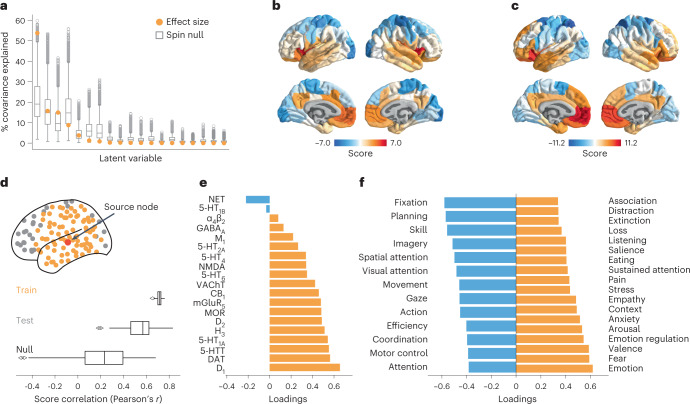
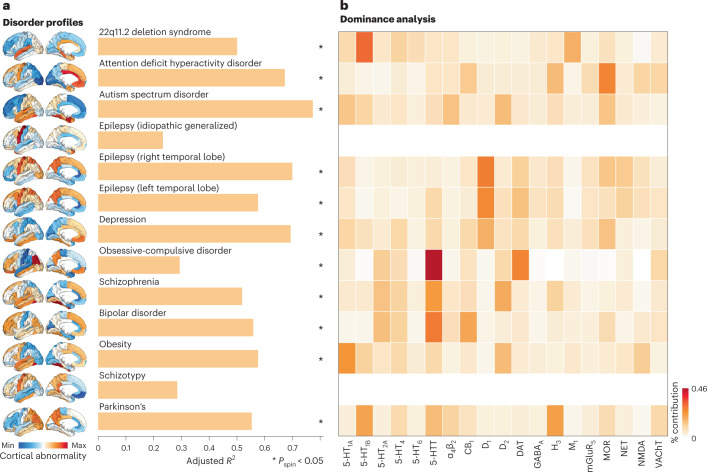
Neurotransmitter receptors support the propagation of signals in the human brain. How receptor systems are situated within macro-scale neuroanatomy and how they shape emergent function remain poorly understood, and there exists no comprehensive atlas of receptors. Here we collate positron emission tomography data from more than 1,200 healthy individuals to construct a whole-brain three-dimensional normative atlas of 19 receptors and transporters across nine different neurotransmitter systems. We found that receptor profiles align with structural connectivity and mediate function, including neurophysiological oscillatory dynamics and resting-state hemodynamic functional connectivity. Using the Neurosynth cognitive atlas, we uncovered a topographic gradient of overlapping receptor distributions that separates extrinsic and intrinsic psychological processes. Finally, we found both expected and novel associations between receptor distributions and cortical abnormality patterns across 13 disorders. We replicated all findings in an independently collected autoradiography dataset. This work demonstrates how chemoarchitecture shapes brain structure and function, providing a new direction for studying multi-scale brain organization.
Overview
The claims and statistics of this paper haven’t been checked yet.
Free: it reads the open-access text and checks the first 5 claims that cite a source we can check. Create a free account to check every claim.
Integrity signals
Registry
Cites
Statistics
Figures
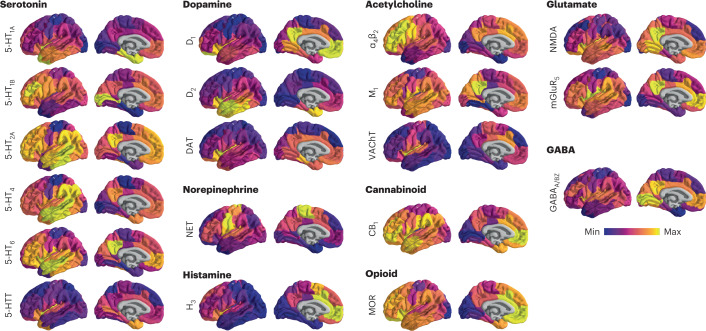
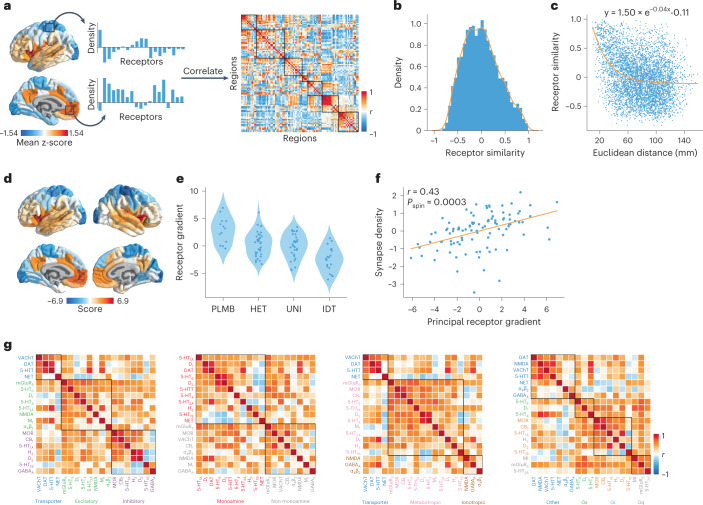
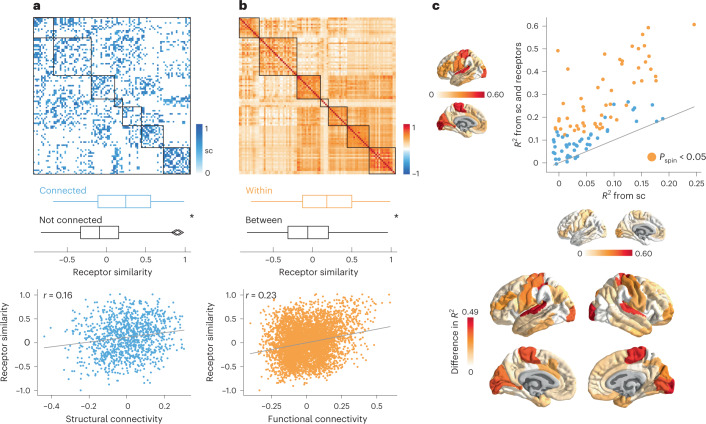
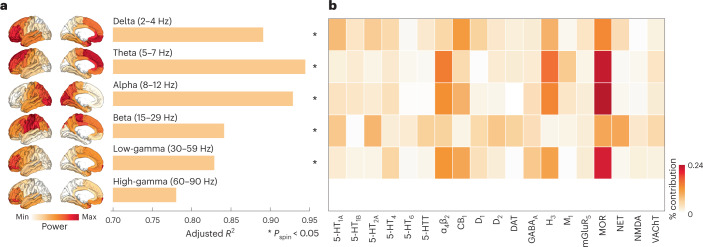
Verification
Claims the paper makes
The claims and statistics of this paper haven’t been checked yet.
Free: it reads the open-access text and checks the first 5 claims that cite a source we can check. Create a free account to check every claim.
Claims other papers make about this one
Each is checked against this paper’s own text: does it say what the citing paper says it does?
The cited source says what the claim attributes to it.
In the citing paper
“These maps can be applied analogously to the Allen Brain Atlas for gene expression and have been shown to align with structural connectivity and neurophysiological dynamics73,75.”
From Deviations in effective connectivity explain different hallucination subtypes in Parkinson's disease psychosis (2026) · cites this paper as [75]
Self-check
Percentages, sums and reported differences re-computed from the paper’s own numbers.
The self-check needs the paper’s full text.
Citations
Cites
Desikan, R. S., Ségonne, F., Fischl, B., Quinn, B. T., Dickerson, B. C., Blacker, D., Buckner, R. L., Dale, A. M., Maguire, R. P., Hyman, B. T., et al. (2006) · NeuroImage · doi:10.1016/j.neuroimage.2006.01.021 · Cited by 13,324
The organization of the human cerebral cortex estimated by intrinsic functional connectivity
Thomas Yeo, B. T., Krienen, F. M., Sepulcre, J., Sabuncu, M. R., Lashkari, D., Hollinshead, M., Roffman, J. L., Smoller, J. W., Zöllei, L., Polimeni, J. R., et al. (2011) · Journal of Neurophysiology · doi:10.1152/jn.00338.2011 · Cited by 9,182
The organization of the human cerebellum estimated by intrinsic functional connectivity
Buckner, R. L., Krienen, F. M., Castellanos, A., Diaz, J. C., & Yeo, B. T. T. (2011) · Journal of Neurophysiology · doi:10.1152/jn.00339.2011 · Cited by 7,304
The WU-Minn Human Connectome Project: An overview
Van Essen, D. C., Smith, S. M., Barch, D. M., Behrens, T. E. J., Yacoub, E., & Ugurbil, K. (2013) · NeuroImage · doi:10.1016/j.neuroimage.2013.05.041 · Cited by 5,651 · cited 2×
“We used MEG power spectra across six canonical frequency bands from 33 unrelated participants in the Human Connectome Project (see Methods for details; [43, 111, 132]).”
MethodThe minimal preprocessing pipelines for the Human Connectome Project
Glasser, M. F., Sotiropoulos, S. N., Wilson, J. A., Coalson, T. S., Fischl, B., Andersson, J. L., Xu, J., Jbabdi, S., Webster, M., Polimeni, J. R., et al. (2013) · NeuroImage · doi:10.1016/j.neuroimage.2013.04.127 · Cited by 5,253
Domingos da Silveira da Luz, A. C., Pereira Dias, G., do Nascimento Bevilaqua, M. C., Cocks, G., Gardino, P. F., Thuret, S., & Nardi, A. E. (2013) · Neuropsychobiology · doi:10.1159/000353269 · Cited by 3,995
Large-scale automated synthesis of human functional neuroimaging data.
Yarkoni, T., Poldrack, R. A., Nichols, T. E., Van Essen, D. C., & Wager, T. D. (2011) · Nature Methods · doi:10.1038/nmeth.1635 · Cited by 3,686
Brainstorm: A User-Friendly Application for MEG/EEG Analysis
Tadel, F., Baillet, S., Mosher, J. C., Pantazis, D., & Leahy, R. M. (2011) · Computational Intelligence and Neuroscience · doi:10.1155/2011/879716 · Cited by 3,677
Self-citationLocal-global parcellation of the human cerebral cortex from intrinsic functional connectivity MRI
Schaefer, A., Kong, R., Gordon, E. M., Laumann, T. O., Zuo, X.-N., Holmes, A. J., Eickhoff, S. B., & Yeo, B. T. T. (2018) · Cerebral Cortex · doi:10.1093/cercor/bhx179 · Cited by 3,657 · cited 8×
“Due to the low spatial resolution of PET tracer binding, we opted to present our main results using a coarse resolution of 100 cortical regions 12 .”
BackgroundMethodInfluentialMRtrix3: A fast, flexible and open software framework for medical image processing and visualisation
Tournier, J.-D., Smith, R., Raffelt, D., Tabbara, R., Dhollander, T., Pietsch, M., Christiaens, D., Jeurissen, B., Yeh, C.-H., & Connelly, A. (2019) · NeuroImage · doi:10.1016/j.neuroimage.2019.116137 · Cited by 2,974
Research works printed but not linked: 3
- Dhollander, T., Raffelt, D. & Connelly, A. Unsupervised 3-tissue response function estimation from single-shell or multi-shell diffusion MR data without a co-registered t1 image. ISMRM Workshop on Breaking the Barriers of Diffusion MRI. https://www.researchgate.net/publication/307863133_Unsupervised_3-tissue_response_function_estimation_from_single-shell_or_multi-shell_diffusion_MR_data_without_a_co-registered_T1_image (ISMRM, 2016).
- Tournier, J. D., Calamante, F. & Connelly, A. Improved probabilistic streamlines tractography by 2nd order integration over fibre orientation distributions. Proc. Int. Soc. Magn. Res. Med. https://cds.ismrm.org/protected/10MProceedings/PDFfiles/1670_4298.pdf (2010).
- Larivière S The ENIGMA Toolbox: multiscale neural contextualization of multisite neuroimaging datasets Nat. Methods 2021 18 698 700 34194050 PMC8983056 · DOI · Paper page
Cited by
Items 601–700 of 873
Yi, C., Zhu, H., Zhang, S., Li, Y., Lv, Z., Zhou, S., & Wei, B. (2024) · Research Square · doi:10.21203/rs.3.rs-5319088/v1
Network Localization of Brain Stimulation Targets for Trait AnxietyPreprint
Siddiqi, S., Klingbeil, J., Webler, R. D., Kratter, I. H., Blumberger, D. M., Fox, M., George, M. S., Grafman, J. H., Pascual‐Leone, Á., Pines, A. R., et al. (2024) · SSRN Electronic Journal · doi:10.2139/ssrn.5001997 · Cited by 6
Movement disorders related to drugs and toxins
Aldaajani, Z., Badawi, M. A., & Obaid, M. T. (2024) · International review of movement disorders · doi:10.1016/bs.irmvd.2024.09.008
Alavash, M. (2024) · eLife · doi:10.7554/elife.104698
“However, integrating these brain imaging data has proven challenging ( Hansen et al., 2022 ).”
The pleomorphic cholesterol sensing motifs of transmembrane proteins
Barrantes, F. J. (2024) · Chemistry and Physics of Lipids · doi:10.1016/j.chemphyslip.2024.105460
Bogolepova, A. N., Makhnovich, E. V., Коваленко, Е. А., Osinovskaya, N. A., & Beregov, M. M. (2024) · S S Korsakov Journal of Neurology and Psychiatry · doi:10.17116/jnevro2024124121142
Xia, J., Zhang, Z., & Liao, W. (2024) · International Conference on Pattern Recognition and Artificial Intelligence (PRAI) · doi:10.1109/prai62207.2024.10826941
Functionally specialized spectral organization of the resting human cortex
Bai, W., Yamashita, O., & Yoshimoto, J. (2025) · Neural Networks · doi:10.1016/j.neunet.2025.107195
Chen, J., Wang, F., Zhao, L., Zhang, H., Wang, Z., Tang, Y., Chang, X., Ma, W., Qiu, Y., Yi, Y., et al. (2025) · Fundamental Research · doi:10.1016/j.fmre.2025.02.017 · Cited by 1
“…(i.e., T1w/T2 w as a proxy measure of cortical myelin [ 26 ], cortical thickness [ 26 ], the principal component of gene expression [ 30 ], the principal component of neurotransmitter receptors and transporters [ 15 ], synapse density [ 34–38 , 38–45 ]) were obtained from Neuromaps toolbox [ 14 ].”
InfluentialZhang, X., Liu, L., Li, Y., Han, S., Zhang, Y., Zheng, G., Cheng, J., Zhang, B., & Wen, B. (2025) · Brain Research Bulletin · doi:10.1016/j.brainresbull.2025.111331
Emerging Concept of Receptor Endocytosis and Signaling
Kumar, A., Panda, A., Kumar, S., & Ranjan, K. (2025) · The Receptors · doi:10.1007/978-3-031-81991-9_3
Traditions of Excellence: neuroanatomy at the forefront of the new era
Rockland, K. S. (2025) · Anatomical Science International · doi:10.1007/s12565-025-00852-3
“A third example addresses how receptor systems are situated within the macro-scale neuroanatomy and how these may shape emergent brain properties (Hansen et al. 2022).”
Cohen, J. S., Radhakrishnan, H., Olm, C. A., Das, S. R., Cook, P. A., Wolk, D. A., Weintraub, D. A., Irwin, D. J., & McMillan, C. T. (2025) · Movement Disorders · doi:10.1002/mds.30244
“86 Histaminergic sprouting could explain the normal to increased levels of histamine seen in LBD. 79,81,82 Of note, similar fi ndings of compensatory TMN plasticity have been found in patients with narcolepsy, with increased histaminergic cell counts, nearly twice that of controls.”
Hu, Y., Tang, Y., Li, W. H., Zheng, D., Jin, Y., Fan, Q., Buitelaar, J. K., Zhou, Y., & Chen, Z. (2025) · bioRxiv (Cold Spring Harbor Laboratory) · doi:10.1101/2025.06.06.658269
Structural Similarity Networks Reveal Brain Vulnerability in DementiaPreprint
Montagnese, M., Ebneabbasi, A., García-San-Martín, N., Pecci-Terroba, C., Romero-García, R., Morgan, S. E., Cole, J. H., Seidlitz, J., Rittman, T., & Bethlehem, R. A. I. (2025) · medRxiv · doi:10.1101/2025.06.10.25328978 · Cited by 1
“The observed results suggest that structural deviations can be biologically decoded by taking into account underlying neurotransmitter systems 36,43 .”
Neurophysiology of the Human Hippocampus
Akyüz, E. (2025) · Springer eBooks · doi:10.1007/978-3-031-88907-3_5
Wainstein, G., Whyte, C. J., Martens, K. A. E., Müller, E. J., Medel, V., Anderson, B., Stöttinger, E., Danckert, J. A., Munn, B., & Shine, J. M. (2025) · eLife · doi:10.7554/elife.93191.4.sa3
Self-citationAscribing Molecular Context to Functional Brain Changes in Psychosis
Biase, M. A. D. (2025) · Biological Psychiatry · doi:10.1016/j.biopsych.2025.05.008
Brain plasticity across the lifespan: new approaches with structural and functional neuroimaging
Yang, X. (2025) · Research Publications (Maastricht University) · doi:10.26481/dis.20250619xy
Neural Timescale of Adolescents Major Depressive DisorderPreprint
Gao, Y., Wang, S., Wei, H., He, J., Liu, G., Liu, L., Liu, X., Li, X., Guo, X., & Liu, X. (2025) · bioRxiv (Cold Spring Harbor Laboratory) · doi:10.1101/2025.07.01.662431
Ma, L., Steinberg, J. L., Bjork, J. M., Woisard, K., Zuniga, E. A., Cunningham, K. A., & Moeller, F. G. (2025) · Psychiatry Research Neuroimaging · doi:10.1016/j.pscychresns.2025.112034
Long, Y., Pan, N., Wang, S., Qin, K., Chen, Q., Vetter, C. S., Singh, M. K., Fornito, A., Chen, Y., & Gong, Q. (2025) · NeuroImage · doi:10.1016/j.neuroimage.2025.121402
Dopamine dysfunction in psychosis
McCutcheon, R. A., & Zauchenberger, C.-Z. (2025) · Handbook of behavioral neuroscience · doi:10.1016/b978-0-443-29867-7.00035-9
Hodapp, A., & Meyniel, F. (2025) · eLife · doi:10.1101/2025.07.31.667879
Bhanji, J. P., Husain, B., Stringfellow, J., Delgado, M. R., & Ray, S. (2025) · Journal of Integrative Neuroscience · doi:10.31083/jin36969
Hu, R.-Y., Qiu, J., & Huang, X. (2025) · Neuroreport · doi:10.1097/wnr.0000000000002202
Sharif, N. A., & Chaudhry, S. (2025) · BENTHAM SCIENCE PUBLISHERS eBooks · doi:10.2174/9789815324334125010009
Han, Z., Liu, T., Wang, K., Yang, G., & Yan, T. (2026) · BMC Medicine · doi:10.1186/s12916-026-04903-y
“We utilized PET tracer images of neurotransmitter receptors/transporters from [24, 46], as detailed in the section “Normative molecular similarity network construction”.”
InfluentialWu, J., Wang, Z., Li, F., Bu, S., Sun, L., Chen, Z., Bai, Z., Yang, L., Gong, F., Chen, J., et al. (2025) · Clinical and Translational Medicine · doi:10.1002/ctm2.70449
“82 Recently, Hansen et al. developed a three-dimensional atlas of neurotransmitter receptors, showing that receptor similarity mirrors SC and FC. 83 These studies collectively suggest that connectivity is shaped by underlying molecular architecture.”
Methods for Measuring Neural Oscillations in Mental Disorders
Atagün, M. İ., Tamura, S., & Hirano, Y. (2025) · Springer eBooks · doi:10.1007/978-3-031-73368-0_105
Dai, Y., Wu, Y., Zhu, L.-L., Yu, Q., Li, K., Zeng, Y., Li, J., Su, Y., Xia, M., & Si, T. (2025) · Journal of Psychopharmacology · doi:10.1177/02698811251370981
“It also reported that 5-HT receptors are highly expressed in the medial prefrontal lobe (Hansen et al., 2022).”
Self-citationDugre, J. R. (2025) · bioRxiv (Cold Spring Harbor Laboratory) · doi:10.1101/2025.09.27.678975
Cellular Diversity Underpins Cortical Organization and Disease Vulnerability in the Human Brain
Zhan, Y., & Liu, C. (2025) · Neuroscience Bulletin · doi:10.1007/s12264-025-01512-2 · Cited by 2
Kathofer, M., Mediano, P. A. M., Spies, M., Liardi, A., Dörl, G., Stöhrmann, P., Schmidt, C., Briem, E., Schlosser, G., Eggerstorfer, B., et al. (2025) · bioRxiv (Cold Spring Harbor Laboratory) · doi:10.1101/2025.10.05.680521
“…node-level maps, representing the dominant integration changes within each cluster, were compared to neurotransmitter and transporter density maps 46 , including serotonin (5-HT1a, 5-HT1b, 5-HT2a, 5-HT4, 5-HT6, and 5-HTT), dopamine (D1, D2, and DAT), acetylcholine (M1, VAChT, and α4β2),…”
Right‐lateralized maladaptive topological reorganization in hyperthyroidism
Chakraborty, P., Upadhyay, N., Kumar, P., Rana, P., Saha, S., D'Souza, M. M., Sekhri, T., Khushu, S., & Kumar, M. (2026) · Journal of Neuroendocrinology · doi:10.1111/jne.70235
“22 To address these gaps, we aim to (1) characterize global, regional, and edge-level alterations in structural connectivity strength, including short-, medium, and long-range pathways; (2) assess associations between altered network measures, thyroid hormone levels, and cognitive performance; and…”
Advances in understanding and treating disorders of consciousness caused by brainstem injury
He, Q., Zhu, S., Chai, X., Cao, T., Wang, N., & Yang, Y. (2025) · Chinese Neurosurgical Journal · doi:10.1186/s41016-025-00411-9 · Cited by 1
“In particular, the density and distribution patterns of neurotransmitter receptors are consistent with the structural and functional connectivity of the human brain, impacting neural oscillation dynamics and normal brain function [55].”
Tariq, R., Dadario, N. B., Shlobin, N. A., Yeung, J. T., & Sughrue, M. E. (2025) · Journal of Neuro-Oncology · doi:10.1007/s11060-025-05270-z
Brain Network Signature of Autoscopic Phenomena in Humans
Wang, S., Qi, L., Huang, X., Wu, C., Du, J., Xue, Q., Liu, J., Chen, Y., & Ren, L. (2025) · CNS Neuroscience & Therapeutics · doi:10.1111/cns.70635
“To quantify the relationship between neurotransmitters and the AP network, we acquired the positron emission tomography (PET) tracer images for neurotransmitter receptors and transporters from Hansen et al. and neuromaps (https:// github. com/ netne urolab/ neuro maps) [35, 37].”
Neuroimaging in Psychiatry 2023: Mood Disorders
(2025) · Frontiers research topics · doi:10.3389/978-2-8325-6998-6
Yu, Y., Soda, A. K., Bognar, C., Gaehle, G., Moerlein, S. M., Nickels, M. L., Rajamoni, J., Perlmutter, J. S., & Tu, Z. (2025) · Journal of Fluorine Chemistry · doi:10.1016/j.jfluchem.2025.110506
Overholtzer, L. N., Bottenhorn, K. L., Karalunas, S. L., Peterson, B. S., & Herting, M. M. (2026) · Scientific Reports · doi:10.1038/s41598-026-52107-4
Lei, W., Wang, D., Fang, S., & Wang, H. (2025) · bioRxiv (Cold Spring Harbor Laboratory) · doi:10.1101/2025.11.14.688566
Hu, X., Hu, Z.-X., He, Y.-Z., Fan, B., & Zeng, B.-L. (2025) · Neuroreport · doi:10.1097/wnr.0000000000002230
Liu, P., Sun, J., Hu, L., Chen, X., Han, J., Yu, L., Fan, S., Ye, R., Wang, K., Ji, G., et al. (2025) · iNew Medicine · doi:10.1002/inm3.70010
Morphometric Latent Factors in Autism and Their Association with Receptor Profiles and BehaviorPreprint
Al-Naji, A., Abdolalizadeh, A., & Kristanto, D. (2025) · bioRxiv (Cold Spring Harbor Laboratory) · doi:10.64898/2025.12.08.692851
García‐Cerón, G., Bello-Cortés, I. H., Ramiro‐Cortés, Y., Gutiérrez‐Aguilar, M., Sciutto, M. F. R., Sánchez‐Bartéz, F., Gimeno, M., & García‐Arrazola, R. (2025) · Biopolymers · doi:10.1002/bip.70074
“Therefore, MS activity could play an important role in the neuronal plasticity/architecture generated by neurotransmitters [21].”
Ji, L., Peng, S., Song, H., Zhang, R., Lu, D., He, H., Fan, F., Fang, Y., Xu, J., & Zhang, J. (2025) · Alzheimer s Research & Therapy · doi:10.1186/s13195-025-01934-0
“…nineteen receptors and transporters across nine different neurotransmitter systems, a microstructure of synapse density, and six mitochondrial features, were gathered from recent studies by Hansen et al. [27] and Mosharov et al. [28], which were also easily accessible by the neuromaps toolbox [45].”
Glutamate and laser evoked potentials : the role of the cingulate cortex
Choles, C. M. (2023) · cIRcle (University of British Columbia) · doi:10.14288/1.0436885
Barzan, R. (2023) · Dokumentenrepositorium der RUB (Ruhr University Bochum) · doi:10.13154/294-9957
Santavirta, S. (2025) · UTUPub (University of Turku)
Pedersen, R. (2023) · DiVA at Umeå University (Umeå University)
Laurikainen, H. (2023) · UTUPub (University of Turku)
Hirsch, F., Wohlschläger, A., & München, T. U. (2024) · mediaTUM (Technical University of Munich)
Armio, R.-L. (2025) · UTUPub (University of Turku)
Computational Modelling of Brain Network Dynamics in Psychotic and Affective Disorders
Hoheisel, L. (2025) · JuSER (Forschungszentrum Jülich)
Facca, M. (n.d.) · Padua Research Archive (University of Padova)
Ma, L., Adalı, T., Seraji, M., & Calhoun, V. D. (2025) · IEEE-EMBS International Conference on Biomedical and Health Informatics (BHI ...) · doi:10.1109/bhi67747.2025.11269462
“More importantly, the brain regions involved in Waves C45, C46, C49 include many cortical areas known to be enriched with neurotransmitter receptors vulnerable in schizophrenia, as reported by Hansen et al. [16].”
An Interactive Brain Atlas of KnowledgePreprint
Stefanovski, L., Bülau, K., Martin, L., Huettl, C., Langford, C., Palmer, J., Sacks, M., Deger, L., Pille, M., Schirner, M., et al. (2025) · bioRxiv (Cold Spring Harbor Laboratory) · doi:10.64898/2025.12.12.694043
Xu, M., Li, Y., Luan, J., Yang, A., Zhu, L., Shu, N., Ouyang, G., Xue, Y., Zhang, L., & Ma, G. (2025) · Neurobiology of Disease · doi:10.1016/j.nbd.2025.107228
Structural connectivity shapes a cross-modal gradient of brain flexibilityPreprint
Neri, M., Angioielli, M., Bourges, E., Mazzara, C., Lopez, E. T., Demuru, M., Luca, M. D., Gallo, E., Quarantelli, M., Brovelli, A., et al. (2025) · bioRxiv (Cold Spring Harbor Laboratory) · doi:10.64898/2025.12.29.696703
Liu, C., Liu, M., Liu, Y., Li, Y., Ma, M., Xu, L., Liu, P., & Liu, H. (2026) · Journal of Neuroinflammation · doi:10.1186/s12974-025-03676-0 · Cited by 1
“Moreover, a larger neurotransmitter database ( h t t p s : / / g i t h u b . c o m / n e t n e u r o l a b / h a n s e n _ r e c e p t o r) was used to validate the robustness of the abovementioned neurotransmitter findings [40].”
Artificial Super‐Receptor Interface Mimic and Exceed Protein Functionality
Xu, W., Luo, W. Z., Liu, X., Zhu, Z., Hou, Z., Wu, M., Han, Z., Wang, J., Wu, K., Xu, W., et al. (2026) · Aggregate · doi:10.1002/agt2.70253
“The dopamine transporter (DAT) protein, a key neurotransmitter transporter involved in amphetamine drug interactions within the nervous system [ 32–34 ], was chosen as an example.”
Zhao, J., Qu, Z., Li, Z., Zhou, L., Hu, Y., Yu, S., Chen, X., Shu, H., & Initiative, A. D. N. (2026) · Journal of International Medical Research · doi:10.1177/03000605251409886
“20,45 Previous studies have shown that neurotransmitters such as dopamine and serotonin are functionally diverse across brain regions and can influence memory, emotion, and executive function through different neural pathways.”
Fang, K., Wen, B., Liu, L., Tian, Y. Q., Yang, H., Han, S., Niu, L., & Sun, X. (2026) · Journal of Affective Disorders · doi:10.1016/j.jad.2026.121222
Huang, Y., Xiong, B., & Zhang, H. (2026) · medRxiv · doi:10.64898/2026.01.21.26344372
Computational reconstruction of evolutionary selection in human brain networks
Piszczek, Ł., Fazzari, C., Ulonska, S., Bühler, K., & Haubensak, W. E. (2026) · Frontiers in Neuroinformatics · doi:10.3389/fninf.2025.1623174
Tomaiuolo, F., Cerritelli, F., Sestieri, C., Paolucci, T., Sensi, S. L., Pizzi, S. D., & Ferretti, A. (2025) · IEEE International Conference on Metrology for eXtended Reality, Artificial Intelligence and Neural Engineering (MetroXRAINE) · doi:10.1109/metroxraine66377.2025.11340292
“…investigate the potential neurochemical foundations of the observed connectivity alterations, we performed a spatial correlation analysis between our functional maps and in vivo PET maps of neurotransmitter receptor and transporter distribution derived from the work of Hansen and colleagues [17].”
Xie, Y., Zhang, T., Ouyang, A., Guan, M., Lin, X., Wang, L., Diao, X., Li, Y., He, W., Dong, Q., et al. (2026) · Neuroscience & Biobehavioral Reviews · doi:10.1016/j.neubiorev.2026.106579 · Cited by 3
Xinyuan, L., Jing, G., Chen, L., & Huafu, C. (2025) · International Computer Conference on Wavelet Active Media Technology and Information Processing (ICCWAMTIP) · doi:10.1109/iccwamtip68645.2025.11352683
“To investigate the molecular basis of frequency-specific ALFF alterations, we correlated the unthresholded statistical t -maps with 18 canonical neurotransmitter receptor density maps obtained from an open positron emission tomography (PET) source [7].”
Liu, X.-Y., Han, X., Gu, S., Yang, H., Luo, C.-X., Wang, S., Li, W.-H., & Pan, P. (2026) · Frontiers in Molecular Neuroscience · doi:10.3389/fnmol.2026.1693722 · Cited by 1
Liu, X., Le, X., Huang, Z., Wang, Y., Zhang, Q., Feng, J., & Li, C. (2026) · medRxiv · doi:10.64898/2026.01.26.26344800
Sidhu, M. K., Koepp, M. J., & Duncan, J. S. (2026) · Epilepsy · doi:10.1002/9781394340064.ch8
Self-citationSynaptic Tuning of Brain Rhythms: From Chemical Signalling to Cortical Oscillations
Baud, M. O., & Ville, D. V. D. (2026) · Human Brain Mapping · doi:10.1002/hbm.70463
Ye, S., Dave, A., Lan, X., Witter, M. P., Salami, A., & Ziaei, M. (2026) · GeroScience · doi:10.64898/2026.02.04.703682
Age-related reorganization of locus coeruleus–cortical functional connectivity gradientsPreprint
Dave, A., Ye, S., Lan, X., Salami, A., Jacobs, H. I. L., & Ziaei, M. (2026) · bioRxiv (Cold Spring Harbor Laboratory) · doi:10.64898/2026.02.05.704005 · Cited by 1
Цехмистренко, Т. А., Omar, S., Obukhov, D. K., Kozlov, V. I., & Kokoreva, T. V. (2026) · Morphology · doi:10.17816/morph.690578
Epigenetic Alterations of Brain Neurotransmitter Receptors of Patients with Anxiety Disorders
Zhao, Y. (2026) · Theoretical and Natural Science · doi:10.54254/2753-8818/2026.au31842
Inter- and intra-individual variability in structure-function coupling in human brainPreprint
Studenova, A., Ströckens, F., Edwards, L., Stroh, A., Helbling, S., Maeß, B., Pine, K., Cam‐CAN, Amunts, K., Kirilina, E. P., et al. (2026) · bioRxiv (Cold Spring Harbor Laboratory) · doi:10.64898/2026.02.25.707886
Chen, J., Liang, Y., Li, W., Wu, Y., Chen, M., Tao, X., Zi, T., Dong, X., Cheng, B., Chen, K., et al. (2026) · Communications Medicine · doi:10.1038/s43856-026-01477-x · Cited by 1
“The whole-brain volumetric PET receptor/transporter maps were obtained from a publicly available dataset (https://github.com/netneurolab/hansen_ receptors/tree/main/data/PET_nifti_images) 43 , which comprises data fromalargesampleofover1200healthyindividuals.”
Self-citationLiu, Q., Li, Q., Li, X., Wei, X., Zhang, X., Zhou, W., Zhang, L., Ren, T., Huang, C., Tan, H., et al. (2026) · bioRxiv (Cold Spring Harbor Laboratory) · doi:10.64898/2026.03.02.708940
“…resources, such as the Allen Human Brain Atlas 35,36 , together with spatial maps of neurotransmitter transporter and receptor distributions 37 , have established a powerful multimodal framework for linking alterations in functional lateralization to their underlying genetic and…”
InfluentialShao, H., Yu, X., Zhang, Y., Yang, Y., Wang, J., Luo, C., & Zhang, J. (2026) · Journal of Affective Disorders · doi:10.1016/j.jad.2026.121532
Doose, A., Tarchi, L., Seidel, M., King, J. A., Bernardoni, F., Hellerhoff, I., Geisler, D., Gramatke, K., Castellini, G., Ricca, V., et al. (2026) · Translational Psychiatry · doi:10.1038/s41398-026-03920-y
“AT; serotonin transporter – SERT) [25, 39].”
InfluentialZhang, L., Xu, H., Yang, Y., Mo, Y., & Gao, L. (2026) · Scientific Reports · doi:10.1038/s41598-026-38523-6
“To further explore the neurobiological underpinnings of functional brain differences between BMB and MM groups, we utilized neurotransmitter receptor density maps derived from a cohort of over 1,200 healthy individuals (18–94 years), as reported by Hansen et al. 71 .”
Tully, J., & Hind, E. (2026) · Aggression and Violent Behavior · doi:10.1016/j.avb.2026.102144
Inhibitory control in problematic usage of the internet: An ALE meta-analysis
Li, X., Yang, J., Turel, O., Zhang, S., & He, Q. (2026) · NeuroImage · doi:10.1016/j.neuroimage.2026.121859
Cao, B., GUO, Y., Deng, F., Chen, L., Lu, M., WANG, J., & Huang, R. (2026) · Medicine & Science in Sports & Exercise · doi:10.1249/mss.0000000000003961
Luo, J., Zeng, X., Xiong, Y., Xu, Y., Zhou, C., Wang, Y., Yao, D., & Guo, D. (2026) · bioRxiv (Cold Spring Harbor Laboratory) · doi:10.64898/2026.03.19.712967
“Whether driven by widespread subcortical axons or fluid-mediated chemical signals, regions with similar cytoarchitecture or receptor profiles may exhibit convergent physiological responses even in the absence of direct structural connections [21, 37].”
Transdiagnostic alterations of intrinsic brain activity in major psychiatric disorders
Zhu, D., Zhu, W., Wu, D., Guan, M., Ouyang, A., Zhang, T., Li, C., Hu, Q., Fang, P., & Xie, Y. (2026) · European Archives of Psychiatry and Clinical Neuroscience · doi:10.1007/s00406-026-02222-0
Testing for Network Specificity in Brain‐Behavior Associations Using Ordinal Dominance Curves
Hillman, N., Weinstein, S. M., Bagautdinova, J., Sun, K. Y., Cieslak, M., Salo, T., Fan, Y., Keller, A. S., Alexander‐Bloch, A. F., Vandekar, S., et al. (2026) · Human Brain Mapping · doi:10.1002/hbm.70493
Zhao, J., Gao, M., Zhou, L., Wan, S., Liao, N., Yu, S., Chen, X., & Shu, H. (2026) · Neuropsychiatric Disease and Treatment · doi:10.2147/ndt.s582833
Zhang, L., Han, Y., Ou, Y., Liu, Y., Lang, B., & Guo, W. (2026) · Journal of Affective Disorders · doi:10.1016/j.jad.2026.122379
Mei, S., He, N., He, W., Yan, J., Chu, C., Zeng, Z., Yan, F., Li, D., Pu, Y., Zhang, C., et al. (2026) · Molecular Psychiatry · doi:10.1038/s41380-026-03557-9
“This correlation was mainly associated with various motor-related clinical features in the left lower and upper limbs, including pronation-supination movements of the left hand (r = Additionally, a signi fi cant correlation was observed between changes in rest tremor amplitude of the lip/jaw and changes in hemispheric…”
InfluentialLiu, X., Wen, X., He, L., Liu, X., Gao, Y., & Guo, X. (2026) · bioRxiv (Cold Spring Harbor Laboratory) · doi:10.64898/2026.03.27.714607
Xu, X., Fang, Z.-H., Xia, Y., Li, S., Feng, Y., Wu, Y., Salvi, R., Yin, X., & Chen, Y. (2026) · Human Brain Mapping · doi:10.1002/hbm.70521
“Based on in vivo molecular imaging studies, we selected 20 comprehensive receptor/transporter density maps covering major neurotransmitter systems (Hansen et al. 2022; Liu et al. 2023).”
Self-citationWang, M., Huang, Z., Zheng, H., Dong, G., & Zeng, N. (2026) · Addictive Behaviors · doi:10.1016/j.addbeh.2026.108700 · Cited by 3
Chaikali, S., & Jacobsen, J. P. R. (2026) · Journal of Clinical Psychopharmacology · doi:10.1097/jcp.0000000000002180
Yang, X., Agartz, I., Andreassen, O. A., Bachman, P., Baeza, I., Bartholomeusz, C., Borgwardt, S., Choi, S., Colibazzi, T., Cooper, R. E., et al. (2026) · Molecular Psychiatry · doi:10.1038/s41380-026-03586-4
Distinct Brain Maturation Pathways Relate Environmental Variation to Cognitive DevelopmentPreprint
Yan, J., Chen, J., Wan, B., Liu, Z.-Q., He, L., Toussaint, P. J., Evans, A. C., & Karama, S. (2026) · bioRxiv (Cold Spring Harbor Laboratory) · doi:10.64898/2026.04.04.716497
“To contextualize the latent brain patterns identified by EFA, we used the neuromaps toolbox (Hansen et al., 2022; Markello et al., 2022) to test their spatial correspondence with reference brain maps spanning metabolism, neurotransmitter receptors and transporters, and synaptic density.”
Metadata
- Authors
- Hansen, J. Y., Shafiei, G., Markello, R. D., Smart, K., Cox, S. M. L., Nørgaard, M., Beliveau, V., Wu, Y., Gallezot, J.-D., Aumont, É., Servaes, S., Scala, S. G., DuBois, J. M., Wainstein, G., Bezgin, G., Funck, T., Schmitz, T. W., Spreng, R. N., Galovic, M., Koepp, M. J., Duncan, J. S., Coles, J. P., Fryer, T. D., Aigbirhio, F. I., McGinnity, C. J., Hammers, A., Soucy, J.-P., Baillet, S., Guimond, S., Hietala, J., Bedard, M.-A., Leyton, M., Kobayashi, E., Rosa-Neto, P., Ganz, M., Knudsen, G. M., Palomero-Gallagher, N., Shine, J. M., Carson, R. E., Tuominen, L., Dagher, A., & Misic, B.
- Affiliations
- Montreal Neurological Institute and Hospital (CA)
- Yale University (US)
- McGill University (CA)
- Copenhagen University Hospital (DK)
- Innsbruck Medical University (AT)
- Université du Québec à Montréal (CA)
- Douglas Mental Health University Institute (CA)
- Biogen (United States) (US)
- The University of Sydney (AU)
- Forschungszentrum Jülich (DE)
- Western University (CA)
- University Hospital Zurich (CH)
- UCL Queen Square Institute of Neurology (GB)
- University of Cambridge (GB)
- King's College London (GB)
- University of Ottawa (CA)
- University of Turku (FI)
- University of Copenhagen (DK)
- ORCID
- Hansen, Justine Y.
- Shafiei, Golia
- Markello, Ross D.
- Smart, Kelly
- Cox, Sylvia M. L.
- Nørgaard, Martin
- Beliveau, Vincent
- Wu, Yanjun
- Gallezot, Jean-Dominique
- Aumont, Étienne
- Servaes, Stijn
- Scala, Stephanie G.
- DuBois, Jonathan M.
- Wainstein, Gabriel
- Bezgin, Gleb
- Funck, Thomas
- Schmitz, Taylor W.
- Spreng, R. Nathan
- Galovic, Marian
- Koepp, Matthias J.
- Duncan, John S.
- Coles, Jonathan P.
- Fryer, Tim D.
- Aigbirhio, Franklin I.
- McGinnity, Colm J.
- Hammers, Alexander
- Soucy, Jean-Paul
- Baillet, Sylvain
- Guimond, Synthia
- Hietala, Jarmo
- Leyton, Marco
- Kobayashi, Eliane
- Rosa-Neto, Pedro
- Ganz, Melanie
- Knudsen, Gitte M.
- Shine, James M.
- Carson, Richard E.
- Tuominen, Lauri
- Dagher, Alain
- Misic, Bratislav
- Venue
- Nature Neuroscience
- Published
- 2022-10-27
- Volume
- 25
- Issue
- 11
- Pages
- 1569-1581
- ISSN
- 1097-6256 (ISSN-L)
- 1546-1726
- PMC
- PMC9630096
- OpenAlex
- W4307494802
- Cited by
- 797
- References
- 137
- Citations by year
- 2026: 229 · 2025: 262 · 2024: 198 · 2023: 86 · 2022: 20
- FWCI
- 72.98
- Type
- journal article
- Language
- en
- Open access
- hybrid
- doi.org
- Licence
- cc-by
- creativecommons.org/licenses/by/4.0 (tdm)
- creativecommons.org/licenses/by/4.0 (vor)
- Locations
- Nature Neuroscience (publishedVersion, cc-by)
- PubMed Central (publishedVersion, cc-by)
- PubMed (publishedVersion)
- Research Portal (King's College London) (publishedVersion, other-oa)
- Research at the University of Copenhagen (University of Copenhagen) (publishedVersion, cc-by)
- Zurich Open Repository and Archive (University of Zurich) (submittedVersion, cc-by)
- Funders
- Gouvernement du Canada | Natural Sciences and Engineering Research Council of Canada (017-04265)
- Helmholts International BigBrain Analytics & Learning Laboratory
- Topics
- Life Sciences › Neuroscience › Cognitive Neuroscience › Functional Brain Connectivity Studies
- Life Sciences › Neuroscience › Cellular and Molecular Neuroscience › Neurotransmitter Receptor Influence on Behavior
- Health Sciences › Medicine › Radiology, Nuclear Medicine and Imaging › Advanced Neuroimaging Techniques and Applications
- Keywords
- neurotransmitter receptors, human neocortex, structural connectivity, resting-state functional connectivity, neuropsychiatric disorders, chemoarchitecture, autoradiography, positron emission tomography
- MeSH terms
- Brain, Brain Mapping, Humans, Magnetic Resonance Imaging, Neurotransmitter Agents, Neocortex, Positron-Emission Tomography
About these checks
Registry, retraction, Cites and statistics results are computed, not judged, with one exception: a printed reference that no index lists is read once by a model before it counts as a citation error. Claims are extracted by a model and kept only when their quote appears verbatim in the text; each cited source is then checked, with a model’s help, for whether it says what the claim relies on. Those verdicts can be wrong — read the claim’s quote and the cited source before relying on one.
Statistics and arithmetic are recomputed, not judged.
Confidence bands are shown only for fields calibrated on our annotated test set. None is calibrated yet, so no band is shown.
What counts as a claim ›How we measure confidence ›How we check this ›
Are you an author, or do you see a problem with this page? Request a review
Data sources
Bibliographic data: Semantic Scholar, OpenAlex, Crossref.
Contains information from the Semantic Scholar Academic Graph Datasets, made available under the ODC Attribution License (ODC-BY 1.0).
Semantic Scholar’s data is described in: Kinney, R., et al. (2023). The Semantic Scholar Open Data Platform. arXiv:2301.10140.
