

BioWordVec, improving biomedical word embeddings with subword information and MeSH
Open accessThe DOI matches its Crossref record; 39 of the 40 references it cites were found in a registry or an index.
Abstract
Distributed word representations have become an essential foundation for biomedical natural language processing (BioNLP), text mining and information retrieval. Word embeddings are traditionally computed at the word level from a large corpus of unlabeled text, ignoring the information present in the internal structure of words or any information available in domain specific structured resources such as ontologies. However, such information holds potentials for greatly improving the quality of the word representation, as suggested in some recent studies in the general domain. Here we present BioWordVec: an open set of biomedical word vectors/embeddings that combines subword information from unlabeled biomedical text with a widely-used biomedical controlled vocabulary called Medical Subject Headings (MeSH). We assess both the validity and utility of our generated word embeddings over multiple NLP tasks in the biomedical domain. Our benchmarking results demonstrate that our word embeddings can result in significantly improved performance over the previous state of the art in those challenging tasks.
Overview
The claims and statistics of this paper haven’t been checked yet.
Free: it reads the open-access text and checks the first 5 claims that cite a source we can check. Create a free account to check every claim.
Integrity signals
Registry
Cites
Statistics
Figures
Verification
Claims the paper makes
The claims and statistics of this paper haven’t been checked yet.
Free: it reads the open-access text and checks the first 5 claims that cite a source we can check. Create a free account to check every claim.
Claims other papers make about this one
Each is checked against this paper’s own text: does it say what the citing paper says it does?
The cited source says what the claim attributes to it.
In the citing paper
“Finally, while recent studies including our own (13,25) have shown promise in improving classification performance with deep learning, such algorithms are not implemented due to the bottleneck of model efficiency in practical use.”
From LitSuggest: a web-based system for literature recommendation and curation using machine learning (2021) · cites this paper as [25]
Self-check
Percentages, sums and reported differences re-computed from the paper’s own numbers.
The self-check needs the paper’s full text.
Citations
Cites
Glove: Global Vectors for Word Representation
Pennington, J., Socher, R., & Manning, C. (2014) · Proceedings of the 2014 Conference on Empirical Methods in Natural Language Processing (EMNLP) · doi:10.3115/v1/d14-1162 · Cited by 34,071 · cited 2×
“In recent years, several word embedding models and pre-trained word embeddings 1,7,8 have been made publicly available and successfully applied to many biomedical NLP (BioNLP) tasks.”
MethodAdvances in neural information processing systems 7
Cios, K., & Shields, M. (1997) · Neurocomputing · doi:10.1016/s0925-2312(97)90018-7 · Cited by 22,059
node2vec: Scalable Feature Learning for Networks
Grover, A., & Leskovec, J. (2016) · Proceedings of the 22nd ACM SIGKDD International Conference on Knowledge Discovery and Data Mining · doi:10.1145/2939672.2939754 · Cited by 10,926
DeepWalk: online learning of social representations
Perozzi, B., Al-Rfou, R., & Skiena, S. (2014) · Proceedings of the 20th ACM SIGKDD international conference on Knowledge discovery and data mining · doi:10.1145/2623330.2623732 · Cited by 10,123 · cited 1×
“Recent studies (e.g. 16,17 ) inspired by the skip-gram model 16,17 have proposed to translate network/graphs into nodes sequences to learn networks embeddings.”
BackgroundEnriching Word Vectors with Subword Information
Bojanowski, P., Grave, E., Joulin, A., & Mikolov, T. (2017) · Transactions of the Association for Computational Linguistics · doi:10.1162/tacl_a_00051 · Cited by 9,645 · cited 4×
“Bojanowski et al . recently proposed a novel embedding model 11 , which can effectively use the subword information to enrich the final word embedding results.”
BackgroundMethodInfluentialLINE: Large-scale Information Network Embedding
Tang, J., Qu, M., Wang, M., Zhang, M., Yan, J., & Mei, Q. (2015) · Proceedings of the 24th International Conference on World Wide Web · doi:10.1145/2736277.2741093 · Cited by 5,416
Advances in Neural Information Processing Systems 27 (NIPS 2014)
Zhong, M., Goddard, N., & Sutton, C. A. (2014) · Cited by 2,636
SemEval-2017 Task 1: Semantic Textual Similarity Multilingual and Crosslingual Focused Evaluation
Cer, D., Diab, M., Agirre, E., Lopez-Gazpio, I., & Specia, L. (2017) · Proceedings of the 11th International Workshop on Semantic Evaluation (SemEval-2017) · doi:10.18653/v1/s17-2001 · Cited by 1,562 · cited 1×
“In the general domain, the SemEval Semantic Textual Similarity (SemEval STS) challenge has been organized for over five years, which calls for effective models to measure sentence similarity 23 .”
MethodLearning Sentiment-Specific Word Embedding for Twitter Sentiment Classification
Tang, D., Wei, F., Yang, N., Zhou, M., Liu, T., & Qin, B. (2014) · Proceedings of the 52nd Annual Meeting of the Association for Computational Linguistics (Volume 1: Long Papers) · doi:10.3115/v1/p14-1146 · Cited by 1,181 · cited 1×
“The training of our model is to maximize the above objective function in (5), which will learn the joint PubMed text sequences and MeSH term sequences in word embedding.”
MethodRetrofitting Word Vectors to Semantic Lexicons
Faruqui, M., Dodge, J., Jauhar, S. K., Dyer, C., Hovy, E., & Smith, N. A. (2015) · Proceedings of the 2015 Conference of the North American Chapter of the Association for Computational Linguistics: Human Language Technologies · doi:10.3115/v1/n15-1184 · Cited by 721
Research works printed but not linked: 4
- Mikolov, T., Sutskever, I., Chen, K., Corrado, G. S. & Dean, J. Distributed representations of words and phrases and their compositionality. In Advances in Neural Information Processing systems26, 3111–3119 (NIPS, 2013).
- Bengio Y Ducharme R Vincent P Jauvin C A neural probabilistic language model Journal of Machine Learning Research 2003 3 1137 1155
- Yanshan, W. et al. Overview of the BioCreative/OHNLP challenge 2018 task 2: clinical semantic textual similarity. In Proceedings of the BioCreative/OHNLP Challenge. 1–4 (2018).
- Chen, Q., Du, J., Kim, S., Wilbur, W. J. & Lu, Z. Combining rich features and deep learning for finding similar sentences in electronic medical records. In Proceedings of the BioCreative/OHNLP Challenge. 5–8 (2018).
Cited by
Items 101–200 of 453
An Artificial Intelligence Tool for Clinical Decision Support and Protocol Selection for Brain MRI
Wong, K. A., Hatef, A., Ryu, J., Nguyen, X. V., Makary, M. S., & Prevedello, L. M. S. (2022) · American Journal of Neuroradiology · doi:10.3174/ajnr.a7736 · Cited by 24
Hendawi, R., Li, J., & Roy, S. (2023) · JMIR Formative Research · doi:10.2196/50328 · Cited by 29
“Specifically, we leveraged a meticulously pretrained embedding model known as BioWordVec [38], which excels in accurately capturing the nuanced meanings of entities within the medical and health care domains.”
MethodWang, S. Y., Tseng, B., & Hernandez‐Boussard, T. (2021) · International Journal of Medical Informatics · doi:10.1016/j.ijmedinf.2021.104464 · Cited by 20
Angraal, S., Zachariah, A., Raaisa, R., Khera, R., Rao, P. R., Krumholz, H. M., & Spertus, J. A. (2021) · JAMA Network Open · doi:10.1001/jamanetworkopen.2020.33157 · Cited by 20
Luo, X., Gandhi, P., Storey, S., Zhang, Z., Han, Z., & Huang, K. (2021) · IEEE Journal of Biomedical and Health Informatics · doi:10.1109/jbhi.2021.3117238 · Cited by 19
Zhan, X., Wang, F., & Gevaert, O. (2022) · IEEE Journal of Biomedical and Health Informatics · doi:10.1109/jbhi.2022.3193365 · Cited by 29
“However, since the computation of the ensemble learning model requires the TF-IDF, W2V1, W2V2 and S2V models, the TF-IDF models significantly outperformed the ensemble learning model in the computational cost.”
MethodInfluentialFlamholz, Z., Crane‐Droesch, A., Ungar, L., & Weissman, G. E. (2021) · Journal of Biomedical Informatics · doi:10.1016/j.jbi.2021.103971 · Cited by 23
Natural Language Processing in Nephrology
Vleck, T. T. V., Farrell, D. R., & Chan, L. (2022) · Advances in Chronic Kidney Disease · doi:10.1053/j.ackd.2022.07.001 · Cited by 20
Kumar, T., Sethuraman, R., Mitra, S., Ravindran, B., & Narayanan, M. (2023) · PLoS Computational Biology · doi:10.1371/journal.pcbi.1011022 · Cited by 22
“Our embeddings (also called as word embeddings or embedding vectors) are from BioWordVec [44], a deep learning model pretrained on the PubMed corpus [45].”
BackgroundMethodHua, Y., Wang, L., Nguyen, V., Rieu‐Werden, M. L., McDowell, A., Bates, D. W., Foer, D., & Zhou, L. (2023) · Journal of Biomedical Informatics · doi:10.1016/j.jbi.2023.104507 · Cited by 24
Kanjirangat, V., & Rinaldi, F. (2021) · Journal of Biomedical Informatics · doi:10.1016/j.jbi.2021.103893 · Cited by 22
Grissette, H., & Nfaoui, E. H. (2021) · Personal and Ubiquitous Computing · doi:10.1007/s00779-021-01595-4 · Cited by 17
Review of Natural Language Processing in Pharmacology
Trajanov, D., Trajkovski, V., Dimitrieva, M., Dobreva, J., Jovanovik, M., Klemen, M., Žagar, A., & Robnik‐Šikonja, M. (2023) · Pharmacological Reviews · doi:10.1124/pharmrev.122.000715 · Cited by 25
Popat, R., & Ive, J. (2023) · Frontiers in Digital Health · doi:10.3389/fdgth.2023.1188338 · Cited by 21
“Our Recurrent NN – based Models use bidirectional gated recurrent units (GRUs) and pre-trained embeddings [ GloVe (45) for the dementia dataset as a common choice with no other models pre-trained on similar data and BioWordVec (46) for MIMIC as these were pre-trained using in-domain data similar to MIMIC].”
MethodTrust it or not: Confidence-guided automatic radiology report generation
Wang, Y., Lin, Z., Xu, Z., Dong, H., Luo, J., Tian, J., Shi, Z., Huang, L., Zhang, Y., Fan, J., et al. (2024) · Neurocomputing · doi:10.1016/j.neucom.2024.127374 · Cited by 26
“Combined with medical word embeddings (such as BioWordVec [50]), WRD [20] can be a feasible similarity measurement for reports.”
BackgroundMethodInfluentialSelf-citationDrugs4Covid: Drug-driven Knowledge Exploitation based on Scientific PublicationsPreprint
Badenes-Olmedo, C., Chaves-Fraga, D., Poveda‐Villalón, M., Iglesias-Molina, A., Calleja, P., Bernardos, S., Martín-Chozas, P., Fernández-Izquierdo, A., Amador-Domínguez, E., Espinoza-Arias, P., et al. (2020) · arXiv (Cornell University) · doi:10.48550/arxiv.2012.01953 · Cited by 17
“To ensure comparability between models, the same initialization values were used from the pre-trained BioWordVec model [23].”
MethodYang, R., Zeng, Q., You, K., Qiao, Y., Huang, L., Hsieh, C.-C., Rosand, B., Goldwasser, J., Dave, A., Keenan, T., et al. (2024) · Journal of Medical Internet Research · doi:10.2196/60601 · Cited by 16
“…have seen a notable shift toward the use of domain-specific pretrained language models, transitioning from shallow embeddings such as BioWordVec [5] and BioSentVec [6] to advanced architectures like Bidirectional Encoder Representations from Transformers (BERT) [7], such as BioBERT [8],…”
Self-citationTan, Y., Dede, M., Mohanty, V., Dou, J., Hill, H., Bernstam, E., & Chen, K. (2024) · Journal of Biomedical Informatics · doi:10.1016/j.jbi.2024.104648 · Cited by 19
A discovery system for narrative query graphs: entity-interaction-aware document retrieval
Kroll, H., Pirklbauer, J., Kalo, J.-C., Kunz, M., Ruthmann, J., & Balke, W. (2023) · International Journal on Digital Libraries · doi:10.1007/s00799-023-00356-3 · Cited by 25
Obtaining clinical term embeddings from SNOMED CT ontology
Zahra, F. A., & Kate, R. J. (2023) · Journal of Biomedical Informatics · doi:10.1016/j.jbi.2023.104560 · Cited by 19
Exploring Text Specific and Blackbox Fairness Algorithms in Multimodal Clinical NLP
Chen, J., Berlot-Attwell, I., Wang, X., Hossain, S., & Rudzicz, F. (2020) · Clinical Natural Language Processing Workshop (ClinicalNLP) · doi:10.18653/v1/2020.clinicalnlp-1.33 · Cited by 25
Domingo, J., Galal, G., Huang, J., Soni, P., Mukhin, V., Altman, C., Bayer, T., Byrd, T. F., Caron, S., Creamer, P., et al. (2022) · NEJM Catalyst · doi:10.1056/cat.21.0469 · Cited by 20
Davagdorj, K., Wang, L., Li, M., Pham, V.-H., Ryu, K. H., & Theera‐Umpon, N. (2022) · International Journal of Environmental Research and Public Health · doi:10.3390/ijerph19105893 · Cited by 16
Medical Code Prediction from Discharge Summary: Document to Sequence BERT using Sequence Attention
Heo, T.-S., Yoo, Y., Park, Y., Jo, B.-C., Lee, K., & Kim, K. (2021) · International Conference on Machine Learning and Applications · doi:10.1109/icmla52953.2021.00201 · Cited by 23
Disease ontologies for knowledge graphs
Kurbatova, N., & Swiers, R. (2021) · BMC Bioinformatics · doi:10.1186/s12859-021-04173-w · Cited by 18
Empowering digital pathology applications through explainable knowledge extraction tools
Marchesin, S., Giachelle, F., Marini, N., Atzori, M., Boytcheva, S., Buttafuoco, G., Ciompi, F., Nunzio, G. M. D., Fraggetta, F., Irrera, O., et al. (2022) · Journal of Pathology Informatics · doi:10.1016/j.jpi.2022.100139 · Cited by 18
“Entity linking (Task 1): We compare SKET with 2 unsupervised approaches based on Bio FastText27,48 and BioClinical BERT29,49 models.”
MethodCross-Domain Limitations of Neural Models on Biomedical Relation Classification
Alimova, I., Tutubalina, E. V., & Nikolenko, S. (2021) · IEEE Access · doi:10.1109/access.2021.3135381 · Cited by 23
Cui, H., Lu, J., Ge, Y., & Yang, C. (2022) · Lecture notes in computer science · doi:10.1007/978-3-030-99739-7_9 · Cited by 17
Improving medical term embeddings using UMLS Metathesaurus
Chanda, A. K., Bai, T., Yang, Z., & Vučetić, S. (2022) · BMC Medical Informatics and Decision Making · doi:10.1186/s12911-022-01850-5 · Cited by 20
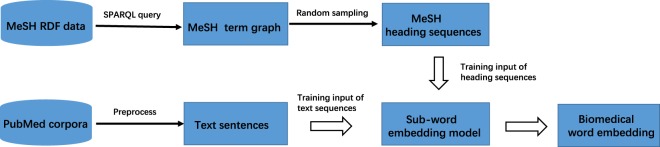
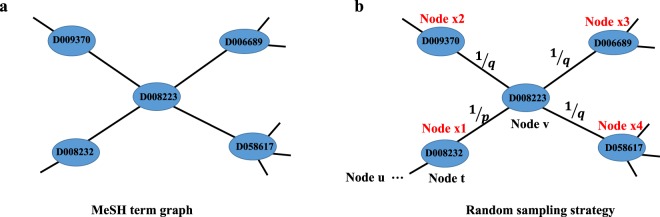
“Work in [33] uses the Medical Subject Heading (MeSH) term graph [35] to generate MeSH term sequences.”
BackgroundMethodSelf-citationLeaman, R., Islamaj, R., Adams, V., Alliheedi, M., Almeida, J. R., Antunes, R., Bevan, R., Chang, Y., Erdengasileng, A., Hodgskiss, M., et al. (2023) · Database · doi:10.1093/database/baad005 · Cited by 18
Self-citationWu, C., Chen, C., Su, C.-H., Chien, Y., Dai, H.-J., & Chen, H. (2023) · Artificial Intelligence in Medicine · doi:10.1016/j.artmed.2023.102488 · Cited by 14
Luo, X., Storey, S., Gandhi, P., Zhang, Z., Metzger, M., & Huang, K. (2021) · Health Informatics Journal · doi:10.1177/14604582211000785 · Cited by 16
Thesaurus-based word embeddings for automated biomedical literature classification
Koutsomitropoulos, D. A., & Andriopoulos, A. D. (2021) · Neural Computing and Applications · doi:10.1007/s00521-021-06053-z · Cited by 17
BioVerbNet: a large semantic-syntactic classification of verbs in biomedicine
Majewska, O., Collins, C., Baker, S., Björne, J., Brown, S. W., Korhonen, A., & Palmer, M. S. (2021) · Journal of Biomedical Semantics · doi:10.1186/s13326-021-00247-z · Cited by 18
“In the BioWordVec project [32] further information fromMeSH (Medical Subject Headings) is used to augment PubMed text resources.”
MethodPan, Y., Wang, C., Hu, B., Xiang, Y., Wang, X., Chen, Q., Chen, J., & Du, J. (2021) · JMIR Medical Informatics · doi:10.2196/32698 · Cited by 36
“The tested pretrained representations included a recurrent neural network (RNN)-based encoder (ie, BioWord2Vec [40]) and two BERT-based encoders (ie, ClinicalBERT [41] and BioBERT [42]).”
Self-citationVisual Question Answering in the Medical Domain
Canepa, L., Singh, S., & Sowmya, A. (2023) · International Conference on Digital Image Computing: Techniques and Applications (DICTA) · doi:10.1109/dicta60407.2023.00059 · Cited by 22
“The question is first tokenised using pretrained word embeddings (specifically, we use BioWordVec embeddings [16]), which encodes the question as a numerical vector.”
MethodDu, J., Wang, D., Lin, B., He, L., Huang, L., Wang, J., Manion, F. J., Li, Y., Cossrow, N., & Yao, L. (2025) · Scientific Reports · doi:10.1038/s41598-025-03979-5 · Cited by 21
“The pre-trained clinical embedding (dimension: 200 18 ) was used to initiate the word embedding layer.”
Graph embedding and geometric deep learning relevance to network biology and structural chemistry
Lecca, P., & Lecca, M. (2023) · Frontiers in Artificial Intelligence · doi:10.3389/frai.2023.1256352 · Cited by 16
Walker, A. L., Thorne, A., Das, S., Love, J. S., Cooper, H. L. F., Livingston, M. D., & Sarker, A. (2024) · Journal of the American Medical Informatics Association · doi:10.1093/jamia/ocae310 · Cited by 19
“…(1) BioWordVec, a word embeddings model trained on medical text, which generated the top 10 most semantically similar words for each stem word, 21,22 and (2) GPT 3.5, which suggested an additional 25 words and spelling deviations for each lexicon derived from the literature and expanded in…”
InfluentialCLIP: A Dataset for Extracting Action Items for Physicians from Hospital Discharge Notes
Mullenbach, J., Pruksachatkun, Y., Adler, S., Seale, J., Swartz, J. L., McKelvey, T. G., Dai, H., Yang, Y., & Sontag, D. A. (2021) · doi:10.18653/v1/2021.acl-long.109 · Cited by 40
“The CNN is initialized with BioWordVec vectors (Zhang et al., 2019; Chen et al., 2019), which are trained on PubMed and MIMIC-III notes, and the CNN is trained with the binary cross-entropy (BCE) loss.”
MethodContinual knowledge infusion into pre-trained biomedical language models
Jha, K., & Zhang, A. (2021) · Bioinformatics · doi:10.1093/bioinformatics/btab671 · Cited by 17
Imputing Out-of-Vocabulary Embeddings with LOVE Makes LanguageModels Robust with Little Cost
Chen, L., Varoquaux, G. P., & Suchanek, F. M. (2022) · Proceedings of the conference - Association for Computational Linguistics. Meeting · doi:10.18653/v1/2022.acl-long.245 · Cited by 21
A comparative evaluation of biomedical similar article recommendation
Zhang, L., Lu, W. P., Chen, H., Huang, Y., & Cheng, Q. (2022) · Journal of Biomedical Informatics · doi:10.1016/j.jbi.2022.104106 · Cited by 19
Turki, H., Jemielniak, D., Taieb, M. A. H., Gayo, J. E. L., Aouicha, M. B., Banat, M., Shafee, T. M. A., Prud’hommeaux, E., Lubiana, T., Das, D., et al. (2022) · PeerJ Computer Science · doi:10.7717/peerj-cs.1085 · Cited by 16
“Such a process can be based on various natural language processing techniques, including word embeddings (Zhang et al., 2019; Chen et al., 2020) and semantic similarity (Ben Aouicha & Hadj Taieb, 2016).”
BackgroundDeep Learning and Network Analysis: Classifying and Visualizing Geologic Hazard Reports
Li, W., Wu, L., Xinde, X., Xie, Z., Qiu, Q., Liu, H., Huang, Z., & Chen, J. (2024) · Journal of Earth Science · doi:10.1007/s12583-021-1589-6 · Cited by 13
“Traditional text representation methods, such as the bag-of-words (BOW) mod‐ el, word2vec (Zhang et al., 2019; Mikolov et al., 2013) and GloVe (Pennington et al., 2014), which were mainly obtained by building language models, have major drawbacks regarding the expression of words with multiple…”
Fathy, W., Émériaud, G., & Cheriet, F. (2025) · Artificial Intelligence in Medicine · doi:10.1016/j.artmed.2025.103126 · Cited by 17
Calling Attention to Passages for Biomedical Question Answering
de Almeida, T. D., & Matos, S. (2020) · Lecture notes in computer science · doi:10.1007/978-3-030-45442-5_9 · Cited by 12
“In the results, we compare two variants of DeepRank: BioDeepRank refers to the model with the modified aggregation network and weighting mechanism, and using word embeddings for the biomedical domain [15] ; Attn-BioDeepRank refers to the final model that additionally replaces the recurrent layer by a self-attention la…”
MethodBetter synonyms for enriching biomedical search
Yeganova, L. E., Kim, S., Chen, Q., Balasanov, G., Wilbur, W. J., & Lu, Z. (2020) · Journal of the American Medical Informatics Association · doi:10.1093/jamia/ocaa151 · Cited by 12
Self-citationSchulz, C., & Juric, D. (2020) · Proceedings of the AAAI Conference on Artificial Intelligence · doi:10.1609/aaai.v34i05.6404 · Cited by 12
“2017): - 2 embeddings using the MeSH thesaurus in addition to PM for training with window size 2 for intrinsic tasks and size 20 for extrinsic ones (Zhang et al. 2019); - 1 embedding (and its model (M)) based on the previous plus the MIMIC-III dataset (Chen, Peng, and Lu 2019).”
MethodChen, Y.-H., Ruan, S.-J., & Chen, P. (2025) · Journal of Medical Internet Research · doi:10.2196/75052 · Cited by 15
Interpretable prediction of drug-drug interactions via text embedding in biomedical literature
Jung, S., & Yoo, S. (2024) · Computers in Biology and Medicine · doi:10.1016/j.compbiomed.2024.109496 · Cited by 16
Steitz, B. D., Sulieman, L. M., Warner, J. L., Fabbri, D., Brown, J. T., Davis, A. L., & Unertl, K. M. (2021) · JAMIA Open · doi:10.1093/jamiaopen/ooab049 · Cited by 12
Meta-LMTC: Meta-Learning for Large-Scale Multi-Label Text Classification
Wang, R., Su, X. H., Long, S., Dai, X., Huang, S., & Chen, J. (2021) · Conference on Empirical Methods in Natural Language Processing (EMNLP) · doi:10.18653/v1/2021.emnlp-main.679 · Cited by 15
“Additionally, We used 200-dimensional word embeddings pretrained on PubMed (Zhang et al., 2019) and GloVe (Pen-nington et al., 2014) for the MIMIC-III and EU-RLEX57K respectively.”
MethodÇelikmasat, G., Akturk, M. E., Ertunc, Y. E., Issifu, A. M., & Ganiz, M. C. (2022) · International Conference on Innovations in Intelligent Systems and Applications (INISTA) · doi:10.1109/inista55318.2022.9894270 · Cited by 14
“For future work, we shall explore more medical domain embeddings based on transformers such as BioELECTRA [39] , SciBERT [40], and static embeddings such as BioWordVec [41], and cui2vec [42].”
MethodKhine, A. H., Wettayaprasit, W., & Duangsuwan, J. (2024) · Artificial Intelligence in Medicine · doi:10.1016/j.artmed.2023.102758 · Cited by 11
Extracting Biomedical Entity Relations using Biological Interaction Knowledge
Guo, S., Huang, L., Yao, G., Wang, Y., Guan, H., & Bai, T. (2021) · Interdisciplinary Sciences Computational Life Sciences · doi:10.1007/s12539-021-00425-8 · Cited by 12
Affective Concept-Based Encoding of Patient Narratives via Sentic Computing and Neural Networks
Grissette, H., & Nfaoui, E. H. (2021) · Cognitive Computation · doi:10.1007/s12559-021-09903-z · Cited by 11
SINA-BERT: A pre-trained Language Model for Analysis of Medical Texts in PersianPreprint
Taghizadeh, N., Doostmohammadi, E., Seifossadat, E., Rabiee, H. R., & Tahaei, M. S. (2021) · arXiv (Cornell University) · doi:10.48550/arxiv.2104.07613 · Cited by 15
Sung, S., Hu, Y., & Chen, C.-Y. (2024) · JMIR Medical Informatics · doi:10.2196/56955 · Cited by 11
“We further adapted this approach by substituting the original Word2Vec model with BioWordVec [36] (BioWordVec + SVM), which offers biomedical word embeddings via fastText, to better suit our study’s focus on clinical data.”
MethodZhan, X., Xu, Q., Zheng, Y., Lu, G., & Gevaert, O. (2025) · PLoS Computational Biology · doi:10.1371/journal.pcbi.1012803 · Cited by 15
“Then, we generated the text embeddings based on the biomedical sent2vec (S2V) model [32] and biomedical word2vec (W2V) model [33] because they [2].”
Maghawry, N. E., Ghoniemy, S. A., Shaaban, E., & Emara, K. (2023) · Big Data and Cognitive Computing · doi:10.3390/bdcc7010021 · Cited by 11
Applications of Natural Language Processing for the Management of Stroke Disorders: Scoping Review
Rosario, H. D., Corresa, S. P., Pedrosa, I., Vidal-Pedrós, M., de Otto-López, B., García‐Mieres, H., & Álvarez-Rodríguez, L. (2023) · JMIR Medical Informatics · doi:10.2196/48693 · Cited by 14
Middleton, L., Melas, I. N., Vasavda, C., Raies, A. B., Rózemberczki, B., Dhindsa, R. S., Dhindsa, J. S., Weido, B., Wang, Q., Harper, A. R., et al. (2024) · Science Advances · doi:10.1126/sciadv.adj1424 · Cited by 12
Yogarajan, V., Gouk, H., Smith, T. C., Mayo, M., & Pfahringer, B. (2020) · Lecture notes in computer science · doi:10.1007/978-3-030-41964-6_9 · Cited by 16
Extraction of Family History Information From Clinical Notes: Deep Learning and Heuristics Approach
Silva, J., Almeida, J. R., & Matos, S. (2020) · JMIR Medical Informatics · doi:10.2196/22898 · Cited by 14
“BioWordVec is an example of publicly available biomedical and clinical word embeddings [29].”
Racharak, T. (2021) · IEEE Access · doi:10.1109/access.2021.3073730 · Cited by 11
“As for a test pre-trained word emeddings E , we use BioWordVec [13] that applies fastText to train word embeddings on PubMed and MIMIC-III.”
MethodInfluentialD’Anniballe, V. M., Tushar, F. I., Faryna, K., Han, S., Mazurowski, M. A., Rubin, G. D., & Lo, J. Y.-C. (2022) · BMC Medical Informatics and Decision Making · doi:10.1186/s12911-022-01843-4 · Cited by 14
ICDXML: enhancing ICD coding with probabilistic label trees and dynamic semantic representations
Wang, Z., Wang, Y., Zhang, H., Wang, W., Qi, J., Chen, J., Sastry, N. R., Johnson, J., & De, S. (2024) · Scientific Reports · doi:10.1038/s41598-024-69214-9 · Cited by 19
Zhukova, A., von Sperl, L., Matt, C. E., & Gipp, B. (2024) · Knowledge and Information Systems · doi:10.1007/s10115-024-02212-5 · Cited by 14
“Some models propose training word embeddings from scratch on a domain-specific corpus (cf. (Efstathiou et al, 2018)) or using subword information to learn the representation of the words’ parts to be able to represent later OOV words of this domain (cf. (Zhang et al, 2019)).”
Subramaniam, S., Rizvi, S., Ramesh, R., Sehgal, V., Gurusamy, B., Arif, H., Tran, J. S., Thamman, R., Anyanwu, E. C., Mastouri, R. A., et al. (2025) · Scientific Reports · doi:10.1038/s41598-024-83540-y · Cited by 14
Class mean‐weighted discriminative collaborative representation for classification
Gou, J., Song, J. P., Du, L., Zeng, S., Zhan, Y., & Zhang, Y. (2021) · International Journal of Intelligent Systems · doi:10.1002/int.22411 · Cited by 9
Self-citationMedCT-BERT: Multimodal Mortality Prediction using Medical ConvTransformer-BERT Model
Zhang, K., Niu, K., Zhou, Y., Tai, W., & Lu, G. (2023) · IEEE International Conference on Tools with Artificial Intelligence (ICTAI) · doi:10.1109/ictai59109.2023.00109 · Cited by 10
“They utilized convolutional neural networks (CNN) on top of the pre-trained word embeddings by Zhang et al. [19] to obtain representations of clinical records and employed long short-term memory networks (LSTM) to embed the time series component of the data.”
MethodA scalable framework for benchmark embedding models in semantic health-care tasks
Soffer, S., Omar, M., Gendler, M., Glicksberg, B. S., Kovatch, P., Efros, O., Freeman, R., Charney, A. W., Nadkarni, G. N., & Klang, E. (2025) · Journal of the American Medical Informatics Association · doi:10.1093/jamia/ocaf149 · Cited by 9
Explainable AI: Classification of MRI Brain Scans Orders for Quality Improvement
Zhang, A. Y., Lam, S. S. W., Ong, M. E. H., Tang, P. H., & Chan, L. L. (2019) · IEEE/ACM International Conference on Big Data Computing, Applications and Technologies (BDCAT) · doi:10.1145/3365109.3368791 · Cited by 12
“Therefore, this study utilized a pre-trained embedding called BioWordVec: an open set of biomedical embedding word embeddings computed from a biomedical controlled vocabulary known as Medical Subject Headings (MeSH) with text sequences derived from PubMed repositories [14].”
MethodA Toolbox for the Nearly-Unsupervised Construction of Digital Library Knowledge Graphs
Kroll, H., Pirklbauer, J., & Balke, W. (2021) · ACM/IEEE Joint Conference on Digital Libraries · doi:10.1109/jcdl52503.2021.00014 · Cited by 11
“We use the biomedical word embedding trained on PubMed from [24].”
MethodQEN: Applicable Taxonomy Completion via Evaluating Full Taxonomic Relations
Wang, S., Zhao, R., Zheng, Y., & Liu, B. (2022) · International World Wide Web Conference (WWW) · doi:10.1145/3485447.3511943 · Cited by 24
Predicting cross-tissue hormone–gene relations using balanced word embeddings
Jadhav, A. K., Kumar, T., Raghavendra, M., Loganathan, T., & Narayanan, M. (2022) · Bioinformatics · doi:10.1093/bioinformatics/btac578 · Cited by 12
van Sonsbeek, T., & Worring, M. (2020) · Lecture notes in computer science · doi:10.1007/978-3-030-60946-7_11 · Cited by 12
Deconstructing word embedding algorithms
Kenyon-Dean, K., Newell, E., & Cheung, J. C. K. (2020) · Conference on Empirical Methods in Natural Language Processing (EMNLP) · doi:10.18653/v1/2020.emnlp-main.681 · Cited by 15
Model Distillation for Faithful Explanations of Medical Code Predictions
Wood-Doughty, Z., Cachola, I. A., & Dredze, M. H. (2022) · Workshop on Biomedical Language Processing (BioNLP) · doi:10.18653/v1/2022.bionlp-1.41 · Cited by 14
“Using BioWordVec embeddings released by Zhang et al. (2019), the text of the ICD-9 code description, and the 14-gram explanation produced by each model from Mullen-bach et al. (2018), we train a classifier that predicts whether an explanation would have been rated as informative.”
MethodLahorkar, A., Bhosale, H., Sane, A., Ramakrishnan, V., & Valadi, J. K. (2022) · IEEE Transactions on Computational Biology and Bioinformatics · doi:10.1109/tcbb.2022.3149310 · Cited by 8
“…introduced the above-mentioned distributed representation and feature extraction method for biological sequences and successfully demonstrated the utility with important case studies, several authors have presented different novel representations in the biological context [61], [62], [63], [64].”
BackgroundChemical identification and indexing in PubMed full-text articles using deep learning and heuristics
Almeida, T., Antunes, R., Silva, J. F., Almeida, J. R., & Matos, S. (2022) · Database J. Biol. Databases Curation · doi:10.1093/database/baac047 · Cited by 7
“Our research group also participated in this challenge (50) employing the BioWordVec model (51) for representing clinical terms and showed the effectiveness of distributed word representations in entity normalization.”
MethodBajaj, G., Nguyen, V., Wijesiriwardene, T., Yip, H. Y., Javangula, V., Sheth, A., Parthasarathy, S., & Bodenreider, O. (2022) · Workshop on Insights from Negative Results in NLP (Insights) · doi:10.18653/v1/2022.insights-1.11 · Cited by 10
“The inputs are preprocessed, tokenized, and then sent through an initial embedding layer initialized with BioWordVec embeddings (Zhang et al., 2019).”
MethodLiu, Y., Elsworth, B., & Gaunt, T. R. (2023) · Bioinformatics · doi:10.1093/bioinformatics/btad169 · Cited by 11
“These methods have been applied to data from the biomedical domain e.g. BioWordVec (Zhang et al. 2019) and BioSentVec (Chen et al. 2019) and have been applied to real world problems (Duong et al. 2017, Jaeger et al. 2018, Allot et al. 2019, Blagec et al. 2019, Karadeniz and O¨zgu¨r 2019, Tshitoyan…”
MethodRegla, A. I., & Ballera, M. A. (2023) · Procedia Computer Science · doi:10.1016/j.procs.2023.12.087 · Cited by 8
Mapping of Alzheimer’s disease related data elements and the NIH Common Data Elements
Hao, X., Abeysinghe, R., Zheng, F., Schulz, P. E., Initiative, T. A. D. N., & Cui, L. (2024) · BMC Medical Informatics and Decision Making · doi:10.1186/s12911-024-02500-8 · Cited by 9
Biomedical Concept Relatedness – A large EHR-based benchmark
Schulz, C., Levy-Kramer, J., Assel, C. V., Kepes, M., & Hammerla, N. (2020) · International Conference on Computational Linguistics · doi:10.18653/v1/2020.coling-main.577 · Cited by 8
Learning Efficient Task-Specific Meta-Embeddings with Word Prisms
He, J., Tsiolis, K., Kenyon-Dean, K., & Cheung, J. C. K. (2020) · International Conference on Computational Linguistics · doi:10.18653/v1/2020.coling-main.106 · Cited by 10
PM2F2N: Patient Multi-view Multi-modal Feature Fusion Networks for Clinical Outcome Prediction
Zhang, Y., Zhou, B., Song, K., Sui, X., Zhao, G., Jiang, N., & Yuan, X. (2022) · Findings of the Association for Computational Linguistics: EMNLP (Findings of EMNLP) · doi:10.18653/v1/2022.findings-emnlp.144 · Cited by 15
“They utilized the pre-trained word embeddings (Zhang et al., 2019) as text features of clinical notes, and fed them into recurrent neural networks (RNN) or convolution neural networks (CNN) to extract hidden features for predicting results (Ghorbani et al., 2020).”
MethodSelf-citationVanSchaik, J. T., Jain, P., Rajapuri, A. S., Cheriyan, B., Thyvalikakath, T. P., & Chakraborty, S. (2023) · Heliyon · doi:10.1016/j.heliyon.2023.e19265 · Cited by 12
Mao, J., & Liu, W. (2019) · Workshop on BioNLP Open Shared Tasks (BioNLP-OST) · doi:10.18653/v1/d19-5724 · Cited by 9
“There are several pre-trained biomedical word embeddings, such as PubMed-w2v (Pyysalo et al., 2013) and BioWordVec (Zhang et al., 2019).”
BackgroundAntunes, R., Silva, J., & Matos, S. (2020) · ACM Symposium on Applied Computing · doi:10.1145/3341105.3373987 · Cited by 8
“The resulting biomedical word embeddings, named BioWordVec4, performed better than word2vec embeddings in medical word pair similarity benchmarks, and were made publicly available to the community [34].”
MethodAutomated Confirmation of Protein Annotation Using NLP and the UniProtKB Database
Tao, J., Brayton, K. A., & Broschat, S. L. (2020) · Applied Sciences · doi:10.3390/app11010024 · Cited by 8
A typology of research discovery tools
Pacher, A. (2021) · Journal of Information Science · doi:10.1177/01655515211040654 · Cited by 11
Saeed, N., & Naveed, H. (2022) · Frontiers in Molecular Biosciences · doi:10.3389/fmolb.2022.928530 · Cited by 8
“In this experiment, we included popular embedding models as a baseline, such as BioWordVec (Zhang et al., 2019), BioNLP (Chiu et al.”
BackgroundMethodInfluentialKocabiyikoglu, A. C., Babouchkine, J.-M., Portet, F., & Qader, R. (2021) · IEEE International Conference on Healthcare Informatics (ICHI) · doi:10.1109/ichi52183.2021.00032 · Cited by 10
“Indeed, even in such a narrow drug prescription domain, vocabulary size and rare words for the input sequence are numerous [8].”
KenMeSH: Knowledge-enhanced End-to-end Biomedical Text Labelling
Wang, X., Mercer, R. E., & Rudzicz, F. (2022) · Proceedings of the conference - Association for Computational Linguistics. Meeting · doi:10.18653/v1/2022.acl-long.210 · Cited by 12
Medical visual question answering via corresponding feature fusion combined with semantic attention
Zhu, H., He, X., Wang, M., Zhang, M., & Qing, L. (2022) · Mathematical Biosciences & Engineering · doi:10.3934/mbe.2022478 · Cited by 7
“D BioWordVec [52], which is pre-trained on PubMed and MeSH (two open-source databases in the medical domain), to obtain the word embedding of each word contained in the question: ( where ∈ and ∈ .”
Method
Metadata
- Authors
- Zhang, Y., Chen, Q., Yang, Z., Lin, H., & Lu, Z.
- Affiliations
- National Institutes of Health (US)
- Dalian University of Technology (CN)
- Corresponding author
- Lu, Zhiyong
- Venue
- Scientific Data
- Published
- 2019-05-10
- Volume
- 6
- Issue
- 1
- Pages
- 52-52
- ISSN
- 2052-4463 (ISSN-L)
- PMC
- PMC6510737
- OpenAlex
- W2944400536
- Cited by
- 455
- References
- 40
- Citations by year
- 2026: 28 · 2025: 49 · 2024: 57 · 2023: 70 · 2022: 74 · 2021: 96 · 2020: 62 · 2019: 19
- Type
- data paper
- Language
- en
- Open access
- gold
- doi.org
- Licence
- cc-by
- creativecommons.org/licenses/by/4.0 (tdm)
- creativecommons.org/licenses/by/4.0 (vor)
- Locations
- Scientific Data (publishedVersion, cc-by)
- PubMed Central (publishedVersion, cc-by)
- PubMed (publishedVersion)
- Funders
- the NIH Intramural Research Program, National Library of Medicine
- Topics
- Health Sciences › Medicine › Health Informatics › Biomedical Text Mining and Ontologies
- Physical Sciences › Computer Science › Artificial Intelligence › Topic Modeling
- Physical Sciences › Computer Science › Artificial Intelligence › Machine Learning in Healthcare
- Keywords
- Medical Subject Headings, controlled vocabulary, distributed word representations, biomedical natural language processing, word representation learning, ontology integration
- MeSH terms
- Algorithms, Natural Language Processing, Medical Subject Headings, Data Mining
About these checks
Registry, retraction, Cites and statistics results are computed, not judged, with one exception: a printed reference that no index lists is read once by a model before it counts as a citation error. Claims are extracted by a model and kept only when their quote appears verbatim in the text; each cited source is then checked, with a model’s help, for whether it says what the claim relies on. Those verdicts can be wrong — read the claim’s quote and the cited source before relying on one.
Statistics and arithmetic are recomputed, not judged.
Confidence bands are shown only for fields calibrated on our annotated test set. None is calibrated yet, so no band is shown.
What counts as a claim ›How we measure confidence ›How we check this ›
Are you an author, or do you see a problem with this page? Request a review
Data sources
Bibliographic data: Semantic Scholar, OpenAlex, Crossref.
Contains information from the Semantic Scholar Academic Graph Datasets, made available under the ODC Attribution License (ODC-BY 1.0).
Semantic Scholar’s data is described in: Kinney, R., et al. (2023). The Semantic Scholar Open Data Platform. arXiv:2301.10140.
