

BioWordVec, improving biomedical word embeddings with subword information and MeSH
Open accessThe DOI matches its Crossref record; 39 of the 40 references it cites were found in a registry or an index.
Abstract
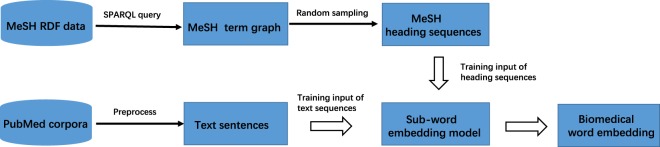
Distributed word representations have become an essential foundation for biomedical natural language processing (BioNLP), text mining and information retrieval. Word embeddings are traditionally computed at the word level from a large corpus of unlabeled text, ignoring the information present in the internal structure of words or any information available in domain specific structured resources such as ontologies. However, such information holds potentials for greatly improving the quality of the word representation, as suggested in some recent studies in the general domain. Here we present BioWordVec: an open set of biomedical word vectors/embeddings that combines subword information from unlabeled biomedical text with a widely-used biomedical controlled vocabulary called Medical Subject Headings (MeSH). We assess both the validity and utility of our generated word embeddings over multiple NLP tasks in the biomedical domain. Our benchmarking results demonstrate that our word embeddings can result in significantly improved performance over the previous state of the art in those challenging tasks.
Overview
The claims and statistics of this paper haven’t been checked yet.
Free: it reads the open-access text and checks the first 5 claims that cite a source we can check. Create a free account to check every claim.
Integrity signals
Registry
Cites
Statistics
Figures
Verification
Claims the paper makes
The claims and statistics of this paper haven’t been checked yet.
Free: it reads the open-access text and checks the first 5 claims that cite a source we can check. Create a free account to check every claim.
Claims other papers make about this one
Each is checked against this paper’s own text: does it say what the citing paper says it does?
The cited source says what the claim attributes to it.
In the citing paper
“Finally, while recent studies including our own (13,25) have shown promise in improving classification performance with deep learning, such algorithms are not implemented due to the bottleneck of model efficiency in practical use.”
From LitSuggest: a web-based system for literature recommendation and curation using machine learning (2021) · cites this paper as [25]
Self-check
Percentages, sums and reported differences re-computed from the paper’s own numbers.
The self-check needs the paper’s full text.
Citations
Cites
Glove: Global Vectors for Word Representation
Pennington, J., Socher, R., & Manning, C. (2014) · Proceedings of the 2014 Conference on Empirical Methods in Natural Language Processing (EMNLP) · doi:10.3115/v1/d14-1162 · Cited by 34,071 · cited 2×
“In recent years, several word embedding models and pre-trained word embeddings 1,7,8 have been made publicly available and successfully applied to many biomedical NLP (BioNLP) tasks.”
MethodAdvances in neural information processing systems 7
Cios, K., & Shields, M. (1997) · Neurocomputing · doi:10.1016/s0925-2312(97)90018-7 · Cited by 22,059
node2vec: Scalable Feature Learning for Networks
Grover, A., & Leskovec, J. (2016) · Proceedings of the 22nd ACM SIGKDD International Conference on Knowledge Discovery and Data Mining · doi:10.1145/2939672.2939754 · Cited by 10,926
DeepWalk: online learning of social representations
Perozzi, B., Al-Rfou, R., & Skiena, S. (2014) · Proceedings of the 20th ACM SIGKDD international conference on Knowledge discovery and data mining · doi:10.1145/2623330.2623732 · Cited by 10,123 · cited 1×
“Recent studies (e.g. 16,17 ) inspired by the skip-gram model 16,17 have proposed to translate network/graphs into nodes sequences to learn networks embeddings.”
BackgroundEnriching Word Vectors with Subword Information
Bojanowski, P., Grave, E., Joulin, A., & Mikolov, T. (2017) · Transactions of the Association for Computational Linguistics · doi:10.1162/tacl_a_00051 · Cited by 9,645 · cited 4×
“Bojanowski et al . recently proposed a novel embedding model 11 , which can effectively use the subword information to enrich the final word embedding results.”
BackgroundMethodInfluentialLINE: Large-scale Information Network Embedding
Tang, J., Qu, M., Wang, M., Zhang, M., Yan, J., & Mei, Q. (2015) · Proceedings of the 24th International Conference on World Wide Web · doi:10.1145/2736277.2741093 · Cited by 5,416
Advances in Neural Information Processing Systems 27 (NIPS 2014)
Zhong, M., Goddard, N., & Sutton, C. A. (2014) · Cited by 2,636
SemEval-2017 Task 1: Semantic Textual Similarity Multilingual and Crosslingual Focused Evaluation
Cer, D., Diab, M., Agirre, E., Lopez-Gazpio, I., & Specia, L. (2017) · Proceedings of the 11th International Workshop on Semantic Evaluation (SemEval-2017) · doi:10.18653/v1/s17-2001 · Cited by 1,562 · cited 1×
“In the general domain, the SemEval Semantic Textual Similarity (SemEval STS) challenge has been organized for over five years, which calls for effective models to measure sentence similarity 23 .”
MethodLearning Sentiment-Specific Word Embedding for Twitter Sentiment Classification
Tang, D., Wei, F., Yang, N., Zhou, M., Liu, T., & Qin, B. (2014) · Proceedings of the 52nd Annual Meeting of the Association for Computational Linguistics (Volume 1: Long Papers) · doi:10.3115/v1/p14-1146 · Cited by 1,181 · cited 1×
“The training of our model is to maximize the above objective function in (5), which will learn the joint PubMed text sequences and MeSH term sequences in word embedding.”
MethodRetrofitting Word Vectors to Semantic Lexicons
Faruqui, M., Dodge, J., Jauhar, S. K., Dyer, C., Hovy, E., & Smith, N. A. (2015) · Proceedings of the 2015 Conference of the North American Chapter of the Association for Computational Linguistics: Human Language Technologies · doi:10.3115/v1/n15-1184 · Cited by 721
Research works printed but not linked: 4
- Mikolov, T., Sutskever, I., Chen, K., Corrado, G. S. & Dean, J. Distributed representations of words and phrases and their compositionality. In Advances in Neural Information Processing systems26, 3111–3119 (NIPS, 2013).
- Bengio Y Ducharme R Vincent P Jauvin C A neural probabilistic language model Journal of Machine Learning Research 2003 3 1137 1155
- Yanshan, W. et al. Overview of the BioCreative/OHNLP challenge 2018 task 2: clinical semantic textual similarity. In Proceedings of the BioCreative/OHNLP Challenge. 1–4 (2018).
- Chen, Q., Du, J., Kim, S., Wilbur, W. J. & Lu, Z. Combining rich features and deep learning for finding similar sentences in electronic medical records. In Proceedings of the BioCreative/OHNLP Challenge. 5–8 (2018).
Cited by
Peng, Y., Yan, S., & Lu, Z. (2019) · Proceedings of the 18th BioNLP Workshop and Shared Task · doi:10.18653/v1/w19-5006 · Cited by 899
“One established trend is a form of word embed-dings that represent the semantic, using high dimensional vectors (Chiu et al., 2016; Wang et al., 2018c; Zhang et al., 2019).”
BackgroundSelf-citationMatSciBERT: A materials domain language model for text mining and information extraction
Gupta, T., Zaki, M., Krishnan, N. M. A., & Mausam (2022) · npj Computational Materials · doi:10.1038/s41524-022-00784-w · Cited by 342
Comparison of text preprocessing methods
Chai, C. P. (2023) · Natural Language Engineering · doi:10.1017/s1351324922000213 · Cited by 212
“This is due to their probabilistic nature of identifying the topic distribution over words in each document (Chen, Yao, and Yang 2016), which becomes a challenge for shorter documents like social media data (Chen et al .”
BackgroundVision-language models for medical report generation and visual question answering: a review
Hartsock, I., & Rasool, G. (2024) · Frontiers in Artificial Intelligence · doi:10.3389/frai.2024.1430984 · Cited by 229
LitCovid: an open database of COVID-19 literature
Chen, Q., Allot, A., & Lu, Z. (2021) · Nucleic Acids Research · doi:10.1093/nar/gkaa952 · Cited by 253
Self-citationNatural Language Processing for Smart Healthcare
Zhou, B., Yang, G., Shi, Z., & Ma, S. (2024) · IEEE Reviews in Biomedical Engineering · doi:10.1109/rbme.2022.3210270 · Cited by 230
“To connect existing works from technical perspective, in this section, we first introduce the three kinds of NLP approaches and their representative algorithms, and then introduce the NLP pipeline for smart healthcare to show how NLP techniques are used in real smart healthcare applications.”
A Survey of Text Representation and Embedding Techniques in NLP
Patil, R., Boit, S., Gudivada, V., & Nandigam, J. (2023) · IEEE Access · doi:10.1109/access.2023.3266377 · Cited by 214
“According to Zhang et al., [107].”
Chen, Q., Hu, Y., Peng, X., Xie, Q., Jin, Q., Gilson, A., Singer, M. B., Ai, X., Lai, P.-T., Wang, Z., et al. (2025) · Nature Communications · doi:10.1038/s41467-025-56989-2 · Cited by 219
“Moreover, the enhancement of LLMs is achieved through reinforcement learning with human feedback, thereby aligning text generation with human preferences 19 .”
Self-citationWho do we invent for? Patents by women focus more on women’s health, but few women get to invent
Koning, R., Samila, S., & Ferguson, J.-P. (2021) · Science · doi:10.1126/science.aba6990 · Cited by 188
Lewis, P., Ott, M., Du, J., & Stoyanov, V. (2020) · Proceedings of the 3rd Clinical Natural Language Processing Workshop · doi:10.18653/v1/2020.clinicalnlp-1.17 · Cited by 167
“Pretrained word representations have been used in NLP modelling for many years (Mikolov et al., 2013; Pennington et al., 2014; Bojanowski et al., 2016), and have been specialised for BioNLP applications (Chiu et al., 2016; Wang et al., 2018b; Zhang et al., 2019).”
MethodLimitations of transformers on clinical text classification
Gao, S., Alawad, M., Young, M. T., Gounley, J., Schaefferkoetter, N., Yoon, H. J., Wu, X.-C., Durbin, E. B., Doherty, J., Stroup, A., et al. (2021) · IEEE Journal of Biomedical and Health Informatics · doi:10.1109/jbhi.2021.3062322 · Cited by 157
Machine Knowledge: Creation and Curation of Comprehensive Knowledge Bases
Weikum, G., Dong, X. L., Razniewski, S., & Suchanek, F. M. (2021) · Foundations and Trends in Databases · doi:10.1561/1900000064 · Cited by 205
Lu, H., Ehwerhemuepha, L., & Rakovski, C. S. (2022) · BMC Medical Research Methodology · doi:10.1186/s12874-022-01665-y · Cited by 168
“BioWordVec embeddings were trained on biomedical text and a biomedical controlled vocabulary called Medical Subject Headings (MeSH) to accommodate for the NLP needs in the biomedical domain [34].”
MethodGarg, M., Karpiński, M., Matelska, D., Middleton, L., Burren, O. S., Hu, F., Wheeler, E., Smith, K. R., Fabre, M. A., Mitchell, J., et al. (2024) · Nature Genetics · doi:10.1038/s41588-024-01898-1 · Cited by 146
Generative Artificial Intelligence Through ChatGPT and Other Large Language Models in Ophthalmology
Tan, T. F., Thirunavukarasu, A. J., Campbell, J. P., Keane, P. A., Pasquale, L. R., Abramoff, M. D., Kalpathy-Cramer, J., Lum, F., Kim, J. E., Baxter, S. L., et al. (2023) · Ophthalmology Science · doi:10.1016/j.xops.2023.100394 · Cited by 116
Biomedical and clinical English model packages for the Stanza Python NLP library
Zhang, Y., Zhang, Y., Qi, P., Manning, C. D., & Langlotz, C. P. (2021) · Journal of the American Medical Informatics Association · doi:10.1093/jamia/ocab090 · Cited by 112
Self-citationCross-Modal Self-Attention with Multi-Task Pre-Training for Medical Visual Question Answering
Gong, H., Chen, G., Liu, S., Yu, Y., & Li, G. (2021) · Proceedings of the 2021 International Conference on Multimedia Retrieval · doi:10.1145/3460426.3463584 · Cited by 104
“Each word is represented as a concatenation of a 200-D BioWordVec [30] word embedding and another 200-D augmenting embedding from the VQA-RAD.”
MethodInfluentialSECNLP: A survey of embeddings in clinical natural language processing
Kalyan, K. S., & Sangeetha, S. (2020) · Journal of Biomedical Informatics · doi:10.1016/j.jbi.2019.103323 · Cited by 111
Medical Information Extraction in the Age of Deep Learning
Hahn, U., & Oleynik, M. (2020) · Yearbook of Medical Informatics · doi:10.1055/s-0040-1702001 · Cited by 116
“[16] BioWordVec [17] BioSentVec [18] Flair(‘pubmed-X’) SciBERT [19] BioBERT [20] ClinicalBERT [21] BlueBERT [22] Base model”
BackgroundDeep learning prediction models based on EHR trajectories: A systematic review
Amirahmadi, A., Ohlsson, M., & Etminani, K. (2023) · Journal of Biomedical Informatics · doi:10.1016/j.jbi.2023.104430 · Cited by 128
PhenoTagger: a hybrid method for phenotype concept recognition using human phenotype ontology
Luo, L., Yan, S., Lai, P.-T., Veltri, D., Oler, A., Xirasagar, S., Ghosh, R., Similuk, M., Robinson, P. N., & Lu, Z. (2021) · Bioinformatics · doi:10.1093/bioinformatics/btab019 · Cited by 76
Self-citationArtificial Intelligence in Action: Addressing the COVID-19 Pandemic with Natural Language Processing
Chen, Q., Leaman, R., Allot, A., Luo, L., Wei, C.-H., Yan, S., & Lu, Z. (2021) · Annual Review of Biomedical Data Science · doi:10.1146/annurev-biodatasci-021821-061045 · Cited by 86
Self-citationSousa, S., & Kern, R. (2022) · Artificial Intelligence Review · doi:10.1007/s10462-022-10204-6 · Cited by 130
“This vocabulary restriction consists of restraining the shareable tokens in the embedding vocabulary to those obtained from word embeddings pre-trained on corpora with no protected textual information like vectors trained on PubMed and MIMIC-III datasets (Zhang et al. 2019).”
MethodUnsupervised and self-supervised deep learning approaches for biomedical text mining
Nadif, M., & Role, F. (2021) · Briefings in Bioinformatics · doi:10.1093/bib/bbab016 · Cited by 85
Correcting spelling mistakes in Persian texts with rules and deep learning methods
Kasmaiee, S., Kasmaiee, S., & Homayounpour, M. M. (2023) · Scientific Reports · doi:10.1038/s41598-023-47295-2 · Cited by 81
“Text-based applications are numerous and include information retrieval 4–7 , document classification and sentiment analysis 8–12 , keyword extraction 13 , word embedding 14 , handwriting recognition 15 , etc.”
Fusing Heterogeneous Factors with Triaffine Mechanism for Nested Named Entity Recognition
Yuan, Z. P., Tan, C., Huang, S., & Huang, F. (2022) · Findings of the Association for Computational Linguistics: ACL (Findings of ACL) · doi:10.18653/v1/2022.findings-acl.250 · Cited by 92
Heo, T.-S., Kim, Y. S., Choi, J.-M., Jeong, Y. S., Seo, S. Y., Lee, J. H., Jeon, J. P., & Kim, C. (2020) · Journal of Personalized Medicine · doi:10.3390/jpm10040286 · Cited by 72
“All the words in a document were vectorized using BioWordVec [14], which is a pretrained biomedical FastText embedding model that includes the meaning of words in 200 dimensions.”
Batbaatar, E., & Ryu, K. H. (2019) · International Journal of Environmental Research and Public Health · doi:10.3390/ijerph16193628 · Cited by 74
ClinicalT5: A Generative Language Model for Clinical Text
Lu, Q., Dou, D., & Nguyen, T. (2022) · Findings of the Association for Computational Linguistics: EMNLP 2022 · doi:10.18653/v1/2022.findings-emnlp.398 · Cited by 64
“Similar to previous work (Zhang et al., 2019), we encode the terms with ClinicalT5 and the baselines.”
ResultGHS-NET a generic hybridized shallow neural network for multi-label biomedical text classification
Ibrahim, M. A., Khan, M. U. G., Mehmood, F., Asim, M. N., & Mahmood, W. (2021) · Journal of Biomedical Informatics · doi:10.1016/j.jbi.2021.103699 · Cited by 69
A pre-trained BERT for Korean medical natural language processing
Kim, Y., Kim, J.-H., Lee, J. M., Jang, M. J., Yum, Y., Kim, S., Shin, U., Kim, Y.-M., Joo, H. J., & Song, S. (2022) · Scientific Reports · doi:10.1038/s41598-022-17806-8 · Cited by 78
“(1) Medical textbooks: Two Korean publishing companies provided textbooks for this study.”
BackgroundMultiple features for clinical relation extraction: A machine learning approach
Alimova, I., & Tutubalina, E. (2020) · Journal of Biomedical Informatics · doi:10.1016/j.jbi.2020.103382 · Cited by 59
Chen, Q., Lee, K., Yan, S., Kim, S., Wei, C.-H., & Lu, Z. (2020) · PLOS Computational Biology · doi:10.1371/journal.pcbi.1007617 · Cited by 62
Self-citationLitSuggest: a web-based system for literature recommendation and curation using machine learning
Allot, A., Lee, K., Chen, Q., Luo, L., & Lu, Z. (2021) · Nucleic Acids Research · doi:10.1093/nar/gkab326 · Cited by 61
Self-citationRaies, A., Tulodziecka, E., Stainer, J., Middleton, L., Dhindsa, R. S., Hill, P., Engkvist, O., Harper, A. R., Petrovski, S., & Vitsios, D. (2022) · Communications Biology · doi:10.1038/s42003-022-04245-4 · Cited by 61
Based on billions of words on the internet, people = men
Bailey, A. H., Williams, A., & Cimpian, A. (2022) · Science Advances · doi:10.1126/sciadv.abm2463 · Cited by 53
“Second, our findings were not specific to a particular corpus: We replicated our results using word embeddings trained on a corpus of biomedical research text and clinical notes ( 52 ) instead of general-purpose text on the internet (i.e., the Common Crawl, which was the focus of the main studies).”
Oleynik, M., Kugic, A., Kasáč, Z., & Kreuzthaler, M. (2019) · Journal of the American Medical Informatics Association · doi:10.1093/jamia/ocz149 · Cited by 53
Semantic Information Retrieval on Medical Texts: Research Challenges, Survey, and Open Issues
Tamine, L., & Goeuriot, L. (2021) · ACM Computing Surveys · doi:10.1145/3462476 · Cited by 79
“Word2vecOSHUMED [35] Word2vec built from OHSUMED document collection BioWordVecIntrinsic46 [192] FastText built from PubMed and MeSH BioWordVecExtrinsic46 [192] FastText built from PubMed and MeSH BioWordVec46 [192] FastText built from PubMed and MIMIC III HealthVec47 [143] Word2vec built with health reviews DrugTweet…”
MethodGeneralized Zero-Shot Text Classification for ICD Coding
Song, C., Zhang, S., Sadoughi, N., Xie, P., & Xing, E. P. (2020) · International Joint Conference on Artificial Intelligence · doi:10.24963/ijcai.2020/556 · Cited by 72
“[Zhang et al., 2019a] introduced a two-phase framework for zero-shot text classification.”
BackgroundMethodKim, Y., Lee, J. H., Choi, S., Lee, J. M., Kim, J.-H., Seok, J., & Joo, H. J. (2020) · Scientific Reports · doi:10.1038/s41598-020-77258-w · Cited by 60
“A recently developed biomedical word embedding set, called BioWordVec, adopts MeSH terms 19 .”
Naseem, U., Musiał, K., Eklund, P., & Prasad, M. (2020) · International Joint Conference on Neural Networks (IJCNN) · doi:10.1109/ijcnn48605.2020.9206808 · Cited by 63
“A well-used trend is using high-dimensional vectors to get semantic meaning to be represented through a form of wordembeddings [48].”
MethodLiu, J., Capurro, D., Nguyen, A., & Verspoor, K. (2021) · npj Digital Medicine · doi:10.1038/s41746-021-00474-9 · Cited by 50
Word2Vec: Optimal hyperparameters and their impact on natural language processing downstream tasks
Adewumi, T., Liwicki, F., & Liwicki, M. (2022) · Open Computer Science · doi:10.1515/comp-2022-0236 · Cited by 59
Medical Entity Linking using Triplet Network
Mondal, I., Purkayastha, S., Sarkar, S., Goyal, P., Pillai, J., Bhattacharyya, A., & Gattu, M. (2019) · Clinical Natural Language Processing Workshop (ClinicalNLP) · doi:10.18653/v1/w19-1912 · Cited by 55
“…(Galea et al., 2018). fastText (Bojanowski et al., 2017) has been applied on PubMed and MIMIC-III (Johnson et al., 2016) to generate 200- dimensional word embeddings, the window size being 20, learning rate 0.05, sampling threshold 1e-4, and negative examples 10 (yijia zhang et al., 2018).”
MethodInfluentialA pre-training and self-training approach for biomedical named entity recognition
Gao, S., Kotevska, O., Sorokine, A., & Christian, J. B. (2021) · PLOS ONE · doi:10.1371/journal.pone.0246310 · Cited by 46
“3 million unique words [50]; however, our pre-training and NER datasets only use a small fraction of this total vocabulary.”
BackgroundPrivacy-Preserving Deep Learning NLP Models for Cancer Registries
Alawad, M., Yoon, H., Gao, S. B., Mumphrey, B., Wu, X., Durbin, E. B., Jeong, J. C., Hands, I., Rust, D., Coyle, L. M., et al. (2020) · IEEE Transactions on Emerging Topics in Computing · doi:10.1109/tetc.2020.2983404 · Cited by 54
“Although there are many available embeddings that are trained on public datasets, we have used the embeddings trained on PubMed and MIMIC-III datasets [35].”
MethodAltibbiVec: A Word Embedding Model for Medical and Health Applications in the Arabic Language
Habib, M., Faris, M., Alomari, A., & Faris, H. (2021) · IEEE Access · doi:10.1109/access.2021.3115617 · Cited by 44
“In [20], biomedical word vectors were created (denoted by ‘‘BioWordVec’’) that include subword information based on fastText.”
MethodUnsupervised Pre-training for Biomedical Question AnsweringPreprint
Kommaraju, V., Gunasekaran, K. P., Li, K., Bansal, T., McCallum, A., Williams, I., & Istrate, A.-M. (2020) · arXiv (Cornell University) · doi:10.48550/arxiv.2009.12952 · Cited by 51
“We also use BioSentVec [5], [26] model to get the embeddings and compute the similarity score between the question/context and predicted answers.”
MethodChen, Q., Du, J., Allot, A., & Lu, Z. (2022) · IEEE Transactions on Computational Biology and Bioinformatics · doi:10.1109/tcbb.2022.3173562 · Cited by 50
“WordVec) or transformer-based models (such as BERT) that are pre-trained in biomedical corpora to extract text representations [31], [32], [33], [34].”
Self-citationDeep learning approaches to automatic radiology report generation: A systematic review
Liao, Y., Liu, H., & Spasić, . (2023) · Informatics in Medicine Unlocked · doi:10.1016/j.imu.2023.101273 · Cited by 60
“– Semantic embedding extraction: BioWordVec [124] – Sentence selection (find the closest abnormal findings from database via visual-semantic similarity) – Heatmap on image (attention map) – Pre-trained DenseNet-121 [123] – Pre-trained BioWordVec [124]”
MethodZhao, Z., Qian, P., Yang, X., Zeng, Z., Guan, C., Tam, W. L., & Li, X. (2023) · International Joint Conference on Artificial Intelligence · doi:10.24963/ijcai.2023/554 · Cited by 58
Learning Visual-Semantic Embeddings for Reporting Abnormal Findings on Chest X-rays
Ni, J., Hsu, C.-N., Gentili, A., & McAuley, J. (2020) · Findings of the Association for Computational Linguistics: EMNLP 2020 · doi:10.18653/v1/2020.findings-emnlp.176 · Cited by 34
Predicting in-hospital mortality by combining clinical notes with time-series data
Deznabi, I., Iyyer, M., & Fiterau, M. (2021) · Findings of the Association for Computational Linguistics: ACL-IJCNLP 2021 · doi:10.18653/v1/2021.findings-acl.352 · Cited by 37
“More recent work also attempted to leverage clinical notes for making these predictions (Zhang et al., 2019; Ghorbani et al., 2020; Lee et al., 2020; Alsentzer et al., 2019).”
BackgroundMethodRen, Z.-H., Zeng, X., Lao, Y., You, Z., Shang, Y., Zou, Q., & Chen, L. (2025) · Nature Communications · doi:10.1038/s41467-025-59431-9 · Cited by 50
“To deal with the zero-shot task, we introduce the Biological Semantic Transferring (BST) module and the LSEM (Large-scale Sentence Embedding Model) BioSentVec 26,27 , which occupies 21GB of memory, to extend RareDDIE into ZetaDDIE and validate its performance.”
InfluentialA Qualitative Evaluation of Language Models on Automatic Question-Answering for COVID-19
Oniani, D., & Wang, Y. (2020) · ACM International Conference on Bioinformatics, Computational Biology, and Health Informatics (ACM-BCB) · doi:10.1145/3388440.3412413 · Cited by 41
“Secondly, other approaches for generating embeddings for sentences, such as BioWordVec [46], could potentially improve the performance of the chatbot and can be another avenue for exploration.”
BackgroundTang, M., Gandhi, P., Kabir, M. A., Zou, C., Blakey, J., & Luo, X. (2019) · arXiv (Cornell University) · doi:10.48550/arxiv.1910.05786 · Cited by 52
BioRel: towards large-scale biomedical relation extraction
Xing, R., Luo, J., & Song, T. (2020) · BMC Bioinformatics · doi:10.1186/s12859-020-03889-5 · Cited by 50
Applying interpretable deep learning models to identify chronic cough patients using EHR data
Luo, X., Gandhi, P., Zhang, Z., Shao, W., Han, Z., Chandrasekaran, V., Turzhitsky, V. M., Bali, V., Roberts, A., Metzger, M., et al. (2021) · Computer Methods and Programs in Biomedicine · doi:10.1016/j.cmpb.2021.106395 · Cited by 48
“Note Bloat” impacts deep learning-based NLP models for clinical prediction tasks
Liu, J., Capurro, D., Nguyen, A. N., & Verspoor, K. M. (2022) · Journal of Biomedical Informatics · doi:10.1016/j.jbi.2022.104149 · Cited by 61
Multi-label Few/Zero-shot Learning with Knowledge Aggregated from Multiple Label Graphs
Lu, J., Du, L., Liu, M., & Dipnall, J. F. (2020) · Conference on Empirical Methods in Natural Language Processing (EMNLP) · doi:10.18653/v1/2020.emnlp-main.235 · Cited by 53
Zhan, X., Humbert‐Droz, M., Mukherjee, P., & Gevaert, O. (2021) · Patterns · doi:10.1016/j.patter.2021.100289 · Cited by 48
Gupta, S., Belouali, A., Shah, N. J., Atkins, M. B., & Madhavan, S. (2021) · JCO Clinical Cancer Informatics · doi:10.1200/cci.20.00109 · Cited by 36
Predicting multiple sclerosis severity with multimodal deep neural networks
Zhang, K., Lincoln, J. A., Jiang, X., Bernstam, E. V., & Shams, S. (2023) · BMC Medical Informatics and Decision Making · doi:10.1186/s12911-023-02354-6 · Cited by 42
“For medical word embeddings, we utilize a pre-trained database trained on PubMed + MIMIC-III [26].”
MethodMao, Y., & Fung, K. W. (2020) · Journal of the American Medical Informatics Association · doi:10.1093/jamia/ocaa136 · Cited by 43
A Lightweight Neural Model for Biomedical Entity Linking
Chen, L., Varoquaux, G. P., & Suchanek, F. M. (2021) · Proceedings of the AAAI Conference on Artificial Intelligence · doi:10.1609/aaai.v35i14.17499 · Cited by 49
A Word Embedding-Based Method for Unsupervised Adaptation of Cooking Recipes
Morales-Garzón, A., Gómez‐Romero, J., & Martín-Bautista, M. J. (2021) · IEEE Access · doi:10.1109/access.2021.3058559 · Cited by 39
“By unsupervised adaptation, we mean that the algorithm does not need human-curated knowledge to detect similarities, since the model is trained with a corpus of unlabeled test to estimate word representations [13].”
MethodDu, J., Xiang, Y., Sankaranarayanapillai, M., Zhang, M., Wang, J., Si, Y., Pham, H. A., Xu, H., Chen, Y., & Tao, C. (2021) · Journal of the American Medical Informatics Association · doi:10.1093/jamia/ocab014 · Cited by 45
Adapting transformer-based language models for heart disease detection and risk factors extraction
Houssein, E. H., Mohamed, R. E., Hu, G., & Ali, A. A. (2024) · Journal Of Big Data · doi:10.1186/s40537-024-00903-y · Cited by 41
“When combined, these tools can facilitate the transfer of learning from the large data domain to the clinical field by addressing the unique challenges posed by clinical settings [28, 29].”
BackgroundObtaining Better Static Word Embeddings Using Contextual Embedding Models
Gupta, P., & Jaggi, M. (2021) · doi:10.18653/v1/2021.acl-long.408 · Cited by 52
“Indeed, we can see continued prevalence of static word embeddings in industry and research areas including but not limited to medicine (Zhang et al., 2019; Karadeniz and ¨Ozg¨ur, 2019; Magna et al., 2020) and social sciences (Rheault and Cochrane, 2020; Gordon et al., 2020; Farrell et al., 2020;…”
BackgroundIdentify novel elements of knowledge with word embedding
Yin, D., Wu, Z. Y., Yokota, K., Matsumoto, K., & Shibayama, S. (2023) · PLoS ONE · doi:10.1371/journal.pone.0284567 · Cited by 44
“Some pre-trained word embedding models are publicly accessible, such as scispaCy in bio-medicine [44–46], mat2vec in materials sciences [42, 47] and ES2Vec in earth science [48], but no word embedding trained on field-unspecific scientific vocabularies is publicly available yet.”
Sabah, A., Tiun, S. B., Sani, N. S., Ayob, M. B., & Taha, A. Y. (2021) · PLoS ONE · doi:10.1371/journal.pone.0245264 · Cited by 32
Variational Topic Inference for Chest X-Ray Report Generation
Najdenkoska, I., Zhen, X., Worring, M., & Shao, L. (2021) · Lecture notes in computer science · doi:10.1007/978-3-030-87199-4_59 · Cited by 42
Language models for materials discovery and sustainability: Progress, challenges, and opportunities
Pei, Z., Yin, J., & Zhang, J. (2025) · Progress in Materials Science · doi:10.1016/j.pmatsci.2025.101495 · Cited by 30
Learning to Revise References for Faithful Summarization
Adams, G., Shing, H.-C., Sun, Q., Winestock, C., McKeown, K. R., & Elhadad, N. (2022) · Findings of the Association for Computational Linguistics: EMNLP (Findings of EMNLP) · doi:10.18653/v1/2022.findings-emnlp.296 · Cited by 49
Vasilakes, J., Zhou, S., & Zhang, R. (2021) · Elsevier eBooks · doi:10.1016/b978-0-12-820273-9.00006-3 · Cited by 33
Humbert‐Droz, M., Mukherjee, P., & Gevaert, O. (2022) · JMIR Medical Informatics · doi:10.2196/32903 · Cited by 41
Medical visual question answering based on question-type reasoning and semantic space constraint
Wang, M., He, X., Liu, L., Qing, L., Chen, H., Liu, Y., & Ren, C. (2022) · Artificial Intelligence in Medicine · doi:10.1016/j.artmed.2022.102346 · Cited by 32
Deep multi-modal intermediate fusion of clinical record and time series data in mortality prediction
Niu, K., Zhang, K., Peng, X., Pan, Y., & Xiao, N. (2023) · Frontiers in Molecular Biosciences · doi:10.3389/fmolb.2023.1136071 · Cited by 30
RetractedAdverse Events of COVID-19 Vaccines in the United States: Temporal and Spatial Analysis
Li, Y., Li, J., Dang, Y., Chen, Y., & Tao, C. (2024) · JMIR Public Health and Surveillance · doi:10.2196/51007 · Cited by 32
“It leverages subword information and incorporates the vast PubMed and MIMIC-III data sets to create embeddings that capture the rich semantics of biomedical terms [51,52].”
BackgroundEvolving Role and Future Directions of Natural Language Processing in Gastroenterology
Nehme, F., & Feldman, K. (2020) · Digestive Diseases and Sciences · doi:10.1007/s10620-020-06156-y · Cited by 30
Analysing the Extent of Misinformation in Cancer Related Tweets
Bal, R., Sinha, S., Dutta, S., Joshi, R., Ghosh, S., & Dutt, R. (2020) · Proceedings of the International AAAI Conference on Web and Social Media · doi:10.1609/icwsm.v14i1.7359 · Cited by 34
Bioformer: an efficient transformer language model for biomedical text miningPreprint
Li, F., Chen, Q., Wei, C.-H., Lu, Z., & Wang, K. (2023) · arXiv (Cornell University) · doi:10.48550/arxiv.2302.01588 · Cited by 57
“Early BioNLP language models include biomedical word embeddings [1, 2], entity embeddings [3, 4], and sentence embeddings [5] have shown effectiveness in a range of BioNLP applications such as biomedical named entity recognition, relation extraction, and information retrieval [6, 7].”
BackgroundSelf-citationWord embeddings for biomedical natural language processing: A survey
Chiu, B., & Baker, S. (2020) · Language and Linguistics Compass · doi:10.1111/lnc3.12402 · Cited by 38
Improved biomedical word embeddings in the transformer era
Noh, J., & Kavuluru, R. (2021) · Journal of Biomedical Informatics · doi:10.1016/j.jbi.2021.103867 · Cited by 34
“Zhang et al. [19] proposed a similar method to ours for preparing the training corpus.”
Jacenków, G., O’Neil, A. Q., & Tsaftaris, S. A. (2022) · IEEE International Symposium on Biomedical Imaging (ISBI) · doi:10.1109/isbi52829.2022.9761567 · Cited by 34
“The method uses ResNet50 and BioWordVec [22] with GRU units for feature extraction, with the two branches merged using an attention layer.”
MethodAlsharid, M., Cai, Y., Sharma, H., Drukker, L., Papageorghiou, A. T., & Noble, J. A. (2022) · Medical Image Analysis · doi:10.1016/j.media.2022.102630 · Cited by 25
Integrating domain knowledge for biomedical text analysis into deep learning: A survey
Cai, L., Li, J., Lv, H., Liu, W., Niu, H., & Wang, Z. (2023) · Journal of Biomedical Informatics · doi:10.1016/j.jbi.2023.104418 · Cited by 28
Zhang, Y., & Tang, M. (2023) · IEEE Transactions on Pattern Analysis and Machine Intelligence · doi:10.1109/tpami.2023.3327631 · Cited by 38
“…computationally efficient and furthermore yield impressive empirical performance in many different scientific applications including recommendation systems [20], biomedical natural language processing [21], human protein identifi-cation [22], traffic prediction [23] and city road layout modeling [24].”
BackgroundSelf-citationAdversarial active learning for the identification of medical concepts and annotation inconsistency
Yu, G., Yang, Y., Wang, X., Zhen, H., He, G., Li, Z., Zhao, Y., Shu, Q., & Shu, L. (2020) · Journal of Biomedical Informatics · doi:10.1016/j.jbi.2020.103481 · Cited by 31
Sentence representation with manifold learning for biomedical texts
Zhao, D., Wang, J., Lin, H., Chu, Y., Wang, Y., Zhang, Y., & Yang, Z. (2021) · Knowledge-Based Systems · doi:10.1016/j.knosys.2021.106869 · Cited by 24
Self-citationBiomedical Vocabulary Alignment at Scale in the UMLS Metathesaurus
Nguyen, V., Yip, H. Y., & Bodenreider, O. (2021) · International World Wide Web Conference (WWW) · doi:10.1145/3442381.3450128 · Cited by 32
“Instead of training the word vectors from scratch, we leverage the pre-trained biomedical word embeddings (BioWordVec-intrinsic) that are trained on a PubMed text corpus and MeSH data [50].”
MethodAlachram, H., Chereda, H., Beißbarth, T., Wingender, E., & Stegmaier, P. (2021) · PLoS ONE · doi:10.1371/journal.pone.0258623 · Cited by 28
Tsai, H.-C., Hsieh, C., & Sung, S. (2022) · Frontiers in Public Health · doi:10.3389/fpubh.2022.1009164 · Cited by 23
“BioWordVec was originally created from unlabeled biomedical text from PubMed and Medical Subject Headings using the fastText subword embedding model (30).”
MethodProceedings of The 5th Workshop on BioNLP Open Shared Tasks
Kim, J.-D., Nédellec, C., Bossy, R., & Deléger, L. (2019) · doi:10.18653/v1/d19-57 · Cited by 30
Zhu, H., Bai, J., Li, N., Li, X., Liu, D., Buckeridge, D. L., & Li, Y. (2025) · npj Digital Medicine · doi:10.1038/s41746-025-01661-8 · Cited by 26
Kang, M., Lee, K. H., & Lee, Y. (2021) · Applied Sciences · doi:10.3390/app11083668 · Cited by 23
“In this case, fastText embedding, trained using the BioWordVec corpora [32], was used.”
MethodChen, Q., Rankine, A., Peng, Y., Aghaarabi, E., & Lu, Z. (2021) · JMIR Medical Informatics · doi:10.2196/27386 · Cited by 21
“Many word embedding variations (eg, pretrained in the biomedical or clinical corpora, integrated with entities, and adopted retrofitting methods) are publicly available [14-16].”
BackgroundSelf-citationDeep Embedding Learning With Auto-Encoder for Large-Scale Ontology Matching
Khoudja, M. A., Fareh, M., & Bouarfa, H. (2022) · International Journal on Semantic Web and Information Systems · doi:10.4018/ijswis.297042 · Cited by 21
NILINKER: Attention-based approach to NIL Entity Linking
Ruas, P., & Couto, F. M. (2022) · Journal of Biomedical Informatics · doi:10.1016/j.jbi.2022.104137 · Cited by 33
Zheng, X., Du, H., Luo, X., Tong, F., Song, W., & Zhao, D. (2022) · BMC Bioinformatics · doi:10.1186/s12859-022-05051-9 · Cited by 22
“The pre-training strategy is also implemented in the biomedical field, and models such as BioWord2Vec [9], BioELMo [10], and BioBERT [11], have already been proposed.”
Method
Metadata
- Authors
- Zhang, Y., Chen, Q., Yang, Z., Lin, H., & Lu, Z.
- Affiliations
- National Institutes of Health (US)
- Dalian University of Technology (CN)
- Corresponding author
- Lu, Zhiyong
- Venue
- Scientific Data
- Published
- 2019-05-10
- Volume
- 6
- Issue
- 1
- Pages
- 52-52
- ISSN
- 2052-4463 (ISSN-L)
- PMC
- PMC6510737
- OpenAlex
- W2944400536
- Cited by
- 455
- References
- 40
- Citations by year
- 2026: 28 · 2025: 49 · 2024: 57 · 2023: 70 · 2022: 74 · 2021: 96 · 2020: 62 · 2019: 19
- Type
- data paper
- Language
- en
- Open access
- gold
- doi.org
- Licence
- cc-by
- creativecommons.org/licenses/by/4.0 (tdm)
- creativecommons.org/licenses/by/4.0 (vor)
- Locations
- Scientific Data (publishedVersion, cc-by)
- PubMed Central (publishedVersion, cc-by)
- PubMed (publishedVersion)
- Funders
- the NIH Intramural Research Program, National Library of Medicine
- Topics
- Health Sciences › Medicine › Health Informatics › Biomedical Text Mining and Ontologies
- Physical Sciences › Computer Science › Artificial Intelligence › Topic Modeling
- Physical Sciences › Computer Science › Artificial Intelligence › Machine Learning in Healthcare
- Keywords
- Medical Subject Headings, controlled vocabulary, distributed word representations, biomedical natural language processing, word representation learning, ontology integration
- MeSH terms
- Algorithms, Natural Language Processing, Medical Subject Headings, Data Mining
About these checks
Registry, retraction, Cites and statistics results are computed, not judged, with one exception: a printed reference that no index lists is read once by a model before it counts as a citation error. Claims are extracted by a model and kept only when their quote appears verbatim in the text; each cited source is then checked, with a model’s help, for whether it says what the claim relies on. Those verdicts can be wrong — read the claim’s quote and the cited source before relying on one.
Statistics and arithmetic are recomputed, not judged.
Confidence bands are shown only for fields calibrated on our annotated test set. None is calibrated yet, so no band is shown.
What counts as a claim ›How we measure confidence ›How we check this ›
Are you an author, or do you see a problem with this page? Request a review
Data sources
Bibliographic data: Semantic Scholar, OpenAlex, Crossref.
Contains information from the Semantic Scholar Academic Graph Datasets, made available under the ODC Attribution License (ODC-BY 1.0).
Semantic Scholar’s data is described in: Kinney, R., et al. (2023). The Semantic Scholar Open Data Platform. arXiv:2301.10140.
