

MIMIC-IV, a freely accessible electronic health record dataset
Open accessThe DOI matches its Crossref record; 28 of the 28 references it cites were found in a registry or an index; 15 of the 20 sources its claims cite were checked for support.
Abstract
Digital data collection during routine clinical practice is now ubiquitous within hospitals. The data contains valuable information on the care of patients and their response to treatments, offering exciting opportunities for research. Typically, data are stored within archival systems that are not intended to support research. These systems are often inaccessible to researchers and structured for optimal storage, rather than interpretability and analysis. Here we present MIMIC-IV, a publicly available database sourced from the electronic health record of the Beth Israel Deaconess Medical Center. Information available includes patient measurements, orders, diagnoses, procedures, treatments, and deidentified free-text clinical notes. MIMIC-IV is intended to support a wide array of research studies and educational material, helping to reduce barriers to conducting clinical research.
Overview
CoChat Summary
## TL;DR
MIMIC-IV is a publicly available, deidentified electronic health record database from Beth Israel Deaconess Medical Center designed to support research, education, and technology development. It covers hospital and ICU care from 2008–2019 and adds modular structured data plus free-text clinical notes.
## Key findings
- The database includes patient measurements, orders, diagnoses, procedures, treatments, and deidentified free-text clinical notes, and is available through PhysioNet.
- The clinical cohort includes patients admitted to the emergency department or an ICU between 2008–2019; after exclusions, the authors linked 65,805 of 150,832 unique individuals (43.6%) to Massachusetts state death records.
- The paper reports that 51,022/65,803 (77.5%) of the successful death-record links were exact matches on last name, date of birth, and social security number; 11,634/65,803 (17.7%) were exact last name and date of birth plus approximate first name.
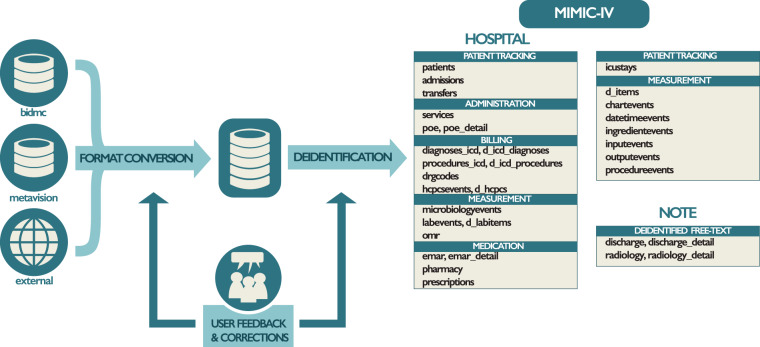
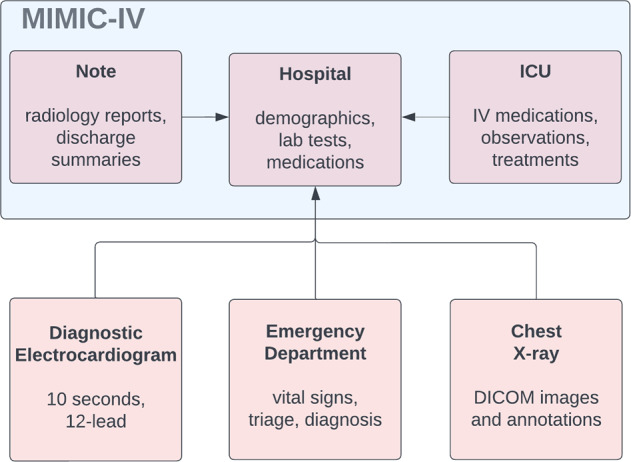
- MIMIC-IV was designed to be backward compatible with MIMIC-III while minimizing processing and organizing data into three modules: hosp, icu, and note.
## Methods
- Collaborative database construction from BIDMC clinical data, transformed and deidentified for release under IRB waiver and data use agreement; the process had three steps: acquisition, transformation, and deidentification.
- Sample/data: all patients admitted to the emergency department or an ICU at BIDMC between 2008–2019, excluding patients younger than 18 at first visit or on a protected list; external coding systems and Massachusetts death records were added.
- Main analysis/workflow: custom SQL scripts to restructure data into relational modules, plus custom linkage algorithms for out-of-hospital mortality and deidentification algorithms for HIPAA identifiers and free text; validation used integrity, consistency, and deidentification checks.
## Limitations
- The paper states that out-of-hospital mortality is only available through linkage to state death records, and deaths are censored at one year from last hospital discharge, so null death dates only indicate survival up to that point.
- The text makes evident that some data are incomplete or unevenly available across modules and time periods (for example, eMAR was deployed hospital-wide only by 2016, and the note module contains only discharge summaries and radiology reports); this is an evident coverage limitation from the text.
- The paper notes that clinical data are “sporadic and noisy,” reflecting routine care rather than research collection; this is a general data-quality limitation stated in the background.
Model-written summary. Check it against the paper before relying on it.
Integrity signals
Registry
Cites
Statistics
Figures
Verification
Claims the paper makes
13 Valid · 3 Not valid · 3 Not checked · 110 Own results and interpretations
Every source the paper cites for this claim was checked and supports it.
In the paper
“Finally, we combined two published algorithms for removing PHI from free-text17,18.”
§ MIMIC-IV, a freely accessible electronic health record dataset > Methods > Deidentification
What the sources say
- Supportedcites [17] Neamatullah I Automated de-identification of free-text medical records BMC medical informatics and decision making 2008 8 1 17 10.1186/1472-6947-8-32 18652655 PMC2526997 source
The Methods sections describe this paper's published algorithm for identifying and removing PHI from free-text medical records. The citing authors' statement that they combined two algorithms describes their own method; this citation identifies one of the algorithms. (LLM, conf=0.92)
- Supportedcites [18] Johnson, A. E. W., Bulgarelli, L. & Pollard, T. J. Deidentification of free-text medical records using pre-trained bidirectional transformers. In Proceedings of the ACM Conference on Health, Inference, and Learning, 214–221 (2020). PMC8330601 34350426 source
The Introduction (page not available in our copy) presents this paper’s BERT model for deidentifying free-text health records and describes measuring how much PHI it removes. The citation can therefore identify one of the two published algorithms; this source need not establish that the citing authors combined them. (LLM, conf=0.91)
plain- Asserted: passes — The authors put it forward as true.
- Checkable: passes — It can be checked against evidence.
- Load-bearing: passes — The paper’s conclusions depend on it.
- Based: passes — The paper gives a reason why it holds.
- Supported
Every source the paper cites for this claim was checked and supports it.
In the paper
“Due to data quality concerns regarding the Social Security Death Master File (SSDMF)13, we did not attempt to link patients to the SSDMF for determining out-of-hospital mortality.”
§ MIMIC-IV, a freely accessible electronic health record dataset > Methods > Acquisition
What the sources say
- Supportedcites [13] Levin MA Lin H-M Prabhakar G McCormick PJ Egorova NN Alive or dead: Validity of the social security administration death master file after 2011 Health Serv Res 2019 51 24 33 10.1111/1475-6773.13069 PMC6338290 30520023 source
The Discussion states that the Death Master File is no longer a reliable single source for mortality data, including out-of-hospital deaths. The decision not to link patients is the citing authors’ own methodological choice; the citation supports the data-quality concern motivating it. (LLM, conf=0.93)
plainstates a cause- Asserted: passes — The authors put it forward as true.
- Checkable: passes — It can be checked against evidence.
- Load-bearing: passes — The paper’s conclusions depend on it.
- Based: passes — The paper gives a reason why it holds.
- Supported
The cited sources support only part of this claim — read each source’s verdict below.
In the paper
“To support research that spans the periods of MIMIC-III (2002–2008) and MIMIC-IV (2008–2019), we have published the MIMIC-III Clinical Database CareVue subset22.”
§ MIMIC-IV, a freely accessible electronic health record dataset > Data Records > Building on earlier versions of MIMIC
What the sources say
- Partly supportedcites [22] Johnson AEW Pollard TJ Mark RG 2022 R. G. Mimic-iii clinical database carevue subset (version 1.4) PhysioNet 10.13026/8a4q-w170 sourceExperimental — accuracy not yet measured
The Abstract says the subset was provided to simplify combining MIMIC-III with MIMIC-IV, and the publication record identifies the released dataset. However, the Background and Methods give the CareVue period as 2001–2008, not the claim’s 2002–2008; the Background confirms MIMIC-IV’s 2008–2019 period. (LLM, conf=0.84)
plainstates a cause- Asserted: passes — The authors put it forward as true.
- Checkable: passes — It can be checked against evidence.
- Load-bearing: passes — The paper’s conclusions depend on it.
- Based: passes — The paper gives a reason why it holds.
- Partly supported
In the paper
“Access to MIMIC-IV is provided via PhysioNet19.”
§ MIMIC-IV, a freely accessible electronic health record dataset > Data Records
What the sources say
- Not checked — no full text of the sourcecites [19] Goldberger AL Physiobank, physiotoolkit, and physionet: components of a new research resource for complex physiologic signals circulation 2000 101 e215 e220 10.1161/01.CIR.101.23.e215 10851218 source
- Asserted: passes — The authors put it forward as true.
- Checkable: passes — It can be checked against evidence.
- Load-bearing: unclear — It is unclear whether the paper’s conclusions depend on it.
- Based: passes — The paper gives a reason why it holds.
A result the paper states — it cites no source for it, so there is none to check. The quote shows it is in the paper.
In the paper
“the d_icd_diagnoses and d_icd_procedures tables contain all codes which were valid at any point during the 2008–2019 time period.”
§ MIMIC-IV, a freely accessible electronic health record dataset > Data Records > Hospital module (hosp)
plain- Asserted: passes — The authors put it forward as true.
- Checkable: passes — It can be checked against evidence.
- Load-bearing: unclear — It is unclear whether the paper’s conclusions depend on it.
- Based: passes — The paper gives a reason why it holds.
29 more claims
Create a free account to see all 129 claims and every source verdict.
- Probably not a substantial claim. 84
- It may state two separate claims as one. 30
Claims other papers make about this one
Each is checked against this paper’s own text: does it say what the citing paper says it does?
The source backs part of the claim, not all of it — or backs it for a different population, condition or comparison.
In the citing paper
“We conducted a study using the publicly available MIMIC-IV dataset, which comprises 431,231 unique hospital admissions from 299,712 patients admitted to an ICU or the ED of the Beth Israel Deaconess Medical Center in Boston, Massachusetts27.”
From DRG-LLaMA : tuning LLaMA model to predict diagnosis-related group for hospitalized patients (2024) · cites this paper as [27]
Experimental — accuracy not yet measuredThe source backs part of the claim, not all of it — or backs it for a different population, condition or comparison.
In the citing paper
“For instance, the MIMIC-IV [148] includes a limited range of modalities, including clinical notes, medical images (chest x-ray Digital Imaging and Communications in Medicine [DICM] images), and time series (diagnostic electrocardiogram and patient records), making it a valuable but constrained resource for training medical M-LLMs.”
From Multimodal Large Language Models in Health Care: Applications, Challenges, and Future Outlook. (2024) · cites this paper as [148]
Experimental — accuracy not yet measuredThe source backs part of the claim, not all of it — or backs it for a different population, condition or comparison.
In the citing paper
“Existing multimodal medical data sets available for public use [84,85,148] are often relatively small in scale and demand the consolidation of numerous resources.”
From Multimodal Large Language Models in Health Care: Applications, Challenges, and Future Outlook. (2024) · cites this paper as [148]
Experimental — accuracy not yet measuredThe source backs part of the claim, not all of it — or backs it for a different population, condition or comparison.
In the citing paper
“- MIMIC-IV: A comprehensive, de-identified EHR dataset supporting tasks such as summarization, question answering, and document retrieval [17].”
From Retrieval-Augmented Generation (RAG) in Healthcare: A Comprehensive Review (2025) · cites this paper as [17]
Experimental — accuracy not yet measuredThe cited source says what the claim attributes to it.
In the citing paper
“In order to build agents that are grounded in medically relevant situations, we use a random sample of diagnostic questions from the US Medical Licensing Exam (USMLE), from deidentified electronic health records (MIMIC-IV)16, and from the New England Journal of Medicine (NEJM) case challenges.”
From AgentClinic: a multimodal benchmark for tool-using clinical AI agents (2026) · cites this paper as [16]
4 more claims about this paper
Create a free account to see every claim other papers make about this one.
Citations
Cites
Goldberger, A. L., Amaral, L. A. N., Glass, L., Hausdorff, J. M., Ivanov, P. C., Mark, R. G., Mietus, J. E., Moody, G. B., Peng, C.-K., & Stanley, H. E. (2000) · Circulation · doi:10.1161/01.cir.101.23.e215 · Cited by 14,809
Self-citationMIMIC-III, a freely accessible critical care database
Johnson, A. E. W., Pollard, T. J., Shen, L., Lehman, L.-W. H., Feng, M., Ghassemi, M., Moody, B., Szolovits, P., Anthony Celi, L., & Mark, R. G. (2016) · Scientific Data · doi:10.1038/sdata.2016.35 · Cited by 8,141 · cited 1×
“More recently, MIMIC-III was published in 2015 and significantly expanded MIMIC-II, containing data for over 40,000 patients 3 .”
MethodSelf-citationPollard, T. J., Johnson, A. E. W., Raffa, J. D., Celi, L. A., Mark, R. G., & Badawi, O. (2018) · Scientific Data · doi:10.1038/sdata.2018.178 · Cited by 1,993 · cited 2×
“0 comprises of 200,859 stays at ICUs and step-down units across 208 hospitals in the continental United States 4 .”
BackgroundSelf-citationSaeed, M., Villarroel, M., Reisner, A. T., Clifford, G., Lehman, L.-W., Moody, G., Heldt, T., Kyaw, T. H., Moody, B., & Mark, R. G. (2011) · Critical Care Medicine · doi:10.1097/ccm.0b013e31820a92c6 · Cited by 1,162
Self-citationBest Practices for Scientific Computing
Wilson, G., Aruliah, D. A., Brown, C. T., Chue Hong, N. P., Davis, M., Guy, R. T., Haddock, S. H. D., Huff, K. D., Mitchell, I. M., Plumbley, M. D., et al. (2014) · PLoS Biology · doi:10.1371/journal.pbio.1001745 · Cited by 723 · cited 1×
“The creation of MIMIC-IV followed best practices in scientific computing 23 .”
MethodJohnson, A., Bulgarelli, L., Pollard, T., Gow, B., Moody, B., Horng, S., Celi, L. A., & Mark, R. (2024) · PhysioNet · doi:10.13026/07hj-2a80 · Cited by 524
Self-citationJohnson, A., Bulgarelli, L., Pollard, T., Horng, S., Celi, L. A., & Mark, R. (2023) · PhysioNet · doi:10.13026/s6n6-xd98 · Cited by 524
Self-citationEarly prediction of circulatory failure in the intensive care unit using machine learning
Hyland, S. L., Faltys, M., Hüser, M., Lyu, X., Gumbsch, T., Esteban, C., Bock, C., Horn, M., Moor, M., Rieck, B., et al. (2020) · Nature Medicine · doi:10.1038/s41591-020-0789-4 · Cited by 477 · cited 1×
“The HiRID database contains high-resolution data for almost 34,000 admissions between 2008–2016 at Bern University Hospital in Switzerland 6,7 .”
BackgroundThe MIMIC Code Repository: enabling reproducibility in critical care research
Johnson, A. E. W., Stone, D. J., Celi, L. A., & Pollard, T. J. (2018) · Journal of the American Medical Informatics Association · doi:10.1093/jamia/ocx084 · Cited by 442 · cited 1×
“The MIMIC Code Repository was originally created for MIMIC-III to enable researchers to share and reuse code 24 .”
MethodSelf-citationAutomated de-identification of free-text medical records
Neamatullah, I., Douglass, M. M., Lehman, L.-W. H., Reisner, A., Villarroel, M., Long, W. J., Szolovits, P., Moody, G. B., Mark, R. G., & Clifford, G. D. (2008) · BMC Medical Informatics and Decision Making · doi:10.1186/1472-6947-8-32 · Cited by 413
Self-citation
Cited by
Items 2,801–2,900 of 3,269
Maqsood, S., Belousovienė, E., Tamošuitis, T., & Maskeliūnas, R. (2026) · Reviews in Endocrine and Metabolic Disorders · doi:10.1007/s11154-026-10068-z
Advancements in Transformers for Medication Prescription: A Comprehensive Literature Review
Bukhari, S. U. H. S., Shah, M. V., Chowdhury, M. J. H., et al. (2026) · Lecture notes in networks and systems · doi:10.1007/978-3-032-20897-2_42
Yeo, J., So, E. S., & Youm, S. (2026) · International Journal of Medical Informatics · doi:10.1016/j.ijmedinf.2026.106597 · Cited by 1
Remoundou, K., Koumantakis, E., & Roussaki, I. G. (2026) · Healthcare · doi:10.3390/healthcare14142067 · Cited by 1
“The dataset used for this analysis and training is the MIMIC-IV relational database for patients admitted to a tertiary academic medical center in Boston, MA, USA [25].”
Pan, J., Chang, T., Lyu, M., Meng, W., Wang, Q., Ma, Y., Chen, Z., Li, X., Sun, C., Liang, R., et al. (2026) · Journal of Healthcare Informatics Research · doi:10.1007/s41666-026-00248-6 · Cited by 1
“Among the 21 studies utilizing MIMIC data, the majority employed MIMIC-III [ 74], MIMIC-IV [75], or MIMIC-CXR [ 76 ] with only a small number using other variations.”
Chen, M., Luo, F., Xie, J., & Ren, Q. (2026) · Bioengineering · doi:10.3390/bioengineering13070794
“This standardised data extraction methodology follows the MIMIC-IV database schema described by Johnson et al. [14] and aligns with critical care research data harmonisation protocols established by Pollard et al. [15].”
Zhu, X., Li, Y., Lin, C., et al. (2026) · Medicine · doi:10.1097/md.0000000000049549
Swiech, J., Kamrowska, M., Apanasewicz, K., Kopacki, F., Szczeblewska, W., Jaskot, D., Marzec, J., Kita, N., Sztenc, N., & Broniszewska, P. (2026) · International Journal of Innovative Technologies in Social Science · doi:10.31435/ijitss.2(50).2026.5480
Liu, L., Huang, Z., Gui, B., et al. (2026) · Research Square · doi:10.21203/rs.3.rs-9994402/v1
Wei, S. T., Hu, X., Li, H., et al. (2026) · BMC Cardiovascular Disorders · doi:10.1186/s12872-026-06235-4
“As a well-established, publicly available clinical repository, the MIMIC-IV database stores de-identified medical data linked to more than 40,000 ICU admissions at Beth Israel Dea-coness Medical Center in Boston, Massachusetts [20].”
Si, S., Wosik, J., & He, X. (2026) · Lecture notes in computer science · doi:10.1007/978-981-92-3492-9_11
Zhao, X., Wang, B., Diao, S.-T., Yangyanqiu, W., Cao, M., Chen, Y., Zhu, T.-Y., Liufu, R., Li, S., Wang, C., et al. (2026) · Journal of Intensive Care · doi:10.1186/s40560-026-00912-4
“The MIMIC-IV database, maintained by the Massachusetts Institute of Technology, contains de-identified clinical data of over 94,000 ICU admissions admitted to Beth Israel Deaconess Medical Center between 2008 and 2022 [11].”
Guellil, I., Andres, S., Anand, A., Guthrie, B., Rahman, F., Hasan, A., Zhang, H., Wu, H., & Alex, B. (2026) · Frontiers in Digital Health · doi:10.3389/fdgth.2026.1591050
“Additionally, as future work, we plan to assess cross-domain generalisation by applying our annotation guidelines to the MIMIC-IV dataset (35).”
Cheng, Z., Ma, X., Duan, W., Mou, Z.-Y., & Liang, Z. (2026) · Frontiers in Digital Health · doi:10.3389/fdgth.2026.1881138
“1) is a large, single-center public database containing data from all ICU and emergency department patients at Beth Israel Deaconess Medical Center in Boston, Massachusetts, USA, between 2008 and 2019 (8).”
Enhancing stratification for survival analyses across standardized data sources
Shubov, M., Beernink, M., Carus, J., Wiederhold, A. J., & Gundler, C. (2026) · BMC Medical Informatics and Decision Making · doi:10.1186/s12911-026-03666-z
“2, the latest iteration released in 2023, includes over 431,231 hospital admissions and 73,181 ICU admissions [19].”
Zeng, Q., Guan, C., Chen, J., & Chen, L. (2026) · Frontiers in Pharmacology · doi:10.3389/fphar.2026.1829764
Is Preoperative Serum Bicarbonate an Undervalued Risk Factor in Cardiac Surgery?
Chorney, W., & Hinchion, J. (2026) · Journal of Cardiovascular Translational Research · doi:10.1007/s12265-026-10791-7
Ayalew, A. M., Seppänen, T., & Oussalah, M. (2026) · ACM SIGIR International Conference on Theory of Information Retrieval (ICTIR) · doi:10.1145/3805713.3820416 · Cited by 1
Kanter, J., Kelshiker, A. I., Martínez‐Camblor, P., Glaser, A. C., Buhl, L. K., Ogilvy, C. S., & Boone, M. D. (2026) · BMC Neurology · doi:10.1186/s12883-026-05175-y
“The MIMIC (Medical Information Mart for Intensive Care) database is a freely accessible, de-identified electronic health record repository derived from patients treated at Beth Israel Deaconess Medical Center (BIDMC), a quaternary academic medical center in Boston, Massachusetts [12, 13].”
Multimodal Routing for Interpretable, Robust, and Auditable Clinical Prediction
Hooman, N., Wu, Z., Larson, E. C., & Gupta, M. (2026) · IEEE/ACM Conference on Connected Health: Applications, Systems and Engineering Technologies · doi:10.1109/chase69719.2026.00010 · Cited by 4
“We evaluate our proposed method on the MIMIC-IV EHR dataset [12], which contains ICU stays with three modalities: structured longitudinal data ( 𝐿 ), clinical notes ( 𝑁 ) from the MIMIC-IV-Note module [11], and chest X-ray images ( 𝐼 ) from MIMIC-CXR [10].”
Han, D., Shu, X., Hu, Y., Zou, H., Wang, C., & Peng, X. (2026) · Computational and Structural Biotechnology Journal · doi:10.34133/csbj.0185 · Cited by 1
“…database (Beth Israel Deaconess Medical Center, USA) includes infection episodes but is not structured as a dedicated HAI surveillance resource [ 17 ]; the OUTPAT-RESIST dataset provides community-acquired resistance patterns from European primary care [ 18 ]; and the CHINET annual reports…”
Wang, T., Cai, G., Guo, L., Chen, X., Tang, Y., & An, Y. (2026) · Lecture notes in computer science · doi:10.1007/978-981-92-3719-7_7
Zhao, Y., Li, J., & Cui, X. (2026) · Research Square · doi:10.21203/rs.3.rs-10016112/v1
Kolavennu, G. P., Shi, Y., Suo, K., & Nguyen, T. (2026) · Lecture notes in computer science · doi:10.1007/978-981-92-2891-1_16
Deng, Y., Kang, J., Guo, X., Li, S., Liang, H., Tang, L., & Liu, X. (2026) · Nephrology · doi:10.1111/nep.70232
Dai, J., Huang, Q., Xu, W., et al. (2026) · International Journal of Medical Informatics · doi:10.1016/j.ijmedinf.2026.106600
Zhang, Z., Xiao, C., Ma, J., Zhang, T., Gao, Y., & Qian, H. (2026) · Lecture notes in computer science · doi:10.1007/978-981-92-3485-1_25
Zhang, G., An, L., Hang, C., et al. (2026) · Intelligent Medicine · doi:10.1016/j.imed.2026.07.004
Knowledge Graphs vs. SQL over Structured EHR Data
Anagnou, L., Vezakis, A., Vezakis, I., Kakkos, I., Πετροπούλου, Ο., & Matsopoulos, G. K. (2026) · Future Internet · doi:10.3390/fi18070365
Fathi, M., Moghaddam, N. M., Fathi, M., Hajiesmaeili, M., Nooraei, N., Alamdari, N. M., Jame, S. Z. B., & Moghadam, H. M. (2026) · PLoS ONE · doi:10.1371/journal.pone.0352314
Pan, G., Fan, J., Wang, W., et al. (2026) · Journal of Clinical Medicine · doi:10.3390/jcm15145599
Asynchronous proximal federated aggregation for heterogeneous healthcare networks
Sreelakshmi, M., & Delhibabu, R. (2026) · Frontiers in Digital Health · doi:10.3389/fdgth.2026.1879670
“If a wearable device only learns from the physiological signals of its specific user, the resulting model becomes deeply overfit to that single individual (10).”
Hu, Z. Y., Kong, X., Chen, J., Wang, S., Kang, Z., & Huang, X. (2026) · Medicine · doi:10.1097/md.0000000000049796
Wasi, A. T., Anik, M. A., Islam, M. S., & Ahsan, M. M. (2026) · IISE Transactions on Healthcare Systems Engineering · doi:10.1080/24725579.2026.2703103
Yarosh, D., Karplyuk, Y., & Vountesmery, Y. (2026) · IEEE International Conference on Electronics and Nanotechnology (ELNANO) · doi:10.1109/elnano63396.2026.11601736
“The clinical data were obtained from open-access intensive care unit databases containing large, time-stamped physiological measurements (e.g., MIMIC-IV and eICU-CRD) [15,16].”
Gelbach, P. E., Edwards, R. A., Fukuda, Y., & Alexander, J. (2026) · American Heart Journal Plus Cardiology Research and Practice · doi:10.1016/j.ahjo.2026.100838
“In this study, we use the MIMIC-IV database to identify latent MAP-derived subgroups among HF patients in the ICU and then determine subgroup-specific predictors of 28-day and in-hospital mortality using random forest and logistic regression modeling [8].”
InfluentialGhazouani, A., Ayadi, M. G., & Achour, H. (2026) · 2026 Intelligence in Business and Industry (IBI) · doi:10.1109/ibi68858.2026.11604064
Niu, Z., Du, C., Wang, B., Song, Y., Xiong, J., & Li, L. (2026) · Lecture notes in computer science · doi:10.1007/978-981-92-3426-4_36
CLEAR-LOS: Transparent ICU Length of Stay Prediction
Das, D., Adams, S. D., Corva, D. M., Bucknall, T. K., & Kouzani, A. Z. (2025) · IEEE Conference on Engineering Informatics (ICEI) · doi:10.1109/icei68356.2025.11603743
“1 database (released on October 11, 2024), a large de-identified dataset comprising records of patients admitted to the emergency and ICU departments at Beth Israel Deaconess Medical Center, Boston, MA, between 2008 and 2022 [30].”
Li, Z. G., Hu, C., Zhuang, W., Dong, Z., Liu, H., & Li, W. (2026) · Biomedical Signal Processing and Control · doi:10.1016/j.bspc.2026.111066 · Cited by 1
Chen, J., Liang, Y., Wu, J., Li, H., Wang, X., Qin, F., & Meng, Z. (2026) · IJC Heart & Vasculature · doi:10.1016/j.ijcha.2026.101977
“It is a large-scale, free, open-access critical care database [28], jointly developed by the Massachusetts Institute of Technology and Beth Israel Deaconess Medical Center (BIDMC).”
Du, S., Zhang, S., Lai, W., Wu, Q., Cui, S., Xu, S., & Hu, B. (2026) · Journal of Intensive Care · doi:10.1186/s40560-026-00917-z
Wan, J., Zhang, C., Lin, K., Li, T., Huang, Y., & Ye, X. (2026) · Journal of Clinical Medicine · doi:10.3390/jcm15145706
“Therefore, we used the MIMIC-IV database [20,21] to identify adult patients with surgical sepsis and AKI and systematically analyzed the relationship between PNI at ICU admission and 90-day all-cause mortality, with particular emphasis on its dose–response pattern and stability across subgroups.”
InfluentialShao, L., Li, Y., Xu, C., Tai, H., Wang, L. Q., & Shi, J. (2026) · Research Square · doi:10.21203/rs.3.rs-10050782/v1
İşleyen, H. B., Yavuz, S. T., Bulut, S., Kızkapan, F., Alioglu, C., sunger, E., & Okuyan, E. (2026) · Cardio-Oncology · doi:10.1186/s40959-026-00548-1
Liu, V. B., Sue, L. Y., Byrd, T. F., & Wu, Y. N. (2026) · Intelligence-Based Medicine · doi:10.1016/j.ibmed.2026.100432
Morsy, A., Peters, C. J., Miller, L., et al. (2026) · Journal of Medical Internet Research · doi:10.2196/96771
Xue, L., Chayko, M., & Singh, V. K. (2026) · Journal of Medical Internet Research · doi:10.2196/91089
“The dataset was derived from deidentified EHR notes in the MIMIC-IV database [27].”
InfluentialDockery, A., Abraha, G., Musa, M. R. O., Ariahu, N., & Nnorom, F. I. (2026) · Cureus · doi:10.7759/cureus.113156
“…Mart for Intensive Care IV (MIMIC-IV) is a large, publicly available electronic health record database containing detailed demographic, clinical, diagnostic, treatment, and outcome information for patients admitted to ICUs at Beth Israel Deaconess Medical Center in the United States [20].”
Dong, J. I. A. N. Z. E., Yang, J., Jin, Z., Jiang, Y., Li, C., Wang, D., 马华崇, & Ji, Z. (2026) · Frontiers in Cardiovascular Medicine · doi:10.3389/fcvm.2026.1873683
“Additionally, patient data from the Medical Information Mart for Intensive Care IV (MIMIC-IV) was extracted, following the same inclusion and exclusion criteria (30).”
Mamandipoor, B., Krause, M., Korti, P., Ch, H., & Gabriel, R. A. (2026) · Journal of Clinical Monitoring and Computing · doi:10.1007/s10877-026-01470-8
“We conducted a retrospective cohort study using the Medical Information Mart for Intensive Care IV (MIMIC-IV) database, a large, publicly available, de-identified electronic health record dataset from the Beth Israel Deaconess Medical Center in Boston, Massachusetts [6].”
Ballesteros-Rodríguez, A., Gonzalez-Garcia, L., Sicilia, M., & García‐Barriocanal, E. (2026) · Electronics · doi:10.3390/electronics15153252 · Cited by 1
Chen, M., Xu, J., Guo, Y., Shen, Y. F., Chen, Q., Wang, X., Jiang, H., & Dai, L. (2026) · Journal of Thrombosis and Thrombolysis · doi:10.1007/s11239-026-03361-w
Risk-Aware Prioritization of Pharmacy Prescription Queues
Mohandas, P., Kumar, S. K. S., & Ramesh, S. K. (2026) · International Conference on Electronics, Computers and Artificial Intelligence (ECAI) · doi:10.1109/ecai69016.2026.11613686
“2 [12]– [14]: 18 , 087 prescriptions across 100 patients.”
Liao, S., Nie, A., Zhang, S., Zhang, Z.-S., Zhang, R. C., Su, X., & Li, J. (2026) · Asian Nursing Research · doi:10.1016/j.anr.2026.07.002 · Cited by 1
Shu, Q., Tang, M., Si, Q., Xu, J. F., & Li, Y. (2026) · Frontiers in Nutrition · doi:10.3389/fnut.2026.1864125
Otabor, E., Lam, J., Alomari, L., et al. (2026) · American Heart Journal Plus Cardiology Research and Practice · doi:10.1016/j.ahjo.2026.100841
Ersoy, P., & Erşahin, M. (2026) · International Conference on Electronics, Computers and Artificial Intelligence (ECAI) · doi:10.1109/ecai69016.2026.11613164
“The framework is demonstrated on MIMIC-IV [46], a publicly available, de-identified clinical dataset containing intensive care and hospital records collected over multiple years and widely used for reproducible clinical prediction research [47].”
Syed, M. M., Silaghi, M., Abujar, S., et al. (2026) · IEEE International Conference on Information Reuse and Integration for Data Science (IRI) · doi:10.1109/iri69576.2026.00090
“D. Experiment 4: Clinical β Sensitivity Analysis 1) Setup: We construct a clinical temporal knowledge graph from MIMIC-IV [18], comprising 100 patients with 127,406 timestamped events across four categories: vital signs (78,441 events), lab results (26,172), prescriptions (18,087), and diagnoses…”
Chen, X., Ying, S., Yuan, X., et al. (2026) · Emergency Medicine International · doi:10.1155/emmi/1396680
“We therefore assessed the prognostic value of TBAR in critically ill patients with GIB using the MIMIC-IV database and validated the fndings in an independent multicentre cohort from the eICU-CRD [18, 19].”
Chen, Y., Zhang, Q., Liu, W., Liu, Y., Lu, J., Wu, L., & Wen, J. (2026) · Information Fusion · doi:10.1016/j.inffus.2026.104654 · Cited by 1
Gyimah, C., Pudasaini, P., LeMahieu, A., et al. (2026) · Infectious Disease Reports · doi:10.3390/idr18040077
“MIMIC-IV is a large, publicly available, de-identified database containing detailed electronic health record data from patients admitted to Beth Israel Deaconess Medical Center, including demographics, diagnoses, laboratory measurements, and clinical interventions [24,25].”
Context-dependent composition of the prognostic nutritional index in heart failurePreprint
Yu, Y., Maituxun, M., Wen, Z., Youlidaxi, A., Adeli, W., Gao, W., Luo, M., Yang, T., Wu, W., Hu, Z., et al. (2026) · Research Square · doi:10.21203/rs.3.rs-10045520/v1
Mou, T., Li, Q., Zhou, J., Jin, H.-J., Zheng, X.-T., & Li, S. (2026) · Open Heart · doi:10.1136/openhrt-2026-004236
Yu, T. (2026) · Research Square · doi:10.21203/rs.3.rs-10308884/v1
Li, G., & Wei, W. (2026) · Frontiers in Neurology · doi:10.3389/fneur.2026.1889258
Personalized Service Prediction Models: From Tourist Behavior to Patient Stratification
Gu, S. (2026) · Health Medicine and Therapeutics · doi:10.63313/hmt.9032
Contamination Percolation in Multi-Agent LLM Systems: A Measurement Framework and Benchmark
Sharma, A. K. (2026) · IEEE Access · doi:10.1109/access.2026.3717722
Assessing Utility-Leakage Trade-offs in Coreset Selection for Chest X-Ray Embeddings
Marzullo, A., Cajas, S. A., Celi, L. A., & Momi, E. D. (2026) · ACM International Conference on Bioinformatics, Computational Biology, and Health Informatics (ACM-BCB) · doi:10.1145/3807503.3819381
Self-citationAssessing Subgroup Fairness in Clinical Missing Data Imputation: A Case Study Using MIMIC-IV
Marzullo, A., Dafalla, A. A. M., & Momi, E. D. (2026) · ACM International Conference on Bioinformatics, Computational Biology, and Health Informatics (ACM-BCB) · doi:10.1145/3807503.3819459
Vallée, A. (2026) · PLOS Digital Health · doi:10.1371/journal.pdig.0001610 · Cited by 1
“…test beds: MIMIC-IV offers longitudinal electronic health record data including measurements, treatments, procedures, diagnoses, and clinical notes [60]; eICU-CRD provides a multicenter ICU database suitable for cross-site validation [61]; and MIMIC-CXR links chest radiographs with free-text…”
Yang, S., Ren, Z.-H., Li, Y.-R., Zhao, Z.-H., Sun, C.-S., Liu, L., Jin, L., Wang, L., & Hou, Z.-Y. (2026) · Frontiers in Medicine · doi:10.3389/fmed.2026.1880921
“MIMIC-IV served as the sole derivation cohort for phenotype development.”
Multimodal Fusion and Adaptive Learning for Cardiopulmonary Classification
Abed, M. T., & Zhao, X. (2026) · ACM International Conference on Bioinformatics, Computational Biology, and Health Informatics (ACM-BCB) · doi:10.1145/3807503.3819467
“We evaluate our multimodal framework on Symile-MIMIC, a large-scale clinical dataset derived from MIMIC-IV, MIMIC-IV-ECG, and MIMIC-CXR-JPG [4, 10, 11, 20].”
Zhang, H., Zhu, L., Guo, X., Hou, B., Hu, Y., Gao, X., Cui, Y., Zhao, Y., She, Z., & Zhu, L. (2026) · The Journal of Cardiovascular Aging · doi:10.20517/jca.2026.13
Yao, J., Lin, C., Xu, Q., et al. (2026) · Frontiers in Cardiovascular Medicine · doi:10.3389/fcvm.2026.1908251
Fuchigami, Y. (2026) · Artificial Intelligence in Emergency Medicine · doi:10.1016/j.aiemed.2026.100031
Gu, S. (2026) · Journal of Computer Science and Frontier Technologies · doi:10.63313/jcsft.9092
Feng, J., Zhang, H., Gu, J., He, C., Zhan, M., San, H., & Wei, B. (2026) · Computer Methods and Programs in Biomedicine · doi:10.1016/j.cmpb.2026.109572
Xi, D., Yang, Y., Liu, S., Li, C., & Du, W. (2026) · Journal of Intensive Care Medicine · doi:10.1177/08850666261446558
Qiu, D., Li, G., Wang, Z., Wang, L., Wang, L., & Dong, Y. (2026) · CNS Neuroscience & Therapeutics · doi:10.1002/cns.71067
“Overlapping MIMIC-III and MIMIC-IV cases were excluded by the database providers [20–24].”
Ali, H. (2026) · Informatics · doi:10.3390/informatics13080124 · Cited by 1
“In critical care, AI-based models have been developed for mortality prediction, sepsis detection, readmission risk, respiratory deterioration, acute kidney injury, length of stay, and treatment-response estimation [3,5,6].”
Gu, H., Shi, X., Duan, Y., & Zhang, J. (2026) · Research Square · doi:10.21203/rs.3.rs-10407148/v1
Liu, L.-L., Han, L., & Xiang, Z. (2026) · JAMIA Open · doi:10.1093/jamiaopen/ooag148
“This study utilized data from the Medical Information Mart for Intensive Care IV (MIMIC-IV) database, version 3.1, 14 and eICU Collaborative Research Database (eICU-CRD).”
InfluentialAloui, Z., & Landry, C. (2026) · Artery Research · doi:10.1007/s44200-026-00120-3
“…we chose to rely on this small dataset, as commonly available datasets that provide continuous BP waveforms over extended periods—such as MIMIC [28]—are collected in hospital settings and do not reflect the natural BP variations observed in real-world scenarios where hypertension is typically…”
TabHealth: Towards a Self-Supervised Tabular Foundation Model for Smart Healthcare
Campana, M. G., Anastasi, G., Pieroni, S., Franchini, M., Molinaro, S., & Delmastro, F. (2026) · IEEE International Conference on Smart Computing · doi:10.1109/smartcomp69968.2026.00015
“In particular, MIMIC-III and MIMIC-IV provide richly annotated, anonymous electronic health record data from intensive care and hospital settings, including demographics, vital signs, laboratory results, procedures, medications, and mortality outcomes [22], [23].”
Zhang, Z., Su, Y., & Tang, S. (2026) · Journal of the American Heart Association · doi:10.1161/jaha.126.049077
Shahu, S., & Pimple, J. (2026) · Research Square · doi:10.21203/rs.3.rs-10508429/v1
Zhang, Y., & Wang, H. (2026) · Research Square · doi:10.21203/rs.3.rs-10255773/v1
ToxicFreeMed: BERT-enhanced BPR algorithm for toxic-free medication recommendation
Davidopoulos, S., Symeonidis, P., Andras, C., Manolopoulos, Y., & Danilatou, V. (2026) · Health Information Science and Systems · doi:10.1007/s13755-026-00475-6 · Cited by 1
Growing Your Data: A Data Synthesis Approach for Irregular Time Series Forecasting
Wang, T., Chen, X., Wang, Z., & Ding, Y. (2026) · Lecture notes in computer science · doi:10.1007/978-3-032-31654-7_29
Effect of evaluation prompt strategies on LLM-as-a-judge reliability in critical care
Yan, J.-Y., Chan, W.-S., Chiu, C., Chao, A., Hsiao, P., Ku, S., & Yeh, Y. (2026) · Anaesthesiology Intensive Therapy · doi:10.5114/ait/221943
“…90 structured clinical reports (hereafter ‘LLM-generat-ed responses’) produced by GPT-4o in our parent study (Yeh et al ., 2026, under review), in which we developed an XGBoost mortality prediction model trained on the Medical Information Mart for Intensive Care IV (MIMIC-IV, version 3.1) [17-19].”
InfluentialXu, X., Shen, J., & Zhang, Y. (2026) · Science Progress · doi:10.1177/00368504261475460
Sun, F., Liu, Y., Kuo, L., Hu, T.-Y., Cheng, K.-H., Chen, H.-T., Chang, P.-J., Wu, M.-C., Yeh, H., & Wu, K.-P. (2026) · BMJ Quality & Safety · doi:10.1136/bmjqs-2026-020104
Bashatah, J., & Bashatah, A. (2026) · Healthcare · doi:10.3390/healthcare14152344 · Cited by 1
“1 [12], a publicly available electronic health record database covering over 94,000 ICU admissions, to evaluate three SOP configurations: (1) a fixed nurse-to-patient ratio protocol, (2) an acuity-adjusted assignment protocol, and (3) a dynamic escalation protocol.”
InfluentialAyadi, M. G. (2026) · Network Modeling Analysis in Health Informatics and Bioinformatics · doi:10.1007/s13721-026-00843-y
Mamandipoor, B., Hsu, C.-N., Krause, M., Schmidt, U. H., & Gabriel, R. A. (2026) · Anesthesiology · doi:10.1097/aln.0000000000006294 · Cited by 5
Sandlin, D., Arze, S. E., Lane, J., Bhakta, A., Walker, J., Rayanki, A., Williamson, J. R., Hoot, N. R., & Wang, H. (2026) · Healthcare · doi:10.3390/healthcare14152394
“MIMIC-IV is a publicly available, de-identified dataset containing detailed health records of over 200,000 ED and intensive care unit (ICU) encounters from the Beth Israel Deaconess Medical Center (Boston, MA, USA) between 2008 and 2019 [25].”
Jiang, W., Ma, L., Elashhab, M., et al. (2026) · Seminars in Thrombosis and Hemostasis · doi:10.1055/a-2927-6855
Yu, S., He, Y., Li, P., Wu, C., Zhang, P., Li, J., & Tian, Y. (2026) · Intelligent Medicine · doi:10.1016/j.imed.2026.08.001
Chu, Q. C., Do, T. T., & Nguyễn, V. H. (2026) · Journal of Clinical Neuroscience · doi:10.1016/j.jocn.2026.112227
Metadata
- Authors
- Johnson, A. E. W., Bulgarelli, L., Shen, L., Gayles, A., Shammout, A., Horng, S., Pollard, T. J., Hao, S., Moody, B., Gow, B., Lehman, L.-W. H., Celi, L. A., & Mark, R. G.
- Affiliations
- Hospital for Sick Children (CA)
- Massachusetts Institute of Technology (US)
- Beth Israel Deaconess Medical Center (US)
- Corresponding author
- Johnson, Alistair E. W.
- ORCID
- Venue
- Scientific Data
- Published
- 2023-01-03
- Volume
- 10
- Issue
- 1
- Pages
- 1-1
- ISSN
- 2052-4463 (ISSN-L)
- PMC
- PMC9810617
- OpenAlex
- W4313439128
- Semantic Scholar
- 5425de16356015c2f26d2a50684c6c46d6998f51
- Cited by
- 3,401
- References
- 25
- Citations by year
- 2026: 1421 · 2025: 1175 · 2024: 649 · 2023: 154
- Type
- data paper
- Language
- en
- Update notices
- Open access
- gold
- doi.org
- Licence
- cc-by
- creativecommons.org/licenses/by/4.0 (tdm)
- creativecommons.org/licenses/by/4.0 (vor)
- Locations
- Scientific Data (publishedVersion, cc-by)
- PubMed Central (publishedVersion, cc-by)
- PubMed (publishedVersion)
- DOAJ (DOAJ: Directory of Open Access Journals) (submittedVersion, cc-by-sa)
- Funders
- U.S. Department of Health & Human Services | National Institutes of Health (NIH-R01-EB017205)
- Topics
- Physical Sciences › Computer Science › Artificial Intelligence › Machine Learning in Healthcare
- Health Sciences › Health Professions › Health Information Management › Electronic Health Records Systems
- Health Sciences › Health Professions › Health Information Management › Medical Coding and Health Information
- Keywords
- MIMIC-IV, electronic health records, clinical research data, hospital patient data, open data access, Beth Israel Deaconess Medical Center
- MeSH terms
- Hospitals, Humans, Databases, Factual, Electronic Health Records
About these checks
Registry, retraction, Cites and statistics results are computed, not judged, with one exception: a printed reference that no index lists is read once by a model before it counts as a citation error. Claims are extracted by a model and kept only when their quote appears verbatim in the text; each cited source is then checked, with a model’s help, for whether it says what the claim relies on. Those verdicts can be wrong — read the claim’s quote and the cited source before relying on one.
The claim verdicts this report counts are experimental: their accuracy is not yet measured.
A language model drew the claims from the paper on 2026-10-02, under version 3 of the claim definition (model deepseek-v4.1-flash, prompt extract-v3).
A second model labelled each claim on 2026-10-02 (model jev-1.13-20260917, definition revision gold-guideline-v0.2).
Cited sources are checked with a language model’s help (gpt-6-sol).
Statistics and arithmetic are recomputed, not judged.
Confidence bands are shown only for fields calibrated on our annotated test set. None is calibrated yet, so no band is shown.
What counts as a claim ›How we measure confidence ›How we check this ›
Are you an author, or do you see a problem with this page? Request a review
Data sources
Bibliographic data: Semantic Scholar, OpenAlex, Crossref.
Contains information from the Semantic Scholar Academic Graph Datasets, made available under the ODC Attribution License (ODC-BY 1.0).
Semantic Scholar’s data is described in: Kinney, R., et al. (2023). The Semantic Scholar Open Data Platform. arXiv:2301.10140.
