

MIMIC-IV, a freely accessible electronic health record dataset
Open accessThe DOI matches its Crossref record; 28 of the 28 references it cites were found in a registry or an index; 15 of the 20 sources its claims cite were checked for support.
Abstract
Digital data collection during routine clinical practice is now ubiquitous within hospitals. The data contains valuable information on the care of patients and their response to treatments, offering exciting opportunities for research. Typically, data are stored within archival systems that are not intended to support research. These systems are often inaccessible to researchers and structured for optimal storage, rather than interpretability and analysis. Here we present MIMIC-IV, a publicly available database sourced from the electronic health record of the Beth Israel Deaconess Medical Center. Information available includes patient measurements, orders, diagnoses, procedures, treatments, and deidentified free-text clinical notes. MIMIC-IV is intended to support a wide array of research studies and educational material, helping to reduce barriers to conducting clinical research.
Overview
CoChat Summary
## TL;DR
MIMIC-IV is a publicly available, deidentified electronic health record database from Beth Israel Deaconess Medical Center designed to support research, education, and technology development. It covers hospital and ICU care from 2008–2019 and adds modular structured data plus free-text clinical notes.
## Key findings
- The database includes patient measurements, orders, diagnoses, procedures, treatments, and deidentified free-text clinical notes, and is available through PhysioNet.
- The clinical cohort includes patients admitted to the emergency department or an ICU between 2008–2019; after exclusions, the authors linked 65,805 of 150,832 unique individuals (43.6%) to Massachusetts state death records.
- The paper reports that 51,022/65,803 (77.5%) of the successful death-record links were exact matches on last name, date of birth, and social security number; 11,634/65,803 (17.7%) were exact last name and date of birth plus approximate first name.
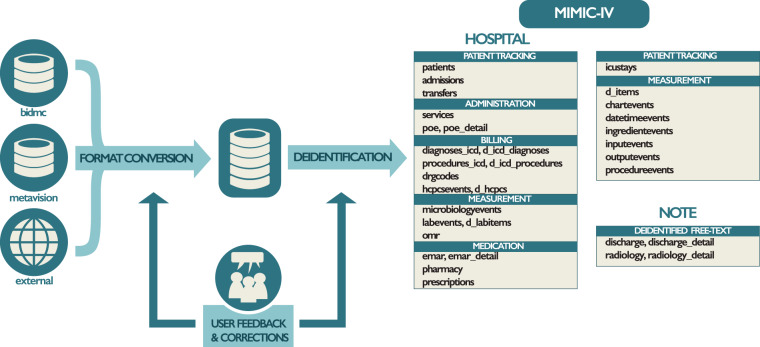
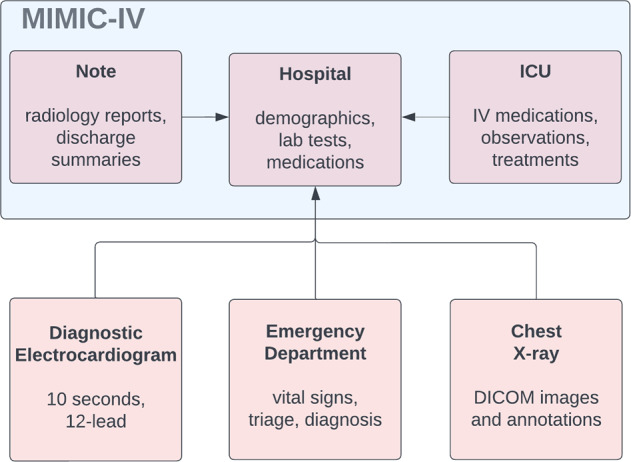
- MIMIC-IV was designed to be backward compatible with MIMIC-III while minimizing processing and organizing data into three modules: hosp, icu, and note.
## Methods
- Collaborative database construction from BIDMC clinical data, transformed and deidentified for release under IRB waiver and data use agreement; the process had three steps: acquisition, transformation, and deidentification.
- Sample/data: all patients admitted to the emergency department or an ICU at BIDMC between 2008–2019, excluding patients younger than 18 at first visit or on a protected list; external coding systems and Massachusetts death records were added.
- Main analysis/workflow: custom SQL scripts to restructure data into relational modules, plus custom linkage algorithms for out-of-hospital mortality and deidentification algorithms for HIPAA identifiers and free text; validation used integrity, consistency, and deidentification checks.
## Limitations
- The paper states that out-of-hospital mortality is only available through linkage to state death records, and deaths are censored at one year from last hospital discharge, so null death dates only indicate survival up to that point.
- The text makes evident that some data are incomplete or unevenly available across modules and time periods (for example, eMAR was deployed hospital-wide only by 2016, and the note module contains only discharge summaries and radiology reports); this is an evident coverage limitation from the text.
- The paper notes that clinical data are “sporadic and noisy,” reflecting routine care rather than research collection; this is a general data-quality limitation stated in the background.
Model-written summary. Check it against the paper before relying on it.
Integrity signals
Registry
Cites
Statistics
Figures
Verification
Claims the paper makes
13 Valid · 3 Not valid · 3 Not checked · 110 Own results and interpretations
Every source the paper cites for this claim was checked and supports it.
In the paper
“Finally, we combined two published algorithms for removing PHI from free-text17,18.”
§ MIMIC-IV, a freely accessible electronic health record dataset > Methods > Deidentification
What the sources say
- Supportedcites [17] Neamatullah I Automated de-identification of free-text medical records BMC medical informatics and decision making 2008 8 1 17 10.1186/1472-6947-8-32 18652655 PMC2526997 source
The Methods sections describe this paper's published algorithm for identifying and removing PHI from free-text medical records. The citing authors' statement that they combined two algorithms describes their own method; this citation identifies one of the algorithms. (LLM, conf=0.92)
- Supportedcites [18] Johnson, A. E. W., Bulgarelli, L. & Pollard, T. J. Deidentification of free-text medical records using pre-trained bidirectional transformers. In Proceedings of the ACM Conference on Health, Inference, and Learning, 214–221 (2020). PMC8330601 34350426 source
The Introduction (page not available in our copy) presents this paper’s BERT model for deidentifying free-text health records and describes measuring how much PHI it removes. The citation can therefore identify one of the two published algorithms; this source need not establish that the citing authors combined them. (LLM, conf=0.91)
plain- Asserted: passes — The authors put it forward as true.
- Checkable: passes — It can be checked against evidence.
- Load-bearing: passes — The paper’s conclusions depend on it.
- Based: passes — The paper gives a reason why it holds.
- Supported
Every source the paper cites for this claim was checked and supports it.
In the paper
“Due to data quality concerns regarding the Social Security Death Master File (SSDMF)13, we did not attempt to link patients to the SSDMF for determining out-of-hospital mortality.”
§ MIMIC-IV, a freely accessible electronic health record dataset > Methods > Acquisition
What the sources say
- Supportedcites [13] Levin MA Lin H-M Prabhakar G McCormick PJ Egorova NN Alive or dead: Validity of the social security administration death master file after 2011 Health Serv Res 2019 51 24 33 10.1111/1475-6773.13069 PMC6338290 30520023 source
The Discussion states that the Death Master File is no longer a reliable single source for mortality data, including out-of-hospital deaths. The decision not to link patients is the citing authors’ own methodological choice; the citation supports the data-quality concern motivating it. (LLM, conf=0.93)
plainstates a cause- Asserted: passes — The authors put it forward as true.
- Checkable: passes — It can be checked against evidence.
- Load-bearing: passes — The paper’s conclusions depend on it.
- Based: passes — The paper gives a reason why it holds.
- Supported
The cited sources support only part of this claim — read each source’s verdict below.
In the paper
“To support research that spans the periods of MIMIC-III (2002–2008) and MIMIC-IV (2008–2019), we have published the MIMIC-III Clinical Database CareVue subset22.”
§ MIMIC-IV, a freely accessible electronic health record dataset > Data Records > Building on earlier versions of MIMIC
What the sources say
- Partly supportedcites [22] Johnson AEW Pollard TJ Mark RG 2022 R. G. Mimic-iii clinical database carevue subset (version 1.4) PhysioNet 10.13026/8a4q-w170 sourceExperimental — accuracy not yet measured
The Abstract says the subset was provided to simplify combining MIMIC-III with MIMIC-IV, and the publication record identifies the released dataset. However, the Background and Methods give the CareVue period as 2001–2008, not the claim’s 2002–2008; the Background confirms MIMIC-IV’s 2008–2019 period. (LLM, conf=0.84)
plainstates a cause- Asserted: passes — The authors put it forward as true.
- Checkable: passes — It can be checked against evidence.
- Load-bearing: passes — The paper’s conclusions depend on it.
- Based: passes — The paper gives a reason why it holds.
- Partly supported
In the paper
“Access to MIMIC-IV is provided via PhysioNet19.”
§ MIMIC-IV, a freely accessible electronic health record dataset > Data Records
What the sources say
- Not checked — no full text of the sourcecites [19] Goldberger AL Physiobank, physiotoolkit, and physionet: components of a new research resource for complex physiologic signals circulation 2000 101 e215 e220 10.1161/01.CIR.101.23.e215 10851218 source
- Asserted: passes — The authors put it forward as true.
- Checkable: passes — It can be checked against evidence.
- Load-bearing: unclear — It is unclear whether the paper’s conclusions depend on it.
- Based: passes — The paper gives a reason why it holds.
A result the paper states — it cites no source for it, so there is none to check. The quote shows it is in the paper.
In the paper
“the d_icd_diagnoses and d_icd_procedures tables contain all codes which were valid at any point during the 2008–2019 time period.”
§ MIMIC-IV, a freely accessible electronic health record dataset > Data Records > Hospital module (hosp)
plain- Asserted: passes — The authors put it forward as true.
- Checkable: passes — It can be checked against evidence.
- Load-bearing: unclear — It is unclear whether the paper’s conclusions depend on it.
- Based: passes — The paper gives a reason why it holds.
29 more claims
Create a free account to see all 129 claims and every source verdict.
- Probably not a substantial claim. 84
- It may state two separate claims as one. 30
Claims other papers make about this one
Each is checked against this paper’s own text: does it say what the citing paper says it does?
The source backs part of the claim, not all of it — or backs it for a different population, condition or comparison.
In the citing paper
“We conducted a study using the publicly available MIMIC-IV dataset, which comprises 431,231 unique hospital admissions from 299,712 patients admitted to an ICU or the ED of the Beth Israel Deaconess Medical Center in Boston, Massachusetts27.”
From DRG-LLaMA : tuning LLaMA model to predict diagnosis-related group for hospitalized patients (2024) · cites this paper as [27]
Experimental — accuracy not yet measuredThe source backs part of the claim, not all of it — or backs it for a different population, condition or comparison.
In the citing paper
“For instance, the MIMIC-IV [148] includes a limited range of modalities, including clinical notes, medical images (chest x-ray Digital Imaging and Communications in Medicine [DICM] images), and time series (diagnostic electrocardiogram and patient records), making it a valuable but constrained resource for training medical M-LLMs.”
From Multimodal Large Language Models in Health Care: Applications, Challenges, and Future Outlook. (2024) · cites this paper as [148]
Experimental — accuracy not yet measuredThe source backs part of the claim, not all of it — or backs it for a different population, condition or comparison.
In the citing paper
“Existing multimodal medical data sets available for public use [84,85,148] are often relatively small in scale and demand the consolidation of numerous resources.”
From Multimodal Large Language Models in Health Care: Applications, Challenges, and Future Outlook. (2024) · cites this paper as [148]
Experimental — accuracy not yet measuredThe source backs part of the claim, not all of it — or backs it for a different population, condition or comparison.
In the citing paper
“- MIMIC-IV: A comprehensive, de-identified EHR dataset supporting tasks such as summarization, question answering, and document retrieval [17].”
From Retrieval-Augmented Generation (RAG) in Healthcare: A Comprehensive Review (2025) · cites this paper as [17]
Experimental — accuracy not yet measuredThe cited source says what the claim attributes to it.
In the citing paper
“In order to build agents that are grounded in medically relevant situations, we use a random sample of diagnostic questions from the US Medical Licensing Exam (USMLE), from deidentified electronic health records (MIMIC-IV)16, and from the New England Journal of Medicine (NEJM) case challenges.”
From AgentClinic: a multimodal benchmark for tool-using clinical AI agents (2026) · cites this paper as [16]
4 more claims about this paper
Create a free account to see every claim other papers make about this one.
Citations
Cites
Goldberger, A. L., Amaral, L. A. N., Glass, L., Hausdorff, J. M., Ivanov, P. C., Mark, R. G., Mietus, J. E., Moody, G. B., Peng, C.-K., & Stanley, H. E. (2000) · Circulation · doi:10.1161/01.cir.101.23.e215 · Cited by 14,809
Self-citationMIMIC-III, a freely accessible critical care database
Johnson, A. E. W., Pollard, T. J., Shen, L., Lehman, L.-W. H., Feng, M., Ghassemi, M., Moody, B., Szolovits, P., Anthony Celi, L., & Mark, R. G. (2016) · Scientific Data · doi:10.1038/sdata.2016.35 · Cited by 8,141 · cited 1×
“More recently, MIMIC-III was published in 2015 and significantly expanded MIMIC-II, containing data for over 40,000 patients 3 .”
MethodSelf-citationPollard, T. J., Johnson, A. E. W., Raffa, J. D., Celi, L. A., Mark, R. G., & Badawi, O. (2018) · Scientific Data · doi:10.1038/sdata.2018.178 · Cited by 1,993 · cited 2×
“0 comprises of 200,859 stays at ICUs and step-down units across 208 hospitals in the continental United States 4 .”
BackgroundSelf-citationSaeed, M., Villarroel, M., Reisner, A. T., Clifford, G., Lehman, L.-W., Moody, G., Heldt, T., Kyaw, T. H., Moody, B., & Mark, R. G. (2011) · Critical Care Medicine · doi:10.1097/ccm.0b013e31820a92c6 · Cited by 1,162
Self-citationBest Practices for Scientific Computing
Wilson, G., Aruliah, D. A., Brown, C. T., Chue Hong, N. P., Davis, M., Guy, R. T., Haddock, S. H. D., Huff, K. D., Mitchell, I. M., Plumbley, M. D., et al. (2014) · PLoS Biology · doi:10.1371/journal.pbio.1001745 · Cited by 723 · cited 1×
“The creation of MIMIC-IV followed best practices in scientific computing 23 .”
MethodJohnson, A., Bulgarelli, L., Pollard, T., Gow, B., Moody, B., Horng, S., Celi, L. A., & Mark, R. (2024) · PhysioNet · doi:10.13026/07hj-2a80 · Cited by 524
Self-citationJohnson, A., Bulgarelli, L., Pollard, T., Horng, S., Celi, L. A., & Mark, R. (2023) · PhysioNet · doi:10.13026/s6n6-xd98 · Cited by 524
Self-citationEarly prediction of circulatory failure in the intensive care unit using machine learning
Hyland, S. L., Faltys, M., Hüser, M., Lyu, X., Gumbsch, T., Esteban, C., Bock, C., Horn, M., Moor, M., Rieck, B., et al. (2020) · Nature Medicine · doi:10.1038/s41591-020-0789-4 · Cited by 477 · cited 1×
“The HiRID database contains high-resolution data for almost 34,000 admissions between 2008–2016 at Bern University Hospital in Switzerland 6,7 .”
BackgroundThe MIMIC Code Repository: enabling reproducibility in critical care research
Johnson, A. E. W., Stone, D. J., Celi, L. A., & Pollard, T. J. (2018) · Journal of the American Medical Informatics Association · doi:10.1093/jamia/ocx084 · Cited by 442 · cited 1×
“The MIMIC Code Repository was originally created for MIMIC-III to enable researchers to share and reuse code 24 .”
MethodSelf-citationAutomated de-identification of free-text medical records
Neamatullah, I., Douglass, M. M., Lehman, L.-W. H., Reisner, A., Villarroel, M., Long, W. J., Szolovits, P., Moody, G. B., Mark, R. G., & Clifford, G. D. (2008) · BMC Medical Informatics and Decision Making · doi:10.1186/1472-6947-8-32 · Cited by 413
Self-citation
Cited by
Items 2,401–2,500 of 3,269
Wang, G., Shang, D., Liu, T., et al. (2026) · Scientific Reports · doi:10.1038/s41598-026-42291-8
Mamun, A. A., & Hasan, N. (2026) · doi:10.1109/icecte69292.2026.11429208
“We got the data for this study from a large, long-term collection called the MIMIC − IV database (version 3.1) [19], which is publicly available.”
InfluentialDeep Learning Identifies Novel Subphenotypes of Multiple Organ Dysfunction Syndrome in Critical CarePreprint
Weijin, H., Liang, Q., Lin, W., et al. (2026) · Research Square · doi:10.21203/rs.3.rs-8901759/v1
Yang, C., & Yue, Q. (2025) · International Journal of Surgery · doi:10.1097/js9.0000000000004161
Zhang, G., Qu, S., Hu, J., Wang, J., Wang, L., & Wang, N. (2026) · Research Square · doi:10.21203/rs.3.rs-9050286/v1
Wu, G., Ke, H., Jin, Z., et al. (2026) · International Journal of COPD · doi:10.2147/copd.s574358
Wei, Y., Liu, X., Yang, C., He, D., Luo, S., Wang, J., Qiu, Y., Bi, H., Fu, J., Qian, P., et al. (2026) · The American Journal of the Medical Sciences · doi:10.1016/j.amjms.2026.03.015
Li, K., Li, D., Gong, D., Ren, D., li, M., Wu, Y., Dong, H., & Wang, Y. (2026) · Research Square · doi:10.21203/rs.3.rs-8827280/v1
Zhang, Y., Zhang, X., Xiao, H., 王国兴, & Du, J. (2025) · doi:10.1145/3788149.3788185
“This study utilized the MIMIC-IV database [9], a large open-access database containing data from over 50,000 intensive care unit patients.”
On the purpose of artificial intelligence in critical care medicine
Drudi, C., Matta, S. C., Lee, H., O’Donoghue, S. C., D’Couto, H. T., Hamza, A., Gutiérrez, C. A., Nakasi, R., Byers, J., Tumukunde, M., et al. (2026) · Journal of Translational Critical Care Medicine · doi:10.1097/jtccm-d-25-00021
Self-citationMa, J., Qin, J., Chen, X., Liang, D., He, C., & Ye, B. (2026) · Journal of Cardiothoracic Surgery · doi:10.1186/s13019-026-03953-w
De Ritis Ratio Trajectories and Mortality Risk in Sepsis-Associated Acute Kidney Injury
Luo, X., Huang, G., Zeng, W., Lai, N., Zhang, M., & Zhu, D. (2026) · Journal of Surgical Research · doi:10.1016/j.jss.2026.02.009
Liu, D., Zhang, Y., Lv, S., Cai, Y., & Zhang, X. (2026) · Clinical Nutrition Open Science · doi:10.1016/j.nutos.2026.100650
Tensor Network Architectures for Clinical Digital Twin Simulation
Jenks, C. (2026) · IntechOpen eBooks · doi:10.5772/intechopen.1014698
Litvinov, A., Malishevskii, L., Karpulevich, E., Bespalov, I. R., Nedumov, Y., Zhdanov, S., Oseledets, I. V., Shlyakhto, E. V., & Avetisyan, A. I. (2026) · Informatics · doi:10.3390/informatics13030045
Singh, P., Gaspari, M., Meratnia, N., & Presser, M. A. (2026) · Knowledge-Based Systems · doi:10.1016/j.knosys.2026.115800 · Cited by 2
Derakhshandeh, S., Ramezanipour, S., Yazdanpanah, G., et al. (2026) · JRSM Cardiovascular Disease · doi:10.1177/20480040261434635
Wang, H., Wang, Y., Li, C., & Hu, R. (2026) · Scientific Reports · doi:10.1038/s41598-026-44384-w
“We used the Intensive Care Medicine Information Marketplace (MIMIC-IV version 3.1 31 to enroll SAD patients.”
InfluentialChen, J., Zhi, H., Mian, G., et al. (2026) · Research Square · doi:10.21203/rs.3.rs-9174567/v1
Lei, L., He, M., Gao, Y., et al. (2026) · International Journal of Clinical Practice · doi:10.1155/ijcp/2825082
Explainable Machine Learning for Multi-Horizon Early Sepsis Prediction in Intensive Care Units
Ogunwale, Y. E., Fakoya, J. T., Oyedemi, O. A., Abiona, A. A., Ajinaja, M. O., & Ibiyomi, M. A. (2026) · Cureus Journal of Computer Science. · doi:10.7759/s44389-026-00045-7 · Cited by 1
Liu, S., Cai, Y., Shi, C., Zhang, T., & Zeng, Y. (2026) · Cardiovascular Diabetology · doi:10.1186/s12933-026-03139-7
Wang, X., Wang, Y., & Liu, H. (2026) · BMC Medical Informatics and Decision Making · doi:10.1186/s12911-026-03447-8
Onyambu, S. B., Litell, J. M., & Sultan, O. W. (2026) · Journal of Critical Care · doi:10.1016/j.jcrc.2026.155541
Marshall, D. C., Komorowski, M., Jamme, M., Patel, B. V., Antcliffe, D. B., & Parbhoo, S. (2026) · BMC Pulmonary Medicine · doi:10.1186/s12890-026-04251-w
“Data were extracted via SQL from the Google Cloud Platform BigQuery [11].”
Assogba, A. S., Gladius Jennifer, H., Gayi, K. S., Tchakondo, S., Kandjoni, Y., Tugbeh, R. S., & Das, R. (2026) · Research Square · doi:10.21203/rs.3.rs-8737800/v1
How does OA affect sepsis? An observational study and Mendelian randomization mediation analysis
Xu, D., Chen, J., Lin, F., Meng, Q., He, Y., Huang, J., Runhaar, J., & Yang, Z. (2026) · Osteoarthritis and Cartilage Open · doi:10.1016/j.ocarto.2026.100789 · Cited by 1
“The details of the database were described previously [22].”
Chen, C., Zhang, K., Zhong, T., Li, H., Feng, Z., Guo, Z., Yang, Z., Huang, S., & Pang, L. (2026) · Research Square · doi:10.21203/rs.3.rs-9119180/v1
Ye, B., Zhang, M., Liao, G., & Li, J. (2026) · Digestive Diseases and Sciences · doi:10.1007/s10620-026-09855-0
“This retrospective study used data from the MIMIC-IV database (version 3.1), [14] a freely available critical care database containing records of 94,458 ICU admissions from 2008 to 2019.”
InfluentialWang, Y.-M., Wang, M., Wang, L., Tang, Q., Wang, Y.-P., Teng, X.-Y., & Jin, L. (2026) · Journal of Acute Disease · doi:10.4103/jad.jad_149_25
Hu, H., Zhang, Z., Peng, W., Du, P., & Yu, W. (2026) · BMC Cardiovascular Disorders · doi:10.1186/s12872-026-05779-9
Chen, C., Zhang, Y., Mao, W., Hu, W., & Zhao, C. (2026) · Internal Medicine Journal · doi:10.1111/imj.70406
Huang, X., Chen, J., Lin, W., & Lin, B. (2026) · Frontiers in Medicine · doi:10.3389/fmed.2026.1804074
Liang, G., Liu, G., Xiao, Y., Feng, L., Xiao, W., Zhu, Y., Chen, S., Lin, J., Zeng, Y., Chen, F., et al. (2026) · Research Square · doi:10.21203/rs.3.rs-9115115/v1
Exploring the link between braden scores and frailty in elderly atrial fibrillation patients
Li, X., Cheng, H., Lyu, J., Tang, Y., Tan, S., Bai, Z., Li, T., Zhang, Y., & Wang, Y. (2026) · Geriatric Nursing · doi:10.1016/j.gerinurse.2026.104033
Li, B., Du, B., & Ye, J. (2026) · Information Fusion · doi:10.1016/j.inffus.2026.104347 · Cited by 2
Shukla, K., Mukhopadhyay, P., & Ruzieh, M. (2026) · Critical Pathways in Cardiology A Journal of Evidence-Based Medicine · doi:10.1097/hpc.0000000000000423
Kulasekera, A. L., & Benaragama, H. N. (2026) · International Conference on Advanced Research in Computing (ICARC) · doi:10.1109/icarc68737.2026.11454086
“1 (94,458 ICU stays, 2008-2019) [6].”
Chen, F., Mei, X., Yang, D., Hai, D., Bao, X., Chen, H., Wang, R., Mo, Z., Xia, Y., Zeng, L., et al. (2026) · Journal of Translational Medicine · doi:10.1186/s12967-026-08067-4
Raghavendra, A., Miller, L., & Zirikly, A. (2026) · doi:10.2196/preprints.96759
Zhou, L., Zhou, C., Deng, J., Zhu, X., & Li, T. X. (2026) · CIN Computers Informatics Nursing · doi:10.1097/cin.0000000000001528
Zhang, X., Fang, J., Jin, Y., Yu, J., Zhu, P., Yang, Z., Fang, H., Miao, C. H., Sun, X., Xiong, Y., et al. (2026) · Journal of Cardiothoracic Surgery · doi:10.1186/s13019-026-03956-7
Dai, S., Li, B., Zhang, Z., Zhang, G., & Xu, P. (2026) · Research Square · doi:10.21203/rs.3.rs-9080605/v1
Semantic analysis of SNOMED CT concept co-occurrences in clinical documentation using MIMIC-IV
Noori, A., & Manda, P. (2026) · Digital Health · doi:10.1177/20552076261436869 · Cited by 4
“SNOMED CT annotations have been utilized extensively in analyzing clinical events, patient phenotypes, and outcomes within MIMIC datasets.”
Liu, S.-Y., Ruan, H., & Li, S.-S. (2026) · BMC Gastroenterology · doi:10.1186/s12876-026-04798-2
Yang, Y., Chen, Q., Chen, T., & Wang, Q. (2026) · European journal of medical research · doi:10.1186/s40001-026-04364-2
“Developed by the Laboratory for Computational Physiology at the Massachusetts Institute of Technology (MIT), MIMIC-IV contains comprehensive clinical data of ICU patients at Beth Israel Deaconess Medical Center (BIDMC) from 2008 to 2019 [17].”
Kumar, S., & Weiss, J. C. (2026) · medRxiv · doi:10.64898/2026.04.05.26350197
BAR and LAR as mortality predictors in critically ill multiple myeloma patients: a MIMIC-IV studyPreprint
Xu, H., Jiang, C., Chen, D., Lu, J., Wang, L., Chen, F., & Zhong, L. (2026) · Research Square · doi:10.21203/rs.3.rs-9224218/v1
Lijović, L., Hilders, P., Radočaj, T., Širanović, M., & Elbers, P. (2026) · Critical Care Medicine · doi:10.1097/ccm.0000000000007129
Liu, Z., Li, X., Liu, F., et al. (2026) · Journal of Translational Medicine · doi:10.1186/s12967-026-08093-2
“All data used in this research were obtained from the publicly accessible MIMIC-IV database, a large, de-identified critical care dataset jointly developed by the Massachusetts Institute of Technology and Beth Israel Deaconess Medical Center [28].”
Automated Clinical Coding with Multiclass ICD Prediction
Khadka, S., Jiang, X., & Palade, V. (2025) · International Conference on Machine Learning and Applications · doi:10.1109/icmla66185.2025.00198
“PLM-ICD [8], for example, has achieved state-of-the-art performance on MIMIC-III [9] and MIMIC-IV [10].”
Zhang, A., Liu, M., Wang, J., Zhang, H., Li, P., & Li, J. (2026) · Journal of Psychosomatic Research · doi:10.1016/j.jpsychores.2026.112659
Li, S., Xie, X., Niu, W., Xing, J., Lei, K., Gao, F., Lu, F., Zhao, H., Cheng, S., & Wang, N. (2026) · BMC Gastroenterology · doi:10.1186/s12876-026-04786-6
Zheng, J., Gao, J., Wang, M., Chen, X., & Han, W. (2026) · Journal of Surgical Research · doi:10.1016/j.jss.2026.03.048
Automated Auditing of Hospital Discharge Summaries for Care Transitions
Dasula, A., Desikan, P., & Srivastava, J. (2026) · IEEE International Conference on Healthcare Informatics (ICHI) · doi:10.1109/ichi69079.2026.00205
“We thank Beth Israel Deaconess Medical Center and the MIT Laboratory for Computational Physiology for maintaining these resources [1], [2]. in MIMIC-IV [1] are validated against a set of audit questions and a locally deployed LLM is used to flag these questions determining missing or unclear…”
AI-Powered Personalized Medication Recommender by Using RAG
Manohar, S., Kumar, A., & Chandrika, L. (2026) · International Conference on Communication, Computing and Emerging Technologies (IC3ET) · doi:10.1109/ic3et64989.2026.11467324
“This is likely to result in a lot of trial and error, which will increase costs and sluggish the process [1], [4].”
Dai, S., Li, B., Zhang, Z., et al. (2026) · Research Square · doi:10.21203/rs.3.rs-9036677/v1
Su, Y., Fang, Z., Huang, L., et al. (2026) · Research Square · doi:10.21203/rs.3.rs-9027461/v1
Lan, J., Liu, M., Wang, Y., Feng, J., & Wang, M. (2026) · Research Square · doi:10.21203/rs.3.rs-9035595/v1
Jin, S., Hu, H., Wang, X., et al. (2026) · Frontiers in Medicine · doi:10.3389/fmed.2026.1801744
“Data were sourced from the Medical Information Mart for Intensive Care IV (MIMIC-IV, v 3.1) database (20)”
InfluentialLi, S., Li, Z., Mo, Y., et al. (2026) · Frontiers in Public Health · doi:10.3389/fpubh.2026.1796307
Parameter-efficient fine-tuning with layer pruning on medical sequence-to-sequence modeling
Zhu, Y., Wu, Y., Zhang, W., & Yang, X. (2026) · Health Information Science and Systems · doi:10.1007/s13755-026-00453-y · Cited by 10
Target trial emulation of early acetaminophen use and mortality in critically ill stroke patients
Wang, X., Zhang, K., Wu, Y., Zhang, Z., Li, Y., Han, R., & Liang, F. (2026) · Scientific Reports · doi:10.1038/s41598-026-46381-5
“…Medical Information Mart for Intensive Care (MIMIC-IV, version 2.2), a comprehensive, high-granularity database of deidentified electronic health records from patients admitted to the intensive care units (ICUs) at the Beth Israel Deaconess Medical Center in Boston, MA, between 2008 and 2019 23 .”
InfluentialNi, M., Liu, W., Li, M., Zhou, S., Cai, X., Zhang, Z., & Zhang, Y. (2026) · BMC Infectious Diseases · doi:10.1186/s12879-026-13227-4 · Cited by 1
“The two-center data were sourced from the Medical Information Mart for Intensive Care-IV (MIMIC-IV, version 3.1; 2008–2022) and the Second Affiliated Hospital of Anhui Medical University (AMU2; 2009–2024) [19].”
InfluentialTransforming Healthcare with Electronic Health Records: AI Integration, Evolution, and Future
Chakraborty, P., & Kamila, S. (2026) · Springer optimization and its applications · doi:10.1007/978-3-032-15092-9_10 · Cited by 1
Wang, C., Li, M., Yang, X., Sun, M., & Zhang, W. (2026) · Health Data Science · doi:10.34133/hds.0466 · Cited by 1
“Generally, each visit record includes various health events, where diseases are represented as standard diagnosis codes such as the International Classification of Diseases, 9th revision (ICD-9) and the International Classification of Diseases, 10th revision (ICD-10) [ 8 ].”
Hong, H., Gao, R., Zheng, S., et al. (2026) · Research Square · doi:10.21203/rs.3.rs-8607276/v1
Ramirez-Arrabe, A., Martínez-Romo, J., & Duque, A. (2026) · BMC Medical Informatics and Decision Making · doi:10.1186/s12911-026-03473-6
Murali, M., Dave, D. S., Şerban, O., Ni, M. Z., Ramnarayan, P., & Patel, B. V. (2026) · BMJ Digital Health & AI · doi:10.1136/bmjdh-2026-000033
Du, H., Wang, D., Shao, J., et al. (2026) · BMC Infectious Diseases · doi:10.1186/s12879-026-13233-6
“2 (released January 2023), containing records of > 400,000 admissions [9].”
Macedo, V. D., Libório, A., & Libório, A. B. (2026) · Anaesthesia Critical Care & Pain Medicine · doi:10.1016/j.accpm.2026.101849 · Cited by 1
Yan, Z., Qiao, Y., Sun, H., et al. (2026) · BMC Cardiovascular Disorders · doi:10.1186/s12872-026-05830-9
“…were obtained from the MIMIC-IV (version 3.1) database (https://mimic.mit.edu), a p u b l i c l y accessible, real-world database containing extensive clinical information from over 65,000 ICU patients at BIDMC (a large tertiary care hospital in Boston, MA, USA), spanning from 2008 to 2022 [4].”
InfluentialStructural complementarity-aware molecular representation learning for medication recommendation
Liang, S., Li, S., Su, S., Li, J., & Xiao, Y. (2026) · Engineering Applications of Artificial Intelligence · doi:10.1016/j.engappai.2026.114840
Jiang, Y., Li, Q., Huang, Y., Ning, Y., Chen, L., Zhang, Y., & Xu, X. (2026) · Nursing in Critical Care · doi:10.1111/nicc.70469
“In this study, we conducted a retrospective cohort study in Medical Information Mart for Intensive Care IV [8, 9] (MIMIC-IV, version 3.1) and the eICU Collaborative Research Database [10, 11] (eICU, version 2.0) with the aim of utilising these comprehensive clinical databases and applying…”
InfluentialFine-Tuning PubMedBERT for Hierarchical Condition Category Classification from Clinical NotesPreprint
Wang, X., Hammarlund, N. E., Prosperi, M., Zhu, Y., & Revere, L. (2026) · medRxiv · doi:10.64898/2026.04.13.26350814
He, Y., Lin, Y., Zheng, X., Dong, S., & Fu, J. (2026) · Engineering Applications of Artificial Intelligence · doi:10.1016/j.engappai.2026.114814 · Cited by 1
MedicalBench: Evaluating Large Language Models Towards Improved Medical Concept ExtractionPreprint
Yang, Z., Lyng, G. D., Batra, S. S., & Tillman, R. E. (2026) · SSRN Electronic Journal · doi:10.64898/2026.04.12.26350704 · Cited by 1
Li, Z., Yang, X., Shan, X., et al. (2026) · Medicine · doi:10.1097/md.0000000000048328
Li, L., Wang, J.-M., Xu, J.-C., Su, Q.-H., Shu, R., Zhou, X.-B., Zhuang, J.-W., & Shan, Z. (2026) · BMC Cardiovascular Disorders · doi:10.1186/s12872-026-05857-y
Bastida, M. D., Vázquez, R. A. P., & Pérez, R. B. (2026) · SN Computer Science · doi:10.1007/s42979-026-04896-8
Cai, X., Yan, B., Chen, J., Ye, J., Su, J., Tong, S., Xie, B., Zhang, B., & Li, J. (2026) · JMIR Medical Informatics · doi:10.2196/81229 · Cited by 1
“This study was a retrospective observational design with publicly available data from the MIMIC-IV data-base, which includes information on critically ill patients admitted to the intensive care units (ICUs) at Beth Israel Deaconess Medical Center from 2008 to 2022 [22].”
Huang, J.-L., Yang, C.-H., & Pai, T. (2026) · doi:10.2196/preprints.95929
Yu, W., Zeng, Z., & Wu, G. (2026) · Research Square · doi:10.21203/rs.3.rs-9052341/v1
Pretraining effective T5 generative models for clinical and biomedical applications
Althabiti, S., Chen, C., Alrowili, S., Wu, C. H., & Vijay‐Shanker, K. (2026) · PLoS ONE · doi:10.1371/journal.pone.0342610
Kong, S., Li, X. D., Chen, W., Chen, B., Shi, H., Lyu, J., & Wang, Y. (2026) · Drugs & Aging · doi:10.1007/s40266-026-01296-8
Toward Improved Time-Series Explanations for Federated Learning in Healthcare
Düsing, C., & Cimiano, P. (2026) · Lecture notes in computer science · doi:10.1007/978-3-032-23833-7_28
Natural Language Processing for Surgical Quality Enhancement
Tennakoon, L., Roll, N., Knowlton, L. M., Spain, D. A., & Hawn, M. T. (2026) · Journal of Surgical Research · doi:10.1016/j.jss.2026.03.037
Xie, X., Zhu, Z., Cao, X., Pan, Q., Zhao, D., & Chai, J. (2026) · BMC Infectious Diseases · doi:10.1186/s12879-026-13131-x
“For external validation, we used three independent databases: (1) The Medical Information Mart for Intensive Care (MIMIC)-III CareVue subset [19] (patient records from 2001 to 2008).”
Pu, H., Zhao, G., Wang, Y., et al. (2026) · Cardiovascular Therapeutics · doi:10.1155/cdr/9362170
“As the data were de-identified, the Institutional Review Board of Beth Israel Deaconess Medical Center waived the requirement for informed consent and approved the sharing of research resources [17].”
MedAssist: Towards Explainable Multi-Task ICU Risk Prediction for Clinical Deployment
Norwood, T., Claiborne, J., Chatterjee, P., Das, D., & Ghosh, U. (2026) · IEEE SoutheastCon · doi:10.1109/southeastcon63549.2026.11476489
“1 [16], encompassing 30,000 unique ICU admissions from Beth Israel Deaconess (2008 to 2019).”
Robust Multimodal Representation Learning in Healthcare
Zhu, X., Gong, L., Sun, L. C., Liu, Y., Wang, H., & Liu, J. Z. (2026) · IEEE International Conference on Acoustics Speech and Signal Processing · doi:10.1109/icassp55912.2026.11464483
Liu, D., Liang, H., Zhang, Y., Lv, S., & Cai, Y. (2026) · Journal of Critical Care · doi:10.1016/j.jcrc.2026.155590
UniPACT: A Multimodal Framework for Prognostic Question Answering on Raw ECG and Structured EHR
Tang, J., Xia, T., Lü, Y., & Saeed, A. (2026) · IEEE International Conference on Acoustics Speech and Signal Processing · doi:10.1109/icassp55912.2026.11461333 · Cited by 2
He, Y., Liang, R., Zhang, Y., et al. (2026) · BMC Medical Imaging · doi:10.1186/s12880-026-02363-7
“This retrospective cohort study utilized the Medical Information Mart for Intensive Care IV (MIMIC-IV) database version 3.1 (https://mimic.mit.edu/) [19]”
InfluentialMO-GRPO-Med: A Multi-Objective Framework for Generating Safe and High-Quality Discharge Instructions
Shen, Q., Zhang, X., Guo, Q., & Zhang, Y. (2026) · IEEE International Conference on Acoustics Speech and Signal Processing · doi:10.1109/icassp55912.2026.11462671
Liu, J., Pan, A., Chen, Q., Zhu, L., Lyu, J., & Bi, W. (2026) · Science Progress · doi:10.1177/00368504261442852
Chen, Y., & Wang, W. (2026) · International Journal of COPD · doi:10.2147/copd.s598017
“44 Finally, the publication introducing MIMIC-IV by Johnson et al (2023) underscores the transfor-mative shift towards data-driven research.”
Nicolson, A., Cooper, E. J., Yoon, H.-J., McCafferty, C., Krishnan, R., Craigie, M., Saad, N., Dowling, J., Scott, I. A., & Koopman, B. (2026) · Informatics in Medicine Unlocked · doi:10.1016/j.imu.2026.101816 · Cited by 1
Long, X., & Chen, W. (2026) · Clinical Cardiology · doi:10.1002/clc.70321
“1), a publicly accessible database containing records of over 65,000 patients admitted to intensive care units at Beth Israel Deaconess Medical Center in Boston, Massachusetts, spanning the years 2008 to 2022 [13, 14].”
Bellmann, L., Nielsen, M., & Breitfeld, P. (2026) · Patterns · doi:10.1016/j.patter.2026.101543
“The dataset was extracted from the MIMIC-IV database 49 and contains 13 hourly time-resolved variables, of which three are mean, diastolic, and systolic arterial blood pressure (MAP, DBP, and SBP, respectively).”
Metadata
- Authors
- Johnson, A. E. W., Bulgarelli, L., Shen, L., Gayles, A., Shammout, A., Horng, S., Pollard, T. J., Hao, S., Moody, B., Gow, B., Lehman, L.-W. H., Celi, L. A., & Mark, R. G.
- Affiliations
- Hospital for Sick Children (CA)
- Massachusetts Institute of Technology (US)
- Beth Israel Deaconess Medical Center (US)
- Corresponding author
- Johnson, Alistair E. W.
- ORCID
- Venue
- Scientific Data
- Published
- 2023-01-03
- Volume
- 10
- Issue
- 1
- Pages
- 1-1
- ISSN
- 2052-4463 (ISSN-L)
- PMC
- PMC9810617
- OpenAlex
- W4313439128
- Semantic Scholar
- 5425de16356015c2f26d2a50684c6c46d6998f51
- Cited by
- 3,401
- References
- 25
- Citations by year
- 2026: 1421 · 2025: 1175 · 2024: 649 · 2023: 154
- Type
- data paper
- Language
- en
- Update notices
- Open access
- gold
- doi.org
- Licence
- cc-by
- creativecommons.org/licenses/by/4.0 (tdm)
- creativecommons.org/licenses/by/4.0 (vor)
- Locations
- Scientific Data (publishedVersion, cc-by)
- PubMed Central (publishedVersion, cc-by)
- PubMed (publishedVersion)
- DOAJ (DOAJ: Directory of Open Access Journals) (submittedVersion, cc-by-sa)
- Funders
- U.S. Department of Health & Human Services | National Institutes of Health (NIH-R01-EB017205)
- Topics
- Physical Sciences › Computer Science › Artificial Intelligence › Machine Learning in Healthcare
- Health Sciences › Health Professions › Health Information Management › Electronic Health Records Systems
- Health Sciences › Health Professions › Health Information Management › Medical Coding and Health Information
- Keywords
- MIMIC-IV, electronic health records, clinical research data, hospital patient data, open data access, Beth Israel Deaconess Medical Center
- MeSH terms
- Hospitals, Humans, Databases, Factual, Electronic Health Records
About these checks
Registry, retraction, Cites and statistics results are computed, not judged, with one exception: a printed reference that no index lists is read once by a model before it counts as a citation error. Claims are extracted by a model and kept only when their quote appears verbatim in the text; each cited source is then checked, with a model’s help, for whether it says what the claim relies on. Those verdicts can be wrong — read the claim’s quote and the cited source before relying on one.
The claim verdicts this report counts are experimental: their accuracy is not yet measured.
A language model drew the claims from the paper on 2026-10-02, under version 3 of the claim definition (model deepseek-v4.1-flash, prompt extract-v3).
A second model labelled each claim on 2026-10-02 (model jev-1.13-20260917, definition revision gold-guideline-v0.2).
Cited sources are checked with a language model’s help (gpt-6-sol).
Statistics and arithmetic are recomputed, not judged.
Confidence bands are shown only for fields calibrated on our annotated test set. None is calibrated yet, so no band is shown.
What counts as a claim ›How we measure confidence ›How we check this ›
Are you an author, or do you see a problem with this page? Request a review
Data sources
Bibliographic data: Semantic Scholar, OpenAlex, Crossref.
Contains information from the Semantic Scholar Academic Graph Datasets, made available under the ODC Attribution License (ODC-BY 1.0).
Semantic Scholar’s data is described in: Kinney, R., et al. (2023). The Semantic Scholar Open Data Platform. arXiv:2301.10140.
