

MIMIC-IV, a freely accessible electronic health record dataset
Open accessThe DOI matches its Crossref record; 28 of the 28 references it cites were found in a registry or an index; 15 of the 20 sources its claims cite were checked for support.
Abstract
Digital data collection during routine clinical practice is now ubiquitous within hospitals. The data contains valuable information on the care of patients and their response to treatments, offering exciting opportunities for research. Typically, data are stored within archival systems that are not intended to support research. These systems are often inaccessible to researchers and structured for optimal storage, rather than interpretability and analysis. Here we present MIMIC-IV, a publicly available database sourced from the electronic health record of the Beth Israel Deaconess Medical Center. Information available includes patient measurements, orders, diagnoses, procedures, treatments, and deidentified free-text clinical notes. MIMIC-IV is intended to support a wide array of research studies and educational material, helping to reduce barriers to conducting clinical research.
Overview
CoChat Summary
## TL;DR
MIMIC-IV is a publicly available, deidentified electronic health record database from Beth Israel Deaconess Medical Center designed to support research, education, and technology development. It covers hospital and ICU care from 2008–2019 and adds modular structured data plus free-text clinical notes.
## Key findings
- The database includes patient measurements, orders, diagnoses, procedures, treatments, and deidentified free-text clinical notes, and is available through PhysioNet.
- The clinical cohort includes patients admitted to the emergency department or an ICU between 2008–2019; after exclusions, the authors linked 65,805 of 150,832 unique individuals (43.6%) to Massachusetts state death records.
- The paper reports that 51,022/65,803 (77.5%) of the successful death-record links were exact matches on last name, date of birth, and social security number; 11,634/65,803 (17.7%) were exact last name and date of birth plus approximate first name.
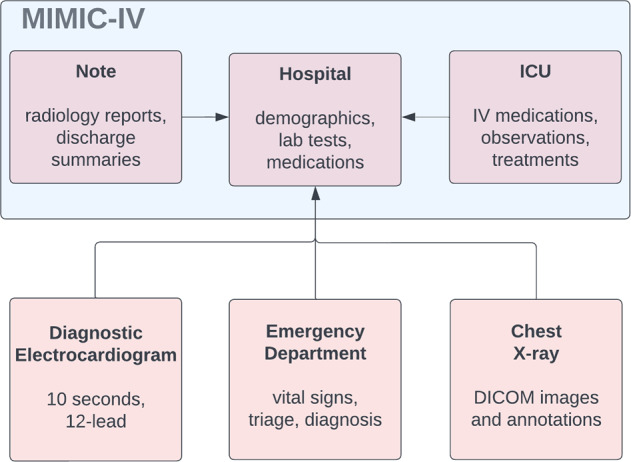
- MIMIC-IV was designed to be backward compatible with MIMIC-III while minimizing processing and organizing data into three modules: hosp, icu, and note.
## Methods
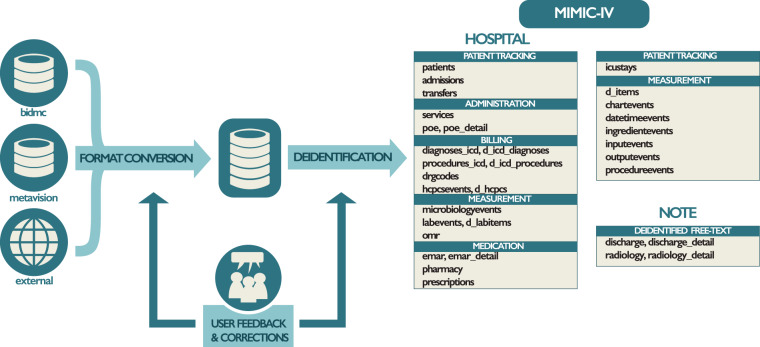
- Collaborative database construction from BIDMC clinical data, transformed and deidentified for release under IRB waiver and data use agreement; the process had three steps: acquisition, transformation, and deidentification.
- Sample/data: all patients admitted to the emergency department or an ICU at BIDMC between 2008–2019, excluding patients younger than 18 at first visit or on a protected list; external coding systems and Massachusetts death records were added.
- Main analysis/workflow: custom SQL scripts to restructure data into relational modules, plus custom linkage algorithms for out-of-hospital mortality and deidentification algorithms for HIPAA identifiers and free text; validation used integrity, consistency, and deidentification checks.
## Limitations
- The paper states that out-of-hospital mortality is only available through linkage to state death records, and deaths are censored at one year from last hospital discharge, so null death dates only indicate survival up to that point.
- The text makes evident that some data are incomplete or unevenly available across modules and time periods (for example, eMAR was deployed hospital-wide only by 2016, and the note module contains only discharge summaries and radiology reports); this is an evident coverage limitation from the text.
- The paper notes that clinical data are “sporadic and noisy,” reflecting routine care rather than research collection; this is a general data-quality limitation stated in the background.
Model-written summary. Check it against the paper before relying on it.
Integrity signals
Registry
Cites
Statistics
Figures
Verification
Claims the paper makes
13 Valid · 3 Not valid · 3 Not checked · 110 Own results and interpretations
Every source the paper cites for this claim was checked and supports it.
In the paper
“Finally, we combined two published algorithms for removing PHI from free-text17,18.”
§ MIMIC-IV, a freely accessible electronic health record dataset > Methods > Deidentification
What the sources say
- Supportedcites [17] Neamatullah I Automated de-identification of free-text medical records BMC medical informatics and decision making 2008 8 1 17 10.1186/1472-6947-8-32 18652655 PMC2526997 source
The Methods sections describe this paper's published algorithm for identifying and removing PHI from free-text medical records. The citing authors' statement that they combined two algorithms describes their own method; this citation identifies one of the algorithms. (LLM, conf=0.92)
- Supportedcites [18] Johnson, A. E. W., Bulgarelli, L. & Pollard, T. J. Deidentification of free-text medical records using pre-trained bidirectional transformers. In Proceedings of the ACM Conference on Health, Inference, and Learning, 214–221 (2020). PMC8330601 34350426 source
The Introduction (page not available in our copy) presents this paper’s BERT model for deidentifying free-text health records and describes measuring how much PHI it removes. The citation can therefore identify one of the two published algorithms; this source need not establish that the citing authors combined them. (LLM, conf=0.91)
plain- Asserted: passes — The authors put it forward as true.
- Checkable: passes — It can be checked against evidence.
- Load-bearing: passes — The paper’s conclusions depend on it.
- Based: passes — The paper gives a reason why it holds.
- Supported
Every source the paper cites for this claim was checked and supports it.
In the paper
“Due to data quality concerns regarding the Social Security Death Master File (SSDMF)13, we did not attempt to link patients to the SSDMF for determining out-of-hospital mortality.”
§ MIMIC-IV, a freely accessible electronic health record dataset > Methods > Acquisition
What the sources say
- Supportedcites [13] Levin MA Lin H-M Prabhakar G McCormick PJ Egorova NN Alive or dead: Validity of the social security administration death master file after 2011 Health Serv Res 2019 51 24 33 10.1111/1475-6773.13069 PMC6338290 30520023 source
The Discussion states that the Death Master File is no longer a reliable single source for mortality data, including out-of-hospital deaths. The decision not to link patients is the citing authors’ own methodological choice; the citation supports the data-quality concern motivating it. (LLM, conf=0.93)
plainstates a cause- Asserted: passes — The authors put it forward as true.
- Checkable: passes — It can be checked against evidence.
- Load-bearing: passes — The paper’s conclusions depend on it.
- Based: passes — The paper gives a reason why it holds.
- Supported
The cited sources support only part of this claim — read each source’s verdict below.
In the paper
“To support research that spans the periods of MIMIC-III (2002–2008) and MIMIC-IV (2008–2019), we have published the MIMIC-III Clinical Database CareVue subset22.”
§ MIMIC-IV, a freely accessible electronic health record dataset > Data Records > Building on earlier versions of MIMIC
What the sources say
- Partly supportedcites [22] Johnson AEW Pollard TJ Mark RG 2022 R. G. Mimic-iii clinical database carevue subset (version 1.4) PhysioNet 10.13026/8a4q-w170 sourceExperimental — accuracy not yet measured
The Abstract says the subset was provided to simplify combining MIMIC-III with MIMIC-IV, and the publication record identifies the released dataset. However, the Background and Methods give the CareVue period as 2001–2008, not the claim’s 2002–2008; the Background confirms MIMIC-IV’s 2008–2019 period. (LLM, conf=0.84)
plainstates a cause- Asserted: passes — The authors put it forward as true.
- Checkable: passes — It can be checked against evidence.
- Load-bearing: passes — The paper’s conclusions depend on it.
- Based: passes — The paper gives a reason why it holds.
- Partly supported
In the paper
“Access to MIMIC-IV is provided via PhysioNet19.”
§ MIMIC-IV, a freely accessible electronic health record dataset > Data Records
What the sources say
- Not checked — no full text of the sourcecites [19] Goldberger AL Physiobank, physiotoolkit, and physionet: components of a new research resource for complex physiologic signals circulation 2000 101 e215 e220 10.1161/01.CIR.101.23.e215 10851218 source
- Asserted: passes — The authors put it forward as true.
- Checkable: passes — It can be checked against evidence.
- Load-bearing: unclear — It is unclear whether the paper’s conclusions depend on it.
- Based: passes — The paper gives a reason why it holds.
A result the paper states — it cites no source for it, so there is none to check. The quote shows it is in the paper.
In the paper
“the d_icd_diagnoses and d_icd_procedures tables contain all codes which were valid at any point during the 2008–2019 time period.”
§ MIMIC-IV, a freely accessible electronic health record dataset > Data Records > Hospital module (hosp)
plain- Asserted: passes — The authors put it forward as true.
- Checkable: passes — It can be checked against evidence.
- Load-bearing: unclear — It is unclear whether the paper’s conclusions depend on it.
- Based: passes — The paper gives a reason why it holds.
29 more claims
Create a free account to see all 129 claims and every source verdict.
- Probably not a substantial claim. 84
- It may state two separate claims as one. 30
Claims other papers make about this one
Each is checked against this paper’s own text: does it say what the citing paper says it does?
The source backs part of the claim, not all of it — or backs it for a different population, condition or comparison.
In the citing paper
“We conducted a study using the publicly available MIMIC-IV dataset, which comprises 431,231 unique hospital admissions from 299,712 patients admitted to an ICU or the ED of the Beth Israel Deaconess Medical Center in Boston, Massachusetts27.”
From DRG-LLaMA : tuning LLaMA model to predict diagnosis-related group for hospitalized patients (2024) · cites this paper as [27]
Experimental — accuracy not yet measuredThe source backs part of the claim, not all of it — or backs it for a different population, condition or comparison.
In the citing paper
“For instance, the MIMIC-IV [148] includes a limited range of modalities, including clinical notes, medical images (chest x-ray Digital Imaging and Communications in Medicine [DICM] images), and time series (diagnostic electrocardiogram and patient records), making it a valuable but constrained resource for training medical M-LLMs.”
From Multimodal Large Language Models in Health Care: Applications, Challenges, and Future Outlook. (2024) · cites this paper as [148]
Experimental — accuracy not yet measuredThe source backs part of the claim, not all of it — or backs it for a different population, condition or comparison.
In the citing paper
“Existing multimodal medical data sets available for public use [84,85,148] are often relatively small in scale and demand the consolidation of numerous resources.”
From Multimodal Large Language Models in Health Care: Applications, Challenges, and Future Outlook. (2024) · cites this paper as [148]
Experimental — accuracy not yet measuredThe source backs part of the claim, not all of it — or backs it for a different population, condition or comparison.
In the citing paper
“- MIMIC-IV: A comprehensive, de-identified EHR dataset supporting tasks such as summarization, question answering, and document retrieval [17].”
From Retrieval-Augmented Generation (RAG) in Healthcare: A Comprehensive Review (2025) · cites this paper as [17]
Experimental — accuracy not yet measuredThe cited source says what the claim attributes to it.
In the citing paper
“In order to build agents that are grounded in medically relevant situations, we use a random sample of diagnostic questions from the US Medical Licensing Exam (USMLE), from deidentified electronic health records (MIMIC-IV)16, and from the New England Journal of Medicine (NEJM) case challenges.”
From AgentClinic: a multimodal benchmark for tool-using clinical AI agents (2026) · cites this paper as [16]
4 more claims about this paper
Create a free account to see every claim other papers make about this one.
Citations
Cites
Goldberger, A. L., Amaral, L. A. N., Glass, L., Hausdorff, J. M., Ivanov, P. C., Mark, R. G., Mietus, J. E., Moody, G. B., Peng, C.-K., & Stanley, H. E. (2000) · Circulation · doi:10.1161/01.cir.101.23.e215 · Cited by 14,809
Self-citationMIMIC-III, a freely accessible critical care database
Johnson, A. E. W., Pollard, T. J., Shen, L., Lehman, L.-W. H., Feng, M., Ghassemi, M., Moody, B., Szolovits, P., Anthony Celi, L., & Mark, R. G. (2016) · Scientific Data · doi:10.1038/sdata.2016.35 · Cited by 8,141 · cited 1×
“More recently, MIMIC-III was published in 2015 and significantly expanded MIMIC-II, containing data for over 40,000 patients 3 .”
MethodSelf-citationPollard, T. J., Johnson, A. E. W., Raffa, J. D., Celi, L. A., Mark, R. G., & Badawi, O. (2018) · Scientific Data · doi:10.1038/sdata.2018.178 · Cited by 1,993 · cited 2×
“0 comprises of 200,859 stays at ICUs and step-down units across 208 hospitals in the continental United States 4 .”
BackgroundSelf-citationSaeed, M., Villarroel, M., Reisner, A. T., Clifford, G., Lehman, L.-W., Moody, G., Heldt, T., Kyaw, T. H., Moody, B., & Mark, R. G. (2011) · Critical Care Medicine · doi:10.1097/ccm.0b013e31820a92c6 · Cited by 1,162
Self-citationBest Practices for Scientific Computing
Wilson, G., Aruliah, D. A., Brown, C. T., Chue Hong, N. P., Davis, M., Guy, R. T., Haddock, S. H. D., Huff, K. D., Mitchell, I. M., Plumbley, M. D., et al. (2014) · PLoS Biology · doi:10.1371/journal.pbio.1001745 · Cited by 723 · cited 1×
“The creation of MIMIC-IV followed best practices in scientific computing 23 .”
MethodJohnson, A., Bulgarelli, L., Pollard, T., Gow, B., Moody, B., Horng, S., Celi, L. A., & Mark, R. (2024) · PhysioNet · doi:10.13026/07hj-2a80 · Cited by 524
Self-citationJohnson, A., Bulgarelli, L., Pollard, T., Horng, S., Celi, L. A., & Mark, R. (2023) · PhysioNet · doi:10.13026/s6n6-xd98 · Cited by 524
Self-citationEarly prediction of circulatory failure in the intensive care unit using machine learning
Hyland, S. L., Faltys, M., Hüser, M., Lyu, X., Gumbsch, T., Esteban, C., Bock, C., Horn, M., Moor, M., Rieck, B., et al. (2020) · Nature Medicine · doi:10.1038/s41591-020-0789-4 · Cited by 477 · cited 1×
“The HiRID database contains high-resolution data for almost 34,000 admissions between 2008–2016 at Bern University Hospital in Switzerland 6,7 .”
BackgroundThe MIMIC Code Repository: enabling reproducibility in critical care research
Johnson, A. E. W., Stone, D. J., Celi, L. A., & Pollard, T. J. (2018) · Journal of the American Medical Informatics Association · doi:10.1093/jamia/ocx084 · Cited by 442 · cited 1×
“The MIMIC Code Repository was originally created for MIMIC-III to enable researchers to share and reuse code 24 .”
MethodSelf-citationAutomated de-identification of free-text medical records
Neamatullah, I., Douglass, M. M., Lehman, L.-W. H., Reisner, A., Villarroel, M., Long, W. J., Szolovits, P., Moody, G. B., Mark, R. G., & Clifford, G. D. (2008) · BMC Medical Informatics and Decision Making · doi:10.1186/1472-6947-8-32 · Cited by 413
Self-citation
Cited by
Items 2,301–2,400 of 3,269
Chowdhury, S. A., Sh, L., Lee, Y.-K., & Park, J. (2026) · IEEE Access · doi:10.1109/access.2026.3659181
“MIMIC-IV [33], [34] represents predominantly non-Hispanic White participants and African American populations with North American clinical practice patterns.”
Neto, W. R., & Libório, A. B. (2026) · Journal of Anesthesia Analgesia and Critical Care · doi:10.1186/s44158-026-00350-6
“The MIMIC-IV is a publicly accessible critical care repository comprising anonymized data from patients admitted to a single-center, tertiary care hospital (Beth Israel Deaconess Medical Center, Boston, MA, USA) between 2008 and 2019 [17].”
Huang, S., Xia, J., Zheng, Z., et al. (2026) · BMC Geriatrics · doi:10.1186/s12877-026-07061-1
“…Information Mart for Intensive Care IV (MIMIC-IV) database, this study aimed to compare the predictive performance of six widely used nutrition–inflammation indices (mNUTRIC, PNI, CONUT, GNRI, HALP, and LAR) for 1-year all-cause mortality in critically ill patients aged 65 years or older [27].”
Yang, B., Li, T., Xue, C., et al. (2026) · Neurosurgical Review · doi:10.1007/s10143-025-04070-3
Li, C., Ao, T., Huang, Y., et al. (2026) · Medicine · doi:10.1097/md.0000000000047426
“[19] After completing the web-based training courses and passing the Protecting Human Research Participants examination (Congfeng Li, No. 59287300; Yingxiu Hang, No. 56513391; Ting Ao, No. 58844105), we were granted permission to extract data from the MIMIC-IV database.”
Xiao, Q., Liu, T., Zhang, X., & Sun, Z. (2026) · Medicine · doi:10.1097/md.0000000000047383
“[11]”
Chen, X., Liu, B., & Wang, G. (2026) · European journal of medical research · doi:10.1186/s40001-026-03930-y · Cited by 1
“The MIMIC-IV database is a publicly available, free critical care database containing clinically relevant data for all patients admitted to the Beth Israel Deaconess Medical Center (Boston, USA) between 2008 and 2022 [21].”
Liu, Z.-J., Li, X.-M., Du, Z., et al. (2026) · Scientific Reports · doi:10.1038/s41598-026-37945-6
“We performed a retrospective cohort study using data from the MIMIC-IV database, established and managed by the Massachusetts Institute of Technology and Beth Israel Deaconess Medical Center 13 .”
Identification and validation of respiratory virus immunization using natural language processing
Wilson, K. A., Riddles, J. J., Hill, A. C., Bassett, E. A., Zhou, M., Barron, M. A., Chávez, C., Shrivastava, R., Battalahalli, A., Chacreton, D., et al. (2026) · Frontiers in Digital Health · doi:10.3389/fdgth.2026.1733630 · Cited by 1
Federated analysis for critical care: opportunities and challenges for research
Lopes, E. C. D., & Bulgarelli, L. (2026) · Critical Care Science · doi:10.62675/2965-2774.20260263
Self-citationStandardizing Data Elements for Implementation of ICU Liberation Bundle
Islam, M. F., Douglas, M. R., Mosier, J. M., & Subbian, V. (2026) · Applied Clinical Informatics · doi:10.1055/a-2802-7458 · Cited by 1
Wu, C.-Y., Zhan, Y.-Q., Shen, Y., Yu, T.-S., & Ding, Y. (2026) · BMC Cardiovascular Disorders · doi:10.1186/s12872-026-05544-y
“This retrospective study extracted analytical data from the Medical Information Mart for Intensive Care IV (MIMIC-IV, version 3.1) database, which contains the clinical records of 50,000 intensive care unit (ICU) patients admitted between 2008 and 2019 [20].”
InfluentialShuaibu, I., Radouani, S., & Hussain, Y. (2026) · Research Square · doi:10.21203/rs.3.rs-8747647/v1
Zhu, J., & Zheng, X. (2026) · Research Square · doi:10.21203/rs.3.rs-8637083/v1
Tanhaei, M. (2026) · Measurement Digitalization · doi:10.1016/j.meadig.2026.100023 · Cited by 2
Govalan, R., Hao, S., Kenes, M. T., McSparron, J. I., & Tapper, E. B. (2026) · JHEP Reports · doi:10.1016/j.jhepr.2026.101769 · Cited by 2
Self-citationEarly albumin infusion and mortality in ICU patients with HFpEF: a target trial emulation study
Wang, Z., Li, M.-L., Zhu, N.-J., Fan, T., & Zhang, Y. (2026) · European Journal of Clinical Pharmacology · doi:10.1007/s00228-026-03996-x · Cited by 1
Su, H., Yang, M., Wang, H., Rao, B., Li, Y., Chen, Z., Ren, Z., & Liu, Y. (2026) · Frontiers in Cardiovascular Medicine · doi:10.3389/fcvm.2026.1638901
Scalable and distributed individualized treatment rules for multicenter datasets
Qiao, N., Li, W., Zhang, J., & Chen, C. (2026) · Biometrics · doi:10.1093/biomtc/ujag003
Laboratory Test-Guided Medical Image Generation for Multi-Modal Disease Prediction
Xu, J., Lyu, F., Zhu, Y., & Yuen, P. C. (2026) · IEEE Transactions on Medical Imaging · doi:10.1109/tmi.2026.3660978 · Cited by 1
“We evaluate the proposed method with MIMIC-IV [37] and MIMIC-CXR [38] datasets.”
Gao, Y., Tang, S., Liu, X., Zeng, J., Ma, C., & Tian, X. (2026) · Clinical Nutrition ESPEN · doi:10.1016/j.clnesp.2026.102956
Xu, K., Fang, X., Shen, Y., et al. (2026) · Asian Nursing Research · doi:10.1016/j.anr.2025.12.008
A Semantic Representation for the MIMIC-IV Database
dos Santos, E. C. Z., & da Silva, F. S. (2026) · Lecture notes in computer science · doi:10.1007/978-3-032-15993-9_4
Li, X., Chi, Y., Cheng, L., Shi, Y., Jiang, Q. Z., Chen, Z., & Li, H. (2026) · Pattern Analysis and Applications · doi:10.1007/s10044-026-01625-y
Chen, Y., & Li, T. (2026) · Frontiers in Pharmacology · doi:10.3389/fphar.2026.1771969 · Cited by 1
“…is a publicly available clinical database of intensive care unit (ICU) patients, jointly developed by the Massachusetts Institute of Technology and Beth Israel Deaconess Medical Center in Boston, USA, and that it contains single-center ICU patient data from this hospital (Johnson et al., 2023).”
Ba, Z., He, M., He, H., Fu, Q., Lai, J. Z., Zhang, R., Diao, X., Liu, M., wang, Z., Wang, X., et al. (2026) · medRxiv · doi:10.64898/2026.02.08.26345860
Patel, N., Patel, V., Yogesh, M., Patel, K., Varma, V., & SURANI, S. R. (2026) · World Journal of Methodology · doi:10.5662/wjm.v16.i1.109733
Zhang, T., Li, M., Lu, H., Liu, W., & Tan, Z. (2026) · Research Square · doi:10.21203/rs.3.rs-8620797/v1
Development and Validation of the Intensive Documentation Index for ICU Mortality PredictionPreprint
Collier, A. M., & Shalhout, S. Z. (2026) · medRxiv · doi:10.64898/2026.02.10.26345827 · Cited by 1
Integrating Deep Learning Nodes into an Augmented Decision Tree for Automated Medical Coding
Bhat, S. S., Bandi, V. S., Xu, H., & Carberry, J. (2026) · Analytics · doi:10.3390/analytics5010011
“With the increasing availability of large-scale clinical datasets such as MIMIC-IV [5], research has shifted toward deep learning methods capable of capturing contextual semantics from unstructured medical text.”
Jin, Y., Ma, J., Zhou, W., et al. (2026) · Infection and Drug Resistance · doi:10.2147/idr.s575280
“15 From this dataset, we extracted patients diagnosed with COVID-19 during hospitalization between 2020 and 2022, with sequence numbers ranging from 1 to 5, and the diagnostic criteria were based on the International Classification of Diseases (ICD) with code = “U071”.”
BUN and mortality in patients with heparin-induced thrombocytopenia: A retrospective cohort study
Tu, G., Cai, Z., Zhu, G., et al. (2026) · Science Progress · doi:10.1177/00368504261420611
Domain generalization and adaptation in intensive care with anchor regression
Londschien, M., Burger, M., Rätsch, G., & Bühlmann, P. (2026) · RSS Data Science and Artificial Intelligence · doi:10.1093/rssdat/udag001 · Cited by 3
AI for Emergency Department Predictions
Ayinavilli, S. T. G., Badal, D., Staunton, J., et al. (2026) · doi:10.1145/3777490.3777512
Suleimenova, A., Burgess, B. L., Choi, J., Park, J.-G., & Kim, T. (2026) · IEEE Access · doi:10.1109/access.2026.3665255
“The most recently released MIMIC-IV waveform dataset [12], [34] is a publicly available resource derived from the electronic health records of the Beth Israel Deaconess Medical Center (the current version includes 200 records from 198 patients), building upon its predecessors (MIMIC-II and…”
Pu, Y., Zhou, X., Li, X., & Xu, J. (2026) · Journal of International Medical Research · doi:10.1177/03000605261420914 · Cited by 1
Castillo, J. A. A., Santos, C., & Fajardo, C. A. (2025) · International Conference on Robot Systems and Applications (ICRSA) · doi:10.1109/icrsa66467.2025.11383793
“0) [13] and the electronic Intensive Care Unit Collaborative Research Database (eICU v2.”
Anomaly-Driven Dynamic Business Processes: A Framework for Real-Time Clinical Decision Support
Zaqqi Yamani, A., & Firdaus, F. (2025) · International Conference on Artificial Intelligence and Technological Solutions (ICAITech) · doi:10.1109/icaitech66481.2025.11387469
“For this study, we utilize the MIMIC-IV dataset [29], which contains de-identified data from over 50,000 ICU admissions, including demographics, vital signs, laboratory results, and clinical outcomes.”
Guiqing, T. U., Cai, Z., Xue, S., Zhu, G., & Huang, M. (2026) · Mediators of Inflammation · doi:10.1155/mi/9904721 · Cited by 1
Huang, G., & Huang, H. (2026) · BMC Gastroenterology · doi:10.1186/s12876-026-04637-4
Davda, Y., Gaikwad, S., Somkunwar, R., Deshmukh, R. V., & Puranik, B. S. (2026) · IGI Global eBooks · doi:10.4018/979-8-3373-3191-1.ch002
Papapanagiotou, I., Vrettou, C. S., Θεοδωρακοπούλου, Μ., Mastora, Z., Giannopoulou, V., Kampouropoulou, O., Karalis, A., Pratikaki, M. E., Golemati, S., Poupouzas, G. I., et al. (2026) · Research Square · doi:10.21203/rs.3.rs-8872055/v1
Shao, C., Cheng, C., & Chen, B. (2026) · Journal of Endovascular Therapy · doi:10.1177/15266028261420062
Shi, A., Lu, H., Zhao, J., et al. (2026) · Science Progress · doi:10.1177/00368504261425535
Predicting Septic Shock Using Explainable AI
Nair, H. J., Nandakumar, A., Biju, S., gutjahr, G., Reshma, G. G., Bijukumar, S. C., & Sathyapalan, D. T. (2025) · International Conference on Emerging Technologies in Computer Engineering: Machine Learning and Internet of Things (ICETCE) · doi:10.1109/icetce66848.2025.11388146
“The analysis uses the MIMIC-IV dataset of de-identified electronic health records provided by the Beth Israel Dea-coness Medical Center [7].”
SPEAR: Soft Prompt Enhanced Anomaly Recognition for Time Series Data
Wei, H., Wu, J., Yang, J., Leung, H., & Drew, S. (2025) · IEEE Smart World Congress (SWC) · doi:10.1109/swc65939.2025.00240 · Cited by 1
“Our experiments utilized MIMIC-IV [20], NASA’s satellite telemetry [22], and the Numenta Anomaly Benchmark (NAB) [21].”
Fine-tuning foundational models to code diagnoses from veterinary health records
Boguslav, M. R., Kiehl, A., Kott, D., Strecker, G. J., Webb, T. L., Saklou, N., Ward, T., & Kirby, M. J. L. (2026) · PLOS Digital Health · doi:10.1371/journal.pdig.0001147 · Cited by 11
“For human medical data, Medical Information Mart for Intensive Care III (MIMIC-III) [22] discharge summaries constitute a prominent publicly available foundational dataset used for benchmarking ( MIMIC-IV MIMIC-IV [ 21”
Mulder, M. P., Warnaar, R. S. P., Arendshorst-Ruuls, T. F., van Loon, L. M., Meuwese, C. L., Broomé, M., Oppersma, E., Donker, D. W., & Fresiello, L. (2026) · Computers in Biology and Medicine · doi:10.1016/j.compbiomed.2026.111561
Zhang, F., Hu, W., & Ouyang, Y. (2026) · Research Square · doi:10.21203/rs.3.rs-8300548/v1
Yin, F., Qiao, Z., Wu, X., Xu, Y., & Liu, Y. (2026) · PLoS ONE · doi:10.1371/journal.pone.0343401
“0 database, which included 94,458 ICU admissions from 2008 to 2022 [15].”
Hu, H., Zu, Y., Zhao, L., Zhang, Q., Zhou, G., Xu, P., Zhao, A., Yin, F., Sharma, L., & Chang, D. (2026) · Respiratory Research · doi:10.1186/s12931-026-03581-x · Cited by 1
Zhang, B., Wang, X., Qi, X., Zhang, L., Pei, N., Tao, Z., & Liu, J. (2026) · JAC-Antimicrobial Resistance · doi:10.1093/jacamr/dlag023
An Intelligent Bid Evaluation System for the Energy Industry Based on Large Language Models
Wang, R., Zhao, Y., Han, C., et al. (2025) · International Conference on Robotics, Intelligent Control and Artificial Intelligence (RICAI) · doi:10.1109/ricai68060.2025.11385275
“The system's input stuff is made up of all sorts of different and multi-type docs, like tender requirements, bid submissions, spreadsheet attachments, scanned qualification docs, and past evaluation reports[10].”
Xu, J., Long, J., Luo, G., deng, M., & Wang, L. (2026) · PLoS ONE · doi:10.1371/journal.pone.0343716
AI Agents in Healthcare: A Survey of Applications, Resources, and Challenges
Rashid, S., Shahriar, F., Katha, S. K., Jubaer, E., Mazumder, A. M. R., Islam, A., Ashraf, M., Mahmud, A., & Amin, M. A. (2025) · IEEE Student Conference on Research and Development (SCOReD) · doi:10.1109/scored68498.2025.11398875 · Cited by 1
“Specialized clinical domains are MedQA [40] General Medicine Board Exam Questions [16], [13], [23], [3], [27], [6], [8], [7], [30] MIMIC-IV [42] Critical Care ICU Health Records [19], [6], [7] CheXpert [35] Radiology Chest X-rays [12] [14] [32] RareBench [44] Rare Disease Rare Disease Benchmark…”
Shi, M., Sun, H., Du, C., & Chi, C. (2026) · Journal of Investigative Medicine · doi:10.1177/10815589261429534
Zheng, Y., Wu, D., & Shao, J. (2026) · Journal of Investigative Medicine · doi:10.1177/10815589261429529
Li, C., Wang, W., Liu, Q., et al. (2025) · International Conference on Health Big Data and Intelligent Healthcare (ICHIH) · doi:10.1145/3792746.3792764
Generative AI for Medical Digital Twin Using RAG: A Clinical Decision Support Approach
Doshi, M. H., Haldar, D., Kumar, R., Upadhyay, Y., Sharma, R. K., & Mishra, S. K. (2025) · International Conference on Artificial Intelligence for Innovations in Healthcare Industries (ICAIIHI) · doi:10.1109/icaiihi67124.2025.11403472
“This is essential to large-scale publicly available Electronic Health Record (EHR) databases, and the Medical Information Mart for Intensive Care IV (MIMIC-IV) is one of the pillars [7].”
InfluentialPrempeh, A. G. A., & Tenfelde, A. (2026) · Journal of Intensive Care Medicine · doi:10.1177/08850666261425613 · Cited by 1
LAST-CBPM: photoplethysmography-based quasi-continuous blood pressure monitoring algorithm
Song, J., Liu, Z., Huang, Y., & Wu, X. (2026) · Biomedical Signal Processing and Control · doi:10.1016/j.bspc.2026.109723 · Cited by 2
Abdildayeva, A. A., Shayakhmetova, A., & Duisen, A. (2026) · WSEAS TRANSACTIONS ON BIOLOGY AND BIOMEDICINE · doi:10.37394/23208.2026.23.11
Celada-Bernal, S., Piñán-Roescher, A., Hernández-López, R., & Travieso, C. M. (2026) · Applied Sciences · doi:10.3390/app16052235
Zhang, L., Li, C., Zhou, H., Jiang, G., Sun, T., Ruan, Q., Pan, L., & Wang, B. H. (2026) · BMC Medical Informatics and Decision Making · doi:10.1186/s12911-026-03408-1
“The rich clinical data available in large electronic health record databases like MIMIC-IV [15] and eICU-CRD [16] offer a unique opportunity to develop machine learning models that could potentially outperform conventional scores.”
Xiang, X.-J., Ma, L., Sun, X.-L., Ma, D.-Y., Liu, M.-Y., Li, J., Zhang, W., & Xie, P. (2026) · European journal of medical research · doi:10.1186/s40001-026-04141-1 · Cited by 1
Condition-fusion-and-hiding denoising diffusion model for electrocardiogram lead reconstruction
Wei, X., Li, Z., Tian, Y., Wang, M., Jin, Y., Ding, W., & Liu, C. (2026) · iScience · doi:10.1016/j.isci.2026.115188 · Cited by 2
Impact of central venous pressure trajectories on prognosis in ICU patients with sepsis
Chen, J., Que, S., Jin, G., Ma, B., Hu, W., Hu, W., & Zhang, H. (2026) · Scientific Reports · doi:10.1038/s41598-026-41213-y · Cited by 1
“Our research team has received approval to use this database from the Massachusetts Institute of Technology Institutional Review Board (IRB No. 0403000206) and the Beth Israel Deaconess Medical Center Institutional Review Board (IRB No. 2001-P-001699/14) 9 .”
Ding, X.-Y., Zeng, L.-J., Zhang, J.-R., Zheng, X.-E., & Chen, H. (2026) · BMC Geriatrics · doi:10.1186/s12877-026-07262-8
“This retrospective study utilized data from a freely accessible critical care databases: the Medical Information Mart for Intensive Care IV (MIMIC-IV version 3.1) [19].”
InfluentialKang, Y., Li, Z., Pu, B., Dong, X., Yang, J., Zhao, L., Ma, B., Li, N., Chen, J., & Yu, P. S. (2026) · IEEE Transactions on Cybernetics · doi:10.1109/tcyb.2026.3664408
“We used the MIMIC-III [36] and MIMIC-IV [39] datasets to evaluate the e ff ectiveness of our model.”
Gu, Z., Qian, K., Wang, X., Li, M., & Zhang, B. (2026) · Frontiers in Medicine · doi:10.3389/fmed.2026.1712221 · Cited by 1
“Patients were stratified into AKI and non-AKI groups (1, 15).”
A Mobile Application Approach to Deep Learning for Symptom-Based Disease Detection From User Textual
Garidzira, T. C., & Matobobo, C. (2025) · International Multidisciplinary Information Technology and Engineering Conference (IMITEC) · doi:10.1109/imitec67386.2025.11410504
“This well-rounded strategy lessens the possibility of class imbalance problems that can reduce model performance [22].”
Identification of Important Risk Factors for Hypoproteinemia in Polycystic Ovaries Patients
Cheng, Z., & Lu, Y. (2026) · International Journal of Women s Health · doi:10.2147/ijwh.s577943
Bridging Stepwise Lab-Informed Pretraining and Knowledge-Guided Learning for Diagnostic Reasoning
Hu, P., Lu, C. H., Wang, F., & Ning, Y. (2026) · IEEE Journal of Biomedical and Health Informatics · doi:10.1109/jbhi.2026.3670251 · Cited by 8
“To evaluate our proposed model, we utilize two public and widely-used EHR datasets: MIMIC-III [47] and MIMIC-IV [48].”
Meyer-Eschenbach, F., Schmiedler, R., Stoephasius, J. V., Zhang, C. L., Kronfli, L., Frey, N., Näher, A., Ehret, J., Nothacker, J., Kalle, C. V., et al. (2026) · medRxiv · doi:10.64898/2026.02.27.26347259 · Cited by 1
Aji, K., Maimaijiang, M., & Song, G. (2026) · World Journal of Urology · doi:10.1007/s00345-026-06208-4
Kong, X., Jiang, B., Xu, C., et al. (2026) · Scientific Reports · doi:10.1038/s41598-026-42522-y
“Firstly, the data for this study were sourced from the MIMIC-Ⅳ database, which primarily contains data from ICU patients 12 , and may not fully represent all sepsis patient populations, thus limiting the generalizability of the results.”
Han, R., Tao, X., Hu, S., Su, C., & Yan, X. (2026) · The American Journal of the Medical Sciences · doi:10.1016/j.amjms.2026.03.004
Li, T., Diao, M., Lu, F., Zeng, Z., Chen, 陈. Z., Su, S., & Zhang, Y. (2026) · PLoS ONE · doi:10.1371/journal.pone.0343549 · Cited by 2
HiCARE-EHR: Hierarchical Conditional AutoRegressive Events for High-Fidelity EHRs
Pamisetty, G., Batreddy, S., Verma, P., & Babu, C. S. (2025) · IEEE International Conference on Big Data (BigData) · doi:10.1109/bigdata66926.2025.11401871
“We use the MIMIC-IV structured EHR dataset, a large and de-identified corpus of visitors from Beth Israel Deaconess Medical Center, Boston [24]–[26].”
Lu, S., Weng, X., Cao, J., et al. (2026) · Clinical and Experimental Medicine · doi:10.1007/s10238-025-01998-0
Comparative Analysis of Multimodal Fusion Techniques for Clinical Severity Classification
Bajracharya, A., Toussaint, Y., & Aridhi, S. (2025) · IEEE International Conference on Big Data (BigData) · doi:10.1109/bigdata66926.2025.11402499 · Cited by 1
Zhang, P., Sun, C., Zou, R., Zhou, L., & Jiang, C. (2026) · Journal of Clinical Medicine · doi:10.3390/jcm15052073
Liu, W., Wang, J., Ksibi, A., & Yin, N. (2026) · IEEE Transactions on Consumer Electronics · doi:10.1109/tce.2026.3672115
“2) [44].”
Privacy-First Triage Classification with Open-Weight LLMs: A Chain-of-Thought Distillation Approach
Zhao, Z., He, Y., & Li, A. (2025) · IEEE ... International Conference on Data Mining workshops · doi:10.1109/icdmw69685.2025.00432 · Cited by 2
“Our dataset was created using records found in the MIMIC-IV 3.1 dataset [5], which includes data on over 200,000 patients admitted to the ED at the Beth Israel Dea-coness Medical Center in Boston, Massachusetts.”
InfluentialEarly Sepsis Prediction using Explainable Machine Learning on Vital Sign Data
Kalaivani, P., R, S. S. M., Trisha, S., & K, S. S. (2026) · International Conference on Electronics and Renewable Systems (ICEARS) · doi:10.1109/icears67481.2026.11416658
“MIMIC-IV database has become one of the most popular electronic health records (EHR) databases to conduct critical care research and has made it possible to develop and test predictive models in a variety of clinical tasks, such as sepsis identification [1].”
InfluentialLong, Y., Liu, L., Tan, X., et al. (2026) · Ibrain · doi:10.1002/ibra.70015
“13 The database is approved for research by the Institutional Review Board (IRB) of Beth Israel Deaconess Medical Center and Massachusetts Institute of Technology (MIT); additional IRB approval and patient consent were not required due to de ‐ identification.”
MedRep: medical concept representations for general electronic health record foundation models
Kim, J., Lee, N., Kim, J., & Kim, K. (2026) · Journal of the American Medical Informatics Association · doi:10.1093/jamia/ocag032 · Cited by 9
Murray, B., Bauer, S. R., Gao, Y., Barreto, E. F., Henry, K., Blotske, K., & Sikora, A. N. (2026) · Frontiers in Medicine · doi:10.3389/fmed.2026.1787075 · Cited by 2
Zhan, Y.-Q., Wu, C.-Y., Shen, Y., & Ding, Y. (2026) · Frontiers in Neurology · doi:10.3389/fneur.2026.1770629
Zhang, J.-Y., Liu, J., Feng, W.-Y., Luo, Y.-Y., Li, W., Yue-Li, Wang, Y.-X., Ma, X.-Y., Ju, X.-F., & Wang, F. (2026) · BMC Cardiovascular Disorders · doi:10.1186/s12872-026-05697-w
“All data were obtained from the Medical Information Mart for Intensive Care IV version 3.1 (MIMIC-IV 3.1) database [20].”
InfluentialJin, H., & Lee, H. (2026) · Applied Sciences · doi:10.3390/app16062735
Test-Time Recommendation for Safe Medication Combination
Han, X., Xu, Y., Chen, H., & Cui, L. (2026) · Lecture notes in computer science · doi:10.1007/978-981-95-7072-0_33
Zhang, Y., Han, X., Lu, S., Zeng, Y., Zhou, Z., Xu, X., Fan, M., Zhu, Y. M., & Yan, X. (2026) · Emergency and Critical Care Medicine · doi:10.1097/ec9.0000000000000175
Wang, J., Huang, C., Chen, Y., Huang, Y., & Wu, Z. (2026) · Scientific Reports · doi:10.1038/s41598-026-42395-1
Gao, C. A., Markov, N. S., Kang, M., Rasmussen, L. V., Liao, W.-T., Pawlowski, A. E., Nannapaneni, P., Guggilla, V., Donnelly, H. K., Clepp, R. K., et al. (2026) · medRxiv · doi:10.64898/2026.03.10.26348076
Zhou, T., Li, L., Yi, J., Gong, X., & Huang, F. (2026) · Frontiers in Neurology · doi:10.3389/fneur.2026.1756916
Prognostic Impact of the Atrial Fibrillation Burden in Patients With Pulmonary Embolism
Lei, Z., Hao, C., Zhang, J., & Huang, Z. (2026) · Pacing and Clinical Electrophysiology · doi:10.1111/pace.70200
Song, W.-W., Liu, Y., Liu, Q.-D., Xu, L.-H., Gao, H., & Liu, Y.-Z. (2026) · BMC Cardiovascular Disorders · doi:10.1186/s12872-026-05720-0
“…contains comprehensive clinical data for ICU patients at Beth Israel Deaconess Medical Center from 2008 to 2019, including demographic characteristics, vital signs, laboratory and radiology results, medications, comorbidities, nursing notes, physician discharge summaries, and survival outcomes [9].”
Metadata
- Authors
- Johnson, A. E. W., Bulgarelli, L., Shen, L., Gayles, A., Shammout, A., Horng, S., Pollard, T. J., Hao, S., Moody, B., Gow, B., Lehman, L.-W. H., Celi, L. A., & Mark, R. G.
- Affiliations
- Hospital for Sick Children (CA)
- Massachusetts Institute of Technology (US)
- Beth Israel Deaconess Medical Center (US)
- Corresponding author
- Johnson, Alistair E. W.
- ORCID
- Venue
- Scientific Data
- Published
- 2023-01-03
- Volume
- 10
- Issue
- 1
- Pages
- 1-1
- ISSN
- 2052-4463 (ISSN-L)
- PMC
- PMC9810617
- OpenAlex
- W4313439128
- Semantic Scholar
- 5425de16356015c2f26d2a50684c6c46d6998f51
- Cited by
- 3,401
- References
- 25
- Citations by year
- 2026: 1421 · 2025: 1175 · 2024: 649 · 2023: 154
- Type
- data paper
- Language
- en
- Update notices
- Open access
- gold
- doi.org
- Licence
- cc-by
- creativecommons.org/licenses/by/4.0 (tdm)
- creativecommons.org/licenses/by/4.0 (vor)
- Locations
- Scientific Data (publishedVersion, cc-by)
- PubMed Central (publishedVersion, cc-by)
- PubMed (publishedVersion)
- DOAJ (DOAJ: Directory of Open Access Journals) (submittedVersion, cc-by-sa)
- Funders
- U.S. Department of Health & Human Services | National Institutes of Health (NIH-R01-EB017205)
- Topics
- Physical Sciences › Computer Science › Artificial Intelligence › Machine Learning in Healthcare
- Health Sciences › Health Professions › Health Information Management › Electronic Health Records Systems
- Health Sciences › Health Professions › Health Information Management › Medical Coding and Health Information
- Keywords
- MIMIC-IV, electronic health records, clinical research data, hospital patient data, open data access, Beth Israel Deaconess Medical Center
- MeSH terms
- Hospitals, Humans, Databases, Factual, Electronic Health Records
About these checks
Registry, retraction, Cites and statistics results are computed, not judged, with one exception: a printed reference that no index lists is read once by a model before it counts as a citation error. Claims are extracted by a model and kept only when their quote appears verbatim in the text; each cited source is then checked, with a model’s help, for whether it says what the claim relies on. Those verdicts can be wrong — read the claim’s quote and the cited source before relying on one.
The claim verdicts this report counts are experimental: their accuracy is not yet measured.
A language model drew the claims from the paper on 2026-10-02, under version 3 of the claim definition (model deepseek-v4.1-flash, prompt extract-v3).
A second model labelled each claim on 2026-10-02 (model jev-1.13-20260917, definition revision gold-guideline-v0.2).
Cited sources are checked with a language model’s help (gpt-6-sol).
Statistics and arithmetic are recomputed, not judged.
Confidence bands are shown only for fields calibrated on our annotated test set. None is calibrated yet, so no band is shown.
What counts as a claim ›How we measure confidence ›How we check this ›
Are you an author, or do you see a problem with this page? Request a review
Data sources
Bibliographic data: Semantic Scholar, OpenAlex, Crossref.
Contains information from the Semantic Scholar Academic Graph Datasets, made available under the ODC Attribution License (ODC-BY 1.0).
Semantic Scholar’s data is described in: Kinney, R., et al. (2023). The Semantic Scholar Open Data Platform. arXiv:2301.10140.
