

MIMIC-IV, a freely accessible electronic health record dataset
Open accessThe DOI matches its Crossref record; 28 of the 28 references it cites were found in a registry or an index; 15 of the 20 sources its claims cite were checked for support.
Abstract
Digital data collection during routine clinical practice is now ubiquitous within hospitals. The data contains valuable information on the care of patients and their response to treatments, offering exciting opportunities for research. Typically, data are stored within archival systems that are not intended to support research. These systems are often inaccessible to researchers and structured for optimal storage, rather than interpretability and analysis. Here we present MIMIC-IV, a publicly available database sourced from the electronic health record of the Beth Israel Deaconess Medical Center. Information available includes patient measurements, orders, diagnoses, procedures, treatments, and deidentified free-text clinical notes. MIMIC-IV is intended to support a wide array of research studies and educational material, helping to reduce barriers to conducting clinical research.
Overview
CoChat Summary
## TL;DR
MIMIC-IV is a publicly available, deidentified electronic health record database from Beth Israel Deaconess Medical Center designed to support research, education, and technology development. It covers hospital and ICU care from 2008–2019 and adds modular structured data plus free-text clinical notes.
## Key findings
- The database includes patient measurements, orders, diagnoses, procedures, treatments, and deidentified free-text clinical notes, and is available through PhysioNet.
- The clinical cohort includes patients admitted to the emergency department or an ICU between 2008–2019; after exclusions, the authors linked 65,805 of 150,832 unique individuals (43.6%) to Massachusetts state death records.
- The paper reports that 51,022/65,803 (77.5%) of the successful death-record links were exact matches on last name, date of birth, and social security number; 11,634/65,803 (17.7%) were exact last name and date of birth plus approximate first name.
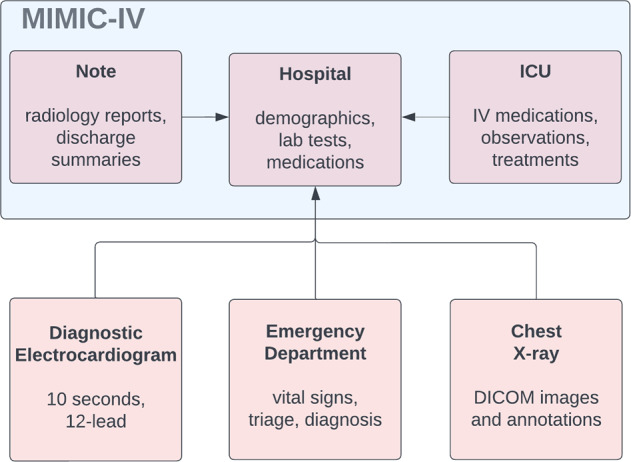
- MIMIC-IV was designed to be backward compatible with MIMIC-III while minimizing processing and organizing data into three modules: hosp, icu, and note.
## Methods
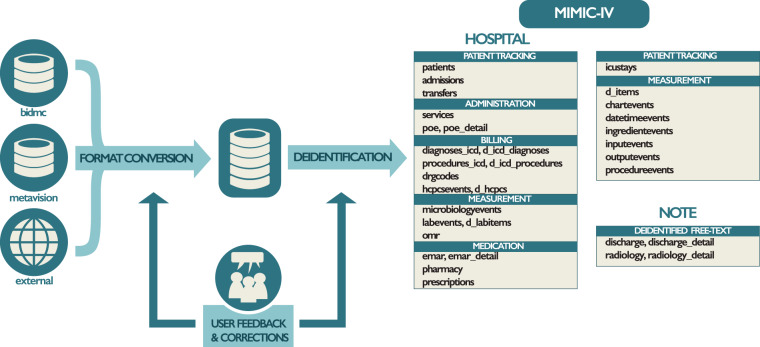
- Collaborative database construction from BIDMC clinical data, transformed and deidentified for release under IRB waiver and data use agreement; the process had three steps: acquisition, transformation, and deidentification.
- Sample/data: all patients admitted to the emergency department or an ICU at BIDMC between 2008–2019, excluding patients younger than 18 at first visit or on a protected list; external coding systems and Massachusetts death records were added.
- Main analysis/workflow: custom SQL scripts to restructure data into relational modules, plus custom linkage algorithms for out-of-hospital mortality and deidentification algorithms for HIPAA identifiers and free text; validation used integrity, consistency, and deidentification checks.
## Limitations
- The paper states that out-of-hospital mortality is only available through linkage to state death records, and deaths are censored at one year from last hospital discharge, so null death dates only indicate survival up to that point.
- The text makes evident that some data are incomplete or unevenly available across modules and time periods (for example, eMAR was deployed hospital-wide only by 2016, and the note module contains only discharge summaries and radiology reports); this is an evident coverage limitation from the text.
- The paper notes that clinical data are “sporadic and noisy,” reflecting routine care rather than research collection; this is a general data-quality limitation stated in the background.
Model-written summary. Check it against the paper before relying on it.
Integrity signals
Registry
Cites
Statistics
Figures
Verification
Claims the paper makes
13 Valid · 3 Not valid · 3 Not checked · 110 Own results and interpretations
Every source the paper cites for this claim was checked and supports it.
In the paper
“Finally, we combined two published algorithms for removing PHI from free-text17,18.”
§ MIMIC-IV, a freely accessible electronic health record dataset > Methods > Deidentification
What the sources say
- Supportedcites [17] Neamatullah I Automated de-identification of free-text medical records BMC medical informatics and decision making 2008 8 1 17 10.1186/1472-6947-8-32 18652655 PMC2526997 source
The Methods sections describe this paper's published algorithm for identifying and removing PHI from free-text medical records. The citing authors' statement that they combined two algorithms describes their own method; this citation identifies one of the algorithms. (LLM, conf=0.92)
- Supportedcites [18] Johnson, A. E. W., Bulgarelli, L. & Pollard, T. J. Deidentification of free-text medical records using pre-trained bidirectional transformers. In Proceedings of the ACM Conference on Health, Inference, and Learning, 214–221 (2020). PMC8330601 34350426 source
The Introduction (page not available in our copy) presents this paper’s BERT model for deidentifying free-text health records and describes measuring how much PHI it removes. The citation can therefore identify one of the two published algorithms; this source need not establish that the citing authors combined them. (LLM, conf=0.91)
plain- Asserted: passes — The authors put it forward as true.
- Checkable: passes — It can be checked against evidence.
- Load-bearing: passes — The paper’s conclusions depend on it.
- Based: passes — The paper gives a reason why it holds.
- Supported
Every source the paper cites for this claim was checked and supports it.
In the paper
“Due to data quality concerns regarding the Social Security Death Master File (SSDMF)13, we did not attempt to link patients to the SSDMF for determining out-of-hospital mortality.”
§ MIMIC-IV, a freely accessible electronic health record dataset > Methods > Acquisition
What the sources say
- Supportedcites [13] Levin MA Lin H-M Prabhakar G McCormick PJ Egorova NN Alive or dead: Validity of the social security administration death master file after 2011 Health Serv Res 2019 51 24 33 10.1111/1475-6773.13069 PMC6338290 30520023 source
The Discussion states that the Death Master File is no longer a reliable single source for mortality data, including out-of-hospital deaths. The decision not to link patients is the citing authors’ own methodological choice; the citation supports the data-quality concern motivating it. (LLM, conf=0.93)
plainstates a cause- Asserted: passes — The authors put it forward as true.
- Checkable: passes — It can be checked against evidence.
- Load-bearing: passes — The paper’s conclusions depend on it.
- Based: passes — The paper gives a reason why it holds.
- Supported
The cited sources support only part of this claim — read each source’s verdict below.
In the paper
“To support research that spans the periods of MIMIC-III (2002–2008) and MIMIC-IV (2008–2019), we have published the MIMIC-III Clinical Database CareVue subset22.”
§ MIMIC-IV, a freely accessible electronic health record dataset > Data Records > Building on earlier versions of MIMIC
What the sources say
- Partly supportedcites [22] Johnson AEW Pollard TJ Mark RG 2022 R. G. Mimic-iii clinical database carevue subset (version 1.4) PhysioNet 10.13026/8a4q-w170 sourceExperimental — accuracy not yet measured
The Abstract says the subset was provided to simplify combining MIMIC-III with MIMIC-IV, and the publication record identifies the released dataset. However, the Background and Methods give the CareVue period as 2001–2008, not the claim’s 2002–2008; the Background confirms MIMIC-IV’s 2008–2019 period. (LLM, conf=0.84)
plainstates a cause- Asserted: passes — The authors put it forward as true.
- Checkable: passes — It can be checked against evidence.
- Load-bearing: passes — The paper’s conclusions depend on it.
- Based: passes — The paper gives a reason why it holds.
- Partly supported
In the paper
“Access to MIMIC-IV is provided via PhysioNet19.”
§ MIMIC-IV, a freely accessible electronic health record dataset > Data Records
What the sources say
- Not checked — no full text of the sourcecites [19] Goldberger AL Physiobank, physiotoolkit, and physionet: components of a new research resource for complex physiologic signals circulation 2000 101 e215 e220 10.1161/01.CIR.101.23.e215 10851218 source
- Asserted: passes — The authors put it forward as true.
- Checkable: passes — It can be checked against evidence.
- Load-bearing: unclear — It is unclear whether the paper’s conclusions depend on it.
- Based: passes — The paper gives a reason why it holds.
A result the paper states — it cites no source for it, so there is none to check. The quote shows it is in the paper.
In the paper
“the d_icd_diagnoses and d_icd_procedures tables contain all codes which were valid at any point during the 2008–2019 time period.”
§ MIMIC-IV, a freely accessible electronic health record dataset > Data Records > Hospital module (hosp)
plain- Asserted: passes — The authors put it forward as true.
- Checkable: passes — It can be checked against evidence.
- Load-bearing: unclear — It is unclear whether the paper’s conclusions depend on it.
- Based: passes — The paper gives a reason why it holds.
29 more claims
Create a free account to see all 129 claims and every source verdict.
- Probably not a substantial claim. 84
- It may state two separate claims as one. 30
Claims other papers make about this one
Each is checked against this paper’s own text: does it say what the citing paper says it does?
The source backs part of the claim, not all of it — or backs it for a different population, condition or comparison.
In the citing paper
“We conducted a study using the publicly available MIMIC-IV dataset, which comprises 431,231 unique hospital admissions from 299,712 patients admitted to an ICU or the ED of the Beth Israel Deaconess Medical Center in Boston, Massachusetts27.”
From DRG-LLaMA : tuning LLaMA model to predict diagnosis-related group for hospitalized patients (2024) · cites this paper as [27]
Experimental — accuracy not yet measuredThe source backs part of the claim, not all of it — or backs it for a different population, condition or comparison.
In the citing paper
“For instance, the MIMIC-IV [148] includes a limited range of modalities, including clinical notes, medical images (chest x-ray Digital Imaging and Communications in Medicine [DICM] images), and time series (diagnostic electrocardiogram and patient records), making it a valuable but constrained resource for training medical M-LLMs.”
From Multimodal Large Language Models in Health Care: Applications, Challenges, and Future Outlook. (2024) · cites this paper as [148]
Experimental — accuracy not yet measuredThe source backs part of the claim, not all of it — or backs it for a different population, condition or comparison.
In the citing paper
“Existing multimodal medical data sets available for public use [84,85,148] are often relatively small in scale and demand the consolidation of numerous resources.”
From Multimodal Large Language Models in Health Care: Applications, Challenges, and Future Outlook. (2024) · cites this paper as [148]
Experimental — accuracy not yet measuredThe source backs part of the claim, not all of it — or backs it for a different population, condition or comparison.
In the citing paper
“- MIMIC-IV: A comprehensive, de-identified EHR dataset supporting tasks such as summarization, question answering, and document retrieval [17].”
From Retrieval-Augmented Generation (RAG) in Healthcare: A Comprehensive Review (2025) · cites this paper as [17]
Experimental — accuracy not yet measuredThe cited source says what the claim attributes to it.
In the citing paper
“In order to build agents that are grounded in medically relevant situations, we use a random sample of diagnostic questions from the US Medical Licensing Exam (USMLE), from deidentified electronic health records (MIMIC-IV)16, and from the New England Journal of Medicine (NEJM) case challenges.”
From AgentClinic: a multimodal benchmark for tool-using clinical AI agents (2026) · cites this paper as [16]
4 more claims about this paper
Create a free account to see every claim other papers make about this one.
Citations
Cites
Goldberger, A. L., Amaral, L. A. N., Glass, L., Hausdorff, J. M., Ivanov, P. C., Mark, R. G., Mietus, J. E., Moody, G. B., Peng, C.-K., & Stanley, H. E. (2000) · Circulation · doi:10.1161/01.cir.101.23.e215 · Cited by 14,809
Self-citationMIMIC-III, a freely accessible critical care database
Johnson, A. E. W., Pollard, T. J., Shen, L., Lehman, L.-W. H., Feng, M., Ghassemi, M., Moody, B., Szolovits, P., Anthony Celi, L., & Mark, R. G. (2016) · Scientific Data · doi:10.1038/sdata.2016.35 · Cited by 8,141 · cited 1×
“More recently, MIMIC-III was published in 2015 and significantly expanded MIMIC-II, containing data for over 40,000 patients 3 .”
MethodSelf-citationPollard, T. J., Johnson, A. E. W., Raffa, J. D., Celi, L. A., Mark, R. G., & Badawi, O. (2018) · Scientific Data · doi:10.1038/sdata.2018.178 · Cited by 1,993 · cited 2×
“0 comprises of 200,859 stays at ICUs and step-down units across 208 hospitals in the continental United States 4 .”
BackgroundSelf-citationSaeed, M., Villarroel, M., Reisner, A. T., Clifford, G., Lehman, L.-W., Moody, G., Heldt, T., Kyaw, T. H., Moody, B., & Mark, R. G. (2011) · Critical Care Medicine · doi:10.1097/ccm.0b013e31820a92c6 · Cited by 1,162
Self-citationBest Practices for Scientific Computing
Wilson, G., Aruliah, D. A., Brown, C. T., Chue Hong, N. P., Davis, M., Guy, R. T., Haddock, S. H. D., Huff, K. D., Mitchell, I. M., Plumbley, M. D., et al. (2014) · PLoS Biology · doi:10.1371/journal.pbio.1001745 · Cited by 723 · cited 1×
“The creation of MIMIC-IV followed best practices in scientific computing 23 .”
MethodJohnson, A., Bulgarelli, L., Pollard, T., Gow, B., Moody, B., Horng, S., Celi, L. A., & Mark, R. (2024) · PhysioNet · doi:10.13026/07hj-2a80 · Cited by 524
Self-citationJohnson, A., Bulgarelli, L., Pollard, T., Horng, S., Celi, L. A., & Mark, R. (2023) · PhysioNet · doi:10.13026/s6n6-xd98 · Cited by 524
Self-citationEarly prediction of circulatory failure in the intensive care unit using machine learning
Hyland, S. L., Faltys, M., Hüser, M., Lyu, X., Gumbsch, T., Esteban, C., Bock, C., Horn, M., Moor, M., Rieck, B., et al. (2020) · Nature Medicine · doi:10.1038/s41591-020-0789-4 · Cited by 477 · cited 1×
“The HiRID database contains high-resolution data for almost 34,000 admissions between 2008–2016 at Bern University Hospital in Switzerland 6,7 .”
BackgroundThe MIMIC Code Repository: enabling reproducibility in critical care research
Johnson, A. E. W., Stone, D. J., Celi, L. A., & Pollard, T. J. (2018) · Journal of the American Medical Informatics Association · doi:10.1093/jamia/ocx084 · Cited by 442 · cited 1×
“The MIMIC Code Repository was originally created for MIMIC-III to enable researchers to share and reuse code 24 .”
MethodSelf-citationAutomated de-identification of free-text medical records
Neamatullah, I., Douglass, M. M., Lehman, L.-W. H., Reisner, A., Villarroel, M., Long, W. J., Szolovits, P., Moody, G. B., Mark, R. G., & Clifford, G. D. (2008) · BMC Medical Informatics and Decision Making · doi:10.1186/1472-6947-8-32 · Cited by 413
Self-citation
Cited by
Items 2,501–2,600 of 3,269
Diurnal Variation in Mechanical Circulatory Support Initiation and Associated Outcomes
Darko, P., Otchere, B., Chinnatambi, C. S., Ottun, A.-R. A., Osei, J., OKOH, A., Berchie, P. O., DeMoss, B., Loungani, R., Damle, S., et al. (2026) · Journal of the Society for Cardiovascular Angiography & Interventions · doi:10.1016/j.jscai.2026.105382
“8 The database includes demographic characteristics, diagnoses, laboratory values, medication administration records, procedure timestamps, and physiologic measurements, enabling precise temporal assessment of clinical events and interventions.”
De Ritis Ratio and Heparin Therapy in Sepsis-Associated Liver Injury: A Multicenter Cohort Study
Yu, B., Li, D., Luan, Y., Rajagopalan, R., Guan, Y., Xiang, Y., Song, L., 方智野, Yao, Y., & Wu, M. (2026) · Thrombosis and Haemostasis · doi:10.1055/a-2852-9288
Wang, C., Chen, H., Ye, J., & Fan, Y. (2026) · BMC Cardiovascular Disorders · doi:10.1186/s12872-026-05888-5 · Cited by 1
“MIMIC-IV provides a large, well-curated critical care dataset with detailed timestamped vital signs, laboratory values, and interventions, enabling time-locked exposure and outcome assessment [41].”
Li, G., Li, F., Huang, M., Wu, B., Song, Z., Yan, J., Liu, F., Li, Z., Zou, Z., & He, Z. (2026) · International Journal of Cardiology · doi:10.1016/j.ijcard.2026.134519 · Cited by 1
Liu, R., Yao, C., Qiu, H., Li, J., Yao, L., Su, D., & Li, H. (2026) · BMC Medical Informatics and Decision Making · doi:10.1186/s12911-026-03507-z
“1) [16], a large public repository of de-identified records from patients admitted to intensive care units at Beth Israel Deaconess Medical Center from 2008 to 2022.”
Rawat, R., Borana, K., Chaturvedi, N., Rawat, H., Rawat, A., Rajavat, A., & Rimal, Y. (2026) · Journal of Sensors · doi:10.1155/js/9935004 · Cited by 1
Schetinin, E., Pestryakova, A. V., Shatalova, J. G., et al. (2026) · VESTNIK OF ASTRAKHAN STATE TECHNICAL UNIVERSITY SERIES MANAGEMENT COMPUTER SCIENCE AND INFORMATICS · doi:10.24143/2072-9502-2026-2-15-22
Xia, L., Chen, L., Jin, Z., Yang, Z., Lv, W., Lin, L., & Zhang, C. (2026) · BMC Cardiovascular Disorders · doi:10.1186/s12872-026-05879-6
“1), the latest release of the database (December 19, 2024; https://mimic-iv.mit.edu/) [17].”
Li, H., Ma, Y., & Su, Y. (2026) · BMC Cardiovascular Disorders · doi:10.1186/s12872-026-05908-4
“The MIMIC-IV database provides detailed bedside and procedural information that can be used to examine this question in a contemporary ICU cohort [20].”
Xu, C., Wang, Y., Bao, Z., & Zhang, Y. (2026) · BMC Nephrology · doi:10.1186/s12882-026-04983-1
“This retrospective cohort study was conducted using the Medical Information Mart for Intensive Care IV (MIMIC-IV) database, containing deidentified health information from patients admitted to the ICU at Beth Israel Deaconess Medical Center in Boston, Massachusetts [18].”
Tanhaei, M. (2026) · Machine Learning with Applications · doi:10.1016/j.mlwa.2026.100907
Hamma, M. B., Merrouni, Z. A., Frikh, B., & Ouhbi, B. (2026) · Artificial Intelligence Review · doi:10.1007/s10462-026-11556-z · Cited by 2
Lu, Y., Zhang, X., Zhu, Q., et al. (2026) · European journal of medical research · doi:10.1186/s40001-026-04450-5
“…database that contains data from over 50,000 ICU admissions at the Beth Israel Deaconess Medical Center in Boston, Massachusetts, from 2008 to 2019 [13]. eICU is a multicenter database comprising de-identified health data from more than 200,000 ICU admissions across the United States during…”
Wei, Z., Wang, F., Wang, S., Lu, R., Li, P. L., Liu, L., Xuan, K., Mao, Z., Wu, Y., & Zhu, X. (2026) · International Journal of Surgery · doi:10.1097/js9.0000000000005211
Lin, Z., Li, N., Liu, H., Xu, H., Zhu, Y. Y., Luo, N., & Yang, S. (2026) · BMC Infectious Diseases · doi:10.1186/s12879-026-13160-6
“The population was obtained from the Medical Information Mart for Intensive Care IV (MIMIC IV 2.2) data-base [10].”
InfluentialLiu, X., Xu, H., Han, X., & Zhang, Q. (2026) · BMC Neurology · doi:10.1186/s12883-026-04915-4
Sun, Y., Zhai, Y., Cai, H., et al. (2026) · Medicine · doi:10.1097/md.0000000000048211
UniRiskP: Multimodal fusion-based in-hospital mortality prediction and phenotyping
Zhang, X., Li, N., Tang, C., Zhang, J., Pang, Y., & Zhong, C. (2026) · Journal of King Saud University - Computer and Information Sciences · doi:10.1007/s44443-026-00776-6
Yan, X., Zhang, D., Zhou, X., Huang, R., Yu, T., & Li, L. (2026) · BMC Infectious Diseases · doi:10.1186/s12879-026-13428-x
“This retrospective cohort study utilized data from the publicly available MIMIC-IV version 3.1 database [21, 22] and (6) outliers in covariates.”
InfluentialXu, B., Chen, H., Xu, T., et al. (2026) · Medicine · doi:10.1097/md.0000000000048460
“[20] Patients diagnosed with AP were identified using the International Classification of Diseases (ICD), 9th Revision (ICD-9), and 10th Revision (ICD-10) codes, specifically 5770, K8590, K8510, K8520, K859, K8580, K859, K851, K8521, K852, K8500, K8592, K8511, K8530, K8581, K858, K8522, K8512,…”
Zhou, J., Cui, K., Tang, Q., Ruan, Y., & Li, X. (2026) · Frontiers in Medicine · doi:10.3389/fmed.2026.1817436
“…settings is also limited, and findings derived from Western critical care databases such as the Medical Information Mart for Intensive Care IV (MIMIC-IV), including trajectory-based sepsis studies, may not be fully generalizable to different healthcare systems and patient populations (16, 20, 21).”
Dai, Y., Xu, W., Yang, Y., Zhang, W., Loza, M., & Nakai, K. (2026) · BMC Medical Informatics and Decision Making · doi:10.1186/s12911-026-03514-0
“Data sharing for MIMIC was approved by the Beth Israel Deaconess Medical Center Institutional Review Board with a waiver of informed consent; because this study uses open, de-identified data, no additional IRB review was required by the authors [12].”
Li, X., Shen, Q., Liu, Z., Zhai, Q., & Zhang, X. (2026) · The Heart Surgery Forum · doi:10.31083/hsf50244
Alkunte, R., Sable, N., & Yenkikar, A. (2026) · doi:10.1109/etfi68128.2026.11484721
Patel, K., & Beedala, P. (2026) · Research Square · doi:10.21203/rs.3.rs-9602675/v1 · Cited by 1
Parveen¹, S., Sanjana¹, S., Sakshi¹, S., & Kumar, E. (2026) · Research Square · doi:10.21203/rs.3.rs-9499930/v1 · Cited by 1
Tao, M., Xia, M., Chen, S., Liao, G., Mao, J., Cai, S., Peng, J., & Xu, X. (2026) · Frontiers in Medicine · doi:10.3389/fmed.2026.1708360
Jiang, W., Chen, L., Tang, Y., & Deng, X. (2026) · Research Square · doi:10.21203/rs.3.rs-9218650/v1
ProbMED: A Probabilistic Framework for Medical Multimodal Binding
Gao, Y., Kim, S., You, J., & McIntosh, C. (2025) · IEEE/CVF International Conference on Computer Vision (ICCV) · doi:10.1109/iccv51701.2025.01875 · Cited by 4
“We matched patients using hadm id to connect data to discharge notes in MIMIC-IV [27].”
Tsou, C., Yang, D.-W., & Chen, H.-W. (2026) · General Hospital Psychiatry · doi:10.1016/j.genhosppsych.2026.04.016
İşleyen, H. B., Yavuz, S. T., Bulut, S., Kızkapan, F., Alioglu, C., sunger, E., & Okuyan, E. (2026) · Research Square · doi:10.21203/rs.3.rs-9336889/v1
NEURON: A Neuro-symbolic System for Grounded Clinical Explainability
Chandrasekaran, A., Zikos, D., Mete, M., Pang, A., Lund, B. D., & Sha, K. (2026) · IEEE/ACM Conference on Connected Health: Applications, Systems and Engineering Technologies · doi:10.1109/chase69719.2026.00012 · Cited by 3
“This data repository consists of approximately 94,400 ICU stays across 65,366 unique individuals, including details such as vital signs, laboratory results, oxygen saturation, medications, and ICD codes for diagnoses and procedures.”
Ren, Y., Zhang, Y., Xia, L., Zhu, Y., Lu, N., Wan, J., & He, W. (2026) · Clinica Chimica Acta · doi:10.1016/j.cca.2026.121049
Noise in Brazilian Clinical Anamnesis: An Empirical Study
Carvalho, L. A., Oliveira, T. M. D. S., Sousa, F. R. C., & Filho, J. B. F. (2026) · Anais do Simpósio Brasileiro de Sistemas de Informação (SBSI) · doi:10.5753/sbsi.2026.248362
“In the English-speaking world, foundational resources such as the MIMIC-III and MIMIC-IV databases have become the standard [Johnson et al. 2016, Johnson et al. 2023].”
Shang, J., Wei, L., Chen, S. M., Tang, X., Zhu, Y., Li, X., & Wang, R. (2026) · Journal of Clinical Medicine · doi:10.3390/jcm15093271
“1) database [18].”
Patel, K., & Beedala, P. (2026) · SSRN Electronic Journal · doi:10.64898/2026.05.01.26352193
Dual-Domain Multimodal Hyperbolic Fusion for Cardiopulmonary Disease Diagnosis in Emergency Care
Nan, K., Samaan, M., Burns, B., Ning, X., Han, Y., & Xue, Y. (2026) · IEEE Winter Conference on Applications of Computer Vision · doi:10.1109/wacv61042.2026.00839 · Cited by 1
“• We evaluate our model using four publicly available datasets from the MIMIC repository: MIMIC-IV [26], MIMIC-CXR [25], MIMIC-ECG [13], and MIMIC-IV-ED [24].”
Belski, V., & Lukina, K. (2026) · medRxiv · doi:10.64898/2026.05.04.26352355
Gorrepati, L. P., & Mohanadas, S. (2026) · doi:10.1109/wccst67302.2026.11495890
“DATA PROVENANCE MIMIC-IV will serve as the foundation of our assessment, with the main EHR source, and we will connect the diagnostic modalities with the shared subject identifier and exam timestamps[15,16].”
Li, R., Shen, Z., Wu, C., et al. (2026) · Bioengineering · doi:10.3390/bioengineering13050497
“…FAHZU-Kidney ( N = 14,164, 28 features, 43.7% missing; hemodialysis patients, Zhejiang, China) and SAHZU-CRC ( N = 2080, 18 features, 5.5% missing; colorectal cancer, Zhejiang, China), plus 8 MIMIC-IV ICD-diagnosis groups ( N = 1771–24,873, 28 features, 15–29% missing; US multi-center ICU [39]).”
InfluentialRaskin, M. B., Karhu-Leperd, I., Harris, C., Pirracchio, R., Lascarrou, J.-B., & Stevens, R. D. (2026) · medRxiv · doi:10.64898/2026.05.04.26352388
Ahn, J., Fu, S., Palacios, D., Jeong, H.-H., Wang, L., Swartz, M. C., Tosur, M., REDONDO, M. J., Wu, X., Yue, Z., et al. (2026) · medRxiv · doi:10.64898/2026.04.27.26351699
Zhang, R., Zhang, K., & Li, B. (2026) · Journal of Cardiothoracic Surgery · doi:10.1186/s13019-026-04188-5
“MIMIC-IV (3.0) database contains comprehensive and high-granularity information about well-defined and characterized patients admitted to ICUs at Beth Israel Deaconess Medical Center between 2008 and 2023 [22].”
InfluentialLiu, T., Meng, Z., Li, D., Hu, B., Sun, Y., Liu, Y., Zhang, Y., & Feng, L. (2026) · Journal of the National Medical Association · doi:10.1016/j.jnma.2026.04.006
On the optimal sodium correction rate in hyponatraemia and clinical outcome: a meta-analysis
Matrisch, L., Rau, Y., Graßhoff, L., et al. (2026) · Emergency Medicine Journal · doi:10.1136/emermed-2025-215189
Explainable ICD coding via MediThoth: A multimodal clinical decision support system
Elbehery, M. M., Mohamed, M. S., & Elshafey, M. A. (2026) · Array · doi:10.1016/j.array.2026.100875
İşleyen, H. B., Yavuz, S. T., Bulut, S., et al. (2026) · BMC Cardiovascular Disorders · doi:10.1186/s12872-026-05952-0
“Using the credentialed MIMIC-IV-ECHO-Ext-LVVOL-UMES-A4C-ROI resource [7], linked to the broader MIMIC-IV data infrastructure [8], we aimed to quantify how often A4C and biplane Simpson classifications disagree at clinically important LVEF thresholds and to identify the study-level features…”
Xu, J., Wang, G., & Ni, Y. (2026) · PLoS ONE · doi:10.1371/journal.pone.0348436
Lakshmibai, T., Jarina Raihan, A., Bency Ruban, L., M.Vengadanathan, Kumar, T. D., & Archana, M. A. (2025) · International Conference on Sustainable Computing and Smart Systems (ICSCSS) · doi:10.1109/icscss64956.2025.11500664
“Nonetheless, their restricted sensitivity and specificity have led the medical community to investigate data - driven methodologies for enhanced and fast sepsis prediction [3].”
GHOSTS: Validated generation of synthetic hospital time series
Zhumagambetov, R., Giesa, N., Boie, S. D., & Haufe, S. (2026) · Artificial Intelligence in Medicine · doi:10.1016/j.artmed.2026.103443 · Cited by 1
Babli, S. A., Gairola, P., Ogbu, C. E., Longa, F. A., Rautaray, A., Alamu, O. S., & Rizvi, S. F. H. (2026) · Cureus · doi:10.7759/cureus.108550
Hu, X., Ye, S., Hu, R., Li, S., Li, P., & Fang, Y. (2026) · BMC Medical Informatics and Decision Making · doi:10.1186/s12911-026-03351-1
“…Information Mart for Intensive Care (MIMIC)-IV (version 3.1) is publicly available and has received Institutional Review Board approval from both the Beth Israel Deaconess Medical Center in Boston, MA, USA (2011-P-001699/14) and the Massachusetts Institute of Technology, MA, USA (0403000206) [16].”
InfluentialCui, Y., Lu, S., Lv, K., Zhang, H., Pang, M., Wang, H., Tian, X., Chen, H., Qiu, J., & Wang, H. (2026) · Experimental Neurology · doi:10.1016/j.expneurol.2026.115813
Elevated plasma cholesterol improves sepsis outcome by promoting hepatic metabolic reprogramming
Wang, Q., Xue, J., Guo, L., Hao, D., Ito, M., Reese, R., Huang, B., Wu, C., & Li, X. (2026) · Frontiers in Immunology · doi:10.3389/fimmu.2026.1746724
Wang, C., Li, L.-J.-Y., Zhu, X.-X., Yu, H., & Yu, L.-M. (2025) · Integrate Medicine · doi:10.61958/imzw2201
Jatav, N., Tiwari, V., & Singh, A. (2026) · Lecture notes in networks and systems · doi:10.1007/978-3-032-23577-0_1
Wang, R., & Zhang, Y. (2026) · Research Square · doi:10.21203/rs.3.rs-8610345/v1
Hu, Y., Ping, F., Bao, W., Chen, F., Yao, Y., Lin, H., Ye, Z., Qian, J., Liu, C. X., Yuan, D., et al. (2026) · Journal of Clinical Medicine · doi:10.3390/jcm15103685
“The present study is a retrospective study of critically ill patients in non-critical care medicine with data from a large de-identified database, the Medical Information Mart for Intensive Care (MIMIC)-IV (version 3.1) [20,21].”
InfluentialMoon, D. H., Kim, M., Han, S., Kim, T.-H., Kim, D., Kim, W. J., Lee, S., Kim, Y. W., Heo, J., Choi, H.-S., et al. (2026) · Journal of Clinical Medicine · doi:10.3390/jcm15103642
“…an early prediction system for mechanical ventilation using the time-series deep learning model GRU-D++. GRU-D++ was trained on the Medical Information Mart for Intensive Care-IV (MIMIC-IV) 2.2 dataset [20] and evaluated on both MIMIC-IV and Kangwon National University Hospital (KNUH) datasets.”
Influentialİşleyen, H. B., Bulut, S., Abanoz, O., et al. (2026) · BMC Cardiovascular Disorders · doi:10.1186/s12872-026-05965-9
“The publicly available MIMIC-IV database now provides a large deidentified ICU resource suitable for reproducible clinical epidemiology at scale [10].”
Kang, M. W., Yun, S., Song, S. M., Kim, J. E., Kim, H. J., Cho, E. J., Kwon, Y. J., & Ahn, S. Y. (2026) · Kidney Medicine · doi:10.1016/j.xkme.2026.101397
Investigating organ dysfunction patterns in sepsis: a multidimensional approach
Zhang, T., Yang, M., Xie, J., Liu, Y., Wu, J., Gao, J., & Zhu, H. (2026) · Journal Of Big Data · doi:10.1186/s40537-026-01467-9
“This study was a restrictive observational study of the MIMIC-IV (version 2.2) database from 2008 to 2019 [18] and the eICU (version: 2.0) database.”
InfluentialLi, Y., Bu, X., Geng, Z., Dai, N., Fu, B., Deng, R., & Fu, X. (2026) · Respiratory Research · doi:10.1186/s12931-026-03702-6 · Cited by 3
“The model training set was extracted from the MIMIC-IV (version 3.1), which contains de-identified hospitalization records from the large teaching hospital, Beth Israel Deaconess Medical Center (BIDMC) in the United States, spanning the years 2008 to 2019 [14].”
InfluentialZhang, S., Chen, Y., Xie, K., Xu, N., Liu, T., Liu, J., Wang, L., & Han, Q. (2026) · Science Progress · doi:10.1177/00368504261448413 · Cited by 1
CDMed: Medication Recommendation via Causal Inference and Dual-Granularity Information Enhancement
Liu, J. S., Wang, H., & He, J. (2026) · Electronics · doi:10.3390/electronics15102087
Kang, Y., Yun, S., Song, S. M., Kim, J. E., Kim, H. J., Cho, E. J., Ahn, S. Y., Kwon, Y. J., & Kang, M. W. (2026) · PLOS Digital Health · doi:10.1371/journal.pdig.0001411
“Model development and internal validation used Medical Information Mart for Intensive Care (MIMIC)-III and MIMIC-IV [15,16].”
Automated Generation of Synthetic Medical Dialogues Using Large Language Models
Bahrololloomi, F., Luderschmidt, J., & Fu, B. (2026) · ACM Southeast Regional Conference (ACMSE) · doi:10.1145/3746467.3801512
A physiology-guided temporal graph learning approach for intensive care mortality prediction
Joseph, J., & Judy, M. V. (2026) · Healthcare Analytics · doi:10.1016/j.health.2026.100467 · Cited by 1
Meng, X., Ou, Y., Mao, J., et al. (2026) · Frontiers in Medicine · doi:10.3389/fmed.2026.1801925
Zeng, L., Deng, C., Wu, X., et al. (2026) · Medicine · doi:10.1097/md.0000000000048867
Nie, K., Xie, X., Tu, S., Gao, J., Wang, Y., & Wang, R. (2026) · Research Square · doi:10.21203/rs.3.rs-9409703/v1
Zhou, Z.-K., Xu, Q.-Y., Ping, J.-L., et al. (2026) · Clinical and Applied Thrombosis/Hemostasis · doi:10.1177/10760296261452851
Ren, Q., Chen, Y., Xu, X., Wang, J., Du, Y., Shi, Y., & Shao, X. (2026) · Journal of Intensive Care Medicine · doi:10.1177/08850666261448521 · Cited by 2
Yang, Q., Mo, P., Wu, A., Liu, Y., Guo, Z., & Zhao, N. (2026) · Phytomedicine · doi:10.1016/j.phymed.2026.158304 · Cited by 1
Wu, F., Wu, Q., Zhang, N., et al. (2026) · European journal of medical research · doi:10.1186/s40001-026-04585-5
“The database includes records from over 190,000 patients and more than 450,000 hospitalizations, encompassing demo-graphics, vital signs, laboratory results, medication prescriptions, diagnostic codes, therapeutic procedures, and clinical outcomes [24].”
Liu, J., Wang, X., Liu, X., Shi, W., Xiang, Z., Wang, C., & Guo, S. (2026) · Research Square · doi:10.21203/rs.3.rs-9486334/v1
Mai, X., Liu, Y., Ning, Y., Wacker, D. A., Lin, M., Liu, N., Puskarich, M. A., & Xie, F. (2026) · Research Square · doi:10.21203/rs.3.rs-9161309/v1
Rizqyawan, M. I., Macfarlane, P. W., Hadjidemetriou, S., & Deligianni, F. (2026) · IEEE International Symposium on Biomedical Imaging (ISBI) · doi:10.1109/isbi61048.2026.11515777 · Cited by 1
“The original ECG-FM was trained on MIMIC-IV[24], PhysioNet2021[25], and UHN datasets.”
Kim, J. A., Wu, H., Hu, T., et al. (2026) · IEEE International Symposium on Biomedical Imaging (ISBI) · doi:10.1109/isbi61048.2026.11515824
“1.0 [6], merged with MIMIC-IV clinical data [9] to construct survival outcomes.”
InfluentialA Three-Round Knowledge Propagation Learning for ICU First-Visit Prediction Tasks
陈, 银., Nie, H., Pu, X., & Ren, Y. (2025) · Asian Conference on Artificial Intelligence Technology (ACAIT) · doi:10.1109/acait67930.2025.11522591
Noble, P. M., & Farrell, S. (2026) · Veterinary Clinics of North America Small Animal Practice · doi:10.1016/j.cvsm.2026.03.016
Zhang, S., Liu, C., Shi, S., Chen, N., & Ma, L. (2026) · BMC Geriatrics · doi:10.1186/s12877-026-07624-2
“To address this knowledge gap, this study utilizes the Medical Information Mart for Intensive Care IV (MIMIC-IV) database [16] to validate HFRS's predictive capacity for 28-day mortality in older AIS patients admitted to ICUs.”
InfluentialLi, J., Li, R., Hou, Y., et al. (2026) · Thrombosis and Haemostasis · doi:10.1055/a-2873-8403
A Bedside Coagulation-Platelet Tipping Point for Mortality in Nontraumatic Subarachnoid Hemorrhage
Xia, S., Wu, J., Wang, C., et al. (2026) · Journal of Multidisciplinary Healthcare · doi:10.2147/jmdh.s606643
Alruqi, H., & Meshref, H. (2026) · International Conference on AI Innovations and Industry (ICAIII) · doi:10.1109/icaiii69475.2026.11521339 · Cited by 1
“Large-scale clinical data are derived from the MIMIC-IV critical-care database [21] and the Kaggle CKD dataset, while CT imaging samples capturing renal structural abnormalities are incorporated to enhance predictive performance.”
Aykut, A., Yildirim, C., Öncül, M. V., Günsoy, E., Tatlı, M., Kümet, Ö., & Sarıkaya, R. (2026) · Medicine · doi:10.1097/md.0000000000049037 · Cited by 2
Xiang, X.-J., Sun, X.-L., Ma, D.-Y., Ma, L., Liu, M.-Y., Li, J.-F., Zhang, W., Wang, Y.-D., & Xie, P. (2026) · BMC Cardiovascular Disorders · doi:10.1186/s12872-026-06005-2
“This retrospective multicenter cohort study used data from two large publicly available critical care databases: the Medical Information Mart for Intensive Care IV (MIMIC-IV, version 3.1) and the eICU Collaborative Research Database (eICU, version 2.0) [12, 13].”
InfluentialQi, K., Guo, C., & Yang, L. (2026) · Shock · doi:10.1097/shk.0000000000002870 · Cited by 1
“This was a retrospective cohort study conducted using the MIMIC-IV database (15).”
Zhuang, Y., Zhang, X.-Y., Wang, D.-C., Chen, Q., Zhuang, X., & Xiao-peng, Y. I. N. (2026) · BMC Medical Informatics and Decision Making · doi:10.1186/s12911-026-03575-1
“Both databases are large, de-identified, and publicly available repositories of critical care data, with established ethical approval and credentialed access (PhysioNet; IRB and data use agreements) [16, 17].”
Klann, J. G., Mendis, M. M., Visweswaran, S., Murphy, S. N., Estiri, H., & Wagholikar, K. B. (2026) · JAMIA Open · doi:10.1093/jamiaopen/ooag047
“14 The Kaggle dataset contains 768 records from women of Pima Indian heritage aged ≥ 21, with eight numeric clinical measurements—pregnancies, 2-hr plasma glucose, diastolic blood pressure, triceps skin-fold thickness, 2-hr serum insulin, body mass index, diabetes-pedigree function, and age—plus a…”
Yayan, J. (2026) · Life · doi:10.3390/life16050833
“Large critical care databases such as the Medical Information Mart for Intensive Care IV (MIMIC-IV) database provide an opportunity to investigate these associations in diverse ICU populations using real-world clinical data [9].”
Jiang, G., Zhuang, G., Zhao, H., et al. (2026) · Frontiers in Pharmacology · doi:10.3389/fphar.2026.1776926
Wang, Z., Guan, Z., Wang, Z., & Hui, Z. (2026) · Applied Soft Computing · doi:10.1016/j.asoc.2026.115513
Üçdal, M. T., Yurtsever, K., & Ekingen, E. (2026) · Scientific Reports · doi:10.1038/s41598-026-54539-4
Liu, Y., Guo, S., Li, G., et al. (2026) · Neurosurgical Review · doi:10.1007/s10143-026-04330-w
“RRID: SCR_007345. https://doi.org/10.13026/ kpb 9 -mt58 ), a large de-identified dataset comprising patients admitted to the emergency department or intensive care unit at Beth Israel Deaconess Medical Center in Boston, Massachusetts [ 31].”
InfluentialGao, Y., Hu, B., Yang, H., Xia, Z., Zhang, J., Xu, S., Cao, M., & Su, H. (2026) · Research Square · doi:10.21203/rs.3.rs-9453424/v1
Chen, F., Zhong, Y., Wang, D., et al. (2026) · Frontiers in Cardiovascular Medicine · doi:10.3389/fcvm.2026.1796096
Shi, C., Jiang, R., Xu, L., et al. (2026) · Research Square · doi:10.21203/rs.3.rs-9440443/v1
Metadata
- Authors
- Johnson, A. E. W., Bulgarelli, L., Shen, L., Gayles, A., Shammout, A., Horng, S., Pollard, T. J., Hao, S., Moody, B., Gow, B., Lehman, L.-W. H., Celi, L. A., & Mark, R. G.
- Affiliations
- Hospital for Sick Children (CA)
- Massachusetts Institute of Technology (US)
- Beth Israel Deaconess Medical Center (US)
- Corresponding author
- Johnson, Alistair E. W.
- ORCID
- Venue
- Scientific Data
- Published
- 2023-01-03
- Volume
- 10
- Issue
- 1
- Pages
- 1-1
- ISSN
- 2052-4463 (ISSN-L)
- PMC
- PMC9810617
- OpenAlex
- W4313439128
- Semantic Scholar
- 5425de16356015c2f26d2a50684c6c46d6998f51
- Cited by
- 3,401
- References
- 25
- Citations by year
- 2026: 1421 · 2025: 1175 · 2024: 649 · 2023: 154
- Type
- data paper
- Language
- en
- Update notices
- Open access
- gold
- doi.org
- Licence
- cc-by
- creativecommons.org/licenses/by/4.0 (tdm)
- creativecommons.org/licenses/by/4.0 (vor)
- Locations
- Scientific Data (publishedVersion, cc-by)
- PubMed Central (publishedVersion, cc-by)
- PubMed (publishedVersion)
- DOAJ (DOAJ: Directory of Open Access Journals) (submittedVersion, cc-by-sa)
- Funders
- U.S. Department of Health & Human Services | National Institutes of Health (NIH-R01-EB017205)
- Topics
- Physical Sciences › Computer Science › Artificial Intelligence › Machine Learning in Healthcare
- Health Sciences › Health Professions › Health Information Management › Electronic Health Records Systems
- Health Sciences › Health Professions › Health Information Management › Medical Coding and Health Information
- Keywords
- MIMIC-IV, electronic health records, clinical research data, hospital patient data, open data access, Beth Israel Deaconess Medical Center
- MeSH terms
- Hospitals, Humans, Databases, Factual, Electronic Health Records
About these checks
Registry, retraction, Cites and statistics results are computed, not judged, with one exception: a printed reference that no index lists is read once by a model before it counts as a citation error. Claims are extracted by a model and kept only when their quote appears verbatim in the text; each cited source is then checked, with a model’s help, for whether it says what the claim relies on. Those verdicts can be wrong — read the claim’s quote and the cited source before relying on one.
The claim verdicts this report counts are experimental: their accuracy is not yet measured.
A language model drew the claims from the paper on 2026-10-02, under version 3 of the claim definition (model deepseek-v4.1-flash, prompt extract-v3).
A second model labelled each claim on 2026-10-02 (model jev-1.13-20260917, definition revision gold-guideline-v0.2).
Cited sources are checked with a language model’s help (gpt-6-sol).
Statistics and arithmetic are recomputed, not judged.
Confidence bands are shown only for fields calibrated on our annotated test set. None is calibrated yet, so no band is shown.
What counts as a claim ›How we measure confidence ›How we check this ›
Are you an author, or do you see a problem with this page? Request a review
Data sources
Bibliographic data: Semantic Scholar, OpenAlex, Crossref.
Contains information from the Semantic Scholar Academic Graph Datasets, made available under the ODC Attribution License (ODC-BY 1.0).
Semantic Scholar’s data is described in: Kinney, R., et al. (2023). The Semantic Scholar Open Data Platform. arXiv:2301.10140.
