

Melatonin and its metabolites protect human melanocytes against UVB-induced damage: Involvement of NRF2-mediated pathways
Open accessThe DOI matches its Crossref record; 63 of the 63 references it cites were found in a registry or an index.
Abstract
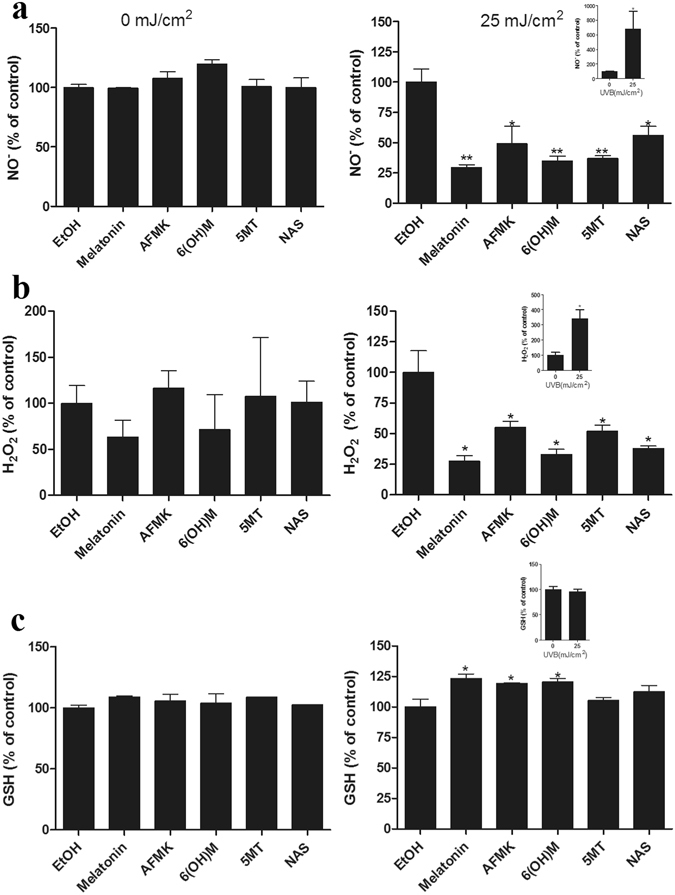
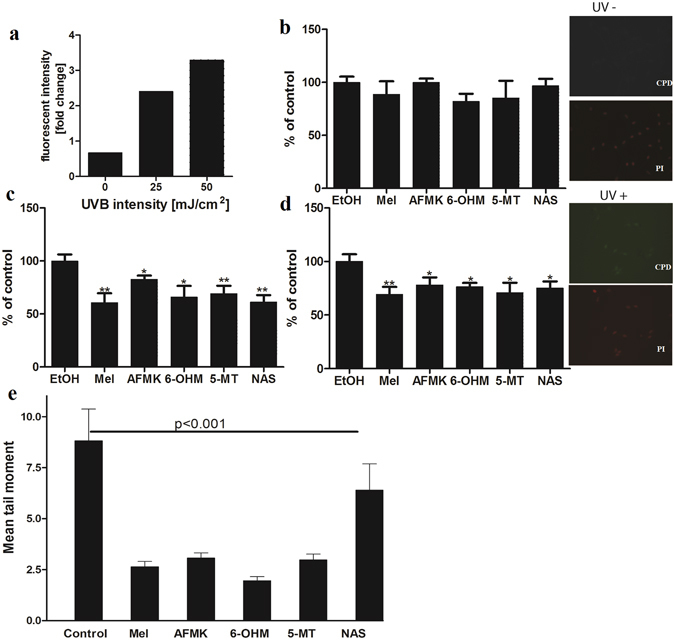
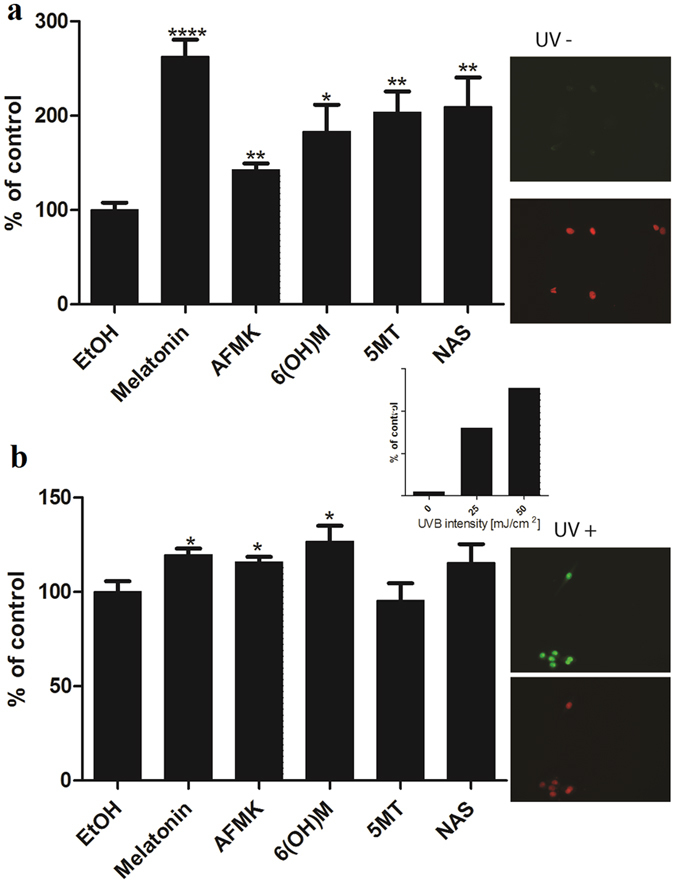
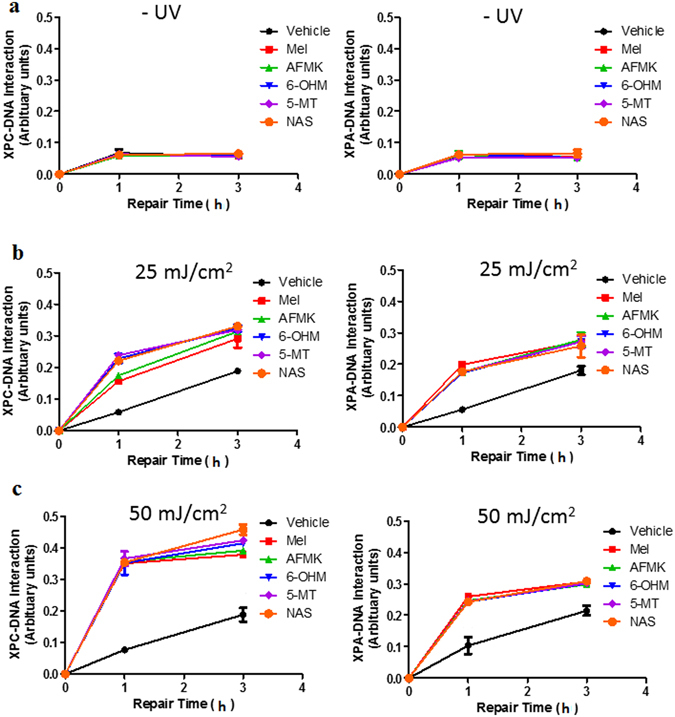
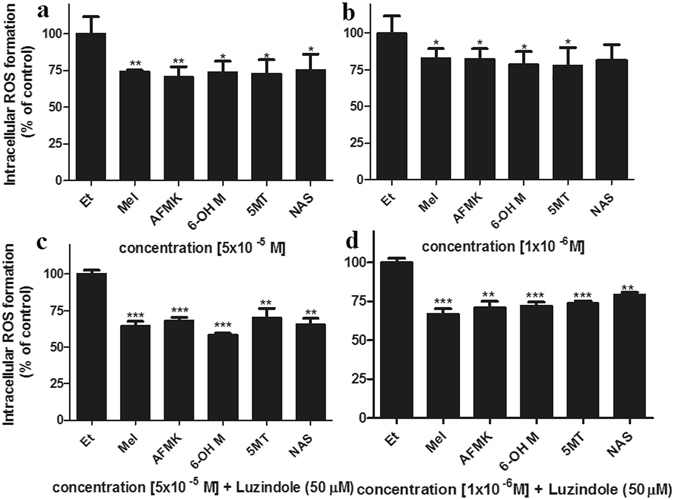
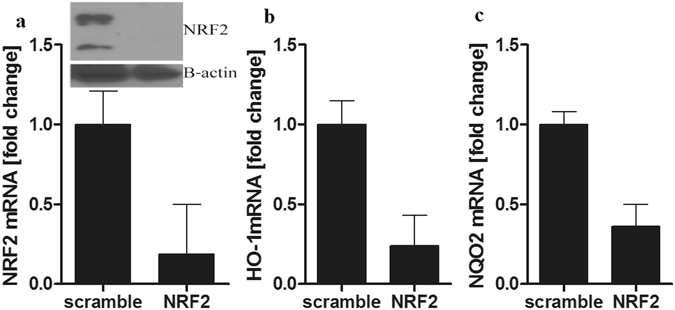
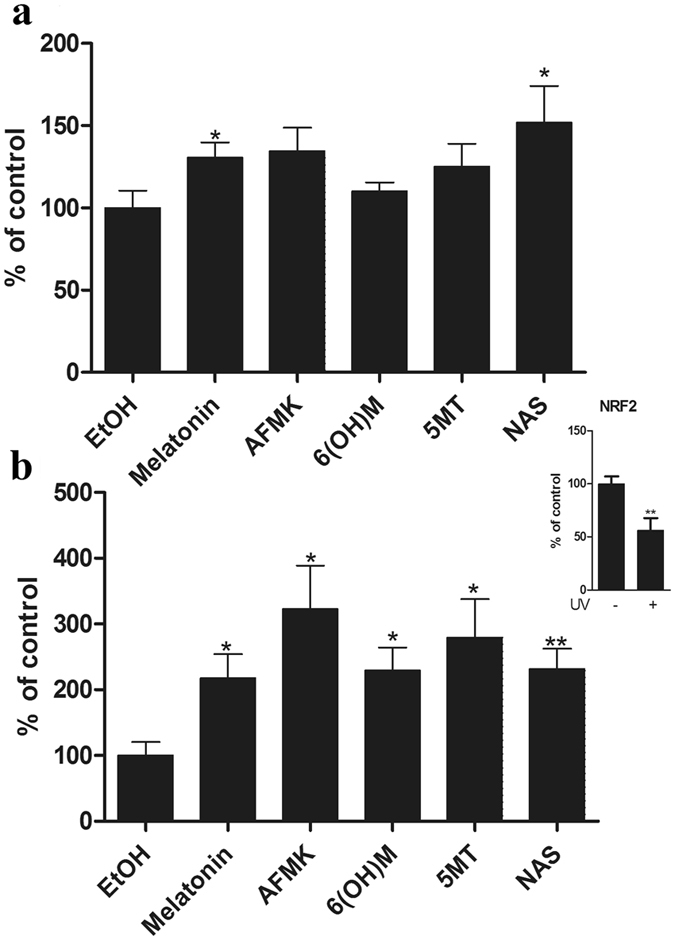
Ultraviolet light (UV) is an inducer of reactive oxygen species (ROS) as well as 6-4-photoproducts and cyclobutane pyrimidine dimers (CPD) in the skin, which further cause damage to the skin cells. Irradiation of cultured human melanocytes with UVB stimulated ROS production, which was reduced in cells treated with melatonin or its metabolites: 6-hydroxymelatonin (6-OHM), N1-acetyl-N2-formyl-5-methoxykynuramine (AFMK), N-acetylserotonin (NAS), and 5-methoxytryptamine (5-MT). Melatonin and its derivatives also stimulated the expression of NRF2 (nuclear factor erythroid 2 [NF-E2]-related factor 2) and its target enzymes and proteins that play an important role in cell protection from different damaging factors including UVB. Silencing of NRF2 using siRNA diminished the protective effects of melatonin, while the membrane melatonin receptors (MT1 or MT2) did not change the activities of either melatonin or its derivatives. Melatonin and its metabolites enhanced the DNA repair in melanocytes exposed to UVB and stimulated expression of p53 phosphorylated at Ser-15. In conclusion, melatonin and its metabolites protect melanocytes from UVB-induced DNA damage and oxidative stress through activation of NRF2-dependent pathways; these actions are independent of an effect on the classic membrane melatonin receptors. Thus, melatonin and its derivatives can serve as excellent protectors of melanocytes against UVB-induced pathology.
Overview
The claims and statistics of this paper haven’t been checked yet.
Free: it reads the open-access text and checks the first 5 claims that cite a source we can check. Create a free account to check every claim.
Integrity signals
Registry
Cites
Statistics
Figures
Verification
Claims the paper makes
The claims and statistics of this paper haven’t been checked yet.
Free: it reads the open-access text and checks the first 5 claims that cite a source we can check. Create a free account to check every claim.
Claims other papers make about this one
Each is checked against this paper’s own text: does it say what the citing paper says it does?
The source backs part of the claim, not all of it — or backs it for a different population, condition or comparison.
In the citing paper
“Several synthetic compounds that have the ability to scavenge ROS have been reported to activate Nrf2 expression [15,17,50,86,87], while the silencing of Nrf2 in cells significantly reduced the expression of its target antioxidant genes [15].”
From Protective Effects of Novel Derivatives of Vitamin D3 and Lumisterol Against UVB-Induced Damage in Human Keratinocytes Involve Activation of Nrf2 and P53 Defense Mechanisms (2019) · cites this paper as [15]
Experimental — accuracy not yet measuredThe source backs part of the claim, not all of it — or backs it for a different population, condition or comparison.
In the citing paper
“In studies of human melanocytes and keratinocytes, cells pretreated with melatonin decreased p53 expression, improved DNA repair, and decreased CPD generation [78, 79].”
From Sunscreens and Photoaging: A Review of Current Literature (2021) · cites this paper as [78]
Experimental — accuracy not yet measuredThe cited source says what the claim attributes to it.
In the citing paper
“The effects of the novel vitamin D3 and lumisterol derivatives, including the stimulation of the expression of Nrf2-downstream genes and proteins, as well as the photoprotection, are similar to those described for other synthetic and natural compounds including 1,25(OH)2D3 [1,15,17,20,36,50,97].”
In the citing paper
“In addition, DNA damage induced by UVB irradiation is associated with Nrf2-regulated antioxidants responses in skin cells [15,16].”
In the citing paper
“Our previous studies revealed a significant protective ability of Nrf2 through balancing the oxidative stress status in cells with expression of Nrf2 knocked down [6,15].”
Self-check
Percentages, sums and reported differences re-computed from the paper’s own numbers.
The self-check needs the paper’s full text.
Citations
Cites
2 retracted
Tobón-Velasco, J. C., Vázquez‐Victorio, G., Macías‐Silva, M., Cuevas, E., Ali, S. F., Maldonado, P. D., González-Trujano, M. E., Cuadrado, A., Pedraza‐Chaverrí, J., & Santamaría, A. (2012) · Free Radical Biology and Medicine · doi:10.1016/j.freeradbiomed.2012.06.040 · Cited by 47
RetractedRetracted: AKAP12 mediates PKA-induced phosphorylation of ATR to enhance nucleotide excision repair
Jarrett, S. G., Wolf Horrell, E. M., & D'Orazio, J. A. (2016) · Nucleic Acids Research · doi:10.1093/nar/gkw871 · Cited by 23
Self-citationRetractedMelanin pigmentation in mammalian skin and its hormonal regulation
Slominski, A., Tobin, D. J., Shibahara, S., & Wortsman, J. (2004) · Physiological Reviews · doi:10.1152/physrev.00044.2003 · Cited by 2,015
Self-citationMelatonin as an antioxidant: under promises but over delivers
Reiter, R. J., Mayo, J. C., Tan, D., Sainz, R. M., Alatorre‐Jimenez, M., & Qin, L. (2016) · Journal of Pineal Research · doi:10.1111/jpi.12360 · Cited by 1,703
Self-citationTan, D., Manchester, L. C., Terron, M. P., Flores, L. J., & Reiter, R. J. (2007) · Journal of Pineal Research · doi:10.1111/j.1600-079x.2006.00407.x · Cited by 1,601
Self-citationNrf2 signaling in coordinated activation of antioxidant gene expression
Jaiswal, A. K. (2004) · Free Radical Biology and Medicine · doi:10.1016/j.freeradbiomed.2004.02.074 · Cited by 1,254
Oda, K., Arakawa, H., Tanaka, T., Matsuda, K., Tanikawa, C., Mori, T., Nishimori, H., Tamai, K., Tokino, T., Nakamura, Y., et al. (2000) · Cell · doi:10.1016/s0092-8674(00)00073-8 · Cited by 1,172
Oxidative Stress in the Pathogenesis of Skin Disease
Bickers, D. R., & Athar, M. (2006) · Journal of Investigative Dermatology · doi:10.1038/sj.jid.5700340 · Cited by 1,092
Melatonin: an ancient molecule that makes oxygen metabolically tolerable
Manchester, L. C., Coto‐Montes, A., Boga, J. A., Andersen, L. P. H., Zhou, Z., Galano, A., Vriend, J., Tan, D., & Reiter, R. J. (2015) · Journal of Pineal Research · doi:10.1111/jpi.12267 · Cited by 945
Self-citationMelatonin—A pleiotropic, orchestrating regulator molecule
Hardeland, R., Cardinali, D. P., Srinivasan, V., Spence, D. W., Brown, G. M., & Pandi-Perumal, S. R. (2011) · Progress in Neurobiology · doi:10.1016/j.pneurobio.2010.12.004 · Cited by 843
On the free radical scavenging activities of melatonin's metabolites, AFMK and AMK
Galano, A., Tan, D. X., & Reiter, R. J. (2013) · Journal of Pineal Research · doi:10.1111/jpi.12010 · Cited by 795
Self-citationMouret, S., Baudouin, C., Charveron, M., Favier, A., Cadet, J., & Douki, T. (2006) · Proceedings of the National Academy of Sciences · doi:10.1073/pnas.0604213103 · Cited by 684
Melatonin membrane receptors in peripheral tissues: Distribution and functions
Slominski, R. M., Reiter, R. J., Schlabritz-Loutsevitch, N., Ostrom, R. S., & Slominski, A. T. (2012) · Molecular and Cellular Endocrinology · doi:10.1016/j.mce.2012.01.004 · Cited by 675
Self-citationExtrapineal melatonin: analysis of its subcellular distribution and daily fluctuations
Venegas, C., García, J. A., Escames, G., Ortiz, F., López, A., Doerrier, C., García‐Corzo, L., López, L. C., Reiter, R. J., & Acuña‐Castroviejo, D. (2012) · Journal of Pineal Research · doi:10.1111/j.1600-079x.2011.00931.x · Cited by 577
Self-citationTan, D.-X., Manchester, L. C., Reiter, R. J., Plummer, B. F., Limson, J., Weintraub, S. T., & Qi, W. (2000) · Free Radical Biology and Medicine · doi:10.1016/s0891-5849(00)00435-4 · Cited by 474
Self-citationUV wavelength-dependent DNA damage and human non-melanoma and melanoma skin cancer
Pfeifer, G. P., & Besaratinia, A. (2012) · Photochemical & Photobiological Sciences · doi:10.1039/c1pp05144j · Cited by 473
Hardeland, R., Tan, D., & Reiter, R. J. (2009) · Journal of Pineal Research · doi:10.1111/j.1600-079x.2009.00701.x · Cited by 472
Self-citationIsolation of Melatonin and 5-Methoxyindole-3-acetic Acid from Bovine Pineal Glands
Lerner, A. B., Case, J. D., & Takahashi, Y. (1960) · Journal of Biological Chemistry · doi:10.1016/s0021-9258(18)69351-2 · Cited by 416
Melanocytes as Instigators and Victims of Oxidative Stress
Denat, L., Kadekaro, A. L., Marrot, L., Leachman, S. A., & Abdel-Malek, Z. A. (2014) · Journal of Investigative Dermatology · doi:10.1038/jid.2014.65 · Cited by 416
The cutaneous serotoninergic/melatoninergic system: securing a place under the sun
Slominski, A., Wortsman, J., & Tobin, D. J. (2005) · The FASEB Journal · doi:10.1096/fj.04-2079rev · Cited by 402
Self-citationUVB Light Stimulates Production of Reactive Oxygen Species
Heck, D. E., Vetrano, A. M., Mariano, T. M., & Laskin, J. D. (2003) · Journal of Biological Chemistry · doi:10.1074/jbc.c300048200 · Cited by 370
Martín, M., Macías, M., Escames, G., León, J., & Acuña-Castroviejo, D. (2000) · The FASEB Journal · doi:10.1096/fj.99-0865fje · Cited by 345
Urata, Y., Honma, S., Goto, S., Todoroki, S., Iida, T., Cho, S., Honma, K., & Kondo, T. (1999) · Free Radical Biology and Medicine · doi:10.1016/s0891-5849(99)00131-8 · Cited by 333
Melatonin in the skin: synthesis, metabolism and functions
Slominski, A., Tobin, D. J., Zmijewski, M. A., Wortsman, J., & Paus, R. (2008) · Trends in Endocrinology & Metabolism · doi:10.1016/j.tem.2007.10.007 · Cited by 331
Self-citationFischer, T. W., Kleszczyński, K., Hardkop, L. H., Kruse, N., & Zillikens, D. (2013) · Journal of Pineal Research · doi:10.1111/jpi.12018 · Cited by 330
Negi, G., Kumar, A., & Sharma, S. S. (2011) · Journal of Pineal Research · doi:10.1111/j.1600-079x.2010.00821.x · Cited by 314
Pharmacology and function of melatonin receptors
Dubocovich, M. L. (1988) · The FASEB Journal · doi:10.1096/fasebj.2.12.2842214 · Cited by 294
J. Reiter, R., Tan, D.-X., Rosales-Corral, S., & C. Manchester, L. (2013) · Mini Reviews in Medicinal Chemistry · doi:10.2174/138955713804999810 · Cited by 273
Self-citationKadekaro, A. L., Kavanagh, R., Kanto, H., Terzieva, S., Hauser, J., Kobayashi, N., Schwemberger, S., Cornelius, J., Babcock, G., Shertzer, H. G., et al. (2005) · Cancer Research · doi:10.1158/0008-5472.can-04-4535 · Cited by 259
Functional activity of serotoninergic and melatoninergic systems expressed in the skin
Slominski, A., Pisarchik, A., Zbytek, B., Tobin, D. J., Kauser, S., & Wortsman, J. (2003) · Journal of Cellular Physiology · doi:10.1002/jcp.10287 · Cited by 235
Self-citationDinkova-Kostova, A. T., Jenkins, S. N., Fahey, J. W., Ye, L., Wehage, S. L., Liby, K. T., Stephenson, K. K., Wade, K. L., & Talalay, P. (2006) · Cancer Letters · doi:10.1016/j.canlet.2005.09.012 · Cited by 230
Melatonin and the circadian system: contributions to successful female reproduction
Reiter, R. J., Tamura, H., Tan, D. X., & Xu, X.-Y. (2014) · Fertility and Sterility · doi:10.1016/j.fertnstert.2014.06.014 · Cited by 222
Self-citationNrf2-A regulator of keratinocyte redox signaling
Schäfer, M., & Werner, S. (2015) · Free Radical Biology and Medicine · doi:10.1016/j.freeradbiomed.2015.04.018 · Cited by 192
Melatonin increases p53 and p21WAFl expression in MCF-7 human breast cancer cells in vitro
Mediavilla, M. D., Cos, S., & Sánchez-Barceló, E. J. (1999) · Life Sciences · doi:10.1016/s0024-3205(99)00262-3 · Cited by 190
Melatonin as a major skin protectant: from free radical scavenging to DNA damage repair
Fischer, T. W., Slominski, A., Zmijewski, M. A., Reiter, R. J., & Paus, R. (2008) · Experimental Dermatology · doi:10.1111/j.1600-0625.2008.00767.x · Cited by 186
Self-citationNitrosation of melatonin by nitric oxide and peroxynitrite
Blanchard, B., Pompon, D., & Ducrocq, C. (2000) · Journal of Pineal Research · doi:10.1034/j.1600-079x.2000.290308.x · Cited by 166
Marrot, L., Jones, C., Perez, P., & Meunier, J. (2008) · Pigment Cell & Melanoma Research · doi:10.1111/j.1755-148x.2007.00424.x · Cited by 164
Melatonin suppresses cisplatin-induced nephrotoxicity via activation of Nrf-2/HO-1 pathway
Kilic, U., Kilic, E., Tuzcu, Z., Tuzcu, M., Ozercan, I. H., Yilmaz, O., Sahin, F., & Sahin, K. (2013) · Nutrition & Metabolism · doi:10.1186/1743-7075-10-7 · Cited by 160
Kim, T., Kleszczyński, K., Janjetovic, Z., Sweatman, T., Lin, Z., Li, W., Reiter, R. J., Fischer, T. W., & Slominski, A. T. (2013) · The FASEB Journal · doi:10.1096/fj.12-224691 · Cited by 160
Self-citationLocal Melatoninergic System as the Protector of Skin Integrity
Slominski, A., Kleszczyński, K., Semak, I., Janjetovic, Z., Żmijewski, M., Kim, T.-K., Slominski, R., Reiter, R., & Fischer, T. (2014) · International Journal of Molecular Sciences · doi:10.3390/ijms151017705 · Cited by 144
Self-citationSlominski, A., Baker, J., Rosano, T. G., Guisti, L. W., Ermak, G., Grande, M., & Gaudet, S. J. (1996) · Journal of Biological Chemistry · doi:10.1074/jbc.271.21.12281 · Cited by 134
Self-citationKokot, A., Metze, D., Mouchet, N., Galibert, M.-D., Schiller, M., Luger, T. A., & Böhm, M. (2009) · Endocrinology · doi:10.1210/en.2008-1315 · Cited by 132
Proteins of the Extracellular Matrix Are Sensitizers of Photo-oxidative Stress in Human Skin Cells
Wondrak, G. T., Roberts, M. J., Cervantes-Laurean, D., Jacobson, M. K., & Jacobson, E. L. (2003) · Journal of Investigative Dermatology · doi:10.1046/j.1523-1747.2003.12414.x · Cited by 126
Narrow-band ultraviolet-B stimulates proliferation and migration of cultured melanocytes
Wu, C., Yu, C., Wu, C., Lan, C. E., & Yu, H. (2004) · Experimental Dermatology · doi:10.1111/j.0906-6705.2004.00221.x · Cited by 121
Janjetovic, Z., Nahmias, Z. P., Hanna, S., Jarrett, S. G., Kim, T., Reiter, R. J., & Slominski, A. T. (2014) · Journal of Pineal Research · doi:10.1111/jpi.12146 · Cited by 113
Self-citationDNA damage strength modulates a bimodal switch of p53 dynamics for cell-fate control
Chen, X., Chen, J., Gan, S., Guan, H., Zhou, Y., Ouyang, Q., & Shi, J. (2013) · BMC Biology · doi:10.1186/1741-7007-11-73 · Cited by 105
A Novel Metabolic Pathway of Melatonin: Oxidation by Cytochrome c
Semak, I., Naumova, M., Korik, E., Terekhovich, V., Wortsman, J., & Slominski, A. (2005) · Biochemistry · doi:10.1021/bi050202d · Cited by 103
Self-citationJanjetovic, Z., Tuckey, R. C., Nguyen, M. N., Thorpe, E. M., & Slominski, A. T. (2010) · Journal of Cellular Physiology · doi:10.1002/jcp.21992 · Cited by 103
Self-citationHow Phosphorylation Regulates the Activity of p53
Steegenga, W. T., van der Eb, A. J., & Jochemsen, A. G. (1996) · Journal of Molecular Biology · doi:10.1006/jmbi.1996.0560 · Cited by 96
Melatonin triggers p53Ser phosphorylation and prevents DNA damage accumulation
Santoro, R., Marani, M., Blandino, G., Muti, P. C., & Strano, S. (2011) · Oncogene · doi:10.1038/onc.2011.469 · Cited by 93
Smit, N. P. M., Van Nieuwpoort, F. A., Marrot, L., Out, C., Poorthuis, B., Van Pelt, H., Meunier, J., & Pavel, S. (2008) · Photochemistry and Photobiology · doi:10.1111/j.1751-1097.2007.00242.x · Cited by 91
Janjetovic, Z., Brozyna, A. A., Tuckey, R. C., Kim, T.-K., Nguyen, M. N., Jozwicki, W., Pfeffer, S. R., Pfeffer, L. M., & Slominski, A. T. (2011) · British Journal of Cancer · doi:10.1038/bjc.2011.458 · Cited by 91
Self-citationON THE FREE RADICAL SCAVENGING ACTIVITIES OF MELATONINS METABOLITES, AFMK AND AMK
Galano, A., & Tan, D. (2013) · Cited by 85
Deng, Y. L., Zhu, J., Mi, C., Xu, B., Jiao, C., Li, Y., Xu, D., Liu, W., & Xu, Z. (2014) · Neurotoxicity Research · doi:10.1007/s12640-014-9489-5 · Cited by 80
Rondanelli, M., Faliva, M. A., Perna, S., & Antoniello, N. (2013) · Aging Clinical and Experimental Research · doi:10.1007/s40520-013-0118-6 · Cited by 79
Slominski, A. T., Janjetovic, Z., Kim, T.-K., Wasilewski, P., Rosas, S., Hanna, S., Sayre, R. M., Dowdy, J. C., Li, W., & Tuckey, R. C. (2015) · The Journal of Steroid Biochemistry and Molecular Biology · doi:10.1016/j.jsbmb.2015.01.014 · Cited by 77
Self-citationSerotoninergic System in Hamster Skin
Slominski, A. T., Pisarchik, A. V., Semak, I. V., Sweatman, T. W., Szczesniewski, A., & Wortsman, J. (2002) · Journal of Investigative Dermatology · doi:10.1046/j.1523-1747.2002.00156.x · Cited by 77
Self-citationLarsson, P., Andersson, E., Johansson, U., Öllinger, K., & Rosdahl, I. (2005) · Experimental Dermatology · doi:10.1111/j.0906-6705.2005.00238.x · Cited by 65
Blockage of melatonin receptors impairs p53-mediated prevention of DNA damage accumulation
Santoro, R., Mori, F., Marani, M., Grasso, G., Cambria, M. A., Blandino, G., Muti, P., & Strano, S. (2013) · Carcinogenesis · doi:10.1093/carcin/bgt025 · Cited by 62
Rosen, R. B., Hu, D., Chen, M., McCormick, S. A., Walsh, J., & Roberts, J. E. (2012) · PubMed Central · Cited by 58
Increased oxidative DNA damage in mononuclear leukocytes in vitiligo
Giovannelli, L., Bellandi, S., Pitozzi, V., Fabbri, P., Dolara, P., & Moretti, S. (2004) · Mutation research. Fundamental and molecular mechanisms of mutagenesis · doi:10.1016/j.mrfmmm.2004.07.005 · Cited by 44
Gurer-Orhan, H., & Suzen, S. (2014) · Current Medicinal Chemistry · doi:10.2174/0929867321666141215095259 · Cited by 42
Nrf2 activation as a future target of therapy for chronic diseases
Taha, R. A., & Blaise, G. A. (2014) · Functional Foods in Health and Disease · doi:10.31989/ffhd.v4i12.160 · Cited by 8
Research works printed but not linked: 1
- Slominski ATD Shibahara S Wortsman J Melanin pigmentation in mammalian skin and its hormonal regulation Physiol Rev 2004 84 1155 1228 10.1152/physrev.00044.2003 15383650 · DOI · Paper page
Cited by
Melatonin as a mitochondria-targeted antioxidant: one of evolution's best ideas
Reiter, R. J., Rosales-Corral, S., Tan, D. X., Jou, M. J., Galano, A., & Xu, B. (2017) · Cellular and Molecular Life Sciences · doi:10.1007/s00018-017-2609-7 · Cited by 558
Self-citationMitochondria: Central Organelles for Melatonin′s Antioxidant and Anti-Aging Actions
Reiter, R., Tan, D., Rosales-Corral, S., Galano, A., Zhou, X., & Xu, B. (2018) · Molecules · doi:10.3390/molecules23020509 · Cited by 393
“Some proposed mechanisms include their ability to inhibit the ubiquitination of Nrf2, thereby allowing it to translocate to the nucleus and bind to the antioxidant response element (ARE), which leads to the activation of the associated enzymes [15,77,78].”
BackgroundSelf-citationMelatonin and its metabolites vs oxidative stress: From individual actions to collective protection
Galano, A., & Reiter, R. J. (2018) · Journal of Pineal Research · doi:10.1111/jpi.12514 · Cited by 353
Self-citationMelatonin: A Versatile Protector against Oxidative DNA Damage
Galano, A., Tan, D.-X., & Reiter, R. (2018) · Molecules · doi:10.3390/molecules23030530 · Cited by 290
“There is also evidence that melatonin and its metabolites (6OHM, AFMK and NAS) protect melanocytes from UVB-induced DNA damage and OS through activation of nuclear erythroid 2-related factor 2 (Nrf2) and its target enzymes [277].”
BackgroundInfluentialSelf-citationMelatonin: A Cutaneous Perspective on its Production, Metabolism, and Functions
Slominski, A. T., Hardeland, R., Zmijewski, M. A., Slominski, R. M., Reiter, R. J., & Paus, R. (2018) · Journal of Investigative Dermatology · doi:10.1016/j.jid.2017.10.025 · Cited by 286
“Given that melatonin stimulates nuclear erythroid 2-related factor 2 (Janjetovic et al., 2017; Kleszczynski et al., 2016) whereas nuclear erythroid 2-related factor 2 activation protects human HFs against oxidative stress-induced hair growth inhibition (Haslam et al., 2017), it deserves further…”
BackgroundInfluentialSelf-citation
Metadata
- Authors
- Janjetovic, Z., Jarrett, S. G., Lee, E. F., Duprey, C., Reiter, R. J., & Slominski, A. T.
- Affiliations
- University of Kentucky (US)
- University of Tennessee Health Science Center (US)
- The University of Texas at San Antonio Health Science Center (US)
- Corresponding author
- Slominski, Andrzej T.
- Venue
- Scientific Reports
- Published
- 2017-04-28
- Volume
- 7
- Issue
- 1
- Pages
- 1274-1274
- ISSN
- 2045-2322 (ISSN-L)
- PMC
- PMC5430855
- OpenAlex
- W2608477110
- Cited by
- 163
- References
- 63
- Citations by year
- 2026: 8 · 2025: 11 · 2024: 18 · 2023: 16 · 2022: 16 · 2021: 20 · 2020: 24 · 2019: 21 · 2018: 25 · 2017: 4
- FWCI
- 12.41
- Type
- journal article
- Language
- en
- Open access
- gold
- doi.org
- Licence
- cc-by
- creativecommons.org/licenses/by/4.0 (tdm)
- creativecommons.org/licenses/by/4.0 (vor)
- Locations
- Scientific Reports (publishedVersion, cc-by)
- PubMed Central (publishedVersion, cc-by)
- PubMed (publishedVersion)
- UKnowledge (University of Kentucky) (submittedVersion, cc-by)
- DOAJ (DOAJ: Directory of Open Access Journals) (submittedVersion, cc-by-sa)
- Funders
- National Institutes of Health
- National Institute of Arthritis and Musculoskeletal and Skin Diseases (R01AR056666)
- Topics
- Life Sciences › Neuroscience › Endocrine and Autonomic Systems › Circadian rhythm and melatonin
- Life Sciences › Biochemistry, Genetics and Molecular Biology › Cell Biology › melanin and skin pigmentation
- Health Sciences › Medicine › Dermatology › Skin Protection and Aging
- Keywords
- melatonin, melatonin metabolites, melanocytes, UV-B radiation, Nrf2, DNA repair, reactive oxygen species, oxidative stress, p53 phosphorylation, cyclobutane pyrimidine dimers, 6-4 photoproducts, skin photoprotection, melatonin receptors
- MeSH terms
- Cells, Cultured, DNA Repair, Humans, Melanocytes, Melatonin, Radiation-Protective Agents, Ultraviolet Rays, Reactive Oxygen Species, NF-E2-Related Factor 2
About these checks
Registry, retraction, Cites and statistics results are computed, not judged, with one exception: a printed reference that no index lists is read once by a model before it counts as a citation error. Claims are extracted by a model and kept only when their quote appears verbatim in the text; each cited source is then checked, with a model’s help, for whether it says what the claim relies on. Those verdicts can be wrong — read the claim’s quote and the cited source before relying on one.
Statistics and arithmetic are recomputed, not judged.
Confidence bands are shown only for fields calibrated on our annotated test set. None is calibrated yet, so no band is shown.
What counts as a claim ›How we measure confidence ›How we check this ›
Are you an author, or do you see a problem with this page? Request a review
Data sources
Bibliographic data: Semantic Scholar, OpenAlex, Crossref.
Contains information from the Semantic Scholar Academic Graph Datasets, made available under the ODC Attribution License (ODC-BY 1.0).
Semantic Scholar’s data is described in: Kinney, R., et al. (2023). The Semantic Scholar Open Data Platform. arXiv:2301.10140.
