

Irregular sleep/wake patterns are associated with poorer academic performance and delayed circadian and sleep/wake timing
Open accessThe DOI matches its Crossref record; 63 of the 64 references it cites were found in a registry or an index; 9 of the 24 sources its claims cite were checked for support.
Abstract
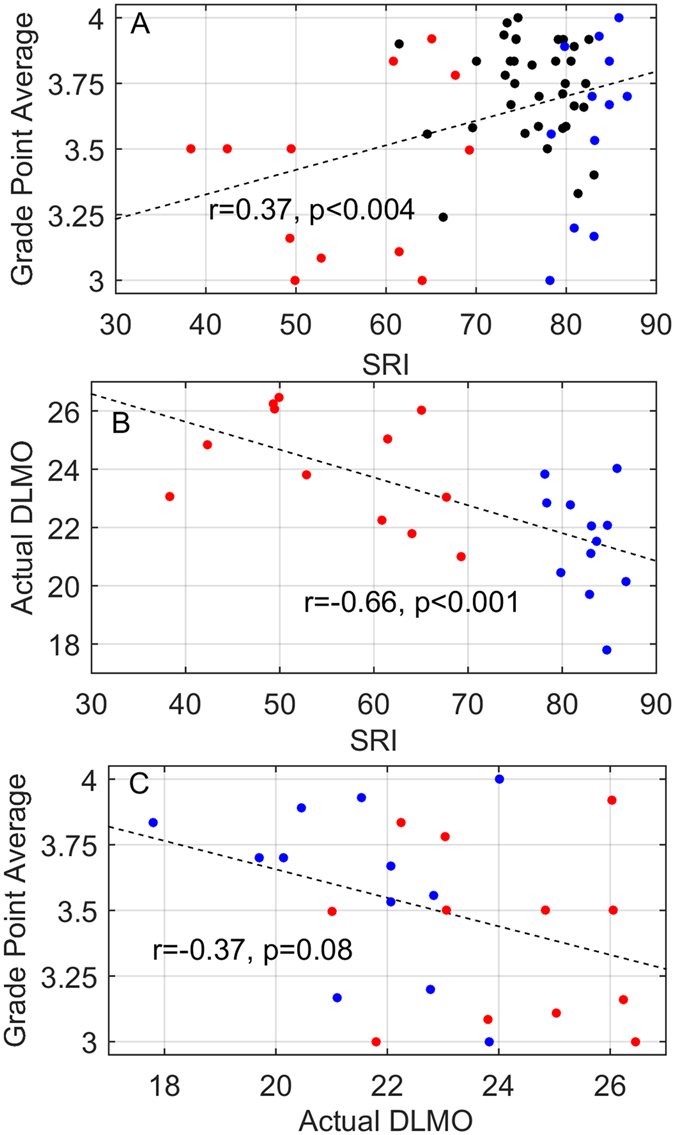
The association of irregular sleep schedules with circadian timing and academic performance has not been systematically examined. We studied 61 undergraduates for 30 days using sleep diaries, and quantified sleep regularity using a novel metric, the sleep regularity index (SRI). In the most and least regular quintiles, circadian phase and light exposure were assessed using salivary dim-light melatonin onset (DLMO) and wrist-worn photometry, respectively. DLMO occurred later (00:08 ± 1:54 vs. 21:32 ± 1:48; p < 0.003); the daily sleep propensity rhythm peaked later (06:33 ± 0:19 vs. 04:45 ± 0:11; p < 0.005); and light rhythms had lower amplitude (102 ± 19 lux vs. 179 ± 29 lux; p < 0.005) in Irregular compared to Regular sleepers. A mathematical model of the circadian pacemaker and its response to light was used to demonstrate that Irregular vs. Regular group differences in circadian timing were likely primarily due to their different patterns of light exposure. A positive correlation (r = 0.37; p < 0.004) between academic performance and SRI was observed. These findings show that irregular sleep and light exposure patterns in college students are associated with delayed circadian rhythms and lower academic performance. Moreover, the modeling results reveal that light-based interventions may be therapeutically effective in improving sleep regularity in this population.
Overview
CoChat Summary
TL;DR
In 61 Harvard undergraduates studied for about 30 days, more irregular sleep/wake patterns were associated with later circadian timing and worse academic performance. The paper argues that the timing differences were largely explained by differences in light exposure rather than by detectable differences in circadian physiology.
Key findings
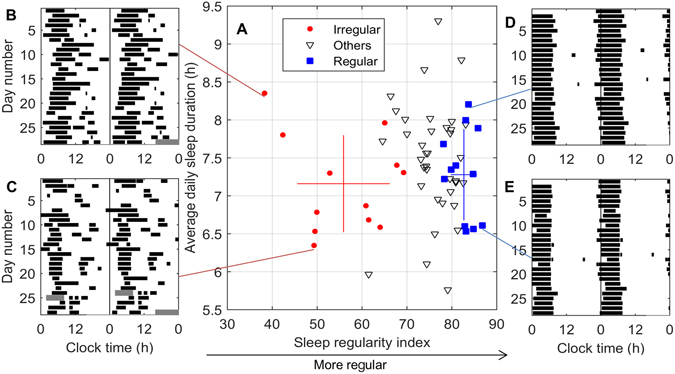
- Sleep regularity index (SRI) was positively correlated with GPA in the full sample (n = 59): Pearson r = 0.37, p < 0.004; an increase of 10 in SRI was associated with an average GPA increase of 0.10.
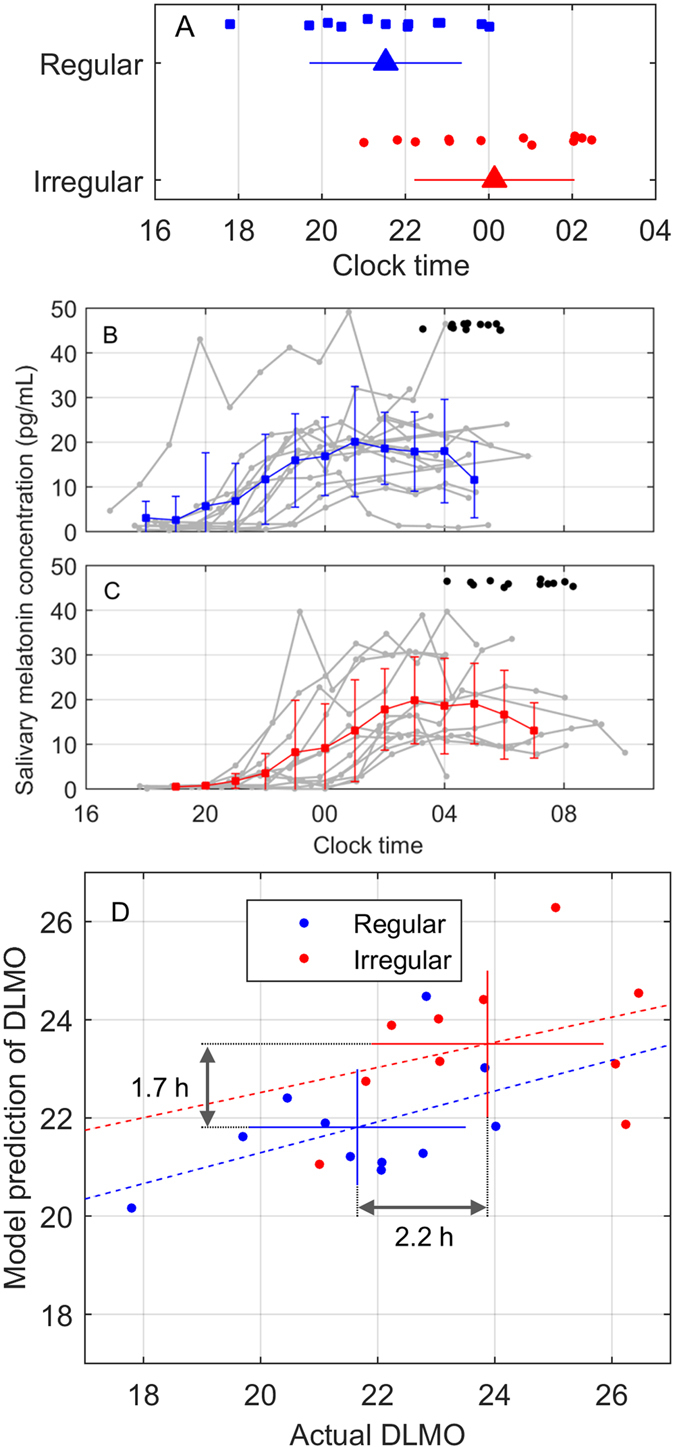
- Irregular sleepers had significantly later melatonin timing than Regular sleepers: DLMO was 00:08 ± 1:54 vs. 21:32 ± 1:48, p < 0.003; the sleep propensity rhythm also peaked later (06:33 ± 0:19 vs. 04:45 ± 0:11, p < 0.005).
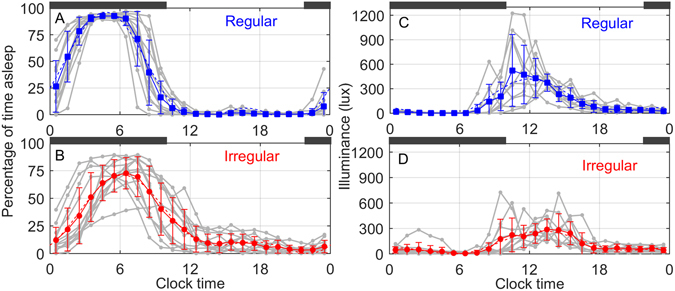
- Irregular sleepers had lower-amplitude light rhythms than Regular sleepers: 102 ± 19 lux vs. 179 ± 29 lux, p < 0.005, with more light during biological night and less daytime light.
- Sleep duration did not differ significantly between groups (7.16 ± 0.64 h vs. 7.27 ± 0.59 h, p = 0.68), and sleep regularity was uncorrelated with sleep duration (r = 0.05, p = 0.71 in the full sample).
Methods
- Observational study of full-time Harvard College undergraduates (excluding first-years), age 18+, living in campus housing; 63 enrolled, 61 completed the study. Participants reported self-selected sleep/wake schedules for ~30 days via online diary during Fall 2013.
- Sleep regularity was quantified with the Sleep Regularity Index (SRI); on day 15, participants were classified using days 1–14, and the highest and lowest quintiles were selected for actiwatch/light and dim-light saliva collection. GPA was self-reported by 59 participants.
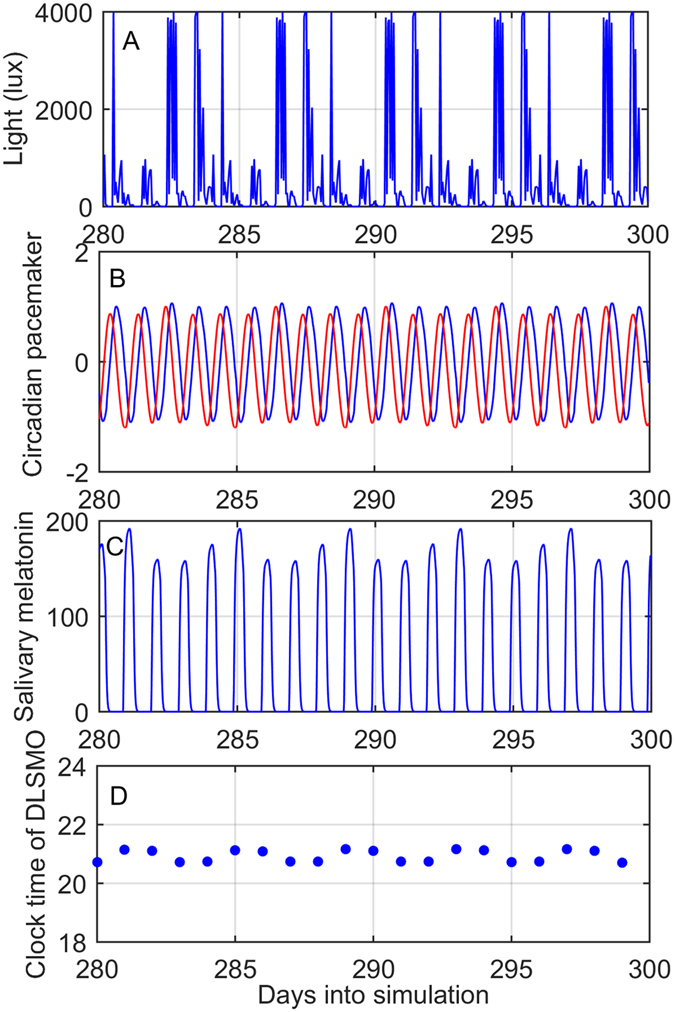
- Main analyses included correlations between SRI and GPA, group comparisons of Regular vs. Irregular sleepers, and a previously validated mathematical model of the human circadian pacemaker to test whether observed DLMO differences could be explained by light exposure patterns. Statistical tests included Wilcoxon rank-sum tests, t-tests, and Pearson correlations.
Limitations
- The paper states that it cannot establish causality between sleep regularity and academic performance or circadian timing.
- DLMO was measured on only one day, which the paper notes may limit prediction of individual circadian timing and may contribute to model-data mismatch; this is especially relevant for Irregular sleepers, and this limitation is explicitly stated in the Discussion.
- The sample was a specific population of Harvard undergraduates living on campus, so the authors note the daytime napping strategy and findings may not generalize to adults who work full time or students not living near campus; this is evident from the text.
Model-written summary. Check it against the paper before relying on it.
Integrity signals
Registry
Cites
Statistics
Figures
Verification
Claims the paper makes
7 Valid · 1 Not valid · 9 Not checked · 75 Own results and interpretations
The cited sources support only part of this claim — read each source’s verdict below.
In the paper
“This hypothesis is supported by a recent study that found large inter-individual differences in circadian timing vanished when individuals were exposed to only natural outdoor light45.”
§ Irregular sleep/wake patterns are associated with poorer academic performance and delayed circadian and sleep/wake timing > Discussion
What the sources say
- Partly supportedcites [45] Wright KP Jr. Entrainment of the human circadian clock to the natural light-dark cycle Curr. Biol. 2013 23 1554 1558 10.1016/j.cub.2013.06.039 23910656 PMC4020279 sourceExperimental — accuracy not yet measured
The Results and Discussion report that exposure to only sunlight while living outdoors reduced individual differences in circadian timing. The claim overstates that finding by saying the differences vanished; the paper does not say they disappeared. (LLM, conf=0.88)
plain- Asserted: passes — The authors put it forward as true.
- Checkable: passes — It can be checked against evidence.
- Load-bearing: unclear — It is unclear whether the paper’s conclusions depend on it.
- Based: passes — The paper gives a reason why it holds.
- Partly supported
A result the paper reports from its own data — it cites no other source for it, so there is none to check. The quote shows it is in the paper.
In the paper
“Irregular sleepers received significantly less day-time light (Table 1)”
§ Irregular sleep/wake patterns are associated with poorer academic performance and delayed circadian and sleep/wake timing > Results > Irregular sleepers have a lower amplitude light rhythm Irregular sleepers received different patterns of light exposure (Fig. 2C and D), with summary metrics in Table 1. The amplitude of the daily light/dark cycle (light rhythm) was lower in Irregular sleepers, reflecting a smaller difference between day-time and night-time illuminance. 95% confidence intervals for the first-harmonic amplitude of a two-harmonic fit were 102 ± 19 lux (Irregular) vs. 179 ± 29 lux (Regular; p < 0.005). Irregular sleepers received significantly less day-time light (Table 1) and had a broader range of light-exposure centroid times (9.6 h vs. 4.5 h). On average, light centroid times were later in the Irregular sleepers than in Regular sleepers, although this difference was not significant (14:18 ± 2:37 vs. 13:05 ± 1:19; p = 0.18, rank-sum test). When light levels were normalized on an individual basis, by dividing by that individual’s average daily illuminance, Irregular sleepers were found to receive relatively more light during the biological night (DLMO to 10 h post-DLMO) and clock night (Table 1). Although the light pattern appeared slightly delayed in the Irregular group, phase parameters for the two-harmonic fits were not significantly different between groups. We note that parametric fits are not ideal for quantifying the effects of the light pattern on the circadian pacemaker, since the sensitivity of the circadian pacemaker to light varies across the day and with previous light exposure history. This point is addressed below by our use of a mathematical model to explicitly predict an individual’s circadian phase of entrainment from the individual light patterns.
plainstates an association- Asserted: passes — The authors put it forward as true.
- Checkable: passes — It can be checked against evidence.
- Load-bearing: unclear — It is unclear whether the paper’s conclusions depend on it.
- Based: passes — The paper gives a reason why it holds.
A result the paper reports from its own data — it cites no other source for it, so there is none to check. The quote shows it is in the paper.
In the paper
“DLMO was also not significantly correlated with GPA (r = 0.37, p = 0.08).”
§ Irregular sleep/wake patterns are associated with poorer academic performance and delayed circadian and sleep/wake timing > Results > Sleep regularity is positively associated with academic performance
plainn = 59- Asserted: passes — The authors put it forward as true.
- Checkable: passes — It can be checked against evidence.
- Load-bearing: unclear — It is unclear whether the paper’s conclusions depend on it.
- Based: passes — The paper gives a reason why it holds.
A result the paper reports from its own data — it cites no other source for it, so there is none to check. The quote shows it is in the paper.
In the paper
“There was no significant linear correlation between sleep duration and SRI (r = 0.13, p = 0.29)”
§ Irregular sleep/wake patterns are associated with poorer academic performance and delayed circadian and sleep/wake timing > Results > Sleep regularity is positively associated with academic performance
plain- Asserted: passes — The authors put it forward as true.
- Checkable: passes — It can be checked against evidence.
- Load-bearing: unclear — It is unclear whether the paper’s conclusions depend on it.
- Based: passes — The paper gives a reason why it holds.
A result the paper reports from its own data — it cites no other source for it, so there is none to check. The quote shows it is in the paper.
In the paper
“later mid-sleep time on free days (7:05 ± 1:23 vs. 4:53 ± 0:56; p < 0.001)”
§ Irregular sleep/wake patterns are associated with poorer academic performance and delayed circadian and sleep/wake timing > Results > Sleep regularity is independent of sleep duration
plainstates an association- Asserted: passes — The authors put it forward as true.
- Checkable: passes — It can be checked against evidence.
- Load-bearing: passes — The paper’s conclusions depend on it.
- Based: passes — The paper gives a reason why it holds.
44 more claims
Create a free account to see all 92 claims and to verify the 1 reference still open.
- Probably not a substantial claim. 32
- It may state two separate claims as one. 21
Citations
Cites
The Pittsburgh Sleep Quality Index: a new instrument for psychiatric practice and research
Buysse, D. J., Reynolds, C. F., Monk, T. H., Berman, S. R., & Kupfer, D. J. (1989) · Psychiatry Research · doi:10.1016/0165-1781(89)90047-4 · Cited by 35,234
A self-assessment questionnaire to determine morningness- eveningness in human circadian rhythms
Home, J. K. (1976) · Medical Entomology and Zoology · Cited by 4,783
(1976) · PubMed · Cited by 3,979
The Geometry of Biological Time
Winfree, A. T. (1980) · doi:10.1007/978-3-662-22492-2 · Cited by 3,613
Social Jetlag: Misalignment of Biological and Social Time
Wittmann, M., Dinich, J., Merrow, M., & Roenneberg, T. (2006) · Chronobiology International · doi:10.1080/07420520500545979 · Cited by 2,625
Cappuccio, F. P., Cooper, D., D'Elia, L., Strazzullo, P., & Miller, M. A. (2011) · European Heart Journal · doi:10.1093/eurheartj/ehr007 · Cited by 2,146
Pittendrigh, C. S., & Daan, S. (1976) · Journal of Comparative Physiology ? A · doi:10.1007/bf01417856 · Cited by 2,127
Action Spectrum for Melatonin Regulation in Humans: Evidence for a Novel Circadian Photoreceptor
Brainard, G. C., Hanifin, J. P., Greeson, J. M., Byrne, B., Glickman, G., Gerner, E., & Rollag, M. D. (2001) · The Journal of Neuroscience · doi:10.1523/jneurosci.21-16-06405.2001 · Cited by 1,930
Sleep Patterns and Predictors of Disturbed Sleep in a Large Population of College Students
Lund, H. G., Reider, B. D., Whiting, A. B., & Prichard, J. R. (2010) · Journal of Adolescent Health · doi:10.1016/j.jadohealth.2009.06.016 · Cited by 1,907
Pittendrigh, C. S., & Daan, S. (1976) · Journal of Comparative Physiology ? A · doi:10.1007/bf01417860 · Cited by 1,636
Research works printed but not linked: 1
- Eskin, A. The sparrow clock: Behavior of the free running rhythm and entrainment analysis. Thesis (The University of Texas, 1969).
Cited by
Items 101–200 of 636
Sex differences and sex bias in human circadian and sleep physiology research
Spitschan, M., Santhi, N., Ahluwalia, A., Fischer, D. R., Hunt, L., Karp, N. A., Lévi, F., Pineda‐Torra, I., Vidafar, P., & White, R. (2022) · eLife · doi:10.7554/elife.65419 · Cited by 41
The Eight Hour Sleep Challenge During Final Exams Week
Scullin, M. K. (2019) · Teaching of Psychology · doi:10.1177/0098628318816142 · Cited by 36
“Go to bed and wake up at the same time everyday, even on weekends (variability in sleep timing alters circadian rhythms; Phillips et al., 2017) 3.”
BackgroundSekiguchi, Y., Adams, W. M., Benjamin, C. L., Curtis, R. M., Giersch, G. E. W., & Casa, D. J. (2019) · Journal of Sleep Research · doi:10.1111/jsr.12836 · Cited by 47
“Sleep consistency captures changes in the timing of sleep on a day‐to‐day timescale and calculates the percentage probability of an individual being in the same state (asleep versus awake), and is similar to the sleep regularity index (SRI) introduced by Phillips et al. (2017).”
BackgroundMethodInfluentialWalters, E. M., Phillips, A. J. K., Mellor, A., Hamill, K., Jenkins, M. M., Norton, P. J., Baucom, D. H., & Drummond, S. P. A. (2019) · SLEEP · doi:10.1093/sleep/zsz206 · Cited by 42
Self-citationMcHill, A. W., Sano, A., Hilditch, C. J., Barger, L. K., Czeisler, C. A., Picard, R. W., & Klerman, E. B. (2021) · Journal of Pineal Research · doi:10.1111/jpi.12720 · Cited by 44
Self-citationBöhmer, M. N., Hamers, P. C. M., Bindels, P., Oppewal, A., Someren, E. J. W. V., & Festen, D. A. M. (2021) · Sleep Health · doi:10.1016/j.sleh.2021.06.001 · Cited by 41
“The average intensity of light exposure in lux was reported in 21 studies.(19,25-31,33,34,36,38-43,45-47,49) Duration of light exposure above a predefined threshold in lux was reported in 6 studies.”
BackgroundJackson, C., Stewart, I. D., Plekhanova, T., Cunningham, P. S., Hazel, A. L., Al-Sheklly, B., Aul, R., Bolton, C. E., Chalder, T., Chalmers, J. D., et al. (2023) · The Lancet Respiratory Medicine · doi:10.1016/s2213-2600(23)00124-8 · Cited by 42
Generalizability of A Neural Network Model for Circadian Phase Prediction in Real-World Conditions
Stone, J. E., Phillips, A. J. K., Ftouni, S., Magee, M., Howard, M. E., Lockley, S. W., Sletten, T. L., Anderson, C., Rajaratnam, S. M. W., & Postnova, S. (2019) · Scientific Reports · doi:10.1038/s41598-019-47311-4 · Cited by 37
Self-citationAssociation of the sleep regularity index with incident dementia and brain volume
Yiallourou, S. R., Cribb, L., Cavuoto, M. G., Rowsthorn, E., Nicolazzo, J., Gibson, M., Baril, A.-A., & Pase, M. P. (2024) · Neurology · doi:10.1212/wnl.0000000000208029 · Cited by 33
Almarzouki, A. F., Mandili, R. L., Salloom, J., Kamal, L. K., Alharthi, O. H., Alharthi, S., Khayyat, N., & Baglagel, A. M. (2022) · Brain Sciences · doi:10.3390/brainsci12111525 · Cited by 78
“University students typically shift to irregular sleep patterns as a result of academic schedules and deadlines [9].”
BackgroundTowards a framework for light-dosimetry studies: Quantification metrics
Hartmeyer, S. L., & Andersen, M. (2023) · Lighting Research & Technology · doi:10.1177/14771535231170500 · Cited by 41
Chronotype in individuals with schizophrenia: A meta-analysis
Linke, M., & Jankowski, K. S. (2021) · Schizophrenia Research · doi:10.1016/j.schres.2021.07.020 · Cited by 39
Sleep irregularity and nonsuicidal self-injurious urges and behaviors
Burke, T. A., Hamilton, J. L., Seigel, D., Kautz, M. M., Liu, R. T., Alloy, L. B., & Barker, D. (2022) · SLEEP · doi:10.1093/sleep/zsac084 · Cited by 39
Alam, M., Abbas, K., Sharf, Y., & Khan, S. (2024) · Chronobiology in Medicine · doi:10.33069/cim.2024.0004 · Cited by 68
“Longitudinal research tracking first-year college students (average age 18.8 years) linked the combination of irregular sleep schedules and late-night electronic device use to significant circadian delay and disrupted rhythm by the end of the fall academic term [12].”
BackgroundInfluentialKomarov, O., Ko, L., & Jung, T. (2020) · IEEE Transactions on Neural Systems and Rehabilitation Engineering · doi:10.1109/tnsre.2020.2972812 · Cited by 43
“Irregular sleep-wake patterns and prolonged stress are considered as factors associated with a decline in academic performance [2], [3], deviations in eating behavior [4], [5], and mental health issues [6]–[8].”
BackgroundCohen, S., Fulcher, B., Rajaratnam, S. M. W., Conduit, R., Sullivan, J. P., Hilaire, M. A. S., Phillips, A. J. K., Loddenkemper, T., Kothare, S. V., McConnell, K., et al. (2017) · Scientific Reports · doi:10.1038/s41598-017-14611-6 · Cited by 38
“Mathematically, the SRI was computed as , where S is a sleep indicator (1 for wake, − 1 for sleep) and the sum over time t (hours) was taken over all T sleep observations with a matching observation 24 h later.”
MethodInfluentialSelf-citationIrregular sleep and all-cause mortality: A large prospective cohort study
Omichi, C., Koyama, T., Kadotani, H., Ozaki, E., Tomida, S., Yoshida, T., Otonari, J., Ikezaki, H., Hara, M., Tanaka, K., et al. (2022) · Sleep Health · doi:10.1016/j.sleh.2022.08.010 · Cited by 34
Trivedi, R., Man, H., Madut, A., Mather, M., Elder, E., Dhillon, H. M., Brand, A. H., Howle, J. R., Mann, G. J., DeFazio, A., et al. (2021) · Frontiers in Neuroscience · doi:10.3389/fnins.2021.700923 · Cited by 31
Self-citationA multidimensional approach to sleep health in multiple sclerosis
Whibley, D., Goldstein, C. A., Kratz, A. L., & Braley, T. J. (2021) · Multiple Sclerosis and Related Disorders · doi:10.1016/j.msard.2021.103271 · Cited by 34
A developmental perspective on sleep consistency: Preschool age through emerging adulthood
Nicholson, L. M., Bohnert, A. M., & Crowley, S. J. (2022) · Behavioral Sleep Medicine · doi:10.1080/15402002.2021.2024192 · Cited by 36
“Along with normative changes in bioregulatory systems, structural and functional changes in the brain occur during puberty (Piekarski et al., 2017) and correspond to increased sensation seeking and reorientation of attention and motivation toward peers (Crone & Dahl, 2012; De Lorme et al., 2013;…”
BackgroundMeasuring light exposure in daily life: A review of wearable light loggers
van Duijnhoven, J., Hartmeyer, S. L., Didikoğlu, A., Stefani, O., Houser, K. W., Kalavally, V., & Spitschan, M. (2025) · Building and Environment · doi:10.1016/j.buildenv.2025.112771 · Cited by 51
Brown, L. S., Hilaire, M. A. S., McHill, A. W., Phillips, A. J. K., Barger, L. K., Sano, A., Czeisler, C. A., Doyle, F. J., & Klerman, E. B. (2021) · Journal of Pineal Research · doi:10.1111/jpi.12745 · Cited by 35
Self-citationMulti-dimensional sleep and mortality: The Multi-Ethnic Study of Atherosclerosis
Chung, J., Goodman, M. O., Huang, T., Wallace, M. L., Lutsey, P. L., Chen, J. T., Castro‐Diehl, C., Bertisch, S. M., & Redline, S. S. (2023) · SLEEP · doi:10.1093/sleep/zsad048 · Cited by 36
Gao, C., Terlizzese, T., & Scullin, M. K. (2018) · Chronobiology International · doi:10.1080/07420528.2018.1539401 · Cited by 34
“Though most sleep and education studies measure sleep subjectively (PSQI, sleep diary), when sleep is monitored objectively using wristband actigraphy, students with shorter and more irregular/variable sleep durations show lower levels of attention, creativity and grade point averages (King et al. 2017; Phillips et al…”
BackgroundMethodXiaoxue, S., & Huang, X. (2024) · Frontiers in Public Health · doi:10.3389/fpubh.2024.1352611 · Cited by 28
Stability of the timing of food intake at daily and monthly timescales in young adults
McHill, A. W., Hilditch, C. J., Fischer, D. R., Czeisler, C. A., Garaulet, M., Scheer, F. A. J. L., & Klerman, E. B. (2020) · Scientific Reports · doi:10.1038/s41598-020-77851-z · Cited by 31
Self-citationZheng, Y., Panayiotou, M., Currie, D. B., Yang, K., Bagnall, C. L., Qualter, P., & Inchley, J. (2022) · Child Psychiatry & Human Development · doi:10.1007/s10578-022-01449-x · Cited by 53
The Negative Effects of Travel on Student Athletes Through Sleep and Circadian Disruption
Heller, H. C., Herzog, E. D., Brager, A. J., Poe, G. R., Allada, R., Scheer, F. A. J. L., Carskadon, M. A., de la Iglesia, H. O., Jang, R. S., Montero, A., et al. (2023) · Journal of Biological Rhythms · doi:10.1177/07487304231207330 · Cited by 40
“The kinds of sleep disruption associated with jet lag are known to affect academic performance (Phillips et al., 2017; Hartmann and Prichard, 2018; Prichard, 2020).”
BackgroundSansom, K., Reynolds, A. C., Windred, D. P., Phillips, A. J. K., Dhaliwal, S. S., Walsh, J. H., Maddison, K. J., Singh, B., Eastwood, P. R., & McArdle, N. (2024) · SLEEP · doi:10.1093/sleep/zsae001 · Cited by 37
“The SRI was determined using a previously published method [23].”
BackgroundMethodInfluentialSelf-citationWilloughby, A. R., Alikhani, I., Karsikas, M., et al. (2023) · doi:10.31234/osf.io/8ahsu · Cited by 28
Sleep Irregularity, Circadian Disruption, and Cardiometabolic Disease Risk
Huang, T. (2025) · Circulation Research · doi:10.1161/circresaha.125.325613 · Cited by 46
Coleman, M. Y., & Cain, S. W. (2019) · Journal of Affective Disorders · doi:10.1016/j.jad.2019.05.054 · Cited by 35
Coleman, J. J., Robinson, C. K., von Hippel, W., Holmes, K. E., Kim, J., Pearson, S., Lawless, R. A., Hubbard, A., & Cohen, M. J. M. (2023) · Annals of Surgery · doi:10.1097/sla.0000000000005971 · Cited by 29
Rahimi-Eichi, H., Coombs, G., Bustamante, C. M. V., Onnela, J.-P. “., Baker, J. T., & Buckner, R. L. (2021) · JMIR mhealth and uhealth · doi:10.2196/29849 · Cited by 30
“Multiple studies have suggested that sleep loss or poor sleep quality are predictors (and potentially moderators and mediators) of mental illness symptoms and poor cognitive performance [1-6].”
BackgroundMethodHeacock, R. M., Capodilupo, E. R., Czeisler, M. É., Weaver, M. D., Czeisler, C. A., Howard, M. E., & Rajaratnam, S. M. W. (2022) · Frontiers in Physiology · doi:10.3389/fphys.2022.884154 · Cited by 25
“Sleep consistency was measure using a proprietary method adapted from the previously validated Sleep Regularity Index (SRI) (Phillips et al., 2017), which is the percentage of concordance of individuals being in the same state (asleep versus awake) at different timepoints.”
MethodSelf-citationBrito, L. C., Marin, T. C., Azevêdo, L. M., Rosa‐Silva, J. M., Shea, S. A., & Thosar, S. S. (2022) · Comprehensive physiology · doi:10.1002/cphy.c210036 · Cited by 50
Lunsford‐Avery, J. R., Keller, C., Kollins, S. H., Krystal, A. D., Jackson, L., & Engelhard, M. (2020) · JMIR mhealth and uhealth · doi:10.2196/20590 · Cited by 28
Yamakawa, G. R., Brady, R. D., Sun, M., McDonald, S. J., Shultz, S. R., & Mychasiuk, R. (2020) · Neurobiology of Sleep and Circadian Rhythms · doi:10.1016/j.nbscr.2020.100058 · Cited by 29
“There are clinical measures of circadian dysfunction such as the sleep regularity index, or salivary melatonin levels (Phillips et al., 2017), that could be assessed in TBI patients and correlated to their outcomes.”
BackgroundSleep Extension: A Potential Target for Obesity Treatment
Hoddy, K. K., Potts, K. S., Bazzano, L., & Kirwan, J. P. (2020) · Current Diabetes Reports · doi:10.1007/s11892-020-01360-6 · Cited by 28
Yoo, A., Vgontzas, A., Chung, J., Mostofsky, E., Li, W., Rueschman, M., Buysse, D. J., Mittleman, M. A., & Bertisch, S. M. (2022) · Journal of Clinical Sleep Medicine · doi:10.5664/jcsm.10320 · Cited by 29
Sleep and circadian instability in delayed sleep-wake phase disorder
Watson, L. A., McGlashan, E. M., Hosken, I. T., Anderson, C., Phillips, A. J. K., & Cain, S. W. (2020) · Journal of Clinical Sleep Medicine · doi:10.5664/jcsm.8516 · Cited by 26
“Moreover, emerging research indicates that irregular sleep/wake patterns are associated with poor mood and health outcomes.(15,16,22) These findings together suggest that targeting regularity of sleep/wake patterns may be an effective adjunct to existing treatments for DSWPD.”
Self-citationCourtney, J. B., Nuss, K. J., Lyden, K. A., Harrall, K. K., Glueck, D. H., Villalobos, A., Hamman, R. F., Hébert, J. R., Hurley, T. G., Leiferman, J. A., et al. (2020) · Measurement in Physical Education and Exercise Science · doi:10.1080/1091367x.2020.1867146 · Cited by 29
The 8–Hour Challenge: Incentivizing Sleep during End–of–Term Assessments
King, E., Mobley, C., & Scullin, M. K. (2019) · Journal of Interior Design · doi:10.1111/joid.12135 · Cited by 23
Actigraphic Sleep Variability is Associated With Lower Positive Mood in Adolescents
Mathew, G. M., Reichenberger, D., Master, L., Buxton, O. M., Chang, A., & Hale, L. E. (2023) · Journal of Adolescent Health · doi:10.1016/j.jadohealth.2023.04.019 · Cited by 26
Tian, L., Oviatt, S. L., Muszyński, M., Chamberlain, B. C., Healey, J., & Sano, A. (2022) · ACM eBooks · doi:10.1145/3502398 · Cited by 31
Self-citationToo Jittery to Sleep? Temporal Associations of Actigraphic Sleep and Caffeine in Adolescents
Mathew, G. M., Reichenberger, D., Master, L., Buxton, O. M., Chang, A., & Hale, L. E. (2021) · Nutrients · doi:10.3390/nu14010031 · Cited by 26
“The between-person effect for sleep variability measures is represented by SD or SRI [51] (across all time points) or social jetlag (average midpoint on free nights−average sleep midpoint on school nights [52]) The mean number of valid actigraphy nights per youth included in present analyses was 5.”
BackgroundWong, P. M., Barker, D., Roane, B. M., Reen, E. V., & Carskadon, M. A. (2022) · SLEEP Advances · doi:10.1093/sleepadvances/zpac004 · Cited by 26
“In their original paper, Phillips and colleagues presented the sleep regularity index (SRI), an alternate measure of sleep regularity, and validated this measure in a sample of college students [21].”
BackgroundMethodResultInfluentialPrice, E., Li, X., Xu, Y., Mansuri, A., McCall, W. V., Su, S., & Wang, X. (2023) · Scientific Reports · doi:10.1038/s41598-023-49484-5 · Cited by 23
“Although limited, studies on sleep schedule regularity and academic performance in adolescents and young adults indicate that a higher index of sleep regularity is associated with better academic performance 23,24 .”
BackgroundGao, L., Li, P., Hu, C., To, T., Patxot, M., Falvey, B., Wong, P. M., Scheer, F. A. J. L., Lin, C., Lo, M., et al. (2019) · SLEEP · doi:10.1093/sleep/zsz034 · Cited by 26
“The observed effect of sleep–wake irregularity (ISSW) on mood is in keeping with recent studies linking regularity to happiness [38], wellbeing [11, 37], and even academic performance [2, 39].”
Brooks, A. T., Raju, S., Barb, J. J., Kazmi, N., Chakravorty, S., Krumlauf, M., & Wallen, G. R. (2020) · International Journal of Environmental Research and Public Health · doi:10.3390/ijerph17010331 · Cited by 26
“Characteristic, Mean (SD) Week 1 (N = 124) Week 2 (N = 116) Week 3 (N = 99) Total (N = 124) SRI (Sleep Regularity Index) 75.72 (10.48) 77.29 (10.20) 77.76 (10.21) 76.95 (7.87) PSQI (Pittsburgh Sleep Quality Index) Baseline (day 2) 11.01 (4.41) Before discharge (day 28) 6.46 (3.82) CPRS (Comprehensive Psychopathologica…”
BackgroundMethodResultInfluentialDevelopmental links between ethnic and racial discrimination and sleep
Yip, T., Yan, J., Johnson, S., Bae, J., Lorenzo, K., Ruedas‐Gracia, N., & Zhao, Z. (2024) · Child Development Perspectives · doi:10.1111/cdep.12513 · Cited by 24
“Emerging research supports the health benefits of higher regularity for outcomes such as academic grades, mood, performance, health, and mortality (Phillips et al., 2017; Sano et al., 2015; Sletten et al., 2023; Windred et al., 2023; Yip et al., 2023).”
McMahon, W. R., Ftouni, S., Phillips, A. J. K., Beatty, C., Lockley, S. W., Rajaratnam, S. M. W., Maruff, P. T., Drummond, S. P. A., & Anderson, C. (2020) · PLoS ONE · doi:10.1371/journal.pone.0236566 · Cited by 24
“Stability in sleep timing is important for better alignment between sleep and circadian timing, improves sleep quality, and has been linked to improved academic outcomes [41].”
BackgroundSelf-citationBehaviorally and environmentally induced non–24-hour sleep-wake rhythm disorder in sighted patients
Emens, J. S., Hilaire, M. A. S., Klerman, E. B., Brotman, D. J., Lin, A. L., Lewy, A. J., & Czeisler, C. A. (2021) · Journal of Clinical Sleep Medicine · doi:10.5664/jcsm.9612 · Cited by 21
Self-citationStronger Associations Between Sleep and Mental Health in Adults with Autism: A UK Biobank Study
Henderson, L. M., Clair, M. S., Knowland, V. C. P., van Rijn, E., Walker, S., & Gaskell, M. G. (2021) · Journal of Autism and Developmental Disorders · doi:10.1007/s10803-021-05382-1 · Cited by 24
Czeisler, M. É., Capodilupo, E. R., Weaver, M. D., Czeisler, C. A., Howard, M. E., & Rajaratnam, S. M. W. (2022) · Sleep Health · doi:10.1016/j.sleh.2022.03.001 · Cited by 25
Self-citationQin, S., & Chee, M. W. L. (2024) · Nature and Science of Sleep · doi:10.2147/nss.s452033 · Cited by 21
Daytime Sleepiness among Medical Colleges’ Students in Jordan: Impact on Academic Performance
Alqudah, M., Balousha, S. A. M., Balusha, A. A. K., Al-U'datt, D. G. F., Saadeh, R., Alrabadi, N., & Alzoubi, K. H. (2022) · Sleep Disorders · doi:10.1155/2022/7925926 · Cited by 29
Sleep onset, duration, or regularity: which matters most for child adiposity outcomes?
Glasgow, T. E., Adams, E. L., Ksinan, A. J., Barsell, D. J., Lunsford‐Avery, J. R., Chen, S., Kollins, S. H., Schechter, J. C., Maguire, R. L., Engelhard, M., et al. (2022) · International Journal of Obesity · doi:10.1038/s41366-022-01140-0 · Cited by 23
“Compared to other variability measures [15, 16], it accounts for multiple sleep periods across the 24-h period, such as naps, rather than a single nighttime sleep period [12], and measures variability between”
BackgroundMethodActigraphic sleep dimensions and associations with academic functioning among adolescents
Mathew, G. M., Reichenberger, D., Master, L., Buxton, O. M., Chang, A., & Hale, L. (2024) · SLEEP · doi:10.1093/sleep/zsae062 · Cited by 24
Sleep, Well-Being, and Cognition in Medical Interns on a Float or Overnight Call Schedule
Massar, S. A. A., Chua, X. Y., Leong, R. L. F., Golkashani, H. A., Pu, Z., Ng, A., Ong, J. L., Soon, C. S., Ng, N. B. H., Tan, M. Y., et al. (2024) · JAMA Network Open · doi:10.1001/jamanetworkopen.2024.38350 · Cited by 27
Diurnal Rhythm Robustness in Individuals With PTSD and Insomnia and The Association With Sleep
Mascaro, L., Phillips, A. J. K., Clark, J. W., Straus, L. D., & Drummond, S. P. A. (2021) · Journal of Biological Rhythms · doi:10.1177/0748730420984563 · Cited by 19
Self-citationTeas, E., & Friedman, E. M. (2021) · Sleep Health · doi:10.1016/j.sleh.2020.12.001 · Cited by 21
“Irregular sleep/wake patterns have been associated with delayed circadian rhythms.(35) Further, increased variability in sleep midpoint and sleep onset timing have been associated with hypertension(36) and higher prevalence and incidence of metabolic abnormalities,(37) respectively.”
BackgroundDaniel, L. C., Meltzer, L. J., Gross, J. Y., Flannery, J. L., Forrest, C. B., & Barakat, L. P. (2021) · Psycho-Oncology · doi:10.1002/pon.5669 · Cited by 21
Light-based methods for predicting circadian phase in delayed sleep–wake phase disorder
Murray, J. M., Magee, M., Sletten, T. L., Gordon, C. J., Lovato, N., Ambani, K., Bartlett, D. J., Kennaway, D. J., Lack, L. C., Grunstein, R. R., et al. (2021) · Scientific Reports · doi:10.1038/s41598-021-89924-8 · Cited by 22
Self-citationRegularity and Timing of Sleep Patterns and Behavioral Health Among Adolescents
Lunsford‐Avery, J. R., Wang, W. K., Kollins, S. H., Chung, R. J., Keller, C., & Engelhard, M. (2021) · Journal of Developmental & Behavioral Pediatrics · doi:10.1097/dbp.0000000000001013 · Cited by 24
“We elected to include sleep midpoint (step 3) in our examination of the relationship of sleep regularity (step 4) to behavioral outcomes because of previous research showing associations between delayed sleep timing and irregular sleep.(19) By including sleep timing and regularity in the same model, we sought to exami…”
MethodMagal, N., Rab, S. L., Goldstein, P., Simon, L., Jiryis, T., & Admon, R. (2022) · Chronic Stress · doi:10.1177/24705470221100987 · Cited by 20
“Sleep regularity index SRI The probability of being in the same state (asleep vs awake) at any two time minutes in a 24 h interval with 1 minute resolution, averaged across the entire study period.(33,54) The computation is using the following formula:”
MethodHuman circadian rhythm studies: Practical guidelines for inclusion/exclusion criteria and protocol
Yousefzadehfard, Y., Wechsler, B., & DeLorenzo, C. (2022) · Neurobiology of Sleep and Circadian Rhythms · doi:10.1016/j.nbscr.2022.100080 · Cited by 24
“…weeks yes Oba, S. et al., (Oba et al., 2008) current Paul, M. A. et al., (Paul et al., 2011) Yes, MEQ during month in study yes Pires, M. L. et al., (Pires et al., 2001) Yes, PSG Flausino, N.H. et al., ( Flausino et al., 2012) 1 month 1 month Yes, Clinical diagnosis, PSQI, ESS 1 month Rajaratnam,…”
Robbins, R., Weaver, M. D., Quan, S. F., Sullivan, J. P., Qadri, S., Glasner, L., Cohen‐Zion, M., Czeisler, C. A., & Barger, L. K. (2022) · BMJ Open · doi:10.1136/bmjopen-2022-062121 · Cited by 27
Self-citationChung, J., Goodman, M. O., Huang, T., Castro‐Diehl, C., Chen, J. T., Sofer, T., Bertisch, S. M., Purcell, S., & Redline, S. S. (2023) · Journal of Sleep Research · doi:10.1111/jsr.14048 · Cited by 23
“…rates of diabetes, hypertension, cancer incidence, and mortality in night and rotating shiftworkers, other research suggests that mild forms of irregular sleep in the general population may contribute to adverse health outcomes (Huang et al., 2020; Huang & Redline, 2019; Phillips et al., 2017).”
BackgroundVariability of Sleep and Relations to Body Weight Among First-Year College Students
Nicholson, L. M., Egbert, A. H., Moreno, J. P., & Bohnert, A. M. (2020) · International Journal of Behavioral Medicine · doi:10.1007/s12529-020-09888-3 · Cited by 23
“, Sleep Regularity Index) has been proposed [52, 53] and could be utilized by future work.”
MethodEnvironmental Bright Light Exposure, Depression Symptoms, and Sleep Regularity
Wallace, D. A., Redline, S. S., Sofer, T., & Kossowsky, J. (2024) · JAMA Network Open · doi:10.1001/jamanetworkopen.2024.22810 · Cited by 25
The roles of sleep and eating patterns in adiposity gain among preschool-aged children
Goetz, A. R., Jindal, I., Moreno, J. P., Puyau, M. R., Adolph, A. L., Musaad, S. M. A., Butte, N. F., & Bacha, F. F. (2022) · American Journal of Clinical Nutrition · doi:10.1093/ajcn/nqac197 · Cited by 29
Adolescent sleep myths: Identifying false beliefs that impact adolescent sleep and well-being
Robbins, R., Beebe, D. W., Byars, K. C., Grandner, M. A., Hale, L., Tapia, I. E., Wolfson, A. R., & Owens, J. A. (2022) · Sleep Health · doi:10.1016/j.sleh.2022.08.001 · Cited by 21
Sleep Duration Is Associated with Academic Achievement of Adolescent Girls in Mathematics
Lin, L., Somerville, G., Boursier, J., Santisteban, J. A., & Gruber, R. (2020) · Nature and Science of Sleep · doi:10.2147/nss.s237267 · Cited by 29
Measuring Dim Light Melatonin Onset in Humans
Hilaire, M. A. S., & Lockley, S. W. (2022) · Methods in molecular biology · doi:10.1007/978-1-0716-2593-4_3 · Cited by 23
Self-citationHarrison, E. M., Walbeek, T. J., Maggio, D. G., Herring, A. A., & Gorman, M. R. (2019) · Journal of Emergency Medicine · doi:10.1016/j.jemermed.2019.10.007 · Cited by 21
Mathew, G. M., Reichenberger, D., Master, L., Buxton, O. M., Hale, L. E., & Chang, A. (2022) · International Journal of Behavioral Nutrition and Physical Activity · doi:10.1186/s12966-022-01265-5 · Cited by 20
“D: Center for Epidemiologic Studies Depression Scale; CI: Confidence interval; FFCWS: Fragile Families and Child Wellbeing Study; IQR: Interquartile range; LDL: Low‑density lipoprotein; OR: Odds ratio; SD: Standard deviation; SRI: Sleep regularity index; STROBE‑nut: Strengthening the Reporting of Observational Studies…”
BackgroundMethodInfluentialSleep regularity in athletes: Comparing sex, competitive level and sport type
Facundo, L. A., Brant, V. M., Guerreiro, R. D. C., Andrade, H. D. A., Louzada, F. M., Silva, A., & de Mello, M. T. (2022) · Chronobiology International · doi:10.1080/07420528.2022.2108716 · Cited by 22
“SRI and sleep parameters was reflected by other studies for TST (Phillips et al. 2017), but not for EFI and WASO.”
BackgroundMethodResultInfluentialMcCarthy, M. J., Brumback, T., Thomas, M. L., & Meruelo, A. D. (2023) · Journal of Psychiatric Research · doi:10.1016/j.jpsychires.2023.10.030 · Cited by 20
Sleep and Adolescent Depression
Fontanellaz-Castiglione, C. E. G., & Tarokh, L. (2023) · Clinical and Translational Neuroscience · doi:10.3390/ctn8010003 · Cited by 23
“Future research should elucidate the precise neurobiological mechanisms by which changes in sleep and depressive symptoms are associated during adolescence and further explore the long-term efficacy of behavioral treatments for sleep disruption in adolescents with depression.”
BackgroundMcDonnell, E., Zipunnikov, V., Schrack, J. A., Goldsmith, J., & Wrobel, J. (2021) · Biological Rhythm Research · doi:10.1080/09291016.2021.1929673 · Cited by 18
“ometer data and estimate within-subject day-to-day stability, variability, and regularity of rest-activity rhythms, topics that are currently under active investigation (Phillips et al. 2017).”
BackgroundMoreno, J. P., Hannay, K. M., Walch, O., Dadabhoy, H., Christian, J., Puyau, M. R., El‐Mubasher, A., Bacha, F. F., Grant, S. R., Park, R. J., et al. (2022) · SLEEP · doi:10.1093/sleep/zsac061 · Cited by 16
Barley, B. K., Gao, C., Luster, T. G., Porro, A., Parizi‐Robinson, M., Quigley, D., Zinke, P., & Scullin, M. K. (2023) · Chronobiology International · doi:10.1080/07420528.2023.2203251 · Cited by 20
“In academic settings, restricted sleep and evening-type preferences have been linked to lower grade point averages (GPAs; Bermudez et al. 2022; Phillips et al. 2017; Taylor et al. 2011; Tonetti et al. 2015; Valladares et al. 2018) and other measures of academic engagement such as feelings of…”
BackgroundBorhani, K., & Wong, R. T. K. (2023) · Decision Analytics Journal · doi:10.1016/j.dajour.2023.100332 · Cited by 26
Bian, W., Biswas, R. K., Ahmadi, M. N., Bin, Y. S., Postnova, S., Phillips, A. J. K., Koemel, N. A., Chaput, J., Rajaratnam, S. M. W., Cistulli, P. A., et al. (2025) · BMC Public Health · doi:10.1186/s12889-025-21649-z · Cited by 17
“The SRI cutoff of 70 for irregular sleep was determined based on the bottom quintile of the SRI distribution within the sample [23, 34].”
Self-citationSleep patterns and sleep deprivation recorded by actigraphy in 4th-grade and 5th-grade students
Li, A., Chen, S., Quan, S. F., Silva, G. E., Ackerman, C., Powers, L. S., Roveda, J. M., & Perfect, M. M. (2019) · Sleep Medicine · doi:10.1016/j.sleep.2019.12.001 · Cited by 20
Sleep-Scheduling Strategies in Hospital Shiftworkers
Harrison, E. M., Easterling, A. P., Yablonsky, A. M., & Glickman, G. L. (2021) · Nature and Science of Sleep · doi:10.2147/nss.s321960 · Cited by 16
Circadian regulation of pulmonary disease: the importance of timing
Cunningham, P. S., Jackson, C., Chakraborty, A., Cain, J., Durrington, H. J., & Blaikley, J. (2023) · Clinical Science · doi:10.1042/cs20220061 · Cited by 22
Sleep regularity as an important component of sleep hygiene: a systematic review
Kalkanis, A., Lenkens, D., Steiropoulos, P., & Testelmans, D. (2025) · Sleep Medicine Reviews · doi:10.1016/j.smrv.2025.102203 · Cited by 21
Attitudes Towards Sleep as a Time Commitment are Associated with Sleep Regularity
Windred, D. P., Stone, J., McGlashan, E. M., Cain, S. W., & Phillips, A. J. K. (2021) · Behavioral Sleep Medicine · doi:10.1080/15402002.2020.1860989 · Cited by 14
“A lower SRI has been found to associate with poorer mood, current depression (Pye et al., 2021), poorer school performance (Phillips et al., 2017; Sano et al., 2015), autism symptoms (Cohen et al., 2018), cardiometabolic outcomes (Lunsford-Avery et al., 2018), and functional outcomes in Delayed…”
BackgroundInfluentialSelf-citationBarb, J. J., Brooks, A. T., Kazmi, N., Yang, L., Chakravorty, S., & Wallen, G. R. (2022) · Scientific Reports · doi:10.1038/s41598-022-26019-y · Cited by 21
Imputing missing sleep data from wearables with neural networks in real-world settings
Lee, M. P., Hoang, K., Park, S., Song, Y. M., Joo, E. Y., Chang, W., Kim, J. H., & Kim, J. K. (2023) · SLEEP · doi:10.1093/sleep/zsad266 · Cited by 13
Bjelajac, A. K., Bakotić, M., & Ross, B. (2020) · SLEEP · doi:10.1093/sleep/zsaa030 · Cited by 19
Sleep Irregularity and Circadian Rhythmicity: Implications for Health and Well-Being
Hartstein, L. E., Grandner, M. A., & Behn, C. D. (2025) · Current Sleep Medicine Reports · doi:10.1007/s40675-025-00318-y · Cited by 17
“Greater sleep irregularity is associated with poorer academic performance among both high school and college students [15, 38] and executive function in adults [39].”
The Integration of Sleep Research Into Eating Disorders Research: Recommendations and Best Practices
Irish, L. A., Bottera, A. R., Manasse, S. M., Christensen, K. A., & Schaefer, L. M. (2024) · International Journal of Eating Disorders · doi:10.1002/eat.24241 · Cited by 14
Rynders, C. A., Bowen, A. E., Cooper, E., Brinton, J. T., HIGGINS, J. A., Nadeau, K. J., Wright, K. P., & Simon, S. L. (2022) · Journal of Biological Rhythms · doi:10.1177/07487304221123455 · Cited by 14
“Finally, intraindividual standard deviations were used to estimate sleep regularity, but future analysis using the Sleep Regularity Index is recommended (Phillips et al., 2017).”
MethodSmarr, B. L., Ishami, A. L., & Schirmer, A. E. (2021) · Biology of Sex Differences · doi:10.1186/s13293-021-00375-2 · Cited by 18
“that variance corresponds to decreased academic performance [25, 26].”
BackgroundPharmacological management of pediatric insomnia
Dhir, S., Karim, N., Berka, H., & Shatkin, J. P. (2024) · Frontiers in Sleep · doi:10.3389/frsle.2024.1389052 · Cited by 14
Kuhn, T., Heisz, J. J., & Middleton, L. E. (2025) · Frontiers in Education · doi:10.3389/feduc.2025.1565920 · Cited by 23
Integrating wearable data into circadian models
Hannay, K. M., & Moreno, J. P. (2020) · Current Opinion in Systems Biology · doi:10.1016/j.coisb.2020.08.001 · Cited by 16
“These best-fit parameter sets have been applied to generate circadian phase predictions from the model [8,44,43].”
MethodResult
Metadata
- Authors
- Phillips, A. J. K., Clerx, W. M., O’Brien, C. S., Sano, A., Barger, L. K., Picard, R. W., Lockley, S. W., Klerman, E. B., & Czeisler, C. A.
- Affiliations
- Brigham and Women's Hospital (US)
- MIT Media Lab (US)
- Corresponding author
- Phillips, Andrew J. K.
- ORCID
- Venue
- Scientific Reports
- Published
- 2017-06-12
- Volume
- 7
- Issue
- 1
- Pages
- 3216-3216
- ISSN
- 2045-2322 (ISSN-L)
- PMC
- PMC5468315
- OpenAlex
- W2622433070
- Semantic Scholar
- 329a1e3bbe1fd66883353d1991ec60e5dac3dc10
- Cited by
- 647
- References
- 64
- Citations by year
- 2026: 106 · 2025: 106 · 2024: 94 · 2023: 85 · 2022: 81 · 2021: 62 · 2020: 56 · 2019: 39 · 2018: 14 · 2017: 4
- FWCI
- 18.98
- Type
- journal article
- Language
- en
- Open access
- gold
- doi.org
- Licence
- cc-by
- creativecommons.org/licenses/by/4.0 (tdm)
- creativecommons.org/licenses/by/4.0 (vor)
- Locations
- Scientific Reports (publishedVersion, cc-by)
- Europe PMC (PubMed Central) (publishedVersion, other-oa)
- PubMed Central (publishedVersion, cc-by)
- PubMed (publishedVersion)
- Digital Access to Scholarship at Harvard (DASH) (Harvard University) (submittedVersion, cc-by)
- DOAJ (DOAJ: Directory of Open Access Journals) (submittedVersion, cc-by-sa)
- DSpace@MIT (Massachusetts Institute of Technology) (submittedVersion, cc-by-nc)
- Surrey Research Insight Open Access (The University of Surrey) (submittedVersion)
- Funders
- National Space Biomedical Research Institute (HFP-02802, HFP02801)
- National Institutes of Health (NIH K24, NIH-R01, NIH K99, HFP02802, AG09975)
- National Institute on Aging (P01AG009975)
- National Heart, Lung, and Blood Institute (K24HL105664, R01HL094654, K99HL119618, R01HL128538, R01HL114088, R00HL119618)
- National Institute of General Medical Sciences (R01GM105018)
- National Center for Research Resources (UL1RR025758)
- Topics
- Life Sciences › Neuroscience › Endocrine and Autonomic Systems › Circadian rhythm and melatonin
- Social Sciences › Psychology › Experimental and Cognitive Psychology › Sleep and related disorders
- Social Sciences › Psychology › Experimental and Cognitive Psychology › Sleep and Work-Related Fatigue
- Keywords
- irregular sleep schedules, sleep regularity, circadian timing, academic performance, dim light melatonin onset, light exposure, sleep timing, university students
- MeSH terms
- Academic Performance, Adolescent, Circadian Rhythm, Female, Humans, Light, Male, Melatonin, Models, Theoretical, Sleep, Time Factors, Wakefulness, Sleep Disorders, Circadian Rhythm, Young Adult
About these checks
Registry, retraction, Cites and statistics results are computed, not judged, with one exception: a printed reference that no index lists is read once by a model before it counts as a citation error. Claims are extracted by a model and kept only when their quote appears verbatim in the text; each cited source is then checked, with a model’s help, for whether it says what the claim relies on. Those verdicts can be wrong — read the claim’s quote and the cited source before relying on one.
The claim verdicts this report counts are experimental: their accuracy is not yet measured.
A language model drew the claims from the paper on 2026-10-10, under version 3 of the claim definition (model deepseek-v4.1-flash, prompt extract-v3).
A second model labelled each claim on 2026-10-10 (model jev-1.13-20260917, definition revision gold-guideline-v0.2).
Cited sources are checked with a language model’s help (gpt-6-sol).
Statistics and arithmetic are recomputed, not judged.
Confidence bands are shown only for fields calibrated on our annotated test set. None is calibrated yet, so no band is shown.
What counts as a claim ›How we measure confidence ›How we check this ›
Are you an author, or do you see a problem with this page? Request a review
Data sources
Bibliographic data: Semantic Scholar, OpenAlex, Crossref.
Contains information from the Semantic Scholar Academic Graph Datasets, made available under the ODC Attribution License (ODC-BY 1.0).
Semantic Scholar’s data is described in: Kinney, R., et al. (2023). The Semantic Scholar Open Data Platform. arXiv:2301.10140.
