

Irregular sleep/wake patterns are associated with poorer academic performance and delayed circadian and sleep/wake timing
Open accessThe DOI matches its Crossref record; 63 of the 64 references it cites were found in a registry or an index; 9 of the 24 sources its claims cite were checked for support.
Abstract
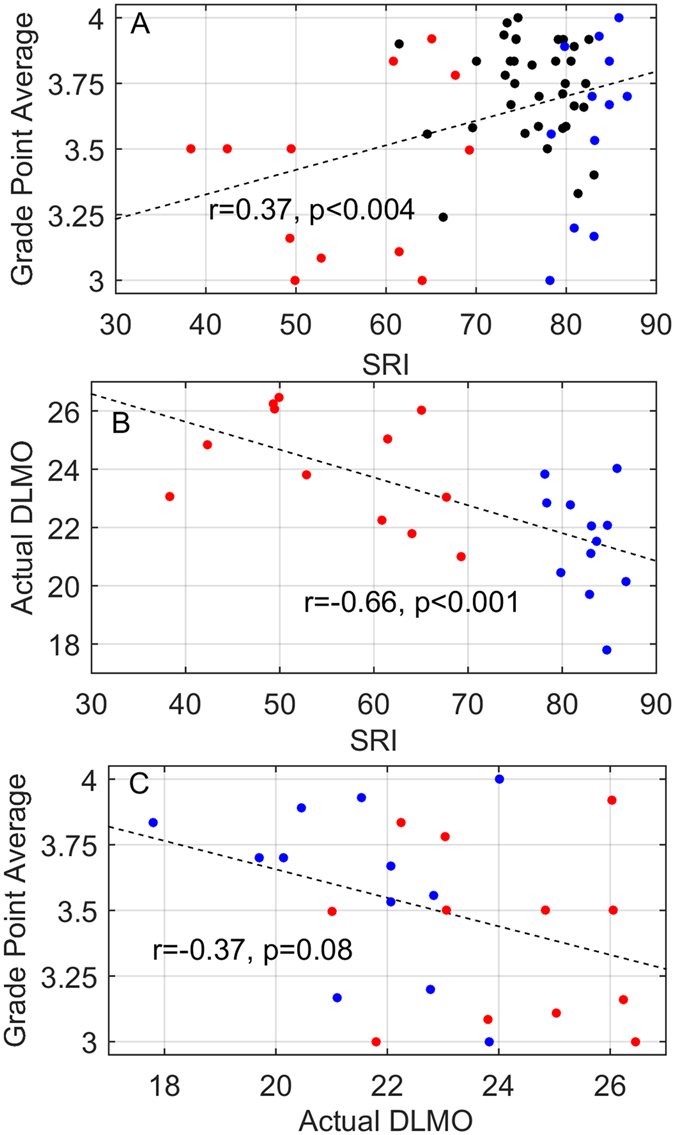
The association of irregular sleep schedules with circadian timing and academic performance has not been systematically examined. We studied 61 undergraduates for 30 days using sleep diaries, and quantified sleep regularity using a novel metric, the sleep regularity index (SRI). In the most and least regular quintiles, circadian phase and light exposure were assessed using salivary dim-light melatonin onset (DLMO) and wrist-worn photometry, respectively. DLMO occurred later (00:08 ± 1:54 vs. 21:32 ± 1:48; p < 0.003); the daily sleep propensity rhythm peaked later (06:33 ± 0:19 vs. 04:45 ± 0:11; p < 0.005); and light rhythms had lower amplitude (102 ± 19 lux vs. 179 ± 29 lux; p < 0.005) in Irregular compared to Regular sleepers. A mathematical model of the circadian pacemaker and its response to light was used to demonstrate that Irregular vs. Regular group differences in circadian timing were likely primarily due to their different patterns of light exposure. A positive correlation (r = 0.37; p < 0.004) between academic performance and SRI was observed. These findings show that irregular sleep and light exposure patterns in college students are associated with delayed circadian rhythms and lower academic performance. Moreover, the modeling results reveal that light-based interventions may be therapeutically effective in improving sleep regularity in this population.
Overview
CoChat Summary
TL;DR
In 61 Harvard undergraduates studied for about 30 days, more irregular sleep/wake patterns were associated with later circadian timing and worse academic performance. The paper argues that the timing differences were largely explained by differences in light exposure rather than by detectable differences in circadian physiology.
Key findings
- Sleep regularity index (SRI) was positively correlated with GPA in the full sample (n = 59): Pearson r = 0.37, p < 0.004; an increase of 10 in SRI was associated with an average GPA increase of 0.10.
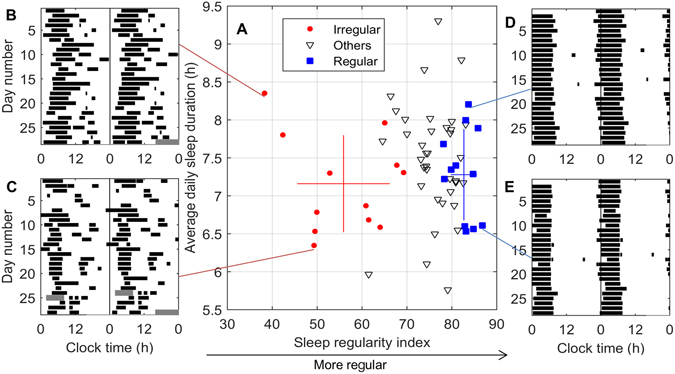
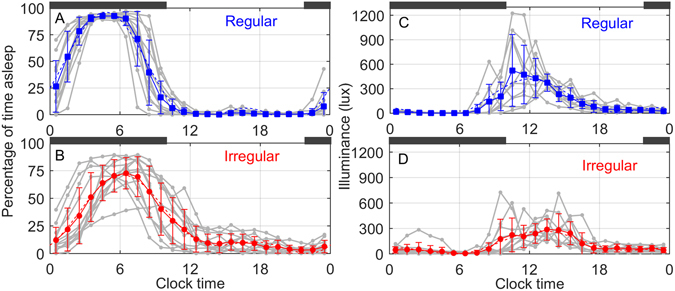
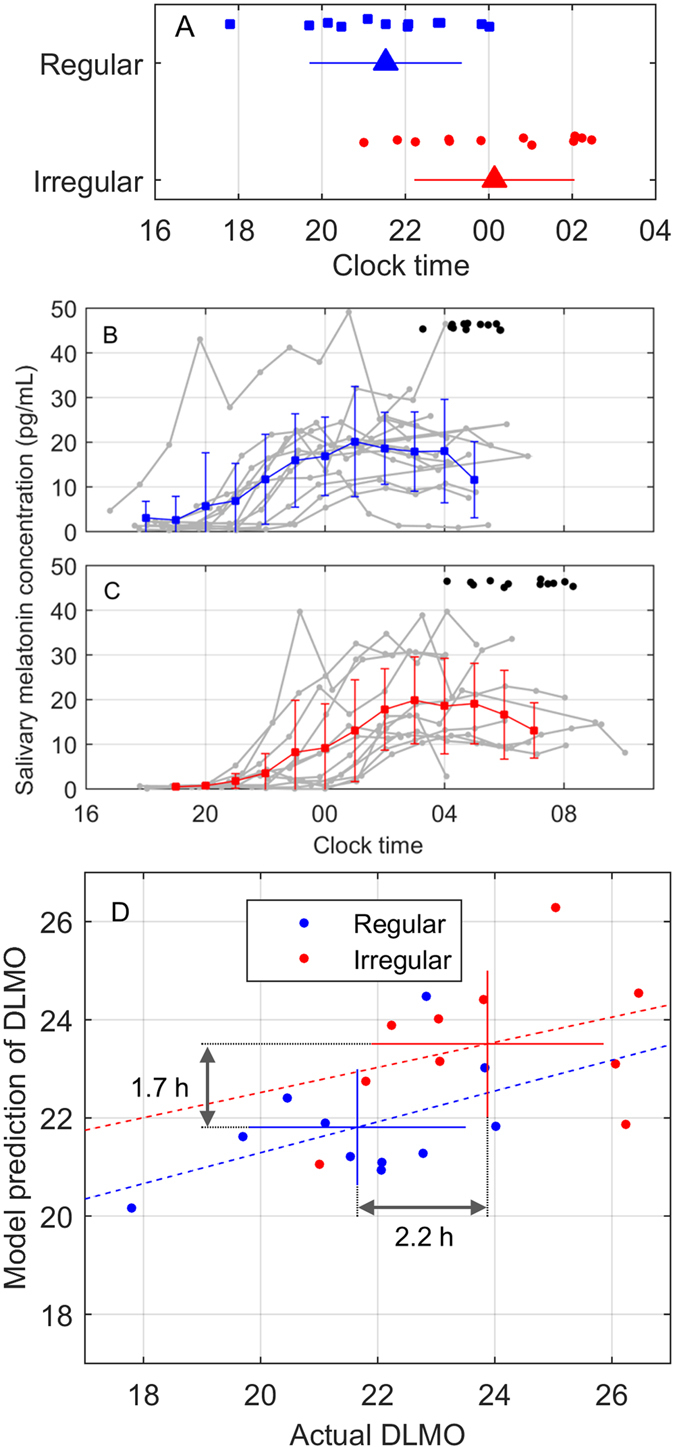
- Irregular sleepers had significantly later melatonin timing than Regular sleepers: DLMO was 00:08 ± 1:54 vs. 21:32 ± 1:48, p < 0.003; the sleep propensity rhythm also peaked later (06:33 ± 0:19 vs. 04:45 ± 0:11, p < 0.005).
- Irregular sleepers had lower-amplitude light rhythms than Regular sleepers: 102 ± 19 lux vs. 179 ± 29 lux, p < 0.005, with more light during biological night and less daytime light.
- Sleep duration did not differ significantly between groups (7.16 ± 0.64 h vs. 7.27 ± 0.59 h, p = 0.68), and sleep regularity was uncorrelated with sleep duration (r = 0.05, p = 0.71 in the full sample).
Methods
- Observational study of full-time Harvard College undergraduates (excluding first-years), age 18+, living in campus housing; 63 enrolled, 61 completed the study. Participants reported self-selected sleep/wake schedules for ~30 days via online diary during Fall 2013.
- Sleep regularity was quantified with the Sleep Regularity Index (SRI); on day 15, participants were classified using days 1–14, and the highest and lowest quintiles were selected for actiwatch/light and dim-light saliva collection. GPA was self-reported by 59 participants.
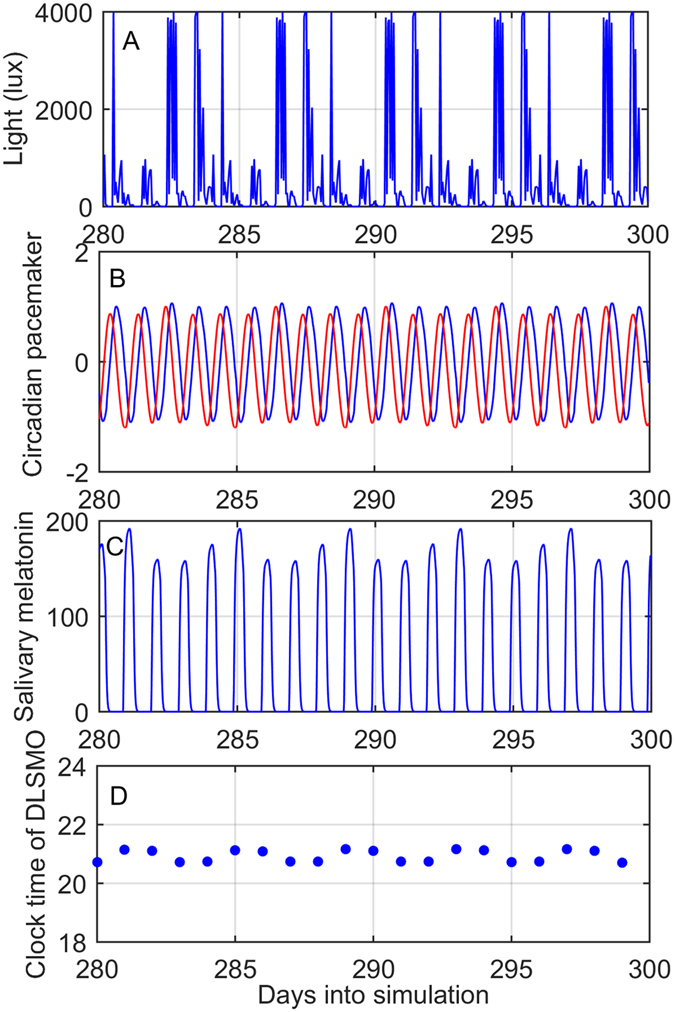
- Main analyses included correlations between SRI and GPA, group comparisons of Regular vs. Irregular sleepers, and a previously validated mathematical model of the human circadian pacemaker to test whether observed DLMO differences could be explained by light exposure patterns. Statistical tests included Wilcoxon rank-sum tests, t-tests, and Pearson correlations.
Limitations
- The paper states that it cannot establish causality between sleep regularity and academic performance or circadian timing.
- DLMO was measured on only one day, which the paper notes may limit prediction of individual circadian timing and may contribute to model-data mismatch; this is especially relevant for Irregular sleepers, and this limitation is explicitly stated in the Discussion.
- The sample was a specific population of Harvard undergraduates living on campus, so the authors note the daytime napping strategy and findings may not generalize to adults who work full time or students not living near campus; this is evident from the text.
Model-written summary. Check it against the paper before relying on it.
Integrity signals
Registry
Cites
Statistics
Figures
Verification
Claims the paper makes
7 Valid · 1 Not valid · 9 Not checked · 75 Own results and interpretations
The cited sources support only part of this claim — read each source’s verdict below.
In the paper
“This hypothesis is supported by a recent study that found large inter-individual differences in circadian timing vanished when individuals were exposed to only natural outdoor light45.”
§ Irregular sleep/wake patterns are associated with poorer academic performance and delayed circadian and sleep/wake timing > Discussion
What the sources say
- Partly supportedcites [45] Wright KP Jr. Entrainment of the human circadian clock to the natural light-dark cycle Curr. Biol. 2013 23 1554 1558 10.1016/j.cub.2013.06.039 23910656 PMC4020279 sourceExperimental — accuracy not yet measured
The Results and Discussion report that exposure to only sunlight while living outdoors reduced individual differences in circadian timing. The claim overstates that finding by saying the differences vanished; the paper does not say they disappeared. (LLM, conf=0.88)
plain- Asserted: passes — The authors put it forward as true.
- Checkable: passes — It can be checked against evidence.
- Load-bearing: unclear — It is unclear whether the paper’s conclusions depend on it.
- Based: passes — The paper gives a reason why it holds.
- Partly supported
A result the paper reports from its own data — it cites no other source for it, so there is none to check. The quote shows it is in the paper.
In the paper
“Irregular sleepers received significantly less day-time light (Table 1)”
§ Irregular sleep/wake patterns are associated with poorer academic performance and delayed circadian and sleep/wake timing > Results > Irregular sleepers have a lower amplitude light rhythm Irregular sleepers received different patterns of light exposure (Fig. 2C and D), with summary metrics in Table 1. The amplitude of the daily light/dark cycle (light rhythm) was lower in Irregular sleepers, reflecting a smaller difference between day-time and night-time illuminance. 95% confidence intervals for the first-harmonic amplitude of a two-harmonic fit were 102 ± 19 lux (Irregular) vs. 179 ± 29 lux (Regular; p < 0.005). Irregular sleepers received significantly less day-time light (Table 1) and had a broader range of light-exposure centroid times (9.6 h vs. 4.5 h). On average, light centroid times were later in the Irregular sleepers than in Regular sleepers, although this difference was not significant (14:18 ± 2:37 vs. 13:05 ± 1:19; p = 0.18, rank-sum test). When light levels were normalized on an individual basis, by dividing by that individual’s average daily illuminance, Irregular sleepers were found to receive relatively more light during the biological night (DLMO to 10 h post-DLMO) and clock night (Table 1). Although the light pattern appeared slightly delayed in the Irregular group, phase parameters for the two-harmonic fits were not significantly different between groups. We note that parametric fits are not ideal for quantifying the effects of the light pattern on the circadian pacemaker, since the sensitivity of the circadian pacemaker to light varies across the day and with previous light exposure history. This point is addressed below by our use of a mathematical model to explicitly predict an individual’s circadian phase of entrainment from the individual light patterns.
plainstates an association- Asserted: passes — The authors put it forward as true.
- Checkable: passes — It can be checked against evidence.
- Load-bearing: unclear — It is unclear whether the paper’s conclusions depend on it.
- Based: passes — The paper gives a reason why it holds.
A result the paper reports from its own data — it cites no other source for it, so there is none to check. The quote shows it is in the paper.
In the paper
“DLMO was also not significantly correlated with GPA (r = 0.37, p = 0.08).”
§ Irregular sleep/wake patterns are associated with poorer academic performance and delayed circadian and sleep/wake timing > Results > Sleep regularity is positively associated with academic performance
plainn = 59- Asserted: passes — The authors put it forward as true.
- Checkable: passes — It can be checked against evidence.
- Load-bearing: unclear — It is unclear whether the paper’s conclusions depend on it.
- Based: passes — The paper gives a reason why it holds.
A result the paper reports from its own data — it cites no other source for it, so there is none to check. The quote shows it is in the paper.
In the paper
“There was no significant linear correlation between sleep duration and SRI (r = 0.13, p = 0.29)”
§ Irregular sleep/wake patterns are associated with poorer academic performance and delayed circadian and sleep/wake timing > Results > Sleep regularity is positively associated with academic performance
plain- Asserted: passes — The authors put it forward as true.
- Checkable: passes — It can be checked against evidence.
- Load-bearing: unclear — It is unclear whether the paper’s conclusions depend on it.
- Based: passes — The paper gives a reason why it holds.
A result the paper reports from its own data — it cites no other source for it, so there is none to check. The quote shows it is in the paper.
In the paper
“later mid-sleep time on free days (7:05 ± 1:23 vs. 4:53 ± 0:56; p < 0.001)”
§ Irregular sleep/wake patterns are associated with poorer academic performance and delayed circadian and sleep/wake timing > Results > Sleep regularity is independent of sleep duration
plainstates an association- Asserted: passes — The authors put it forward as true.
- Checkable: passes — It can be checked against evidence.
- Load-bearing: passes — The paper’s conclusions depend on it.
- Based: passes — The paper gives a reason why it holds.
44 more claims
Create a free account to see all 92 claims and to verify the 1 reference still open.
- Probably not a substantial claim. 32
- It may state two separate claims as one. 21
Citations
Cites
The Pittsburgh Sleep Quality Index: a new instrument for psychiatric practice and research
Buysse, D. J., Reynolds, C. F., Monk, T. H., Berman, S. R., & Kupfer, D. J. (1989) · Psychiatry Research · doi:10.1016/0165-1781(89)90047-4 · Cited by 35,234
A self-assessment questionnaire to determine morningness- eveningness in human circadian rhythms
Home, J. K. (1976) · Medical Entomology and Zoology · Cited by 4,783
(1976) · PubMed · Cited by 3,979
The Geometry of Biological Time
Winfree, A. T. (1980) · doi:10.1007/978-3-662-22492-2 · Cited by 3,613
Social Jetlag: Misalignment of Biological and Social Time
Wittmann, M., Dinich, J., Merrow, M., & Roenneberg, T. (2006) · Chronobiology International · doi:10.1080/07420520500545979 · Cited by 2,625
Cappuccio, F. P., Cooper, D., D'Elia, L., Strazzullo, P., & Miller, M. A. (2011) · European Heart Journal · doi:10.1093/eurheartj/ehr007 · Cited by 2,146
Pittendrigh, C. S., & Daan, S. (1976) · Journal of Comparative Physiology ? A · doi:10.1007/bf01417856 · Cited by 2,127
Action Spectrum for Melatonin Regulation in Humans: Evidence for a Novel Circadian Photoreceptor
Brainard, G. C., Hanifin, J. P., Greeson, J. M., Byrne, B., Glickman, G., Gerner, E., & Rollag, M. D. (2001) · The Journal of Neuroscience · doi:10.1523/jneurosci.21-16-06405.2001 · Cited by 1,930
Sleep Patterns and Predictors of Disturbed Sleep in a Large Population of College Students
Lund, H. G., Reider, B. D., Whiting, A. B., & Prichard, J. R. (2010) · Journal of Adolescent Health · doi:10.1016/j.jadohealth.2009.06.016 · Cited by 1,907
Pittendrigh, C. S., & Daan, S. (1976) · Journal of Comparative Physiology ? A · doi:10.1007/bf01417860 · Cited by 1,636
Research works printed but not linked: 1
- Eskin, A. The sparrow clock: Behavior of the free running rhythm and entrainment analysis. Thesis (The University of Texas, 1969).
Cited by
Items 201–300 of 636
SleepMore: Inferring Sleep Duration at Scale via Multi-Device WiFi Sensing
Zakaria, C., Yılmaz, G., Mammen, P. M., Chee, M. W. L., Shenoy, P. J., & Balan, R. K. (2022) · Proceedings of the ACM on Interactive Mobile Wearable and Ubiquitous Technologies · doi:10.1145/3569489 · Cited by 22
“For the entire 12 days that P4 provided useful Oura data, SleepMore predicts them getting approximately 7 hours of sleep on average, thus maintaining a regular sleep pattern [44], such as on Day 7.”
MethodEthnic/racial discrimination and academic grades among adolescents: moderation by sleep regularity
Yip, T., Ye, F., Lorenzo, K., & El‐Sheikh, M. (2022) · Journal of Sleep Research · doi:10.1111/jsr.13798 · Cited by 13
“Existing research suggests that irregular sleep patterns are associated with poor health and academic outcomes (Phillips et al., 2017; Trivedi et al., 2021).”
BackgroundMethodInfluentialThe organization of sleep–wake patterns around daily schedules in college students
Lu, S., Stone, J. E., Klerman, E. B., McHill, A. W., Barger, L. K., Robbins, R., Fischer, D. R., Sano, A., Czeisler, C. A., Rajaratnam, S. M. W., et al. (2023) · SLEEP · doi:10.1093/sleep/zsad278 · Cited by 17
“Individuals with irregular sleep patterns, when compared to those maintaining consistent sleep routines, display poorer academic performance, even when sleep durations are comparable [1].”
BackgroundSelf-citationWallace, D. A., Qiu, X., Schwartz, J. D., Huang, T., Scheer, F. A. J. L., Redline, S. S., & Sofer, T. (2023) · Environmental Pollution · doi:10.1016/j.envpol.2023.123258 · Cited by 23
Qin, S., Ng, K. K., Soon, C. S., Chua, X. Y., Zhou, J. H., Koh, W., & Chee, M. W. L. (2025) · Sleep Medicine · doi:10.1016/j.sleep.2025.106569 · Cited by 16
“The SRI quantified whether an individual was in the same arousal state (awake or asleep) 24h apart [27].”
Recent advances in modeling sleep: from the clinic to society and disease
Abel, J. H., Lecamwasam, K. H., Hilaire, M. A. S., & Klerman, E. B. (2019) · Current Opinion in Physiology · doi:10.1016/j.cophys.2019.12.001 · Cited by 17
Self-citationFranceschi, R., Scotton, C., Leonardi, L., Cauvin, V., Maines, E., Angriman, M., Pertile, R., Valent, F., Soffiati, M., & Faraguna, U. (2022) · Acta Diabetologica · doi:10.1007/s00592-022-01882-3 · Cited by 14
“Summary statistics on sleep outcomes, defined according to the European Sleep Research Society [27] were produced by the algorithm and are reported in supplementary material (S1) [28].”
MethodHuizinga, C. R. H., Tummers, F. H. M. P., de Mheen, P. J. M., Cohen, A. F., & van der Bogt, K. E. A. (2019) · Sleep Medicine Reviews · doi:10.1016/j.smrv.2019.04.007 · Cited by 15
Imam, A., Winnebeck, E. C., Buchholz, N., Froguel, P., Bonnefond, A., Solimena, M., Ivanova, A., Bouvier, M., Plouffe, B., Charpentier, G., et al. (2020) · Frontiers in Physiology · doi:10.3389/fphys.2020.564140 · Cited by 13
Sleep and Cardiovascular Health
Pinilla, L., Pumarega, I. C., & Sánchez‐de‐la‐Torre, M. (2025) · Seminars in Respiratory and Critical Care Medicine · doi:10.1055/a-2591-5462 · Cited by 14
Li, D.-R., Li, Z.-X., Li, M., Liu, B.-Q., Fang, Q., Liu, J.-C., Zheng, W.-R., Gong, T., Gao, S., & Wu, Q. (2025) · Psychological Medicine · doi:10.1017/s0033291725101281 · Cited by 27
“Sleep regularity was evaluated using the SRI, a metric that quantifies the consistency of daily sleep patterns by comparing consecutive days (Phillips et al., 2017).”
Siraji, M. A., Grant, L. K., Schaefer, A., Haque, S., Rahman, S. A., Lockley, S. W., & Kalavally, V. (2024) · Building and Environment · doi:10.1016/j.buildenv.2024.111245 · Cited by 13
Self-citationBruno, S., Daddoveri, F., Galante, M. D., Bazzani, A., Sanabria, F. C., Colitta, A., D’Ascanio, P., Frumento, P., & Faraguna, U. (2024) · Sleep Health · doi:10.1016/j.sleh.2024.08.003 · Cited by 14
Lustig, K. A., Côté, K. A., & Willoughby, T. (2021) · SLEEP Advances · doi:10.1093/sleepadvances/zpab003 · Cited by 18
“The Sleep Regularity Index (SRI) was also calculated to determine the consistency of sleep/wake states across 24-hour periods [29].”
MethodResolving delayed sleep-wake phase disorder with a pandemic: two case reports
Epstein, L. J., Cai, A., Klerman, E. B., & Czeisler, C. A. (2021) · Journal of Clinical Sleep Medicine · doi:10.5664/jcsm.9526 · Cited by 10
Self-citationBono, T. J., & Hill, P. L. (2021) · Psychology Health & Medicine · doi:10.1080/13548506.2021.1971724 · Cited by 17
“Recent research has found that irregular sleep patterns over a 30-day period correspond to lower academic performance (Okano et al., 2019; Phillips et al., 2017) and poorer emotional well-being (Fischer et al., 2019).”
BackgroundAlloy, L. B., Walsh, R. F. L., Smith, L. T., Maddox, M. A., Olino, T. M., Zee, P. C., & Nusslock, R. (2023) · BMC Psychiatry · doi:10.1186/s12888-023-05094-z · Cited by 15
“Third, sleep and circadian rhythms change normatively in adolescence [84–86].”
BackgroundDoes schedule irregularity affect productivity? Evidence from random assignment into college classes
Lusher, L. R., Yasenov, V. I., & Luong, P. (2019) · Labour Economics · doi:10.1016/j.labeco.2019.06.004 · Cited by 10
Chronotype-specific Sleep in Two Versus Four Consecutive Shifts
Fischer, D. R., Roenneberg, T., & Vetter, C. (2021) · Journal of Biological Rhythms · doi:10.1177/07487304211006073 · Cited by 10
“Previous studies have reported more irregular sleep-wake behavior in late types (Fischer et al., 2016; Phillips et al., 2017), which may reflect the ability to sleep at various circadian phases, thereby facilitating adaption.”
ResultSoltero, E. G., Navabi, N., Wyst, K. B. V., Hernandez, E., Castro, F. G., Ayers, S. L., Mendez, J., & Shaibi, G. Q. (2021) · Health Education & Behavior · doi:10.1177/10901981211054789 · Cited by 14
“, 2017) with a lower score indicating greater sleep irregularity, which is associated with greater cardiometabolic risk youth and young adults (Phillips et al., 2017; Spruyt et al., 2011).”
BackgroundMethodInfluentialProbabilistic Latent Variable Modeling for Assessing Behavioral Influences on Well-Being
Nosakhare, E., & Picard, R. W. (2019) · ACM SIGKDD Conference on Knowledge Discovery and Data Mining (KDD) · doi:10.1145/3292500.3330738 · Cited by 13
Self-citationSleep-wake circadian rhythm pattern in young adults by actigraphy during social isolation
Diaz, D. Z. R., & Gavião, M. B. D. (2022) · Sleep Science · doi:10.5935/1984-0063.20220017 · Cited by 11
Mühlematter, C., Nielsen, D. S., Castro-Mejía, J. L., Brown, S. A., Rasch, B., Wright, K. P., Walser, J., Schoch, S. F., & Kurth, S. (2023) · PLoS ONE · doi:10.1371/journal.pone.0291441 · Cited by 9
Mascaro, L., Leota, J., Hoffman, D., Rajaratnam, S. M. W., Drummond, S. P. A., & Facer‐Childs, E. R. (2024) · Journal of Sleep Research · doi:10.1111/jsr.14186 · Cited by 11
Shift schedules and circadian preferences: the association with sleep and mood
Ahn, J., Yeo, H., Lee, S., Hwang, Y., Jeon, S., & Kim, S. J. (2024) · Frontiers in Public Health · doi:10.3389/fpubh.2024.1283543 · Cited by 10
Gabinet, N. M. (2024) · Exploration of neuroscience · doi:10.37349/en.2024.00057 · Cited by 11
Correlates of sleep variability in a mobile EEG-based volunteer study
Ujma, P. P., & Bódizs, R. (2024) · Scientific Reports · doi:10.1038/s41598-024-76117-2 · Cited by 13
“For each second of the day we calculated the following formula 28 : 200 ∗ ((( number of days asleep − number of days awake ) / number of days − 0 .”
MethodLee, M. P., Kim, D. W., Mayer, C., Walch, O., & Forger, D. B. (2024) · Journal of Biological Rhythms · doi:10.1177/07487304241288607 · Cited by 12
“Indeed, several pioneering studies revealed the benefits of mathematical models to identify hidden physiological proxies from wearable data (Phillips et al., 2017; Stone et al., 2019; Walch et al., 2019; Bowman et al., 2021; Cheng et al., 2021; Huang et al., 2021a; Kim, Lee and Forger, 2023; Kim et…”
Light exposure differs by sex in the US, with females receiving less bright light
Wallace, D. A. (2024) · npj Biological Timing and Sleep · doi:10.1038/s44323-024-00016-y · Cited by 17
“Prior community-based studies of light exposure have utilized body-worn devices, such as with wrist-worn actigraphs, to investigate the in fl u-ence of light on health, such as sleep 11 .”
Fox, R. S., Gaumond, J. S., Zee, P. C., Kaiser, K., Tanner, E. J., Ancoli‐Israel, S., Siddique, J., Penedo, F. J., Wu, L. M., Reid, K. J., et al. (2022) · Frontiers in Neuroscience · doi:10.3389/fnins.2022.818718 · Cited by 9
“, 2006) and the sleep regularity index (Phillips et al., 2017), which are indicators of circadian rhythm robustness.”
BackgroundCarmassi, C., Sanabria, F. C., Gravina, D., Violi, M., Bonelli, C., Dell’Oste, V., Pedrinelli, V., Frumento, P., Faraguna, U., & Dell’Osso, L. (2023) · International Journal of Environmental Research and Public Health · doi:10.3390/ijerph20043566 · Cited by 10
“• Sleep regularity index: measures the likelihood of the same sleep–wake state occurring in epochs that are 24 h apart, thereby measuring the similarity of sleep–wake patterns between consecutive days [41].”
BackgroundMeaklim, H., Junge, M. F., Varma, P., Finck, W. A., & Jackson, M. L. (2023) · Behavioral Sleep Medicine · doi:10.1080/15402002.2022.2074996 · Cited by 9
“This may be especially so if the sleep-wake pattern shift was inconsistent with the individuals’ “body clock” or chronotype (Genta et al., 2021; Pepin et al., 2021) or potentially more irregular (Phillips et al., 2017).”
BackgroundWallace, M. L., Hall, M. H., & Buysse, D. J. (2021) · Elsevier eBooks · doi:10.1016/b978-0-12-815501-1.00015-6 · Cited by 13
Ell, J., Schiel, J. E., Feige, B., Riemann, D. W., Nyhuis, C. C., Fernández‐Mendoza, J., Vetter, C., Rutter, M. K., Kyle, S. D., & Spiegelhalder, K. (2023) · SLEEP · doi:10.1093/sleep/zsad093 · Cited by 14
Olson, R., Johnson, P. W., Shea, S. A., Marino, M., Springer, R. J., Rice, S. P. M., Rimby, J., & Donovan, C. (2023) · Journal of Occupational and Environmental Medicine · doi:10.1097/jom.0000000000002941 · Cited by 12
Vinod, V., Saegner, K., Maetzler, W., Warmerdam, E., Romijnders, R., Beyer, T., Göder, R., Hansen, C., & Stürner, K. H. (2024) · Sleep Medicine · doi:10.1016/j.sleep.2024.03.025 · Cited by 10
Associations between real‐life light exposure patterns and sleep behaviour in adolescents
Lopes, L. D. C., Vallim, J. R. D. S., Tufik, S., Louzada, F. M., & D’Almeida, V. (2024) · Journal of Sleep Research · doi:10.1111/jsr.14315 · Cited by 11
“The criteria presented by Phillips et al. (2017) were applied: of internal classification those in the upper quintile were considered regular sleepers, and those in the lower quintile irregular sleepers.”
Hasler, B. P., Oryshkewych, N., Wallace, M. L., Clark, D. B., Siegle, G. J., & Buysse, D. J. (2025) · SLEEP · doi:10.1093/sleep/zsaf031 · Cited by 9
Ruet, A., Mayi, E.-F. N., Métais, A., Valero, B., Henry, A., Duclos, A., Lilot, M., Rode, G., & Schlatter, S. (2025) · BMC Medical Education · doi:10.1186/s12909-024-06422-x · Cited by 10
“2 and will stress the importance of considering sleep regularity [39, 52, 53].”
Bian, W., Ahmadi, M. N., Biswas, R. K., Blodgett, J. M., Atkin, A. J., Chan, H., Cruz, B. D. P., Suorsa, K., Bakker, E. A., Pulsford, R. M., et al. (2025) · Circulation Cardiovascular Quality and Outcomes · doi:10.1161/circoutcomes.124.011873 · Cited by 13
“47 Based on SRI tertiles of our sample, we classified participants into low ( < 75.9), medium (75.9–84.5), and high ( > 84.5) sleep regularities, respectively.”
InfluentialFeder, M. A., & Baroni, A. (2020) · Child and Adolescent Psychiatric Clinics of North America · doi:10.1016/j.chc.2020.08.005 · Cited by 12
Sleep Disturbance and Immunological Consequences of COVID-19
Bocek, J., Praško, J. P., Genzor, S., Hodný, F., Vaněk, J., Pobeha, P., Bělohradová, K., & Ocisková, M. (2023) · Patient Preference and Adherence · doi:10.2147/ppa.s398188 · Cited by 14
“Participants subsequently experienced sleep delays and irregularities, suggesting a mutual association.(60) Changes in the normal daily rhythm thus increase the likelihood of fluctuations in sleep time and worse sleep quality.”
BackgroundUsmani, I. M., Dijk, D., & Skeldon, A. C. (2024) · Journal of Biological Rhythms · doi:10.1177/07487304231215844 · Cited by 9
“…phase from ambulatory light data (Huang et al., 2021; Rea et al., 2022; Woelders et al., 2017) across a range of populations including students (Phillips et al., 2017) and shiftworkers (Stone et al., 2019) and are competitive with traditional phase assessment methods in terms of accuracy (Dijk…”
MethodSemenova, N. V., Михайловна, М. И., & Колесникова, Л. И. (2019) · S S Korsakov Journal of Neurology and Psychiatry · doi:10.17116/jnevro20191190717 · Cited by 9
Saidi, O., Sordo, G. C. D., Peyrel, P., Sudlow, A., Maso, F., Walrand, S., & Duché, P. (2022) · International Journal of Sports Science & Coaching · doi:10.1177/17479541221084680 · Cited by 10
“Irregular sleep schedules were also found to be challenging for the circadian system leading to delayed circadian phase discording with early class and thereby contributing to poor academic performances and grades.(22) Moreover, IIV in sleep was related to greater anxiety, fatigue as well as a higher risk of depressio…”
BackgroundAssociation between free-living sleep and memory and attention in healthy adolescents
Stefansdottir, R. S., Gundersen, H. S., Rögnvaldsdóttir, V., Lundervold, A. S., Gestsdóttir, S., Guðmundsdóttir, S. L., Chen, K. Y., Brychta, R. J., & Jóhannsson, E. (2020) · Scientific Reports · doi:10.1038/s41598-020-73774-x · Cited by 11
One-year actigraphy study of sleep and rest-activity rhythms as markers of relapse in depression
Tonon, A. C., Nexha, A., Cunningham, J. E. A., d’Eon, J., Chakrabarty, T., Farzan, F., Foster, J. A., Harkness, K. L., Hassel, S., Ho, K., et al. (2026) · JAMA Psychiatry · doi:10.1001/jamapsychiatry.2025.4453 · Cited by 9
Kim, S. J., Lee, J. H., Jang, J., Jung, H. S., & Suh, I. B. (2023) · Journal of Circadian Rhythms · doi:10.5334/jcr.227 · Cited by 8
Teece, A. R., Beaven, C. M., Suppiah, H. T., Argus, C. K., Gill, N., & Driller, M. W. (2024) · Sports Medicine - Open · doi:10.1186/s40798-024-00709-5 · Cited by 12
Smithies, T. D., Toth, A. J., & Campbell, M. J. (2024) · Nature and Science of Sleep · doi:10.2147/nss.s470105 · Cited by 9
Irregular sleep/wake patterns in student-athletes exposed to early morning training
Wilson, S. M. B., Jones, M. I., Draper, S. B., & Parker, J. K. (2025) · Journal of Sports Sciences · doi:10.1080/02640414.2025.2452726 · Cited by 13
“The Sleep Regularity Index (SRI) is a novel consecutive metric that calculates the probability of an individual being in the same sleep/ wake state at time points 24 hours apart (Phillips et al., 2017).”
InfluentialWalsh, R. F. L., Maddox, M. A., Smith, L. T., Olino, T. M., Zee, P. C., Nusslock, R., & Alloy, L. B. (2025) · Journal of Sleep Research · doi:10.1111/jsr.14468 · Cited by 13
“Indeed, irregular sleepers have been found to have a later circadian phase, as measured by dim-light melatonin onset, than individuals with more regular sleep patterns (Phillips et al., 2017).”
InfluentialRest-Activity Rhythms, Their Modulators, and Brain-Clinical Correlates in Opioid Use Disorder
Zhang, R., Manza, P., Demiral, Ş. B., Tomasi, D. G., Yonga, M.-V., Yan, W., Kojori, E. S., Schwandt, M. L., Vines, L., Sotelo, D., et al. (2025) · JAMA Network Open · doi:10.1001/jamanetworkopen.2024.57976 · Cited by 9
Sanabria, F. C., Bruno, S., Bazzani, A., Bonelli, C., Violi, M., Frumento, P., & Faraguna, U. (2023) · Chronobiology International · doi:10.1080/07420528.2023.2189952 · Cited by 9
“…the sleep regularity index and the mid-sleep point as follows: ● Sleep Regularity Index: it measures the likelihood of the same sleep-wake state occurring in epochs that are 24 h apart, thereby measuring the similarity of sleep-wake patterns between consecutive days (Phillips et al. 2017).”
BackgroundGao, C., & Scullin, M. K. (2024) · Psychosomatic Medicine · doi:10.1097/psy.0000000000001301 · Cited by 10
“Additional research has examined variability in other sleep-related aspects, such as overall sleep patterns (sleep regularity index) (66), bedtime (67), and rest-activity rhythms (68,69).”
BackgroundSleeping Habits, Classroom Behaviour and Academic Performance of Senior High School Students
Toyong, P. J. A. (2020) · International Journal of Multidisciplinary Applied Business and Education Research · doi:10.11594/ijmaber.01.01.10 · Cited by 13
Work Habit-Related Sleep Debt; Insights From Factor Identification Analysis of Actigraphy Data
Goto, Y., Fujiwara, K., Sumi, Y., Matsuo, M., Kano, M., & Kadotani, H. (2021) · Frontiers in Public Health · doi:10.3389/fpubh.2021.630640 · Cited by 8
Marschner, S. L., Chow, C. K., Thiagalingam, A., Simmons, D. S., McClean, M., Pasupathy, D., Smith, B. J., Flood, V. M., Padmanabhan, S., Melov, S. J., et al. (2021) · BMJ Open · doi:10.1136/bmjopen-2021-054756 · Cited by 11
Robbins, R., Weaver, M. D., Quan, S. F., Sullivan, J. P., Cohen‐Zion, M., Glasner, L., Qadri, S., Czeisler, C. A., & Barger, L. K. (2022) · PLoS ONE · doi:10.1371/journal.pone.0260828 · Cited by 11
“awake) at any two time-points 24 h apart, averaged across the study.(17) The index is scaled so that”
Self-citationAmon, M. J., Mattingly, S. M., Necaise, A., Mark, G. J., Chawla, N. V., Dey, A. K., & D’Mello, S. K. (2022) · ACM Transactions on Computing for Healthcare · doi:10.1145/3514259 · Cited by 12
“[87] reported significant positive associations between sleep regularity in students and academic performance.”
BackgroundMethodRea, M. S., Nagare, R., Bierman, A., & Figueiro, M. G. (2022) · Frontiers in Neuroscience · doi:10.3389/fnins.2022.965525 · Cited by 8
“15 h, with the reported error < 1 h for about 68% of the population, which is comparable to the performance of the Kronauer99 model as reported in other data sets with similar demographics (Phillips et al., 2017; Woelders et al., 2017; Stone et al., 2019a).”
ResultConsistency is key: sleep regularity predicts all-cause mortality
Zuraikat, F. M., Aggarwal, B., Jelić, S., & St‐Onge, M. (2023) · SLEEP · doi:10.1093/sleep/zsad285 · Cited by 9
Irregular Sleep-Wake Rhythm Disorder
Oyegbile, T. O., & Videnović, A. (2019) · Neurologic Clinics · doi:10.1016/j.ncl.2019.04.002 · Cited by 9
Ye, B., Zhu, Y., Wang, X., Wei, S., & Liang, Y. (2020) · Aging · doi:10.18632/aging.102860 · Cited by 9
Stone, J. E., Wiley, J. F., Chachos, E., Hand, A. J., Lu, S., Raniti, M. B., Klerman, E. B., Lockley, S. W., Carskadon, M. A., Phillips, A. J. K., et al. (2022) · BMJ Open · doi:10.1136/bmjopen-2021-055716 · Cited by 8
Self-citationWi, D., Palermo, T. M., Stevens, A. M., & Ward, T. M. (2024) · Journal of Clinical Sleep Medicine · doi:10.5664/jcsm.11210 · Cited by 8
“10 For all analyses, the confidence interval was set at 95% and the significance level was set at P .05.”
Beyond phase shifting: targeting circadian amplitude for light interventions in humans
Walch, O., Tavella, F., Zeitzer, J. M., & Lok, R. (2024) · SLEEP · doi:10.1093/sleep/zsae247 · Cited by 16
“…light exposure [40], whereas irregularities in sleep timing are linked to lower daytime light levels and increased light exposure during the biological night [38]—both of which, according to literature [41, 42] and theoretical models (Figure 2, B and D), can lead to diminished circadian amplitude.”
The Lifestyle and Quality of Life Among Nursing Students
Putri, G. P., Inggrini, I., Tanjung, N. A. D., Pakpahan, M., & Purimahua, D. I. (2024) · Journal of Holistic Nursing · doi:10.1177/08980101241292208 · Cited by 8
“Ineffective time management can result in poor sleep habits, delayed circadian rhythms, and worse academic achievement (Phillips et al., 2017).”
Neyazi, A., Rahimi, B. A., Mohammadi, A. Q., Razaqi, N., Qanawezi, L., Sarem, S., Said, S., Tabib, R. M., Afzali, H., Neyazi, M., et al. (2024) · Sleep Epidemiology · doi:10.1016/j.sleepe.2024.100102 · Cited by 13
Degenhard, S. M., Farmer, N. M., Yang, L., Barb, J. J., Maki, K. A., & Wallen, G. R. (2025) · Nutrients · doi:10.3390/nu17020340 · Cited by 8
Ophey, A., Vinod, V., Röttgen, S., Scharfenberg, D., Fink, G. R., Sommerauer, M., Kalbe, E., Maetzler, W., & Hansen, C. (2025) · Journal of Neurology · doi:10.1007/s00415-025-12931-6 · Cited by 10
“The Sleep Regularity Index (SRI) reflects the probability of an individual being in the same state (asleep vs. awake) at any two time points 24 h apart [40].”
Sakal, C., Chen, T., Xu, W., Zhang, W., Yu, Y., & Li, X. (2025) · SLEEP · doi:10.1093/sleep/zsaf113 · Cited by 11
Edgley, K., Saunders, P. T. K., Whitaker, L. H. R., Horne, A. W., & Tsanas, A. (2025) · npj Digital Medicine · doi:10.1038/s41746-025-01629-8 · Cited by 12
Park, G., Park, W.-J., Kang, K. W., & Kim, H. (2025) · SLEEP · doi:10.1093/sleep/zsaf180 · Cited by 10
Light regularity: illuminating opportunities to enhance adolescent health
Lunsford‐Avery, J. R. (2023) · SLEEP · doi:10.1093/sleep/zsad086 · Cited by 7
Baseline Sleep Characteristics in NCAA Division I Collegiate Athletes
Goldman, J., Donohoe, B., Hatamiya, N. S., Boland, N. F., Vail, J., Holmes, K. E., Presby, D. M., Kim, J., & Duffaut, C. J. (2024) · Clinical Journal of Sport Medicine · doi:10.1097/jsm.0000000000001205 · Cited by 11
Stevenson, S., Suppiah, H. T., Ruddy, J. D., Murphy, S., & Driller, M. W. (2024) · Nature and Science of Sleep · doi:10.2147/nss.s471017 · Cited by 10
“23 It estimates the probability that an individual’s sleep-wake pattern aligns from one day to the next, and this assessment is aggregated over the study duration to generate a comprehensive SRI score.”
BackgroundMethodResultInfluentialMcHill, A. W., Brown, L. S., Phillips, A. J. K., Barger, L. K., Garaulet, M., Scheer, F. A. J. L., & Klerman, E. B. (2022) · Obesity · doi:10.1002/oby.23451 · Cited by 7
“However, interventions that restrict the timing of energy intake based on clock time may not be effective for all individuals as large interindividual differences exist in circadian timing [9].”
BackgroundSelf-citationExamination of sleep factors affecting social jetlag in Japanese male college students
Nishimura, K., Tamari, Y., Yamaguchi, H., Onodera, S., & Nagasaki, K. (2022) · Chronobiology International · doi:10.1080/07420528.2022.2158845 · Cited by 7
“2019), and reduces the Sleep Regularity Index (Phillips et al. 2017).”
BackgroundChanges in the rest-activity rhythm in migraine patients are associated with anxiety symptoms
David, M. C. M. M., de Mattos, M. S. B., Souto, J. J. S., Brito, S. A. C. F., Leite, E. S., Valença, E. N., Galdino, G. S., Sampaio, P. G. G., Moura, D. M. C., Leocádio-Miguel, M. A., et al. (2022) · Brazilian Journal of Psychiatry · doi:10.47626/1516-4446-2021-2367 · Cited by 13
A Study on ML-Based Sleep Score Model Using Lifelog Data
Kim, J., & Park, M. (2023) · Applied Sciences · doi:10.3390/app13021043 · Cited by 9
In the light: towards developing metrics of light regularity
Wallace, D. A. (2023) · SLEEP · doi:10.1093/sleep/zsad114 · Cited by 7
Connection Between Sleep and Psychological Well-Being in U.S. Army Soldiers
Holmes, K. E., Fox, N., King, J. B., Presby, D. M., & Kim, J. (2023) · Military Medicine · doi:10.1093/milmed/usad187 · Cited by 10
Kim, Y., Ting, A., Tsai, T. C., & Carver, C. S. (2023) · Palliative & Supportive Care · doi:10.1017/s1478951523000627 · Cited by 7
Sanabria, F. C., Faraguna, U., Violi, M., Bruno, S., Gravina, D., Bonelli, C., Bazzani, A., Massoni, L., Musetti, L., Simoncini, M., et al. (2023) · Journal of Psychiatric Research · doi:10.1016/j.jpsychires.2023.07.008 · Cited by 9
Boraita, R. J., Torres, J. M. D., Ibort, E. G., & Alsina, D. A. (2023) · Nutrición Hospitalaria · doi:10.20960/nh.04599 · Cited by 16
Alsaraireh, F. A., Al-Oran, H. M., & Almagharbeh, W. T. (2023) · ASEAN Journal of Psychiatry · doi:10.54615/2231-7805.47303 · Cited by 17
“This result is consistent with the results of studies conducted in Saudi Arabia [12], America [35], and Alabama [39].”
ResultCircadian Phase Prediction From Non-Intrusive and Ambulatory Physiological Data
Suarez, A., Núñez, F., & Rodriguez-Fernández, M. (2020) · IEEE Journal of Biomedical and Health Informatics · doi:10.1109/jbhi.2020.3019789 · Cited by 8
“Circadian misalignment occurs when there is a mismatch between the environment’s time and the body’s internal time, and it can generate health issues such as sleep, digestion, and hormone secretion problems, obesity, and decreased cognitive performance [6], [7].”
BackgroundPresby, D. M., Jasinski, S. R., Capodilupo, E. R., Holmes, K. E., von Hippel, W., Grosicki, G. J., & Lee, V. (2025) · Journal of Medical Internet Research · doi:10.2196/64955 · Cited by 15
“…is adapted from the sleep irregularity index and is calculated as the percentage of concordance when individuals are in the same state (sleep vs awake) at different time points over a 4-day interval, with comparisons of intervals further apart being assigned progressively lower weights [21,22].”
Health risks and genetic architecture of objectively measured multidimensional sleep health
Zhang, S., Zhang, M., Yuan, Y., Li, Z., Li, X., & Li, X. (2025) · Nature Communications · doi:10.1038/s41467-025-62338-0 · Cited by 17
“Actigraphy or accelerometer, which provides sleep-related data often comparable to PSG 11 , offers unique opportunities to investigate the associations between multidimensional sleep health and disease outcomes, particularly regarding regularity and rhythmicity 12,13 .”
Maki, K. A., Yang, L., Farmer, N. M., Papneja, S., Wallen, G. R., & Barb, J. J. (2025) · Neurobiology of Sleep and Circadian Rhythms · doi:10.1016/j.nbscr.2025.100133 · Cited by 9
“(Phillips et al., 2017) The SRI is described as the average percent that a person is either asleep or awake at the same time in a 24-h period over a given interval of time (i.e., days, weeks or months).”
InfluentialCzeisler, M. É., Leota, J., Le, F., Campbell‐Brown, B., Rajaratnam, S. M. W., Pase, M. P., & Kramer, D. B. (2025) · SLEEP · doi:10.1093/sleep/zsaf299 · Cited by 8
Poppele, I., Ottiger, M., Stegbauer, M., Schlesinger, T., & Müller, K. (2024) · BMC Sports Science Medicine and Rehabilitation · doi:10.1186/s13102-024-00909-2 · Cited by 8
CARDIA sleep ancillary study: study design and methods
Knutson, K. L., Reid, K. J., Karanth, S., Kim, N., Abbott, S. M., Alexandria, S. J., Harrington, K. A., Thomas, S. J., Lewis, C. E., Schreiner, P. J., et al. (2024) · SLEEP Advances · doi:10.1093/sleepadvances/zpae071 · Cited by 8
“Key sleep characteristics for each participant with a minimum of four primary rest intervals were averaged and included time in bed, total sleep time, sleep start time, sleep end time, sleep percentage, fragmentation index, wake after sleep onset, sleep mid-point, and sleep regularity index [19].”
BackgroundCircadian Clocks, Daily Stress, and Neurodegenerative Disease
Nyamugenda, E., Rosensweig, C., & Allada, R. (2024) · Annual Review of Pathology Mechanisms of Disease · doi:10.1146/annurev-pathmechdis-031521-033828 · Cited by 9
Arora, T., Vaquerizo-Villar, F., Hornero, R., & Gozal, D. (2025) · Scientific Reports · doi:10.1038/s41598-025-90720-x · Cited by 8
Ghemrawi, R., Kerek, R., Kayed, K., Aldulaymi, R., Ramadan, A., & Khair, M. (2021) · Journal of American College Health · doi:10.1080/07448481.2021.1888738 · Cited by 8
“quality often being associated with a negative impact on their scholarly achievements.(22,23) Indeed, sleep loss affect cognitive functions by targeting the working memory reducing its capacity or by having an impact on reduced memory flexibility and diminished attention.”
BackgroundYeung, C. H. C., Lu, J., Soltero, E. G., Bauer, C., & Xiao, Q. (2023) · International Journal of Behavioral Nutrition and Physical Activity · doi:10.1186/s12966-023-01520-3 · Cited by 10
Corral‐Pérez, J., Casals, C., Ávila‐Cabeza‐de‐Vaca, L., González‐Mariscal, A., Mier, A., Espinar-Toledo, M., Soler, N. G., & Vázquez‐Sánchez, M. Á. (2023) · Journal of Applied Gerontology · doi:10.1177/07334648231218095 · Cited by 7
“The sleep regularity index is a novel aspect of sleep quality (Phillips et al., 2017).”
BackgroundLeak, R. K., Weiner, S. L., Chandwani, M. N., & Rhodes, D. C. (2020) · AJP Advances in Physiology Education · doi:10.1152/advan.00005.2020 · Cited by 6
Metadata
- Authors
- Phillips, A. J. K., Clerx, W. M., O’Brien, C. S., Sano, A., Barger, L. K., Picard, R. W., Lockley, S. W., Klerman, E. B., & Czeisler, C. A.
- Affiliations
- Brigham and Women's Hospital (US)
- MIT Media Lab (US)
- Corresponding author
- Phillips, Andrew J. K.
- ORCID
- Venue
- Scientific Reports
- Published
- 2017-06-12
- Volume
- 7
- Issue
- 1
- Pages
- 3216-3216
- ISSN
- 2045-2322 (ISSN-L)
- PMC
- PMC5468315
- OpenAlex
- W2622433070
- Semantic Scholar
- 329a1e3bbe1fd66883353d1991ec60e5dac3dc10
- Cited by
- 647
- References
- 64
- Citations by year
- 2026: 106 · 2025: 106 · 2024: 94 · 2023: 85 · 2022: 81 · 2021: 62 · 2020: 56 · 2019: 39 · 2018: 14 · 2017: 4
- FWCI
- 18.98
- Type
- journal article
- Language
- en
- Open access
- gold
- doi.org
- Licence
- cc-by
- creativecommons.org/licenses/by/4.0 (tdm)
- creativecommons.org/licenses/by/4.0 (vor)
- Locations
- Scientific Reports (publishedVersion, cc-by)
- Europe PMC (PubMed Central) (publishedVersion, other-oa)
- PubMed Central (publishedVersion, cc-by)
- PubMed (publishedVersion)
- Digital Access to Scholarship at Harvard (DASH) (Harvard University) (submittedVersion, cc-by)
- DOAJ (DOAJ: Directory of Open Access Journals) (submittedVersion, cc-by-sa)
- DSpace@MIT (Massachusetts Institute of Technology) (submittedVersion, cc-by-nc)
- Surrey Research Insight Open Access (The University of Surrey) (submittedVersion)
- Funders
- National Space Biomedical Research Institute (HFP-02802, HFP02801)
- National Institutes of Health (NIH K24, NIH-R01, NIH K99, HFP02802, AG09975)
- National Institute on Aging (P01AG009975)
- National Heart, Lung, and Blood Institute (K24HL105664, R01HL094654, K99HL119618, R01HL128538, R01HL114088, R00HL119618)
- National Institute of General Medical Sciences (R01GM105018)
- National Center for Research Resources (UL1RR025758)
- Topics
- Life Sciences › Neuroscience › Endocrine and Autonomic Systems › Circadian rhythm and melatonin
- Social Sciences › Psychology › Experimental and Cognitive Psychology › Sleep and related disorders
- Social Sciences › Psychology › Experimental and Cognitive Psychology › Sleep and Work-Related Fatigue
- Keywords
- irregular sleep schedules, sleep regularity, circadian timing, academic performance, dim light melatonin onset, light exposure, sleep timing, university students
- MeSH terms
- Academic Performance, Adolescent, Circadian Rhythm, Female, Humans, Light, Male, Melatonin, Models, Theoretical, Sleep, Time Factors, Wakefulness, Sleep Disorders, Circadian Rhythm, Young Adult
About these checks
Registry, retraction, Cites and statistics results are computed, not judged, with one exception: a printed reference that no index lists is read once by a model before it counts as a citation error. Claims are extracted by a model and kept only when their quote appears verbatim in the text; each cited source is then checked, with a model’s help, for whether it says what the claim relies on. Those verdicts can be wrong — read the claim’s quote and the cited source before relying on one.
The claim verdicts this report counts are experimental: their accuracy is not yet measured.
A language model drew the claims from the paper on 2026-10-10, under version 3 of the claim definition (model deepseek-v4.1-flash, prompt extract-v3).
A second model labelled each claim on 2026-10-10 (model jev-1.13-20260917, definition revision gold-guideline-v0.2).
Cited sources are checked with a language model’s help (gpt-6-sol).
Statistics and arithmetic are recomputed, not judged.
Confidence bands are shown only for fields calibrated on our annotated test set. None is calibrated yet, so no band is shown.
What counts as a claim ›How we measure confidence ›How we check this ›
Are you an author, or do you see a problem with this page? Request a review
Data sources
Bibliographic data: Semantic Scholar, OpenAlex, Crossref.
Contains information from the Semantic Scholar Academic Graph Datasets, made available under the ODC Attribution License (ODC-BY 1.0).
Semantic Scholar’s data is described in: Kinney, R., et al. (2023). The Semantic Scholar Open Data Platform. arXiv:2301.10140.
