

Irregular sleep/wake patterns are associated with poorer academic performance and delayed circadian and sleep/wake timing
Open accessThe DOI matches its Crossref record; 63 of the 64 references it cites were found in a registry or an index; 9 of the 24 sources its claims cite were checked for support.
Abstract
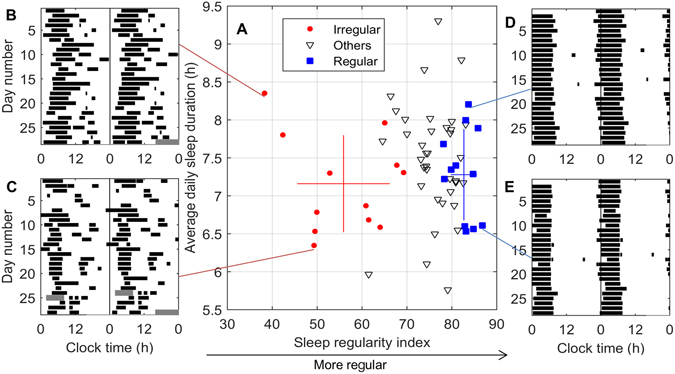
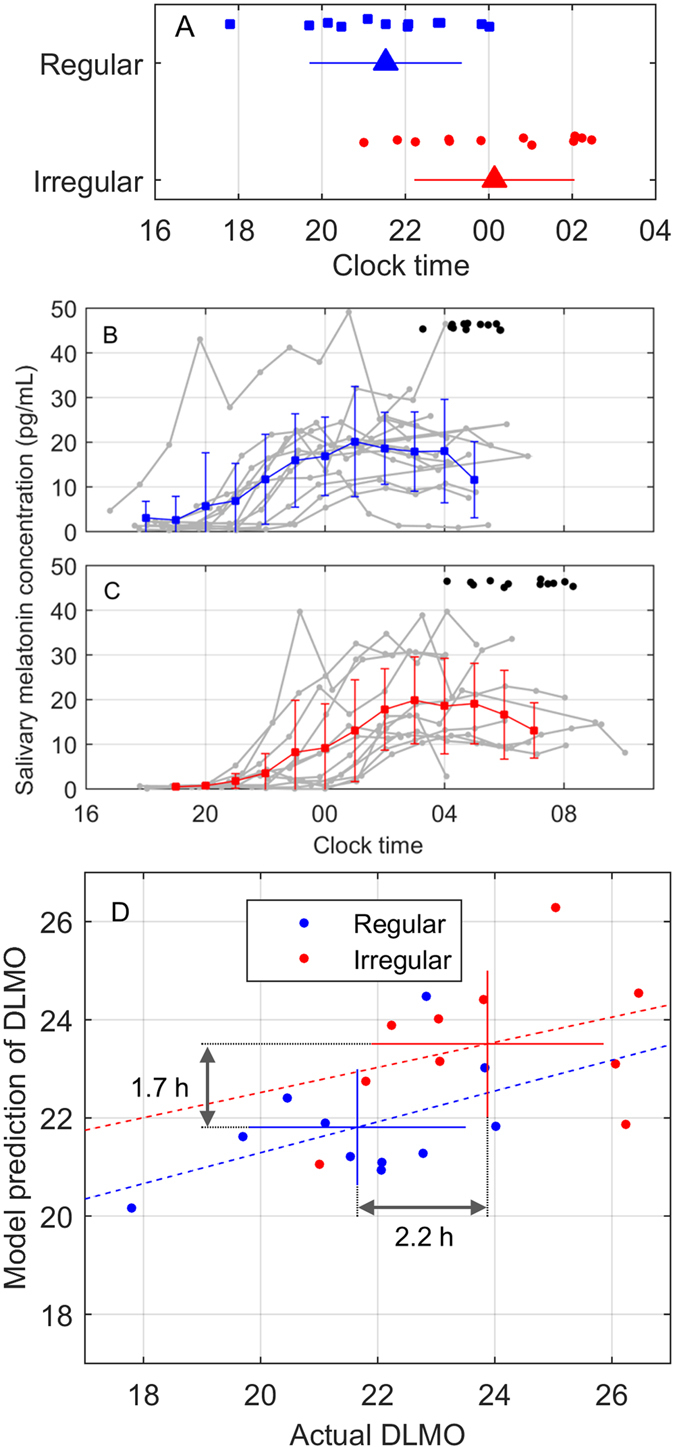
The association of irregular sleep schedules with circadian timing and academic performance has not been systematically examined. We studied 61 undergraduates for 30 days using sleep diaries, and quantified sleep regularity using a novel metric, the sleep regularity index (SRI). In the most and least regular quintiles, circadian phase and light exposure were assessed using salivary dim-light melatonin onset (DLMO) and wrist-worn photometry, respectively. DLMO occurred later (00:08 ± 1:54 vs. 21:32 ± 1:48; p < 0.003); the daily sleep propensity rhythm peaked later (06:33 ± 0:19 vs. 04:45 ± 0:11; p < 0.005); and light rhythms had lower amplitude (102 ± 19 lux vs. 179 ± 29 lux; p < 0.005) in Irregular compared to Regular sleepers. A mathematical model of the circadian pacemaker and its response to light was used to demonstrate that Irregular vs. Regular group differences in circadian timing were likely primarily due to their different patterns of light exposure. A positive correlation (r = 0.37; p < 0.004) between academic performance and SRI was observed. These findings show that irregular sleep and light exposure patterns in college students are associated with delayed circadian rhythms and lower academic performance. Moreover, the modeling results reveal that light-based interventions may be therapeutically effective in improving sleep regularity in this population.
Overview
CoChat Summary
TL;DR
In 61 Harvard undergraduates studied for about 30 days, more irregular sleep/wake patterns were associated with later circadian timing and worse academic performance. The paper argues that the timing differences were largely explained by differences in light exposure rather than by detectable differences in circadian physiology.
Key findings
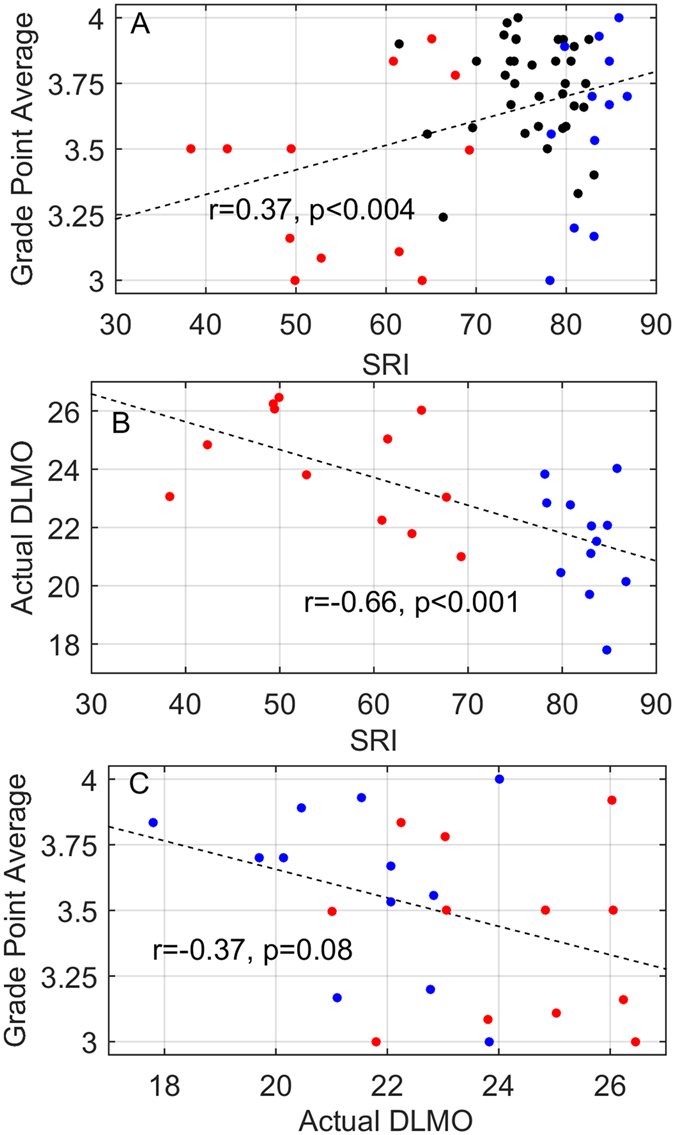
- Sleep regularity index (SRI) was positively correlated with GPA in the full sample (n = 59): Pearson r = 0.37, p < 0.004; an increase of 10 in SRI was associated with an average GPA increase of 0.10.
- Irregular sleepers had significantly later melatonin timing than Regular sleepers: DLMO was 00:08 ± 1:54 vs. 21:32 ± 1:48, p < 0.003; the sleep propensity rhythm also peaked later (06:33 ± 0:19 vs. 04:45 ± 0:11, p < 0.005).
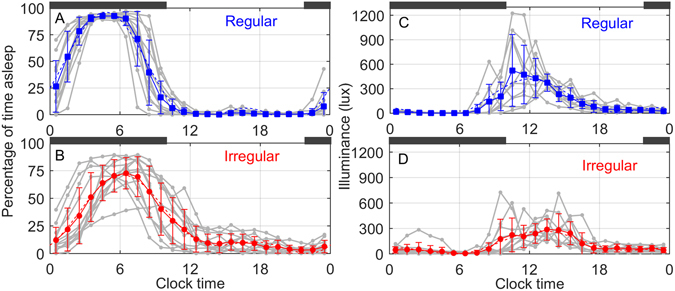
- Irregular sleepers had lower-amplitude light rhythms than Regular sleepers: 102 ± 19 lux vs. 179 ± 29 lux, p < 0.005, with more light during biological night and less daytime light.
- Sleep duration did not differ significantly between groups (7.16 ± 0.64 h vs. 7.27 ± 0.59 h, p = 0.68), and sleep regularity was uncorrelated with sleep duration (r = 0.05, p = 0.71 in the full sample).
Methods
- Observational study of full-time Harvard College undergraduates (excluding first-years), age 18+, living in campus housing; 63 enrolled, 61 completed the study. Participants reported self-selected sleep/wake schedules for ~30 days via online diary during Fall 2013.
- Sleep regularity was quantified with the Sleep Regularity Index (SRI); on day 15, participants were classified using days 1–14, and the highest and lowest quintiles were selected for actiwatch/light and dim-light saliva collection. GPA was self-reported by 59 participants.
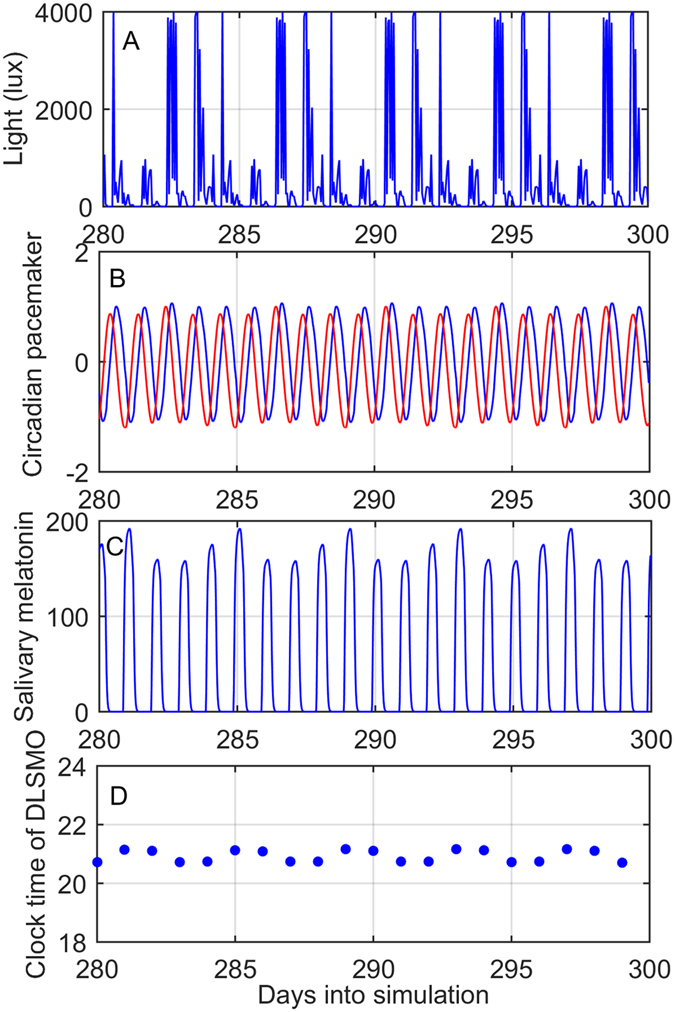
- Main analyses included correlations between SRI and GPA, group comparisons of Regular vs. Irregular sleepers, and a previously validated mathematical model of the human circadian pacemaker to test whether observed DLMO differences could be explained by light exposure patterns. Statistical tests included Wilcoxon rank-sum tests, t-tests, and Pearson correlations.
Limitations
- The paper states that it cannot establish causality between sleep regularity and academic performance or circadian timing.
- DLMO was measured on only one day, which the paper notes may limit prediction of individual circadian timing and may contribute to model-data mismatch; this is especially relevant for Irregular sleepers, and this limitation is explicitly stated in the Discussion.
- The sample was a specific population of Harvard undergraduates living on campus, so the authors note the daytime napping strategy and findings may not generalize to adults who work full time or students not living near campus; this is evident from the text.
Model-written summary. Check it against the paper before relying on it.
Integrity signals
Registry
Cites
Statistics
Figures
Verification
Claims the paper makes
7 Valid · 1 Not valid · 9 Not checked · 75 Own results and interpretations
The cited sources support only part of this claim — read each source’s verdict below.
In the paper
“This hypothesis is supported by a recent study that found large inter-individual differences in circadian timing vanished when individuals were exposed to only natural outdoor light45.”
§ Irregular sleep/wake patterns are associated with poorer academic performance and delayed circadian and sleep/wake timing > Discussion
What the sources say
- Partly supportedcites [45] Wright KP Jr. Entrainment of the human circadian clock to the natural light-dark cycle Curr. Biol. 2013 23 1554 1558 10.1016/j.cub.2013.06.039 23910656 PMC4020279 sourceExperimental — accuracy not yet measured
The Results and Discussion report that exposure to only sunlight while living outdoors reduced individual differences in circadian timing. The claim overstates that finding by saying the differences vanished; the paper does not say they disappeared. (LLM, conf=0.88)
plain- Asserted: passes — The authors put it forward as true.
- Checkable: passes — It can be checked against evidence.
- Load-bearing: unclear — It is unclear whether the paper’s conclusions depend on it.
- Based: passes — The paper gives a reason why it holds.
- Partly supported
A result the paper reports from its own data — it cites no other source for it, so there is none to check. The quote shows it is in the paper.
In the paper
“Irregular sleepers received significantly less day-time light (Table 1)”
§ Irregular sleep/wake patterns are associated with poorer academic performance and delayed circadian and sleep/wake timing > Results > Irregular sleepers have a lower amplitude light rhythm Irregular sleepers received different patterns of light exposure (Fig. 2C and D), with summary metrics in Table 1. The amplitude of the daily light/dark cycle (light rhythm) was lower in Irregular sleepers, reflecting a smaller difference between day-time and night-time illuminance. 95% confidence intervals for the first-harmonic amplitude of a two-harmonic fit were 102 ± 19 lux (Irregular) vs. 179 ± 29 lux (Regular; p < 0.005). Irregular sleepers received significantly less day-time light (Table 1) and had a broader range of light-exposure centroid times (9.6 h vs. 4.5 h). On average, light centroid times were later in the Irregular sleepers than in Regular sleepers, although this difference was not significant (14:18 ± 2:37 vs. 13:05 ± 1:19; p = 0.18, rank-sum test). When light levels were normalized on an individual basis, by dividing by that individual’s average daily illuminance, Irregular sleepers were found to receive relatively more light during the biological night (DLMO to 10 h post-DLMO) and clock night (Table 1). Although the light pattern appeared slightly delayed in the Irregular group, phase parameters for the two-harmonic fits were not significantly different between groups. We note that parametric fits are not ideal for quantifying the effects of the light pattern on the circadian pacemaker, since the sensitivity of the circadian pacemaker to light varies across the day and with previous light exposure history. This point is addressed below by our use of a mathematical model to explicitly predict an individual’s circadian phase of entrainment from the individual light patterns.
plainstates an association- Asserted: passes — The authors put it forward as true.
- Checkable: passes — It can be checked against evidence.
- Load-bearing: unclear — It is unclear whether the paper’s conclusions depend on it.
- Based: passes — The paper gives a reason why it holds.
A result the paper reports from its own data — it cites no other source for it, so there is none to check. The quote shows it is in the paper.
In the paper
“DLMO was also not significantly correlated with GPA (r = 0.37, p = 0.08).”
§ Irregular sleep/wake patterns are associated with poorer academic performance and delayed circadian and sleep/wake timing > Results > Sleep regularity is positively associated with academic performance
plainn = 59- Asserted: passes — The authors put it forward as true.
- Checkable: passes — It can be checked against evidence.
- Load-bearing: unclear — It is unclear whether the paper’s conclusions depend on it.
- Based: passes — The paper gives a reason why it holds.
A result the paper reports from its own data — it cites no other source for it, so there is none to check. The quote shows it is in the paper.
In the paper
“There was no significant linear correlation between sleep duration and SRI (r = 0.13, p = 0.29)”
§ Irregular sleep/wake patterns are associated with poorer academic performance and delayed circadian and sleep/wake timing > Results > Sleep regularity is positively associated with academic performance
plain- Asserted: passes — The authors put it forward as true.
- Checkable: passes — It can be checked against evidence.
- Load-bearing: unclear — It is unclear whether the paper’s conclusions depend on it.
- Based: passes — The paper gives a reason why it holds.
A result the paper reports from its own data — it cites no other source for it, so there is none to check. The quote shows it is in the paper.
In the paper
“later mid-sleep time on free days (7:05 ± 1:23 vs. 4:53 ± 0:56; p < 0.001)”
§ Irregular sleep/wake patterns are associated with poorer academic performance and delayed circadian and sleep/wake timing > Results > Sleep regularity is independent of sleep duration
plainstates an association- Asserted: passes — The authors put it forward as true.
- Checkable: passes — It can be checked against evidence.
- Load-bearing: passes — The paper’s conclusions depend on it.
- Based: passes — The paper gives a reason why it holds.
44 more claims
Create a free account to see all 92 claims and every source verdict.
- Probably not a substantial claim. 32
- It may state two separate claims as one. 21
Citations
Cites
The Pittsburgh Sleep Quality Index: a new instrument for psychiatric practice and research
Buysse, D. J., Reynolds, C. F., Monk, T. H., Berman, S. R., & Kupfer, D. J. (1989) · Psychiatry Research · doi:10.1016/0165-1781(89)90047-4 · Cited by 35,234
A self-assessment questionnaire to determine morningness- eveningness in human circadian rhythms
Home, J. K. (1976) · Medical Entomology and Zoology · Cited by 4,783
(1976) · PubMed · Cited by 3,979
The Geometry of Biological Time
Winfree, A. T. (1980) · doi:10.1007/978-3-662-22492-2 · Cited by 3,613
Social Jetlag: Misalignment of Biological and Social Time
Wittmann, M., Dinich, J., Merrow, M., & Roenneberg, T. (2006) · Chronobiology International · doi:10.1080/07420520500545979 · Cited by 2,625
Cappuccio, F. P., Cooper, D., D'Elia, L., Strazzullo, P., & Miller, M. A. (2011) · European Heart Journal · doi:10.1093/eurheartj/ehr007 · Cited by 2,146
Pittendrigh, C. S., & Daan, S. (1976) · Journal of Comparative Physiology ? A · doi:10.1007/bf01417856 · Cited by 2,127
Action Spectrum for Melatonin Regulation in Humans: Evidence for a Novel Circadian Photoreceptor
Brainard, G. C., Hanifin, J. P., Greeson, J. M., Byrne, B., Glickman, G., Gerner, E., & Rollag, M. D. (2001) · The Journal of Neuroscience · doi:10.1523/jneurosci.21-16-06405.2001 · Cited by 1,930
Sleep Patterns and Predictors of Disturbed Sleep in a Large Population of College Students
Lund, H. G., Reider, B. D., Whiting, A. B., & Prichard, J. R. (2010) · Journal of Adolescent Health · doi:10.1016/j.jadohealth.2009.06.016 · Cited by 1,907
Pittendrigh, C. S., & Daan, S. (1976) · Journal of Comparative Physiology ? A · doi:10.1007/bf01417860 · Cited by 1,636
Research works printed but not linked: 1
- Eskin, A. The sparrow clock: Behavior of the free running rhythm and entrainment analysis. Thesis (The University of Texas, 1969).
Cited by
Items 401–500 of 636
Shang, Y.-H., Liang, D.-Q., Song, X., Feng, X., Mao, G.-Y., Yang, T., Wang, Z.-Y., & Wang, J. (2024) · BMC Public Health · doi:10.1186/s12889-024-20054-2 · Cited by 4
“In our study, we used the Sleep Regularity Index (SRI) [23, 24] to evaluate sleep regularity.”
No match, more sleep: Greater weekend catch-up sleep in youth soccer players on free weekends
Barreira, J., Brito, J., Nakamura, F. Y., & Figueiredo, P. (2025) · Sleep Medicine · doi:10.1016/j.sleep.2025.01.002 · Cited by 4
Energy balance in women during polar trekking—The POWER study
Bourdier, P., Devitt, J., Gallon, S. L., Zahariev, A., Chery, I., Guzzetti, J. R., Blanc, S., Simon, C., & Bergouignan, A. (2025) · Physiological Reports · doi:10.14814/phy2.70443 · Cited by 1
Garduno, A. C., Patel, S. R., Gallo, L. C., Natarajan, L., Parada, H., McEvoy, L. K., Smarr, B. L., & LaCroix, A. Z. (2025) · Chronobiology International · doi:10.1080/07420528.2025.2547026 · Cited by 1
“Sleep regularity index is the probability of an individual being in the same wake-sleep status (e.g. awake vs. asleep) at any two timepoints 24 hours apart averaged over the observation window (Phillips et al. 2017).”
Sansom, K., Mittinty, M., Scott, H., Lechat, B., Windred, D. P., Phillips, A. J. K., Adams, R., Eastwood, P. R., & Reynolds, A. C. (2025) · Journal of Sleep Research · doi:10.1111/jsr.70194 · Cited by 4
Self-citationFour core circadian behaviors that improve cardiorespiratory fitness through consistent sleep
Holmes, K. E., Kim, J., Fielding, F., Zeitzer, J. M., & von Hippel, W. (2025) · SLEEP · doi:10.1093/sleep/zsaf318 · Cited by 2
Vallim, J. R. D. S., Mello, E. C. C. R., Fagundes, H. G., Lima, G. S., Tsuji, H. M. S., Xylaras, B. D. P., Rosa, A. D. S., Demarzo, M., & D’Almeida, V. (2022) · European Journal of Integrative Medicine · doi:10.1016/j.eujim.2022.102127 · Cited by 4
Sleep and fundamental movement skills in primary schoolchildren: The REACT project
Chaput, J., Pereira, S., Katzmarzyk, P. T., Hedeker, D., Barreira, T. V., Garganta, R., Farias, C. F. G., Garbeloto, F., Tani, G., Stodden, D. F., et al. (2023) · American Journal of Human Biology · doi:10.1002/ajhb.24019 · Cited by 4
“%) and the Sleep Regularity Index , as proposed by Phillips et al. ( 2017).”
Consistency index of daily activity pattern and its correlations with subjective ratings of QOL
Amano, R., Karashima, A., Motoike, I. N., Katayama, N., Kinoshita, K., & Nakao, M. (2020) · Sleep and Biological Rhythms · doi:10.1007/s41105-020-00271-z · Cited by 4
Multidimensional Sleep Health: Concepts, Advances, and Implications for Research and InterventionPreprint
Chung, J., Goodman, M. O., Huang, T., Bertisch, S. M., & Redline, S. S. (2021) · medRxiv · doi:10.1101/2021.04.20.21255799 · Cited by 2
“by circadian misalignment (32), the two-process model of sleep suggests that circadian 14 misalignment and duration variability may interact, suggesting internal (to sleep health) causal 15 relationships.”
Schoch, S. F., Castro-Meija, J. L., Krych, Ł., Kot, W., Leng, B., Kohler, M., Huber, R., Rogler, G., Biedermann, L., Walser, J., et al. (2021) · OSF Preprints (OSF Preprints) · doi:10.31219/osf.io/3b58x · Cited by 2
Sleep Regularity and Mortality: A Prospective Analysis in the UK BiobankPreprint
Cribb, L., Sha, R., Yiallourou, S. R., Grima, N., Cavuoto, M. G., Baril, A., & Pase, M. P. (2023) · eLife · doi:10.7554/elife.88359.2 · Cited by 2
Sleep: Educational Impact and Habit Formation
Giuntella, O., Saccardo, S., & Sadoff, S. (2024) · National Bureau of Economic Research · doi:10.3386/w32550 · Cited by 10
Sleep: Educational Impact and Habit FormationPreprint
Giuntella, O., Saccardo, S., & Sadoff, S. (2024) · SSRN Electronic Journal · doi:10.2139/ssrn.4859402 · Cited by 2
Introduction to Applied Affective Computing
Tian, L., Oviatt, S. L., Muszyński, M., Chamberlain, B. C., Healey, J., & Sano, A. (2022) · ACM eBooks · doi:10.1145/3502398.3502400 · Cited by 1
Self-citationEmotion Recognition in the Wild
Tian, L., Oviatt, S. L., Muszyński, M., Chamberlain, B. C., Healey, J., & Sano, A. (2022) · ACM eBooks · doi:10.1145/3502398.3502404 · Cited by 3
Self-citationMalone, S. K., Patterson, F., Grunin, L., Yu, G., Dickson, V. V., & Melkus, G. D. (2023) · Nursing Research · doi:10.1097/nnr.0000000000000693 · Cited by 1
“These variables provided data to calculate estimates of sleep timing and sleep regularity indexes (SRIs; Phillips et al., 2017).”
MethodStatistical Modeling of Subjective Sleep Quality*
Choilek, S., Karashima, A., Motoike, I. N., Katayama, N., Kinoshita, K., & Nakao, M. (2023) · Annual International Conference of the IEEE Engineering in Medicine and Biology Society (EMBC) · doi:10.1109/embc40787.2023.10340638 · Cited by 1
“Several studies have suggested that the late chronotype and severe SJL influence physiological/behavioral phenomena such as later melatonin secretion [7], later circadian acrophase of activity [8], and lower sleep regularity [9][10], which could underlie deteriorations in sleep quality.”
BackgroundMethodDisturbance in Chrononutrition and Its Influence on Body Weight and Academic Performance: A Review
Saif, M., Aslam, A., Zainab, R., Tariq, M., Sajid, K., & Tanweer, A. (2023) · Chronobiology in Medicine · doi:10.33069/cim.2023.0026 · Cited by 1
“But they can be treated by providing light-based therapy which means avoiding the use of technology before bedtime [87].”
BackgroundChronobiology and Its Psychiatric Relevance
Kumar, S., Srivastava, M., & Ansari, S. (2024) · Indian Journal of Sleep Medicine · doi:10.5005/jp-journals-10069-0137 · Cited by 2
Yetton, B. D., McDuff, D., Barakat, A., Jiang, A., Allen, N. B., Schneider, L. D., Winbush, A., & Heneghan, C. (2024) · IntechOpen eBooks · doi:10.5772/intechopen.1006932 · Cited by 2
Maskevich, S., Shen, L., Wiley, J. F., Drummond, S. P. A., & Bei, B. (2024) · Sleep Medicine · doi:10.1016/j.sleep.2024.12.035 · Cited by 2
Shen, Y., Olivier, A. C., Yu, H., Ito-Masui, A., Sakamoto, R., Shimaoka, M., & Sano, A. (2025) · JMIR Formative Research · doi:10.2196/65000 · Cited by 1
“Previous studies have shown that the SRI is positively correlated with the academic performance of college students [40] and a lower SRI is associated with increased stress, depression, and risk of cardiovascular diseases in older adults [41].”
Self-citationEvaluation of sleep and daytime sleepiness in Medical students at a public university
Dias, Í. F. N., Leão, S. E. G., Brasil, M. Q. A., Iglesias, É. P., & Lessa, M. M. (2025) · Revista Brasileira de Educação Médica · doi:10.1590/1981-5271v49.1-2023-0140.ing · Cited by 1
“…between the performance coefficient and PSQI ® score (r= -0.108, p= 0.033) and the performance coefficient and ESS score (r= -0.113, p=0.025), in agreement with other studies, where poor sleep quality and excessive daytime sleepiness were associated with low academic performance 19, 26 .”
InfluentialBeyond the Circadian Rhythm: Variable Cycles of Regularity Found in Long-Term Sleep Tracking
Chung, J. W., Yuan, R. K., Zitting, K., Chen, J., Xu, N. G., Daskalova, N., & Huang, J. J. S. (2025) · CHI Conference on Human Factors in Computing Systems · doi:10.1145/3706598.3713868 · Cited by 3
“Prior works on sleep routines focus primarily on daily sleep regularity [35, 69, 83, 105, 108] and investigate its association with some other factors such as mortality [105], dementia [108], and cardiometabolic risk [69].”
Sleep-Related Problems in Childhood and Adolescence
Tikotzky, L., Kahn, M., Gradisar, M., & Bruni, O. (2025) · Oxford University Press eBooks · doi:10.1093/oxfordhb/9780197602751.013.46 · Cited by 1
Fractal biomarker of daily activity for women with early onset depression
Yang, H., Münch, M. Y., Ulsa, M. C., Gaba, A., Birchler-Pedross, A., Frey, S., Knoblauch, V., Li, P., Chellappa, S. L., Cajochen, C., et al. (2025) · BMJ Mental Health · doi:10.1136/bmjment-2024-301321 · Cited by 1
“22 We also determined the absolute deviation of actual wake-up time from habitual wake-up time (the average absolute value of the difference between daily actual bedtime from habitual wake time) and sleep quality indexes.”
Moosan, P. C., Suklaew, P. O., Chusak, C., Kaewpradup, T., Kamonsuwan, K., & Adisakwattana, S. (2025) · Scientific Reports · doi:10.1038/s41598-025-11309-y · Cited by 5
“The structured routine of monastic life promotes consistent sleep wake cycles, which has been shown to enhance circadian alignment and sleep quality 38,39 .”
Malone, S. K., Patterson, F., Hu, J., Goyal, C., Goel, N., Dickson, V. V., Melkus, G. D., & Aouizerat, B. E. (2025) · Chronobiology International · doi:10.1080/07420528.2025.2546006 · Cited by 3
“…was either asleep or awake at a specific minute 24-h apart across all monitoring days with values ranging from 0 (most irregular) to 100 (most regular) and was first validated in college students (Phillips et al. 2017) and later in adults with cardiometabolic risk (Lunsford-Avery et al. 2018).”
Carpi, M., & Marques, D. R. (2025) · Sleep And Breathing · doi:10.1007/s11325-025-03520-y · Cited by 1
High risk, low rest: a new framework for monitoring sleep vulnerability in emergency medicine
Schmidt, L., Trousselard, M., Perez, C., Reynaud, È., Valero, B., Schlatter, S., Tazarourte, K., Douplat, M., & Mazza, S. (2025) · Frontiers in Public Health · doi:10.3389/fpubh.2025.1679296 · Cited by 2
“Established cut-offs from larger cohorts exist for interpreting SRI scores as irregular, intermediate, or regular sleep patterns, typically based on the lowest and highest quintiles of the score distribution (30, 31).”
Knutson, K. L., Reid, K. J., Cai, X., Alexandria, S. J., Abbott, S. M., Chapagai, S., Chirinos, D. A., Thomas, S. J., Lewis, C. E., Schreiner, P. J., et al. (2025) · SLEEP · doi:10.1093/sleep/zsaf367 · Cited by 1
Shift work is associated with selective brain volume loss: a longitudinal study
Welton, T., Teo, T. W. J., Saffari, S. E., Chan, L. L., & Tan, E. (2025) · NeuroImage · doi:10.1016/j.neuroimage.2025.121619 · Cited by 1
Daily locomotor activity declines with tumor growth and disease progression in glioblastoma
Gonzalez-Aponte, M. F., Salvatore, S. V., Damato, A. R., Katumba, R. G. N., Talcott, G. R., Butt, O. H., Campian, J. L., Luo, J. R., Rubin, J. B., Walch, O., et al. (2025) · JCI Insight · doi:10.1172/jci.insight.194582 · Cited by 1
Li, X., Hu, H., Quante, M., Davison, K. K., Haneuse, S., Redline, S. S., & Taveras, E. M. (2025) · SLEEP · doi:10.1093/sleep/zsaf386 · Cited by 2
Sleep as a moderator of adolescent brain development—evidence from a longitudinal MRI study
Wild, S., Inderkum, A. P., Rupp, D., Markovic, A., Fontanellaz-Castiglione, C. E. G., Hamann, C., Adorjan, K., Kaess, M., Tuura, R., & Tarokh, L. (2026) · SLEEP · doi:10.1093/sleep/zsag011 · Cited by 1
“Lastly, to assess the regularity of sleep schedules, the Sleep Regularity Index (SRI) was calculated [ 88].”
Sanabria, F. C., Cenerini, G., Bruno, S., Ferri, R., Fiori, S., & Faraguna, U. (2026) · Sleep Medicine · doi:10.1016/j.sleep.2026.108818 · Cited by 2
Sleep and activity patterns in autism
Weissenkampen, J. D., Ghorai, A., Carneiro, T. N. R., Fasolino, M., Gehringer, B. N., Rajan, M., Dow, H. C., Kunatharaju, S., Roenneberg, T., Sebro, R., et al. (2026) · Autism · doi:10.1177/13623613251413538 · Cited by 1
“To evaluate the overall regularity of sleep patterns in autism, we calculated the SRI (Fischer et al., 2021; Phillips et al., 2017).”
Sleep and Sleep Disorders in High-Level Athletes: a Scoping Review
Kordatzi, V., Nikolaidis, P. Τ., & Trakada, G. (2026) · Current Pulmonology Reports · doi:10.1007/s13665-026-00402-w · Cited by 3
Guilherme, L. Q., RODRIGUES, B. O., Rosa, C. D. O. B., Leite, L. B., Scheer, V., Forte, P. M., Hermsdorff, H. H. M., Kravchychyn, A. C. P., & Souza, H. D. S. (2026) · Journal of Clinical Medicine · doi:10.3390/jcm15041398 · Cited by 2
Sikes-Keilp, C., Jensen, K., Wilson, E. D., Lunsford‐Avery, J. R., & Andersen, E. H. (2026) · Development and Psychopathology · doi:10.1017/s0954579426101242 · Cited by 1
“Consistent with other work (Phillips et al., 2017), sleep regularity was only weakly correlated with sleep duration, supporting the idea that sleep regularity and sleep duration should be considered as independent factors contributing to mood.”
Wang, Y., Zhang, Y., Cheng, S., Zhang, Y., & Zhang, X. (2026) · Building and Environment · doi:10.1016/j.buildenv.2026.114422 · Cited by 4
Spatial Modeling of Anthrax Risk in India's Agro-Climatic Zones: A Future Perspective
Naveesh, Y. B., Suresh, K., Chethan, A. J., Patil, A., Archana, C. A., Nandan, A. S., Patil, S. S., Krishnamoorthy, P., & Sj, S. (2026) · Acta Tropica · doi:10.1016/j.actatropica.2026.108063 · Cited by 2
Nauha, L., Niemelä, M., Azadifar, S., Korpelainen, R., & Farrahi, V. (2026) · BMC Cardiovascular Disorders · doi:10.1186/s12872-026-05762-4 · Cited by 1
“First, the sleep regularity index quantifies the probability that an individual is in the same sleep or wake state at any two time points in time 24 h apart, averaged over multiple days [27].”
Li, B., Wan, C. M., Lee, P. M. Y., Qiu, S., Huss, A., Ma, Y. T. J., Chan, J. W.-Y., Ho, A. W., Ho, C. S., Kim, J. H., et al. (2026) · Asian Journal of Social Health and Behavior · doi:10.4103/shb.shb_228_25 · Cited by 2
Marchesano, M., Silva, A. C., & Tassino, B. (2026) · Journal of Biological Rhythms · doi:10.1177/07487304261428332 · Cited by 2
“%) was calculated for each night as the ratio of total sleep time to the main sleep period time, both derived from the HDCZA algorithm in GGIR (Van Hees et al., 2018), and multiplied by 100 (Sansom et al., 2023).”
Michaud, X., Guiliani, F., Leiva, F. E. B., & Simonelli, G. (2026) · Small Business Economics · doi:10.1007/s11187-026-01220-9 · Cited by 1
“This review adopts the six dimensions of sleep identified by Buysse (2014) and Phillips et al. (2017).”
Abdullayev, K., Mitchell, J. J., & Blodgett, J. M. (2026) · BMC Women s Health · doi:10.1186/s12905-026-04533-9 · Cited by 1
Zhao, B., Huang, X., Xing, Y., Luo, H., Ye, Z., Xu, W., & Shao, J. (2026) · Sleep Health · doi:10.1016/j.sleh.2026.04.007 · Cited by 1
Jordan Ministry of Health - Amman., & Ajlouni, E. (2019) · International Journal of Advanced Research · doi:10.21474/ijar01/9014 · Cited by 1
Panda, S., Sengupta, T., & Kaur, T. (2018) · Sleep and Biological Rhythms · doi:10.1007/s41105-018-0157-7 · Cited by 1
RetractedPalmer, J. R., McKinnon, A. C., Bei, B., & Naismith, S. L. (2021) · Elsevier eBooks · doi:10.1016/b978-0-12-818697-8.00192-8 · Cited by 1
Reinforcement Learning and Affective Computing
Tian, L., Oviatt, S. L., Muszyński, M., Chamberlain, B. C., Healey, J., & Sano, A. (2022) · ACM eBooks · doi:10.1145/3502398.3502405 · Cited by 1
Self-citationKrishnegowda, S., Thandaveshwara, D., & Doreswamy, S. M. (2023) · Egyptian Pediatric Association Gazette · doi:10.1186/s43054-022-00151-w · Cited by 1
“Apart from this, the studies have shown that these lights can affect the mood, thereby causing learning disability and affecting academic and intellectual performance [8, 9], and observed that blue light is associated with a significantly high prevalence of skin cancers.”
BackgroundMelanopic metrics: Advancing the characterization of everyday light patterns
Sletten, T. L. (2023) · Proceedings of the National Academy of Sciences · doi:10.1073/pnas.2316004120 · Cited by 1
“Regularity in the timing of sleep is important for many aspects of health and performance, as described in a recent review (14), and the mechanisms of the associations are likely related to light expo - sure (15).”
BackgroundMarquardt, M. D., & Pontis, S. (2024) · American Journal of Health Promotion · doi:10.1177/08901171241240818 · Cited by 2
Stefansdottir, R. S., Rögnvaldsdóttir, V., Arnarsdottir, A. O., Gísladóttir, Þ., Jóhannsson, E., Gestsdóttir, S., & Jakobsdottir, G. (2024) · Sleep Epidemiology · doi:10.1016/j.sleepe.2024.100087 · Cited by 3
El vínculo entre calidad de sueño y consumo de drogas en adolescentes
Espinoza-Abad, R., Bravo-González, F., Acosta-Hernández, M. E., & García‐García, F. (2024) · eNeurobiología · doi:10.25009/eb.v15i38.2631
Panhale, V. P., Nair, S. P., & Doshi, A. (2024) · Physiotherapy - The Journal of Indian Association of Physiotherapists · doi:10.4103/pjiap.pjiap_120_24 · Cited by 2
Avaliação do sono e da sonolência diurna em estudantes de Medicina de uma universidade pública
Dias, Í. F. N., Leão, S. E. G., Brasil, M. Q. A., Iglesias, É. P., & Lessa, M. M. (2025) · Revista Brasileira de Educação Médica · doi:10.1590/1981-5271v49.1-2023-0140 · Cited by 37
Wilhelmsen-Langeland, A., Osnes, B., Gradisar, M., Vågenes, V. A., Sørensen, L., Bjorvatn, B., Fasmer, O.-B., Koenig, J., Pallesen, S., & Saxvig, I. W. (2025) · BMJ Open · doi:10.1136/bmjopen-2024-093091 · Cited by 1
Factors of depression according to actigraphy in the fall season
Gubin, D. G., Boldyreva, Y. V., & Kolomeichuk, S. (2025) · S S Korsakov Journal of Neurology and Psychiatry · doi:10.17116/jnevro202512505227 · Cited by 2
Visual and non-visual classroom lighting in a large university–A case study
Hegde, A. L., Tyne, I. A., & Adi, M. N. (2025) · Building and Environment · doi:10.1016/j.buildenv.2025.113531 · Cited by 2
TIME OF SLEEP AND MEMORY STRENGTH AMONG SAUDI PEOPLE: EXPLORATORY STUDY.
Ajlouni, E. (2019) · International Journal of Advanced Research · doi:10.21474/ijar01/9242 · Cited by 1
“(Phillips et al, 2017) Daytime sleeping may affect the mood as shown in a study published in Springer’s Cognitive Therapy and Research Journal which found that “night” people who went to bed later had more negative thoughts than “morning” people who went to bed earlier.”
Effect of Segmented Sleeping on the Academic Performance of Medical Students. A Questionnaire Survey
Shalini S.P.1, B. K. 2. (2021) · Medico-Legal Update · doi:10.37506/mlu.v21i1.2439 · Cited by 1
Psychosocial dimensions of sleep health
Szklo‐Coxe, M., Leser, K. A., & Lubas, M. M. (2021) · Elsevier eBooks · doi:10.1016/b978-0-12-815501-1.00007-7 · Cited by 1
The Effect of Class times on the Academic Performance of Students in Mathematics
Manaligod, H. J. T., Gamboa, V. R., Lee, N., & Lamberto, J. O. (2021) · IJASC · doi:10.22662/ijasc.2021.3.3.001 · Cited by 1
Adjustment to lockdown in children and adolescents with narcolepsy in France
de Laclause, A. P., Konofal, É., Bokov, P., Delclaux, C., & Lecendreux, M. (2022) · Journal of Clinical Sleep Medicine · doi:10.5664/jcsm.10096 · Cited by 1
Kamiyama, Y., Kaneko, Y., Saitoh, K., Furihata, R., Konno, M., Uchiyama, M., & Suzuki, M. (2023) · Sleep and Biological Rhythms · doi:10.1007/s41105-022-00441-1 · Cited by 1
“In contrast, DSWPD has been reported to be closely associated with psychosocial factors, such as personality tendencies [19, 20], mental health problems, academic performance [21], and social adjustment [4].”
BackgroundCoombs, G. (2020) · Digital Access to Scholarship at Harvard (DASH) (Harvard University) · Cited by 4
Sridhar, H. S., Kimble, A., King, M. M., Johnson, C. P., Shah, R. J., Dietzel, J., Yoo, C. H., Moreno, M. P., Pant, P., Edwards, J. A., et al. (2019) · PsyArXiv (OSF Preprints) · doi:10.31234/osf.io/6x8su · Cited by 1
Sleep Regularity and Mortality: A Prospective Analysis in the UK BiobankPreprint
Cribb, L., Sha, R., Yiallourou, S. R., Grima, N., Cavuoto, M. G., Baril, A., & Pase, M. P. (2023) · eLife · doi:10.7554/elife.88359.1 · Cited by 2
LightLogR: Process Data from Wearable Light Loggers and Optical Radiation Dosimeters
Zauner, J., Spitschan, M., & Hartmeyer, S. L. (2024) · doi:10.32614/cran.package.lightlogr · Cited by 1
Sleep in People Experiencing Homelessness Under Different Conditions and SeasonsPreprint
Rice, A., Casiraghi, L. P., Gildee, C. M., Almquist, Z. W., Hagopian, A., Martin, M. A., & de la Iglesia, H. O. (2025) · bioRxiv (Cold Spring Harbor Laboratory) · doi:10.1101/2025.01.23.634551 · Cited by 2
Risner, M., Katz, E. S., & Stamoulis, C. (2025) · bioRxiv (Cold Spring Harbor Laboratory) · doi:10.1101/2025.06.22.660935 · Cited by 1
Koster, A., Biswas, R. K., Ahmadi, M. N., Blodgett, J. M., Koemel, N. A., Bian, W., Atkin, A. J., Pulsford, R. M., Cruz, B. D. P., Celis-Morales, C. A., et al. (2025) · medRxiv · doi:10.1101/2025.07.22.25332021 · Cited by 2
Casiraghi, L. P., Spiousas, I., Trebucq, L. L., et al. (2025) · bioRxiv (Cold Spring Harbor Laboratory) · doi:10.1101/2025.07.28.667301 · Cited by 1
“The SRI, proposed by Phillips et al. 2017 28 , represents a re-scaled measure of the probability that a participant is at an equal state of wake or sleep at two time points separated by 24 hours on any series of at least seven consecutive night sleep events.”
Harvey, A. G., Oliver, S., Patino, E. O., Diaz, M., Milner, A. E., Tiab, S. S., Dong, L., Salazar, N., Song, J., Marcotullio, K., et al. (2026) · Research Square · doi:10.21203/rs.3.rs-8735756/v1 · Cited by 1
Driller, M. W., Bodner, M. E., Fenuta, A. M., Stevenson, S., & Suppiah, H. T. (2026) · medRxiv · doi:10.64898/2026.02.24.26347047 · Cited by 1
A Home-Based IoT-Enabled Framework for Sleep Behaviour Assessment
Fallmann, S., Chen, L., & Chen, F. (2019) · IEEE Intl Conf on Dependable, Autonomic and Secure Computing, Intl Conf on Pervasive Intelligence and Computing, Intl Conf on Cloud and Big Data Computing, Intl Conf on Cyber Science and Technology Congress (DASC/PiCom/CBDCom/CyberSciTech) · doi:10.1109/dasc/picom/cbdcom/cyberscitech.2019.00018
“, the sleep/wake cycle, is responsive to extraneous impacts such as light exposure [8], [23].”
BackgroundInfluentialSummer Schedules affect Sleep Quality
Sexton–Radek, K. (2017) · SM Journal of Sleep Disorders · doi:10.36876/smjsd.1010
The Sleep – Migraine Enigma: A Comment
Vgontzas, A., Li, W., Mostofsky, E., et al. (2020) · Headache The Journal of Head and Face Pain · doi:10.1111/head.13972
Henst, R. H. P. (2020) · Open University of Cape Town (University of Cape Town)
The interaction of sleep and hormones on emotion functioning
Lustig, K. A. (2021) · Brock University Digital Repository (Brock University) · Cited by 3
Predicting Subjective Sleep Quality Using Objective Measurements in Older Adults
Sadeghi, R. (2020) · OhioLink ETD Center (Ohio Library and Information Network)
Robbins, R., Weaver, M. D., Quan, S. F., Sullivan, J. P., Qadri, S., Czeisler, C. A., & Barger, L. K. (2021) · medRxiv · doi:10.1101/2021.10.13.21264974
“awake) at any two time-points 24 h apart, averaged across the sleep diary intervals.(13) An individual who sleeps and wakes at exactly the same times each day scores 100 (better outcome), whereas an individual who sleeps and wakes at random scores 0 (worse outcome).”
BackgroundSelf-citationPerceived Stress and Sleep Quality of First Year Medical Students
Jena, S. K., Ak, P., & Pattnaik, M. (2021) · International Journal of Current Research and Review · doi:10.31782/ijcrr.2021.132209
Sleep in cardiovascular disease
Hoddy, K. K., Mader, E. C., & Singh, P. (2021) · Elsevier eBooks · doi:10.1016/b978-0-12-822963-7.00211-5
Future of Affective Computing and Applied Affective Computing
Tian, L., Oviatt, S. L., Muszyński, M., Chamberlain, B. C., Healey, J., & Sano, A. (2022) · ACM eBooks · doi:10.1145/3502398.3502411 · Cited by 1
Self-citationMultimodal Data Collection and Processing for Applied Affective Computing
Tian, L., Oviatt, S. L., Muszyński, M., Chamberlain, B. C., Healey, J., & Sano, A. (2022) · ACM eBooks · doi:10.1145/3502398.3502403
Self-citationTian, L., Oviatt, S. L., Muszyński, M., Chamberlain, B. C., Healey, J., & Sano, A. (2022) · ACM eBooks · doi:10.1145/3502398.3502399
Self-citationTian, L., Oviatt, S. L., Muszyński, M., Chamberlain, B. C., Healey, J., & Sano, A. (2022) · ACM eBooks · doi:10.1145/3502398.3502412
Self-citationTian, L., Oviatt, S. L., Muszyński, M., Chamberlain, B. C., Healey, J., & Sano, A. (2022) · ACM eBooks · doi:10.1145/3502398.3502413
Self-citationApplied Affective Computing in Built Environments
Tian, L., Oviatt, S. L., Muszyński, M., Chamberlain, B. C., Healey, J., & Sano, A. (2022) · ACM eBooks · doi:10.1145/3502398.3502409 · Cited by 1
Self-citationMachine Learning Approaches for Applied Affective Computing
Tian, L., Oviatt, S. L., Muszyński, M., Chamberlain, B. C., Healey, J., & Sano, A. (2022) · ACM eBooks · doi:10.1145/3502398.3502402
Self-citationAffective Computing for Enhancing Well-Being
Tian, L., Oviatt, S. L., Muszyński, M., Chamberlain, B. C., Healey, J., & Sano, A. (2022) · ACM eBooks · doi:10.1145/3502398.3502408 · Cited by 1
“…et al. 2015a, Sano et al. 2015c]; that correlations exist between happiness, healthiness, and calmness and both sleep regularity and duration [Phillips et al. 2017, Sano et al. 2017b, Fischer et al. 2020]; and that mood prediction can improve if the SNAPSHOT population is clustered into…”
BackgroundSelf-citationSynthesizing Natural and Believable Emotional Expressions
Tian, L., Oviatt, S. L., Muszyński, M., Chamberlain, B. C., Healey, J., & Sano, A. (2022) · ACM eBooks · doi:10.1145/3502398.3502406
Self-citationAddressing Ethical Issues of Affective Computing
Tian, L., Oviatt, S. L., Muszyński, M., Chamberlain, B. C., Healey, J., & Sano, A. (2022) · ACM eBooks · doi:10.1145/3502398.3502410
Self-citationEmotions as Studied in Psychology and Cognitive Science
Tian, L., Oviatt, S. L., Muszyński, M., Chamberlain, B. C., Healey, J., & Sano, A. (2022) · ACM eBooks · doi:10.1145/3502398.3502401
Self-citationResearch Progress on the Pathogenesis of Circadian Rhythm Sleep-Wake Disorders
Zhou, Z. (2022) · Highlights in Science Engineering and Technology · doi:10.54097/hset.v8i.1214
“Therefore, it is still recommended to adopt a regular life schedule and pay attention to sleep hygiene [29].”
Background
Metadata
- Authors
- Phillips, A. J. K., Clerx, W. M., O’Brien, C. S., Sano, A., Barger, L. K., Picard, R. W., Lockley, S. W., Klerman, E. B., & Czeisler, C. A.
- Affiliations
- Brigham and Women's Hospital (US)
- MIT Media Lab (US)
- Corresponding author
- Phillips, Andrew J. K.
- ORCID
- Venue
- Scientific Reports
- Published
- 2017-06-12
- Volume
- 7
- Issue
- 1
- Pages
- 3216-3216
- ISSN
- 2045-2322 (ISSN-L)
- PMC
- PMC5468315
- OpenAlex
- W2622433070
- Cited by
- 647
- References
- 64
- Citations by year
- 2026: 106 · 2025: 106 · 2024: 94 · 2023: 85 · 2022: 81 · 2021: 62 · 2020: 56 · 2019: 39 · 2018: 14 · 2017: 4
- FWCI
- 18.98
- Type
- journal article
- Language
- en
- Open access
- gold
- doi.org
- Licence
- cc-by
- creativecommons.org/licenses/by/4.0 (tdm)
- creativecommons.org/licenses/by/4.0 (vor)
- Locations
- Scientific Reports (publishedVersion, cc-by)
- Europe PMC (PubMed Central) (publishedVersion, other-oa)
- PubMed Central (publishedVersion, cc-by)
- PubMed (publishedVersion)
- Digital Access to Scholarship at Harvard (DASH) (Harvard University) (submittedVersion, cc-by)
- DOAJ (DOAJ: Directory of Open Access Journals) (submittedVersion, cc-by-sa)
- DSpace@MIT (Massachusetts Institute of Technology) (submittedVersion, cc-by-nc)
- Surrey Research Insight Open Access (The University of Surrey) (submittedVersion)
- Funders
- National Space Biomedical Research Institute (HFP-02802, HFP02801)
- National Institutes of Health (NIH K24, NIH-R01, NIH K99, HFP02802, AG09975)
- National Institute on Aging (P01AG009975)
- National Heart, Lung, and Blood Institute (K24HL105664, R01HL094654, K99HL119618, R01HL128538, R01HL114088, R00HL119618)
- National Institute of General Medical Sciences (R01GM105018)
- National Center for Research Resources (UL1RR025758)
- Topics
- Life Sciences › Neuroscience › Endocrine and Autonomic Systems › Circadian rhythm and melatonin
- Social Sciences › Psychology › Experimental and Cognitive Psychology › Sleep and related disorders
- Social Sciences › Psychology › Experimental and Cognitive Psychology › Sleep and Work-Related Fatigue
- Keywords
- irregular sleep schedules, sleep regularity, circadian timing, academic performance, dim light melatonin onset, light exposure, sleep timing, university students
- MeSH terms
- Academic Performance, Adolescent, Circadian Rhythm, Female, Humans, Light, Male, Melatonin, Models, Theoretical, Sleep, Time Factors, Wakefulness, Sleep Disorders, Circadian Rhythm, Young Adult
About these checks
Registry, retraction, Cites and statistics results are computed, not judged, with one exception: a printed reference that no index lists is read once by a model before it counts as a citation error. Claims are extracted by a model and kept only when their quote appears verbatim in the text; each cited source is then checked, with a model’s help, for whether it says what the claim relies on. Those verdicts can be wrong — read the claim’s quote and the cited source before relying on one.
The claim verdicts this report counts are experimental: their accuracy is not yet measured.
A language model drew the claims from the paper on 2026-10-10, under version 3 of the claim definition (model deepseek-v4.1-flash, prompt extract-v3).
A second model labelled each claim on 2026-10-10 (model jev-1.13-20260917, definition revision gold-guideline-v0.2).
Cited sources are checked with a language model’s help (gpt-6-sol).
Statistics and arithmetic are recomputed, not judged.
Confidence bands are shown only for fields calibrated on our annotated test set. None is calibrated yet, so no band is shown.
What counts as a claim ›How we measure confidence ›How we check this ›
Are you an author, or do you see a problem with this page? Request a review
Data sources
Bibliographic data: Semantic Scholar, OpenAlex, Crossref.
Contains information from the Semantic Scholar Academic Graph Datasets, made available under the ODC Attribution License (ODC-BY 1.0).
Semantic Scholar’s data is described in: Kinney, R., et al. (2023). The Semantic Scholar Open Data Platform. arXiv:2301.10140.
