

Irregular sleep/wake patterns are associated with poorer academic performance and delayed circadian and sleep/wake timing
Open accessThe DOI matches its Crossref record; 63 of the 64 references it cites were found in a registry or an index; 9 of the 24 sources its claims cite were checked for support.
Abstract
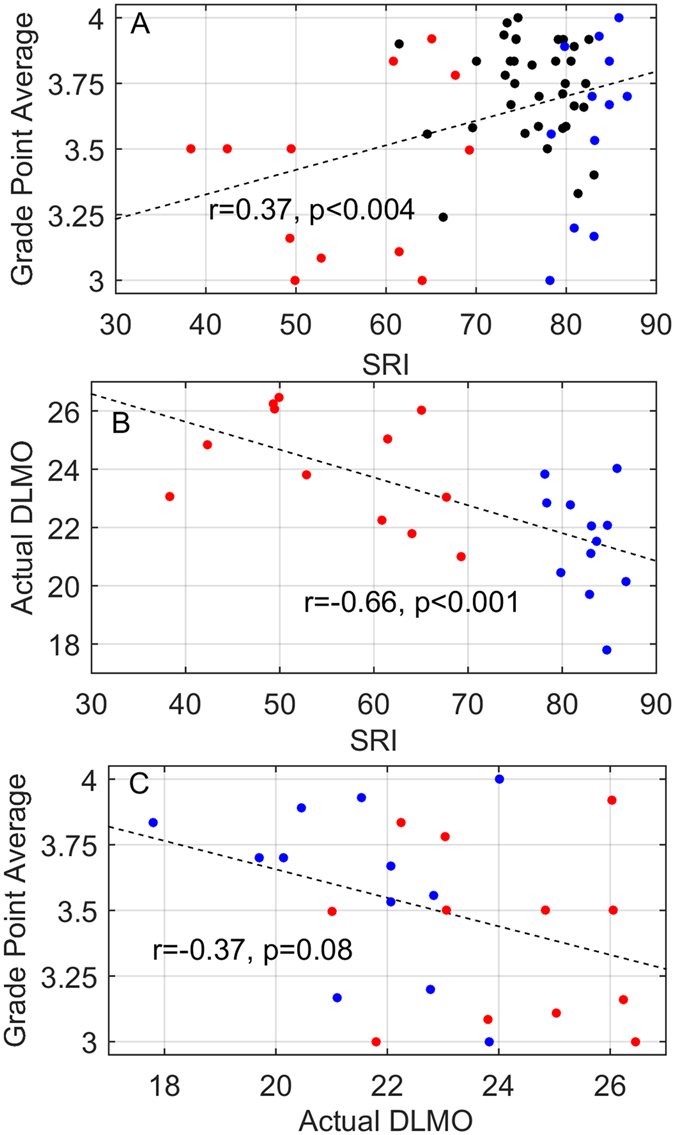
The association of irregular sleep schedules with circadian timing and academic performance has not been systematically examined. We studied 61 undergraduates for 30 days using sleep diaries, and quantified sleep regularity using a novel metric, the sleep regularity index (SRI). In the most and least regular quintiles, circadian phase and light exposure were assessed using salivary dim-light melatonin onset (DLMO) and wrist-worn photometry, respectively. DLMO occurred later (00:08 ± 1:54 vs. 21:32 ± 1:48; p < 0.003); the daily sleep propensity rhythm peaked later (06:33 ± 0:19 vs. 04:45 ± 0:11; p < 0.005); and light rhythms had lower amplitude (102 ± 19 lux vs. 179 ± 29 lux; p < 0.005) in Irregular compared to Regular sleepers. A mathematical model of the circadian pacemaker and its response to light was used to demonstrate that Irregular vs. Regular group differences in circadian timing were likely primarily due to their different patterns of light exposure. A positive correlation (r = 0.37; p < 0.004) between academic performance and SRI was observed. These findings show that irregular sleep and light exposure patterns in college students are associated with delayed circadian rhythms and lower academic performance. Moreover, the modeling results reveal that light-based interventions may be therapeutically effective in improving sleep regularity in this population.
Overview
CoChat Summary
TL;DR
In 61 Harvard undergraduates studied for about 30 days, more irregular sleep/wake patterns were associated with later circadian timing and worse academic performance. The paper argues that the timing differences were largely explained by differences in light exposure rather than by detectable differences in circadian physiology.
Key findings
- Sleep regularity index (SRI) was positively correlated with GPA in the full sample (n = 59): Pearson r = 0.37, p < 0.004; an increase of 10 in SRI was associated with an average GPA increase of 0.10.
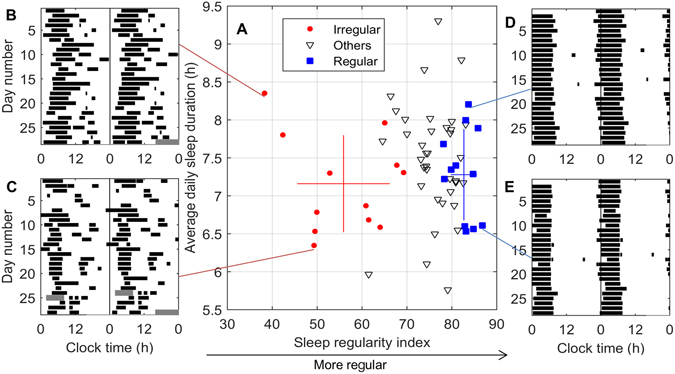
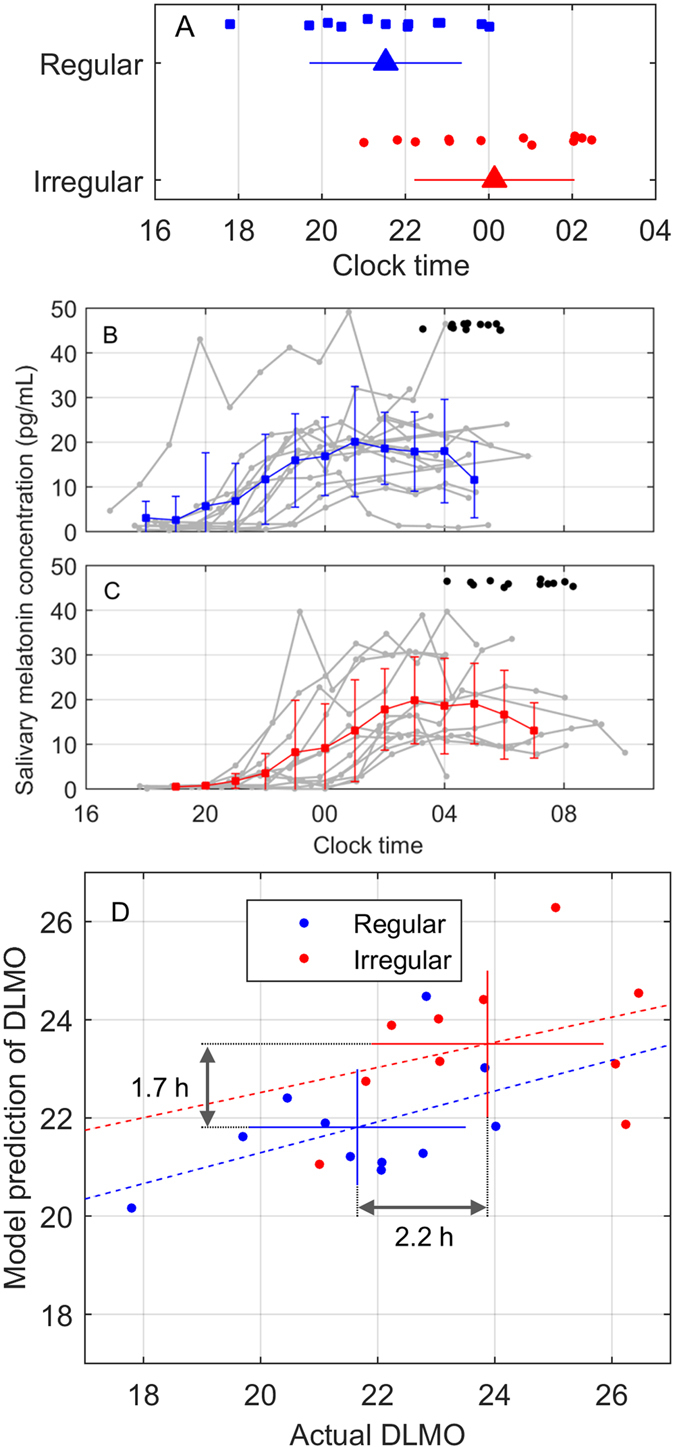
- Irregular sleepers had significantly later melatonin timing than Regular sleepers: DLMO was 00:08 ± 1:54 vs. 21:32 ± 1:48, p < 0.003; the sleep propensity rhythm also peaked later (06:33 ± 0:19 vs. 04:45 ± 0:11, p < 0.005).
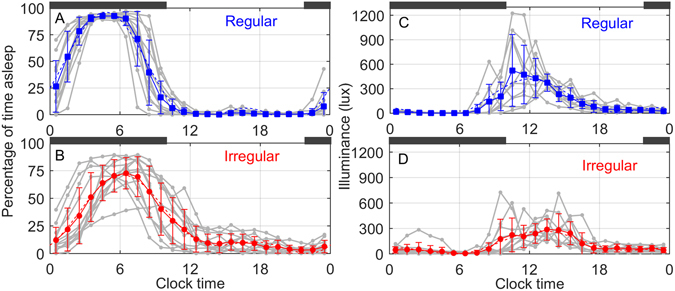
- Irregular sleepers had lower-amplitude light rhythms than Regular sleepers: 102 ± 19 lux vs. 179 ± 29 lux, p < 0.005, with more light during biological night and less daytime light.
- Sleep duration did not differ significantly between groups (7.16 ± 0.64 h vs. 7.27 ± 0.59 h, p = 0.68), and sleep regularity was uncorrelated with sleep duration (r = 0.05, p = 0.71 in the full sample).
Methods
- Observational study of full-time Harvard College undergraduates (excluding first-years), age 18+, living in campus housing; 63 enrolled, 61 completed the study. Participants reported self-selected sleep/wake schedules for ~30 days via online diary during Fall 2013.
- Sleep regularity was quantified with the Sleep Regularity Index (SRI); on day 15, participants were classified using days 1–14, and the highest and lowest quintiles were selected for actiwatch/light and dim-light saliva collection. GPA was self-reported by 59 participants.
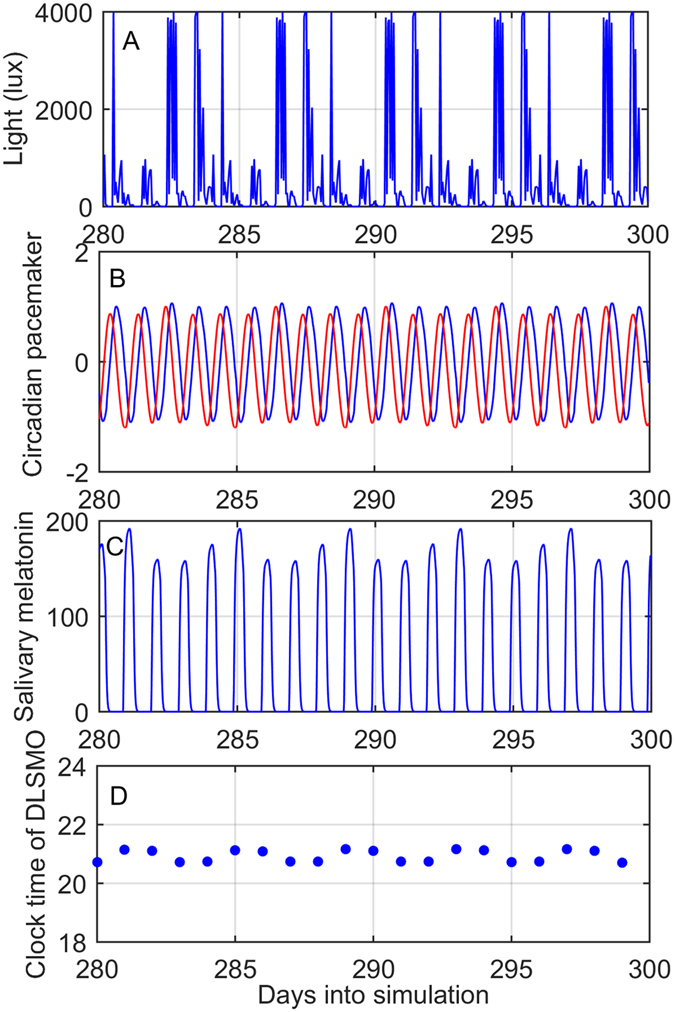
- Main analyses included correlations between SRI and GPA, group comparisons of Regular vs. Irregular sleepers, and a previously validated mathematical model of the human circadian pacemaker to test whether observed DLMO differences could be explained by light exposure patterns. Statistical tests included Wilcoxon rank-sum tests, t-tests, and Pearson correlations.
Limitations
- The paper states that it cannot establish causality between sleep regularity and academic performance or circadian timing.
- DLMO was measured on only one day, which the paper notes may limit prediction of individual circadian timing and may contribute to model-data mismatch; this is especially relevant for Irregular sleepers, and this limitation is explicitly stated in the Discussion.
- The sample was a specific population of Harvard undergraduates living on campus, so the authors note the daytime napping strategy and findings may not generalize to adults who work full time or students not living near campus; this is evident from the text.
Model-written summary. Check it against the paper before relying on it.
Integrity signals
Registry
Cites
Statistics
Figures
Verification
Claims the paper makes
7 Valid · 1 Not valid · 9 Not checked · 75 Own results and interpretations
The cited sources support only part of this claim — read each source’s verdict below.
In the paper
“This hypothesis is supported by a recent study that found large inter-individual differences in circadian timing vanished when individuals were exposed to only natural outdoor light45.”
§ Irregular sleep/wake patterns are associated with poorer academic performance and delayed circadian and sleep/wake timing > Discussion
What the sources say
- Partly supportedcites [45] Wright KP Jr. Entrainment of the human circadian clock to the natural light-dark cycle Curr. Biol. 2013 23 1554 1558 10.1016/j.cub.2013.06.039 23910656 PMC4020279 sourceExperimental — accuracy not yet measured
The Results and Discussion report that exposure to only sunlight while living outdoors reduced individual differences in circadian timing. The claim overstates that finding by saying the differences vanished; the paper does not say they disappeared. (LLM, conf=0.88)
plain- Asserted: passes — The authors put it forward as true.
- Checkable: passes — It can be checked against evidence.
- Load-bearing: unclear — It is unclear whether the paper’s conclusions depend on it.
- Based: passes — The paper gives a reason why it holds.
- Partly supported
A result the paper reports from its own data — it cites no other source for it, so there is none to check. The quote shows it is in the paper.
In the paper
“Irregular sleepers received significantly less day-time light (Table 1)”
§ Irregular sleep/wake patterns are associated with poorer academic performance and delayed circadian and sleep/wake timing > Results > Irregular sleepers have a lower amplitude light rhythm Irregular sleepers received different patterns of light exposure (Fig. 2C and D), with summary metrics in Table 1. The amplitude of the daily light/dark cycle (light rhythm) was lower in Irregular sleepers, reflecting a smaller difference between day-time and night-time illuminance. 95% confidence intervals for the first-harmonic amplitude of a two-harmonic fit were 102 ± 19 lux (Irregular) vs. 179 ± 29 lux (Regular; p < 0.005). Irregular sleepers received significantly less day-time light (Table 1) and had a broader range of light-exposure centroid times (9.6 h vs. 4.5 h). On average, light centroid times were later in the Irregular sleepers than in Regular sleepers, although this difference was not significant (14:18 ± 2:37 vs. 13:05 ± 1:19; p = 0.18, rank-sum test). When light levels were normalized on an individual basis, by dividing by that individual’s average daily illuminance, Irregular sleepers were found to receive relatively more light during the biological night (DLMO to 10 h post-DLMO) and clock night (Table 1). Although the light pattern appeared slightly delayed in the Irregular group, phase parameters for the two-harmonic fits were not significantly different between groups. We note that parametric fits are not ideal for quantifying the effects of the light pattern on the circadian pacemaker, since the sensitivity of the circadian pacemaker to light varies across the day and with previous light exposure history. This point is addressed below by our use of a mathematical model to explicitly predict an individual’s circadian phase of entrainment from the individual light patterns.
plainstates an association- Asserted: passes — The authors put it forward as true.
- Checkable: passes — It can be checked against evidence.
- Load-bearing: unclear — It is unclear whether the paper’s conclusions depend on it.
- Based: passes — The paper gives a reason why it holds.
A result the paper reports from its own data — it cites no other source for it, so there is none to check. The quote shows it is in the paper.
In the paper
“DLMO was also not significantly correlated with GPA (r = 0.37, p = 0.08).”
§ Irregular sleep/wake patterns are associated with poorer academic performance and delayed circadian and sleep/wake timing > Results > Sleep regularity is positively associated with academic performance
plainn = 59- Asserted: passes — The authors put it forward as true.
- Checkable: passes — It can be checked against evidence.
- Load-bearing: unclear — It is unclear whether the paper’s conclusions depend on it.
- Based: passes — The paper gives a reason why it holds.
A result the paper reports from its own data — it cites no other source for it, so there is none to check. The quote shows it is in the paper.
In the paper
“There was no significant linear correlation between sleep duration and SRI (r = 0.13, p = 0.29)”
§ Irregular sleep/wake patterns are associated with poorer academic performance and delayed circadian and sleep/wake timing > Results > Sleep regularity is positively associated with academic performance
plain- Asserted: passes — The authors put it forward as true.
- Checkable: passes — It can be checked against evidence.
- Load-bearing: unclear — It is unclear whether the paper’s conclusions depend on it.
- Based: passes — The paper gives a reason why it holds.
A result the paper reports from its own data — it cites no other source for it, so there is none to check. The quote shows it is in the paper.
In the paper
“later mid-sleep time on free days (7:05 ± 1:23 vs. 4:53 ± 0:56; p < 0.001)”
§ Irregular sleep/wake patterns are associated with poorer academic performance and delayed circadian and sleep/wake timing > Results > Sleep regularity is independent of sleep duration
plainstates an association- Asserted: passes — The authors put it forward as true.
- Checkable: passes — It can be checked against evidence.
- Load-bearing: passes — The paper’s conclusions depend on it.
- Based: passes — The paper gives a reason why it holds.
44 more claims
Create a free account to see all 92 claims and to verify the 1 reference still open.
- Probably not a substantial claim. 32
- It may state two separate claims as one. 21
Citations
Cites
The Pittsburgh Sleep Quality Index: a new instrument for psychiatric practice and research
Buysse, D. J., Reynolds, C. F., Monk, T. H., Berman, S. R., & Kupfer, D. J. (1989) · Psychiatry Research · doi:10.1016/0165-1781(89)90047-4 · Cited by 35,234
A self-assessment questionnaire to determine morningness- eveningness in human circadian rhythms
Home, J. K. (1976) · Medical Entomology and Zoology · Cited by 4,783
(1976) · PubMed · Cited by 3,979
The Geometry of Biological Time
Winfree, A. T. (1980) · doi:10.1007/978-3-662-22492-2 · Cited by 3,613
Social Jetlag: Misalignment of Biological and Social Time
Wittmann, M., Dinich, J., Merrow, M., & Roenneberg, T. (2006) · Chronobiology International · doi:10.1080/07420520500545979 · Cited by 2,625
Cappuccio, F. P., Cooper, D., D'Elia, L., Strazzullo, P., & Miller, M. A. (2011) · European Heart Journal · doi:10.1093/eurheartj/ehr007 · Cited by 2,146
Pittendrigh, C. S., & Daan, S. (1976) · Journal of Comparative Physiology ? A · doi:10.1007/bf01417856 · Cited by 2,127
Action Spectrum for Melatonin Regulation in Humans: Evidence for a Novel Circadian Photoreceptor
Brainard, G. C., Hanifin, J. P., Greeson, J. M., Byrne, B., Glickman, G., Gerner, E., & Rollag, M. D. (2001) · The Journal of Neuroscience · doi:10.1523/jneurosci.21-16-06405.2001 · Cited by 1,930
Sleep Patterns and Predictors of Disturbed Sleep in a Large Population of College Students
Lund, H. G., Reider, B. D., Whiting, A. B., & Prichard, J. R. (2010) · Journal of Adolescent Health · doi:10.1016/j.jadohealth.2009.06.016 · Cited by 1,907
Pittendrigh, C. S., & Daan, S. (1976) · Journal of Comparative Physiology ? A · doi:10.1007/bf01417860 · Cited by 1,636
Research works printed but not linked: 1
- Eskin, A. The sparrow clock: Behavior of the free running rhythm and entrainment analysis. Thesis (The University of Texas, 1969).
Cited by
Items 301–400 of 636
Day-to-day variation in sleep duration is associated with increased all-cause mortality
Katamreddy, A., Uppal, D., Ramani, G., Rios, S. A., Miles, J. A., Wang, Y.-C., & FAILLACE, R. T. (2021) · Journal of Clinical Sleep Medicine · doi:10.5664/jcsm.9664 · Cited by 8
Crowley, S. J., Poole, E., Adams, J. E., & Eastman, C. I. (2024) · SLEEP Advances · doi:10.1093/sleepadvances/zpae065 · Cited by 6
The Sleep Regularity Index: A New Way to Evaluate Shiftwork Schedules
Guzzetti, J. R., Matsangas, P., Banks, S., & Shattuck, N. L. (2025) · Journal of Sleep Research · doi:10.1111/jsr.70133 · Cited by 6
“…duration in watchbill comparisons (e.g., sleep efficiency, sleep quality), sleep regularity may be distinctly valuable, as the performance consequences of irregular sleep may outweigh those of insufficient sleep (Sletten et al. 2023; Taub and Berger 1973; Johns et al. 1976; Phillips et al. 2017).”
InfluentialBiswas, A., Adán, A., & Sahu, S. (2025) · Sleep Medicine · doi:10.1016/j.sleep.2025.106663 · Cited by 7
Cao, Y., Lee, J., Seol, J., Shibuya, K., Yoon, J., Arai, T., Yanagisawa, M., & Okura, T. (2025) · Sleep Medicine · doi:10.1016/j.sleep.2025.106688 · Cited by 10
Ito-Masui, A., Sakamoto, R., Kawamoto, E., Motomura, E., Tanii, H., King, Z. D., Suzuki, K., Sano, A., & Shimaoka, M. (2025) · Journal of Occupational Health · doi:10.1093/joccuh/uiaf053 · Cited by 9
“19”
Self-citationStevenson, S., Suppiah, H. T., Mündel, T., & Driller, M. W. (2025) · Clocks & Sleep · doi:10.3390/clockssleep7040055 · Cited by 8
“Participants were instructed to sleep on a temperature-controlled ma tt ress cover or “Pod” (Eight Sleep, Pod 3, New York, NY, USA, Figure 3) to collect biometric data (heart rate, heart rate variability, respiratory rate, and sleep staging data).”
Light of both high and low melanopic illuminance improves alertness and attention during daytime
Bjerrum, L. B., Visted, E., Nordhus, I. H., Osnes, B., Bjorvatn, B., Kambestad, O. B., Hansen, M. E., Sørensen, L., & Flo, E. (2025) · Scientific Reports · doi:10.1038/s41598-025-29154-4 · Cited by 12
“At a group level, studies indicate that university and college students report sleep difficulties and irregular bed and wake times resulting in suboptimal sleep duration when societal demands require relatively early wakeup times 116–119 .”
Fluctuations in Sleep Duration and Timing and Cardiometabolic Risk
Coven, S., Jelić, S., & St‐Onge, M. (2026) · Arteriosclerosis Thrombosis and Vascular Biology · doi:10.1161/atvbaha.125.322872 · Cited by 5
Sleep Hygiene in Medical Students in Tehran; Do They Learn to Attend to Their Own Health?
Pournik, O., Daneshvar, M., Pakzadian, S., & Ghalichi, L. (2020) · Shiraz E-Medical Journal · doi:10.5812/semj.92726 · Cited by 7
“These changes may result in reduced social and academic performance (6, 7).”
BackgroundVallim, J. R. D. S., Lima, G. S., Tsuji, H. M. S., Xylaras, B. D. P., Tufik, S., Demarzo, M., & D’Almeida, V. (2023) · Chronobiology International · doi:10.1080/07420528.2023.2181179 · Cited by 9
“…restricted and irregular sleep patterns, inadequate sleep hygiene, and exposure to artificial light at night, which can alter their circadian organization and negatively impact their SWB (American Academy of Sleep Medicine 2011; Fischer et al. 2020; Hershner and Chervin 2014; Phillips et al. 2017).”
BackgroundTurner, M., Laws, M., Griffiths, M., Turner, K., Dempsey, L., Laws, S. M., & Cruickshank, T. M. (2023) · Journal of Sleep Research · doi:10.1111/jsr.14107 · Cited by 8
Yan, X., Li, Y., Li, S., Liang, C., Wang, L., Kong, J., Zhao, Y., Chen, Q., & Xu, H. (2023) · Sleep Medicine · doi:10.1016/j.sleep.2023.12.008 · Cited by 7
Feder, M. A., & Baroni, A. (2024) · Psychiatric Clinics of North America · doi:10.1016/j.psc.2023.06.011 · Cited by 11
Measuring regularity of human physical activities with entropy models
Shi, K., Chen, Z., Sun, W., & Hu, W. (2024) · Journal Of Big Data · doi:10.1186/s40537-024-00891-z · Cited by 6
“…data was converted to the frequency domain, and the circadian rhythm was determined by energy that falls within the 24 ± 0.5 h. Phillips et al. [33] developed the sleep regularity index (SRI), which calculates the percentage probability of an individual being in the same state (asleep vs.…”
MethodInfluentialDecoding the weekend sleep dilemma: the health impacts of catching up on sleep
Gao, C., Gao, L., Hu, K., & Li, P. (2024) · SLEEP · doi:10.1093/sleep/zsae159 · Cited by 5
Adaptive sleep behaviours and shift work tolerance during the transition to shift work
Harris, R., Drummond, S. P. A., Meadley, B., Rajaratnam, S. M. W., Williams, B. A., Smith, K. L., Bowles, K., Nguyen, E., Dobbie, M. L., & Wolkow, A. P. (2024) · Sleep Medicine · doi:10.1016/j.sleep.2024.10.003 · Cited by 6
Night owls of Rio de la Plata region: Real-life scenarios to understand the biological clock
Tassino, B., & Leone, M. J. (2025) · Neuroscience · doi:10.1016/j.neuroscience.2025.02.022 · Cited by 10
Sleep difficulties and adolescent internalising symptoms: The moderating role of sleep regularity
Yan, J., Xie, M., Zhao, Z., Bae, J., Cham, H., El‐Sheikh, M., & Yip, T. (2025) · Journal of Sleep Research · doi:10.1111/jsr.14481 · Cited by 6
“The present study addresses these gaps by examining multiple dimensions of sleep, including its regularity, a metric assessing day-to-day consistency in sleep and wake patterns (Fischer et al., 2021; Lunsford-Avery et al., 2018; Phillips et al., 2017).”
InfluentialPape, L. M., van Straten, A., Struijs, S. Y., Karch, J. D., Spinhoven, P., & Antypa, N. (2025) · SLEEP · doi:10.1093/sleep/zsaf357 · Cited by 8
“Irregular rhythms can lead to circadian misalignment, since the circadian system is influenced by external stimuli (also known as “ zeitgebers ”), such as light and physical activity [24, 25].”
Thapa, S., Tay, L., & Hou, D. (2021) · Research in occupational stress and well being · doi:10.1108/s1479-355520210000019007 · Cited by 6
Do older people with poor sleep quality have worse cardiac autonomic control?
Rocha, A. S. L., Siqueira, V. D. B., Maduro, P. A., Batista, L. D. S. P., Neves, V. R., Gambassi, B. B., & Schwingel, P. A. (2023) · Canadian Geriatrics Journal · doi:10.5770/cgj.26.658 · Cited by 5
“(4) Irregular sleep can also interfere with the circadian rhythm and sleep–wake cycle(5) which, in turn, may affect cardiac autonomic control.”
BackgroundResultLouzada, F. M., Cesar-e-Silva, A. H. A., Moreno, C. R. D. C., de Azevedo, C. V. M., Casiraghi, L. P., & de la Iglesia, H. O. (2023) · Sleep Health · doi:10.1016/j.sleh.2023.08.015 · Cited by 6
Nightshift imposes irregular lifestyle behaviors in police academy trainees
Erickson, M. L., North, R., Counts, J. D., Wang, W., Starr, K. N. P., Wideman, L., Pieper, C. F., Dunn, J., & Kraus, W. E. (2023) · SLEEP Advances · doi:10.1093/sleepadvances/zpad038 · Cited by 6
“The SRI , in which sleep versus awake is assessed using our sleep detection algorithm in 15-minute epochs, has been described by others [16, 17] but is reiterated here for completeness.”
BackgroundMethodInfluentialCan sleep hygiene interventions affect strength and power outcomes for female athletes?
Gooderick, J., Wood, T., Abbott, W., Clash, R., Hayes, M., & Maxwell, N. (2024) · Sport Sciences for Health · doi:10.1007/s11332-024-01247-z · Cited by 8
“…athletes with general information regarding SH and provide practical tips on the following areas—maintaining a regular bedtime and wake time [43], maintaining a cool and dark bedroom [44], avoidance of light-emitting screens before bed [14], and implementation of relaxation techniques…”
Predictive Analysis of Academic Performance Among Students Using A-CNN-BiLSTM Approach
Nishant, N., Magadum, A., Pandey, V., Suganthi, D., Bh, R., & Vigneshwaran, K. S. (2024) · World Conference on Communication & Computing (WCONF) · doi:10.1109/wconf61366.2024.10692223 · Cited by 6
“[1] A lack of sleep has numerous detrimental effects on human biology, including daytime sleepiness, reduced neurocognitive function, and generalized fatigue.”
BackgroundThe use of individualised, media‐based sleep hygiene education for professional female footballers
Gooderick, J., Clash, R., Fisher, H., Maxwell, N., & Hayes, M. (2025) · European Journal of Sport Science · doi:10.1002/ejsc.12247 · Cited by 10
Ho, G. W., Yang, Z., Xing, L., Tsang, K. K. T., Ruan, H. D., & Li, Y. (2022) · International Journal of Environmental Research and Public Health · doi:10.3390/ijerph19052933 · Cited by 7
“Sleep consistency or variability has been found to be associated with academic performance for sleep duration [41,43,44,58] and sleep onset and wake-up times [53].”
BackgroundResultGarbuio, A. L. P., Carvalhal, T. A. O., Tomcix, M. F. R., dos Reis, I. G. M., & Messias, L. H. D. (2022) · Medicine · doi:10.1097/md.0000000000028185 · Cited by 6
“[31] In this scenario, the circadian rhythm presents itself as a extremely important factor to regulate sleep quality, as mentioned in previous articles.[16,30,32,33] This system is composed by phases of sleep/wake cycle influenced by dark/ light exposure, helping to align hormonal factors that adjust well-functioning…”
BackgroundSleep hygiene a neglected paediatric identity – A cross-sectional study
Maniraj, P., Jegadeesan, P., & Ananthakrishnan, S. (2023) · Journal of Family Medicine and Primary Care · doi:10.4103/jfmpc.jfmpc_2160_22 · Cited by 6
“[18] who stated that for every 10‑point increase in sleep regularity index, there is a 0.10 increase in Academic performance.”
BackgroundInfluentialpyActigraphy: open-source python package for actigraphy data visualisation and analysisPreprint
Hammad, G. H., Reyt, M., Beliy, N., Baillet, M., Deantoni, M., Lesoinne, A., Muto, V., & Schmidt, C. (2020) · bioRxiv (Cold Spring Harbor Laboratory) · doi:10.1101/2020.12.03.400226 · Cited by 5
Xia, Y. Q., He, S., Sun, Z., & Wang, F. (2025) · Journal of Affective Disorders · doi:10.1016/j.jad.2025.120481 · Cited by 10
Social epidemiology of multidimensional sleep health in early adolescence
Nagata, J. M., Helmer, C. K., Frimpong, I., Beltran-Murillo, K., Heuer, A. W., Huang, O. H., Li, E. J., Ricklefs, C., Ganson, K. T., Testa, A. M., et al. (2025) · Pediatric Research · doi:10.1038/s41390-025-04616-7 · Cited by 8
Chapagai, S., Schreiner, P. J., Thomas, S. J., Lewis, C. E., Alexandria, S. J., Carnethon, M. R., Reid, K. J., & Knutson, K. L. (2026) · Journal of the American Heart Association · doi:10.1161/jaha.125.046839 · Cited by 5
“42 Measures were calculated using R. 43,44 The majority of participants had 7 or 8 days of data: n=11 (1.2”
InfluentialTurner, M., Griffiths, M., Laws, M., Vial, S., Bartlett, D. M., & Cruickshank, T. M. (2024) · Journal of Clinical Sleep Medicine · doi:10.5664/jcsm.11052 · Cited by 5
McCauley, M. E., McCauley, P., Kalachev, L. V., Banks, S., Dinges, D. F., & Dongen, H. P. A. V. (2024) · Frontiers in Environmental Health · doi:10.3389/fenvh.2024.1362755 · Cited by 6
Flexibility of Brain Networks May Curtail Cognitive Consequences of Poor Sleep
Zhou, X., Lauharatanahirun, N., Thurman, S. M., Vettel, J. M., Giesbrecht, B., Grafton, S. T., Elliott, J. C., Lawhern, V. J., Flynn‐Evans, E. E., Falk, E. B., et al. (2025) · Human Brain Mapping · doi:10.1002/hbm.70362 · Cited by 4
“We captured both instantaneous as well as longer term readouts of an individual's sleep by leveraging two different metrics: total sleep time (TST) the night before the exper-iment and sleep regularity index (SRI) for the 2 weeks leading to the day of the experiment (Phillips et al. 2017).”
InfluentialAlkalash, S. H., Alzubaidi, H. L. A., Alessi, N., Alghanmi, A. A., & Almasoudi, A. (2022) · Medical Science · doi:10.54905/disssi/v26i120/ms50e2066 · Cited by 6
“In addition to all previous circumstances, poor sleep quality, especially during examination periods have been found to negatively affect students' academic performance (Phillips et al., 2017; Akerstedt et al., 2012).”
BackgroundSleep habits and their relation to self-reported attention and class climate in preteens
Eichenlaub, J., Pinelli, M., & Portrat, S. (2022) · Sleep Medicine · doi:10.1016/j.sleep.2022.11.032 · Cited by 7
School Attendance, Chronotype, and Day-of-the-Week Effect in Adolescent Male Basketball Players
Bruno, S., Benedetti, D., Bazzani, A., Ferri, F., Granieri, I., Sanabria, F. C., Fiori, S., D’Ascanio, P., Frumento, P., & Faraguna, U. (2023) · Journal of Biological Rhythms · doi:10.1177/07487304221144340 · Cited by 4
Knutson, K. L., Pershing, M. L., Abbott, S. M., Alexandria, S. J., Chiluka, S., Chirinos, D. A., Giachello, A. L. M., Gupta, N., Harrington, K. A., Rittner, S. S., et al. (2023) · BMJ Open · doi:10.1136/bmjopen-2023-073734 · Cited by 5
“Table 2 Continued”
Characteristics of sleep in children with heavy prenatal alcohol exposure
Inkelis, S. M., Soja, J., Mattson, S. N., Chambers, C., Bhattacharjee, R., & Thomas, J. D. (2024) · Alcoholism Clinical and Experimental Research · doi:10.1111/acer.15303 · Cited by 5
“For example, frequent changes in sleep timing can disrupt the sleep–wake cycle, which can then affect sleep structure, sleep consolidation, and sleep-related biological functions (e.g., hormone expression; Bangerter et al., 2020; Konen et al., 2015; Phillips et al., 2017).”
BackgroundFitzgerald, E. S., Manousakis, J. E., Glikmann‐Johnston, Y., Rankin, M., Anderson, C., Stout, J. C., & Jackson, M. L. (2024) · Sleep Medicine · doi:10.1016/j.sleep.2024.08.026 · Cited by 4
Choilek, S., Karashima, A., Motoike, I. N., Katayama, N., Kinoshita, K., & Nakao, M. (2021) · Sleep and Biological Rhythms · doi:10.1007/s41105-021-00326-9 · Cited by 8
“Several studies have suggested that the late chronotype and severe SJL influence physiological phenomena such as later melatonin secretion [9], later circadian acrophase of activity [10], and lower sleep regularity [12, 13], which could underlie the deterioration of sleep quality.”
BackgroundMethodSensor-Based Estimation of Dim Light Melatonin Onset Using Features of Two Time Scales
Wan, C., McHill, A. W., Klerman, E. B., & Sano, A. (2021) · ACM Transactions on Computing for Healthcare · doi:10.1145/3447516 · Cited by 11
“Similar metrics are also reported in [5, 35].”
MethodResultInfluentialSelf-citationEmotion-aware Human–Robot Interaction and Social Robots
Tian, L., Oviatt, S. L., Muszyński, M., Chamberlain, B. C., Healey, J., & Sano, A. (2022) · ACM eBooks · doi:10.1145/3502398.3502407 · Cited by 6
Self-citationActigraphic and melatonin alignment in older adults with varying dementia risk
Schrire, Z. M., Gordon, C. J., Palmer, J. R., Murray, J. M., Hickie, I. B., Rogers, N. L., Lewis, S. J. G., Terpening, Z., Pye, J., Naismith, S. L., et al. (2022) · Chronobiology International · doi:10.1080/07420528.2022.2144744 · Cited by 4
“Furthermore, the only association found in our non-parametric actigraphic data suggests that later sleep times are associated with increased circadian misalignment, which has also been shown in college students (Phillips et al. 2017).”
BackgroundGauthier-Gagné, G., Saha, S., Jensen, J., Somerville, G., & Gruber, R. (2023) · Journal of Biological Rhythms · doi:10.1177/07487304231152987 · Cited by 5
“Irregular sleep-wake schedules may allow for irregular light-dark schedules and vice versa (Phillips et al., 2017; Skeldon et al., 2017).”
BackgroundThe Updating and Individualizing of Sleep Hygiene Rules for Non-clinical Adult Populations
Urbanová, L., Vňuková, M., Anders, M., Ptáček, R., & Bušková, J. (2023) · Prague Medical Report · doi:10.14712/23362936.2023.26 · Cited by 6
“Irregular sleep rhythms are associated with lower work performance (Phillips et al., 2017), lower ratings of subjective sleep quality, mood declines, and a higher risk of depression (Fang et al., 2021).”
Cockroft, M. C., Bartlett, T., & Wallace, D. C. (2019) · Journal of Psychosocial Nursing and Mental Health Services · doi:10.3928/02793695-20190919-04 · Cited by 5
Las inteligencias, emociones y cronotipo, ¿explican el desempeño académico en universitarios?
de Ávila, U. E. R., Campos, F. R.-D. F., Nafital, A. C., Ospino, G. A. C., & Barbosa, C. P. (2019) · Educación y Humanismo · doi:10.17081/eduhum.22.38.3636 · Cited by 7
Self-Directed Home-Based Dim-Light Melatonin Onset Collection: The Circadia Pilot StudyPreprint
Bormes, G., Love, J. J., Akeju, O., Cherry, J., Kunorozva, L., Qadri, S., Rahman, S. A., Westover, M. B., Winkelman, J. W., & Lane, J. M. (2023) · medRxiv · doi:10.1101/2023.05.26.23290467 · Cited by 4
Lucchini, M., Kahn, M., Ordway, M. R., Bailes, L. G., Dapretto, M., Thakur, S., & Barnett, N. R. (2025) · Sleep Medicine · doi:10.1016/j.sleep.2025.106539 · Cited by 5
Apriliyasari, R. W., Liu, J.-W., Chou, C.-W., Chen, J., & Tsai, P. (2025) · Journal of Nursing Research · doi:10.1097/jnr.0000000000000681 · Cited by 4
How to Enhance Sleep for Athletes? A Narrative Review of Sleep Hygiene and Sleep Extension Practices
Gooderick, J., Wilson, S. M. B., & Searle, W. J. (2025) · Current Sleep Medicine Reports · doi:10.1007/s40675-025-00342-y · Cited by 7
White, K. M., Ward, L. A., Saelee, R., Buxton, O. M., Hale, L. E., Chang, A., & Johnson, D. A. (2025) · Sleep Health · doi:10.1016/j.sleh.2025.10.003 · Cited by 6
Davis, N. O., Eichner, B., Gibson, M. J., & Lunsford‐Avery, J. R. (2026) · Frontiers in Sleep · doi:10.3389/frsle.2025.1662221 · Cited by 3
Chung, P. A., Fleming, V., Reid, K. J., Plante, D. T., Hom, C. L., Ances, B. M., Handen, B. L., Christian, B. T., Head, E., Mapstone, M. E., et al. (2026) · Neurology · doi:10.1212/wnl.0000000000214938 · Cited by 4
Daily Electronic Media Use and Sleep in Late Life
Leger, K. A., Kim, Y. K., Zhang, S., Gao, S., & Fingerman, K. L. (2024) · The Journals of Gerontology Series B · doi:10.1093/geronb/gbae095 · Cited by 4
Rojo‐Wissar, D. M., Parade, S. H., Barker, D., Reen, E. V., Sharkey, K. M., Gredvig-Ardito, C., & Carskadon, M. A. (2024) · SLEEP Advances · doi:10.1093/sleepadvances/zpae041 · Cited by 3
“The Sleep Regularity Index (SRI) [28] was computed using these data, with higher scores indicating more regular sleep patterns.”
MethodNegelspach, D., Kennedy, K. E. R., Huskey, A., Cha, J., Alkozei, A., & Killgore, W. D. S. (2025) · Clocks & Sleep · doi:10.3390/clockssleep7010015 · Cited by 6
“This effect extends beyond laboratory settings, as sleep regularity has been shown to predict academic performance in college students [32,33], and cognitive functioning in the context of age-related cognitive decline and beta-amyloid pathologies [34–37].”
Alasimi, A. H., Brandenberger, K. J., Zimmerman, R. D., & Shan, S. H. (2025) · Scientific Reports · doi:10.1038/s41598-025-20264-7 · Cited by 4
“Likewise, US studies have indicated that irregular sleep patterns induce delayed circadian rhythms and consequently increase the risk of insomnia, consequently leading to academic failure 43,45 .”
Shafer, B. M., McAuliffe, K., Kogan, S. A., Davis, M. C., Shea, S. A., Olson, R., & McHill, A. W. (2025) · American Journal of Physiology-Heart and Circulatory Physiology · doi:10.1152/ajpheart.00735.2025 · Cited by 3
Analysis of the circadian rhythm, sleep and rest in the working population
Mirković, A., & Savić, N. (2021) · Medicinski pregled · doi:10.2298/mpns2110310m · Cited by 3
Gibson, M., Nicolazzo, J., Cavuoto, M. G., Rowsthorn, E., Cribb, L., Bransby, L., Buckley, R. F., Yassi, N., Yiallourou, S. R., Brodtmann, A. G., et al. (2022) · SLEEP · doi:10.1093/sleep/zsac307 · Cited by 4
Spadola, C., Groton, D. B., Cosenzo, L. G., Fantus, S., Hilditch, C. J., Burke, S. L., Littlewood, K., Bertisch, S. M., & Zhou, E. S. (2023) · Journal of Human Behavior in the Social Environment · doi:10.1080/10911359.2023.2204125 · Cited by 5
LaGoy, A. D., Kubala, A. G., Deering, S., Germain, A., & Markwald, R. R. (2023) · Sleep Medicine Clinics · doi:10.1016/j.jsmc.2023.05.010 · Cited by 3
Sabaoui, I., Lotfi, S., & Talbi, M. (2024) · The Education and science journal · doi:10.17853/1994-5639-2024-1-133-170 · Cited by 8
Predicting Stress and Providing Counterfactual Explanations: A Pilot Study on Caregivers
Shibuya, K., King, Z. D., Khalid, M., Yu, H., Shen, Y., Zanna, K., Brown, R. L., Majd, M., Fagunders, C. P., & Sano, A. (2023) · International Conference on Affective Computing and Intelligent Interaction Workshops and Demos (ACIIW) · doi:10.1109/aciiw59127.2023.10388130 · Cited by 3
“For sleep, 4 features were calculated for each day: sleep duration, sleep onset and offset (time of day the participant fell asleep and woke up, elapsed minutes from midnight), and sleep regularity index (SRI) which measures the consistency of the participants’ sleep within previous two days [12].”
BackgroundSelf-citationAdaptation of sleep to daylight saving time is slower in people consuming a high-fat diet
McHill, A. W., Sano, A., Barger, L. K., Phillips, A. J. K., Czeisler, C. A., & Klerman, E. B. (2024) · iScience · doi:10.1016/j.isci.2024.110677 · Cited by 3
Self-citationWalker, B., Gibson, J., Jackson, C., Blaikley, J., Jones, S. E., Rutter, M. K., & Sutton, M. (2024) · Chronobiology International · doi:10.1080/07420528.2024.2441192 · Cited by 5
“(b) Sleep Regularity Index (SRI) is a measure of the regularity of an individual’s sleep pattern (Phillips et al. 2017).”
Chapagai, S., Harrington, K. A., Alexandria, S. J., Vu, T. T., Khan, S. S., Carnethon, M. R., & Knutson, K. L. (2025) · SLEEP · doi:10.1093/sleep/zsaf020 · Cited by 3
Schruers, K. B., Weightman, M., Guttesen, A. Á. V., Robinson, B., Johansen‐Berg, H., & Fleming, M. K. (2025) · Scientific Reports · doi:10.1038/s41598-025-01332-4 · Cited by 2
“In 2017, Phillips and colleagues 17 introduced a new metric to measure sleep regularity with actigraphy, named the Sleep Regularity Index (SRI).”
InfluentialSportmedizinische Grundlagen: Immunologische Beanspruchung durch körperliche Belastung
Puta, C., & Gabriel, H. H. W. (2021) · Springer eBooks · doi:10.1007/978-3-662-53386-4_20-1 · Cited by 4
The multiplicative effect of stress and sleep on academic cognitions in Latino college students
Sasser, J., Lecarie, E. K., Gusman, M. S., Park, H., & Doane, L. D. (2021) · Chronobiology International · doi:10.1080/07420528.2021.1999970 · Cited by 4
“…aspects of college students’ sleep/wake schedule, including oversleeping, irregular sleep schedules, and circadian preference (e.g., chronotype, midpoint time) with impaired academic performance (Okano et al. 2019; Önder et al. 2014; Peters et al. 2005; Phillips et al. 2017; Taylor et al. 2013).”
BackgroundIs word learning capacity restored after a daytime nap?
March, J. A., Ricketts, J., & Tamminen, J. (2022) · Cortex · doi:10.1016/j.cortex.2022.10.013 · Cited by 5
“variability during the week, which has been associated with poorer academic grades in university students (Phillips et al., 2017).”
BackgroundMoreno, J. P., Hannay, K. M., Goetz, A. R., Walch, O., & Cheng, P. (2023) · Obesity · doi:10.1002/oby.23641 · Cited by 4
“[37] was used to calculate the SRI, which quantifies the probability of being awake or asleep at the same clock time on consecutive days with scores ranging from 0 to 100 [38].”
MethodO11 Irregular sleep/wake patterns in student-athletes
Wilson, S. M. B., Draper, S. B., Jones, M. I., & Parker, J. K. (2023) · BMJ Open Respiratory Research · doi:10.1136/bmjresp-2023-bssconf.11 · Cited by 3
Wallace, D. A., Qiu, X., Schwartz, J. D., Huang, T., Scheer, F. A. J. L., Redline, S. S., & Sofer, T. (2023) · medRxiv · doi:10.1101/2023.10.11.23296889 · Cited by 3
“…between the two groups, the irregular sleepers did have greater light exposure during the biological night (defined as a 10-hour window from beginning of dim light melatonin onset) when light exposure was normalized to their average daily illuminance 11 ActiWatch) with mixed model regressions 41 .”
BackgroundMethodOverview of wearable light loggers: State-of-the-art and outlookPreprint
van Duijnhoven, J., Hartmeyer, S. L., Didikoğlu, A., Stefani, O., Houser, K. W., Kalavally, V., & Spitschan, M. (2024) · doi:10.36227/techrxiv.171742550.06025656/v1 · Cited by 4
Association of fetal activity patterns in utero with postnatal sleep behavior
Markovic, A., Blume, C., Mühlematter, C., Zimmermann, P., & Kurth, S. (2026) · Nature Communications · doi:10.1101/2024.12.04.626754 · Cited by 3
Goldstein, M. A., & Goldstein, M. C. (2024) · Oxford University Press eBooks · doi:10.1093/med/9780197640739.003.0001 · Cited by 2
Tracy, E. L., Xie, Y., Buysse, D. J., Smagula, S. F., Soehner, A. M., & Hasler, B. P. (2024) · Journal of Sleep Research · doi:10.1111/jsr.14346 · Cited by 3
“SRI is scaled to range from 0 (random) to 100 (perfectly regular), with a greater number indicating a more regular sleep pattern (Phillips et al., 2017).”
Bridging the gap: examining circadian biology and fatigue alongside work schedules
Fedele, M. L. M., Casiraghi, L. P., Plano, S. A., Bellone, G., Golombek, D. A., & Vigo, D. E. (2024) · npj Biological Timing and Sleep · doi:10.1038/s44323-024-00011-3 · Cited by 5
Preventive circadian medicine: improving health with sleep checkups
Minami, Y., Kishi, A., & Ueda, H. R. (2025) · npj Biological Timing and Sleep · doi:10.1038/s44323-025-00047-z · Cited by 3
Time to regularize sleep regularity
Cedernaes, J., Sielaff, B., & Benedict, C. (2025) · SLEEP · doi:10.1093/sleep/zsaf289 · Cited by 2
“Less than ten years ago, the sleep regularity index, which estimates the day-to-day consistency of sleep–wake timing, was introduced as a novel metric to estimate sleep variability [5].”
Sato, T. G., Takahashi, M., & Nishida, M. (2025) · Journal of Sleep Research · doi:10.1111/jsr.70223 · Cited by 3
Lotti, S., Napoletano, A., Dinu, M., Picchi, E., Faraguna, U., Giangrandi, I., Cesari, F., Marcucci, R., Sofi, F., & Colombini, B. (2025) · Nutrients · doi:10.3390/nu17233763 · Cited by 3
“These metrics are commonly used in studies employing wearable devices for sleep assessment [19–22].”
Degenfellner, J., Schernhammer, E. S., & Strohmaier, S. (2025) · Journal of Biological Rhythms · doi:10.1177/07487304251391267 · Cited by 3
“In addition, Phillips et al. (2017) recently introduced the sleep regularity index (SRI), which assesses the probability that a person is in the same sleep or wake state at 2 points 24 h apart, with higher scores indicating more consistent sleep patterns.”
Lin, C.-T., Liang, S.-F., & Shaw, F. (2025) · Scientific Reports · doi:10.1038/s41598-025-33775-0 · Cited by 3
“In addition to the four clinical sleep parameters, variability or regularity of a sleep habit or sleep parameter has recently received great attention 30,35 but has not been systematically evaluated yet.”
Pan, S., & Wang, G. (2026) · Surgical Endoscopy · doi:10.1007/s00464-026-12730-8 · Cited by 2
Lin, T., Wiley, J. F., Zhu, Y., Tang, M., Taylor, D. J., Pruiksma, K. E., Feler, B., Kautz, M. M., Baker, J. C., Khazem, L. R., et al. (2026) · Journal of Affective Disorders · doi:10.1016/j.jad.2026.121692 · Cited by 3
Chen, X., Cheng, C.-Y., Koay, M., Soh, C. B., & Hartanto, A. (2026) · Computers in Human Behavior Reports · doi:10.1016/j.chbr.2026.101030 · Cited by 4
How Daylight Controls the Biological Clock, Organises Sleep, and Enhances Mood and Performance
Wirz‐Justice, A. (2022) · Springer eBooks · doi:10.1007/978-3-031-04108-2_10 · Cited by 5
Social Jet Lag, sleep quality and daytime sleepiness in university students: A cross-sectional study
Bezerra, M. A. A., Marinho, M. S. S., de Morais, C. I., da Silva, C. R., Pereira, C. C. B., Neto, J. D. C. S., Vanali, R. C., & Pinheiro, J. K. (2022) · Research Society and Development · doi:10.33448/rsd-v11i17.39357 · Cited by 5
“, 2021) and that this poor quality of sleep is related to the performance of these academics (Phillips et al., 2017).”
BackgroundInfluentialSanabria, F. C., Massoni, L., Violi, M., Bruno, S., Faraguna, U., Dell’Osso, L., & Carmassi, C. (2023) · Journal of Affective Disorders Reports · doi:10.1016/j.jadr.2023.100660 · Cited by 4
Chang, A., Anderson, C., Cain, S. W., Reichenberger, D., Ronda, J. M., Lockley, S. W., & Czeisler, C. A. (2023) · Sleep Health · doi:10.1016/j.sleh.2023.09.007 · Cited by 3
Self-citationNecaise, A., Mejia, C., Kider, J. T., Shoss, M. K., & Amon, M. J. (2024) · International Journal of Human-Computer Interaction · doi:10.1080/10447318.2024.2313887 · Cited by 3
“There are several methods for estimating health routine, including standard deviation and a handful of regularity indices specific to sleep (Phillips et al., 2017) and geographical movements (Canzian & Musolesi, 2015).”
Patterns of Sleep Duration and Metabolic Biomarkers Across the Menstrual Cycle
Dunietz, G. L., Shedden, K., Lyu, X., Chervin, R. D., Baylín, A., O'Brien, L. M., Jansen, E. C., Wactawski‐Wende, J., Schisterman, E. F., & Mumford, S. L. (2024) · The Journal of Clinical Endocrinology & Metabolism · doi:10.1210/clinem/dgae191 · Cited by 3
Jaradat, J. H., Al‐Dwairi, R., Riyad, J., Al-Rawashdeh, I., & Elmazar, H. (2024) · JAP Academy Journal · doi:10.58877/japaj.v2i2.146 · Cited by 4
Metadata
- Authors
- Phillips, A. J. K., Clerx, W. M., O’Brien, C. S., Sano, A., Barger, L. K., Picard, R. W., Lockley, S. W., Klerman, E. B., & Czeisler, C. A.
- Affiliations
- Brigham and Women's Hospital (US)
- MIT Media Lab (US)
- Corresponding author
- Phillips, Andrew J. K.
- ORCID
- Venue
- Scientific Reports
- Published
- 2017-06-12
- Volume
- 7
- Issue
- 1
- Pages
- 3216-3216
- ISSN
- 2045-2322 (ISSN-L)
- PMC
- PMC5468315
- OpenAlex
- W2622433070
- Semantic Scholar
- 329a1e3bbe1fd66883353d1991ec60e5dac3dc10
- Cited by
- 647
- References
- 64
- Citations by year
- 2026: 106 · 2025: 106 · 2024: 94 · 2023: 85 · 2022: 81 · 2021: 62 · 2020: 56 · 2019: 39 · 2018: 14 · 2017: 4
- FWCI
- 18.98
- Type
- journal article
- Language
- en
- Open access
- gold
- doi.org
- Licence
- cc-by
- creativecommons.org/licenses/by/4.0 (tdm)
- creativecommons.org/licenses/by/4.0 (vor)
- Locations
- Scientific Reports (publishedVersion, cc-by)
- Europe PMC (PubMed Central) (publishedVersion, other-oa)
- PubMed Central (publishedVersion, cc-by)
- PubMed (publishedVersion)
- Digital Access to Scholarship at Harvard (DASH) (Harvard University) (submittedVersion, cc-by)
- DOAJ (DOAJ: Directory of Open Access Journals) (submittedVersion, cc-by-sa)
- DSpace@MIT (Massachusetts Institute of Technology) (submittedVersion, cc-by-nc)
- Surrey Research Insight Open Access (The University of Surrey) (submittedVersion)
- Funders
- National Space Biomedical Research Institute (HFP-02802, HFP02801)
- National Institutes of Health (NIH K24, NIH-R01, NIH K99, HFP02802, AG09975)
- National Institute on Aging (P01AG009975)
- National Heart, Lung, and Blood Institute (K24HL105664, R01HL094654, K99HL119618, R01HL128538, R01HL114088, R00HL119618)
- National Institute of General Medical Sciences (R01GM105018)
- National Center for Research Resources (UL1RR025758)
- Topics
- Life Sciences › Neuroscience › Endocrine and Autonomic Systems › Circadian rhythm and melatonin
- Social Sciences › Psychology › Experimental and Cognitive Psychology › Sleep and related disorders
- Social Sciences › Psychology › Experimental and Cognitive Psychology › Sleep and Work-Related Fatigue
- Keywords
- irregular sleep schedules, sleep regularity, circadian timing, academic performance, dim light melatonin onset, light exposure, sleep timing, university students
- MeSH terms
- Academic Performance, Adolescent, Circadian Rhythm, Female, Humans, Light, Male, Melatonin, Models, Theoretical, Sleep, Time Factors, Wakefulness, Sleep Disorders, Circadian Rhythm, Young Adult
About these checks
Registry, retraction, Cites and statistics results are computed, not judged, with one exception: a printed reference that no index lists is read once by a model before it counts as a citation error. Claims are extracted by a model and kept only when their quote appears verbatim in the text; each cited source is then checked, with a model’s help, for whether it says what the claim relies on. Those verdicts can be wrong — read the claim’s quote and the cited source before relying on one.
The claim verdicts this report counts are experimental: their accuracy is not yet measured.
A language model drew the claims from the paper on 2026-10-10, under version 3 of the claim definition (model deepseek-v4.1-flash, prompt extract-v3).
A second model labelled each claim on 2026-10-10 (model jev-1.13-20260917, definition revision gold-guideline-v0.2).
Cited sources are checked with a language model’s help (gpt-6-sol).
Statistics and arithmetic are recomputed, not judged.
Confidence bands are shown only for fields calibrated on our annotated test set. None is calibrated yet, so no band is shown.
What counts as a claim ›How we measure confidence ›How we check this ›
Are you an author, or do you see a problem with this page? Request a review
Data sources
Bibliographic data: Semantic Scholar, OpenAlex, Crossref.
Contains information from the Semantic Scholar Academic Graph Datasets, made available under the ODC Attribution License (ODC-BY 1.0).
Semantic Scholar’s data is described in: Kinney, R., et al. (2023). The Semantic Scholar Open Data Platform. arXiv:2301.10140.
