

Irregular sleep/wake patterns are associated with poorer academic performance and delayed circadian and sleep/wake timing
Open accessThe DOI matches its Crossref record; 63 of the 64 references it cites were found in a registry or an index; 9 of the 24 sources its claims cite were checked for support.
Abstract
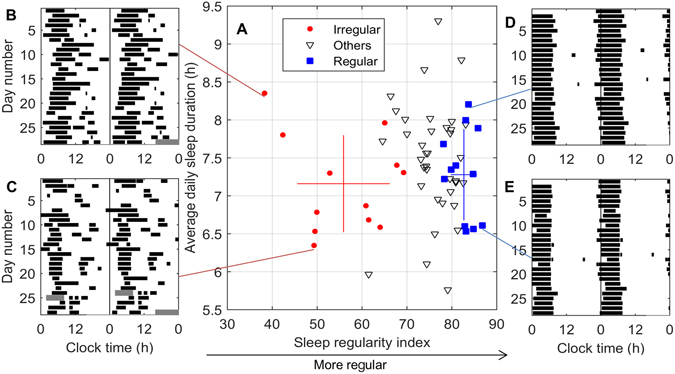
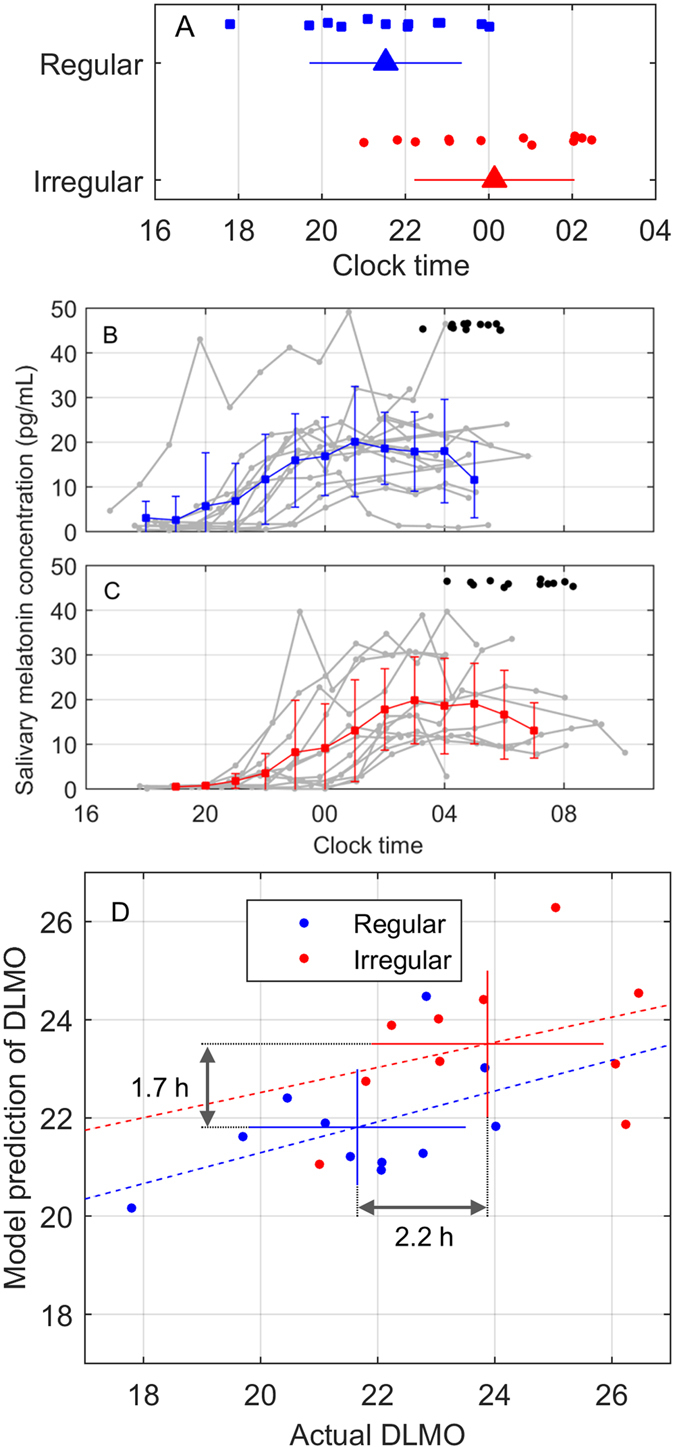
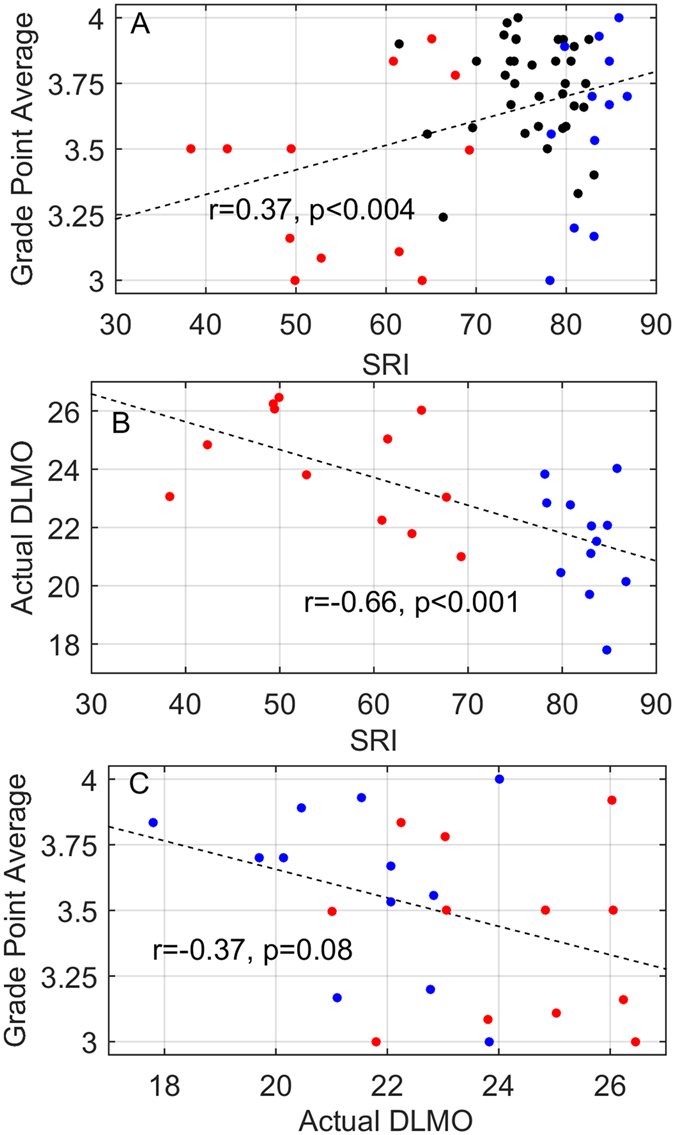
The association of irregular sleep schedules with circadian timing and academic performance has not been systematically examined. We studied 61 undergraduates for 30 days using sleep diaries, and quantified sleep regularity using a novel metric, the sleep regularity index (SRI). In the most and least regular quintiles, circadian phase and light exposure were assessed using salivary dim-light melatonin onset (DLMO) and wrist-worn photometry, respectively. DLMO occurred later (00:08 ± 1:54 vs. 21:32 ± 1:48; p < 0.003); the daily sleep propensity rhythm peaked later (06:33 ± 0:19 vs. 04:45 ± 0:11; p < 0.005); and light rhythms had lower amplitude (102 ± 19 lux vs. 179 ± 29 lux; p < 0.005) in Irregular compared to Regular sleepers. A mathematical model of the circadian pacemaker and its response to light was used to demonstrate that Irregular vs. Regular group differences in circadian timing were likely primarily due to their different patterns of light exposure. A positive correlation (r = 0.37; p < 0.004) between academic performance and SRI was observed. These findings show that irregular sleep and light exposure patterns in college students are associated with delayed circadian rhythms and lower academic performance. Moreover, the modeling results reveal that light-based interventions may be therapeutically effective in improving sleep regularity in this population.
Overview
CoChat Summary
TL;DR
In 61 Harvard undergraduates studied for about 30 days, more irregular sleep/wake patterns were associated with later circadian timing and worse academic performance. The paper argues that the timing differences were largely explained by differences in light exposure rather than by detectable differences in circadian physiology.
Key findings
- Sleep regularity index (SRI) was positively correlated with GPA in the full sample (n = 59): Pearson r = 0.37, p < 0.004; an increase of 10 in SRI was associated with an average GPA increase of 0.10.
- Irregular sleepers had significantly later melatonin timing than Regular sleepers: DLMO was 00:08 ± 1:54 vs. 21:32 ± 1:48, p < 0.003; the sleep propensity rhythm also peaked later (06:33 ± 0:19 vs. 04:45 ± 0:11, p < 0.005).
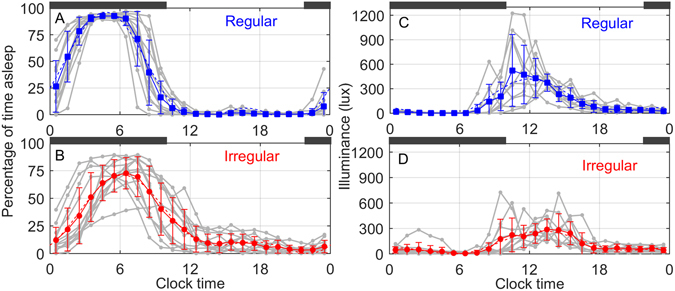
- Irregular sleepers had lower-amplitude light rhythms than Regular sleepers: 102 ± 19 lux vs. 179 ± 29 lux, p < 0.005, with more light during biological night and less daytime light.
- Sleep duration did not differ significantly between groups (7.16 ± 0.64 h vs. 7.27 ± 0.59 h, p = 0.68), and sleep regularity was uncorrelated with sleep duration (r = 0.05, p = 0.71 in the full sample).
Methods
- Observational study of full-time Harvard College undergraduates (excluding first-years), age 18+, living in campus housing; 63 enrolled, 61 completed the study. Participants reported self-selected sleep/wake schedules for ~30 days via online diary during Fall 2013.
- Sleep regularity was quantified with the Sleep Regularity Index (SRI); on day 15, participants were classified using days 1–14, and the highest and lowest quintiles were selected for actiwatch/light and dim-light saliva collection. GPA was self-reported by 59 participants.
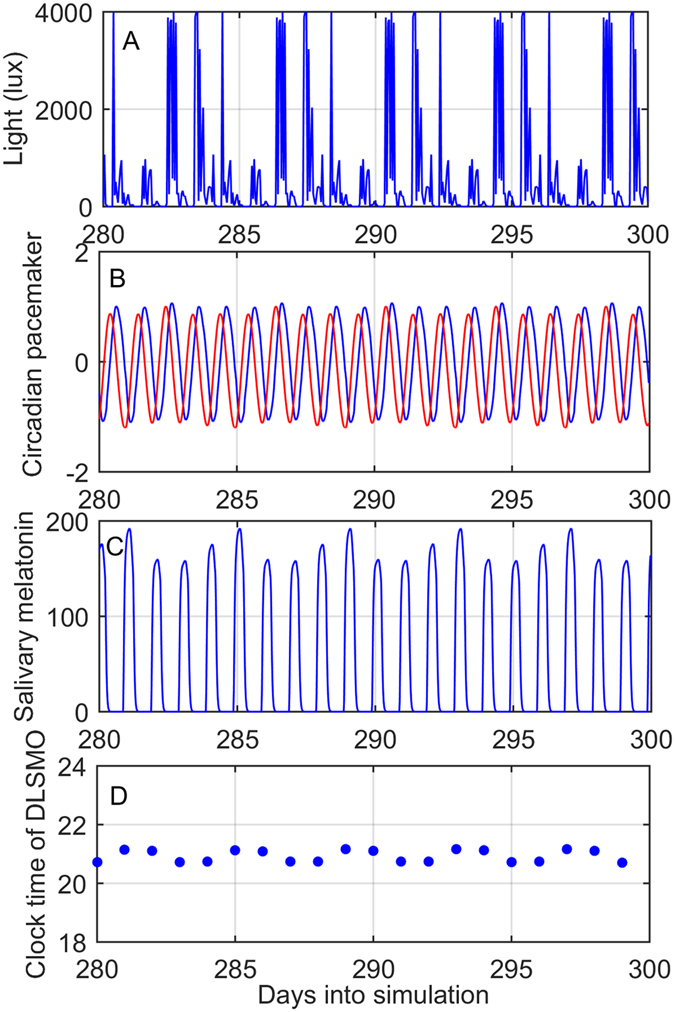
- Main analyses included correlations between SRI and GPA, group comparisons of Regular vs. Irregular sleepers, and a previously validated mathematical model of the human circadian pacemaker to test whether observed DLMO differences could be explained by light exposure patterns. Statistical tests included Wilcoxon rank-sum tests, t-tests, and Pearson correlations.
Limitations
- The paper states that it cannot establish causality between sleep regularity and academic performance or circadian timing.
- DLMO was measured on only one day, which the paper notes may limit prediction of individual circadian timing and may contribute to model-data mismatch; this is especially relevant for Irregular sleepers, and this limitation is explicitly stated in the Discussion.
- The sample was a specific population of Harvard undergraduates living on campus, so the authors note the daytime napping strategy and findings may not generalize to adults who work full time or students not living near campus; this is evident from the text.
Model-written summary. Check it against the paper before relying on it.
Integrity signals
Registry
Cites
Statistics
Figures
Verification
Claims the paper makes
7 Valid · 1 Not valid · 9 Not checked · 75 Own results and interpretations
The cited sources support only part of this claim — read each source’s verdict below.
In the paper
“This hypothesis is supported by a recent study that found large inter-individual differences in circadian timing vanished when individuals were exposed to only natural outdoor light45.”
§ Irregular sleep/wake patterns are associated with poorer academic performance and delayed circadian and sleep/wake timing > Discussion
What the sources say
- Partly supportedcites [45] Wright KP Jr. Entrainment of the human circadian clock to the natural light-dark cycle Curr. Biol. 2013 23 1554 1558 10.1016/j.cub.2013.06.039 23910656 PMC4020279 sourceExperimental — accuracy not yet measured
The Results and Discussion report that exposure to only sunlight while living outdoors reduced individual differences in circadian timing. The claim overstates that finding by saying the differences vanished; the paper does not say they disappeared. (LLM, conf=0.88)
plain- Asserted: passes — The authors put it forward as true.
- Checkable: passes — It can be checked against evidence.
- Load-bearing: unclear — It is unclear whether the paper’s conclusions depend on it.
- Based: passes — The paper gives a reason why it holds.
- Partly supported
A result the paper reports from its own data — it cites no other source for it, so there is none to check. The quote shows it is in the paper.
In the paper
“Irregular sleepers received significantly less day-time light (Table 1)”
§ Irregular sleep/wake patterns are associated with poorer academic performance and delayed circadian and sleep/wake timing > Results > Irregular sleepers have a lower amplitude light rhythm Irregular sleepers received different patterns of light exposure (Fig. 2C and D), with summary metrics in Table 1. The amplitude of the daily light/dark cycle (light rhythm) was lower in Irregular sleepers, reflecting a smaller difference between day-time and night-time illuminance. 95% confidence intervals for the first-harmonic amplitude of a two-harmonic fit were 102 ± 19 lux (Irregular) vs. 179 ± 29 lux (Regular; p < 0.005). Irregular sleepers received significantly less day-time light (Table 1) and had a broader range of light-exposure centroid times (9.6 h vs. 4.5 h). On average, light centroid times were later in the Irregular sleepers than in Regular sleepers, although this difference was not significant (14:18 ± 2:37 vs. 13:05 ± 1:19; p = 0.18, rank-sum test). When light levels were normalized on an individual basis, by dividing by that individual’s average daily illuminance, Irregular sleepers were found to receive relatively more light during the biological night (DLMO to 10 h post-DLMO) and clock night (Table 1). Although the light pattern appeared slightly delayed in the Irregular group, phase parameters for the two-harmonic fits were not significantly different between groups. We note that parametric fits are not ideal for quantifying the effects of the light pattern on the circadian pacemaker, since the sensitivity of the circadian pacemaker to light varies across the day and with previous light exposure history. This point is addressed below by our use of a mathematical model to explicitly predict an individual’s circadian phase of entrainment from the individual light patterns.
plainstates an association- Asserted: passes — The authors put it forward as true.
- Checkable: passes — It can be checked against evidence.
- Load-bearing: unclear — It is unclear whether the paper’s conclusions depend on it.
- Based: passes — The paper gives a reason why it holds.
A result the paper reports from its own data — it cites no other source for it, so there is none to check. The quote shows it is in the paper.
In the paper
“DLMO was also not significantly correlated with GPA (r = 0.37, p = 0.08).”
§ Irregular sleep/wake patterns are associated with poorer academic performance and delayed circadian and sleep/wake timing > Results > Sleep regularity is positively associated with academic performance
plainn = 59- Asserted: passes — The authors put it forward as true.
- Checkable: passes — It can be checked against evidence.
- Load-bearing: unclear — It is unclear whether the paper’s conclusions depend on it.
- Based: passes — The paper gives a reason why it holds.
A result the paper reports from its own data — it cites no other source for it, so there is none to check. The quote shows it is in the paper.
In the paper
“There was no significant linear correlation between sleep duration and SRI (r = 0.13, p = 0.29)”
§ Irregular sleep/wake patterns are associated with poorer academic performance and delayed circadian and sleep/wake timing > Results > Sleep regularity is positively associated with academic performance
plain- Asserted: passes — The authors put it forward as true.
- Checkable: passes — It can be checked against evidence.
- Load-bearing: unclear — It is unclear whether the paper’s conclusions depend on it.
- Based: passes — The paper gives a reason why it holds.
A result the paper reports from its own data — it cites no other source for it, so there is none to check. The quote shows it is in the paper.
In the paper
“later mid-sleep time on free days (7:05 ± 1:23 vs. 4:53 ± 0:56; p < 0.001)”
§ Irregular sleep/wake patterns are associated with poorer academic performance and delayed circadian and sleep/wake timing > Results > Sleep regularity is independent of sleep duration
plainstates an association- Asserted: passes — The authors put it forward as true.
- Checkable: passes — It can be checked against evidence.
- Load-bearing: passes — The paper’s conclusions depend on it.
- Based: passes — The paper gives a reason why it holds.
44 more claims
Create a free account to see all 92 claims and to verify the 1 reference still open.
- Probably not a substantial claim. 32
- It may state two separate claims as one. 21
Citations
Cites
The Pittsburgh Sleep Quality Index: a new instrument for psychiatric practice and research
Buysse, D. J., Reynolds, C. F., Monk, T. H., Berman, S. R., & Kupfer, D. J. (1989) · Psychiatry Research · doi:10.1016/0165-1781(89)90047-4 · Cited by 35,234
A self-assessment questionnaire to determine morningness- eveningness in human circadian rhythms
Home, J. K. (1976) · Medical Entomology and Zoology · Cited by 4,783
(1976) · PubMed · Cited by 3,979
The Geometry of Biological Time
Winfree, A. T. (1980) · doi:10.1007/978-3-662-22492-2 · Cited by 3,613
Social Jetlag: Misalignment of Biological and Social Time
Wittmann, M., Dinich, J., Merrow, M., & Roenneberg, T. (2006) · Chronobiology International · doi:10.1080/07420520500545979 · Cited by 2,625
Cappuccio, F. P., Cooper, D., D'Elia, L., Strazzullo, P., & Miller, M. A. (2011) · European Heart Journal · doi:10.1093/eurheartj/ehr007 · Cited by 2,146
Pittendrigh, C. S., & Daan, S. (1976) · Journal of Comparative Physiology ? A · doi:10.1007/bf01417856 · Cited by 2,127
Action Spectrum for Melatonin Regulation in Humans: Evidence for a Novel Circadian Photoreceptor
Brainard, G. C., Hanifin, J. P., Greeson, J. M., Byrne, B., Glickman, G., Gerner, E., & Rollag, M. D. (2001) · The Journal of Neuroscience · doi:10.1523/jneurosci.21-16-06405.2001 · Cited by 1,930
Sleep Patterns and Predictors of Disturbed Sleep in a Large Population of College Students
Lund, H. G., Reider, B. D., Whiting, A. B., & Prichard, J. R. (2010) · Journal of Adolescent Health · doi:10.1016/j.jadohealth.2009.06.016 · Cited by 1,907
Pittendrigh, C. S., & Daan, S. (1976) · Journal of Comparative Physiology ? A · doi:10.1007/bf01417860 · Cited by 1,636
Research works printed but not linked: 1
- Eskin, A. The sparrow clock: Behavior of the free running rhythm and entrainment analysis. Thesis (The University of Texas, 1969).
Cited by
Items 501–600 of 636
Negative Impacts of Sleep–Wake Rhythm Disturbances on Attention in Young Adults
Li, Z., Fu, S., Jiang, F., & Nan, W. (2022) · Brain Sciences · doi:10.3390/brainsci12121643 · Cited by 1
“Sleepers with irregular rhythm have poorer academic performance and delayed circadian rhythm than sleepers with regular rhythm [10].”
BackgroundSleep Disorders and Sleep Concerns
Grandner, M. A. (2022) · Springer eBooks · doi:10.1007/978-3-031-08364-8_5
Saúde mental de estudantes do ensino superior durante a pandemia da COVID-19: scoping review
Oliveira, E. N., Lima, L. M. C., da Silva, L. C. M., do Nascimento, R. S., Ziesemer, R. P. M., & Costa, J. B. C. (2022) · Saúde em Redes · doi:10.18310/2446-4813.2022v8n3p405-421 · Cited by 2
Measuring regularity of human physical activitiesPreprint
Shi, K., Chen, Z., sun, W., & hu, W. (2023) · doi:10.36227/techrxiv.22126859.v1
Measuring regularity of human physical activitiesPreprint
Shi, K., Chen, Z., sun, W., & hu, W. (2023) · doi:10.36227/techrxiv.22126859
Sportmedizinische Grundlagen: Immunologische Beanspruchung durch körperliche Belastung
Puta, C., & Gabriel, H. H. W. (2023) · Springer eBooks · doi:10.1007/978-3-662-53410-6_20
Sleep intraindividual variability and fatigue in parents of children on the autism spectrum
Hayse, B. (2022) · MOspace Institutional Repository (University of Missouri) · doi:10.32469/10355/95200
A Qualitative Study on Factors Associated with Low Academic Performance among Medical Students
Paramasivam, S., Gani, A., & Josephine Priya, K. (2023) · Indian Journal of Public Health Research & Development · doi:10.37506/ijphrd.v14i3.19415
Willox, M., Barker, N., Shortland, S., Richardson, L., & Elphick, H. (2023) · BMJ Open Respiratory Research · doi:10.1136/bmjresp-2023-bssconf.10 · Cited by 1
Ich verstehe das nicht, sie schläft so wechselhaft – Demenz und irregulärer Schlaf
Frohnhofen, H. (2023) · Springer eBooks · doi:10.1007/978-3-662-60290-4_14
Su, X., & Xuan, H. (2024) · Research Square · doi:10.21203/rs.3.rs-3786880/v1
Zhong, Z., Tan, X., An, X., Li, J., Cai, J., Jiang, Y., Taufique, S. K. T., Li, B., Shi, Q., Zhao, M., et al. (2024) · Chronobiology International · doi:10.1080/07420528.2024.2305218
“Therefore, these calculated periods, phases, and amplitudes of wristwatch-recorded physiological parameters can remind people to focus on their circadian functions, which should be especially helpful for the shift work population (Phillips et al. 2017).”
BackgroundPoppele, I., Ottiger, M., Stegbauer, M., Schlesinger, T., & Müller, K. (2024) · Research Square · doi:10.21203/rs.3.rs-3897751/v1
Inter-modulating Multi-frequency Rhythms
Otsuka, K., Beaty, L. A., & Cornélissen, G. (2024) · Royal Society of Chemistry eBooks · doi:10.1039/bk9781839167553-00071
Anxiety symptoms and sleep disturbance among Afghan female school students: A survey studyPreprint
Neyazi, A., Rahimi, B. A., Mohammadi, A. Q., Razaqi, N., Afzali, H., Neyazi, M., & Griffiths, M. D. (2024) · Research Square · doi:10.21203/rs.3.rs-4150109/v1
Vallim, J. R. D. S., Tsuji, H. M. S., Lima, G. S., Xylaras, B. D. P., Louzada, F. M., Tufik, S., & D’Almeida, V. (2024) · Chronobiology International · doi:10.1080/07420528.2024.2349684
“Describing the prevalence of bimodal preferences in a sample of undergraduate students is interesting, as this is a population often at risk for irregular sleep (Fischer et al. 2020; Phillips et al. 2017) and circadian misalignment (Chang and Jang 2019; de Fátima De Medeiros Lopes et al. 2022).”
BackgroundBridging the gap: examining circadian biology and fatigue alongside work schedulesPreprint
Fedele, M. L. M., Casiraghi, L. P., Plano, S. A., Bellone, G., Golombek, D. A., & Vigo, D. E. (2024) · Research Square · doi:10.21203/rs.3.rs-4345165/v1
Alertness-Enhancing Consumption, Sleep, and the Intertemporal Allocation of TimePreprint
Landry, P. (2024) · SSRN Electronic Journal · doi:10.2139/ssrn.4851957
Effect of Workplace Environment on Employees’ Performance in the Accommodation Sector
Lugatiman, M. E. J., Arcadio, A. A., Cantoja, K. A., et al. (2024) · Journal of interdisciplinary perspectives · doi:10.69569/jip.2024.0232
COVID-19 pandemic and isolation: Impact on sleep
Gavião, M. B. D., Marceliano, C. R. V., & Diaz, D. Z. R. (2024) · Elsevier eBooks · doi:10.1016/b978-0-323-95646-8.00027-5
Unlocking Success: Tackling Sleep Disorders among Undergraduate Students
Paul, F. A., Banerjee, I., Ali, A., & Saikia, P. (2024) · Indian Journal of Psychiatric Nursing · doi:10.4103/iopn.iopn_23_24
Nonverbal Communication in the Consulting Room
Deza, E. G. (2024) · Springer eBooks · doi:10.1007/978-3-031-62446-9_7
Personalized Physician-Assisted Sleep Advice for Shift Workers: Machine Learning Approach (Preprint)Preprint
Shen, Y., Olivier, A. C., Yu, H., Matsui, A. I., Sakamoto, R., Shimaoka, M., & Sano, A. (2024) · doi:10.2196/preprints.65000
Self-citationRoenningen, A. E., Gill, D., & Kent, B. A. (2024) · bioRxiv (Cold Spring Harbor Laboratory) · doi:10.1101/2024.08.13.607801
Uygun, T., & Nur, N. (2024) · Cumhuriyet Üniversitesi Sağlık Bilimleri Enstitüsü Dergisi · doi:10.51754/cusbed.1427730 · Cited by 1
Study on Irregular Sleep Patterns and Stress in University Students
Amalanathan, G. M., Amalanathan, S., & Rahulan, K. M. (2024) · Advances in educational marketing, administration, and leadership book series · doi:10.4018/979-8-3693-1455-5.ch017
Cognitive and Behavioral Consequences of Obstructive Sleep Apnea
O'Brien, L. M. (2024) · Elsevier eBooks · doi:10.1016/b978-0-323-75566-5.00029-0
Hayse, B., Stearns, M. A., Mazurek, M. O., Curtis, A. F., Nair, N., Chan, W. S., Muñoz, M., McGovney, K., Beversdorf, D. Q., Golzy, M., et al. (2024) · Autism · doi:10.1177/13623613241292691
“The prevailing thought is that inconsistent sleep patterns contribute to and may help sustain sleep difficulties (Lemola et al., 2013; Vallières et al., 2005), as good-sleeping adults tend to have less variable sleep (McCrae et al., 2005; Phillips et al., 2017).”
Elucidating the alcohol-sleep-hangover relationship in college students using a daily diary approach
Muzumdar, N., Jackson, K. M., Buckman, J. F., Spaeth, A. M., Sokolovsky, A. W., Pawlak, A. P., & WHITE, H. R. (2024) · Pharmacology Biochemistry and Behavior · doi:10.1016/j.pbb.2024.173910
“Inconsistent sleep behaviors are common among college students due to competing pressures of late-night activities (socializing, drinking, studying) and early-day demands (academic, work) (Fucito et al., 2015; Phillips et al., 2017).”
Wie Schlafstörungen das Auftreten von Typ-2-Diabetes beeinflussen
Jecht, M. (2024) · Die Diabetologie · doi:10.1007/s11428-024-01289-4
Zitser, J., Cotton-Clay, A., Easwar, V., Kinsolving, A., Kahn, P., & Kushida, C. A. (2024) · Journal of Sleep Medicine · doi:10.13078/jsm.240020
Messman, B. (2022) · University of North Texas Digital Library (University of North Texas) · doi:10.12794/metadc1944206
Yan, J., Xie, M., Zhao, Z., Cham, H., El‐Sheikh, M., & Yip, T. (2025) · Journal of Clinical Child & Adolescent Psychology · doi:10.1080/15374416.2025.2475495
“However, Daytime Sleepers had shorter nighttime duration and lower sleep regularity, and both are risk factors for academic grades (Fuligni et al., 2018; Phillips et al., 2017).”
InfluentialWilhelmsen‐Langeland, A., Saxvig, I. W., Gradisar, M., Vågenes, V. A., Pallesen, S., Sørensen, L., Fasmer, O. B., Koenig, J., Bjorvatn, B., & Osnes, B. (2025) · BMJ Open · doi:10.1136/bmjopen-2024-090997
Circadian Biology: Definitions and Fundamental Methods of Investigation
Klerman, E. B., & Rahman, S. A. (2025) · Oxford University Press eBooks · doi:10.1093/med/9780197756782.003.0002
Self-citationWhat constitutes restless sleep in children?
Lu, M., & Fitzgerald, D. A. (2025) · Paediatric Respiratory Reviews · doi:10.1016/j.prrv.2025.04.009
Abukanna, A. M. A., ALSHANGITY, A., Almisbah, H. O. I., ALENAZI, M. O., Mohammed, Z., & Hamid, O. (2025) · Asian Journal of Pharmaceutical and Clinical Research · doi:10.22159/ajpcr.2025v18i6.53235
Ashfaq, M., Zia, I., Ilyas, Z., Aslam, H., & Farrukh, S. (2025) · ACADEMIA International Journal for Social Sciences · doi:10.63056/acad.004.03.0406
Spatial Modeling of Anthrax Risk in India's Agro-Climatic Zones: A Future PerspectivePreprint
Naveesh, Y. B., Suresh, K. P., Chethan, A. J., Patil, A. V., Archana, C. A., Nandan, A. S., Patil, S. S., Krishnamoorthy, P., & Siju, S. J. (2025) · SSRN Electronic Journal · doi:10.2139/ssrn.5367504
Shiratori, Y., Ogawa, T., Ota, M., Sodeyama, N., Kanbayashi, T., Arai, T., & Tachikawa, H. (2025) · Psychiatry and Clinical Neurosciences Reports · doi:10.1002/pcn5.70183
“6 It calculates the probability of being in the same sleep/wake state at two time points 24 hours apart (see supplementary file for further details).”
Insomnia is a significant factor in cognitive impairment: Literature review and clinical observation
Esin, R. G., Mashtakova, A. I., Esin, O. R., & Сахапова, Л. Р. (2025) · Meditsinskiy sovet = Medical Council · doi:10.21518/ms2025-257
Mathew, G. M., Reichenberger, D., Shandra, C. L., Master, L., Dadzie, A., Buxton, O. M., Chang, A., & Hale, L. (2025) · SLEEP Advances · doi:10.1093/sleepadvances/zpaf057
“Another measure was the SRI calculated per person based on 24-h sleep, ranging from 0 (low regularity) to 100 (high regularity) [37].”
Wearable-derived Sleep Measurements are Associated with Long-COVID in the RECOVER Adult CohortPreprint
Parthasarathy, S., Brosnahan, S. B., Sieberts, S. K., Neto, E. C., Li, Y., Tummalacherla, M., Brown, H.-E., Chow, S., Dunn, J., Haack, M., et al. (2025) · Research Square · doi:10.21203/rs.3.rs-7422764/v1
“Interestingly, recent reports indicate increased prevalence of cardiovascular events among individuals hospitalized for COVID-19 or even in mild cases of SARS-CoV2 infection when associated with certain ABO blood types 38 .”
Validation study of the Arabic translation of the sleep regularity questionnaire (SRQ)
Trabelsi, K., Husain, W., Oweidat, K. A., Ghazzawi, H., Ammar, A., Dzierzewski, J. M., & Jahrami, H. (2025) · Sleep And Breathing · doi:10.1007/s11325-025-03461-6
“The Sleep Regularity Index (SRI), developed by Phillips et al. (2017), quantifies sleep regularity by calculating the probability of being in the same state (asleep or awake) at two time points 24 h apart, with scores ranging from 0 (random) to 100 (perfectly regular) [ 7 ].”
Karatana, Ö., & Karaman, M. (2025) · Adnan Menderes Üniversitesi Sağlık Bilimleri Fakültesi Dergisi · doi:10.46237/amusbfd.1567795
Creation and pilot evaluation of a behavioural sleep intervention for student-athletes
Wilson, S. M. B., Jones, M. I., Draper, S. B., & Parker, J. K. (2025) · Sport Sciences for Health · doi:10.1007/s11332-025-01567-8 · Cited by 1
“Increased napping may explain the lack of improvement in sleep consistency, as the SRI is sensitive to daytime sleep episodes [37].”
Zhou, J., Chen, H., Deng, W., Xiong, J., Zhang, J., & Zhang, H. (2025) · Nutrition Metabolism and Cardiovascular Diseases · doi:10.1016/j.numecd.2025.104420
Nauha, L., Niemelä, M., Azadifar, S., Korpelainen, R., & Farrahi, V. (2025) · medRxiv · doi:10.1101/2025.11.04.25339506
Liu, Y., Zhao, W., Yang, Q., & Wang, X. (2025) · BMC Public Health · doi:10.1186/s12889-025-24977-2
“This data - driven classification strategy is commonly used in studies of behavioral exposures where noestablished clinical thresholds exist, including research on SRI in both validation cohorts and large-scale population studies [13, 14].”
Thosar, S. S., & Shea, S. A. (2025) · SLEEP · doi:10.1093/sleep/zsaf379
Berentschot, J. C., Broeren, G. W. M., Bek, L. M., Hellemons, M. E., van Bommel, J., Aerts, J. G. J. V., Ribbers, G. M., Bussmann, J. B. J., Heijenbrok‐Kal, M. H., van den Berg-Emons, H. J. G., et al. (2025) · Quality of Life Research · doi:10.1007/s11136-025-04095-7
“The sleep regularity index (SRI) is the probability of an individual being in the same state (asleep vs. awake) at any two time points 24 h apart and was expressed in a percentage ranging between 0 (random pattern) and 100 (perfect regularity, identical days) [40].”
D’Agata, M. N., Hoopes, E. K., Keiser, T., Patterson, F., Brewer, B. C., & Witman, M. A. (2025) · SLEEP Advances · doi:10.1093/sleepadvances/zpaf077 · Cited by 3
“Additionally, no studies have evaluated the a ssociation between [25(OH)D] and sleep regularity index (SRI), which is a novel and important metric of sleep health strongly associated with CVD risk, as well as circadian timing among college students [15–17].”
Sleep Regularity Index After Stroke: Change Over Time and Its Association with RecoveryPreprint
Fulk, G. D., Bell, R., Batts, K., Klingman, K. J., & Peterson, E. S. (2025) · medRxiv · doi:10.64898/2025.12.04.25341669
Bonnell, J., Guhan, N., Tsai, T. C., Moulder, R. G., Jr., Ogihara, M., & Kim, Y. (2025) · IEEE-EMBS International Conference on Biomedical and Health Informatics (BHI ...) · doi:10.1109/bhi67747.2025.11269498
“Sleep Regularity Index (SRI; range 0-100) assessed sleep-wake state consistency between corresponding times on different days, and was averaged over the 14-day period [49].”
Risner, M., Katz, E. S., & Stamoulis, C. (2025) · SLEEP · doi:10.1093/sleep/zsaf392 · Cited by 1
Regenerationsmanagement und Ernährung
Wiewelhove, T. (2025) · Springer eBooks · doi:10.1007/978-3-662-69524-1_9
岸哲史 (2025) · Nippon Jibiinkoka Tokeibugeka Gakkai Kaiho(Tokyo) · doi:10.3950/jibiinkotokeibu.128.12_1311
Nogueira, M. G., Umemura, G. S., Vallim, J. R. D. S., Lopes, L. D. C., D’Almeida, V., & Forner‐Cordero, A. (2026) · Chronobiology International · doi:10.1080/07420528.2025.2606255 · Cited by 1
“With the aim of measuring changes in day-to-day sleep episodes, we applied the SRI to evaluate the consistency of an individual’s sleep-wake cycle from 1 d to the next, based on the formula proposed by Phillips et al. (2017).”
InfluentialMalone, S. K., Patterson, F., Grunin, L., Goyal, C., Hu, J., Perez, N. B., Munroe, K., Dickson, V. V., & Melkus, G. D. (2026) · Journal of Behavioral Medicine · doi:10.1007/s10865-025-00624-4
“Values ranged from 0 (most irregular) to 100 (most regular) (Phillips et al., 2017).”
ASSOCIATION BETWEEN SLEEP REGULARITY AND SYMPTOMS OF ANXIETY AND DEPRESSION IN MIDDLE-AGED ADULTSPreprint
Chalise, S., Nauha, L., Korpelainen, R., Niemelä, M., & Farrahi, V. (2026) · medRxiv · doi:10.64898/2026.01.15.26344207
Predicting Craving-Related Emotions Among Opioid Use Disorder Patients: Preliminary Results
King, Z. D., Setiadi, Z., Hamdan, L., Ahmed, H., Lamichhane, B., Sabharwal, A., Salas, R., Moukaddam, N. J., & Sano, A. (2025) · Wearable and Implantable Body Sensor Networks · doi:10.1109/bsn66969.2025.11337847 · Cited by 1
“SRI represents the consistency of a person’s sleep pattern by assessing the likelihood of sleep occurring 24 hours apart [18].”
Self-citationBjerrum, L. B., Sørensen, L., Nordhus, I. H., Osnes, B., Bjorvatn, B., Kambestad, O. B., Hansen, M. E., Visted, E., & Flo, E. (2026) · Chronobiology International · doi:10.1080/07420528.2026.2617640 · Cited by 1
“Higher sleep variability has been associated with reduced cognitive performance, changes in task-relevant brain activity, younger age, and being an “eve-ning” chronotype (Bei et al. 2016; Phillips et al. 2017; Zhang et al. 2020; Smevik et al. 2023).”
Krishnan, S., Taylor, S. C., Edwardson, C. L., Rowlands, A. V., Squire, I. B., & Sze, S. (2026) · BMJ Open · doi:10.1136/bmjopen-2025-111622 · Cited by 1
“Comparison of continuous variables between the two categories was analysed using the Mann-Whitney U Test and the χ ² test was employed for comparison between categorical variables.”
Seol, J. (2026) · The Asian Journal of Kinesiology · doi:10.15758/ajk.2026.28.1.1
“Sleep is not merely a passive recovery state defined by its duration but a dynamic, rhythmically organized behavior that interacts with physical activity and sedentary time across the entire day [5,6].”
Relations Among Sleep, Internalizing Symptoms, and Academic Performance in College Students
Shuman, J., Sheikh, S. S., Vargas, I., & Robison, M. K. (2026) · Behavioral Sleep Medicine · doi:10.1080/15402002.2026.2628676
“Our second hypothesis was that participants with higher internalizing symptoms would tend to have lower GPAs.”
InfluentialControl vs. salience: a new axis of circadian brain-body organization
Demers, O., Ghaffari, S., Li, C., & Butler, R. (2026) · npj Biological Timing and Sleep · doi:10.1038/s44323-025-00065-x
Xu, X., Lin, J., Xu, K., Gu, Z., Gu, X., Zheng, J., Chen, G., & Dai, J. (2026) · Frontiers in Physiology · doi:10.3389/fphys.2026.1730135 · Cited by 2
Sanguino, H., Clark, C. A., Brunton, L. K., Condliffe, E. G., Kopala‐Sibley, D. C., Noel, M. E., Mish, S. J., & McMorris, C. A. (2026) · Research in Developmental Disabilities · doi:10.1016/j.ridd.2026.105257
Stegman, A. P., Kubicki, M., Mallender, Z., Zimmerman, G. A., Sundar, K. M., Baron, K. G., Reisdorph, N. A., Wright, K. P., & Depner, C. M. (2026) · SLEEP Advances · doi:10.1093/sleepadvances/zpag003 · Cited by 1
“Sleep regularity was calculated based on wrist-actigraphy data from the Philips Actiwatch Spectrum Plus, then exported from the Philips Actiware Software (Version 6.3.0) [44] for calculation of SRI [52] using the Sleepreg R package (Version 1.3.5) [50].”
InfluentialRenschler, K., Righi, G., Benito, K., Barker, D., Carskadon, M. A., & Saletin, J. (2025) · SLEEP Advances · doi:10.1093/sleepadvances/zpaf072
“Evenwiththeadventofmore advanced analytics capable of detecting subtle shifts in sleep regularity across days [60–63], all actigraphic sleep estimates eschew both sleep macrostructure (e.g., sleep stages) and microstructure (e.g.,the electroencephalographic (EEG) power spectrum).”
24-hour Movement Behaviours and Multimorbidity in Malawi: protocol for a cross-sectional study
Warner, B., Gray, S. R., Nkoka, O., Price, A., & Crampin, A. C. (2026) · Wellcome Open Research · doi:10.12688/wellcomeopenres.25945.1
Cao, Y., Lee, J., Seol, J., Tsunoda, K., Shibuya, K., Yoon, J., Arai, T., & Okura, T. (2026) · Geriatrics · doi:10.3390/geriatrics11020032 · Cited by 1
“Established metrics that describe rest–activity rhythm include the standard deviation of sleep timing, as well as non-parametric measures such as interdaily stability (IS), in-tradaily variability (IV), amplitude, and the more recently developed sleep regularity index (SRI) [8–10].”
Pede, C. D., Colitta, A., Bruno, S., Frumento, P., Tassoni, M. M., Fulvio, G., Rocca, G. L., Bonanni, E., Mosca, M., Talarico, R., et al. (2026) · Rheumatology · doi:10.1093/rheumatology/keag134 · Cited by 1
“As performed in previous studies [14–16] and grounded on previous literature [14, 18, 31, 32, 41–45], each dimension was operationalized using different measurements derived from accelerometry or questionnaires (Table 1).”
Çakır, M. (2026) · Türkiye İlahiyat Araştırmaları Dergisi · doi:10.32711/tiad.1839213
Yasmeen, S., Li, B., Du, C., & Liu, H. (2026) · Journal of Building Engineering · doi:10.1016/j.jobe.2026.115994
Are you always working in the dark? The impact of limited daylight exposure on radiologists’ health
Landsmann, A., Rovetto, C., KNÖPFLI, F., & Huch, R. (2026) · Insights into Imaging · doi:10.1186/s13244-026-02248-x
Circadian rhythm involvement in the host immune response
Diallo, A. B. (2020) · theses.fr (ABES) · doi:10.70675/d0ae13c6zedf6z402cz9fbfz469e58c326a0
Circadian rhythm and host response : new insights on the role of the body temperature rhythm
Coiffard, B. (2021) · theses.fr (ABES) · doi:10.70675/3b9112a2z4af1z4ccdz9bf9z29331b5c67c4
Mélone, M.-A. (2024) · theses.fr (ABES) · doi:10.70675/443e8c4fz712bz4232za67czb9fe970a0eeb
Circadian Disruption Shift Work and Breast Cancer Risk
Subramanian, H., & Kairaitis, K. (2026) · Sleep Medicine Clinics · doi:10.1016/j.jsmc.2026.02.009
A Thematic Analysis of Sleep Behavior Self-Regulation in Young Adults with Type 1 Diabetes
Long, M., Johnson, D. A., Kang, Y., & Griggs, S. A. (2026) · Diabetology · doi:10.3390/diabetology7040080
ismail, R., & Lawabni, R. (2026) · SN Comprehensive Clinical Medicine · doi:10.1007/s42399-026-02391-y
Zhang, X., Wu, Y., Li, J., Dun, Y., Zhang, L., Chen, Y., wang, P., & gu, Y. (2026) · Research Square · doi:10.21203/rs.3.rs-9507474/v1
Shou, Y.-L. (2026) · Integrate Medicine · doi:10.61958/imce4963
Sy, J. R. T., Brombach, R. K., Leete, J. J., Kim, K. N., Taylor, D. J., Huskey, A., Olson, E. A., Pauck, K., Emert, S. E., Bottrill, K., et al. (2026) · Chronobiology International · doi:10.1080/07420528.2026.2671355
“…irregular schedules, driven by academic and social demands, are characteristic of college students, suggesting that both average sleep midpoint and the stability of that timing may be important for emotional health during this developmental stage (Hershner and Chervin 2014; Phillips et al. 2017).”
Exploring sleep experiences in the general population using qualitative survey data
O’Neill, A., & McGinty-Minister, K. (2026) · Discover Public Health · doi:10.1186/s12982-026-02080-0
“This goes against evidence that sleep regularity optimises circadian alignment and functioning [67, 68].”
Rest-activity rhythm across the clinical spectrum of depression among adolescents
Cho, T. S. M., So, S. F., Wu, D. C. H., Chau, S. W. H., Chan, S. S., Mo, F. Y. M., Ching, E. W.-K., Wong, O. W. H., Lai, K. Y. C., Ma, S. L., et al. (2026) · Journal of Psychiatric Research · doi:10.1016/j.jpsychires.2026.05.030
Raynor, H. A., Berlin, K. S., Bond, D. S., Cardoso, C. C., Carskadon, M. A., Ehrlich, S., Holloway, E., Thomas, J. G., & Wu, Y. (2026) · Contemporary Clinical Trials · doi:10.1016/j.cct.2026.108356
Hatamiya, N. S., Holmes, K. E., Grosicki, G. J., Swisher, J., Duffaut, C. J., Vail, J., Logan-Sprenger, H. M., Donohoe, B., Fielding, F., Chapman, C. J., et al. (2026) · Sports Medicine · doi:10.1007/s40279-026-02455-y · Cited by 2
Chen, Y., Xu, K., Zhao, Y., Gu, Z., Zhang, S., Chen, G., & Dai, J. (2026) · Frontiers in Public Health · doi:10.3389/fpubh.2026.1833198
“Sleep deprivation can result in decreased attention (5), poorer academic performance (6), and increased risks of psychological issues such as anxiety and depression (7).”
Yin, L., Lee, C. W., & Wong, A. (2026) · medRxiv · doi:10.64898/2026.05.28.26354369
He, G., (49484), X. Z., Fu, G., Bao, X., Huang, W., & Ren, J. (2026) · BMC Public Health · doi:10.1186/s12889-026-28038-0
Ahmad, A. M., Kazi, F., Arif, S., & Krishnaswamy, G. (2026) · SN Comprehensive Clinical Medicine · doi:10.1007/s42399-026-02442-4
Surgeon Social Jet Lag and Patient Risk of Major Adverse Events
Pascal, L., Polazzi, S., Skinner, S. C., Lifante, J., Mazza, S., Duclos, A., TopSurgeons Study Group, Awtry, J., Badet, L., Bates, D. W., et al. (2026) · JAMA Surgery · doi:10.1001/jamasurg.2026.1796 · Cited by 2
Fulk, G. D., Bell, R., Batts, K., Klingman, K. J., & Peterson, E. N. (2026) · Journal of the American Heart Association · doi:10.1161/jaha.125.048392
Kim, H., & Park, J. Y. (2026) · Yonsei Medical Journal · doi:10.3349/ymj.2025.0575 · Cited by 1
Maghsoudipour, M., Moradi, R., Moghimi, S., Ancoli‐Israel, S., Vahidi, M. T., & Malhotra, A. (2026) · Sleep And Breathing · doi:10.1007/s11325-026-03726-8
Predicting college GPA using machine learning: an analysis of key academic performance factors
Akyar, E. B., Kabaoğlu, C., & Ülkü, İ. (2026) · International Journal of Engineering Approaches · doi:10.66160/ijea.1914980
Metadata
- Authors
- Phillips, A. J. K., Clerx, W. M., O’Brien, C. S., Sano, A., Barger, L. K., Picard, R. W., Lockley, S. W., Klerman, E. B., & Czeisler, C. A.
- Affiliations
- Brigham and Women's Hospital (US)
- MIT Media Lab (US)
- Corresponding author
- Phillips, Andrew J. K.
- ORCID
- Venue
- Scientific Reports
- Published
- 2017-06-12
- Volume
- 7
- Issue
- 1
- Pages
- 3216-3216
- ISSN
- 2045-2322 (ISSN-L)
- PMC
- PMC5468315
- OpenAlex
- W2622433070
- Semantic Scholar
- 329a1e3bbe1fd66883353d1991ec60e5dac3dc10
- Cited by
- 647
- References
- 64
- Citations by year
- 2026: 106 · 2025: 106 · 2024: 94 · 2023: 85 · 2022: 81 · 2021: 62 · 2020: 56 · 2019: 39 · 2018: 14 · 2017: 4
- FWCI
- 18.98
- Type
- journal article
- Language
- en
- Open access
- gold
- doi.org
- Licence
- cc-by
- creativecommons.org/licenses/by/4.0 (tdm)
- creativecommons.org/licenses/by/4.0 (vor)
- Locations
- Scientific Reports (publishedVersion, cc-by)
- Europe PMC (PubMed Central) (publishedVersion, other-oa)
- PubMed Central (publishedVersion, cc-by)
- PubMed (publishedVersion)
- Digital Access to Scholarship at Harvard (DASH) (Harvard University) (submittedVersion, cc-by)
- DOAJ (DOAJ: Directory of Open Access Journals) (submittedVersion, cc-by-sa)
- DSpace@MIT (Massachusetts Institute of Technology) (submittedVersion, cc-by-nc)
- Surrey Research Insight Open Access (The University of Surrey) (submittedVersion)
- Funders
- National Space Biomedical Research Institute (HFP-02802, HFP02801)
- National Institutes of Health (NIH K24, NIH-R01, NIH K99, HFP02802, AG09975)
- National Institute on Aging (P01AG009975)
- National Heart, Lung, and Blood Institute (K24HL105664, R01HL094654, K99HL119618, R01HL128538, R01HL114088, R00HL119618)
- National Institute of General Medical Sciences (R01GM105018)
- National Center for Research Resources (UL1RR025758)
- Topics
- Life Sciences › Neuroscience › Endocrine and Autonomic Systems › Circadian rhythm and melatonin
- Social Sciences › Psychology › Experimental and Cognitive Psychology › Sleep and related disorders
- Social Sciences › Psychology › Experimental and Cognitive Psychology › Sleep and Work-Related Fatigue
- Keywords
- irregular sleep schedules, sleep regularity, circadian timing, academic performance, dim light melatonin onset, light exposure, sleep timing, university students
- MeSH terms
- Academic Performance, Adolescent, Circadian Rhythm, Female, Humans, Light, Male, Melatonin, Models, Theoretical, Sleep, Time Factors, Wakefulness, Sleep Disorders, Circadian Rhythm, Young Adult
About these checks
Registry, retraction, Cites and statistics results are computed, not judged, with one exception: a printed reference that no index lists is read once by a model before it counts as a citation error. Claims are extracted by a model and kept only when their quote appears verbatim in the text; each cited source is then checked, with a model’s help, for whether it says what the claim relies on. Those verdicts can be wrong — read the claim’s quote and the cited source before relying on one.
The claim verdicts this report counts are experimental: their accuracy is not yet measured.
A language model drew the claims from the paper on 2026-10-10, under version 3 of the claim definition (model deepseek-v4.1-flash, prompt extract-v3).
A second model labelled each claim on 2026-10-10 (model jev-1.13-20260917, definition revision gold-guideline-v0.2).
Cited sources are checked with a language model’s help (gpt-6-sol).
Statistics and arithmetic are recomputed, not judged.
Confidence bands are shown only for fields calibrated on our annotated test set. None is calibrated yet, so no band is shown.
What counts as a claim ›How we measure confidence ›How we check this ›
Are you an author, or do you see a problem with this page? Request a review
Data sources
Bibliographic data: Semantic Scholar, OpenAlex, Crossref.
Contains information from the Semantic Scholar Academic Graph Datasets, made available under the ODC Attribution License (ODC-BY 1.0).
Semantic Scholar’s data is described in: Kinney, R., et al. (2023). The Semantic Scholar Open Data Platform. arXiv:2301.10140.
