

Irregular sleep/wake patterns are associated with poorer academic performance and delayed circadian and sleep/wake timing
Open accessThe DOI matches its Crossref record; 63 of the 64 references it cites were found in a registry or an index; 9 of the 24 sources its claims cite were checked for support.
Abstract
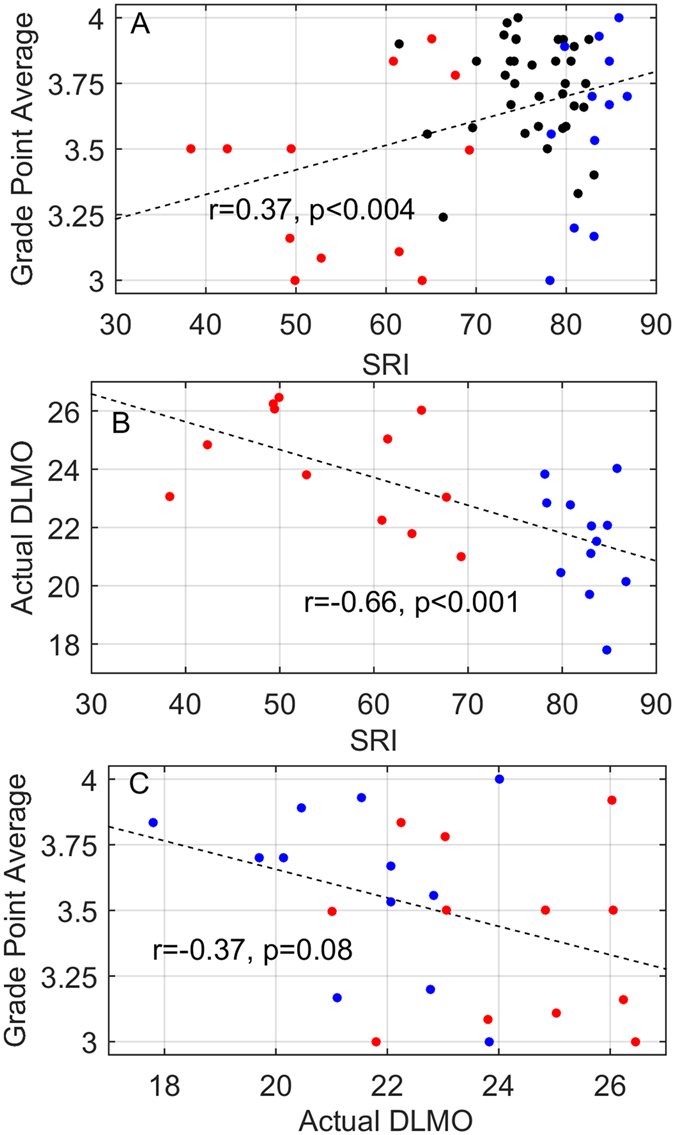
The association of irregular sleep schedules with circadian timing and academic performance has not been systematically examined. We studied 61 undergraduates for 30 days using sleep diaries, and quantified sleep regularity using a novel metric, the sleep regularity index (SRI). In the most and least regular quintiles, circadian phase and light exposure were assessed using salivary dim-light melatonin onset (DLMO) and wrist-worn photometry, respectively. DLMO occurred later (00:08 ± 1:54 vs. 21:32 ± 1:48; p < 0.003); the daily sleep propensity rhythm peaked later (06:33 ± 0:19 vs. 04:45 ± 0:11; p < 0.005); and light rhythms had lower amplitude (102 ± 19 lux vs. 179 ± 29 lux; p < 0.005) in Irregular compared to Regular sleepers. A mathematical model of the circadian pacemaker and its response to light was used to demonstrate that Irregular vs. Regular group differences in circadian timing were likely primarily due to their different patterns of light exposure. A positive correlation (r = 0.37; p < 0.004) between academic performance and SRI was observed. These findings show that irregular sleep and light exposure patterns in college students are associated with delayed circadian rhythms and lower academic performance. Moreover, the modeling results reveal that light-based interventions may be therapeutically effective in improving sleep regularity in this population.
Overview
CoChat Summary
TL;DR
In 61 Harvard undergraduates studied for about 30 days, more irregular sleep/wake patterns were associated with later circadian timing and worse academic performance. The paper argues that the timing differences were largely explained by differences in light exposure rather than by detectable differences in circadian physiology.
Key findings
- Sleep regularity index (SRI) was positively correlated with GPA in the full sample (n = 59): Pearson r = 0.37, p < 0.004; an increase of 10 in SRI was associated with an average GPA increase of 0.10.
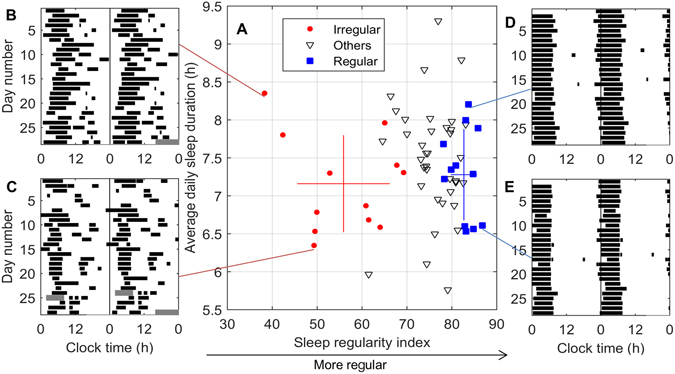
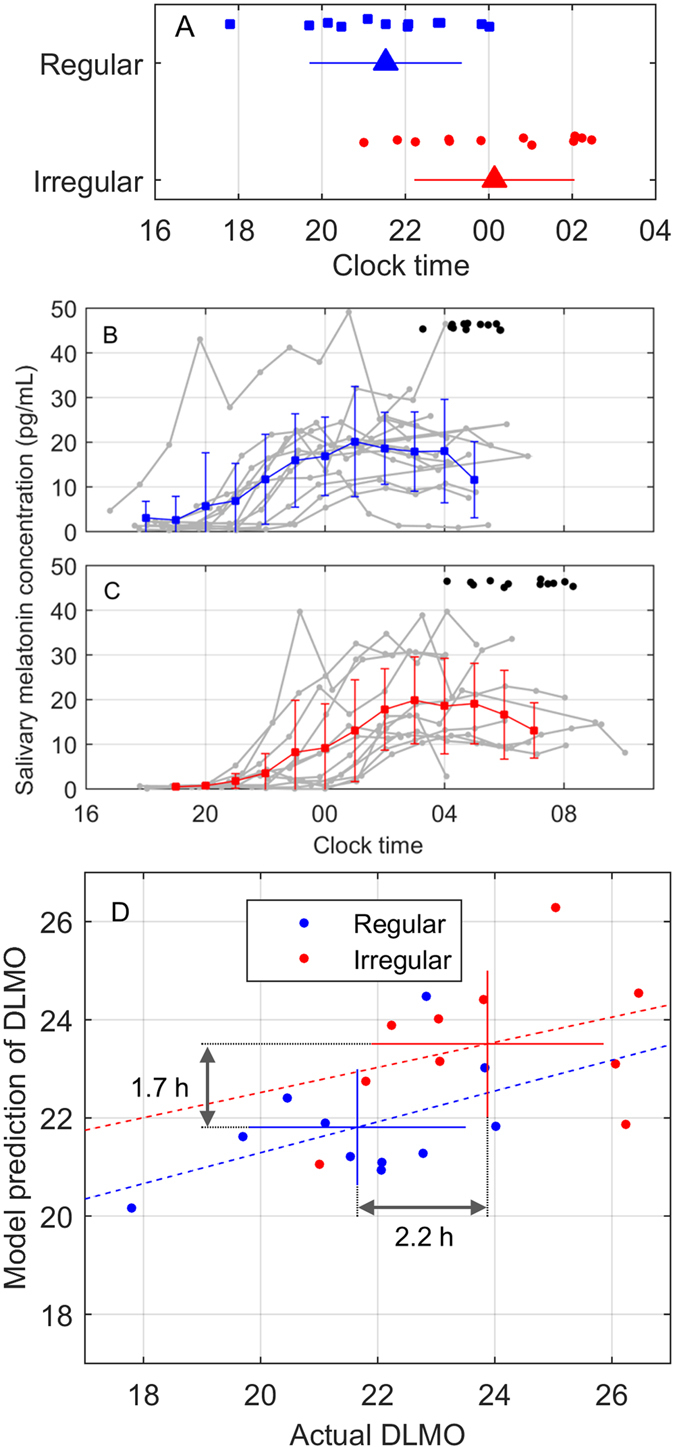
- Irregular sleepers had significantly later melatonin timing than Regular sleepers: DLMO was 00:08 ± 1:54 vs. 21:32 ± 1:48, p < 0.003; the sleep propensity rhythm also peaked later (06:33 ± 0:19 vs. 04:45 ± 0:11, p < 0.005).
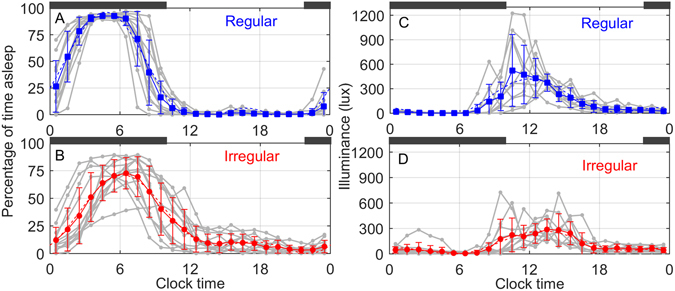
- Irregular sleepers had lower-amplitude light rhythms than Regular sleepers: 102 ± 19 lux vs. 179 ± 29 lux, p < 0.005, with more light during biological night and less daytime light.
- Sleep duration did not differ significantly between groups (7.16 ± 0.64 h vs. 7.27 ± 0.59 h, p = 0.68), and sleep regularity was uncorrelated with sleep duration (r = 0.05, p = 0.71 in the full sample).
Methods
- Observational study of full-time Harvard College undergraduates (excluding first-years), age 18+, living in campus housing; 63 enrolled, 61 completed the study. Participants reported self-selected sleep/wake schedules for ~30 days via online diary during Fall 2013.
- Sleep regularity was quantified with the Sleep Regularity Index (SRI); on day 15, participants were classified using days 1–14, and the highest and lowest quintiles were selected for actiwatch/light and dim-light saliva collection. GPA was self-reported by 59 participants.
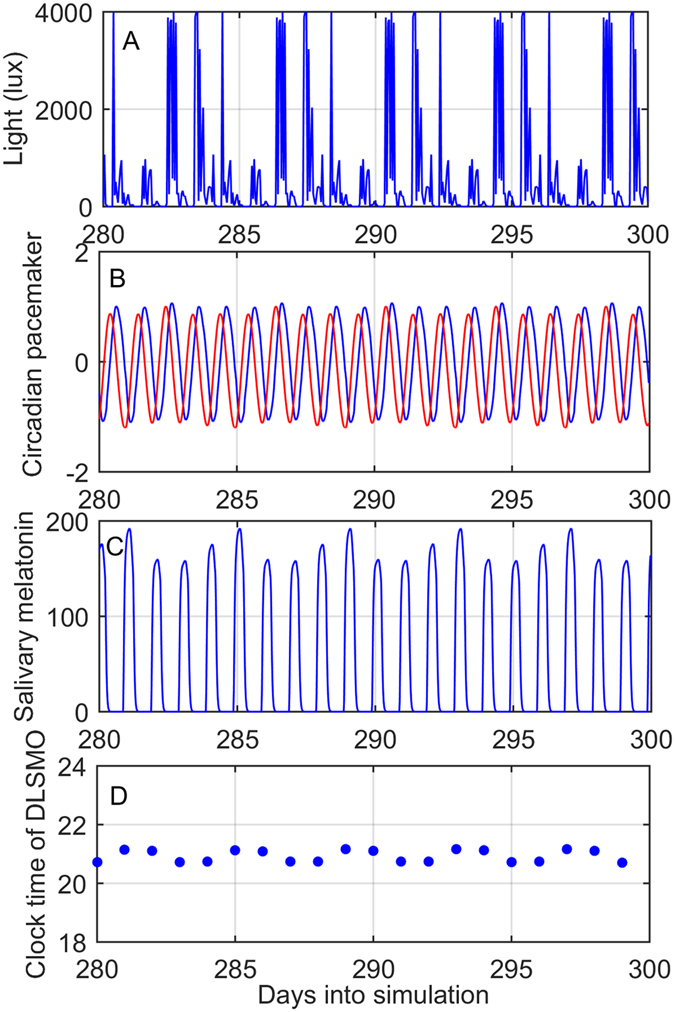
- Main analyses included correlations between SRI and GPA, group comparisons of Regular vs. Irregular sleepers, and a previously validated mathematical model of the human circadian pacemaker to test whether observed DLMO differences could be explained by light exposure patterns. Statistical tests included Wilcoxon rank-sum tests, t-tests, and Pearson correlations.
Limitations
- The paper states that it cannot establish causality between sleep regularity and academic performance or circadian timing.
- DLMO was measured on only one day, which the paper notes may limit prediction of individual circadian timing and may contribute to model-data mismatch; this is especially relevant for Irregular sleepers, and this limitation is explicitly stated in the Discussion.
- The sample was a specific population of Harvard undergraduates living on campus, so the authors note the daytime napping strategy and findings may not generalize to adults who work full time or students not living near campus; this is evident from the text.
Model-written summary. Check it against the paper before relying on it.
Integrity signals
Registry
Cites
Statistics
Figures
Verification
Claims the paper makes
7 Valid · 1 Not valid · 9 Not checked · 75 Own results and interpretations
The cited sources support only part of this claim — read each source’s verdict below.
In the paper
“This hypothesis is supported by a recent study that found large inter-individual differences in circadian timing vanished when individuals were exposed to only natural outdoor light45.”
§ Irregular sleep/wake patterns are associated with poorer academic performance and delayed circadian and sleep/wake timing > Discussion
What the sources say
- Partly supportedcites [45] Wright KP Jr. Entrainment of the human circadian clock to the natural light-dark cycle Curr. Biol. 2013 23 1554 1558 10.1016/j.cub.2013.06.039 23910656 PMC4020279 sourceExperimental — accuracy not yet measured
The Results and Discussion report that exposure to only sunlight while living outdoors reduced individual differences in circadian timing. The claim overstates that finding by saying the differences vanished; the paper does not say they disappeared. (LLM, conf=0.88)
plain- Asserted: passes — The authors put it forward as true.
- Checkable: passes — It can be checked against evidence.
- Load-bearing: unclear — It is unclear whether the paper’s conclusions depend on it.
- Based: passes — The paper gives a reason why it holds.
- Partly supported
A result the paper reports from its own data — it cites no other source for it, so there is none to check. The quote shows it is in the paper.
In the paper
“Irregular sleepers received significantly less day-time light (Table 1)”
§ Irregular sleep/wake patterns are associated with poorer academic performance and delayed circadian and sleep/wake timing > Results > Irregular sleepers have a lower amplitude light rhythm Irregular sleepers received different patterns of light exposure (Fig. 2C and D), with summary metrics in Table 1. The amplitude of the daily light/dark cycle (light rhythm) was lower in Irregular sleepers, reflecting a smaller difference between day-time and night-time illuminance. 95% confidence intervals for the first-harmonic amplitude of a two-harmonic fit were 102 ± 19 lux (Irregular) vs. 179 ± 29 lux (Regular; p < 0.005). Irregular sleepers received significantly less day-time light (Table 1) and had a broader range of light-exposure centroid times (9.6 h vs. 4.5 h). On average, light centroid times were later in the Irregular sleepers than in Regular sleepers, although this difference was not significant (14:18 ± 2:37 vs. 13:05 ± 1:19; p = 0.18, rank-sum test). When light levels were normalized on an individual basis, by dividing by that individual’s average daily illuminance, Irregular sleepers were found to receive relatively more light during the biological night (DLMO to 10 h post-DLMO) and clock night (Table 1). Although the light pattern appeared slightly delayed in the Irregular group, phase parameters for the two-harmonic fits were not significantly different between groups. We note that parametric fits are not ideal for quantifying the effects of the light pattern on the circadian pacemaker, since the sensitivity of the circadian pacemaker to light varies across the day and with previous light exposure history. This point is addressed below by our use of a mathematical model to explicitly predict an individual’s circadian phase of entrainment from the individual light patterns.
plainstates an association- Asserted: passes — The authors put it forward as true.
- Checkable: passes — It can be checked against evidence.
- Load-bearing: unclear — It is unclear whether the paper’s conclusions depend on it.
- Based: passes — The paper gives a reason why it holds.
A result the paper reports from its own data — it cites no other source for it, so there is none to check. The quote shows it is in the paper.
In the paper
“DLMO was also not significantly correlated with GPA (r = 0.37, p = 0.08).”
§ Irregular sleep/wake patterns are associated with poorer academic performance and delayed circadian and sleep/wake timing > Results > Sleep regularity is positively associated with academic performance
plainn = 59- Asserted: passes — The authors put it forward as true.
- Checkable: passes — It can be checked against evidence.
- Load-bearing: unclear — It is unclear whether the paper’s conclusions depend on it.
- Based: passes — The paper gives a reason why it holds.
A result the paper reports from its own data — it cites no other source for it, so there is none to check. The quote shows it is in the paper.
In the paper
“There was no significant linear correlation between sleep duration and SRI (r = 0.13, p = 0.29)”
§ Irregular sleep/wake patterns are associated with poorer academic performance and delayed circadian and sleep/wake timing > Results > Sleep regularity is positively associated with academic performance
plain- Asserted: passes — The authors put it forward as true.
- Checkable: passes — It can be checked against evidence.
- Load-bearing: unclear — It is unclear whether the paper’s conclusions depend on it.
- Based: passes — The paper gives a reason why it holds.
A result the paper reports from its own data — it cites no other source for it, so there is none to check. The quote shows it is in the paper.
In the paper
“later mid-sleep time on free days (7:05 ± 1:23 vs. 4:53 ± 0:56; p < 0.001)”
§ Irregular sleep/wake patterns are associated with poorer academic performance and delayed circadian and sleep/wake timing > Results > Sleep regularity is independent of sleep duration
plainstates an association- Asserted: passes — The authors put it forward as true.
- Checkable: passes — It can be checked against evidence.
- Load-bearing: passes — The paper’s conclusions depend on it.
- Based: passes — The paper gives a reason why it holds.
44 more claims
Create a free account to see all 92 claims and to verify the 1 reference still open.
- Probably not a substantial claim. 32
- It may state two separate claims as one. 21
Citations
Cites
The Pittsburgh Sleep Quality Index: a new instrument for psychiatric practice and research
Buysse, D. J., Reynolds, C. F., Monk, T. H., Berman, S. R., & Kupfer, D. J. (1989) · Psychiatry Research · doi:10.1016/0165-1781(89)90047-4 · Cited by 35,234
A self-assessment questionnaire to determine morningness- eveningness in human circadian rhythms
Home, J. K. (1976) · Medical Entomology and Zoology · Cited by 4,783
(1976) · PubMed · Cited by 3,979
The Geometry of Biological Time
Winfree, A. T. (1980) · doi:10.1007/978-3-662-22492-2 · Cited by 3,613
Social Jetlag: Misalignment of Biological and Social Time
Wittmann, M., Dinich, J., Merrow, M., & Roenneberg, T. (2006) · Chronobiology International · doi:10.1080/07420520500545979 · Cited by 2,625
Cappuccio, F. P., Cooper, D., D'Elia, L., Strazzullo, P., & Miller, M. A. (2011) · European Heart Journal · doi:10.1093/eurheartj/ehr007 · Cited by 2,146
Pittendrigh, C. S., & Daan, S. (1976) · Journal of Comparative Physiology ? A · doi:10.1007/bf01417856 · Cited by 2,127
Action Spectrum for Melatonin Regulation in Humans: Evidence for a Novel Circadian Photoreceptor
Brainard, G. C., Hanifin, J. P., Greeson, J. M., Byrne, B., Glickman, G., Gerner, E., & Rollag, M. D. (2001) · The Journal of Neuroscience · doi:10.1523/jneurosci.21-16-06405.2001 · Cited by 1,930
Sleep Patterns and Predictors of Disturbed Sleep in a Large Population of College Students
Lund, H. G., Reider, B. D., Whiting, A. B., & Prichard, J. R. (2010) · Journal of Adolescent Health · doi:10.1016/j.jadohealth.2009.06.016 · Cited by 1,907
Pittendrigh, C. S., & Daan, S. (1976) · Journal of Comparative Physiology ? A · doi:10.1007/bf01417860 · Cited by 1,636
Research works printed but not linked: 1
- Eskin, A. The sparrow clock: Behavior of the free running rhythm and entrainment analysis. Thesis (The University of Texas, 1969).
Cited by
An update on adolescent sleep: New evidence informing the perfect storm model ☆
Crowley, S. J., Wolfson, A. R., Tarokh, L., & Carskadon, M. A. (2018) · Journal of Adolescence · doi:10.1016/j.adolescence.2018.06.001 · Cited by 684
Later circadian timing of food intake is associated with increased body fat
McHill, A. W., Phillips, A. J., Czeisler, C. A., Keating, L., Yee, K., Barger, L. K., Garaulet, M., Scheer, F. A., & Klerman, E. B. (2017) · The American Journal of Clinical Nutrition · doi:10.3945/ajcn.117.161588 · Cited by 414
Self-citationCircadian rhythms and disorders of the timing of sleep
Meyer, N., Harvey, A. G., Lockley, S. W., & Dijk, D.-J. (2022) · The Lancet · doi:10.1016/s0140-6736(22)00877-7 · Cited by 346
Self-citationSano, A., Taylor, S., McHill, A. W., Phillips, A. J., Barger, L. K., Klerman, E., & Picard, R. (2018) · Journal of Medical Internet Research · doi:10.2196/jmir.9410 · Cited by 333
“The Sleep Regularity Index (SRI; Figure 5) captures the probability of an individual being in the same state (asleep vs awake) at any two time points 24 hours apart with 1 minute resolution, averaged across the entire study [47], where s(t)=1 during wake and s(t)=−1 during sleep for each minute.”
BackgroundSelf-citationCircadian disruption: what do we actually mean?
Vetter, C. (2020) · European Journal of Neuroscience · doi:10.1111/ejn.14255 · Cited by 333
“In addition, because circadian disruption usually co-occurs with disturbed sleep, and because several metrics use sleep behavior as a read-out and approximation of circadian disruption, it will be necessary to also consider the contribution of other sleep-centered metrics (Bei, Wiley, Trinder, & Manber, 2016), such as…”
BackgroundSleep in university students prior to and during COVID-19 stay-at-home orders
Wright, K. P., Linton, S. K., Withrow, D., Casiraghi, L., Lanza, S. M., Iglesia, H. D. L., Vetter, C., & Depner, C. M. (2020) · Current Biology · doi:10.1016/j.cub.2020.06.022 · Cited by 293
“05) improved during Stay-at-Home — this is considered a positive change in behavior as prior fi ndings show that irregular sleep schedules are associated with poor health and performance outcomes [3,4]; (iii) Sleep timing in general was later during Stay-at-Home versus baseline (Figure 1A).”
The relationship between sleep quality, stress, and academic performance among medical students
Alotaibi, A., Alosaimi, F., Alajlan, A., & Bin Abdulrahman, K. (2020) · Journal of Family and Community Medicine · doi:10.4103/jfcm.jfcm_132_19 · Cited by 258
“This suggests that napping by participants in this study was more likely to be compensated for insufficient nighttime sleep than planned, and habitual compensatory daytime naps are frequently used to cope with altered circadian rhythms.[9]”
BackgroundWindred, D. P., Burns, A. C., Lane, J. M., Saxena, R., Rutter, M. K., Cain, S. W., & Phillips, A. J. K. (2024) · SLEEP · doi:10.1093/sleep/zsad253 · Cited by 253
“Sleep regularity was assessed using the Sleep Regularity Index (SRI) [24], a metric that compares the”
MethodSelf-citationde Zambotti, M., Goldstein, C., Cook, J., Menghini, L., Altini, M., Cheng, P., & Robillard, R. (2024) · SLEEP · doi:10.1093/sleep/zsad325 · Cited by 250
“In studies with healthy adults, the mean absolute error (the difference between the measured value and the “true” value) has typically fallen within 2 h [77, 78].”
Sletten, T. L., Weaver, M. D., Foster, R. G., Gozal, D., Klerman, E. B., Rajaratnam, S. M. W., Roenneberg, T., Takahashi, J. S., Turek, F. W., Vitiello, M. V., et al. (2023) · Sleep Health · doi:10.1016/j.sleh.2023.07.016 · Cited by 240
“15,16 As there has been no authoritative consensus statement about the importance of sleep regularity for health, the NSF undertook the process of convening an expert panel to conduct a systematic literature review, discuss and interpret the existing evidence, and formulate consensus statements on…”
BackgroundSelf-citationValidation of the Sleep Regularity Index in Older Adults and Associations with Cardiometabolic Risk
Lunsford-Avery, J. R., Engelhard, M. M., Navar, A. M., & Kollins, S. H. (2018) · Scientific Reports · doi:10.1038/s41598-018-32402-5 · Cited by 219
Measuring sleep regularity: theoretical properties and practical usage of existing metrics
Fischer, D., Klerman, E. B., & Phillips, A. J. K. (2021) · Sleep · doi:10.1093/sleep/zsab103 · Cited by 204
“As a result, the SRI tends to be uncorrelated with total sleep time [16, 21, 27], despite the fact that the SRI would tend to a value of 100 if an individual hypothetically slept 0% or 100% of the time.”
BackgroundSelf-citationKroshus, E., Wagner, J., Wyrick, D., Athey, A., Bell, L., Benjamin, H. J., Grandner, M. A., Kline, C. E., Mohler, J. M., Roxanne Prichard, J., et al. (2019) · British Journal of Sports Medicine · doi:10.1136/bjsports-2019-100590 · Cited by 203
The Impact of a Randomized Sleep Education Intervention for College Students
Hershner, S., & O'Brien, L. M. (2018) · Journal of Clinical Sleep Medicine · doi:10.5664/jcsm.6974 · Cited by 199
“37 The current study found that following the intervention students were more likely to have a regular sleep schedule, earlier wake time, and a trend to an earlier weekday bedtime.”
Impact of Poor Sleep Quality on the Academic Performance of Medical Students
Maheshwari, G., & Shaukat, F. (2019) · Cureus · doi:10.7759/cureus.4357 · Cited by 177
Individual differences in light sensitivity affect sleep and circadian rhythms
Chellappa, S. L. (2021) · Sleep · doi:10.1093/sleep/zsaa214 · Cited by 163
“Wrist-worn actigraphy measurements combined with sleep diaries and light sensors allow determining real-life sleep quality measurements, circadian/sleep stability, and daily light patterns [125].”
BackgroundSleep and immunity in times of COVID-19
Silva, E. D. S. M. E., Ono, B. H. V. S., & Souza, J. C. (2020) · Revista da Associação Médica Brasileira · doi:10.1590/1806-9282.66.s2.143 · Cited by 150
Zuraikat, F. M., Makarem, N., Redline, S., Aggarwal, B., Jelic, S., & St-Onge, M.-P. (2020) · Current Diabetes Reports · doi:10.1007/s11892-020-01324-w · Cited by 125
“in 2017 [10], this metric is defined as the percentage probability of a person being asleep (or awake) at any two time points 24-h apart.”
BackgroundLoneliness in the lives of Danish adolescents: Associations with health and sleep
Eccles, A. M., Qualter, P., Madsen, K. R., & Holstein, B. E. (2020) · Scandinavian Journal of Public Health · doi:10.1177/1403494819865429 · Cited by 125
“Given the scarcity of research examining sleep and loneliness among youth, and the importance of good sleep for academic achievement [23,24], further examination of the association between youth loneliness and poor sleep behaviour as a robust finding is essential.”
BackgroundWilloughby, A. R., Alikhani, I., Karsikas, M., Chua, X. Y., & Chee, M. W. L. (2023) · Sleep Medicine · doi:10.1016/j.sleep.2023.08.010 · Cited by 145
Sleep patterns predictive of daytime challenging behavior in individuals with low‐functioning autism
Cohen, S., Fulcher, B. D., Rajaratnam, S. M. W., Conduit, R., Sullivan, J. P., St Hilaire, M. A., Phillips, A. J. K., Loddenkemper, T., Kothare, S. V., McConnell, K., et al. (2018) · Autism Research · doi:10.1002/aur.1899 · Cited by 118
“This supports recent literature on the importance of regular sleep patterns for daytime functioning [Landrigan, 2010; Sano et al., 2015; Phillips et al., 2017].”
BackgroundMethodResultInfluentialSelf-citationAssociations between circadian disruption and cardiometabolic disease risk: A review
Ansu, V., & Knutson, K. L. (2023) · Obesity · doi:10.1002/oby.23666 · Cited by 128
“with adverse cardiometabolic outcomes [59], impaired daytime function [60], and delayed circadian sleep/wake timing [58].”
BackgroundFischer, D. R., McHill, A. W., Sano, A., Picard, R. W., Barger, L. K., Czeisler, C. A., Klerman, E. B., & Phillips, A. J. K. (2019) · SLEEP · doi:10.1093/sleep/zsz300 · Cited by 109
“Two metrics have been recently developed to specifically capture day-to-day changes in sleep patterns: the Composite Phase Deviation (CPD [24]) and the Sleep Regularity Index (SRI [9]).”
BackgroundSelf-citationCalculating the contribution of sleep problems to undergraduates' academic success
Hartmann, M. E., & Prichard, J. R. (2018) · Sleep Health · doi:10.1016/j.sleh.2018.07.002 · Cited by 98
Fang, Y., Forger, D. B., Frank, E., Sen, S., & Goldstein, C. (2021) · npj Digital Medicine · doi:10.1038/s41746-021-00400-z · Cited by 99
Sleep and academic performance: measuring the impact of sleep
Hershner, S. (2020) · Current Opinion in Behavioral Sciences · doi:10.1016/j.cobeha.2019.11.009 · Cited by 95
Morgan, B., Nageye, F., Masi, G., & Cortese, S. (2020) · Sleep Medicine · doi:10.1016/j.sleep.2019.07.019 · Cited by 92
Cheng, P., Walch, O., Huang, Y., Mayer, C., Sagong, C., Cuamatzi Castelan, A., Burgess, H. J., Roth, T., Forger, D. B., & Drake, C. L. (2021) · Sleep · doi:10.1093/sleep/zsaa180 · Cited by 88
“[19] (DLMO ranged approximately from 6:00 pm to 3:00 am), even the most irregular sleeper in that sample—albeit likely a late chronotype—slept predominantly at night (i.”
Huang, Y., Mayer, C., Cheng, P., Siddula, A., Burgess, H. J., Drake, C., Goldstein, C., Walch, O., & Forger, D. B. (2021) · Sleep · doi:10.1093/sleep/zsab126 · Cited by 81
Increased sensitivity of the circadian system to light in delayed sleep–wake phase disorder
Watson, L. A., Phillips, A. J. K., Hosken, I. T., McGlashan, E. M., Anderson, C., Lack, L. C., Lockley, S. W., Rajaratnam, S. M. W., & Cain, S. W. (2018) · The Journal of Physiology · doi:10.1113/jp275917 · Cited by 80
“This would be consistent with the recent finding that light patterns in individuals with irregular, delayed sleep patterns predict differences in circadian timing (Phillips et al. 2017).”
ResultSelf-citationSensors Capabilities, Performance, and Use of Consumer Sleep Technology
de Zambotti, M., Cellini, N., Menghini, L., Sarlo, M., & Baker, F. C. (2020) · Sleep Medicine Clinics · doi:10.1016/j.jsmc.2019.11.003 · Cited by 82
Technologies for sleep monitoring at home: wearables and nearables
Yoon, H., & Choi, S. H. (2023) · Biomedical Engineering Letters · doi:10.1007/s13534-023-00305-8 · Cited by 95
“Long-term data can also help identify sleep patterns, such as sleep regularity and social jet lag [16, 17].”
BackgroundpyActigraphy: Open-source python package for actigraphy data visualization and analysis
Hammad, G. H., Reyt, M., Beliy, N., Baillet, M., Deantoni, M., Lesoinne, A., Muto, V., & Schmidt, C. (2021) · PLoS Computational Biology · doi:10.1371/journal.pcbi.1009514 · Cited by 93
“From this 24h profile, the sleep regularity index (SRI) [34, 35] can be calculated as the product of theses probabilities over all the time bins.”
MethodSleeping late is a risk factor for myopia development amongst school-aged children in China
Liu, X. N., Naduvilath, T. J., Wang, J., Xiong, S., He, X., Xu, X., & Sankaridurg, P. R. (2020) · Scientific Reports · doi:10.1038/s41598-020-74348-7 · Cited by 101
Associations between sleep variability and cardiometabolic health: A systematic review
Zhu, B., Wang, Y., Yuan, J., Mu, Y., Chen, P., Srimoragot, M., Li, Y., Park, C. G., & Reutrakul, S. (2022) · Sleep Medicine Reviews · doi:10.1016/j.smrv.2022.101688 · Cited by 77
Variability in Sleep Patterns: an Emerging Risk Factor for Hypertension
Makarem, N., Zuraikat, F. M., Aggarwal, B., Jelić, S., & St‐Onge, M. (2020) · Current Hypertension Reports · doi:10.1007/s11906-020-1025-9 · Cited by 91
Alloy, L. B., & Nusslock, R. (2019) · Journal of Clinical Child & Adolescent Psychology · doi:10.1080/15374416.2019.1567347 · Cited by 77
“Adolescence is characterized by sleep timing changes, including a delay of bedtimes and irregular sleep schedules (e.g., Carskadon, 2011; Knutson, 2005; Phillips et al., 2017), and a phase shift of the melatonin and other circadian rhythms (Carskadon, Vieira, & Acebo, 1993).”
Nagare, R., Woo, M. K., MacNaughton, P., Plitnick, B., Tinianov, B. D., & Figueiro, M. G. (2021) · International Journal of Environmental Research and Public Health · doi:10.3390/ijerph18199980 · Cited by 109
“Latency (min) Regularity (SRI) Estimate p-Value Estimate p-Value Estimate p-Value Estimate p-Value Intercept 318.18 0.001 72.47 0.001 18.86 0.003 81.63 0.001 Condition (EC Glass) 16.11 0.169 0.42 0.821 −5.12 0.319 0.88 0.001 Caffeine after 12 PM (yes) −12.50 0.450 −0.44 0.868 −1.48 0.806 1.54 0.001 Exercise after 5 PM…”
BackgroundMethodInfluentialSmarr, B. L., & Schirmer, A. E. (2018) · Scientific Reports · doi:10.1038/s41598-018-23044-8 · Cited by 72
Irregular sleep-wake patterns in older adults with current or remitted depression
Pye, J., Phillips, A. J. K., Cain, S. W., Montazerolghaem, M., Mowszowski, L., Duffy, S. L., Hickie, I. B., & Naismith, S. L. (2020) · Journal of Affective Disorders · doi:10.1016/j.jad.2020.12.034 · Cited by 79
Self-citationFontanellaz-Castiglione, C. E. G., Schaufler, S., Wild, S., Hamann, C., Kaess, M., & Tarokh, L. (2023) · Journal of Sleep Research · doi:10.1111/jsr.13865 · Cited by 98
“In order to quantify the regularity of sleep, this study used a novel metric first introduced by Phillips et al., 2017 – the Sleep Regularity Index (SRI) (Phillips et al., 2017).”
BackgroundMethodInfluentialThe effects of insufficient sleep and adequate sleep on cognitive function in healthy adults
Zimmerman, M. E., Benasi, G., Hale, C., Yeung, L.-K., Cochran, J., Brickman, A. M., & St-Onge, M.-P. (2024) · Sleep Health · doi:10.1016/j.sleh.2023.11.011 · Cited by 80
Mehta, K. J. (2022) · Humanities and Social Sciences Communications · doi:10.1057/s41599-021-01031-1 · Cited by 72
Lunsford‐Avery, J. R., Damme, K. S. F., Engelhard, M., Kollins, S. H., & Mittal, V. A. (2020) · Scientific Reports · doi:10.1038/s41598-019-57024-3 · Cited by 72
Vethe, D., Scott, J. L., Engstrøm, M., Salvesen, Ø. O., Sand, T., Olsen, A., Morken, G., Heglum, H. S. A., Kjørstad, K., Faaland, P. M., et al. (2020) · SLEEP · doi:10.1093/sleep/zsaa194 · Cited by 82
“The SRI indicates the percentage of epochs in each 24-h in which sleep–wake states are similar to the corresponding epoch in the previous 24 h [34].”
MethodFoulkes, L., McMillan, D., & Gregory, A. M. (2019) · Sleep Health · doi:10.1016/j.sleh.2019.01.003 · Cited by 119
Scott, H., Lechat, B., Guyett, A., Reynolds, A. C., Lovato, N., Naik, G. R., Appleton, S., Adams, R., Escourrou, P., CATCHESIDE, P. G., et al. (2023) · Hypertension · doi:10.1161/hypertensionaha.122.20513 · Cited by 84
“Mean SOL, min 30 (12) 29 (12) 30 (11) 30 (11) 31 (13)”
Bangerter, A., Chatterjee, M., Manyakov, N. V., Ness, S. L., Lewin, D., Skalkin, A., Boice, M., Goodwin, M. S., Dawson, G., Hendren, R. L., et al. (2020) · Frontiers in Neuroscience · doi:10.3389/fnins.2020.00211 · Cited by 78
Relationship between sleep habits and academic performance in university Nursing students
Gallego‐Gómez, J. I., González-Moro, M. T. R., González-Moro, J. M. R., Catalán, T. V., Balanza, S., Simonelli‐Muñoz, A. J., & Rivera‐Caravaca, J. M. (2021) · BMC Nursing · doi:10.1186/s12912-021-00635-x · Cited by 113
Marta, O. F. D., Kuo, S., Bloomfield, J. G., Lee, H., Ruhyanudin, F., Poynor, M., Brahmadhi, A., Pratiwi, I. D., Aini, N., Mashfufa, E. W., et al. (2019) · Nurse Education Today · doi:10.1016/j.nedt.2019.104270 · Cited by 92
Wearables in Chronomedicine and Interpretation of Circadian Health
Gubin, D. G., Weinert, D., Stefani, O., Otsuka, K., Borisenkov, M. F., & Cornélissen, G. (2025) · Diagnostics · doi:10.3390/diagnostics15030327 · Cited by 83
“SRI can be re-scaled as y = 200 (x − 1/2) to scale in the range from − 100 to 100 [94].”
Stone, J., Aubert, X. L., Maass, H., Phillips, A. J. K., Magee, M., Howard, M. E., Lockley, S. W., Rajaratnam, S. M. W., & Sletten, T. L. (2019) · Scientific Reports · doi:10.1038/s41598-019-47290-6 · Cited by 68
Self-citationZiporyn, T. D., Owens, J. A., Wahlstrom, K. L., Wolfson, A. R., Troxel, W., Saletin, J., Rubens, S. L., Pelayo, R., Payne, P. A., Hale, L. E., et al. (2022) · Sleep Health · doi:10.1016/j.sleh.2021.10.008 · Cited by 74
You, Y., Liu, J., Li, X., Wang, P., Liu, R., & Ma, X. (2024) · PeerJ · doi:10.7717/peerj.17057 · Cited by 68
Robbins, R., Quan, S. F., Barger, L. K., Czeisler, C. A., Fray-Witzer, M., Weaver, M. D., Zhang, Y., Redline, S. S., & Klerman, E. B. (2021) · Sleep Epidemiology · doi:10.1016/j.sleepe.2021.100016 · Cited by 69
Self-citationMurray, J. M., Phillips, A. J. K., Magee, M., Sletten, T. L., Gordon, C. J., Lovato, N., Bei, B., Bartlett, D. J., Kennaway, D. J., Lack, L. C., et al. (2019) · Sleep Medicine · doi:10.1016/j.sleep.2019.03.009 · Cited by 65
Self-citationSleep-related disorders in patients with type 1 diabetes mellitus: current insights
Perfect, M. M. (2020) · Nature and Science of Sleep · doi:10.2147/nss.s152555 · Cited by 69
“For instance, more recent studies have considered daily variations, such as the sleep regularity index and the composite phase delay in adults samples.(73,74) Similarly, global metrics of glucose levels as opposed to day-to-day fluctuations in glycemic control may not capture the immediate and cumulative effects of ha…”
BackgroundEvening types have social jet lag and metabolic alterations in school-age children
Martínez-Lozano, N., Barraco, G. M., Ríos, R., Ruiz, M. J., Tvarijonaviciute, A., Fardy, P. S., Madrid, J. A., & Garaulet, M. (2020) · Scientific Reports · doi:10.1038/s41598-020-73297-5 · Cited by 74
Carskadon, M. A., Chappell, K. R., Barker, D. H., Hart, A. C., Dwyer, K., Gredvig-Ardito, C., Starr, C., & McGeary, J. E. (2019) · BMC Research Notes · doi:10.1186/s13104-019-4633-1 · Cited by 56
“Top panel (Good Sleep) are those above the median on both total sleep time (TST) and the sleep regularity index (SRI).”
MethodInfluentialSleep regularity and mortality: a prospective analysis in the UK Biobank
Cribb, L., Sha, R., Yiallourou, S. R., Grima, N., Cavuoto, M. G., Baril, A., & Pase, M. P. (2023) · eLife · doi:10.7554/elife.88359 · Cited by 75
Hand, A. J., Stone, J. E., Shen, L., Vetter, C., Cain, S. W., Bei, B., & Phillips, A. J. K. (2023) · SLEEP · doi:10.1093/sleep/zsad001 · Cited by 67
“Sleep regularity Daily and weekly dimensions of sleep regularity were assessed using the Sleep Regularity Index (SRI) and social jetlag, respectively [14, 31].”
BackgroundMethodInfluentialSelf-citationBustamante, C. M. V., Rodman, A. M., Dennison, M., Flournoy, J. C., Mair, P., & McLaughlin, K. A. (2020) · Journal of Child Psychology and Psychiatry · doi:10.1111/jcpp.13234 · Cited by 61
“We used minute-level actigraphy data to compute a modified version of the Sleep Regularity Index developed by (Phillips et al., 2017).”
MethodStone, J. E., McGlashan, E. M., Quin, N., Skinner, K., Stephenson, J. J., Cain, S. W., & Phillips, A. J. K. (2020) · Journal of Biological Rhythms · doi:10.1177/0748730420962598 · Cited by 58
“Recent work in populations with high intraindividual variability, such as shift workers, has shown accurate prediction of phase at the group-average level but with large errors for some individuals (Phillips et al., 2017; Stone et al., 2019a; Stone et al., 2019b).”
BackgroundMethodInfluentialSelf-citationWindred, D. P., Jones, S. E., Russell, A., Burns, A. C., Chan, P., Weedon, M. N., Rutter, M. K., Olivier, P. L., Vetter, C., Saxena, R., et al. (2021) · SLEEP · doi:10.1093/sleep/zsab254 · Cited by 62
Self-citationSchoch, S. F., Castro-Mejía, J. L., Krych, Ł., Leng, B., Kot, W., Kohler, M., Huber, R., Rogler, G., Biedermann, L., Walser, J., et al. (2021) · Progress in Neurobiology · doi:10.1016/j.pneurobio.2021.102208 · Cited by 58
Towards a framework for light-dosimetry studies: Methodological considerations
Hartmeyer, S. L., Webler, F. S., & Andersen, M. (2022) · Lighting Research & Technology · doi:10.1177/14771535221103258 · Cited by 64
Frye, S. S., Perfect, M. M., & Silva, G. E. (2019) · Sleep Medicine · doi:10.1016/j.sleep.2019.01.043 · Cited by 60
Sleep Dysfunction and Mood in Collegiate Soccer Athletes
Benjamin, C. L., Curtis, R. M., Huggins, R. A., Sekiguchi, Y., Jain, R. K., McFadden, B. A., & Casa, D. J. (2020) · Sports Health A Multidisciplinary Approach · doi:10.1177/1941738120916735 · Cited by 73
“Similarly, a strong relationship was found between a consistent sleep routine and improved grade point averages at Harvard University.(26) These findings have prompted elite athletic teams, programs, and researchers to invest time and money specifically in the improvement of athlete sleep habits.”
BackgroundComputational approaches for individual circadian phase prediction in field settings
Stone, J. E., Postnova, S., Sletten, T. L., Rajaratnam, S. M. W., & Phillips, A. J. K. (2020) · Current Opinion in Systems Biology · doi:10.1016/j.coisb.2020.07.011 · Cited by 47
Self-citationSleep quality prediction in caregivers using physiological signals
Sadeghi, R., Banerjee, T., Hughes, J. C., & Lawhorne, L. W. (2019) · Computers in Biology and Medicine · doi:10.1016/j.compbiomed.2019.05.010 · Cited by 50
“Extensive studies indicate pivotal effects of sleep in job performance [1], memory [2], fatigue recovery [3], and both mental [4] and physical health [5].”
BackgroundUnderstanding the Impact of the COVID-19 Pandemic, Lockdowns and Social Isolation on Sleep Quality
O'Regan, D., Jackson, M. L., Young, A. H., & Rosenzweig, I. (2021) · Nature and Science of Sleep · doi:10.2147/nss.s266240 · Cited by 53
“However, for others, being afforded greater flexibility in sleep timing appears to have resulted in more irregular sleep-wake timing, which is known to have adverse effect on academic performance and health outcomes.(41,42) Indeed, despite some initial benefits that were reported in some sections of western society as…”
BackgroundSamson, S., Konty, K., Lee, W.-N., Quisel, T., Foschini, L., Kerr, D. E., Liška, J., MILLS, H. G., Hollingsworth, R. C., Greenberg, M. E., et al. (2019) · Journal of Diabetes Science and Technology · doi:10.1177/1932296819883340 · Cited by 54
Association between Irregular Meal Timing and the Mental Health of Japanese Workers
Tahara, Y., Makino, S., Suiko, T., Nagamori, Y., Iwai, T., Aono, M., & Shibata, S. (2021) · Nutrients · doi:10.3390/nu13082775 · Cited by 54
“Irregular sleep/wake patterns with disrupted circadian rhythms directly affect mental wellbeing [15].”
BackgroundMcHill, A. W., Czeisler, C. A., Phillips, A. J. K., Keating, L., Barger, L. K., Garaulet, M., Scheer, F. A. J. L., & Klerman, E. B. (2019) · Nutrients · doi:10.3390/nu11030587 · Cited by 53
“Circadian phase was determined for each participant using the DLMO, defined as the linear interpolated point in time at which melatonin levels crossed and maintained concentrations above a 5 pg/mL threshold [21].”
MethodSelf-citationFritz, J., Phillips, A. J. K., Hunt, L. C., Imam, A., Reid, K. J., Perreira, K. M., Mossavar‐Rahmani, Y., Daviglus, M. L., Sotres‐Alvarez, D., Zee, P. C., et al. (2020) · SLEEP · doi:10.1093/sleep/zsaa218 · Cited by 49
“The SRI was calculated according to the published formula [28] using 30-second epochs:”
BackgroundMethodInfluentialSelf-citationSleep and Circadian Rhythms in Adolescence
Tarokh, L., Short, M., Crowley, S. J., Fontanellaz-Castiglione, C. E. G., & Carskadon, M. A. (2019) · Current Sleep Medicine Reports · doi:10.1007/s40675-019-00155-w · Cited by 47
Chaput, J., Biswas, R. K., Ahmadi, M. N., Cistulli, P. A., Rajaratnam, S. M. W., Bian, W., St‐Onge, M., & Stamatakis, E. (2024) · Journal of Epidemiology & Community Health · doi:10.1136/jech-2024-222795 · Cited by 58
Sleep Predicts Collegiate Academic Performance
Prichard, J. R. (2020) · Sleep Medicine Clinics · doi:10.1016/j.jsmc.2019.10.003 · Cited by 46
Sleep and academic performance: considering amount, quality and timing
Gomez Fonseca, A., & Genzel, L. (2020) · Current Opinion in Behavioral Sciences · doi:10.1016/j.cobeha.2019.12.008 · Cited by 45
Journal of Pineal Research guideline for authors: Measuring melatonin in humans
Lockley, S. W. (2020) · Journal of Pineal Research · doi:10.1111/jpi.12664 · Cited by 50
Self-citationLiu, K., Hou, G., Wang, X., Chen, H., Shi, F., Liu, C., Zhang, X., Han, F., Yang, H., Zhou, N., et al. (2020) · Human Reproduction · doi:10.1093/humrep/deaa101 · Cited by 50
“But the irregularity of sleep behavior in undergraduates has been found to affect the inner clock biomarker (Phillips et al., 2017), which is similar to the phenomenon observed in RSW workers (Leung et al.”
ResultCarrión-Pantoja, S., Prados, G., Chouchou, F., Jiménez, M. L. H., Mendoza-Vinces, Á., Ruíz, M. E., & Fernández‐Puerta, L. (2022) · Journal of Clinical Medicine · doi:10.3390/jcm11071989 · Cited by 69
“found in 61 undergraduate students that irregular sleep and light-exposure patterns were associated with delayed circadian rhythms and lower academic performance [54].”
BackgroundThe role of sleep hygiene in the risk of Shift Work Disorder in nurses
Booker, L. A., Barnes, M., Alvaro, P. K., Collins, A., Chai‐Coetzer, C. L., McMahon, M., Lockley, S. W., Rajaratnam, S. M. W., Howard, M. E., & Sletten, T. L. (2019) · SLEEP · doi:10.1093/sleep/zsz228 · Cited by 58
Self-citationEffects of blue- and red-enriched light on attention and sleep in typically developing adolescents
Studer, P., Brucker, J. M., Haag, C., Doren, J. V., Moll, G. H., Heinrich, H., & Kratz, O. (2018) · Physiology & Behavior · doi:10.1016/j.physbeh.2018.10.015 · Cited by 57
Saito, T., Suzuki, H., & Kishi, A. (2022) · Frontiers in Digital Health · doi:10.3389/fdgth.2022.861808 · Cited by 48
“SRI quantifies the regularity of daily sleep–wake rhythms and is calculated as the concordance rate of sleep–wake occurrences in 24-h units (26, 27).”
MethodResultBibliometric Analysis and Visualization of Academic Procrastination
Tao, X., Hanif, H., Ahmed, H. H., & Ebrahim, N. A. (2021) · Frontiers in Psychology · doi:10.3389/fpsyg.2021.722332 · Cited by 83
Correlates of sleep irregularity in schizophrenia
Chung, K., Poon, Y. P. Y.-P., Ng, T. K., & Kan, C.-K. (2018) · Psychiatry Research · doi:10.1016/j.psychres.2018.10.064 · Cited by 54
Association between circadian disruption and diseases: A narrative review
Hou, Y., Liu, L.-M., Chen, X., Li, Q., & Li, J. (2020) · Life Sciences · doi:10.1016/j.lfs.2020.118512 · Cited by 54
Guarnieri, B., Maestri, M., Cucchiara, F., Gerfo, A. L., Schirru, A., Arnaldi, D., Mattioli, P., Nobili, F. M., Lombardi, G., Cerroni, G., et al. (2020) · Journal of Alzheimer s Disease · doi:10.3233/jad-200632 · Cited by 47
“The SRI does not require designation of a main daily sleep episode and was created on the premise that changes in sleep schedules from one 24-h interval to the next may cause circadian disruption, thus impacting normal biological functioning and health [66].”
Sleep Regularity and Predictors of Sleep Efficiency and Sleep Duration in Elite Team Sport Athletes
Halson, S. L., Johnston, R. D., Piromalli, L. E., Lalor, B. J., Cormack, S. J., Roach, G. D., & Sargent, C. (2022) · Sports Medicine - Open · doi:10.1186/s40798-022-00470-7 · Cited by 61
“The SRI is a metric that calculates the likelihood of sleep–wake cycles matching from 1 day to the next, which is then aggregated over a given period [13], using the following formula:”
BackgroundMethodResultInfluentialCircadian aspects in the aetiology and pathophysiology of insomnia
Lack, L. C., Micic, G., & Lovato, N. (2023) · Journal of Sleep Research · doi:10.1111/jsr.13976 · Cited by 48
“…associated with a delayed sleep pattern, have a reduced amplitude of 24 h light exposure, greater impairments of daytime functioning (Lack, 1986; Phillips et al., 2017), impaired mental health (Bei et al., 2016; Fang et al., 2021; Murray et al., 2019; Swanson et al., 2023), and even increased…”
BackgroundSleep Irregularity and the Incidence of Type 2 Diabetes: A Device-Based Prospective Study in Adults
Chaput, J., Biswas, R. K., Ahmadi, M. N., Cistulli, P. A., Sabag, A., St‐Onge, M., & Stamatakis, E. (2024) · Diabetes Care · doi:10.2337/dc24-1208 · Cited by 54
Baddam, S. K. R., Olvera, R. L., Canapari, C. A., Crowley, M. J., & Williamson, D. E. (2019) · Behavioral Sciences · doi:10.3390/bs9100108 · Cited by 41
The effects of yoga on student mental health: a randomised controlled trial
Elstad, T., Ulleberg, P., Klonteig, S., Hisdal, J., Dyrdal, G. M., & Bjorndal, A. (2020) · Health Psychology and Behavioral Medicine · doi:10.1080/21642850.2020.1843466 · Cited by 40
“Sleep problems are also correlated with worse academic performance (Phillips et al., 2017), and are seen as a marker of more severe mental problems among students.”
BackgroundIrregular sleep and cardiometabolic risk: Clinical evidence and mechanisms
Zhang, C., & Qin, G. (2023) · Frontiers in Cardiovascular Medicine · doi:10.3389/fcvm.2023.1059257 · Cited by 55
Which Are the Central Aspects of Infant Sleep? The Dynamics of Sleep Composites across Infancy
Schoch, S. F., Huber, R., Kohler, M., & Kurth, S. (2020) · Sensors · doi:10.3390/s20247188 · Cited by 42
“To capture the multitude of dimensions of infant sleep, we calculated 48 sleep variables of interest, based on previous definitions [22,27,34] (Table 1).”
MethodA real-time, personalized sleep intervention using mathematical modeling and wearable devices
Song, Y. M., Choi, S. J., Park, S. H., Lee, S. J., Joo, E. Y., & Kim, J. K. (2023) · SLEEP · doi:10.1093/sleep/zsad179 · Cited by 48
Jones, R. D., Jackson, W. B., Mazzei, A., Chang, A., Buxton, O. M., & Jackson, C. L. (2019) · Sleep Health · doi:10.1016/j.sleh.2019.10.005 · Cited by 40
Capodilupo, E. R., & Miller, D. J. (2021) · PLoS ONE · doi:10.1371/journal.pone.0256063 · Cited by 41
“Changes in sleep timing and the consistency of bedtimes and wake times also have profound effects on wellbeing, with benefits seen when a consistent sleep schedule is maintained [10].”
BackgroundGrant, L. K., Kent, B. A., Mayer, M. D., Stickgold, R., Lockley, S. W., & Rahman, S. A. (2021) · Frontiers in Neurology · doi:10.3389/fneur.2021.624217 · Cited by 40
Self-citation
Metadata
- Authors
- Phillips, A. J. K., Clerx, W. M., O’Brien, C. S., Sano, A., Barger, L. K., Picard, R. W., Lockley, S. W., Klerman, E. B., & Czeisler, C. A.
- Affiliations
- Brigham and Women's Hospital (US)
- MIT Media Lab (US)
- Corresponding author
- Phillips, Andrew J. K.
- ORCID
- Venue
- Scientific Reports
- Published
- 2017-06-12
- Volume
- 7
- Issue
- 1
- Pages
- 3216-3216
- ISSN
- 2045-2322 (ISSN-L)
- PMC
- PMC5468315
- OpenAlex
- W2622433070
- Semantic Scholar
- 329a1e3bbe1fd66883353d1991ec60e5dac3dc10
- Cited by
- 647
- References
- 64
- Citations by year
- 2026: 106 · 2025: 106 · 2024: 94 · 2023: 85 · 2022: 81 · 2021: 62 · 2020: 56 · 2019: 39 · 2018: 14 · 2017: 4
- FWCI
- 18.98
- Type
- journal article
- Language
- en
- Open access
- gold
- doi.org
- Licence
- cc-by
- creativecommons.org/licenses/by/4.0 (tdm)
- creativecommons.org/licenses/by/4.0 (vor)
- Locations
- Scientific Reports (publishedVersion, cc-by)
- Europe PMC (PubMed Central) (publishedVersion, other-oa)
- PubMed Central (publishedVersion, cc-by)
- PubMed (publishedVersion)
- Digital Access to Scholarship at Harvard (DASH) (Harvard University) (submittedVersion, cc-by)
- DOAJ (DOAJ: Directory of Open Access Journals) (submittedVersion, cc-by-sa)
- DSpace@MIT (Massachusetts Institute of Technology) (submittedVersion, cc-by-nc)
- Surrey Research Insight Open Access (The University of Surrey) (submittedVersion)
- Funders
- National Space Biomedical Research Institute (HFP-02802, HFP02801)
- National Institutes of Health (NIH K24, NIH-R01, NIH K99, HFP02802, AG09975)
- National Institute on Aging (P01AG009975)
- National Heart, Lung, and Blood Institute (K24HL105664, R01HL094654, K99HL119618, R01HL128538, R01HL114088, R00HL119618)
- National Institute of General Medical Sciences (R01GM105018)
- National Center for Research Resources (UL1RR025758)
- Topics
- Life Sciences › Neuroscience › Endocrine and Autonomic Systems › Circadian rhythm and melatonin
- Social Sciences › Psychology › Experimental and Cognitive Psychology › Sleep and related disorders
- Social Sciences › Psychology › Experimental and Cognitive Psychology › Sleep and Work-Related Fatigue
- Keywords
- irregular sleep schedules, sleep regularity, circadian timing, academic performance, dim light melatonin onset, light exposure, sleep timing, university students
- MeSH terms
- Academic Performance, Adolescent, Circadian Rhythm, Female, Humans, Light, Male, Melatonin, Models, Theoretical, Sleep, Time Factors, Wakefulness, Sleep Disorders, Circadian Rhythm, Young Adult
About these checks
Registry, retraction, Cites and statistics results are computed, not judged, with one exception: a printed reference that no index lists is read once by a model before it counts as a citation error. Claims are extracted by a model and kept only when their quote appears verbatim in the text; each cited source is then checked, with a model’s help, for whether it says what the claim relies on. Those verdicts can be wrong — read the claim’s quote and the cited source before relying on one.
The claim verdicts this report counts are experimental: their accuracy is not yet measured.
A language model drew the claims from the paper on 2026-10-10, under version 3 of the claim definition (model deepseek-v4.1-flash, prompt extract-v3).
A second model labelled each claim on 2026-10-10 (model jev-1.13-20260917, definition revision gold-guideline-v0.2).
Cited sources are checked with a language model’s help (gpt-6-sol).
Statistics and arithmetic are recomputed, not judged.
Confidence bands are shown only for fields calibrated on our annotated test set. None is calibrated yet, so no band is shown.
What counts as a claim ›How we measure confidence ›How we check this ›
Are you an author, or do you see a problem with this page? Request a review
Data sources
Bibliographic data: Semantic Scholar, OpenAlex, Crossref.
Contains information from the Semantic Scholar Academic Graph Datasets, made available under the ODC Attribution License (ODC-BY 1.0).
Semantic Scholar’s data is described in: Kinney, R., et al. (2023). The Semantic Scholar Open Data Platform. arXiv:2301.10140.
