

A comparative strategy for single-nucleus and single-cell transcriptomes confirms accuracy in predicted cell-type expression from nuclear RNA
Open accessThe DOI matches its Crossref record; 29 of the 29 references it cites were found in a registry or an index.
Abstract
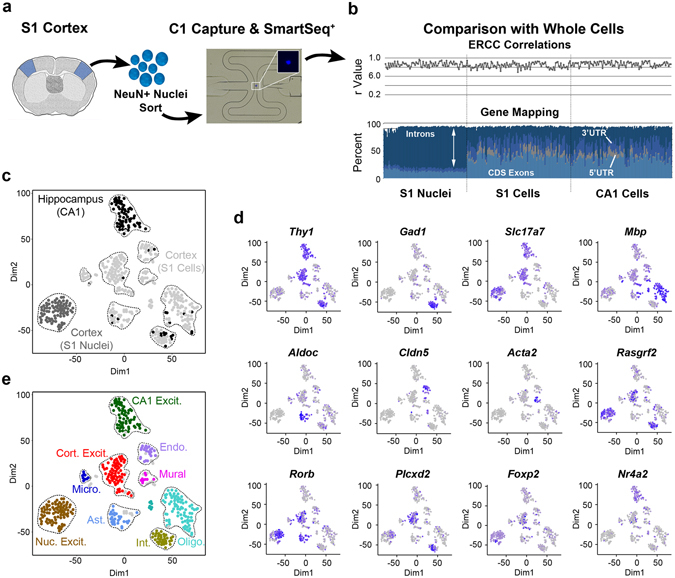
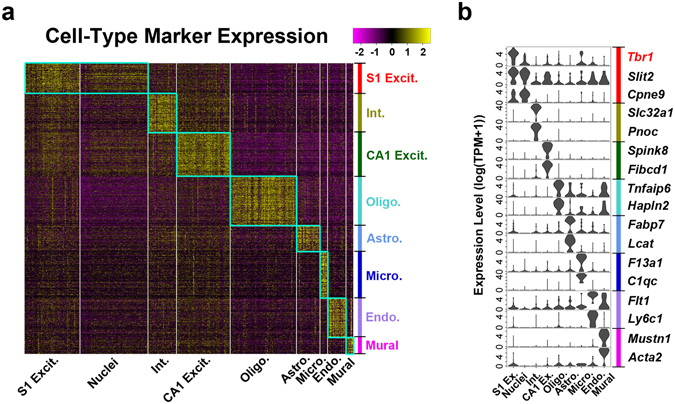
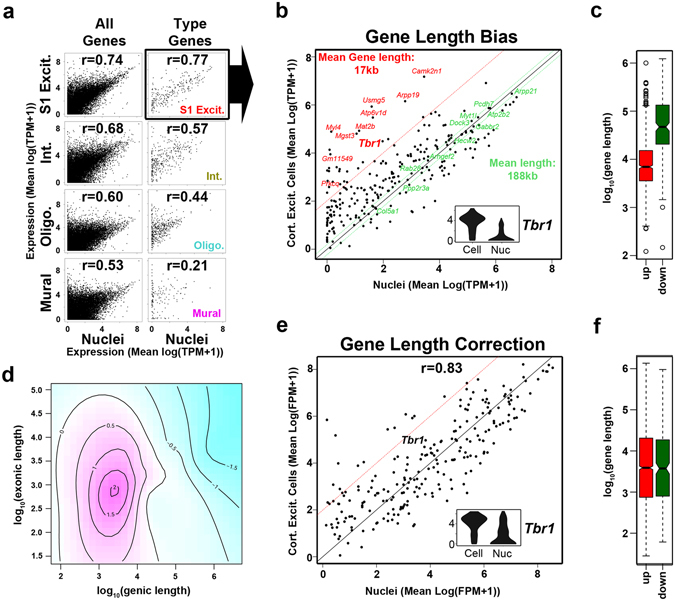
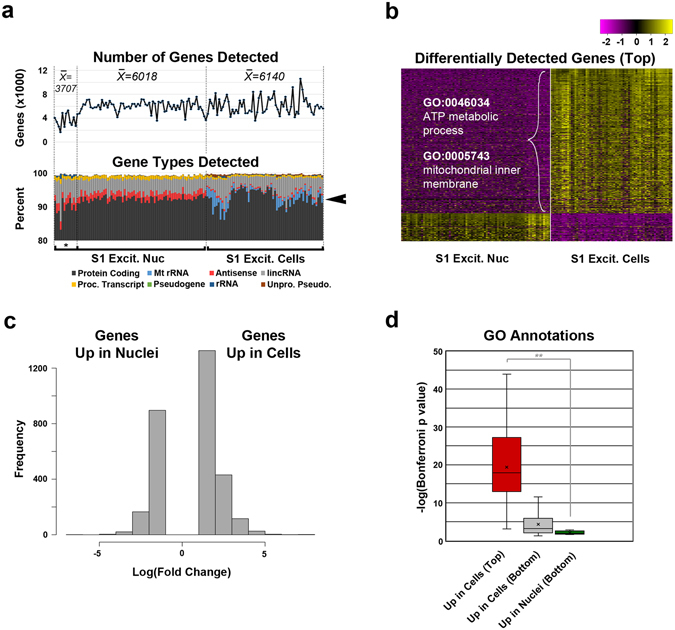
Significant heterogeneities in gene expression among individual cells are typically interrogated using single whole cell approaches. However, tissues that have highly interconnected processes, such as in the brain, present unique challenges. Single-nucleus RNA sequencing (SNS) has emerged as an alternative method of assessing a cell's transcriptome through the use of isolated nuclei. However, studies directly comparing expression data between nuclei and whole cells are lacking. Here, we have characterized nuclear and whole cell transcriptomes in mouse single neurons and provided a normalization strategy to reduce method-specific differences related to the length of genic regions. We confirmed a high concordance between nuclear and whole cell transcriptomes in the expression of cell type and metabolic modeling markers, but less so for a subset of genes associated with mitochondrial respiration. Therefore, our results indicate that single-nucleus transcriptome sequencing provides an effective means to profile cell type expression dynamics in previously inaccessible tissues.
Overview
The claims and statistics of this paper haven’t been checked yet.
Free: it reads the open-access text and checks the first 5 claims that cite a source we can check. Create a free account to check every claim.
Integrity signals
Registry
Cites
Statistics
Figures
Verification
Claims the paper makes
The claims and statistics of this paper haven’t been checked yet.
Free: it reads the open-access text and checks the first 5 claims that cite a source we can check. Create a free account to check every claim.
Claims other papers make about this one
Each is checked against this paper’s own text: does it say what the citing paper says it does?
The source backs part of the claim, not all of it — or backs it for a different population, condition or comparison.
In the citing paper
“For example, conventional cell dissociation protocols often compromise the integrity of neurons through mechanical shearing or induce the activation of glia[6, 8–12].”
From Comparative analysis of nuclei isolation methods for brain single-nucleus RNA sequencing (2026) · cites this paper as [11]
Experimental — accuracy not yet measuredThe cited source says what the claim attributes to it.
In the citing paper
“Despite this, snRNA-seq provides robust markers of brain cell types (Ding et al., 2020; Lake et al., 2017) with resolution comparable to scRNA-seq (Bakken et al., 2018; Yao et al., 2020a).”
From Single-Cell Sequencing of Brain Cell Transcriptomes and Epigenomes (2021) · cites this paper as Lake et al., 2017
Self-check
Percentages, sums and reported differences re-computed from the paper’s own numbers.
The self-check needs the paper’s full text.
Citations
Cites
Highly parallel genome-wide expression profiling of individual cells using nanoliter droplets.
Macosko, E. Z., Basu, A., Satija, R., Nemesh, J., Shekhar, K., Goldman, M., Tirosh, I., Bialas, A. R., Kamitaki, N., Martersteck, E. M., et al. (2015) · Cell · doi:10.1016/j.cell.2015.05.002 · Cited by 7,110
Cell types in the mouse cortex and hippocampus revealed by single-cell RNA-seq
Zeisel, A., Muñoz-Manchado, A. B., Codeluppi, S., Lönnerberg, P., La Manno, G., Juréus, A., Marques, S., Munguba, H., He, L., Betsholtz, C., et al. (2015) · Science · doi:10.1126/science.aaa1934 · Cited by 3,124
Self-citationThe Subread aligner: fast, accurate and scalable read mapping by seed-and-vote
Liao, Y., Smyth, G. K., & Shi, W. (2013) · Nucleic Acids Research · doi:10.1093/nar/gkt214 · Cited by 3,064
Adult mouse cortical cell taxonomy revealed by single cell transcriptomics
Tasic, B., Menon, V., Nguyen, T. N., Kim, T. K., Jarsky, T., Yao, Z., Levi, B., Gray, L. T., Sorensen, S. A., Dolbeare, T., et al. (2016) · Nature Neuroscience · doi:10.1038/nn.4216 · Cited by 1,714
Global reconstruction of the human metabolic network based on genomic and bibliomic data
Duarte, N. C., Becker, S. A., Jamshidi, N., Thiele, I., Mo, M. L., Vo, T. D., Srivas, R., & Palsson, B. Ø. (2007) · Proceedings of the National Academy of Sciences · doi:10.1073/pnas.0610772104 · Cited by 1,374
Neuronal subtypes and diversity revealed by single-nucleus RNA sequencing of the human brain
Lake, B. B., Ai, R., Kaeser, G. E., Salathia, N. S., Yung, Y. C., Liu, R., Wildberg, A., Gao, D., Fung, H.-L., Chen, S., et al. (2016) · Science · doi:10.1126/science.aaf1204 · Cited by 957
Self-citationPollen, A. A., Nowakowski, T. J., Shuga, J., Wang, X., Leyrat, A. A., Lui, J. H., Li, N., Szpankowski, L., Fowler, B., Chen, P., et al. (2014) · Nature Biotechnology · doi:10.1038/nbt.2967 · Cited by 920
Tbr1 regulates differentiation of the preplate and layer 6
Hevner, R. F., Shi, L., Justice, N., Hsueh, Y.-P., Sheng, M., Smiga, S., Bulfone, A., Goffinet, A. M., Campagnoni, A. T., & Rubenstein, J. L. R. (2001) · Neuron · doi:10.1016/s0896-6273(01)00211-2 · Cited by 857
Div-Seq: Single-nucleus RNA-Seq reveals dynamics of rare adult newborn neurons
Habib, N., Li, Y., Heidenreich, M., Swiech, L., Avraham-Davidi, I., Trombetta, J. J., Hession, C., Zhang, F., & Regev, A. (2016) · Science · doi:10.1126/science.aad7038 · Cited by 601
Somatic mutation in single human neurons tracks developmental and transcriptional history
Lodato, M. A., Woodworth, M. B., Lee, S., Evrony, G. D., Mehta, B. K., Karger, A., Lee, S., Chittenden, T. W., D’Gama, A. M., Cai, X., et al. (2015) · Science · doi:10.1126/science.aab1785 · Cited by 570
Cited by
Items 101–200 of 280
Illuminating Neural Circuits in Alzheimer’s Disease
Yang, Y., & Wang, J. (2021) · Neuroscience Bulletin · doi:10.1007/s12264-021-00716-6 · Cited by 27
Research progress in metamaterials and metasurfaces based on the phase change material Ge2Sb2Te5
Tao, W., Wu, Y. M., Zhao, F., Li, C., Fang, B., Jing, X. M., & Yu, M. (2024) · Optics & Laser Technology · doi:10.1016/j.optlastec.2024.111064 · Cited by 23
Han, P., Li, S., Yao, K., Geng, H., Liu, J., Wang, Y., & Lin, J. (2022) · Environmental and Experimental Botany · doi:10.1016/j.envexpbot.2022.105031 · Cited by 22
Alveolar repair following LPS-induced injury requires cell-ECM interactions
Sucre, J. M. S., Bock, F. M., Negretti, N. M., Benjamin, J. T., Gulleman, P. M., Dong, X., Ferguson, K. T., Jetter, C. S., Han, W., Liu, Y., et al. (2023) · JCI Insight · doi:10.1172/jci.insight.167211 · Cited by 24
“Despite differential AT1 cell number difference in injured β1 AT2-KO lungs by histology, AT1 cells were isolated in low abundance in all 4 groups, uninjured and LPS-treated β1 AT2-KO and β1 fl/fl lungs, likely due to cell loss by FACS because of their relatively fragile structure (24).”
Tang, L., Huang, Z., Mei, H., & Hu, Y. (2023) · Military Medical Research · doi:10.1186/s40779-023-00486-4 · Cited by 27
Methods for isolation and transcriptional profiling of individual cells from the human heart
Pimpalwar, N., Czuba, T., Smith, M. L., Nilsson, J., Gidlöf, O., & Smith, J. G. (2020) · Heliyon · doi:10.1016/j.heliyon.2020.e05810 · Cited by 26
Dissecting the mechanisms of MASLD fibrosis in the era of single-cell and spatial omics
Colella, F., Henderson, N. C., & Ramachandran, P. (2025) · Journal of Clinical Investigation · doi:10.1172/jci186421 · Cited by 31
Brain-wide alterations revealed by spatial transcriptomics and proteomics in COVID-19 infection
Zhang, T., Li, Y., Pan, L., Sha, J., Bailey, M., Faure-Kumar, E., Williams, C. K., Wohlschlegel, J., Magaki, S., Niu, C., et al. (2024) · Nature Aging · doi:10.1038/s43587-024-00730-z · Cited by 20
“Consistent with snRNA-seq studies showing NPR1 expression in astrocytes, deep-layer neurons and endothelial cells 40,75,76 , we observed increased NRP1 immunoreactivity in those cells in patients with COVID-19.”
Palovaara, J., & Weijers, D. (2018) · Plant Reproduction · doi:10.1007/s00497-018-0347-0 · Cited by 20
The use of single-cell RNA-seq to study heterogeneity at varying levels of virus–host interactions
Swaminath, S., & Russell, A. B. (2024) · PLoS Pathogens · doi:10.1371/journal.ppat.1011898 · Cited by 22
Single-Cell Splicing Isoform Atlas of the Adult Human Heart and Heart Failure
Pan, T., Lu, L., Youker, K. A., Shiau, C.-K., Wang, M., Lin, H., Nguyen, A., He, Y., Tong, E., Zhu, P., et al. (2025) · Circulation · doi:10.1161/circulationaha.125.074959 · Cited by 27
Multi-omics profiling of single nuclei from frozen archived postmortem human pituitary tissue
Mendelev, N., Zamojski, M., Amper, M. A. S., Cheng, W. S., Pinças, H., Nair, V. D., Zaslavsky, E., Sealfon, S. C., & Ruf-Zamojski, F. M. (2022) · STAR Protocols · doi:10.1016/j.xpro.2022.101446 · Cited by 19
Decoding brain memory formation by single-cell RNA sequencing
Sardoo, A. M., Zhang, S., Ferraro, T. N., Keck, T. M., & Chen, Y. (2022) · Briefings in Bioinformatics · doi:10.1093/bib/bbac412 · Cited by 21
“Although nuclear transcripts comprise typically less than 50% of all the RNA in the cell [54], snRNA-seq can offer sufficient and robust markers to define broad cell classes in human and mouse brains [55, 61, 62] with resolution comparable to scRNA-seq [54, 61, 63].”
BackgroundThe Utility of Spatial Transcriptomics for Solid Organ Transplantation
Li, J. S. Y., Raghubar, A. M., Matigian, N., Ng, M. S. Y., Rogers, N. M., & Mallett, A. J. (2023) · Transplantation · doi:10.1097/tp.0000000000004466 · Cited by 22
Unraveling Psychiatric Disorders through Neural Single-Cell Transcriptomics Approaches
Chehimi, S. N., Crist, R. C., & Reiner, B. C. (2023) · Genes · doi:10.3390/genes14030771 · Cited by 22
“Although nuclei datasets might miss specific transcripts, such as dendritically transported transcripts in neurons, literature evidence supports snRNA-seq broadly recapitulating the results of single-cell studies [8,9].”
ResultKim, B. I., Kim, D., Schulmann, A., Patel, Y., Caban-Rivera, C., Kim, P., Jambhale, A. D., Johnson, K. R., Feng, N., Xu, Q., et al. (2023) · Journal of Neuroscience · doi:10.1523/jneurosci.0830-22.2023 · Cited by 23
Kidney and Organoid Single Cell Transcriptomics: The End of the Beginning
Wilson, P. C., & Humphreys, B. (2019) · Pediatric nephrology (Berlin, West) · doi:10.1007/s00467-018-4177-y · Cited by 23
“Newer sample preparation methods which can be performed entirely on ice, like singlenucleus RNA-seq (snRNA-seq) [32], have partially Pediatr Nephrol (2020) 35:191–197 194”
Applying single‐cell technologies to clinical pathology: progress in nephropathology
Stewart, B. J., & Clatworthy, M. R. (2020) · The Journal of Pathology · doi:10.1002/path.5417 · Cited by 20
“Although snRNAseq captures fewer transcripts, it avoids tissue dissociation–associated cell stress responses that may generate transcriptional artefacts, and loss of information due to a failure of enzymatic digestion to recover certain cell types [58].”
BackgroundRenaut, S., Armero, V. E. S., Boudreau, D. K., Gaudreault, N., Desmeules, P., Thériault, S., Mathieu, P., Joubert, P., & Bossé, Y. (2024) · PLoS Genetics · doi:10.1371/journal.pgen.1011301 · Cited by 21
“The numbers of positive cells were determined using the automated cell detection tool and then visually validated by a pathologist (P.J.) for each marker.”
BackgroundMethodCellular Recruitment by Podocyte-Derived Pro-migratory Factors in Assembly of the Human Renal Filter
Kim, A. D., Lake, B. B., Chen, S., Wu, Y., Guo, J., Parvez, R. K., Tran, T., Thornton, M. E., Grubbs, B. H., McMahon, J. A., et al. (2019) · iScience · doi:10.1016/j.isci.2019.09.029 · Cited by 19
27‐Hydroxycholesterol regulates human SLC22A12 gene expression through estrogen receptor action
Matsubayashi, M., Sakaguchi, Y. M., Sahara, Y., Nanaura, H., Kikuchi, S., Asghari, A., Bui, L., Kobashigawa, S., Nakanishi, M., Nagata, R., et al. (2020) · The FASEB Journal · doi:10.1096/fj.202002077r · Cited by 20
SnRNA sequencing defines signaling by RBC-derived extracellular vesicles in the murine heart
Valkov, N., Das, A., Tucker, N. R., Li, G., Salvador, A. M., Chaffin, M. D., de Oliveira, G. P., Kur, I.-M., Gokulnath, P., Ziegler, O., et al. (2021) · Life Science Alliance · doi:10.26508/lsa.202101048 · Cited by 21
Chamberlin, J., Lee, Y., Marth, G., & Quinlan, A. R. (2024) · Genome Research · doi:10.1101/gr.278253.123 · Cited by 20
“Early publications found that the lower transcript yield from nuclei could be mitigated by incorporating these intronic reads during gene expression quantification (Lake et al. 2017, 2018; Bakken et al. 2018; Wu et al. 2019; Selewa et al. 2020).”
BackgroundZhang, C., Gou, X., Lai, G., Li, K., Zhu, X., Liu, N., Kuang, Y., Ren, K., Xie, Y., Xu, Y., et al. (2024) · Cancer Letters · doi:10.1016/j.canlet.2024.217259 · Cited by 20
Single cell RNA-sequencing: replicability of cell types
Crow, M., & Gillis, J. (2019) · Current Opinion in Neurobiology · doi:10.1016/j.conb.2018.12.002 · Cited by 18
PBX/Knotted 1 homeobox-2 (PKNOX2) is a novel regulator of myocardial fibrosis
Chen, L., Li, H., Liu, X., Zhang, N., Wang, K., Shi, A., Gao, H., Akdiş, D., Saguner, A. M., Xu, X., et al. (2024) · Signal Transduction and Targeted Therapy · doi:10.1038/s41392-024-01804-5 · Cited by 17
“43,45,46 With the optimized protocols and analysis pipelines, the number of detected genes in datasets compiled with snRNA-seq was comparable or even superior to that obtained by scRNA-seq.”
ResultAmamoto, R., Zuccaro, E., Curry, N. C., Khurana, S., Chen, H.-H., Cepko, C. L., & Arlotta, P. (2019) · Nucleic Acids Research · doi:10.1093/nar/gkz968 · Cited by 20
Shafa, M., Aravindh, S. A., Hedhili, M. N., Mahmoud, S. T., Pan, Y., Ng, T. K., Ooi, B. S., & Najar, A. (2020) · International Journal of Hydrogen Energy · doi:10.1016/j.ijhydene.2020.10.275 · Cited by 16
Gorin, G., Chari, T., Carilli, M., Vastola, J. J., & Pachter, L. S. (2022) · bioRxiv (Cold Spring Harbor Laboratory) · doi:10.1101/2022.06.11.495771 · Cited by 16
Single‐Nucleus RNA‐Sequencing in Brain Tissue
Waag, R., & Bohacek, J. (2023) · Current Protocols · doi:10.1002/cpz1.919 · Cited by 15
“The use of nuclei instead of whole cells constitutes a valuable alternative that circum-vents several of the drawbacks of single-cell protocols (Grindberg et al., 2013; Lake et al., 2017).”
BackgroundNeural cell diversity in the light of single-cell transcriptomics
Moya, S. M. F., Ganesh, A. J., & Plass, M. (2023) · Transcription · doi:10.1080/21541264.2023.2295044 · Cited by 14
“Yet, cell nuclei contain less RNA and have significant biases toward particular RNA species that are enriched in nuclei such as pre-mRNAs [17,19], which makes the direct comparison of snRNA-seq data with scRNA-seq data harder.”
BackgroundMapping Human Uterine Disorders Through Single-Cell Transcriptomics
Boldu-Fernández, S., Lliberos, C., Simón, C., & Mas, A. (2025) · Cells · doi:10.3390/cells14030156 · Cited by 20
“…data with location within the tissue architecture, revealing cellular interactions and tissue organization [19] ScRNA-seq experiments involve sample dissociation, individual cell isolation (using techniques such as microfluidics), and library construction for sequencing (Figure 1B) [19–22].”
From Transcriptomics to Treatment in Inherited Optic Neuropathies
Gilhooley, M. J., Owen, N., Moosajee, M., & Yu‐Wai‐Man, P. (2021) · Genes · doi:10.3390/genes12020147 · Cited by 18
Davey, K., Wong, D., Konopacki, F. A., Kwa, E., Ly, T., Fiegler, H., & Sibley, C. R. (2021) · Scientific Reports · doi:10.1038/s41598-021-86070-z · Cited by 20
Sharq, A versatile preprocessing and QC pipeline for Single Cell RNA-seqPreprint
Candelli, T., Lijnzaad, P., Muraro, M. J., Kerstens, H. H. D., Kemmeren, P., van Oudenaarden, A., Margaritis, T., & Holstege, F. C. P. (2018) · bioRxiv (Cold Spring Harbor Laboratory) · doi:10.1101/250811 · Cited by 16
“This scheme can be adjusted, for instance if additional types are required for features representing pre-mRNA [18, 19].”
BackgroundA robust method to isolate Drosophila fat body nuclei for transcriptomic analysis
Gupta, V., & Lazzaro, B. P. (2021) · Fly · doi:10.1080/19336934.2021.1978776 · Cited by 14
Single-cell transcriptomics dissecting the development and evolution of nervous system in insects
Liu, W., & Li, Q. (2024) · Current Opinion in Insect Science · doi:10.1016/j.cois.2024.101201 · Cited by 15
Li, Z., Gu, H., Xu, X., Tian, Y., Huang, X., & Du, Y. (2023) · Frontiers in Immunology · doi:10.3389/fimmu.2023.1288027 · Cited by 16
New insights empowered by single-cell sequencing: From neural crest to enteric nervous system
Li, Z., & Ngan, E. (2022) · Computational and Structural Biotechnology Journal · doi:10.1016/j.csbj.2022.05.025 · Cited by 11
Single-cell transcriptomics: A new tool for studying diabetic kidney disease
Mao, Z., Gao, Z.-X., Liu, Y., Liu, D., Liu, Z.-S., & Wu, P. (2023) · Frontiers in Physiology · doi:10.3389/fphys.2022.1053850 · Cited by 15
Schneeberger, S., Kim, S. J., Eede, P., Boltengagen, A., Braeuning, C., Andreadou, M., Becher, B., Karaiskos, N., Kocks, C., Rajewsky, N., et al. (2021) · bioRxiv (Cold Spring Harbor Laboratory) · doi:10.1101/2021.04.25.441313 · Cited by 11
Ernst, K., Okonechnikov, K., Bageritz, J., Mallm, J., Wittmann, A., Maaß, K. K., Leible, S., Boutros, M., Pfister, S. M., Zuckermann, M., et al. (2020) · bioRxiv (Cold Spring Harbor Laboratory) · doi:10.1101/2020.10.23.351809 · Cited by 11
Adewale, Q., Khan, A. F., Bennett, D. A., & Iturria‐Medina, Y. (2024) · Scientific Reports · doi:10.1038/s41598-024-57918-x · Cited by 13
“Compared to single-cell sequencing, snRNA-seq is more amenable to transcriptomic profiling of postmortem samples because isolated nuclei are intact in frozen tissues 29 .”
BackgroundSingle-Cell Transcriptomics Identifies Pituitary Gland Changes in Diet-Induced Obesity in Male Mice
Ruggiero-Ruff, R. E., Le, B. H., Villa, P. A., Lainez, N. M., Athul, S. W., Das, P., Ellsworth, B. S., & Coss, D. (2023) · Endocrinology · doi:10.1210/endocr/bqad196 · Cited by 10
It Is Not Just Fat: Dissecting the Heterogeneity of Adipose Tissue Function
Efthymiou, V., & Patti, M. (2022) · Current Diabetes Reports · doi:10.1007/s11892-022-01455-2 · Cited by 10
Systematic bias assessment in solid tissue 10x scRNA-seq workflowsPreprint
Denisenko, E., Guo, B. B., Jones, M., Hou, R., de Kock, L., Lassmann, T., Poppe, D., Clément, O., Simmons, R. K., Lister, R., et al. (2020) · UWA Profiles and Research Repository (University of Western Australia) · Cited by 10
Single nucleus sequencing fails to detect microglial activation in human tissue
Thrupp, N., Frigerio, C. S., Wolfs, L., Skene, N. G., Poovathingal, S., Fourne, Y., Matthews, P. M., Theys, T., Mancuso, R., de Strooper, B., et al. (2020) · bioRxiv (Cold Spring Harbor Laboratory) · doi:10.1101/2020.04.13.035386 · Cited by 9
“As demonstrated in previous studies (Bakken et al., 2018; Gerrits et al., 2019; Habib et al., 2017; Lake et al., 2017), the majority of genes showed similar normalized abundance levels in cells and nuclei, with 98.6% of genes falling along the diagonal in Fig.”
BackgroundResultInfluentialIanevski, A., Cámara-Quílez, M., Wang, W., Suganthan, R., Hildrestrand, G. A., Grini, J. V., Døskeland, D. S., Ye, J., & Bjørås, M. (2025) · Acta Neuropathologica Communications · doi:10.1186/s40478-025-02062-4 · Cited by 12
“Unlike single-cell RNA sequencing (scRNA-seq), which requires dissociating intact cells—a process particularly challenging for neurons—snRNA-seq isolates nuclei, making it suitable for profiling hard-to-dissociate fresh/frozen tissues as well as cryopreserved clinical samples [4, 38, 63].”
Transcriptomic Analysis of the Human Habenula in Schizophrenia
Yalcinbas, E. A., Ajanaku, B., Nelson, E. D., Garcia-Flores, R., Eagles, N. J., Montgomery, K. D., Stolz, J. M., Wu, J. H., Divecha, H. R., Chandra, A., et al. (2025) · American Journal of Psychiatry · doi:10.1176/appi.ajp.20240776 · Cited by 14
Ikeda-Yorifuji, I., Tsujioka, H., Sakata, Y., & Yamashita, T. (2022) · Neuroscience Research · doi:10.1016/j.neures.2022.04.006 · Cited by 11
New Technologies to Study Functional Genomics of Age-Related Macular Degeneration
Nguyen, T., Urrutia-Cabrera, D., Liou, R. H.-C., Luu, C. D., Guymer, R. H., & Wong, R. C. B. (2021) · Frontiers in Cell and Developmental Biology · doi:10.3389/fcell.2020.604220 · Cited by 15
“As observed in a previous study comparing nuclear and whole cell transcriptome in mouse neurons at single cell levels, a subset of genes associated with mitochondrial respiration was almost exclusively detected in the whole cell transcriptome (Lake et al., 2017).”
ResultSingle-Cell RNA Sequencing of Ovarian Cancer: Promises and Challenges
Talukdar, S., Chang, Z., Winterhoff, B. J. N., & Starr, T. K. (2021) · Advances in experimental medicine and biology · doi:10.1007/978-3-030-73359-9_7 · Cited by 9
Standardization and Interpretation of RNA-sequencing for Transplantation
Thareja, G., Suryawanshi, H., Luo, X., & Muthukumar, T. (2023) · Transplantation · doi:10.1097/tp.0000000000004558 · Cited by 12
Huuki-Myers, L. A., Montgomery, K. D., Kwon, S., Page, S. C., Hicks, S. C., Maynard, K. R., & Collado‐Torres, L. (2023) · Genome biology · doi:10.1186/s13059-023-03066-w · Cited by 11
“While our analysis was focused only in the nucleus, previous work suggests that gene-level expression between the nucleus and cytoplasmic compartments are comparable [18, 41].”
MethodComparative analysis of nuclei isolation methods for brain single-nucleus RNA sequencing
Kersey, H. N., Acri, D. J., Dabin, L. C., Hartigan, K. A., Mustaklem, R., Park, J. H., & Kim, J. (2026) · Cell Reports Methods · doi:10.1016/j.crmeth.2026.101337 · Cited by 15
Chen, J., Zhu, X., Yang, F., Liu, Y., Ba, H., Huang, P., Wang, H., Bian, Y., Li, C., & Zhang, S. (2025) · International Journal of Molecular Sciences · doi:10.3390/ijms26073135 · Cited by 9
“Recently developed single-cell RNA sequencing (scRNA-seq) [22] and single-nucleus RNA sequencing (snRNA-seq) [23] provide solutions to the challenge of determining whether subtle molecular differences observed in tissue homogenates are due to disease states or variations in cell composition between…”
Loh, L. S., Hanly, J. J., Carter, A., Chatterjee, M., Tsimba, M., Shodja, D. N., Livraghi, L., Day, C. R., Reed, R. D., McMillan, W. O., et al. (2025) · PLoS Biology · doi:10.1371/journal.pbio.3003233 · Cited by 9
The industrial genomic revolution: A new era in neuroimmunology
Shalita, R., & Amit, I. (2022) · Neuron · doi:10.1016/j.neuron.2022.09.030 · Cited by 10
Single-cell RNA Sequencing: In-depth Decoding of Heart Biology and Cardiovascular Diseases
Chen, Z., Liang, W., Duru, F., & Chen, L. (2020) · Current Genomics · doi:10.2174/1389202921999200604123914 · Cited by 10
“Moreover, snRNA-seq has exhibited substantial advantages, including reduced dissociation bias and elimination of dissociationinduced transcriptional stress responses [44, 45].”
BackgroundMethodDeleanu, R., Ceafalan, L. C., & Dricu, A. (2021) · International Journal of Molecular Sciences · doi:10.3390/ijms222413211 · Cited by 9
“These tools can now overcome some of the previous difficulties associated with the scarcity of human brain tissue and can be applied to relatively small neurosurgical or postmortem samples [10,11].”
BackgroundAlmeida, D. M., & Turecki, G. (2022) · Methods · doi:10.1016/j.ymeth.2022.08.013 · Cited by 9
Reading the heart at single-cell resolution
Zhou, B., & Wang, L. (2020) · Journal of Molecular and Cellular Cardiology · doi:10.1016/j.yjmcc.2020.08.010 · Cited by 9
Philtjens, S., Turnbull, M. T., Thedy, B. P., Moon, Y., & Kim, J. (2020) · doi:10.1101/2020.04.27.064881 · Cited by 8
“583 Lake, B. B., S. Codeluppi, Y. C. Yung, D. Gao, J. Chun, P. V. Kharchenko, S. Linnarsson and K. 584 Zhang (2017).”
scBoolSeq: Linking scRNA-seq statistics and Boolean dynamics
López, G. M., Calzone, L., Zinovyev, A. Y., & Paulevé, L. (2024) · PLoS Computational Biology · doi:10.1371/journal.pcbi.1011620 · Cited by 12
“We studied 5 experimental scRNA-seq datasets of the literature on mouse developing retina (GSE122466, [55]); mouse hematopoiesis (GSE81682, [4]); mouse cortex and hippocampus (GSE60361, [58, 59]); human macrophages during efferocytosis (GSE156234; [60]) and ageing human skin (GSE130973, [61]).”
BackgroundPressl, C., Baffuto, M., Darnell, P., Wang, C., Carroll, T. S., Heintz, N., & Mätlik, K. (2024) · Current Protocols · doi:10.1002/cpz1.70067 · Cited by 7
“Gene expression profiling can then be carried out on these isolated nuclei or populations of nuclei by turning intranuclear RNA into sequencing libraries and inferring the presence of individual transcripts from high-throughput sequencing data (Lake et al., 2017; Xu et al., 2018).”
Qin, Z., & Bäck, M. (2025) · Cardiovascular Research · doi:10.1093/cvr/cvaf255 · Cited by 11
Zhang, Y., Tan, J., Yang, K., Fan, W., Yu, B., & Shi, W. (2023) · Journal of Neuroinflammation · doi:10.1186/s12974-023-02831-9 · Cited by 7
“On the other hand, accumulating evidence has shown concordance between snRNA-seq data and scRNA-seq, despite the former solely capturing nuclear mRNA [1, 3, 4].”
BackgroundNance, R. L., Wang, X., Sandey, M., Matz, B. M., Thomas, A., & Smith, B. F. (2023) · International Journal of Molecular Sciences · doi:10.3390/ijms242216365 · Cited by 9
Informing disease modelling with brain-relevant functional genomic annotations
Reynolds, R. H., Hardy, J., Ryten, M., & Taliun, S. A. G. (2019) · Brain · doi:10.1093/brain/awz295 · Cited by 8
Price, K. M., Wigg, K. G., Nigam, A., Feng, Y., Blokland, K., Wilkinson, M., Kerr, E. N., Guger, S., Lovett, M. W., Strug, L. J., et al. (2023) · Molecular Psychiatry · doi:10.1038/s41380-023-01970-y · Cited by 8
“Previously, the aforementioned studies used human adult datasets (Habib et al. 2017[76], and Lake et al., 2017/2018 [73, 77]), LDSC, and specific gene expression.”
BackgroundInfluentialWebb, S., & Haniffa, M. A. (2023) · European Journal of Immunology · doi:10.1002/eji.202250222 · Cited by 7
“…combined nuclear RNA and chromatin accessibility profiling such as scATAC-seq [74] hold promise to uncover the role of genomic structure in immune lineage priming, although integration of these datasets with cytoplasmic RNA counts in scRNA-seq datasets, unsurprisingly, poses some challenges [75].”
BackgroundThe Human Lung Cell Atlas: a transformational resource for cells of the respiratory system
Meyer, K. B., Wilbrey-Clark, A., Nawijn, M. C., & Teichmann, S. A. (2021) · European Respiratory Society eBooks · doi:10.1183/2312508x.10010920 · Cited by 8
Research Progress of Single-Cell Transcriptome Sequencing Technology in Plants
Bian, J., Zhuang, Z., Ji, X., Tang, R., Li, J., Chen, J., Li, Z., & Peng, Y. (2024) · Agronomy · doi:10.3390/agronomy14112530 · Cited by 7
Luan, H., Gao, J., Li, Y., Qu, X., Yang, J., Qian, X., Xu, M. J., Sun, M., Xu, X. J., Shen, H., et al. (2025) · Journal of Plant Research · doi:10.1007/s10265-025-01616-w · Cited by 8
“Transcriptome sequencing has emerged as a powerful method for investigating the gene expression dynamics, enabling the identification of potential participants in the stress response on a genome-wide level (Lake et al. 2017).”
Transcriptomic Profile of the Mouse Postnatal Liver Development by Single-Nucleus RNA Sequencing
Xu, J., Hao, S., Shi, Q., Deng, Q., Jiang, Y., Guo, P., Yuan, Y., Shi, X., Shangguan, S., Zheng, H., et al. (2022) · Frontiers in Cell and Developmental Biology · doi:10.3389/fcell.2022.833392 · Cited by 7
Corticogenesis across species at single‐cell resolution
Park, S. H. E., Ortiz, A. K., & Konopka, G. (2022) · Developmental Neurobiology · doi:10.1002/dneu.22896 · Cited by 8
“Contrary to the well-accepted dogma that cortical interneurons arise from the ganglionic eminences, it has been suggested that some interneurons in the human neocortex may arise from the cortical sub-ventricular zone (SVZ) (Alzu’bi et al., 2017; Letinic et al., 2002; Zecevic et al., 2011).”
BackgroundBrandstadter, J. D., Martin, A. D., Lütge, M., Ferreira, A. P. A., Gaudette, B. T., Stanossek, Y., Wang, S., Gonzalez, M. V., Camiolo, E., Wertheim, G. B. W., et al. (2023) · European Journal of Immunology · doi:10.1002/eji.202250362 · Cited by 8
Nuclei Isolation from Whole Tissue using a Detergent and Enzyme-Free Method
Eski, S. E., Dubois, C., & Singh, S. P. (2020) · Journal of Visualized Experiments · doi:10.3791/61471 · Cited by 7
Noonan, M. L., Muto, Y., Yoshimura, Y., Leckie-Harre, A., Wu, H., Kalinichenko, V. V., Humphreys, B. D., & Chang-Panesso, M. (2024) · JCI Insight · doi:10.1172/jci.insight.175416 · Cited by 5
Qiao, Y., Cheng, T., Miao, Z., Cui, Y., & Tu, J. (2024) · Small Methods · doi:10.1002/smtd.202400789 · Cited by 7
Zhao, Z., Huang, S., Feng, Q., Li, P., Zhao, Q., & Wang, Z. (2025) · International Journal of Molecular Sciences · doi:10.3390/ijms26052265 · Cited by 5
“Furthermore, comparisons between nuclear and whole-cell transcriptomes have demonstrated a high degree of concordance between the two methods in identifying cell types and metabolic markers [23,24].”
Ernst, K., Okonechnikov, K., Bageritz, J., Perera, A. A., Mallm, J., Wittmann, A., Maaß, K. K., Leible, S., Boutros, M., Pfister, S. M., et al. (2025) · Scientific Reports · doi:10.1038/s41598-025-97053-9 · Cited by 21
“Our study supports previous findings 10,21,54 that nuclei from frozen tissues are a robust input material for single-cell omics analyses, thereby extending the range of suitable amenable to these high-resolution profiling techniques.”
Diagnosing and treating lung disease at the cellular level
Postow, L., Noel, P. J., Lin, S. Q., Zhou, G., Fessel, J. P., & Kiley, J. P. (2020) · American Journal of Physiology-Lung Cellular and Molecular Physiology · doi:10.1152/ajplung.00372.2020 · Cited by 5
Glomerular Kidney Diseases in the Single-Cell Era
Latt, K. Z., Heymann, J. A. W., Yoshida, T., & Kopp, J. B. (2021) · Frontiers in Medicine · doi:10.3389/fmed.2021.761996 · Cited by 5
Sequencing the Human Brain at Single-Cell Resolution
Maitra, M., Nagy, C., & Turecki, G. (2019) · Current Behavioral Neuroscience Reports · doi:10.1007/s40473-019-00192-3 · Cited by 7
Raghubar, A. M., Pham, D. T., Tan, X., Grice, L. F., Crawford, J., Lam, P. Y., Andersen, S. B., Yoon, S., Ng, M. S. Y., Teoh, S. M., et al. (2020) · bioRxiv (Cold Spring Harbor Laboratory) · doi:10.1101/2020.09.29.317917 · Cited by 5
Rodrigues, P. M., & Bañales, J. M. (2020) · Cellular and Molecular Gastroenterology and Hepatology · doi:10.1016/j.jcmgh.2020.09.005 · Cited by 6
Hes, C., Tomlinson, A. J., Michielsen, L., Murdoch, H. J., Soltani, F., Kokoeva, M. V., & Sabatini, P. V. (2025) · eLife · doi:10.7554/elife.106217 · Cited by 9
“Although this does not appear to impact gene expression analysis for neurons in the current pipelines like the ones we used for our mouse data ( Lake et al., 2017 ), it is possible that some biological features such as microglial activation state are not fully recovered using nuclear RNA ( Thrupp…”
Kotah, J. M., Rust, T., van Weering, H. R. J., Bosma, J., Woudstra, A. L., Kooistra, S. M., & Eggen, B. J. L. (2025) · Communications Biology · doi:10.1038/s42003-025-08518-6 · Cited by 6
Lan, C., Tang, X., & Liu, C. (2025) · Briefings in Functional Genomics · doi:10.1093/bfgp/elaf010 · Cited by 6
Integrating single-cell and single-nucleus datasets improves bulk RNA-seq deconvolution
Ivich, A., & Greene, C. S. (2026) · Cell Reports Methods · doi:10.1016/j.crmeth.2026.101346 · Cited by 4
“We hypothesize that this is because nuclear RNA tends to be enriched for unspliced, nascent transcripts or ‘‘housekeeping’’ gene programs, 37 which typically have low cell-to-cell or donor-to-donor variability, making a donor-to-donor comparison unexpectedly favor an unchanged snRNA-seq transcript.”
Conserved spatial patterning of gene expression in independent lineages of C 4 plants
Sun, T., Bonthala, V. S., Stich, B., Luginbuehl, L. H., & Hibberd, J. M. (2025) · New Phytologist · doi:10.1111/nph.70475 · Cited by 7
Virtual methylome dissection facilitated by single-cell analyses
Yin, L., Luo, Y., Xu, X., Wen, S., Wu, X., Lu, X., & Xie, H. (2019) · Epigenetics & Chromatin · doi:10.1186/s13072-019-0310-9 · Cited by 4
“Considering the fact that inhibitory neurons have been reported as more likely to be depleted during the NeuN sorting procedure [34], our predictions were largely consistent with the known composition of mouse cortical neurons.”
ResultConundrums of choice of ‘normal’ kidney tissue for single cell studies
Jain, S. R. (2023) · Current Opinion in Nephrology & Hypertension · doi:10.1097/mnh.0000000000000875 · Cited by 4
Technologies for Automated Single Cell Isolation
Riba, J., Zimmermann, S., & Koltay, P. (2018) · Springer eBooks · doi:10.1007/978-981-10-4857-9_9-1 · Cited by 5
Tomé-García, J., Nudelman, G., Mussa, Z. M., Caballero, E., Jiang, Y. Y., Beaumont, K. G., Wang, Y., Sebra, R., Akbarian, S., Pinto, D., et al. (2020) · bioRxiv (Cold Spring Harbor Laboratory) · doi:10.1101/2020.12.11.421370 · Cited by 5
Truong, D. D., Lamhamedi-Cherradi, S.-E., Porter, R. W., Krishnan, S., Swaminathan, J., Gibson, A., Lazar, A. J., Livingston, J. A., Gopalakrishnan, V., Gordon, N. B., et al. (2022) · bioRxiv (Cold Spring Harbor Laboratory) · doi:10.1101/2022.01.21.476982 · Cited by 4
Worf, K., Matosin, N., Gerstner, N., Fröhlich, A. S., Koller, A. C., Degenhardt, F., Thiele, H., Rietschel, M., Udawela, M., Scarr, E., et al. (2022) · medRxiv · doi:10.1101/2022.08.09.22278128 · Cited by 4
“More recent developments in single-cell/nucleus RNA-sequencing (sc/snRNA-seq) technologies have enabled the study of cell-type-specific gene expression (Grindberg et al., 2013; Lake et al., 2017).”
BackgroundMethodologies for Sample Multiplexing and Computational Deconvolution in Single‐Cell Sequencing
Gao, Y., Yin, W., Hu, W., & Chen, W. (2025) · Advanced Science · doi:10.1002/advs.202513396 · Cited by 6
Meso-seq for in-depth transcriptomics in ultra-low amounts of FACS-purified neuronal nuclei
Apelblat, D., Roethler, O., Bitan, L., Keren‐Shaul, H., & Spiegel, I. (2022) · Cell Reports Methods · doi:10.1016/j.crmeth.2022.100259 · Cited by 4
“…is due to the fact that the nuclear RNAs analyzed by Meso-seq are still not fully processed and potentially nascent, which is different from cytosolic RNAs that are fully processed and much more abundant (Lake et al., 2017; Cell Reports Methods 2, 100259, August 22, 2022 11 Zaghlool et al., 2021).”
Background
Metadata
- Authors
- Lake, B. B., Codeluppi, S., Yung, Y. C., Gao, D., Chun, J., Kharchenko, P. V., Linnarsson, S., & Zhang, K.
- Affiliations
- University of California San Diego (US)
- Karolinska Institutet (SE)
- Sanford Burnham Prebys Medical Discovery Institute (US)
- Harvard University (US)
- Corresponding author
- Kharchenko, Peter V.
- Linnarsson, Sten
- Zhang, Kun
- ORCID
- Venue
- Scientific Reports
- Published
- 2017-07-20
- Volume
- 7
- Issue
- 1
- Pages
- 6031-6031
- ISSN
- 2045-2322 (ISSN-L)
- PMC
- PMC5519641
- OpenAlex
- W2734414396
- Cited by
- 271
- References
- 29
- Citations by year
- 2026: 16 · 2025: 32 · 2024: 28 · 2023: 38 · 2022: 46 · 2021: 37 · 2020: 39 · 2019: 16 · 2018: 17 · 2017: 2
- FWCI
- 8.26
- Type
- journal article
- Language
- en
- Open access
- gold
- doi.org
- Licence
- cc-by
- creativecommons.org/licenses/by/4.0 (tdm)
- creativecommons.org/licenses/by/4.0 (vor)
- Locations
- Scientific Reports (publishedVersion, cc-by)
- Europe PMC (PubMed Central) (publishedVersion, cc-by)
- PubMed Central (publishedVersion, cc-by)
- PubMed (publishedVersion)
- DOAJ (DOAJ: Directory of Open Access Journals) (submittedVersion, cc-by-sa)
- eScholarship (California Digital Library) (submittedVersion)
- Funders
- Thailand Science Research and Innovation
- National Institutes of Health
- National Heart, Lung, and Blood Institute (R01HL131768)
- National Institute of Mental Health (U01MH098977)
- Common Fund
- Topics
- Life Sciences › Biochemistry, Genetics and Molecular Biology › Molecular Biology › Single-cell and spatial transcriptomics
- Life Sciences › Biochemistry, Genetics and Molecular Biology › Molecular Biology › Genomics and Phylogenetic Studies
- Life Sciences › Biochemistry, Genetics and Molecular Biology › Molecular Biology › Genomics and Chromatin Dynamics
- Keywords
- single-nucleus RNA sequencing, single-cell transcriptomics, nuclear transcriptome, normalization strategies, mouse neurons, mitochondrial respiration, brain tissue
- MeSH terms
- Animals, Cell Nucleus, Cerebral Cortex, Female, Gene Expression Regulation, Male, Neurons, Organ Specificity, Gene Expression Profiling, Mice, Single-Cell Analysis, High-Throughput Nucleotide Sequencing, Transcriptome
About these checks
Registry, retraction, Cites and statistics results are computed, not judged, with one exception: a printed reference that no index lists is read once by a model before it counts as a citation error. Claims are extracted by a model and kept only when their quote appears verbatim in the text; each cited source is then checked, with a model’s help, for whether it says what the claim relies on. Those verdicts can be wrong — read the claim’s quote and the cited source before relying on one.
Statistics and arithmetic are recomputed, not judged.
Confidence bands are shown only for fields calibrated on our annotated test set. None is calibrated yet, so no band is shown.
What counts as a claim ›How we measure confidence ›How we check this ›
Are you an author, or do you see a problem with this page? Request a review
Data sources
Bibliographic data: Semantic Scholar, OpenAlex, Crossref.
Contains information from the Semantic Scholar Academic Graph Datasets, made available under the ODC Attribution License (ODC-BY 1.0).
Semantic Scholar’s data is described in: Kinney, R., et al. (2023). The Semantic Scholar Open Data Platform. arXiv:2301.10140.
