

A comparative strategy for single-nucleus and single-cell transcriptomes confirms accuracy in predicted cell-type expression from nuclear RNA
Open accessThe DOI matches its Crossref record; 29 of the 29 references it cites were found in a registry or an index.
Abstract
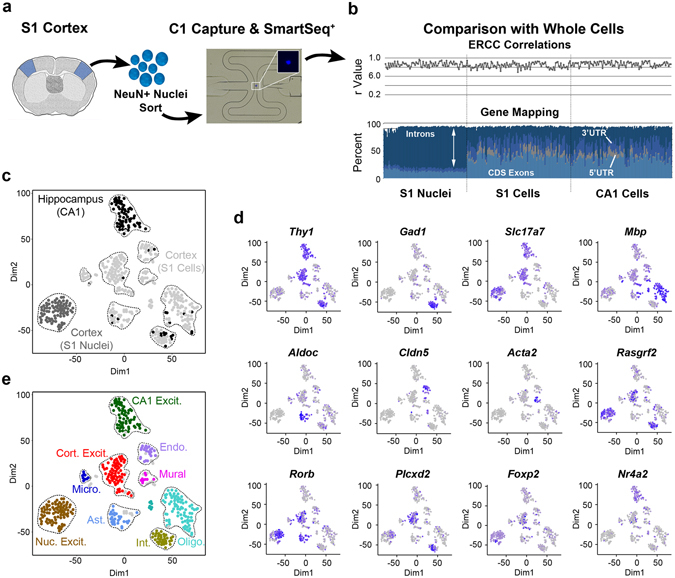
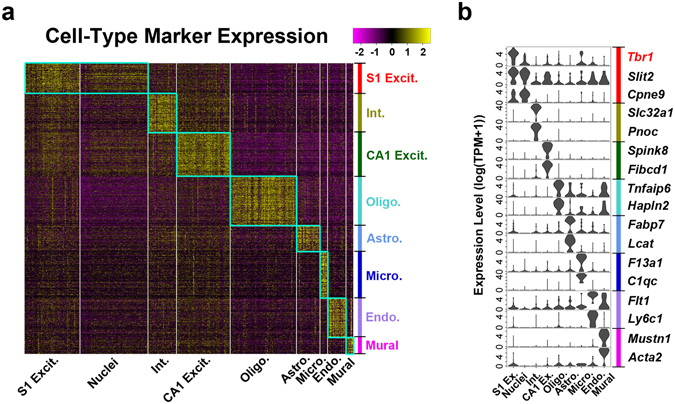
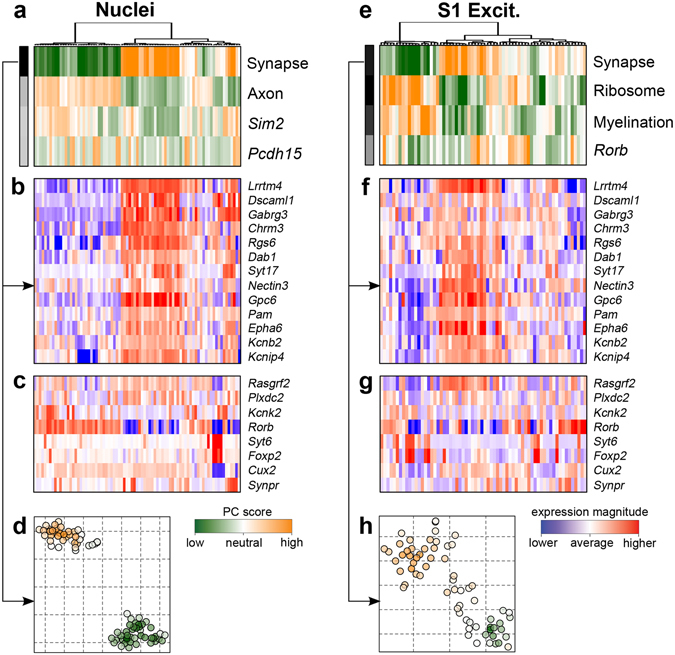
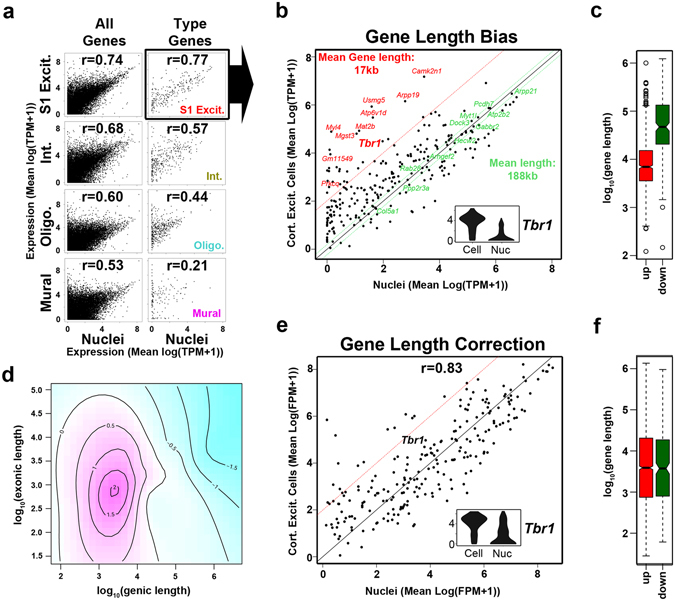
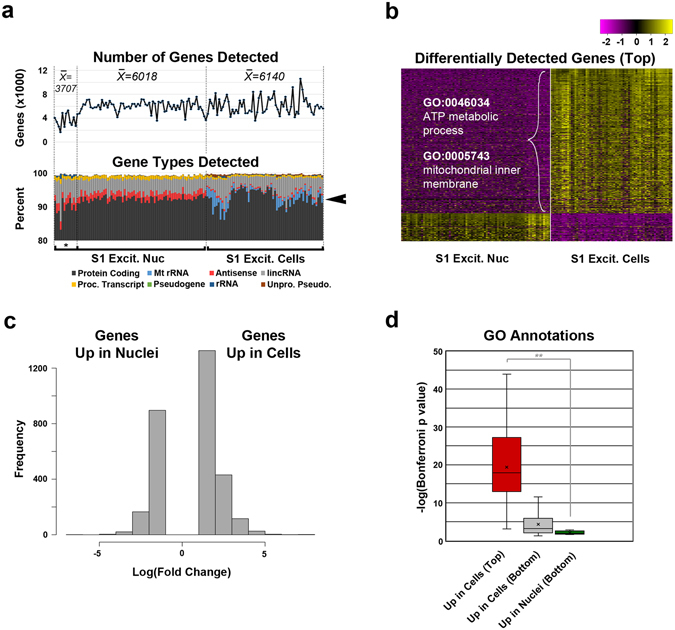
Significant heterogeneities in gene expression among individual cells are typically interrogated using single whole cell approaches. However, tissues that have highly interconnected processes, such as in the brain, present unique challenges. Single-nucleus RNA sequencing (SNS) has emerged as an alternative method of assessing a cell's transcriptome through the use of isolated nuclei. However, studies directly comparing expression data between nuclei and whole cells are lacking. Here, we have characterized nuclear and whole cell transcriptomes in mouse single neurons and provided a normalization strategy to reduce method-specific differences related to the length of genic regions. We confirmed a high concordance between nuclear and whole cell transcriptomes in the expression of cell type and metabolic modeling markers, but less so for a subset of genes associated with mitochondrial respiration. Therefore, our results indicate that single-nucleus transcriptome sequencing provides an effective means to profile cell type expression dynamics in previously inaccessible tissues.
Overview
The claims and statistics of this paper haven’t been checked yet.
Free: it reads the open-access text and checks the first 5 claims that cite a source we can check. Create a free account to check every claim.
Integrity signals
Registry
Cites
Statistics
Figures
Verification
Claims the paper makes
The claims and statistics of this paper haven’t been checked yet.
Free: it reads the open-access text and checks the first 5 claims that cite a source we can check. Create a free account to check every claim.
Claims other papers make about this one
Each is checked against this paper’s own text: does it say what the citing paper says it does?
The source backs part of the claim, not all of it — or backs it for a different population, condition or comparison.
In the citing paper
“For example, conventional cell dissociation protocols often compromise the integrity of neurons through mechanical shearing or induce the activation of glia[6, 8–12].”
From Comparative analysis of nuclei isolation methods for brain single-nucleus RNA sequencing (2026) · cites this paper as [11]
Experimental — accuracy not yet measuredThe cited source says what the claim attributes to it.
In the citing paper
“Despite this, snRNA-seq provides robust markers of brain cell types (Ding et al., 2020; Lake et al., 2017) with resolution comparable to scRNA-seq (Bakken et al., 2018; Yao et al., 2020a).”
From Single-Cell Sequencing of Brain Cell Transcriptomes and Epigenomes (2021) · cites this paper as Lake et al., 2017
Self-check
Percentages, sums and reported differences re-computed from the paper’s own numbers.
The self-check needs the paper’s full text.
Citations
Cites
Highly parallel genome-wide expression profiling of individual cells using nanoliter droplets.
Macosko, E. Z., Basu, A., Satija, R., Nemesh, J., Shekhar, K., Goldman, M., Tirosh, I., Bialas, A. R., Kamitaki, N., Martersteck, E. M., et al. (2015) · Cell · doi:10.1016/j.cell.2015.05.002 · Cited by 7,110
Cell types in the mouse cortex and hippocampus revealed by single-cell RNA-seq
Zeisel, A., Muñoz-Manchado, A. B., Codeluppi, S., Lönnerberg, P., La Manno, G., Juréus, A., Marques, S., Munguba, H., He, L., Betsholtz, C., et al. (2015) · Science · doi:10.1126/science.aaa1934 · Cited by 3,124
Self-citationThe Subread aligner: fast, accurate and scalable read mapping by seed-and-vote
Liao, Y., Smyth, G. K., & Shi, W. (2013) · Nucleic Acids Research · doi:10.1093/nar/gkt214 · Cited by 3,064
Adult mouse cortical cell taxonomy revealed by single cell transcriptomics
Tasic, B., Menon, V., Nguyen, T. N., Kim, T. K., Jarsky, T., Yao, Z., Levi, B., Gray, L. T., Sorensen, S. A., Dolbeare, T., et al. (2016) · Nature Neuroscience · doi:10.1038/nn.4216 · Cited by 1,714
Global reconstruction of the human metabolic network based on genomic and bibliomic data
Duarte, N. C., Becker, S. A., Jamshidi, N., Thiele, I., Mo, M. L., Vo, T. D., Srivas, R., & Palsson, B. Ø. (2007) · Proceedings of the National Academy of Sciences · doi:10.1073/pnas.0610772104 · Cited by 1,374
Neuronal subtypes and diversity revealed by single-nucleus RNA sequencing of the human brain
Lake, B. B., Ai, R., Kaeser, G. E., Salathia, N. S., Yung, Y. C., Liu, R., Wildberg, A., Gao, D., Fung, H.-L., Chen, S., et al. (2016) · Science · doi:10.1126/science.aaf1204 · Cited by 957
Self-citationPollen, A. A., Nowakowski, T. J., Shuga, J., Wang, X., Leyrat, A. A., Lui, J. H., Li, N., Szpankowski, L., Fowler, B., Chen, P., et al. (2014) · Nature Biotechnology · doi:10.1038/nbt.2967 · Cited by 920
Tbr1 regulates differentiation of the preplate and layer 6
Hevner, R. F., Shi, L., Justice, N., Hsueh, Y.-P., Sheng, M., Smiga, S., Bulfone, A., Goffinet, A. M., Campagnoni, A. T., & Rubenstein, J. L. R. (2001) · Neuron · doi:10.1016/s0896-6273(01)00211-2 · Cited by 857
Div-Seq: Single-nucleus RNA-Seq reveals dynamics of rare adult newborn neurons
Habib, N., Li, Y., Heidenreich, M., Swiech, L., Avraham-Davidi, I., Trombetta, J. J., Hession, C., Zhang, F., & Regev, A. (2016) · Science · doi:10.1126/science.aad7038 · Cited by 601
Somatic mutation in single human neurons tracks developmental and transcriptional history
Lodato, M. A., Woodworth, M. B., Lee, S., Evrony, G. D., Mehta, B. K., Karger, A., Lee, S., Chittenden, T. W., D’Gama, A. M., Cai, X., et al. (2015) · Science · doi:10.1126/science.aab1785 · Cited by 570
Cited by
Conserved cell types with divergent features in human versus mouse cortex
Hodge, R. D., Bakken, T. E., Miller, J. A., Smith, K. A., Barkan, E. R., Graybuck, L. T., Close, J. L., Long, B., Johansen, N., Penn, O., et al. (2019) · Nature · doi:10.1038/s41586-019-1506-7 · Cited by 1,775
Stoeckius, M., Zheng, S., Houck-Loomis, B., Hao, S., Yeung, B. Z., Mauck, W. M., Smibert, P., & Satija, R. (2018) · Genome Biology · doi:10.1186/s13059-018-1603-1 · Cited by 1,046
“With the increasing interest in single nucleus sequencing [23, 24], an additional set of hashing reagents directed against nuclear proteins would further generalize this ap-”
BackgroundExponential scaling of single-cell RNA-seq in the past decade
Svensson, V., Vento-Tormo, R., & Teichmann, S. A. (2018) · Nature Protocols · doi:10.1038/nprot.2017.149 · Cited by 1,034
Spatial Transcriptomics and In Situ Sequencing to Study Alzheimer’s Disease
Chen, W.-T., Lu, A., Craessaerts, K., Pavie, B., Sala Frigerio, C., Corthout, N., Qian, X., Laláková, J., Kühnemund, M., Voytyuk, I., et al. (2020) · Cell · doi:10.1016/j.cell.2020.06.038 · Cited by 949
Integrative single-cell analysis of transcriptional and epigenetic states in the human adult brain
Lake, B. B., Chen, S., Sos, B. C., Fan, J., Kaeser, G. E., Yung, Y. C., Duong, T. E., Gao, D., Chun, J., Kharchenko, P. V., et al. (2018) · Nature Biotechnology · doi:10.1038/nbt.4038 · Cited by 983
Self-citationSystematic comparison of single-cell and single-nucleus RNA-sequencing methods
Ding, J., Adiconis, X., Simmons, S. K., Kowalczyk, M. S., Hession, C. C., Marjanovic, N. D., Hughes, T. K., Wadsworth, M. H., Burks, T., Nguyen, L. T., et al. (2020) · Nature Biotechnology · doi:10.1038/s41587-020-0465-8 · Cited by 871
Denisenko, E., Guo, B. B., Jones, M., Hou, R., de Kock, L., Lassmann, T., Poppe, D., Clément, O., Simmons, R. K., Lister, R., et al. (2020) · Genome Biology · doi:10.1186/s13059-020-02048-6 · Cited by 686
Denisenko, E., Guo, B. B., Jones, M., Hou, R., de Kock, L., Lassmann, T., Poppe, D., Clement, O., Simmons, R. K., Lister, R., et al. (2019) · doi:10.1101/832444 · Cited by 686
Single-nucleus and single-cell transcriptomes compared in matched cortical cell types
Bakken, T. E., Hodge, R. D., Miller, J. A., Yao, Z., Nguyen, T. N., Aevermann, B., Barkan, E., Bertagnolli, D., Casper, T., Dee, N., et al. (2018) · PLoS ONE · doi:10.1371/journal.pone.0209648 · Cited by 608
Wu, H., Uchimura, K., Donnelly, E. L., Kirita, Y., Morris, S. A., & Humphreys, B. D. (2018) · Cell Stem Cell · doi:10.1016/j.stem.2018.10.010 · Cited by 605
“Lake et al., 2017).”
Nagy, C., Maitra, M., Tanti, A., Suderman, M., Théroux, J.-F., Davoli, M. A., Perlman, K., Yerko, V., Wang, Y. C., Tripathy, S. J., et al. (2020) · Nature Neuroscience · doi:10.1038/s41593-020-0621-y · Cited by 532
Nagy, C., Maitra, M., Tanti, A., Suderman, M., Théroux, J.-F., Mechawar, N., Ragoussis, J., & Turecki, G. (2018) · doi:10.1101/384479 · Cited by 523
Single cell transcriptomic landscape of diabetic foot ulcers
Theocharidis, G., Thomas, B. E., Sarkar, D., Mumme, H. L., Pilcher, W. J. R., Dwivedi, B., Sandoval-Schaefer, T., Sîrbulescu, R. F., Kafanas, A., Mezghani, I., et al. (2022) · Nature Communications · doi:10.1038/s41467-021-27801-8 · Cited by 454
Detecting Activated Cell Populations Using Single-Cell RNA-Seq
Wu, Y. E., Pan, L., Zuo, Y., Li, X., & Hong, W. (2017) · Neuron · doi:10.1016/j.neuron.2017.09.026 · Cited by 438
Wu, H., Malone, A. F., Donnelly, E. L., Kirita, Y., Uchimura, K., Ramakrishnan, S. M., Gaut, J. P., & Humphreys, B. D. (2018) · Journal of the American Society of Nephrology · doi:10.1681/asn.2018020125 · Cited by 417
zUMIs - A fast and flexible pipeline to process RNA sequencing data with UMIs
Parekh, S., Ziegenhain, C., Vieth, B., Enard, W., & Hellmann, I. (2018) · GigaScience · doi:10.1093/gigascience/giy059 · Cited by 380
“The validity and accuracy of counting Introns for single nucleus sequencing methods has recently been demonstrated [34].”
Sathyamurthy, A., Johnson, K. R., Matson, K. J. E., Dobrott, C. I., Li, L., Ryba, A. R., Bergman, T. B., Kelly, M. C., Kelley, M. W., & Levine, A. J. (2018) · Cell Reports · doi:10.1016/j.celrep.2018.02.003 · Cited by 370
“…tissue dissociation process, and can be performed easily from whole tissue, including tissue that is difficult to dissociate (such as the spinal cord), frozen material, and human biobank material (Grindberg et al., 2013; Habib et al., 2017; Lake et al., 2016, 2017; Matevossian and Akbarian, 2008).”
BackgroundBryois, J., Skene, N. G., Hansen, T. F., Kogelman, L. J. A., Watson, H. J., Liu, Z., Eating Disorders Working Group of the Psychiatric Genomics Consortium, Adan, R., Alfredsson, L., Ando, T., et al. (2020) · Nature Genetics · doi:10.1038/s41588-020-0610-9 · Cited by 366
Beyond bulk: a review of single cell transcriptomics methodologies and applications
Kulkarni, A., Anderson, A. G., Merullo, D. P., & Konopka, G. (2019) · Current Opinion in Biotechnology · doi:10.1016/j.copbio.2019.03.001 · Cited by 356
“…[17, 20]. snRNA-seq data have a high degree of similarity with whole-cell transcriptomes in terms of the number of detected genes and resolved cell types [17, 20], snRNA-seq datasets showed a higher proportion of intronic reads than scRNA-seq, the detection of more shorter-length genes [17, 20].”
BackgroundSingle-Nucleus RNA-Seq Is Not Suitable for Detection of Microglial Activation Genes in Humans
Thrupp, N., Sala Frigerio, C., Wolfs, L., Skene, N. G., Fattorelli, N., Poovathingal, S., Fourne, Y., Matthews, P. M., Theys, T., Mancuso, R., et al. (2020) · Cell Reports · doi:10.1016/j.celrep.2020.108189 · Cited by 351
“As demonstrated in previous studies (Bakken et al., 2018; Gerrits et al., 2019; Habib et al., 2017; Lake et al., 2017), most genes showed similar normalized abundance levels in cells and nuclei, with 98.6% of genes falling along the diagonal in Figure 1A (Pearson’s correlation coefficient = 0.92, p…”
BackgroundResultInfluentialSingle-cell and spatial transcriptomics: deciphering brain complexity in health and disease
Piwecka, M., Rajewsky, N., & Rybak-Wolf, A. (2023) · Nature Reviews Neurology · doi:10.1038/s41582-023-00809-y · Cited by 320
Lake, B. B., Chen, S., Hoshi, M., Plongthongkum, N., Salamon, D., Knoten, A., Vijayan, A., Venkatesh, R., Kim, E. H., Gao, D., et al. (2019) · Nature Communications · doi:10.1038/s41467-019-10861-2 · Cited by 280
Single-Cell Sequencing of Brain Cell Transcriptomes and Epigenomes
Armand, E. J., Li, J., Xie, F., Luo, C., & Mukamel, E. A. (2021) · Neuron · doi:10.1016/j.neuron.2020.12.010 · Cited by 241
“Despite this, snRNA-seq provides robust markers of brain cell types (Ding et al., 2020; Lake et al., 2017) with resolution comparable to scRNA-seq (Bakken et al.”
MethodSingle-nucleus RNA-seq identifies Huntington disease astrocyte states
Al-Dalahmah, O., Sosunov, A. A., Shaik, A., Ofori, K., Liu, Y., Vonsattel, J. P., Adorjan, I., Menon, V., & Goldman, J. E. (2020) · Acta Neuropathologica Communications · doi:10.1186/s40478-020-0880-6 · Cited by 264
“However, this is not a limitation of single nucleus RNA sequencing (snRNASeq), which accurately elucidates cellular heterogeneity in a manner comparable to whole/cytoplasmic scRNAseq [24], and can be applied to frozen brain tissue [21].”
BackgroundMolecular signatures underlying neurofibrillary tangle susceptibility in Alzheimer’s disease
Otero-Garcia, M., Mahajani, S. U., Wakhloo, D., Tang, W., Xue, Y.-Q., Morabito, S., Pan, J., Oberhauser, J., Madira, A. E., Shakouri, T., et al. (2022) · Neuron · doi:10.1016/j.neuron.2022.06.021 · Cited by 262
(2020) · doi:10.1101/2020.05.11.088591 · Cited by 257
The Human Lung Cell Atlas: A High-Resolution Reference Map of the Human Lung in Health and Disease
Schiller, H. B., Montoro, D. T., Simon, L. M., Rawlins, E. L., Meyer, K. B., Strunz, M., Vieira Braga, F. A., Timens, W., Koppelman, G. H., Budinger, G. R. S., et al. (2019) · American Journal of Respiratory Cell and Molecular Biology · doi:10.1165/rcmb.2018-0416tr · Cited by 245
“On the whole, scRNA-seq and snRNA-seq data correlate well (62) and”
Orozco, L. D., Chen, H.-H., Cox, C., Katschke, K. J., Arceo, R., Espiritu, C., Caplazi, P., Nghiem, S. S., Chen, Y.-J., Modrusan, Z., et al. (2020) · Cell Reports · doi:10.1016/j.celrep.2019.12.082 · Cited by 222
Adipose tissue at single-cell resolution
Maniyadath, B., Zhang, Q., Gupta, R. K., & Mandrup, S. (2023) · Cell Metabolism · doi:10.1016/j.cmet.2023.02.002 · Cited by 202
Cui, M., Wang, Z., Chen, K., Shah, A. M., Tan, W., Duan, L., Sanchez-Ortiz, E., Li, H., Xu, L., Liu, N., et al. (2020) · Developmental Cell · doi:10.1016/j.devcel.2020.02.019 · Cited by 175
Cellular heterogeneity in adipose tissues
Corvera, S. (2021) · Annual Review of Physiology · doi:10.1146/annurev-physiol-031620-095446 · Cited by 171
Transcriptional profiling of microglia; current state of the art and future perspectives
Gerrits, E., Heng, Y., Boddeke, E. W. G. M., & Eggen, B. J. L. (2020) · Glia · doi:10.1002/glia.23767 · Cited by 140
“Consistent with previous findings, our nuclear data showed a higher proportion of reads mapping to intronic regions and a lower percentage of mitochondrial genes (Figure S1a and S1b) (Bakken et al., 2018; Lake et al., 2017).”
BackgroundResultDiversity of transcriptomic microglial phenotypes in aging and Alzheimer's disease
Boche, D., & Gordon, M. N. (2022) · Alzheimer's & Dementia · doi:10.1002/alz.12389 · Cited by 114
Systematic comparative analysis of single cell RNA-sequencing methods
Ding, J., Adiconis, X., Simmons, S. K., Kowalczyk, M. S., Hession, C. C., Marjanovic, N. D., Hughes, T. K., Wadsworth, M. H., Burks, T., Nguyen, L. T., et al. (2019) · bioRxiv (Cold Spring Harbor Laboratory) · doi:10.1101/632216 · Cited by 106
Genomic mosaicism in the developing and adult brain
Rohrback, S., Siddoway, B., Liu, C. S., & Chun, J. (2018) · Developmental Neurobiology · doi:10.1002/dneu.22626 · Cited by 101
“Additional FISH approaches based upon variations of RNAscope used in validating transcriptomic diversity in the human brain (Lake et al., 2016; Lake et al., 2017; Lake et al., 2018) may have further applicability to genomic loci in the future.”
MethodSelewa, A., Dohn, R., Eckart, H., Lozano, S., Xie, B., Gauchat, E., Elorbany, R., Rhodes, K., Burnett, J., Gilad, Y., et al. (2020) · Scientific Reports · doi:10.1038/s41598-020-58327-6 · Cited by 102
Perspectives on single-nucleus RNA sequencing in different cell types and tissues
Kim, N., Kang, H., Jo, A., Yoo, S.-A., & Lee, H.-O. (2023) · Journal of Pathology and Translational Medicine · doi:10.4132/jptm.2022.12.19 · Cited by 97
“Direct comparisons of matched scRNA-seq and snRNA-seq data from S1 cortex neurons have demonstrated differences in genomic read mapping to coding sequences, introns, or untranslated regions [23].”
BackgroundMcEvoy, C. M., Murphy, J. M., Zhang, L., Clotet‐Freixas, S., Mathews, J. A., An, J., Karimzadeh, M., Pouyabahar, D., Su, S., Zaslaver, O., et al. (2022) · Nature Communications · doi:10.1038/s41467-022-35297-z · Cited by 95
“6e), likely due to cytosolic versus nuclear localization of the transcripts of interest leading to differential representation in transcript abundance between techniques 36 .”
Richards, P., Thornberry, N. A., & Pinto, S. (2021) · Molecular Metabolism · doi:10.1016/j.molmet.2021.101175 · Cited by 93
Alsema, A. M., Jiang, Q., Kracht, L., Gerrits, E., Dubbelaar, M. L., Miedema, A., Brouwer, N., Hol, E. M., Middeldorp, J., van Dijk, R., et al. (2020) · Frontiers in Molecular Neuroscience · doi:10.3389/fnmol.2020.00134 · Cited by 84
“Therefore, single-nucleus sequencing offers an alternative to scRNAseq that is especially useful in tissues from which recovering intact cells is difficult (Grindberg et al., 2013; Lake et al., 2017; Gerrits et al., 2020).”
BackgroundSingle cell transcriptomics in neuroscience: cell classification and beyond
Tasic, B. (2018) · Current Opinion in Neurobiology · doi:10.1016/j.conb.2018.04.021 · Cited by 83
Shi, D., Jouannet, V., Agustí, J., Kaul, V., Levitsky, V., Sanchez, P., Mironova, V. V., & Greb, T. (2021) · The Plant Cell · doi:10.1093/plcell/koaa019 · Cited by 82
“Third, nuclear mRNAs carry a higher ratio of unprocessed mRNA molecules compared with mRNA from whole cells (Lake et al., 2017; Abdelmoez et al., 2018; Wu et al., 2019).”
BackgroundHuman Alzheimer’s disease reactive astrocytes exhibit a loss of homeostastic gene expression
Dai, D. L., Li, M., & Lee, E. B. (2023) · Acta Neuropathologica Communications · doi:10.1186/s40478-023-01624-8 · Cited by 77
Single-nucleus RNA-seq2 reveals functional crosstalk between liver zonation and ploidy
Richter, M. L., Deligiannis, I. K., Yin, K., Danese, A., Lleshi, E., Coupland, P., Vallejos, C. A., Matchett, K. P., Henderson, N. C., Colome-Tatche, M., et al. (2021) · Nature Communications · doi:10.1038/s41467-021-24543-5 · Cited by 75
Tosoni, G., Ayyildiz, D., Bryois, J., Macnair, W., Fitzsimons, C. P., Lucassen, P. J., & Salta, E. (2023) · Neuron · doi:10.1016/j.neuron.2023.03.010 · Cited by 82
Malaiya, S., Cortes-Gutierrez, M., Herb, B. R., Coffey, S. R., Legg, S. R. W., Cantle, J. P., Colantuoni, C., Carroll, J. B., & Ament, S. A. (2021) · Journal of Neuroscience · doi:10.1523/jneurosci.2074-20.2021 · Cited by 89
Single-Cell Analysis of Circulating Tumor Cells: Why Heterogeneity Matters
Lim, S. B., Lim, C. T., & Lim, W. (2019) · Cancers · doi:10.3390/cancers11101595 · Cited by 77
“Studies have demonstrated high concordance between nuclear RNA and whole cell RNA in the expression of cell-type specific and metabolic modeling genes [129], and that between fresh and preserved blood in detecting cancer-specific transcripts [128].”
BackgroundCell type discovery using single-cell transcriptomics: implications for ontological representation
Aevermann, B. D., Novotny, M., Bakken, T., Miller, J. A., Diehl, A. D., Osumi-Sutherland, D., Lasken, R. S., Lein, E. S., & Scheuermann, R. H. (2018) · Human Molecular Genetics · doi:10.1093/hmg/ddy100 · Cited by 63
Kang, R. B., Li, Y., Rosselot, C., Zhang, T., Siddiq, M., Rajbhandari, P., Stewart, A. F., Scott, D. K., Garcia-Ocana, A., & Lu, G. (2023) · Genome Medicine · doi:10.1186/s13073-023-01179-2 · Cited by 62
“scRNA-seq analyzes both nuclear and cytoplasmic transcripts with a majority being cytoplasmic, whereas snRNA-seq profiles mostly nuclear transcripts with minimal transcripts derived from cytoplasm or rough ER during nuclei isolation [47, 48].”
BackgroundMolecular characterization of projection neuron subtypes in the mouse olfactory bulb
Zeppilli, S., Ackels, T., Attey, R., Klimpert, N., Ritola, K., Boeing, S., Crombach, A., Schaefer, A. T., & Fleischmann, A. (2021) · eLife · doi:10.7554/elife.65445 · Cited by 63
Cell type-specific changes identified by single-cell transcriptomics in Alzheimer’s disease
Luquez, T., Gaur, P., Kosater, I. M., Lam, M., Lee, D. I., Mares, J., Paryani, F., Yadav, A., & Menon, V. (2022) · Genome Medicine · doi:10.1186/s13073-022-01136-5 · Cited by 61
Isolation of Adult Spinal Cord Nuclei for Massively Parallel Single-nucleus RNA Sequencing
Matson, K. J. E., Sathyamurthy, A., Johnson, K. R., Kelly, M. C., Kelley, M. W., & Levine, A. J. (2018) · Journal of Visualized Experiments · doi:10.3791/58413 · Cited by 60
Venema, W. T. U., Ramírez-Sánchez, A. D., Bigaeva, E., Withoff, S., Jonkers, I. H., McIntyre, R. E., Ghouraba, M., Raine, T., Weersma, R. K., Franke, L., et al. (2022) · Scientific Reports · doi:10.1038/s41598-022-13812-y · Cited by 80
The Application of Single‐Cell RNA Sequencing in Vaccinology
Noé, A., Cargill, T. N., Nielsen, C. M., Russell, A. J. C., & Barnes, E. J. (2020) · Journal of Immunology Research · doi:10.1155/2020/8624963 · Cited by 66
“Several sources have suggested that isolation of nuclei and their use for single-nucleotide RNA-seq could help to mitigate both of these challenges [131, 133, 134] (see Appendix A).”
Mapping visual functions onto molecular cell types in the mouse superior colliculus
Liu, Y., Savier, E. L., DePiero, V. J., Chen, C., Schwalbe, D. C., Abraham‐Fan, R., Chen, H., Campbell, J. N., & Cang, J. (2023) · Neuron · doi:10.1016/j.neuron.2023.03.036 · Cited by 66
Molecular Connectomics Reveals a Glucagon-Like Peptide 1 Sensitive Neural Circuit for Satiety
Webster, A. N., Becker, J. J., Li, C., Schwalbe, D. C., Kerspern, D., Karolczak, E. O., Bundon, C., Onoharigho, R. A., Crook, M., Jalil, M., et al. (2023) · doi:10.1101/2023.10.31.564990 · Cited by 56
“We chose to profile nuclei instead of whole cells because enzymatic dissociation appears to deplete rabies-infected neurons, potentially due to poor cell viability 23 , and because a cell’s nuclear RNA profile is sufficient to identify its molecular type 24-26 .”
BackgroundMolecular connectomics reveals a glucagon-like peptide 1-sensitive neural circuit for satiety
Webster, A. N., Becker, J. J., Li, C., Schwalbe, D. C., Kerspern, D., Karolczak, E. O., Bundon, C. B., Onoharigho, R. A., Crook, M., Jalil, M., et al. (2024) · Nature Metabolism · doi:10.1038/s42255-024-01168-8 · Cited by 55
“We chose to profile nuclei instead of whole cells because enzymatic dissociation appears to deplete rabies-infected neurons, potentially due to poor cell viability 24 , and because a cell’s nuclear RNA profile is sufficient to identify its molecular type 25–27 .”
InfluentialTranscriptional Profiling of Somatostatin Interneurons in the Spinal Dorsal Horn
Chamessian, A., Young, M., Qadri, Y., Berta, T., Ji, R.-R., & Van de Ven, T. (2018) · Scientific Reports · doi:10.1038/s41598-018-25110-7 · Cited by 56
“%) with that of whole cells (Grindberg et al., 2013; Lake et al., 2017).”
Zaghlool, A., Niazi, A., Björklund, Å. K., Westholm, J. O., Ameur, A., & Feuk, L. (2021) · Scientific Reports · doi:10.1038/s41598-021-83541-1 · Cited by 58
Maden, S. K., Kwon, S. H., Huuki-Myers, L. A., Collado‐Torres, L., Hicks, S. C., & Maynard, K. R. (2023) · Genome biology · doi:10.1186/s13059-023-03123-4 · Cited by 66
“While the nuclear transcriptome can serve as a proxy for the whole cell transcriptome [85–87] nuclear transcripts include more intron-containing pre-mature mRNA and may not include transcripts locally expressed in cytoplasmic compartments, such as neuronal axons and dendrites, or transcripts…”
BackgroundSingle-Cell RNA Sequencing Technology Landscape in 2023
Qu, H., Kao, C., & Hakonarson, H. H. (2023) · Stem Cells · doi:10.1093/stmcls/sxad077 · Cited by 73
Generating and Using Transcriptomically Based Retinal Cell Atlases
Shekhar, K., & Sanes, J. R. (2021) · Annual Review of Vision Science · doi:10.1146/annurev-vision-032621-075200 · Cited by 53
Milenkovic, I., Vieira, H. G. S., Lucas, M. C., Ruiz‐Orera, J., Patone, G., Kesteven, S. H., Wu, J., Feneley, M. P., Espadas, G., Sabidó, E., et al. (2023) · Nucleic Acids Research · doi:10.1093/nar/gkad121 · Cited by 61
Evaluation of STAR and Kallisto on Single Cell RNA-Seq Data Alignment
Du, Y., Huang, Q., Arisdakessian, C. G., & Garmire, L. X. (2020) · G3 Genes Genomes Genetics · doi:10.1534/g3.120.401160 · Cited by 64
“STARsolo and Kallisto bus comparison on single nuclei RNA-seq mouse cortex data Single nuclei RNA-Seq is one solution for human studies where fresh materials are lacking (Lake et al. 2017).”
BackgroundThe Acute Stress Response in the Multiomic Era
Floriou-Servou, A., von Ziegler, L., Waag, R., Schläppi, C., Germain, P.-L., & Bohacek, J. (2021) · Biological Psychiatry · doi:10.1016/j.biopsych.2020.12.031 · Cited by 51
Plasticity and heterogeneity of thermogenic adipose tissue
Sun, W., Modica, S., Dong, H., & Wolfrum, C. (2021) · Nature Metabolism · doi:10.1038/s42255-021-00417-4 · Cited by 54
Comparison of single‑nucleus and single‑cell transcriptomes in hepatocellular carcinoma tissue
Wen, F., Tang, X., Lin, X., & Qu, H. (2022) · Molecular Medicine Reports · doi:10.3892/mmr.2022.12855 · Cited by 59
“Previous studies have demonstrated a high degree of concordance in sensitivity and cell‐type classification between snrna‐seq and scrna‐seq (1,11,12).”
MethodResultBerdowski, W. M., van der Linde, H. C., Breur, M., Oosterhof, N., Beerepoot, S., Sanderson, L., Wijnands, L. I., de Jong, P., Tsai-Meu-Chong, E., de Valk, W., et al. (2022) · Acta Neuropathologica · doi:10.1007/s00401-022-02440-5 · Cited by 50
“For further analysis, the DEG were compared to published gene sets to find overlapping genes, including human microglia [38], extracellular matrix-related genes [77], mouse and human oligodendrocyte-related genes [64, 66], MS microglia [122] and AD microglia [108] (Suppl.”
ResultFröhlich, A. S., Gerstner, N., Gagliardi, M., Ködel, M., Yusupov, N., Matosin, N., Czamara, D., Sauer, S., Roeh, S., Murek, V., et al. (2024) · Nature Neuroscience · doi:10.1038/s41593-024-01742-z · Cited by 66
“Although nuclei have been demonstrated to be comparable to whole-cell transcriptomes 69,70 , certain aspects such as mitochondrial transcription, an important pathway affected in aging and neurodegeneration, cannot be profiled.”
BackgroundSaraswathy, V. M., Zhou, L., & Mokalled, M. H. (2024) · Nature Communications · doi:10.1038/s41467-024-50628-y · Cited by 58
Gupta, A., Shamsi, F., Altemose, N., Dorlhiac, G., Cypess, A. M., White, A. P., Yosef, N., Patti, M., Tseng, Y.-H., & Streets, A. (2022) · Genome Research · doi:10.1101/gr.275509.121 · Cited by 56
Emerging technologies to study glial cells
Hirbec, H., Déglon, N., Foo, L. C., Goshen, I., Grutzendler, J., Hangen, E., Kreisel, T., Linck, N., Muffat, J., Regio, S., et al. (2020) · Glia · doi:10.1002/glia.23780 · Cited by 47
Goldfarb, C. N., Karri, K., Pyatkov, M., & Waxman, D. J. (2022) · Endocrinology · doi:10.1210/endocr/bqac059 · Cited by 46
Adversarial domain translation networks for integrating large-scale atlas-level single-cell datasets
Zhao, J., Wang, G., Ming, J., Lin, Z., Wang, Y., Agarwal, S., Agrawal, A., Al‐Moujahed, A., Alam, A. A., Albertelli, M. A., et al. (2022) · Nature Computational Science · doi:10.1038/s43588-022-00251-y · Cited by 47
Yang, W., Pang, D., Chen, M., Du, C., Jia, L., Wang, L., He, Y., Jiang, W., Luo, L., Yu, Z., et al. (2021) · Developmental Cell · doi:10.1016/j.devcel.2021.02.022 · Cited by 57
snPATHO-seq, a versatile FFPE single-nucleus RNA sequencing method to unlock pathology archives
Wang, T., Roach, M. J., Harvey, K., Morlanes, J. E., Kiedik, B., Al‐Eryani, G., Greenwald, A., Kalavros, N., Dezem, F. S., Ma, Y., et al. (2024) · Communications Biology · doi:10.1038/s42003-024-07043-2 · Cited by 61
“We favor nuclei isolation rather thancellisolationbecausenucleicanbemorestably extracted fromsamples that are hard to dissociate into whole cells 37 – 39 .”
Moroz, L. L. (2018) · ACS Chemical Neuroscience · doi:10.1021/acschemneuro.8b00100 · Cited by 44
Williams, K., Yokomori, K., & Mortazavi, A. (2022) · Frontiers in Genetics · doi:10.3389/fgene.2022.835099 · Cited by 53
“Single-nucleus RNA-seq has been widely used for neurons since their long and intricate morphologies can cause them to clump or be too large for scRNA-seq microfluidics systems (Krishnaswami et al., 2016; Habib et al., 2017; Lake et al., 2017; Bakken et al., 2018).”
MethodNano, P. R., Fazzari, E., Azizad, D. J., Martija, A. A., Nguyen, C. V., Wang, S., Giang, V., Kan, R. L., Yoo, J., Wick, B. D., et al. (2025) · Nature Neuroscience · doi:10.1038/s41593-025-01933-2 · Cited by 44
Extraction of nuclei from archived postmortem tissues for single-nucleus sequencing applications
Maitra, M., Nagy, C., Chawla, A., Wang, Y. C., Nascimento, C., Suderman, M., Théroux, J.-F., Mechawar, N., Ragoussis, J., & Turecki, G. (2021) · Nature Protocols · doi:10.1038/s41596-021-00514-4 · Cited by 42
Celf4 controls mRNA translation underlying synaptic development in the prenatal mammalian neocortex
Salamon, I., Park, Y., Miškić, T., Kopić, J., Matteson, P. G., Page, N. F., Roque, A., McAuliffe, G., Favate, J. S., García-Forn, M., et al. (2023) · Nature Communications · doi:10.1038/s41467-023-41730-8 · Cited by 41
High-resolution transcriptomics informs glial pathology in human temporal lobe epilepsy
Pai, B., Tomé-García, J., Cheng, W. S., Nudelman, G., Beaumont, K. G., Ghatan, S., Panov, F. E., Caballero, E., Sarpong, K., Marcuse, L. V., et al. (2022) · Acta Neuropathologica Communications · doi:10.1186/s40478-022-01453-1 · Cited by 43
Basile, G., Kahraman, S., Dirice, E., Pan, H., Dreyfuss, J. M., & Kulkarni, R. N. (2021) · Genome Medicine · doi:10.1186/s13073-021-00941-8 · Cited by 38
“sequencing efficiency was similar between scRNA-seq and snRNA-seq procedures, consistent with reports on other metabolic tissues [35, 67, 71].”
BackgroundResultCrustacean leg regeneration restores complex microanatomy and cell diversity
Almazán, A., Çevrim, Ç., Musser, J. M., Averof, M., & Paris, M. (2022) · Science Advances · doi:10.1126/sciadv.abn9823 · Cited by 56
Puvogel, S., Alsema, A. M., Kracht, L., Webster, M. J., Weickert, C. S., Sommer, I. E., & Eggen, B. J. L. (2022) · Molecular Psychiatry · doi:10.1038/s41380-022-01796-0 · Cited by 39
Stöber, M. C., González, R. C., Brückner, L., Conrad, T., Wittstruck, N., Szymansky, A., Eggert, A., Schulte, J. H., Koche, R. P., Henssen, A. G., et al. (2024) · Cell Reports · doi:10.1016/j.celrep.2024.114711 · Cited by 37
“While both approaches were found to be comparable with similar sensitivity, 56–58 single-nuclei sequencing can be prone to a higher gene-dropout rate, which might affect the size of the discovered gene sets.”
Zerti, D., Collin, J., Queen, R. A., Cockell, S., & Lako, M. (2020) · Current Eye Research · doi:10.1080/02713683.2019.1697453 · Cited by 34
Approaches for single-cell RNA sequencing across tissues and cell types
Sant, P., Rippe, K., & Mallm, J. (2023) · Transcription · doi:10.1080/21541264.2023.2200721 · Cited by 39
“Several comparative studies between single-nucleus and scRNA-seq reported that similar number of genes were detected between nuclei and whole cells, allowing identification of diverse cell types present in the tissue [46,54,55], even though nuclei contain lower amounts of mRNA and are enriched in lncRNAs and unspliced…”
BackgroundThe promise of single-cell genomics in plants
McFaline‐Figueroa, J. L., Trapnell, C., & Cuperus, J. T. (2020) · Current Opinion in Plant Biology · doi:10.1016/j.pbi.2020.04.002 · Cited by 31
Integrative Cluster Analysis of Whole Hearts Reveals Proliferative Cardiomyocytes in Adult Mice
Galow, A.-M., Wolfien, M., Müller, P., Bartsch, M., Brunner, R. M., Hoeflich, A., Wolkenhauer, O., David, R., & Goldammer, T. (2020) · Cells · doi:10.3390/cells9051144 · Cited by 34
“It has previously been shown that single-nuclei techniques have several advantages over singlecell sequencing, while still retaining sufficient information for cluster analysis and matching results from whole-cell RNA in neuronal cells [21].”
Márquez-Galera, Á., de la Prida, L. M., & López‐Atalaya, J. P. (2022) · STAR Protocols · doi:10.1016/j.xpro.2022.101121 · Cited by 35
Astrocyte Heterogeneity in Multiple Sclerosis: Current Understanding and Technical Challenges
Lo, C. H., Skarica, M., Mansoor, M., Bhandarkar, S., Toro, S., & Pitt, D. (2021) · Frontiers in Cellular Neuroscience · doi:10.3389/fncel.2021.726479 · Cited by 27
Kihara, Y., Zhu, Y., Jonnalagadda, D., Romanow, W., Palmer, C., Siddoway, B., Rivera, R., Dutta, R., Trapp, B. D., & Chun, J. (2022) · Frontiers in Cellular Neuroscience · doi:10.3389/fncel.2022.918041 · Cited by 26
Self-citationSingle-cell sequencing in ovarian cancer: a new frontier in precision medicine
Winterhoff, B. J. N., Talukdar, S., Chang, Z., Wang, J., & Starr, T. K. (2018) · Current Opinion in Obstetrics & Gynecology · doi:10.1097/gco.0000000000000516 · Cited by 29
Raghubar, A. M., Pham, D. T., Tan, X., Grice, L. F., Crawford, J., Lam, P. Y., Andersen, S. B., Yoon, S., Ng, M. S. Y., Teoh, S. M., et al. (2022) · Frontiers in Medicine · doi:10.3389/fmed.2022.873923 · Cited by 28
Wiegleb, G., Reinhardt, S., Dahl, A., & Posnien, N. (2022) · Frontiers in Zoology · doi:10.1186/s12983-022-00472-x · Cited by 27
“(4) In line with previous reports [80, 82, 83, 89, 90, 107, 109, 110], our snRNAseq dataset contained sufficient expression information to unravel almost all major cell types expected in eye-antennal imaginal discs.”
BackgroundResultIntegrating single-cell RNA-seq datasets with substantial batch effectsPreprint
Hrovatin, K., Moinfar, A. A., Zappia, L., Tejada-Lapuerta, A., Lengerich, B. J., Kellis, M., & Theis, F. J. (2023) · bioRxiv (Cold Spring Harbor Laboratory) · doi:10.1101/2023.11.03.565463 · Cited by 24
“Similarly, data generated with different protocols was compared to evaluate protocol usability 13,14 .”
Hippocampal neuropathology in suicide: Gaps in our knowledge and opportunities for a breakthrough
Zhang, L., Lucassen, P. J., Salta, E., Verhaert, P. D. E. M., & Swaab, D. F. (2021) · Neuroscience & Biobehavioral Reviews · doi:10.1016/j.neubiorev.2021.12.023 · Cited by 25
“no volumetric alterations but do show a decreased dynamic activity in the HC compared to non-suicidal individuals with depression (Jiao et al., 2019; Lan et al., 2019).”
ResultTruong, D. D., Lamhamedi-Cherradi, S.-E., Porter, R. W., Krishnan, S., Swaminathan, J., Gibson, A., Lazar, A. J., Livingston, J. A., Gopalakrishnan, V., Gordon, N. B., et al. (2023) · BMC Cancer · doi:10.1186/s12885-023-10977-1 · Cited by 28
Papadopoulou, A., Ainalidou, A., Mellidou, Ι., & Karamanoli, K. (2023) · Plant Physiology and Biochemistry · doi:10.1016/j.plaphy.2023.108080 · Cited by 23
Metadata
- Authors
- Lake, B. B., Codeluppi, S., Yung, Y. C., Gao, D., Chun, J., Kharchenko, P. V., Linnarsson, S., & Zhang, K.
- Affiliations
- University of California San Diego (US)
- Karolinska Institutet (SE)
- Sanford Burnham Prebys Medical Discovery Institute (US)
- Harvard University (US)
- Corresponding author
- Kharchenko, Peter V.
- Linnarsson, Sten
- Zhang, Kun
- ORCID
- Venue
- Scientific Reports
- Published
- 2017-07-20
- Volume
- 7
- Issue
- 1
- Pages
- 6031-6031
- ISSN
- 2045-2322 (ISSN-L)
- PMC
- PMC5519641
- OpenAlex
- W2734414396
- Cited by
- 271
- References
- 29
- Citations by year
- 2026: 16 · 2025: 32 · 2024: 28 · 2023: 38 · 2022: 46 · 2021: 37 · 2020: 39 · 2019: 16 · 2018: 17 · 2017: 2
- FWCI
- 8.26
- Type
- journal article
- Language
- en
- Open access
- gold
- doi.org
- Licence
- cc-by
- creativecommons.org/licenses/by/4.0 (tdm)
- creativecommons.org/licenses/by/4.0 (vor)
- Locations
- Scientific Reports (publishedVersion, cc-by)
- Europe PMC (PubMed Central) (publishedVersion, cc-by)
- PubMed Central (publishedVersion, cc-by)
- PubMed (publishedVersion)
- DOAJ (DOAJ: Directory of Open Access Journals) (submittedVersion, cc-by-sa)
- eScholarship (California Digital Library) (submittedVersion)
- Funders
- Thailand Science Research and Innovation
- National Institutes of Health
- National Heart, Lung, and Blood Institute (R01HL131768)
- National Institute of Mental Health (U01MH098977)
- Common Fund
- Topics
- Life Sciences › Biochemistry, Genetics and Molecular Biology › Molecular Biology › Single-cell and spatial transcriptomics
- Life Sciences › Biochemistry, Genetics and Molecular Biology › Molecular Biology › Genomics and Phylogenetic Studies
- Life Sciences › Biochemistry, Genetics and Molecular Biology › Molecular Biology › Genomics and Chromatin Dynamics
- Keywords
- single-nucleus RNA sequencing, single-cell transcriptomics, nuclear transcriptome, normalization strategies, mouse neurons, mitochondrial respiration, brain tissue
- MeSH terms
- Animals, Cell Nucleus, Cerebral Cortex, Female, Gene Expression Regulation, Male, Neurons, Organ Specificity, Gene Expression Profiling, Mice, Single-Cell Analysis, High-Throughput Nucleotide Sequencing, Transcriptome
About these checks
Registry, retraction, Cites and statistics results are computed, not judged, with one exception: a printed reference that no index lists is read once by a model before it counts as a citation error. Claims are extracted by a model and kept only when their quote appears verbatim in the text; each cited source is then checked, with a model’s help, for whether it says what the claim relies on. Those verdicts can be wrong — read the claim’s quote and the cited source before relying on one.
Statistics and arithmetic are recomputed, not judged.
Confidence bands are shown only for fields calibrated on our annotated test set. None is calibrated yet, so no band is shown.
What counts as a claim ›How we measure confidence ›How we check this ›
Are you an author, or do you see a problem with this page? Request a review
Data sources
Bibliographic data: Semantic Scholar, OpenAlex, Crossref.
Contains information from the Semantic Scholar Academic Graph Datasets, made available under the ODC Attribution License (ODC-BY 1.0).
Semantic Scholar’s data is described in: Kinney, R., et al. (2023). The Semantic Scholar Open Data Platform. arXiv:2301.10140.
