

An engineered protein antagonist of K-Ras/B-Raf interaction
Open accessThe DOI matches its Crossref record; 30 of the 30 references it cites were found in a registry or an index.
Abstract
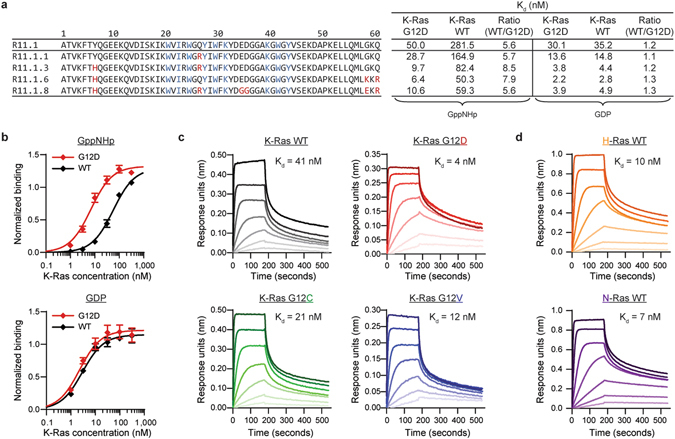
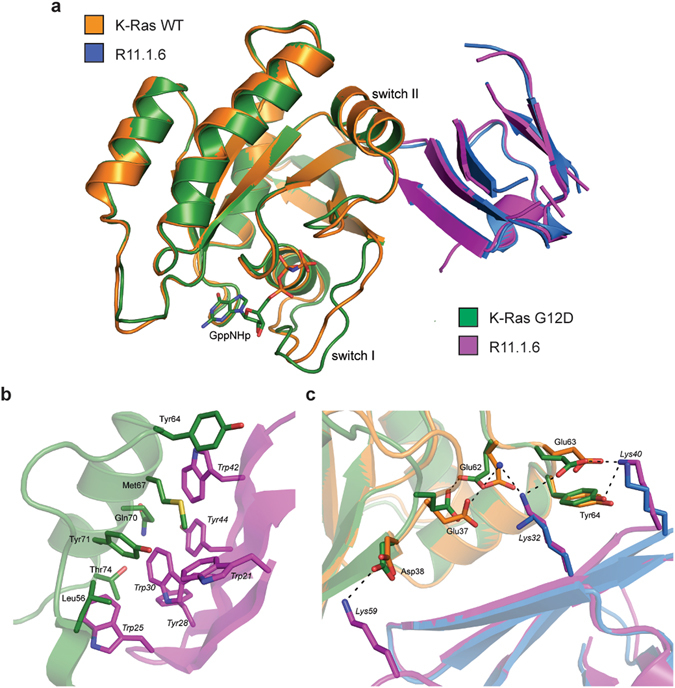
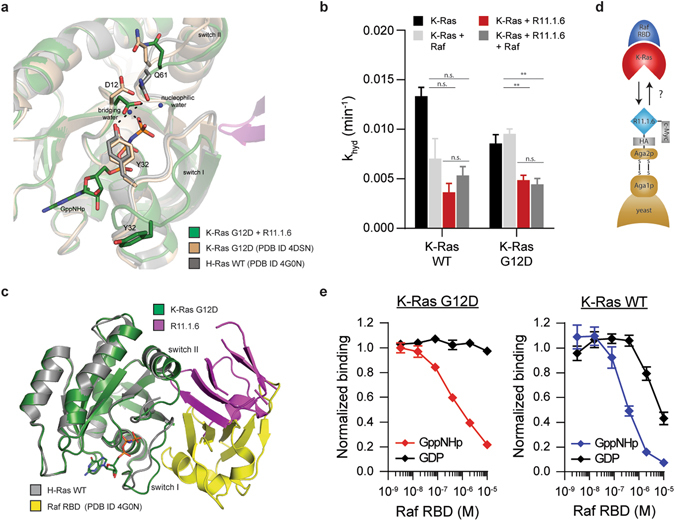
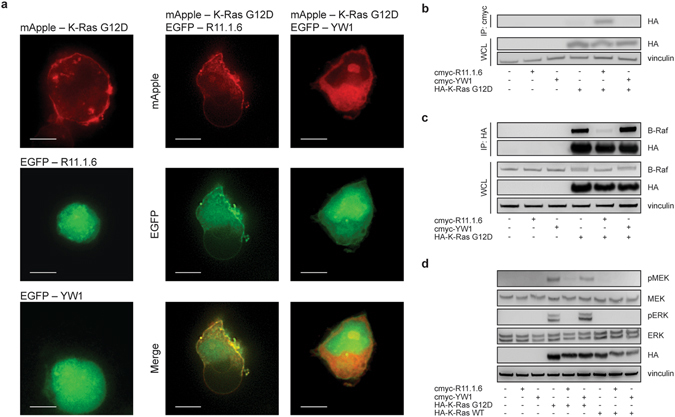
Ras is at the hub of signal transduction pathways controlling cell proliferation and survival. Its mutants, present in about 30% of human cancers, are major drivers of oncogenesis and render tumors unresponsive to standard therapies. Here we report the engineering of a protein scaffold for preferential binding to K-Ras G12D. This is the first reported inhibitor to achieve nanomolar affinity while exhibiting specificity for mutant over wild type (WT) K-Ras. Crystal structures of the protein R11.1.6 in complex with K-Ras WT and K-Ras G12D offer insight into the structural basis for specificity, highlighting differences in the switch I conformation as the major defining element in the higher affinity interaction. R11.1.6 directly blocks interaction with Raf and reduces signaling through the Raf/MEK/ERK pathway. Our results support greater consideration of the state of switch I and provide a novel tool to study Ras biology. Most importantly, this work makes an unprecedented contribution to Ras research in inhibitor development strategy by revealing details of a targetable binding surface. Unlike the polar interfaces found for Ras/effector interactions, the K-Ras/R11.1.6 complex reveals an extensive hydrophobic interface that can serve as a template to advance the development of high affinity, non-covalent inhibitors of K-Ras oncogenic mutants.
Overview
The claims and statistics of this paper haven’t been checked yet.
Free: it reads the open-access text and checks the first 5 claims that cite a source we can check. Create a free account to check every claim.
Integrity signals
Registry
Cites
Statistics
Figures
Verification
Claims the paper makes
The claims and statistics of this paper haven’t been checked yet.
Free: it reads the open-access text and checks the first 5 claims that cite a source we can check. Create a free account to check every claim.
Claims other papers make about this one
Each is checked against this paper’s own text: does it say what the citing paper says it does?
The cited source says what the claim attributes to it.
In the citing paper
“These include DARPins [71], cyclic peptides [72], KRAS–RAF protein–protein interaction inhibitors [73], and KRAS–GAP molecular glue-based approaches [74].”
From Precision Targeting of KRAS-Mutant Cancers: Beyond G12C Toward G12D and Pan-RAS Therapeutic Strategies (2026) · cites this paper as [73]
Self-check
Percentages, sums and reported differences re-computed from the paper’s own numbers.
The self-check needs the paper’s full text.
Citations
Cites
K-Ras(G12C) inhibitors allosterically control GTP affinity and effector interactions
Ostrem, J. M., Peters, U., Sos, M. L., Wells, J. A., & Shokat, K. M. (2013) · Nature · doi:10.1038/nature12796 · Cited by 2,557
Drugging the undruggable RAS: Mission Possible?
Cox, A. D., Fesik, S. W., Kimmelman, A. C., Luo, J., & Der, C. J. (2014) · Nature Reviews Drug Discovery · doi:10.1038/nrd4389 · Cited by 1,997
Phosphatidylinositol-3-OH kinase direct target of Ras
Rodriguez-Viciana, P., Warne, P. H., Dhand, R., Vanhaesebroeck, B., Gout, I., Fry, M. J., Waterfield, M. D., & Downward, J. (1994) · Nature · doi:10.1038/370527a0 · Cited by 1,954
T-Cell Transfer Therapy Targeting Mutant KRAS in Cancer
Tran, E., Robbins, P. F., Lu, Y.-C., Prickett, T. D., Gartner, J. J., Jia, L., Pasetto, A., Zheng, Z., Ray, S., Groh, E. M., et al. (2016) · New England Journal of Medicine · doi:10.1056/nejmoa1609279 · Cited by 1,368
A Cytoplasmic Protein Stimulates Normal N- ras p21 GTPase, But Does Not Affect Oncogenic Mutants
Trahey, M., & McCormick, F. (1987) · Science · doi:10.1126/science.2821624 · Cited by 1,211
Complexes of Ras⋅GTP with Raf-1 and Mitogen-Activated Protein Kinase Kinase
Moodie, S. A., Willumsen, B. M., Weber, M. J., & Wolfman, A. (1993) · Science · doi:10.1126/science.8503013 · Cited by 968
Stephen, A. G., Esposito, D., Bagni, R. K., & McCormick, F. (2014) · Cancer Cell · doi:10.1016/j.ccr.2014.02.017 · Cited by 795
Ras history: The saga continues
Cox, A. D., & Der, C. J. (2010) · Small GTPases · doi:10.4161/sgtp.1.1.12178 · Cited by 706
Allele-specific inhibitors inactivate mutant KRAS G12C by a trapping mechanism
Lito, P., Solomon, M., Li, L.-S., Hansen, R., & Rosen, N. (2016) · Science · doi:10.1126/science.aad6204 · Cited by 691
Maurer, T., Garrenton, L. S., Oh, A., Pitts, K., Anderson, D. J., Skelton, N. J., Fauber, B. P., Pan, B., Malek, S., Stokoe, D., et al. (2012) · Proceedings of the National Academy of Sciences · doi:10.1073/pnas.1116510109 · Cited by 618
Cited by
The current understanding of KRAS protein structure and dynamics
Pantsar, T. (2020) · Computational and Structural Biotechnology Journal · doi:10.1016/j.csbj.2019.12.004 · Cited by 282
Chemical acylation of an acquired serine suppresses oncogenic signaling of K-Ras(G12S)
Zhang, Z., Guiley, K. Z., & Shokat, K. M. (2022) · Nature Chemical Biology · doi:10.1038/s41589-022-01065-9 · Cited by 153
Nussinov, R., Jang, H., Tsai, C.-J., & Cheng, F. (2019) · PLOS Computational Biology · doi:10.1371/journal.pcbi.1006658 · Cited by 130
Ras Binder Induces a Modified Switch-II Pocket in GTP and GDP States
Gentile, D. R., Rathinaswamy, M. K., Jenkins, M. L., Moss, S. M., Siempelkamp, B. D., Renslo, A. R., Burke, J. E., & Shokat, K. M. (2017) · Cell Chemical Biology · doi:10.1016/j.chembiol.2017.08.025 · Cited by 115
“To our knowledge, this is the first structure of a drug-like fragment bound to active Ras (Kauke et al., 2017).”
BackgroundAn improved yeast surface display platform for the screening of nanobody immune libraries
Uchański, T., Zögg, T., Yin, J., Yuan, D., Wohlkönig, A., Fischer, B., Rosenbaum, D. M., Kobilka, B. K., Pardon, E., & Steyaert, J. (2019) · Scientific Reports · doi:10.1038/s41598-018-37212-3 · Cited by 128
Therapeutic targeting of RAS: New hope for drugging the “undruggable”
Khan, I., Rhett, J. M., & O'Bryan, J. P. (2020) · Biochimica et Biophysica Acta (BBA) - Molecular Cell Research · doi:10.1016/j.bbamcr.2019.118570 · Cited by 110
“6, a small, high affinity scaffold based on the DNA binding protein sso7d, had preferential and single digit nanomolar affinity for KRAS(G12D) (Kd= 4 nm) vs WT (Kd= 40nm) in the GTP bound state [145].”
BackgroundA conformation-specific ON-switch for controlling CAR T cells with an orally available drug
Zajc, C. U., Dobersberger, M., Schaffner, I., Mlynek, G., Pühringer, D., Salzer, B., Djinović‐Carugo, K., Steinberger, P., Linhares, A. D. S., Yang, N. J., et al. (2020) · Proceedings of the National Academy of Sciences · doi:10.1073/pnas.1911154117 · Cited by 105
“(C) Binders derived from the rcSso7d (K-Ras-specific mutant depicted; PDB ID code 5UFQ (33)) or FN3 scaffold (PDB ID code 1TTG (34)) were engineered to recognize hRBP4 loaded with A1120.”
Self-citationJohnson, C. W., Lin, Y.-J., Reid, D., Parker, J., Pavlopoulos, S., Dischinger, P., Graveel, C., Aguirre, A. J., Steensma, M., Haigis, K. M., et al. (2019) · Cell Reports · doi:10.1016/j.celrep.2019.07.026 · Cited by 89
“The concept has already been tested for KRas G12D with an inhibitor that has moderate specificity for this mutant (Kauke et al., 2017).”
BackgroundSelf-citationEngineering Strategies to Overcome the Stability–Function Trade-Off in Proteins
Teufl, M., Zajc, C. U., & Traxlmayr, M. W. (2022) · ACS Synthetic Biology · doi:10.1021/acssynbio.1c00512 · Cited by 81
Self-citationDynamic regulation of RAS and RAS signaling
Kölch, W., Berta, D., & Rosta, E. (2023) · Biochemical Journal · doi:10.1042/bcj20220234 · Cited by 106
Direct inhibition of RAS: Quest for the Holy Grail?
Spencer-Smith, R., & O’Bryan, J. P. (2019) · Seminars in Cancer Biology · doi:10.1016/j.semcancer.2017.12.005 · Cited by 86
“4 & 5E).(89) This scaffold reagent, termed R11.”
BackgroundSelective and noncovalent targeting of RAS mutants for inhibition and degradation
Teng, K. W., Tsai, S. T., Hattori, T., Fedele, C., Koide, A., Yang, C., Hou, X., Zhang, Y., Neel, B. G., O’Bryan, J. P., et al. (2021) · Nature Communications · doi:10.1038/s41467-021-22969-5 · Cited by 87
“2 C-terminal to the VHL domain (1-213) with a SSSSG linker and N-terminal HA tag (YPYDVPDYA) following a published design34.”
BackgroundSakamoto, K., Masutani, T., & Hirokawa, T. (2020) · Scientific Reports · doi:10.1038/s41598-020-78712-5 · Cited by 85
Drugging the Small GTPase Pathways in Cancer Treatment: Promises and Challenges
Prieto‐Domínguez, N., Parnell, C., & Teng, Y. (2019) · Cells · doi:10.3390/cells8030255 · Cited by 88
“6, a poly-β sheet protein, can also block Ras and Raf interaction, as well as MAPK pathway activation in embryonic kidney cells, also making it a promising molecule in targeting Ras-overexpressing cancer [83].”
BackgroundTargeting small GTPases: emerging grasps on previously untamable targets, pioneered by KRAS
Yin, G., Huang, J., Petela, J., Jiang, H., Zhang, Y., Gong, S., Wu, J., Liu, B., Shi, J., & Gao, Y. (2023) · Signal Transduction and Targeted Therapy · doi:10.1038/s41392-023-01441-4 · Cited by 82
“6 binds to SI/II-P with nanomolar affinity.(316) JAM20, another Targeting small GTPases: emerging grasps on previously untamable targets,.”
BackgroundParker, J. A., Volmar, A. Y., Pavlopoulos, S., & Mattos, C. (2018) · Structure · doi:10.1016/j.str.2018.03.018 · Cited by 81
Self-citationLim, S., Khoo, R., Juang, Y.-C., Gopal, P., Zhang, H., Yeo, C., Peh, K. M., Teo, J., Ng, S., Henry, B., et al. (2021) · ACS Central Science · doi:10.1021/acscentsci.0c01337 · Cited by 80
Li, S., Jang, H., Zhang, J., & Nussinov, R. (2018) · Structure · doi:10.1016/j.str.2018.01.011 · Cited by 79
“Several structural studies targeted the Ras/Raf-RBD complex exploiting the RBD crystal structures in complex with Ras (Aramini et al., 2015; Fetics et al., 2015; Kauke et al., 2017; Walker et al., 2014; Wan et al., 2004; Zeng et al., 1999).”
BackgroundKönning, D., & Kolmar, H. (2018) · Microbial Cell Factories · doi:10.1186/s12934-018-0881-3 · Cited by 83
“utilized the same libraries for the isolation of Sso7d mutants that revealed a preferential binding for the G12D mutant form of the GTPase K-ras over the wildtype enzyme [87].”
BackgroundProtein–Protein Interactions: Emerging Oncotargets in the RAS-ERK Pathway
García-Gómez, R., Bustelo, X. R., & Crespo, P. (2018) · Trends in Cancer · doi:10.1016/j.trecan.2018.07.002 · Cited by 72
Wang, Y., Ji, D., Lei, C., Chen, Y.-F., Qiu, Y., Li, X.-Y., Li, M.-Y., Ni, D., Pu, J., Zhang, J., et al. (2021) · Computational and Structural Biotechnology Journal · doi:10.1016/j.csbj.2021.01.044 · Cited by 60
Parker, J. A., & Mattos, C. (2018) · Cold Spring Harbor Perspectives in Medicine · doi:10.1101/cshperspect.a031427 · Cited by 61
“The first example of an inhibitor that takes advantage of differing conformational states between WT and mutant-activated K-Ras has been illustrated by the crystallization of a small engineered binding protein identified by yeast surface display in complex with KRasG12D-GppNHp and WT K-Ras-GppNHp (PDB ID 5UFQ and 5UFE…”
BackgroundInfluentialSelf-citationHydrogen Bond Surrogate Stabilization of β-Hairpins
Sawyer, N., & Arora, P. S. (2018) · ACS Chemical Biology · doi:10.1021/acschembio.8b00641 · Cited by 43
Exceptionally high-affinity Ras binders that remodel its effector domain
McGee, J. H., Shim, S. Y., Lee, S.-J., Swanson, P. K., Jiang, S. Y., Durney, M. A., & Verdine, G. L. (2018) · Journal of Biological Chemistry · doi:10.1074/jbc.m117.816348 · Cited by 40
“Such improved versions may be identified via counterscreening strategies such as that used to identify the KRas-GppNHp–selective A30R miniprotein mutant in this work or the recently reported KRas(G12D)-selective miniprotein based on the Sso7d scaffold (38).”
Self-citationDriving CARs with alternative navigation tools – the potential of engineered binding scaffolds
Zajc, C. U., Salzer, B., Taft, J. M., Reddy, S. T., Lehner, M., & Traxlmayr, M. W. (2020) · FEBS Journal · doi:10.1111/febs.15523 · Cited by 44
Self-citationMaking NSCLC Crystal Clear: How Kinase Structures Revolutionized Lung Cancer Treatment
Vilachã, J. F., Mitchel, S. C., Akele, M. Z., Evans, S., & Groves, M. R. (2020) · Crystals · doi:10.3390/cryst10090725 · Cited by 30
Biology, pathology, and therapeutic targeting of RAS
Rhett, J. M., Khan, I., & O’Bryan, J. P. (2020) · Advances in cancer research · doi:10.1016/bs.acr.2020.05.002 · Cited by 31
“1.6 is a sso7d protein that favored binding to GppNHp-loaded KRas(G12D) over wild-type RAS depending on the isoform of wild-type RAS (Table 2)(Kauke et al., 2017).”
BackgroundInfluentialWallon, L., Khan, I., Teng, K. W., Koide, A., Zuberi, M., Li, J., Ketavarapu, G., Traaseth, N. J., O’Bryan, J. P., & Koide, S. (2022) · Proceedings of the National Academy of Sciences · doi:10.1073/pnas.2204481119 · Cited by 26
Oncogenic KRas mobility in the membrane and signaling response
Nussinov, R., Tsai, C., & Jang, H. (2018) · Seminars in Cancer Biology · doi:10.1016/j.semcancer.2018.02.009 · Cited by 29
Eliminating oncogenic RAS: back to the future at the drawing board
Steffen, C. L., Kaya, P., Schaffner‐Reckinger, E., & Abankwa, D. (2023) · Biochemical Society Transactions · doi:10.1042/bst20221343 · Cited by 24
Recent advances in the biology and therapy of medullary thyroid carcinoma
Nelkin, B. D. (2017) · F1000Research · doi:10.12688/f1000research.12645.1 · Cited by 21
Li, Y.-C., Lytle, N. K., Gammon, S. T., Wang, L., Hayes, T. K., Sutton, M. N., Bast, R. C., Der, C. J., Piwnica-Worms, D. R., McCormick, F. P., et al. (2020) · Proceedings of the National Academy of Sciences · doi:10.1073/pnas.2000848117 · Cited by 21
“6, an engineered RAS binding protein (35) based on the small protein Sso7D (∼7 kDa, 63 amino acids) scaffold (36) (in vitro KRAS Kd = 2.”
BackgroundYeast Surface Display: New Opportunities for a Time-Tested Protein Engineering System
Raeeszadeh‐Sarmazdeh, M., & Boder, E. T. (2022) · Methods in molecular biology · doi:10.1007/978-1-0716-2285-8_1 · Cited by 19
An engineering strategy to target activated EGFR with CAR T cells
Dobersberger, M., Sumesgutner, D., Zajc, C. U., Salzer, B., Laurent, E., Emminger, D., Sylvander, E., Lehner, E., Teufl, M., Seigner, J., et al. (2024) · Cell Reports Methods · doi:10.1016/j.crmeth.2024.100728 · Cited by 23
“38 In these rcSso7d variants, a rigid b sheet surface is randomly mutated to generate the novel antigen binding site (Figure 1, orange positions in rcSso7d).”
Self-citationWiechmann, S., Maisonneuve, P., Grebbin, B. M., Hoffmeister, M., Kaulich, M., Clevers, H. C., Rajalingam, K., Kurinov, I. V., Farin, H. F., Sicheri, F., et al. (2020) · Journal of Biological Chemistry · doi:10.1074/jbc.ra119.011025 · Cited by 20
“6, based on a DNA-binding domain from a thermophilic archaeon, binds Ras in an active conformation and competes with effector binding (15).”
BackgroundTargeting the “undruggable” RAS with biologics
Whaby, M., Khan, I., & O’Bryan, J. P. (2022) · Advances in cancer research · doi:10.1016/bs.acr.2021.07.006 · Cited by 24
NMR in integrated biophysical drug discovery for RAS: past, present, and future
Marshall, C. B., KleinJan, F., Gebregiworgis, T., Lee, K., Fang, Z., Eves, B. J., Liu, N. F., Gasmi-Seabrook, G. M. C., Enomoto, M., & Ikura, M. (2020) · Journal of Biomolecular NMR · doi:10.1007/s10858-020-00338-6 · Cited by 16
“1.6 inhibitor was developed by directed evolution using the thermostable protein Sso7d as a scaffold (Kauke 2017).”
MethodInfluentialAffinity and Stability Analysis of Yeast Displayed Proteins
Zajc, C. U., Teufl, M., & Traxlmayr, M. W. (2022) · Methods in molecular biology · doi:10.1007/978-1-0716-2285-8_9 · Cited by 14
Self-citationKRAS Inhibitor that Simultaneously Inhibits Nucleotide Exchange Activity and Effector Engagement
Pagba, C. V., Gupta, A. K., Naji, A. K., van der Hoeven, D., Churion, K. A., Liang, X., Jakubec, J. L., Höök, M., Zuo, Y., de Kraatz, M. M., et al. (2022) · ACS Bio & Med Chem Au · doi:10.1021/acsbiomedchemau.2c00045 · Cited by 15
Targeting Ras with protein engineering
Tomazini, A., & Shifman, J. M. (2023) · Oncotarget · doi:10.18632/oncotarget.28469 · Cited by 16
Sutton, M. N., Gammon, S. T., Muzzioli, R., Pisaneschi, F., Radaram, B., Yang, P., & Piwnica-Worms, D. R. (2021) · Molecular Imaging and Biology · doi:10.1007/s11307-021-01689-8 · Cited by 12
A Raf-Competitive K-Ras Binder Can Fail to Functionally Antagonize Signaling
Kauke, M. J., Tisdale, A. W., Kelly, R. L., Braun, C. J., Hemann, M. T., & Wittrup, K. D. (2018) · Molecular Cancer Therapeutics · doi:10.1158/1535-7163.mct-17-0645 · Cited by 9
“1.6, a novel protein antagonist that specifically binds mutant K-Ras G12D with single-digit nanomolar affinity, showed a Ras binding epitope that is directly competitive with downstream effector Raf (16).”
BackgroundInfluentialSelf-citationSystems-Level Analysis of Bacterial Regulatory Small RNA Networks
Wong, J. L., Pang, C. N. I., Wilkins, M. R., & Tree, J. J. (2018) · RNA technologies · doi:10.1007/978-3-319-92967-5_6 · Cited by 7
Bioblockades join the assault on small G protein signalling
Mott, H. R., & Owen, D. (2018) · Seminars in Cancer Biology · doi:10.1016/j.semcancer.2018.01.001 · Cited by 6
“A scaffold from a thermophilic archaeon was used to generate (by yeast display) a protein that bound preferentially to the K-Ras G12D oncogenic mutant [59].”
MethodbioPROTACs establish RAS as a degradable target and provide novel RAS biology insightsPreprint
Lim, S., Khoo, R., Juang, Y.-C. A., Gopal, P., Zhang, H., Yeo, C., Peh, K. M., Teo, J., Ng, S., Henry, B., et al. (2020) · bioRxiv (Cold Spring Harbor Laboratory) · doi:10.1101/2020.06.26.174565 · Cited by 6
Absar, F., Novy, B., Nagy, E., Petrotchenko, E. V., Popov, K., Cross, J. B., Thapar, R., & Borchers, C. H. (2025) · Analytical Chemistry · doi:10.1021/acs.analchem.5c03103 · Cited by 6
“It was found that variations in Ras dynamics can be explored in developing isoform-and mutant-specific small molecule inhibitors (32).”
Singh, A., Erijman, A., Noronha, A., Kumar, H., Peleg, Y., Yarden, Y., & Shifman, J. M. (2021) · Journal of Biological Chemistry · doi:10.1016/j.jbc.2021.101353 · Cited by 7
“The use of these engineered proteins in cellular settings and animal models revealed that Ras inhibition is a promising strategy to counteract Ras-driven oncogenesis (28, 30, 31).”
BackgroundNMR 1H,13C, 15N resonance assignment of the G12C mutant of human K-Ras bound to GppNHp
Sharma, A. K., Lee, S., Zhou, M., Rigby, A. C., & Townson, S. A. (2019) · Biomolecular NMR Assignments · doi:10.1007/s12104-019-09882-1 · Cited by 6
Alternative Binding Scaffolds: Multipurpose Binders for Applications in Basic Research and Therapy
Könning, D., & Schaefer, J. V. (2020) · Learning materials in biosciences · doi:10.1007/978-3-030-54630-4_9 · Cited by 3
Generation of Thermally Stable Affinity Pairs for Sensitive, Specific Immunoassays
Corless, E. I., Hao, Y., Jia, H., Kongsuphol, P., Tay, D. M. Y., Ng, S. Y., & Sikes, H. D. (2022) · Methods in molecular biology · doi:10.1007/978-1-0716-2285-8_21 · Cited by 3
Facile Access to Branched Multispecific Proteins
Okon, A. M., Yang, J., Giancola, J. B., Molina, O., Sayers, J., Cheah, K. M., Li, Y., Strieter, E. R., & Raines, R. T. (2024) · Bioconjugate Chemistry · doi:10.1021/acs.bioconjchem.4c00162 · Cited by 4
A Computationally Guided Approach to Improve Expression of VHH Binders
Özdemir, E. S., Tolley, J., Goncalves, F., Gomes, M. M., Wagnell, E., Branchaud, B. P., Dubrovskaya, V., & Ranganathan, S. V. (2024) · Biophysica · doi:10.3390/biophysica4040038 · Cited by 2
Multiplexed imaging for probing RAS-RAF interactions in living cells
Ahmad, M., & Movileanu, L. (2023) · Biochimica et Biophysica Acta (BBA) - Biomembranes · doi:10.1016/j.bbamem.2023.184173 · Cited by 2
Evaluation of docking procedures reliability in affitins-partners interactions
Ranaudo, A., Cosentino, U., Greco, C., Moro, G., Bonardi, A., Maiocchi, A., & Moroni, E. (2022) · Frontiers in Chemistry · doi:10.3389/fchem.2022.1074249 · Cited by 1
“Notably, this region can be engineered in order to obtain a binding specificity also towards protein targets (Mouratou et al., 2007; Krehenbrink et al., 2008; Correa et al., 2014; Béhar et al., 2016; Goux et al., 2017; Kauke et al., 2017; Mukherjee et al., 2020; Zajc et al., 2020).”
BackgroundMotif-guided identification of KRAS-interacting proteins
Wu, S., Gao, X., Wu, D., Liu, L., Yao, H., Meng, X., Zhang, X., & Bai, F. (2024) · BMC Biology · doi:10.1186/s12915-024-02067-w · Cited by 1
“2A, 3A) [28, 29].”
Evaluating the protein–protein binding via the fast pulling of ligand scheme
Nguyen, H. A., Vu, V. V., Truong, V. K., Huynh, L. K., Lenon, G. B., & Ngo, S. T. (2025) · Chemical Physics Letters · doi:10.1016/j.cplett.2025.142136 · Cited by 1
Kano, Y. (2026) · International Journal of Molecular Sciences · doi:10.3390/ijms27135796
“These include DARPins [71], cyclic peptides [72], KRAS–RAF protein–protein interaction inhibitors [73], and KRAS–GAP molecular glue-based approaches [74].”
Development of split luciferase complementation probes sensing KRAS/effector interaction
Miyamoto, K., Ishihara, K., & Sawa, M. (2019) · Translational and Regulatory Sciences · doi:10.33611/trs.1_40
Targeting Cancer from a Structural Biology Perspective
Reid, D. F., & Mattos, C. (2019) · Springer eBooks · doi:10.1007/978-981-32-9816-3_12
Self-citationThe structural basis of allosteric communication networks of Ras GTPases and their oncogenic mutants
Volmar, A. Y. (2020) · Digital Repository Service (Northeastern University) · doi:10.17760/d20398260
曹, 修. (2023) · Hans Journal of Biomedicine · doi:10.12677/hjbm.2023.133039
Ogawa, Y., Nishimura, K., Nambo, M., Tsuchiya, Y., Oka, S., Fujimori, T., Ichihara, K., Matsumoto, A., Obara, K., & Kamura, T. (2025) · bioRxiv (Cold Spring Harbor Laboratory) · doi:10.1101/2025.02.13.638197
Ogawa, Y., Nishimura, K., Nambo, M., Tsuchiya, Y., Oka, S., Fujimori, T., Ichihara, K., Matsumoto, A., Obara, K., & Kamura, T. (2025) · Communications Biology · doi:10.1038/s42003-025-08912-0
“1.6 is a de novo binder of KRas(G12D) mutants 50,51 .”
InfluentialRajitha Rajeshwar, T., Lagergren, J. H., Smith, J. C., & Demerdash, O. (2025) · Biophysical Journal · doi:10.1016/j.bpj.2025.12.011
A yeast-based assay to screen protein-protein interaction modulators
Sudevan, A. (2021) · theses.fr (ABES) · doi:10.70675/9ab04dcaz498fz43ebz8762z012f3f86154c
Metadata
- Authors
- Kauke, M. J., Traxlmayr, M. W., Parker, J. A., Kiefer, J. D., Knihtila, R., McGee, J., Verdine, G., Mattos, C., & Wittrup, K. D.
- Affiliations
- Koch Institute for Integrative Cancer Research At MIT (US)
- Northeastern University (US)
- ETH Zurich (CH)
- Harvard University (US)
- Corresponding author
- Wittrup, K. Dane
- Venue
- Scientific Reports
- Published
- 2017-07-19
- Volume
- 7
- Issue
- 1
- Pages
- 5831-5831
- ISSN
- 2045-2322 (ISSN-L)
- PMC
- PMC5517481
- OpenAlex
- W2734751189
- Cited by
- 64
- References
- 30
- Citations by year
- 2025: 5 · 2024: 4 · 2023: 6 · 2022: 9 · 2021: 5 · 2020: 12 · 2019: 9 · 2018: 9 · 2017: 5
- FWCI
- 3.91
- Type
- journal article
- Language
- en
- Open access
- gold
- doi.org
- Licence
- cc-by
- creativecommons.org/licenses/by/4.0 (tdm)
- creativecommons.org/licenses/by/4.0 (vor)
- Locations
- Scientific Reports (publishedVersion, cc-by)
- Europe PMC (PubMed Central) (publishedVersion, cc-by)
- PubMed Central (publishedVersion, cc-by)
- PubMed (publishedVersion)
- DSpace@MIT (Massachusetts Institute of Technology) (submittedVersion, cc-by)
- DOAJ (DOAJ: Directory of Open Access Journals) (submittedVersion, cc-by-sa)
- Repository for Publications and Research Data (ETH Zurich) (submittedVersion, cc-by)
- Nature
- ETH Zürich Research Collection (cc-by)
- Funders
- National Science Foundation (P30-CA14051, 1228897, 0070319, 1517295)
- Koch Institute for Integrative Cancer Research, Massachusetts Institute of Technology (P30-CA14051, Grant P30-CA14051)
- Austrian Science Fund (P30-CA14051, J 3496)
- National Institutes of Health (0070319, 5-R01-, 1s10od016326-01a1)
- National Cancer Institute (CA96504, CA14051, CA174795, R01CA096504, Koch Institute Support (core) Grant P30-CA14051, CA096504, R01CA174795, Grant P30-CA14051, P30CA014051, P30-CA-14051)
- Topics
- Life Sciences › Biochemistry, Genetics and Molecular Biology › Molecular Biology › Protein Kinase Regulation and GTPase Signaling
- Life Sciences › Biochemistry, Genetics and Molecular Biology › Molecular Biology › Melanoma and MAPK Pathways
- Life Sciences › Biochemistry, Genetics and Molecular Biology › Molecular Biology › Protein Tyrosine Phosphatases
- Keywords
- KRAS G12D, BRAF, hydrophobic interface, MAPK/ERK pathway, RAS inhibitors, cancer therapy resistance, crystal structure
- MeSH terms
- Amino Acid Sequence, Humans, Mutation, Protein Binding, Recombinant Proteins, Protein Engineering, ras Proteins, Mutant Proteins, HEK293 Cells
About these checks
Registry, retraction, Cites and statistics results are computed, not judged, with one exception: a printed reference that no index lists is read once by a model before it counts as a citation error. Claims are extracted by a model and kept only when their quote appears verbatim in the text; each cited source is then checked, with a model’s help, for whether it says what the claim relies on. Those verdicts can be wrong — read the claim’s quote and the cited source before relying on one.
Statistics and arithmetic are recomputed, not judged.
Confidence bands are shown only for fields calibrated on our annotated test set. None is calibrated yet, so no band is shown.
What counts as a claim ›How we measure confidence ›How we check this ›
Are you an author, or do you see a problem with this page? Request a review
Data sources
Bibliographic data: Semantic Scholar, OpenAlex, Crossref.
Contains information from the Semantic Scholar Academic Graph Datasets, made available under the ODC Attribution License (ODC-BY 1.0).
Semantic Scholar’s data is described in: Kinney, R., et al. (2023). The Semantic Scholar Open Data Platform. arXiv:2301.10140.
