

Mitochondrial permeability transition pore: sensitivity to opening and mechanistic dependence on substrate availability
Open accessThe DOI matches its Crossref record; 64 of the 64 references it cites were found in a registry or an index.
Abstract
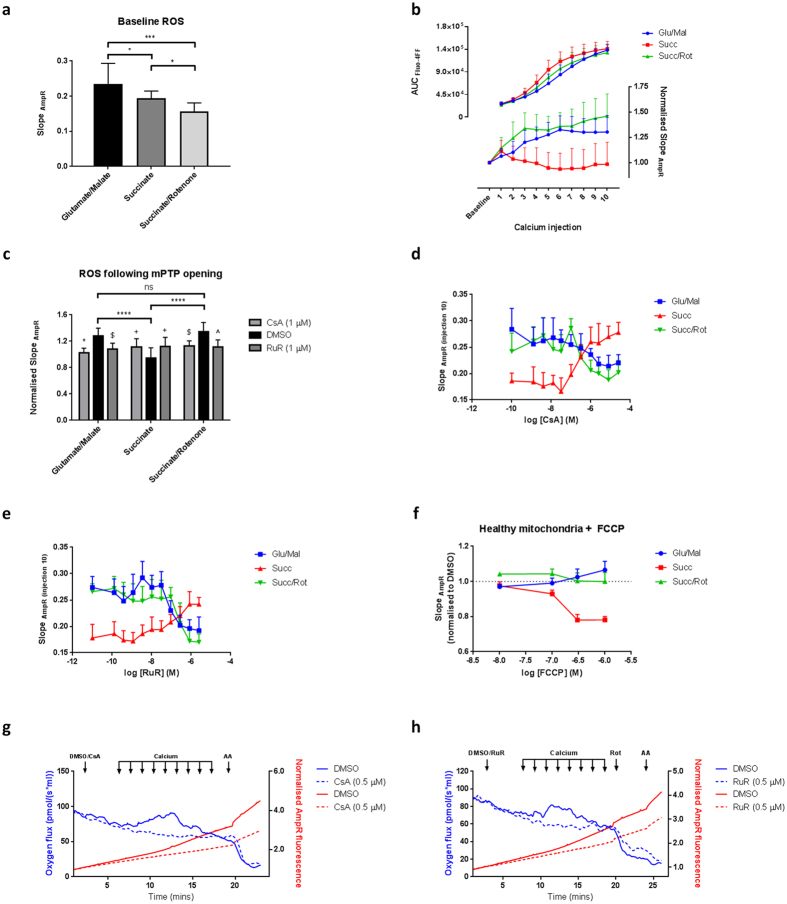
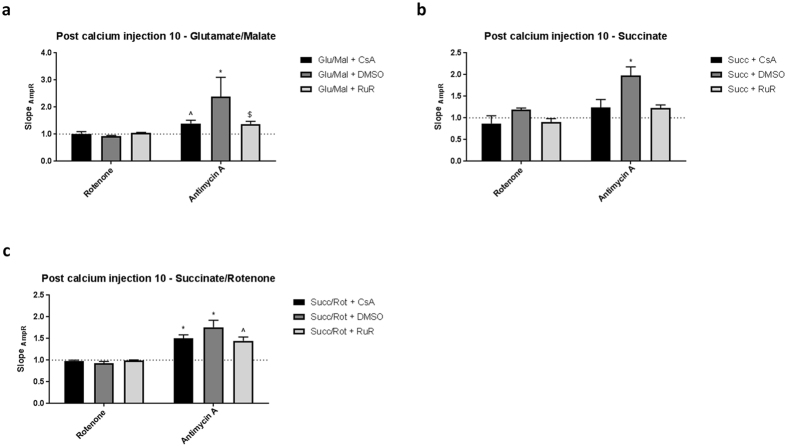
Mitochondrial Ca 2+ uptake has a key role in cellular Ca 2+ homeostasis. Excessive matrix Ca 2+ concentrations, especially when coincident with oxidative stress, precipitate opening of an inner mitochondrial membrane, high-conductance channel: the mitochondrial permeability transition pore (mPTP). mPTP opening has been implicated as a final cell death pathway in numerous diseases and therefore understanding conditions dictating mPTP opening is crucial for developing targeted therapies. Here, we have investigated the impact of mitochondrial metabolic state on the probability and consequences of mPTP opening. Isolated mitochondria were energised using NADH- or FADH 2 -linked substrates. The functional consequences of Ca 2+ -induced mPTP opening were assessed by Ca 2+ retention capacity, using fluorescence-based analysis, and simultaneous measurements of mitochondrial Ca 2+ handling, membrane potential, respiratory rate and production of reactive oxygen species (ROS). Succinate-induced, membrane potential-dependent reverse electron transfer sensitised mitochondria to mPTP opening. mPTP-induced depolarisation under succinate subsequently inhibited reverse electron transfer. Complex I-driven respiration was reduced after mPTP opening but sustained in the presence of complex II-linked substrates, consistent with inhibition of complex I-supported respiration by leakage of matrix NADH. Additionally, ROS generated at complex III did not sensitise mitochondria to mPTP opening. Thus, cellular metabolic fluxes and metabolic environment dictate mitochondrial functional response to Ca 2+ overload.
Overview
The claims and statistics of this paper haven’t been checked yet.
Free: it reads the open-access text and checks the first 5 claims that cite a source we can check. Create a free account to check every claim.
Integrity signals
Registry
Cites
Statistics
Figures
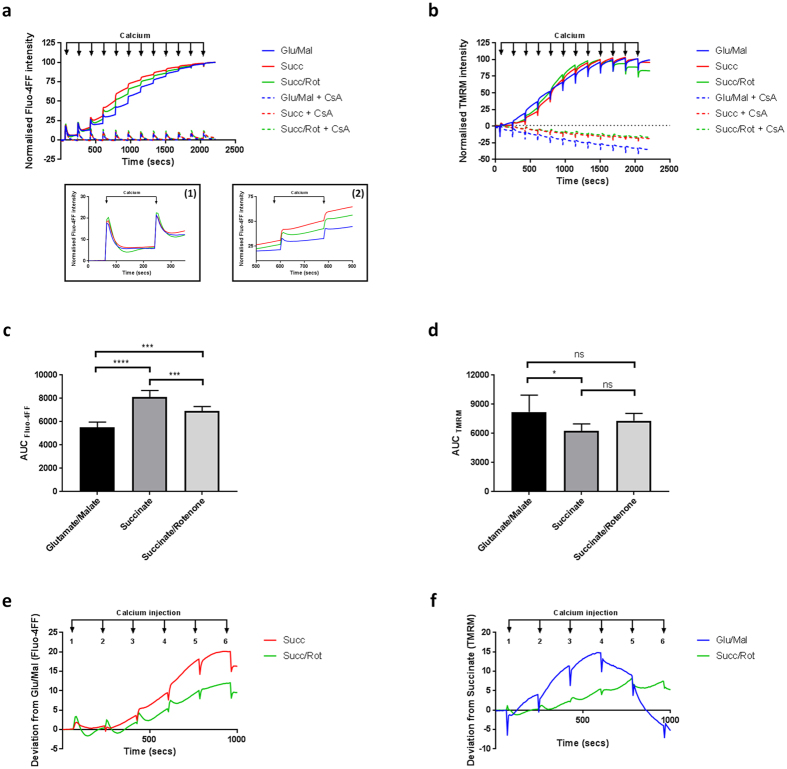
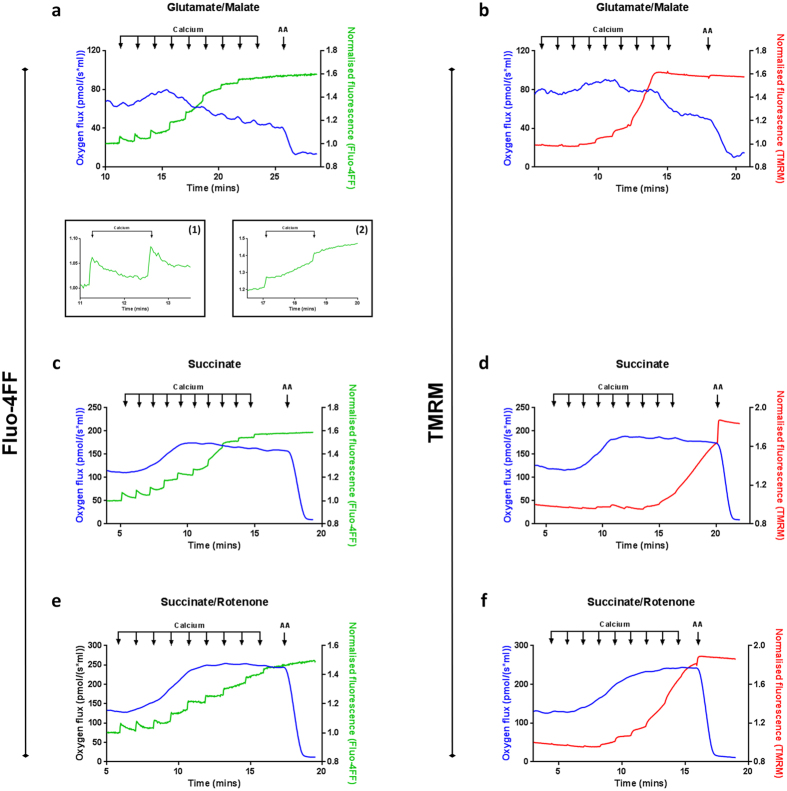
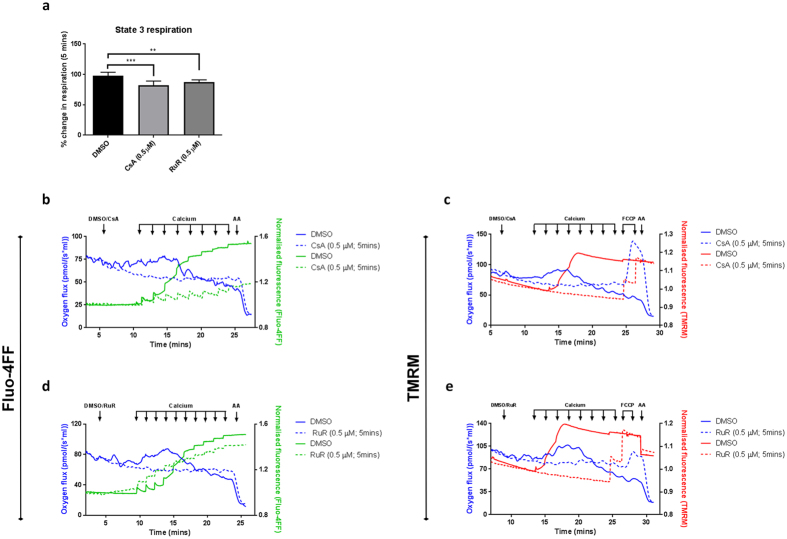
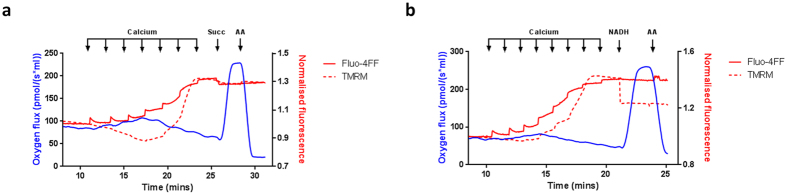
Verification
Claims the paper makes
The claims and statistics of this paper haven’t been checked yet.
Free: it reads the open-access text and checks the first 5 claims that cite a source we can check. Create a free account to check every claim.
Claims other papers make about this one
Each is checked against this paper’s own text: does it say what the citing paper says it does?
The cited source doesn’t support the claim as written.
In the citing paper
“matrix mtROS cannot escape from intact mitochondria, which was confirmed for isolated mitochondria as well as in cells [127,128,129].”
From Functions of ROS in Macrophages and Antimicrobial Immunity (2021) · cites this paper as [128]
Checked by a reasoning model — may be wrong.
Experimental — accuracy not yet measuredThe source backs part of the claim, not all of it — or backs it for a different population, condition or comparison.
In the citing paper
“Membrane-disrupting damage of mitochondria or opening of the mitochondrial permeability transition pore (mPTP) is necessary for matrix mtROS release into the cytosol [127,128,129,130,131].”
From Functions of ROS in Macrophages and Antimicrobial Immunity (2021) · cites this paper as [128]
Experimental — accuracy not yet measuredThe source backs part of the claim, not all of it — or backs it for a different population, condition or comparison.
In the citing paper
“The mPTP is a transmembrane protein located in the mitochondrial inner membrane, and normally opens in response to calcium accumulation in the mitochondrial matrix, oxidative stress and other stressors (Briston et al., 2017).”
From Cytoplasmic DNA: sources, sensing, and role in aging and disease (2021) · cites this paper as Briston et al., 2017
Experimental — accuracy not yet measured
Self-check
Percentages, sums and reported differences re-computed from the paper’s own numbers.
The self-check needs the paper’s full text.
Citations
Cites
How mitochondria produce reactive oxygen species
Murphy, M. P. (2009) · Biochemical Journal · doi:10.1042/bj20081386 · Cited by 8,207
Mitochondrial Reactive Oxygen Species (ROS) and ROS-Induced ROS Release
Zorov, D. B., Juhaszova, M., & Sollott, S. J. (2014) · Physiological Reviews · doi:10.1152/physrev.00026.2013 · Cited by 5,383
Mitochondrial formation of reactive oxygen species
Turrens, J. F. (2003) · The Journal of Physiology · doi:10.1113/jphysiol.2003.049478 · Cited by 5,084
Ischaemic accumulation of succinate controls reperfusion injury through mitochondrial ROS
Chouchani, E. T., Pell, V. R., Gaude, E., Aksentijević, D., Sundier, S. Y., Robb, E. L., Logan, A., Nadtochiy, S. M., Ord, E. N. J., Smith, A. C., et al. (2014) · Nature · doi:10.1038/nature13909 · Cited by 2,907
Self-citationAssessing mitochondrial dysfunction in cells
Brand, M. D., & Nicholls, D. G. (2011) · Biochemical Journal · doi:10.1042/bj20110162 · Cited by 2,842 · cited 3×
“Mitochondria were re-suspended (1 mg protein ml−1) in MAB supplemented with either: (1) 10 mM L-glutamic acid, monosodium salt; 2 mM L-malic acid sodium salt, (2) 10 mM succinate disodium salt or (3) 10 mM succinate disodium salt; 1 μM rotenone.”
MethodThe mitochondrial permeability transition pore and its role in cell death
CROMPTON, M. (1999) · Biochemical Journal · doi:10.1042/bj3410233 · Cited by 2,432 · cited 1×
“35 μM) was supplemented with either: (1) 20 mM L-glutamic acid, monosodium salt, FAC = 10 mM; 4 mM L-malic acid sodium salt, FAC = 2 mM, (2) 20 mM L-glutamic acid monosodium salt, FAC = 10 mM; 4 mM L-malic acid sodium salt, FAC = 2 mM; 6 mM NADH, FAC = 3 mM, (3) 20 mM succinate disodium salt, FAC = 10 mM or (4) 20 mM…”
Korshunov, S. S., Skulachev, V. P., & Starkov, A. A. (1997) · FEBS Letters · doi:10.1016/s0014-5793(97)01159-9 · Cited by 1,727
Topology of superoxide production from different sites in the mitochondrial electron transport chain
St-Pierre, J., Buckingham, J. A., Roebuck, S. J., & Brand, M. D. (2002) · Journal of Biological Chemistry · doi:10.1074/jbc.m207217200 · Cited by 1,545
Crompton, M., Ellinger, H., & COSTI, A. (1988) · PubMed Central · Cited by 962
Dimers of mitochondrial ATP synthase form the permeability transition pore
Giorgio, V., von Stockum, S., Antoniel, M., Fabbro, A., Fogolari, F., Forte, M., Glick, G. D., Petronilli, V., Zoratti, M., Szabó, I., et al. (2013) · Proceedings of the National Academy of Sciences · doi:10.1073/pnas.1217823110 · Cited by 922
Cited by
Items 101–159 of 159
Advances in the Study of Etiology and Molecular Mechanisms of Sensorineural Hearing Loss
He, C. F., Gai, H., Zhao, W., Zhang, H., Lai, L., Ding, C., Chen, L., & Ding, J. (2024) · Cell Biochemistry and Biophysics · doi:10.1007/s12013-024-01344-3 · Cited by 7
“At the same time, the loss of mitochondrial membrane potential activates the mPTP pore complex, enabling the entry of H 2 O and other small molecules, inducing mitochondrial permeability swelling, and initiating necrotic signaling pathways [112].”
Ikromova, F. R., Khasanov, F. A., Saidova, M. J., Shokirov, R. K., Gazieva, S., Khadjibaev, А. M., Tulyaganov, D. B., Аkalaev, R. N., Levitskaya, Y., Stopnitsky, A. A., et al. (2024) · Journal of Bioenergetics and Biomembranes · doi:10.1007/s10863-024-10047-6 · Cited by 7
“4A, D) (Briston et al. 2017).”
InfluentialBrain proteome changes after intracerebral hemorrhage in aged male and female mice
Kuppuswamy, S., Watson, N. J., Ledford, W. L., Pavri, B. A., Zhi, W., Gbadebo, M., Bonsack, F., Xu, H., & Sukumari‐Ramesh, S. (2025) · Neurobiology of Disease · doi:10.1016/j.nbd.2025.106936 · Cited by 7
“Mechanistically, mitochondrial dysfunction is often associated with the abnormal opening of the mitochondrial permeability transition pore (Briston et al., 2017), Ca2 + overload (Friberg and Wieloch, 2002; Norenberg and Rao, 2007), and mitochondrial DNA damage, causing oxidative stress and…”
Pharmacological Targeting of the Mitochondrial Permeability Transition Pore for Cardioprotection
Silva, F. S. G., Costa, C. F., Marques, R., Oliveira, P. J., & Pereira, G. C. (2018) · Springer eBooks · doi:10.1007/978-3-319-73344-9_20 · Cited by 7
Xing, Y., Ge, J., Wang, Y., Zhou, X., Yuan, Z., Lv, M., Zhao, M., Liu, L., Gong, D., Geng, T., et al. (2024) · International Journal of Biological Macromolecules · doi:10.1016/j.ijbiomac.2024.137222 · Cited by 6
Zhu, Y., Yu, J., Li, X., Chen, Z., Li, Y., Xiong, Y., He, H., Yin, S., Lan, D., Li, J., et al. (2025) · Frontiers in Veterinary Science · doi:10.3389/fvets.2025.1532473 · Cited by 6
“The mPTP, a transmembrane protein on the mitochondrial inner membrane, opens in response to oxidative stress (52), initiating permeability swelling, MMP decrease, and the release of Ca 2 + and proapoptotic factors from mitochondria, leading to apoptosis and necrosis (53).”
Andelová, N., Waczulíková, I., Kunstek, L., Talian, I., Ravíngerová, T., Jasova, M., Šutý, Š., & Ferko, M. (2022) · Scientific Reports · doi:10.1038/s41598-022-20696-5 · Cited by 7
Pinto, M. M., Dubouchaud, H., Jouve, C., Rigaudière, J., Patrac, V., Bouvier, D., Hininger‐Favier, I., Walrand, S., & Demaison, L. (2021) · Journal of Physiology and Biochemistry · doi:10.1007/s13105-021-00827-8 · Cited by 6
cGAS knockout inhibited endotoxin-induced uveitis in mice
Guo, Y., Gu, R., Wei, J., & Jiang, C. (2025) · Genes & Diseases · doi:10.1016/j.gendis.2025.101786 · Cited by 5
“32 This process releases cytochrome C and mtDNA into the cytosol via the collapse of the membrane potential.”
Liu, Q., Meng, F.-L., Du, J., Li, W., Zhou, S., & Li, Y. (2025) · Cellular Signalling · doi:10.1016/j.cellsig.2025.112170 · Cited by 6
Bonturi, C. R., Salu, B. R., Bonazza, C., Sinigaglia, R. D. C., Rodrigues, T., Flores, M. P. A., Chudzinski‐Tavassi, A. M., & Oliva, M. L. V. (2022) · Molecules · doi:10.3390/molecules27092956 · Cited by 5
Mazur, H. M., Merlavsky, V. M., Manko, B. O., & Manko, V. V. (2020) · The Ukrainian Biochemical Journal · doi:10.15407/ubj92.04.014 · Cited by 4
“Abnormally high Ca2+ concentrations (as a result of multiple additions to reach final concentration of 1020 μM) inhibit mitochondrial respiration after initial intensification and reduce mitochondrial membrane potential at oxidation of either succinate or mixture of malate and glutamate [21].”
BackgroundVascular Endothelial Dysfunction in Ischemic Reperfusion Injury Needs Constant Updating
Évora, P. R. B., Soares, R. O. D. S., & Albuquerque, A. A. S. (2022) · Current Drug Targets · doi:10.2174/1389450123666220519170221 · Cited by 4
Mitochondrial Permeability Transition in Stem Cells, Development, and Disease
Dumbali, S. P., & Wenzel, P. L. (2022) · Advances in experimental medicine and biology · doi:10.1007/5584_2022_720 · Cited by 5
Ant1 mutant mice bridge the mitochondrial and serotonergic dysfunctions in bipolar disorder
Chinopoulos, C. (2018) · Molecular Psychiatry · doi:10.1038/s41380-018-0251-x · Cited by 4
Granulopoietic Dysregulation in a Patient-Tailored Mouse Model of Barth Syndrome
Potchanant, E. A. S., Capitano, M. L., Edwards, D. M., Ramdas, B., Cooper, S. H., Ropa, J. P., Pay, S. L., Sheth, A. S., Snider, P. L., Vernon, H. J., et al. (2025) · Stem Cell Reviews and Reports · doi:10.1007/s12015-025-10945-1 · Cited by 3
“This phenomenon rapidly increases the permeability of the IMM, resulting in mitochondrial swelling and membrane depolarization, potentiating cell death [45–49 ].”
Valinsky, W. C., Ray, R. P., Schaefer, K., Grimm, J. B., Nicolini, C., Lavis, L. D., & Clapham, D. E. (2026) · Proceedings of the National Academy of Sciences · doi:10.1073/pnas.2535298123 · Cited by 4
Mitochondrial redox imbalance in triggering regulated cell death in kidney diseases
Zhu, W., Zou, R., Liu, R., Jia, Z., Zhang, Y., & Wu, M. (2026) · iScience · doi:10.1016/j.isci.2026.116405 · Cited by 3
Senneff, S., & Lowery, M. M. (2022) · Bulletin of Mathematical Biology · doi:10.1007/s11538-022-01079-3 · Cited by 3
“…in mouse muscle has suggested apoptosis may result from a combination of factors including hyperpolarizationandmPTPopening(aprecursortoapoptosis)(Briston et al. 2017), as well as altered BCL2 activity (Ciammola et al. 2006), a component of the calcium-stimulated apoptosis model described in…”
BackgroundNaumova, N., Koliada, A. K., Kuzub, N., & Vaiserman, A. M. (2023) · Elsevier eBooks · doi:10.1016/b978-0-12-823679-6.00012-6 · Cited by 3
Atkinson, P. J., Swami, M., Ridgway, N., Roberts, M., Kinghorn, J., Warner, T. T., Staddon, J. M., & Takle, A. K. (2023) · Drug Discovery Today · doi:10.1016/j.drudis.2023.103732 · Cited by 4
Self-citationThe role of Ca2+ signalling in the physiology and pathophysiology of exocrine pancreas
Chvanov, M., Voronina, S. G., Criddle, D. N., & Tepikin, A. V. (2020) · Current Opinion in Physiology · doi:10.1016/j.cophys.2020.07.013 · Cited by 3
Lee, J. M., Kim, H. O., Byun, S. W., Kim, Y.-J., Singh, M. K., Kim, S. S., & Yeo, S. G. (2026) · Materials Today Bio · doi:10.1016/j.mtbio.2026.103543 · Cited by 2
“At the same time, excessive mitochondrial ROS promotes sustained opening of the mitochondrial permeability transition pore, resulting in cytochrome c release and activation of caspase-dependent apoptosis [7,29].”
Success of Succinates and Prospects for Their Use in Critical Conditions
Sviridov, S. V., Av, B., Afanasyev, V. V., Orlov, Y. P., & Petrov, A. Y. (2024) · Antibiot Khimioter = Antibiotics and Chemotherapy · doi:10.37489/0235-2990-2024-69-7-8-80-91 · Cited by 2
Xie, H., Zhou, D., Yan, T., Yan, X., Wu, Q., & Chen, W. (2023) · Materials Express · doi:10.1166/mex.2023.2495 · Cited by 2
Gautam, S., Goswami, A., Chaurasia, P., & Dada, R. (2018) · Journal of Molecular and Genetic Medicine · doi:10.4172/1747-0862.1000351 · Cited by 2
“However, excessive mitochondrial Ca2+ entry consequent to stress stimuli causes opening of the mitochondrial permeability transition pore (mPTP) and release of proapoptotic factors which eventually lead to cell death [11].”
BackgroundThorne, B. N. (2023) · Open Access Victoria University of Wellington | Te Herenga Waka (Figshare) · doi:10.26686/wgtn.22714660 · Cited by 2
CerS2 Is a Druggable Target in Triple-Negative Breast Cancer
Alatawi, H., Haritha, N. H., Ai, L., Mahmud, I., Gour, A., Singh, A., Baek, D., Yan, B., Maharjan, C. K., Zhang, W., et al. (2026) · Molecular Cancer Therapeutics · doi:10.1158/1535-7163.mct-25-1159 · Cited by 1
Lee, C., Lin, Y., Lee, K.-H., Sun, Y.-S., Chang, T., Chi, M., Lin, Z., Yamamoto, A., Peng, K., & Liu, J. (2026) · International Journal of Biological Sciences · doi:10.7150/ijbs.133993 · Cited by 1
“Importantly, the mitochondrial ROS scavenger Mito-TEMPO attenuated superoxide accumulation and partially rescued apoptosis, supporting a contributory role of oxidative stress in OA-OEt cytotoxicity [27, 32].”
Isakova, E. P., Klein, O. I., & Deryabina, Y. I. (2021) · Microbiology Research · doi:10.3390/microbiolres12020029 · Cited by 1
MULTIPLE SCLEROSIS, MITOCHONDRIA AND DIET THERAPY: AN OVERVIEW
Ghosh, J. (2021) · GLOBAL JOURNAL FOR RESEARCH ANALYSIS · doi:10.36106/gjra/4312246 · Cited by 1
Yaremkevych, O., & Lubenets, V. I. (2023) · Regulatory Mechanisms in Biosystems · doi:10.15421/022322 · Cited by 1
Priyono, A. K., Miake, J., Sawano, T., Ichihara, Y., Nagata, K., Okamura, A., Tomomori, T., Takami, A., Notsu, T., Yamamoto, K., et al. (2024) · Yonago acta medica · doi:10.33160/yam.2024.02.005 · Cited by 1
Investigation into the molecular complexity of Alzheimer's disease : an amyloid-β centered approach
Cioffi, F. (2019) · doi:10.3990/1.9789036548410 · Cited by 1
Walia, V., Kaushik, D. K., Mittal, V., Kumar, K., Verma, R., Parashar, J., Akter, R., Rahman, M. H., Bhatia, S., Al‐Harrasi, A., et al. (2021) · Molecular Neurobiology · doi:10.1007/s12035-021-02665-7 · Cited by 1
Gene expression and metabolism in malignant hyperthermia susceptible and normal skeletal muscle
Chang, L. (2020) · White Rose eTheses Online (University of Leeds, The University of Sheffield, University of York)
Friedman, D. J., & Shah, S. S. (2019) · Faculty Opinions – Post-Publication Peer Review of the Biomedical Literature · doi:10.3410/f.735403474.793565712
Schumacher, B. (2019) · Faculty Opinions – Post-Publication Peer Review of the Biomedical Literature · doi:10.3410/f.735403474.793563330
Nyathi, Y. (2019) · Faculty Opinions – Post-Publication Peer Review of the Biomedical Literature · doi:10.3410/f.735403474.793566076
Arandarčikaitė, O. (2023) · Biomedical Journal of Scientific & Technical Research · doi:10.26717/bjstr.2023.51.008169
Rekuvienė, E., Ivanovienė, L., Borutaitė, V., & Morkūnienė, R. (2024) · Biomedicines · doi:10.3390/biomedicines12102342
“Importantly, recent evidence suggests that sensitivity of mPTP opening may depend on substrate availability and that upon mPTP opening, the respiratory rate of NADH-linked substrates was decreased, while FADH 2 -driven mitochondrial respiration remained at an elevated plateau [49].”
BackgroundSkeletal muscle mitochondria-endoplasmic reticulum contacts (MERCs)
Allen, R. J. (2024) · Iowa Research Online (The University of Iowa) · doi:10.25820/etd.007141
Guo, Y., Gu, R., 干德康, Hu, F., Li, G., & Xu, G. (2020) · Figshare · doi:10.6084/m9.figshare.13159154
Guo, Y., Gu, R., 干德康, Hu, F., Li, G., & Xu, G. (2020) · Figshare · doi:10.6084/m9.figshare.13159151
Ren, Z. (2024) · UCL Discovery (University College London)
Semel, M. G., Lukasiewicz, C. J., Skinner, S. K., Viggars, M. R., Noh, S. G., Picard, M., Mannings, A.-G., Cohen, M. S., Wolan, D. W., RYAN, T. E., et al. (2026) · The Journal of Physiology · doi:10.1113/jp291213
H9c2 シンキン サイボウ ニ オケル チシリョウ イカ ノ ドキソルビシン ニ タイスル ミトコンドリア ノ ハンノウ : リンサンカ CaMKII ノ ヤクワリ
Priyono, A. K. (2024) · Institutional Repositories DataBase (IRDB)
Deciphering the Interlink between STAT3 and MAPKs in Ischemia/Reperfusion and Ischemic Conditioning
Harhous, Z. (2019) · theses.fr (ABES) · doi:10.70675/20048ff2zb169z42acz8aefzad821856b904
Shahannaz, D. C., & Sugiura, T. (2026) · Complications · doi:10.3390/complications3030013
“In the perioperative heart, excessive cytosolic calcium overwhelms this regulatory function and sensitizes the mitochondrial permeability transition pore [130–133].”
Oprea, Ș., Dumitru, A. V., Dumitrescu, D., Fulina, M., Șerban, M., Covache-Busuioc, R.-A., Toader, C., & Eva, L. (2026) · Medical Sciences · doi:10.3390/medsci14030365
“If this process progresses, it may lead to opening of the mPTP and subsequent collapse of the proton gradient, ATP depletion, and release of pro-apoptotic factors into the cytoplasm [85].”
Feng, X., Zhou, X., Jia, S., Chen, J., Li, P., Yang, Y., Wu, W., Jiang, L., Zeng, W., Li, C., et al. (2026) · Antioxidants · doi:10.3390/antiox15070824
“Persistent oxidative injury triggers mitochondrial permeability transition pore opening, loss of ∆Ψ m, and activation of the intrinsic apoptotic pathway [33,34].”
Huang, L., Huang, R., Lv, W., Li, Z., Tu, Y., Song, G., & Luo, Q. (2026) · Journal of Cellular Physiology · doi:10.1002/jcp.70220
“In addition, the opening of the mitochondrial permeability transition pore (mPTP) also mediates mtDNA release into the cytosol, which is typically triggered by calcium overload in the mitochondrial matrix, oxidative stress, or other stressors (Briston et al. 2017).”
Liu, Y., Xie, S., He, F., Arés, I., Martínez, M., López-Torres, B., Maximiliano, J.-E., Martínez-Larrañaga, M.-R., Anadón, A., Wang, X., et al. (2026) · Journal of Hazardous Materials · doi:10.1016/j.jhazmat.2026.143726
Metadata
- Authors
- Briston, T., Roberts, M., Lewis, S., Powney, B., M. Staddon, J., Szabadkai, G., & Duchen, M. R.
- Affiliations
- Eisai (United Kingdom) (GB)
- University College London (GB)
- Corresponding author
- Briston, Thomas
- Venue
- Scientific Reports
- Published
- 2017-09-05
- Volume
- 7
- Issue
- 1
- Pages
- 10492-10492
- ISSN
- 2045-2322 (ISSN-L)
- PMC
- PMC5585167
- OpenAlex
- W2753044726
- Semantic Scholar
- be2057f7c47d25697e5311156756bcf4e8c4f34b
- Cited by
- 152
- References
- 64
- Citations by year
- 2026: 11 · 2025: 9 · 2024: 18 · 2023: 14 · 2022: 17 · 2021: 31 · 2020: 26 · 2019: 18 · 2018: 8
- FWCI
- 5.81
- Type
- journal article
- Language
- en
- Open access
- gold
- doi.org
- Licence
- cc-by
- creativecommons.org/licenses/by/4.0 (tdm)
- creativecommons.org/licenses/by/4.0 (vor)
- Locations
- Scientific Reports (publishedVersion, cc-by)
- PubMed Central (publishedVersion, cc-by)
- PubMed (publishedVersion)
- DOAJ (DOAJ: Directory of Open Access Journals) (submittedVersion)
- UCL Discovery (University College London) (submittedVersion)
- Padua Research Archive (University of Padova) (submittedVersion, cc-by)
- Funders
- Eisai
- Topics
- Life Sciences › Biochemistry, Genetics and Molecular Biology › Molecular Biology › Mitochondrial Function and Pathology
- Life Sciences › Biochemistry, Genetics and Molecular Biology › Molecular Biology › Cell death mechanisms and regulation
- Life Sciences › Biochemistry, Genetics and Molecular Biology › Molecular Biology › ATP Synthase and ATPases Research
- Keywords
- mitochondrial permeability transition pore, mitochondrial calcium uptake, calcium retention capacity, reverse electron transfer, succinic acid, mitochondrial membrane potential, reactive oxygen species, oxidative stress, mitochondrial calcium overload, cell death
- MeSH terms
- Mitochondrial Permeability Transition Pore, Animals, Calcium, Energy Metabolism, Female, Hydrogen Peroxide, Mitochondria, NAD, Oxygen Consumption, Ion Channel Gating, Reactive Oxygen Species, Cell Respiration, Succinic Acid, Mitochondrial Membrane Transport Proteins, Electron Transport Complex I, Rats, Membrane Potential, Mitochondrial
About these checks
Registry, retraction, Cites and statistics results are computed, not judged, with one exception: a printed reference that no index lists is read once by a model before it counts as a citation error. Claims are extracted by a model and kept only when their quote appears verbatim in the text; each cited source is then checked, with a model’s help, for whether it says what the claim relies on. Those verdicts can be wrong — read the claim’s quote and the cited source before relying on one.
Statistics and arithmetic are recomputed, not judged.
Confidence bands are shown only for fields calibrated on our annotated test set. None is calibrated yet, so no band is shown.
What counts as a claim ›How we measure confidence ›How we check this ›
Are you an author, or do you see a problem with this page? Request a review
Data sources
Bibliographic data: Semantic Scholar, OpenAlex, Crossref.
Contains information from the Semantic Scholar Academic Graph Datasets, made available under the ODC Attribution License (ODC-BY 1.0).
Semantic Scholar’s data is described in: Kinney, R., et al. (2023). The Semantic Scholar Open Data Platform. arXiv:2301.10140.
