

Mitochondrial permeability transition pore: sensitivity to opening and mechanistic dependence on substrate availability
Open accessThe DOI matches its Crossref record; 64 of the 64 references it cites were found in a registry or an index.
Abstract
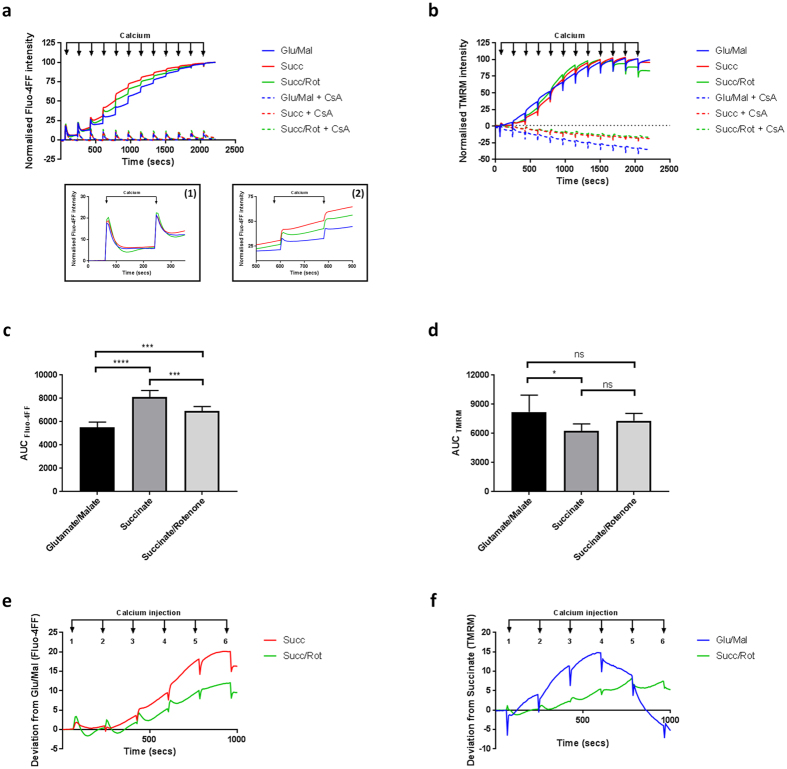
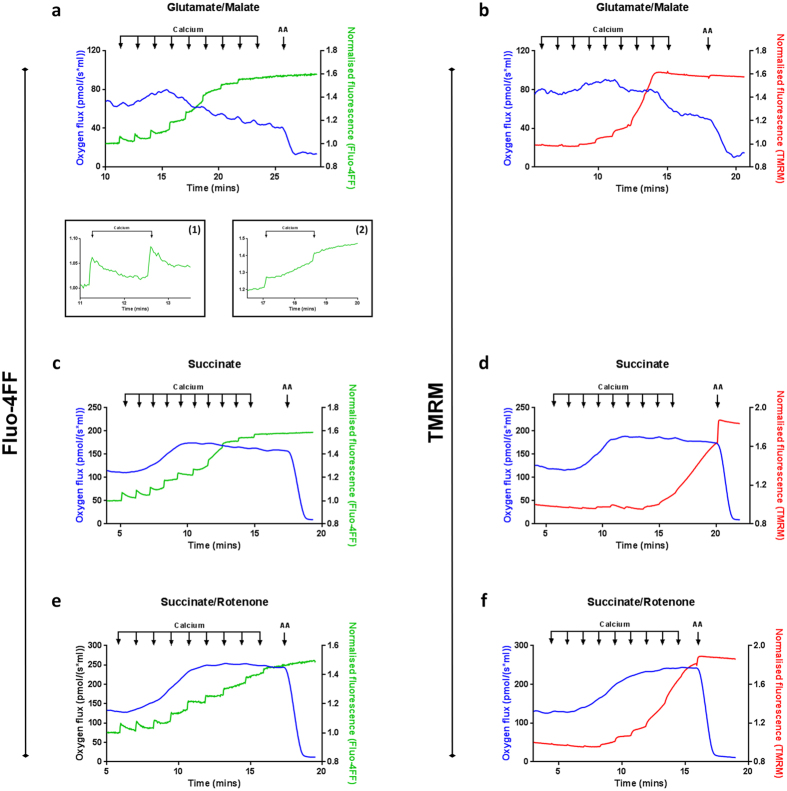
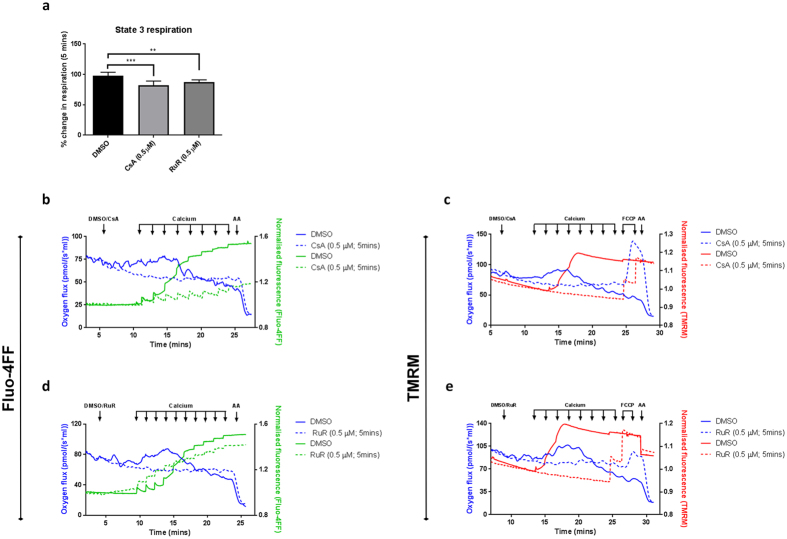
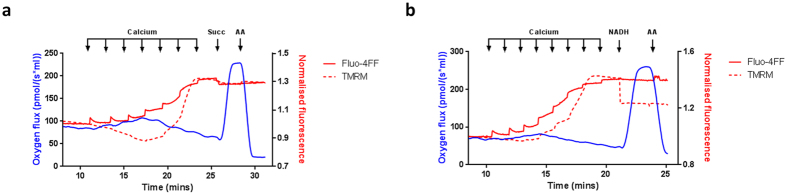
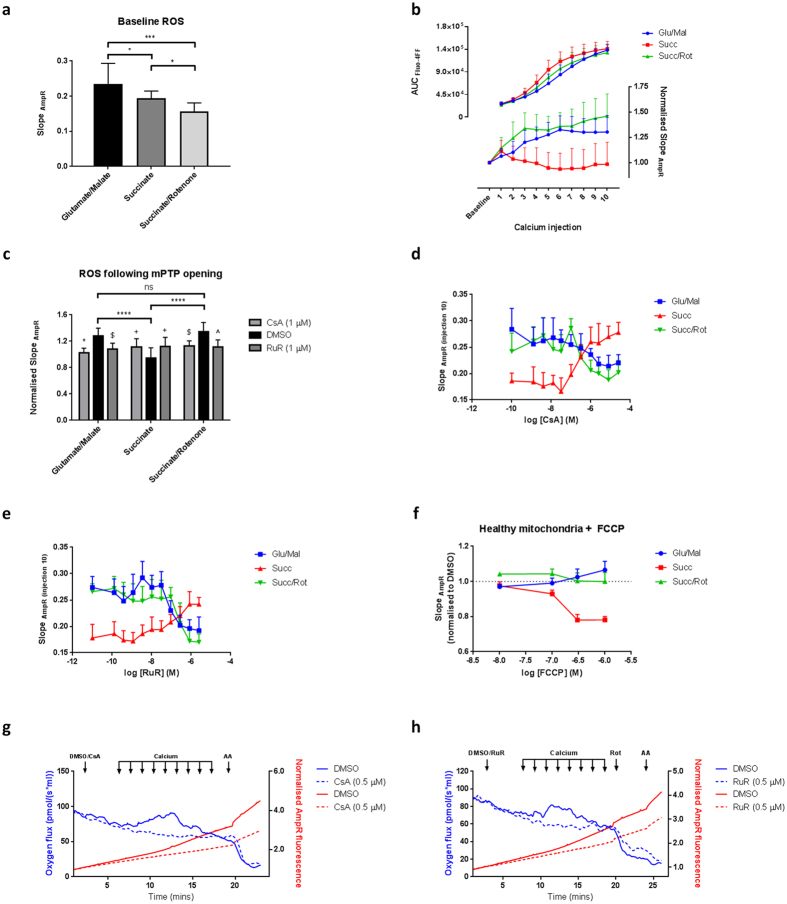
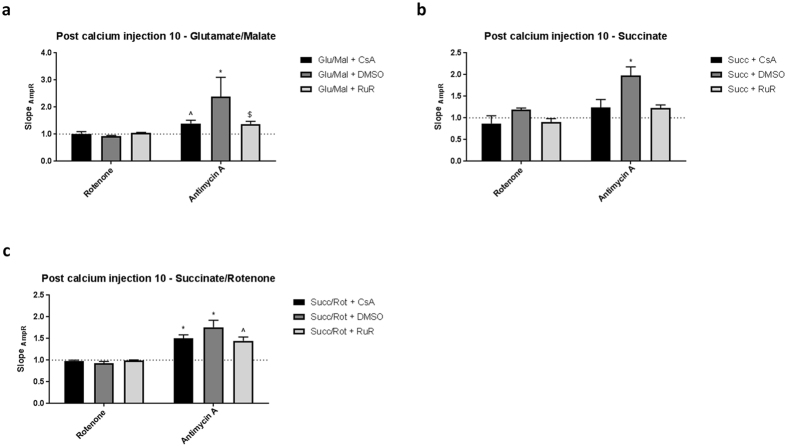
Mitochondrial Ca 2+ uptake has a key role in cellular Ca 2+ homeostasis. Excessive matrix Ca 2+ concentrations, especially when coincident with oxidative stress, precipitate opening of an inner mitochondrial membrane, high-conductance channel: the mitochondrial permeability transition pore (mPTP). mPTP opening has been implicated as a final cell death pathway in numerous diseases and therefore understanding conditions dictating mPTP opening is crucial for developing targeted therapies. Here, we have investigated the impact of mitochondrial metabolic state on the probability and consequences of mPTP opening. Isolated mitochondria were energised using NADH- or FADH 2 -linked substrates. The functional consequences of Ca 2+ -induced mPTP opening were assessed by Ca 2+ retention capacity, using fluorescence-based analysis, and simultaneous measurements of mitochondrial Ca 2+ handling, membrane potential, respiratory rate and production of reactive oxygen species (ROS). Succinate-induced, membrane potential-dependent reverse electron transfer sensitised mitochondria to mPTP opening. mPTP-induced depolarisation under succinate subsequently inhibited reverse electron transfer. Complex I-driven respiration was reduced after mPTP opening but sustained in the presence of complex II-linked substrates, consistent with inhibition of complex I-supported respiration by leakage of matrix NADH. Additionally, ROS generated at complex III did not sensitise mitochondria to mPTP opening. Thus, cellular metabolic fluxes and metabolic environment dictate mitochondrial functional response to Ca 2+ overload.
Overview
The claims and statistics of this paper haven’t been checked yet.
Free: it reads the open-access text and checks the first 5 claims that cite a source we can check. Create a free account to check every claim.
Integrity signals
Registry
Cites
Statistics
Figures
Verification
Claims the paper makes
The claims and statistics of this paper haven’t been checked yet.
Free: it reads the open-access text and checks the first 5 claims that cite a source we can check. Create a free account to check every claim.
Claims other papers make about this one
Each is checked against this paper’s own text: does it say what the citing paper says it does?
The cited source doesn’t support the claim as written.
In the citing paper
“matrix mtROS cannot escape from intact mitochondria, which was confirmed for isolated mitochondria as well as in cells [127,128,129].”
From Functions of ROS in Macrophages and Antimicrobial Immunity (2021) · cites this paper as [128]
Checked by a reasoning model — may be wrong.
Experimental — accuracy not yet measuredThe source backs part of the claim, not all of it — or backs it for a different population, condition or comparison.
In the citing paper
“Membrane-disrupting damage of mitochondria or opening of the mitochondrial permeability transition pore (mPTP) is necessary for matrix mtROS release into the cytosol [127,128,129,130,131].”
From Functions of ROS in Macrophages and Antimicrobial Immunity (2021) · cites this paper as [128]
Experimental — accuracy not yet measuredThe source backs part of the claim, not all of it — or backs it for a different population, condition or comparison.
In the citing paper
“The mPTP is a transmembrane protein located in the mitochondrial inner membrane, and normally opens in response to calcium accumulation in the mitochondrial matrix, oxidative stress and other stressors (Briston et al., 2017).”
From Cytoplasmic DNA: sources, sensing, and role in aging and disease (2021) · cites this paper as Briston et al., 2017
Experimental — accuracy not yet measured
Self-check
Percentages, sums and reported differences re-computed from the paper’s own numbers.
The self-check needs the paper’s full text.
Citations
Cites
How mitochondria produce reactive oxygen species
Murphy, M. P. (2009) · Biochemical Journal · doi:10.1042/bj20081386 · Cited by 8,207
Mitochondrial Reactive Oxygen Species (ROS) and ROS-Induced ROS Release
Zorov, D. B., Juhaszova, M., & Sollott, S. J. (2014) · Physiological Reviews · doi:10.1152/physrev.00026.2013 · Cited by 5,383
Mitochondrial formation of reactive oxygen species
Turrens, J. F. (2003) · The Journal of Physiology · doi:10.1113/jphysiol.2003.049478 · Cited by 5,084
Ischaemic accumulation of succinate controls reperfusion injury through mitochondrial ROS
Chouchani, E. T., Pell, V. R., Gaude, E., Aksentijević, D., Sundier, S. Y., Robb, E. L., Logan, A., Nadtochiy, S. M., Ord, E. N. J., Smith, A. C., et al. (2014) · Nature · doi:10.1038/nature13909 · Cited by 2,907
Self-citationThe mitochondrial permeability transition pore and its role in cell death
CROMPTON, M. (1999) · Biochemical Journal · doi:10.1042/bj3410233 · Cited by 2,432 · cited 1×
“35 μM) was supplemented with either: (1) 20 mM L-glutamic acid, monosodium salt, FAC = 10 mM; 4 mM L-malic acid sodium salt, FAC = 2 mM, (2) 20 mM L-glutamic acid monosodium salt, FAC = 10 mM; 4 mM L-malic acid sodium salt, FAC = 2 mM; 6 mM NADH, FAC = 3 mM, (3) 20 mM succinate disodium salt, FAC = 10 mM or (4) 20 mM…”
Assessing mitochondrial dysfunction in cells
Brand, M. D., & Nicholls, D. G. (2011) · Biochemical Journal · doi:10.1042/bj20110162 · Cited by 2,405 · cited 3×
“Mitochondria were re-suspended (1 mg protein ml−1) in MAB supplemented with either: (1) 10 mM L-glutamic acid, monosodium salt; 2 mM L-malic acid sodium salt, (2) 10 mM succinate disodium salt or (3) 10 mM succinate disodium salt; 1 μM rotenone.”
MethodKorshunov, S. S., Skulachev, V. P., & Starkov, A. A. (1997) · FEBS Letters · doi:10.1016/s0014-5793(97)01159-9 · Cited by 1,727
Topology of superoxide production from different sites in the mitochondrial electron transport chain
St-Pierre, J., Buckingham, J. A., Roebuck, S. J., & Brand, M. D. (2002) · Journal of Biological Chemistry · doi:10.1074/jbc.m207217200 · Cited by 1,545
Crompton, M., Ellinger, H., & COSTI, A. (1988) · PubMed Central · Cited by 962
Dimers of mitochondrial ATP synthase form the permeability transition pore
Giorgio, V., von Stockum, S., Antoniel, M., Fabbro, A., Fogolari, F., Forte, M., Glick, G. D., Petronilli, V., Zoratti, M., Szabó, I., et al. (2013) · Proceedings of the National Academy of Sciences · doi:10.1073/pnas.1217823110 · Cited by 922
Mitochondrial dysfunction in Parkinson's disease
Bose, A., & Beal, M. F. (2016) · Journal of Neurochemistry · doi:10.1111/jnc.13731 · Cited by 841
Activation of molecular oxygen by flavins and flavoproteins.
Massey, V. (1994) · Journal of Biological Chemistry · doi:10.1016/s0021-9258(17)31664-2 · Cited by 816
The Ca2+-induced membrane transition in mitochondria
Haworth, R. A., & Hunter, D. R. (1979) · Archives of Biochemistry and Biophysics · doi:10.1016/0003-9861(79)90372-2 · Cited by 793
Halestrap, A. P., & Davidson, A. M. (1990) · Biochemical Journal · doi:10.1042/bj2680153 · Cited by 747
Di Lisa, F., Menabò, R., Canton, M., Barile, M., & Bernardi, P. (2001) · Journal of Biological Chemistry · doi:10.1074/jbc.m006825200 · Cited by 678
Petronilli, V., Miotto, G., Canton, M., Brini, M., Colonna, R., Bernardi, P., & Di Lisa, F. (1999) · Biophysical Journal · doi:10.1016/s0006-3495(99)77239-5 · Cited by 675
Alavian, K. N., Beutner, G., Lazrove, E., Sacchetti, S., Park, H.-A., Licznerski, P., Li, H., Nabili, P., Hockensmith, K., Graham, M., et al. (2014) · Proceedings of the National Academy of Sciences · doi:10.1073/pnas.1401591111 · Cited by 592
Mitochondrial Dysfunction and Biogenesis in Neurodegenerative diseases: Pathogenesis and Treatment
Golpich, M., Amini, E., Mohamed, Z., Azman Ali, R., Mohamed Ibrahim, N., & Ahmadiani, A. (2017) · CNS Neuroscience & Therapeutics · doi:10.1111/cns.12655 · Cited by 532
Halestrap, A., & Brenner, C. (2003) · Current Medicinal Chemistry · doi:10.2174/0929867033457278 · Cited by 503
Bernardi, P., & Di Lisa, F. (2015) · Journal of Molecular and Cellular Cardiology · doi:10.1016/j.yjmcc.2014.09.023 · Cited by 499
Crompton, M., Virji, S., & Ward, J. M. (1998) · European Journal of Biochemistry · doi:10.1046/j.1432-1327.1998.2580729.x · Cited by 489
Lambert, A. J., & Brand, M. D. (2004) · Journal of Biological Chemistry · doi:10.1074/jbc.m406576200 · Cited by 480
Halestrap, A. P., & Richardson, A. P. (2015) · Journal of Molecular and Cellular Cardiology · doi:10.1016/j.yjmcc.2014.08.018 · Cited by 461
Bernardi, P., Vassanelli, S., Veronese, P., Colonna, R., Szabó, I., & Zoratti, M. (1992) · Journal of Biological Chemistry · doi:10.1016/s0021-9258(19)50676-7 · Cited by 453
Mitochondrial H + Leak and ROS Generation: An Odd Couple
Brookes, P. S. (2005) · Free Radical Biology and Medicine · doi:10.1016/j.freeradbiomed.2004.10.016 · Cited by 447
Chemiosmotic Hypothesis of Oxidative Phosphorylation
MITCHELL, P., & MOYLE, J. (1967) · Nature · doi:10.1038/213137a0 · Cited by 431 · cited 3×
“Mitochondria were re-suspended (1 mg protein ml−1) in MAB supplemented with either: (1) 10 mM L-glutamic acid, monosodium salt; 2 mM L-malic acid sodium salt, (2) 10 mM succinate disodium salt or (3) 10 mM succinate disodium salt; 1 μM rotenone.”
MethodMitochondria: The Hub of Cellular Ca2+Signaling
Szabadkai, G., & Duchen, M. R. (2008) · Physiology · doi:10.1152/physiol.00046.2007 · Cited by 403
Self-citationThe Interaction of Energy and Electron Transfer Reactions in Mitochondria
Chance, B., & Hollunger, G. (1961) · Journal of Biological Chemistry · doi:10.1016/s0021-9258(18)64210-3 · Cited by 363
Specific inhibition of the mitochondrial permeability transition prevents lethal reperfusion injury
ARGAUD, L., GATEAUROESCH, O., MUNTEAN, D., CHALABREYSSE, L., LOUFOUAT, J., ROBERT, D., & OVIZE, M. (2005) · Journal of Molecular and Cellular Cardiology · doi:10.1016/j.yjmcc.2004.12.001 · Cited by 358
Mitochondrial membrane potential and aging
Nicholls, D. G. (2004) · Aging Cell · doi:10.1111/j.1474-9728.2003.00079.x · Cited by 347 · cited 3×
“Mitochondria were re-suspended (1 mg protein ml−1) in MAB supplemented with either: (1) 10 mM L-glutamic acid, monosodium salt; 2 mM L-malic acid sodium salt, (2) 10 mM succinate disodium salt or (3) 10 mM succinate disodium salt; 1 μM rotenone.”
MethodAction of cyclosporine on mitochondrial calcium fluxes
Fournier, N., Ducet, G., & Crevat, A. (1987) · Journal of Bioenergetics and Biomembranes · doi:10.1007/bf00762419 · Cited by 337
The effect of ruthenium red on Ca2+ transport and respiration in rat liver mitochondria
Vasington, F. D., Gazzotti, P., Tiozzo, R., & Carafoli, E. (1972) · Biochimica et Biophysica Acta (BBA) - Bioenergetics · doi:10.1016/0005-2728(72)90161-2 · Cited by 318
Leung, A. W. C., Varanyuwatana, P., & Halestrap, A. P. (2008) · Journal of Biological Chemistry · doi:10.1074/jbc.m805235200 · Cited by 314
Mitochondria and Reactive Oxygen Species: Physiology and Pathophysiology
Bolisetty, S., & Jaimes, E. (2013) · International Journal of Molecular Sciences · doi:10.3390/ijms14036306 · Cited by 273
Functional role of mitochondrial reactive oxygen species in physiology
Angelova, P. R., & Abramov, A. Y. (2016) · Free Radical Biology and Medicine · doi:10.1016/j.freeradbiomed.2016.06.005 · Cited by 267
HüSER, J., & BLATTER, L. A. (1999) · Biochemical Journal · doi:10.1042/bj3430311 · Cited by 266
The Mitochondrial Permeability Transition
Halestrap, A. P. (2002) · Tissue Oxygenation in Acute Medicine · doi:10.1007/978-3-642-58268-4_12 · Cited by 252
He, J., Ford, H. C., Carroll, J., Ding, S., Fearnley, I. M., & Walker, J. E. (2017) · Proceedings of the National Academy of Sciences · doi:10.1073/pnas.1702357114 · Cited by 251
Calcium and Mitochondrial Reactive Oxygen Species Generation: How to Read the Facts
Adam-Vizi, V., & Starkov, A. A. (2010) · Journal of Alzheimer's Disease · doi:10.3233/jad-2010-100465 · Cited by 246
Connern, C. P., & Halestrap, A. P. (1994) · Biochemical Journal · doi:10.1042/bj3020321 · Cited by 246
Modulation of the mitochondrial megachannel by divalent cations and protons.
Szabó, I., Bernardi, P., & Zoratti, M. (1992) · Journal of Biological Chemistry · doi:10.1016/s0021-9258(19)50677-9 · Cited by 240
[17] Imaging mitochondrial function in intact cells
Duchen, M. R., Surin, A., & Jacobson, J. (2003) · Methods in Enzymology · doi:10.1016/s0076-6879(03)61019-0 · Cited by 237
Self-citationRegulation of hydrogen peroxide production by brain mitochondria by calcium and Bax
Starkov, A. A., Polster, B. M., & Fiskum, G. (2002) · Journal of Neurochemistry · doi:10.1046/j.1471-4159.2002.01153.x · Cited by 226
Griffiths, E. J., & Halestrap, A. P. (1991) · Biochemical Journal · doi:10.1042/bj2740611 · Cited by 219
SPG7 Is an Essential and Conserved Component of the Mitochondrial Permeability Transition Pore
Shanmughapriya, S., Rajan, S., Hoffman, N. E., Higgins, A. M., Tomar, D., Nemani, N., Hines, K. J., Smith, D. J., Eguchi, A., Vallem, S., et al. (2015) · Molecular Cell · doi:10.1016/j.molcel.2015.08.009 · Cited by 209
Partial Resolution of the Enzymes Catalyzing Oxidative Phosphorylation
Hinkle, P. C., Butow, R. A., Racker, E., & Chance, B. (1967) · Journal of Biological Chemistry · doi:10.1016/s0021-9258(18)99410-x · Cited by 195
On the Voltage Dependence of the Mitochondrial Permeability Transition Pore
Scorrano, L., Petronilli, V., & Bernardi, P. (1997) · Journal of Biological Chemistry · doi:10.1074/jbc.272.19.12295 · Cited by 178
Mitochondria and calcium in health and disease
Duchen, M. R., Verkhratsky, A., & Muallem, S. (2008) · Cell Calcium · doi:10.1016/j.ceca.2008.02.001 · Cited by 169
Self-citationNeuronal Calcium Signaling, Mitochondrial Dysfunction, and Alzheimer's Disease
Supnet, C., & Bezprozvanny, I. (2010) · Journal of Alzheimer's Disease · doi:10.3233/jad-2010-100306 · Cited by 160
Ca2+ as a second messenger within mitochondria
McCormack, J. G., & Denton, R. M. (1986) · Trends in Biochemical Sciences · doi:10.1016/0968-0004(86)90190-8 · Cited by 130
Mitochondrial dysfunction – Silent killer in cerebral ischemia
Pramila, B., & Shanmugam, P. S. T. (2017) · Journal of the Neurological Sciences · doi:10.1016/j.jns.2017.02.043 · Cited by 121
Influence of cyclosporin A on the respiration of isolated rat kidney mitochondria
Jung, K., & Pergande, M. (1985) · FEBS Letters · doi:10.1016/0014-5793(85)80977-7 · Cited by 103
BRENNAN, J., BERRY, R., BAGHAI, M., DUCHEN, M., & SHATTOCK, M. (2006) · Cardiovascular Research · doi:10.1016/j.cardiores.2006.08.006 · Cited by 92
Self-citationPyruvate and citric acid cycle carbon requirements in isolated skeletal muscle mitochondria
Messer, J. I., Jackman, M. R., & Willis, W. T. (2004) · American Journal of Physiology-Cell Physiology · doi:10.1152/ajpcell.00146.2003 · Cited by 82
Puchowicz, M. A., Varnes, M. E., Cohen, B. H., Friedman, N., Kerr, D. S., & Hoppel, C. L. (2004) · Mitochondrion · doi:10.1016/j.mito.2004.07.004 · Cited by 68
Račay, P., Tatarková, Z., Chomová, M., Hatok, J., Kaplán, P., & Dobrota, D. (2009) · Neurochemical Research · doi:10.1007/s11064-009-9934-7 · Cited by 68
Pathological consequences of MICU1 mutations on mitochondrial calcium signalling and bioenergetics
Bhosale, G., Sharpe, J. A., Koh, A., Kouli, A., Szabadkai, G., & Duchen, M. R. (2017) · Biochimica et Biophysica Acta (BBA) - Molecular Cell Research · doi:10.1016/j.bbamcr.2017.01.015 · Cited by 63
Self-citationAlavian, K. N., Dworetzky, S. I., Bonanni, L., Zhang, P., Sacchetti, S., Li, H., Signore, A. P., Smith, P. J., Gribkoff, V. K., & Jonas, E. A. (2014) · Molecular Pharmacology · doi:10.1124/mol.114.095661 · Cited by 53
Hawkins, B. J., Levin, M. D., Doonan, P. J., Petrenko, N. B., Davis, C. W., Patel, V. V., & Madesh, M. (2010) · Journal of Biological Chemistry · doi:10.1074/jbc.m110.143164 · Cited by 50
Angelin, A., Bonaldo, P., & Bernardi, P. (2008) · Biochimica et Biophysica Acta (BBA) - Bioenergetics · doi:10.1016/j.bbabio.2008.03.026 · Cited by 47
Komary, Z., Tretter, L., & Ádám‐Vizi, V. (2010) · Biochimica et Biophysica Acta (BBA) - Bioenergetics · doi:10.1016/j.bbabio.2010.03.010 · Cited by 43
Huang, X., Zhai, D., & Huang, Y. (2001) · Molecular and Cellular Biochemistry · doi:10.1023/a:1011990300114 · Cited by 35
Briston, T., Lewis, S., Koglin, M., Mistry, K., Shen, Y., Hartopp, N., Katsumata, R., Fukumoto, H., Duchen, M. R., Szabadkai, G., et al. (2016) · Scientific Reports · doi:10.1038/srep37798 · Cited by 33
Self-citationEzawa, I., & Ogata, E. (1979) · The Journal of Biochemistry · doi:10.1093/oxfordjournals.jbchem.a132331 · Cited by 30
Cited by
ROS and redox signaling in myocardial ischemia-reperfusion injury and cardioprotection
Cadenas, S. (2018) · Free Radical Biology and Medicine · doi:10.1016/j.freeradbiomed.2018.01.024 · Cited by 820
Functions of ROS in Macrophages and Antimicrobial Immunity
Herb, M., & Schramm, M. (2021) · Antioxidants · doi:10.3390/antiox10020313 · Cited by 633
Mitochondrial dysfunction in neurological disorders: Exploring mitochondrial transplantation
Norat, P., Soldozy, S., Sokolowski, J. D., Gorick, C. M., Kumar, J. S., Chae, Y., Yağmurlu, K., Prada, F., Walker, M., Levitt, M. R., et al. (2020) · npj Regenerative Medicine · doi:10.1038/s41536-020-00107-x · Cited by 342
Cytoplasmic DNA: sources, sensing, and role in aging and disease
Miller, K. N., Victorelli, S. G., Salmonowicz, H., Dasgupta, N., Liu, T., Passos, J. F., & Adams, P. D. (2021) · Cell · doi:10.1016/j.cell.2021.09.034 · Cited by 288
Mitochondrial Permeability Uncouples Elevated Autophagy and Lifespan Extension
Zhou, B., Kreuzer, J., Kumsta, C., Wu, L., Kamer, K. J., Cedillo, L., Zhang, Y., Li, S., Kacergis, M. C., Webster, C. M., et al. (2019) · Cell · doi:10.1016/j.cell.2019.02.013 · Cited by 220
Metadata
- Authors
- Briston, T., Roberts, M., Lewis, S., Powney, B., M. Staddon, J., Szabadkai, G., & Duchen, M. R.
- Affiliations
- Eisai (United Kingdom) (GB)
- University College London (GB)
- Corresponding author
- Briston, Thomas
- Venue
- Scientific Reports
- Published
- 2017-09-05
- Volume
- 7
- Issue
- 1
- Pages
- 10492-10492
- ISSN
- 2045-2322 (ISSN-L)
- PMC
- PMC5585167
- OpenAlex
- W2753044726
- Cited by
- 152
- References
- 64
- Citations by year
- 2026: 11 · 2025: 9 · 2024: 18 · 2023: 14 · 2022: 17 · 2021: 31 · 2020: 26 · 2019: 18 · 2018: 8
- FWCI
- 5.81
- Type
- journal article
- Language
- en
- Open access
- gold
- doi.org
- Licence
- cc-by
- creativecommons.org/licenses/by/4.0 (tdm)
- creativecommons.org/licenses/by/4.0 (vor)
- Locations
- Scientific Reports (publishedVersion, cc-by)
- PubMed Central (publishedVersion, cc-by)
- PubMed (publishedVersion)
- DOAJ (DOAJ: Directory of Open Access Journals) (submittedVersion)
- UCL Discovery (University College London) (submittedVersion)
- Padua Research Archive (University of Padova) (submittedVersion, cc-by)
- Funders
- Eisai
- Topics
- Life Sciences › Biochemistry, Genetics and Molecular Biology › Molecular Biology › Mitochondrial Function and Pathology
- Life Sciences › Biochemistry, Genetics and Molecular Biology › Molecular Biology › Cell death mechanisms and regulation
- Life Sciences › Biochemistry, Genetics and Molecular Biology › Molecular Biology › ATP Synthase and ATPases Research
- Keywords
- mitochondrial permeability transition pore, mitochondrial calcium uptake, calcium retention capacity, reverse electron transfer, succinic acid, mitochondrial membrane potential, reactive oxygen species, oxidative stress, mitochondrial calcium overload, cell death
- MeSH terms
- Mitochondrial Permeability Transition Pore, Animals, Calcium, Energy Metabolism, Female, Hydrogen Peroxide, Mitochondria, NAD, Oxygen Consumption, Ion Channel Gating, Reactive Oxygen Species, Cell Respiration, Succinic Acid, Mitochondrial Membrane Transport Proteins, Electron Transport Complex I, Rats, Membrane Potential, Mitochondrial
About these checks
Registry, retraction, Cites and statistics results are computed, not judged, with one exception: a printed reference that no index lists is read once by a model before it counts as a citation error. Claims are extracted by a model and kept only when their quote appears verbatim in the text; each cited source is then checked, with a model’s help, for whether it says what the claim relies on. Those verdicts can be wrong — read the claim’s quote and the cited source before relying on one.
Statistics and arithmetic are recomputed, not judged.
Confidence bands are shown only for fields calibrated on our annotated test set. None is calibrated yet, so no band is shown.
What counts as a claim ›How we measure confidence ›How we check this ›
Are you an author, or do you see a problem with this page? Request a review
Data sources
Bibliographic data: Semantic Scholar, OpenAlex, Crossref.
Contains information from the Semantic Scholar Academic Graph Datasets, made available under the ODC Attribution License (ODC-BY 1.0).
Semantic Scholar’s data is described in: Kinney, R., et al. (2023). The Semantic Scholar Open Data Platform. arXiv:2301.10140.
