

Mitochondrial permeability transition pore: sensitivity to opening and mechanistic dependence on substrate availability
Open accessThe DOI matches its Crossref record; 64 of the 64 references it cites were found in a registry or an index.
Abstract
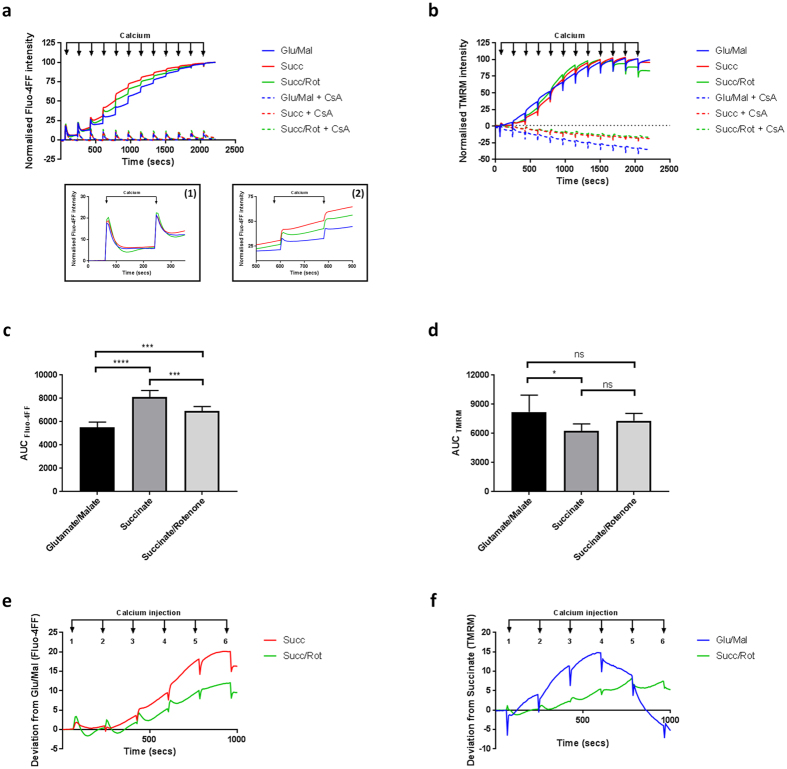
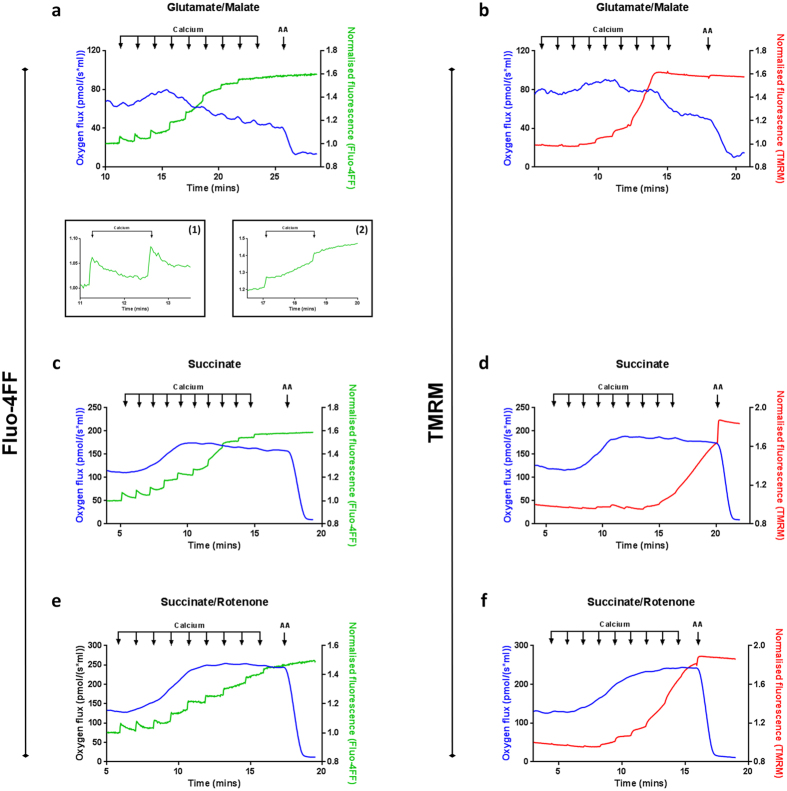
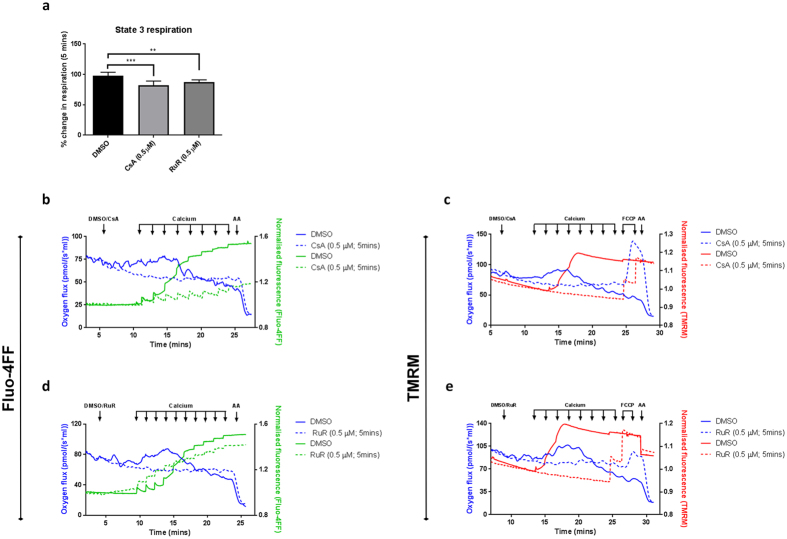
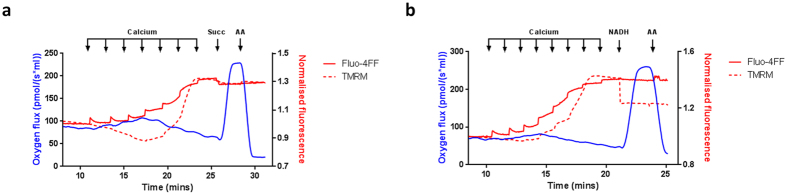
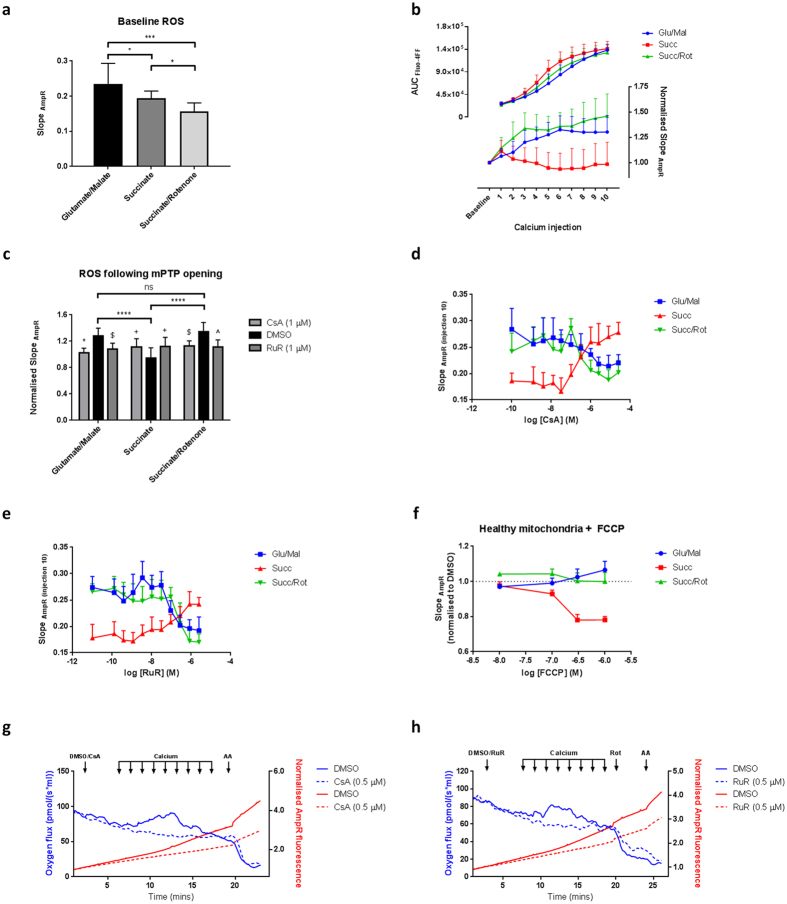
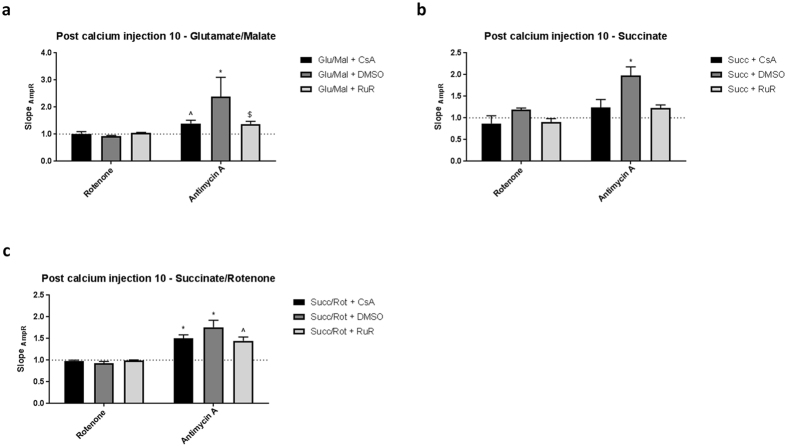
Mitochondrial Ca 2+ uptake has a key role in cellular Ca 2+ homeostasis. Excessive matrix Ca 2+ concentrations, especially when coincident with oxidative stress, precipitate opening of an inner mitochondrial membrane, high-conductance channel: the mitochondrial permeability transition pore (mPTP). mPTP opening has been implicated as a final cell death pathway in numerous diseases and therefore understanding conditions dictating mPTP opening is crucial for developing targeted therapies. Here, we have investigated the impact of mitochondrial metabolic state on the probability and consequences of mPTP opening. Isolated mitochondria were energised using NADH- or FADH 2 -linked substrates. The functional consequences of Ca 2+ -induced mPTP opening were assessed by Ca 2+ retention capacity, using fluorescence-based analysis, and simultaneous measurements of mitochondrial Ca 2+ handling, membrane potential, respiratory rate and production of reactive oxygen species (ROS). Succinate-induced, membrane potential-dependent reverse electron transfer sensitised mitochondria to mPTP opening. mPTP-induced depolarisation under succinate subsequently inhibited reverse electron transfer. Complex I-driven respiration was reduced after mPTP opening but sustained in the presence of complex II-linked substrates, consistent with inhibition of complex I-supported respiration by leakage of matrix NADH. Additionally, ROS generated at complex III did not sensitise mitochondria to mPTP opening. Thus, cellular metabolic fluxes and metabolic environment dictate mitochondrial functional response to Ca 2+ overload.
Overview
The claims and statistics of this paper haven’t been checked yet.
Free: it reads the open-access text and checks the first 5 claims that cite a source we can check. Create a free account to check every claim.
Integrity signals
Registry
Cites
Statistics
Figures
Verification
Claims the paper makes
The claims and statistics of this paper haven’t been checked yet.
Free: it reads the open-access text and checks the first 5 claims that cite a source we can check. Create a free account to check every claim.
Claims other papers make about this one
Each is checked against this paper’s own text: does it say what the citing paper says it does?
The cited source doesn’t support the claim as written.
In the citing paper
“matrix mtROS cannot escape from intact mitochondria, which was confirmed for isolated mitochondria as well as in cells [127,128,129].”
From Functions of ROS in Macrophages and Antimicrobial Immunity (2021) · cites this paper as [128]
Checked by a reasoning model — may be wrong.
Experimental — accuracy not yet measuredThe source backs part of the claim, not all of it — or backs it for a different population, condition or comparison.
In the citing paper
“Membrane-disrupting damage of mitochondria or opening of the mitochondrial permeability transition pore (mPTP) is necessary for matrix mtROS release into the cytosol [127,128,129,130,131].”
From Functions of ROS in Macrophages and Antimicrobial Immunity (2021) · cites this paper as [128]
Experimental — accuracy not yet measuredThe source backs part of the claim, not all of it — or backs it for a different population, condition or comparison.
In the citing paper
“The mPTP is a transmembrane protein located in the mitochondrial inner membrane, and normally opens in response to calcium accumulation in the mitochondrial matrix, oxidative stress and other stressors (Briston et al., 2017).”
From Cytoplasmic DNA: sources, sensing, and role in aging and disease (2021) · cites this paper as Briston et al., 2017
Experimental — accuracy not yet measured
Self-check
Percentages, sums and reported differences re-computed from the paper’s own numbers.
The self-check needs the paper’s full text.
Citations
Cites
How mitochondria produce reactive oxygen species
Murphy, M. P. (2009) · Biochemical Journal · doi:10.1042/bj20081386 · Cited by 8,207
Mitochondrial Reactive Oxygen Species (ROS) and ROS-Induced ROS Release
Zorov, D. B., Juhaszova, M., & Sollott, S. J. (2014) · Physiological Reviews · doi:10.1152/physrev.00026.2013 · Cited by 5,383
Mitochondrial formation of reactive oxygen species
Turrens, J. F. (2003) · The Journal of Physiology · doi:10.1113/jphysiol.2003.049478 · Cited by 5,084
Ischaemic accumulation of succinate controls reperfusion injury through mitochondrial ROS
Chouchani, E. T., Pell, V. R., Gaude, E., Aksentijević, D., Sundier, S. Y., Robb, E. L., Logan, A., Nadtochiy, S. M., Ord, E. N. J., Smith, A. C., et al. (2014) · Nature · doi:10.1038/nature13909 · Cited by 2,907
Self-citationAssessing mitochondrial dysfunction in cells
Brand, M. D., & Nicholls, D. G. (2011) · Biochemical Journal · doi:10.1042/bj20110162 · Cited by 2,842 · cited 3×
“Mitochondria were re-suspended (1 mg protein ml−1) in MAB supplemented with either: (1) 10 mM L-glutamic acid, monosodium salt; 2 mM L-malic acid sodium salt, (2) 10 mM succinate disodium salt or (3) 10 mM succinate disodium salt; 1 μM rotenone.”
MethodThe mitochondrial permeability transition pore and its role in cell death
CROMPTON, M. (1999) · Biochemical Journal · doi:10.1042/bj3410233 · Cited by 2,432 · cited 1×
“35 μM) was supplemented with either: (1) 20 mM L-glutamic acid, monosodium salt, FAC = 10 mM; 4 mM L-malic acid sodium salt, FAC = 2 mM, (2) 20 mM L-glutamic acid monosodium salt, FAC = 10 mM; 4 mM L-malic acid sodium salt, FAC = 2 mM; 6 mM NADH, FAC = 3 mM, (3) 20 mM succinate disodium salt, FAC = 10 mM or (4) 20 mM…”
Korshunov, S. S., Skulachev, V. P., & Starkov, A. A. (1997) · FEBS Letters · doi:10.1016/s0014-5793(97)01159-9 · Cited by 1,727
Topology of superoxide production from different sites in the mitochondrial electron transport chain
St-Pierre, J., Buckingham, J. A., Roebuck, S. J., & Brand, M. D. (2002) · Journal of Biological Chemistry · doi:10.1074/jbc.m207217200 · Cited by 1,545
Crompton, M., Ellinger, H., & COSTI, A. (1988) · PubMed Central · Cited by 962
Dimers of mitochondrial ATP synthase form the permeability transition pore
Giorgio, V., von Stockum, S., Antoniel, M., Fabbro, A., Fogolari, F., Forte, M., Glick, G. D., Petronilli, V., Zoratti, M., Szabó, I., et al. (2013) · Proceedings of the National Academy of Sciences · doi:10.1073/pnas.1217823110 · Cited by 922
Cited by
ROS and redox signaling in myocardial ischemia-reperfusion injury and cardioprotection
Cadenas, S. (2018) · Free Radical Biology and Medicine · doi:10.1016/j.freeradbiomed.2018.01.024 · Cited by 820
Functions of ROS in Macrophages and Antimicrobial Immunity
Herb, M., & Schramm, M. (2021) · Antioxidants · doi:10.3390/antiox10020313 · Cited by 633
Mitochondrial dysfunction in neurological disorders: Exploring mitochondrial transplantation
Norat, P., Soldozy, S., Sokolowski, J. D., Gorick, C. M., Kumar, J. S., Chae, Y., Yağmurlu, K., Prada, F., Walker, M., Levitt, M. R., et al. (2020) · npj Regenerative Medicine · doi:10.1038/s41536-020-00107-x · Cited by 342
Cytoplasmic DNA: sources, sensing, and role in aging and disease
Miller, K. N., Victorelli, S. G., Salmonowicz, H., Dasgupta, N., Liu, T., Passos, J. F., & Adams, P. D. (2021) · Cell · doi:10.1016/j.cell.2021.09.034 · Cited by 288
Mitochondrial Permeability Uncouples Elevated Autophagy and Lifespan Extension
Zhou, B., Kreuzer, J., Kumsta, C., Wu, L., Kamer, K. J., Cedillo, L., Zhang, Y., Li, S., Kacergis, M. C., Webster, C. M., et al. (2019) · Cell · doi:10.1016/j.cell.2019.02.013 · Cited by 220
Barrera, M.-J., Aguilera, S., Castro, I., Carvajal, P., Jara, D., Molina, C., González, S., & González, M.-J. (2021) · Autoimmunity Reviews · doi:10.1016/j.autrev.2021.102867 · Cited by 213
Molecular Mechanisms and Genetics of Oxidative Stress in Alzheimer’s Disease
Cioffi, F., Adam, R. H. I., & Broersen, K. (2019) · Journal of Alzheimer s Disease · doi:10.3233/jad-190863 · Cited by 204
Molecular nature and physiological role of the mitochondrial calcium uniporter channel
Alevriadou, B. R., Patel, A., Noble, M., Ghosh, S., Gohil, V. M., Stathopulos, P. B., & Madesh, M. (2021) · American Journal of Physiology-Cell Physiology · doi:10.1152/ajpcell.00502.2020 · Cited by 172
The mitochondrial permeability transition pore: an evolving concept critical for cell life and death
Morciano, G., Naumova, N., Koprowski, P., Valente, S. A., Sardão, V. A., Potes, Y., Rimessi, A., Wieckowski, M. R., & Oliveira, P. J. (2021) · Biological reviews/Biological reviews of the Cambridge Philosophical Society · doi:10.1111/brv.12764 · Cited by 170
Guo, Y., Gu, R., Gan, D., Hu, F., Li, G., & Xu, G. (2020) · Cell Communication and Signaling · doi:10.1186/s12964-020-00637-3 · Cited by 166
She, R., Liu, D., Liao, J., Wang, G., Ge, J., & Mei, Z. (2023) · Frontiers in Cellular Neuroscience · doi:10.3389/fncel.2023.1191629 · Cited by 160
Briston, T., & Hicks, A. R. (2018) · Biochemical Society Transactions · doi:10.1042/bst20180025 · Cited by 131
Self-citationMicrobial regulation of hexokinase 2 links mitochondrial metabolism and cell death in colitis
Hinrichsen, F., Hamm, J., Westermann, M., Schröder, L., Shima, K., Mishra, N., Walker, A., Sommer, N., Klischies, K., Prasse, D., et al. (2021) · Cell Metabolism · doi:10.1016/j.cmet.2021.11.004 · Cited by 114
The Mitochondrial Ca2+ Uptake and the Fine-Tuning of Aerobic Metabolism
Gherardi, G., Monticelli, H., Rizzuto, R., & Mammucari, C. (2020) · Frontiers in Physiology · doi:10.3389/fphys.2020.554904 · Cited by 109
Mitochondrial Dysfunction in Cardiovascular Diseases
Yang, H. (2025) · International Journal of Molecular Sciences · doi:10.3390/ijms26051917 · Cited by 112
“Similarly, mPTP inhibitors can have unintended consequences on other cellular processes [109,110,155].”
Reactive Oxygen Species: Not Omnipresent but Important in Many Locations
Herb, M., Gluschko, A., & Schramm, M. (2021) · Frontiers in Cell and Developmental Biology · doi:10.3389/fcell.2021.716406 · Cited by 87
Mongirdienė, A., Skrodenis, L., Varoneckaitė, L., Mierkytė, G., & Gerulis, J. (2022) · Biomedicines · doi:10.3390/biomedicines10030602 · Cited by 94
Tiwari, S., Dewry, R. K., Srivastava, R., Nath, S., & Mohanty, T. K. (2021) · Theriogenology · doi:10.1016/j.theriogenology.2021.11.013 · Cited by 87
Miranda‐Silva, D., Wüst, R. C. I., Conceição, G., Gonçalves‐Rodrigues, P., Gonçalves, N., Gonçalves, A., Kuster, D. W. D., Leite-Moreira, A. F., van der Velden, J., Beleza, J., et al. (2019) · Acta Physiologica · doi:10.1111/apha.13378 · Cited by 81
Mitochondrial integrity in neurodegeneration
Cowan, K., Anichtchik, O. V., & Luo, S. (2019) · CNS Neuroscience & Therapeutics · doi:10.1111/cns.13105 · Cited by 72
“In this regard, the mitochondrial calcium uniporter (MCU), a channel which allows calcium transport into the matrix, has a direct effect on the MPTP. 25 The MPTP has caught the interest of scientists for many years.”
InfluentialLin, K.-J., Wang, T., Chen, S., Lin, K.-L., Liou, C., Lan, M., Chuang, Y., Chuang, J., Wang, P., Lee, J., et al. (2021) · Antioxidants · doi:10.3390/antiox10121935 · Cited by 66
“The precise molecular composition and identity of the mPTP is highly controversial but candidates include the adenine nucleotide translocase (ANT), the voltage dependent anion channel (VDAC), spastic paraplegia 7 (SPG7), phosphate carrier (PiC) and components of the ATP synthase [54].”
BackgroundDual dynamics of mitochondrial permeability transition pore opening
Wacquier, B., Combettes, L., & Dupont, G. (2020) · Scientific Reports · doi:10.1038/s41598-020-60177-1 · Cited by 63
Tang, Q., Liu, W., Zhang, Q., Huang, J., Hu, C., Liu, Y., Wang, Q., Zhou, M., Lai, W., Sheng, F., et al. (2018) · Journal of Cellular and Molecular Medicine · doi:10.1111/jcmm.13749 · Cited by 61
Ishihara, G., Kawamoto, K., Komori, N., & Ishibashi, T. (2019) · Biochemical and Biophysical Research Communications · doi:10.1016/j.bbrc.2019.11.135 · Cited by 61
Regulation of Cell Death by Mitochondrial Transport Systems of Calcium and Bcl-2 Proteins
Naumova, N., & Šachl, R. (2020) · Membranes · doi:10.3390/membranes10100299 · Cited by 58
“All of these processes culminate by mitochondrial outer membrane permeabilization (MOMP) and the release of cytochrome c; being both an inducer of apoptosis and modulator of other proapoptotic factors [2,12,31,32].”
BackgroundSinha, J. K., Jorwal, K., Singh, K. K., Han, S. S., Bhaskar, R., & Ghosh, S. (2024) · Molecular Neurobiology · doi:10.1007/s12035-024-04474-0 · Cited by 56
“Key among these is the opening of the mitochondrial permeability transition pore (mPTP) [35], primarily triggered by excessive calcium (Ca 2+ ) accumulation in the mitochondrial matrix.”
Wang, M., Zhu, Z., He, X., Dai, S., Liu, R., & Liu, J. (2025) · Frontiers in Pharmacology · doi:10.3389/fphar.2025.1679085 · Cited by 58
“In the context of HF, the ΔΨ m — a critical bioelectrical gradient essential for maintaining mitochondrial function and myocardial energy metabolism — is signi fi cantly disrupted (Briston et al., 2017).”
Inefficient Batteries in Heart Failure
Schwartz, B., Gjini, P., Gopal, D. M., & Fetterman, J. L. (2022) · JACC Basic to Translational Science · doi:10.1016/j.jacbts.2022.03.017 · Cited by 55
Effects of mitochondrial dysfunction on cellular function: Role in atherosclerosis
Xu, M., Wang, W., Cheng, J., Qu, H., Xu, M., & Wang, L. (2024) · Biomedicine & Pharmacotherapy · doi:10.1016/j.biopha.2024.116587 · Cited by 55
Attenuating apoptosis in Chinese hamster ovary cells for improved biopharmaceutical production
Henry, M. N., MacDonald, M. A., Orellana, C. A., Gray, P. P., Gillard, M., Baker, K. N., Nielsen, L. K., Marcellin, E., Mahler, S. M., & Martínez, V. S. (2020) · Biotechnology and Bioengineering · doi:10.1002/bit.27269 · Cited by 54
“MPT is concomitant with MOMP, but also releases concentrated Ca and ROS from the MIM, subsequently causing oxidative damage in the cell (Briston et al., 2017; Crompton, 1999).”
Non-redox cycling mechanisms of oxidative stress induced by PM metals
Samet, J. M., Chen, H., Pennington, E. R., & Bromberg, P. A. (2019) · Free Radical Biology and Medicine · doi:10.1016/j.freeradbiomed.2019.12.027 · Cited by 53
Pharmacological significance of MitoQ in ameliorating mitochondria-related diseases
Sulaimon, L. A., Afolabi, L. O., Adisa, R. A., Ayankojo, A. G., Afolabi, M. O., Adewolu, A. M., & Wan, X. (2022) · Advances in Redox Research · doi:10.1016/j.arres.2022.100037 · Cited by 53
Acetate Induces Growth Arrest in Colon Cancer Cells Through Modulation of Mitochondrial Function
Sahuri-Arisoylu, M., Mould, R. R., Shinjyo, N., Bligh, S. W. A., Nunn, A. V. W., Guy, G. W., Thomas, E. L., & Bell, J. D. (2021) · Frontiers in Nutrition · doi:10.3389/fnut.2021.588466 · Cited by 53
“Repeated measurements were made in between injections (17) using FLUOstar Optima (ex.”
MethodEnergy metabolism disturbance in migraine: From a mitochondrial point of view
Wang, Y., Wang, Y., Yue, G.-X., & Zhao, Y. (2023) · Frontiers in Physiology · doi:10.3389/fphys.2023.1133528 · Cited by 53
“Under physiological conditions, the transient opening of mPTP mediated by CypD can lead to slight changes in mitochondrial membrane potential, which does not have any adverse effect on cell viability, and can reduce excessive metabolites and ions (especially Ca2+) in mitochondria, to avoid mitochondrial swelling, prev…”
BackgroundInfluentialCui, Y., Pan, M., Ma, J., Song, X., Cao, W., & Zhang, P. (2020) · Molecular and Cellular Biochemistry · doi:10.1007/s11010-020-03926-0 · Cited by 52
The Role of Calcium Signaling in Melanoma
Zhang, H., Chen, Z., Zhang, A., Gupte, A. A., & Hamilton, D. J. (2022) · International Journal of Molecular Sciences · doi:10.3390/ijms23031010 · Cited by 49
“High matrix concentrations of Ca2+ with reactive oxygen species (ROS) in the mitochondria trigger mitochondrial permeability transition pore (mPTP) opening and release the Ca2+ into the cytoplasm [13].”
BackgroundLi, K., Geng, Y., Lin, B., & Xi, Z. (2023) · Toxicology Research · doi:10.1093/toxres/tfad094 · Cited by 49
Walia, V., Kaushik, D., Mittal, V., Kumar, K., Verma, R., Parashar, J., Akter, R., Rahman, M. H., Bhatia, S., Al-Harrasi, A., et al. (2022) · Molecular Neurobiology · doi:10.1007/s12035-021-02617-1 · Cited by 47
Klawitter, F., Ehler, J., Bajorat, R., & Patejdl, R. (2023) · International Journal of Molecular Sciences · doi:10.3390/ijms24065516 · Cited by 45
Effects of (−)-epicatechin on mitochondria
Daussin, F., Heyman, E., & Burelle, Y. (2020) · Nutrition Reviews · doi:10.1093/nutrit/nuaa094 · Cited by 46
The Physiological and Pathological Roles of Mitochondrial Calcium Uptake in Heart
Lai, L., & Qiu, H. (2020) · International Journal of Molecular Sciences · doi:10.3390/ijms21207689 · Cited by 45
“A study points out that the sensitivity of pore opening varies according to the respiratory status and substrates availability [50].”
BackgroundBiphasic effect of metformin on human cardiac energetics
Emelyanova, L. V., Bai, X., Yan, Y., Bosnjak, Z. J., Kress, D. C., Warner, C., Kroboth, S., Rudic, T., Kaushik, S., Stoeckl, E. M., et al. (2020) · Translational research · doi:10.1016/j.trsl.2020.10.002 · Cited by 44
Choudhary, R. C., Shoaib, M., Sohnen, S., Rolston, D. M., Jafari, D., Miyara, S. J., Hayashida, K., Molmenti, E. P., Kim, J. H., & Becker, L. B. (2021) · Frontiers in Medicine · doi:10.3389/fmed.2021.636651 · Cited by 44
“Decreased ATP production and impairment of the Na/K ATPase (6) after CA results in intracellular calcium overload triggering the voltage-dependent anion channels (VDAC) and subsequent opening of the mitochondrial permeability transition pore (mPTP) (30, 31).”
BackgroundN-Acetyl Cysteine Attenuates the Sarcopenia and Muscle Apoptosis Induced by Chronic Liver Disease
Ábrigo, J., Marín, T., Aguirre, F. S., Tacchi, F., Vilos, C., Simón, F., Arrese, M. A., Cabrera, D., & Cabello‐Verrugio, C. (2019) · Current Molecular Medicine · doi:10.2174/1566524019666190917124636 · Cited by 42
Chu, Q., He, D., Xie, W., Li, S., Dong, Z., & Fu, X. (2025) · Proceedings of the National Academy of Sciences · doi:10.1073/pnas.2424529122 · Cited by 41
“This further damages mitochondrial structure, ultimately leading to the apoptosis and necrosis of cardiomyocytes ( 12 ).”
Taddeo, E. P., Alsabeeh, N., Baghdasarian, S., Wikström, J. D., Ritou, E., Sereda, S. B., Erion, K., Li, J., Stiles, L., Abdulla, M., et al. (2019) · Diabetes · doi:10.2337/db19-0379 · Cited by 41
Zhang, Y., Li, Y., Feng, Q., Shao, M., Yuan, F., & Liu, F. (2020) · Chemosphere · doi:10.1016/j.chemosphere.2020.126009 · Cited by 41
Mitochondrial function, dynamics and quality control in the pathophysiology of HFpEF
del Campo, A., Perez, G., Castro, P., Parra, V., & Verdejo, H. (2021) · Biochimica et Biophysica Acta (BBA) - Molecular Basis of Disease · doi:10.1016/j.bbadis.2021.166208 · Cited by 41
Ralph, S. J., Nozuhur, S., ALHulais, R. A., Rodríguez‐Enríquez, S., & Moreno‐Sánchez, R. (2019) · Medicinal Research Reviews · doi:10.1002/med.21589 · Cited by 41
John, A. S. P., Kundu, S., Pushpakumar, S. B., Amin, M., Tyagi, S. C., & Sen, U. (2019) · American Journal of Physiology-Endocrinology and Metabolism · doi:10.1152/ajpendo.00251.2018 · Cited by 39
Parkin, an E3 ubiquitin ligase, enhances airway mitochondrial DNA release and inflammation
Dimasuay, K. G., Schaunaman, N., Martin, R. J., Pavelka, N., Kolakowski, C. A., Gottlieb, R. A., Holguín, F., & Chu, H. W. (2020) · Thorax · doi:10.1136/thoraxjnl-2019-214158 · Cited by 39
Disturbance of Mitochondrial Dynamics and Mitochondrial Therapies in Atherosclerosis
Markin, A. M., Khotina, V. A., Zabudskaya, X. G., Bogatyreva, A. I., Starodubova, A. V., Ivanova, E. A., Nikiforov, N. G., & Orekhov, A. N. (2021) · Life · doi:10.3390/life11020165 · Cited by 39
“This further increases oxidative damage of nuclear DNA, ion channels, transporter proteins and membrane phospholipids [32,33].”
BackgroundMota‐Martorell, N., Jové, M., Pradas, I., Sánchez, I. P., Gómez, J., Naudí, A., Barja, G., & Pamplona, R. (2020) · Redox Biology · doi:10.1016/j.redox.2020.101539 · Cited by 38
“Specifically, ROS generation and reverse electron transport through Cx I increase the sensitivity of mPTP opening [54].”
BackgroundShi, R., Fu, Y., Zhao, D., Boczek, T., Wang, W., & Guo, F. (2021) · Biochemical Pharmacology · doi:10.1016/j.bcp.2021.114664 · Cited by 36
Coenzyme Q10 supplementation acts as antioxidant on dystrophic muscle cells
Mizobuti, D. S., Fogaça, A. R., Moraes, F. D. S. R., Moraes, L. H. R., Mâncio, R. D., Hermes, T. D. A., Macedo, A. B., Valduga, A. H., de Lourenço, C. C., Pereira, E. C. L., et al. (2019) · Cell Stress and Chaperones · doi:10.1007/s12192-019-01039-2 · Cited by 36
Signalling regulation of reactive oxygen species in fish inflammation
Gao, F., Zhao, Y., Shi, X., Qiao, D., Pei, C., & Kong, X. (2024) · Reviews in Aquaculture · doi:10.1111/raq.12895 · Cited by 36
Control of Ca2+ and metabolic homeostasis by the Na+/Ca2+ exchangers (NCXs) in health and disease
Rodrigues, T., Piccirillo, S., Magi, S., Preziuso, A., Ramos, V. D. S., Serfilippi, T., Orciani, M., Alvarez, M. M. P., Tersariol, I. L. S., Amoroso, S., et al. (2022) · Biochemical Pharmacology · doi:10.1016/j.bcp.2022.115163 · Cited by 35
Jembrek, M. J., Radovanović, V., Vlainić, J., Vukovic, L. D., & Hanžić, N. (2018) · Toxicology · doi:10.1016/j.tox.2018.05.014 · Cited by 36
Mitochondrial nanomedicine: Subcellular organelle-specific delivery of molecular medicines
Milane, L. S., Dolare, S., Jahan, T., & Amiji, M. M. (2021) · Nanomedicine Nanotechnology Biology and Medicine · doi:10.1016/j.nano.2021.102422 · Cited by 31
Oxidative Stress, Inflammation and Connexin Hemichannels in Muscular Dystrophies
González‐Jamett, A. M., Vásquez, W., Cifuentes-Riveros, G., Martínez-Pando, R., Sáez, J. C., & Cárdenas, A. M. (2022) · Biomedicines · doi:10.3390/biomedicines10020507 · Cited by 34
Todisco, S., Musio, B., Pesce, V., Cavalluzzi, M. M., Petrosillo, G., Piana, G. L., Sgobba, M. N., Schlosserová, N., Beltrame, L. C., Lorenzo, R. D., et al. (2023) · Biochemical Pharmacology · doi:10.1016/j.bcp.2022.115405 · Cited by 32
Liang, Y., Chu, P. H., Tian, L., Ho, K., Ip, M., & Mak, J. (2021) · Environmental Pollution · doi:10.1016/j.envpol.2021.118720 · Cited by 31
Trisolini, L., Laera, L., Favia, M., Muscella, A., Castegna, A., Pesce, V., Guerra, L., Grassi, A., Volpicella, M., & Pierri, C. L. (2020) · Biomolecules · doi:10.3390/biom11010038 · Cited by 30
“and have been largely investigated as a crucial component or effector of mPTP opening/regulation [5,44].”
BackgroundMitochondria as mediators of systemic inflammation and organ cross talk in acute kidney injury
Hepokoski, M., & Singh, P. (2022) · American Journal of Physiology-Renal Physiology · doi:10.1152/ajprenal.00372.2021 · Cited by 29
Respiratory complex II in mitochondrial dysfunction-mediated cytotoxicity: Insight from cadmium
Belyaeva, E. A. (2018) · Journal of Trace Elements in Medicine and Biology · doi:10.1016/j.jtemb.2018.06.009 · Cited by 29
Méthot, S. J., Proulx, S., Brunette, I., & Rochette, P. J. (2020) · Scientific Reports · doi:10.1038/s41598-020-62602-x · Cited by 29
Photodynamic and antiangiogenic activities of parietin liposomes in triple negative breast cancer
Ayoub, A. M., Amin, M. U., Ambreen, G., Dayyih, A. A., Abdelsalam, A. M., Somaida, A., Engelhardt, K. H., Wojcik, M., Schäfer, J., & Bakowsky, U. (2021) · Biomaterials Advances · doi:10.1016/j.msec.2021.112543 · Cited by 27
Targeting mitochondrial transfer: a new horizon in cardiovascular disease treatment
Zuo, B., Li, X., Xu, D., Zhao, L., Yang, Y., Luan, Y., & Zhang, B. (2024) · Journal of Translational Medicine · doi:10.1186/s12967-024-05979-x · Cited by 26
Singh, A., Tiwari, S., & Singh, S. (2024) · Cell Death and Disease · doi:10.1038/s41419-024-06662-1 · Cited by 23
“However, there are several other known factors which are known to contribute in these neurodegenerative mechanisms therefore, the con fl ated investigation is still require to consider the Pirh2 as therapeutic target for the AD management.”
BackgroundHua, J., Gao, Z., Zhong, S., Wei, B., Zhu, J., & Ying, R. (2021) · Biochemical and Biophysical Research Communications · doi:10.1016/j.bbrc.2021.08.023 · Cited by 22
Mitochondrial DNA Depletion Syndrome and Its Associated Cardiac Disease
Wang, H., Han, Y., Li, S., Chen, Y., Chen, Y., Wang, J., Zhang, Y., Zhang, Y., Wang, J., Xia, Y., et al. (2022) · Frontiers in Cardiovascular Medicine · doi:10.3389/fcvm.2021.808115 · Cited by 22
“Under pathological conditions, high Ca2+ concentration can promote the opening of mitochondrial permeability transition pore (MPTP) and induce apoptotic death (35, 36).”
BackgroundMitochondrial Phenotypes in Parkinson’s Diseases—A Focus on Human iPSC-Derived Dopaminergic Neurons
Heger, L. M., Wise, R. M., Hees, J. T., Harbauer, A. B., & Burbulla, L. F. (2021) · Cells · doi:10.3390/cells10123436 · Cited by 21
“…the mitochondrial permeability transition pore (mPTP), however, large Ca 2+ transfers can lead to overload and subsequent opening of the mPTP, collapse of membrane potential, diminished OXPHOS and ATP production, elevated ROS formation, release of cytochrome c, and eventual cell death [164–167].”
BackgroundCong, J., Li, J., & Zou, W. (2024) · Frontiers in Molecular Neuroscience · doi:10.3389/fnmol.2024.1423132 · Cited by 20
Kate, W. D., Fanta, M., & Weinfeld, M. (2024) · Nucleic Acids Research · doi:10.1093/nar/gkae654 · Cited by 21
“We corroborated our findings by pharmacologically inhibiting mPTP using a specific and potent inhibitor, cyclosporin A (CSA) ( 88 ,90–94 ).”
Baek, J., Kim, Y., Lee, K.-Y., & Kim, U. (2023) · Frontiers in Pharmacology · doi:10.3389/fphar.2023.1176881 · Cited by 19
Colussi, D. M., & Stathopulos, P. B. (2022) · The FASEB Journal · doi:10.1096/fj.202201080r · Cited by 18
Colella, F., Scillitani, G., & Pierri, C. L. (2020) · Toxicology · doi:10.1016/j.tox.2020.152612 · Cited by 18
Hawkins, K., & Duchen, M. R. (2019) · World Journal of Stem Cells · doi:10.4252/wjsc.v11.i5.236 · Cited by 18
Self-citationAPOL1 Risk Variants Impair Multiple Mitochondrial Pathways in a Metabolomics Analysis
Ma, L., Palmer, N. D., Choi, Y. A., Murea, M., Snipes, J. A., Parks, J. S., Langefeld, C. D., & Freedman, B. I. (2020) · Kidney360 · doi:10.34067/kid.0003592020 · Cited by 16
“, complex I–driven respiration is reduced after the opening of mPTP (22).”
BackgroundAmodeo, G. F., & Pavlov, E. V. (2020) · Biochimica et Biophysica Acta (BBA) - Biomembranes · doi:10.1016/j.bbamem.2020.183531 · Cited by 17
Khaliulin, I., Ascione, R., Маслов, Л. Н., Amal, H., & Suleiman, M. S. (2021) · Cells · doi:10.3390/cells10051223 · Cited by 16
Xing, R., Cheng, J., Yu, J., Li, S., Ma, H., & Zhao, Y. (2023) · International Journal of Medical Sciences · doi:10.7150/ijms.82677 · Cited by 16
“Calcium overload and the subsequently activated calcium-calmodulin cascade can trigger the opening of mPTP, resulting in cardiomyocyte death [32-34].”
BackgroundHypoxia-Driven Responses in Chronic Kidney Disease
Miguel, V., & Rojo, A. (2023) · Oxygen · doi:10.3390/oxygen3030020 · Cited by 15
“Such increased mtROS and mitochondrial calcium content cause MPTP opening and the activation of different cell death pathways [79].”
BackgroundAlvorcem, L. D. M., Britto, R., Cecatto, C., Roginski, A. C., Rohden, F., Scholl, J. N., Guma, F. T. C. R., Figueiró, F., Amaral, A. U., Zanatta, G., et al. (2021) · Journal of Neurochemistry · doi:10.1111/jnc.15363 · Cited by 16
“In this regard, it has been reported that, after reaching a threshold, MPT pore opening facilitates the efflux of Ca2+ therefore disturbing the mitochondrial retention capacity of this ion (Briston et al., 2017).”
BackgroundGoda, A. E., Elenany, A. M., & El‐Sisi, A. E. (2021) · Life Sciences · doi:10.1016/j.lfs.2021.119849 · Cited by 15
Ji, X., Bradley, J. L., Zheng, G., Ge, W., Xu, J., Hu, J., He, F., Shabnam, R., Peberdy, M. A., Ornato, J. P., et al. (2021) · Biomedicine & Pharmacotherapy · doi:10.1016/j.biopha.2021.111743 · Cited by 13
Zang, S., Zou, S., Chen, X., Pan, B., Ning, A., Qin, J., Wei, Y., Du, K., Ye, J., Liang, Q., et al. (2025) · Frontiers in Veterinary Science · doi:10.3389/fvets.2024.1514362 · Cited by 13
Renal Warm Ischemia in Organ Donors After Circulatory Death
Dias, F. S., Coimbra, C. M., & Roncon‐Albuquerque, R. (2020) · Experimental and Clinical Transplantation · doi:10.6002/ect.2020.0081 · Cited by 12
Mendoza, A., & Karch, J. M. (2022) · Methods in molecular biology · doi:10.1007/978-1-0716-2309-1_9 · Cited by 12
Cytoplasmic DNA and AIM2 inflammasome in RA: where they come from and where they go?
Xu, C., Jing, W., Liu, C., Yuan, B., Zhang, X., Liu, L., Zhang, F., Chen, P., Liu, Q., Wang, H., et al. (2024) · Frontiers in Immunology · doi:10.3389/fimmu.2024.1343325 · Cited by 13
“Excessive matrix Ca2 + concentrations, particularly when occurring in conjunction with oxidative stress, prompt the opening of mPTP, a mitochondrial inner membrane high conductance channel (92, 93).”
BackgroundAndelová, N., Waczulíková, I., Talian, I., Sýkora, M., & Ferko, M. (2020) · International Journal of Molecular Sciences · doi:10.3390/ijms21072622 · Cited by 12
Mansuri, M. L., Sharma, G., Parihar, P., Dube, K. T., Sharma, T., Parihar, A., & Parihar, M. S. (2021) · Journal of Biochemical and Molecular Toxicology · doi:10.1002/jbt.22744 · Cited by 11
Jiang, M., Liao, Y., Song, W., Wang, Z., Cui, J., He, L., Chen, G., & Xu, K. (2024) · Brain Research · doi:10.1016/j.brainres.2024.148964 · Cited by 10
Postmortem mitochondria function in longissimus lumborum of Angus and Brahman steers
Ramos, P. M., Wohlgemuth, S. E., Gingerich, C. A., Hawryluk, B., Smith, M. T., Bell, L. C., & Scheffler, T. L. (2024) · Meat Science · doi:10.1016/j.meatsci.2024.109538 · Cited by 11
Monitoring Mitochondrial Membrane Potential in Live Cells Using Time-Lapse Fluorescence Imaging
Valdebenito, G. E., & Duchen, M. R. (2022) · Methods in molecular biology · doi:10.1007/978-1-0716-2309-1_22 · Cited by 9
Self-citationErgashev, N. A., Джураевна, С. Х., Makhmudov, R., & Asrarov, M. I. (2024) · Trends in Sciences · doi:10.48048/tis.2024.7661 · Cited by 9
“Thus, it has been shown that the metabolic flow and the metabolic environment of the cell provide a functional response of mitochondria to excessive accumulation of Ca 2+ ions in mitochondria [20].”
BackgroundSun, L., Wang, Y., Yang, M., Xu, Z.-J., Miao, J., Bai, Y., & Lin, T. (2024) · Journal of Developmental Biology · doi:10.3390/jdb12040026 · Cited by 9
“However, the precise mechanism by which delayed blastocyst formation influence cell proliferation in blastocysts requires further investigation.”
BackgroundAn Acidic Environment Induces APOL1-Associated Mitochondrial Fragmentation
Li, D., Snipes, J. A., Murea, M., Molina, A. J. A., Divers, J., Freedman, B. I., Ma, L., & Petrović, S. (2020) · American Journal of Nephrology · doi:10.1159/000509989 · Cited by 9
Effects of plant alkaloids on mitochondrial bioenergetic parameters
Patalas‐Krawczyk, P., Malińska, D., Walczak, J., Kratzer, G., Prill, M., Michalska, B., Drabik, K., Titz, B., Eb-Levadoux, Y., Schneider, T. L., et al. (2021) · Food and Chemical Toxicology · doi:10.1016/j.fct.2021.112316 · Cited by 8
Oyedeji, T. A., Onireti, D. O., Lasisi, O. S., Akobi, C. I., & Olorunsogo, O. O. (2021) · Journal of Complementary and Integrative Medicine · doi:10.1515/jcim-2020-0323 · Cited by 8
Metadata
- Authors
- Briston, T., Roberts, M., Lewis, S., Powney, B., M. Staddon, J., Szabadkai, G., & Duchen, M. R.
- Affiliations
- Eisai (United Kingdom) (GB)
- University College London (GB)
- Corresponding author
- Briston, Thomas
- Venue
- Scientific Reports
- Published
- 2017-09-05
- Volume
- 7
- Issue
- 1
- Pages
- 10492-10492
- ISSN
- 2045-2322 (ISSN-L)
- PMC
- PMC5585167
- OpenAlex
- W2753044726
- Cited by
- 152
- References
- 64
- Citations by year
- 2026: 11 · 2025: 9 · 2024: 18 · 2023: 14 · 2022: 17 · 2021: 31 · 2020: 26 · 2019: 18 · 2018: 8
- FWCI
- 5.81
- Type
- journal article
- Language
- en
- Open access
- gold
- doi.org
- Licence
- cc-by
- creativecommons.org/licenses/by/4.0 (tdm)
- creativecommons.org/licenses/by/4.0 (vor)
- Locations
- Scientific Reports (publishedVersion, cc-by)
- PubMed Central (publishedVersion, cc-by)
- PubMed (publishedVersion)
- DOAJ (DOAJ: Directory of Open Access Journals) (submittedVersion)
- UCL Discovery (University College London) (submittedVersion)
- Padua Research Archive (University of Padova) (submittedVersion, cc-by)
- Funders
- Eisai
- Topics
- Life Sciences › Biochemistry, Genetics and Molecular Biology › Molecular Biology › Mitochondrial Function and Pathology
- Life Sciences › Biochemistry, Genetics and Molecular Biology › Molecular Biology › Cell death mechanisms and regulation
- Life Sciences › Biochemistry, Genetics and Molecular Biology › Molecular Biology › ATP Synthase and ATPases Research
- Keywords
- mitochondrial permeability transition pore, mitochondrial calcium uptake, calcium retention capacity, reverse electron transfer, succinic acid, mitochondrial membrane potential, reactive oxygen species, oxidative stress, mitochondrial calcium overload, cell death
- MeSH terms
- Mitochondrial Permeability Transition Pore, Animals, Calcium, Energy Metabolism, Female, Hydrogen Peroxide, Mitochondria, NAD, Oxygen Consumption, Ion Channel Gating, Reactive Oxygen Species, Cell Respiration, Succinic Acid, Mitochondrial Membrane Transport Proteins, Electron Transport Complex I, Rats, Membrane Potential, Mitochondrial
About these checks
Registry, retraction, Cites and statistics results are computed, not judged, with one exception: a printed reference that no index lists is read once by a model before it counts as a citation error. Claims are extracted by a model and kept only when their quote appears verbatim in the text; each cited source is then checked, with a model’s help, for whether it says what the claim relies on. Those verdicts can be wrong — read the claim’s quote and the cited source before relying on one.
Statistics and arithmetic are recomputed, not judged.
Confidence bands are shown only for fields calibrated on our annotated test set. None is calibrated yet, so no band is shown.
What counts as a claim ›How we measure confidence ›How we check this ›
Are you an author, or do you see a problem with this page? Request a review
Data sources
Bibliographic data: Semantic Scholar, OpenAlex, Crossref.
Contains information from the Semantic Scholar Academic Graph Datasets, made available under the ODC Attribution License (ODC-BY 1.0).
Semantic Scholar’s data is described in: Kinney, R., et al. (2023). The Semantic Scholar Open Data Platform. arXiv:2301.10140.
