

The DOI matches its Crossref record; 34 of the 34 references it cites were found in a registry or an index.
Brain damage and behavioural disorders in fish induced by plastic nanoparticles delivered through the food chain
Open accessAbstract
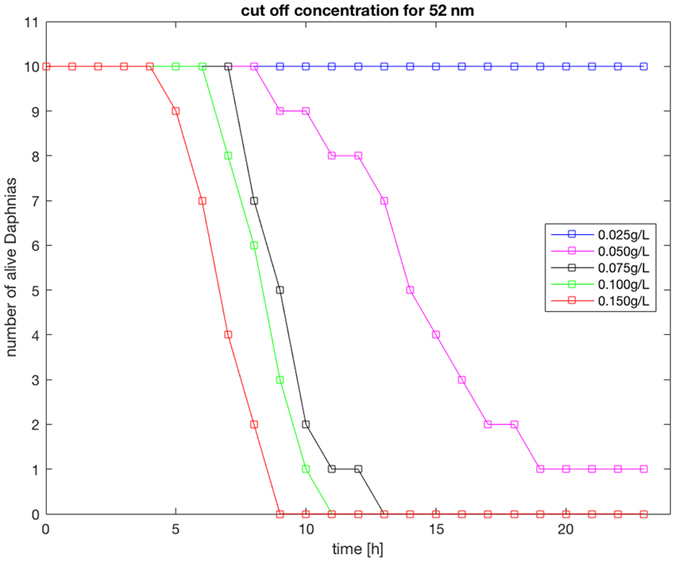
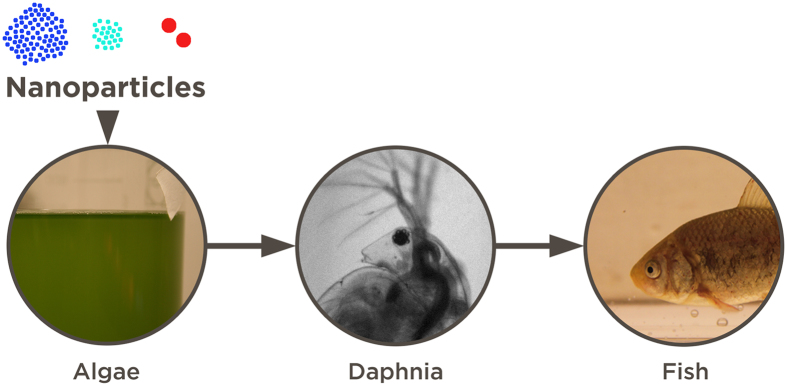
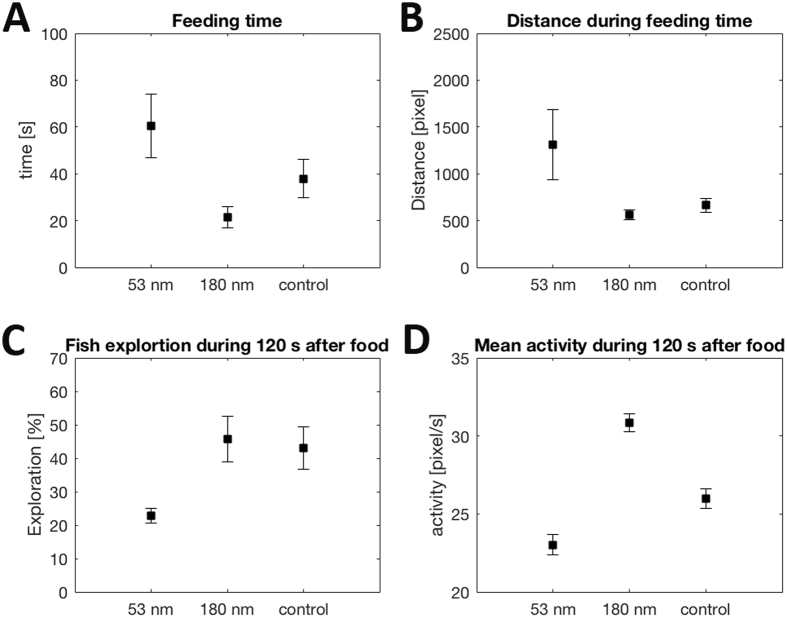
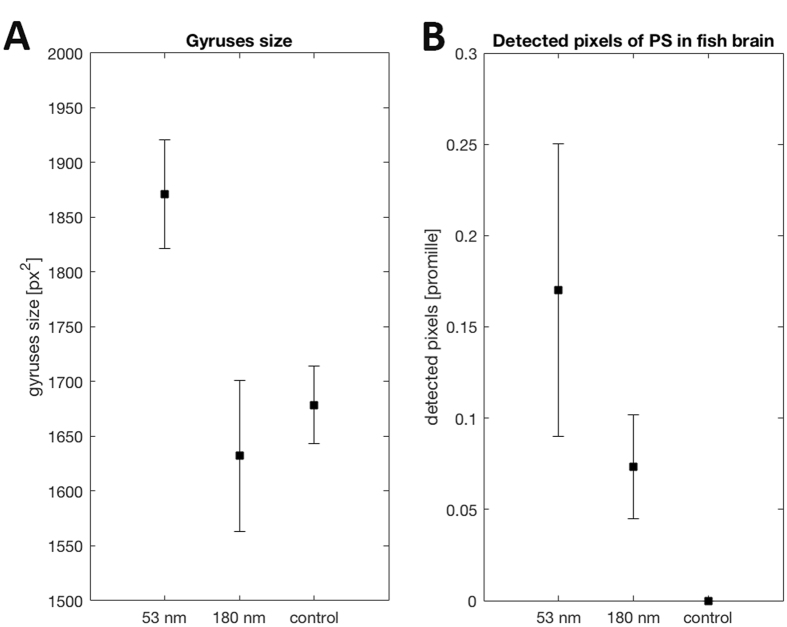
The tremendous increases in production of plastic materials has led to an accumulation of plastic pollution worldwide. Many studies have addressed the physical effects of large-sized plastics on organisms, whereas few have focused on plastic nanoparticles, despite their distinct chemical, physical and mechanical properties. Hence our understanding of their effects on ecosystem function, behaviour and metabolism of organisms remains elusive. Here we demonstrate that plastic nanoparticles reduce survival of aquatic zooplankton and penetrate the blood-to-brain barrier in fish and cause behavioural disorders. Hence, for the first time, we uncover direct interactions between plastic nanoparticles and brain tissue, which is the likely mechanism behind the observed behavioural disorders in the top consumer. In a broader perspective, our findings demonstrate that plastic nanoparticles are transferred up through a food chain, enter the brain of the top consumer and affect its behaviour, thereby severely disrupting the function of natural ecosystems.
Overview
The claims and statistics of this paper haven’t been checked yet.
Run the check — free, no account needed. It reads the open-access text and checks the sources it cites.
Integrity signals
Registry
Cites
Statistics
Figures
Verification
Claims the paper makes
The claims and statistics of this paper haven’t been checked yet.
Run the check — free, no account needed. It reads the open-access text and checks the sources it cites.
Claims other papers make about this one
Each is checked against this paper’s own text: does it say what the citing paper says it does?
The cited source says what the claim attributes to it.
In the citing paper
“They likely have adverse effects on aquatic organisms (Mattsson et al., 2017;Jeong et al., 2018;Baudrimont et al., 2020;Wayman and Niemann, 2021)”
From Plastic photodegradation under simulated marine conditions (2023) · cites this paper as Mattsson et al., 2017
The cited source says what the claim attributes to it.
In the citing paper
“The tness of Daphnia magna was impaired by small nanoplastic particles of $52 nm but not by larger ones of >120 nm, 16 and the depuration of 24 nm particles was faster than that of 250 nm particles.156”
From The fate of plastic in the ocean environment – a minireview (2021) · cites this paper as [16]
In the citing paper
“The results of the studies have shown an increased toxicity, physical damage and higher mortality rates of Daphnia as a function of nanoplastic exposure.”
From The fate of plastic in the ocean environment – a minireview (2021) · cites this paper as [16]
In the citing paper
“Nanoplastics might simply pass through organisms without further interactions but experimental studies rather suggest that the effects of nanoplastics are more negative when compared to their macro/micro plastic counterparts, at least under the tested exposure conditions, 16,147 which might be higher than environmental levels.”
From The fate of plastic in the ocean environment – a minireview (2021) · cites this paper as [16]
In the citing paper
“Noteworthy is that at least for sh, nanoplastics can cross the blood brain barrier, 16 accumulate in several vital organs, 158,159 and disrupt metabolism and hormonal signalling.158”
From The fate of plastic in the ocean environment – a minireview (2021) · cites this paper as [16]
In the citing paper
“Nanoplastics are characterised by high surface to volume ratios and thus better adsorb toxic compounds and potentially transfers them to organisms aer ingestion.16,18,137,[147][148][149]”
From The fate of plastic in the ocean environment – a minireview (2021) · cites this paper as [16]
In the citing paper
“This could suggest that the chemical composition of the nanomaterials denes their behaviour in biological systems, perhaps due to differences in physicochemical surface properties.16,156”
From The fate of plastic in the ocean environment – a minireview (2021) · cites this paper as [16]
In the citing paper
“The transfer of nanoplastic through food web structures could be shown for an algae-crustacean-sh system 16,155 providing evidence for potential negative effects of nanoplastic exposure on all trophic levels.”
From The fate of plastic in the ocean environment – a minireview (2021) · cites this paper as [16]
In the citing paper
“Furthermore, negative effects of nanoplastics might be dependent on size, and polymer type.16”
From The fate of plastic in the ocean environment – a minireview (2021) · cites this paper as [16]
Self-check
Percentages, sums and reported differences re-computed from the paper’s own numbers.
The self-check needs the paper’s full text.
Citations
Cites
Plastic waste inputs from land into the ocean
Jambeck, J. R., Geyer, R., Wilcox, C., Siegler, T. R., Perryman, M., Andrady, A., Narayan, R., & Law, K. L. (2015) · Science · doi:10.1126/science.1260352 · Cited by 13,163
Microplastics in the marine environment
Andrady, A. L. (2011) · Marine Pollution Bulletin · doi:10.1016/j.marpolbul.2011.05.030 · Cited by 8,105
Accumulation and fragmentation of plastic debris in global environments
Barnes, D. K. A., Galgani, F., Thompson, R. C., & Barlaz, M. (2009) · Philosophical Transactions of the Royal Society B: Biological Sciences · doi:10.1098/rstb.2008.0205 · Cited by 6,126
The pollution of the marine environment by plastic debris: a review.
Derraik, J. G. B. (2002) · Marine Pollution Bulletin · doi:10.1016/s0025-326x(02)00220-5 · Cited by 4,042
Nanomaterials in the environment: Behavior, fate, bioavailability, and effects
Klaine, S. J., Alvarez, P. J. J., Batley, G. E., Fernandes, T. F., Handy, R. D., Lyon, D. Y., Mahendra, S., McLaughlin, M. J., & Lead, J. R. (2008) · Environmental Toxicology and Chemistry · doi:10.1897/08-090.1 · Cited by 2,803
Cascading Trophic Interactions and Lake Productivity
Carpenter, S. R., Kitchell, J. F., & Hodgson, J. R. (1985) · BioScience · doi:10.2307/1309989 · Cited by 2,646
Occurrence, behavior and effects of nanoparticles in the environment
Nowack, B., & Bucheli, T. D. (2007) · Environmental Pollution · doi:10.1016/j.envpol.2007.06.006 · Cited by 2,341
Handbook of European freshwater fishes
Kottelat, M., & Freyhof, J. (2007) · Cited by 2,268
von Moos, N., Burkhardt-Holm, P., & Köhler, A. (2012) · Environmental Science & Technology · doi:10.1021/es302332w · Cited by 1,697
Brown, D. M., Wilson, M., MacNee, W., Stone, V., & Donaldson, K. (2001) · Toxicology and Applied Pharmacology · doi:10.1006/taap.2001.9240 · Cited by 1,330
Nanoplastic Affects Growth of S. obliquus and Reproduction of D. magna
Besseling, E., Wang, B., Lürling, M., & Koelmans, A. A. (2014) · Environmental Science & Technology · doi:10.1021/es503001d · Cited by 1,138
Characterisation of nanoplastics during the degradation of polystyrene
Lambert, S., & Wagner, M. (2016) · Chemosphere · doi:10.1016/j.chemosphere.2015.11.078 · Cited by 1,075
Imhof, H. K., Schmid, J. D., Nießner, R., Ivleva, N. P., & Laforsch, C. (2012) · Limnology and Oceanography Methods · doi:10.4319/lom.2012.10.524 · Cited by 689
Della Torre, C., Bergami, E., Salvati, A., Faleri, C., Cirino, P., Dawson, K. A., & Corsi, I. (2014) · Environmental Science & Technology · doi:10.1021/es502569w · Cited by 632
Domingos, R. F., Baalousha, M., Ju‐Nam, Y., Reid, M., Tufenkji, N., Lead, J. R., Leppard, G. G., & Wilkinson, K. J. (2009) · Environmental Science & Technology · doi:10.1021/es900249m · Cited by 596
Altered Behavior, Physiology, and Metabolism in Fish Exposed to Polystyrene Nanoparticles
Mattsson, K., Ekvall, M. T., Hansson, L.-A., Linse, S., Malmendal, A., & Cedervall, T. (2015) · Environmental Science & Technology · doi:10.1021/es5053655 · Cited by 581
Self-citationThe filtration apparatus of Cladocera: Filter mesh-sizes and their implications on food selectivity
Geller, W., & M�ller, H. (1981) · Oecologia · doi:10.1007/bf00347591 · Cited by 564
Food Chain Transport of Nanoparticles Affects Behaviour and Fat Metabolism in Fish
Cedervall, T., Hansson, L., Lard, M., Frohm, B., & Linse, S. S. (2012) · PLoS ONE · doi:10.1371/journal.pone.0032254 · Cited by 555
Self-citationEffects of nanopolystyrene on the feeding behavior of the blue mussel (Mytilus edulis L.)
Wegner, A., Besseling, E., Foekema, E. M., Kamermans, P., & Koelmans, A. A. (2012) · Environmental Toxicology and Chemistry · doi:10.1002/etc.1984 · Cited by 550
Distribution of Nanoparticles in the See-through Medaka ( Oryzias latipes )
Kashiwada, S. (2006) · Environmental Health Perspectives · doi:10.1289/ehp.9209 · Cited by 536
Marine aggregates facilitate ingestion of nanoparticles by suspension-feeding bivalves
Ward, J. E., & Kach, D. J. (2009) · Marine Environmental Research · doi:10.1016/j.marenvres.2009.05.002 · Cited by 506
Marine plastic litter: the unanalyzed nano-fraction
Gigault, J., Pedrono, B., Maxit, B., & Ter Halle, A. (2016) · Environmental Science Nano · doi:10.1039/c6en00008h · Cited by 453
Degradation of plastic carrier bags in the marine environment
O’Brine, T., & Thompson, R. C. (2010) · Marine Pollution Bulletin · doi:10.1016/j.marpolbul.2010.08.005 · Cited by 431
Acute toxicities of six manufactured nanomaterial suspensions to Daphnia magna
Zhu, X., Zhu, L., Chen, Y., & Tian, S. (2008) · Journal of Nanoparticle Research · doi:10.1007/s11051-008-9426-8 · Cited by 339
A comparison of nanoparticle and fine particle uptake by Daphnia magna
Rosenkranz, P., Chaudhry, Q., Stone, V., & Fernandes, T. F. (2009) · Environmental Toxicology and Chemistry · doi:10.1897/08-559.1 · Cited by 330
Zhu, X., Wang, J., Zhang, X., Chang, Y., & Chen, Y. (2010) · Chemosphere · doi:10.1016/j.chemosphere.2010.03.022 · Cited by 301
Filter mesh size and food particle uptake by Daphnia
Gophen, M., & Geller, W. (1984) · Oecologia · doi:10.1007/bf00379140 · Cited by 234
Hermens, J. L. M., Canton, H. H., Janssen, P. J. C. M., & Jong, R. D. (1984) · Aquatic Toxicology · doi:10.1016/0166-445x(84)90005-5 · Cited by 215
Lee, S., Kim, S.-M., & Choi, J. (2009) · Environmental Toxicology and Pharmacology · doi:10.1016/j.etap.2009.03.001 · Cited by 151
Effects of environmental conditions on latex degradation in aquatic systems
Lambert, S., Sinclair, C. J., Bradley, E. L., & Boxall, A. B. A. (2013) · The Science of The Total Environment · doi:10.1016/j.scitotenv.2012.12.067 · Cited by 115
Santo, N., Fascio, U., Torres, F., Guazzoni, N., Tremolada, P., Bettinetti, R., Mantecca, P., & Bacchetta, R. (2014) · Water Research · doi:10.1016/j.watres.2014.01.036 · Cited by 100
Manabe, M., Tatarazako, N., & Kinoshita, M. (2011) · Aquatic Toxicology · doi:10.1016/j.aquatox.2011.08.020 · Cited by 76
Bacchetta, R., Moschini, E., Santo, N., Fascio, U., Giacco, L. D., Freddi, S., Camatini, M., & Mantecca, P. (2013) · Nanotoxicology · doi:10.3109/17435390.2013.824128 · Cited by 55
Translocation of 40 nm diameter nanowires through the intestinal epithelium of Daphnia magna
Mattsson, K., Adolfsson, K., Ekvall, M. T., Borgström, M. T., Linse, S. S., Hansson, L., Cedervall, T., & Prinz, C. N. (2016) · Nanotoxicology · doi:10.1080/17435390.2016.1189615 · Cited by 47
Self-citation
Cited by
Sorted by citations
Microplastics as an emerging threat to terrestrial ecosystems
Machado, A. A. D. S., Kloas, W., Zarfl, C., Hempel, S., & Rillig, M. C. (2017) · Global Change Biology · doi:10.1111/gcb.14020 · Cited by 2,468
Marine microplastic debris: An emerging issue for food security, food safety and human health
Barboza, L. G. A., Vethaak, A. D., Lavorante, B. R. B. D. O., Lundebye, A., & Guilhermino, L. M. (2018) · Marine Pollution Bulletin · doi:10.1016/j.marpolbul.2018.05.047 · Cited by 1,620
A Global Perspective on Microplastics
Hale, R. C., Seeley, M. E., Guardia, M. J. L., Mai, L., & Zeng, E. Y. (2020) · Journal of Geophysical Research Oceans · doi:10.1029/2018jc014719 · Cited by 1,523
de Sá, L. C., Oliveira, M., Ribeiro, F., Rocha, T. L., & Futter, M. N. (2018) · Science of The Total Environment · doi:10.1016/j.scitotenv.2018.07.207 · Cited by 1,316
Emergence of Nanoplastic in the Environment and Possible Impact on Human Health
Lehner, R., Weder, C., Petri-Fink, A., & Rothen-Rutishauser, B. (2019) · Environmental Science & Technology · doi:10.1021/acs.est.8b05512 · Cited by 1,242
Metadata
- Authors
- Mattsson, K., Johnson, E. V., Malmendal, A., Linse, S., Hansson, L.-A., & Cedervall, T.
- Affiliations
- Lund University (SE)
- Corresponding author
- Mattsson, Karin
- Venue
- Scientific Reports
- Published
- 2017-09-13
- Volume
- 7
- Issue
- 1
- Pages
- 11452-11452
- ISSN
- 2045-2322 (ISSN-L)
- PMC
- PMC5597631
- OpenAlex
- W2752608807
- Cited by
- 823
- References
- 34
- Citations by year
- 2026: 71 · 2025: 98 · 2024: 128 · 2023: 141 · 2022: 113 · 2021: 103 · 2020: 82 · 2019: 58 · 2018: 26 · 2017: 3
- FWCI
- 20.84
- Type
- journal article
- Language
- en
- Open access
- gold
- doi.org
- Locations
- Scientific Reports (publishedVersion, cc-by)
- PubMed Central (publishedVersion, cc-by)
- PubMed (publishedVersion)
- Lund University Publications (Lund University) (submittedVersion)
- Funders
- Lunds Universitet
- Vetenskapsrådet
- Topics
- Physical Sciences › Environmental Science › Pollution › Microplastics and Plastic Pollution
- Physical Sciences › Environmental Science › Health, Toxicology and Mutagenesis › Environmental Toxicology and Ecotoxicology
- Physical Sciences › Environmental Science › Pollution › Pharmaceutical and Antibiotic Environmental Impacts
- Keywords
- nanoplastics, microplastics, fish behavior, brain damage, blood-brain barrier, zooplankton survival, trophic transfer, neurotoxicity, plastic pollution, aquatic ecosystems
- MeSH terms
- Animals, Brain Injuries, Environmental Pollution, Fish Diseases, Mortality, Plastics, Water Pollutants, Chemical, Food Chain, Nanoparticles
About these checks
Registry, retraction, Cites and statistics results are computed, not judged, with one exception: a printed reference that no index lists is read once by a model before it counts as a citation error. Claims are extracted by a model and kept only when their quote appears verbatim in the text; each cited source is then checked, with a model’s help, for whether it says what the claim relies on. Those verdicts can be wrong — read the claim’s quote and the cited source before relying on one.
Statistics and arithmetic are recomputed, not judged.
Confidence bands are shown only for fields calibrated on our annotated test set. None is calibrated yet, so no band is shown.
What counts as a claim ›How we measure confidence ›How we check this ›
Are you an author, or do you see a problem with this page? Request a review
